
Aruba isn't trying to be Sitges or Fire Island — it's trying to be the place where your relationship is the least interesting thing at the table, and it succeeds.
It's 5:47pm at MooMba Beach Bar and the frozen cocktails are landing at tables the size of small countries. Two guys in linen shirts are holding hands at a high-top, a bachelorette party is losing its collective mind to a cover band, and a pair of women from Rotterdam are split-checking the pier-side bill with a kind of practiced Dutch efficiency. Nobody looks up. Nobody cares. That's the whole pitch, and it lands within ninety seconds of arriving on the sand.
Aruba isn't trying to be Sitges. It isn't trying to be Fire Island. There's no dedicated gay village, no neon-drenched bar strip flying flags you can see from a block away — and that's precisely why my Traven-Dex lands at 6.4. The Scene pulls a respectable 7.5, but Pulse sits at 4.0, and that gap is the whole story. What this island offers instead is something rarer in the Caribbean: a place where same-sex marriage has been legal since 2023 (as of 2026), where hotel staff greet you with the same warm indifference they extend to everyone, and where you can hold hands down the length of Eagle Beach — regularly cited as the best beach in the Caribbean — without once rehearsing a contingency plan.
The trade-off is real and worth naming. Drive fifteen minutes inland to Noord or Santa Cruz and the temperature of the room changes — not hostile, just traditional, the way a lot of fairly religious, family-oriented societies read when you step past the resort spine. A reader wrote in to note that PDA in residential neighborhoods can attract stares even when they aren't unkind, and that matches what I've observed. The island's LGBTQ+ community is small, tight-knit, and not organized around a dedicated nightlife strip; you find them by striking up a conversation at Café Chaos on Wilhelminastraat after 10pm, not by chasing a storefront.
What you get in exchange: the Dutch-Caribbean strangeness of keshi yena inside a 17th-century cunucu at Gasparito; the over-water pier tables at Flying Fishbone in Savaneta where the sunset genuinely looks staged; Renaissance Island with its flamingos that shouldn't be that photogenic but are; the Bon Bini you'll hear fifty times a day and start saying back without thinking. It's not a party destination. It's something better — a Caribbean week where your relationship is unremarkable at dinner, on the beach, and at check-in. On this island, that counts for a lot.
The stuff your travel guide buries on page 47
Aruba is a constituent country within the Kingdom of the Netherlands, and that Dutch connection matters more than any glossy brochure will tell you. As of 2026, same-sex marriage is legal on the island following a 2023 Supreme Court ruling that extended Kingdom-wide marriage recognition to Aruba. Civil unions exist in parallel, and foreign same-sex marriages are recognized. Adoption law for same-sex couples remains a grayer area in practice — consult a Kingdom-based LGBTQ+ legal resource before assuming parity. See COC Netherlands for the most current Kingdom-level guidance.
Anti-discrimination protections are limited. There's no explicit nationwide statute covering sexual orientation in employment and housing the way there is in the European Netherlands, and gender identity law on the island is effectively undeveloped as of 2026. Same-sex activity has never been criminalized here — this is a decriminalized destination, not a hostile one — but the legal scaffolding is thinner than the marriage headline suggests. Equaldex's Aruba overview is the cleanest running summary if you want to track changes.
Culturally, the gap between law-on-paper and daily life is real. Aruba is a fairly religious, family-oriented society beneath the resort surface, and the local LGBTQ+ community — while genuinely tight-knit — is small. A reader wrote in to note that outside tourist zones, Aruba remains fairly conservative and PDA in residential neighborhoods like Noord can attract stares, even when they're not hostile. That matches what I've observed.
Pro tip: USD is accepted everywhere on the island, change included — don't bother exchanging to florins unless you specifically want one as a souvenir. Your card works fine almost everywhere too.
PDA comfort by area: Palm Beach and Eagle Beach resort corridors are comfortable — hand-holding, affection at dinner, shared loungers, all unremarkable. Oranjestad's city center is moderate; hand-holding is fine on Wilhelminastraat, but more demonstrative behavior will draw a look. Residential Noord, Santa Cruz, and Paradera warrant discretion — no hostility expected, but visible PDA is out of place. Nightlife venues and casino hotels are open territory. For broader regional context, ILGA-LAC tracks the Caribbean picture at large.
What it actually feels like on the ground
Aruba's overall crime rate is genuinely low compared to most Caribbean destinations, and most of what follows is about reading context rather than avoiding danger. Most travelers in the community report feeling safer here than in many large European cities.
Holding hands: Completely fine along the Palm Beach and Eagle Beach resort corridors, inside hotels, and at beach bars like MooMba and Bugaloe. In downtown Oranjestad, it's fine on the main pedestrian drag; in Noord or Santa Cruz, apply the same gentle discretion you'd use in any unfamiliar residential area.
Hotel check-in: A non-issue at the properties that matter. Bucuti & Tara is IGLTA-listed, the Marriott and Holiday Inn operate under corporate non-discrimination policies, and Boardwalk and Manchebo have years of positive reports. Ask for one bed without preamble.
Taxis: Fixed-rate, metered, and abundant at the airport and resort strips. Drivers are professional; there's no pattern of anti-LGBTQ+ incidents in the public record. Tips aren't required but are appreciated.
Beaches and public spaces: Eagle Beach and Manchebo Beach are the most relaxed — Manchebo even permits topless sunbathing and has lower crowd density. Same-sex couples at beach loungers draw no attention. Renaissance Island, accessible only via the Renaissance Resort's private boat from L.G. Smith Boulevard, is the quiet gold standard — a reader called it "so beautiful it feels staged," flamingos and all.
Late night: Palm Beach's J.E. Irausquin corridor is well-trafficked and easy. Downtown Oranjestad after midnight thins out quickly; stick to populated blocks around Café Chaos and Wilhelminastraat, and grab a taxi back rather than walking long stretches. Pickpocketing near the cruise ship terminal on L.G. Smith Boulevard is the main petty-crime concern — not anti-LGBTQ+ harassment.
Trans travelers: There's no legal risk and no criminalization, but gender-identity law on the island is effectively undeveloped as of 2026, and gender non-conforming expression outside resort zones may attract stares. On-island specialist healthcare is limited — bring what you need and carry documentation of prescriptions. For urgent care, AZV handles the public medical system. For regional emergency support, Rainbow Railroad remains the standing resource.
Verbal harassment: Rare in tourist zones. If it happens, it's typically a passing comment in residential areas rather than anything confrontational. For advocacy contacts and the broader global picture, OutRight Action International is a reliable starting point.
Pro tip: If you make the excellent decision to visit Zeerovers in Savaneta for the afternoon fish-fry, go with a local contact or in a small group — the food is extraordinary and the locals are friendly, but this is an authentically local scene where conspicuous tourist behavior of any kind stands out.
The queer geography
Aruba isn't a city guide — it's an island guide with a capital and a resort spine. The community here doesn't cluster in a dedicated gay village; it moves between a handful of anchor points along the west coast and downtown Oranjestad. Here's where to spend your time.
Palm Beach
The high-rise resort strip running north of Oranjestad along J.E. Irausquin Boulevard — this is where most visitors base themselves and where the island's international nightlife clusters. The beach itself is wide, powdery, and crowded in the best way; palapas line the sand, catamarans launch at sunset, and the Palm Beach Strip delivers the casinos, the DJ nights, and the boardwalk-stroll energy you came for. The gravitational center of daytime drinking with a mixed, genuinely welcoming crowd is MooMba Beach Bar — the frozen cocktails are enormous and nobody cares who you came with or who you're leaving with. Screaming Eagle, with its theatrical candlelit bed-seating concept, is Palm Beach's most documented same-sex-welcoming dining experience. The Aruba Tourism Authority keeps a running calendar of Palm Beach events worth scanning before you land.
Eagle Beach & Manchebo Beach
Drive fifteen minutes south of Palm Beach and the island changes tempo. Eagle Beach has been ranked among the top beaches in the world by TripAdvisor Travelers' Choice, and the strip of low-rise boutique hotels fronting it — Bucuti & Tara, Amsterdam Manor, Manchebo — replaces concrete towers with cottages and gardens. The sand is wider, the crowds are thinner, and the divi-divi trees bend against the trade winds like the island's unofficial logo. This is where same-sex couples go to be completely unremarkable. Bucuti & Tara is IGLTA-listed and has perfected the art of discreet attentiveness; Manchebo Beach next door permits topless sunbathing and is cited in LGBTQ+ travel coverage as the quieter alternative to the main strips. Come here to disappear for a week.
Downtown Oranjestad & Wilhelminastraat
The capital is small, walkable, and more interesting than first-time cruise-ship visitors give it credit for. Dutch colonial pastels line the pedestrian blocks; Fort Zoutman, the oldest building on the island (1796), anchors the historic center; and Wilhelmina Park on the waterfront is the anchor location for Aruba Pride Week, held annually and organized by the Aruba Pride Foundation since roughly 2013. Wilhelminastraat itself comes alive after 9pm — a fluid mix of locals, expats, and tourists fills a handful of bars, and the island's tight-knit community tends to congregate on weekends around Café Chaos. Finding the local community isn't about chasing a rainbow-flagged storefront; it's about striking up a real conversation at the bar and letting the night unfold. ILGA World tracks Pride calendars globally if your dates are flexible.
Savaneta
The southeastern fishing village — worth the drive even if you're based on Palm Beach. Savaneta is where Aruba was first settled; the pace is slower, the architecture is low and weathered, and the restaurants along the water punch well above their surroundings. Flying Fishbone sets tables on a pier directly over the sea, and at sunset the sky does things that look like a screensaver. Zeerovers, the fishermen's-cooperative fish-fry down the road, is the opposite experience: cash only, communal tables, fried fish from open kitchen windows. Neither venue runs specific programming, but both have welcomed same-sex couples for years without ceremony.
Noord
The inland residential district adjacent to Palm Beach where actual Arubans actually live. Drive through it on the way to Alto Vista Chapel or the California Lighthouse and you'll see a side of the island the resort strip hides — older cunucu houses, small family restaurants, quiet streets without sidewalks. Gasparito Restaurant sits inside a restored 17th-century cunucu and serves some of the best traditional Aruban food on the island, including keshi yena, the spiced-meat-inside-gouda classic. Noord is conservative in feel — apply trankilo — but it's where the real texture of the island lives. COC Netherlands remains the umbrella resource for anyone wanting Kingdom-level community context beyond the tourist circuit.
The experiences worth rearranging your itinerary for
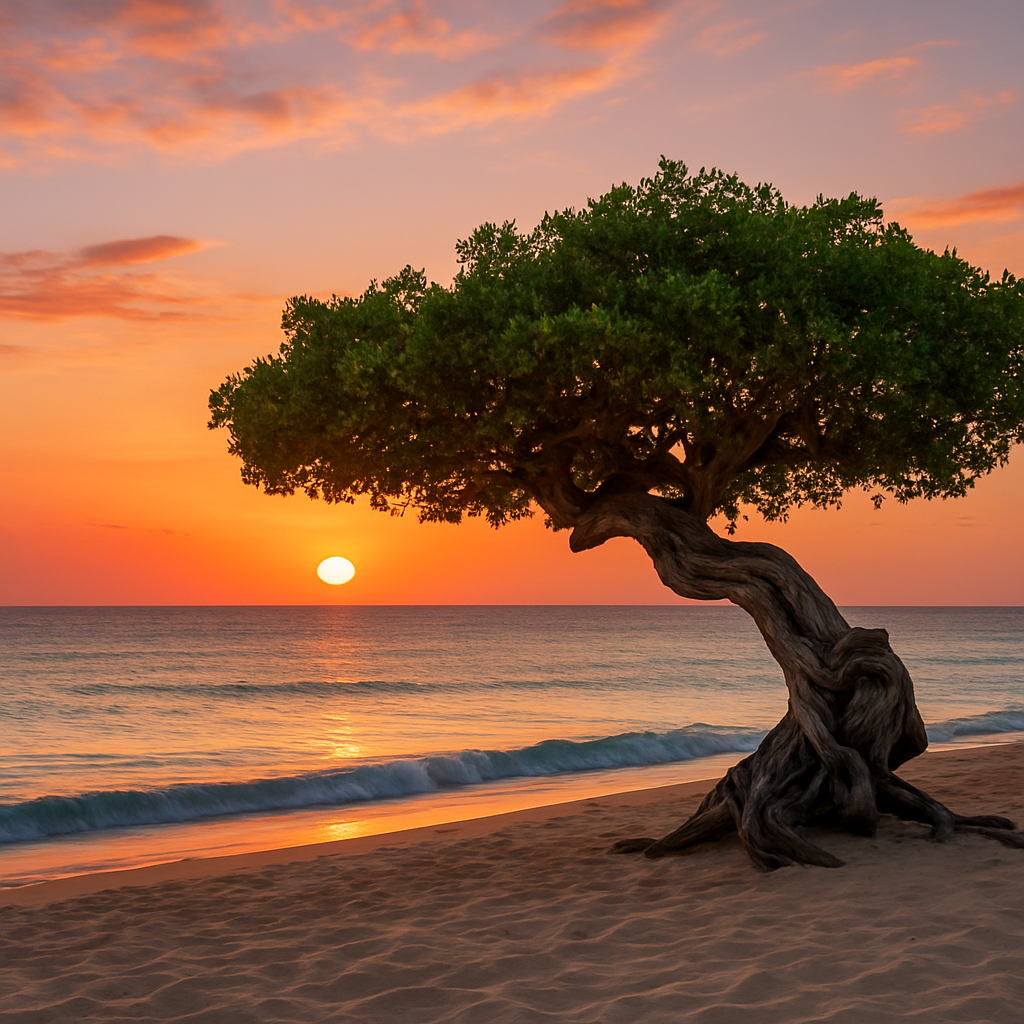
Sunset at Eagle Beach Under the Divi-Divi Trees
Arrive an hour before sundown with a towel and zero agenda. The sand at Eagle Beach is talcum-fine, the water runs through impossible gradients of turquoise, and the wind-bent divi-divi trees — Aruba's unofficial logo — frame the horizon like they were placed by a set designer. This beach has been ranked #1 in the Caribbean by TripAdvisor for a reason, and the public access means you don't need to be a resort guest to claim your patch of it. Walk the shoreline south toward Manchebo Beach as the light goes and you'll understand why most travelers end up extending their trip.
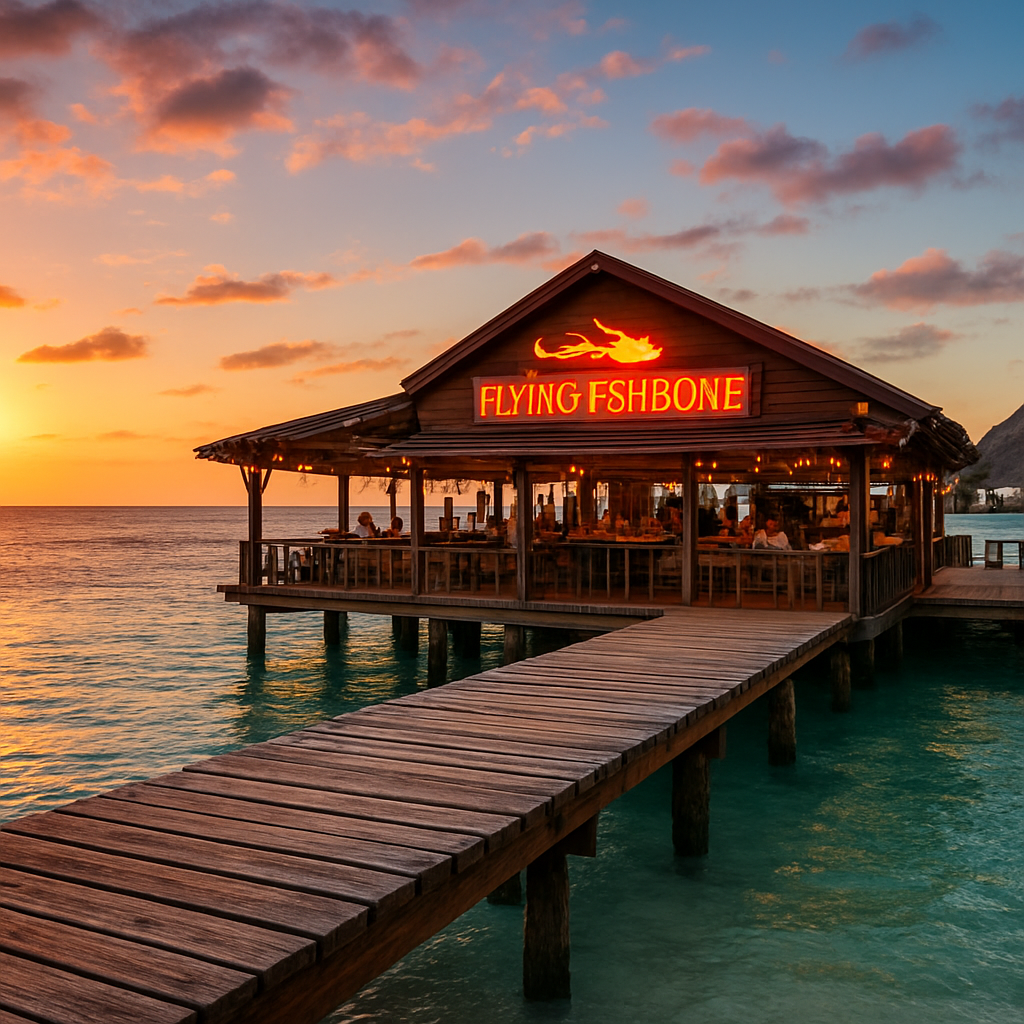
A Pier-Table Dinner at Flying Fishbone
Drive south to the fishing village of Savaneta, book a table in advance, and order the catch of the day. Flying Fishbone sets its tables on a pier that extends directly over the sea at water level — you'll have your feet in the Caribbean between courses. At sunset the sky does genuinely unreasonable things. This is the single most photographed dining room on the island and one of those rare spots where the reputation actually matches the experience.
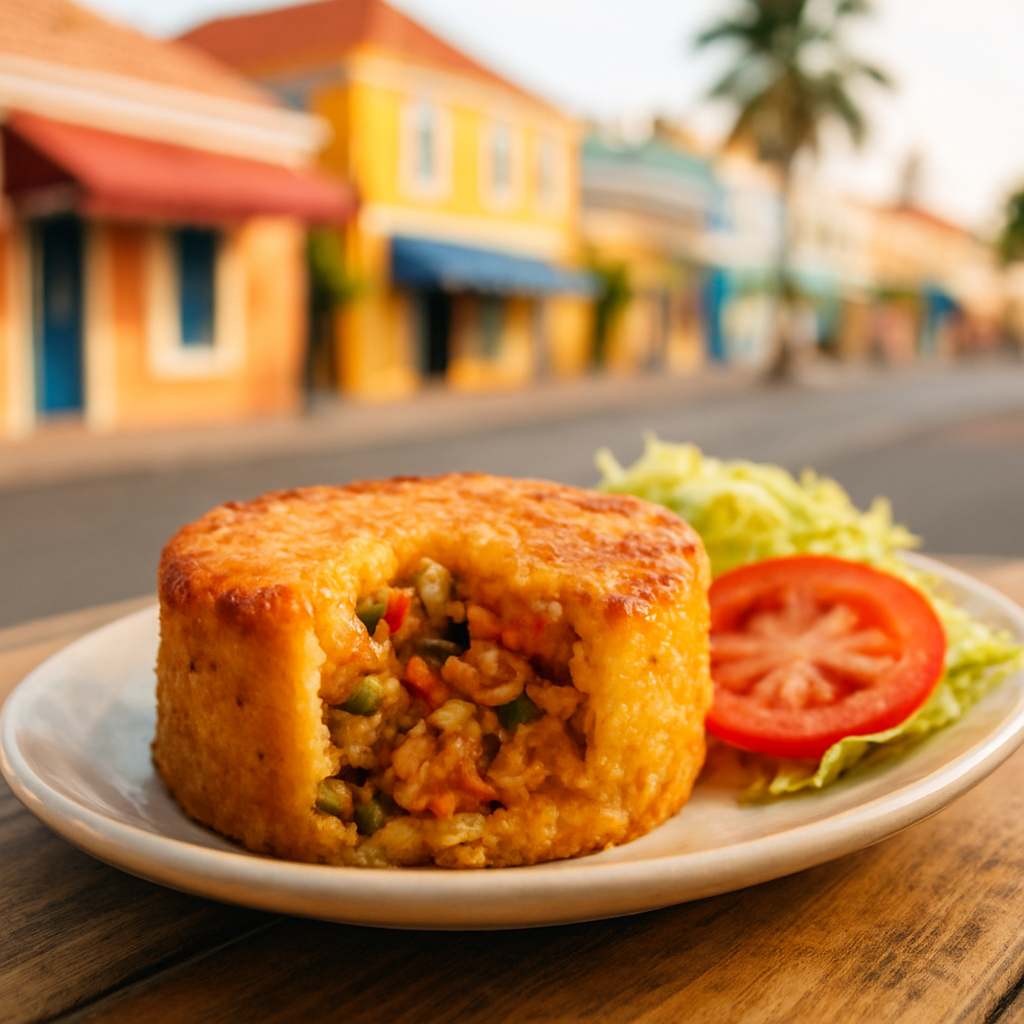
Keshi Yena Inside a 17th-Century Cunucu
Gasparito Restaurant sits inside a restored 17th-century cunucu — a traditional Aruban country house — in the inland district of Noord. Order the keshi yena: spiced, slow-cooked meat baked inside a hollowed gouda shell, a Dutch-Caribbean invention so specific to this island it doesn't really exist anywhere else. The stone walls, the original tile, and the 1983-onwards run of the kitchen add up to a meal that tells you more about Aruba than any museum will.
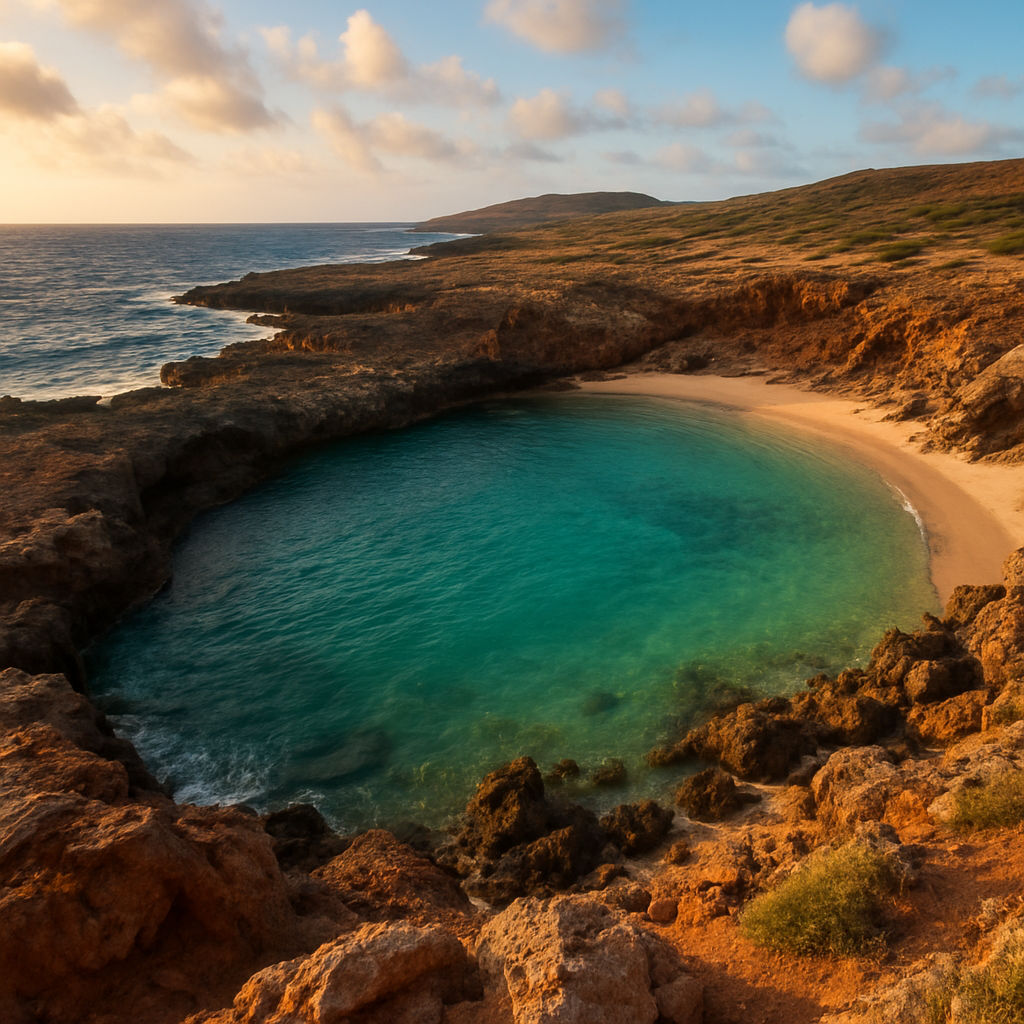
A 4WD Day Into Arikok National Park to the Natural Pool
Book a guided off-road tour or rent a 4WD and drive into Arikok National Park on the Atlantic side of the island. The Natural Pool — locally known as Conchi — is a lava-rock-sheltered swimming hole where the open Atlantic crashes against the outer rocks while the pool itself stays eerily calm. The drive is rough, dusty, and full of cactus; the payoff is a swim in water you'll remember longer than the beach. Bring water, sun protection, and shoes you don't mind destroying.
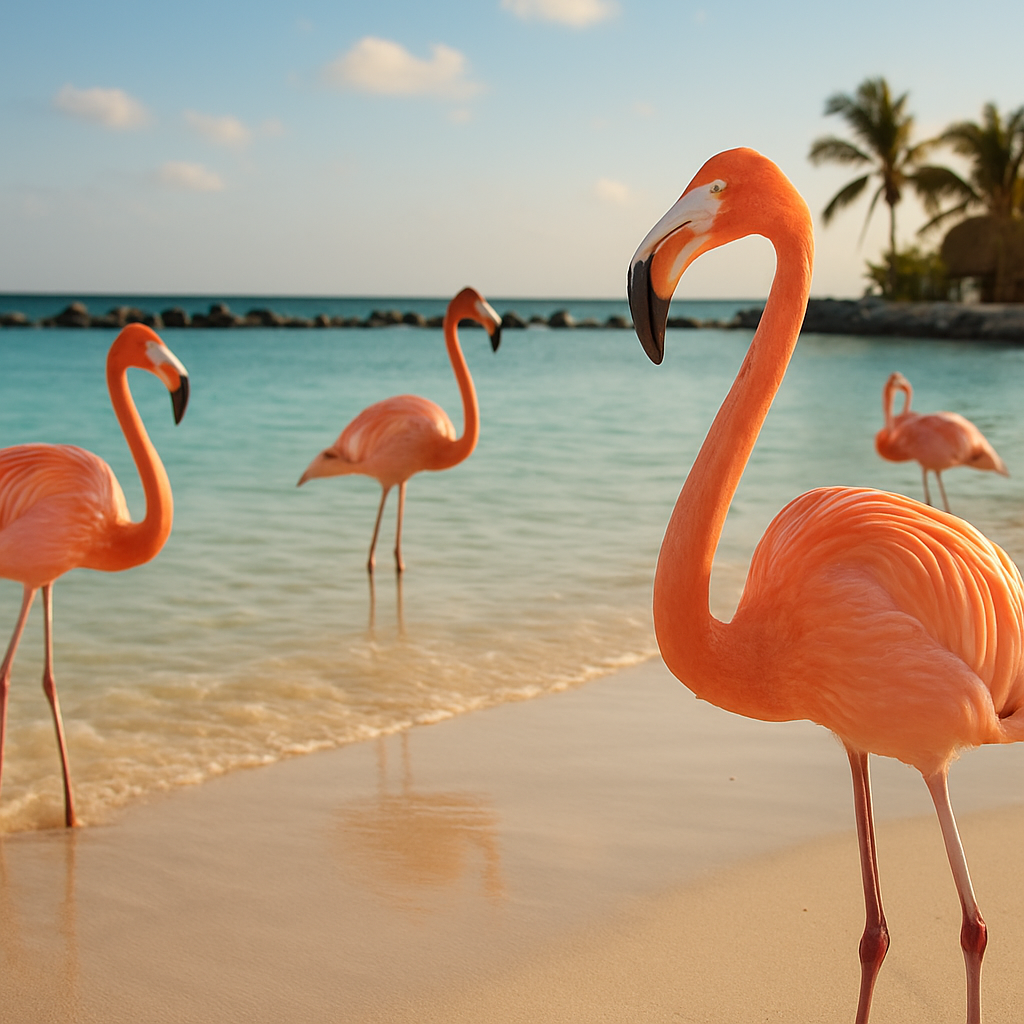
Renaissance Island and Its Famously Staged Flamingos
Accessible only via the Renaissance Resort's private boat from L.G. Smith Boulevard, this small offshore island is the quiet gold standard for a do-nothing Caribbean day. A reader called it "so beautiful it feels staged" — and the flamingos wading through the shallows are completely real. You'll need either to be a Renaissance guest or to secure a day pass, which sells out in high season. Worth planning around.
The places I actually send people to
Advice that fits how you travel
Aruba won't hand you a ready-made gay social scene the moment you land — the island's LGBTQ+ community is small, genuinely tight-knit, and not organized around a dedicated neighborhood or bar. What it does hand you is one of the safest, most effortlessly welcoming resort islands in the Caribbean, with enough going on that solo travel feels easy rather than isolating. The real social trick is knowing where to position yourself: MooMba Beach Bar on Palm Beach for daytime, where the international crowd is reliably open and the frozen cocktails are enormous; Café Chaos on Wilhelminastraat in downtown Oranjestad for a later, more locally-flavored evening. The apps work here — the island's small size means the pool is compact, but you're more likely to connect with someone who actually lives here rather than another tourist passing through.
Budget-wise, solo travel on Aruba rewards flexibility. Staying in a self-catering unit like MVC Eagle Beach — studio apartments with kitchenettes near the island's best beach — brings accommodation costs well below the resort-hotel price point, and cooking a few meals yourself adds up fast over a week. A rental car is close to essential regardless of your budget tier: the freedom to reach Savaneta, Baby Beach, and Arikok National Park independently changes the trip entirely. A solo traveler on a rental car and a self-catering unit can do Aruba properly at the moderate level for roughly AWG 420–645 a day — competitive for the Caribbean.
Safety as a solo traveler is a genuine non-issue in the tourist zones. Aruba's crime rate is low by Caribbean standards; petty theft near the cruise terminal on L.G. Smith Boulevard is the main concern, not anything you'd face walking back from dinner on Palm Beach at midnight. The one calibration worth making: Aruba is structured around couples and families, and the scene reflects that. Go expecting a relaxed island where being gay is unremarkable rather than a high-energy circuit destination, and you'll leave having had a better trip than you planned.
Aruba makes a strong case as the Caribbean island where same-sex couples can simply exist without performing any version of vigilance. Along the Palm Beach and Eagle Beach resort corridors, you're effectively invisible in the best sense — staff at properties like Bucuti & Tara and Boardwalk Boutique have absorbed years of LGBTQ+ guests and will greet you with the same warm indifference they extend to everyone. Hand-holding at beach bars, affection at dinner, requesting one bed at check-in — none of it registers. That baseline comfort is not universal across the island (downtown residential areas warrant a gentler read of the room), but in the zones where you'll spend most of your time, it's real and it's consistent.
Two experiences deserve to anchor the trip. First: dinner at Flying Fishbone in the fishing village of Savaneta — tables extend over the sea at water level, the catch of the day is the correct order, and at sunset the sky does things that no phone camera does justice. Book well in advance. Second: an evening at Screaming Eagle on Palm Beach, where the theatrical candlelit bed-seating format was made for exactly this kind of night out. For accommodation, Bucuti & Tara Beach Resort on Eagle Beach is the couples pick — adults-only, IGLTA-listed, and positioned on what's been ranked the #1 beach in the Caribbean. Amsterdam Manor, a 72-room boutique in Dutch canal-house style near the same beach, is the quieter and slightly less expensive alternative.
A legal note worth knowing: same-sex marriage became legal in Aruba in 2023 following a Supreme Court ruling, making your relationship formally recognized here in a way that isn't true across much of the Caribbean. PDA is comfortable throughout the resort zones and genuinely unremarkable at Eagle Beach and Manchebo Beach. In the city center, hand-holding on Wilhelminastraat is fine; more demonstrative behavior may draw a glance from locals in traditional residential districts. The trade-off is manageable and the geography is clear: the island's tourist spine delivers on the promise.
LGBTQ+ families will find Aruba's resort zones functional and genuinely welcoming at the practical level — hotels like the Holiday Inn Resort on Palm Beach have children's programming, kid menus, and shallow-water beach access that makes traveling with small children survivable. Baby Beach, at the southeastern tip of the island (~30 km from Oranjestad), is the single best beach for kids on the island: an enclosed reef creates a natural lagoon with calm, clear, waist-high water across most of its area. Renaissance Island, accessible by private boat from L.G. Smith Boulevard, delivers the kind of family memory that's hard to replicate — flamingos wading through the shallows, calm water, a contained and safe environment that children remember longer than any theme park.
On the legal side: same-sex marriage has been legal in Aruba since 2023, and foreign same-sex marriages are recognized. Adoption law for same-sex couples remains a grayer area in practice as of 2026 — if formal recognition of your family structure matters for the trip (medical decisions, next-of-kin documentation), bring paperwork and consult COC Netherlands, the primary Kingdom-level LGBTQ+ legal resource, before departure. In daily practice, LGBTQ+ families are received without issue in tourist zones; outside those areas, Aruba is a fairly traditional, family-oriented society and the ambient social norms reflect that. No hostility is expected in residential communities like Noord, but visibility reads differently there than it does at the resort pool.
For family-specific activities beyond the beach: the Bon Bini Festival at Fort Zoutman on Tuesday evenings is a free, outdoor cultural event — folk music, dance, local food — that works for all ages and gives kids more Aruban context than a week of loungers ever will. Rent a car. With children and no car, you're essentially confined to your hotel's beach corridor, and the island genuinely rewards the mobility. The drive to Baby Beach through the island's quieter southeastern coast, or a guided off-road excursion into Arikok National Park, are the kinds of days that travel well past the trip itself.
What Oranjestad actually costs
Flights, visas, and the first 30 minutes
Airport: Queen Beatrix International Airport (AUA), located approximately 3 km southeast of downtown Oranjestad. One of the busiest airports in the Caribbean, with approximately 40 direct routes serving the island year-round.
Getting there: Aruba is exceptionally well-connected to North America. Direct service typically operates from major US hubs including Miami, New York–JFK, Newark, Atlanta, Boston, Charlotte, and Philadelphia — flight times generally run 4 to 5 hours depending on your origin city. The Dutch connection means KLM operates non-stop service from Amsterdam (AMS) in approximately 9–10 hours, making it the natural European gateway. Canadian travelers generally connect through Toronto. With roughly 40 direct routes, positioning is rarely a problem.
Visa requirements (as of 2026): Citizens of the US, UK, EU member states, Canada, and Australia generally require no visa for entry to Aruba. Most nationalities are typically admitted for up to 30 days, extendable on-island; US passport holders can generally extend stays up to 180 days. Entry requirements typically include a return or onward ticket, proof of accommodation, and documentation of sufficient funds — these are checked at the immigration counter, not just fine print. Confirm your specific situation with official sources before departure.
Airport to city:
- Taxi — AWG 27–36 / 10–15 min. Fixed-rate metered taxis are abundant at the arrivals exit; tips aren't required but are appreciated on an island where the same driver will remember your name next trip.
- Arubus (Public Bus) — AWG 2–4 / 25–35 min. The cheapest way in and drops near the city center. Limited luggage space means this works best for carry-on travelers.
- Rental Car — AWG 72–125/day / 10 min to town. All major chains operate at the airport. I'd strongly recommend renting — without a car, Arikok National Park, Baby Beach, Conchi, and Savaneta are significantly harder to reach, and the island genuinely rewards having the freedom to go where the road goes.
Traven's seasonal breakdown
The questions everyone asks
Is Aruba actually safe for same-sex couples?
Do I need to exchange money to Aruban florins?
Do I need to rent a car?
When is Aruba Pride?
Is there a gay neighborhood or gay bar scene?
Do I need to speak Papiamento or Dutch?
What's the best beach for same-sex couples?
Screenshot this before you go
So should you actually go?
Go — with clear eyes about what Aruba is and isn't. If you're chasing a dense gay nightlife scene or circuit-party energy, this isn't your island and no amount of talcum sand will make it one. But if what you want is a genuinely safe, legally protected Caribbean week where same-sex couples are unremarkable at the resort, on the beach, and at dinner — where the water is absurd, the welcome is real, and the trade-off is just applying a little trankilo when you drift into residential neighborhoods — Aruba delivers more reliably than almost anywhere else in the region. LGBTQ+ travelers will find the resort spine between Palm Beach and Eagle Beach about as close to stress-free as the Caribbean gets. Book Bucuti & Tara or Boardwalk Boutique, rent a car, and give it the full week. You'll leave planning the next trip.
Sources & Resources
Official links we reference when compiling this guide. Last verified 2026-04-13.
- Aruba Tourism Authority
- AZV — Algemeen Ziekenfonds (Aruba Public Health Insurance & Medical Services)
- COC Netherlands — LGBTQ+ Rights & Resources (Kingdom of the Netherlands)
- Equaldex — Aruba LGBTQ+ Legal Status Overview
- ILGA World — Global LGBTQ+ Legal Resources
- ILGA-LAC — International LGBTQ+ Association Latin America & Caribbean
- OutRight Action International
- Rainbow Railroad — LGBTQ+ Travel Safety & Emergency Support