
Hobart doesn't compete with the mainland. It just turns its back to the Derwent, lights a fire on the solstice, and dares you to keep up.
It's a Thursday night on Elizabeth Street in North Hobart, and the wood smoke from Sonny's kitchen is drifting halfway down the block. Couples are spilling out of the State Cinema, a tableful of art-school kids are arguing about a Mona Foma installation over share plates at Born In Brunswick, and someone at the next table is explaining to a tourist why Tasmanians call everywhere else "the mainland." The city is small enough that the same faces turn up at Preachers on Friday, at the market on Saturday, and at the State Cinema on Sunday. Lean into that. It's the actual scene.
Hobart isn't a city with a gay village. It's a city where the queer scene is folded into the broader cultural life, especially around North Hobart and across the river at MONA. Show up expecting West Hollywood and you'll be disappointed. Show up expecting clever, low-key, and unexpectedly radical, and you'll get exactly that. There's a reason I gave this city an 8.6 — and most of it has to do with what happens when a place goes from being the last Australian state to criminalize gay sex (1997) to having some of the country's strongest anti-discrimination laws inside a single generation. That whiplash shapes everything about how the community organizes here.
The geography does half the storytelling. kunanyi looms 1,271 metres over the harbour, the Derwent runs cold and wide through the middle of it, and the Georgian sandstone of Salamanca Place has been the city's living room since 1972. I gave it a 9.1 on Destination because — between the mountain, MONA, Bruny Island, the Tasman Peninsula, and a food scene that has quietly become one of the most interesting in the country — this is a launchpad as much as a city. You don't come to Hobart and stay in Hobart. You come to Hobart and let it send you somewhere stranger.
If you can time it, come for Dark Mofo in June. The Ogoh-Ogoh effigy burnings down by the waterfront, the late-night performances, the Nude Solstice Swim at dawn on Long Beach — thousands of bodies, every shape and orientation, plunging into the Derwent together. It's the closest thing Australia has to a city-wide queer-coded ritual, and it tells you everything about why a town this small punches this hard.
The stuff your travel guide buries on page 47
Tasmania's legal framework is, as of 2026, among the most progressive in the world for LGBTQ+ travelers. Marriage equality has been federal law since 2017, joint adoption is available to same-sex couples, and the state's Anti-Discrimination Act covers sexual orientation, gender identity, intersex status, and relationship status — one of the strongest such laws in Australia. Gender markers on birth certificates have been optional since 2019, with self-ID the standard. For the official rights framework, Equality Tasmania is the body that drove most of this legislation through.
The cultural reality matches the paperwork, and that's not always the case. Tasmania was the last Australian state to decriminalize gay sex — Section 122 was on the books until 1997 — and locals will tell you the whiplash from "criminal" to "comprehensively protected" inside a single generation shapes everything about how the community organizes here. There's an activist memory in this city. You can feel it at Franklin Square, where rallies and vigils still happen.
One scheduling note: TasPride runs in November, not February or March like most Australian Pride events. Fair Day usually lands at The Domain with a march through the CBD ending at Franklin Square. The TasPride Festival also runs events in February, and Dark Mofo in June is the unofficial winter queer gathering. For travel planning resources beyond Pride season, TasPride keeps current event listings.
PDA is generally comfortable across central Hobart — Salamanca, the waterfront, North Hobart, Battery Point, Sandy Bay, and around MONA. Day or night, you're fine. Outer suburbs like Glenorchy and Bridgewater are typically safe but lower-profile after dark is advisable. Rural Tasmania varies — small-town conservatism still exists in pockets, so read the room as you would anywhere regional. Pro tip: Working It Out on Bathurst Street is the LGBTIQA+ support and education service locals point newcomers toward for everything from counselling to community connection.
What it actually feels like on the ground
Holding hands: In Salamanca Place, on the waterfront, through North Hobart's Elizabeth Street strip, and across Battery Point and Sandy Bay, same-sex couples hold hands without incident. I've watched couples walk through the Saturday market hand-in-hand without a single sideways glance. The further you get from town — out into the Tasman Peninsula or up the Midlands — the more you'll want to read the room. Not hostile, just less visible queer presence.
Hotel check-in: Same-sex couples checking into one bed is generally a non-issue across central Hobart hotels, from the chain properties like the Crowne Plaza and The Tasman down to the smaller boutique places on the waterfront. Tasmania's anti-discrimination law explicitly covers accommodation. If something goes sideways — and I haven't heard of it doing so in Hobart proper — Tasmania Legal Aid is the first call.
Taxis and rideshare: Both work fine. The taxi ranks around the CBD and Salamanca run late, and Uber is reliable. Late-night Liverpool Street near the casino-bound ranks can get a bit yelly on weekends — not specifically homophobic, just generic drunk-Aussie energy. Walking through Elizabeth Mall or grabbing a rideshare back to your hotel is the easy move.
Trans travelers: Tasmania, as of 2026, has Australia's most progressive gender identity framework — self-ID since 2019, optional gender markers on birth certificates, comprehensive anti-discrimination protections. Trans travelers report Hobart as warm and affirming, and Working It Out runs active local advocacy. Healthcare access through Sexual Health Service Tasmania is straightforward.
Late night: Central Hobart is small and well-lit. The walk from Salamanca up to the CBD is fine after midnight; the walk along Elizabeth Street in North Hobart is fine. The only genuine watch-out is the cluster of late-night spots near Liverpool Street where drunk crowds gather around closing time — nothing queer-specific, just generic city center noise.
Verbal harassment risk: Approximately low in central neighborhoods. Tasmania's small enough that visibly queer locals know each other, and the cultural temperature in town is genuinely welcoming. Rural day-trips require more judgment. Pro tip: QLife (1800 184 527) is the free national LGBTIQ+ peer support line and operates 3pm–midnight every day — locals recommend it over generic crisis lines because the volunteers are trained specifically on queer issues.
The queer geography
North Hobart
The closest thing this city has to a gay-leaning strip runs along Elizabeth Street in North Hobart — a flat half-mile of restaurants, cocktail bars, the State Cinema, and an unhurried weeknight energy that feels closer to inner-city Melbourne than to anywhere else in Tasmania. The food is the real draw: wood-fired plates at Sonny, Levantine mezze at Born In Brunswick, the famous communal table at Templo. The Republic Bar & Café hosts drag nights, queer comedy, and Pride events throughout the year — it's the de facto community venue when TasPride isn't on. For event calendars, TasPride tracks what's running.
Battery Point & Salamanca Place
Walk south from the CBD along the harbour and you hit Tasmania's most photographed real estate: the Georgian sandstone warehouses of Salamanca Place, fronted by the Saturday market that's been running since 1972. Just above it sits Battery Point, Hobart's oldest residential neighbourhood — colonial cottages stacked along narrow lanes, the Battery Point Sculpture Trail, and a hundred-and-eighty-year-old bakery institution called Jackman & McRoss that does the best scallop pie in the city. Preachers Bar on Knopwood's Retreat is the closest thing Hobart has to a dependable gay-friendly drinking spot — order a Cascade, head to the converted bus in the beer garden, and you'll find your people.
Berriedale (MONA)
Take the camo-painted ferry up the Derwent and you arrive at MONA — David Walsh's subterranean museum carved into a sandstone cliff in Berriedale. It's the most genuinely queer cultural institution in the state, anchoring both the June Dark Mofo festival and Mona Foma in summer. The grounds include the on-site restaurant Source, the Moorilla winery, and the Pavilions if you want to stay overnight. Pro tip: the camo boat with its absurd plastic sheep seats is half the experience — don't drive. For visitor information, Discover Tasmania has the full ferry schedule.
Sandy Bay
South of the CBD, Sandy Bay is the leafy university suburb — home to UTAS, a younger crowd, and the small beach at Long Beach where Dark Mofo's Nude Solstice Swim plunges thousands of bodies into the Derwent at dawn each June solstice. By day it's quiet residential streets and water views. By June solstice it's one of the most genuinely queer-feeling mass events in Australia. For LGBTIQA+ community support resources year-round, Working It Out is based nearby on Bathurst Street.
Hobart CBD
The CBD is compact — you can walk from Franklin Square to Constitution Dock to the Tasmanian Museum and Art Gallery in twenty minutes. Franklin Square itself is the spiritual home of Hobart's activist history: rallies, vigils, and queer community gatherings have happened here for decades, and TasPride's march typically ends here. Flamingos Dance Bar on Liverpool Street is Hobart's dedicated gay venue — drag shows, themed nights, dance parties — and the only place in town where the scene is unambiguously the point.
The experiences worth rearranging your itinerary for
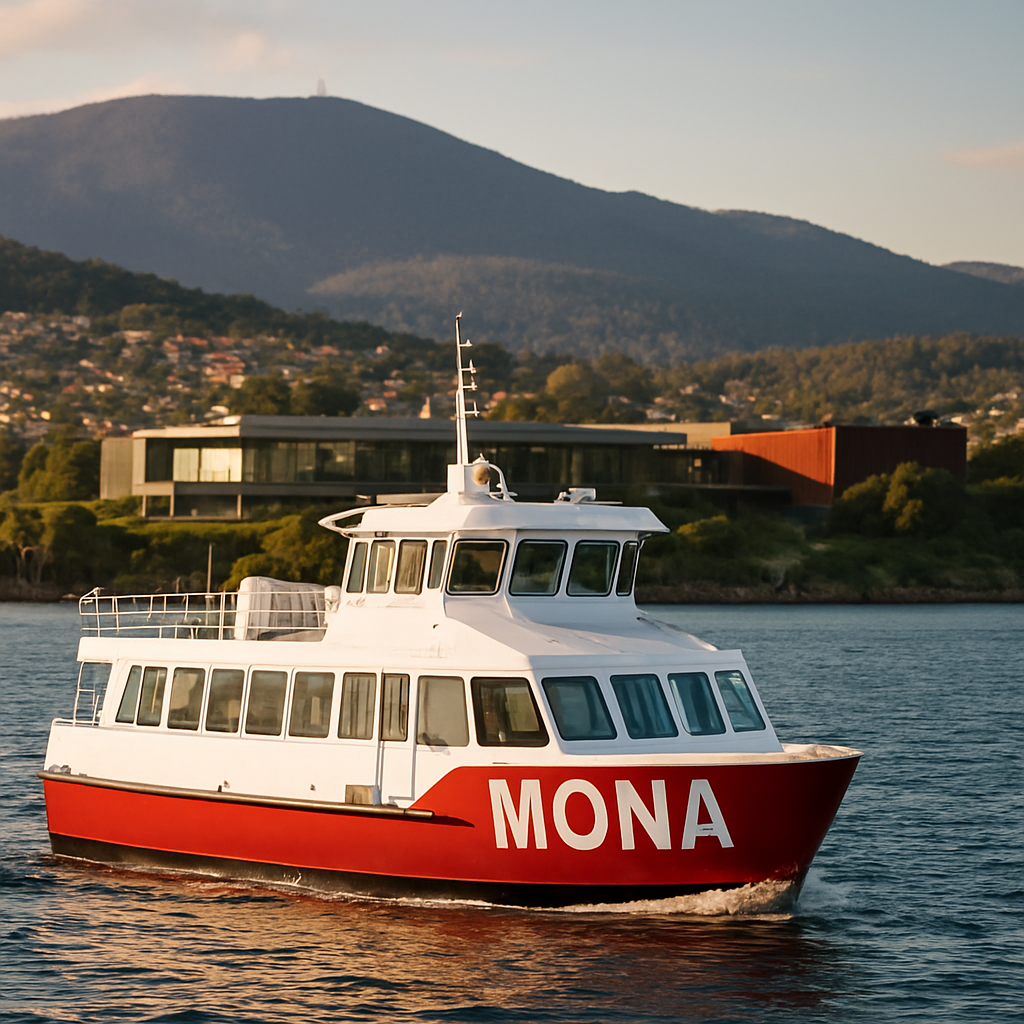
The Camo Ferry to MONA
Take the camo-painted ferry from Brooke Street Pier instead of driving — the absurd plastic sheep seats are half the experience, and David Walsh's subterranean museum at the other end is unlike anything else in the country. Go in expecting to be unsettled, charmed, and slightly hungover by the end. Source restaurant on the grounds handles lunch if you want to make it the full day.
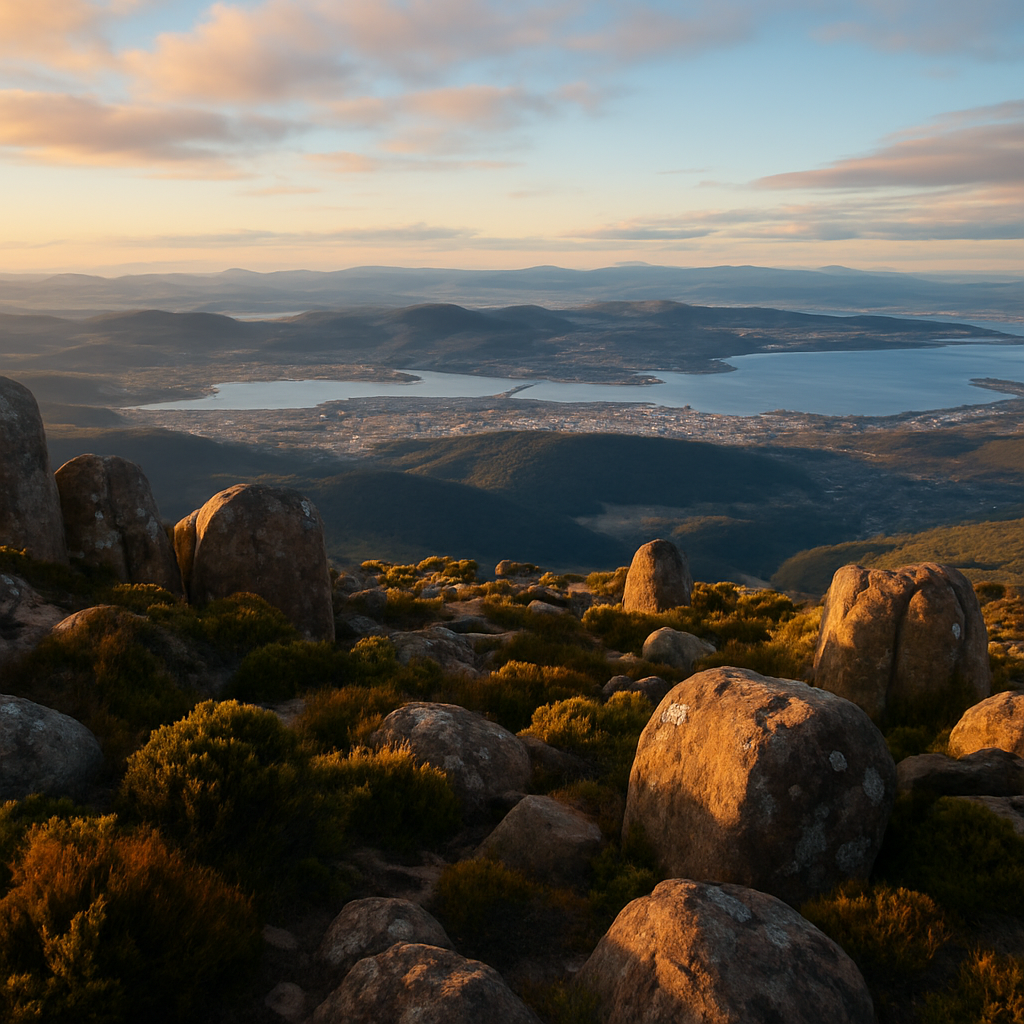
kunanyi at First Light
Drive the sealed road up kunanyi / Mt Wellington at dawn — about 30 minutes from the CBD — and stand 1,271 metres above the city as the Derwent estuary catches the first light. Pack a jacket; the temperature drops sharply at the summit even in summer. The view runs to the Tasman Peninsula on clear days, and the city makes more sense once you've seen it from above.
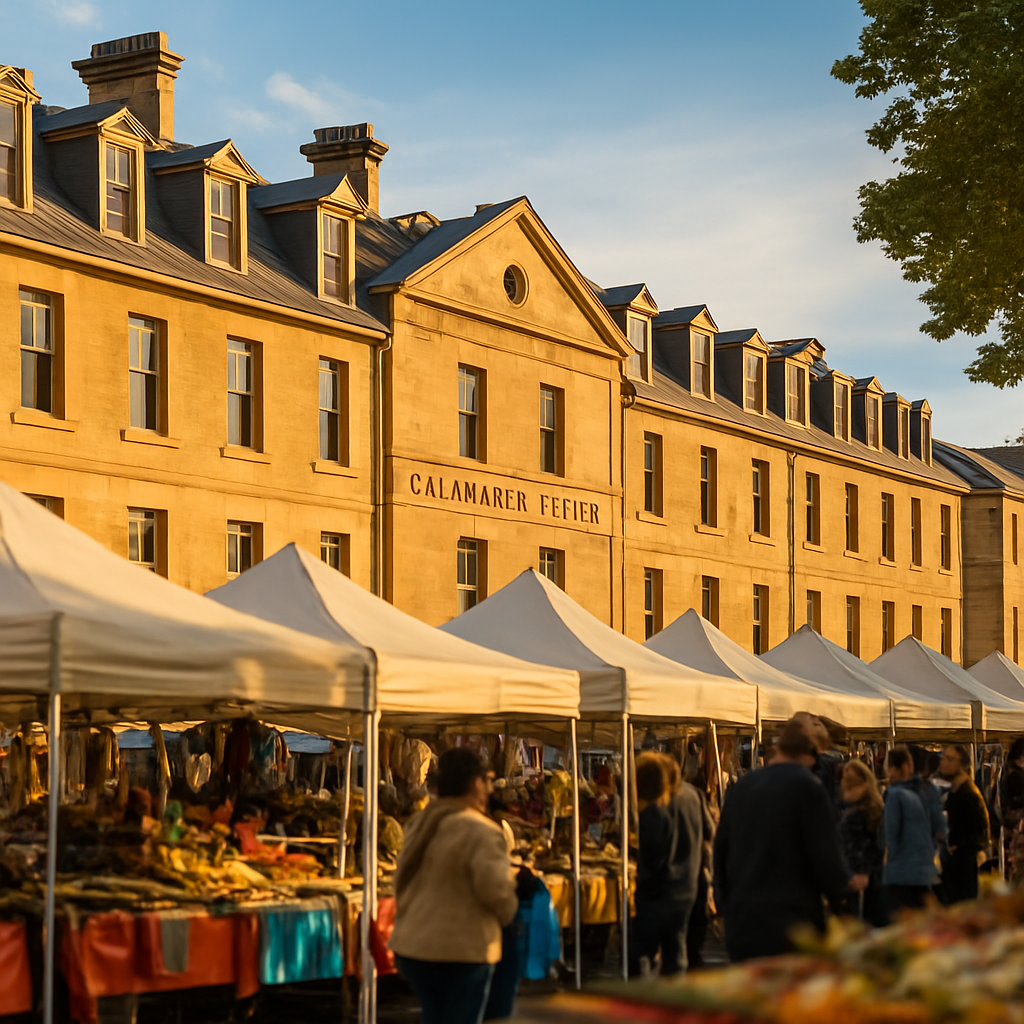
Saturday at Salamanca Market
Every Saturday since 1972, 300-plus stalls have set up along the Georgian sandstone of Salamanca Place — produce, crafts, Tasmanian wine, a curried scallop pie you will not stop thinking about. Go early for the produce, stay late for the buskers, and let the market lead you into Battery Point afterwards for a coffee at Jackman & McRoss. This is where the city shows up as itself.
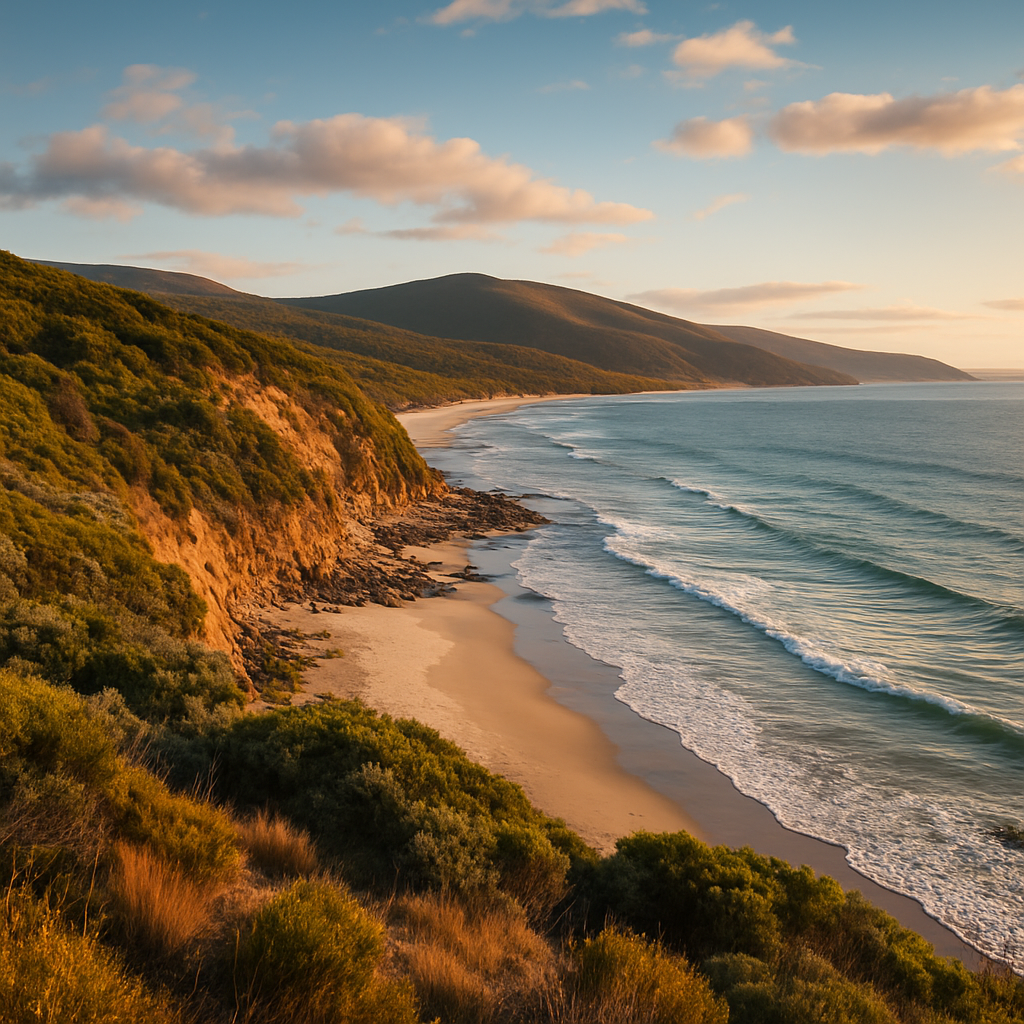
A Slow Day on Bruny Island
Drive 40 minutes south to Kettering, take the 20-minute vehicle ferry, and spend a day eating your way around Bruny Island: oysters straight off the lease at Get Shucked, cheese at Bruny Island Cheese Co., a glass at the southernmost vineyard in Australia. End at The Neck lookout at dusk, when the little penguins start coming ashore. The drive back across the isthmus in twilight is the kind of thing you'll remember years later.
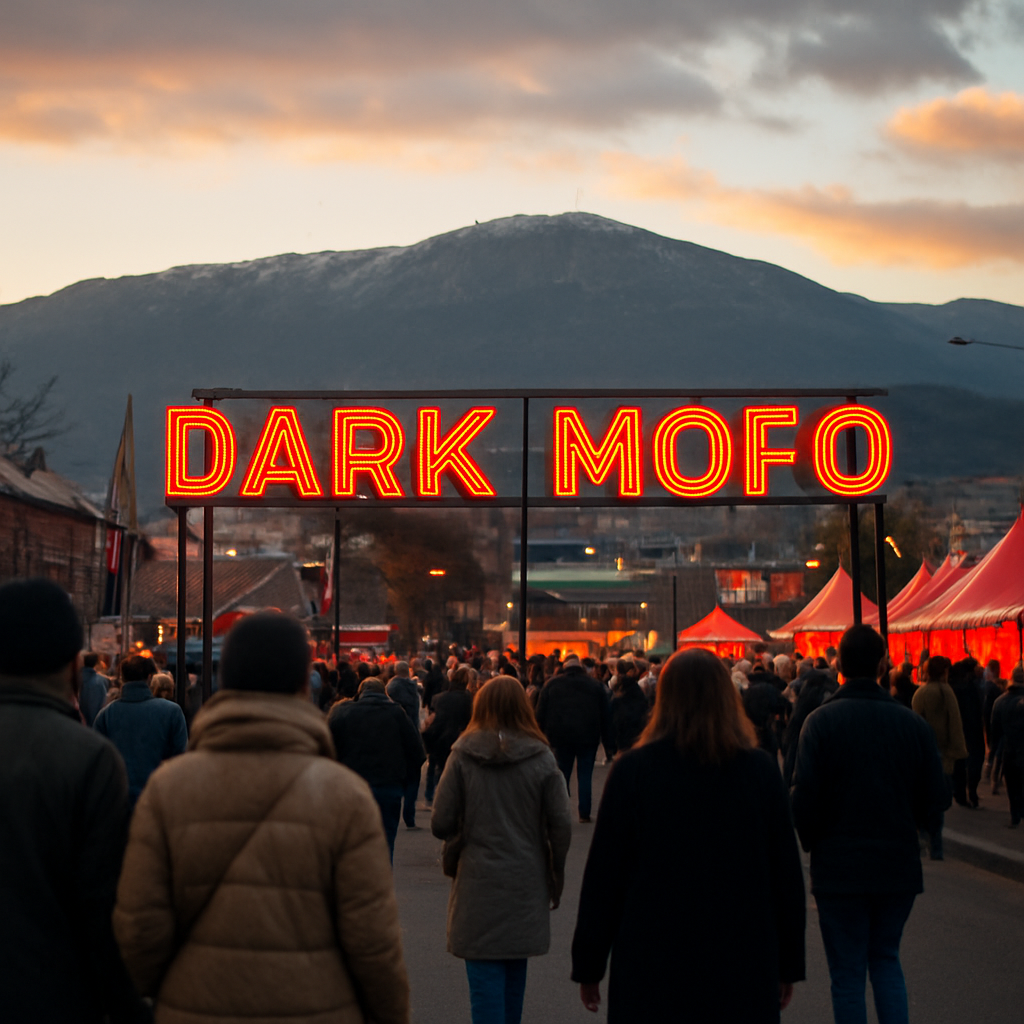
Dark Mofo & the Nude Solstice Swim
If you can time a June visit to Dark Mofo, do it. The MONA-produced winter festival takes over the city for two weeks around the solstice — Ogoh-Ogoh effigy burnings down by the waterfront, large-scale art installations, late-night performances. The Nude Solstice Swim at Long Beach in Sandy Bay at dawn is one of the most genuinely queer-feeling mass events in Australia: thousands of bodies, every shape, plunging into the Derwent together.
The places I actually send people to
Advice that fits how you travel
Hobart is a gift for solo travellers — small enough that you'll start recognising faces by day three, and confident enough culturally that you don't need a wingman to feel at ease. Templo in North Hobart is the easiest solo dinner in the city: one communal table, around twenty seats, and you walk out three hours later having met four of the people you sat next to. Salamanca Market on a Saturday morning is the other automatic — wander, eat a curried scallop pie, drift up into Battery Point for a coffee at Jackman & McRoss.
The scene is compact but real. Flamingos Dance Bar on Liverpool Street is Hobart's dedicated gay venue and the one place where the scene is unambiguously the point — drag shows, themed nights, dance parties. Preachers in Battery Point is the daytime-to-evening anchor where the crowd reads as our people without making a thing of it. The apps work here, but they work differently than in a bigger city — fewer matches, but more of them turn into actual conversations because everyone knows everyone, or knows someone who knows everyone.
Budget-wise, Hobart sits in a reasonable spot for Australia — approximately AUD 150–220/day will get you a budget room, three solid meals, and a museum or two. Stay central: the CBD, the waterfront, or North Hobart puts you walking distance from everything that matters. Pro tip: rent a car for at least two days of your trip. Hobart is the launchpad — kunanyi, Bruny Island, the Tasman Peninsula — and the real Tasmania starts the moment you cross the city limit.
Hobart punches well above its weight as a couples city, and my Chill score of 8.7 reflects what same-sex couples actually experience here. Hold hands on the Salamanca waterfront at dusk, walk arm-in-arm through the Saturday market, kiss on top of kunanyi with the Derwent estuary spread out below you — nobody is going to flinch. As of 2026, Tasmania's anti-discrimination framework is one of the strongest in the country, marriage equality has been federal law since 2017, and hotels checking same-sex couples into one bed is generally a non-issue across central properties.
The romance moves I'd send you to: dinner at Aloft upstairs at Brooke Street Pier when the sunset is doing the work, a quiet evening at Islington Hotel in South Hobart with a Tasmanian pinot in front of the fire, or the maximalist version — a night at MONA Pavilions on the museum grounds with original David Walsh artworks in your room and the Derwent out the window. For the once-in-a-lifetime trip, Saffire Freycinet on the peninsula is the answer, and both Condé Nast and Travel+Leisure have flagged it as comfortable for LGBTQ+ couples at the highest tier.
Time your trip to Dark Mofo in June if you can — the Nude Solstice Swim at dawn on Long Beach is the kind of shared experience that ends up in the wedding speech years later. For a slower romantic day, the camo ferry to MONA followed by lunch at Source, or a drive down to Bruny Island for oysters at Get Shucked and a sunset at The Neck. Pumphouse Point, two and a half hours out at Lake St Clair, is where I send couples who need to remember why they like each other away from cell service — no signal, no menu choice at dinner, no reason to look at your phone.
LGBTQ+ families do well in Hobart, and the legal framework as of 2026 is among the most progressive anywhere — joint adoption is available to same-sex couples, parental recognition is straightforward, and Tasmania's Anti-Discrimination Act explicitly covers family structure. Two-mom and two-dad families navigate hotels, schools, and daily life here without the friction you might encounter in more conservative parts of Australia. The cultural temperature in central Hobart is genuinely welcoming — I've never heard of an LGBTQ+ family running into trouble at a museum, restaurant, or accommodation in town.
The kid-friendly hit list is generous. MONA sounds like an adult museum but actually programs well for older kids — the camo ferry, the underground galleries, and the absurd plastic sheep seats are catnip for anyone over about eight. The Tasmanian Museum and Art Gallery is free, kid-friendly, and includes the natural history collections every kid wants. Salamanca Market on Saturdays is a stroller-friendly civic ritual; kunanyi is a 30-minute drive to the summit with no hiking required if you don't want to. Day trips to Bruny Island for oysters and penguins at The Neck, or to Port Arthur for the convict history (older kids only — the site's history is heavy), are both easy from Hobart.
Practical logistics: serviced apartments are typically the best family move — Salamanca Wharf Hotel has 27 apartment-style suites with full kitchens right next to the market, and approximately AUD 300–450/day will cover a comfortable two-bedroom serviced apartment. Restaurants across the city accommodate kids without a fuss, kid menus are common, and tipping isn't really a thing here — round up if service was great, otherwise the listed price is the price. Pro tip: book a Saturday morning at Salamanca Market and then a slow afternoon up kunanyi — that's the day every Hobart family ends up taking and nobody regrets it.
What Hobart actually costs
Flights, visas, and the first 30 minutes
Airport: Hobart International Airport (HBA) sits about 17 km east of the CBD in Cambridge. Despite the 'international' in the name, as of 2026 it's primarily a domestic hub — international travelers typically connect through Melbourne, Sydney, or Brisbane.
Major routes: Direct flights run regularly from Melbourne (approximately 1h 15m), Sydney (1h 50m), Brisbane (2h 40m), Adelaide (2h), Perth (4h 45m, seasonal), and Canberra (1h 40m). Qantas, Virgin Australia, and Jetstar are the carriers that typically operate the route. From North America or Europe, you're routing through one of the mainland gateways — usually Melbourne, which has the most onward Hobart frequency.
Visa requirements (as of 2026): Australian citizens travel domestically with no visa. UK and most EU citizens are generally eligible for the free eVisitor (subclass 651), valid 12 months with stays of up to 3 months per visit. US and Canadian citizens typically need the ETA (subclass 601), which carries a small service charge and is valid 12 months. Apply online before you fly — both are usually approved within minutes, but don't leave it to the airport.
Airport to city: The SkyBus shuttle runs hourly to the Hobart CBD for AUD 22, taking about 30 minutes. A metered taxi from the rank runs AUD 55–65 for the 20-minute drive. Uber and Ola operate from the designated rideshare pickup zone for AUD 40–55. If you're planning to explore Tasmania beyond Hobart — and you should — a rental car from one of the major agencies at the terminal runs AUD 50–90 per day. Honestly, for anything past a weekend, the car is the answer. Tasmania's real magic is what's outside the city limits.
Traven's seasonal breakdown
The questions everyone asks
Is Hobart safe for same-sex couples to hold hands in public?
Does Hobart have a gay neighborhood?
When is Pride in Hobart?
Do I need a visa to visit Hobart?
Should I rent a car?
How do same-sex couples fare at Hobart hotels?
What's the one thing I shouldn't miss?
Screenshot this before you go
So should you actually go?
Go. Hobart is one of those rare cities where the legal framework, the cultural temperature, and the sheer landscape are all pulling in the same direction — and as of 2026, Tasmania has Australia's strongest gender identity protections to back it up. LGBTQ+ travelers will find a small, warm, genuinely radical scene folded into a city that doesn't need to perform its progressiveness. Pair three days in town with three days outside it — kunanyi, Bruny Island, the Tasman Peninsula, Freycinet — and you'll understand why I gave this place an 8.6 and would happily give it more.
Sources & Resources
Official links we reference when compiling this guide. Last verified 2026-05-12.