Brussels is the city that proves you don't need a sprawling gay village when one perfect cobblestone street does more than most neighborhoods manage in an entire zip code.
There's a specific smell to Rue du Marché au Charbon after 10pm on a Friday — Belgian beer, cigarette smoke curling out of open doorways, and something sweet from the waffle cart around the corner that has no business being that good. The street is maybe 300 meters long. That's it. That's the whole queer district. And somehow it's enough, because what Brussels lacks in square footage it makes up for in concentration and conviction. Every bar door is open, the crowd spills across the cobblestones, and the energy runs until the kind of hour where your only reasonable next move is a bucket of moules-frites at a brasserie near Place Sainte-Catherine that's still serving at 1am.
This city doesn't perform its queerness. Belgium legalized same-sex marriage in 2003 — second country on the planet — and two decades of that head start have produced something rarer than a parade or a flag: genuine indifference. Nobody turns around when you hold hands in Ixelles. Nobody registers it at Grand Place. The legal framework is as close to bulletproof as exists anywhere — I gave it a perfect 10.0 on Legal — and the cultural reality matches it in a way that feels earned rather than announced. There's a reason my Traven-Dex sits at 8.3 for this city, and most of it comes down to that gap between what a place promises and what it actually delivers being essentially zero.
But Brussels isn't just the Charbon. Walk twenty minutes south to Saint-Gilles on a Sunday morning and sit on the terrace at Parvis de Saint-Gilles with a cortado, watching the neighborhood's quietly dense LGBTQ+ population do the same thing, and you'll understand a different register entirely. This is where queer Brussels actually lives — Art Nouveau facades, zero tourist gaze, excellent coffee, and the kind of neighborhood texture that makes you start browsing apartment listings on your phone. Then there's La Démence at Fuse Club, the monthly circuit party that draws 2,000-plus people from across the continent with production value that would embarrass most permanent clubs. Someone wrote in to tell me it rearranged their travel calendar. I believe them.
The thing about Brussels is that it's a city of contradictions that somehow resolve into something coherent. It's the capital of the European Union and also a place where a tiny statue of a peeing boy gets dressed in a rainbow cape during Pride and everyone thinks that's perfectly normal. It's grey and rainy half the year and somehow one of the warmest cities I've ever walked through. The beer is world-class, the waffles are not a cliché — they're a genuine culinary argument — and the whole package costs meaningfully less than Amsterdam or Paris for a comparable experience. Go. You'll eat well, drink better, and walk home down a cobblestone street that feels like it was built specifically for you.
The stuff your travel guide buries on page 47
Legal framework: Belgium legalized same-sex marriage in 2003 — the second country in the world — and followed with full joint adoption rights. Anti-discrimination protections are comprehensive, covering employment, housing, goods, and services on the basis of sexual orientation and gender identity. Gender marker changes operate on a self-identification model since 2018, with no medical requirements. Criminalization of homosexuality: none, abolished in 1795. This is, on paper and in practice, one of the most legally protected places on earth to be LGBTQ+.
What that means on the ground: The two-decade head start on marriage equality has produced a cultural reality where queer visibility is genuinely unremarkable. You won't clock yourself doing mental calculations before holding someone's hand here. The constitutional bilingualism — French and Dutch — extends to the queer infrastructure: Tels Quels operates in French, Çavaria serves Dutch-speakers, and the bars on the Charbon are language-agnostic by necessity. English gets you everywhere without anyone making a face about it.
Key resources: Rainbow House Brussels at Rue du Marché au Charbon 42 is a genuine one-stop-shop — newcomers, legal questions, STI testing referrals via Ex Aequo, community calendars. Walk in during open hours and someone will help you in whichever language you need. For trans and intersex travelers, Genres Pluriels offers legal, medical, and psychosocial support in both French and Dutch. If you encounter discrimination of any kind, Unia, Belgium's independent anti-discrimination body, handles formal complaints and takes them seriously.
PDA comfort: High throughout central Brussels, Grand Place, Ixelles, Saint-Gilles, and the European Quarter. Same-sex couples are common and unremarkable in these areas. In Molenbeek-Saint-Jean and outer residential areas of Anderlecht, which are more conservative, visible PDA may attract attention — discretion is advisable rather than necessary, but reading the room is sound practice. The center and inner communes are entirely comfortable.
What it actually feels like on the ground
Holding hands: Completely unremarkable in the city center, Grand Place, Rue du Marché au Charbon, Ixelles, Saint-Gilles, and the European Quarter. In some outer communes further from the center, particularly if you're visibly gender-nonconforming, situational awareness remains good practice. But in the areas where you'll spend 95% of your time as a traveler, nobody turns around.
Hotel check-in: Zero issues. Brussels hotels are accustomed to same-sex couples, and requesting a double bed won't produce so much as a raised eyebrow. This applies across the price spectrum, from hostels to five-star properties.
Taxis and ride-shares: Standard city behavior. Uber operates in Brussels and provides a digital paper trail if that matters to you; metered taxis are also straightforward. No reports of discrimination from drivers in the queer community.
Public spaces and terraces: The café terrace culture in Brussels is extensive, and same-sex couples are visible throughout. Parvis de Saint-Gilles on a weekend morning is practically a queer social hub. Parks and public gardens are equally comfortable.
Late night: The area around Rue du Marché au Charbon and Rue des Riches Claires is well-lit, consistently busy after dark, and generally safe. The occasional verbal taunt exists but is genuinely rare. Solo late-night transit through Gare du Midi deserves the usual big-city awareness — not paranoia, just eyes open and phone tucked away. Stick to well-traveled routes or grab an Uber if the metro has stopped running.
Trans travelers: Belgium's 2018 self-ID law for gender markers makes it one of Europe's most progressive legal environments for trans people. Brussels is broadly welcoming, though everyday social awareness of trans issues varies by neighborhood. In the center and inner communes, trans visibility is normal. Genres Pluriels is an active local resource for any support needed.
Verbal harassment risk: Low in central Brussels and the inner communes. Isolated incidents have been reported but are not systematic. If something does happen, Unia handles discrimination complaints online and by phone, and the process is taken seriously. Ex Aequo runs free, anonymous HIV and STI testing with staff who are structurally incapable of being weird about it — no referral needed, just show up.
The queer geography
Rue du Marché au Charbon / Kolenmarkt — The Charbon
This is it. Roughly 300 meters of cobblestones in the Lower Town that constitute Brussels' entire queer district — and honestly, it's all anyone needed. Le Belgica anchors the street with cheap beers and a crowd that somehow manages to include EU policy wonks and drag enthusiasts in the same square meter. Chez Maman on nearby Rue des Grands Carmes is the entry drug: cheap drinks, nightly drag performances, and a crowd spanning 22-year-old Erasmus students to 65-year-old regulars who've been coming since before you were born. The door is always open and nobody checks you out when you walk in. The leather and fetish crowd gravitates toward Macho Bar and nearby venues — walk in expecting an excellent playlist, friendly bartenders, and zero judgment regardless of your wardrobe choices. Rainbow House Brussels at number 42 serves as the community nerve center, and Place de la Vieille Halle aux Blés at the street's southern end is where the crowd congregates on warm evenings.
Pro tip: queer women's and non-binary-focused nightlife is thinner on the ground than the men's scene — Brussels has no permanent women's bar currently. Your best strategy is checking the Tels Quels and Rainbow House event calendars, where regular women-centric nights and mixers are well-organized even without a fixed venue.
Saint-Gilles / Sint-Gillis
If the Charbon is where queer Brussels goes out, Saint-Gilles is where it lives. This bohemian, Art Nouveau-saturated commune bordering the center has quietly become the preferred residential neighborhood for many LGBTQ+ Bruxellois. The Parvis de Saint-Gilles — a lively, terrace-lined square — functions as a casual queer social hub on weekend mornings, especially in warmer months. There's no signage announcing this; it just is. The architecture is stunning, the coffee is excellent, and the entire neighborhood operates at a pace that rewards walking slowly and looking up at facades.
Ixelles / Matonge
Ixelles is Brussels' arty, cosmopolitan inner commune — popular with young professionals, the international community, and the LGBTQ+ crowd that wants walkable restaurants and bars without the tourist density of the center. Matonge within it is the vibrant Congolese-Belgian neighborhood, popular with queer people of color and home to some of the best food in the city. The area around Porte de Namur is thoroughly accepting, and the neighborhood connects easily to the Charbon on foot.
European Quarter
The EU institutions around Schuman create a hyper-international, progressive bubble that happens to be a real neighborhood. It's not where the nightlife is, but if you're staying in this area for work or proximity, PDA is entirely comfortable and the weekday lunch scene — where you can overhear heated arguments about Treaty articles before everyone orders their third beer — is authentically Brussels.
The experiences worth rearranging your itinerary for
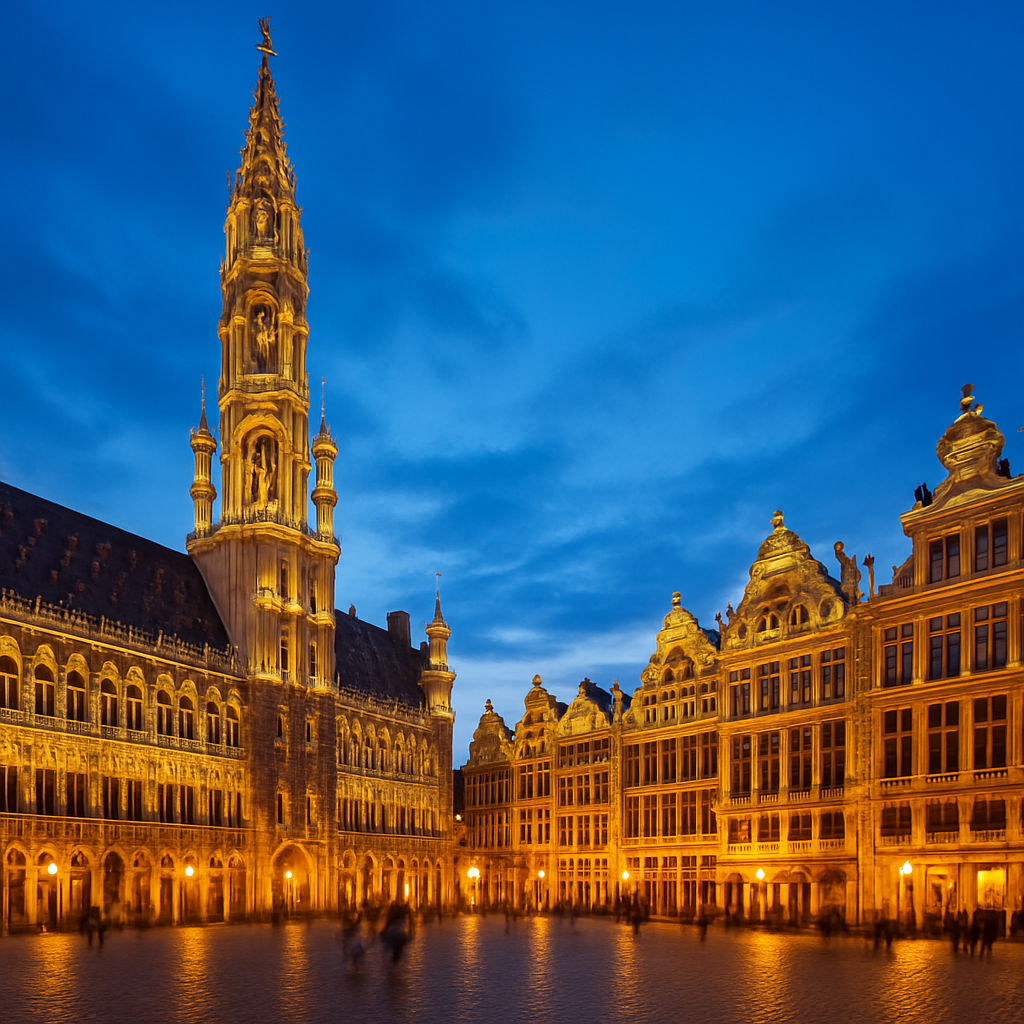
Grand Place After Dark
You've seen photos. They don't prepare you. Grand Place under full illumination — gilded 17th-century guild houses lit gold against the night sky, the Gothic Town Hall towering at the center — is one of those rare UNESCO sites that actually stops you mid-step. Go after dinner, ideally on your first night. It's free, it's always open, and the scale hits differently in person. During the Christmas market season (late November through December), the square transforms into something almost absurdly beautiful, with a light show projected across the facades and the smell of hot chocolate and jenever in the cold air.
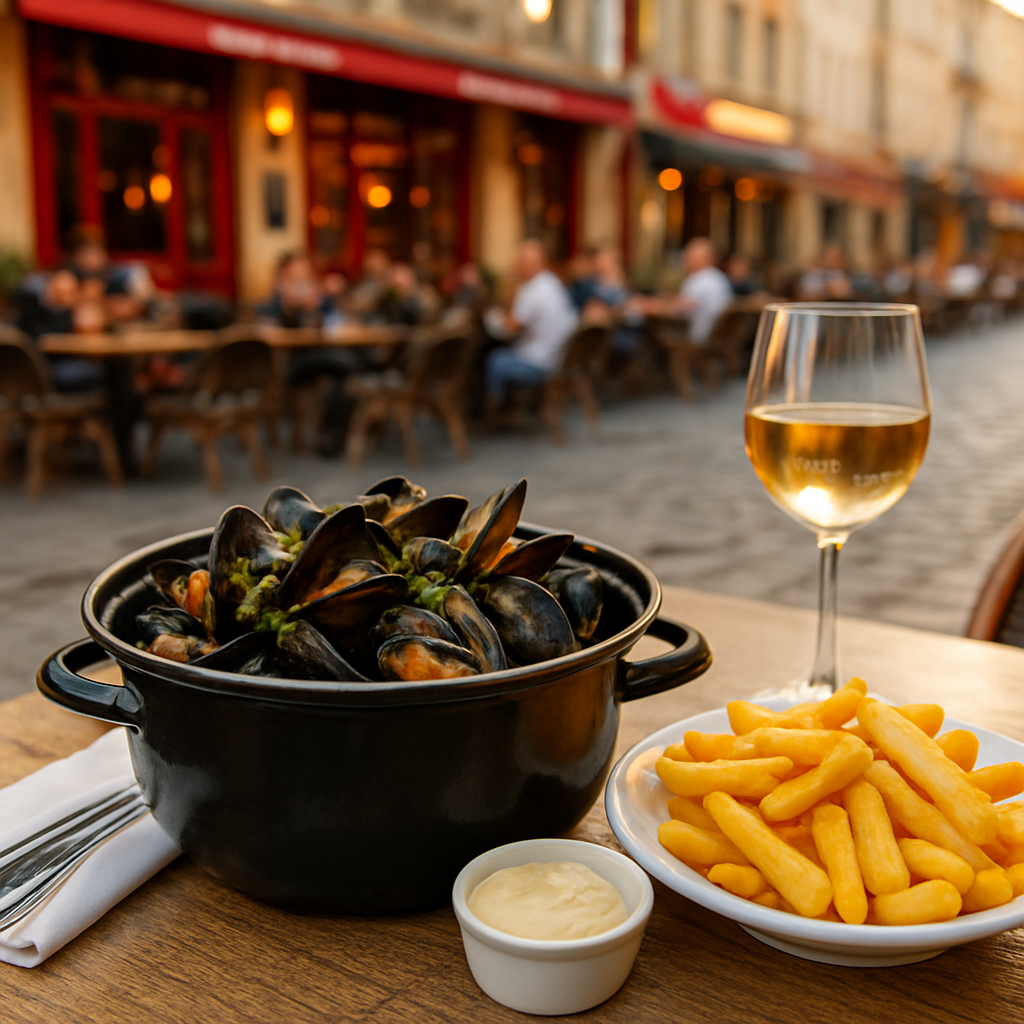
Moules-Frites at Place Sainte-Catherine
The brasseries clustered around Place Sainte-Catherine serve Brussels' definitive dish — a bucket of mussels in white wine, garlic, and celery with a cone of double-fried Belgian frites on the side. Several restaurants stay open late, and there is something cosmically correct about sitting at a table at 1am eating mussels with a Stella while your shoes are still sticking to club floor residue. During the day, the square and surrounding streets are just as good for a slower, more civilized version of the same experience. Budget €20–€30 per person for a proper serving with beer.
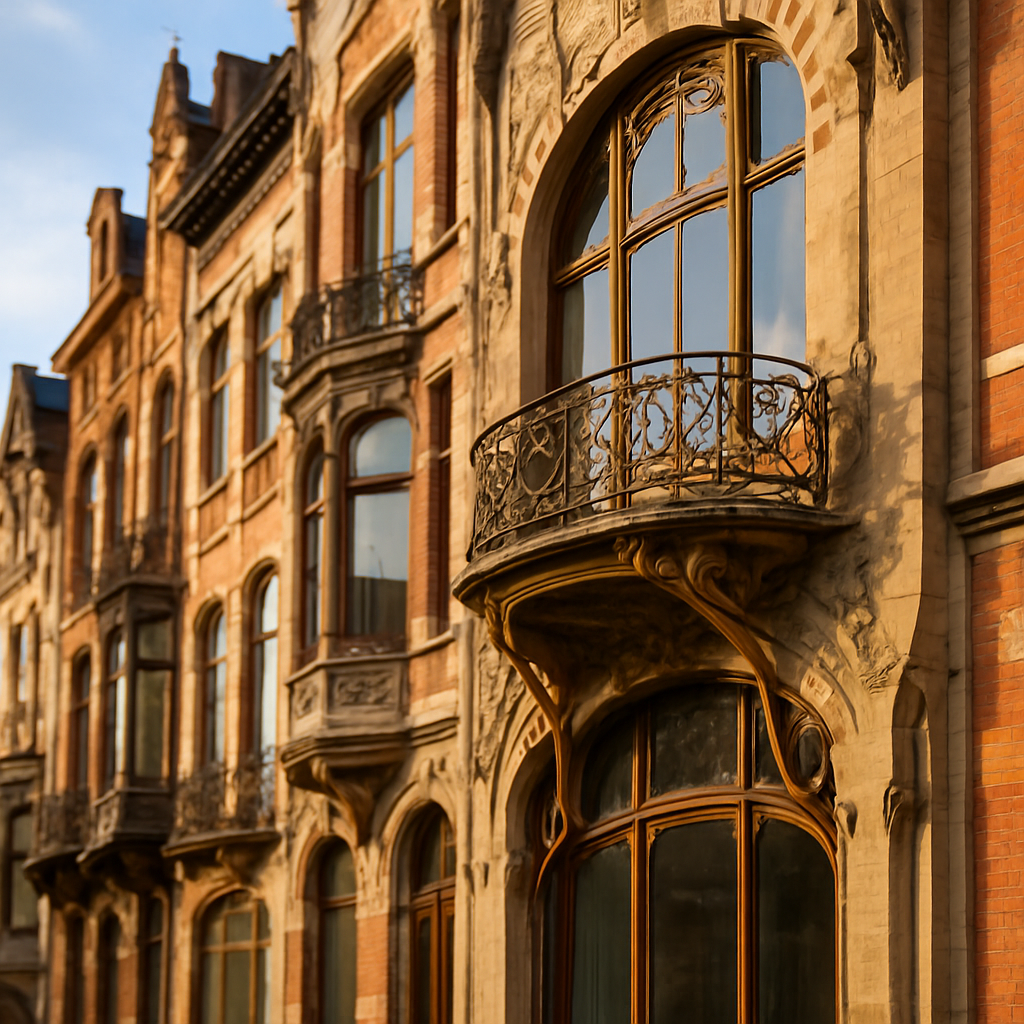
Art Nouveau Walking in Saint-Gilles and Ixelles
Brussels has one of the densest concentrations of Art Nouveau architecture anywhere in the world, and most of it isn't behind a ticket counter — it's just there, on residential streets in Saint-Gilles and Ixelles, waiting for you to look up. Victor Horta's Hôtel Tassel, the Horta Museum (his former home, open for visits), and dozens of lesser-known facades with sinuous ironwork and stained glass line streets like Rue Defacqz and Rue Faider. A self-guided walk takes two hours and costs nothing but shoe leather. The Horta Museum itself is €10 and worth every cent.
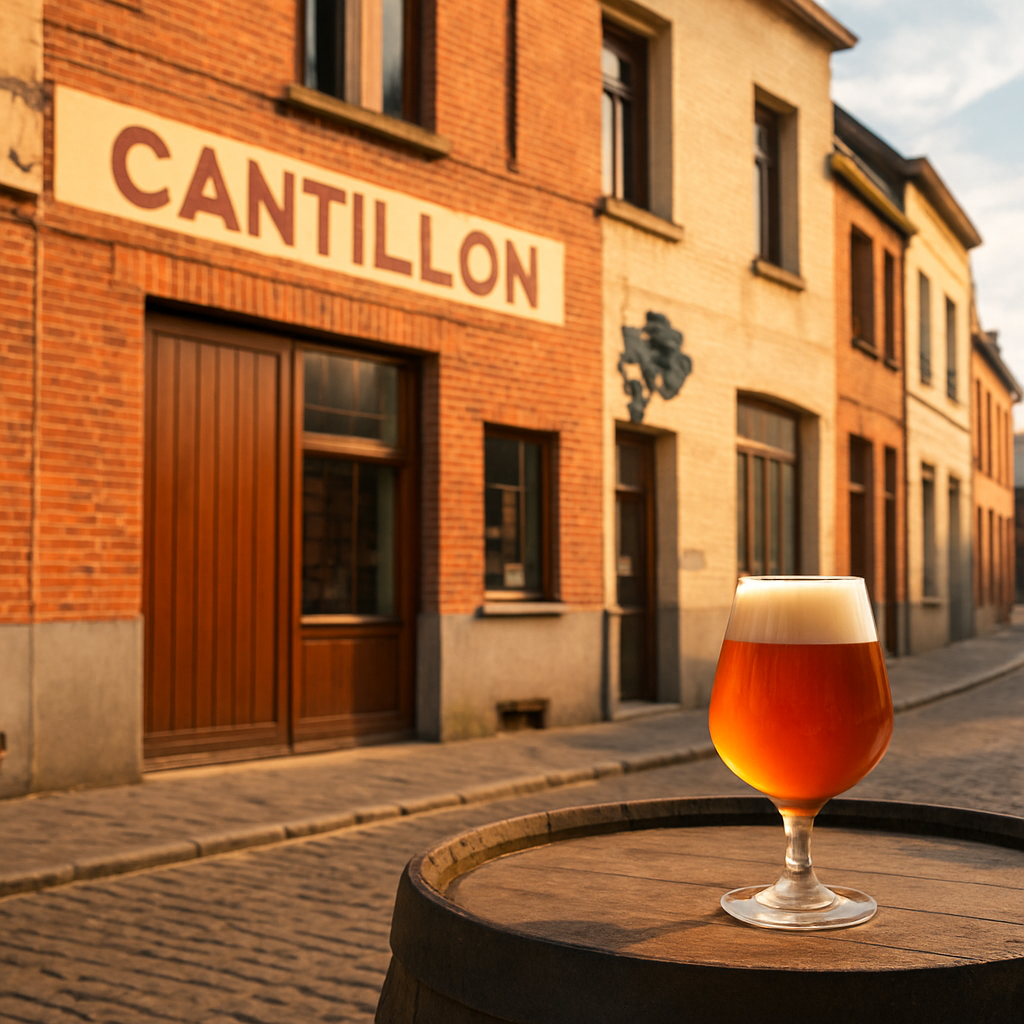
Belgian Beer Deep Dive
Belgium produces over 1,500 distinct beers, and Brussels is ground zero for the weirdest and best of them — the spontaneously fermented lambics, tart gueuze, and cherry kriek that are native to this exact region and cannot legally be produced anywhere else. Cantillon Brewery in Anderlecht runs tours (€9.50) and tastings in a working 19th-century facility that hasn't changed its production methods since opening. Afterward, hit a traditional brown café near the center — the kind with dark wood, no menu, and artisanal jenever behind the counter — and order whatever the bartender recommends. This is not a pub crawl. It's an education.
Day Trip to Ghent
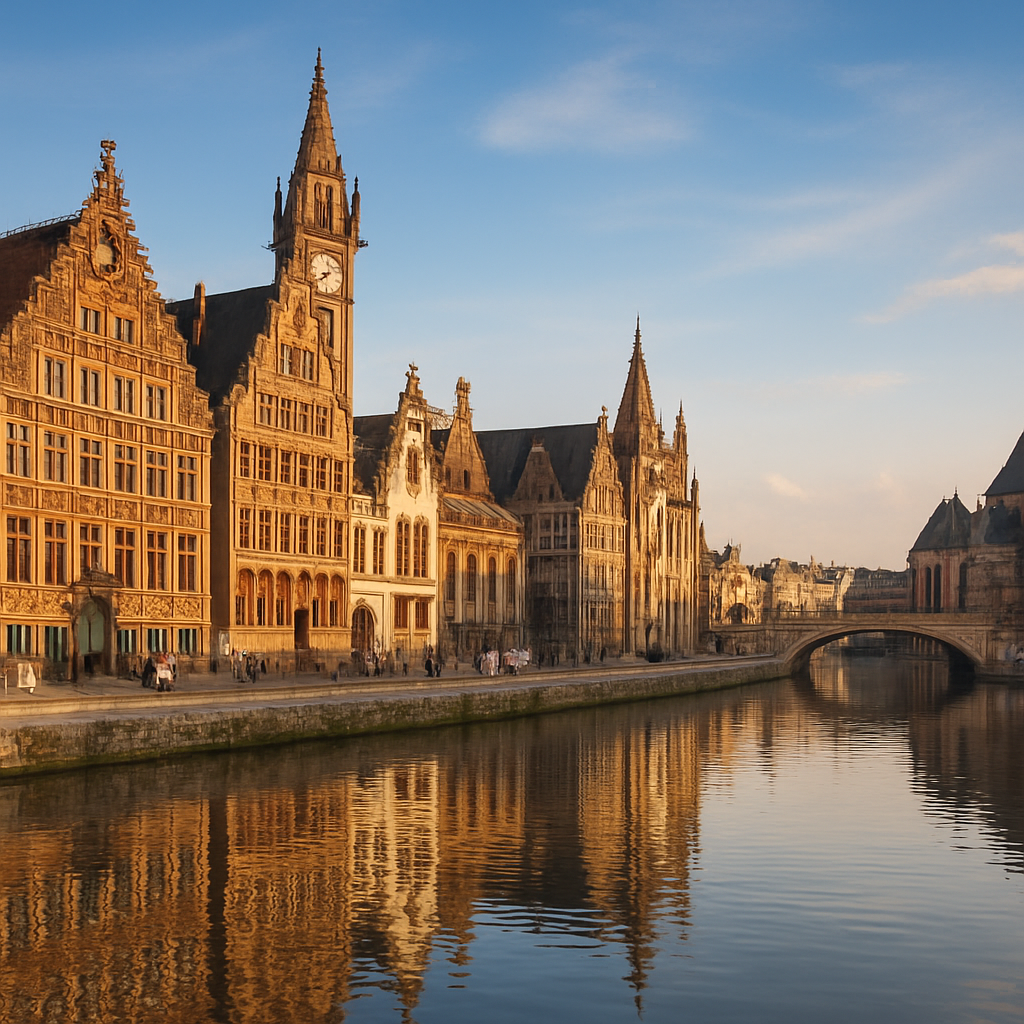
Thirty minutes on a train from Brussels-Midi and you're in Ghent — a medieval Flemish city that looks like a film set, feels like a university town, and has a progressive streak a mile wide. The Gravensteen castle is legitimately dramatic (and has a cheeky sense of humor about its own history), the canal-side architecture is among the best in Northern Europe, and the street art scene is world-class. Walk through Patershol for lunch, stand on Sint-Michielsbrug bridge at golden hour for the three-tower view, and take the train back in time for dinner on the Charbon. A return ticket runs €10–€20.
The places I actually send people to
Advice that fits how you travel
Brussels is an excellent solo city, and the Charbon is the reason. A 300-meter street where every bar door is open and the crowd spills onto the cobblestones makes the act of meeting people essentially frictionless — you don't need to engineer it, you just need to show up after 10pm and stand still for long enough. Le Belgica is the easiest entry point: cheap beers, a packed room, and a local following that's genuinely welcoming to newcomers. The app scene (Grindr, Scruff) is active and the international population means profiles skew multilingual and travel-aware.
For accommodation, the Meininger Hotel at the Porte de Namur border is built for solo travelers — clean dorms or private rooms, communal spaces where people actually talk to each other, and a ten-minute walk to the queer district. Budget solo travelers can manage €70–€90/day including a dorm bed, street food, and a STIB transit pass. At a moderate level, €150–€200/day gets you a private hotel room and one proper sit-down meal.
Safety-wise, solo nighttime transit through Gare du Midi deserves standard awareness — phone away, route planned. The center, Saint-Gilles, and Ixelles are all comfortable walking neighborhoods for solo travelers at any hour. Pro tip: Saint-Gilles on a Sunday morning is a solo traveler's dream — grab a cortado on the Parvis, bring a book, and watch the neighborhood wake up around you. It's better than most things on any structured itinerary.
Brussels rewards couples who do their research, and the best date-night move in the city is also the most obvious one: dinner at Belga Queen in the Quartier Royal, where the dining room is genuinely theatrical and the Belgian beer list gives you something to argue about in the most pleasant possible way. From there, a post-dinner walk through Grand Place fully illuminated at night is the kind of experience that earns its reputation — spectacular, completely free, and your partner will forgive you for being insufferable about Brussels for months afterward.
PDA comfort throughout the center, Saint-Gilles, and Ixelles is genuinely high — nobody turns around, nobody registers it. If you want a neighborhood for the romantic-wander portion of the trip, Saint-Gilles delivers: the Art Nouveau architecture is outstanding, the café terraces on Parvis de Saint-Gilles are made for lingering over a second coffee, and it has the quality of a neighborhood that hasn't been over-discovered yet. For accommodation, Hotel le Berger on the Charbon puts you at the center of everything at a sensible price; Hotel Amigo near Grand Place is for the trip where you want to feel genuinely indulged.
If the timing aligns, La Démence at Fuse Club — the monthly circuit party drawing 2,000-plus from across Europe — is a couples experience unlike most things on any travel itinerary. High-production, international, and the kind of night that becomes a story you tell for years. Book tickets well in advance at lademence.com; they sell out reliably and the resale market is not your friend.
Belgium legalized same-sex marriage in 2003 — the second country in the world — and joint adoption followed. LGBTQ+ families are legally recognized and practically unremarkable in Brussels. At the Atomium, Mini-Europe, and the Natural History Museum (free on the first Sunday of each month), nobody is counting your family configuration. The city's public transport is genuinely child-friendly, and under-12s ride free on STIB metro and tram lines, which takes a meaningful bite out of daily costs without any paperwork.
The Grand Place is the obvious anchor for a family day in the center — free, enormous, and holds even the most restless ten-year-old's attention long enough for a proper look around. The walk to Manneken Pis is five minutes, and if you time your visit around Pride or a costume day, Belgium's famous peeing statue in a rainbow cape is genuinely funny to kids of all ages. The Belgian waffle situation — both Gaufres de Liège and Gaufres de Bruxelles — is a parental trump card you can deploy liberally throughout the city center whenever negotiations are required.
For day trips with kids, Ghent works beautifully — the Gravensteen castle is legitimately dramatic, canal boat tours keep younger children engaged, and thirty minutes on a train is about the right threshold before someone starts asking if you're there yet. Budget a moderate €320–€430/day for a family of four including accommodation and one sit-down restaurant meal, or lean on supermarkets and street food to bring that comfortably under €220. The city is stroller-navigable through the center, though the cobblestones around the Charbon and Grand Place will test your equipment.
What Brussels actually costs
Flights, visas, and the first 30 minutes
Airport: Brussels Airport (BRU), located in Zaventem approximately 12km northeast of the city center. Direct connections to 200+ cities worldwide make this one of the better-connected airports in Western Europe.
Major routes: London Heathrow (1h 15m), Paris CDG (1h 05m), Amsterdam (55m), New York JFK (8h 00m), Toronto YYZ (8h 30m), Dubai DXB (6h 45m), Sydney SYD (22h with one stop).
Visas: US, UK, Canadian, and Australian passport holders need no visa for stays up to 90 days under Schengen rules. EU citizens travel on a national ID — no passport required. ETIAS pre-travel authorization for non-EU travelers is expected to apply; check current requirements before booking.
Airport Express Train — €13.70 / 17 minutes: The fastest and most reliable option. Trains run every 15–30 minutes directly to Brussels-Central, Brussels-Midi, and Brussels-Nord. This is the one I take every time — quick, cheap, and drops you exactly where you need to be.
Bus (De Lijn/STIB) — €4–€6 / 40–60 minutes: Lines 12 and 21 serve the city center. Slower and subject to traffic, but the cheapest option if budget is a genuine factor.
Taxi / Ride-share — €35–€55 / 20–40 minutes: Fixed-rate airport taxis are available curbside; Uber also operates in Brussels. Worth considering if you're traveling with luggage and splitting the cost between two or more people.
Car Rental — €30+/day: Major agencies operate from the airport, but note that Brussels city center operates a low-emission zone with access restrictions. Unless you're planning regular day trips out of the city, a car is more friction than it's worth.
Traven's seasonal breakdown
The questions everyone asks
Is Brussels safe for LGBTQ+ travelers?
Do I need to speak French or Dutch?
How much should I budget per day?
What's the queer nightlife scene actually like?
Is it safe to hold hands in Brussels?
When's the best time to visit?
Is there a queer women's scene?
Screenshot this before you go
So should you actually go?
Brussels earns it. A perfect legal score, a queer scene that runs on concentrated energy rather than sprawl, world-class beer, architecture that stops you on residential streets, and a cost of living meaningfully lower than its neighbors — all wrapped in a city that treats your existence as unremarkable in the best possible way. The Charbon is one of Europe's most efficient nights out, Saint-Gilles is one of its most rewarding mornings, and the gap between what Brussels promises and what it delivers is essentially zero. It's not the flashiest city on the continent, and it doesn't care. Go, eat the mussels, drink the kriek, and let a 300-meter cobblestone street convince you that sometimes less square footage is exactly right.
Sources & Resources
Official links we reference when compiling this guide. Last verified 2026-03-06.
- Rainbow House Brussels
- Tels Quels – Francophone LGBTQ+ Association
- Çavaria – Flemish LGBTQ+ Umbrella Organization
- Ex Aequo – HIV Prevention & Sexual Health
- Belgian Pride
- Genres Pluriels – Trans & Intersex Rights
- Unia – Belgian Anti-Discrimination Body
- Institute for the Equality of Women and Men (IGVM/IEFH)
- La Démence – Official Site
- Visit Brussels – LGBTQ+ Travel Guide