
Florianópolis doesn't perform for outsiders. It just hands you an oyster, points at the sunset over Ribeirão da Ilha, and waits to see if you keep up.
Florianópolis is the rare Brazilian capital that doesn't perform for outsiders — and that's precisely why the gays have been quietly claiming it for thirty years. This isn't Rio doing Rio. It's an island of forty-two beaches, a manezinho accent locals are fiercely proud of, and a queer scene that splits cleanly by tribe: Centro for the dance kids, Lagoa da Conceição for the artsy bisexuals nursing a caipirinha at sunset, and Jurerê Internacional for the gays who wear linen as a personality. Pick your tribe and the island reorganizes around you.
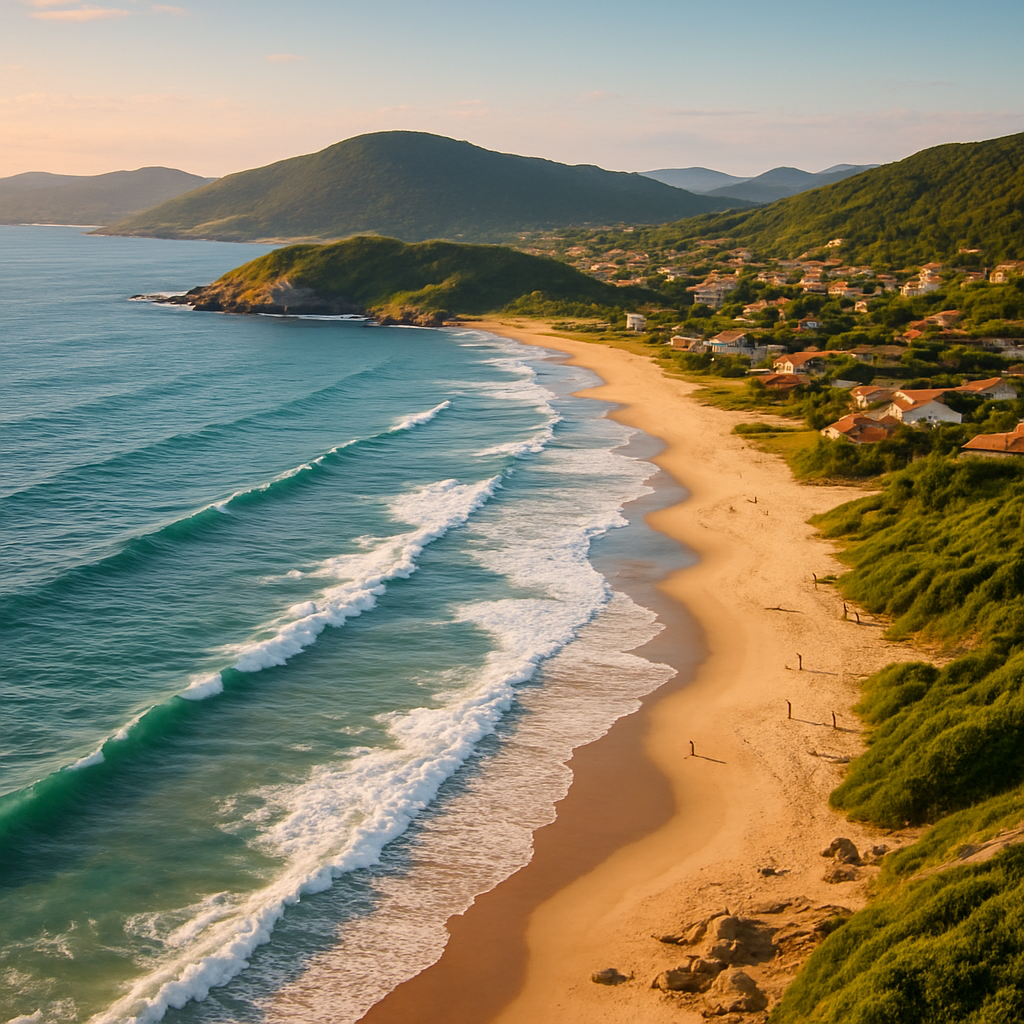
The geography does the heavy lifting. The east coast — Praia Mole's south end, the trail over the headland to Praia da Galheta — has been gay-coded for decades, and the city has done the rare smart thing of leaving it alone. No rebrand, no rainbow crosswalks, no marketing push. Just sand, surf, Atlantic Forest hills falling straight into the swell, and the unbroken understanding that this stretch is ours. By night the energy slides over the hill into Lagoa, where the bar strip on Avenida das Rendeiras runs lakeside and the sunset routine is non-negotiable.
Then there's the food, which most travelers underestimate until they've sat at Ostradamus in Ribeirão da Ilha watching oyster beds glow under a pink sky. The bay outside that restaurant produces the majority of Brazil's farmed oysters. The 1958 walls of handwritten notes at Bar do Arante in Pântano do Sul are a working museum nobody curates. The pastel de camarão at Box 32 inside the 1898 Mercado Público is the after-work ritual that explains how this city actually socializes. I gave it a 9.0 on Destination because few beach cities in South America hand you this much actual content between swims.
The caveat — and there's one, which is why my Traven-Dex lands at 8.4 instead of higher — is that Floripa's queer nightlife is a summer animal. December through Carnaval it roars. The rest of the year it naps with one eye open at Roma Bar. Show up in July and you'll get whale-watching down at Praia do Rosa and very little else. Show up between Christmas and Lent and the manezinho gays own this island, accent and all, and they don't need São Paulo's approval to throw the best summer in Brazil.
The stuff your travel guide buries on page 47
Brazil is one of the most legally progressive countries in the Western Hemisphere for LGBTQ+ travelers, and Florianópolis sits in a state — Santa Catarina — that mostly walks the talk. Same-sex marriage has been legal nationwide since 2013, joint adoption is fully recognized, and as of 2026 trans Brazilians can change their legal name and gender marker without surgery or judicial review thanks to the 2018 Supreme Court ruling on self-ID. Workplace and service discrimination based on sexual orientation or gender identity has been criminalized federally since 2019.
That's the law. The reality on Ilha da Magia tracks closely with it. The island leans liberal, university-town progressive in pockets, and you'll see openly gay locals across Lagoa da Conceição, Centro, and the east-coast beaches. As one reader pointed out, same-sex marriage has been legal nationally since 2013 and Santa Catarina enforces anti-discrimination protections — but the state legislature swings conservative, so read the room the moment you leave the island for the interior. For deeper legal questions, Aliança Nacional LGBTI+ and Grupo Dignidade are the national rights organizations I'd point you toward; for state-level concerns, Defensoria Pública de Santa Catarina handles human rights complaints.
Pro tip: Brazilian Portuguese is non-negotiable south of São Paulo. Floripa is not Rio, English drops off fast, and your Duolingo streak will be tested at the pastel counter in Mercado Público. Download offline translation, learn your numbers, and tip well — competence in Portuguese opens doors here that English never will.
One more thing the maps won't tell you: the island is bigger than it looks. Renting a car is genuinely the difference between "I saw Floripa" and "I saw the parking lot of my Airbnb in Centro." My Traven-Dex of 8.4 reflects an island that gives you everything — but only if you're willing to drive to find it.
What it actually feels like on the ground
Holding hands and PDA: On Praia Mole's south end and the trail to Galheta, holding hands is a non-event — that stretch of sand has been gay-coded for decades and nobody blinks. Lagoa da Conceição's bar strip is equally relaxed. Centro by day is fine; Centro at 1am is a different calculation, the same one you'd run in any Brazilian capital. The traditional Azorean fishing villages of the south island (Pântano do Sul, Ribeirão da Ilha) skew older and more conservative — affection rarely draws hostility, but discretion lands better.
Hotel check-in: Same-sex couples checking into Jurerê Internacional resorts, Lagoa pousadas, or Centro business hotels typically encounter zero friction. The boutique north-of-island properties cater to honeymooners regardless of configuration. If something feels off, it's an outlier — escalate.
Taxis and rideshare: Use 99 or Uber instead of hailing taxis at Praia Mole after dark — the road back to Lagoa is unlit, twisty, and not where you want to negotiate a fare in broken Portuguese. Both apps are widely available and the price-tracked receipt is a small but real safety layer.
Beaches and public spaces: Galheta is clothing-optional and queer-claimed — bring water, leave your tan lines, don't expect cell service on the 20-minute trail in. Petty theft on towels is the actual risk, not harassment. Don't leave your phone unattended while you swim, anywhere.
Late night in Centro: The cluster around Rua Conselheiro Mafra, Concorde Club, and Mix Café is well-trafficked on weekend nights. Walking solo back to your hotel after 2am — especially through quieter side streets — is when you call a car. Standard urban-Brazil street smarts apply.
Trans travelers: This deserves its own paragraph. Brazil legally recognizes self-ID and Floripa has an active trans community around UFSC and Lagoa — but Brazil also records, year after year, the world's highest absolute number of trans homicides. The island itself is generally safer than the national average, but heightened situational awareness in isolated areas at night is non-negotiable. ANTRA tracks national data and provides resources; locally, ADEH on the mainland is the go-to for LGBTQ+ legal and psychological support in Santa Catarina — locals route trans visitors there before the public health system, which can be slow and uneven outside Centro.
Verbal harassment: Generally low on the island, particularly in Lagoa and the east-coast beach corridor. If something happens, the federal human rights hotline Disque 100 takes anonymous reports and routes them to local authorities.
The queer geography
Lagoa da Conceição
Lagoa da Conceição is the soul of the island — a bohemian neighborhood wrapped around a 19-square-kilometer coastal lagoon, with sandboarding dunes on one side and the Atlantic surf coast a fifteen-minute drive over the hill on the other. The bar strip on Avenida das Rendeiras runs lakeside, and the sunset routine is non-negotiable: caipirinhas at a kiosk on the western edge, the water turning pink, somebody always with a guitar. Restaurants open late, the crowd skews young and creative, and the pace is exactly as fast as you want it to be. This is also the most LGBTQ+-comfortable district on the island — venues like Cafofo Pub, Donna Antonia, and Confraria das Artes draw a mixed queer-and-arty crowd, and proximity to the Praia Mole beach scene means the energy bleeds back and forth all summer. The UFSC NIGS research center sits nearby and feeds an academic-activist current you can feel at the cafés.
Centro
Downtown Floripa wraps around Praça XV de Novembro and the bay-facing Mercado Público, an 1898 yellow-and-white market hall where locals stack into Box 32 for pastel de camarão and after-work beer. The streets behind the market — Rua Conselheiro Mafra, the lanes climbing toward the cathedral — hold the city's oldest commercial buildings and most of its late-night LGBTQ+ infrastructure. The queer center of gravity is exactly here: start at Bar do Deca for a beer, drift to Roma Bar when the sun drops, end up at Concorde Club or Mix Café when you've stopped checking the time. By day, walk to Forte Santana at the foot of the Ponte Hercílio Luz for the bridge views and a quick history hit. The official tourism site maps the colonial-era walking circuit if that's your thing.
Praia Mole & Galheta
The east-coast surf beaches are the island's natural amphitheater — Atlantic Forest hills falling straight into a long arc of sand, the swell loud, the sunsets behind you because the beach faces east. Praia Mole is the social one: kiosks, surf schools, a parking lot scene that carries into the bars of Lagoa after dark. The unofficial gay stretch is the south end, past the lifeguard tower toward the rocks — keep walking until the bodies get prettier and the swimwear gets smaller, then put your towel down. From there, a 15-to-20-minute trail climbs over the headland to Praia da Galheta, a protected municipal park, clothing-optional, no kiosks, no cell service, no tan lines. It's been claimed by gay men and naturists for decades and the city has done the rare smart thing of leaving it alone.
Jurerê Internacional
The north-shore enclave is the flashy counterpoint to Lagoa's bohemia — wide planned streets, white-linen beach clubs, and pool parties that start at noon and end with somebody losing a sandal at 4am. P12, Donna, and Parador 32 anchor the daytime DJ circuit, and the crowd skews wealthy Paulista and Argentine in summer. It's not specifically gay, but it's notably mixed and the Jurerê crowd doesn't bat an eye at same-sex couples sharing a daybed. Pro tip: the day-pass economy is real — book ahead in peak season, expect a minimum spend, and don't drive yourself unless you've designated a driver before the first round of espumante.
Ribeirão da Ilha
On the south of the island, Ribeirão da Ilha is what Floripa looked like before the resorts: a slow Azorean fishing village of low colonial houses, a tiny church on a green, and oyster beds in the bay producing the majority of Brazil's farmed oysters. Ostradamus on the waterfront is the destination dinner, but the real ritual is a sequência de camarão — six courses of shrimp served family-style — at sunset, with a slow drive home along the southern coast. It's traditional, it's quiet, and it's the kind of date night that ends every good Floripa trip.
The experiences worth rearranging your itinerary for
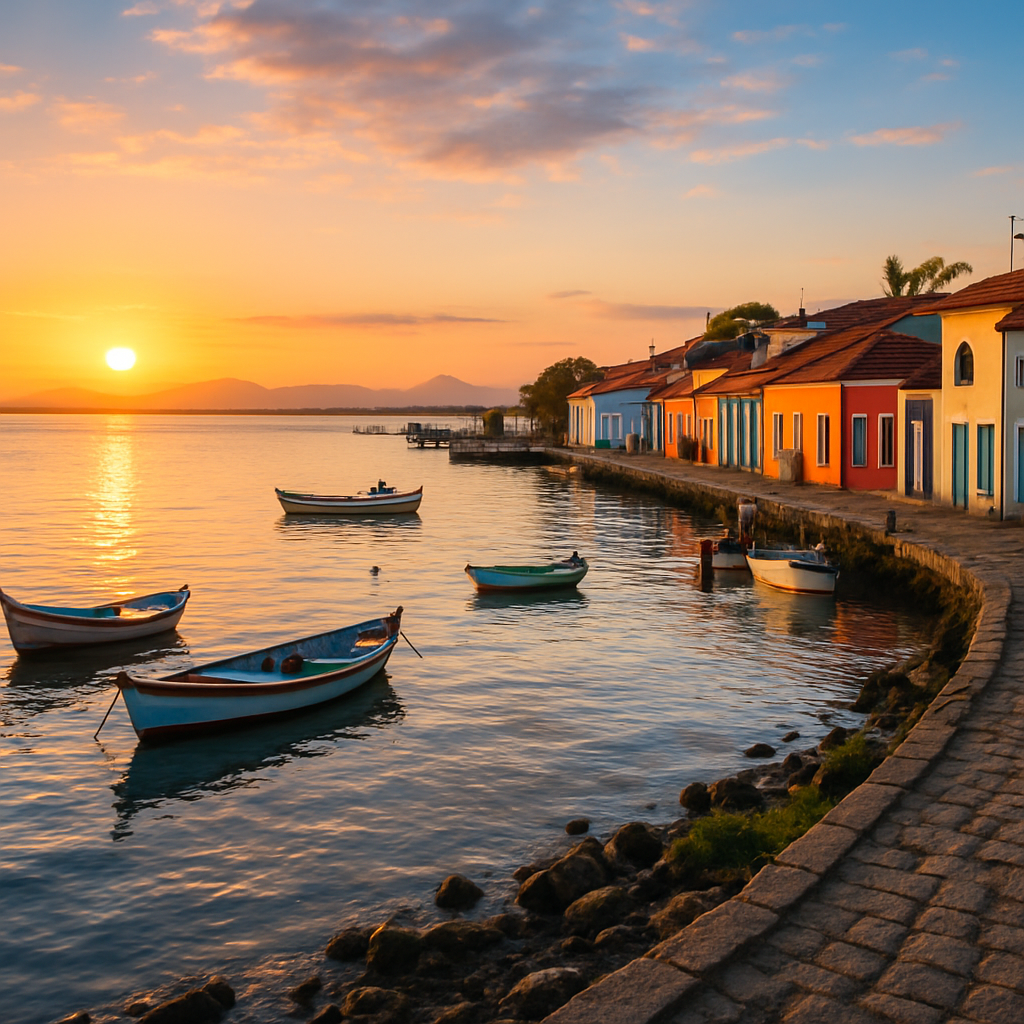
Sequência de Camarão at Sunset in Ribeirão da Ilha
Drive to the south of the island, find a waterfront table in Ribeirão da Ilha, and order the sequência de camarão — six courses of shrimp, served family-style, while the oyster beds in the bay glow under a pink sky. Order a cold bottle of something white, take your time, and drive home along the southern coast as the lights come on. This is the meal that ends every good Floripa trip.
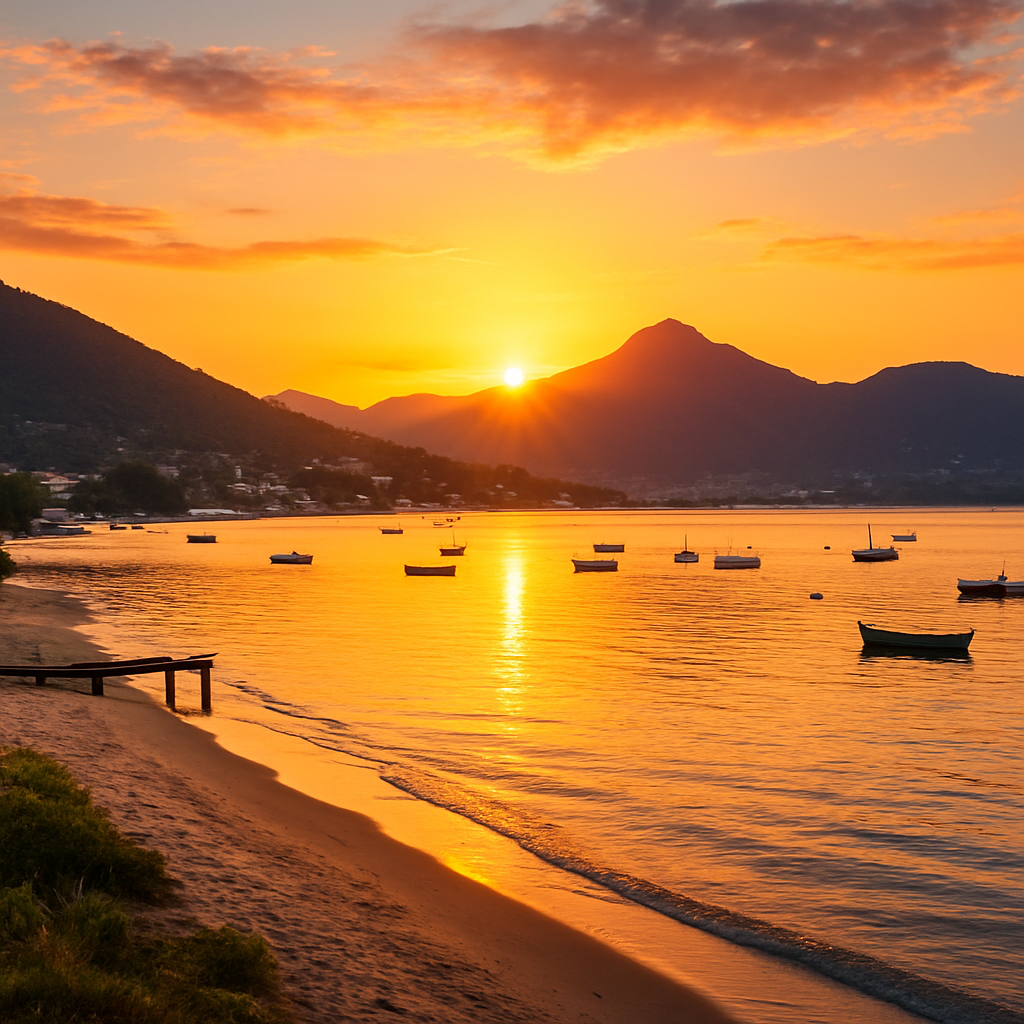
Sunset Caipirinhas on Lagoa da Conceição
Find a kiosk on the western edge of Lagoa da Conceição around 6pm in summer, order a caipirinha made with cachaça and whatever fruit they're cutting that afternoon, and watch the lagoon turn pink. Somebody always has a guitar, the breeze comes off the water, and the whole island slows down for forty minutes. This is the soft-launch of every good Floripa night.
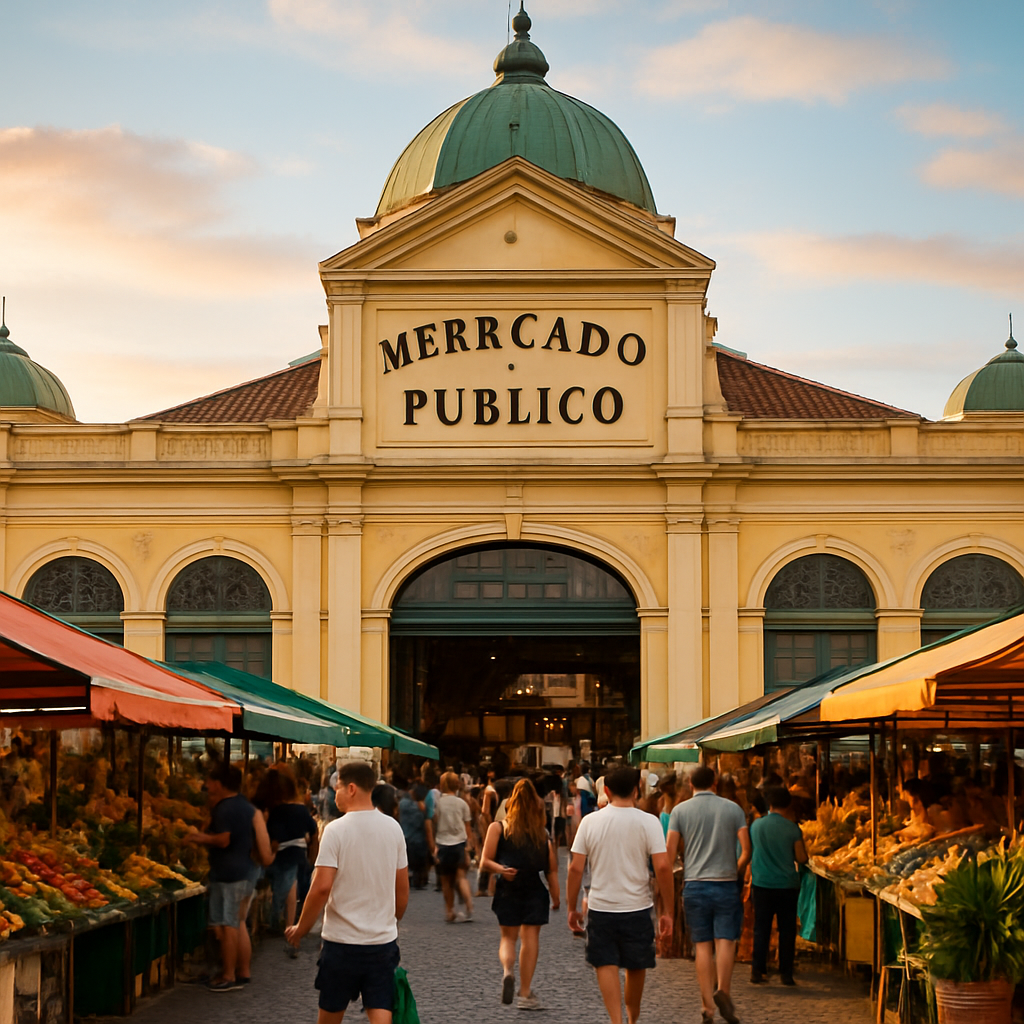
Pastel de Camarão at the Mercado Público
The yellow-and-white Mercado Público, built in 1898, is where Florianópolis actually socializes — and the shrimp pastel at Box 32, operating since 1978, is the one to order. Stand at the counter with a tall, cold beer, watch the after-work crowd stack up around you, and try not to order a second one. Friday happy hour is the show.
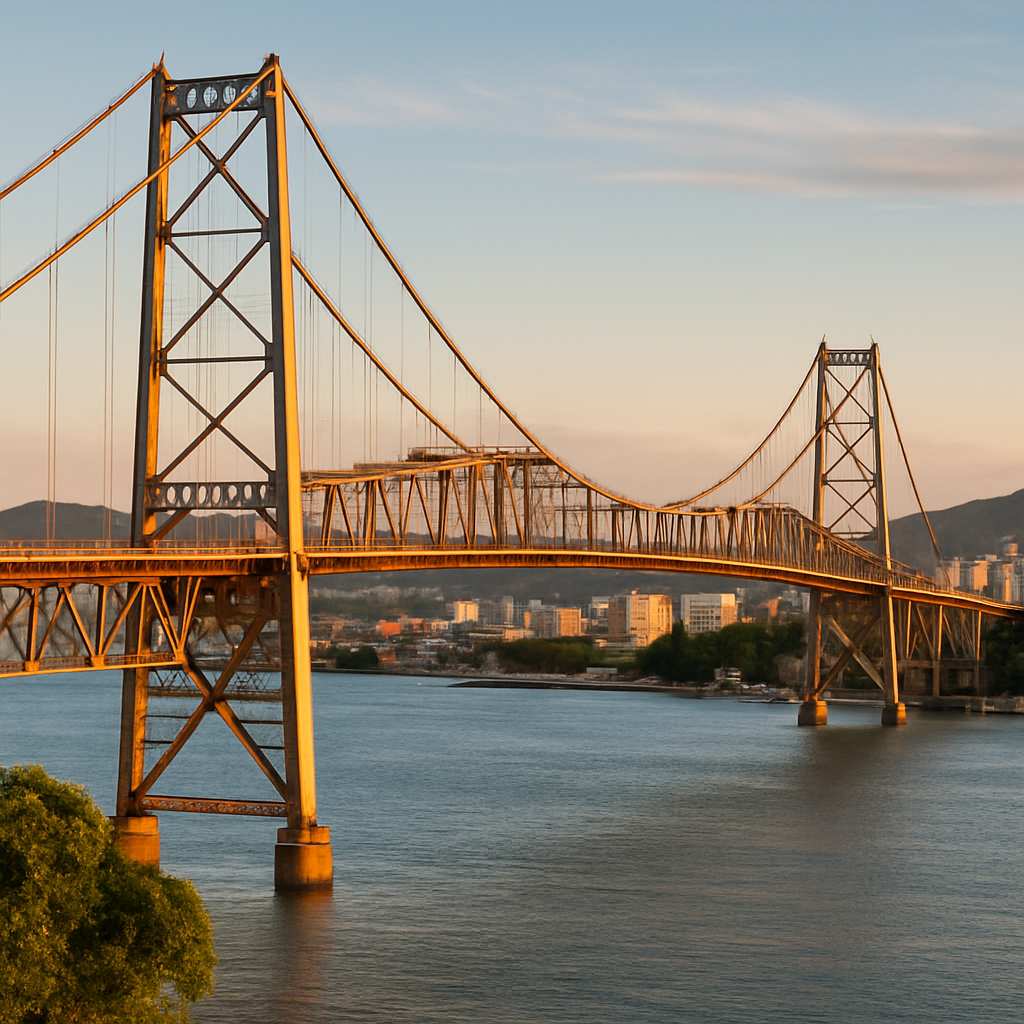
Ponte Hercílio Luz from Forte de Santana
Walk to the Forte de Santana, an 18th-century Portuguese fortification at the base of the Ponte Hercílio Luz, for the cleanest view you'll get of the bridge that defines the city's skyline. The fort itself is a small arms museum and a quick history hit; the angle on the bridge from below is what you came for. Pair it with a walk along Beira-Mar Norte at golden hour.
Southern Right Whales at Praia do Rosa
From June through November, southern right whales migrate to the protected waters off Praia do Rosa, 90 km south of Florianópolis, to calve. The crescent beach is listed by the Club des Plus Belles Baies du Monde, the boutique pousadas above it are some of the most scenic stays in Brazil, and a morning whale-watching boat is one of the best wildlife experiences on the South Atlantic coast.
The places I actually send people to
Advice that fits how you travel
Solo on Ilha da Magia is one of the easier solo trips in South America, and one of the more rewarding. The island runs on summer-camp logistics — beach by day, kiosk by sunset, bar strip by 11pm — and the social architecture means you don't have to engineer a single conversation. Stake out a kiosk on the western edge of Lagoa da Conceição at 6pm, order a caipirinha, and within forty minutes you'll be three deep into a chat with the next towel over. The crowd skews young, university-adjacent, and traveler-friendly — UFSC's presence keeps a fresh layer of Brazilian and exchange students cycling through the same bars all summer.
The apps run hot December through Carnaval and noticeably cool the rest of the year — Grindr in Lagoa pings constantly in January, less so in May. Praia Mole's south end is the natural daytime meet, and Friday happy hour at Box 32 in the Mercado Público is where the post-work locals layer in. For the budget-minded, R$300–450 a day covers hostel, beach, and a respectable amount of cachaça — Floripa is significantly cheaper than Rio or São Paulo for the same scene quality.
Pro tip: stay in Lagoa if you want to walk home from the bar, stay in Centro if you want the late-night dance floors at Mix Café and Concorde Club at your doorstep, and skip Jurerê as a solo base — it's a couples-and-crews scene, the day-club minimums are punishing for one person, and the cabs back to anywhere else are the longest on the island. I gave it a 9.0 on Destination because the island rewards solo travelers who actually explore it; rent a car or a scooter and the trip opens up in a way the bus network never will.
Same-sex couples have it good here. Floripa is among the easiest beach destinations in South America for romance — same-sex marriage has been legal in Brazil since 2013, joint adoption is fully recognized, and the island leans progressive enough that holding hands on Praia Mole, sharing a daybed at Donna, or checking into a Lagoa pousada is a non-event. My Chill score of 7.8 reflects exactly that: it's not zero-friction, but the friction is concentrated in places you can choose to skip.
For the trip-of-a-trip occasions, Ponta dos Ganchos just north of the city is the address — a 25-bungalow Relais & Châteaux peninsula that has been quietly hosting honeymooning couples of every configuration for years. For something more island-rooted, Hotel Quinta das Videiras near Ribeirão da Ilha drops you on a vineyard property with lakeside grounds and the slow Azorean south of the island at your door. The signature couples meal is a sequência de camarão at Ostradamus in Ribeirão — six courses of shrimp, oyster beds glowing under a pink sky, and the slow drive home along the southern coast that ends every good Floripa trip.
For the full romantic itinerary: a morning at Praia da Galheta (the trail in is part of the experience), a long lunch at a kiosk on Lagoa, sunset caipirinhas on Avenida das Rendeiras, and a late dinner at Tropekäo or Donna Antonia. If you can extend the trip, drive 90 km south to Praia do Rosa for two nights — boutique pousadas, whale season from June through November, and a stretch of coast that official Brazilian tourism hasn't fully marketed yet. PDA-wise, the east-coast beaches and Lagoa are zero-thought zones; the traditional Azorean fishing villages of the deep south skew older and more conservative, so dial it back to discreet and you'll be welcomed without issue.
LGBTQ+ families are fully recognized under Brazilian law as of 2026 — joint adoption, both parents on the birth certificate, school enrollment in either parent's name, no asterisks. Santa Catarina enforces anti-discrimination protections at the state level and Floripa, as the capital, generally walks the talk on the island itself. Two moms or two dads checking into a family pousada in Canasvieiras, ordering off the kids' menu at Café Cultura, or signing the Projeto TAMAR kids' workshop sheet is a non-event in the cosmopolitan parts of town.
For logistics, Costão do Santinho on the north of the island is the path of least resistance — a 600,000-square-meter all-inclusive that's been running since 1986, kids' club open, bracelet on, beach at the door. Hotel Il Campanario in Jurerê Internacional gives you the villa-style family suite and a serious pool complex without the day-pass scramble. Projeto TAMAR's public visitor center at Barra da Lagoa is the rare educational stop that genuinely earns the visit — live rescue tanks, real conservation work, and the kind of thing kids will actually remember. The calmer north-island beaches (Canasvieiras, Jurerê, Praia do Forte) are the right call for younger kids; Mole and Joaquina's Atlantic swell is genuinely dangerous and the lifeguards run a flag system you should heed.
Pro tip: rent a car. Strollers and the island's hill-and-sand geography don't mix on the bus network, and the difference between a smooth family week and a logistical grind is having your own four wheels and a working A/C. For any legal questions about family recognition while traveling — adoption documents, school registration, medical consent — Aliança Nacional LGBTI+ and Grupo Dignidade are the national rights organizations to bookmark before you fly.
What Florianópolis actually costs
Flights, visas, and the first 30 minutes
Airport: Hercílio Luz International Airport (FLN) sits on the south of the island, about 12 km from Centro and 25 km from Lagoa da Conceição. It's a modern terminal that opened in 2019 and handles approximately 20 direct routes — mostly São Paulo (GRU/CGH, ~1h), Rio (GIG, ~1h30), Buenos Aires (~2h), Santiago (~3h30), and Lisbon seasonally (~10h).
Visas (as of 2026): Travelers from the US, UK, EU, Canada, and Australia can typically enter visa-free for up to 90 days. Brazil reintroduced an eVisa requirement for US, Canadian, and Australian passport holders in 2025 — check the current status with the Brazilian Foreign Ministry before you book, because the rule has bounced around. EU and UK passports remain straightforwardly visa-free.
Airport to city: Uber and 99 are the move — R$40–70 to Centro or Lagoa, 20–30 minutes, widely available curbside. Metered taxis run R$60–90 for the same trip. The Executivo public bus is R$8–10 and connects to the TICEN terminal downtown in 40–60 minutes. If your itinerary includes the north or south beaches — and it should — rent a car at the airport for around R$150+/day. The island is bigger than it looks, and the bus network outside Centro is patchy at best.
Pro tip: don't fly into Florianópolis on a Saturday in January if you can avoid it. Peak summer arrivals stack up, the rideshare wait can stretch to 45 minutes, and the BR-101 north toward Jurerê turns into a parking lot. Land mid-week or arrive after 9pm and the whole experience smooths out.
Traven's seasonal breakdown
The questions everyone asks
Is Florianópolis safe for LGBTQ+ travelers?
Do I need to speak Portuguese?
When is Pride in Florianópolis?
How many days should I plan for Floripa?
Do I need to rent a car?
Is Praia Mole really the gay beach?
How much should I budget per day?
Screenshot this before you go
So should you actually go?
Go between December and March, rent a car, and base yourself in Lagoa or near Praia Mole — that's the trip. Florianópolis won't dazzle you the way Rio does on first sight, but it'll outlast Rio in your memory. As of 2026, Brazil's legal protections are real, the island walks the talk in the places LGBTQ+ travelers actually go, and the queer infrastructure — from the Galheta trail to the Centro dance floors to the oyster country in the south — is the kind of thing other beach destinations spend decades trying to manufacture. This one didn't have to. It just is.
Sources & Resources
Official links we reference when compiling this guide. Last verified 2026-05-03.
- ABGLT - Associação Brasileira de Lésbicas, Gays, Bissexuais, Travestis, Transexuais e Intersexos
- ADEH - Associação em Defesa dos Direitos Humanos com Enfoque na Sexualidade
- Aliança Nacional LGBTI+
- ANTRA - Associação Nacional de Travestis e Transexuais
- Defensoria Pública de Santa Catarina - Núcleo de Direitos Humanos
- Disque 100 - Human Rights Hotline (Brazil)
- Grupo Dignidade (Brazilian LGBTQ+ rights organization)
- Ministério Público de Santa Catarina
- UFSC NIGS - Núcleo de Identidades de Gênero e Subjetividades
- Visit Floripa - Official Tourism Site