
Foz doesn't hand you a city. It hands you a wall of water at forty meters, a coati on the railing, and three countries glowing across the same river at sunset.
It's a Tuesday afternoon in late May, and I'm standing on the catwalk above the Garganta do Diabo with my husband, both of us soaked from the mist that doesn't care that we're forty meters away from the actual water. A coati ambles across the railing like a customs officer working his beat. A French family is screaming with delight behind us. Somewhere down the trail a Brazilian honeymoon couple is taking the same photograph we just took. Nobody clocks us. Nobody cares. The falls are doing what the falls do, which is reduce every human concern in a five-kilometer radius to background noise.
That's Foz do Iguaçu. It's not a city you come to for the scene — let me say that up front, because I gave it a 7.0 on Scene and a 4.5 on Pulse and I'm not going to pretend otherwise. There's no gay village. There's no Castro, no Chueca, no Zona Rosa. The local community gathers on Grindr, in WhatsApp groups, and at the annual Parada LGBT de Foz in Praça da Paz. If you want a real night out, Curitiba is three hours away by plane. Foz is what the city is around the falls — and what the falls are is one of the great natural wonders of the planet, which is a hell of a thing to be around.
What surprised me is how easy it is to be a gay couple here. Brazil's legal floor is among the strongest in the hemisphere — same-sex marriage since 2013, self-ID since 2018, the 2019 STF ruling criminalizing homophobia as racism — and the international resort corridor along Avenida das Cataratas runs on tourist-bubble logistics where check-in is a non-event. Belmond has a documented inclusion policy. Wyndham is an IGLTA member. The Brazilian-owned chains — Bourbon, Mabu, Recanto — just want your credit card. The friction points exist (residential Centro at 2am, the Ponte da Amizade to Paraguay, anywhere outside the tourist envelope), and I'll walk you through them, but the headline is that this is one of the easier romantic trips in South America to plan.
The other thing nobody tells you: the triple-border energy is the actual personality. Breakfast in Brazil, lunch at the Argentine side of the falls, a duty-free shopping run into Paraguay, sunset at the Marco das Três Fronteiras watching three countries glow at once. Itaipu at night lights up like a brutalist disco with a cocktail bar at the viewpoint. The Templo Budista on the hill above town is free and criminally underrated. Cross the Ponte Tancredo Neves to Puerto Iguazú for at least one night because Argentina's wine is better and the legal framework is stronger and the Garganta del Diablo walkway will live in your head for years. Come for the falls. Stay for the geography. The rest of it works.
The stuff your travel guide buries on page 47
Brazil is, on paper, one of the most progressive countries in Latin America for LGBTQ+ travelers. As of 2026, same-sex marriage has been legal nationwide since 2013, joint adoption is fully recognized, and the Supreme Federal Tribunal (STF) ruled in 2019 that homophobia and transphobia are criminal offenses equivalent to racism. Self-ID gender recognition has been available since 2018, and the public health system (SUS) provides comprehensive trans healthcare. The legal floor is high — that's why I gave it a 9.5 on Legal.
The reality on the ground in Foz do Iguaçu is more textured. This is a conservative border city, working-class outside the tourist corridor, with a strong evangelical presence in residential neighborhoods like Vila A. Federal law protects you everywhere; cultural temperature shifts block by block. International resorts along Avenida das Cataratas — Belmond, Bourbon, Wyndham, Recanto — are tourist bubbles where same-sex couples check in without a second glance. Smaller pousadas in Centro generally won't blink either, but if you want to skip any awkwardness around the cama de casal question, book one of the chains.
Pro tip: bring your passport literally everywhere. You'll cross into Argentina for the other side of the falls and likely into Paraguay for the shopping, and Brazilian federal police at the bridges do not play around. If something does go sideways, Grupo Dignidade is the Paraná-based LGBTQ+ rights organization that handles advocacy and legal referrals across the state, and the Defensoria Pública do Paraná provides free legal aid to anyone in the state regardless of nationality.
For PDA: hand-holding at the falls, in resorts, and around the Marco das Três Fronteiras at sunset is a non-event. On the Avenida Jorge Schimmelpfeng bar strip, you're fine in groups, especially after dark. In residential Centro during daylight hours and in outlying neighborhoods like Vila A, dial it back. Across the Friendship Bridge in Ciudad del Este, dial it back to zero — Paraguay does not recognize same-sex unions and the border zone is not where you want to test it.
What it actually feels like on the ground
Holding hands at the falls. The Parque Nacional do Iguaçu is the safest place in the city. Well-policed, full of international families, and the queer couples I've seen on the Brazilian-side trails get nothing but indifferent shrugs from passing tour groups. Same goes for Macuco Safari, the boat tour to the base of the falls, and Parque das Aves next door.
Hotel check-in. Resort row along Avenida das Cataratas is straightforward — these properties cater to international tourism and same-sex couples are unremarkable. Wyndham is an IGLTA member and Belmond has a documented inclusion policy. Smaller independent pousadas in Centro may default to assuming a twin-bed setup; ask for cama de casal when you book and confirm in writing.
Taxis and apps. Uber and 99 are reliable, cheaper than airport taxis, and the move I default to. Drivers in Foz are mostly transactional — they're not interested in your relationship, just the destination. Confirm price before any unmetered ride.
Centro at night. The Schimmelpfeng strip itself is fine through about 2am — bars like Capitão Bar, Cervejaria Bárbaro, and Wonka Bar all sit on or near it, and there's a steady mixed crowd. Two blocks off the strip, the energy changes. Uber the four blocks back to your hotel even when it feels stupid, especially after the bars close around 3am.
Border crossings. Avoid the Ponte da Amizade on foot at night — the Paraguay border bridge is a known smuggling corridor and not where you want to be a queer tourist with a phone out. Cross by car or bus during daylight, and save Ciudad del Este for a daytime shopping run with discretion. The Ponte Tancredo Neves to Argentina is calmer and the Puerto Iguazú side has stronger LGBTQ+ protections.
Trans travelers. This needs its own paragraph, not a buried sentence. Brazil's legal framework is among the best in the hemisphere — self-ID since 2018, SUS-funded healthcare — but the country also has the world's highest reported rate of trans homicide, and Foz is a conservative border city where trans visibility outside resort zones is limited. International tourist areas are generally respectful. Avoid solo nighttime walks through residential neighborhoods, particularly near border crossings. ANTRA is the national association of travestis and transsexuals and the best resource for documented incident reporting and legal support.
Verbal harassment. Rare in tourist zones, more possible in working-class outlying neighborhoods. If something happens, the Polícia Civil do Paraná operates a Delegacia da Mulher e Diversidade specifically equipped to handle gender and orientation-based incidents. For medical emergencies, the Hospital Municipal Padre Germano Lauck is the public hospital that handles SUS-covered care including trans healthcare access.
The queer geography
Let me set expectations before we walk through neighborhoods: Foz do Iguaçu does not have a gay village. There's no Zona Rosa, no Chueca, no Castro. What it has is a small queer community that gathers in WhatsApp groups, on Grindr, and at the annual Parada LGBT de Foz in Praça da Paz, organized in part by Grupo Dignidade affiliates. The actual scene is regional — Curitiba, three hours by plane, is where you go for a real night out. Foz is what the city is around the falls. Here's how to read it.
Centro
The downtown core, organized around Avenida Brasil and Avenida Jorge Schimmelpfeng. Centro is working-class Brazilian — concrete buildings, evangelical churches, currency exchanges, and the city's main commercial life pressed into a few dozen blocks. By day it's transactional and not particularly scenic. After dark, Schimmelpfeng wakes up: this is the city's bar strip, where locals and travelers cluster around Capitão Bar for live music, Cervejaria Bárbaro for house-brewed beer, and Wonka Bar for late-night DJ sets. There's no dedicated gay bar — the closest thing is the mixed crowd that ends up on Schimmelpfeng by midnight regardless of orientation. Eat dinner at Búfalo Branco for the rodízio, Zaragoza for paella in a room that's been operating since the 1980s, or Tempero da Bahia if you want moqueca and acarajé done by people who know what they're doing.
Vila Yolanda & the Avenida das Cataratas corridor
The resort spine. Avenida das Cataratas is the road from town to the falls, and most of the international-class hotels — Belmond, Bourbon, Mabu Thermas, Wyndham, Recanto — are strung along it. The neighborhood itself isn't urban; it's pools, palm trees, jungle on the edges, and the sound of cicadas at dusk. Stop at Vila Maria for dinner in a garden setting, Vó Bertila for Italian-Brazilian comfort food, or Rafain Churrascaria for the dinner-and-folkloric-show experience that's been on the Foz tourist circuit for decades. This is where international queer travelers actually stay — discreet, comfortable, and walkable to nothing, but the resorts run shuttles to the falls.
Parque Nacional do Iguaçu
Not a neighborhood in the residential sense — it's the UNESCO-listed national park that anchors everything. The Brazilian side gives you the panoramic catwalk to the Garganta do Diabo and a view that genuinely earns its 9.4 on Destination. Belmond Hotel das Cataratas, the only lodging inside the park, lets guests walk the trails after the gates close to day visitors — it's the most romantic queer-friendly play in the whole region if your budget allows. Macuco Safari launches its boats from inside the park, and Parque das Aves sits at the entrance.
Porto Meira & Marco das Três Fronteiras
Southwest of the city center, where the Iguaçu meets the Paraná and three countries touch. The redeveloped Marco das Três Fronteiras complex — viewpoint, museum, and an evening sound-and-light show — has quietly become the city's unofficial sunset hangout, and yes, queer couples photograph each other there without incident. Riverside rodízio de peixe spots near Porto Meira are where you eat surubi pulled from the same river you're looking at.
Puerto Iguazú (Argentina)
Across the Ponte Tancredo Neves, twenty minutes by car. Smaller and quieter than Foz, but Argentina has nationally legalized same-sex marriage since 2010 and gender identity protections since 2012, and you feel the difference even in a town this size. The Argentine side of the falls — roughly 80% of the cascades — gets you longer trails and the Garganta del Diablo walkway. The wine is better, the nightlife is more relaxed, and the taxi back through immigration is easier than it sounds. Worth a night.
For up-to-date community resources and legal advocacy across Paraná, the Aliança Nacional LGBTI+ tracks state-level news and partner organizations. Civic information for the city itself runs through the Prefeitura de Foz do Iguaçu.
The experiences worth rearranging your itinerary for
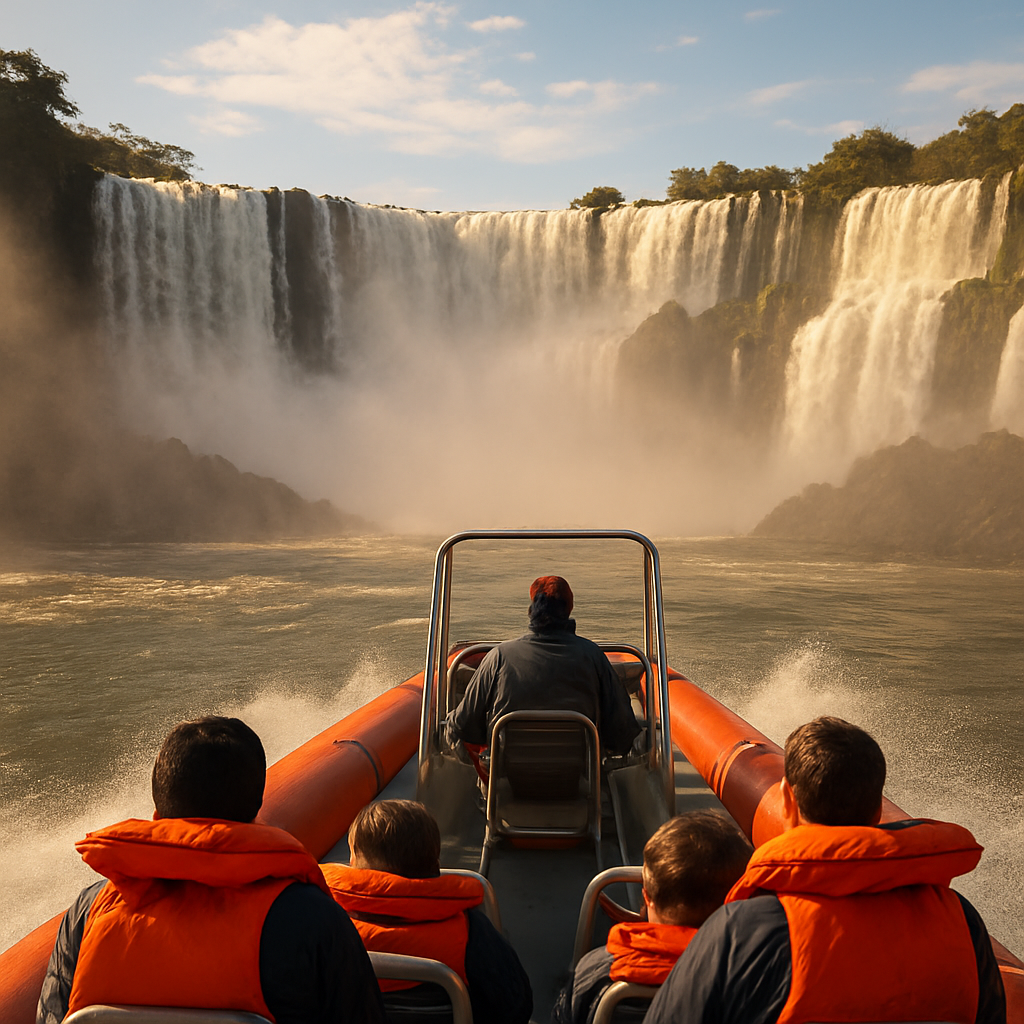
Get Soaked Under the Falls on the Macuco Safari
Skip the helicopter. The Macuco Safari boat tour starts with an electric jeep through the Atlantic Forest inside the park, then drops you into a Zodiac that runs straight up the canyon to the base of the cascades. You will be drenched. You'll be screaming. You'll clutch a stranger's husband. It's the best money you'll spend in Brazil and the only way to feel the falls the way the falls actually feel — water, noise, mist, scale that doesn't fit in a photograph.

Climb to the Templo Budista at Sunset
The Templo Budista sits on a hill above town and is criminally underrated — free to enter, golden Buddhas in scale that surprises you, and a panorama over Foz and the Paraná that lands hardest at golden hour. Mornings get tour buses; sunset is mostly couples and contemplative travelers. Bring a jacket — the wind picks up — and stay for the call to a kind of stillness you didn't think this border city had in it.
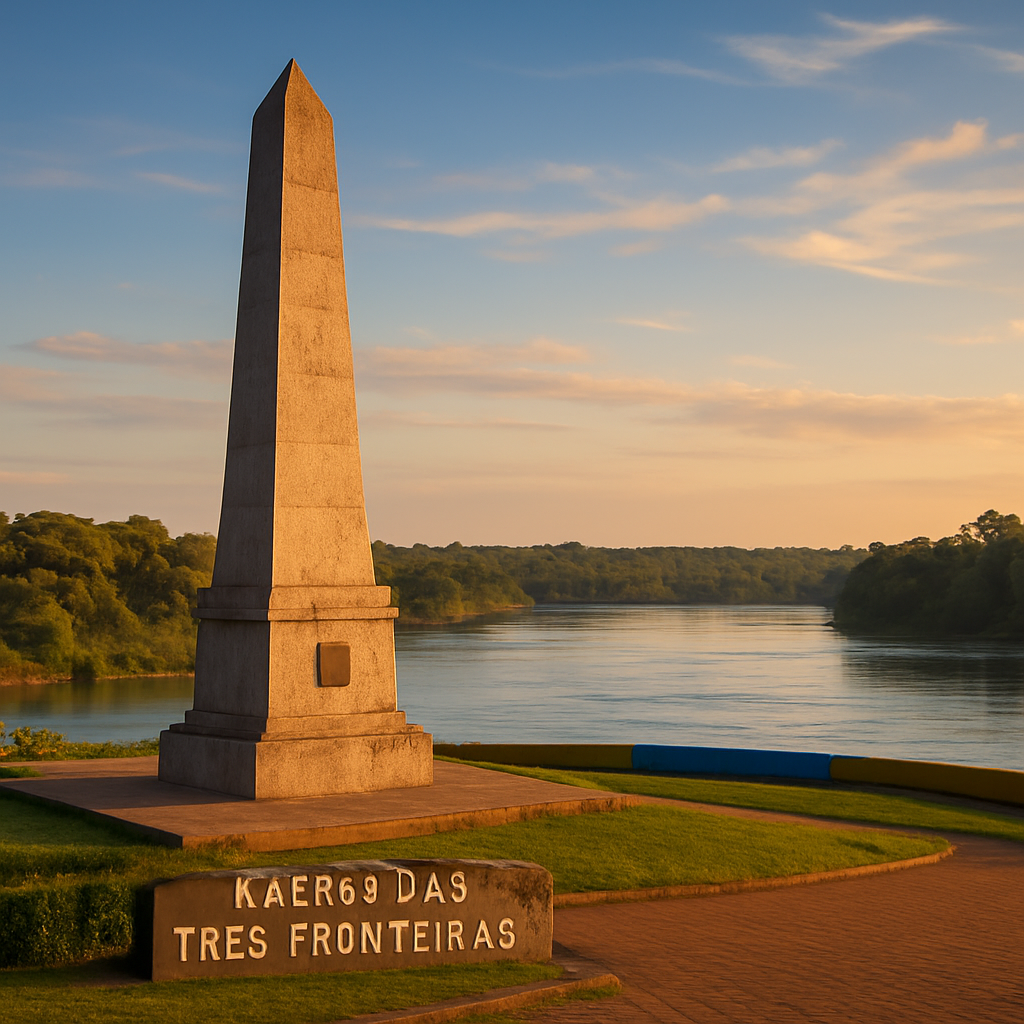
Watch Three Countries Light Up at Marco das Três Fronteiras
The Marco das Três Fronteiras got a full redesign in 2016 — viewpoint, museum, an evening sound-and-light show — and has quietly become the city's unofficial sunset hangout. You stand on a balcony in Brazil and watch the lights of Puerto Iguazú blink on across the river while Paraguay glows to your right. There's a cocktail bar. Couples photograph each other without incident. It's kitsch, it's cinematic, and you'll absolutely text the picture to your group chat.

Take the Nighttime Illumination Tour at Itaipu
The Itaipu dam is one of the Seven Wonders of the Modern World per the American Society of Civil Engineers — second-largest hydroelectric plant on earth, binational with Paraguay, the kind of structure that stops looking like a building and starts looking like a landscape. The nighttime illumination tour is the move: the dam lights up like a brutalist disco, there's a cocktail bar at the viewpoint, and you'll spend an hour wondering why nobody told you a hydroelectric tour could be a date.
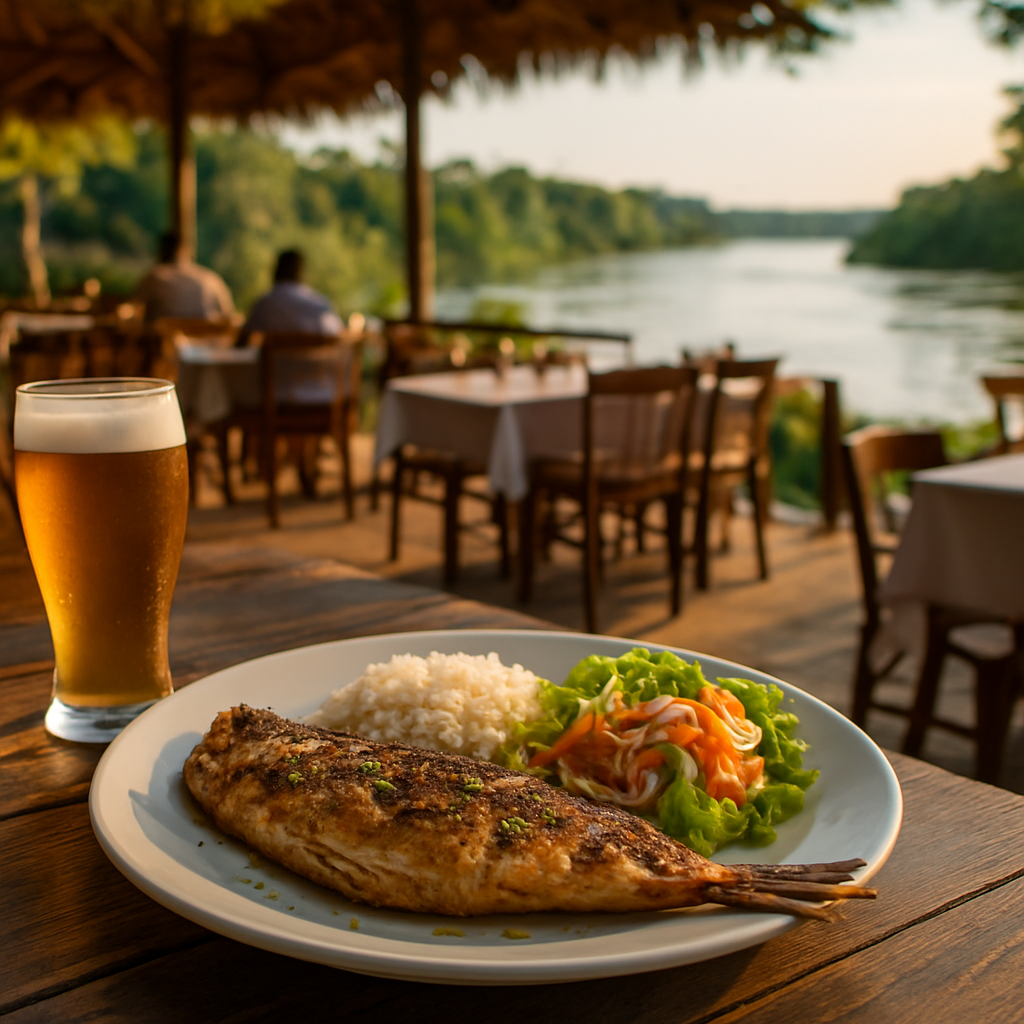
Eat Rodízio de Peixe by the River in Porto Meira
Most travelers do at least one rodízio de peixe — all-you-can-eat fish service — and the move is to do it at one of the riverside spots near Porto Meira, looking at the same Paraná the surubi on your plate came out of an hour ago. Order the caipirinha de maracujá even if you don't usually drink sweet — it's the local move — and pace yourself, because the fish keeps coming. The view alone is worth the table.
The places I actually send people to
Advice that fits how you travel
Foz is an unusual solo trip. It's not a city you come to for the scene — there isn't one in the Curitiba or São Paulo sense — and that actually works in your favor as a solo traveler. The international tourist infrastructure means you'll be surrounded by people from everywhere doing the same things you are: the falls, Macuco Safari, Itaipu, the Marco das Três Fronteiras at sunset. You won't feel conspicuous eating alone at Búfalo Branco or Empório com Arte, and the resort shuttles to the park run with mixed groups of solo travelers, couples, and families.
For meeting people, set realistic expectations: the apps are how the local community connects, and Grindr will show you a small but real grid in Centro after dark. The Avenida Jorge Schimmelpfeng bar strip is where you go when you want to be around people without a plan — Capitão Bar for live music, Cervejaria Bárbaro for craft beer with a crowd that travels, Wonka Bar if you want to actually dance. None of these are gay bars. All of them are mixed enough that nobody clocks anyone. The real strategy: cross to Puerto Iguazú for a night, where Argentina's stronger LGBTQ+ legal framework translates to a more visibly relaxed atmosphere even in a small town.
Solo budget plays well here. R$280-420/day covers a clean room in Centro, Uber to the park, the entrance fees, and meals at the better mid-range rooms in Centro. Pro tip: the public bus (Linha 120) costs R$5 and runs from the airport through Centro all the way to the falls — if you're traveling light, you can skip the rental car entirely. Stay on the Schimmelpfeng strip after dark but Uber the four blocks home when the bars close. It feels stupid. Do it anyway.
This is where Foz earns its 9.4 on Destination. Same-sex couples will find this one of the easier romantic trips in South America to plan, specifically because the international resort corridor along Avenida das Cataratas is built for two-person occupancy and indifferent to who those two people are. Belmond has a documented LGBTQ+ inclusion policy, Wyndham is an IGLTA member, and the Brazilian-owned resorts — Bourbon, Mabu Thermas, Recanto — run on tourist-bubble logistics where check-in is a non-event. Ask for cama de casal when you book and confirm it in writing; that's the only friction point and it's avoidable.
For the actual romance, the moves write themselves. Stay at Belmond Hotel das Cataratas if the budget allows — guests get the trails after the gates close, which means you can stand alone above the Garganta do Diabo at sunrise with no tour groups. Eat dinner at Vila Maria in the garden or Vó Bertila for Italian-Brazilian comfort food on the way back from the park. Take the Itaipu nighttime illumination tour — the dam lights up like a brutalist disco and there's a cocktail bar at the viewpoint, which is one of the more unexpected date nights I've sent couples on. End the trip at the Marco das Três Fronteiras at sunset, watching three countries glow simultaneously. Couples photograph each other there without incident.
PDA reads cleanly at the falls, in the resort corridor, around Itaipu, and at the Marco. Hand-holding on the Brazilian-side catwalks gets indifferent shrugs from passing tour groups. Save the more demonstrative moments for resort grounds and the parks, dial it back on the Schimmelpfeng strip after midnight, and dial it to zero across the Ponte da Amizade in Ciudad del Este — Paraguay does not recognize same-sex unions and the border zone is not where you want to test it. Cross to Puerto Iguazú for at least one night; the wine is better, the Argentine legal framework is stronger, and the Garganta del Diablo walkway on the Argentine side is the moment of the trip you'll talk about for years.
LGBTQ+ families travel well in Foz, and the legal floor is one of the highest in Latin America. As of 2026, joint adoption is fully recognized in Brazil, same-sex marriage has been legal since 2013, and the STF's 2019 ruling criminalizes homophobia and transphobia as equivalent to racism. Self-ID gender recognition has been law since 2018. Two-mom and two-dad families are recognized on hotel registrations, park entries, and emergency medical forms without legal exposure — the paperwork lines up.
The destination is genuinely kid-friendly. Parque das Aves at the entrance to the national park is the gentlest, most photogenic hour you'll spend with kids in Brazil — walk-through aviaries with toucans and macaws at eye level, conservation programming that's actually interesting, and a footprint small enough that nobody melts down. The Macuco Safari boat tour has age minimums but kids who clear them love it. Itaipu has a panoramic tour version designed for families, and resort row along Avenida das Cataratas — particularly Mabu Thermas and Recanto Cataratas with their thermal pool complexes — is where you decompress between attractions. The thermal pools alone justify the half-day off.
Practical logistics: strollers work fine on the Brazilian-side catwalks at the falls and across the resort properties. The Argentine side has longer trails and more stairs, so a carrier may serve better there. Most resorts include shuttles to the park, which beats negotiating an Uber with car seats every morning. Vila Yolanda and the Cataratas corridor read as a tourist bubble where LGBTQ+ families are unremarkable; Centro is more conservative working-class Brazilian and you may notice a second look in residential areas, but nothing that crosses into hostility. Pro tip: keep passports for every family member in a waterproof pouch — you'll cross at least one border on this trip, and Brazilian federal police at the bridges check every document for every person, kids included.
What Foz do Iguaçu actually costs
Flights, visas, and the first 30 minutes
Airport: Foz do Iguaçu International Airport (IGU), officially Cataratas International Airport, sits about 13 km from the city center on the road to the falls — one of the more conveniently located airports in Brazil.
Direct routes: Foz is well-connected within South America, with approximately 10 direct routes operating regularly. Domestic service runs frequently from São Paulo (GRU and CGH, ~1h45m), Rio de Janeiro (GIG, ~2h15m), Curitiba (~1h), Brasília (~2h), and Belo Horizonte (~2h30m) on LATAM, GOL, and Azul. International direct service typically runs from Buenos Aires (~2h) and occasionally from Lima and Asunción depending on the season. Most North American and European travelers connect through São Paulo or Buenos Aires.
Visas (as of 2026): US passport holders need a visa as of April 2025 — the e-visa is the move, valid for 90 days and processed online. Canadian and Australian travelers also typically need a visa, with the e-visa available for 90 days. UK and EU passport holders generally enter visa-free for 90 days. Rules can shift — confirm directly with the Brazilian consulate before booking. Pro tip: bring your passport literally everywhere in Foz, because you'll likely cross into Argentina for the other side of the falls and into Paraguay for the shopping, and Brazilian federal police at the bridges do not play around.
Airport to city: Uber and 99 are the cleanest play — R$35-55, 20-25 minutes, pickup at the designated zone. Fixed-rate taxis from the stand outside arrivals run R$60-90 for the same trip; confirm price before departure. The public bus (Linha 120) costs R$5 and takes 45-60 minutes via the TTU terminal — useful if you're staying near Centro and traveling light. Many resorts on Avenida das Cataratas (BR-469) include hotel shuttles, sometimes complimentary, sometimes R$30-50 — check at booking. Renting a car (R$120-220/day) makes sense if you're planning to hit Itaipu, the Marco das Três Fronteiras, and the Argentine side of the falls under your own steam.
Traven's seasonal breakdown
The questions everyone asks
Is Foz do Iguaçu safe for LGBTQ+ travelers?
Do I need a visa to enter Brazil?
How many days do I need in Foz do Iguaçu?
Should I stay in Centro or on Avenida das Cataratas?
Is there a gay scene in Foz do Iguaçu?
Can same-sex couples hold hands in public?
Should I cross to Argentina and Paraguay?
Screenshot this before you go
So should you actually go?
Go. Foz do Iguaçu isn't a scene city and it's not pretending to be — but my Traven-Dex of 7.7 reflects a place where the legal floor is one of the strongest in Latin America, the international resort corridor is genuinely couple-friendly, and the falls are a 9.4-on-Destination natural wonder that doesn't have a real rival on this hemisphere. Stay three nights, sleep on Avenida das Cataratas, cross to Puerto Iguazú for at least one of them, and treat Ciudad del Este as a daytime shopping run rather than a hangout. LGBTQ+ travelers will find this one of the easier romantic trips in South America to plan, and the trade-off — limited nightlife in exchange for the eighth wonder of nature on your doorstep — is one I'd make every time.
Sources & Resources
Official links we reference when compiling this guide. Last verified 2026-05-04.
- Aliança Nacional LGBTI+
- ANTRA (National Association of Travestis and Transsexuals)
- Defensoria Pública do Paraná
- Grupo Dignidade (Paraná LGBTQ+ rights org)
- Ministério Público do Paraná
- Polícia Civil do Paraná (Delegacia da Mulher e Diversidade)
- Prefeitura de Foz do Iguaçu (City Hall)
- SUS — Hospital Municipal Padre Germano Lauck