
Pipa doesn't perform for anyone. It just hands you a caipirinha de cajá at 5pm on a red-rock cliff and lets the Atlantic do the rest.
Pipa isn't a gay destination — it's a hippie-surf village that forgot to care, and that's the entire point. There's no rainbow crosswalk, no dedicated bar, no scene infrastructure to speak of. What there is, is a single curving cobblestone avenue, a red-rock cliff that drops into the Atlantic, and roughly thirty years of European backpackers, Brazilian surfers, and same-sex couples folded into the same beach towel without anyone running a census. My Traven-Dex of 7.7 is built almost entirely on that — the legal floor of 9.5 underneath, the Destination score of 8.6 doing the heavy lifting on top, and a Pulse of 4.2 telling you exactly what it isn't.
The geography helps. You can walk Pipa end-to-end in twenty minutes, which means there's no gay village because there's no room for one. The action stretches along Avenida Baía dos Golfinhos — fairy lights between the trees, açaí kiosks bleeding into surf shops bleeding into seafood restaurants — and clusters at the Chapadão, the dramatic red headland at the south end where the village migrates every day at 5pm. That sunset migration is the closest thing this town has to a gay event. It's not advertised as anything. Surfers, couples, kids on skateboards, somebody working an acoustic Maria Bethânia cover. The sound system gets louder, a caipirinha de cajá gets passed, and the gaze on the cliff is as unbothered as the gaze on Praia do Amor below — which is to say, completely.
The food is the surprise. Cruzeiro do Pescador on the hilltop above Praia do Amor lines up the catch, the technique, and the view in one shot. Toca da Coruja — founded in 1993, Roteiros de Charme, 14,000 m² of preserved Mata Atlântica on the property — has been quietly hosting same-sex honeymooners for three decades and has the only Relais & Châteaux-affiliated kitchen in the region. Tapas on the main drag pairs Iberian small plates with Northeastern ingredients and a wine list that's read the room. None of these places trade on being gay-friendly because they don't have to.
Here's the trade-off, stated plainly. If you want capital-Q queer nightlife with infrastructure — clubs, parties, scene density — base yourself in Natal and day-trip down. The Parada do Orgulho LGBT de Natal lands in late September or early October and is one of the bigger Pride events in the Brazilian Northeast. But if you want hammocks, surf, dolphins at 7am, and a boyfriend you'll cry about on the bus home, you do it the other way around. I gave it a 7.0 on Scene because the scene barely exists, and that's exactly why people who come here come back.
The stuff your travel guide buries on page 47
Brazil is, on paper, one of the most legally progressive countries in the Americas for LGBTQ+ travelers. As of 2026, same-sex marriage has been legal nationwide since 2013, joint adoption is fully recognized, and the Supreme Court ruled in 2018 that trans citizens can update their name and gender markers on official documents without surgery, judicial approval, or medical gatekeeping — full self-ID. Anti-discrimination protections are broad and were strengthened in 2019 when the Supreme Court criminalized homophobia and transphobia under the country's existing racism statute. The Ministério dos Direitos Humanos e da Cidadania oversees federal enforcement, and organizations like the Aliança Nacional LGBTI+ track ongoing policy at the state level.
Law on paper and life on the ground aren't always the same country, though. Brazil generally records the highest absolute number of anti-trans murders worldwide per ANTRA's annual dossier, and groups like Grupo Gay da Bahia document violence that overwhelmingly happens far from tourist coastlines. Pipa is a hippie-surf village that has been hosting international travelers for thirty years, and the local economy has zero interest in making same-sex couples uncomfortable. Within the tourist core — Avenida Baía dos Golfinhos, the Chapadão cliffs, the beach strip — you should expect a relaxed, mind-your-own-business reception.
Pro tip: there's no LGBTQ+ community center in Pipa itself. The nearest formal resources are in Natal, roughly 85 km north. Save Disque 100 before you arrive — it's the federal human rights hotline, works from any phone, and routes complaints to the appropriate state body. For Rio Grande do Norte specifically, the Defensoria Pública do Rio Grande do Norte handles LGBTQ+-related cases statewide and tends to be more clued-in than a small-town police desk.
Two practical notes that will save you grief. As of April 2025, US, Canadian, and Australian citizens need an e-visa for Brazil (typically 90 days, applied online); UK and EU passports are visa-free for the same window. And Brazil's SUS public health system technically provides free PrEP to foreigners with documentation, but Pipa's small clinic isn't a dispensing site — bring what you need from home or build in a Natal pharmacy run. ATMs in town are also temperamental and routinely run dry on weekends, so pull cash in Natal or Tibau do Sul on the way down; several queer-owned pousadas off the main drag are still cash-preferred.
What it actually feels like on the ground
Holding hands on the main strip: On Avenida Baía dos Golfinhos, Praia do Amor, and the Chapadão cliffs at sunset, same-sex PDA is unremarkable. The crowd is international backpackers, surfers, and Brazilian beach-trip regulars, and openly queer travelers are visible nightly in high season. I had zero hesitation walking hand-in-hand on the strip after dark.
Beaches and surf zones: Praia do Amor and Praia do Madeiro are about as relaxed as Brazilian beaches get — sungas, speedos, board shorts, nothing in between, nobody cares. Same-sex couples sunbathing and napping on each other is standard. The unofficial queer moment of the day is the 5pm sunset migration up to Chapadão, where the sound system gets louder and someone is always passing a caipirinha de cajá.
Hotel and pousada check-in: Pousadas in Pipa are overwhelmingly small, family-run, and used to international guests. Booking a one-bed room as a same-sex couple is genuinely a non-event. Properties like Toca da Coruja and the cliff-top pousadas on the Chapadão have decades of practice hosting same-sex couples without commentary.
Late-night walking: Walking the main avenue back from Calangos Bar or Tribbo Pipa at 3am is generally fine — it's a tourist strip with foot traffic until very late. The dirt side streets between pousadas are darker, less populated, and where most of the petty-theft reports come from. Take a moto-taxi for R$10 from the Centro de Apoio ao Turista and stop being a hero. Uber works in Pipa but coverage thins out after midnight; download 99 (the Brazilian competitor) as backup.
Trans travelers: Brazil's self-ID framework means your documents work as they should at hotels, banks, and police stations. Within Pipa's tourist core, visibly trans and gender-nonconforming visitors are common and broadly accepted. The smallness of the village is genuinely protective — anti-trans violence in Brazil is concentrated in larger cities and peripheries, far from beach-town main drags. ANTRA tracks national patterns, and as of 2026 their data continues to show the threat geography is overwhelmingly urban-peripheral, not tourist-coastal. Standard situational awareness applies in unlit areas late at night, same as anywhere.
Conservative pockets to read: The fishing-village center of Tibau do Sul, ten minutes up the coast, is more conservative than Pipa proper. Nothing hostile — just tone things down outside the tourist bubble, the same way you'd read any small Catholic-leaning town in the Northeast. Shared vans to Natal are fine; expect occasional staring rather than confrontation.
If something happens: The nearest delegacia (police station) is in Tibau do Sul, not Pipa. For LGBTQ+-specific complaints, route through the Defensoria Pública do Rio Grande do Norte rather than walking into a small-town precinct cold. ABGLT can also help connect you to legal advocates if a situation escalates beyond a police report. Brazil's federal Disque 100 hotline takes human-rights complaints from anywhere in the country, in Portuguese.
The queer geography
Pipa isn't a city with discrete gayborhoods — it's a village built along a single curving avenue with a handful of cliff-edge clusters branching off. The geography is small enough to walk in twenty minutes end to end, which means the LGBTQ+ presence is folded into the general tourist fabric rather than concentrated. Here's how to read the map.
Centro / Avenida Baía dos Golfinhos
The pedestrianized main drag is Pipa's living room. Cobblestone underfoot, fairy lights strung between the trees, and a couple of hundred meters of bars, surf shops, açaí kiosks, and seafood restaurants tumbling into each other. By 9pm the strip is shoulder-to-shoulder, by midnight the forró has spilled out of the doors, and by 2am the tapioca carts are doing the best business of the day. Tribbo Pipa and Oz Lounge Bar are the two venues on the strip where same-sex couples most reliably make out without anyone clutching pearls — Tribbo skews younger Brazilian, Oz skews European backpacker. Information and onward transport route through the Embratur-affiliated Centro de Apoio ao Turista at the top of the avenue.
Chapadão
Five minutes south, the village ends and the cliffs begin. Chapadão de Pipa is the dramatic red-rock headland that Pipa's identity is built on — a flat, scrubby plateau hanging over Praia do Amor, with a footpath that runs along the lip of the drop. Sunset here is the day's punctuation. International couples, surfers coming up from the beach, kids on skateboards, and at least one busker working an acoustic version of a Maria Bethânia song. The unofficial queer sunset crowd gathers at the Mirante do Chapadão around 5pm — it's not a gay event, but it always feels a little gay. The cliff-top pousadas up here (Sombra e Água Fresca, Village Natureza, Ponta do Madeiro further north) are the romantic-stay choice if you want quiet over centro chaos.
Praia do Amor
The crescent-shaped surf beach below Chapadão, named for the heart shape it forms at low tide. Red sandstone cliffs at the back, dependable break offshore, and a string of low-key beach barracas serving grilled fish and cold Antárcticas. This is where the real day happens — surf school in the morning, long lunch, nap, swim, repeat. The crowd is unbothered to a degree that's almost startling if you've come from anywhere with body politics; speedos, sungas, board shorts, nothing — Praia do Amor doesn't care. Casual same-sex affection is unremarkable here.
Tibau do Sul
The fishing-village municipal seat ten minutes north, sitting on the brackish Lagoa de Guaraíras where the Catu River meets the Atlantic. Older, smaller, more Catholic than Pipa, with a working harbor and oyster farms that supply most of the restaurants down the coast. The reason to come up is the sunset boat ride across the lagoon — R$50 a head, BYOB, captain doesn't care who's making out at the bow. Tone the PDA down on the village streets themselves; the lagoon is the destination.
Natal (the mainland anchor, 85 km north)
The state capital and your gateway airport, and where the closest LGBTQ+ infrastructure actually lives. Ponta Negra is the main beach district, anchored by the Morro do Careca dune, with documented gay-frequented bars and a stretch of sand that fills up on weekends. The annual Parada do Orgulho LGBT de Natal typically lands in late September or early October and is one of the larger Pride events in the Brazilian Northeast. If you want capital-Q queer nightlife with infrastructure, base in Natal and day-trip to Pipa; if you want hammocks, surf, and a boyfriend you'll cry about on the bus home, do it the other way around. The Aliança Nacional LGBTI+ and ABGLT both list affiliated Natal-area groups for travelers who want to plug into local community while they're in the region.
The experiences worth rearranging your itinerary for
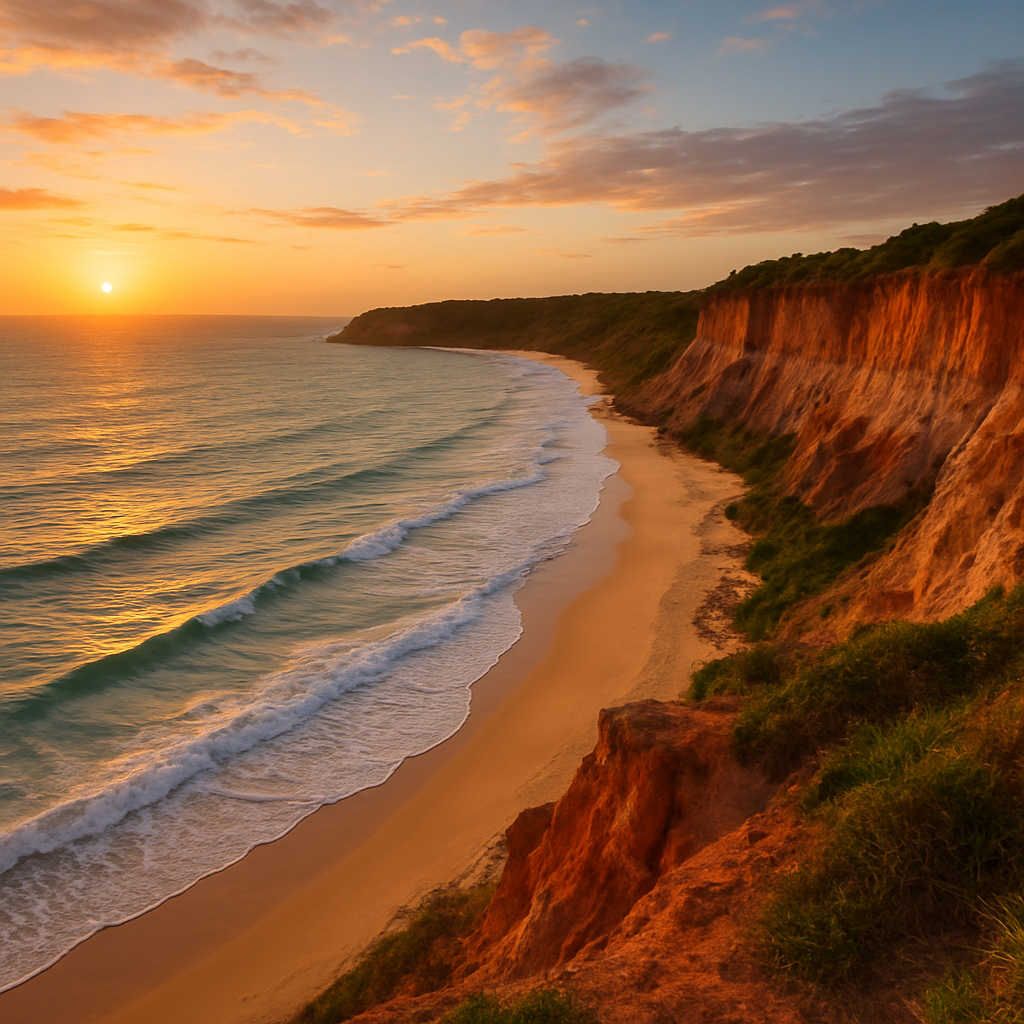
Sunset on the Chapadão
Five o'clock at the Chapadão is Pipa's daily punctuation. The red-rock headland flattens into a plateau hanging over Praia do Amor, and around 5pm the village migrates up — surfers coming off the break, kids on skateboards, couples with cans of Antárctica, somebody working an acoustic version of a Maria Bethânia song. Walk the footpath along the lip of the cliff until you find a spot, sit down, and don't move until the sky stops doing what it's doing. Pro tip: the wind picks up after dark, so bring a light layer if you're planning to stay for the stars.

Sunset Boat on the Lagoa de Guaraíras
Ten minutes up the coast in Tibau do Sul, the brackish Lagoa de Guaraíras spreads out where the Catu River hits the Atlantic — mangroves on one side, oyster farms on the other, the village's working harbor in between. The R$50 sunset boat is BYOB, leaves around 4:30pm, and traces the lagoon until the sky goes pink and the egrets come in to roost. The captain doesn't care what music you play or who's on whose lap at the bow. It's the kind of experience that ruins other sunsets for you.
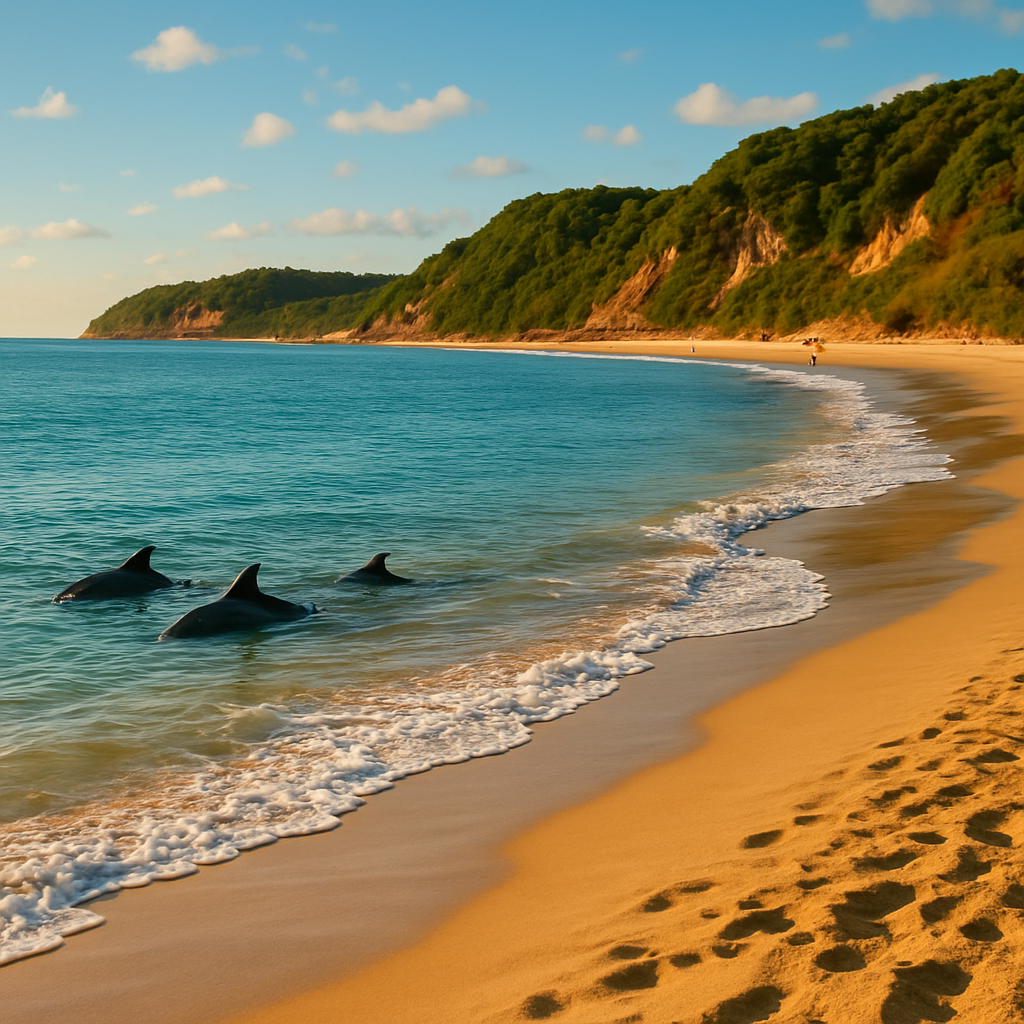
Dawn at Baía dos Golfinhos
The dolphins are real, the access window is small, and the whole thing collapses by 9am once the buggies start arriving. Take the cliff staircase from Praia do Centro down to Baía dos Golfinhos at 7am — at low tide you can also walk in along the sand from the main beach. You'll likely have the cove to yourself, with maybe one fisherman casting from the shallows and the spinner pods doing their morning circuit just offshore. Bring water and reef-safe sunscreen; there's no kiosk down there yet.
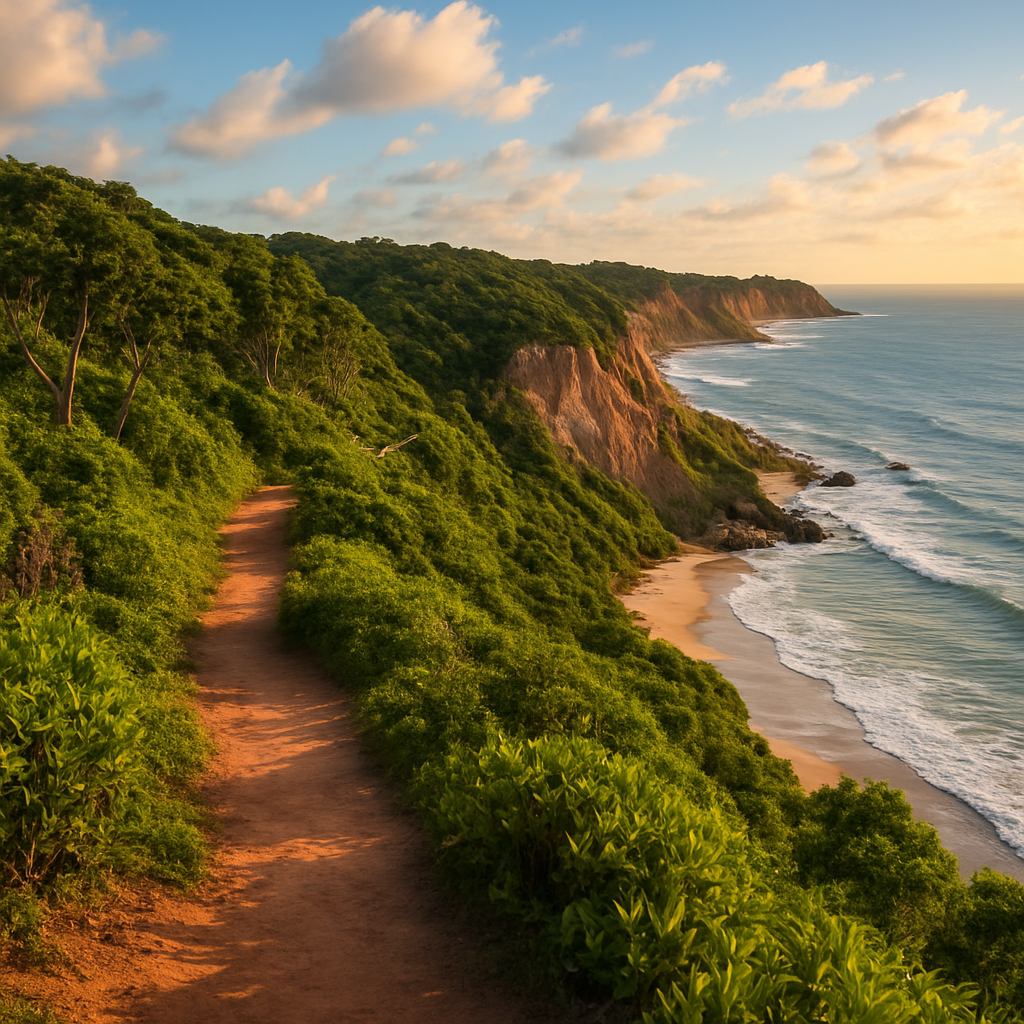
Hike the Santuário Ecológico
The Santuário Ecológico de Pipa is 90 hectares of Atlantic Forest stitched along the cliffs above Praia do Madeiro, with marked trails, six lookouts, and a R$30 entrance fee that actually goes back into forest preservation. Plan for three hours, go in the morning before the heat lands, and wear actual shoes — not the flip-flops you've been living in. The dolphin lookout near the end of the loop is the highest accessible vantage on this coast, and on a clear day you can see all the way down to the Chapadão.
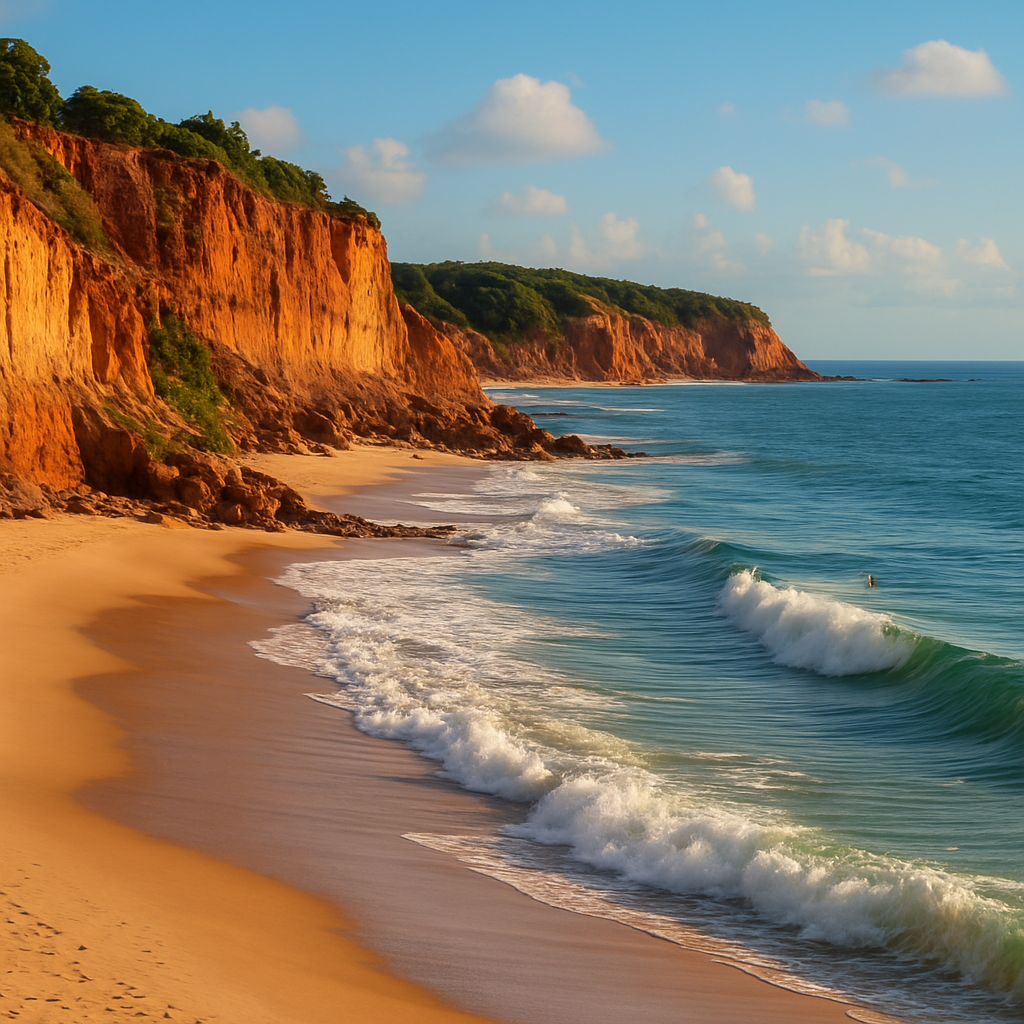
A Slow Day on Praia do Amor
The crescent below the Chapadão is what Pipa is actually for — a heart-shape of red sandstone cliffs and dependable surf breaks, with a string of low-key barracas serving grilled fish, cold Antárctica, and caipirinha de cajá until the tide turns. Take a beginner surf lesson in the morning (the schools cluster at the north end), eat the catch at lunch, nap, swim, eat again. The crowd is unbothered to a degree that's almost startling — sungas, speedos, board shorts, nothing, nobody cares.
The places I actually send people to
Advice that fits how you travel
Pipa is one of those rare beach towns where solo travel doesn't feel like a project. The village is twenty minutes end to end, the main avenue is pedestrianized, and by your second night someone at Tribbo Pipa will remember your drink. Hostels cluster on the side streets off Avenida Baía dos Golfinhos — dorm beds run R$90–160, private rooms in simple pousadas R$180–280 — and the international backpacker rhythm means you're never the only person eating dinner alone. Surf schools at Praia do Amor are the easiest way to fall into a crew on day one; sign up for a lesson, stay for the post-surf caipirinha de cajá, and your week is built.
The apps work — Grindr is busiest in high season (December through March, plus the September–November sweet spot), and you'll see a mix of Brazilian travelers, Europeans on long stays, and a handful of locals. Don't expect São Paulo density. Pipa is a meeting-people-in-person town more than a swiping town, and the unofficial 5pm migration up to the Chapadão for sunset is where most of the actual flirting happens. Pro tip: download 99 as your backup ride app — Uber works but coverage thins after midnight, and a moto-taxi from the Centro de Apoio ao Turista is R$10 to anywhere in town.
Safety-wise, solo travel here is genuinely low-stress. Walking back from Calangos at 3am along the lit main strip is fine; the dirt side streets between pousadas are where the petty-theft reports come from, so take the moto and stop being a hero. Pull cash in Natal or Tibau do Sul on the way down — Pipa's ATMs are temperamental and run dry on weekends — and you'll have everything you need.
Pipa was built for this. Same-sex couples can hold hands on Avenida Baía dos Golfinhos, sunbathe wrapped around each other on Praia do Amor, and check into a one-bed room at any pousada in town without a flicker of comment. As of 2026, same-sex marriage has been legal in Brazil since 2013, the cliff-top pousadas have decades of practice hosting same-sex honeymooners, and several Pipa venues specialize in elopements if you want to make it official while you're here.
For the romantic stay, the Chapadão is your zip code. Sombra e Água Fresca and Village Natureza sit on the cliff above Praia do Amor with infinity pools that catch the trade winds at the right hour; Ponta do Madeiro has a private trail down to its own beach; and Toca da Coruja — a Roteiros de Charme member founded in 1993 on a 14,000 m² Atlantic Forest preserve — is the original boutique that everything else measures itself against. For the dinner, Cruzeiro do Pescador on the hilltop above Praia do Amor lines up the catch, the technique, and the view in one place; the restaurant inside Toca da Coruja is the splurge that earns it.
Build a day around the things this coast actually does best. The R$50 BYOB sunset boat across the Lagoa de Guaraíras from Tibau do Sul is the kind of experience that ruins other sunsets for you, and the captain doesn't care who's making out at the bow. Wake up early enough to take the cliff staircase down to Baía dos Golfinhos before 9am — the spinner pods genuinely show up, and you'll have the cove to yourselves. End at the Chapadão around 5pm, sit on the lip of the cliff, and don't move until the sky stops doing what it's doing.
Pipa is more couples-and-honeymoon coded than family-coded, but it works for families who want a slow-paced beach week over a theme-park itinerary. As of 2026, Brazil fully recognizes joint adoption by same-sex parents and has had marriage equality since 2013, so LGBTQ+ families travel here on solid legal ground — pousadas in town are overwhelmingly small, family-run, and used to international guests, and booking a family suite as two moms or two dads is a non-event. The Toca da Coruja grounds are essentially a private rainforest for kids to explore, and properties on the Chapadão like Village Natureza have chalets across landscaped grounds that give kids room to roam.
For the kids, the wins are easy. The Santuário Ecológico de Pipa — 90 hectares of Atlantic Forest, six lookouts, R$30 entrance, three hours well spent — is the underrated family activity nobody books in advance. The dolphins at Baía dos Golfinhos genuinely show up most mornings if you take the cliff staircase down by 7am. Praia do Madeiro, three kilometers north of centro, has surf-school waves that beginners can actually ride and resident pods of golfinhos rotadores visible from shore. Tapioca carts, açaí kiosks, and pizza at Espaço Som handle the picky-eater problem.
A few practical notes. The cobblestone main avenue is rough on strollers — bring a carrier if your kid's still small. The cliff staircases to Praia do Amor and Baía dos Golfinhos are steep and have no handrails in places, so factor that into your beach plan. The conservative fishing center of Tibau do Sul, ten minutes up the coast, is a different read from Pipa proper — nothing hostile, just tone things down outside the tourist bubble the same way you'd read any small Catholic-leaning town in the Northeast. Inside the village, your family is part of the wallpaper.
What Pipa actually costs
Flights, visas, and the first 30 minutes
Airport: You'll fly into Aeroporto Internacional de Natal — Governador Aluízio Alves (NAT), about 85 km north of Pipa. There's no airport in Pipa itself and there won't be — the village is intentionally small.
Direct routes: NAT runs direct service from São Paulo (GRU, ~3h), Rio de Janeiro (GIG, ~3h), Brasília (~3h), Recife (~1h), Fortaleza (~1h 15m), and Lisbon (LIS, ~7h 30m on TAP) as of 2026. Most North American and Australian travelers connect through São Paulo or Lisbon. About 15 direct routes operate in and out of NAT, with seasonal European charter service in the high summer months.
Visa requirements (as of 2026): EU and UK passport holders are typically visa-free for stays of up to 90 days. As of April 2025, US, Canadian, and Australian citizens generally require an e-visa for Brazil, valid for stays of up to 90 days and applied for online before travel. Confirm current requirements with your nearest Brazilian consulate before you book — Brazil's reciprocity rules have shifted twice in five years.
Airport to Pipa: The drive is roughly 1h 45m down BR-101 and RN-003. Your options:
Private transfer (R$ 280–420, 1h 45m): Pre-booked van or sedan, the most reliable choice for evening arrivals. Most pousadas will arrange one if you ask at booking.
Taxi or Uber (R$ 250–350, 1h 45m): Uber works from NAT, but the return leg from Pipa is unreliable — drivers are scarce out there. Pre-book the ride back.
Shared shuttle van (R$ 80–120, ~2h 15m): Multiple drop-offs along the way; book through your pousada in advance.
Public bus (R$ 25–40, ~3h 30m): Natal → Goianinha → Pipa, two transfers, limited late service. The cheapest option, but bring patience.
Rental car (R$ 180–300/day): Worth it if you plan to explore nearby beaches like Sibaúma or the Lagoa de Guaraíras independently. BR-101 is paved and straightforward; RN-003 has stretches that require attention.
Pro tip: Land in daylight if you can. The drive south of Natal after dark isn't dangerous but it's poorly lit, and arriving at a Pipa pousada at 11pm with luggage and no cell signal is a worse first night than it needs to be.
Traven's seasonal breakdown
The questions everyone asks
Is Pipa safe for same-sex couples?
Do I need to speak Portuguese?
Do I need a visa for Brazil?
When should I go?
How much should I budget per day?
Is there a gay scene in Pipa?
How do I get around once I'm there?
Screenshot this before you go
So should you actually go?
Go. Pipa earned its 7.7 on my Traven-Dex by being one of the most legally protected, beach-town-relaxed, mind-your-own-business places a same-sex couple can land in the Western Hemisphere — and the 4.2 on Pulse is a feature, not a bug. You won't find a gay district because there isn't one; you'll find a village where holding hands at sunset on the Chapadão is so unremarkable that nobody clocks it. Come for September through November or the December high season, base in centro if you want the strip and the Chapadão if you want quiet, and pair it with two nights in Natal if you need actual nightlife. LGBTQ+ travelers looking for a slow week of surf, dolphins, cliff sunsets, and seafood at Cruzeiro do Pescador will get exactly what they came for — and probably book a return flight before they leave.
Sources & Resources
Official links we reference when compiling this guide. Last verified 2026-05-04.
- ABGLT — Associação Brasileira de Lésbicas, Gays, Bissexuais, Travestis, Transexuais e Intersexos
- Aliança Nacional LGBTI+
- ANTRA — Associação Nacional de Travestis e Transexuais
- Casa de Cultura Popular de Pipa
- Defensoria Pública do Rio Grande do Norte
- Embratur — Brazilian Tourism Board
- Grupo Gay da Bahia (GGB) — National LGBTQ+ Rights Org
- Ministério dos Direitos Humanos e da Cidadania