
Porto Seguro is the loud front door. The real coast starts on the other side of the Rio Buranhém ferry, where a 16th-century church watches over candles in the grass and nobody's been in a hurry since 1986.
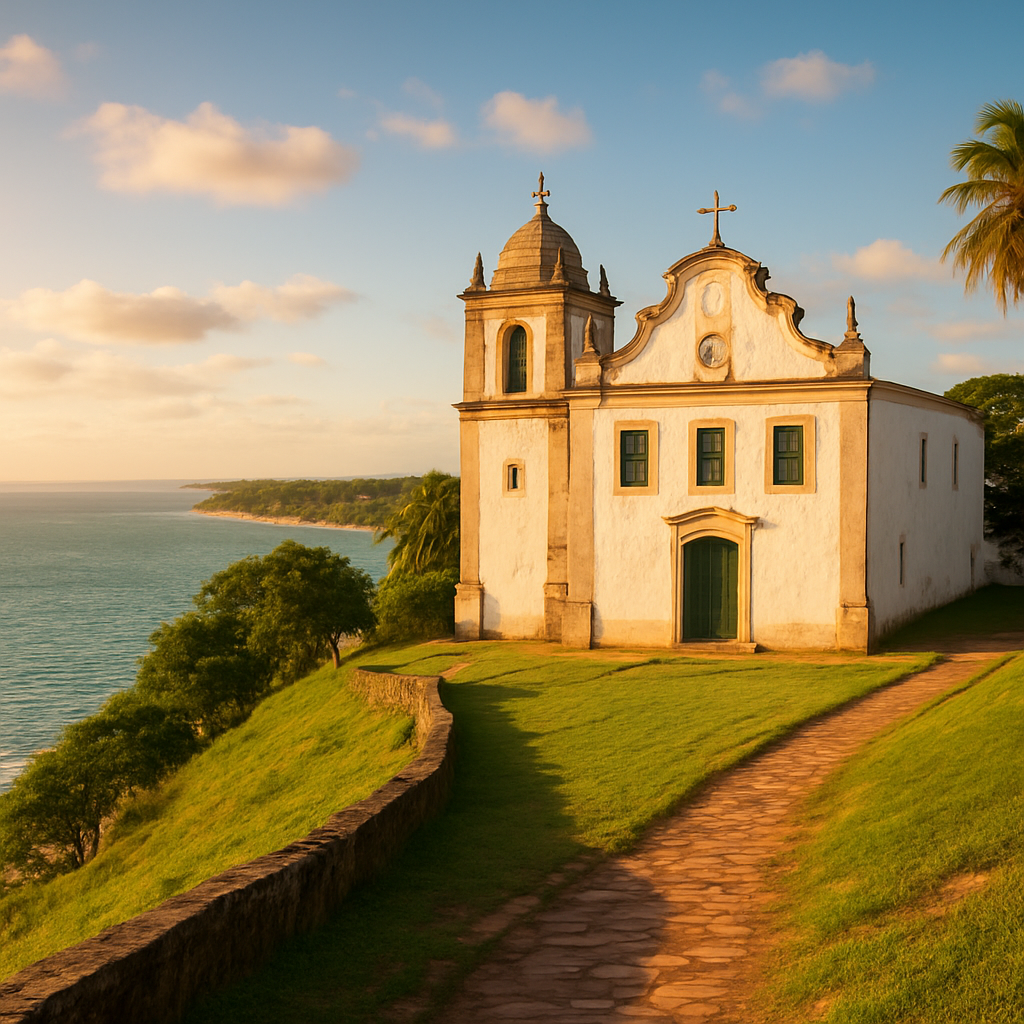
It's 10:47pm on the Quadrado in Trancoso, and the candles have been lit on the grass for almost two hours. El Gordo is full but not loud. The 16th-century church at the cliff edge is a black silhouette against the last of the indigo sky. Two men at the next table — both Paulistano, one wearing the kind of linen that costs what my flight cost — are sharing a bottle of Albariño and laughing about something that happened at UXUA's beach club earlier. Nobody is looking. Nobody has been looking for forty years. That's the secret of this stretch of coast: it figured out how to be a welcoming destination without ever needing to put a sign up.
Porto Seguro is the front door, and the front door is loud. Passarela do Álcool at midnight is bachelor-party Brazil — caipirinha kiosks, axé blasting, gold chains glinting under fluorescent light. That's not where the gays live. The actual scene took the ferry across the Rio Buranhém in the '90s and never came back. Arraial d'Ajuda is the village week — the Broadway, the cliffs above Praia do Mucugê, the barracas at the far end of the beach near the rocks where the better DJs and the more interesting crowd settle in by 3pm. Trancoso is the splurge weekend — Wilbert Das's hotel, the candles on the grass, the gay Paulistanos and Cariocas who treat the Quadrado like an outdoor living room.
The thing to understand is that this is a coastline of contradictions, and my Traven-Dex of 7.7 is the average of all of them. Brazil's legal framework is one of the strongest in the Western Hemisphere — that's the 9.5 on Legal carrying real weight here. But the Pulse is a 5.5 because Bahia is a state where Grupo Gay da Bahia tracks some of the country's hardest numbers on anti-LGBTQ+ violence, and that reality doesn't disappear because the resort bubble is comfortable. The 8.4 on Destination is the cliffs at Pitinga, the tidal pools at Praia do Espelho, the Pataxó reserve, and forty kilometers of beaches that ruin you for other beaches. Both things are this place.
So go, but go knowing what you're choosing. Stay one night in Porto Seguro for the chaos of the Passarela, then cross the ferry and don't look back. Eat moqueca de camarão at Manguti with sand twenty meters away. Book your Quadrado dinner for 10pm, not 8 — that's when the room fills with the people you came to be near. The coastline rewards travelers who treat it as a triangle: arrival, village, splurge. Skip a leg and you're missing the trip.
The stuff your travel guide buries on page 47
Brazil is, on paper, one of the most legally progressive countries in the Western Hemisphere for LGBTQ+ people. As of 2026, same-sex marriage has been recognized nationwide since 2013, joint adoption is legal, and the Supreme Court (STF) has ruled homophobia and transphobia equivalent to racism under criminal law. Self-ID gender recognition has been in place since 2018 — no surgery, no court order required. That's the framework, and it's the reason my Traven-Dex Legal score sits at 9.5.
Bahia, though, is socially mixed in ways the law doesn't capture. Affection reads completely fine in Arraial d'Ajuda and Trancoso, where Brazilian and international travelers have been showing up for decades. It gets stares on Avenida Beira-Mar in Porto Seguro proper, and stares turn into something more pointed in outlying neighborhoods after dark. The country that legalized your marriage is also the country where Grupo Gay da Bahia tracks one of the world's highest rates of anti-LGBTQ+ homicide. Both things are true at once.
High season here is December through February plus Brazilian school holidays in July — that's when Trancoso fills with gay Paulistanos and Cariocas and prices triple. Shoulder season (April, May, October) is the sweet spot: dry weather, half the crowds, and the village rhythm you came for. The ferry from Porto Seguro to Arraial d'Ajuda runs essentially around the clock and costs a few reais — it's the lifeline if you're staying on one side and partying on the other. Last boat back is technically 24/7 but service thins out around 4am.
Pro tip: US, Canadian, and Australian passport holders typically need an e-visa as of 2026 — apply online before you fly, it usually takes a few days. EU and UK travelers are generally visa-free for 90 days. For rights questions or to report discrimination, ABGLT is the national LGBTI+ federation, and the federal human rights hotline Disque 100 is the number to remember if anything goes sideways.
What it actually feels like on the ground
Holding hands and PDA: Completely fine in Arraial d'Ajuda (especially along the Broadway and on Praia do Mucugê), in Trancoso's Quadrado, and inside the resort bubbles in Taperapuã and Mundaí. Comfortable but use light discretion in Porto Seguro's Centro Histórico by day. Outlying residential neighborhoods and rural roads are more conservative — read the room and dial it back.
Hotel check-in: Pousadas in Arraial d'Ajuda and Trancoso are almost universally welcoming — Brazilian hospitality culture genuinely doesn't blink at two-men-one-bed, and same-sex couples won't need to pre-vet the way you might in some interior Bahian towns. Larger international brands (Accor, Club Med) operate to global inclusion standards.
Taxis and rideshare: Use 99 or Uber instead of flagging street taxis at 3am, especially solo. The drivers are tracked, the price is fixed, and you don't have to negotiate while tipsy in beginner Portuguese. Street taxis in the Centro are generally fine by day; at night, app it.
Beaches: Praia do Mucugê and Pitinga in Arraial, plus Praia dos Nativos in Trancoso, are the most relaxed for same-sex couples — staff are accustomed to international guests and the crowd is mixed. Petty theft is the actual issue, not harassment. Don't leave bags unattended while you swim.
Late night on Passarela do Álcool: The Passarela after midnight is rowdy in a heterosexual-bachelor-party way more than a hostile way, but pickpockets are real. Leave the gold chain at the pousada, keep your phone in a front pocket, and pay attention when someone gets too close at the caipirinha kiosks.
Trans travelers: Brazil legally recognizes self-ID since 2018, but as ANTRA documents annually, the country also has the world's highest recorded rate of trans homicides, and Bahia is among the higher-risk states. Stick to tourist zones — Arraial, Trancoso, the resort strips — where staff and crowds are accustomed to international guests. Avoid unfamiliar peripheral neighborhoods after dark, and consider booking through pousadas with documented inclusive practices.
If something happens: Tourist Police (Delegacia do Turista) operate in central Porto Seguro. Disque 100 is the federal human rights line for discrimination or violence reports, and Aliança Nacional LGBTI+ can connect you to local advocacy resources. The threat in tourist zones like Arraial and Trancoso is genuinely lower than in unfamiliar peripheral neighborhoods — stick to lit, populated streets after dark and you'll be fine.
The queer geography
Arraial d'Ajuda
Cross the Buranhém by ferry and you land in a different rhythm entirely. Arraial d'Ajuda is a clifftop village built around a Jesuit church from 1549, with red-dirt lanes that drop down to some of the prettiest beaches in Bahia — Praia do Mucugê, Praia do Parracho, and the dramatic cliff-and-pool geography of Pitinga. The pedestrian strip locals call Broadway (officially Rua São Brás, but nobody calls it that) is where the night happens: caipirinha bars, açaí counters, music spilling out of restaurants on Estrada do Mucugê. This village has been a stop on the Bahia gay travel circuit for decades, and the Broadway is the most reliably welcoming cluster in the region — not a dedicated scene, but a place where same-sex couples have been holding hands without comment since the '90s.
Pro tip: On Praia do Mucugê, walk past the family barracas to the ones near the rocks at the far end — that's where the gay crowd and the more interesting DJs tend to land by mid-afternoon.
Trancoso (Quadrado)
Forty minutes south down a once-rough dirt road, Trancoso was a hippie outpost in the '70s, a fashion-set secret in the '90s, and is now the most expensive and most beautiful village on this stretch of coast. The center is the Quadrado — a long grass square fringed with whitewashed colonial cottages painted in faded pastels, anchored by the 16th-century Igreja de São João Batista at the cliff edge. By day the square is sleepy. At sunset the candles come out at Capim Santo, Maritaca, and El Gordo, the queer crowd drifts in around 10pm, and the after-party migrates down the path to the beach bars on Praia dos Nativos. UXUA Casa Hotel, founded by openly gay former Diesel creative director Wilbert Das, sits directly on the square and set the design language the rest of the village now follows.
Centro Histórico (Cidade Alta)
The original Porto Seguro — the bluff where the Portuguese landed in 1500 — is a small colonial old town with three 16th-century churches, the Marco do Descobrimento stone, and views down the coast that justify the climb. It's a daytime visit more than a base: cobbled, photogenic, and pleasantly mixed in the early evening when bars open along the bluff. The action moves down to the Passarela do Álcool after dark, where the city's signature flavored caipirinhas get sold out of pedestrian-strip kiosks until well after midnight. Mainstream and rowdy, but open and welcoming — fine for a couple of hours, not where the queer crowd actually lives.
Taperapuã & Mundaí
Seven kilometers north of the Centro, Praia de Taperapuã is the daytime party beach: a string of giant barracas — Axé Moi, Tôa Tôa, Barramares — running afternoon axé dance shows that have been a Porto Seguro tourist tradition since the '90s. Praia de Mundaí, just south, is calmer and lined with mid-range and international-brand resorts where same-sex couples settle in for the week without ever needing to think about it. This isn't where the scene lives, but it's where a lot of travelers sleep.
For deeper context on Bahia's LGBTQ+ landscape, Grupo Gay da Bahia has been the state's longest-running advocacy organization, and Embratur publishes Brazil's official LGBTQ+ tourism resources. All Out Brasil tracks national rights campaigns worth knowing about before you go.
The experiences worth rearranging your itinerary for
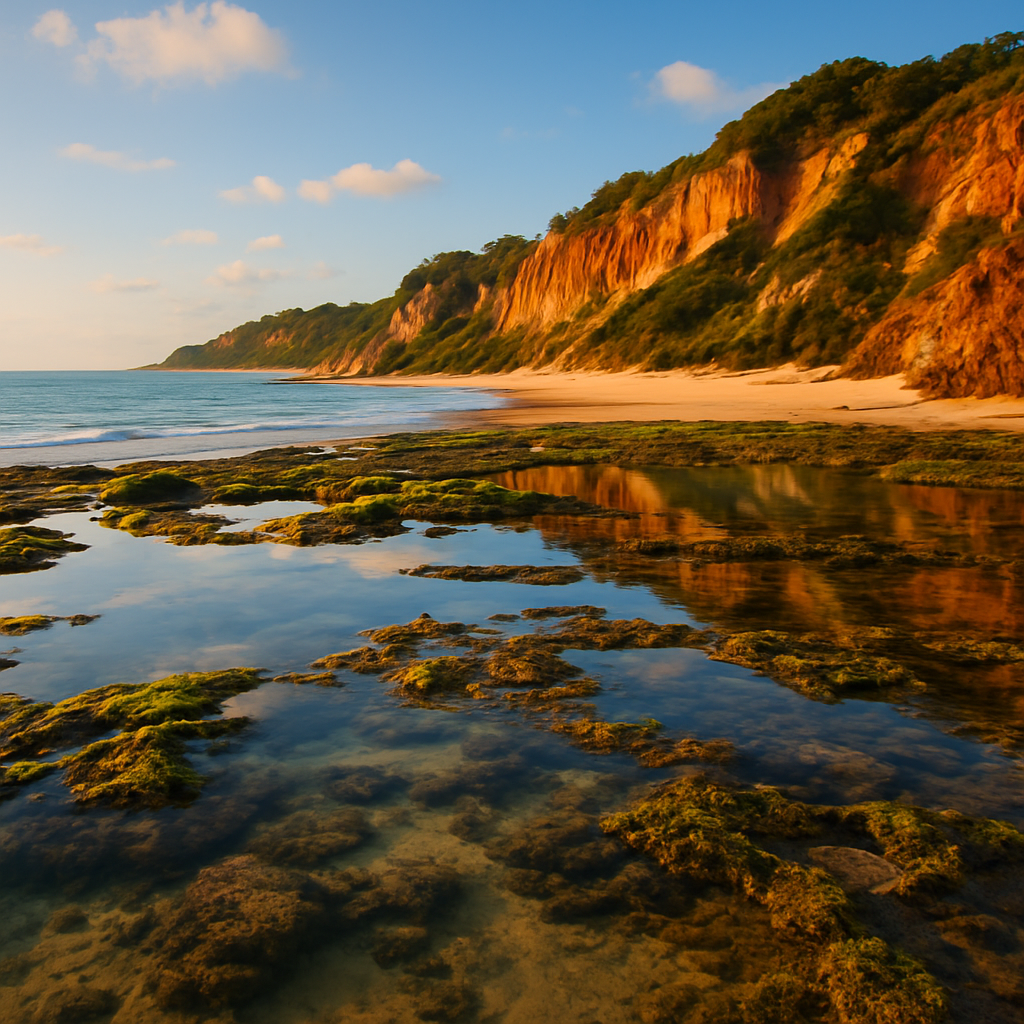
Praia do Espelho at Low Tide
Drive south past Trancoso on a road that gets progressively worse, and you arrive at the beach that ruins other beaches for you forever. Praia do Espelho — Mirror Beach — earns the name at low tide, when the receding water leaves cliff-bottom tidal pools so still they reflect the bluffs above them. There's almost no infrastructure: a few barracas, no boardwalk, no pretense. Splurge on a buggy transfer from Trancoso, pack lunch from one of the Quadrado restaurants, and stay until sunset. This is the Bahia coast people remember twenty years later.
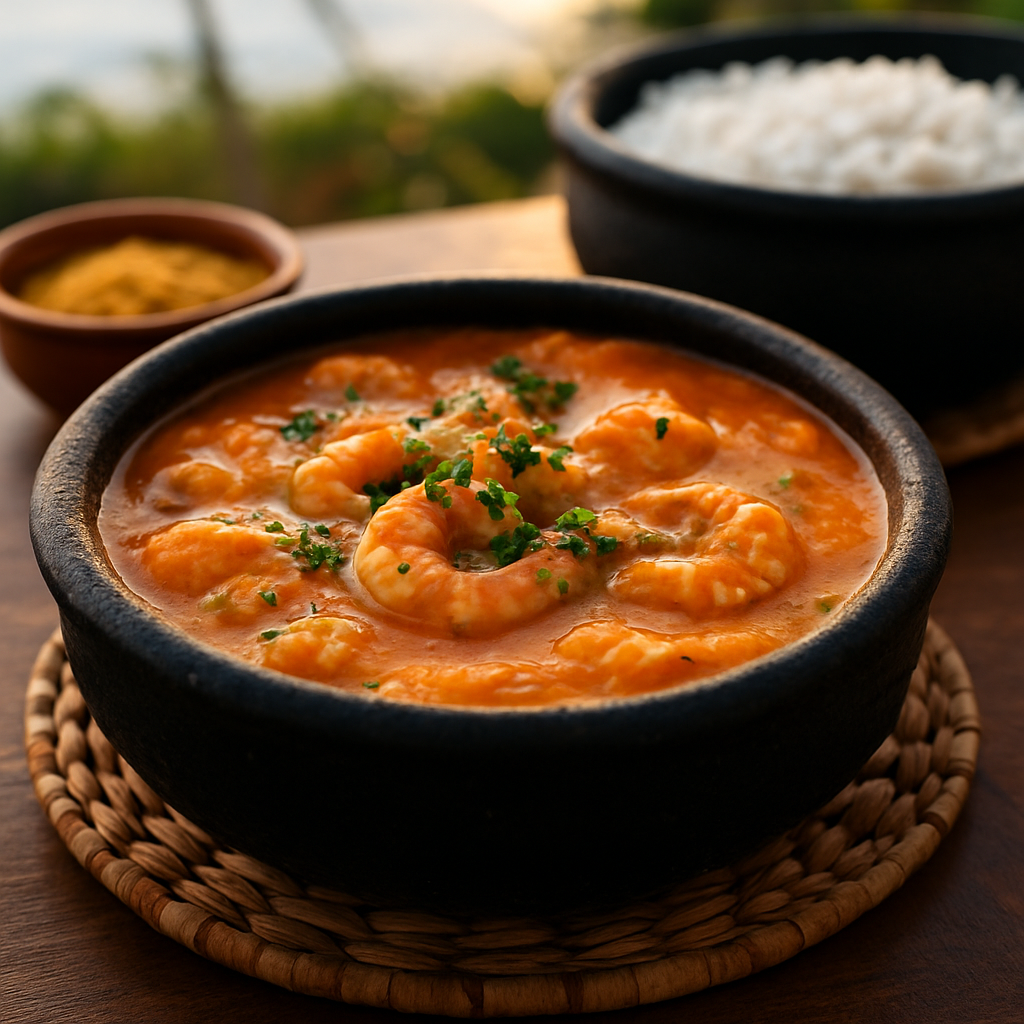
Moqueca Baiana on the Sand
You haven't really been to Bahia until you've eaten moqueca with sand on your feet and the Atlantic twenty meters away. The dish — coconut milk, dendê oil, fish or shrimp, a slow simmer — is the signature of this coastline, and the coastal versions hit differently than what you'll get inland. Order moqueca de camarão at Manguti or Rosa dos Ventos, give it the full forty minutes it needs, and pair it with a caipirinha de cajá. This is the meal you'll be telling people about a year later.
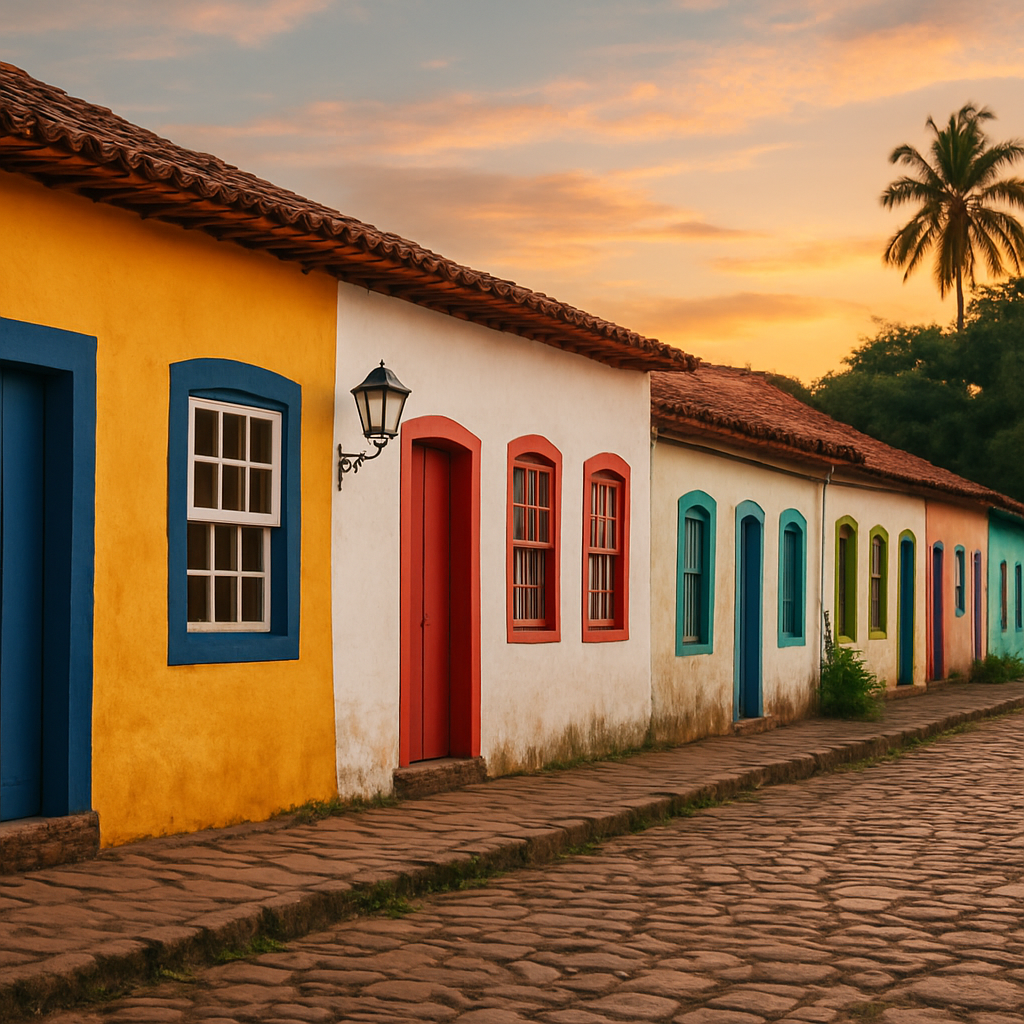
Sunset on the Quadrado
The Quadrado in Trancoso doesn't really wake up until the sun starts dropping. By 6pm the candles come out at Capim Santo, Maritaca, and El Gordo; the colonial cottages painted in faded pastels glow against the grass; and the 16th-century Igreja de São João Batista at the cliff edge holds the last light over the ocean. Walk a slow lap before dinner. Stop for a drink at one of the cottages-turned-bars. This is the moment Trancoso is famous for, and it lives up to it.
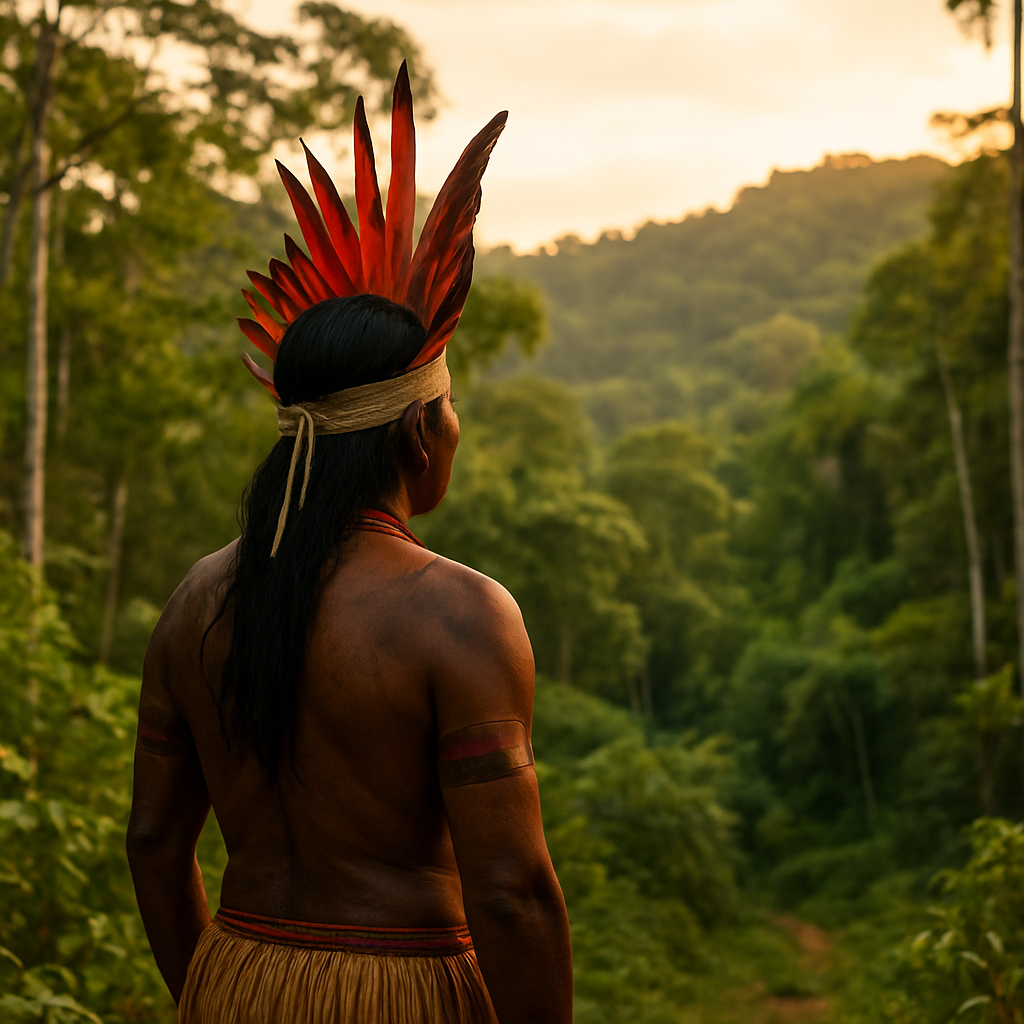
Reserva Pataxó da Jaqueira
The Pataxó are the Indigenous people whose land this coast has always been, and the Reserva da Jaqueira is community-owned cultural tourism done the right way. Guided Atlantic Forest walks, traditional cuisine, ritual demonstrations — all run by the Pataxó themselves, not a tour operator skimming off the top. Book directly through the reserve, not through a Passarela hawker. Half a day, and you'll think differently about every beach you sit on for the rest of the trip.
The Cidade Histórica Bluff
Climb the bluff above central Porto Seguro and you're standing where the Portuguese landed in 1500. The Marco do Descobrimento stone marker is from 1503; three 16th-century churches are still here; the Igreja de Nossa Senhora da Pena looks down a coastline that has barely changed in the five centuries since the ships arrived. Go in late afternoon when the light is good and the bars at the top are starting to open. It's a free hour that recalibrates the whole trip.
The places I actually send people to
Advice that fits how you travel
Solo travel here works best if you treat the region as a triangle: Porto Seguro for arrival and chaos, Arraial d'Ajuda for the week, Trancoso for the splurge. Base yourself in Arraial — the village is walkable, the Broadway means you can drink without driving, and the pousadas are used to solo international travelers in a way that takes the edge off your first night. Days are easy: rent a buggy or take the ferry-and-bus combo to Praia do Mucugê, settle in at one of the barracas at the far end near the rocks, and you'll meet people by the second caipirinha. That's the rhythm.
The apps work — Grindr is active in Porto Seguro, more active in Arraial, and lights up in Trancoso during high season when the gay Paulistanos and Cariocas arrive. Just remember the scene here is woven into mixed venues, not concentrated at a single bar; you'll find your people at the right barraca on Mucugê or at El Gordo on the Quadrado at 10pm, not at a rainbow-flagged door. Three Portuguese phrases will save your week: uma caipirinha, por favor, a conta, por favor, and sou casado — the last one closes about 90% of unwanted flirtation politely.
Solo budget-wise, this is one of the better-value beach destinations in Brazil. Mid-tier solo runs roughly R$550-850 a day with a comfortable Arraial pousada, real meals, and the occasional buggy. Two safety notes: use 99 or Uber instead of street taxis after midnight (drivers tracked, price fixed, no negotiating in beginner Portuguese), and leave the gold chain at the pousada when you head to Passarela do Álcool — it's rowdy in a bachelor-party way more than a hostile way, but pickpockets are real.
This coastline was practically built for same-sex couples — Trancoso in particular has been on the chic gay-favorite circuit since the '90s, and you'll feel it the second you walk onto the Quadrado at sunset. Holding hands reads completely fine in Arraial d'Ajuda (especially along the Broadway and on Praia do Mucugê), in Trancoso's Quadrado, and inside the resort bubbles in Taperapuã and Mundaí. Pousadas in both villages are almost universally welcoming — Brazilian hospitality culture genuinely doesn't blink at two-men-one-bed, and you don't need to pre-vet the way you might in some interior Bahian towns.
For the splurge: UXUA Casa Hotel on the Trancoso Quadrado is the gay-creative-director project (Wilbert Das, ex-Diesel) that rebuilt the village's design DNA — individually designed casas, a private beach club at Praia dos Coqueiros, and a check-in experience that takes zero work. Etnia Pousada is the gay-owned alternative, opened by André Zanonato and Conrad Lippert, and the design taste is genuinely better than most of what surrounds it. On the Arraial side, Maitei Hotel puts you on the cliffs above Mucugê with an infinity pool that runs at the Atlantic — one of those views that justifies an entire trip on its own.
The romantic itinerary writes itself: moqueca de camarão at Manguti in Arraial one night, candlelit dinner at Maritaca or Capim Santo on the Quadrado another, and a buggy day to Praia do Espelho at low tide — the cliff-bottom tidal pools are the kind of beach that ruins other beaches for you forever. Pro tip: the queer crowd at the Quadrado restaurants drifts in around 10pm, not 8 — book your reservation late and the room you're eating in will be the one you came for.
LGBTQ+ families travel comfortably here. Brazil's legal framework is, on paper, one of the strongest in the Western Hemisphere — same-sex marriage recognized nationwide as of 2026, joint adoption legal, parental rights for both parents on birth certificates, and broad anti-discrimination protections via ABGLT-tracked Supreme Court rulings. On the ground, family travel in Arraial d'Ajuda, Trancoso, and the resort strips of Taperapuã and Mundaí is genuinely uncomplicated — staff at international-brand resorts are trained to host LGBTQ+ families, and the village pousadas are warm in a way that comes from culture, not policy.
Club Med Trancoso is the lowest-friction option: all-inclusive, separate family and adult zones (kid energy and cocktail energy stay in their lanes), multiple pools, and a corporate inclusion policy that translates into actual staff training. Mercure Porto Seguro on Mundaí Beach is the mid-tier pick — Accor brand standards, direct sand access, and a predictable check-in. The Arraial D'Ajuda Eco Resort is a solid full-service base if you want to be in the village rather than at a corporate property; the location does the heavy lifting and a five-minute walk drops you on Rua do Mucugê.
Kid logistics are typically straightforward: high chairs at most restaurants, fresh juices everywhere, and beach barracas like Sambass on Mucugê that genuinely welcome kids alongside long lunches. Worth doing as a family: the Reserva Pataxó da Jaqueira cultural half-day (community-led, all ages, and the most ethical engagement with the Indigenous community whose land this actually is), Praia do Espelho at low tide for the natural tidal pools, and the Eco Parque water park near Arraial for an afternoon when the kids need something dialed up. Pro tip: pull reais at the airport ATM — barracas, ferries, and buggies run on cash, and the maquininha 'doesn't work' more often than it actually doesn't work.
What Porto Seguro actually costs
Flights, visas, and the first 30 minutes
Porto Seguro's Aeroporto Internacional de Porto Seguro (BPS) sits roughly 5 km north of the Centro Histórico, which means you're at your pousada faster than you can finish the welcome caipirinha. Direct flights run daily from São Paulo (Guarulhos and Congonhas, ~2h), Rio de Janeiro (~1h45m), Belo Horizonte (~1h40m), Brasília (~2h15m), and Salvador (~1h). Seasonal direct service from Buenos Aires and Lisbon turns up in high season; otherwise international travelers typically connect through GRU in São Paulo or GIG in Rio.
Visas (as of 2026): US, Canadian, and Australian passport holders typically need an e-visa for tourism (90-day stay) — apply online a week or two before you fly. EU and UK travelers are generally visa-free for up to 90 days. Always confirm requirements with your nearest Brazilian consulate before booking, because entry rules shift more often than they should.
Airport to your bed: A metered or fixed-rate taxi to the Centro runs R$40-60 and takes 10-15 minutes. Uber and 99 are the move — typically R$25-40 for the same ride, with fixed pricing and tracked drivers. Many resorts in Taperapuã and Mundaí include free or low-cost shuttles (15-20 min) — confirm at booking. If you're heading straight to Arraial d'Ajuda, take a rideshare to the Balsa ferry terminal, cross the Rio Buranhém for a few reais, and grab a buggy on the other side. For Trancoso, factor in another 60-80 minutes of paved-then-rough road south. Pro tip: Pull reais at the airport ATM before you leave the terminal — the maquininha 'doesn't work' more often than it actually doesn't work, and cash is king for ferries, barracas, and buggies.
Traven's seasonal breakdown
The questions everyone asks
Is Porto Seguro safe for same-sex couples?
Should I base myself in Porto Seguro, Arraial, or Trancoso?
Do I need a visa for Brazil?
How do I get from Porto Seguro to Arraial d'Ajuda?
Is there a gay scene like Ipanema's Farme de Amoedo?
How much should I budget per day?
Do I need to speak Portuguese?
Screenshot this before you go
So should you actually go?
Go. For same-sex couples, this is one of the most consistently welcoming stretches of beach on the planet — Trancoso has been on the chic queer-favorite circuit since the '90s, Arraial d'Ajuda's Broadway has been quietly comfortable for even longer, and the pousadas in both villages don't blink at two-men-one-bed because Brazilian hospitality genuinely doesn't blink. The legal framework is among the Western Hemisphere's strongest, the food is the best regional cooking on this coast, and the cliff-and-tidal-pool geography of Praia do Espelho alone justifies the flights. Just be honest about what you're choosing: Bahia carries real-world risks that the resort bubbles don't erase, so stick to tourist zones, app your taxis after midnight, and travel in shoulder season (April, May, October) for the version of this coast you actually came for. LGBTQ+ travelers who give Arraial five nights and Trancoso two leave understanding why the gays kept coming back for forty years.
Sources & Resources
Official links we reference when compiling this guide. Last verified 2026-05-04.