
Montreal doesn't want to be Paris and it doesn't want to be New York — it wants to be the city where you finally stop comparing everything to somewhere else.
The first thing that hits you in Montreal isn't a smell or a sound — it's a language shift. You'll order your coffee in English at a dépanneur on Boulevard Saint-Laurent and the guy behind the counter will answer in French, and then the woman behind you will crack a joke in Franglais, and within thirty seconds you'll realize you're somewhere that genuinely doesn't exist anywhere else on this continent. This is a city built on the friction between two cultures, and instead of that friction producing heat, it produced something better: the best food city in North America that nobody from the States seems to know about.
I'll be direct — my Traven-Dex of 9.3 barely captures what Montreal actually delivers on the ground. Le Village on Rue Sainte-Catherine Est is one of the largest gay neighborhoods in the world, and I don't mean that in a historical footnote kind of way. I mean there are blocks of gay bars, drag cabarets, and community spaces that make most American gayborhoods look like a single strip mall. But what I love about Montreal is that the queerness doesn't stay in the Village — it bleeds into the Plateau, into Mile End, into the way the whole city carries itself. There's no code-switching required here.
The food situation is almost unfair. You can eat a CAD $8 poutine at 3 a.m. at La Banquise after stumbling out of an afterhours club, and the next night you're at Joe Beef in Petite-Bourgogne having what Anthony Bourdain called one of his favorite meals on earth. The BYOW restaurant tradition — bring your own wine, pay no corkage — means a Tuesday dinner at a Plateau bistro with a bottle from the SAQ costs less than an appetizer in Manhattan. Montreal is a city that wants you to eat well and stay out late, and it has designed its entire infrastructure around that proposition.
Then there's the legal reality, which is almost boring in how complete it is. A perfect 10.0 on Legal. Marriage, adoption, comprehensive anti-discrimination protections, gender self-identification — all of it locked in at the federal and provincial level. Canada didn't just get there first; it got there thoroughly. You'll feel that completeness in how unremarkable it is to be gay here. Nobody's performing acceptance. It's just Tuesday.
The stuff your travel guide buries on page 47
Legal framework: Canada legalized same-sex marriage nationwide in 2005, and Quebec was arguably ahead of the federal curve. Marriage, civil unions, and adoption by same-sex couples are all fully legal. Anti-discrimination protections are comprehensive at both the federal and provincial level, covering employment, housing, services, and public accommodations. Gender identity is explicitly protected, and Quebec allows gender marker changes through self-identification without medical requirements — that's been the case since 2016. My Legal score of 10.0 reflects a country where the legal infrastructure genuinely has your back. There is no criminalization of any kind, past or present.
Cultural reality: The laws aren't just performative here — they reflect how the city actually operates. Montreal has had a visible, organized queer community for decades, and LGBTQ+ life is woven into the civic fabric in ways that go beyond tolerance into genuine integration. The city government maintains an official diversity and inclusion page with active programming. Organizations like Interligne provide 24/7 support in French and English, and Égale Canada operates nationally as a legal rights watchdog. This isn't a city learning — it's one that figured it out a while ago.
Language note: French is the official language of Quebec and the dominant language of the Village. That said, the neighborhood is genuinely bilingual and most bartenders, servers, and shopkeepers switch between French and English without blinking. Opening with "Bonsoir" rather than "Hey" earns you a measurable amount of local warmth and — someone told me — occasionally a heavier pour. You don't need to be fluent. You do need to show you're not assuming English.
Timing matters: Montreal operates on Quebec time. Bars serve until 3 a.m. and the Village doesn't wake up until well past midnight on weekends. If you show up at Complexe Sky at 10 p.m. you'll be dancing alone next to the coat-check attendant, who will be kind enough to look away. The 5 à 7 happy hour culture (literally "five to seven") is sacred — that's when the terrasses fill, drink specials flow, and the evening's social architecture gets established.
PDA comfort: In Le Village, the Plateau, and Old Montreal, same-sex PDA is completely unremarkable — you'll see couples holding hands everywhere and nobody reacting because there's nothing to react to. Downtown is equally comfortable. The outer suburbs get slightly more conservative, but even there, Canadian legal protections mean you're safe; you may just get the occasional double-take rather than zero attention. Every summer, the pedestrianized stretch of Ste-Cath goes up with Les Billes — those giant colorful spheres — and the whole Village becomes an outdoor living room where affection is the baseline energy.
What it actually feels like on the ground
Holding hands: Completely fine across the city core. In Le Village, the Plateau, Mile End, and Old Montreal, you won't get a second glance. Downtown is equally comfortable. In outer suburbs you may occasionally register on someone's radar, but incidents are genuinely rare, and legal protections are airtight regardless of geography.
Hotel check-in: Zero issues at any hotel in the city. Same-sex couples booking double rooms is routine and unremarkable — front desk staff in Montreal don't flinch, and properties in the Village actively market to LGBTQ+ guests. You won't be explaining anything to anyone.
Taxis and rideshare: Both taxis and rideshares (Uber and Lyft operate here) are completely safe. Drivers in Montreal are accustomed to picking up from the Village and won't comment on destinations. No issues with same-sex couples in the back seat.
Public spaces and parks: Mont-Royal, the Old Port, Parc La Fontaine — all thoroughly safe and comfortable for LGBTQ+ people. The Sunday tam-tam drumming gatherings on Mont-Royal in summer attract a beautifully diverse crowd that could double as a city tourism ad. Parks at night follow standard urban rules: stick to lit paths, travel with company after midnight.
Late night in the Village: The core around Beaudry métro and Ste-Cath is well-lit, well-trafficked, and among North America's safer LGBTQ+ neighborhoods after dark. Pro tip: the blocks east of Papineau get quieter and less policed quickly, so use common sense if you're heading that direction after 2 a.m. Stick to the main drag and populated side streets and you're fine.
Trans travelers: Montreal is among the most trans-affirming cities in North America. Quebec's civil registry allows gender self-identification without medical requirements. Gender-neutral washrooms are widely available, particularly in the Village and Plateau. Aide aux Trans du Québec (ATQ) runs peer support programs and maintains a database of affirming healthcare providers province-wide. Trans people are visible and unremarkable in daily life here — this isn't a city where you'll feel like an anomaly.
Verbal harassment risk: Very low in the city core and effectively zero in the Village. Montreal's queer community is large enough and established enough that hostility reads as aberrant rather than ambient. As with any major city, late-night encounters with intoxicated strangers carry a marginal risk regardless of orientation, but targeted anti-LGBTQ+ harassment is genuinely uncommon here.
Key resource: Save Interligne's number before you arrive — it's Quebec's 24/7 LGBTQ+ crisis and support line in both French and English, staffed by people who genuinely understand queer experience. RÉZO in the Village is a drop-in community space for gay, bi, and queer men — you can grab safer sex supplies, get tested same-day, and talk to a peer health worker who actually understands your life. More cities should have something this functional and this unjudgmental.
The queer geography
Le Village (Gay Village)
Montreal's dedicated LGBTQ+ neighborhood stretches along Rue Sainte-Catherine Est between Rue Amherst and Papineau, and locals just call it Le Village — no further qualifier needed. This isn't a few rainbow crosswalks bolted onto a commercial strip; it's a genuine queer district with decades of infrastructure. Cabaret Mado, Complexe Sky, Le Stud, Bar Le Cocktail, Stock Bar, Club Date Piano Bar — they're all here, within a five-minute walk of each other. The Beaudry métro station drops you right in the center, and its rainbow-painted columns are the official signal you've arrived.
Every summer, the stretch of Ste-Cath pedestrianizes and Les Billes — those giant colorful spheres — go up overhead, transforming the street into an outdoor living room where the 5 à 7 scene spills from bar terrasses onto the pavement. Parc Émilie-Gamelin anchors the western edge. Priape Boutique is still holding it down as the go-to LGBTQ+ shop. The Archives gaies du Québec holds decades of photos, zines, and ephemera from Montreal's queer history going back to the 1970s — for anyone serious about LGBTQ+ history, it's an absolute treasure and criminally undervisited by people who just came to party.
Église Saint-Pierre-Apôtre on Rue de la Visitation has a small chapel dedicated to people who died of AIDS — it's quiet, genuinely moving, and deeply Montréalaise in that specifically Catholic-but-queer way that no other city pulls off quite as elegantly.
For lesbian and queer women's nightlife: it thrives here but runs through pop-up events and rotating promoters more than fixed venues. Follow local queer Instagram accounts and check flyers posted in the Village rather than expecting a dedicated bar to still be in business by the time you arrive.
For trans-specific resources, Aide aux Trans du Québec (ATQ) is the essential organization — they run peer support programs, help navigate legal name and gender marker changes under Quebec law, and maintain a database of affirming healthcare providers province-wide.
Plateau-Mont-Royal
Le Plateau is the bohemian neighborhood just north of the Village that's been a welcoming residential zone for artists, academics, and activists for as long as anyone can remember. Same-sex PDA is completely commonplace and utterly unremarkable here. The streets are tree-lined, the architecture is beautiful wrought-iron staircases, and the cafés and independent shops give the neighborhood a personality that's creative without being performative. Auberge de la Fontaine sits right on the edge overlooking Fontaine Park.
Mile End
A bilingual, artsy neighborhood with a significant queer residential population — Mile End is known for LGBTQ+-affirming cafés, independent bookshops, and a low-key social scene distinct from Village nightlife. This is where you go for a slower morning, a good espresso, and the kind of neighborhood energy that makes you fantasize about moving here permanently. The bagel debate lives here too — Fairmount vs. St-Viateur — and the correct answer is both.
Hochelaga (Hoche)
A historically working-class east-end neighborhood that has seen growing queer settlement, Hochelaga offers a grittier, less tourist-polished alternative to the Village's main strip. If you want to see where the city's creative queer energy is expanding, this is where to look.
The experiences worth rearranging your itinerary for
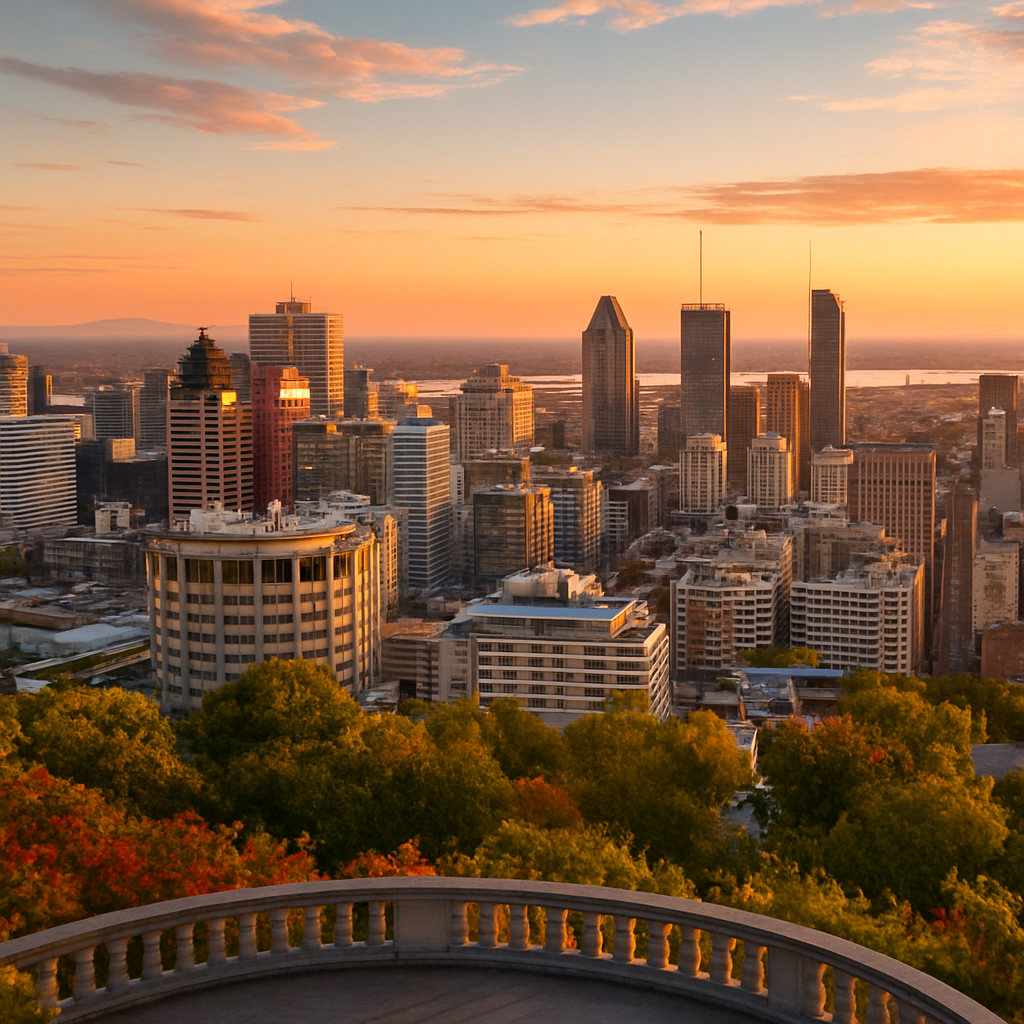
Mont-Royal at Sunset
The hike to Kondiaronk Belvedere takes about 30 minutes from the base and rewards you with a panoramic of the Montreal skyline that genuinely stops you mid-step. Frederick Law Olmsted designed this park — the same mind behind Central Park — and honestly, Mont-Royal might be the better result. On summer Sundays, the tam-tam drumming gatherings at the base of the mountain draw hundreds of people with hand drums, dancers, and picnics in a scene that feels spontaneous even though it's been happening for decades. Free, magnificent, and non-negotiable.
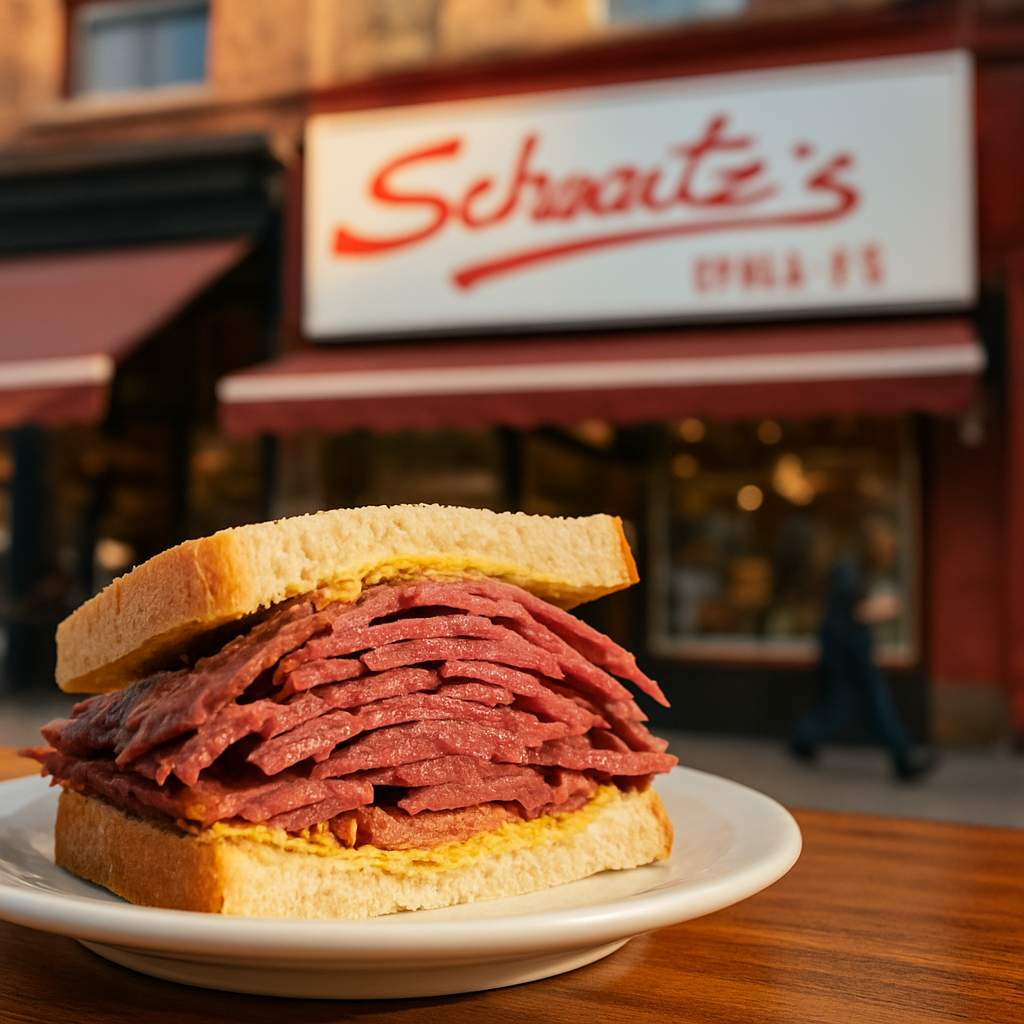
Smoked Meat at Schwartz's, Preferably at 2 a.m.
Schwartz's Hebrew Delicatessen on Boulevard Saint-Laurent has been curing brisket since 1928 and the line out front has been there nearly as long. Medium-fat is the correct order. The dining room is tiny, chaotic, and unapologetic — they'll seat you with strangers and nobody minds. This is best experienced as a post-Village pilgrimage: the 20-minute walk from Sainte-Catherine clears your head just enough to appreciate what's coming. The queue moves faster than it looks.
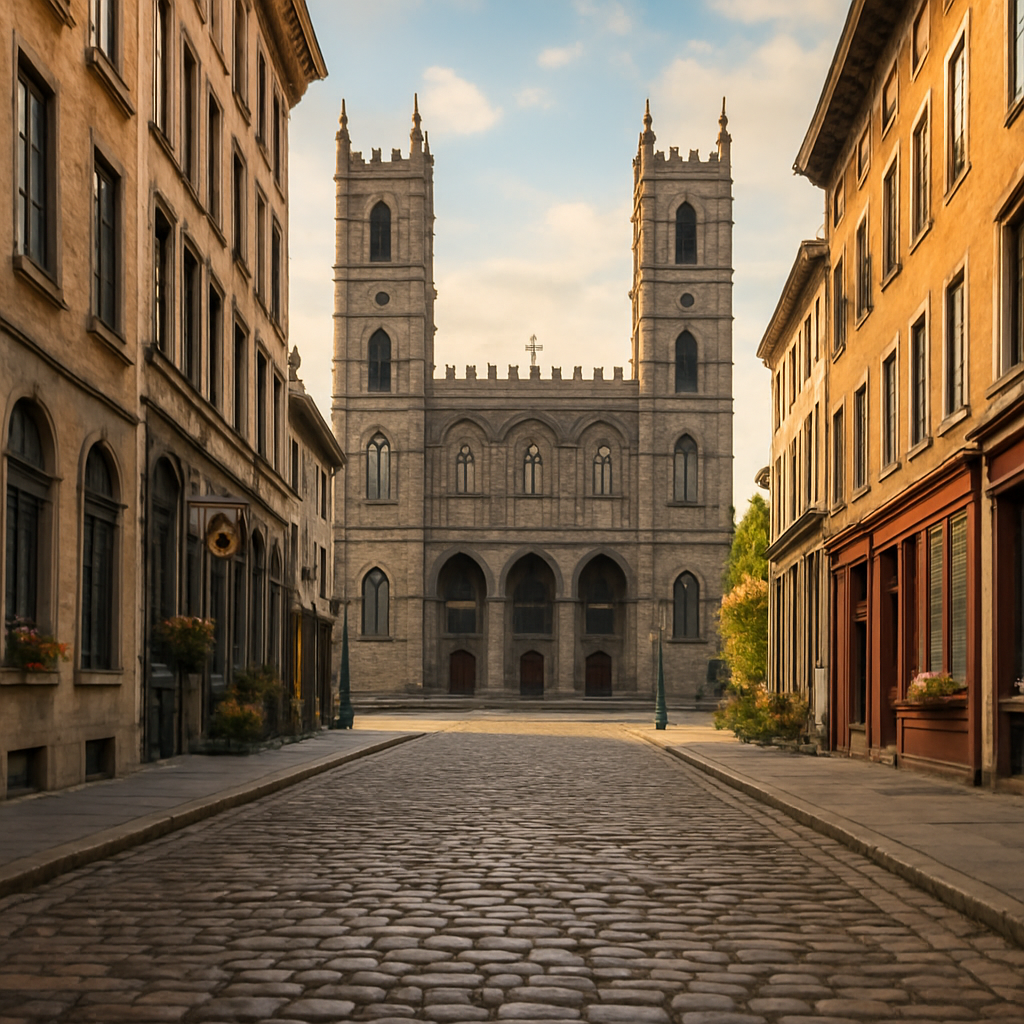
Old Montreal on Foot
The cobblestone streets of Vieux-Montréal at dusk are one of the most visually arresting walks in North America — 17th-century stone buildings, the Basilique Notre-Dame looming at the end of Rue Saint-Sulpice, the Old Port opening onto the St. Lawrence River with the Ferris wheel lit up against the water. Start at Place Jacques-Cartier, wander south toward the port, then west along Rue Saint-Paul for galleries and restaurants. Budget extra time because you will stop to photograph things approximately every forty-five seconds.
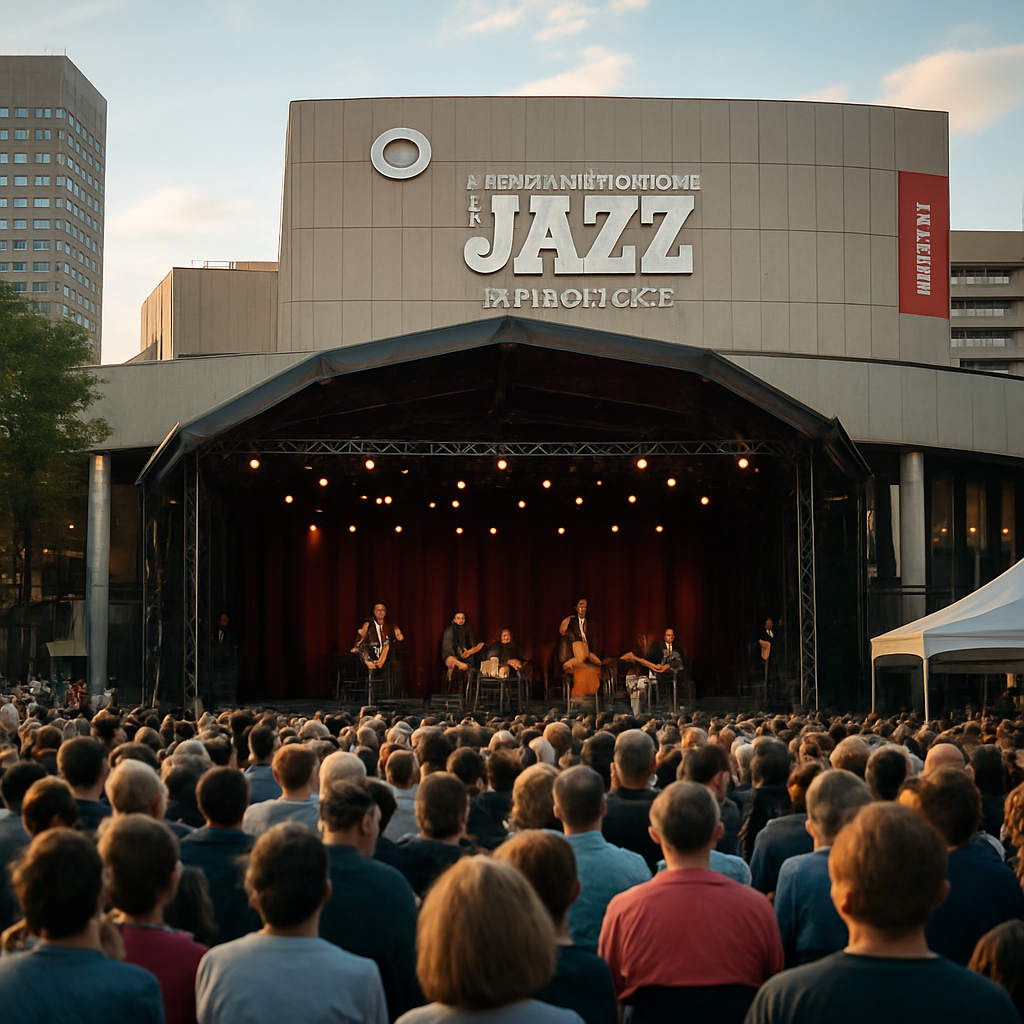
Montreal Jazz Festival (Late June–Early July)
The Festival International de Jazz de Montréal takes over entire city blocks downtown every summer with free outdoor stages, ticketed concerts in world-class venues, and a street atmosphere that turns the Quartier des Spectacles into the best open-air party on the continent. You don't need to love jazz — the programming spans funk, soul, electronic, world music, and everything between. Over a million people attend across ten days. Plan your trip around this if you can.
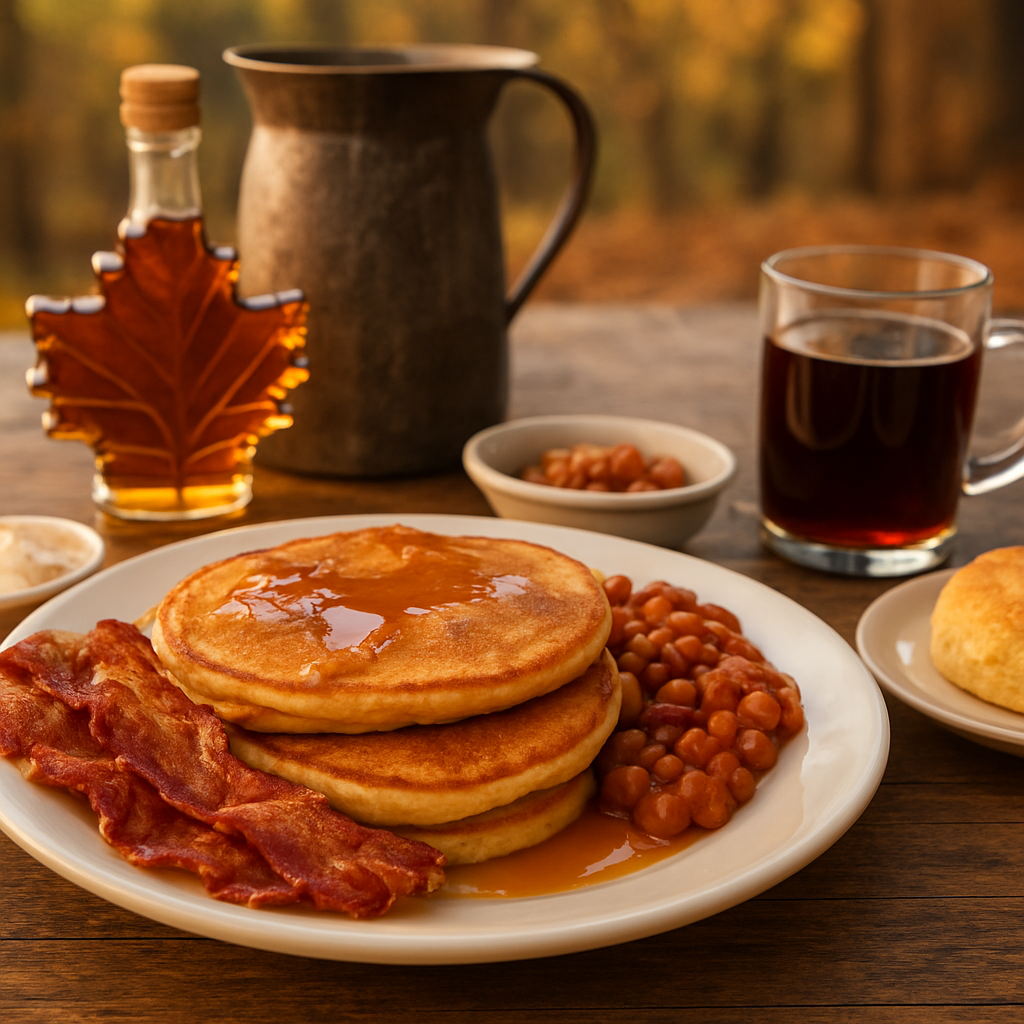
Breakfast at a Cabane à Sucre (Sugar Shack)
In March and April, the maple trees outside Montreal start running sap, and Quebec's sugar shacks open for the season. The traditional meal is a belt-loosening spread of eggs, baked beans, pork, cretons, pancakes, and everything drowning in fresh maple syrup — served family-style at long communal tables in a rural cabin about an hour outside the city. Several operations run shuttle buses from downtown. It's loud, sticky, impossibly caloric, and one of the most distinctly Quebec experiences you can have.
The places I actually send people to
Advice that fits how you travel
Montreal is one of the easiest cities in North America to travel solo, and the Village is a big reason why. The neighborhood is dense, walkable, and social by design — the terrasse culture means you're always sitting near someone, and the 5 à 7 happy hour crowd is genuinely approachable. Bar Le Cocktail's pool tables and patio are built for casual conversation, and Cabaret Mado's shows give you something to react to with the people around you without needing to manufacture small talk. App culture is active — Grindr, Scruff, and Hornet all have healthy user bases here — but the city is social enough in person that you won't feel dependent on your phone.
Budget solo travelers will love Montreal. A hostel bed or budget guesthouse runs CAD $35–55/night. The STM metro is excellent and a day pass costs CAD $10–15. Poutine, bagels, and dépanneur beer are all absurdly cheap. Mont-Royal Park is free. The MBAM permanent collection is free on Wednesday evenings. You can have a genuinely full day in this city for CAD $100–135 and not feel like you're cutting corners.
Safety-wise, the Village core around Beaudry métro is well-lit and well-trafficked at night. Standard urban awareness applies — keep your phone close, don't wander east of Papineau alone at 3 a.m. — but the risk profile here is low. Le Plateau and Mile End are both excellent daytime neighborhoods for solo wandering, with the kind of café culture that makes sitting alone with a book feel like the whole point rather than a consolation prize.
Montreal does romance without trying — the cobblestone streets of Vieux-Montréal at dusk, a bottle of something good on a terrasse while the city hums below you, the way the light falls on the St. Lawrence on a summer evening. LGBTQ+ couples will feel entirely at ease holding hands across the whole city, and in Le Village and Le Plateau, you'll be competing with a dozen other couples doing the same thing without anyone looking twice.
For a dinner you'll actually reference for years, book a table at Joe Beef in Little Burgundy as far in advance as you can manage — the charcuterie, the lobster spaghetti, and a bottle from that wine list in that warm, unpretentious room is the kind of meal that becomes a story. If you're splurging on accommodation, Le Mount Stephen in the Golden Square Mile delivers Gilded Age glamour and one of the city's best hotel bars; Auberge de la Fontaine in the Plateau gives you boutique warmth and a genuinely personal feel for a fraction of the price, positioned perfectly between the Village and the mountain.
The Kondiaronk Belvedere lookout at the top of Mont-Royal is the best free date in the city — catch it at sunset and the skyline spreads out in front of you in a way that's almost unfair. Follow it with drinks anywhere along Ste-Cath and let the night find you. Montreal rewards couples who wander without a strict agenda and politely punishes those who over-schedule.
LGBTQ+ families in Montreal aren't a novelty — they're a demographic with organized advocacy groups, a provincial legal framework that has recognized same-sex parenting rights for decades, and a city that simply gets it. Quebec allows both same-sex parents to be listed on a birth certificate without additional legal process in most cases, and the Coalition des familles LGBT+ provides resources and community for queer families navigating provincial family law. You won't need to explain your family structure to a museum, a restaurant, or anyone else.
Kids are genuinely well accommodated here. The Biodôme and the Insectarium on the island's east end are purpose-built for families — plan a full day and budget accordingly. Mont-Royal Park is free, enormous, and trail-accessible for strollers and older kids alike; the Sunday tam-tam drumming gatherings in summer are excellent, joyful chaos that children find immediately magnetic. Children under 6 ride the STM metro free, which takes some of the logistical sting out of getting around a big city.
One honest heads-up: the cobblestones of Vieux-Montréal are genuinely rough on strollers, especially near the port — stick to the wider sections of Rue Notre-Dame and the Old Port boardwalk for easier navigation. The city is bilingual enough that English-speaking families won't feel lost, and kids absorb French osmotically just by being here for a few days. Consider that a bonus, not a complication.
What Montreal actually costs
Flights, visas, and the first 30 minutes
Airport: Montréal-Trudeau International Airport (YUL) connects to 150+ cities worldwide and is one of the most well-served airports in North America for a city its size. Getting in and out is rarely a logistical headache.
Major Routes: New York JFK is 1h 30m away, making Montreal the easiest international city break from the Northeast U.S. Toronto YYZ clocks in at just 1h 10m. From the West Coast, Los Angeles LAX is 5h 30m. Transatlantic travelers arrive from London LHR in around 7h and Paris CDG in approximately 7h 30m. Chicago ORD sits at a very manageable 2h 00m.
Visa Requirements: U.S. citizens need no visa — a valid passport or NEXUS card is sufficient. Canadian citizens need nothing at all. UK, EU, and Australian travelers require an eTA (Electronic Travel Authorization), which costs CAD $7 and takes minutes to obtain online before you travel. Sort it before you get to the airport — it's not available on arrival.
Airport to City: The 747 Express Bus (STM) runs 24/7 from YUL to Berri-UQAM metro station in 45–60 minutes for CAD $11 — pay with an OPUS card or cash, and it drops you at the edge of the Village. A taxi or rideshare (Uber and Lyft both operate) costs CAD $45–55 with a flat-rate downtown taxi in 25–40 minutes depending on traffic. Rental cars start at CAD $50–120/day via Highway 20 or 40 into downtown, but parking costs add up fast and the metro is genuinely excellent — save the car for day trips to Quebec City or the Laurentians.
Traven's seasonal breakdown
The questions everyone asks
Do I need to speak French?
Is it safe to hold hands in Montreal?
When is Pride?
How much should I budget per day?
What's the Village like in winter?
Is Montreal good for trans travelers?
What time does nightlife start?
Screenshot this before you go
So should you actually go?
Go. Montreal is one of the most rewarding cities I send people to — LGBTQ+ travelers or otherwise. The legal protections are ironclad, the cultural welcome is genuine rather than performative, the food scene punches absurdly above its weight class, and the gay Village is a real, living neighborhood rather than a museum of what used to be. The only caveat: winter is no joke (January averages around -10°C), so plan for May through October unless you genuinely love snow. But from late spring through early fall, this city operates at a frequency that very few places on earth can match — festivals stacked on festivals, terrasses on every corner, long golden evenings on the Plateau, and a scene that runs from afternoon beers at a Village patio to afterhours at Stereo. You'll spend less than you expect, eat better than you deserve, and come home wondering why you haven't been going every year.
Sources & Resources
Official links we reference when compiling this guide. Last verified 2026-03-15.
- Fierté Montréal (Montreal Pride)
- Interligne — LGBTQ+ Support Line & Community Resources
- RÉZO — Sexual Health & Community Services for Gay & Bi Men
- Egale Canada — National LGBTQ2+ Rights Organization
- Fondation Émergence — Anti-Homophobia Education & Advocacy
- ACCM — AIDS Community Care Montreal
- SPOT — Sexual Health Clinic (McGill University Health Centre)
- Centre communautaire des gais et lesbiennes de Montréal (CCGLM)