
Quebec City doesn't perform for you. It pours you a caribou, points at the river, and lets four hundred years of cobblestone do the rest.
Quebec City is the proof that a small scene can outpunch a sprawling one if the warmth is real and the geography is tight. This is a 400-year-old French walled city on a cliff over the St. Lawrence that happens to also have one of the most loyal, compact, no-pretense gay communities in North America — and the two things have been coexisting comfortably for so long that nobody here even bothers to make a big deal out of it. There's a reason I gave it a 9.1 on my Traven-Dex.
The whole map you need fits in a fifteen-minute walk. You enter through the Saint-Jean gate, the air changes, and Rue Saint-Jean opens up in front of you — independent bookshops, butchers, dépanneurs, second-hand record stores, the kind of cafés where someone is always arguing politely about politics in French. Drop one block north onto Rue Saint-Augustin and you're at Le Drague Cabaret Club, the gravitational center of the scene since the 1990s. That's the whole engine — one iconic anchor, a constellation of welcoming spots around it, and a community that shows up for it week after week. I gave it a 9.0 on Scene because density beats sprawl when the density is this fierce.
What makes the city work, though, is what happens off the cliff. Drop down into Basse-Ville and you find Saint-Roch, a once-gritty lower-town neighborhood that reinvented itself as the city's arts and creative hub — Battuto rolling pasta by hand on Rue Saint-Joseph Est, Le Clocher Penché pouring biodynamic wine since 2001, La Barberie's worker-owned taproom packed with locals on a weekday afternoon. Then back up to Vieux-Québec for the cinematic register: the Château Frontenac at dusk, cannons aimed at the river, Place Royale's cobblestones polished by four hundred years of foot traffic. These three neighborhoods talk to each other, and you'll be moving between them constantly.
Now, the honest trade-off. My Pulse score is 6.5, which is the lowest number on this page and the most accurate one. Quebec City is not Montréal. The volume isn't there, the cruise infrastructure isn't there, the seventy-business Village isn't there. What's here instead is warmth, density, and a French-speaking civic identity that's been protecting LGBTQ+ rights provincially since before most of English Canada was even discussing it. Lead with bonjour, learn the geography between Haute-Ville and Basse-Ville, and accept that some nights this city is going to feel quiet. That quiet is the feature.
The stuff your travel guide buries on page 47
The legal picture in Quebec City is about as clean as it gets on this continent. As of 2026, same-sex marriage has been federal law in Canada since 2005, joint adoption is fully legal, and Quebec's Charter of Human Rights and Freedoms explicitly protects sexual orientation and gender identity — in many cases longer than most of English Canada has even been having the conversation. Self-ID applies federally, with no surgical or medical requirement to update gender markers on most documents.
On paper and in practice, you're protected by one of the more robust frameworks in the world. The Commission des droits de la personne et des droits de la jeunesse handles discrimination complaints provincially, and Égale Canada covers the federal layer. If something genuinely goes wrong — which is rare — you have institutions that work, in two languages, with actual humans on the other end. Interligne runs a bilingual provincial LGBTQ+ helpline (1-888-505-1010) staffed by people, not bots.
Now, the cultural reality. French is not optional here. It's not a nice-to-have — it's cultural oxygen. Lead with bonjour before anything else, always. The Faubourg Saint-Jean-Baptiste crowd is genuinely forgiving of shaky French, but a sincere attempt rewires the entire interaction. You'll get better service, better directions, and occasionally a free drink you didn't order. Pro tip: even a butchered "merci, c'est gentil" lands warmer than perfect English ever will.
PDA-wise: in the Faubourg and in Saint-Roch, holding hands draws zero reaction. In the tourist core of Vieux-Québec, you'll be fine — the international visitor mix flattens any local conservatism. Outside the city in rural Quebec, the social register shifts toward the older Catholic countryside, and situational awareness goes a longer way than legal protections, even though the protections still apply.
What it actually feels like on the ground
Holding hands and PDA: The Faubourg Saint-Jean-Baptiste and Saint-Roch are the clearest comfort zones — holding hands on Rue Saint-Jean or in a Saint-Roch café gets exactly zero reaction. The tourist-heavy Haute-Ville up on the cliff is fine, but the vibe runs more conservative given the coach-tour crowd. Same-sex couples on Terrasse Dufferin at sunset are unremarkable; in the Petit-Champlain cobblestone quarter, romance is basically the local product.
Hotel check-in: Boutique properties in Vieux-Québec and Saint-Roch are professionally welcoming to same-sex couples without making a thing of it. The Fairmont and the Germain group both run inclusion policies that aren't lip service. One bed, two of you, no eyebrow.
Taxis and rideshare: Both work. Uber operates from YQB and across the city. Drivers are typically older locals who'll talk hockey or politics if you let them — never had a reader report anything sideways.
Late night and Grande Allée: Late-night Grande Allée can skew bro-heavy on weekends — nothing dangerous, but the energy shifts. If you want a more explicitly LGBTQ+-friendly atmosphere after midnight, double back to Le Drague on Rue Saint-Augustin rather than outlasting the hockey-jersey crowd on the main strip. The walk between the Faubourg and the old city is well-lit and short, and Quebec City's overall street safety is among the best on the continent.
Trans and non-binary travelers: Quebec's human rights code has explicitly prohibited gender identity discrimination longer than most of English Canada has even been discussing it, and that's embedded in how locals actually behave. ID checks at bars and clubs are routine but professionally handled. GRIS-Québec can point you toward affirming local health and community resources, and Action Canada for Sexual Health & Rights covers practical health information across the country.
Verbal harassment risk: Genuinely low in the urban core. The Faubourg and Saint-Roch are working-class progressive neighborhoods where queer life is part of the daily wallpaper. If anything sketchy ever does happen, Interligne's bilingual crisis line (1-888-505-1010) is operational 24/7 and worth saving in your phone before you land.
Pro tip: Get comfortable moving between Haute-Ville and Basse-Ville. The funiculaire connects them for a couple of dollars, or walk the steep staircases down to Rue Saint-Paul for a more cinematic entrance into the lower neighborhoods where actual queer life happens.
The queer geography
Faubourg Saint-Jean-Baptiste
Step through the Saint-Jean gate of the old city walls and the air changes. Rue Saint-Jean stretches west in a long, walkable corridor of independent bookshops, dépanneurs, butchers, second-hand record stores, and the kind of cafés where someone is always arguing politely about politics in French. The architecture is working-class 19th-century — narrow, mansard-roofed, painted in confident colors — and the street tilts gently downhill toward the Église Saint-Jean-Baptiste, whose silver-domed silhouette anchors the whole neighborhood.
This is Quebec City's de facto gay district. Le Drague Cabaret Club on Rue Saint-Augustin is the gravitational center — go Friday or Saturday for drag shows that range from lip-sync battles to full theatrical cabaret, then take the stairs to the upstairs dancefloor that runs well past 2am and smells exactly like every great gay bar you've ever loved. It's not a sprawling village; it's a tight, fiercely loyal scene with one iconic anchor and a constellation of welcoming bars, wine spots, and cafés around it. Fugues magazine is your bible — free copies appear in Le Drague and scattered across the strip, with listings sharper and more current than anything on an anglophone travel blog.
Saint-Roch
Drop down off the cliff into Basse-Ville and you'll find Saint-Roch, a once-gritty lower-town neighborhood that reinvented itself as Quebec City's arts and creative hub. Rue Saint-Joseph Est is the spine — design studios, galleries, a serious independent bookstore in Librairie Pantoute, and a restaurant row that takes Quebec ingredients more seriously than anywhere else in the city. This is where Battuto rolls pasta by hand, where Le Clocher Penché has been pouring biodynamic wine since 2001, and where Complexe Méduse — an artist-run culture complex — programs the kind of LGBTQ+ visual art and performance that rarely surfaces on tourist-facing sites and sells out fast.
The community lean here is progressive, cooperative, slightly anarchist around the edges. La Barberie, the worker-owned microbrasserie that's been operating since 1997, is welcoming without making a performance of it — on a weekday afternoon it's all locals, which is exactly when you want to be there. The Coalition des familles LGBT+ du Québec and Conseil québécois LGBT both maintain provincial directories worth bookmarking if you want to plug into community programming while you're here.
Vieux-Québec — Petit-Champlain & the Old Port
The walled Haute-Ville is what you came for: the Château Frontenac looming over Terrasse Dufferin, cannons pointed at the St. Lawrence, the Place Royale cobblestones polished by four hundred years of foot traffic. The Petit-Champlain staircase quarter is the most photographed gay-friendly cliff face in North America — couples of every configuration drift through the boutiques and bistros with no one paying particular attention. It's tourist-saturated, yes, but the bones are real: Place Royale is the oldest stone square in North America, and the Old Port still smells like cold river water and woodsmoke from the chimneys above.
Most LGBTQ+ social life happens off the cliff in the Faubourg and Saint-Roch — but Vieux-Québec is a romantic anchor for couples staying central, and Terrasse Dufferin at dusk is one of the genuinely great urban vistas on the continent. Free, dramatic, and quietly claimed by the local crowd at the south-end benches for decades. Ville de Québec's official tourism portal publishes current event listings if you want to time your wander against a festival or open-air concert.
Montcalm and Avenue Cartier
West of the old city walls, Montcalm is the leafy residential cousin of the tourist core — walkable, low-rise, and built around Avenue Cartier, an upscale strip of dining and boutique shopping that draws a mixed, progressive daytime crowd. Café Krieghoff here is the long-standing intercept point for slow espressos, remote work, and overhearing about whatever underground event is happening this weekend before it sells out. The Plaines d'Abraham stretch out at the edge — 108 hectares of national urban park that doubles as the principal outdoor venue for Fierté Québec Pride and the Festival d'été de Québec. The Musée national des beaux-arts du Québec sits at the western end, with the Pierre Lassonde Pavilion's glass facade catching the late afternoon light.
The experiences worth rearranging your itinerary for
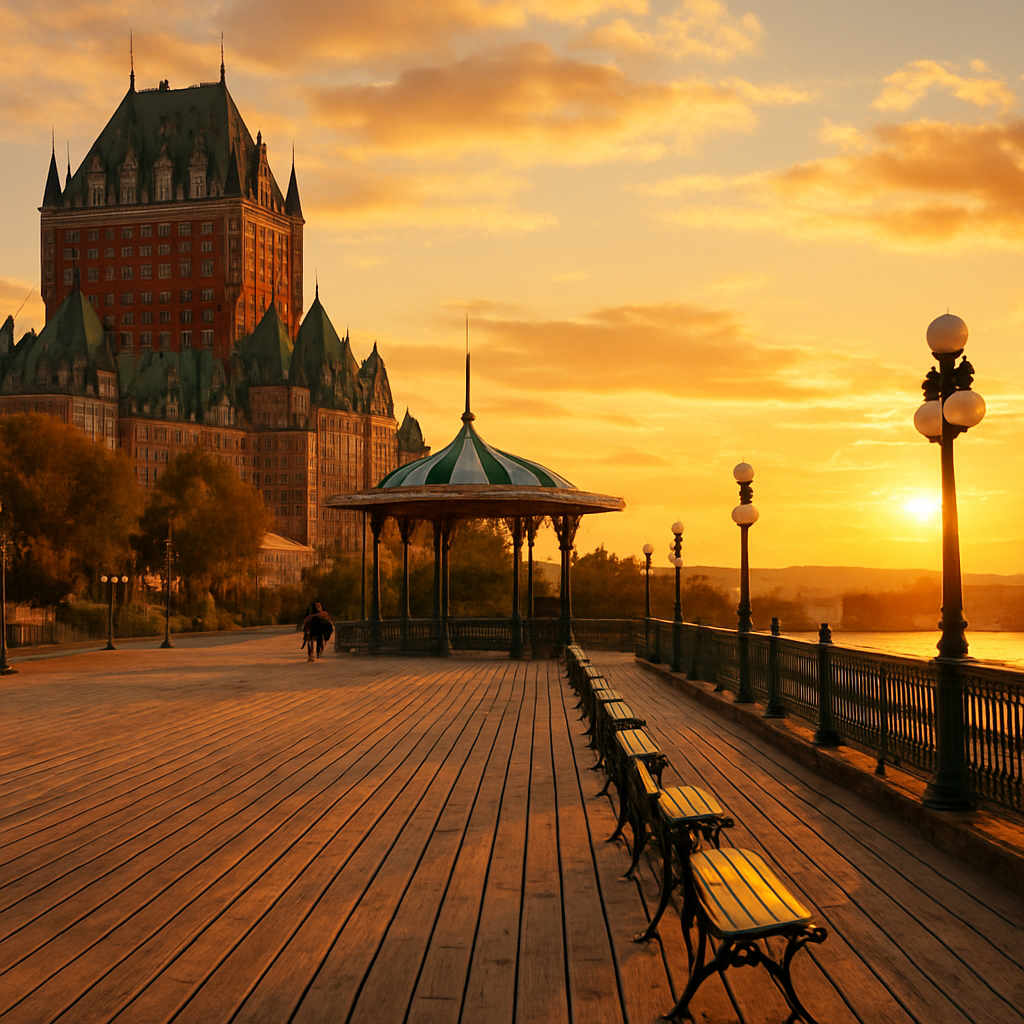
Terrasse Dufferin at Dusk
The boardwalk runs along the cliff edge below the Château Frontenac, and at dusk the St. Lawrence turns the color of pewter while the cannons of the old fortifications go black against the sky. The whole city seems to slow down for it. Locals have been claiming the south-end benches for decades — bring a coffee or something stronger, find a seat, and stay until the lights of Lévis across the river start coming on.
It's free, it's dramatic, and it's the single best way to understand why people have been fighting over this rock for four hundred years.
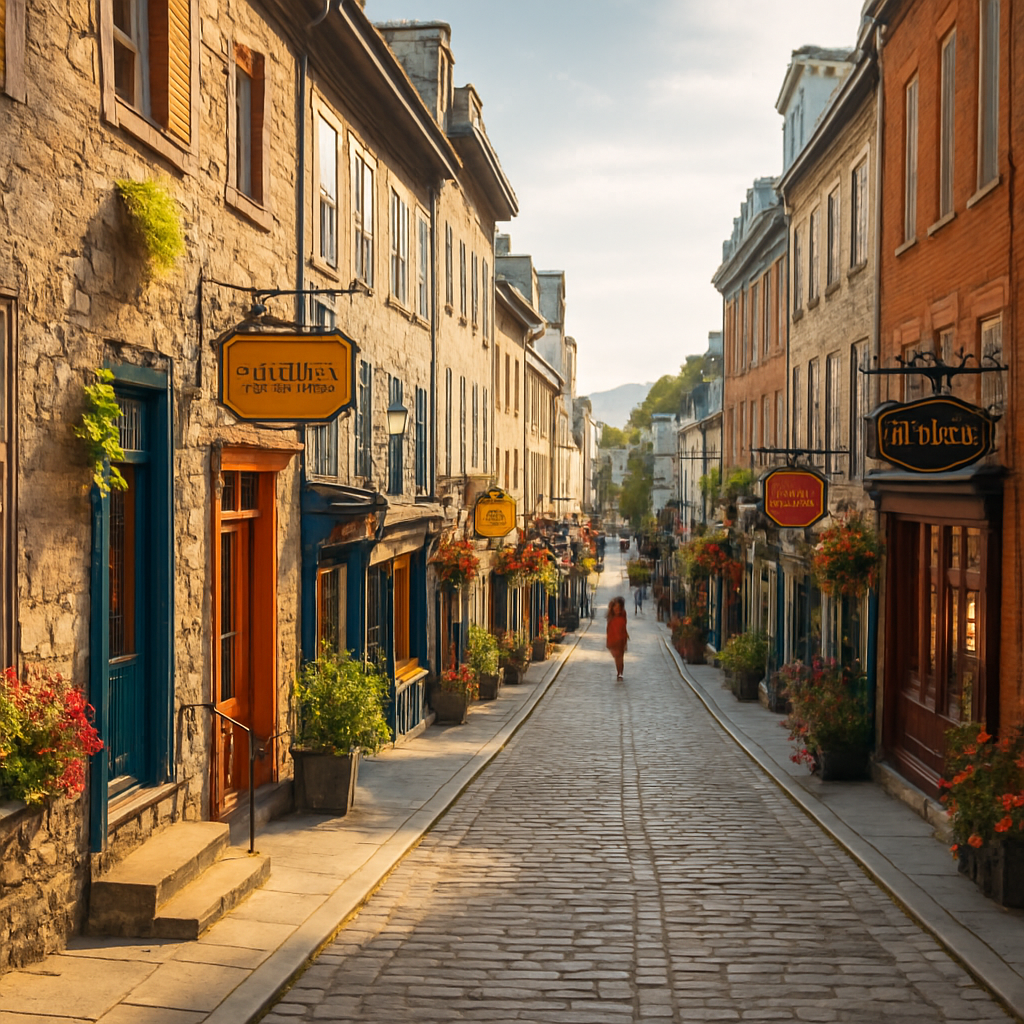
The Petit-Champlain & Old Port Walk
Take the funiculaire down or, better, walk the Escalier Casse-Cou — the Breakneck Stairs — into Petit-Champlain, the tightest, most photogenic cobblestone quarter in North America. Boutiques, bistros, a 17th-century church, and the polished stones of Place Royale, the oldest stone square on the continent. From there, drift toward the Old Port, where the air smells like cold river water and woodsmoke.
Do this slowly, ideally on a weekday morning before the cruise crowds arrive. Stop for a pastry at any bakery that smells right.
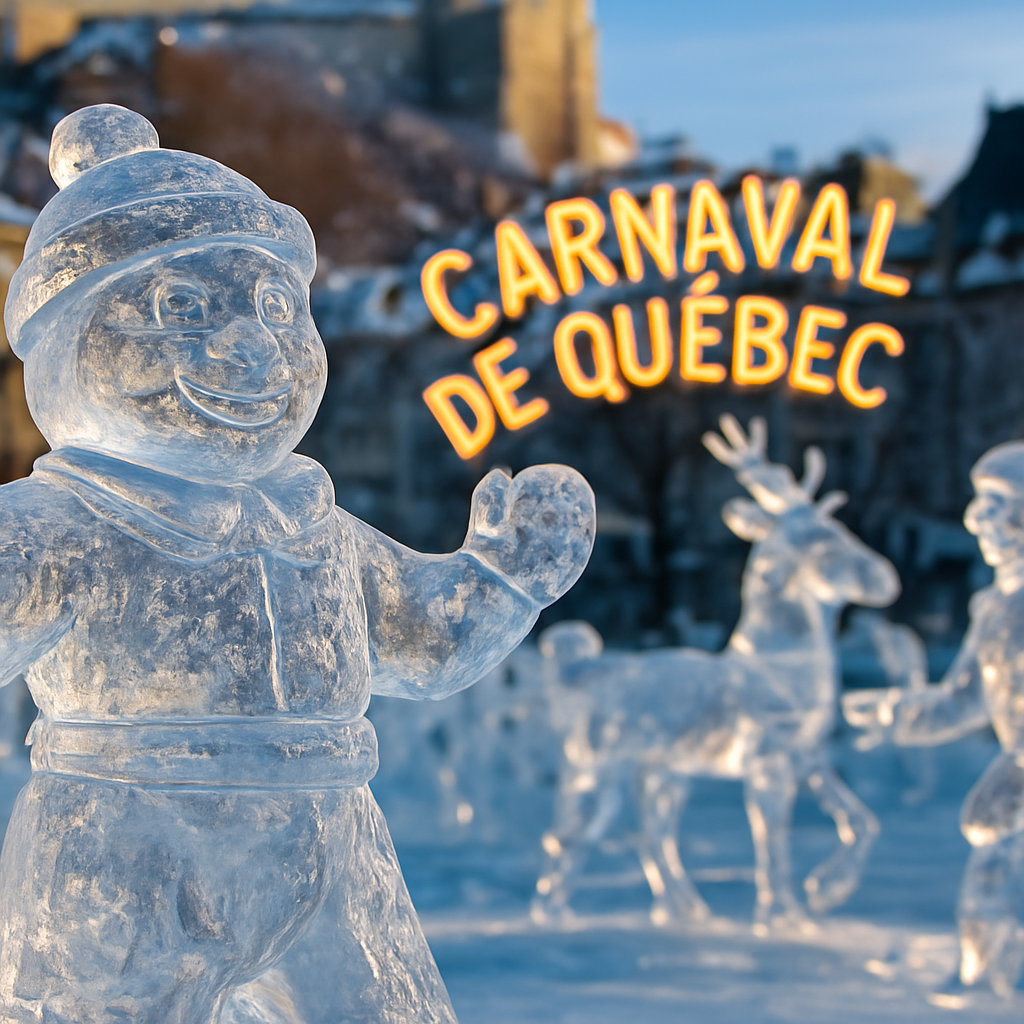
Carnaval de Québec in February
The world's largest winter carnival, running for two weeks every February. Ice sculptures, night parades, a snow palace built from scratch each year, and caribou — a hot mulled drink of red wine and spirits sold in a plastic cane you'll keep as a souvenir. Locals turn out in numbers that would shame a summer festival, all of them having entirely made peace with minus-twenty.
Pro tip: Carnaval crowd skews young and mixed, and the late-night Grande Allée bar scene becomes accidentally, enthusiastically welcoming for the duration. Pack actual winter gear — Canada Goose tourist coats are not enough below minus-fifteen.
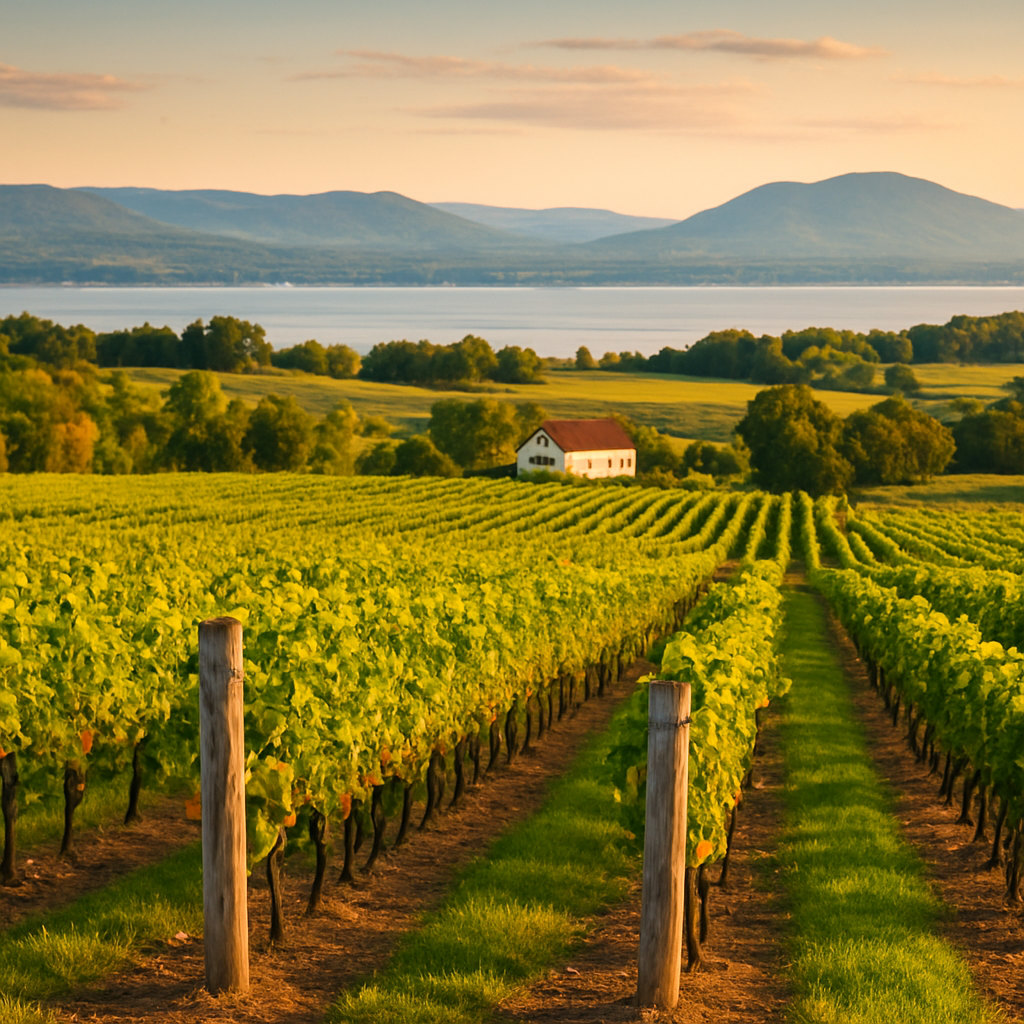
A Food Loop Around Île d'Orléans
Cross the bridge from Autoroute 440 and you're on a 70-km agricultural island that locals have been farming since 1675. Drive the perimeter road — there's only one way around — and stop wherever a hand-painted sign points to a vineyard, a cidery, an artisan cheese shop, or a strawberry stand. Île d'Orléans grows roughly half of Quebec's strawberries, and in June and July you can taste why.
Build the day around a long lunch at one of the country inns, then circle back through the village of Sainte-Pétronille for the view of Vieux-Québec across the water at golden hour.
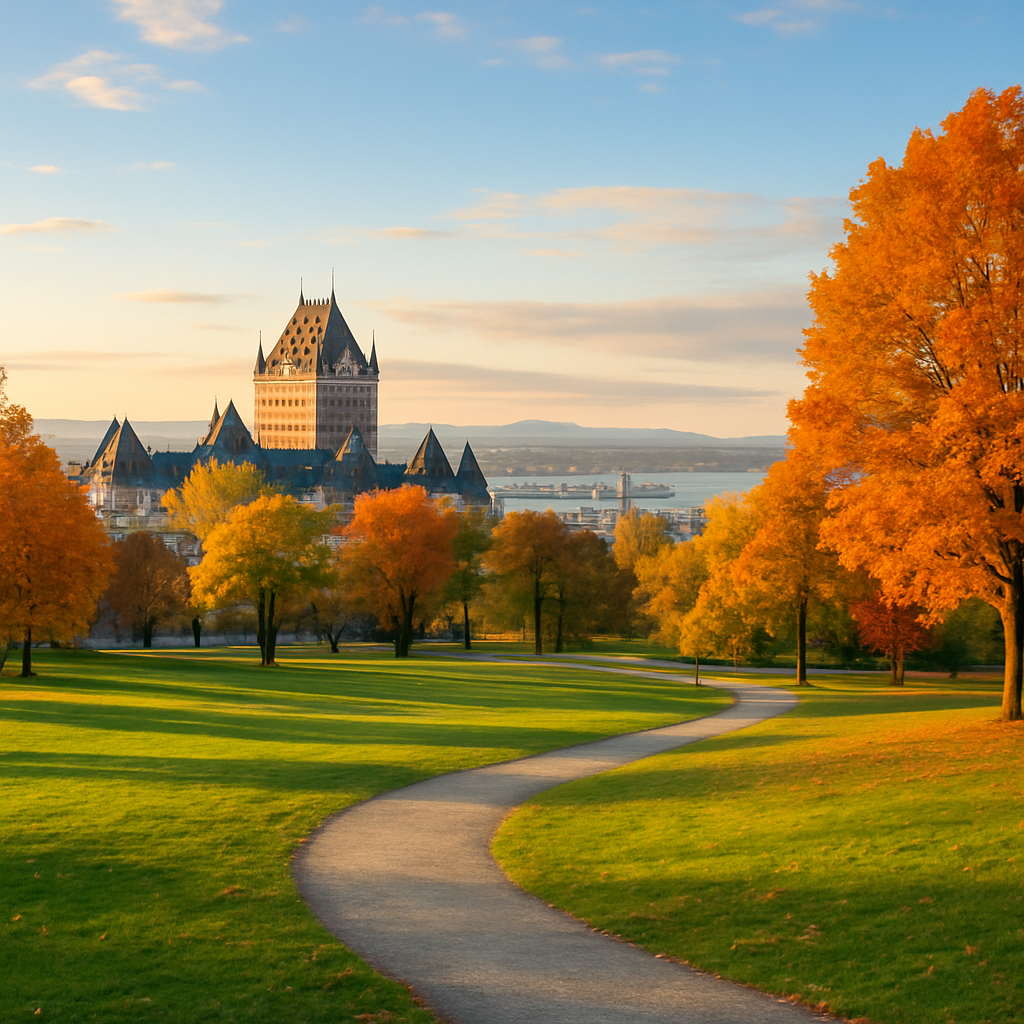
An Afternoon on the Plains of Abraham
108 hectares of urban park hugging the walls of Old Quebec, with the Musée national des beaux-arts du Québec anchoring the western end. Walk in from Avenue Cartier, cut across the open fields where the British and French armies decided the future of the continent in 1759, and end at the Pierre Lassonde Pavilion's glass facade catching the late afternoon light.
The MNBAQ collection runs past 40,000 works and consistently programs serious Quebec artists. Two hours minimum, half a day if the weather cooperates.
The places I actually send people to
Advice that fits how you travel
Quebec City is small enough to navigate in an afternoon and welcoming enough that solo travel here rarely feels like it. The Faubourg Saint-Jean-Baptiste is your operating base — Rue Saint-Jean runs end to end in under twenty minutes and covers almost everything on the list: Paillard for a morning pastry, Pub Saint-Alexandre for a mid-afternoon whisky with 200 choices on the wall, and Le Drague's front door before you've made a plan. The apps work in Quebec City, though the numbers are more modest than Montréal — think quality over volume, and know that the people you meet are actually from the neighborhood. Le Drague on Friday or Saturday is the easiest entry point into the local scene; the bartenders are institutional memory, and if you buy a round and ask what's happening this week, they'll tell you everything worth knowing.
The budget case for a solo trip is strong. The Auberge Internationale de Québec puts you inside the old city walls for around CAD $40 a night, steps from the strip. The dépanneurs on Rue Saint-Jean sell cold Quebec beer and wine at prices that reward planning ahead. A proper lunch at Battuto or Le Clocher Penché in Saint-Roch rarely breaks CAD $25, and La Barberie's taproom will keep you contentedly occupied on a weekday afternoon for the cost of three pints. A moderate solo day runs around CAD $290 all-in — with room to push downward if you're disciplined about it.
For connections outside the bar circuit, Complexe Méduse in Saint-Roch regularly programs visual art, performance, and community events that sell out quietly — check the calendar before you land, because none of it surfaces on the tourist-facing sites. Café Krieghoff on Avenue Cartier is the unhurried solo intercept point: good espresso, a table by the window, and someone at the next table who'll eventually ask where you're from. The one thing every solo traveler needs to know before landing: a sincere bonjour and a genuine attempt at French — however broken — rewires every interaction in this city. You'll get better service, better directions, and occasionally a drink you didn't order. The community here is warm to people who show up curious rather than entitled, and that warmth is almost immediate.
Quebec City wasn't designed to be romantic. It just turned out that way, and the city has entirely leaned into it. Cobblestones polished by four centuries of foot traffic, the Château Frontenac looming over the river, the Petit-Champlain quarter smelling like woodsmoke and crêpes in any season — this place doesn't need to try. Same-sex couples move through Vieux-Québec, the Faubourg, and Saint-Roch without generating a second glance from anyone. As of 2026, you're protected by federal law and Quebec's Charter at their most comprehensive — which means you can spend your energy on each other rather than reading the room.
For the stay: Auberge Saint-Antoine in Basse-Ville is the couples' move if the budget allows — Relais & Châteaux service, 18th-century archaeological artifacts displayed throughout the hallways, and the Rue Sault-au-Matelot fine-dining row right outside. If you want the full cinematic treatment inside the fortress walls, the Fairmont Le Château Frontenac delivers exactly what it looks like, and Fairmont's inclusion policies are genuine rather than decorative. Mid-range, Hôtel Le Germain in Basse-Ville has the design sensibility and the discretion without asking you to re-mortgage. For dinner, build the evening around Chez Boulay Bistro Boréal on Rue Saint-Jean — the boreal tasting menu is one of the most distinctly Québécois meals you'll sit down to — then walk five minutes to Le Moine Échanson for natural wine before deciding whether the night stays quiet or finds its way to Le Drague. That sequence is close to perfect.
For a longer romantic register: drive 100 km northeast to Charlevoix and spend a night in Baie-Saint-Paul — the light over the St. Lawrence in the morning is the reason people keep returning to this region for a century and a half. Île d'Orléans, just 15 km east, makes a gentler full-day loop: vineyards, artisan cheese producers, country inns that have been quietly hosting same-sex couples for decades, and a view of Vieux-Québec across the water at golden hour. And no couples' trip ends right without Terrasse Dufferin at dusk — the south-end benches, the river going pewter in the fading light, no agenda at all. It's free, it's one of the genuinely great urban vistas on this continent, and our people have been claiming those benches for a long time.
LGBTQ+ families in Canada sit on some of the most comprehensive legal ground in the world, and Quebec adds its own layer on top of that. As of 2026, same-sex marriage is federal law, joint adoption is fully recognized, and both the federal Canadian Human Rights Act and Quebec's Charter of Human Rights and Freedoms protect your family's status at every level. There's no ambiguity at hotel check-in, no moment where you'll need to explain your family structure to a ticket counter, no paperwork surprise waiting in the itinerary. The gays have been building family life in this province for a long time, and the infrastructure — legal, social, and practical — reflects it. You're a family on vacation in one of the most architecturally extraordinary cities on the continent, and Quebec City is genuinely content to treat you exactly like that.
The kid-friendly itinerary writes itself once you know where to look. The Musée de la civilisation in the Old Port is genuinely excellent — broad mandate, thoughtful exhibitions, and admission that won't break the day's budget. The Plaines d'Abraham absorb small humans running in no particular direction across 108 hectares of open park without complaint, and they serve as Quebec City's principal outdoor venue for Fierté Québec Pride each August, which is worth mentioning to kids old enough to understand what that means. If you're visiting in February, Carnaval de Québec is a full-family event: ice sculptures, night parades, a snow palace built from scratch each year, and caribou — hot mulled wine in a souvenir cane — for the adults who need something warming to hold. A loop around Île d'Orléans, just 15 km east, works beautifully with children — farm stands, strawberry picking in June and July, artisan cheese producers, and the uncomplicated pleasures of a single-road agricultural island with something good to eat at every turn. The Coalition des familles LGBT+ du Québec maintains family-focused community resources worth bookmarking before you land.
A practical logistics note: Haute-Ville in Vieux-Québec is breathtaking but physically demanding — cobblestones, steep staircases, and uneven surfaces are the default terrain. A stroller-carrying family will breathe considerably more easily in Saint-Roch and along the Grande Allée corridor, where sidewalks are flat and the pace is less precious. The funiculaire connecting Upper and Lower Town is genuinely fun for kids and fully accessible; the Escalier Casse-Cou is a great photo, not a stroller route. Budget-wise, a moderate family day runs around CAD $575 all-in — strong value compared to most North American cities of this cultural weight, and the best of what Quebec City offers (the parks, the fortification walls, Terrasse Dufferin, the open-air history of Place Royale) costs nothing at all.
What Quebec City actually costs
Flights, visas, and the first 30 minutes
Airport: You're landing at YQB — Aéroport international Jean-Lesage de Québec, about 20 km west of the old city. Roughly 25 direct routes serve the airport, concentrated on Canadian gateways. International travelers typically connect through Montréal (YUL) or Toronto (YYZ); both hubs carry direct transatlantic and US service. Air Canada and Porter run the most frequent domestic frequencies, and the Montréal hop is barely 45 minutes if that's where your long-haul lands.
Visa and entry requirements as of 2026: US passport holders need no visa — a valid passport handles it. Canadian citizens are on domestic travel; nothing to arrange. Travelers from the UK, EU, and Australia typically require an eTA (Electronic Travel Authorization), a CAD $7 online application that generally processes within minutes. Apply before you leave home — the departure gate is not the place to discover this.
Airport to city: A taxi or Uber from YQB runs CAD $35–45 and takes about 20–25 minutes to the old city under normal conditions — Uber operates from the arrivals level, both options are reliable. If you'd rather pocket the CAD $35, RTC Bus Route 78 connects the airport to Sainte-Foy and downtown for CAD $3.75. Tap-to-pay works, or bring exact change; plan for 35–45 minutes depending on stops.
Traven's seasonal breakdown
The questions everyone asks
Do I need to speak French to enjoy Quebec City?
Is it safe for same-sex couples to hold hands?
How does Quebec City compare to Montréal for LGBTQ+ travelers?
When is Pride in Quebec City?
How much should I budget per day?
Do I need a visa to visit Canada?
What's the best time of year to visit?
Screenshot this before you go
So should you actually go?
Go. Quebec City earns my 9.1 because it does something most travel destinations can't — it gives you a UNESCO-grade old-world city, a fully realized creative neighborhood in Saint-Roch, one of the warmest tight-knit gay scenes on the continent, and legal protections as comprehensive as anywhere on earth, all inside a fifteen-minute walking radius. The trade-off is volume — if you need a sprawling village with seventy bars, that's Fierté Montréal two and a half hours west. But if you want a long weekend that feels like a European trip without leaving North America, with a community that takes itself seriously without taking itself too seriously, this is it. Lead with bonjour, anchor your nights at Le Drague, and give yourself an extra day for Île d'Orléans or Charlevoix — I'd send LGBTQ+ travelers here without a single asterisk.
Sources & Resources
Official links we reference when compiling this guide. Last verified 2026-04-29.
- Action Canada pour la santé et les droits sexuels
- Coalition des familles LGBT+ du Québec
- Commission des droits de la personne et des droits de la jeunesse (CDPDJ)
- Conseil québécois LGBT — Provincial Advocacy Council
- Égale Canada — National LGBTQ+ Rights Organization
- Fugues — Quebec LGBTQ+ Magazine & City Listings
- GRIS-Québec — LGBTQ+ Visibility & School Education
- Interligne — Quebec LGBTQ+ Support & Crisis Line
- Jeunesse Lambda — LGBTQ+ Youth Quebec
- Ville de Québec — Official City Portal