
This city hands you a plastic chair, a cold beer, and a champeta bass line — and dares you to remember why you ever needed a label.
Cartagena doesn't have a gay district, and after a few nights in Getsemaní, you won't miss one. Plastic chairs materialize on the sidewalk outside Plaza Trinidad around 9pm, champeta gets loud enough to rattle the murals on Calle Larga, and the crowd that forms — backpackers, costeños, expats, people who followed the bass out of their hostel — is so radically mixed that your orientation is genuinely the least interesting thing about you. My Traven-Dex of 7.7 reflects a city with real contradictions, but the thing that number can't capture is this: the way the heat presses against your skin at 9pm, then the first sea breeze rolls in off the Caribbean, and the entire neighborhood exhales at once.
The Ciudad Amurallada is four centuries of Spanish colonial architecture inside UNESCO walls, and it's as photogenic as any old city in the Americas — I won't argue that. But it performs for tourists. The Cartagena that earned my 8.5 on Destination lives in the gap between the walled city and everything outside it: the Afro-Colombian cooking at La Cocina de Pepina that traces back generations, the street art along Calle Larga that tells stories most history books skipped, the champeta at Bazurto Social Club on a Saturday night when the dance floor defies every label anyone's ever tried to assign it. Alquímico, ranked #3 in the World's 50 Best Bars, sits inside the walls in a restored colonial mansion — and it deserves the reputation. But the drink I remember most is a COP 4,000 beer on a plastic chair at Plaza Trinidad with nowhere to be and no one expecting me.
The honest part: Colombia wrote some of the best LGBTQ+ laws in the Americas, but Cartagena is a Caribbean port city where the Catholic church still anchors daily life in ways Bogotá moved past a decade ago. In the tourist zones, international traffic and a younger service economy create a genuinely comfortable buffer. Step into residential barrios — Barrio Manga, Pie de la Popa — and the cultural temperature shifts. The gap between law and street is real here, and I won't pretend it isn't. Caribe Afirmativo has been building community infrastructure on this coast for years, and their work is why the landscape keeps improving — they're the people to know if you want to understand what's happening beyond the tourist bubble.
What earns Cartagena its spot: the scene here runs through Getsemaní's mixed bars — Café Havana anchoring live son and salsa on the corner of Calle del Arsenal, Tu Candela pulling a reliably gay-friendly crowd on weekends, the stoops around Plaza Trinidad where the evening comes to you if you stay still long enough. It doesn't match Bogotá or Medellín in scale, but it has something those cities can't offer: warm Caribbean water, 16th-century stone walls turning gold at sunset from Las Murallas, and a neighborhood where queerness isn't celebrated with a parade — it's just part of the gorgeous, sweaty, shameless fabric of a place too busy being alive to keep score.
The stuff your travel guide buries on page 47
Colombia's legal protections for LGBTQ+ people are, as of 2026, among the strongest in the Americas. Same-sex marriage has been legal since a 2016 Constitutional Court ruling. Same-sex couples can adopt. Anti-discrimination protections cover sexual orientation and gender identity across employment, housing, and public services. Colombia Diversa, the country's leading LGBTQ+ legal advocacy organization, publishes detailed annual reports tracking how these laws play out on the ground.
Gender identity law deserves its own mention. Decree 1227 of 2015 allows self-ID gender marker changes at any Registraduría Nacional notary office — no psychiatric evaluation, no surgical requirement. That's more progressive than most of Europe. For trans travelers needing legal guidance, Fundación GAAT is Colombia's leading gender identity advocacy organization.
Now the gap. Colombia wrote some of the best LGBTQ+ laws on the continent, but Cartagena is a Caribbean port city where the Catholic church still anchors daily life in ways Bogotá has moved past. In the tourist zones — Getsemaní, the Ciudad Amurallada, Bocagrande — international tourism and a younger service economy create a genuinely comfortable buffer. Step into residential neighborhoods like Barrio Manga or Pie de la Popa, and you'll feel the cultural temperature shift. The law is progressive; street culture is still catching up.
PDA comfort tracks closely with geography. In Getsemaní, same-sex couples are part of the scenery — the bohemian energy and mixed international crowd mean nobody's keeping score. Inside the Ciudad Amurallada, tourist density provides its own kind of cover. Bocagrande's hotel-lined beach strip has been normalized by years of international visitors — two men holding hands at a beach bar doesn't register as an event. It's not radical, it's just unremarkable, which is exactly what you want.
For day trips to the Islas del Rosario or Playa Blanca, crowds are mixed and generally relaxed, though light discretion is sensible. In working-class barrios away from the tourist circuit, same-sex PDA will draw stares and occasionally comments. Trans travelers — particularly trans women — should know that street harassment in Cartagena runs sharper and more direct than in Bogotá or Medellín. ILGA World maintains a comprehensive Colombia country profile for the full legal and cultural picture.
What it actually feels like on the ground
Holding hands. In Getsemaní and along Bocagrande's hotel strip, same-sex couples holding hands won't draw attention. Inside the walled city during tourist hours, you're generally fine. Outside these zones — particularly in residential neighborhoods or on local transit — read the room. Sustained hand-holding in a non-tourist barrio will attract stares and occasionally comments.
Hotel check-in. Major hotels in the walled city and Bocagrande won't blink at same-sex couples — Colombia's anti-discrimination law means they can't legally refuse you, and the upscale properties are staffed by people who've seen everything. Budget hostels in Getsemaní — particularly Media Luna and Selina — are well-documented as welcoming. Smaller family-run guesthouses in outlying neighborhoods may require a bit more confidence walking in.
Taxis and rideshares. Use Uber or InDriver rather than hailing street cabs — the app creates a record and prices are generally lower. Agree on fares before boarding any unmetered taxi. Late at night, always use a rideshare app and share your route with someone.
Beaches and public spaces. Bocagrande Beach has an informal stretch near Hotel Capilla del Mar that's been a gathering point for the local gay community for years — it's public, free, and unremarkable. Hotel pools and beach clubs throughout the area are relaxed. Parque del Centenario and Parque Fernández de Madrid in the walled city are fine during the day; use standard city awareness after dark.
Late night. Getsemaní has gentrified considerably, but petty crime is real after midnight on quieter streets off Plaza Trinidad. Keep your phone in your pocket, walk with someone, and stay on lit, populated streets. The neighborhood rewards situational awareness, not oblivious wandering.
Drink safety. Scopolamine — locally called burundanga — is a documented risk in Cartagena's nightlife. Cover your glass, don't accept drinks from strangers, and stick to bars where you can watch your drink being poured. Targeted use against tourists and LGBTQ+ travelers is a known pattern — this is not a theoretical warning. Temblores ONG monitors and documents incidents of violence across Colombia, including targeting patterns on the Caribbean coast.
Trans travelers. Colombia's legal framework is strong, but Cartagena's street-level reception — particularly for trans women — can be blunt. Misgendering is common outside tourist venues, and harassment runs hotter on the Caribbean coast than in the Andean cities. Stick to Getsemaní and the walled city where the international mix provides cover. Caribe Afirmativo, the primary LGBTQ+ organization on the Caribbean coast, maintains a support line and can connect you with contacts who know the city's safer corridors.
Verbal harassment. Catcalling and unsolicited commentary are part of costeño street culture — for women and femme-presenting people of any orientation, it's more present here than in Andean cities. For visibly gay male couples, comments in tourist zones tend to be more curious than aggressive but can edge toward hostile in residential areas. Walk away, don't engage, and know that most of it is noise, not threat.
Health resources. Profamilia operates a clinic in Cartagena offering sexual health services including HIV testing and PrEP access — staff are trained to be non-judgmental, and the clinic is a safe space for patients needing care while traveling. The Ministerio de Salud website lists additional public health facilities across the city.
If something goes wrong. If you experience discrimination or a rights violation, the Defensoría del Pueblo has an office in Cartagena where you can file a formal complaint. Caribe Afirmativo is the frontline resource for people from the community navigating the system in the Caribbean region — they have staff who actually answer and know how to escalate. Don't rely on hotel concierges for rights issues; go to the people who do this work.
The queer geography
Getsemaní
The first thing you notice about Getsemaní isn't the murals — it's the noise. Champeta bleeding from open doorways, the clatter of dominoes on metal tables, street vendors calling out empanadas and agua de coco in rapid-fire costeño Spanish. This was Cartagena's working-class quarter for centuries, built by enslaved Africans and held onto by their descendants through decades of neglect, and the energy still runs on that fierce community pride even as international hostels and cocktail bars have crowded in. Pro tip: the walk from the walled city takes eight minutes through the clock tower gate — or COP 5,000 by tuk-tuk if the heat's won.
The street art along Calle Larga is worth a slow hour — murals by Colombian and international artists cover entire facades, depicting Afro-Caribbean heritage and social justice themes. Plaza Trinidad is the neighborhood's living room: people sit on stoops with beers from the corner tienda, musicians drift through, and the crowd is gloriously mixed without anyone making a production of it. Grab a plastic chair and a COP 4,000 cerveza and let the evening come to you.
This is where Cartagena's gay scene lives — not in a dedicated strip, but woven through the neighborhood's mixed bars and gathering spots. Mister Babilla reliably draws a gay-friendly crowd on weekends, Bazurto Social Club fills its dance floor with champeta so shameless it defies any label, and Quiebracanto on Calle Larga hosts live music and occasional LGBTQ+ programming. Café Havana, on the corner where Calle del Arsenal meets the plaza energy, has served live Cuban son and salsa since roughly 2007 to a crowd that defies categorization. The scene runs Thursday through Saturday — show up on a Tuesday and you'll be alone with a bored bartender and your regrets.
Caribe Afirmativo, the Caribbean coast's primary LGBTQ+ organization, has been building community infrastructure across the region for years — if you want to understand the landscape beyond the tourist bubble, start with them. ILGA Latin America y el Caribe offers broader regional context for travelers exploring beyond Cartagena.
Ciudad Amurallada (Walled City)
Four kilometers of 16th-century stone walls encircle a UNESCO World Heritage site that manages to feel like both a living city and a very beautiful stage set. Horse-drawn carriages share cobblestone streets with motorcycle taxis and fruit vendors balancing baskets on their heads. The architecture is Spanish colonial at its most photogenic — painted balconies trailing bougainvillea, iron-grated windows, interior courtyards glimpsed through half-open doors.
Alquímico, ranked #3 in the World's 50 Best Bars in 2022, occupies a restored colonial mansion across three floors — ground-level bar, cocktail lounge, rooftop terrace — and the drinks justify the reputation. La Vitrola has served Cuban-influenced Caribbean food with nightly live music since the 1990s in a dining room that feels like Havana in its prime. For contemporary Colombian fine dining, Celele foregrounds Afro-Colombian and pre-colonial culinary traditions on a tasting menu that's earned it a spot on Latin America's 50 Best Restaurants.
The walled city doesn't have dedicated gay venues, but the cosmopolitan energy international tourism has created within these walls makes same-sex couples unremarkable. Café del Mar, perched on Las Murallas at sunset, draws a crowd so mixed by nationality and orientation that categorizing anyone seems beside the point.
San Diego
San Diego is the walled city's quieter residential quarter — fewer souvenir shops, more neighborhood cats, and a pace that slows down enough to hear birds in the courtyard trees. The architecture is the same painted colonial facades, but the streets are narrower and foot traffic thins the further you walk from the main tourist arteries. This is where some of Cartagena's most interesting food lives.
La Cevichería serves some of the best ceviche on the Colombian coast out of a tiny second-floor space — the line forms early and Condé Nast Traveler already told the world about it, so go at an off-hour. The Sofitel Legend Santa Clara, occupying a 1621 Clarisan convent, anchors the neighborhood — its bar, El Coro, set in the former choir loft, is either the most beautiful or the most sacrilegious cocktail bar in the city depending on your relationship with organized religion.
San Diego doesn't have dedicated gay bars, but its cosmopolitan dining scene and boutique hotels attract a crowd that doesn't bat an eye. The neighborhood consistently appears in gay travel resources as a comfortable, welcoming base within the walls.
Bocagrande
Cartagena's modern hotel and beach strip runs along a narrow peninsula south of the walled city — high-rise hotels, beach clubs, and a seafront promenade that trades colonial charm for ocean breeze and convenience. The architecture won't win preservation awards, but the water is warm, the hotel pools are generous, and the COP 5,000 coconut from the beach vendor comes with rum if you ask nicely. It's Cartagena's most practical base if you want beach access without a boat ride.
The public beach includes an informal stretch near Hotel Capilla del Mar that's been a community gathering point for years — no signs, no demarcation, just a patch of sand where people know their spot. Hotel pools and beach bars throughout the neighborhood are relaxed about same-sex couples. This is Cartagena's easiest, least complicated zone for visibility — not because anyone's making a statement, but because nobody's paying attention.
The experiences worth rearranging your itinerary for
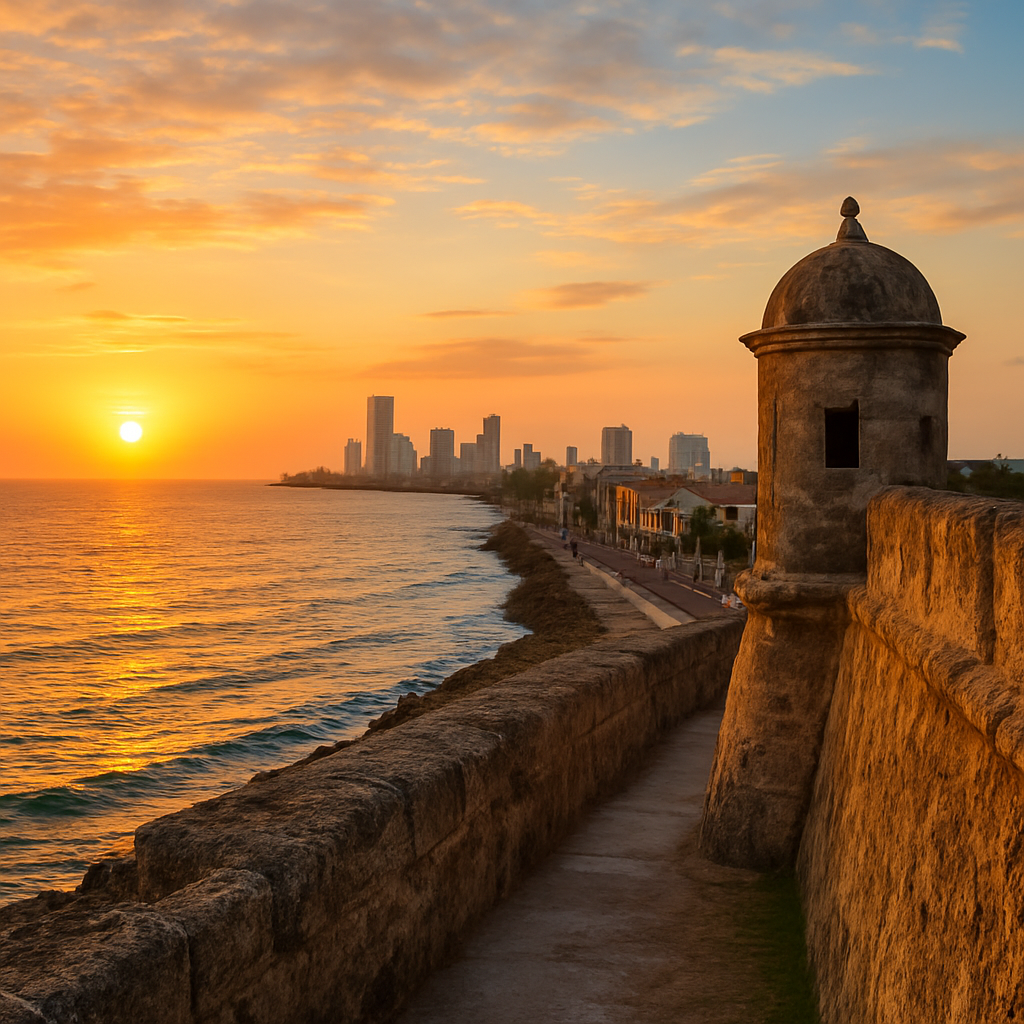
Sunset from Las Murallas
The 16th-century walls that ring Cartagena's old city become the best free spectacle on the Colombian coast every evening around 5:30pm. Find a spot along the western ramparts near the Café del Mar stretch, grab a COP 5,000 beer from one of the walking vendors, and watch the Caribbean swallow the sun while the silhouettes of church domes and colonial rooftops go amber.
The crowd that gathers — vendors selling coconut cocktails, couples leaning on the stone parapets, backpackers with their feet dangling over the edge, abuelas taking their evening air — is half the show. Nobody's in a hurry. Nobody's checking the time. The light shifts fast here near the equator, so don't be late — once it starts, you've got about twenty minutes of the best golden hour on the continent.

The Tasting Menu at Celele
Celele is on the Latin America's 50 Best Restaurants list, and the reason is a tasting menu that foregrounds Afro-Colombian and pre-colonial Caribbean ingredients most fine dining kitchens have never heard of — endemic coastal fruits, indigenous grains, preparations rooted in culinary traditions that predate the Spanish conquest by centuries.
The room is quiet colonial elegance, and the food does all the talking. This isn't fusion or novelty. It's recovery — foodways that were erased or sidelined for generations, put back on the plate with technical precision and genuine reverence. Book ahead. Tell them about dietary restrictions when you reserve, not when you sit down. And come hungry — the courses are paced to build, and the final savory dish is the one that makes you understand what the kitchen was doing all along.
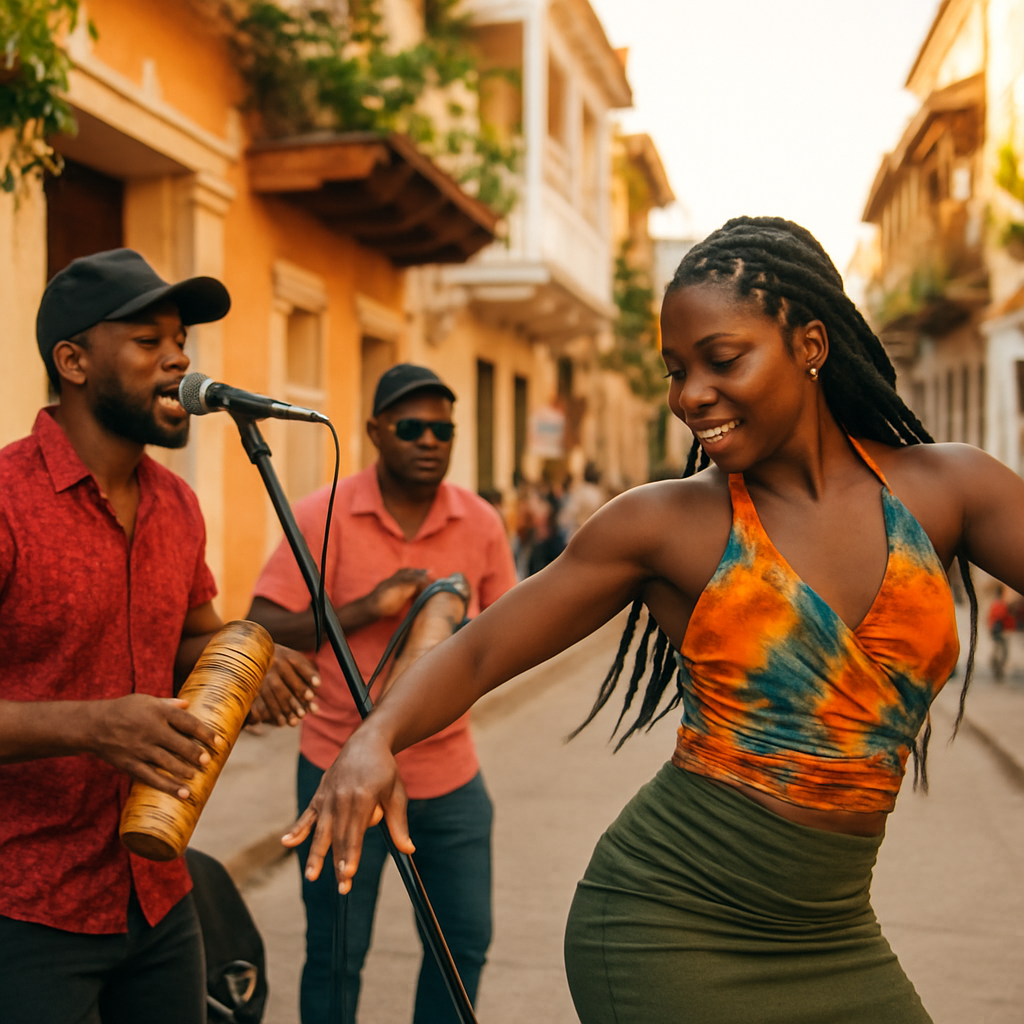
A Champeta Night at Bazurto Social Club
Champeta — the Afro-Caribbean music genre born right here in Cartagena — hits different when it's live, loud, and filling a Getsemaní dance floor with people who actually know the steps. Bazurto Social Club programs notable Colombian artists on weekend nights, and the energy is sweaty, joyful, and entirely without pretension.
You don't need to know what you're doing. The bass will tell your hips, and someone near you will grin and show you the rest. This is Cartagena's nightlife at its most authentic — not curated, not bottled for export, not a DJ playing last year's hits to disinterested tourists. The music starts late (don't arrive before 11pm) and runs until your legs give out. Bring cash for drinks and a shirt you don't mind soaking through.
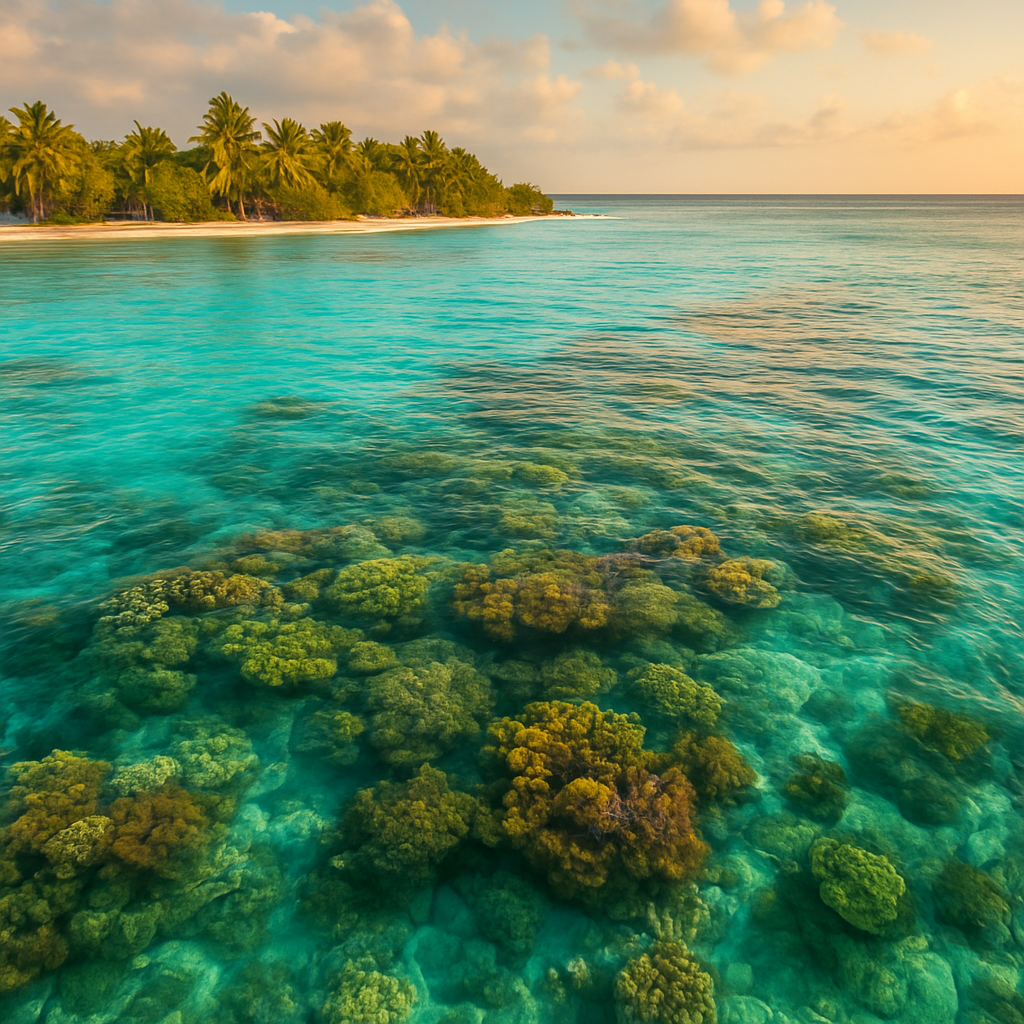
Islas del Rosario by Boat
Twenty-seven coral islands inside a national marine park, 35 kilometers off the Cartagena coast and reachable by daily boat from La Bodeguita pier. The ride takes about 90 minutes by lancha, and the water shifts from murky harbor green to translucent Caribbean blue somewhere around the halfway mark — that's when you know you made the right call.
Snorkeling over the reef systems is the main event, but even sitting on a dock with your feet in warm salt water and nothing on the agenda qualifies as a successful day. Bring reef-safe sunscreen, cash for lunch at one of the island restaurants, and a dry bag for your phone. Pro tip: book directly with a boat operator at the pier rather than through your hotel — you'll pay roughly half the markup and get the same ride.
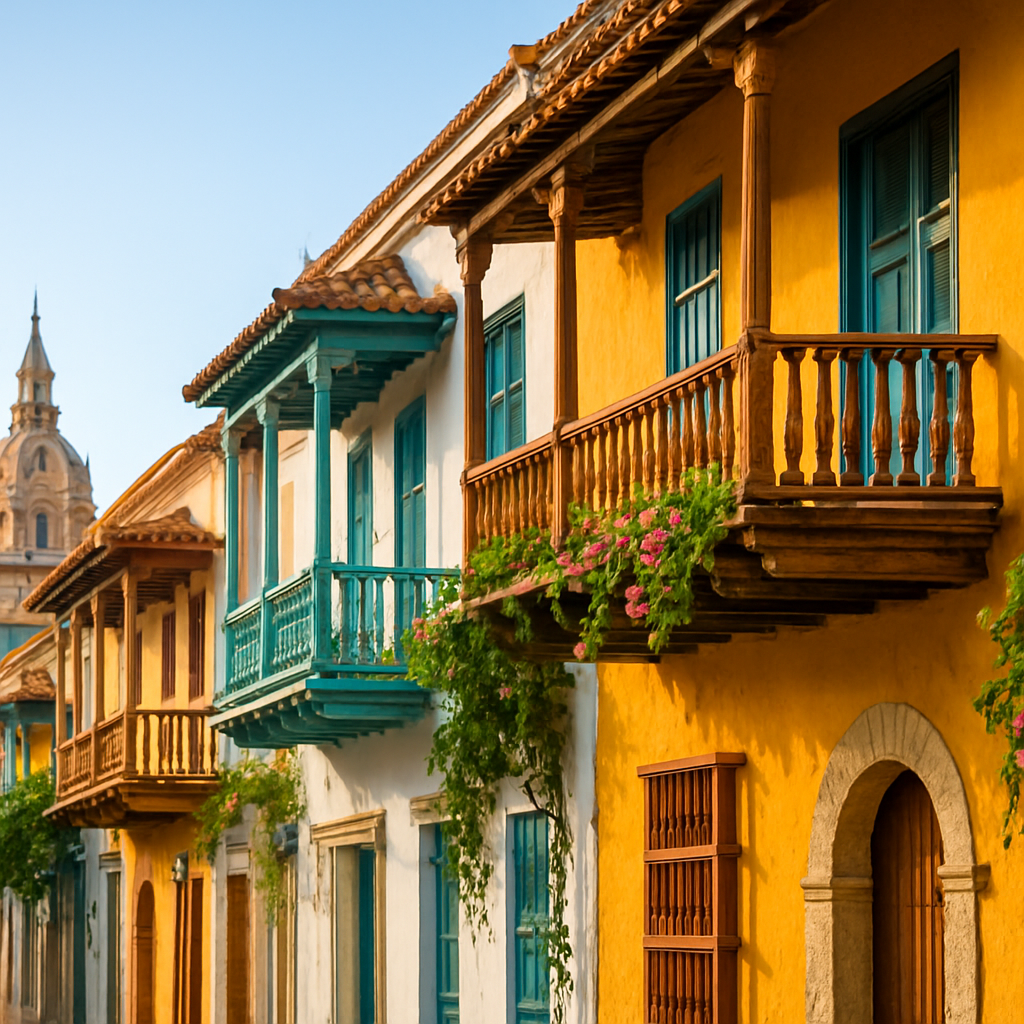
The Walled City Before the Heat
Set your alarm for 6:30am and walk the Centro Histórico before the tour groups arrive and the sun turns hostile. The light hits the colonial facades at a low angle that turns yellow walls gold and blue walls electric, and the streets belong mostly to residents — women sweeping storefronts, coffee vendors setting up carts, cats owning entire plazas with absolute authority.
The architecture is 16th- and 17th-century Spanish colonial at its most photogenic: painted balconies trailing bougainvillea, iron-grated windows, interior courtyards glimpsed through half-open doors. Walk from Plaza de Santo Domingo toward Plaza de San Pedro Claver, then loop through the quieter San Diego quarter where the foot traffic thins and the buildings exhale. By 9am the cobblestones are hot enough to feel through your shoes and the horse carriages have arrived. The early version of this city is the one you'll remember.
The places I actually send people to
Advice that fits how you travel
Cartagena rewards the solo traveler who knows where to show up and at what hour. Both answers are almost always Getsemaní, around 9:30pm. Plaza Trinidad operates as the city's most organic social mixer — drag a plastic chair into the square, buy a beer from the corner tienda for COP 4,000, and within twenty minutes someone will be telling you about a bar two streets over that you absolutely have to see. The international hostel crowd at Media Luna and Selina — both well-documented as welcoming in LGBTQ+ travel forums — provides a natural starting point, and the mix of mochileros, expats, and locals at Getsemaní's bars means you're never the only stranger in the room for long.
App culture is active here — the grid reflects a smaller city than Bogotá or Medellín, but it moves. For connecting beyond apps, the informal community beach stretch near Hotel Capilla del Mar in Bocagrande on weekend afternoons is worth knowing about — the kind of spot where conversations start without anyone organizing them. Tu Candela, Getsemaní's most explicitly gay-friendly bar, is the Thursday-through-Saturday move when you want a guaranteed crowd rather than hoping to find one. Pro tip: the phrase ¿hay ambiente? — asking a friendly bartender whether tonight's crowd runs that way — will get you an honest answer and probably a new friend. Costeños appreciate directness dressed in warmth, and they will take it from there.
Budget solo is genuinely viable here. Dorms at Media Luna start at COP 12,000, a full lunch at La Cocina de Pepina runs COP 20,000–30,000, and the best experiences in the city — sunset on Las Murallas, the street art walk along Calle Larga, an evening at Plaza Trinidad — cost nothing at all. The distribution that makes Cartagena work financially: eat cheap everywhere else, save the splurge for one Alquímico visit and one meal at Celele. That's the math. For LGBTQ+ community contacts and on-the-ground safety resources, Caribe Afirmativo is the Caribbean coast organization that actually knows this city — and can point you toward the right people and spaces if you need them.
Cartagena is one of those cities that seems purpose-built for couples — specifically the kind who want warm water, genuinely great food, and a setting that turns every evening into something you'll describe for years. The ritual move is dinner at La Vitrola — live Cuban son, an art deco dining room that feels like Havana in its prime, low-lit warmth that makes any meal into an occasion — followed by cocktails at Alquímico's rooftop terrace with the walled city spread out below you. That sequence is practically a local cliché because it works perfectly every single time. Book La Vitrola in advance; walk in at Alquímico and work your way up the floors.
PDA comfort for same-sex couples tracks closely with neighborhood. In Getsemaní and along Bocagrande's hotel-lined beach strip — normalized by years of international tourism — you'll move through the city without registering as an event. Inside the Ciudad Amurallada during tourist hours, the cosmopolitan crowd density provides its own cover. The full-day couples template: boat to Playa Blanca in the morning (45–60 minutes from La Bodeguita pier, white sand, warm Caribbean water, beach vendors selling coconut cocktails), return to the walled city mid-afternoon, catch sunset from Las Murallas with a COP 5,000 beer from a passing vendor, dinner in San Diego at La Cevichería or El Santísimo. That's a day that's genuinely hard to top anywhere on the coast.
For accommodation, same-sex couples will find the major historic-center hotels professionally seamless — Colombia's anti-discrimination law applies, and the upscale properties are staffed by people who've seen everything. Casa San Agustín (31 rooms across three restored 17th-century colonial houses, Relais & Châteaux, a rooftop terrace that does golden hour properly) and the Sofitel Legend Santa Clara (a convent built in 1621, operating a cocktail bar in the former choir loft, backed by Accor Hotels' global LGBTQ+ inclusion policies) are the two addresses that deliver both the setting and the service. The splurge is real — from $280 and $350 a night respectively — but these are the properties where Cartagena earns every peso of it. If you'd rather be in the thick of the neighborhood energy than inside the walls: a private guesthouse or apartment rental in Getsemaní runs considerably less and puts you steps from Plaza Trinidad when the evening gets interesting.
As of 2026, Colombia gives LGBTQ+ families full legal standing — same-sex marriage, joint adoption rights, and anti-discrimination protections across employment, housing, and public services. Your family's structure isn't a legal question here. The practical reception in Cartagena's tourist zones — Getsemaní, the Ciudad Amurallada, Bocagrande — is generally comfortable, and Colombian culture's deep, demonstrative warmth toward children tends to be the dominant social force when you're traveling with kids. In residential neighborhoods outside the tourist circuit, social attitudes run more conservative; that's worth knowing going in. With children in tow, the dynamic typically softens, but it doesn't disappear. Caribe Afirmativo, the Caribbean coast's primary LGBTQ+ organization, can connect you with community contacts who know the comfortable corridors and can give you local knowledge beyond what any guide — including this one — can provide.
The Islas del Rosario boat trip is the family highlight, full stop. Twenty-seven coral islands inside a national marine park, 35 kilometers off the coast, with snorkeling over reef systems and warm shallow water that kids navigate with complete confidence. Boats depart daily from La Bodeguita pier — roughly 90 minutes each way by lancha. Bring reef-safe sunscreen, cash for lunch at one of the island restaurants, and a dry bag for anything electronic. Pro tip: book directly with a boat operator at the pier rather than through your hotel — you'll pay roughly half the markup for the same ride. The early-morning walled city walk (6:30am, before the heat arrives and the tour groups fill the cobblestones) is surprisingly kid-friendly — neighborhood cats own entire plazas with absolute authority, and the light hitting the colonial facades before 8am is extraordinary. The Museo de Arte Moderno de Cartagena (MAMCA), adjacent to Plaza de San Pedro Claver, has a strong Colombian 20th-century permanent collection and a rotating program that has included gender identity themes — worth an hour for families with older kids.
Practicalities: strollers manage the walled city's cobblestones with moderate difficulty — a carrier works better for toddlers, full stop. Kid menus exist at tourist-facing restaurants, but Colombian Caribbean food is unfussy and direct enough that most kids eat without complaint. Arroz con coco and fried fish from La Mulata is a COP 20,000 lunch that reliably lands. Budget for taxis over walking during midday heat — at COP 5,000–8,000 a ride within the tourist zone, it's a sensible trade when someone small is done at 1pm and the air conditioning three blocks away might as well be a mirage. Profamilia operates a Cartagena clinic with non-judgmental sexual health services — trained staff, documented safe space — if you need healthcare access while traveling.
What Cartagena actually costs
Flights, visas, and the first 30 minutes
Airport: Rafael Núñez International Airport (CTG) handles all international and domestic arrivals, sitting about 3 kilometers northeast of Bocagrande. Getting into the city is a 15–20 minute ride under almost any conditions — there's no complex transit infrastructure to navigate here.
Connectivity: Cartagena has approximately 35 direct routes connecting it to international and regional destinations. Most international travelers arrive via US East Coast or Florida gateways, with connections available through Bogotá's El Dorado International (BOG) for those coming from elsewhere in Latin America, Europe, or beyond. Bogotá is a roughly one-hour domestic hop from CTG and is Colombia's primary international hub.
Visas: As of 2026, travelers from the US, UK, EU, Canada, and Australia typically do not need a visa to enter Colombia — standard tourist entry generally allows up to 90 days. No advance application required. Colombian immigration officers may occasionally ask to see onward travel documentation and evidence of sufficient funds; having both on hand keeps things moving.
Airport to city:
- Taxi — COP 18,000–28,000 / 15–20 min. Official taxis queue at the airport rank. Agree on the fare before you get in — unmetered cabs are the norm, and walking up knowing the number keeps the negotiation short.
- Uber / InDriver — COP 13,000–22,000 / 15–20 min. Reliable and generally cheaper than a street cab. Book from inside the terminal before you hit the taxi queue and the pressure that comes with it.
- Colectivo (shared van) — COP 3,500–6,000 / 20–35 min. The budget move, but it runs fixed stops and has limited luggage space. Fine for a solo traveler with a backpack; not the call if you're hauling two checked bags in 32-degree Caribbean heat.
Traven's seasonal breakdown
The questions everyone asks
Is it safe to hold hands in Cartagena?
Do I need to speak Spanish?
How much should I budget per day?
Is there a gay neighborhood in Cartagena?
When is the best time to visit?
Is Uber available in Cartagena?
Should I worry about drink spiking?
Screenshot this before you go
So should you actually go?
Go. Cartagena earns its place — world-class colonial architecture, food that reframes an entire national cuisine, warm Caribbean water, and a legal framework among the strongest in the Americas. The gay scene is real but scattered across Getsemaní's mixed bars rather than concentrated in a strip, and the social conservatism outside tourist zones is real too. You'll navigate that contrast with basic awareness and the kind of common sense you'd bring to any city this size, and what you get in return — this city at golden hour, a champeta night that runs until your legs give out, ceviche so fresh it practically swam to the plate, the specific magic of Plaza Trinidad on a Saturday evening when nobody's watching and nobody cares — is worth every moment of calibration. Cartagena doesn't perform its acceptance; it earns it in the texture of how people actually live, and I respect that more than a thousand flags on lampposts.
Sources & Resources
Official links we reference when compiling this guide. Last verified 2026-04-13.
- Caribe Afirmativo — LGBTQ+ rights and community organization, Caribbean Colombia
- Colombia Diversa — national LGBTQ+ legal rights and advocacy organization
- Defensoría del Pueblo Colombia — human rights office and formal complaints
- Fundación GAAT — gender identity and trans rights, Colombia
- ILGA Latin America y el Caribe — regional LGBTQ+ rights organization
- ILGA World — global LGBTQ+ legal rights database and country resources
- Ministerio de Salud y Protección Social Colombia — national health services
- Profamilia — sexual and reproductive health clinics across Colombia
- Registraduría Nacional del Estado Civil — legal gender marker and name changes
- Temblores ONG — human rights monitoring and documentation in Colombia