
Medellín doesn't ask for your approval — it hands you an aguardiente, turns up the reggaeton, and dares you to keep up.
It's a Friday at 1am and Club Piel is doing what it does — bass rattling through a room where nobody's checking their phone, where the sweat on the walls is honest and the crowd is a mix of paisa locals and travelers who figured out that the real night doesn't start until now. A drag queen in six-inch platforms is commanding a stage the size of a dining table, and she's better than anyone I've seen on a Broadway-adjacent stage this year. Outside, Calle 10 in El Poblado is still filling up. Someone hands me a shot of aguardiente I didn't ask for. I take it, because you take it — that's how this works.
Medellín is a city that rebuilt itself from the inside out, and the LGBTQ+ layer of that story is woven into the transformation. The gay scene here isn't performative or polished for export — it's genuinely social, fueled by a Latin nightlife culture where going out means going out, as in dinner at 9, drinks at midnight, dancing until the sun starts warming the valley. I gave it a 7.8 on Scene, and that number reflects a city with multiple gay venues, a growing drag culture, and a community that shows up for each other at Pride and at the polls. Theatron Medellín alone — multiple floors, lasers, theatrical drag — would justify the score. But the scene is also quietly migrating toward Laureles, where the bars are less influencer-heavy, a cerveza costs half as much, and even broken Spanish gets you further than a perfect outfit.
What makes Medellín different from other Latin American cities at this tier is the tension between its legal progressivism and its cultural conservatism. Colombia legalized same-sex marriage in 2016. The Constitutional Court has issued landmark trans rights rulings. My Traven-Dex of 7.7 reflects a city where the law is ahead of the street — El Poblado is genuinely comfortable for same-sex couples, but step outside that international bubble into El Centro or the comunas and you'll feel the shift. It's not danger, exactly — it's awareness. The paisas are famously warm, sometimes disarmingly so, but Antioquia is Catholic country and the warmth has boundaries.
But here's the thing: the food is absurdly good for the price, the weather sits at a permanent 75°F, the metro system is clean enough to eat off, and the cultural infrastructure — from the street art of Comuna 13 to the molecular gastronomy at El Cielo — punches well above what you'd expect. The city earns its 8.1 on Destination not because it's trying to impress you, but because it genuinely has the goods. You'll spend a third of what you'd spend in Barcelona, eat better than you do in most of the U.S., and wake up to green mountains framing the valley from your balcony. The gays have been coming here since long before the digital nomads discovered it, and they'll be here long after the Instagram crowd moves on.
The stuff your travel guide buries on page 47
The legal picture: As of 2026, Colombia provides full marriage equality for same-sex couples, legalized in 2016 by Constitutional Court ruling. Same-sex adoption is legal. Broad anti-discrimination protections cover sexual orientation and gender identity in employment, housing, and public services. Gender identity operates on a self-identification model — legal gender change has been available without surgical requirements since 2015. There is no criminalization of same-sex conduct. On paper, this is one of the most progressive legal frameworks in Latin America, and organizations like Colombia Diversa have been instrumental in building and defending it.
The cultural reality: Medellín is the capital of Antioquia, a region with deep Catholic roots and strong paisa cultural identity — proud, family-oriented, and more socially conservative than Bogotá. The city's municipal government runs active LGBTQ+ inclusion programs through the Secretaría de las Mujeres, and the younger generation in El Poblado and Laureles skews progressive. But this is a city that runs on two speeds: the El Poblado international bubble where holding hands won't raise eyebrows, and everywhere else, where discretion is just smart travel sense rather than shame. El Centro in particular deserves some situational awareness — it's denser, more conservative foot traffic, and PDA of any kind draws more attention.
PDA comfort, neighborhood by neighborhood: In El Poblado's Parque Lleras zone, same-sex couples are visibly present and accepted — this is the most comfortable spot in the city. Laureles along the La 70 corridor is tolerant and progressive but less overtly queer-visible; discreet PDA generally reads fine. El Centro around Parque Berrío warrants restraint — safe for sightseeing by day, but keep things low-key. Envigado is generally liberal but inconsistent block to block. The outer comunas (1–13) are working-class neighborhoods undergoing transformation; visible LGBTQ+ PDA can attract negative attention, and you should travel with a local or organized guide.
Pro tip: download the Metro de Medellín app before you arrive. The cable cars connecting hillside comunas are stunning and safe during daylight, but after dark, stick to Metro stations in established corridors and use Uber or InDriver rather than hailing random cabs.
What it actually feels like on the ground
Holding hands: In El Poblado — particularly the Parque Lleras and Calle 10 corridor — same-sex hand-holding is common and unremarkable, day or night. In Laureles, it reads fine in the bar zones along La 70 but may draw glances in quieter residential blocks. In El Centro, keep physical affection discreet. In the comunas or on day trips to small Antioquian towns, PDA is inadvisable.
Hotel check-in: In El Poblado, virtually all hotels — from hostels to five-stars — process same-sex couples without issue. Booking platforms reflect the room correctly; staff are professionally trained for international guests. Outside the tourist district, a few lower-end or family-run properties may default to twin beds or ask awkward questions. Book through a major platform with confirmed reviews from LGBTQ+ travelers to avoid surprises.
Taxis and ride-hail: Use InDriver, Uber, or Cabify rather than street-hailing. Drivers in Medellín are generally professional, and app-based rides create a digital record. If you're heading home with a same-sex partner after a night out, the Parque Lleras pickup area is well-lit and heavily trafficked. The blocks between Lleras and the nearest Metro station get noticeably less comfortable after midnight — splurge on the Uber for that 12-minute ride.
Drink safety: This one is serious. Scopolamine (burundanga) spiked drinks are a documented concern in Medellín nightlife, and they are disproportionately reported in venues where strangers approach tourists — including gay bars. Never leave your drink unattended. If someone you just met is overly eager to buy you aguardiente within two minutes of conversation, that's your cue to relocate. This isn't paranoia; it's standard local awareness.
Late night: The Parque Lleras area is well-lit, heavily foot-trafficked, and tourist-policed enough to feel genuinely safe even past 3am. But the moment you're walking residential side streets in El Poblado or anywhere in El Centro after dark, your risk profile changes. Take the ride-hail home. Don't flash phones or jewelry. Walk with purpose.
Trans travelers: Colombia is one of Latin America's most legally progressive countries for trans rights, with self-identification available since 2015 and Constitutional Court protections in place. In practice, trans travelers in Medellín may experience stares or comments outside tourist areas. El Poblado is the most comfortable zone. Organizations like Red Comunitaria Trans Colombia and GAAT are active local resources for trans community support.
Verbal harassment: Rare in El Poblado, uncommon in Laureles, possible in El Centro and outer neighborhoods. Colombia Diversa and Caribe Afirmativo both document that LGBTQ+ Colombians face disproportionate violence — particularly trans women and LGBTQ+ people outside major city centers. Medellín has improved enormously, but it's not Copenhagen. Solo walking in unfamiliar areas late at night carries real risk for everyone, and that risk is elevated for visibly queer travelers.
General advisory: As of March 2026, the US, UK, and Australian governments maintain elevated travel advisories for Colombia citing crime and occasional civil unrest. Most advisories note that El Poblado and tourist-facing areas are comparatively safer, but recommend heightened vigilance after dark. No LGBTQ+-specific advisories are issued. Check your government's current advisory before traveling.
The queer geography
El Poblado — Parque Lleras & Calle 10
This is the center of gravity. Parque Lleras is a public square ringed by bars, restaurants, and clubs that stay open until the sun makes it embarrassing — and the LGBTQ+ presence is concentrated along Calle 10 and the surrounding blocks. Calle 9+1 is the city's most established gay venue — drag shows, multiple dance floors, and a crowd that skews both local and international. Vintrash pulls the alternative and queer-creative crowd with indie and electronic music. Club Piel on a Friday is the sweaty, dark, dancing-until-your-shoes-hurt experience you came to Medellín for — the music skews reggaeton and electronica, the crowd is mixed, and nobody is performing for Instagram in there. Walk Avenida El Poblado in either direction and you'll pass more LGBTQ+-friendly restaurants and bars than most cities manage in an entire gay village. Envy Rooftop Bar works as a pre-club staging ground with city views, and Théodore does craft cocktails with Colombian botanicals at a level that justifies its prices.
For actual community connection beyond nightlife, the Centro Comunitario LGBTI de Medellín is where you go to ask about events, support resources, and what's happening in the local activist scene. Not glamorous, very real. Casa Tres Patios in El Poblado also occasionally hosts queer-relevant art exhibitions worth checking if you're here longer than a weekend.
Laureles — La 70 Corridor
The word on the street — from actual locals, not travel blogs — is that the real LGBTQ+ scene has been quietly migrating toward Laureles. The La 70 corridor is a nightlife strip that skews younger, more local, and significantly cheaper than anything in El Poblado. The bars here don't wave rainbow flags, but the crowd is progressive and a cerveza costs half what you'd pay at Parque Lleras. El Social is a solid anchor point — craft cocktails, local beer, and the energy of a neighborhood where people actually live rather than just visit. If you speak even broken Spanish, Laureles will reward you with a more authentic night out than the influencer-heavy end of El Poblado. PDA-wise, discreet is the move — this is a residential area that's tolerant but not performatively so.
El Centro
El Centro around Plaza Botero and Parque Berrío is where Medellín's grassroots LGBTQ+ community organizations are based, and where the Marcha por la Diversidad (Pride) march routes through each June. It's more rough-edged than El Poblado — denser, louder, more conservative foot traffic — and daytime sightseeing is the play here. The Museo de Antioquia and Botero sculptures are essential, but after dark this isn't where queer visitors typically spend their evening.
Envigado & Sabaneta
Quieter satellite municipalities south of the city connected by Metro. Envigado is increasingly popular with expats seeking lower rents and a more residential rhythm. Generally liberal but with pockets of conservatism — you'll read the room quickly. Occasional lower-key queer social gatherings happen here, but this isn't a nightlife destination.
The experiences worth rearranging your itinerary for
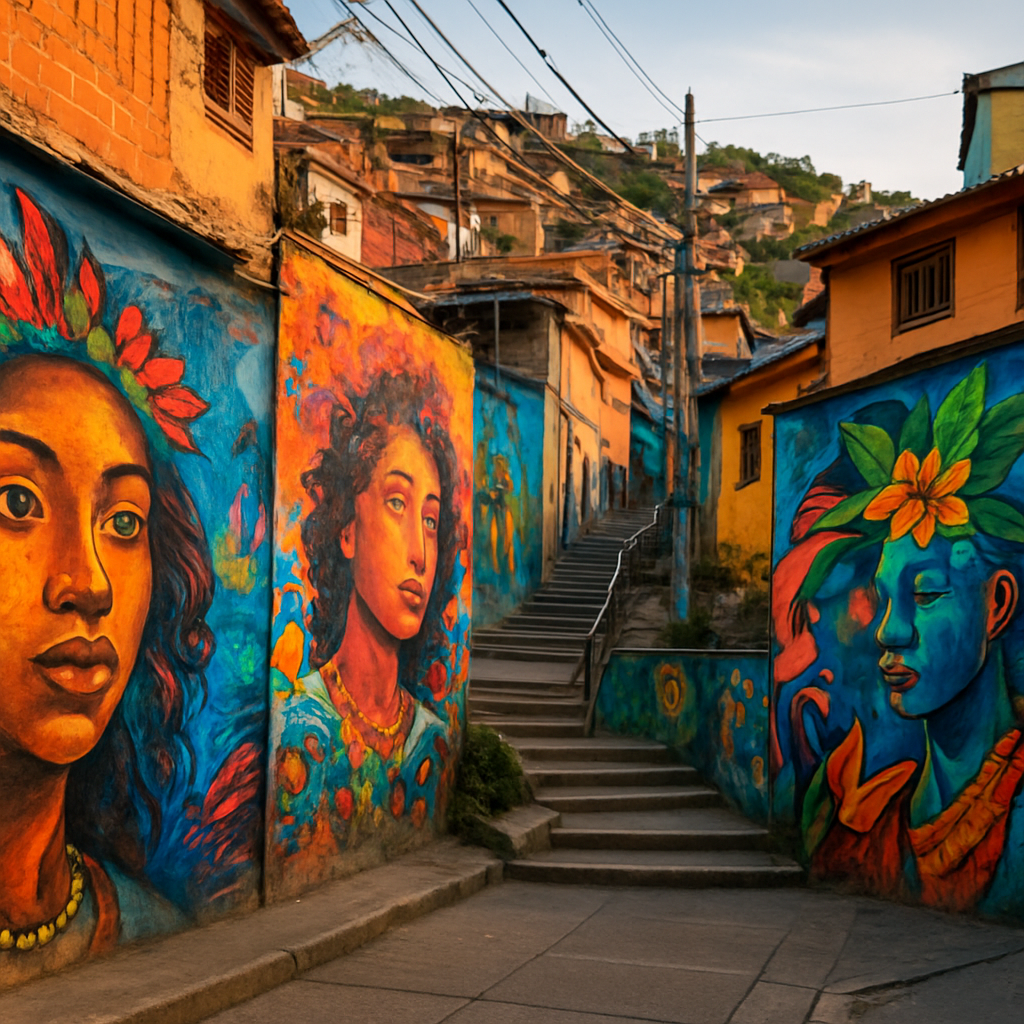
Comuna 13: Murals, Escalators & a City's Redemption Arc
This former conflict zone — once one of Medellín's most dangerous neighborhoods — has been transformed through community art projects, outdoor public escalators (the second such system globally when they opened), and the Metrocable Línea J connecting it to the city's metro network. The large-scale murals covering entire streets aren't decorative — they're the neighborhood telling its own story, backed by live hip-hop performances and a street art scene that draws comparisons nobody here asked for. Go with a local guide (COP 25,000–40,000) and you'll hear the stories behind the paint. Go self-guided and you'll still feel the weight of what happened here and the stubborn optimism of what's replacing it. Best in the morning before tour groups peak.
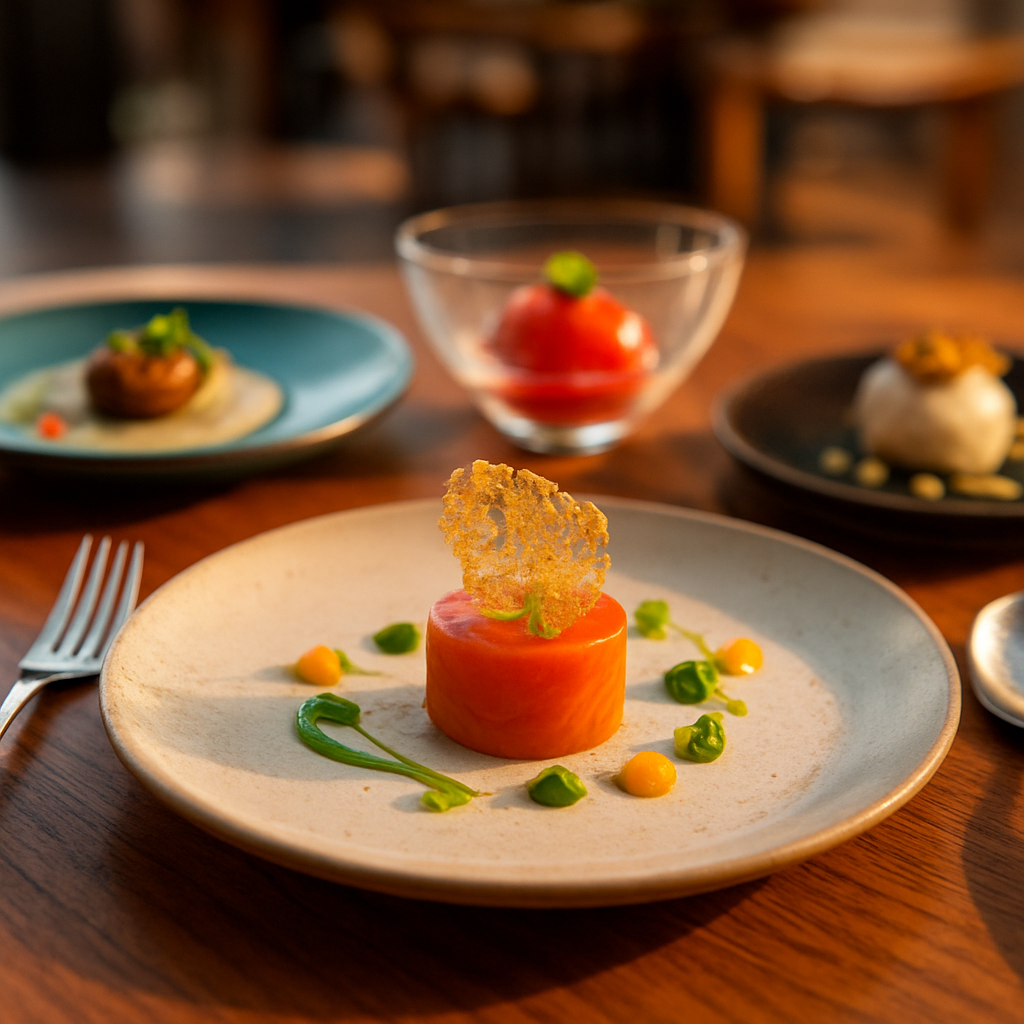
El Cielo's Tasting Menu — Molecular Gastronomy That Earns the Hype
Chef Juan Manuel Barrientos built this restaurant in Medellín before expanding to Miami and New York, and the flagship still hits hardest. The multi-course sensory experience uses Colombian ingredients — cacao, tropical fruits, Amazonian botanicals — in theatrical presentations that blur the line between dinner and performance. You'll wash your hands in a chocolate-scented foam before it starts. Budget COP 200,000–380,000 per person. Reserve well ahead. This is the meal you'll describe to people for six months, and the reason Medellín's food scene belongs in any conversation about Latin America's best.
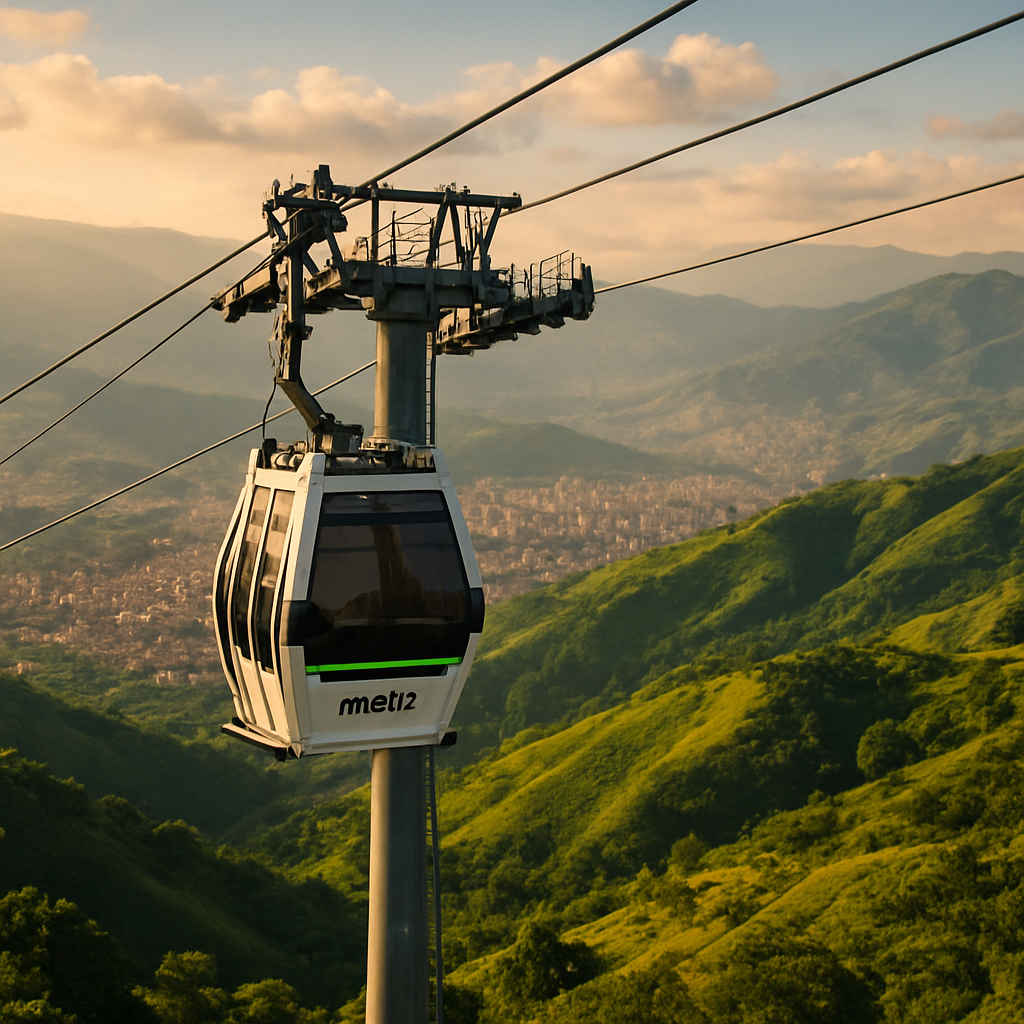
Metrocable to Parque Arví — 1,761 Hectares Above the City
The entire journey — Metro to Línea K, transfer at Santo Domingo, then Línea L floating above the valley rim into a cloud-forest ecological reserve — costs under COP 10,000 per person and delivers you into a world that doesn't feel like it's 30 minutes from a city of four million. Parque Arví has hiking trails through 1,761 hectares of forest, weekend artisan markets with local food vendors, and birdwatching that'll satisfy anyone traveling with binoculars. The Metrocable system itself is an internationally cited urban infrastructure case study — but forget the planning accolades. The view from the cable car as you clear the ridge is the thing. Go on a clear weekday morning.
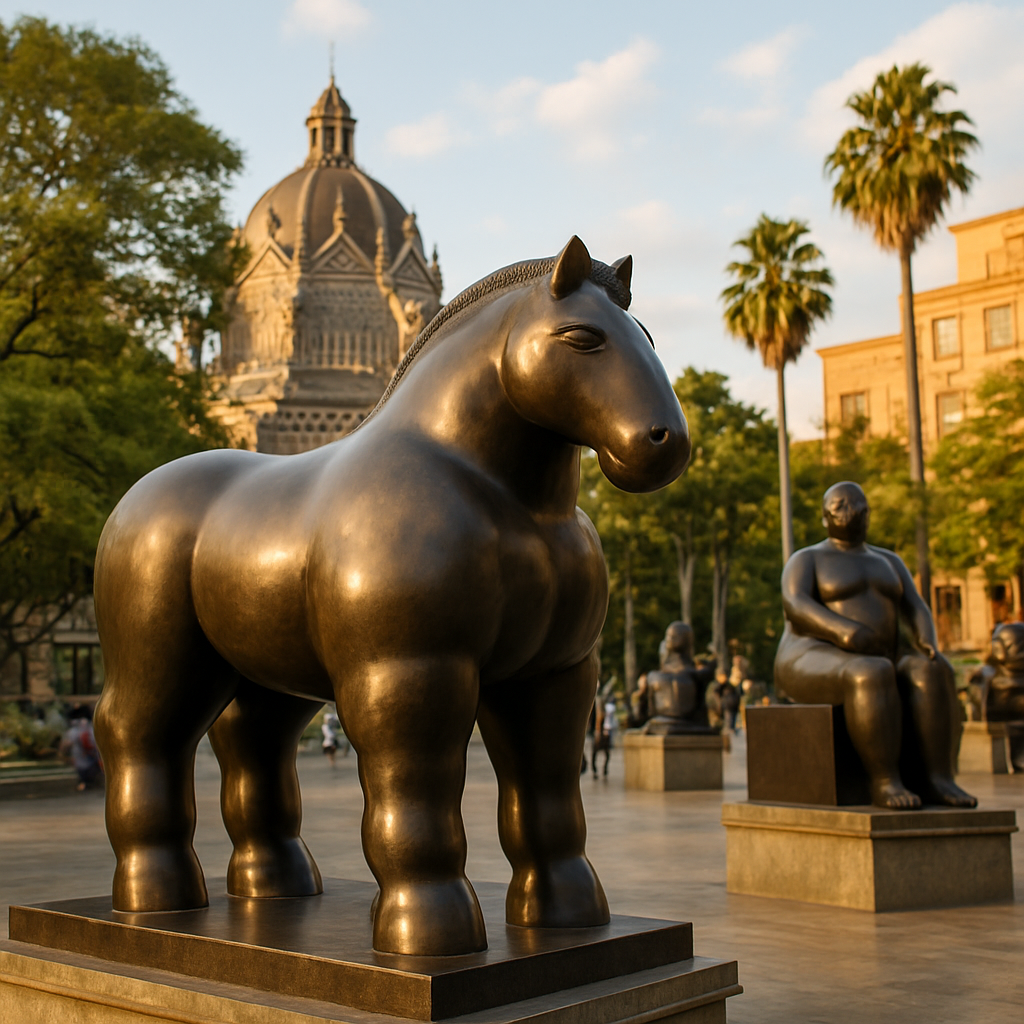
Plaza Botero — 23 Bronze Sculptures, Free, Unmissable
Fernando Botero donated 23 oversized bronze sculptures to his hometown in 2000, and they sit in an open-air plaza in El Centro that remains the most democratic public art experience in any Colombian city — no ticket, no velvet rope, just massively proportioned figures reflecting Botero's signature style against a backdrop of the Museo de Antioquia, which holds the largest permanent collection of his paintings and sculpture (COP 25,000–40,000 entry). Go midmorning on a weekday, spend 30 minutes with the sculptures, then step inside the museum. Keep your phone close and your valuables secured — El Centro is busier and less polished than El Poblado.
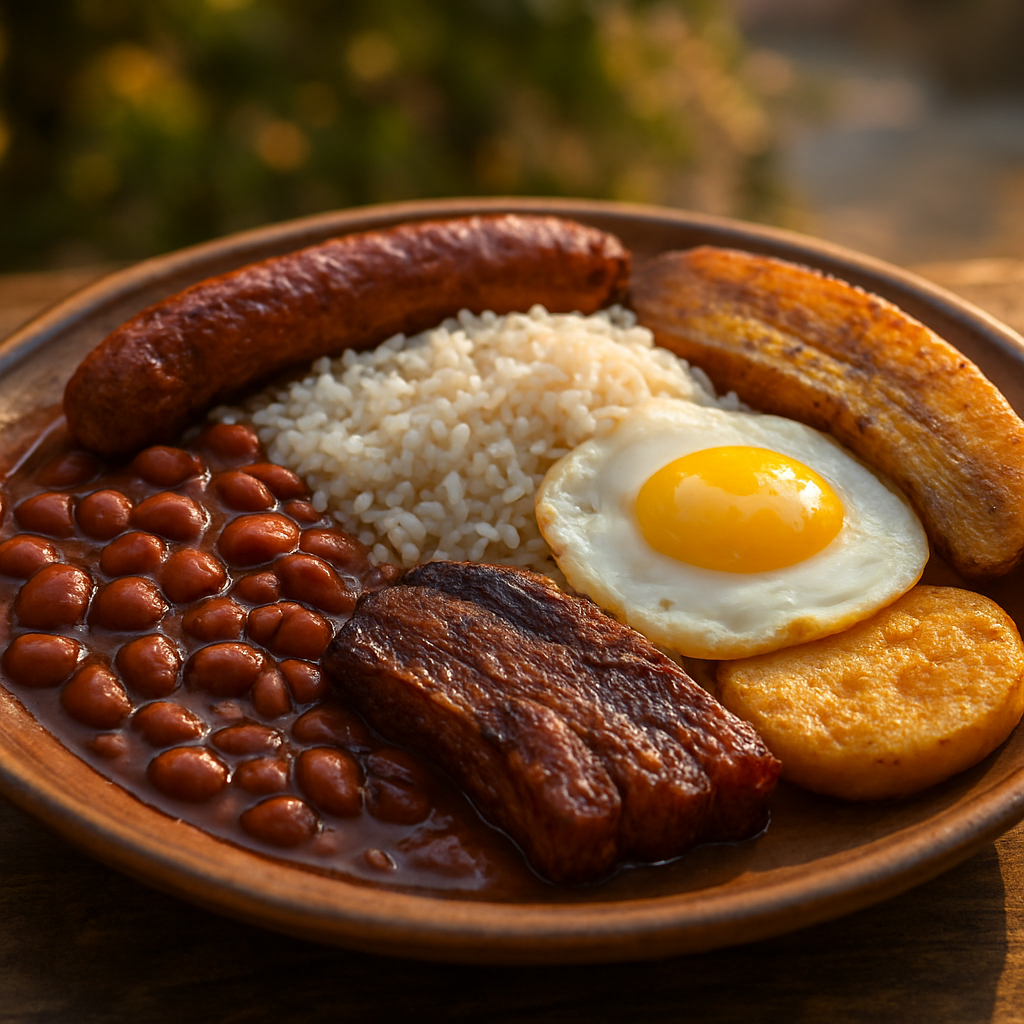
Post-Rumba Bandeja Paisa at 5am
This is the meal that defines Medellín more than any tasting menu ever will. After a night on Calle 10, find any spot on Avenida El Poblado with fluorescent lights and plastic chairs still serving at 5am. Point at what the table next to you is eating. You'll get bandeja paisa — beans, rice, chicharrón, arepa, chorizo, avocado, a fried egg — on a plate roughly the size of a hubcap, for under COP 20,000. The real Medellín experience: spectacular food after a spectacular night, surrounded by people in various states of post-rumba euphoria. Don't overthink it. Just eat.
The places I actually send people to
Advice that fits how you travel
Medellín is a genuinely great solo city, and the LGBTQ+ infrastructure makes it better. The hostel scene in El Poblado is dense and social — Casa Kiwi and Black Sheep both have strong reputations among queer backpackers, with organized activities specifically designed to break the ice for solo travelers. Selina's co-working space is a natural connector if you're working remotely. The Parque Lleras bar circuit is compact enough to walk between venues and loose enough that striking up conversations at the bar is standard operating procedure. You won't struggle to find your parche — that's local slang for your crew or hangout spot, and when a local says vente al parche, say yes every time.
App culture is active. Grindr and Scruff both have solid user bases in Medellín, skewing younger and more international in El Poblado, more local in Laureles. Standard safety protocols apply and then some: meet in public, tell someone your plans, and read the drink safety section above carefully. Scopolamine risk is real and disproportionately targets solo tourists in nightlife settings. That said, the city's social energy works in a solo traveler's favor — Medellín people are warm, curious, and far more likely to invite you into their evening than leave you sitting alone.
Budget-wise, solo travel here is a steal. Hostel dorms start at COP 38,000–45,000/night, the Metro costs under COP 5,000 per ride, and a full bandeja paisa recovery meal runs COP 15,000–25,000. You can do a legitimate day in Medellín — transit, food, one activity, a few drinks — for COP 110,000–155,000 if you're careful. The specialty coffee alone (Pergamino Café, COP 8,000–15,000 for a proper single-origin pour-over) is worth the trip for anyone who cares about what's in their cup. Best neighborhoods for solo travelers: El Poblado for convenience and nightlife access, Laureles for a more local rhythm and lower costs.
El Poblado is where couples in Medellín land softest. The Parque Lleras zone — that square ringed by bars and restaurants and the low hum of a city that genuinely knows how to have a good time — is one of the more comfortable spots in Colombia for same-sex couples to be visibly themselves. You can hold hands over dinner at Carmen, let chef Rob Pevitts walk you through modern Colombian cooking that will rearrange your expectations, and nobody is going to make it a thing. Book a room at The Charlee and do the rooftop pool at golden hour. The city panorama from up there alone justifies the rate.
For the marquee night, El Cielo's multi-sensory tasting menu by chef Juan Manuel Barrientos is a genuine occasion — molecular gastronomy built from Colombian botanicals, theatrical presentation, the kind of dinner you'll be describing six months from now. Budget COP 200,000–380,000 per person and reserve well ahead. For something quieter and equally memorable, Pergamino Café on a slow morning with a single-origin pour-over is a love language all its own. This city does romance at both ends of the register.
Outside the El Poblado orbit, Medellín rewards couples who push further. The cable car ride up to Parque Arví — two successive aerial lines drifting above the city's hillside comunas — is quietly spectacular in a way no photo has fully captured. The Guatapé day trip, 220 meters up a granite rock with reservoir views in every direction, is the kind of shared physical experience that becomes the memory of the trip. PDA at a discreet level reads fine across most of the city's tourist spaces; you'll calibrate quickly.
As of 2026, Colombia recognizes same-sex marriage and same-sex adoption is legal, so your family structure has a legal footing here. In practice, the international hotels and restaurants of El Poblado receive LGBTQ+ families without visible drama — this neighborhood is calibrated to international travelers and their various configurations. Expect the occasional booking form with binary parent fields; the staff will generally sort it without ceremony. The Metro de Medellín is genuinely one of the cleanest, most stroller-accessible urban transit systems in the region, which matters more than you'd think when you're managing small people across a hilly city.
The cable car lines are something kids don't forget quickly — you're floating above rooftops and hillside murals, looking down at a city that physically built its way out of its past. The full journey up to Parque Arví via Metro and two successive cable car transfers costs COP 9,500 or less per person and delivers you into a 1,761-hectare nature reserve with hiking trails and a weekend artisan market. The Jardín Botánico's orchid house and 14 hectares of open green space is another reliable family afternoon, particularly on weekends when cultural programming runs on-site. Plaza Botero's 23 oversized bronze sculptures in El Centro are free and organically engaging for kids — go by day, keep the group together, and you'll be fine.
Food with kids in El Poblado is genuinely easy. The density of international restaurants means you're never far from a menu with recognizable options alongside Colombian staples, and the city's access to fresh tropical fruit makes cheap, excellent snacking the default. One honest note: legal protections for LGBTQ+ families in Colombia are real, but cultural reception varies significantly by neighborhood. El Poblado and Laureles are your family-friendly base — wander out from there with situational awareness, and the trip will feel smooth from arrival to departure.
What Medellin actually costs
Flights, visas, and the first 30 minutes
Airport: You'll land at José María Córdova International Airport (MDE), located approximately 35 kilometers east of the city in Rionegro. Budget 45–75 minutes for the drive into Medellín — the mountain highway can slow considerably during peak traffic hours.
Major Routes: Bogotá (BOG) is roughly 50 minutes away, making it an easy domestic connection if you're routing through. From North America: Miami (MIA) runs approximately 3h 30min and New York (JFK) approximately 5h 30min. Madrid (MAD) connects in around 10 hours. From elsewhere in Latin America, Mexico City (MEX) is ~4 hours and Lima (LIM) ~3h 30min. Medellín is served by 50+ city connections overall.
Visas: As of 2026, citizens of the US, UK, EU member states, Canada, and Australia typically enter Colombia visa-free for stays up to 90 days. Entry requirements can change — always check your government's current travel advisory before booking.
Getting into the city:
Shared shuttle (Integranttes): COP 12,000–15,000 | 45–75 min | Drops at El Centro and El Poblado. Buy your ticket at the airport arrivals hall. The most budget-friendly reliable option, and it works.
Metered taxi: COP 80,000–120,000 | 45–60 min | Use only official airport taxis at the designated rank inside arrivals. Do not go with anyone who approaches you in the terminal.
Ride-hail (InDriver/Cabify): COP 60,000–90,000 | 45–60 min | Must be booked outside the airport perimeter; meet your driver on the access road. A solid middle-ground option if you're comfortable with the pickup logistics.
Private transfer (pre-booked): COP 150,000–250,000 | 45–60 min | Book through your hotel or a reputable operator for guaranteed fixed pricing. Worth the premium if you're arriving late at night with luggage and no desire to figure out access roads in the dark.
Traven's seasonal breakdown
The questions everyone asks
Is Medellín safe for LGBTQ+ travelers?
Do I need to speak Spanish?
How much should I budget per day?
Is it safe to hold hands in Medellín?
What's the best neighborhood to stay in?
Should I worry about drink spiking?
When is Pride in Medellín?
Screenshot this before you go
So should you actually go?
Go. Medellín is one of the most compelling cities in Latin America for LGBTQ+ travelers — the legal framework is strong, the scene is real and growing, the food and culture punch far above the price point, and the eternal spring climate means you'll never check a weather app. You do need to calibrate your behavior by neighborhood — El Poblado is a genuine comfort zone, but this isn't Amsterdam and the city rewards awareness. If you're a solo gay traveler who speaks some Spanish, you'll have one of the best weeks of your travel life here. Couples will find romance and warmth in the right areas. And everyone — regardless of who they are — will eat extraordinarily well for shockingly little money. Just don't show up to the club before midnight, don't refuse the aguardiente, and don't leave without climbing those 740 steps at El Peñol. You'll thank me.
Sources & Resources
Official links we reference when compiling this guide. Last verified 2026-03-15.
- Alcaldía de Medellín – Secretaría de las Mujeres
- Caribe Afirmativo – LGBTQ+ Rights Organization (Colombia)
- Colombia Diversa – LGBTQ+ Legal Rights & Human Rights Organization
- Corporación Todos Somos – Medellín LGBTQ+ Community
- Fundación GAAT – Grupo de Acción y Apoyo a Personas Trans
- Liga Colombiana de Lucha Contra el SIDA
- Medellín Ciudad Diversa – Municipal LGBTQ+ Program
- Ministerio de Salud de Colombia – Sexualidad, Derechos Sexuales y Derechos Reproductivos
- ONUSIDA Colombia – HIV/AIDS Resources
- Red Comunitaria Trans Colombia