
Havana doesn't run on Google Maps. It runs on rumor, a bottle of Havana Club passed down the Malecón at sunset, and the specific Caribbean light that hits the seawall at 6:45pm.
Havana is a city that runs on improvisation and rumor, and the LGBTQ+ scene is no exception. The queer geography here doesn't sit on Google Maps — it lives in WhatsApp groups, in the corner outside Cinema Yara at 23 and L, on the seawall at the foot of La Rampa where the boys gather around 10pm with a bottle of Havana Club and no plans. You can't architect a Havana trip from your hotel lobby; you sit down, you wait, and the city tells you where it's going.
The thing nobody warns you about is how fast the law moved here. The 2022 Código de las Familias legalized same-sex marriage, joint adoption, and surrogacy by national referendum — and as of 2026, that puts Cuba ahead of most of the Caribbean and a fair chunk of the United States. There's a reason I gave the legal framework a 9.5. The culture is catching up unevenly: warm in Vedado, tolerant in tourist Habana Vieja, more cautious in working-class Centro Habana, slower in the provinces. But the legal floor under your feet is solid in a way that genuinely surprises people.
What it lacks in glossy nightlife — my Scene score of 7.0 reflects a city without a permanent gay village, where infrastructure is held together with hope and the right cousin's phone number — it more than makes up for in texture. Fábrica de Arte Cubano on a Thursday night is the queerest room in the country and one of the most interesting cultural spaces anywhere. La Guarida, on the third floor of the crumbling Concordia mansion used to film Fresa y Chocolate, is a thirty-year cultural pilgrimage with cooking that has earned every accolade. Cabaret Las Vegas queens are funnier in Spanish than any RuPaul alum has ever been in English.
The friction is real and worth naming: bring cash in euros or Canadian dollars, expect shortages, accept that your phone is going to be slow and surveilled. None of that is what you'll remember. What you'll remember is the Hotel Nacional garden at sunset, the steps down to the Malecón, and the specific Caribbean light that hits the seawall at 6:45pm and makes you understand why people keep coming back to this city. My Traven-Dex of 8.1 isn't a polite overscore. It's earned.
The stuff your travel guide buries on page 47
Cuba moved fast on paper. The 2022 Código de las Familias, passed by referendum, legalized same-sex marriage, joint adoption, and surrogacy in one sweep — and as of 2026, that makes Cuba one of the most legally progressive countries in the Caribbean for LGBTQ+ travelers. Anti-discrimination protections are comprehensive, and homosexuality hasn't been criminalized since 1979. For the legal framework in plain English, Equaldex's Cuba tracker is the cleanest reference, and the ILGA World country profile is worth a skim before you fly.
I gave the legal framework a 9.5 — that's about as high as my Traven-Dex goes for any country in the region. Gender-affirming surgery has been state-funded since 2008, though legal gender change still typically requires medical and psychiatric assessment rather than self-ID. The work of CENESEX, led for decades by Mariela Castro, is a big reason any of this happened.
Now the cultural reality, because the law moved faster than the country. Vedado is warm and visible — same-sex couples on the Malecón steps at sunset don't turn a single head. Habana Vieja tilts touristy and tolerant. Centro Habana is working-class and lived-in, where you'll get curiosity more often than hostility. The provinces are slower. PDA in Vedado reads as completely fine; in residential Centro Habana at midday, keep it low-key — not for safety, just for ease.
Practical things that catch travelers off-guard: bring cash. Euros or Canadian dollars beat US dollars at the informal rate, and US-issued credit cards generally don't work. Internet runs through ETECSA Wi-Fi cards or eSIM, it's slow, and it's surveilled — Grindr opens but loads like 2009, and locals often pivot to WhatsApp fast. If you're visiting in May, time it for the Conga Contra la Homofobia, CENESEX's annual march down Paseo or 23. It's not Pride the way you know it — no corporate floats — but it's the country's signature LGBTQ+ public observance. US travelers should also check the State Department's LGBTQI+ travel page and confirm their OFAC category before booking.
What it actually feels like on the ground
Holding hands. In Vedado, especially around La Rampa and the corner of 23 and L outside Cinema Yara, holding hands gets you nothing more than a shrug. In Habana Vieja at noon you'll catch tourist stares more than hostile ones — and the bigger risk on Calle Obispo is the pickpocket noticing you're distracted by each other. In Centro Habana's residential side streets, expect occasional catcalls; nothing dangerous, just keep it low-key.
Hotel and casa check-in. Casas particulares are typically the warmest option for same-sex couples — these are licensed private homestays, the host wants the booking, and nobody is going to perform paperwork theater about a shared bed. International-brand hotels like the Kempinski and Iberostar Grand Packard are reliable. State-run hotels in the provinces can be hit-or-miss; in Havana itself, no real friction reported as of 2026.
Taxis and transport. Yellow official taxis from the airport and pre-arranged casa pickups are your safest first move — confirm the price before you get in, every time. Colectivos (shared classic cars on fixed routes) are cheap, fine, and a Havana experience in their own right. Avoid unmarked cars at night. Pro tip: a 20 CUC taxi to Playa Mi Cayito at Santa María del Mar is worth every peso — there's no sign, no flag, just walk east past the last lifeguard tower.
Beaches and public space. Mi Cayito at the eastern end of Playas del Este has been Havana's de facto gay beach since the 1990s — openly queer, especially on weekends, and one of the easiest beach days from the city. The Malecón near Calle 23 has been an informal cruising stretch for decades; the pingüero scene is real and visible there at night. Be polite, be clear, and understand that 'just a drink' is rarely just a drink.
Late night. Police presence around La Rampa has eased significantly since the 2010s, but ID checks of Cubans still happen, and tourists in mixed groups can get pulled into the awkwardness. Keep a passport copy handy and don't argue. Fábrica de Arte Cubano on a Thursday-Sunday night is genuinely safe and genuinely fun — just get there before 9pm or you'll stand in line behind every Italian fashion editor on the island.
Trans travelers. Cuba's legal framework around gender is more progressive than most of the region — free state-funded gender-affirming surgery since 2008, comprehensive anti-discrimination protections — but legal gender change typically still requires medical assessment, and ID-document mismatches at hotels and the airport can cause friction. Trans community in Vedado is visible; outside tourist zones, street harassment is more common. CENESEX's anti-homophobia hotline is the local resource, and Human Rights Watch's Cuba page is worth reviewing for the broader human rights context.
Verbal harassment risk. Generally low in Vedado and tourist Habana Vieja, moderate in working-class Centro Habana, lower than you'd guess almost everywhere else. The bigger ambient stress is currency volatility and shortages — not safety.
The queer geography
Vedado
This is the heart of it. Vedado is the leafy mid-century neighborhood that runs from the Malecón seawall back into the grid, and it's where Havana feels most cosmopolitan — Modernist apartment blocks with peeling paint, crumbling Beaux-Arts mansions repurposed into paladares, jacaranda trees throwing shade over Calle Línea. Walk Calle 23 — locally La Rampa — from the Hotel Habana Libre down to the seawall and you've got the spine of the neighborhood: Cinema Yara at the corner of 23 and L, the Bim Bom heladería at 23 and Infanta, the Coppelia ice-cream pavilion that featured in Fresa y Chocolate, and at the end of it all, the steps down to the Malecón.
That stretch of La Rampa has been an unofficial LGBTQ+ meeting point since the 1990s, and the corner outside Yara is the most historic gathering spot in the country. Tonight's gay nightlife clusters here too — Café Bar Madrigal in a crumbling mansion on Calle 17 is the closest thing the city has to a permanent gay bar (mixed crowd, strong mojitos, balcony that turns into a cruising deck after midnight), and Bar Toke at Infanta and 25 is the after-hours stop. Fábrica de Arte Cubano in the old cooking-oil factory at the western edge of Vedado isn't strictly a gay venue, but Thursday through Sunday it's the queerest room in the country. Don't miss the Hotel Nacional garden at sunset — order a daiquiri, watch the light hit the Caribbean, and understand why people keep coming back to this city.
Centro Habana
Between Vedado and Habana Vieja sits Centro Habana — louder, denser, more lived-in, and frankly the most beautifully battered neighborhood in the Americas. Laundry strung across balconies on Calle San Lázaro. Domino games on the sidewalk. Reggaeton fighting bolero on competing speakers. The whole neighborhood pours out toward the Malecón, the 8-kilometer seawall that's been Havana's living room since 1901, and at sunset half the city turns up with a bottle of rum to watch the light go.
This is where a lot of the underground queer scene actually happens. Cabaret Las Vegas on Infanta hosts one of the city's longest-running drag shows — yes, the name is unfortunate, the décor is held together with hope, and the queens are funnier in Spanish than any RuPaul alum has been in English. Bar Humboldt 52 is a small, intimate gay bar a few blocks away. And La Guarida, on the third floor of a crumbling mansion on Concordia, is the paladar set in the building used to film Fresa y Chocolate — Cuba's landmark 1993 film about a gay character — and still one of the best meals in the country.
Habana Vieja
The colonial old town is what brings most travelers in the first place, and it earns it. Designated a UNESCO World Heritage Site in 1982, Habana Vieja is the most concentrated stretch of 16th- to 19th-century Spanish colonial architecture in the Americas — four main plazas (Plaza de Armas, Plaza Vieja, Plaza de la Catedral, Plaza de San Francisco), Calle Obispo running through the middle of it, and the smell of bread and diesel and ocean salt at every corner. Stop at El Floridita for a daiquiri at the bar where Hemingway sat, or La Bodeguita del Medio for the mojito and the signed walls.
It's not the gay neighborhood — that's Vedado — but it's tolerant, the casas particulares around Plaza Vieja are Casa Vitrales-style boutique stays where same-sex couples won't get a second look, and the rooftop at El del Frente on O'Reilly is one of the best sunset cocktail spots in the city. For broader cultural and rights context as you wander, CENESEX remains the central institution to know, and the independent collective Proyecto Arcoíris offers a different, grassroots view of how the community organizes outside the state framework.
Miramar / Playa
West of Vedado, across the Almendares River, Miramar is the diplomatic and embassy quarter — wider streets, taller palms, mid-century mansions still mostly intact, the energy of a neighborhood that survived the 20th century with its plumbing working. It's quieter and more residential, the home of high-end paladares like Vistamar on the seawall and La Carboncita for the city's best wood-fired pizza. Not the place you go for nightlife, but the place you go for a long lunch and a quiet walk along Quinta Avenida. PDA leans toward discretion here away from the restaurants — not hostile, just calmer than Vedado. For UK travelers wanting a sober pre-trip read, the UK Foreign Office Cuba advice is the cleanest summary of local laws and customs.
The experiences worth rearranging your itinerary for
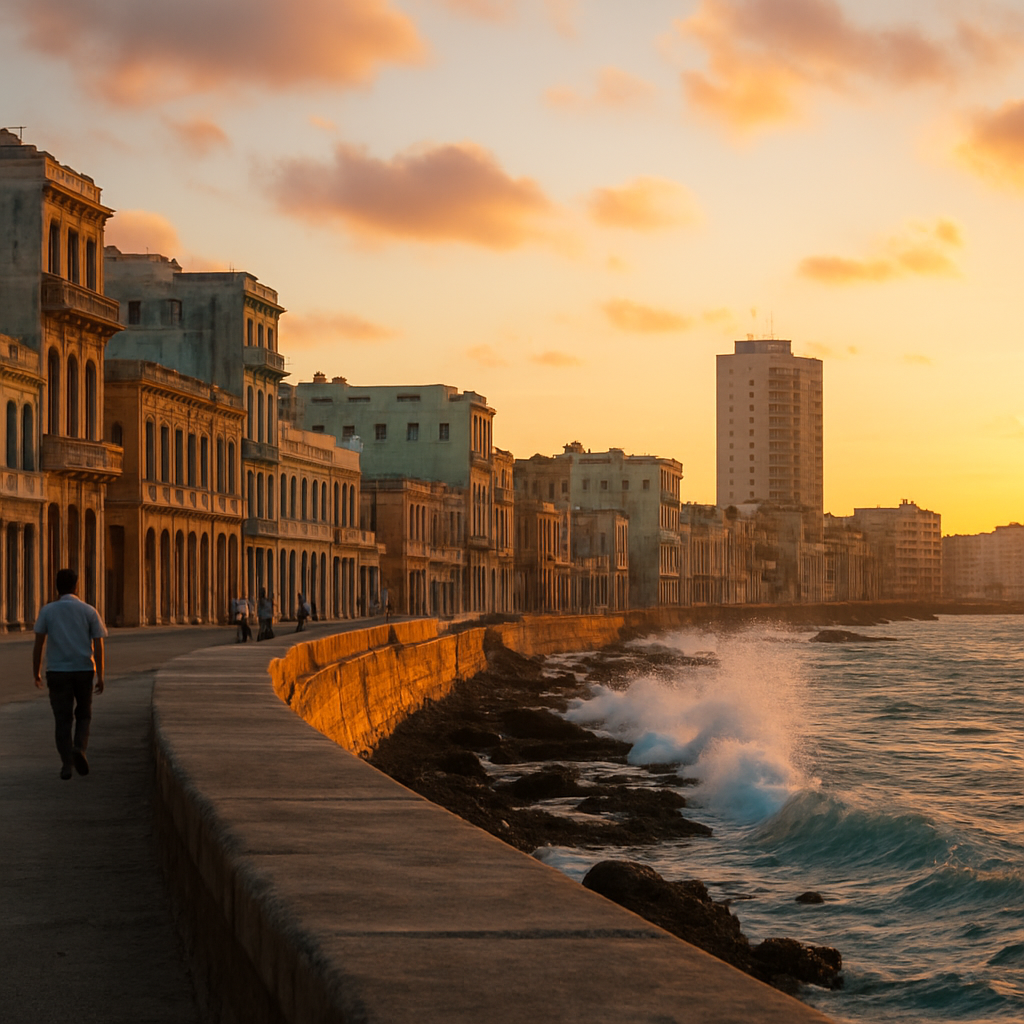
Walk the Malecón at Sunset
Start at the Hotel Nacional garden with a daiquiri at golden hour, then drop down to the seawall and walk east toward the foot of La Rampa. The 8-kilometer esplanade has been Havana's living room since 1901 — fishermen casting into the surf, kids with skateboards, couples sharing a bottle of Havana Club on the wall, reggaeton fighting bolero on competing speakers. Bring rum, don't bring plans, and let the seawall do what it's done for Habaneros for over a century. Pro tip: the walk's flat the whole way, but bring a windbreaker — the spray off the wall in winter is no joke.
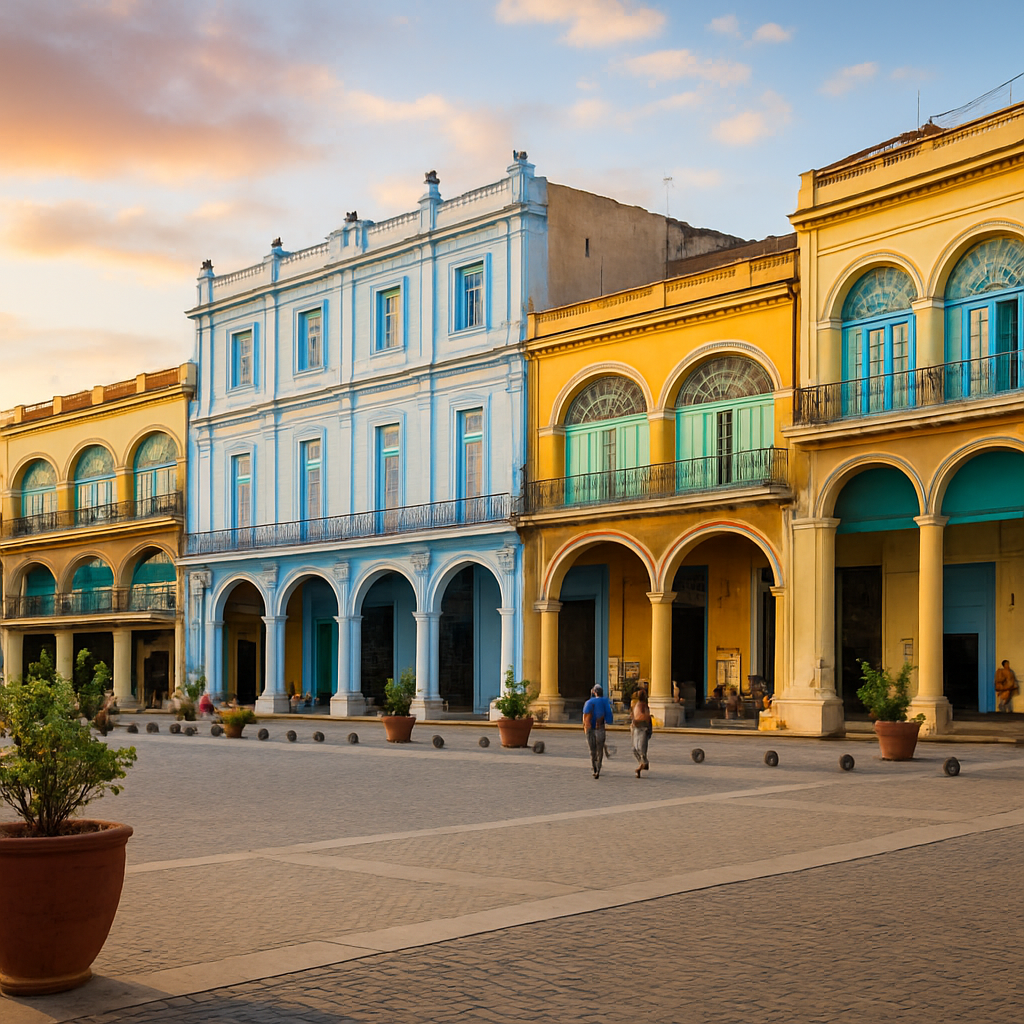
The Four Plazas of Old Havana
UNESCO designated Habana Vieja a World Heritage Site in 1982 for a reason — four main plazas (Plaza de Armas, Plaza Vieja, Plaza de la Catedral, Plaza de San Francisco) connected by Calle Obispo and the densest stretch of 16th- to 19th-century Spanish colonial architecture in the Americas. Stop at El Floridita for the daiquiri at the Hemingway end of the bar, then La Bodeguita del Medio for the mojito and the signed walls. The whole circuit takes a full unhurried day. Watch out for pickpockets on Calle Obispo — it's the busiest tourist artery in the country and the lifters know it.
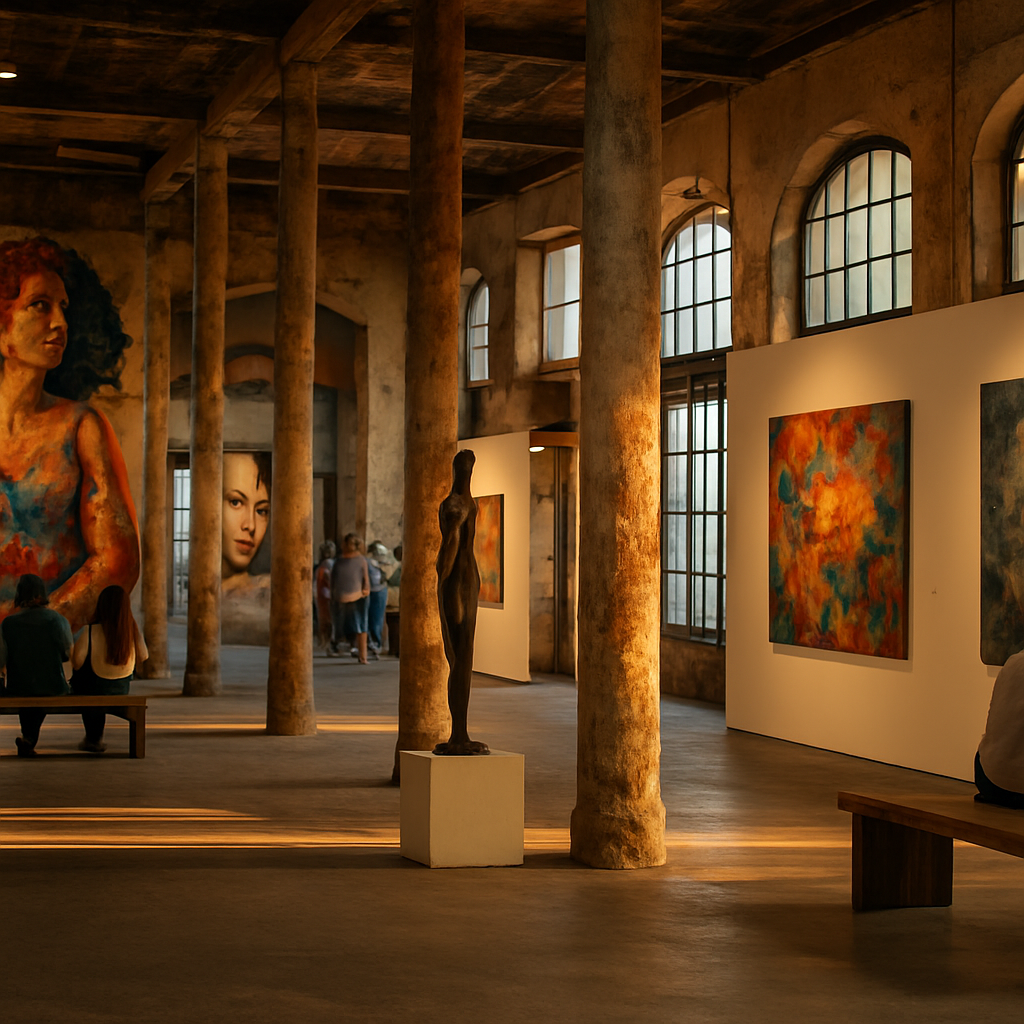
A Night at Fábrica de Arte Cubano
Musician X Alfonso opened FAC in 2014 inside a converted cooking-oil factory at the western edge of Vedado, and Time magazine put it on its World's Greatest Places list in 2019. Galleries, live music stages, cinema rooms, and bars threaded across multiple floors — all for a single small cover charge that's the best deal in Cuban nightlife. Pair dinner at El Cocinero upstairs with a ticket downstairs for the cleanest one-evening culture-and-music combination in the country. Pro tip: get in line by 9pm or you'll wait 90 minutes behind every Italian fashion editor on the island.
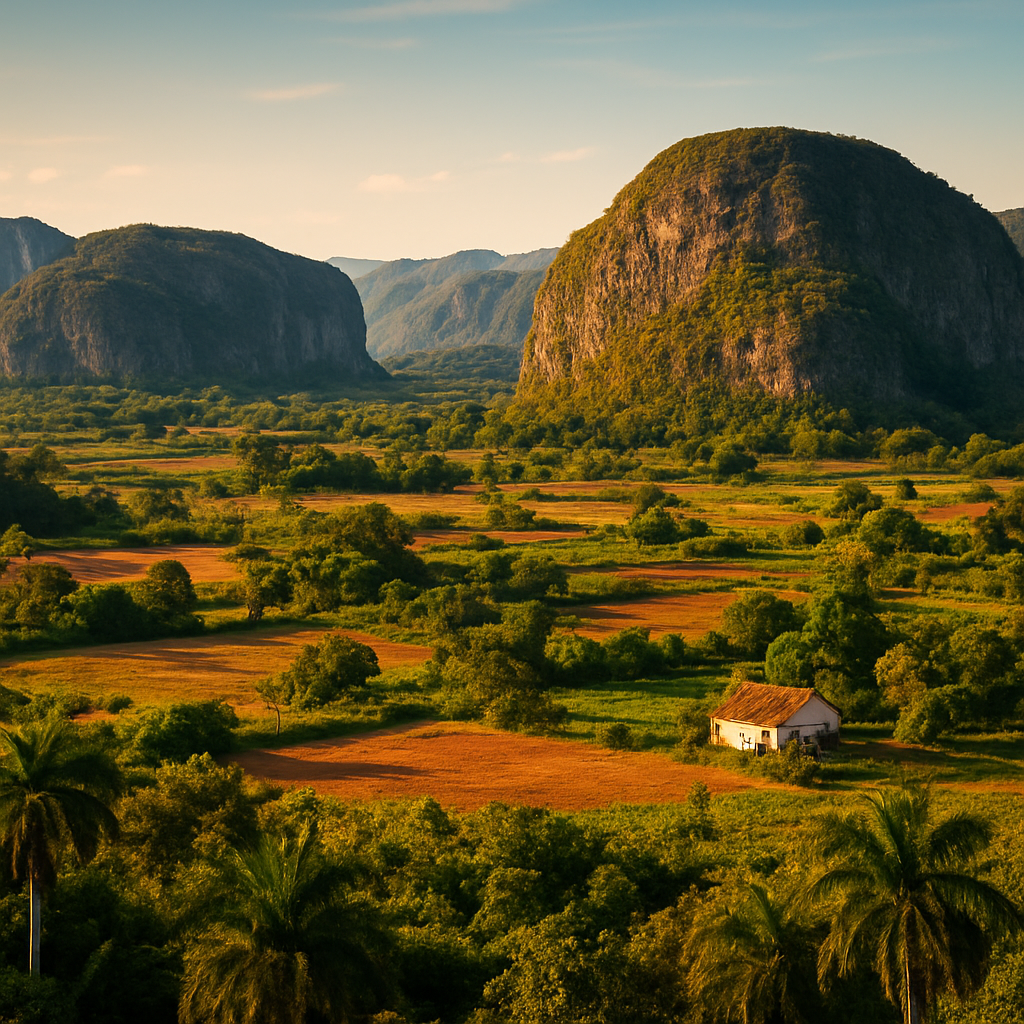
The Tobacco Country of Viñales
About 180 km west of Havana, the Viñales Valley earned its UNESCO World Heritage status in 1999 for the dramatic mogote limestone formations rising out of red-earth tobacco fields and the traditional farming landscape that's barely changed in two centuries. Hire a guide on horseback for the morning, stop at a working vega for a fresh-rolled cigar with the farmer who grew the leaf, and lunch at any casa particular in the village center. It's the day everyone remembers from a Cuba trip — green, slow, and unmistakably Cuban.
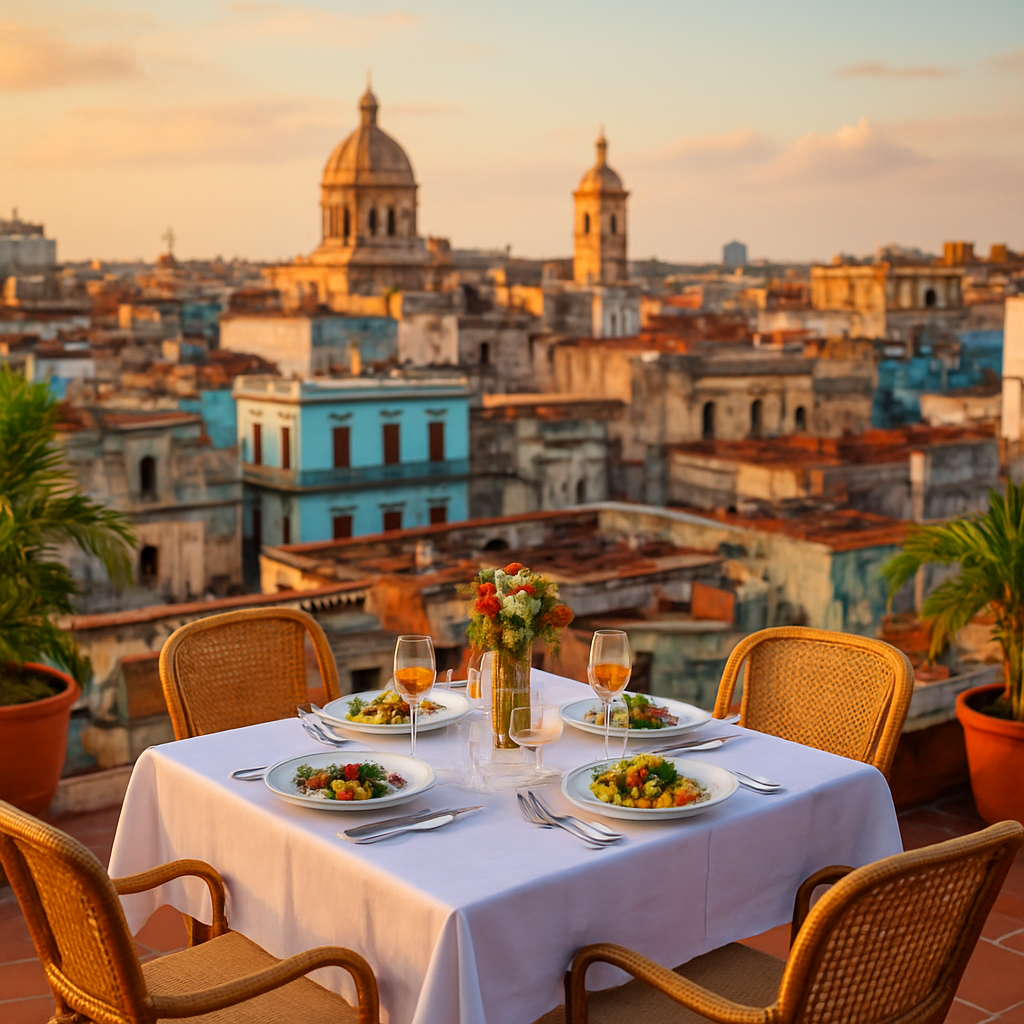
A Paladar Dinner in Vedado
The paladar — privately-run home restaurant — is the format that resurrected Cuban dining, and Vedado is where it lives best. Book the rooftop at El Cocinero in the chimney-marked former oil factory, the penthouse balcony at Café Laurent a block from the Hotel Nacional, or the antique-filled rooms at Atelier. You'll eat pork belly braised in citrus, snapper pulled out of the water that morning, real vegetables grown on a private plot — the cooking your hotel buffet has been pretending to be. Reserve at least two days ahead; the good ones fill up fast.
The places I actually send people to
Advice that fits how you travel
Havana is one of the easiest cities in the Caribbean to land in alone, and one of the harder ones to plan from your phone. The queer scene here runs on WhatsApp groups and rumor, not Google Maps — so don't try to architect it from your hotel lobby. Go sit on the seawall at the foot of La Rampa around 10pm, walk into Café Bar Madrigal on Calle 17, or post up at Fábrica de Arte Cubano on a Thursday night, and the city will tell you where it's going. Cubans are warm, conversational, and curious about visitors — solo travelers get pulled into conversation faster here than almost anywhere I've been.
Apps work, sort of. Grindr opens but loads like it's 2009, and most matches will pivot to WhatsApp within three messages — get a local eSIM or an ETECSA Wi-Fi card on day one and assume everything you type is being read. Stay in a casa particular in Vedado rather than a hotel; you'll pay a third of the price, your host will likely feed you breakfast better than any buffet, and there's typically a queer cousin in the family network who can plug you into the actual scene. Watch out for pingüeros on the Malecón at night — they're not dangerous, but they are working, and 'just a drink' is rarely just a drink.
Budget-wise, solo travel here is a steal at the bottom and reasonable in the middle: roughly 8,500–14,000 CUP a day on a budget, 18,000–32,000 if you want paladares and the occasional cab. Bring cash — euros or Canadian dollars beat US dollars at the informal rate, and US-issued credit cards generally don't work as of 2026. Best neighborhoods for solo travelers: Vedado for everything, Habana Vieja for daytime walking, Centro Habana if you want to live inside the noise.
This is one of the most romantic cities in the Caribbean, and as of 2026 it's also one of the most legally welcoming for same-sex couples — the 2022 Código de las Familias made marriage, joint adoption, and surrogacy law in a single referendum. Same-sex couples hold hands openly along La Rampa and the Malecón steps near Calle 23, and PDA in Vedado reads as completely fine. Habana Vieja is moderate — touristy and tolerant — and quieter Miramar leans toward discretion away from the restaurants. Centro Habana's residential side streets warrant low-key behavior, more for ease than for safety.
For date nights, the rooftop at El Cocinero in the chimney-marked building it shares with Fábrica de Arte Cubano is the closest thing this city has to a designated gay date — book ahead, the maître d' has heard every 'I know someone' line. La Guarida on the third floor of the mansion used to film Fresa y Chocolate is the cultural pilgrimage with cooking that has earned every accolade in thirty years. Walk the Malecón from the Hotel Nacional garden at sunset with a bottle of Havana Club and you'll have done what queer Habaneros have done for fifty years.
For sleeping, casas particulares are typically the warmest option for same-sex couples — these are licensed private homestays, the host wants the booking, and nobody is going to perform paperwork theater about a shared bed. Casa Vitrales in Old Havana, Hotel Raquel for boutique, the Iberostar Grand Packard or Kempinski for zero-friction luxury. If you can time a May trip around the Conga Contra la Homofobia, you'll see the only public LGBTQ+ procession in the country — it's not Pride the way you know it, but it's a moment to be in this city as a couple.
LGBTQ+ families travel to Havana more easily than most people assume. The 2022 Código de las Familias recognized joint adoption and same-sex marriage, which means as of 2026 your family structure is fully legal under Cuban law — a status not many Caribbean destinations can match. Casas particulares are typically the right call for families: multi-room options run roughly 8,000–13,000 CUP a night on a budget, the host is invested in your stay, and same-sex parents won't get a second glance at check-in. The Iberostar Grand Packard on Paseo del Prado is the easiest 5-star landing pad if you want a pool, a buffet, and English at the front desk.
For days, the Acuario Nacional in Miramar is the rainy-afternoon standby, the four plazas of Habana Vieja are an unhurried full-day walk that older kids genuinely love, and Playas del Este is the easiest beach day from the city — just keep Mi Cayito at the eastern end on the adult itinerary. A classic-car convertible tour is the kind of thing kids talk about for years; book one for an afternoon and let the driver narrate. The Museo Nacional de Bellas Artes is approachable, well-curated, and cheap.
A few practical notes. Strollers are a fight on Habana Vieja's cobblestones — go with a carrier for kids under three. Kid menus aren't really a Cuban category, but paladares will improvise warmly; ask. Bring whatever specific medication, baby formula, sunscreen, or diapers you'll need for the trip — shortages are real and as of 2026 still affect everyday goods. Pro tip: the Parque Lennon in Vedado, with its bronze John Lennon on a bench, is a solid 20-minute decompression stop between museum and lunch.
What Havana actually costs
Flights, visas, and the first 30 minutes
Airport. You're flying into HAV — José Martí International Airport, about 15 km southwest of central Havana. Terminal 3 handles all international arrivals, and as of 2026, it's still the only realistic gateway into the capital.
Direct routes. Approximately 30 direct routes serve HAV, with the densest connections from Toronto, Mexico City, Cancún, Madrid, Frankfurt, Paris, and Panama City. From Toronto, the flight runs roughly 3.5 hours; from Madrid, around 9.5 hours; from Mexico City, just under 3 hours; from Miami (charter / authorized US flights), about 1 hour. Direct US commercial service is limited and typically routes through Miami, Houston, or JFK depending on the carrier and the season.
Visas, as of 2026. Cuba generally requires a Tourist Card (sometimes called a Tourist Visa or e-Visa) for entry — typically valid for 90 days and extendable once on the island. US travelers need a Tourist Card AND must self-certify under one of the 12 authorized OFAC categories (Support for the Cuban People is the most common); pure tourism is technically not permitted. UK, EU, Canadian, and Australian travelers typically need a Tourist Card, generally available through the airline at check-in, a Cuban consulate, or an authorized agency. Mandatory travel insurance with medical coverage is required for entry — bring printed proof. Always confirm current requirements with the Cuban consulate before flying; rules around US travel especially can shift.
Airport to city. Yellow official taxis queue at Terminal 3 — confirm the flat rate before you get in (~25–30 USD equivalent, roughly 600–900 CUP at the informal rate, 25–35 minutes to Vedado or Habana Vieja). A pre-arranged pickup through your casa particular host is typically the smoothest first arrival, runs about 30–35 USD, and means somebody is waiting with your name on a sign in a country where your phone won't immediately work. A classic-car transfer runs 40–60 USD and is worth it once if you've never ridden in a 1956 Chevy Bel Air. Public buses (P-12, P-16) are nearby but don't stop at Terminal 3 directly — skip them with luggage. Pro tip: bring small euro or Canadian dollar bills for the taxi; US bills get a worse rate, and US-issued cards generally don't work at the airport ATMs.
Traven's seasonal breakdown
The questions everyone asks
Is same-sex marriage legal in Cuba?
Where's the gay scene in Havana?
Do I need a visa to visit Cuba?
Can I use my US credit card or Apple Pay?
Is it safe to hold hands in public?
How do I find the gay beach?
When's the best time to go?
Screenshot this before you go
So should you actually go?
Go. Cuba is one of the most legally welcoming countries in the Caribbean for LGBTQ+ travelers as of 2026, and Havana itself is a city that rewards anyone willing to slow down, bring cash, and let the rhythm of Vedado and the Malecón set the pace. The scene won't hand itself to you on a Google Map — it lives in WhatsApp threads, on the seawall at sunset, in the rooftop at El Cocinero, in a casa particular host's spare room where nobody is going to perform paperwork theater about a shared bed. The shortages are real, the internet is slow, and the cooking will surprise you. This is one of the great cities of the Western Hemisphere right now for an LGBTQ+ traveler — and the window where Havana is this welcoming, this affordable, and this fundamentally itself isn't going to last forever.
Sources & Resources
Official links we reference when compiling this guide. Last verified 2026-05-03.
- CENESEX (Centro Nacional de Educación Sexual)
- Equaldex – Cuba LGBTQ+ rights tracker
- Human Rights Watch – Cuba
- ILGA World – Cuba country profile
- Línea de Apoyo Anti-Homofobia (CENESEX hotline info)
- MINSAP (Ministry of Public Health, Cuba)
- Proyecto Arcoíris (independent LGBTQ+ collective)
- U.S. State Department – Cuba LGBTQI+ Travel Information
- UK Foreign Office – Cuba travel advice (LGBT travellers)