
Prague doesn't beg for your attention. It pours you a 40-koruna Pilsner at a sidewalk table under an Art Nouveau façade and waits for you to figure out you're never leaving.
Prague is the European capital that got away with it. While Berlin built a brand, Amsterdam sold tickets, and Barcelona printed T-shirts, Prague just quietly became one of the most livable, walkable, genuinely comfortable cities for gay travelers on the continent — and it did it at a fraction of the price. The gay district here isn't a theme park or a marketing exercise. It's Vinohrady, a residential neighborhood so architecturally gorgeous that the bars, the cafés, the Sunday brunch spots, and the Saturday-night dance floors all fit into the streetscape like they grew there organically. Which they did — the scene took root after the Velvet Revolution and never left.
What surprised me most on my last trip wasn't the nightlife — though I gave it an 8.5 on Scene, and a packed Saturday at Termix on Třebízského will show you why. It was the daytime. The long golden Sunday afternoon at the Riegrovy sady beer garden, half of Vinohrady sprawled on benches with 60-koruna pints and a panoramic view of Prague Castle, dogs underfoot, nobody performing anything for anyone. That's the frequency this city operates on. Czechs are culturally secular and profoundly live-and-let-live, but don't mistake that reserve for coldness — it's just that nobody here needs to make a speech about acceptance. They'd rather pour you a pivo and talk about something interesting.
The infrastructure is real. Friends Prague on Bartolomějská has been anchoring the Old Town scene for two decades — a proper gay bar with a local crowd, not a rainbow-flagged tourist operation. Saints Bar on Polská is the neighborhood spot where you sit down for one beer and surface two hours later knowing half the room. Palác Akropolis in Žižkov books queer parties alongside live music in a crumbling Art Nouveau palace. The Žižkov Television Tower — that surrealist monolith covered in David Černý's crawling bronze babies — looms over everything east of center, a constant reminder that this city has a deeply weird, deeply confident sense of its own identity.
There's a reason my Traven-Dex sits at 8.4. Prague earns it without trying very hard, which is maybe the most Prague thing about it. The food scene has matured dramatically — La Degustation reinventing 19th-century Bohemian recipes with a Michelin star, Eska fermenting everything in sight in a converted Holešovice warehouse, Sisters making the humble chlebíček into something the New York Times wrote about. All of it absurdly affordable by Western European standards. You'll eat extraordinarily well, drink better beer than anywhere else in Europe, wander through a thousand years of architecture, and do it all with the casual comfort of a city that figured out tolerance before it was fashionable.
The stuff your travel guide buries on page 47
Legal framework: As of 2026, same-sex marriage is legal in the Czech Republic, following legislation passed in 2025. Same-sex couples have adoption rights. Registered partnerships (registrované partnerství) have been available since 2006, and the newer marriage law provides full legal equality. Broad anti-discrimination protections cover employment, housing, and public services. Gender identity is legally recognized, though changing one's legal gender marker still requires medical diagnosis and surgical intervention — one of the more restrictive frameworks remaining in the EU. There is no criminalization of same-sex activity and none in modern Czech history.
The cultural reality: The Czech Republic is one of Europe's most secular countries, and that shapes the ground-level experience more than any law on paper. You'll find a population that overwhelmingly defaults to indifference rather than either hostility or celebration — Czechs tend to consider your personal life your business and move on. The Manželství pro všechny (Marriage for All) campaign drove the 2025 legislation and remains a point of genuine civic pride in progressive Prague circles. Ask a local queer Czech about it and you'll get an animated, informed thirty-minute conversation minimum. The political landscape is broadly supportive in Prague, though rural and outer-district attitudes can be more conservative.
PDA comfort: In Vinohrady and Žižkov, same-sex PDA is routine and unremarkable — holding hands around Náměstí Míru or on Mánesova draws no attention whatsoever, especially after dark when the terraces fill. In the Old Town and tourist-heavy zones, you're generally fine — the cosmopolitan crowd absorbs everything. Malá Strana and Charles Bridge are moderate: low risk, but the density of conservative group tours means the occasional stare. Outer districts (Prague 9–13) are more working-class and less visibly progressive — situational awareness is warranted. Inside dedicated LGBTQ+ venues — Friends, Termix, Saints — there's no need for restraint whatsoever.
Practical note: Cash still rules in a lot of Vinohrady's hospody — pull some koruna from the ATMs on Náměstí Míru before heading out. Prague Pride runs a full week in mid-August and transforms the city center — book accommodation months in advance, because Vinohrady fills up fast and prices spike hard once the festival schedule drops. For organizational resources, Prague Pride and PROUD – Platform for Equality, Recognition and Diversity both maintain English-language information.
What it actually feels like on the ground
Holding hands: In Vinohrady — particularly on Mánesova, around Náměstí Míru, and the surrounding streets — this is genuinely unremarkable. Same-sex couples are a normal part of the streetscape, especially after dark when the bar terraces fill up and the neighborhood loosens its collar. In the Old Town tourist core, you're unlikely to encounter any issue beyond an occasional double-take from older tour groups. On Charles Bridge during peak hours, the sheer volume of people makes PDA low-risk but not invisible. Outer residential districts warrant more discretion.
Hotel check-in: No issues at any price level across central Prague. Same-sex couples sharing a double room is entirely standard. Hotels in Vinohrady, Nové Město, and the Old Town handle this routinely. Budget hostels like Czech Inn and Mosaic House are explicitly welcoming.
Taxis and rideshares: Bolt and Uber are your best options — fixed-price, GPS-tracked, and receipt-generating. No reports of driver discrimination toward same-sex couples. Avoid unmarked taxis at the airport and around Wenceslas Square, not for queer-specific reasons but because overcharging tourists is a well-documented Prague practice regardless of who you are.
Public transport: Prague's tram and metro system is excellent, safe, and heavily used across all demographics. No concerns for LGBTQ+ travelers at any time of day. Tram lines 4 and 22 run through Vinohrady and connect to the Old Town — these will be your daily lifeline.
Late night around Wenceslas Square: Václavské náměstí gets rowdier and less predictable after midnight — stag tourism, alcohol, and a more anonymous crowd combine in ways that warrant basic awareness, particularly in the early hours. This isn't queer-targeted, but it's where most late-night hassle in central Prague concentrates. Keep your wits about you, move with purpose, and Bolt home if the vibe shifts.
Trans travelers: Prague is socially tolerant, and trans visitors report largely positive experiences in central neighborhoods and LGBTQ+ venues. Misgendering can occur in service contexts — Czech is a heavily gendered language and most staff will try but may not always get it right. Gender marker changes under Czech law still require medical intervention, which means bureaucratic documents may not match presentation for some travelers. Carry your passport rather than relying on other ID. Trans*parent CZ maintains resources in English.
Verbal harassment: Rare in central Prague and virtually nonexistent in Vinohrady. The main risk zone is the Wenceslas Square corridor late at night (stag groups, not locals). The Czech default is studied indifference — most people genuinely don't care.
Emergency resources: If you need support, both PROUD and the Czech AIDS Help Society maintain English-language contacts and referral services. Save those numbers before you land, not after you need them.
The queer geography
Vinohrady — The Main Event
Prague's gay neighborhood isn't a strip of clubs — it's an entire residential district, and it's one of the most beautiful in the city. Vinohrady (Prague 2) radiates outward from Náměstí Míru, the central square anchored by the neo-Gothic Church of Saint Ludmila and ringed by café terraces. The streets that matter most — Mánesova, Blanická, Korunní — are lined with Art Nouveau apartment buildings and packed with kavárny that function as daytime queer social spaces without needing to advertise it. This is where the dedicated LGBTQ+ venues cluster: Termix for a proper club night, Saints Bar for a neighborhood pub where one beer becomes five, Piano Bar Prague for something more lounge-paced, Café Café for daylight hours. The neighborhood emerged organically as Prague's gay quarter after the 1989 Velvet Revolution, and it wears that history lightly — no rainbow crosswalks, no declarations, just a neighborhood where queer life is completely woven into the fabric.
The Riegrovy sady beer garden is the neighborhood's open-air living room — a hilltop park with views of Prague Castle and a beer garden that draws a heavily queer crowd on warm evenings. It's free, it's casual, and a half-liter of Pilsner Urquell costs about 60 CZK. This is where queer Prague goes to be social without needing a venue.
Žižkov — The Scrappy Neighbor
Directly east of Vinohrady, Žižkov (Prague 3) is the historically working-class district with bohemian energy, legendary pub density, and a growing welcoming scene. The Žižkovská věž — the television tower crawling with David Černý's bronze baby sculptures — dominates the skyline and serves as a useful navigational landmark from anywhere in the gay area. Palác Akropolis at Kubelíkova 27 is the district's cultural anchor: an independent venue in an Art Nouveau building that's programmed concerts, queer parties, and LGBTQ+ events since 1996. Mama Shelter Prague sits right on the Vinohrady-Žižkov border — useful for accommodation that's adjacent to the gay quarter without the price premium.
Old Town — The Gateway
Friends Prague on Bartolomějská is the standout LGBTQ+ venue in the Staré Město area — a real gay bar with a loyal local crowd and regular drag shows, not a tourist trap. It's a genuinely excellent first-night stop if you're getting your bearings before heading east to Vinohrady. The Old Town itself is tourist-dense and cosmopolitan, comfortable for same-sex couples, and a 15-minute tram ride from Náměstí Míru.
Holešovice — The Arts District
Prague 7's post-industrial arts quarter is worth knowing, especially if your interests skew cultural. The DOX Centre for Contemporary Art has programmed LGBTQ+ exhibitions, Eska is one of the best restaurants in the city, and Sir Toby's Hostel has been a budget backpacker anchor for two decades. Not a queer district per se, but a progressive, creative one that complements Vinohrady well.
ILGA Europe provides a comprehensive directory of LGBTQ+ community organizations and cultural information across Europe, including country-specific resources for the Czech Republic.
Purple Roofs is an established international guide to LGBTQ+-owned and LGBTQ+-friendly accommodations, restaurants, and nightlife venues, with detailed listings throughout Prague.
For context on the legal landscape and LGBTQ+ rights situation in the Czech Republic, the Wikipedia article provides essential background on LGBTQ+ life and community in Prague. Wikipedia article on LGBT rights in the Czech Republic.
The experiences worth rearranging your itinerary for
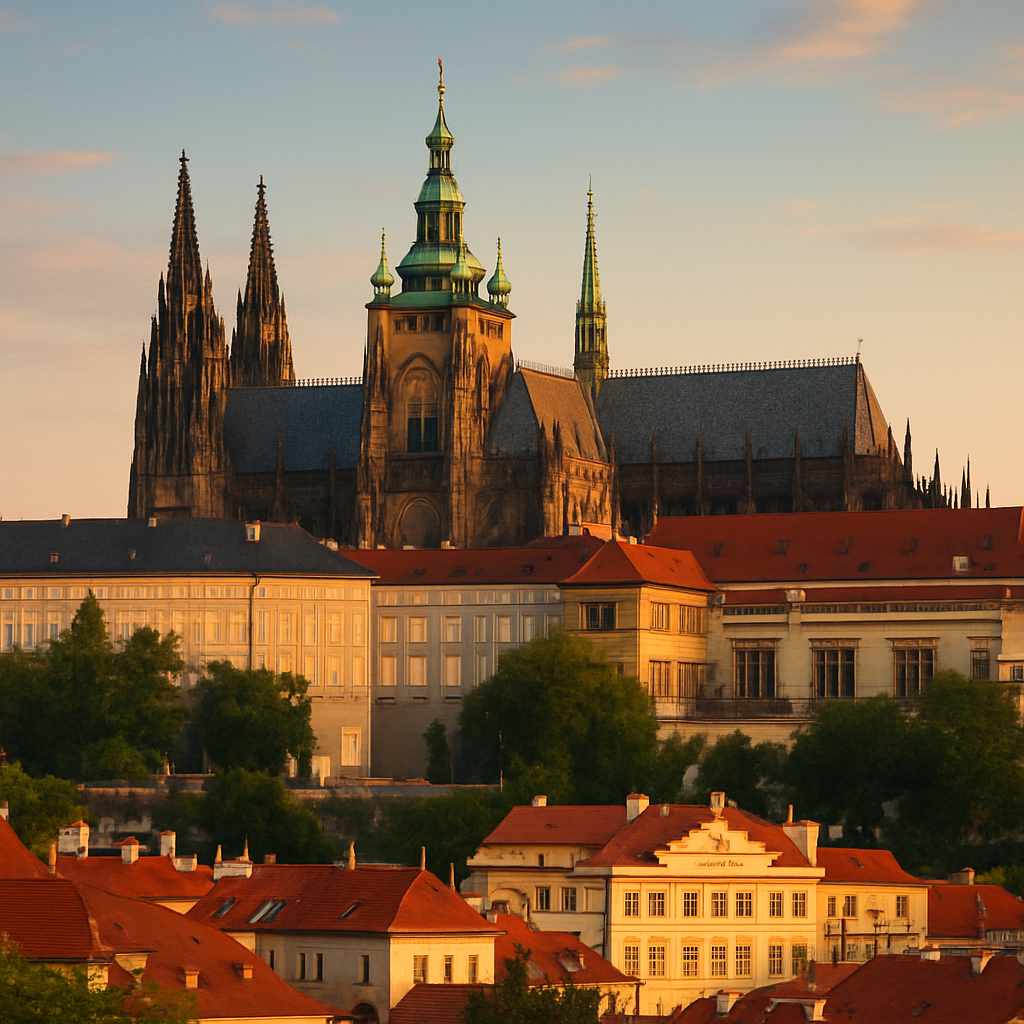
Prague Castle at First Light
Get up early and cross the river before 8 AM, when the castle complex and the lanes of Malá Strana below it still belong to you. The scale of Pražský hrad doesn't hit until you're standing inside St. Vitus Cathedral with the stained glass throwing color across empty stone floors. On the walk back down through the castle gardens, you'll have views across the river to the Old Town spires that explain why this city has been stopping people in their tracks for eight centuries. This is the thing Prague does better than almost anywhere — architecture at a scale and density that makes you forget you're in a modern European capital.
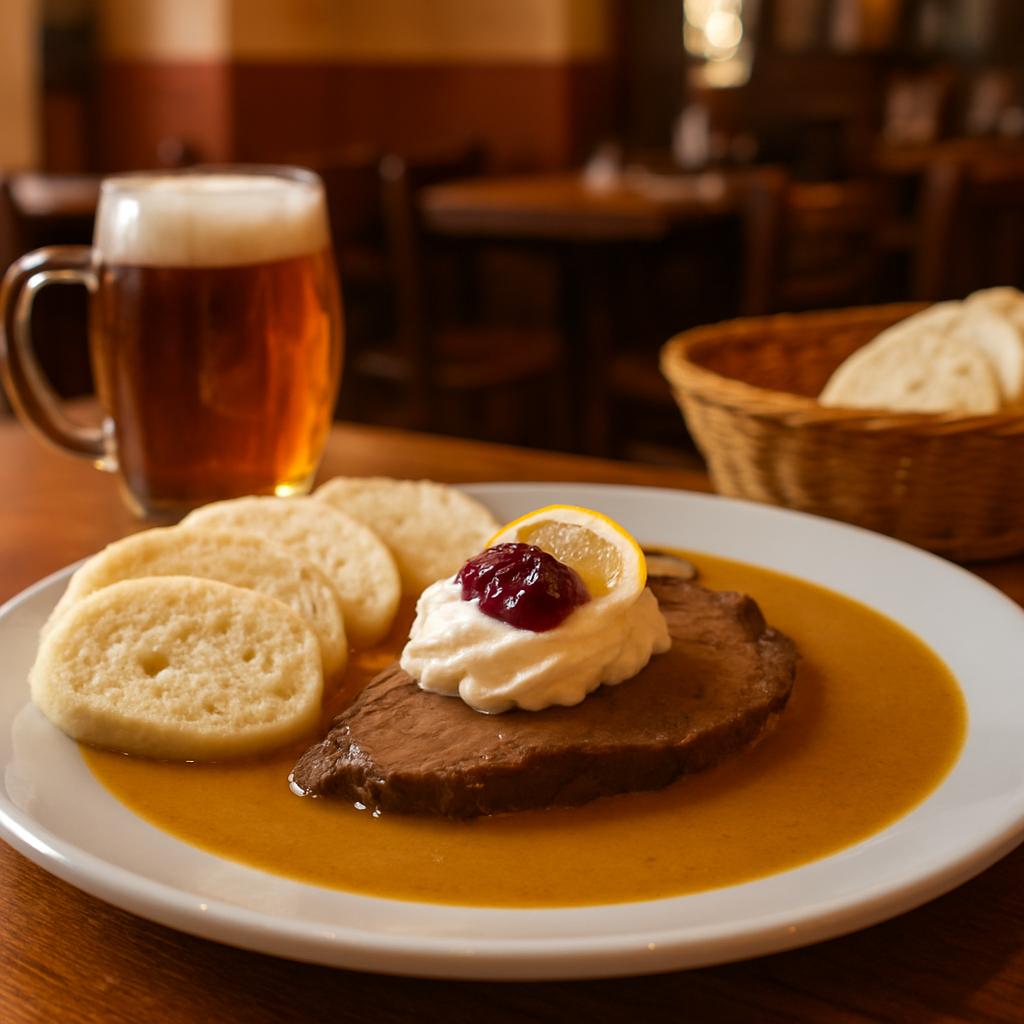
Svíčková and Dumplings in Vinohrady
You haven't eaten Czech food until you've had a proper plate of svíčková na smetaně — slow-braised beef sirloin in a creamy root vegetable sauce, served with bread dumplings and a spoonful of cranberry compote. This is the national comfort dish, and in Vinohrady's neighborhood restaurants it arrives honest and unpretentious. Pair it with a half-liter of tank-conditioned Pilsner and you'll understand why Czech cuisine doesn't need reinvention. For the original pub format, Lokál Dlouhááá on Dlouhá 33 in the Old Town draws from on-site refrigerated tanks — the beer tastes like it was poured at the brewery because, functionally, it was.
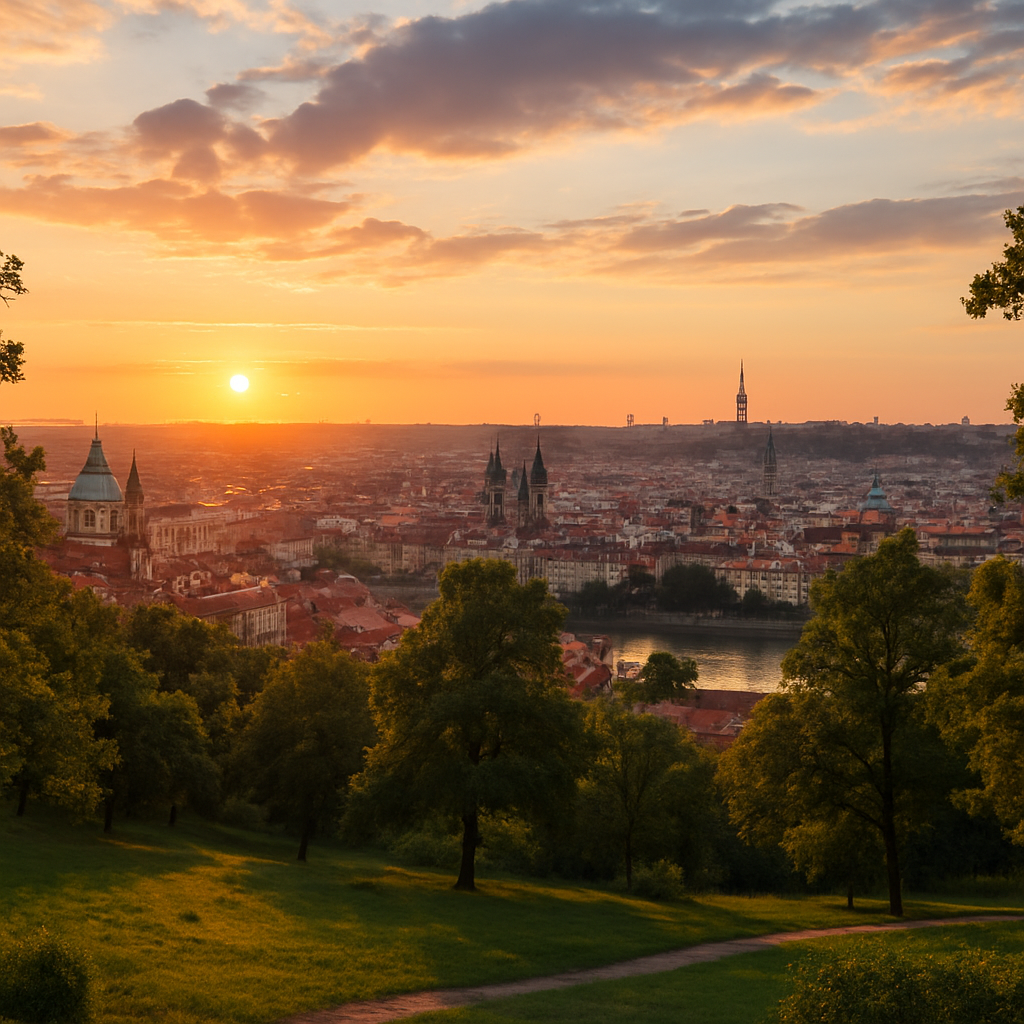
Riegrovy Sady at Golden Hour
This is one of the great free experiences in European travel, full stop. Riegrovy sady is a hilltop park in the heart of Vinohrady with a seasonal beer garden that draws mixed crowds of locals, dogs, and a significant queer contingent on warm evenings. Grab a 60-koruna Pilsner Urquell, find a spot on the grass, and watch Prague Castle turn gold across the skyline as the sun drops. You don't need a reservation, you don't need a plan, you just need to be there between six and eight on a clear evening. The panoramic view across the Vltava and the Old Town rooftops would cost you 2,000 CZK on a rooftop bar. Here it costs the price of a beer.
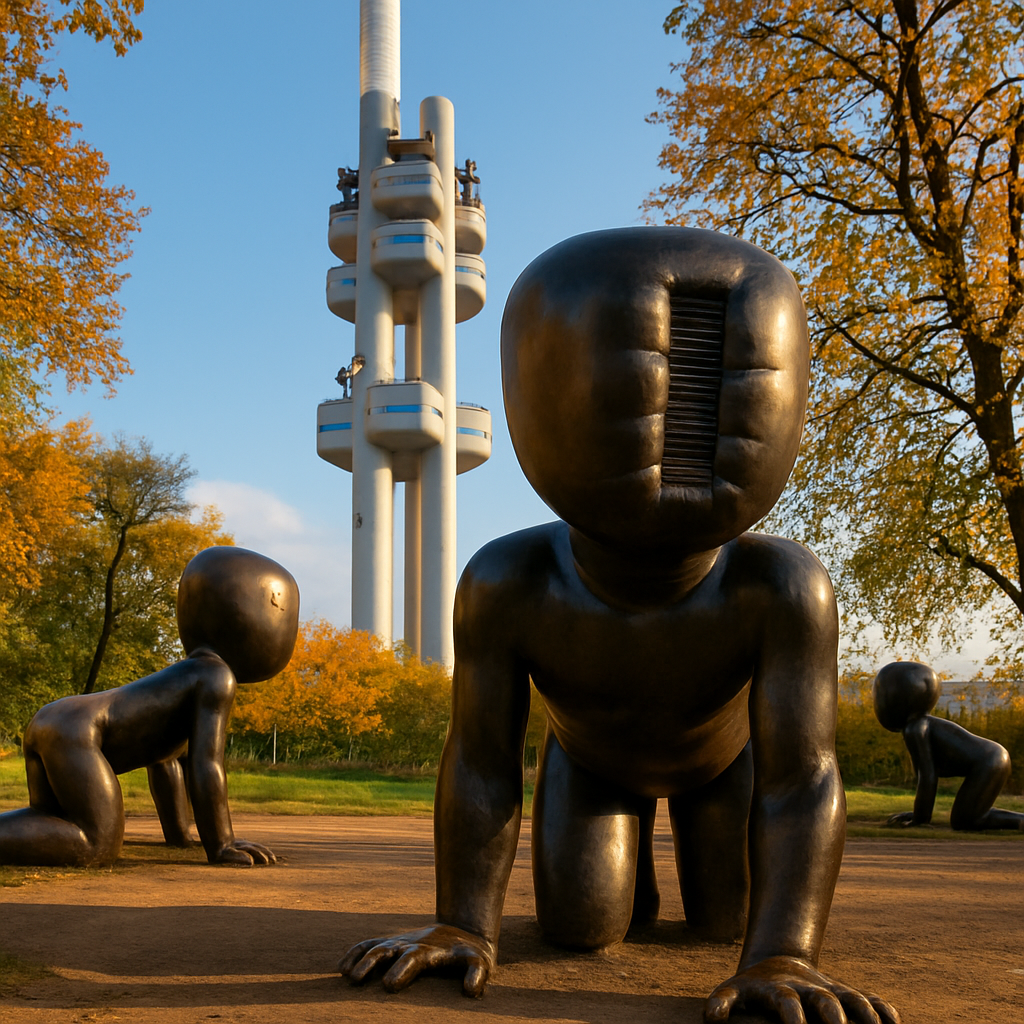
The Žižkov Television Tower and Černý's Babies
The Žižkovská věž is one of the stranger and more wonderful things in Central Europe — a 216-meter brutalist transmission tower that artist David Černý covered with ten oversized bronze babies crawling up and down its exterior. Walk up from the Vinohrady area at dusk and watch Prague go gold from the Žižkov hillside while these faceless infants scale a communist-era tower above you. It's unsettling, hilarious, and completely unforgettable. There's an observation deck and a restaurant at altitude if you want the view from inside, but honestly the experience of seeing it from the surrounding streets is just as good.
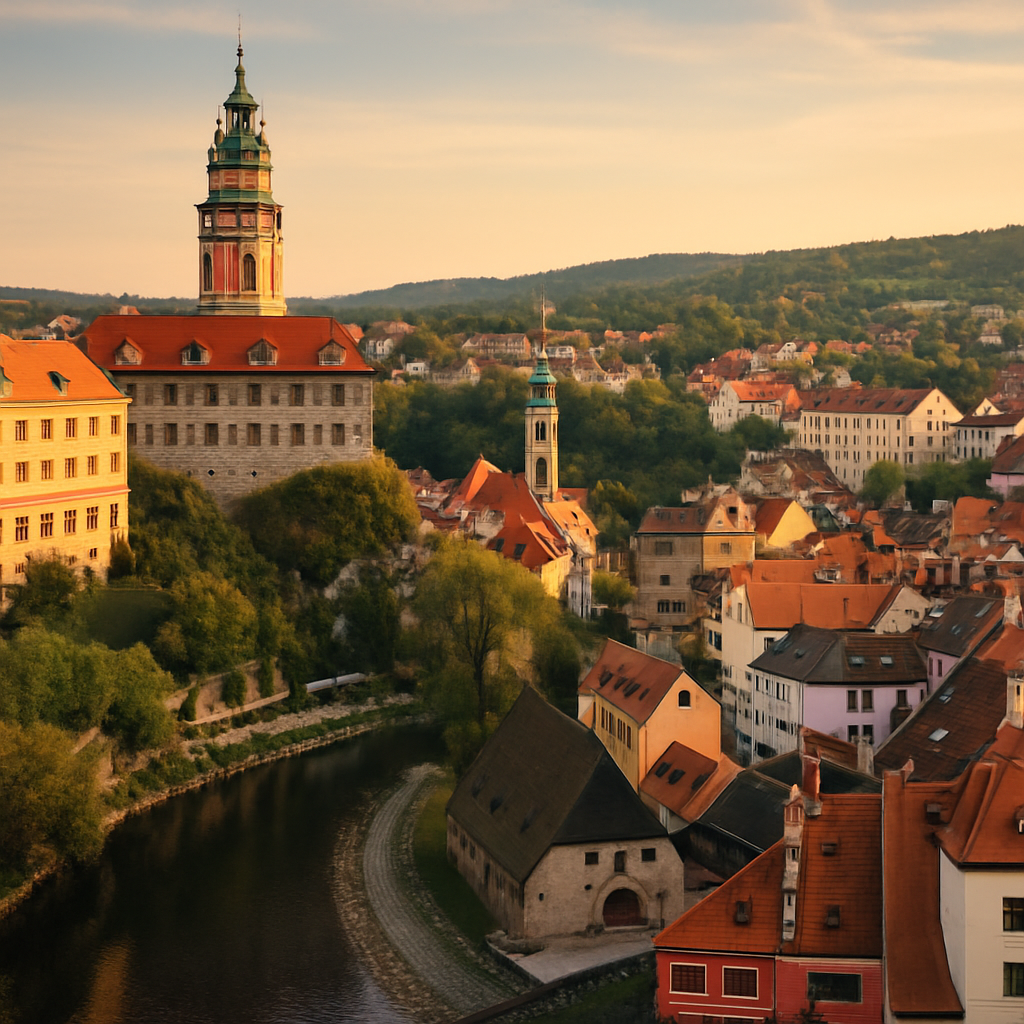
Český Krumlov by Day
Three hours south by direct bus, Český Krumlov is a UNESCO World Heritage Site built around a 13th-century castle that presides over a bend in the Vltava River. The preserved medieval old town is compact enough to explore in an afternoon — terracotta rooftops, narrow lanes, the castle tower painted in Renaissance sgraffito. It's the kind of place that photographs don't quite capture because the scale is so intimate and the light changes so constantly. Go on a weekday if you can manage it — weekend volumes in summer can be intense. The bus from Prague's Florenc station runs approximately every hour for around 300 CZK each way.
The places I actually send people to
Advice that fits how you travel
Prague is an outstanding solo city, and it's not even close. The combination of a compact, walkable center, a well-defined gay neighborhood where locals are genuinely approachable, and a cost of living that won't make you flinch every time you order a drink — it adds up to a solo trip that's easy to execute on any budget. A 24-hour transit pass costs 120 CZK (roughly €5), a half-liter of draft beer in a Vinohrady hospoda is often under 60 CZK, and hostel dorms in the gay district itself start around 500 CZK a night at Czech Inn on Francouzská.
For meeting people, the scene rewards in-person presence over app culture. Grindr and Scruff have active user bases in Prague, but the real connections happen at Saints Bar on Mánesova — the kind of small, neighborhood queer pub where sitting at the bar alone is an invitation rather than a statement. Friends Prague on Bartolomějská in the Old Town runs drag shows and themed nights that naturally create conversation. The Riegrovy sady beer garden on warm evenings is Prague's great social equalizer — mixed, casual, heavily queer-adjacent, and the kind of place where solo travelers end up folding into someone's group by the second round.
Safety-wise, solo travel in central Prague is low-risk. The tram network runs until midnight and night trams take over after that, covering the Vinohrady-to-Old Town corridor reliably. The main area to stay aware is Wenceslas Square late at night, where stag tourism and alcohol create a rowdier atmosphere — not queer-targeted, but worth noting. Bolt home from there rather than walking if it's past 1 AM.
Prague is almost unfairly romantic — the kind of city where you turn a corner and walk straight into a scene that looks like someone art-directed it just for you. For same-sex couples, the sweet spot is Vinohrady: hand-holding on Mánesova draws exactly zero attention, terrace tables fill up with mixed crowds by seven, and the whole neighborhood operates at a pace that rewards lingering. Book a table at The Tavern on Chopinova for a casual midweek dinner, then walk it off around Náměstí Míru as the evening cools and the café terraces do their thing.
For something more formally romantic, Café Savoy in Malá Strana does a breakfast or lunch that feels like a special occasion even when it isn't — Neo-Renaissance ceiling decorations, proper linen, in-house pastries. Pair it with an early morning walk across Charles Bridge before the tourist volumes build, and you've got a morning neither of you will stop talking about. The Augustine hotel is the splurge pick for couples — sleeping in a 13th-century monastery complex a short walk from the river is a flex that absolutely holds up.
For the quintessential Prague couples moment, get to the Riegrovy sady beer garden on a warm evening before sunset. Grab two half-liters of pivo, find a spot on the hill, and watch Prague Castle go gold across the skyline. It costs around 120 CZK combined and it will be the memory you take home. The crowd skews heavily welcoming — you're right in Vinohrady's orbit — and the vibe is exactly the low-key, effortlessly inclusive Prague that earned its reputation.
LGBTQ+ families have legal standing here before you even clear customs — same-sex marriage became law in the Czech Republic in 2025, and adoption rights are in place as of 2026, meaning your family structure is formally recognized under Czech law. In practice, Prague's tourist infrastructure handles families well: Vinohrady has wide pavements and decent stroller terrain, and under-15s ride Prague's excellent tram and metro network completely free, which takes a real bite out of daily transport costs for a group.
The city punches well above its weight for kid-friendly experiences. Prague Castle and the medieval lanes of Malá Strana below it are practically purpose-built for small humans who find regular buildings insufficiently dramatic. The DOX Centre for Contemporary Art in Holešovice works for older kids and teens — visually engaging and genuinely stimulating, not the hushed kind of museum. The Žižkovská věž — the Žižkov Television Tower — with David Černý's bronze crawling babies on its exterior is the kind of installation children stare at for five solid minutes before demanding an explanation you won't really have. Prague Zoo consistently ranks among Europe's best and is worth a full day.
Practically speaking, many Prague museums offer reduced or free entry for children, and Czech restaurants are generally welcoming rather than precious about small guests — kitchens open at noon and the portions are substantial. One logistical note: Vinohrady restaurants fill fast on weekend evenings, so either book ahead or plan to wander east into Žižkov, where walk-in tables are almost always available and the food is equally good at a lower price point.
What Prague actually costs
Flights, visas, and the first 30 minutes
Airport: Václav Havel Airport Prague (PRG) is well-connected, serving approximately 130+ cities with direct routes. It's a manageable airport — you're typically through arrivals and into transport within 20 minutes on a normal day.
Key routes: Vienna (~55 min), Warsaw (~1h 10m), Frankfurt (~1h 25m), Amsterdam (~1h 50m), Paris CDG (~2h), London Heathrow/Gatwick/Stansted (~2h 10m), Dubai (~5h 30m). From New York JFK, expect a connection with approximately 10–12 hours total travel time.
Visas (as of 2026): The Czech Republic is part of the Schengen Area. US, UK, Canadian, and Australian passport holders can typically enter visa-free for up to 90 days within any 180-day period. ETIAS pre-travel authorisation is generally required for these nationalities — check your government's travel advisory for the latest requirements before booking. EU citizens have freedom of movement; a national ID card or passport is sufficient.
Airport to city: The Airport Express Bus (AE line) runs every 10 minutes to Náměstí Republiky in the city center — approximately 30–40 minutes for ~60 CZK, and tickets are available at machines in the terminal. If you're comfortable connecting to Metro Line A, Bus 119 to Nádraží Veleslavín gets you there for ~40 CZK on a standard 90-minute transit ticket. Bolt and Uber typically run 350–500 CZK for a 20–30 minute ride — use the fixed-price apps and avoid unmarked taxis waiting at the terminal.
Traven's seasonal breakdown
The questions everyone asks
Is Prague safe for LGBTQ+ travelers?
Do I need to speak Czech?
Is same-sex marriage legal in the Czech Republic?
How much should I budget per day?
Where is the gay neighborhood?
When is Prague Pride?
Should I use taxis or public transit?
Screenshot this before you go
So should you actually go?
Go. Prague is one of the best-value destinations in Europe for gay travelers, full stop. The legal protections are strong, the scene is genuine and deep-rooted, the city itself is jaw-droppingly beautiful, and you'll spend half what you would in Paris or Amsterdam for a trip that's every bit as rich. It's not a city that screams about how welcoming it is — it's a city that just is welcoming, in a quiet, Czech, pour-you-another-beer kind of way. The outer districts are more conservative, and trans travelers should read the safety section carefully, but central Prague and especially Vinohrady are as comfortable as anywhere I've been. Book the flight. Learn to say jedno pivo, prosím. You'll thank me.
Sources & Resources
Official links we reference when compiling this guide. Last verified 2026-03-15.
- Amnesty International Czech Republic
- Czech AIDS Help Society (Česká společnost AIDS pomoc)
- Equaldex – Czech Republic LGBTQ Rights Database
- Frank Bold – Human Rights and Legal Advocacy
- ILGA-Europe Rainbow Map – Czechia
- Prague City Tourism (Official)
- Prague Pride (Official Festival & Organization)
- Prague Rainbow Spring – International LGBT Multi-Sport Games
- PROUD – Platform for Equality, Recognition and Diversity
- Transgender Network (Trans*parent CZ)