Guayaquil doesn't audition for your approval. It's already dancing — you just have to show up after midnight.
It's 1am on a Saturday in Kennedy Norte and Factory Disco is finally filling up. The drag show was supposed to start at midnight — it didn't, obviously — and the crowd has that specific energy of people who've been pre-gaming on $3 cocktails at Sublime Bar since 10pm. The bass hits, somebody's phone flashlight becomes a spotlight, and a performer in sequins I couldn't name for you takes the makeshift stage like she owns the building. She might. Nobody seems sure. This is Guayaquil's queer scene: raw, loud, stubbornly late, and operating entirely on costeño time.
The thing people get wrong about this city is thinking it's a layover. Fly in, see the Malecón, fly out to the Galápagos. I get it — the security advisories are real, the humidity hits you like a wall, and it doesn't market itself with the glossy queer-destination packaging of a Lisbon or a Tel Aviv. My Traven-Dex of 6.6 reflects that honestly: Ecuador's legal framework is remarkably progressive (I gave it a 9.0 on Legal — same-sex marriage, adoption rights, constitutional anti-discrimination protections), but the ground-level social reality in Guayaquil runs cooler than the laws suggest. It's a city of contradictions. The constitution says one thing, the guy at the bus terminal might say another.
But here's what the layover crowd misses: Urdesa. Walk Víctor Emilio Estrada on a weekend morning and you'll see gay couples brunching openly at sidewalk cafés without a second glance from anyone. That strip — restaurants, cocktail bars, a food hall at Mercado del Río where the crowd skews young and cosmopolitan — is where the queer social fabric of this city actually lives. It's not a designated gay village in the European sense. It's just a neighborhood where queer people are visibly, comfortably present. Someone wrote in to tell me that Urdesa is the place locals are quietly proud of. I think that's exactly right.
Then there's Las Peñas — the bohemian hillside neighborhood at the base of Cerro Santa Ana where queer artists have been quietly staking territory for years, painting murals on the Escalinata stairway and running galleries that don't announce themselves as queer spaces but unmistakably are. The Silueta X offices across town are doing the hard political work. The clubs in Kennedy Norte are doing the joyful, sweaty, theatrical work. And at 5am, everyone ends up at the same encebollado cart near Urdesa, eating fish-and-yuca hangover soup on the sidewalk. That's the real Guayaquil. It won't beg you to come, but if you do, it'll feed you, dance with you, and keep you up way past your bedtime.
The stuff your travel guide buries on page 47
Legal framework: As of 2026, Ecuador has one of the most progressive LGBTQ+ legal structures in Latin America — on paper. Same-sex marriage became legal via a Constitutional Court ruling in 2019. Same-sex civil unions are recognized. Same-sex couples have adoption rights. Ecuador's 2008 constitution explicitly prohibits discrimination based on sexual orientation — one of the first in the region to do so. Gender identity law follows a self-identification pathway established by the Constitutional Court, allowing gender marker changes on national ID documents. There is no criminalization of same-sex conduct.
The gap between paper and practice: That impressive legal framework hasn't fully trickled down to street-level attitudes in all of Guayaquil's neighborhoods. Anti-discrimination protections are labeled "Limited" because enforcement is inconsistent — having the law on your side and having it applied in your favor are different things in Ecuador. Some civil registrars in Guayas province reportedly dragged their feet implementing marriage equality after the 2019 ruling. If you need any official documentation assistance while here, go straight to Asociación Silueta X or INREDH rather than assuming smooth administrative sailing.
Trans travelers: The self-ID pathway for gender marker changes exists legally, but implementation has faced administrative inconsistency and delays at civil registry offices. If your identity documents don't match your presentation, be prepared for potential friction at security checkpoints, banks, and government offices. Guayaquil's social environment is more conservative toward visible gender non-conformity than the legal framework alone would suggest. Silueta X runs support programs specifically for the trans community and is responsive to travelers — they're the real deal for legal help, health resources, or general orientation.
PDA comfort: This varies sharply by neighborhood. In Kennedy Norte around the LGBTQ+ bar cluster on weekend evenings — generally tolerated. Along the Víctor Emilio Estrada strip in Urdesa — discreet same-sex affection is unlikely to cause a problem among the cosmopolitan dining crowd. On the Malecón 2000 — more caution warranted, it's a high-traffic space visible to a wide cross-section of the population. In the Centro Histórico commercial core — conservative social environment where same-sex PDA can draw unwanted attention. In suburban and peripheral neighborhoods — social conservatism rises significantly, and same-sex PDA is not recommended.
Travel advisories: As of early 2026, the US Department of State and UK FCDO maintain Level 2 (Exercise Increased Caution) advisories for Ecuador due to elevated crime and periodic civil unrest — these are not LGBTQ+-specific. Guayaquil has experienced heightened urban crime including armed robbery. Use rideshare apps rather than hailing taxis on the street, and don't display valuables in public. The Defensoría del Pueblo handles rights complaints including LGBTQ+ discrimination issues.
What it actually feels like on the ground
Holding hands: In Urdesa along Víctor Emilio Estrada and in Kennedy Norte near the LGBTQ+ venues on weekend evenings — you'll likely be fine. Discreet hand-holding in Las Peñas and the artsy Cerro Santa Ana area is generally unproblematic. On the Malecón 2000 during daytime — walking close reads as a couple, overt affection is riskier with the broad demographic cross-section. Downtown near the markets and the Centro Histórico — I'd recommend against it. Southern barrios and peripheral neighborhoods — don't.
Hotel check-in: International chain hotels (Hilton, Wyndham, Hampton Inn) handle same-sex couples booking double rooms without incident — their corporate LGBTQ+ policies apply. Smaller boutique and budget properties vary. In general, Guayaquil's hospitality industry is professional enough that check-in friction is rare, but boutique guesthouses outside tourist zones may reflect more traditional attitudes. Book a confirmed double bed online in advance to avoid any ambiguity at the desk.
Taxis and rideshares: Use Uber, Cabify, or InDrive rather than street hailing — for security reasons that apply to everyone, not just LGBTQ+ travelers. The city's general crime situation makes rideshare apps significantly safer than flagging cabs, especially late at night. Pro tip: download InDrive or Cabify as backups — Guayaquil's rideshare availability can get spotty after 2am when you're leaving the Kennedy Norte clubs.
Late night: The Zona Rosa in Urdesa and Kennedy Norte is genuinely safe by Guayaquil standards for nightlife, but take rideshares rather than walking to your hotel after 2am. This isn't an LGBTQ+-specific concern — late-night street walking isn't recommended for anyone in this city. The security situation applies to everybody equally, and there's no reason to test it when an Uber costs $4.
Beaches and public spaces: The Malecón 2000 is Guayaquil's most visible public space and is well-patrolled during daylight hours. Same-sex couples are present and generally unbothered during the day. Isla Santay — the ferry day-trip — is safe for all travelers but the small resident community is conservative, so save the affection for when you're back in Urdesa. The Parque Centenario area is fine during the day; less advisable after dark for general safety reasons.
Trans travelers: I'll be direct: trans women in Guayaquil face a significantly rougher reality than gay cis men. Harassment and police profiling remain documented issues, particularly south of Urdesa and near the bus terminals. Visible gender non-conformity draws more negative attention in conservative neighborhoods than same-sex affection does. Silueta X actively runs support programs for the trans community and can provide real-time guidance on safe areas and current conditions.
Verbal harassment: In Urdesa, Kennedy Norte, and Las Peñas — rare. In the Centro Histórico commercial core, around bus terminals, and in working-class neighborhoods — possible, particularly for visibly queer or gender non-conforming travelers. It's rarely physical, but unwanted comments happen. The costeño cultural identity generally trends more relaxed and socially expressive than highland Ecuador, but that doesn't mean universally accepting. Read the room, calibrate by neighborhood, and you'll be fine.
The queer geography
Kennedy Norte
This upper-middle-class residential and commercial neighborhood north of Urdesa is where Guayaquil's explicitly LGBTQ+ nightlife clusters. Sublime Bar, Déjà Vu Bar, and Factory Disco form the core of the city's documented queer nightlife strip — the highest concentration of openly LGBTQ+-oriented venues in Ecuador outside Quito. You'll also find Bohemio Bar, Fabulosa, Legends Bar, and Krave Club in this general zone, though specific venues rotate names and locations with that frequency common to Latin American nightlife. The action starts late — don't show up before midnight unless you enjoy solitude — and the surrounding area is considered relatively safe for queer nightlife by Guayaquil standards. The Hilton Colón is directly in the neighborhood if you want to minimize transit.
Urdesa
If Kennedy Norte is the nightlife, Urdesa is the daily life. The Víctor Emilio Estrada avenue strip is Guayaquil's primary commercial and social hub for the LGBTQ+ community — and honestly, for anyone who likes good food and cocktails. Gay couples brunch openly at sidewalk cafés here on weekends. Mercado del Río draws a young, cosmopolitan crowd. Matrioshka Bar and La Paleta Bar serve craft cocktails to a mixed clientele with regular LGBTQ+ patronage. The informal name for the broader bar-and-club stretch spanning Urdesa and Kennedy Norte is the Zona Rosa — say "hay ambiente" to a bartender and they'll know exactly what you're looking for. This is the queer fabric of the city, not just a nightlife destination.
Las Peñas
The bohemian hillside neighborhood at the base of Cerro Santa Ana isn't a queer district in any organized sense, but it's consistently queer-friendly thanks to the concentration of artists, galleries, and a creative community that includes visible queer residents. The 444-step Escalinata stairway has hosted Pride-related mural installations, and the Teatro Centro de Arte and Silueta X events occasionally bring the activist and intellectual queer scene into this neighborhood. Café Mío and Bar El Colonial are the drinking options here — casual, budget-priced, and leaning progressive relative to the city average. On a Sunday afternoon, this is the best place in Guayaquil to wander.
Other neighborhoods worth knowing
Samborondón — the upscale suburban enclave across the Daule River — is worth knowing about for context: it's where wealthier, more closeted gay men live and where some discreet LGBTQ+ private social events happen. You probably won't spend time there as a visitor, but it's part of the ecosystem. The Centro Histórico around the Malecón is where the sights are — and where Orgullo Guayaquil marches every June — but it's not a neighborhood to linger in after dark for general security reasons.
The experiences worth rearranging your itinerary for
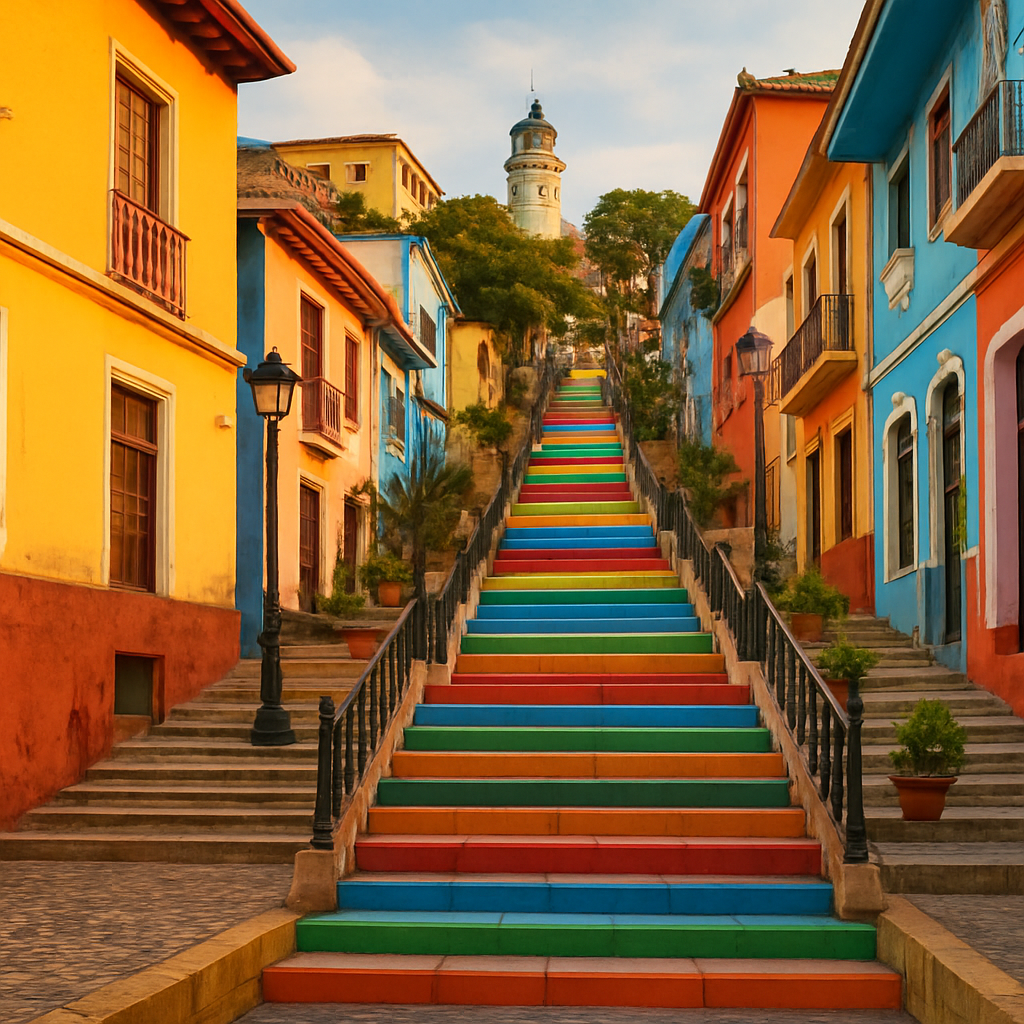
The Escalinata at Cerro Santa Ana
Four hundred and forty-four steps of 19th-century painted wooden houses, small galleries, and cafés leading to a lighthouse with a full panorama of the Guayas River. The colors are almost disorienting — turquoise, burnt orange, mint green — and the climb is steep enough to make you earn the view. Go in the late afternoon when the light turns golden and the heat is slightly less punishing. The lighthouse terrace at the summit is the single best viewpoint in the city. On a Sunday afternoon, the stairway fills with families, artists, and the general bohemian energy that makes Las Peñas the most likeable neighborhood in Guayaquil.
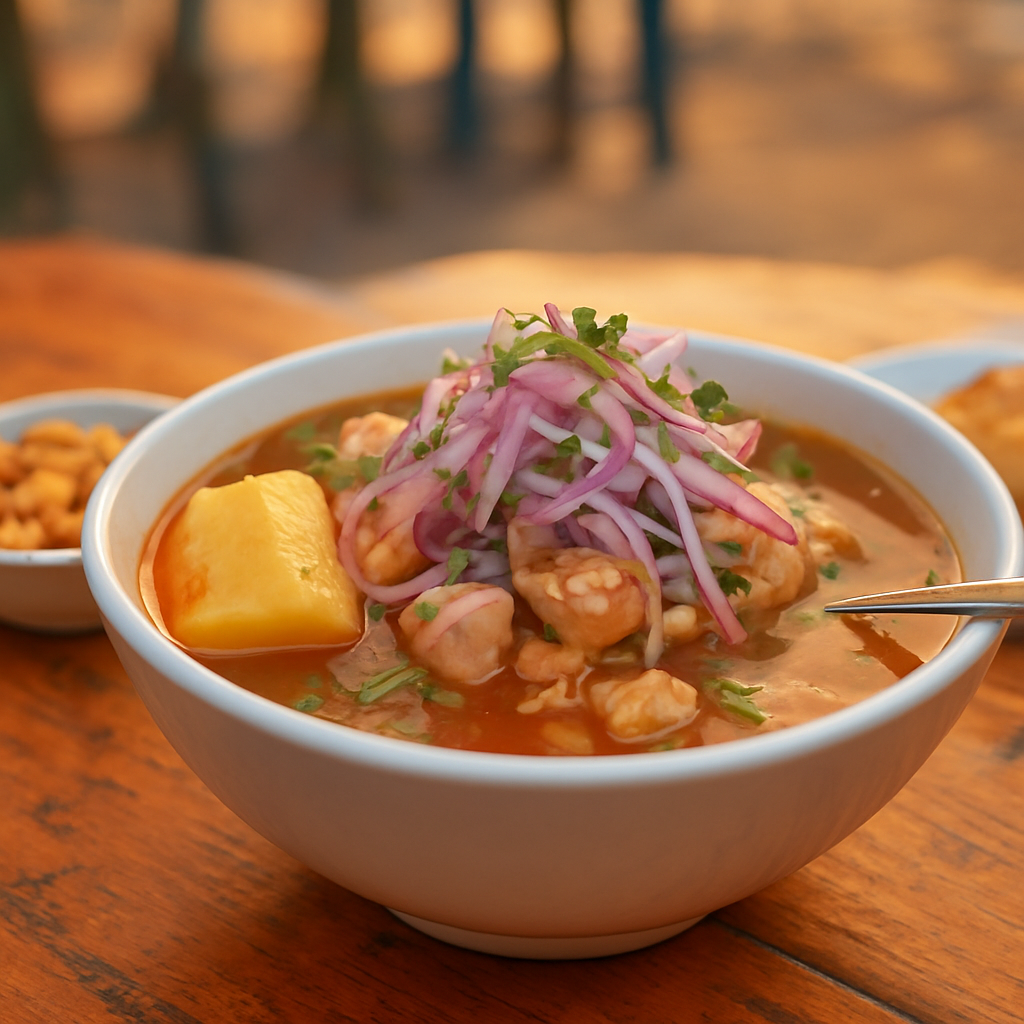
Encebollado at Dawn Near Urdesa
Guayaquil's iconic hangover cure: a hot, tangy fish-and-yuca soup topped with pickled red onions, served from street carts that set up near Urdesa in the predawn hours specifically to catch the post-club crowd. Order a bowl at 5am, sit on the curb with whatever new friends you've accumulated over the course of the night, and eat it with your hands burning and the tropical air still heavy. It costs almost nothing. It tastes like a second chance. This is the meal you'll tell people about when they ask what Guayaquil is actually like.
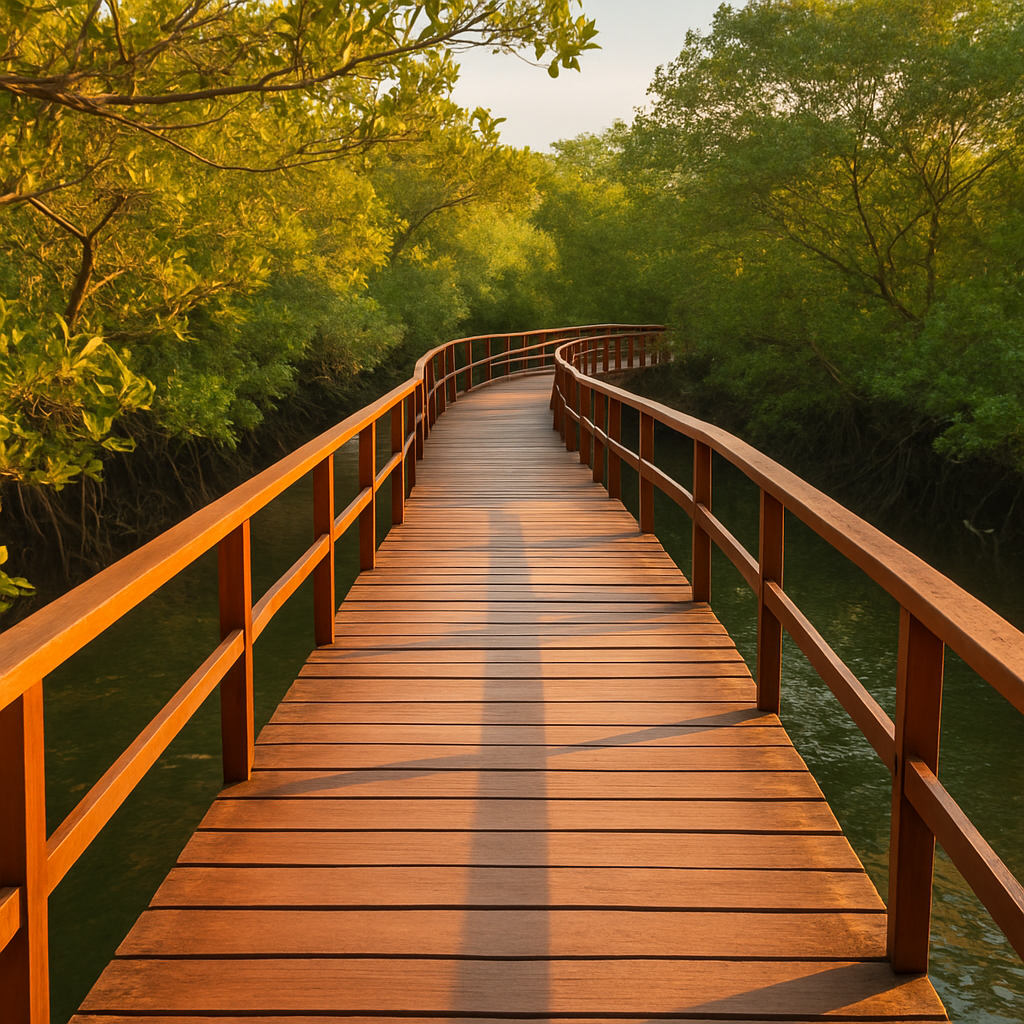
Isla Santay Mangrove Boardwalk
For less than $2 round-trip on the ferry from near the Malecón, you're on a Ramsar-designated wetland island in the middle of the Guayas River with 3 kilometers of raised wooden boardwalk through mangrove forest. No cars, no motors, no noise — just frigatebirds, herons, and the occasional crocodile sunning itself near the water. The contrast with the city you just left is jarring in the best way. Go in the morning before the heat peaks, bring water, and give yourself two hours to walk the loop. It's one of the most underrated natural experiences accessible from any major South American city.
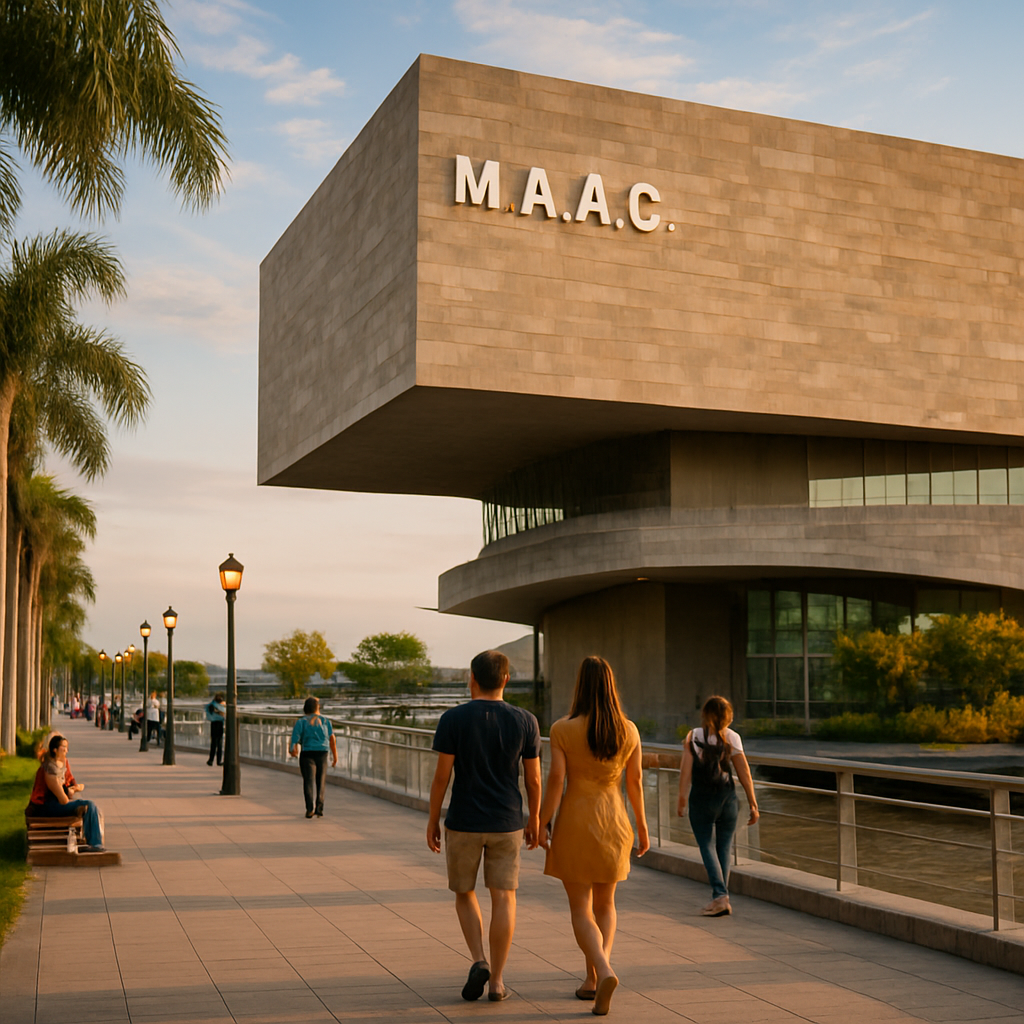
MAAC Museum on the Malecón
A free museum with over 60,000 pre-Columbian archaeological pieces from Ecuador's coastal cultures, plus a rotating contemporary art gallery — and you have no excuse not to go because it costs nothing. The pre-Columbian collection puts the coast's indigenous history into perspective in a way that wandering the Malecón alone can't. The contemporary gallery rotations have included LGBTQ+ Ecuadorian artists and gender-themed work, so check what's showing. It's also air-conditioned, which in Guayaquil is genuinely a feature, not an amenity.
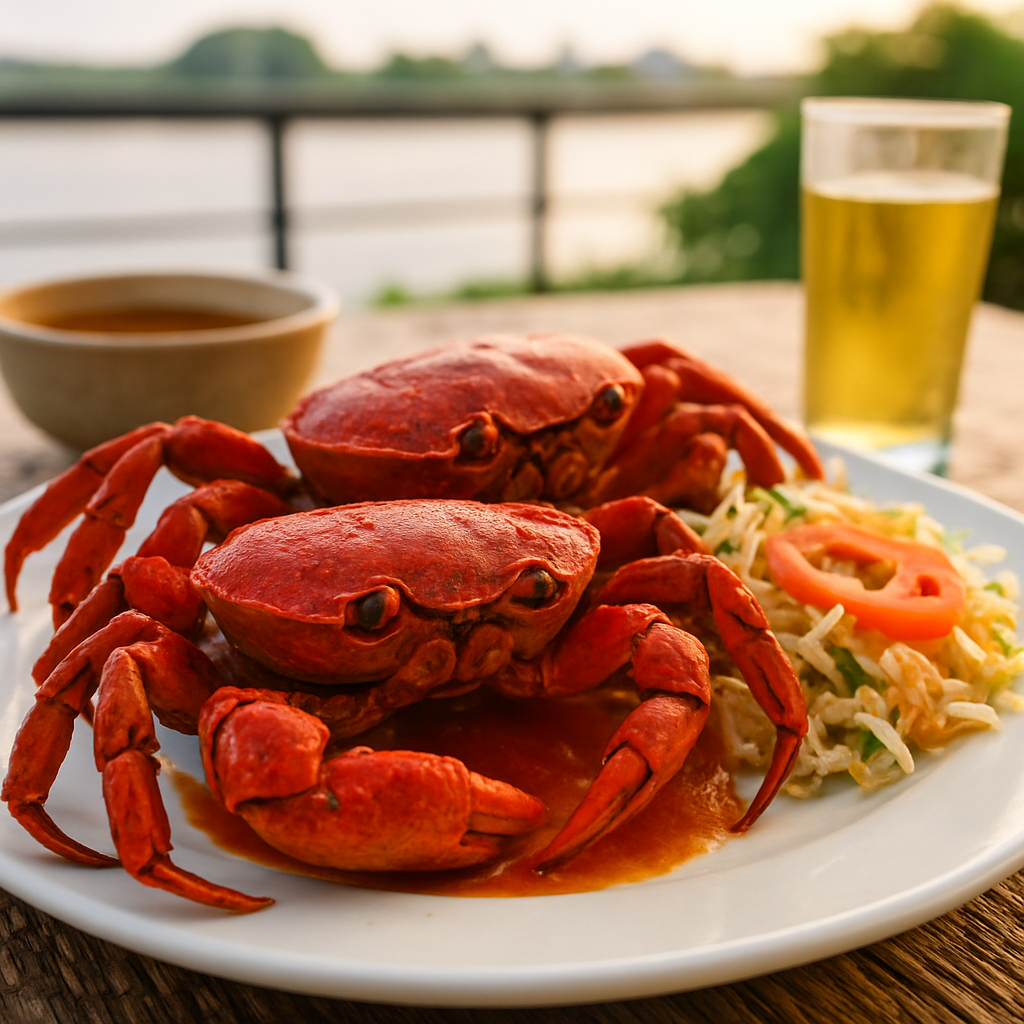
Cangrejo Rojo at Red Crab
You have to eat the crab. Guayaquil's signature cangrejo rojo is served whole — you crack it open with your hands, eat it with rice and patacones, and accept that you're going to be wearing it by the end. Red Crab has multiple locations across the city and is where every local will tell you to go. This is not elegant dining — it's loud, messy, and distinctly coastal Ecuadorian. Order a cold Pilsener alongside it and don't wear anything you care about. It's the food experience that most defines what eating in this city means.
The places I actually send people to
Advice that fits how you travel
Guayaquil is a strong solo city if you know the rules. The dollar is the currency (no exchange hassle), the budget floor is genuinely low ($35–50/day is entirely doable with a hostel dorm and street food), and the queer scene in Kennedy Norte is structured in a way that rewards showing up alone. Walk into Sublime Bar or Déjà Vu on a Friday night and you'll have company within the hour — the local crowd is sociable, curious about foreign visitors, and largely operating through in-person connection rather than apps. That said, Grindr and Scruff are active in Guayaquil, and the app culture leans toward discreet profiles given the city's broader conservatism — don't take blank photos personally.
For safety, the standard Guayaquil advice applies double when you're solo: use rideshare apps (Uber, Cabify, InDrive) instead of street taxis, especially at night. Don't walk alone after 2am — take that Uber from the Zona Rosa back to your hotel even if it's a short distance. Keep your phone in your pocket on the street. This isn't an LGBTQ+-specific concern; it's a general urban safety reality here. The Kennedy Norte nightlife zone and the Urdesa dining strip are both considered relatively safe, but peripheral neighborhoods are not.
The best solo move in Guayaquil is to combine the nightlife with the daytime cultural layer. Spend a morning climbing the Escalinata in Las Peñas, hit the MAAC museum for free, eat ceviche de camarón at a budget cevichería, then nap through the worst of the heat and show up to Kennedy Norte after midnight. The Bohemio Bar on weekends draws local professionals rather than tourists, which makes it genuinely interesting if you want to meet guayaquileños rather than other backpackers. And if you need community connection beyond bars, Silueta X's offices and events give you access to the activist and intellectual queer scene — a completely different experience, and equally worth engaging with.
Guayaquil isn't a city that puts romance on a platter — you have to find it, and when you do, it's genuinely good. The Víctor Emilio Estrada strip in Urdesa is your anchor: brunch at Mercado del Río on a Saturday morning, a slow walk through the neighborhood while the heat builds, cocktails at La Paleta Bar as the evening cools. Same-sex couples dining along that stretch draw next to zero attention from the cosmopolitan professional crowd that frequents those places. It's not performatively inclusive — it's just comfortable, which is sometimes better.
For PDA, calibrate by neighborhood. Urdesa and Kennedy Norte on a weekend evening — fine, you'll be largely unbothered. The Malecón 2000 during the day — a bit more conservative; walking close together reads as a couple, overt displays less so. For accommodation, I'd put the Hotel del Parque at the top of the couples list: a restored 19th-century estate right on the waterfront, Small Luxury Hotels of the World credentials, and enough old-world atmosphere to make dinner feel like an occasion. If you'd rather be in the nightlife corridor, the Hilton Colón in Kennedy Norte puts you within walking distance of the scene.
The best couples experience in this city that no one talks about: take the morning ferry to Isla Santay — about $0.75 each way — and walk the 3-kilometer mangrove boardwalk in near-total quiet. No cars, no noise, just the river, the birds, and each other. Save the affection for when you're back on the Urdesa terrace that evening. That's a Guayaquil day worth remembering.
Ecuador's legal framework is genuinely solid for LGBTQ+ families, as of 2026: same-sex marriage is legal, same-sex adoption rights exist, and the 2008 constitution explicitly prohibits discrimination based on sexual orientation — one of the first in Latin America to do so. That said, legal recognition and social reception are different things, and Guayaquil trends conservative outside its tourist and professional corridors. You won't face legal barriers, but two same-sex parents with children will draw more attention in traditional neighborhoods than they would in a major European city. Stick to Urdesa, Las Peñas, and the Malecón area and you'll be largely fine.
Parque Histórico Guayaquil in Samborondón is the most family-forward attraction in the city — 16 hectares of open-air walking, native wildlife including crocodiles, tapirs, and jaguars, plus reconstructed colonial-era architecture. Free admission, and the main paths are stroller-accessible. The MAAC museum on the Malecón 2000 is another strong choice: free entry, a 60,000-piece pre-Columbian collection that older kids can genuinely engage with, and air conditioning that will feel like a gift. The ferry to Isla Santay — $0.75 each way — makes for an affordable half-day for kids who can handle a 3-kilometer mangrove boardwalk on foot.
Practically: Guayaquil is hot and humid from January through April, so plan outdoor activities for mornings during those months. Use rideshares — Uber, Cabify, InDrive all operate here — rather than street taxis when traveling with kids. Most mid-range restaurants in Urdesa handle families without issue, and the local cuisine (ceviche, grilled fish, rice dishes) is broadly accessible for younger palates. Budget roughly $210–310/day as a family at the moderate tier, which covers a solid hotel room, meals, and transport without having to think too hard about it.
What Guayaquil actually costs
Flights, visas, and the first 30 minutes
Airport: José Joaquín de Olmedo International Airport (GYE) is Guayaquil's main international gateway, handling direct service from approximately 30+ cities. It's compact, reasonably modern, and sits about 15–25 minutes from the city center depending on traffic.
Major direct routes: Miami (~4h 10m), New York JFK (~6h 20m), Bogotá (~1h 30m), Lima (~2h 15m), Panama City (~2h 45m), Madrid (~11h 30m).
Visa requirements (as of 2026): Travelers from the US, UK, EU, Canada, and Australia typically enter Ecuador visa-free for stays up to 90 days. Entry requirements can change — check your government's official travel advisory before departure to confirm current conditions.
Getting to the city:
Official airport taxi: $6–10 USD, 15–25 minutes. Use the official taxi counters inside the arrivals hall — confirm the fare or that the meter is running before you get in. Don't accept unsolicited approaches from drivers on the floor.
Rideshare (Uber / Cabify / InDrive): $4–8 USD, 15–25 minutes. Book from the arrivals hall. All three apps generally operate in Guayaquil and are the more predictable, safer option — particularly if you're arriving late.
Metrovía bus (Terminal Río Daule): $0.35 USD, 40–60 minutes. The cheapest option by a wide margin — it connects to the city-wide Metrovía network. Not practical with large luggage, but entirely workable for a solo budget traveler traveling light.
Traven's seasonal breakdown
The questions everyone asks
Is Guayaquil safe for LGBTQ+ travelers?
Do I need to speak Spanish?
Is it safe to hold hands with my partner?
How much should I budget per day?
When is Guayaquil Pride?
Is Guayaquil just a stopover for the Galápagos?
What's the deal with Uber and rideshares?
Screenshot this before you go
So should you actually go?
Guayaquil is not a city that does your work for you. It won't hand you a curated queer experience on a platter — you have to find the Saturday brunch on Víctor Emilio Estrada, navigate to Kennedy Norte after midnight, and learn when to hold hands and when to dial it back. The legal framework is genuinely excellent; the street reality is more complicated. My Traven-Dex of 6.6 reflects a city with real things to offer — cheap drinks, legitimate queer nightlife, a coastal food culture worth traveling for, and one of the most progressive constitutions in Latin America — alongside real limitations in social acceptance and general urban safety. If you're looking for a Latin American queer destination where you can fully relax, Medellín or Mexico City might serve you better. But if you want something rawer, less performed, and authentically costeño — where the drag shows start at 1am and the hangover soup arrives at 5 — Guayaquil has something worth your time. Just show up knowing what it is and what it isn't.
Sources & Resources
Official links we reference when compiling this guide. Last verified 2026-03-08.
- Asociación Silueta X – Guayaquil
- FEDAEPS – Fundación Ecuatoriana de Acción y Educación para la Salud
- Defensoría del Pueblo Ecuador – Derechos LGBTI
- Ministerio de Salud Pública del Ecuador
- Cruz Roja Ecuatoriana
- INREDH – Fundación Regional de Asesoría en Derechos Humanos
- Pakta – Organización LGBTI Ecuador
- ONU Ecuador – LGBTI Resources
- Municipalidad de Guayaquil – Inclusión Social
- Fundación Ecuatoriana Equidad