
Bordeaux doesn't pour you a glass of Pessac-Léognan to impress you. It pours one to see what kind of night you decide to have.
Friday at 7, Place Camille Jullian, La Belle Époque terrace, and the city is doing the thing it does best — not performing for you, just letting you arrive. A waiter in a black apron drops a glass of Pessac-Léognan on the marble without ceremony. Two guys at the next table are halfway through a debate about a natural-wine producer I've never heard of. The light is doing that Saint-Pierre late-summer thing where the stone facades turn the color of butter. Nobody is checking who's holding whose hand. This is the opening move of every good night I've ever had in Bordeaux.
If Paris is loud and Marseille is salty, Bordeaux is the city that pours you a glass and lets you decide what kind of night you want. Restraint as hospitality — very French, very Bordelais, and the reason I gave it a 9.2 on Destination. The bourgeois polish is real, but underneath it there's a working city with a queer thread running through Saint-Pierre that you have to look for to find. There's no neon-lit gay village here. The upside: every wine bar feels like it could be your wine bar.
Walk five minutes from La Belle Époque and you're at BHV on Place du Palais, the longest-running gay bar in town, where a friend of a friend will recognize you by your second visit. Walk five more and you're at Le Sphinx or Le Lou Bar. The whole queer-relevant city fits inside a fifteen-minute radius, which is why my Chill score landed at 8.4 — this is a place where the social architecture does half the work for you. The scene is small but it's real, and it's interconnected in a way Paris hasn't been in twenty years.
What I keep coming back for is the texture. Sunday oysters at Marché des Capucins, where half the queer Bordelais of a certain age work the room at Chez Jean-Mi by 11am. The Miroir d'eau at dusk, kids running barefoot through the fog. Bassins des Lumières inside a WWII submarine base — which sounds like a tourist trap and is in fact transcendent. An hour west to the Dune du Pilat and a plate of oysters at a cabane ostréicole on the bay. There's a reason my Traven-Dex landed at 8.7. Bordeaux doesn't audition for your approval. It just keeps pouring.
The stuff your travel guide buries on page 47
France is, as of 2026, one of the most legally settled places in the world to be gay. Marriage equality has been law since 2013 — the Mariage pour tous bill, fought for hard and won — and same-sex adoption rights came with it. Civil unions (PACS) have been available since 1999. Comprehensive anti-discrimination protections cover employment, housing, and services. Self-ID for legal gender change has been on the books since 2016, no surgery or medical gatekeeping required. That's a 10.0 on Legal from my Traven-Dex, and France earns every point.
On the ground, Bordeaux skews a little more bourgeois than Paris or Marseille. The law is fully behind you; the social register is just quieter. Holding hands in Saint-Pierre or along the Quai des Chartrons is unremarkable. Same-sex couples generally check into hotels without comment — the Triangle d'Or properties, the InterContinental, Mama Shelter, all of it is fine. Flamboyance reads louder here than it would in Berlin, but louder isn't unsafe, just more visible.
Your single best resource on arrival is Le Girofard, the LGBTI+ center on Rue Bergeret. Wednesday evening drop-in is the most reliable way to meet locals who aren't on apps — language exchanges, support groups, and a community that actually shows up. For broader French context, bookmark Inter-LGBT and the Défenseur des droits, the national anti-discrimination ombudsman — both are pages worth knowing exist before you need them.
Pro tip: most queer venues don't open until 10pm and don't fill until midnight. Do apéro at a bistrot à vins around 7, eat dinner at 8:30, and roll into the bars when they actually have a pulse. Showing up at 9pm to an empty room is a rookie mistake.
What it actually feels like on the ground
Holding hands and PDA: In Saint-Pierre, Chartrons, around Place de la Bourse, and along Rue Sainte-Catherine, same-sex couples hold hands without incident — these are the central, tourist-comfortable neighborhoods where it's unremarkable. The outer suburbs (Cenon, Lormont, Bassens) are more residential and mixed; standard discretion applies, not because of documented hostility but because you're outside the visible scene.
Hotel check-in: No issues at any of the central properties — the Triangle d'Or hotels, the InterContinental, Mama Shelter, Yndo, Hôtel Singulier in Chartrons. Same-sex couples check in to one bed without comment. French hospitality at this tier is professional and unbothered.
Taxis and rideshare: Uber and Bolt run reliably across central Bordeaux. Drivers are professional. The tram network is well-lit, runs late, and is the way most locals move at night — a 24-hour TBM pass is €5.20.
Late night: Daytime Bordeaux is genuinely calm. After 2am near Place de la Victoire, the student bar overflow can get rowdy — it's rarely targeted homophobia, but the volume of drunk strangers is a thing. The Quais along the Garonne are patrolled and walkable. The sketchier stretch is around Saint-Jean train station after dark — fine to pass through, less fine to linger.
Trans travelers: France's self-ID law (2016) means your documents and your identity don't have to fight each other. Bordeaux has visible trans community resources through Le Girofard, and central neighborhoods are reported as comfortable. Healthcare access for visitors is limited, so bring what you need.
Verbal harassment risk: Low in the central tourist zones. Pickpocketing on trams and around Place de la Bourse is the more common nuisance — keep your phone in a front pocket.
Resources to save before you go out: SOS homophobie runs a national hotline (01 48 06 42 41), and FLAG! is the LGBTQ+ police and justice association that handles incident reporting. AIDES Nouvelle-Aquitaine is the regional sexual health resource. Thirty seconds to bookmark all three. You'll likely never need them. Worth it anyway.
The queer geography
Saint-Pierre
The medieval heart of Bordeaux, bounded by the Garonne on one side and the Grosse Cloche on the other. Narrow cobblestone streets, 18th-century facades, the kind of pedestrian density that makes every block feel like it's hiding a restaurant you should know about. Place du Parlement and Place Saint-Pierre are the squares to aim for — café tables spilling out, kids playing in fountains, the whole UNESCO World Heritage thing happening without making a fuss about it. Eat seafood at Le Petit Commerce, drink natural wine at L'Univerre, and use Rue Sainte-Catherine as your spine for shopping. This is also the de facto LGBTQ+ social hub — most of Bordeaux's gay bars cluster here, including BHV on Place du Palais (the longest-running gay bar in town), Le Sphinx, Le Bocal on Rue des Bahutiers, and Le Royal Bar on Rue Saint-Rémi. Walk between them in five minutes and you've covered the spectrum from femme-and-non-binary younger crowds to classic men's-bar regulars.
Chartrons
The historic wine merchants' quarter, now Bordeaux's bobo neighborhood and arguably its best Sunday walk. The Quai des Chartrons runs along the Garonne with the longest Sunday market in the city — antiques, flowers, cheese, oysters. Rue Notre Dame is the antiques and design street, and the Halle des Chartrons is a beautiful 19th-century covered market worth a slow look. CAPC Musée d'art contemporain, housed in an 1824 colonial goods warehouse with a vaulted nave that's worth the ticket on its own, sits at the heart of the neighborhood. There's a discreet but visible queer presence here — natural wine bars, Symbiose's speakeasy cocktail program behind a refrigerator door, and the kind of evening foot traffic that makes a same-sex couple holding hands an absolute non-event.
Bassins à Flot / Bacalan
The redeveloped docklands on the river's edge, where Bordeaux's most ambitious architecture of the last decade lives. La Cité du Vin — XTU Architects' 55-meter tower meant to evoke wine swirling in a glass — is the headline act, but the real revelation is Bassins des Lumières, the world's largest digital art center, built inside a former WWII submarine base. Sounds like a tourist trap. Is in fact transcendent. Go on a weekday evening — it's the closest Bordeaux gets to a queer-coded sacred space. Up on the quay, Le Point Rouge handles riverside cocktails as the sun sets over the Garonne.
Right Bank / Darwin Écosystème
Cross the Pont de Pierre at least once. Darwin Écosystème is a repurposed military barracks that hosts skate ramps, vegan brunches, an organic grocery (Magasin Général), and the most visibly progressive crowd in the city. Sunday brunch here is essentially a queer-friendly social club with eggs benedict — go early, the line is part of the experience. The Quai des Queyries walk back toward the river gives you the best skyline view of the UNESCO-listed left bank.
Place de la Victoire
Student-heavy square south of the center, where cheap drinks, late-night kebabs, and a mixed young crowd collide. Not the most polished corner of Bordeaux, but it's where the city is loudest, queerest-young, and most accidentally fun. After 2am the energy can tip — see the safety notes — but on a Thursday at 11pm it's the closest thing Bordeaux has to a casual student-Pride atmosphere.
For events, follow Fierté Bordeaux for Pride and year-round programming, and Wake Up! - LGBTQI+ étudiant Bordeaux for student-led nights and meetups. Two follows before you arrive and your week will fill itself.
The experiences worth rearranging your itinerary for
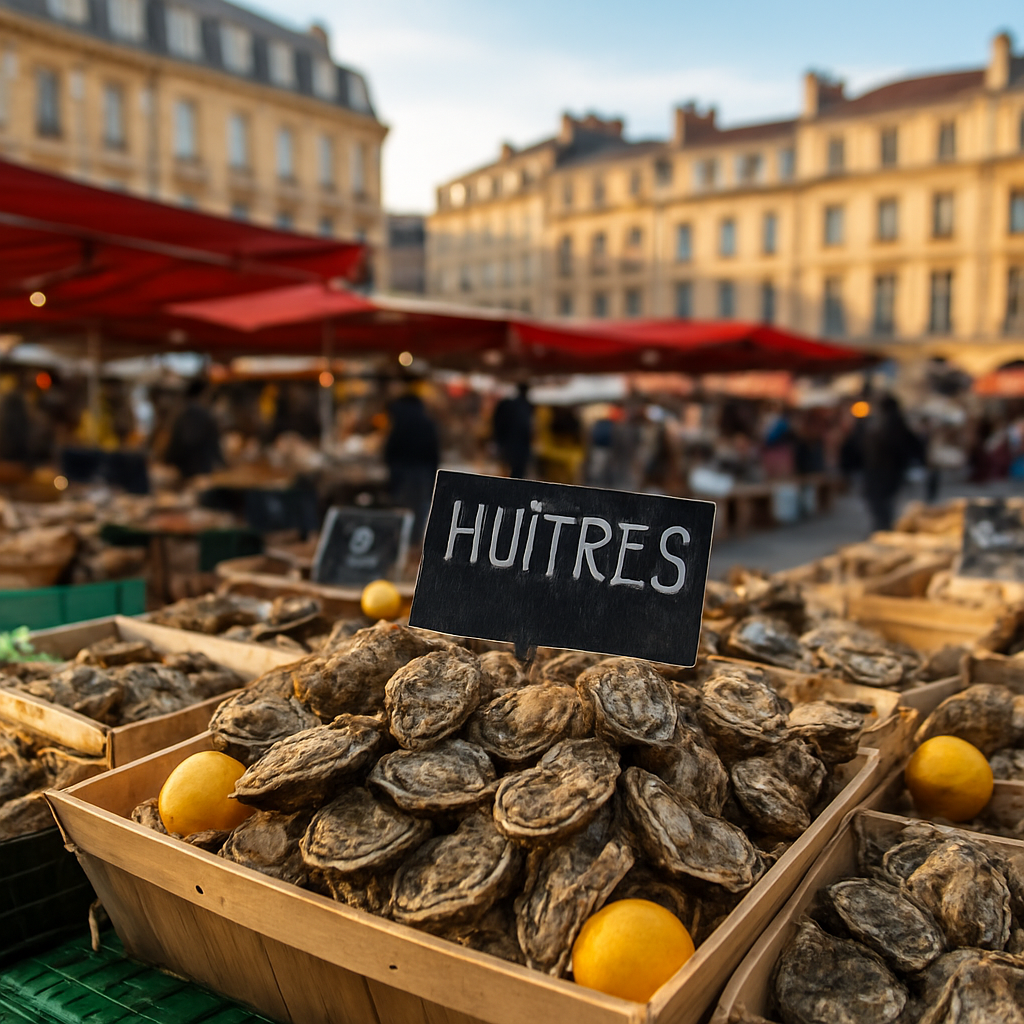
Sunday Oysters at Marché des Capucins
Sunday morning at Marché des Capucins is a religion. Get to Chez Jean-Mi by 11am, order a dozen oysters and a glass of Entre-deux-Mers, and watch half the queer Bordelais of a certain age work the room — the other half arrive by noon. The market itself is a glass-roofed hall of fishmongers, cheese stalls, and butchers, and the standing-up wine-and-shellfish ritual at the back is the closest thing this city has to a weekly congregation.
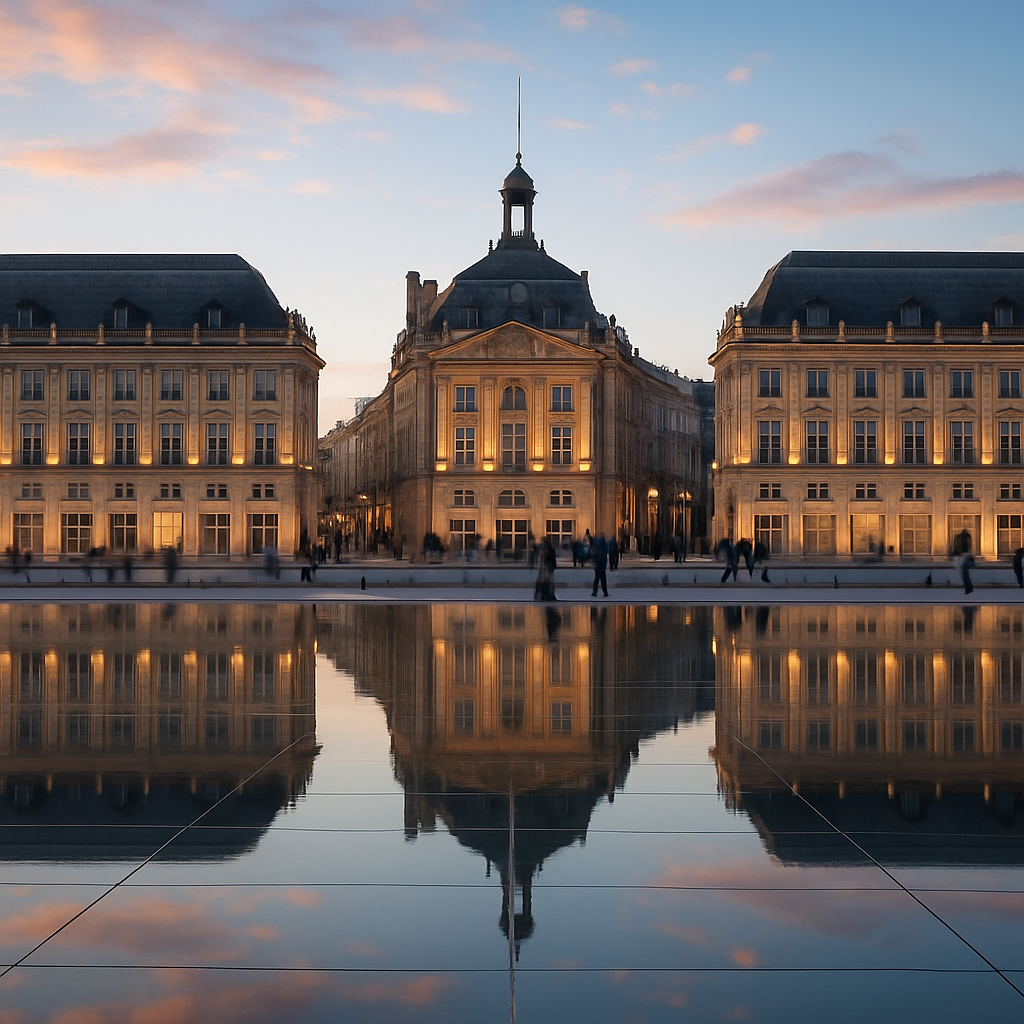
Miroir d'eau at Dusk
The world's largest reflecting pool, 3,450 square meters of flooded granite installed in 2006, sits across from the 18th-century Place de la Bourse. Time it for the hour before sunset — the pool cycles between mirror-still water and rolling fog, the Place de la Bourse lights up behind it, and kids and couples run barefoot through the whole thing. It's the photograph of Bordeaux, and it's free.
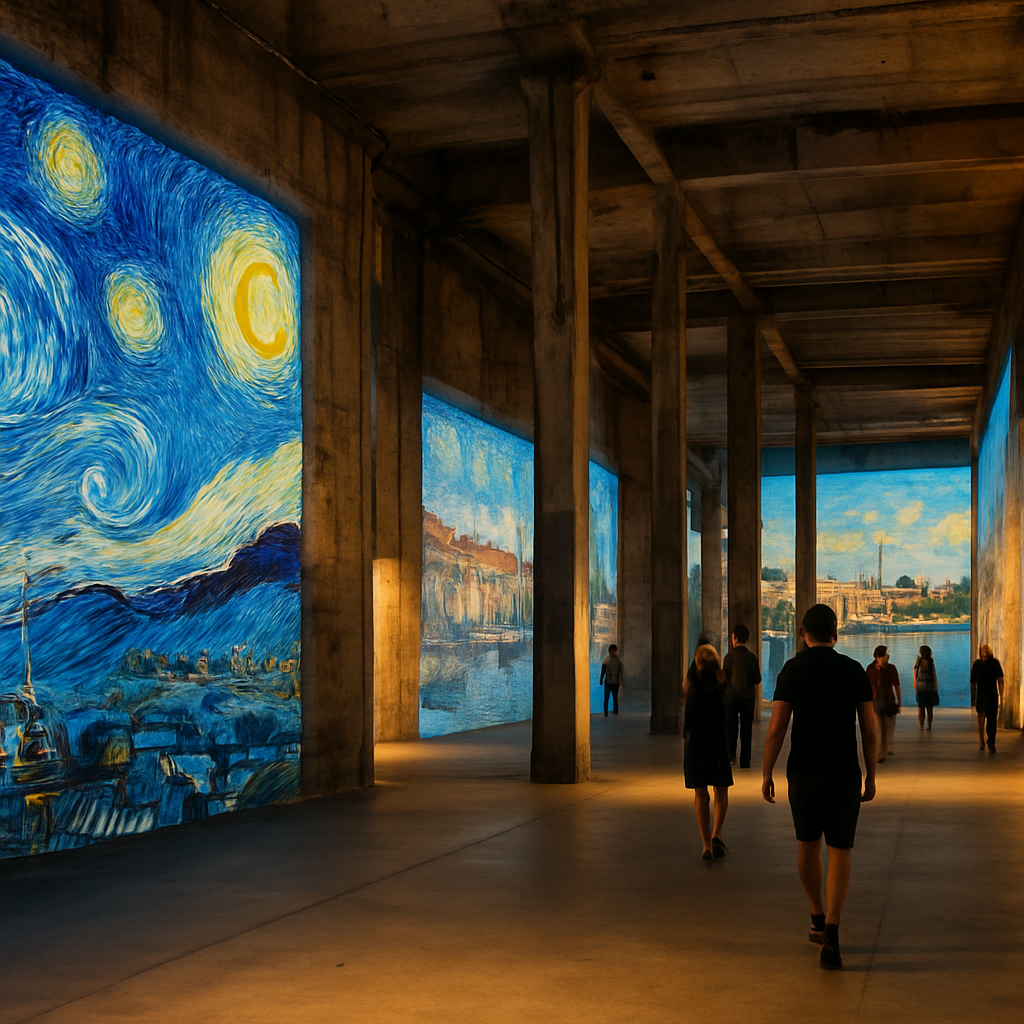
Bassins des Lumières Inside a Submarine Base
In 2020, Culturespaces opened the world's largest digital art center inside a former WWII submarine base in Bacalan — roughly 12,000 square meters of projection across four water basins. Sounds like a tourist trap and is in fact transcendent. Go on a weekday evening, let the projections fold over the concrete walls and onto the water, and try to remember the last time a museum made you stop talking.
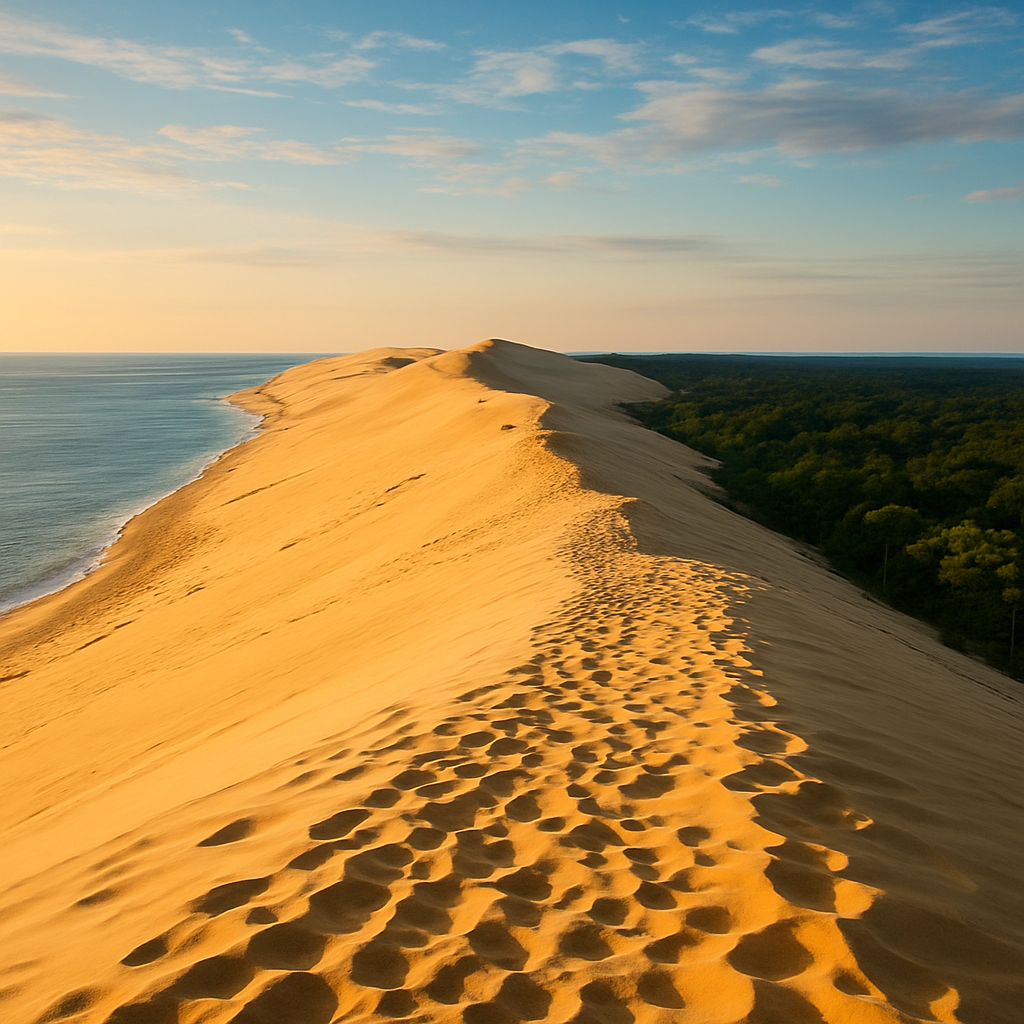
The Dune du Pilat and an Arcachon Oyster Lunch
An hour by direct train gets you to Arcachon, and a short bus from there gets you to the Dune du Pilat — at approximately 106 meters, the tallest sand dune in Europe. Climb it in the morning while the Atlantic is in front of you and the pine forest is behind you. Come back to the bay for oysters at one of the cabanes ostréicoles with a glass of cold white, and you've done the perfect Bordeaux day trip.
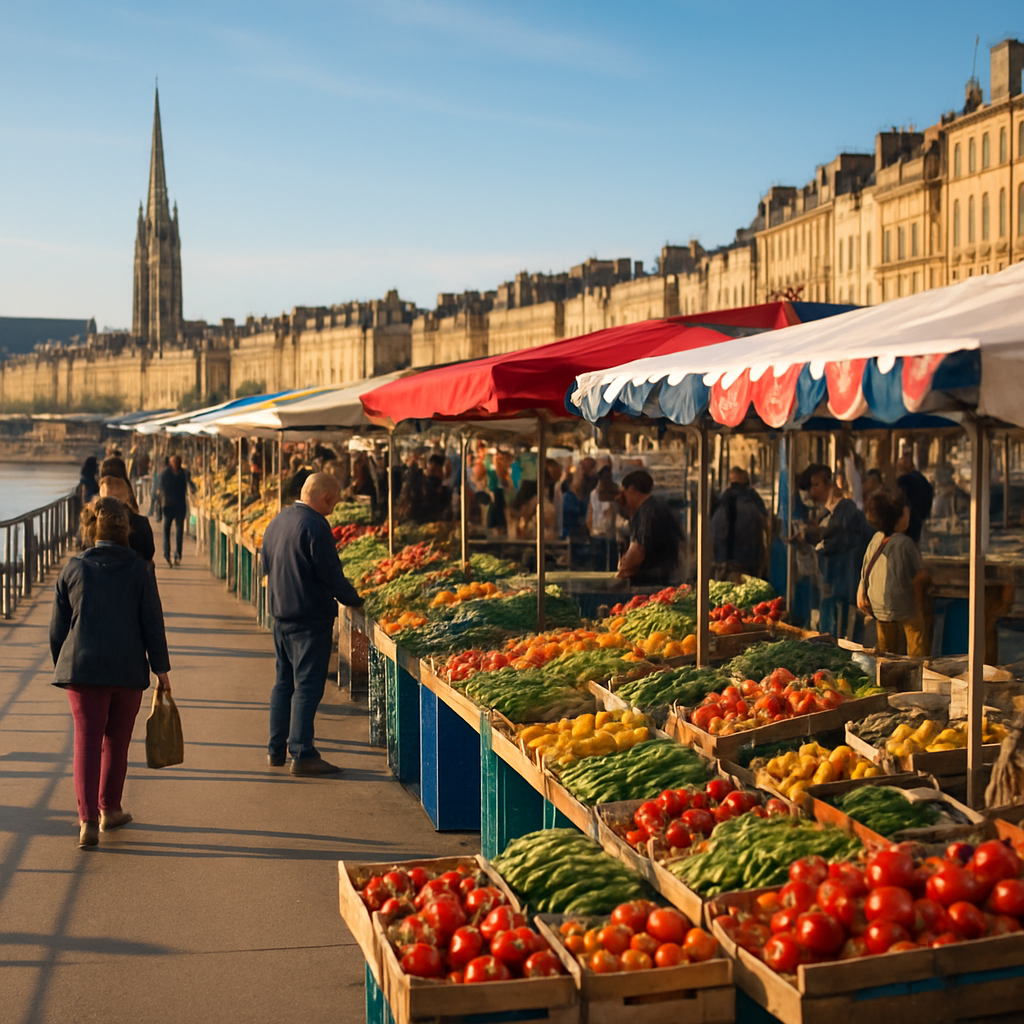
A Slow Chartrons Sunday
The Quai des Chartrons Sunday market runs the longest stretch of any in Bordeaux — antiques, flowers, cheese, oysters, and the kind of foot traffic that still feels local. Walk it from end to end, cut up Rue Notre Dame for antiques and design shops, and finish at CAPC, the contemporary art museum housed in an 1824 colonial-goods warehouse with a vaulted nave that's worth the ticket on its own. Three hours, one neighborhood, no agenda.
The places I actually send people to
Advice that fits how you travel
Bordeaux is one of the easier French cities to land in alone. It's compact enough to walk end-to-end in an afternoon, the tram runs late, and the bistrot à vins culture is built around standing at a counter with strangers — the social architecture is doing half the work for you. Stay in Saint-Pierre if you want to walk home from every bar; stay in Chartrons if you'd rather wake up in the neighborhood where the natural-wine crowd takes their coffee. Both put you in the middle of everything that matters.
The apps work — Grindr and Hornet have density in the center — but the real intel is offline. Le Girofard's Wednesday evening drop-in is the most reliable way to meet locals who aren't swiping, and follow Fierté Bordeaux and Wake Up! a few weeks before you arrive — that's how your week fills itself. Start any Friday at BHV on Place du Palais, drift to Le Sphinx or Le Lou Bar, and you've met half the regulars without trying.
Budget-wise, solo Bordeaux is generous: roughly €75-110/day on the budget end, €160-240 if you want a real hotel and proper meals, and you can taste through serious wines for the price of a cocktail at Aux Quatre Coins du Vin's Enomatic system. Pro tip: order a Lillet blanc on ice with a slice of orange for apéro — it's local, it's pink-adjacent, and bartenders will respect you for not defaulting to an Aperol spritz like every other tourist.
This is one of the most romantic cities in France and almost nobody talks about it that way, which is precisely its appeal. Same-sex couples hold hands without comment in Saint-Pierre, along the Quai des Chartrons, and across Place de la Bourse — the central neighborhoods are entirely comfortable, day or night. Hotel check-in at the Triangle d'Or properties, the InterContinental, Mama Shelter, Yndo, and Hôtel Singulier in Chartrons is a non-event; one bed, two names, no second look. As of 2026, France has full marriage equality, comprehensive anti-discrimination protections, and same-sex adoption rights, so the legal floor under all of this is solid.
For a city break that doesn't try too hard, do apéro at La Belle Époque on Place Camille Jullian, dinner at La Tupina for the Gascon open-fire theatre, and a nightcap at Symbiose's speakeasy in Chartrons. For the bigger night, book Le Pressoir d'Argent at the InterContinental and walk the Miroir d'eau at dusk afterward — the world's largest reflecting pool cycles between mirror-still water and rolling fog, and the hour before sunset is the photograph of Bordeaux. Catch Bassins des Lumières inside the WWII submarine base on a weekday evening and try to remember the last time an art installation made you both stop talking.
If you have three nights and you came for the wine country, this is the trip: two nights in central Bordeaux, one night out at Les Sources de Caudalie on the grounds of Château Smith Haut Lafitte — Relais & Châteaux, the original Caudalie vinotherapy spa, and the two-Michelin-star La Grand'Vigne. Take the direct train to Arcachon for the day, climb the Dune du Pilat, eat oysters at a cabane ostréicole on the bay, and you've built the kind of weekend that ages well in the retelling.
LGBTQ+ families are fully recognized under French law as of 2026 — marriage, joint adoption, and parental rights have all been settled since 2013, and Bordeaux is one of the calmer, more family-coded cities in the country to actually use them. Two moms or two dads checking into hotels with kids is unremarkable at the central properties; at restaurants, you'll get extra chairs and a kids' menu without anyone doing the math at the table. The social register here skews bourgeois rather than activist, which in practice means polite, professional, and unbothered.
The kid-friendly itinerary writes itself. The Miroir d'eau is free, magical, and kids run barefoot through it for hours — it's the easiest win in the city. Bassins des Lumières is a digital-art experience kids genuinely love, with enough scale to keep them moving. La Cité du Vin has surprisingly engaging programming for older kids (and yes, you can taste while they explore). For a day trip, Arcachon by direct train is the move — climb the Dune du Pilat, eat at one of the cabanes ostréicoles, and you've earned everyone's nap on the ride back.
Logistics are easy: the tram and bus network is stroller-friendly and a 24-hour TBM family pass is genuinely cheap. Aim for an apartment rental in Chartrons or near Jardin Public for kitchen access and a park within walking distance — figure roughly €200-300/day on the budget end for a family of four, €400-600 moderate. Pro tip: book a long table at Le Café Français on Place Pey Berland for a late afternoon snack — terrace pointed at the cathedral, kids can wander the square, and the staff treat children like small humans rather than inconveniences.
What Bordeaux actually costs
Flights, visas, and the first 30 minutes
Airport: Bordeaux-Mérignac Airport (BOD) sits about 12 km west of the city center and handles approximately 70 direct routes across Europe and North Africa — Paris, London, Amsterdam, Barcelona, Lisbon, Madrid, Rome, Marrakech, and most of the obvious capitals are direct. From North America, you'll typically connect through Paris (CDG or Orly), London, or Amsterdam — total transit usually runs 10-12 hours from the U.S. East Coast.
Visa requirements (as of 2026): France is in the Schengen Area, so entry rules follow Schengen norms. U.S., U.K., Canadian, and Australian passport holders are typically visa-free for stays up to 90 days within any 180-day period, but as of 2026, ETIAS authorization is required before travel — apply online, it's roughly €7 and approval is generally fast. EU citizens enter under freedom of movement with no visa or ETIAS required. Always check the latest requirements with your nearest French consulate before booking, since rules can shift.
Airport to city: The cheapest route is the Liane 1+ bus from the terminal to Quatre Chemins, where you transfer to Tram A into the center — €1.80, about 45-50 minutes, and the most local way in. The 30Direct shuttle bus runs express to the city center and Saint-Jean train station in roughly 30 minutes for €8-9, and it's the right call with luggage. Taxis run €35-50 and take 20-30 minutes, with higher rates evenings, weekends, and holidays. Uber and Bolt both operate reliably, generally €25-40 with surge pricing at peak hours.
Pro tip: If you're arriving by train instead — and a lot of people do — the TGV from Paris Montparnasse runs Bordeaux Saint-Jean in just over two hours, which is faster door-to-door than flying once you account for the airport circus. Book a few weeks ahead on SNCF Connect and you'll typically find fares well under €60.
Getting around once you're here: Central Bordeaux is genuinely walkable — Saint-Pierre, Chartrons, the Triangle d'Or, and Place de la Bourse are all within 20 minutes of each other on foot. For everything else, the TBM tram and bus network is excellent: a 24-hour pass is €5.20 and covers the entire central network including Bassins à Flot and the right-bank Darwin area. You don't need a rental car unless you're heading deep into the wine country.
Traven's seasonal breakdown
The questions everyone asks
Do I need to speak French to enjoy Bordeaux?
Is it safe for same-sex couples to hold hands in Bordeaux?
When is Bordeaux Pride and is it worth planning around?
How much should I budget per day?
Do I need ETIAS to visit?
Where do locals actually go out — is it just apps?
Is Bordeaux worth visiting if I don't drink wine?
Screenshot this before you go
So should you actually go?
Go. Bordeaux is one of the most legally settled, quietly romantic, food-and-wine-fluent cities in Europe, and as of 2026 it remains an underrated entry on the French circuit — which is precisely why you should book it before everyone else figures that out. LGBTQ+ travelers will find a small but tightly knit scene anchored in Saint-Pierre, a legal framework that's fully in your corner, and a city compact enough to feel like yours by night three. Three nights minimum, four is better, and if you can swing a side trip to Les Sources de Caudalie or a day in Arcachon, take it. This is the kind of trip that ages well in the retelling.
Sources & Resources
Official links we reference when compiling this guide. Last verified 2026-05-12.