
Marseille doesn't package its queerness for you — it just lives it, loudly, between the pastis and the street art and the absolute refusal to care what anyone thinks.
Marseille is the city that reminds you France isn't just Paris. It's grittier, louder, more Mediterranean than European, and its LGBTQ+ life reflects exactly that energy — not curated, not contained, not wrapped in a neat bow for your Instagram grid. The scene here is woven into the city's bohemian DNA, concentrated around Cours Julien and La Plaine, where the line between gay bar and general alternative hangout has always been delightfully, productively blurry. There's no tidy, signposted gay village the way Paris has the Marais. And honestly, that's the whole point.
I gave it an 8.7 on Destination because the raw materials are extraordinary — the Calanques dropping limestone cliffs into turquoise water, a three-Michelin-star restaurant run by a chef who grew up in the Republic of Congo, bouillabaisse served the proper way in a fishing inlet that hasn't changed since 1952, and MuCEM sitting on the waterfront like a concrete love letter to the Mediterranean. You'll eat better here than in Nice. You'll spend less than in Saint-Tropez. And you'll feel something those polished Riviera towns can't manufacture: the unmistakable friction of a real, working city that happens to be spectacularly beautiful.
Plant yourself at a terrace on Cours Julien around 6pm with a pastis — the anise-flavored aperitif that basically means you've decided to stay a while — and watch the golden-hour crowd assemble. Artists, queers, general weirdos, all coexisting in the way they've done here for decades. Friche la Belle de Mai, the sprawling post-industrial cultural campus in the Belle de Mai district, programmes queer film nights and drag performances that won't appear on any hotel concierge's list. Mama Shelter Marseille runs a rooftop bar scene that skews young, creative, and mixed in the best way. The community here is integrated into daily city life rather than sequestered for tourist consumption — and my Traven-Dex of 8.4 reflects a city that earns its welcome through character, not choreography.
A word about the edges: Marseille is a port city with complicated, layered character. It can feel rough in certain pockets away from the tourist circuit, particularly after midnight near La Canebière. My Chill score of 7.8 accounts for that — not because the LGBTQ+ areas feel unsafe, but because this is a city that asks you to read the room. The scene is concentrated in neighborhoods where you'll feel genuinely at ease. Walk up to La Bonne Mère at dusk through Le Panier's lanes, eat panisse from a street stall standing up, lose track of the clock at a bar that doesn't fill until 11pm. Marseille rewards the visitor who shows up willing to meet it on its own terms. And those terms, I promise, are very good.
The stuff your travel guide buries on page 47
Legal framework: As of 2026, France provides full legal equality for LGBTQ+ citizens and visitors. Same-sex marriage has been legal since 2013, with full joint adoption rights. The PACS (Pacte civil de solidarité) civil partnership is widely used and legally straightforward. Comprehensive anti-discrimination protections cover employment, housing, and public services on the basis of sexual orientation and gender identity. France enacted administrative self-identification for gender markers in 2022, removing prior surgical requirements. Criminalization of homosexuality was repealed in 1982. The official government resource for understanding your legal rights — including marriage, PACS, and parental recognition — is service-public.fr. I gave France a 10.0 on Legal — full marks — because the statutory framework leaves nothing unaddressed.
Cultural reality: Marseille is France's most authentically Mediterranean city — chaotic, warm, loud, and genuinely unbothered by your business. Locals will tell you the LGBTQ+ community here tends to be integrated into daily city life rather than sequestered into a designated district. That said, this is a large port city with layered character, and comfort levels vary meaningfully by neighborhood. The bohemian districts around Cours Julien and La Plaine are openly progressive and visibly queer. The Vieux-Port is cosmopolitan, heavily touristed, and completely fine. More conservative pockets exist in the northern arrondissements (13e–16e) and parts of the denser commercial neighborhoods like Noailles and Belsunce, where discretion is more practical. Marseille can feel rough in certain areas away from the tourist circuit, particularly after midnight near La Canebière.
Pride: The Marche des Fiertés, organized by Fierté Marseille Productions, typically happens in late June and has a distinctly Southern French character — more communal neighborhood celebration than corporate spectacle, with the afterparty naturally gravitating toward the Cours Julien bar cluster that will stay open well past any reasonable hour.
PDA comfort by area: High comfort in Cours Julien, La Plaine, the Vieux-Port, and along the Corniche Kennedy and Prado beaches. Moderate-high in Le Panier. Exercise discretion in Noailles, Belsunce, and the northern arrondissements. The general rule: the more artsy and touristed the zone, the more comfortable you'll be.
What it actually feels like on the ground
Holding hands: Completely unremarkable on Cours Julien, La Plaine, and along the seafront promenade. At the Vieux-Port and Le Panier, you'll be fine during daytime — the crowd is heavily tourist and nobody is tracking your behavior. In Noailles and Belsunce, the vibe tends to be more conservative in pockets; keep affection casual. In the northern arrondissements, discretion is the practical choice.
Hotel check-in: Zero issues at any hotel in the city, from the InterContinental to the budget tier. France's legal framework means refusing a same-sex couple is straightforwardly illegal, and Marseille's hotel industry serves an international market. You won't encounter problems.
Taxis and rideshares: Professional and transactional. I haven't heard credible reports of same-sex couples being refused or harassed in Marseille taxis. Standard precautions apply: confirm the meter is running or the app price is locked before departure.
Beaches and public spaces: Plage des Catalans and the Prado beaches have an informal but well-established LGBTQ+-welcoming reputation, particularly in summer. The Corniche Kennedy promenade is relaxed and mixed. In the Calanques, specific inlets near Morgiou and Sormiou are informally known as clothing-optional and LGBTQ+-frequented. Pro tip: the Prado beaches can get packed in July and August — go before 11am or after 4pm if you want actual space.
Late night: Cours Julien and the streets around La Plaine are the most reliably comfortable zones after dark. The area around La Canebière can feel rougher after midnight. The walk from the Vieux-Port up to Cours Julien is short but some connecting streets are poorly lit — a €6 taxi is worth the peace of mind after 1am. If you're coming out of New Can Can at 3am, stick to the main streets or share a ride.
Trans travelers: France's 2022 administrative self-ID law makes legal gender recognition relatively accessible without surgical requirements. Trans travelers will find Marseille's arts and bohemian districts generally comfortable. More conservative neighborhoods may present occasional social friction, but outright hostility is rare in tourist zones. Chrysalide is a Marseille-based trans and non-binary association, and Acceptess-T provides national trans rights and health access support.
If something happens: SOS Homophobie operates a free national hotline at 0 805 269 269, and AIDES Marseille can connect you with local legal and psychological support. Don't try to navigate a harassment incident alone in a city you're still figuring out.
The queer geography
Cours Julien & La Plaine
This is the center of gravity. Cours Julien is a sloping square flanked by street-art murals, independent record shops, and a cluster of bars where the line between queer night out and general alternative hangout has been productively blurry since the 1990s. The terraced cafés fill around 6pm — order a pastis, settle in, and the crowd that assembles in the golden hour is essentially a rolling social directory of where the evening is headed. New Can Can, operating since the 1980s, is the anchor institution of Marseille's gay nightlife and doesn't genuinely get going until after midnight. Le Plug, MP, La Farandole, and L'Arc-en-Ciel form a tight cluster of explicitly gay bars within walking distance. La Plaine — that's Place Jean Jaurès — is the adjacent square that hosts a weekly market and functions as the outdoor social commons for the bohemian and queer community. On a warm evening, the terrace at Bar Brasserie de la Plaine is the most reliably queer-adjacent outdoor spot in the city. Espace Julien and L'Intermédiaire are live music venues in the same orbit — not queer-specific, but consistently part of the same ecosystem.
Le Panier
Marseille's oldest neighborhood is a hilltop labyrinth of pastel facades and narrow lanes north of the Vieux-Port. It's not a gay neighborhood in any designated sense, but it has a history of sheltering artists and outsiders that predates any formal queer scene by centuries. You'll find Le Café des Épices tucked into an alley here, independent galleries, and a quietly welcoming energy. More conservative in ambient vibe than Cours Julien, but comfortable for queer visitors during the day. The InterContinental occupies the converted Hôtel-Dieu at the top of the hill.
Noailles
The dense, fragrant, multicultural market neighborhood south of La Canebière. Not specifically queer, but beloved by the community for its cheap eats, spice stalls, and completely unfiltered city energy. Casa Honoré and Vertigo Hostel are both here, putting you within easy walking distance of the Cours Julien bar cluster. Exercise discretion with PDA in the more conservative commercial pockets, but the neighborhood is fine for queer visitors during the day.
Belle de Mai
Friche la Belle de Mai is a sprawling post-industrial cultural campus in this historically working-class district northwest of the center. It's Marseille's most reliably welcoming arts space, regularly programming queer film nights, drag performances, and community events. Check their events calendar before you arrive — what's happening here often won't appear on any hotel concierge's list, and it's frequently the best thing in the city on any given week.
The experiences worth rearranging your itinerary for
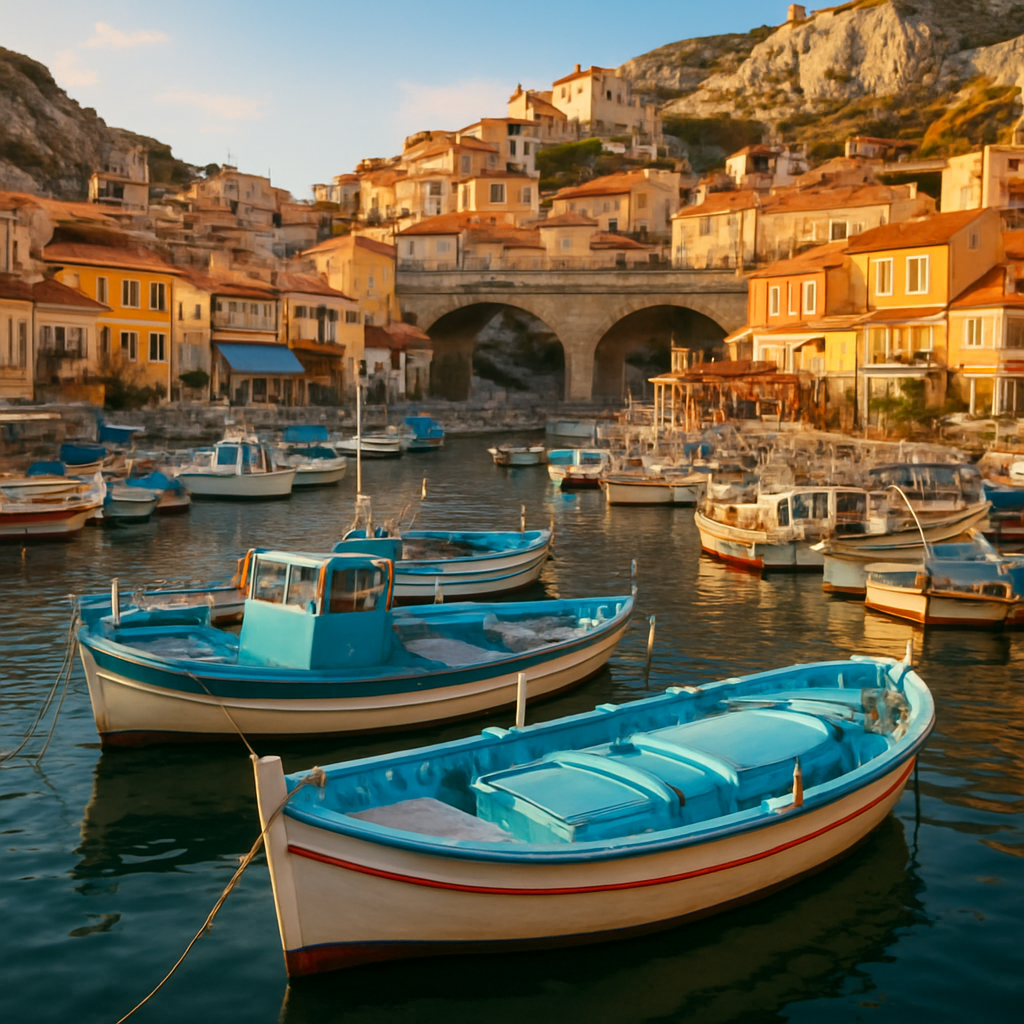
Bouillabaisse at Vallon des Auffes
There's a reason this city fights about bouillabaisse the way other cities fight about politics. At Chez Fonfon, operating in the Vallon des Auffes fishing inlet since 1952, the dish arrives in its proper two-course format: the saffron broth first with rouille and croutons, then the whole fish presented tableside. Budget €55–60 per person, surrender the afternoon, and accept that this is exactly what you came here for. The inlet itself — a tiny harbor of brightly painted fishing boats wedged between the cliffs of the Corniche — is one of the most photographed spots in Marseille. Alternatively, L'Épuisette next door sits on a platform literally over the water, with one Michelin star and a dining room where the Mediterranean is three feet below your table.
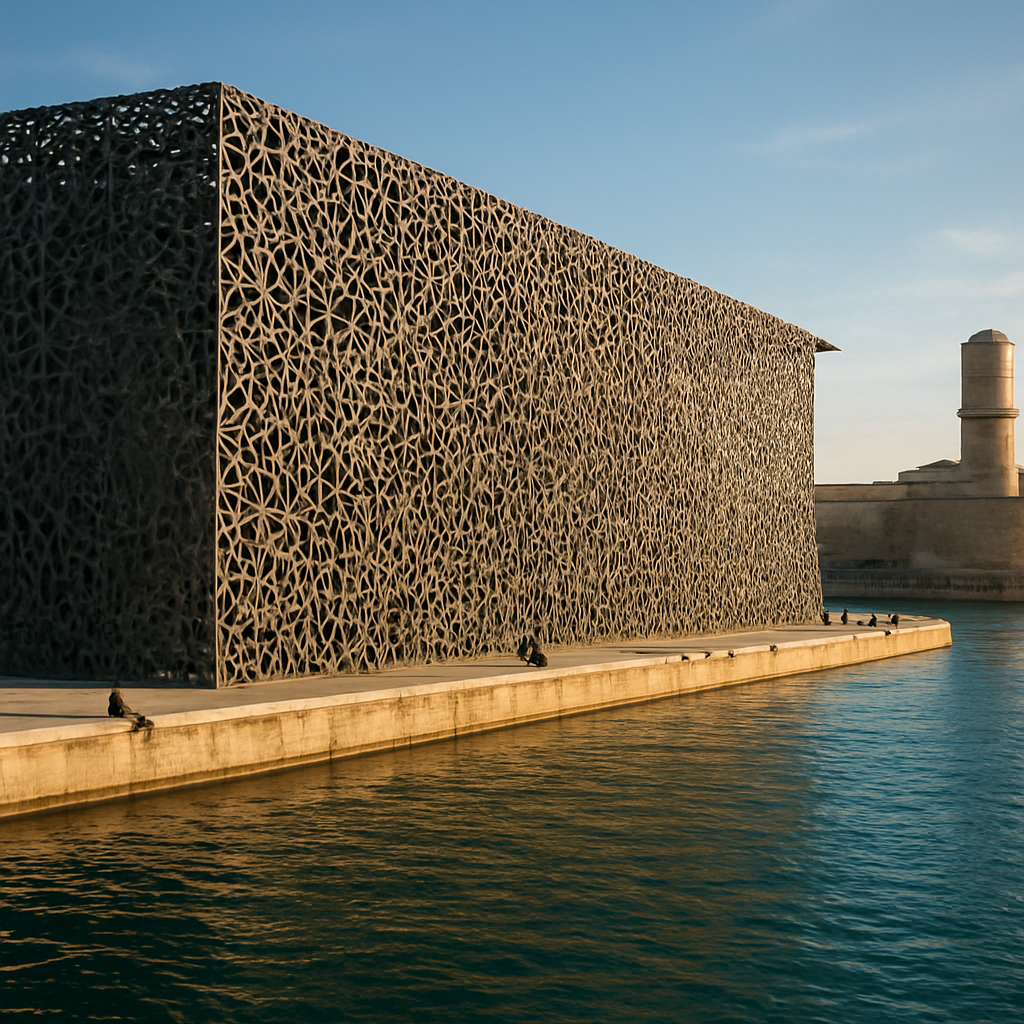
MuCEM at Golden Hour
MuCEM on the J4 waterfront is one of the great cultural buildings of the 21st century — Rudy Ricciotti's concrete-lattice shell catches the Mediterranean light in ways that shift by the hour. The exhibitions on Mediterranean civilizations are genuinely engaging and have included programming on gender, sexuality, and identity. But here's the move: go on a late Thursday evening, grab a glass of Rosé de Provence on the rooftop terrace, and watch the harbor turn orange behind Fort Saint-Jean. It's free on the first Sunday of each month, otherwise €11. This is genuinely one of the great free pleasures in France, and it feels almost unfair that it's just sitting there.
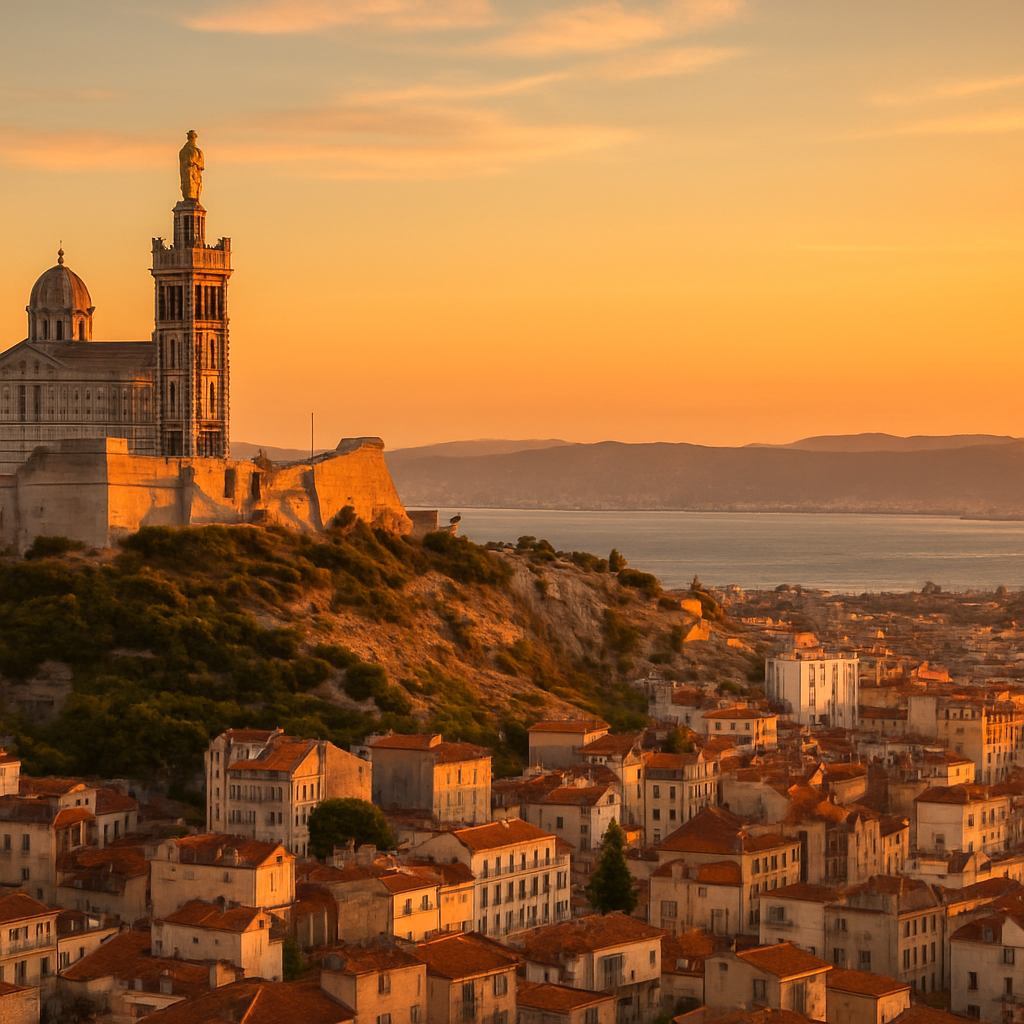
La Bonne Mère at Dusk
Walk up to Notre-Dame de la Garde — locals call her La Bonne Mère exclusively, and so should you — through Le Panier's narrow lanes as the light goes gold. The panorama from the top is staggering: the entire city, the Frioul archipelago, the Vieux-Port reduced to a postcard below you, and the open Mediterranean stretching south. The climb through the old neighborhood is half the experience and completely irreplaceable. It costs nothing. It's best in the hour before sunset. Bring a bottle of water and wear shoes that can handle cobblestones.
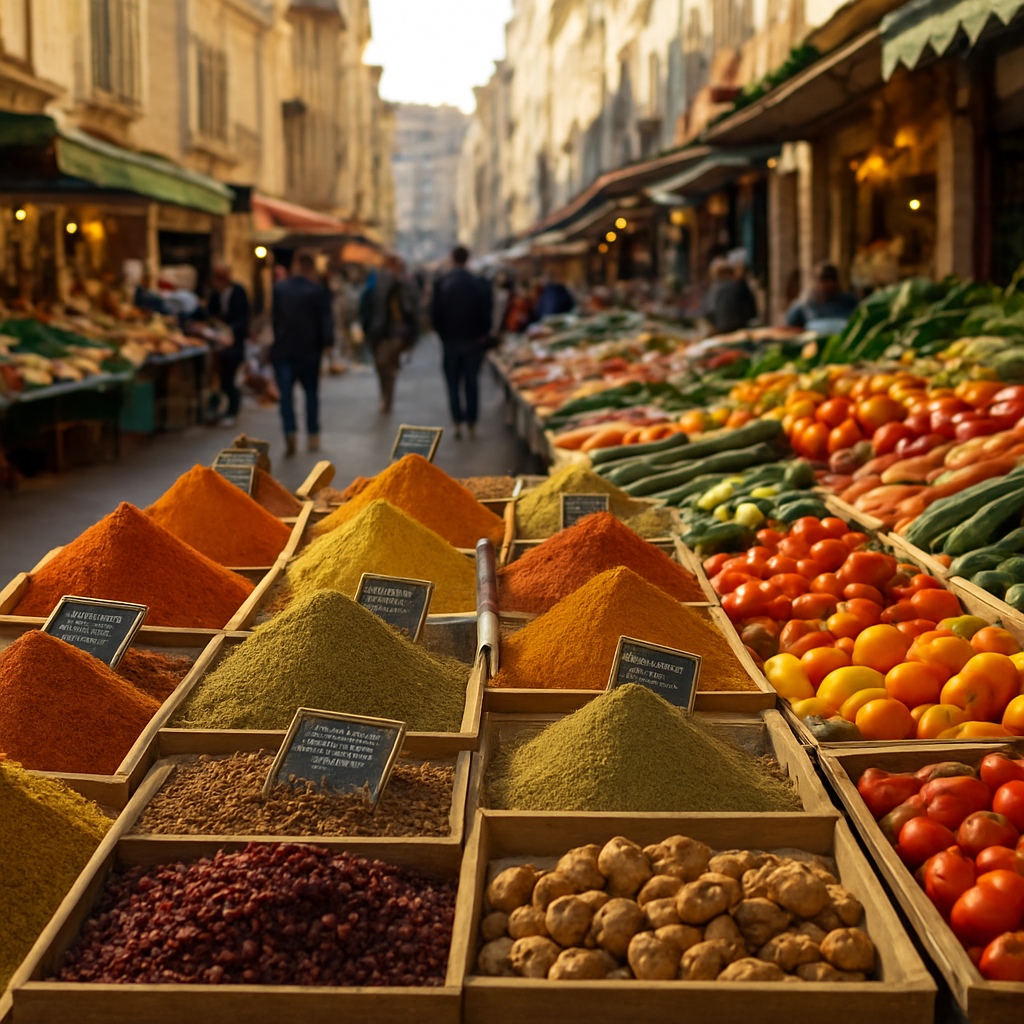
Noailles Market on a Weekday Morning
The Noailles market is pure, undiluted Marseille — chaotic, fragrant, and completely real. The stalls run along the streets south of La Canebière selling North African spices, fresh fish, cheap produce, and the kind of street food that costs €3 and changes your day. Grab a panisse — fried chickpea flour fritters, golden and crispy — from a stall and eat them standing up. The queer community here shops alongside everyone else, which tells you something important about how this city integrates its diversity rather than packaging it for visitors. Go hungry, go before 11am, and bring cash.
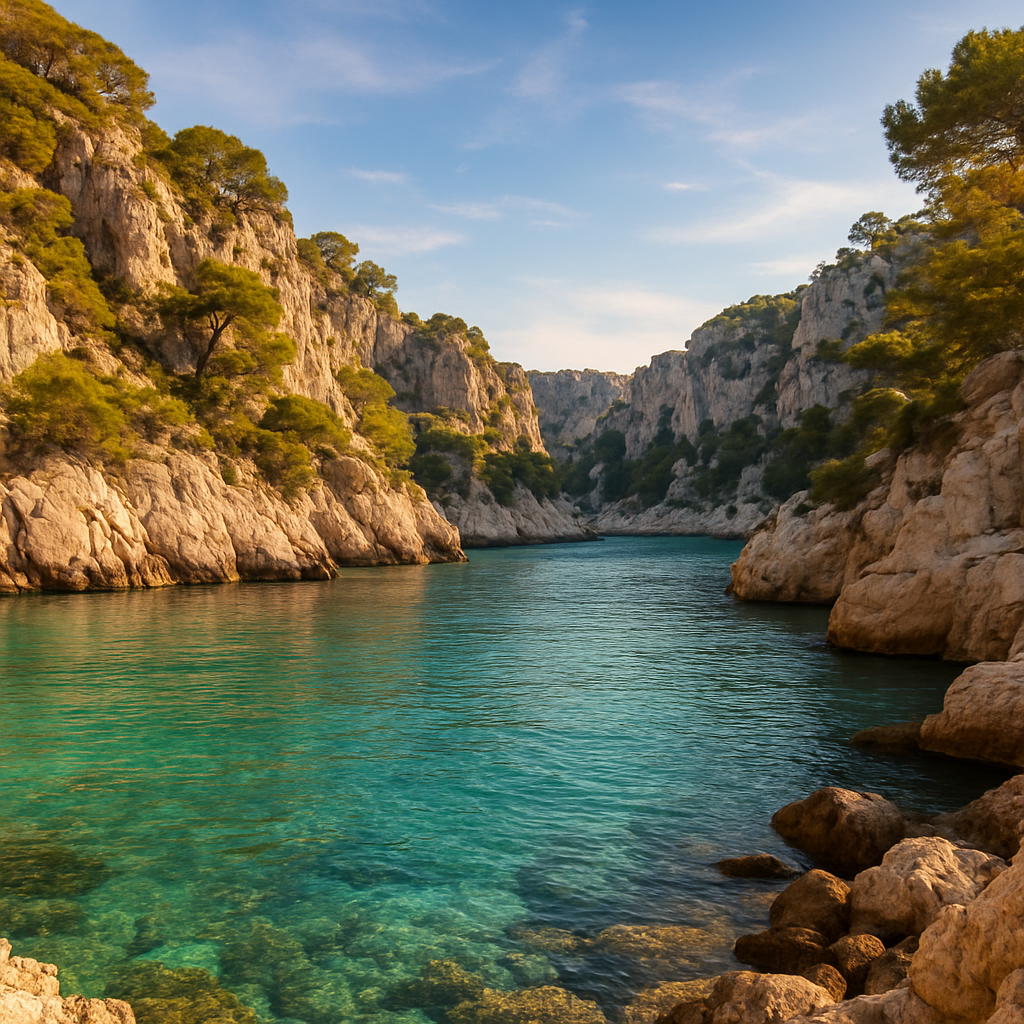
Calanques by Boat from Cassis
The Parc National des Calanques — 8,500 hectares of limestone cliffs plunging into turquoise water — is 22 km east of the city and accessible by TER train to Cassis in about 40 minutes. Boat tours from the Cassis harbor start around €18 and take you through a succession of inlets that look like they were designed to end arguments about whether the Mediterranean is overrated. (It isn't.) Specific inlets — particularly in the Morgiou and Sormiou zones — have informal reputations as clothing-optional and LGBTQ+-frequented spots. Even if you stay clothed and on the boat, this is one of the most dramatic coastal landscapes in Europe, and it requires nothing more strenuous than sitting down and looking.
The places I actually send people to
Advice that fits how you travel
Marseille is an exceptional solo city because it rewards the exact thing solo travelers are best at: being present, unscheduled, and open to whatever happens. The terrace culture around Cours Julien and La Plaine is built for single-seat arrivals — sit down with a pastis around 6pm and the conversation finds you. App culture exists — Grindr and Hornet both have active user bases in Marseille — but the in-person social infrastructure here is strong enough that you genuinely don't need a screen to meet people. The community is more integrated into general social life than in most French cities, which means you'll end up in conversations at bars that aren't explicitly gay and discover that half the room is queer anyway.
Budget-wise, solo Marseille is remarkably accessible. Vertigo Hostel starts at €25/night and puts you adjacent to the LGBTQ+ bar cluster. A panisse from a market stall, oysters standing at Toinou's counter, and a rosé on the MuCEM rooftop — you can eat and drink extraordinarily well for €25–30/day. The RTM metro and bus system covers the city for about €5–8/day with a day pass. The beaches are free. The street art is free. Walking up to La Bonne Mère at dusk is free and one of the best things you'll do on the entire trip.
Safety-wise, stick to the neighborhoods outlined in the guide — Cours Julien, La Plaine, the Vieux-Port, and the seafront are all comfortable solo territory day and night. After midnight, take a taxi between neighborhoods rather than walking through the transitional streets. Marseille runs on its own clock — bars don't fill until 11pm, dinner at 9pm is slightly early — so build that into your rhythm and don't fight the city's internal schedule. You'll have a better time surrendering to it.
Marseille is a city built for lingering, and the most romantic thing you can do here is surrender to its pace completely. Start with a table at L'Épuisette, Guillaume Sourrieu's Michelin-starred room that's literally built over the water at Vallon des Auffes — you'll eat with the Mediterranean three feet below you and the light turning the inlet copper, and that's the whole evening, full stop. Same-sex couples will find Marseille's most scenic dining spots completely relaxed; nobody at a Vieux-Port restaurant is paying attention to anything except their own plate and their own view.
For PDA, the city sorts itself conveniently. Cours Julien, La Plaine, and the seafront promenade along Corniche Kennedy are all high-comfort zones where affection between same-sex couples is completely unremarkable. If you're planning a golden-hour moment, walk up through Le Panier's lanes toward La Bonne Mère — Notre-Dame de la Garde — around 7pm. The panorama over the harbor, the Frioul islands, and the entire city costs nothing and will absolutely derail whatever you had planned next. That's not a bug.
For accommodation, the InterContinental Marseille – Hotel Dieu is the splurge that justifies itself: a converted medieval hospital with original stone cloisters, Old Port views, and actual history in every corridor. At the mid-range, Hôtel Beauvau MGallery on the waterfront has Chopin's 1838 ghost and some of the best harbor-facing rooms in France. For the ritual couples meal, budget €55–65 per person for bouillabaisse at Chez Fonfon in the Vallon des Auffes, order the traditional two-course service with rouille and whole fish, and don't make any plans for the afternoon that follows.
France's legal framework gives LGBTQ+ families the same standing as any other, as of 2026 — same-sex marriage, joint adoption, and full parental recognition are established law. You'll find the tourist-facing parts of Marseille — the Vieux-Port, Le Panier, the Prado beaches — generally relaxed and welcoming to same-sex parents with children. In the city's bohemian and arts districts, your family configuration will register as entirely unremarkable. The MuCEM's family ticketing treats your household exactly like any other, and their programming genuinely engages kids across ages.
Practically: the Vieux-Port and seafront promenade are stroller-navigable. Le Panier, though beautiful, involves steep cobbled lanes that will require carrying gear up more than a few staircases — plan accordingly, or save it for when the kids are on foot. The Château d'If ferry is a reliable hit across age groups — the island fortress is 20 minutes from the port and genuinely dramatic in the way children respond to. Eat panisse (fried chickpea fritters) from a market stall and chichi (sugar-dusted fried dough) on the Prado beach — these are the snacks they'll talk about for years. Most restaurants in the center offer children's portions or simple plats du jour that work for younger eaters without a fuss.
Family budgets run from approximately €160/day at a comfortable pace, assuming an apartment with kitchen access for some meals — self-catering options are plentiful and often more practical than hotels at this stage of life. For a day out that works at every age without anyone complaining, the boat tour through the Calanques — dramatic limestone cliffs and turquoise water — requires nothing more strenuous than sitting on a boat and looking. It runs approximately €18 from the Cassis harbor and is genuinely one of the best things you can do in the entire region.
What Marseille actually costs
Flights, visas, and the first 30 minutes
Airport: Marseille Provence Airport (MRS) is approximately 25 km northwest of the city center and serves 100+ destinations. It's well-connected across Europe with no meaningful layover required from most major cities.
Key direct routes and approximate flight times:
- Paris CDG — ~1h 20m
- London Heathrow — ~2h 10m
- Amsterdam — ~2h 05m
- Brussels — ~1h 55m
- Frankfurt — ~2h 00m
- Madrid — ~2h 15m
- Rome FCO — ~1h 40m
Visa requirements (as of 2026): US, Canadian, and Australian citizens typically don't need a visa for France and can generally stay up to 90 days within the Schengen Area. UK citizens are similarly visa-exempt post-Brexit, subject to the same 90-day Schengen limit. EU citizens have freedom of movement and can enter with a national ID card or passport. Always check your government's current travel advisory before departure — entry requirements can and do change.
Getting from the airport to the city:
- Airport Shuttle Bus (Navette) — €10–€12 / 25–50 min. Direct to Gare Saint-Charles. The clear best-value option and perfectly comfortable.
- Taxi — €55–€75 / 25–45 min. Fixed-rate zones apply to most city-center destinations.
- Uber/VTC — €45–€65 / 25–45 min. Book via app; surge pricing is possible during peak departure windows.
- Rental Car — Variable / ~25–40 min via Motorway A7/A55. Useful only if you're heading directly to the Calanques or Provence — parking in central Marseille is expensive and genuinely aggravating. Take the shuttle.
Traven's seasonal breakdown
The questions everyone asks
Do I need to speak French?
Is it safe to hold hands?
How much should I budget per day?
Is Marseille's gay scene big enough to be worth the trip?
What's the best neighborhood to stay in?
Is the bouillabaisse hype real?
Can I do the Calanques as a day trip from Marseille?
Screenshot this before you go
So should you actually go?
Go. Marseille is the Mediterranean city that hasn't been smoothed down for your comfort, and that's precisely what makes it worth your time. The legal framework is as strong as it gets — full equality, comprehensive protections, a perfect 10.0 on my Legal score. The scene is real and embedded in the city's creative fabric rather than cordoned off into a tourist-friendly zone. You'll eat extraordinarily well, you'll swim in water that makes you question every beach vacation you've ever taken, and you'll find a community that's warm without being performative. It's not the easiest French city — it asks something of you. But every LGBTQ+ traveler I know who's been here came back saying the same thing: why did I wait so long?
Sources & Resources
Official links we reference when compiling this guide. Last verified 2026-03-15.
- Acceptess-T — Trans Rights, Health Access, and Legal Support (France)
- AIDES — HIV Prevention and Sexual Health Services (Marseille Office)
- Chrysalide — Trans and Non-Binary Association, Marseille
- Fierté Marseille Productions — Official Pride Organizers
- Inter-LGBT — National LGBTQ+ Federation of France
- Le Refuge — LGBTQ+ Youth Housing and Support (National, Marseille Presence)
- Planning Familial — Sexual Health, Reproductive Rights, and LGBTQ+ Support
- Santé Publique France — National Public Health Resources Including Sexual Health
- Service-Public.fr — Official French Government Info on PACS, Marriage, and LGBTQ+ Legal Rights
- SOS Homophobie — National LGBTQ+ Anti-Discrimination Hotline (Free: 0 805 269 269)