Paris doesn't have a gay scene — it has a gay civilization, and it's been running longer than most countries.
Paris didn't earn its reputation as the queer capital of continental Europe by throwing the biggest party — it earned it by making queerness so ordinary that it disappears into the city's daily rhythm. That's not a knock. That's the highest compliment I can pay a destination. You can grab a croque-monsieur at noon in Le Marais next to a drag queen in a dressing gown and nobody blinks. The couple at the next table at Le Hangar are splitting a steak-frites and holding hands, and the waiter's only concern is whether you want another demi. That normalcy — unremarkable, unperformed, just there — is the whole point, and it's why my Traven-Dex score of 9.5 shouldn't surprise anyone who's spent even one apéro on Rue des Archives.
What surprises people is the depth. This isn't a city with a gay bar district tacked onto the side — it's a city where Le Tango has been hosting queer dance nights in a 1930s bal musette ballroom since before most of your grandparents were born. Where Cox Bar fills up at 4pm on a Tuesday because Parisians treat drinking as a daily practice, not a weekend event. Where the lesbian scene has its own Pride march — Gouine Pride — because the community here is old enough, organized enough, and political enough to demand its own space. I gave it a 9.5 on Scene, and honestly, the only reason it's not a 10 is that Paris nightlife operates on a biological clock that requires strategic napping. Clubs don't fill before 1am. La nuit commence tard — the night starts late — isn't a saying, it's a survival fact.
And then there's the city itself — the part that has nothing to do with who you're kissing. The light on the Seine at 7pm in September. The absolute silence inside the Mémorial de la Déportation on Île de la Cité, which hits differently as a queer visitor when you pair it with the Triangle Rose memorial a few blocks away in the Marais. The €4 pain au chocolat that you'll eat standing on a bridge and consider one of the great meals of your life. Paris is the rare destination where the queer infrastructure and the general magnificence of the place operate at the same absurdly high level. You're not choosing between a great gay trip and a great trip. You're getting both, and you're paying for it in butter and euros and sleep deprivation.
One thing I'll say plainly: this is not a city without friction. Verbal harassment toward queer couples does happen — it's opportunistic, not organized, and it's significantly more likely in the outer arrondissements and banlieues than in the Marais core. SOS Homophobie maintains a hotline for exactly that reason. But within that triangle between Hôtel de Ville, République, and Saint-Paul? You'll forget you were ever worried. Paris earns your trust block by block, terrace by terrace, and it earns it completely.
The stuff your travel guide buries on page 47
Legal framework: France is full equality, full stop. Marriage equality since 2013, joint adoption for same-sex couples, comprehensive anti-discrimination protections covering employment, housing, and public services, and self-ID gender marker changes without surgery since 2017. My Legal score of 10.0 reflects a country that has done the legislative work and meant it. The PaCS (civil partnership) still exists but marriage has largely superseded it. Criminalization of homosexuality was repealed in 1982 — France was ahead of most of Europe on this.
Cultural reality: The laws and the street-level experience align in central Paris more than in almost any other major city I score. The Mairie de Paris actively funds LGBTQ+ anti-discrimination initiatives, and organizations like SOS Homophobie provide real reporting infrastructure when incidents do occur. The Centre LGBTQI+ Paris Île-de-France on Rue Beaubourg is genuinely useful — not just a resource center but a social hub with events, a library, and people who actually speak to you like a human. Pick up their current events calendar your first day.
Health resources: Free rapid HIV and STI testing is available at SIS Association in the Marais with no appointment needed on most days — the staff are warm, it's genuinely no-drama, and it's one of those Paris institutions the LGBTQ+ community quietly relies on. AIDES provides broader HIV/AIDS support and prevention services across the city.
Pride: Paris Pride (Marche des Fiertés) in late June draws 500,000–700,000 people and is one of the biggest in Europe, organized by Inter-LGBT. It's enormous and joyful but also exhausting — the official route through central Paris fills up fast, so station yourself near République or Bastille early if you want space to breathe and actually see the floats.
PDA comfort: In Le Marais, same-sex PDA is so unremarkable it doesn't register — rainbow flags on Rue des Archives and Rue Sainte-Croix de la Bretonnerie outnumber traffic lights. The Canal Saint-Martin, Saint-Germain, and Latin Quarter neighborhoods are similarly relaxed. The Champs-Élysées and major tourist areas are generally fine with occasional tourist-crowd density to navigate. Outer arrondissements (18th–20th) and some suburban areas are more socially conservative in pockets — visible PDA may draw attention, particularly after dark.
What it actually feels like on the ground
Holding hands: In the Marais core — basically the triangle between Hôtel de Ville, République, and Saint-Paul — holding hands is genuinely a non-event, day or night. In Saint-Germain, the Latin Quarter, and along the Canal Saint-Martin, you'll be fine. The further you get from central arrondissements, especially late at night in less-lit areas, the more standard situational awareness matters. This isn't unique to queer travelers — it's Paris after dark.
Hotel check-in: Same-sex couples checking in together face zero issues at any legitimate hotel in Paris. This is a city with full marriage equality, and hospitality staff — particularly in the Marais and central arrondissements — are thoroughly professional. At properties like Hôtel Duo, they've been welcoming LGBTQ+ guests for years. At palace hotels like Le Meurice, discretion is the standard for all guests.
Taxis and rideshares: Official taxis and VTC (Uber-style) drivers in Paris are overwhelmingly professional. Same-sex couples in the back seat will not encounter issues. Pro tip: always use official taxi stands at airports and train stations — unlicensed drivers who approach you in arrivals are the ones to avoid, for reasons that have nothing to do with queerness and everything to do with getting overcharged.
Public spaces and parks: The Jardin du Luxembourg, Tuileries, Jardin des Plantes, Canal Saint-Martin banks — all comfortable spaces for queer couples and families during daytime hours. The Seine riverbanks on summer evenings fill with mixed crowds picnicking, and same-sex couples are part of the scenery without remark.
Late night: The Marais stays safe and populated late — bars close between 2am and 5am depending on the venue, and foot traffic keeps the streets active. Outside the Marais, standard late-night awareness applies: stick to well-lit streets, avoid empty Metro carriages during off-peak hours, and travel in pairs when possible. The Metro is generally fine but late-night carriages can occasionally see verbal harassment — it's rare but not impossible.
Trans travelers: France's self-ID legal framework is genuinely progressive. In central Paris, particularly the Marais, trans visibility is relatively high and accepted. Street harassment remains a reported issue in outer districts and some suburbs — it tends to be opportunistic rather than organized. Acceptess-T has on-the-ground knowledge of which clinics and pharmacies are genuinely affirming versus technically legal but cold — worth a check-in before you need healthcare rather than during.
Verbal harassment: Verbal harassment toward queer couples in Paris tends to be opportunistic rather than organized — it's significantly rarer in the Marais than in outer arrondissements. If you experience or witness an incident, SOS Homophobie maintains a hotline (0 800 169 369) for reporting or just processing what happened. France takes anti-LGBTQ+ harassment seriously as a legal matter.
The queer geography
Le Marais (3rd & 4th arrondissements)
This is the one. Le Marais — or Le Village, as longtime Parisian queers call it — has been the center of LGBTQ+ life in Paris for decades, concentrated along Rue Sainte-Croix de la Bretonnerie and Rue des Archives in the 4th arrondissement. It's not a scene bolted onto a neighborhood — it is the neighborhood. The two streets run roughly parallel and between them you'll find the density: Open Café anchoring the corner of Rue des Archives, Cox Bar at 15 Rue de la Verrerie for a reliable all-day drink, Raidd Bar on Rue du Temple for the go-go shower shows (Thursday through Saturday, absolutely packed, surrender to the theatrics), and Banana Café for the late-night crowd that isn't ready to go home yet.
Lesbian nightlife in Paris has historically been thinner than the gay male scene, but 3W Kafé on Rue des Écouffes and Le Freedj on Rue du Temple are the reliable anchors — check their current programming because nights rotate and guest DJs vary wildly in quality. La Champmeslé has been a fixture for women for years. For leather and fetish, Le Thermik near the Marais is the serious venue — low pretension, high community, and the kind of place where regulars actually talk to newcomers rather than stare through them. Bear's Den has a more relaxed bear/chub crowd if that's your scene.
The Centre LGBTQI+ Paris Île-de-France on Rue Beaubourg is the community's institutional anchor — events, legal support, a library, and a genuine social space. The Triangle Rose Memorial in the Marais and the Mémorial de la Déportation on the Île de la Cité together tell the parts of queer Paris that matter most to understand.
Oberkampf & Canal Saint-Martin (10th & 11th arrondissements)
Oberkampf is where younger Parisians are gravitating — less polished than the Marais, more alternative, and with a growing queer bar scene that feels like it's still figuring itself out in the best possible way. The Canal Saint-Martin banks are a natural social space in warm months, and the whole area has the progressive, mixed energy that makes visible queerness feel unremarkable. Generator Paris sits right in this neighborhood, making it a natural base for budget travelers who want to be in the action without paying Marais rent.
SoPi — South Pigalle (9th arrondissement)
SoPi — the gentrified strip south of Pigalle — has queer-friendly bars and a mixed, artsy crowd that blends with the neighborhood's historic sex-positive energy. It's not a gay neighborhood in any organized sense, but the tolerance is baked in. Good cocktail bars, interesting restaurants, and the kind of people who moved out of the Marais because it felt too settled.
The experiences worth rearranging your itinerary for

Musée d'Orsay & the Impressionist Collection
A converted railway station on the Left Bank holding what I'd argue is the most emotionally accessible art collection in the world — Monet, Renoir, Degas, Van Gogh, all in a space where the building competes with the paintings for your attention. The upper-floor Impressionist galleries flood with natural light in the afternoon, and the view of the Seine through the giant station clock is the kind of thing you'll remember when you've forgotten half the trip. Go on a Thursday evening when it stays open late and the crowds thin out.
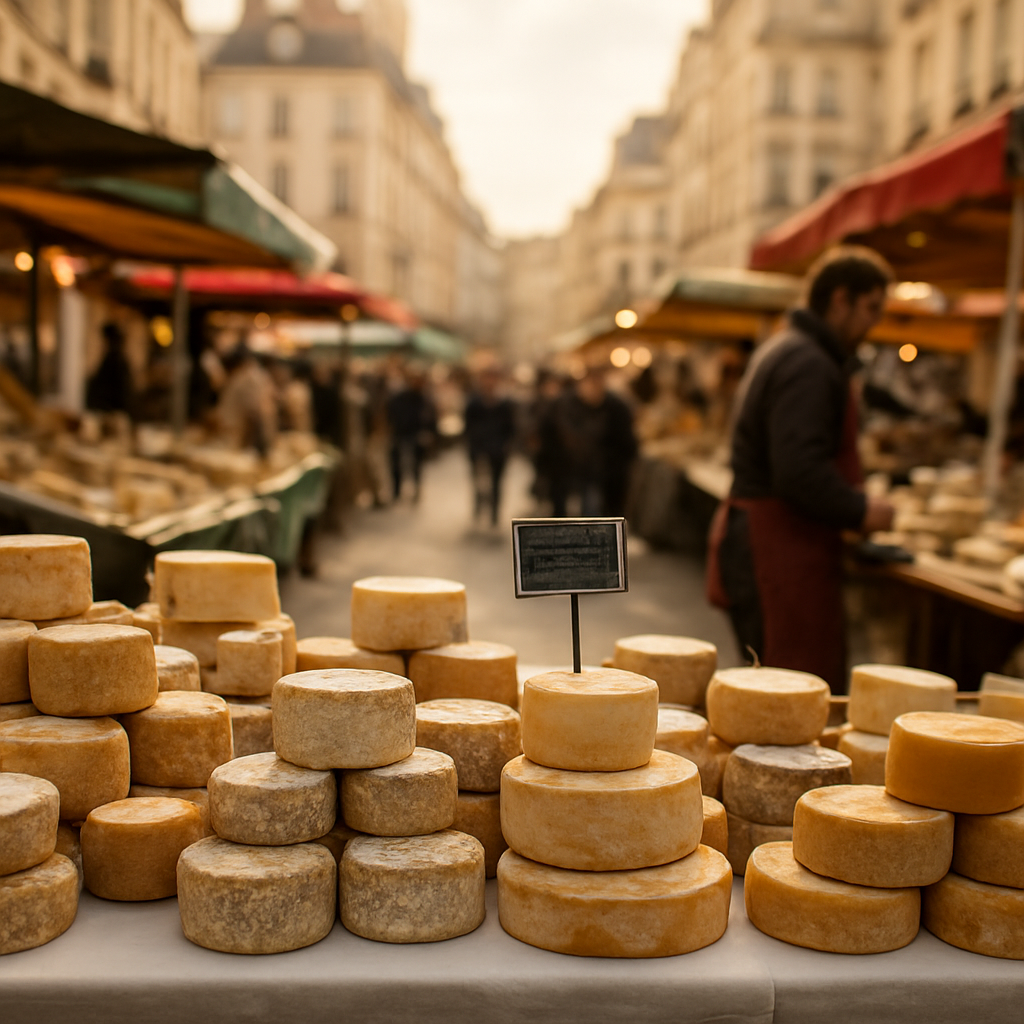
Morning at a Marché — Marché d'Aligre
Skip the tourist-heavy markets and go to Marché d'Aligre in the 12th arrondissement on a weekend morning. An outdoor produce market, a covered hall with cheese and charcuterie stalls, and a surrounding flea market all compressed into a few blocks near Bastille. Buy a wheel of Comté, a baguette from the bakery on Rue d'Aligre, a handful of radishes with butter, and eat it on the nearest bench. That's breakfast, and it costs about €8, and it's better than most restaurants in most cities.

Walk the Seine at Golden Hour
This costs nothing and it's the best thing in Paris. Start at the Pont des Arts around 7pm in spring or summer, walk west along the Left Bank toward the Pont de l'Alma, and watch the light turn the stone gold and then pink. The Eiffel Tower appears ahead of you as you walk. The houseboats bob. Someone is playing an accordion and you'll want to be cynical about it but you won't be. The stretch between Pont Neuf and the Musée d'Orsay is where the light does the most work.

Sainte-Chapelle
Tucked inside the Palais de Justice on the Île de la Cité, this 13th-century Gothic chapel has 1,113 stained glass panels that turn the upper chapel into a kaleidoscope when the sun hits. It's small enough to see in 30 minutes and will hit harder than most things that take all day. Go in the morning when the eastern light floods the apse. Book timed tickets online — the line without them wraps around the building.

Dinner in a Real Bistro — Not a Tourist One
Paris's bistro culture is the best casual dining tradition on earth, but the tourist-trap versions will disappoint you. Look for handwritten menus, a plat du jour board, and a room full of French people eating at 8:30pm. Le Hangar in the 3rd near the Pompidou is a reliable bet, but the move is to pick any restaurant in the 11th or 12th that's full on a Tuesday. Order the duck confit or whatever the daily special is, a carafe of house wine, and a tarte tatin to finish. Expect to pay €25-35 per person and to wonder why you've been eating wrong your entire life.
The places I actually send people to
Advice that fits how you travel
Paris is one of the best solo cities in the world, and it's even better if you're queer. The Marais's bar culture is built for meeting people — apéro hour (roughly 6–8pm) at places like Open Café and Cox Bar is the organic social window where terrace conversations actually happen, and the mix of locals, expats, and travelers means you'll find someone to talk to without trying. App culture here runs on the usual platforms (Grindr, Scruff, Hornet), and the density in the Marais is exactly what you'd expect — high. People are more likely to suggest meeting at a café than in your hotel, which is very Parisian and, honestly, much better.
Budget solo travelers should seriously consider Generator Paris near Canal Saint-Martin — the social atmosphere, rooftop bar, and €35 dorm beds make it the easiest place in Paris to go from knowing nobody to having dinner plans in about two hours. The neighborhood around it is young, progressive, and increasingly where the alternative queer scene is building. If you want to be in the Marais itself, the plat du jour at bistros like Le Hangar runs €15-18 and is a full meal — eating solo at a Paris bistro isn't lonely, it's the correct way to eat at a Paris bistro.
Safety for solo queer travelers in central Paris is excellent — I wouldn't hesitate walking the Marais or Canal Saint-Martin area alone at any hour, though the standard late-night awareness applies outside these neighborhoods. The Metro is fine during operating hours; in late-night off-peak windows, sit near other passengers. Scream Club (the city's biggest recurring gay club night) rotates venues — check their Instagram the week you arrive rather than trusting any fixed address. And remember: la nuit commence tard. Clubs don't fill before 1am. Eat dinner at 9, nap at 11, and start your night at midnight like a local.
Paris earned its reputation for romance the hard way — it's actually true. In Le Marais, holding hands or kissing at a terrace table is so unremarkable that no one will look twice, and that invisibility is its own kind of luxury. My favorite date circuit: start with apéro at Open Café on Rue des Archives around 7pm, walk through Rue Sainte-Croix de la Bretonnerie as the evening fills in, then dinner at Le Hangar where the steak-frites and a carafe of house red will cost you less than a cocktail at most hotel bars.
For a splurge that actually earns it, a night at Le Meurice with dinner in the Tuileries garden area is the kind of trip-within-a-trip that couples come back from with a different understanding of luxury. If that's not the budget, Hôtel Duo puts you in the geographic center of the Marais — wake up, walk out the door, and you're already somewhere. The day trip to Versailles hits differently for two people: the gardens were built for wandering together, and the queer history of the court gives you something to talk about on the RER back.
PDA comfort in central Paris is genuinely high — the Marais, Saint-Germain, and Canal Saint-Martin neighborhoods are all relaxed for same-sex couples in public. The outer arrondissements and some suburbs require the same situational awareness you'd use in any major city after dark, but the core of the city you'll actually spend your time in? You're fine. Be present, not hypervigilant.
France has had marriage equality since 2013, full joint adoption rights for same-sex couples, and comprehensive anti-discrimination protections — so the legal architecture for LGBTQ+ families in Paris is as solid as it gets anywhere in the world. On the ground, that translates to two-parent same-sex families moving through the city without meaningful friction, particularly in the neighborhoods tourists and expats actually inhabit. Kids under 4 ride the Metro free, and the city's park infrastructure is genuinely excellent for families with young children.
The Jardin du Luxembourg in the 6th is the classic Parisian childhood afternoon — puppet shows, toy sailboats on the central basin, and enough space to actually run. For a longer family day, Versailles is reachable in 30 minutes on the RER C and the sheer scale of the gardens gives children room to exhaust themselves in spectacular surroundings. The Centre Pompidou runs dedicated family workshops and the permanent collection has enough visual punch to hold even short attention spans — free entry for under-18s makes it a no-brainer.
Practical notes: Paris restaurants are more child-tolerant than their reputation suggests, especially at lunch when plat du jour options and early seatings make family dining less stressful. Apartment rentals in the Marais or Canal Saint-Martin area give you a kitchen and more space than most hotel rooms, which matters after a long day. Stroller logistics on the Metro can be genuinely difficult on older lines — the RER B and RER C surface trains are more manageable, and several central bus routes are fully accessible.
What Paris actually costs
Flights, visas, and the first 30 minutes
Airport: Charles de Gaulle Airport (CDG) — Paris's main international hub, handling 300+ direct city connections worldwide.
Major Routes: New York (JFK) ~7h 30m · London (LHR) ~1h 20m · Los Angeles (LAX) ~11h · Toronto (YYZ) ~8h · Dubai (DXB) ~7h · Sydney (SYD) ~22h
Visa Requirements: US/CA/AU: No visa required for stays up to 90 days within the Schengen Area; ETIAS electronic travel authorization required from mid-2026 (apply in advance). UK: No visa required for stays up to 90 days; passport must be valid for the full duration of your stay. EU: Free movement; a national ID card is sufficient — no passport required.
Getting into the City:
RER B Train — €11.80 (~35-45 min): The most efficient option for most travelers. Runs every 10-15 minutes with direct stops at Gare du Nord, Châtelet–Les Halles, and St-Michel. Buy your ticket at the airport before boarding — validators are strict.
Le Bus Direct Coach — €17-21 (~60-75 min): Multiple routes serving Opéra, Eiffel Tower area, and Gare de Lyon. Luggage-friendly and comfortable; timing varies significantly with traffic.
Official Taxi — €55 (Right Bank) / €62 (Left Bank) fixed flat rate (~30-60 min): Fixed fares from CDG eliminate fare anxiety. Book at official taxi stands inside the terminal — do not accept offers from unlicensed drivers approaching you in arrivals.
Uber/VTC — €45-70 (~30-60 min): Meet your driver at the designated VTC pickup zones (separate from taxi stands). Price varies by demand; surge pricing can push this above the taxi flat rate during peak hours.
Traven's seasonal breakdown
The questions everyone asks
Is Paris safe for LGBTQ+ travelers?
Do I need to speak French?
How much should I budget per day?
Is it safe to hold hands in Paris?
When is Paris Pride?
What's the best neighborhood to stay in?
Is the Metro safe at night?
Screenshot this before you go
So should you actually go?
Go. I don't say that about every city with a high score, but Paris earns every decimal point of my Traven-Dex 9.1. The legal protections are ironclad, the cultural acceptance in central Paris is genuine rather than performative, the queer scene in the Marais has the kind of depth and history that most cities can only aspire to, and the city itself — the food, the architecture, the light on the Seine at 8pm — is one of the greatest destinations on earth regardless of who you love. You'll spend more than you planned, you'll stay up later than you should, and you'll come home wanting to go back. That's not a warning. That's a promise.
Sources & Resources
Official links we reference when compiling this guide. Last verified 2026-03-06.
- Inter-LGBT (Paris Pride organizer)
- SOS Homophobie
- AIDES (HIV/AIDS support & prevention)
- Le Refuge (LGBTQ+ youth housing & support)
- Centre LGBTQI+ Paris Île-de-France
- Acceptess-T (transgender health & community)
- SIS Association (free sexual health testing, Marais)
- Act Up Paris
- SNEG (network of LGBTQ+ businesses & venues)
- ARDHIS (LGBTQ+ rights for foreigners & asylum seekers)
- Mairie de Paris – Égalité & Lutte contre les discriminations