
Berlin doesn't ask you to fit in. It never has. That's the whole point.
It's a Thursday night at Möbel Olfe, and the crowd is already spilling out past the U-Bahn pillars at Kottbusser Tor. Someone's holding two Sterni beers and a cigarette in one hand while arguing about Kraftwerk in three languages. Across the street, the döner shops are doing brisk business. A couple walks by holding hands — nobody looks up. This is just a regular Thursday in Kreuzberg, and that regularity is the most radical thing about it.
Berlin earned my Traven-Dex score of 9.5, and honestly, the number undersells the feeling. This is a city where the gay scene didn't just survive — it shaped the culture. Magnus Hirschfeld was running the world's first sexology institute here in 1919. Christopher Isherwood was writing about the bars of Nollendorfplatz a decade later. The Nazis burned it all down, the Wall split it in half, and the community rebuilt every single time. That history isn't in a museum — well, it is, at the Schwules Museum — but it's also in the walls, the streets, the attitude. Berlin doesn't perform tolerance. It's simply moved past caring who you sleep with, and that indifference is worth more than any number of flags on a building.
What gets me about this city is the range. You can eat a €3.50 kebab at Mehringdamm that'll ruin every kebab you eat for the next year, then walk into Nobelhart & Schmutzig and have a Michelin-starred tasting menu made entirely from ingredients sourced within the Berlin-Brandenburg region. You can spend Sunday afternoon on a blanket at Tempelhofer Feld — a decommissioned airport runway that's now the world's most improbable public park — and then spend Sunday night at Berghain, which the German government literally classified as a cultural institution. I gave it a 9.8 on Pulse, and if you've ever been here during CSD weekend in July, you know that number is conservative.
The infrastructure is real. Full marriage equality, adoption rights, comprehensive anti-discrimination law, self-ID for gender markers as of 2026 — a perfect 10.0 on Legal. But the legal stuff is just the floor. The ceiling is a city where queer life isn't a subculture; it's the culture. The art, the nightlife, the food, the fashion — it all runs through the same current. Berlin doesn't have a gay neighborhood the way other cities do. It has several, plus an attitude that turns the entire city into one.
The stuff your travel guide buries on page 47
Legal framework: Germany offers full legal equality for LGBTQ+ people. Same-sex marriage has been legal since October 2017, with full joint adoption rights. Anti-discrimination protections are comprehensive at the federal level, covering employment, housing, and public services. In November 2024, Germany enacted its Self-ID law (SBGG), allowing legal gender marker changes without medical requirements — making it one of Europe's most progressive frameworks for trans individuals. Criminalization of homosexuality was fully repealed in 1994, and historical convictions under Paragraph 175 were formally annulled in 2017. My Legal score of 10.0 reflects all of this: there is nothing missing here.
Cultural reality: Berlin, specifically, is one of the most genuinely gay-integrated cities on earth. This isn't just legal acceptance on paper — gay life is woven into the city's infrastructure, politics, culture, and daily rhythms in ways that go far beyond tolerance. Drag at brunch isn't an event; it's a Wednesday. The city government actively funds LGBTQ+ organizations, the police have dedicated LGBTQ+ liaison officers through the Landeskriminalamt, and resources like Mann-O-Meter on Bülowstraße and Checkpoint BLN on Fuggerstraße provide community support and free anonymous HIV testing with no German required and no insurance needed.
PDA comfort: In Schöneberg, Kreuzberg, Friedrichshain, and Mitte, same-sex PDA is completely normalised — hand-holding, kissing, none of it draws attention. Prenzlauer Berg is similarly relaxed, with LGBTQ+ families being a common sight. Central Neukölln is mostly fine, with gay bars anchoring the scene, though quieter side streets late at night warrant standard awareness. Outer suburbs can feel more conservative — PDA is generally tolerated but may draw stares. Use the same judgment you'd use in any unfamiliar neighborhood.
Clubbing culture: German clubs open late and close very, very late. "Pre-drinks at 11pm" is sincere advice here, not performative. SchwuZ parties don't hit stride until 2am, and it's not unusual to leave Berghain when Sunday afternoon light is streaming through the windows. Pack your stamina and your flat shoes. And on Berghain's door specifically: it doesn't have a dress code so much as a vibe code — all black, confident, not visibly trying. Wearing a button-down from a business trip is essentially a self-rejection letter.
What it actually feels like on the ground
Holding hands / kissing: In Schöneberg, Kreuzberg, Friedrichshain, and Mitte, you can hold hands and kiss your partner without a second thought. This isn't optimism — it's daily reality. Elaborate drag looks at 3am on the U-Bahn land without incident in these neighborhoods nearly universally. In outer districts, keep the situational awareness you already carry; just don't abandon it at the airport.
Hotel check-in: No issues anywhere in the city. Berlin hotels are professionally welcoming to same-sex couples across all categories, from hostels to the Adlon. You won't be asked to justify a double bed, and staff won't blink. This is a non-issue.
Taxis and rideshares: Uber is available, taxis are plentiful, and I've never heard a report of a driver giving a same-sex couple trouble in Berlin. That said, the U-Bahn and S-Bahn are so comprehensive and affordable that you'll use them more than cars. Pro tip: the U8 late at night can feel edgy depending on the stop, but around Kottbusser Tor specifically, you're so likely to be surrounded by queers heading to or from Möbel Olfe that the platform functions as an informal community escort.
Parks and public spaces: Tiergarten is relaxed during the day and has well-established cruising areas at night that are part of Berlin's landscape without controversy. Hasenheide in Neukölln similarly — gay outdoor socializing is a long Berlin tradition. Standard nighttime park awareness applies, but the context is generally low-risk.
Late night: Berlin's nightlife runs until morning, and the infrastructure supports that — public transport runs 24/7 on weekends, Spätis are open all night, and the streets in Schöneberg and Kreuzberg have foot traffic at 4am. You are not alone out there. Stick to well-trafficked streets when moving between venues and you'll be fine.
Trans travelers: Germany's 2024 Self-ID law means legal gender changes are straightforward, and Berlin's trans community is well-established, particularly in Schöneberg and Kreuzberg. Trans-inclusive healthcare exists, community spaces are genuine, and visible trans people are an unremarkable part of daily life in central Berlin. That said, misgendering and ignorance aren't zero — they're just dramatically lower than most destinations.
Verbal harassment: Isolated incidents do occur in Berlin, as in any city of 3.7 million. They're most likely in outer districts and least likely in the central gay neighborhoods. If you experience discrimination involving a landlord, employer, or public official, LADS Berlin — the Senate anti-discrimination office — provides free, multilingual advice and has actual legal reach. This is not a symbolic resource; they have filed complaints and won.
For current information on legal protections and anti-discrimination resources, consult Equaldex's legal protections overview for Germany.
The queer geography
Schöneberg — The Regenbogenkiez
Step out of Nollendorfplatz station and you're already there — the pink triangle memorial plaque on the facade is the first thing you see, and the rainbow crosswalks radiate outward from it like a declaration of intent. Motzstraße runs south from the square, lined with the kind of establishments that have survived gentrification through sheer stubbornness: leather bars, corner Kiezkneipen where regulars nurse their Pilsner for hours, and cafés that serve breakfast until an hour that acknowledges Berlin's relationship with mornings. The architecture is classic West Berlin — solid Wilhelmine apartment blocks with ornate balconies, most of them painted in the kind of cream and dusty yellow that photographs beautifully at golden hour.
This is Berlin's original gay village — the Regenbogenkiez — and it's been the anchor since the 1970s. Heile Welt and Hafen are the kind of bars where you sit down a stranger and leave knowing the bartender's name. For the leather and fetish crowd, Fuggerstraße is your block — Eagle Bar, Connection Club, and Tom's Bar on nearby Motzstraße are all within stumbling distance, and during Folsom Europe each September the entire neighborhood transforms. Checkpoint BLN sits on Fuggerstraße too — free, anonymous HIV testing and PrEP counseling, no German required, no insurance needed. Berlin's lesbian scene has a real foothold here as well: Begine on Potsdamer Straße is a feminist cultural café that's been running since 1984 and still hosts a packed calendar of concerts, readings, and parties.
Kreuzberg — Kottbusser Tor & Oranienstraße
If Schöneberg is the grandmother, Kreuzberg is the weird cousin who showed up to dinner in platform boots and a mood. The area around Kottbusser Tor — everyone calls it Kotti — is gritty, chaotic, and alive in a way that polished neighborhoods can't replicate. Turkish bakeries sell fresh Simit at midnight, graffiti covers every surface that holds still long enough, and the elevated U-Bahn rattles overhead with a rhythm that becomes the neighborhood's unofficial soundtrack. Walk down Oranienstraße and you'll pass record shops, vintage stores, and Roses Bar — an iconic dive where the interior looks like a velvet fever dream, red everything, camp knick-knacks floor to ceiling, lighting that flatters absolutely everyone, open until 8am.
Möbel Olfe, tucked beneath the U-Bahn arches at Kotti, is the scrappier counterpoint to Schöneberg's established scene — a repurposed furniture store that's become one of Berlin's most beloved gay bars, predominantly male on Thursdays, mixed and messy the rest of the week. The Schwules Museum at Lützowstraße (formerly at Mehringdamm) is free on the first Saturday of every month, and even a two-hour visit through the permanent collection — Magnus Hirschfeld era through reunification — is worth rearranging your itinerary for. Legendary gay punk venue SO36 still holds regular gay and mixed nights that honor Kreuzberg's radical roots.
Neukölln — Reuterkiez & Rollbergstraße
Neukölln is where Berlin's under-35 creative class landed when Kreuzberg rents got too ambitious, and the neighborhood wears its contradictions openly. Arabic grocery stores sit next to natural wine bars. The canal path along the Landwehrkanal fills with picnickers and cyclists on summer evenings, and Weserstraße has enough interesting restaurants to keep you eating for a week without repeating. The food here is some of Berlin's best and most affordable — Syrian, Vietnamese, Levantine, and the kind of ambitious small-plate spots that would cost three times as much in Mitte.
SchwuZ on Rollbergstraße is one of Germany's longest-running gay clubs — drag nights, techno, and everything between — and it's become the gravitational center for a younger, more diverse scene that treats Schöneberg as charming but not home. Exercise situational awareness on quieter side streets late at night, but central Neukölln around Reuterkiez has enough foot traffic and enough gay-owned businesses that you'll feel the neighborhood's energy quickly.
Mitte & Tiergarten — History Meets Monument
Berlin's center is where the city's weight lands — the Brandenburg Gate, the Reichstag dome, Museum Island's Neoclassical sweep along the Spree. Unter den Linden is the grand boulevard you imagine when someone says "Berlin," and walking it from the Gate east toward Alexanderplatz covers more concentrated history per square meter than most cities manage in a lifetime. The Memorial to Homosexuals Persecuted under National Socialism sits in the Tiergarten near the Holocaust Memorial — a concrete monolith with a looping video of same-sex couples kissing, solemn and essential.
Mitte is tourist-heavy and liberal; PDA here is broadly accepted and unremarkable. The Tiergarten itself — Berlin's Central Park equivalent — is massive, forested, and threaded with paths that lead to beer gardens, the Berlin Zoo, and, yes, well-established cruising areas that have been part of the park's fabric for over a century. This is the neighborhood for the big cultural institutions and fine dining, not for the messy 4am adventures — those belong to the neighborhoods south and east.
The Schwules Museum Berlin, a renowned LGBTQ+ cultural institution located in Kreuzberg, features exhibitions on queer history and serves as a central community gathering space.
The experiences worth rearranging your itinerary for
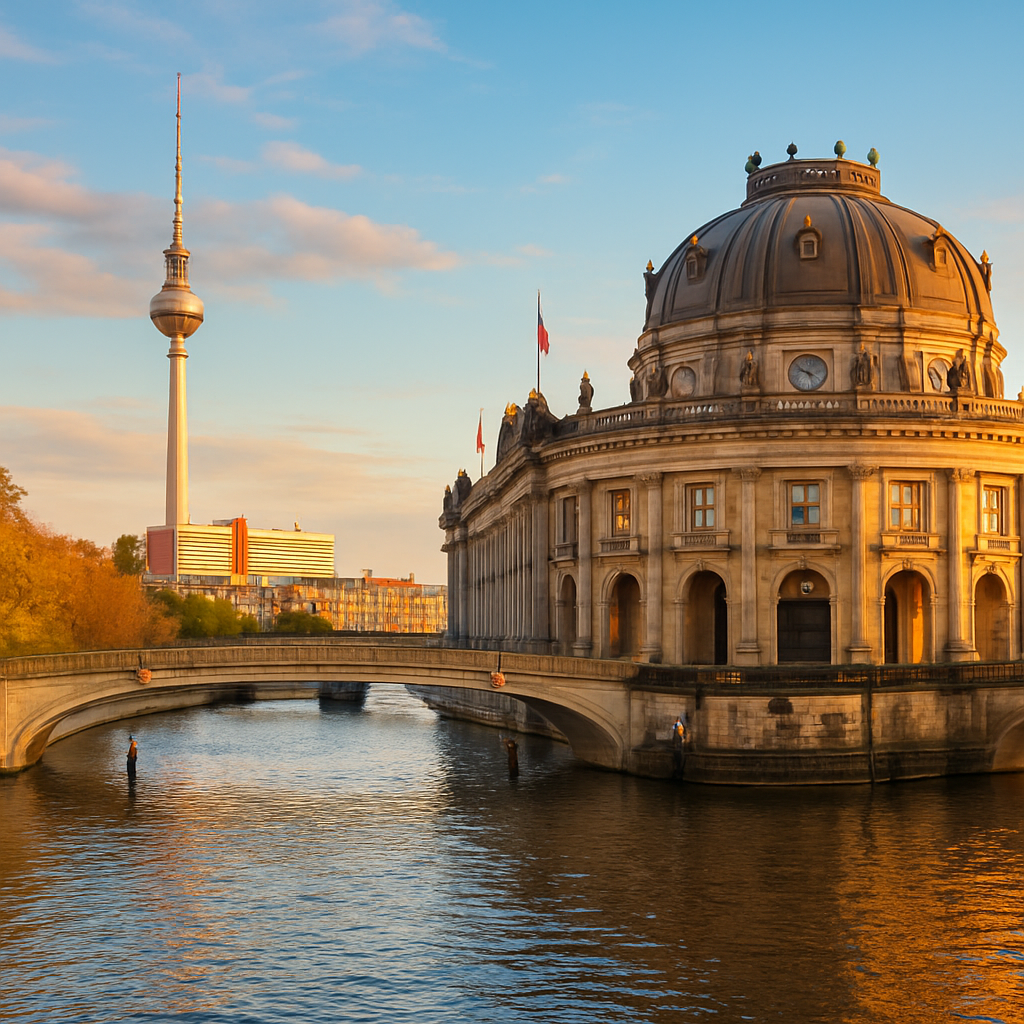
Museum Island & the Neues Museum
Five world-class museums on a single island in the Spree — the Neues Museum alone holds Nefertiti's bust, which is one of those objects that stops you mid-step and makes you reconsider everything you thought you knew about ancient sculpture. The Pergamon Museum's monumental reconstructions of Babylonian gates and Roman market squares are being partially reopened after years of renovation. Budget half a day minimum, and go early to beat the school groups.
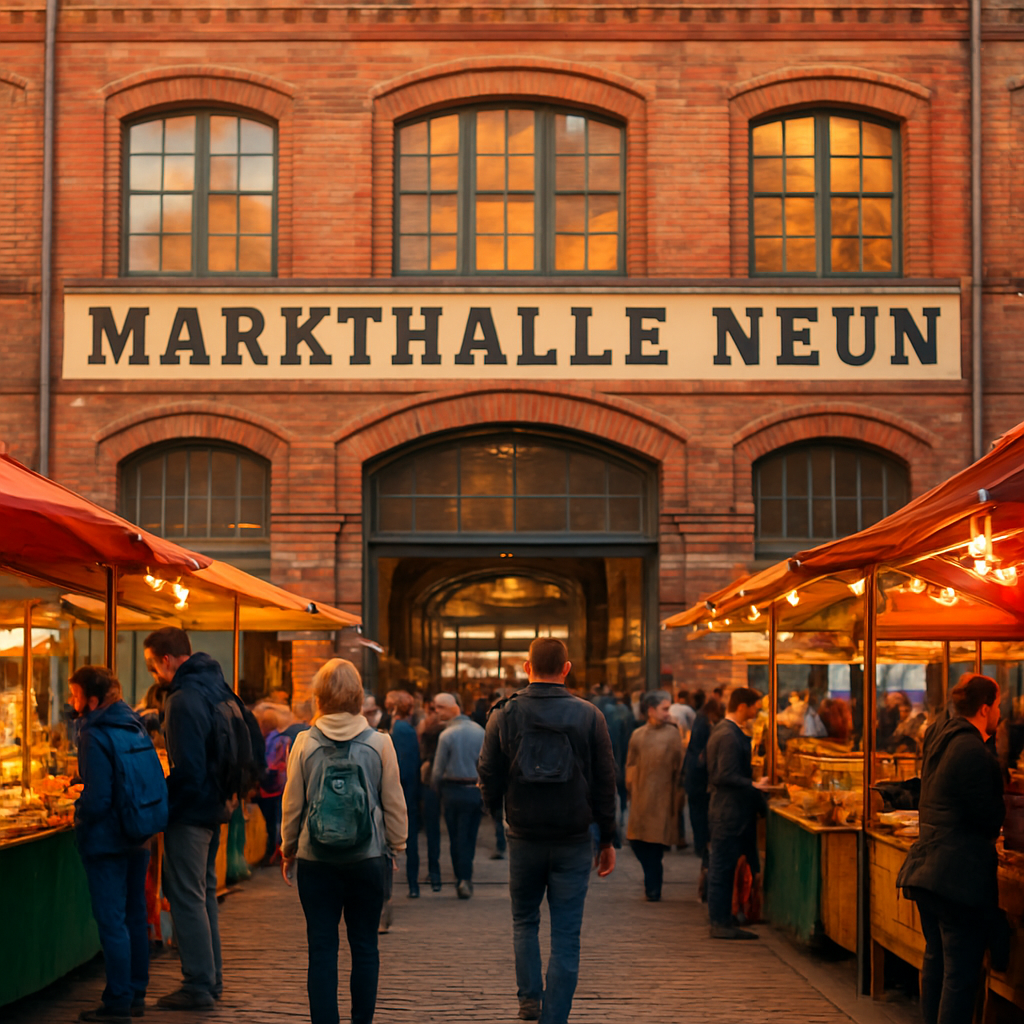
Markthalle Neun — Thursday Street Food Market
This restored 19th-century iron-and-brick market hall in Kreuzberg runs a weekly street food market every Thursday evening that's become a Berlin institution. Vendors rotate, but expect anything from Oaxacan tacos to Swabian Maultaschen to Malaysian laksa, all under soaring industrial ceilings. Arrive hungry, order from at least three stalls, and grab a local craft beer from the tap. The weekday market is calmer and excellent for cheese, bread, and produce if you're self-catering.
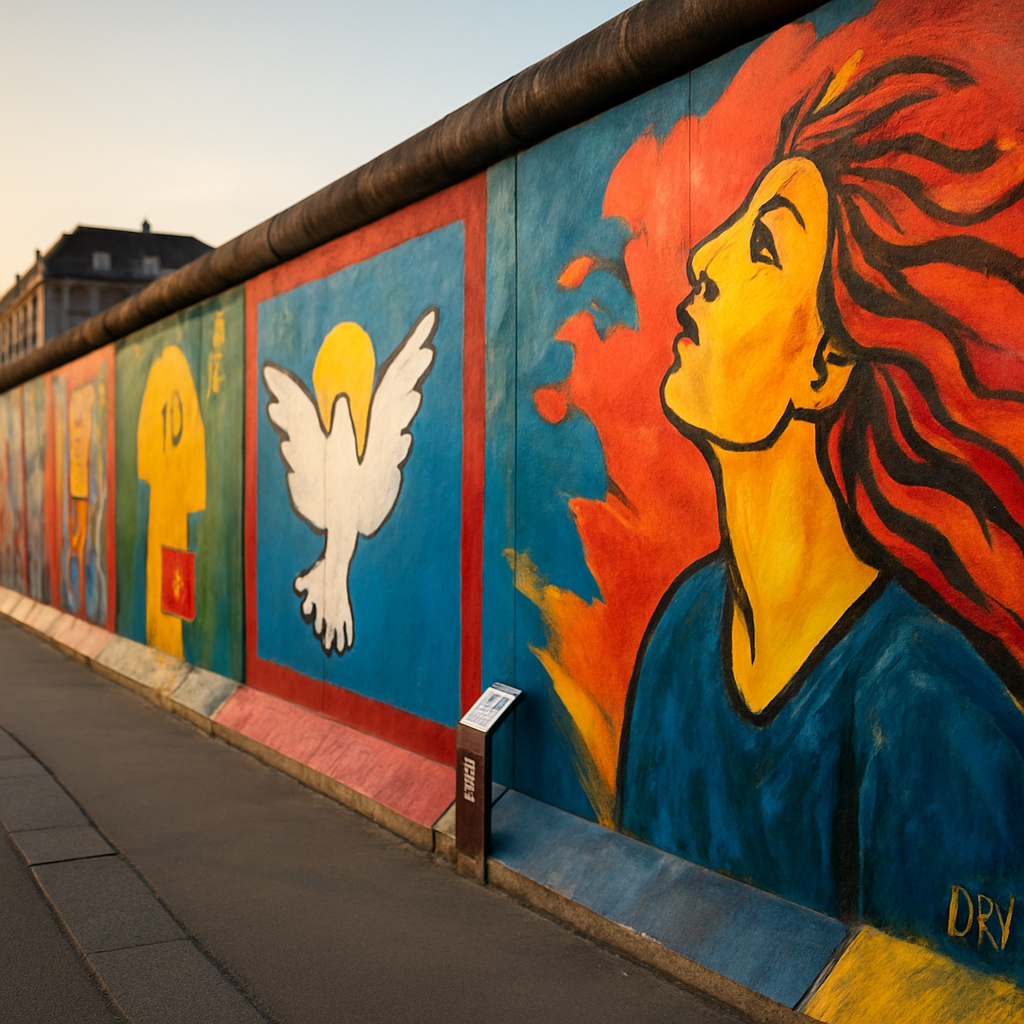
East Side Gallery
The longest surviving stretch of the Berlin Wall — 1.3 kilometers of open-air murals along the Spree in Friedrichshain. Brezhnev and Honecker's socialist fraternal kiss, the Trabant bursting through concrete, over a hundred works by artists from around the world painted in 1990 in the first rush of reunification euphoria. It's free, it's outdoors, and walking the full length with the river on one side and the murals on the other is one of those Berlin moments that lands differently than you expect. Go in the morning before the crowds thicken.
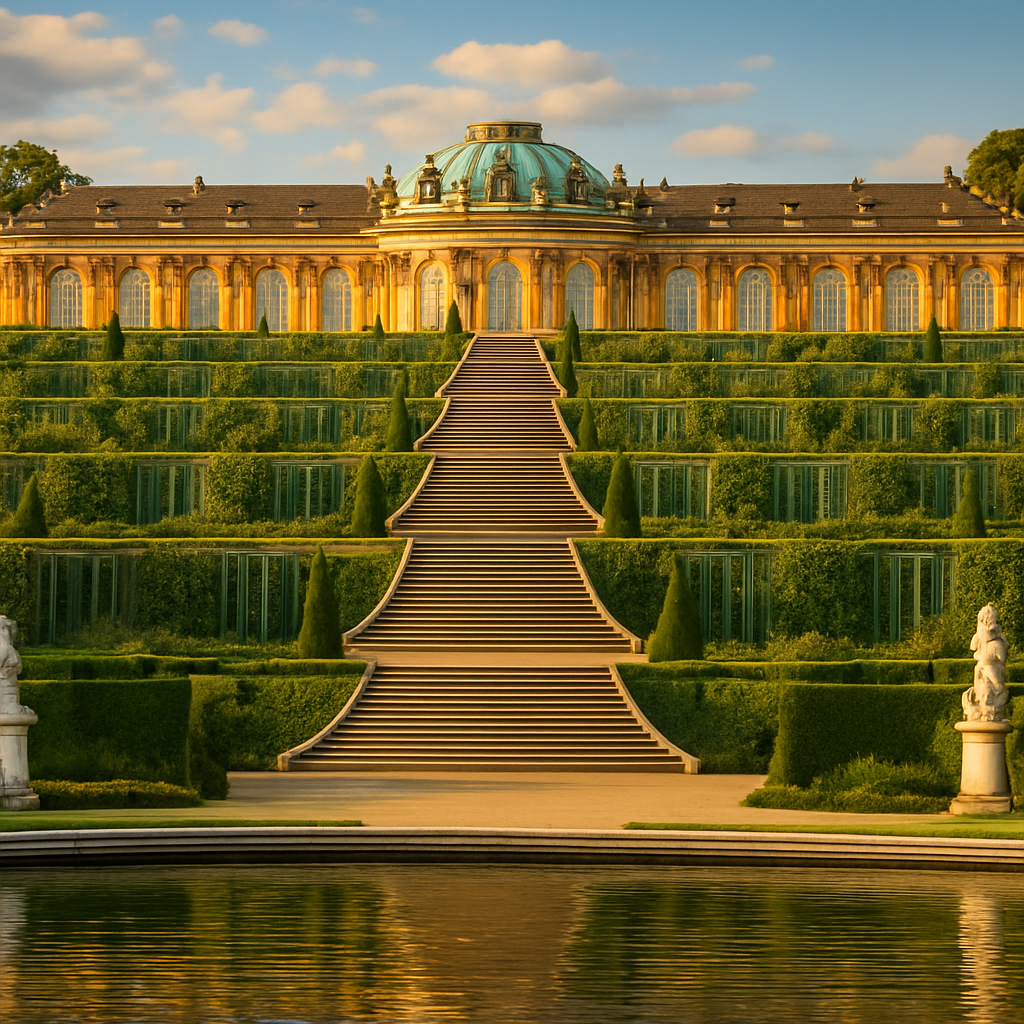
Sanssouci Palace Day Trip to Potsdam
Thirty minutes on the S-Bahn drops you into Frederick the Great's baroque fantasy — terraced vineyards, gilded interiors, and 700 acres of manicured parkland that feel like stepping into an 18th-century painting. The palace itself is intimate rather than overwhelming, and Frederick's historical queerness is openly discussed in modern German cultural context, which adds an unexpected layer. Book timed-entry tickets online. Afterward, wander Potsdam's Dutch Quarter for coffee and Kuchen before the train back.
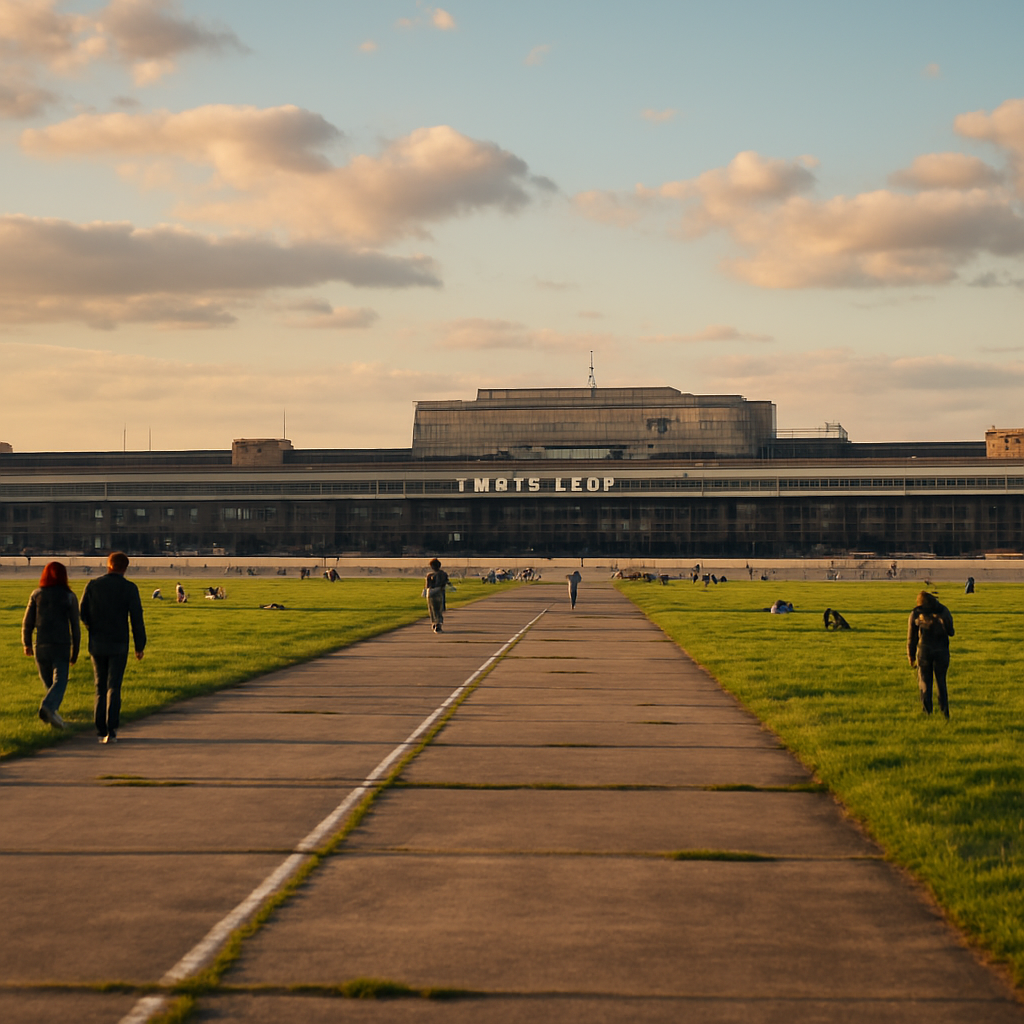
Tempelhof Field
A decommissioned airport turned into one of the world's largest urban parks — the runways are now bike paths, kite-surfing lanes, and barbecue territory. On a summer Sunday, half of Berlin is here: families, roller skaters, urban gardeners tending their plots along the taxiways, and loose clusters of friends with portable speakers and coolers of Radler. Rent a bike and ride the full perimeter, or just spread a blanket on the grass and watch planes that will never land again.
The places I actually send people to
The Berlin dates worth planning around
Advice that fits how you travel
Berlin might be the best solo travel city in Europe, and not just for the gays — though we certainly benefit. The city runs on independence: people eat alone at restaurants without anyone blinking, the bar culture rewards sitting at the counter and talking to whoever's next to you, and the apps are very active. Grindr, Scruff, and Romeo (the German platform) all have enormous user bases here, and Berliners tend to be direct in a way that saves everyone time. If you're looking to meet people in person, plant yourself at Möbel Olfe on a Thursday or Hafen any evening — both are the kind of bars where conversation happens organically.
Budget-wise, solo Berlin is extremely manageable. A hostel dorm runs €25–€35, a döner is €5, and a BVG day ticket is under €10. Many museums offer free entry on select days, and the best things in Berlin — the parks, the street art, the canal walks, the Späti sidewalk socializing — cost nothing at all. Grab a Berliner Pilsner from a Späti, sit on the steps at Kotti, and watch the city perform itself. That IS the experience.
Safety-wise, solo travelers will find Schöneberg, Kreuzberg, and Prenzlauer Berg extremely comfortable at all hours. The U-Bahn runs all night on weekends, which matters when you're leaving a club at 6am on a Sunday. Keep your wits about you on the U8 late at night — some stops can feel edgy — but around Kottbusser Tor specifically, you're so likely to be surrounded by people heading to or from the same bars you are that the platform functions as an informal community escort. Mann-O-Meter on Bülowstraße is a drop-in advice center worth knowing about — if you're new to the city or navigating something complicated, walk in. They've seen everything and judge nothing.
Berlin is one of the most effortlessly romantic cities in Europe for same-sex couples — not because it performs romance, but because it doesn't make you think about it at all. Holding hands on Motzstraße, kissing at a canal-side bar in Kreuzberg, checking into any hotel in the city as a couple: none of it requires a second thought. That freedom is genuinely rare, and it's worth slowing down to actually feel it.
For date nights, I'd start with Cookies Cream in Mitte — the plant-based tasting menu at ~€95 per person is special-occasion territory, and the theatrical, club-adjacent setting makes it feel like you're getting away with something good. For something lower-key and deeply Berlin, grab a bottle of wine from a Späti and walk along the Spree at dusk near the East Side Gallery. It sounds too simple. It isn't. For your base, the Axel Hotel in Schöneberg puts you in the middle of everything, has a rooftop pool, and requires minimal effort to have a great night.
The day trip to Sanssouci in Potsdam is practically designed for couples — baroque gardens, lake views, and the quiet satisfaction of wandering together through a UNESCO World Heritage site with no agenda. Take the S-Bahn on a Tuesday morning when the crowds are thin, and spend the afternoon back in Schöneberg at Café Berio with a long, slow coffee. Berlin rewards the couple that builds in time to breathe.
Berlin is genuinely excellent for LGBTQ+ families. Same-sex couples have full adoption rights under German law, and in neighborhoods like Prenzlauer Berg and Schöneberg, LGBTQ+ families are woven into daily life without comment. Your family won't register as unusual here; you'll be unremarkable in the best possible sense, which after navigating other destinations is its own relief.
Practically speaking, Berlin overdelivers on family logistics. The BVG public transport system covers up to three children under 14 for free with one adult ticket — the city is genuinely affordable when you're moving a family around. The museum scene is exceptional: the Deutsches Technikmuseum in Kreuzberg is one of the best science-and-technology museums in Europe for kids, and the Naturkundemuseum in Mitte has a blue whale skeleton that stops every child dead in their tracks. Zoo Berlin in Tiergarten and Tierpark in Friedrichsfelde both work well with younger visitors, and the Tiergarten park itself is enormous, stroller-friendly, and free.
Food logistics are easy and affordable — döner kebabs run €4–€5 across the city, supermarkets are everywhere, and casual restaurants in Schöneberg and Kreuzberg are used to families at all hours without fuss. For accommodation, I'd look at apartment hotels in Prenzlauer Berg: kitchen facilities, real space, and a neighborhood where children are practically a local currency. Budget around €170–€220/day for a family of four at the sensible end, and you'll eat well, see everything, and not feel squeezed.
What Berlin actually costs
Flights, visas, and the first 30 minutes
Airport: All commercial flights arrive at Berlin Brandenburg Airport (BER) — a modern, single-terminal operation with sensible layout, good English signage, and none of the chaos of larger European hubs. Customs for Schengen arrivals is painless; non-EU travelers clear passport control quickly at off-peak times.
Direct routes: Berlin connects to 170+ cities worldwide. Key routes for English-speaking travelers: London Heathrow (~1h 55m), New York JFK (~9h), Amsterdam (~1h 40m), Paris CDG (~1h 55m), Toronto Pearson (~9h 30m), and Sydney (~22h with one stop).
Visas: US, Canadian, and Australian passport holders need no visa for stays up to 90 days within any 180-day period (Schengen rules). UK travelers are in the same position post-Brexit — 90 days, no visa required, no pre-registration needed. EU citizens travel on a national ID card; no passport necessary.
Getting from BER to the city: The Airport Express Train (FEX) is the cleanest option — €4.40, roughly 30 minutes to Ostbahnhof, runs every 30 minutes, and your BVG/AB ticket is valid onward into the network from there. The S-Bahn (S9/S45) at €3.80 takes 45–55 minutes with more stops but is more comfortable with large luggage. A taxi or Uber runs €40–€60 door-to-door depending on traffic — worthwhile late at night or if you're arriving with a mountain of bags. The Bus (X7/X71) at €3.80 gets you to U-Bahn Rudow in ~20 minutes, where you continue by metro — budget-friendly, but not the move if you're hauling anything heavy.
Traven's seasonal breakdown
The questions everyone asks
Is it safe to hold hands with my partner in Berlin?
Do I need to speak German?
How do I get into Berghain?
How much should I budget per day?
Is Berlin good for trans travelers?
When is Berlin Pride?
What's the best neighborhood to stay in?
Screenshot this before you go
So should you actually go?
Go. I'm not hedging on this one. Berlin is one of the best cities on earth for LGBTQ+ travelers — not because it tries to be, but because it's been doing this longer and more honestly than almost anywhere else. The legal protections are ironclad, the scene is massive and varied, the cost of a great trip is genuinely manageable, and the city has a creative, defiant energy that makes you want to stay an extra week. The clubs, the history, the food, or just the freedom to walk down the street without a second thought — Berlin delivers. My Traven-Dex of 9.5 is one of the highest scores I give. This city earned every decimal.
Sources & Resources
Official links we reference when compiling this guide. Last verified 2026-03-15.
- LSVD – Lesben- und Schwulenverband Deutschland
- Schwules Museum Berlin
- Mann-o-Meter – Gay Men's Counselling & Community Centre
- Lesbenberatung Berlin
- Checkpoint Berlin – HIV & STI Testing Centre
- TransInterQueer e.V.
- MANEO – Anti-Violence Project for Gay & Bisexual Men
- GLADT e.V. – LGBTQ+ People of Color Berlin
- Lambda – LGBTQ+ Youth Network Berlin-Brandenburg
- Berlin Senate LADS – Anti-Discrimination Office