Cologne doesn't ask if you're comfortable being queer — it assumes you are, and builds its entire social calendar around that assumption.
The first thing you notice about Cologne isn't the Dom — though that Gothic colossus is genuinely impossible to ignore, looming over the Hauptbahnhof like a stone fever dream someone started in 1248 and just kept going. No, the first thing you notice is the ease. The loose-shouldered, beer-in-hand, nobody's-performing-anything ease of a city that figured out its relationship to queerness decades ago and moved on to more pressing questions, like which Brauhaus pours the best Kölsch and whether Karneval should technically last six months instead of four.
Walk Schaafenstraße on any given Thursday night and you'll understand why I gave this city an 8.4 on Scene — it's not the biggest gay district you'll ever see, but the density is startling. Three blocks, maybe ten minutes end-to-end, and every door opens into something different: a leather bar with a dress code, a neighborhood spot where regulars range from 25 to 65, a late-night club where the DJ hasn't checked a clock since midnight. The Bermuda-Dreieck earns its name. You enter on Friday. You resurface when someone hands you a Halve Hahn and you realize it's Sunday. And what makes Cologne genuinely different from Berlin or Amsterdam is that the queerness doesn't stay in the quarter — it bleeds into Karneval, into the football terraces at Müngersdorfer Stadion, into the Brauhäuser where your Köbes will replace your tiny 0.2L glass before you've finished the last one without a single comment about who you walked in with.
My Traven-Dex of 9.1 shouldn't surprise anyone who's spent a weekend here. Germany's legal framework — a perfect 10.0 on my Legal score, as of 2026 — gives you full marriage equality, joint adoption, self-ID gender recognition, and comprehensive anti-discrimination protections. But what the numbers don't capture is the Karneval energy, that collective citywide agreement that costumes, drag, public kissing, and communal chaos are not subcultural activities but the entire point of living in Cologne. A reader told me that Pride in July routinely puts over a million people on the streets, and the city doesn't treat it as an inconvenience — it leans in with official support and flags on buildings before anyone asks. Plan accommodation six months out minimum for CSD Köln.
If you're visiting in winter, don't sleep on Karneval. The LGBTQ+ community turns out in force from Weiberfastnacht through Fat Tuesday, and Schaafenstraße transforms into an open-air costume party with a scope that would make Rio jealous. This is the most un-closeted German city I've encountered, and in a country that's already pretty far along, that means something real.
The stuff your travel guide buries on page 47
The legal picture: As of 2026, Germany provides full marriage equality for same-sex couples, joint adoption rights, comprehensive anti-discrimination protections covering employment, housing, and services, and a Self-ID law (SBGG) for gender identity that took effect in November 2024. Criminalization of homosexuality was fully repealed decades ago — and Germany formally rehabilitated men convicted under the Nazi-era Paragraph 175. On paper, this is as good as it gets anywhere in the world. My Legal score is 10.0 for a reason.
The cultural reality: Cologne is widely recognized as Germany's most LGBTQ+-affirming major city, and that reputation holds up on the ground. The city government actively supports CSD Köln and funds LGBTQ+ community organizations including Rubicon e.V. (counseling and community hub on Rubensstraße), Anyway e.V. (LGBTQ+ youth center), and Rosa Strippe e.V. (crisis and counseling support). The city of Cologne maintains an official LGBTQ+ information page — this is a municipality that puts resources where its rhetoric is.
Language note: Unlike Berlin, where English functions as a near-second language, Cologne's gay bars operate primarily in German. You'll get further with a few words of German or an earnest attempt — locals genuinely warm up to the effort. Most younger staff and bartenders speak enough English, but don't assume it.
Community resources: Checkpoint Cologne on Pipinstraße operates as both a sexual health clinic and community hub near the Bermuda-Dreieck. Walk-in HIV testing is fast, free, and judgment-free — the staff are genuinely warm rather than clinical. Bookmark Rubicon e.V. before you land — they have an English-language support line and can refer you to health services, legal help, or community groups.
PDA comfort: In the gay village around Schaafenstraße and Rudolfplatz, same-sex PDA is the norm — not tolerated, the actual norm. The Belgisches Viertel, the Rhine promenade, and the city center shopping areas around Hohe Straße are all high-comfort zones. Around the Hauptbahnhof, casual affection is fine but you'll want general urban awareness — it's a busy transit hub. Outer residential districts like Chorweiler or Porz are more conservative; you're legally protected everywhere, but social reception is less predictable outside the center.
What it actually feels like on the ground
Holding hands: In the gay village around Schaafenstraße, Rudolfplatz, and the Belgisches Viertel, holding hands is completely unremarkable — even at 2am on a weeknight. In the city center and along the Rheinufer, you'll blend in without issue. Outer districts like Chorweiler are more conservative, but incidents are rare rather than common.
Hotel check-in: You will not encounter issues at any hotel in Cologne. Double beds for same-sex couples are standard across all price categories. The properties in and around Kwartier Latäng — Hotel im Wasserturm, 25hours Hotel The Circle — have staff who've been checking in queer couples for years without a second glance.
Taxis and rideshares: Cologne taxi drivers are professional and unremarkable about picking up same-sex couples, including from obviously gay venues. Uber and Bolt operate normally. No special precautions needed beyond standard late-night awareness.
Public spaces and parks: Volksgarten in Neustadt-Süd has historically been a queer gathering space in summer — same-sex couples relaxing on the lawns are part of the regular scenery. Rhine beaches and parks throughout the central districts feel comfortable and safe.
Late night: The late-night U-Bahn home from Rudolfplatz is generally fine — this is not a city where you need to be hypervigilant about who sees you leaving a gay bar. Like any major European city, stay aware after 3am near major transit hubs, particularly around the Hauptbahnhof, where transient populations can gather. But the risk profile is petty crime, not anti-LGBTQ+ violence.
Trans travelers: Germany's Self-ID law (SBGG), effective since November 2024, significantly improved legal recognition. Cologne's queer community is broadly trans-inclusive, with dedicated support networks and visible trans representation year-round, not just during Pride. Rubicon e.V. offers trans-specific counseling and support.
Verbal harassment: Rare in central Cologne and the gay village. Isolated incidents are possible late at night in areas with heavy alcohol consumption (anywhere in the world, frankly), but Cologne's social culture actively pushes back against homophobia in a way that's visible and genuine. The NS-Dokumentationszentrum near the city center documents what Germany's LGBTQ+ community endured under the Nazis — the Rosa Winkel (Pink Triangle) history is handled with real weight there, and visiting grounds the whole Pride-week energy in something important.
The queer geography
Kwartier Latäng & the Bermuda-Dreieck
Cologne's gay village is compact, central, and dense. The core runs along Schaafenstraße, with Rudolfplatz functioning as the geographic anchor and informal gathering square — especially on warm evenings when half the neighborhood is sitting on the steps with a Kölsch. The Bermuda-Dreieck (Bermuda Triangle) is the locals' name for the tight cluster of gay bars bounded roughly by Mathiasstraße, Hohenstaufenring, and Schaafenstraße, and the name is earned: you walk in on Friday and surface sometime Sunday. The district developed as an LGBTQ+ quarter from the 1970s onward and now contains one of the densest concentrations of queer venues in Germany — bars, clubs, shops, community services, all packed into a few walkable blocks.
The range is what makes it work. Ricks has been pulling pints on Hohenstaufenring since the 1980s and remains a genuine neighborhood anchor. Nachtflug runs late, Basement enforces a leather dress code on certain nights, and Meister Bock holds it down as a community local. For leather and fetish specifically, someone wrote in to say that Stiefelknecht is the spot — unpretentious, no-nonsense, populated by people who are actually into the scene rather than performing it. MTC on Zülpicher Straße opens late, runs cheap drinks early, and plays a crowd-pleasing mix that stays genuinely fun until sunrise. The CSD parade route runs through here every July, and the whole neighborhood transforms — but the energy exists year-round, not just during Pride week.
Belgisches Viertel
The Belgisches Viertel (Belgian Quarter) sits immediately west of the gay village and operates as its naturally queer-friendly extension. Brüsseler Straße and the surrounding grid are lined with independent boutiques, coffee shops, and restaurants that attract a mixed, progressive crowd. Same-sex couples are widely visible here without it feeling performative. This is where much of Cologne's queer community actually lives and shops day-to-day, as opposed to going out. Le Moissonnier, a Michelin-starred French restaurant, and Hopper Hotel et cetera (a converted convent) are both here — the neighborhood does not lack range.
Ehrenfeld
About 20 minutes west of Rudolfplatz by U-Bahn, Ehrenfeld has a scrappier, more DIY queer scene — warehouse parties, queer art openings, and bars like Hässlich where "gay area" isn't a category so much as the default atmosphere. If the Schaafenstraße circuit feels too curated, this is where the edges are. Odonien, an outdoor industrial venue with permanent sculpture installations, hosts named queer parties in its seasonal calendar and draws a crowd that wouldn't be caught dead in the Bermuda-Dreieck. The two scenes complement each other.
Zülpicher Viertel
The student-heavy district adjacent to the LGBTQ+ area, full of cheap eats and bars that spill over naturally on weekends into the broader queer nightlife circuit. MTC sits on Zülpicher Straße and functions as a bridge between the university crowd and the established gay scene. Budget-friendly, young energy, reliably messy after midnight.
The experiences worth rearranging your itinerary for
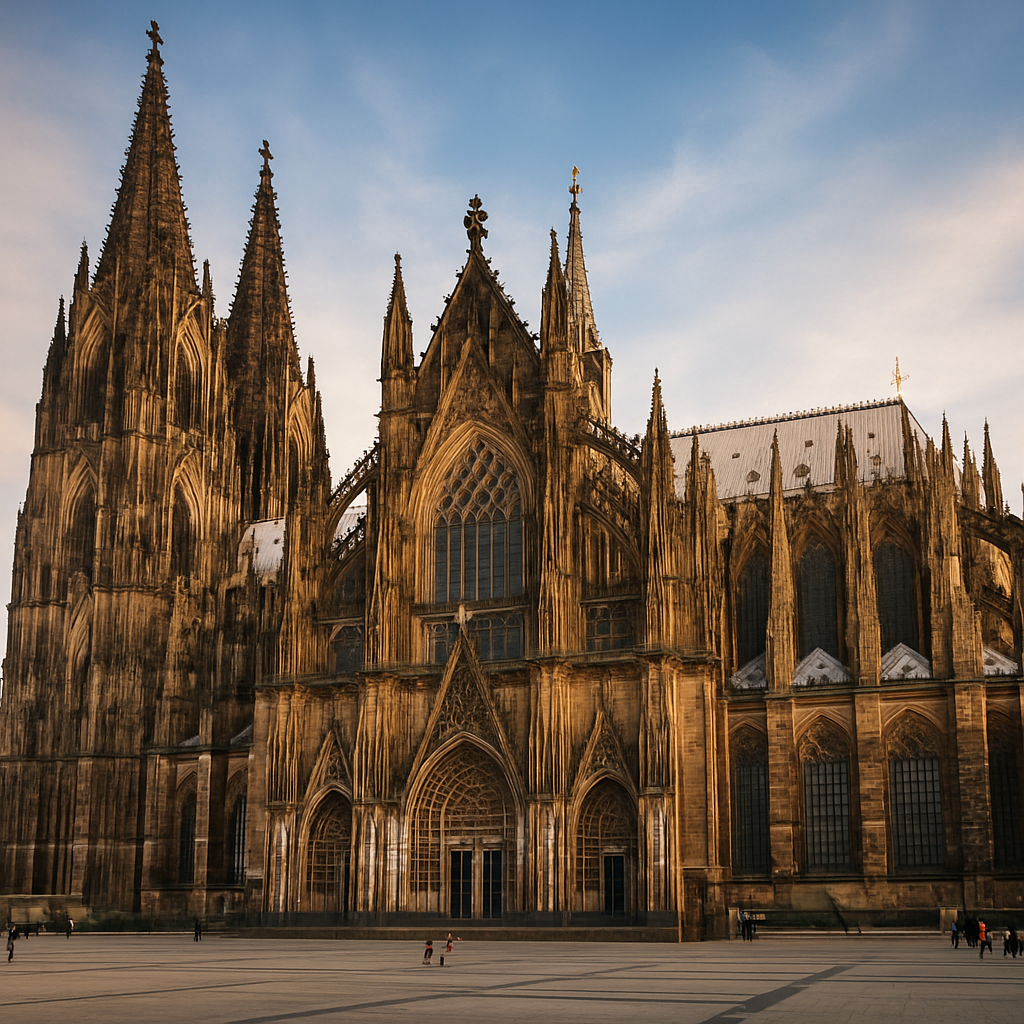
The Dom and the Köbes System
Cologne Cathedral is 157 meters of Gothic ambition that took 632 years to finish — stand at its base and you'll understand why they kept going. But the real experience is what's next to it: Cölner Hofbräu Früh am Dom, where you'll encounter the Köbes system for the first time. Your server will deliver a 0.2L Stange of Kölsch, mark your coaster, and replace the glass before you've finished it. This continues indefinitely until you place a coaster on top of your glass. Don't fight it — just let it happen. Order a Halve Hahn (not half a rooster; a rye roll with aged Dutch cheese) and let the system wash over you. The Dom is the landmark; the Brauhaus is the memory.
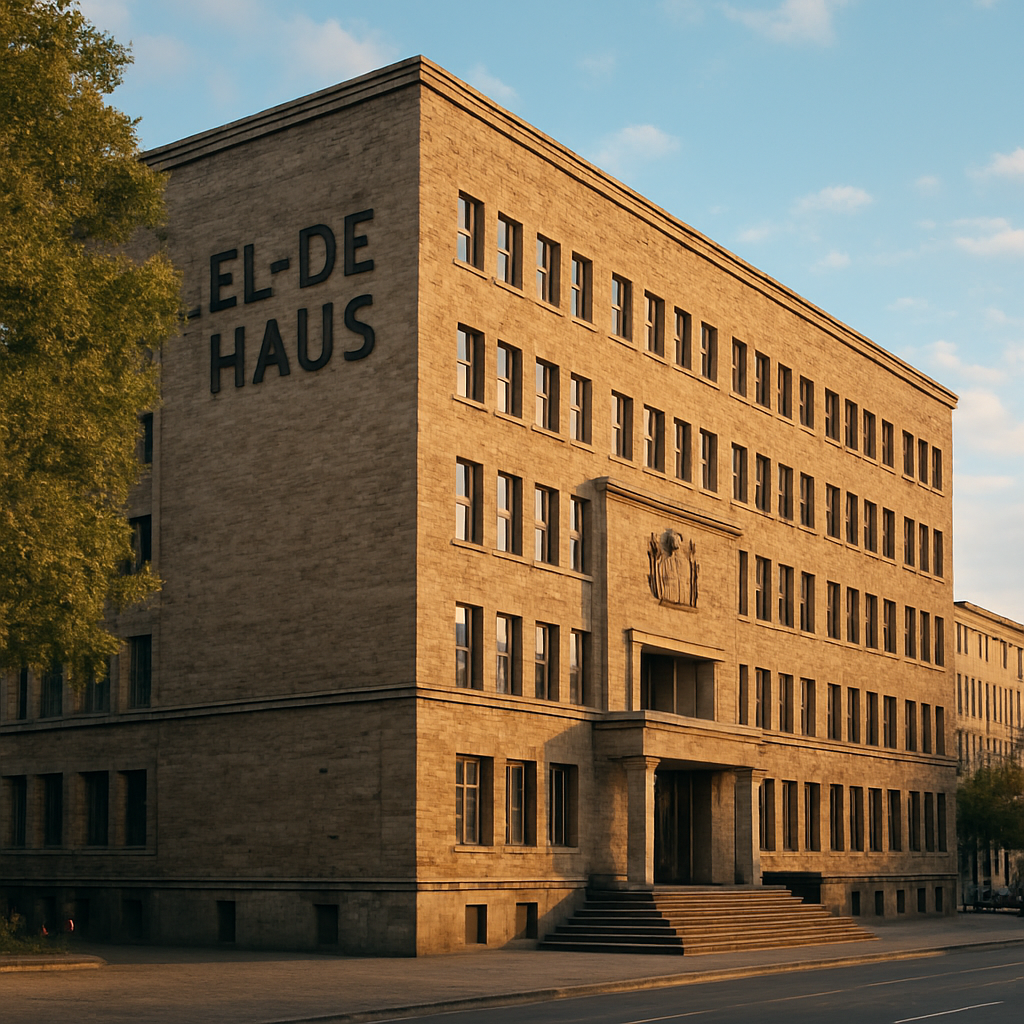
EL-DE-Haus and the Weight of Paragraph 175
The NS-Dokumentationszentrum at Appellhofplatz 23–25 is a former Gestapo headquarters that now functions as one of Germany's most important memorial sites. The permanent exhibition documents Nazi persecution in the Cologne region — and it explicitly covers the prosecution of gay men and lesbians under Paragraph 175. Prisoner inscriptions on the basement cell walls are preserved. It's not a comfortable visit, and it shouldn't be. Admission starts at €4.50 and the experience grounds everything else you'll see in this city — the Pride flags, the open streets, the ease — in the actual cost of getting here. Go before you hit Schaafenstraße, not after.
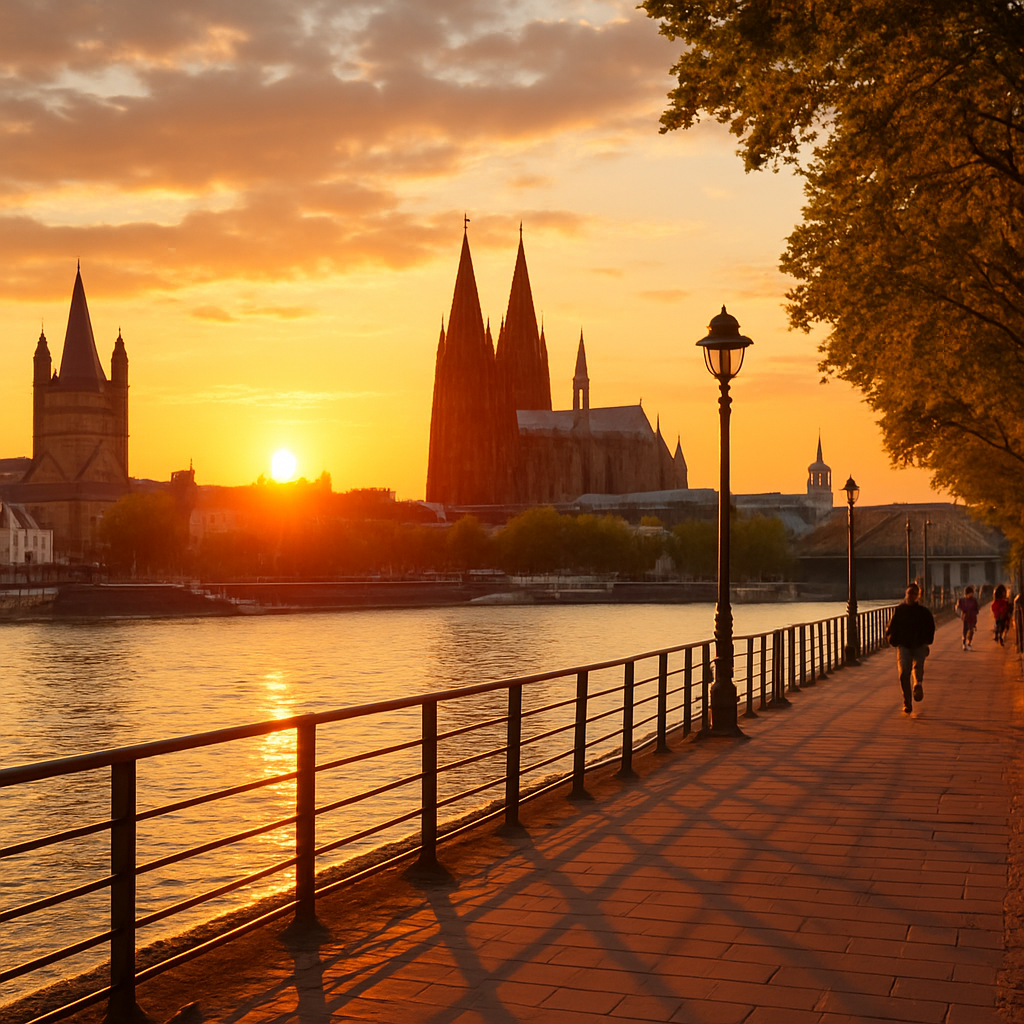
Rhine Promenade at Golden Hour
The Rheinufer walkway on the west bank between the Hohenzollern Bridge and the Deutzer Brücke is Cologne's best free experience. Walk it around 7pm on a summer evening when the light hits the Dom and the Altstadt facades turn copper and amber. Street musicians set up near the Frankenwerft, the old town waterfront, and the outdoor seating at Haxenhaus zum Rheingarten fills up with people eating pork knuckle and watching the river barges slide past. Cross the Hohenzollern Bridge — the one covered in love locks — for the full skyline from the Deutz side. This is the walk you'll describe to people when they ask why you went to Cologne.
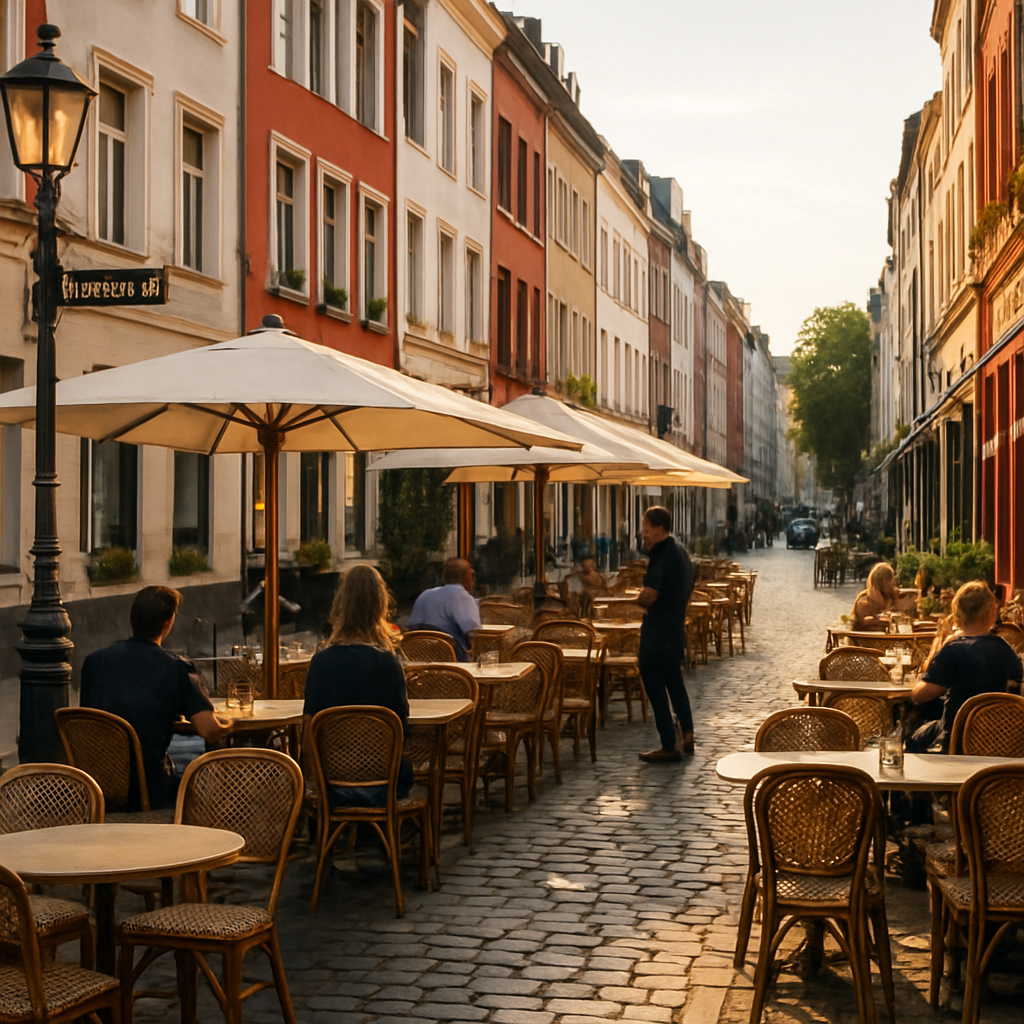
Belgisches Viertel on a Saturday Morning
Skip the tourist corridors and spend a Saturday morning in the Belgisches Viertel. Brüsseler Straße and the surrounding blocks are lined with independent coffee roasters, vintage shops, and small galleries that open late and run on their own clock. The food market presence is less centralized than, say, a Barcelona mercat, but the bakeries and specialty shops deliver — pick up bread, good cheese, maybe some Turkish pastries from one of the Ehrenfeld-adjacent shops, and park yourself at a café table on Antwerpener Straße. This is where Cologne lives when it's not performing for tourists.

Drachenfels and the Rhine by Boat
The Siebengebirge (Seven Mountains) nature reserve sits about 25 km south of Cologne near Königswinter, and you can reach the Drachenfels — Dragon's Rock, 321 meters, 12th-century castle ruins at the summit — by regional train or, better yet, by Rhine river boat from central Cologne. The boat ride takes longer but turns a day trip into an actual experience: the river widens south of the city, vineyards appear on the banks, and the ruins emerge above the treeline in a way that would embarrass most Instagram filters. A rack railway runs partway up, or hike the full ascent in about 45 minutes. This is the traditional weekend escape for Cologne residents and worth every minute.
The places I actually send people to
Advice that fits how you travel
Cologne is one of the easiest European cities to travel solo as a queer person, and the reason is structural: the gay village is compact enough to walk end-to-end in ten minutes, the bars are neighborhood spots designed for regulars (not velvet-rope exclusivity), and the culture of the Stammtisch — a regular table at a bar reserved for whoever shows up — means you're never really drinking alone. Park yourself at Café Schmitz on Aachener Straße during the day, nurse a coffee, and watch the neighborhood rotate through. By evening, do a lap of Schaafenstraße and Mathiasstraße — the crowd sorting is visible from the door, so you can pick your vibe before committing. Ricks skews local and conversational; MTC skews late and dancefloor-forward; Hässlich in Ehrenfeld skews younger and more alternative.
App culture here runs on the usual platforms — Grindr, Scruff, Romeo (which has stronger traction in Germany than in the US or UK). People are direct, which is either refreshing or unnerving depending on your constitution. The budget math works in your favor: a hostel dorm at MEININGER or the DJH in Deutz starts around €28–35, a KVB day ticket covers all your transit, and the Kölsch comes in 0.2L glasses that keep your tab manageable (in theory — they do keep replacing them). Solo dining is completely normal at any price point; counter seats at Päffgen Brauhaus on Friesenstraße are built for it.
For community beyond the bars, Checkpoint Cologne on Pipinstraße doubles as a community hub with events and information for visitors. Anyway e.V. hosts regular community socials open to all ages — not just youth — and they're a genuinely warm way to meet Cologne locals who aren't in bar mode. Save the Rosa Strippe counseling line even if you don't expect to need it — that's generally when you do.
Cologne is one of those cities where being a same-sex couple in public is genuinely, thoroughly unremarkable — and that's not a low bar, it's a gift. Around Rudolfplatz and Schaafenstraße, you're not the minority, you're the vibe. Hold hands, steal a kiss outside a bar, sit on the square steps at midnight — nobody blinks. For something more cinematic, the Rheinufer promenade delivers: the Dom rising above the skyline on one bank, couples of every configuration walking the waterfront as the city lights come on at dusk. It's the kind of evening that doesn't need a plan.
For a dinner that'll actually stick with you, book Restaurant Maximilian Lorenz well in advance — Chef Lorenz is openly gay, Michelin-recognized, and running one of the city's most interesting kitchens. Follow it with a nightcap on the rooftop bar at 25hours Hotel The Circle, which sits right at Rudolfplatz and gives you an elevated view of the neighborhood below. If you want your accommodation to be part of the experience, Hotel im Wasserturm — a converted 1872 water tower in the heart of Kwartier Latäng — delivers circular rooms, architectural history, and the ability to walk to every gay bar in the district in under five minutes. That's a romantic itinerary that requires very little effort to execute.
Time your trip for Karneval in February and you'll understand why Cologne couples talk about it for years. The season runs from Weiberfastnacht through Fat Tuesday — costumes mandatory, dancing in the streets expected, and the LGBTQ+ community out in force turning Schaafenstraße into something that would make Rio blush. June's CSD Köln is the other peak: book accommodation six months out minimum, and go knowing the whole city shows up, not just the quarter. Cologne doesn't treat Pride as a niche event — it treats it as civic infrastructure.
Germany's legal framework for LGBTQ+ families is as solid as it gets, as of 2026: marriage equality, joint adoption rights, and a Self-ID law for gender recognition that took effect in November 2024. Cologne's social climate reinforces all of it. You'll find queer families at the Cologne Zoo, at the Schokoladenmuseum, on Rhine boat trips — and nobody's going to make it strange. This is a city that moved past tolerance into something closer to actual normalcy, and you'll feel that within about ten minutes of arriving.
The practical logistics hold up. The KVB public transit system offers family day tickets covering two adults and up to three children, which keeps getting around affordable. The Cologne Zoo in Riehl is a genuine full-day commitment — over 10,000 animals and an aquarium that earns its admission. The Chocolate Museum on the Rhine is reliably beloved by anyone under 14 (and most people over it, honestly). Rhine river boat trips depart near the Frankenwerft and offer a relaxed way to cover ground without anyone melting down over walking distances. Strollers work fine on the main streets and in central areas; the cobblestoned stretches of Altstadt will test your wrists, so plan accordingly.
As a queer family, you won't need to code-switch here. Anyway e.V., Cologne's LGBTQ+ youth center, runs community events open across age groups — worth checking their calendar at anyway-koeln.de if you want to connect with local families rather than just tourists. The Belgisches Viertel makes an excellent neighborhood base: relaxed outdoor café terraces, menus that accommodate kids without making a production of it, and easy access to both the queer quarter and the city's broader cultural offerings. The NS-Dokumentationszentrum at EL-DE-Haus is appropriate for older kids — the history documented there, including the Nazi persecution of gay men under Paragraph 175, is handled with real weight and is worth the conversation it starts.
What Cologne actually costs
Flights, visas, and the first 30 minutes
Airport: Cologne Bonn Airport (CGN) connects to approximately 130+ cities worldwide and sits about 15 km southeast of the city center. It's a mid-sized, manageable airport — you won't spend an hour navigating terminals to reach baggage claim.
Major Routes: London Gatwick is approximately 1h 45m. Amsterdam is around 1h 10m — practically a commute. Barcelona runs about 2h 20m, Warsaw roughly 1h 55m, Istanbul approximately 3h 10m. From New York JFK, expect around 9h 30m via a European hub connection.
Visas: As of 2026, US, Canadian, Australian, and UK passport holders typically don't need a visa for Germany — but the Schengen 90-day limit applies to all four. EU citizens have full freedom of movement. Entry requirements can change; always check your government's official travel advisory before you fly.
Airport to City: The S-Bahn S13 is the move — €3.20, runs every 20 minutes, and gets you to Cologne Hauptbahnhof in about 15 minutes. It's fast, cheap, and reliable. A taxi runs €25–35 and takes 20–30 minutes depending on traffic, with a fixed-rate zone in effect. Uber or Bolt typically come in at €22–32 on the same timeframe, though surge pricing applies at peak hours. The SB60 bus connects toward Bonn — skip it unless that's your actual destination.
Traven's seasonal breakdown
The questions everyone asks
Is Cologne safe for LGBTQ+ travelers?
Do I need to speak German?
When is Cologne Pride (CSD)?
How much should I budget per day?
What's the deal with Kölsch beer?
Is Karneval worth visiting for?
Can I do a day trip to Düsseldorf?
Screenshot this before you go
So should you actually go?
Go. Cologne earns its 9.1 on my Traven-Dex not through flashiness or scale but through something harder to manufacture: normalcy. This is a city where being queer is so embedded in the civic DNA — from Karneval to CSD to the football terraces to the Brauhaus where your Köbes couldn't care less who you're kissing — that you stop thinking about it, and that's the whole point. The legal framework is flawless. The scene is compact but deep. The city itself delivers on architecture, food, history, and that Rhine skyline. Whether you time it for the million-strong Pride in July, the costumed chaos of Karneval in February, or a random Thursday when Schaafenstraße is just being Schaafenstraße, Cologne doesn't disappoint. It's the German city that feels like it was built for us — because in a lot of ways, we helped build it.
Sources & Resources
Official links we reference when compiling this guide. Last verified 2026-03-10.
- Cologne Pride (CSD Köln) — Official Site
- Rubicon e.V. — LGBTQ+ Counseling & Community Center Cologne
- Köln AIDS-Hilfe — HIV/AIDS Support & Sexual Health
- Anyway e.V. — LGBTQ+ Youth Center Cologne
- LSVD — Lesbian & Gay Federation in Germany (National)
- Rosa Strippe e.V. — LGBTQ+ Counseling & Crisis Support Cologne
- Stadt Köln — Official City LGBTQ+ Information
- Checkpoint Cologne — Sexual Health & Community Hub
- NS-Dokumentationszentrum Köln — Nazi Persecution History incl. LGBTQ+
- Deutsche AIDS-Hilfe — National HIV/AIDS Organization