
Cologne doesn't whisper. It hands you a Kölsch, throws an arm around your shoulder, and dares you not to have the time of your life.
Here's what nobody tells you about Cologne: the gay district is three blocks long. That's it. Schaafenstraße, Mathiasstraße, a loop past Rudolfplatz, and you've walked the whole thing in ten minutes flat. And yet those three blocks contain more genuine, no-posturing, come-as-you-are gay life per square meter than neighborhoods five times the size in other cities. The bars spill onto the sidewalk. The crowd ranges from a 22-year-old uni student to a 68-year-old retired schoolteacher and nobody blinks. The Bermuda-Dreieck earned its name — you walk in Friday evening and resurface sometime Sunday, slightly hoarse, smelling like Kölsch and someone else's cologne.
But what actually makes Cologne different — what separates it from cities that have a gay street or two and call it a day — is that the scene doesn't stay in its box. Karneval is a citywide costume riot that the gays didn't infiltrate so much as co-author from the beginning. The football terraces at FC Köln have openly gay fan clubs. The Brauhäuser near the Dom serve you that absurd little 0.2L glass of Kölsch — straight couple from Düsseldorf, two guys holding hands, doesn't matter, and the Köbes will keep replacing it either way until you physically stop him with a coaster. This is the most un-closeted city in Germany, and I gave it a 9.5 on Pulse because you can feel that energy in places that have nothing to do with nightlife.
CSD Cologne in July routinely pulls over a million people to a city of just over a million residents — the math is absurd and the reality is even more so. The city doesn't treat Pride like a disruption it tolerates. Official support comes early, local businesses put up flags before anyone asks, and the parade route cuts right through the heart of town past the Dom. A reader wrote in to say you should book accommodation six months out for Pride week. They're not exaggerating. And if you're visiting in winter, don't sleep on Karneval — from Weiberfastnacht through Fat Tuesday, Schaafenstraße transforms into an open-air costume party that would make Rio jealous.
There's a reason my Traven-Dex sits at 9.1. Cologne isn't the prettiest German city (Heidelberg exists), it isn't the coolest (Berlin will always argue), and it isn't the richest (Munich sends its regards). But it might be the most genuinely welcoming, the most impossible to feel like an outsider in, and the one where you forget to be on guard because nobody's giving you a reason to be. That's worth more than architecture.
The stuff your travel guide buries on page 47
The legal picture: As of 2026, Germany provides full marriage equality for same-sex couples, joint adoption rights, comprehensive anti-discrimination protections covering employment, housing, and services, and a Self-ID law (SBGG) for gender identity that took effect in November 2024. Criminalization of homosexuality was fully repealed decades ago — and Germany formally rehabilitated men convicted under the Nazi-era Paragraph 175. On paper, this is as good as it gets anywhere in the world. My Legal score is 10.0 for a reason.
The cultural reality: Cologne is widely recognized as Germany's most LGBTQ+-affirming major city, and that reputation holds up on the ground. The city government actively supports CSD Köln and funds LGBTQ+ community organizations including Rubicon e.V. (counseling and community hub on Rubensstraße), Anyway e.V. (LGBTQ+ youth center), and Rosa Strippe e.V. (crisis and counseling support). The city of Cologne maintains an official LGBTQ+ information page — this is a municipality that puts resources where its rhetoric is.
Language note: Unlike Berlin, where English functions as a near-second language, Cologne's gay bars operate primarily in German. You'll get further with a few words of German or an earnest attempt — locals genuinely warm up to the effort. Most younger staff and bartenders speak enough English, but don't assume it.
Community resources: Checkpoint Cologne on Pipinstraße operates as both a sexual health clinic and community hub near the Bermuda-Dreieck. Walk-in HIV testing is fast, free, and judgment-free — the staff are genuinely warm rather than clinical. Bookmark Rubicon e.V. before you land — they have an English-language support line and can refer you to health services, legal help, or community groups.
PDA comfort: In the gay village around Schaafenstraße and Rudolfplatz, same-sex PDA is the norm — not tolerated, the actual norm. The Belgisches Viertel, the Rhine promenade, and the city center shopping areas around Hohe Straße are all high-comfort zones. Around the Hauptbahnhof, casual affection is fine but you'll want general urban awareness — it's a busy transit hub. Outer residential districts like Chorweiler or Porz are more conservative; you're legally protected everywhere, but social reception is less predictable outside the center.
What it actually feels like on the ground
Holding hands: In the gay village around Schaafenstraße, Rudolfplatz, and the Belgisches Viertel, holding hands is completely unremarkable — even at 2am on a weeknight. In the city center and along the Rheinufer, you'll blend in without issue. Outer districts like Chorweiler are more conservative, but incidents are rare rather than common.
Hotel check-in: You will not encounter issues at any hotel in Cologne. Double beds for same-sex couples are standard across all price categories. The properties in and around Kwartier Latäng — Hotel im Wasserturm, 25hours Hotel The Circle — have staff who've been checking in same-sex couples for years without a second glance.
Taxis and rideshares: Cologne taxi drivers are professional and unremarkable about picking up same-sex couples, including from obviously gay venues. Uber and Bolt operate normally. No special precautions needed beyond standard late-night awareness.
Public spaces and parks: Volksgarten in Neustadt-Süd has historically been a LGBTQ+ gathering space in summer — same-sex couples relaxing on the lawns are part of the regular scenery. Rhine beaches and parks throughout the central districts feel comfortable and safe.
Late night: The late-night U-Bahn home from Rudolfplatz is generally fine — this is not a city where you need to be hypervigilant about who sees you leaving a gay bar. Like any major European city, stay aware after 3am near major transit hubs, particularly around the Hauptbahnhof, where transient populations can gather. But the risk profile is petty crime, not anti-LGBTQ+ violence.
Trans travelers: Germany's Self-ID law (SBGG), effective since November 2024, significantly improved legal recognition. Cologne's LGBTQ+ community is broadly trans-inclusive, with dedicated support networks and visible trans representation year-round, not just during Pride. Rubicon e.V. offers trans-specific counseling and support.
Verbal harassment: Rare in central Cologne and the gay village. Isolated incidents are possible late at night in areas with heavy alcohol consumption (anywhere in the world, frankly), but Cologne's social culture actively pushes back against homophobia in a way that's visible and genuine. The NS-Dokumentationszentrum near the city center documents what Germany's LGBTQ+ community endured under the Nazis — the Rosa Winkel (Pink Triangle) history is handled with real weight there, and visiting grounds the whole Pride-week energy in something important.
The queer geography
Bermuda-Dreieck & Schaafenstraße (The Gay Quarter)
Three blocks. That's all it takes. Schaafenstraße runs south from Rudolfplatz and connects to Mathiasstraße and Hohenstaufenring in a tight triangle that the locals have called the Bermuda-Dreieck since the 1970s — you enter, you disappear, you emerge days later with stories. The architecture is unremarkable postwar Cologne — stucco facades, narrow frontages — but the ground floors are packed: Nachtflug for late-night drinks, Ricks operating since the 1980s, Meister Bock for a neighborhood beer. The leather scene has deep roots here too — Basement runs dress-code nights with a crowd that's actually into it rather than performing it. During the day, the streets are quiet enough to grab coffee and people-watch at Café Schmitz on Aachener Straße. By midnight on a Saturday, you won't be able to move. Pro tip: do a lap of the full triangle before committing to a bar — the crowd sorting is visible from the doorways.
Belgisches Viertel (Belgian Quarter)
Named for its streets — Brüsseler Straße, Antwerpener Straße, Genter Straße — the Belgian Quarter sits immediately west of the gay district and operates as its daytime extension. The buildings here are handsome Gründerzeit townhouses that survived the war better than most of Cologne, with tall windows and iron balconies now occupied by independent boutiques, wine bars, and galleries. Walk Brüsseler Platz on a warm evening and you'll find half the neighborhood sitting on the cobblestones with open bottles of wine — it's unofficial, unsanctioned, and completely accepted. The food is better here than anywhere else in the city: Le Moissonnier holds its Michelin star year after year, and the Hopper Hotel et cetera occupies a converted convent on Brüsseler Straße that's worth seeing even if you're not staying. The crowd skews creative, progressive, and mixed in every sense — this is where the scene lives when it's not at the bars.
Ehrenfeld
Twenty minutes west on the U-Bahn, Ehrenfeld is Cologne's answer to the question "what happens when the artists get priced out of the center?" Former industrial spaces host galleries, recording studios, and bars with furniture that doesn't match on purpose. The street art on Venloer Straße is worth the trip alone — full building-side murals that rotate seasonally. Hässlich (the name translates to "ugly," which is the point) runs regular gay parties drawing a younger, more alternative crowd than the polished Schaafenstraße circuit. Odonien, an open-air venue built among permanent industrial sculpture installations, hosts LGBTQ+ parties in the warmer months with a capacity that turns the scrapyard into something genuinely magical after dark. If the Bermuda-Dreieck feels too curated, Ehrenfeld is your antidote.
Altstadt & the Rhine
The Altstadt is where tourists go, and for once, the tourists are right. The Cathedral — the Dom — is so absurdly large that it distorts your sense of scale for everything else in the city; stand at its base and look straight up and you'll understand why it took 632 years to finish. Directly behind it, the Hohenzollernbrücke crosses the Rhine weighted down with thousands of love locks. The Frankenwerft riverside promenade below offers the best Cathedral photo angle in the city and connects a string of traditional restaurants — Haxenhaus zum Rheingarten does a pork knuckle that'll anchor your evening. Walk north along the river toward the Rheinpark for wider views. The Altstadt's Brauhäuser are essential: Früh am Dom and Päffgen on Friesenstraße serve house-brewed Kölsch in those tiny 0.2-liter glasses that arrive faster than you can drink them. Same-sex couples are completely unremarkable here — this is tourist Cologne at its most relaxed.
Zülpicher Viertel (University Quarter)
Directly adjacent to the gay district, the Zülpicher Viertel is student Cologne — cheap eats, cheaper beer, and the kind of energy that only exists where 50,000 university students intersect with a proper nightlife strip. Zülpicher Straße itself is a wall of bars and Imbiss shops; the MTC (Music Transfer Club) sits here as a bar-and-dancefloor hybrid that's been pulling a gay crowd for decades. On weekends, the boundaries between the student quarter and the gay quarter effectively dissolve — the crowd flows back and forth, and nobody's keeping track of which district they're in. If you're on a budget or under 30, this is where you'll spend more time than you planned.
The experiences worth rearranging your itinerary for
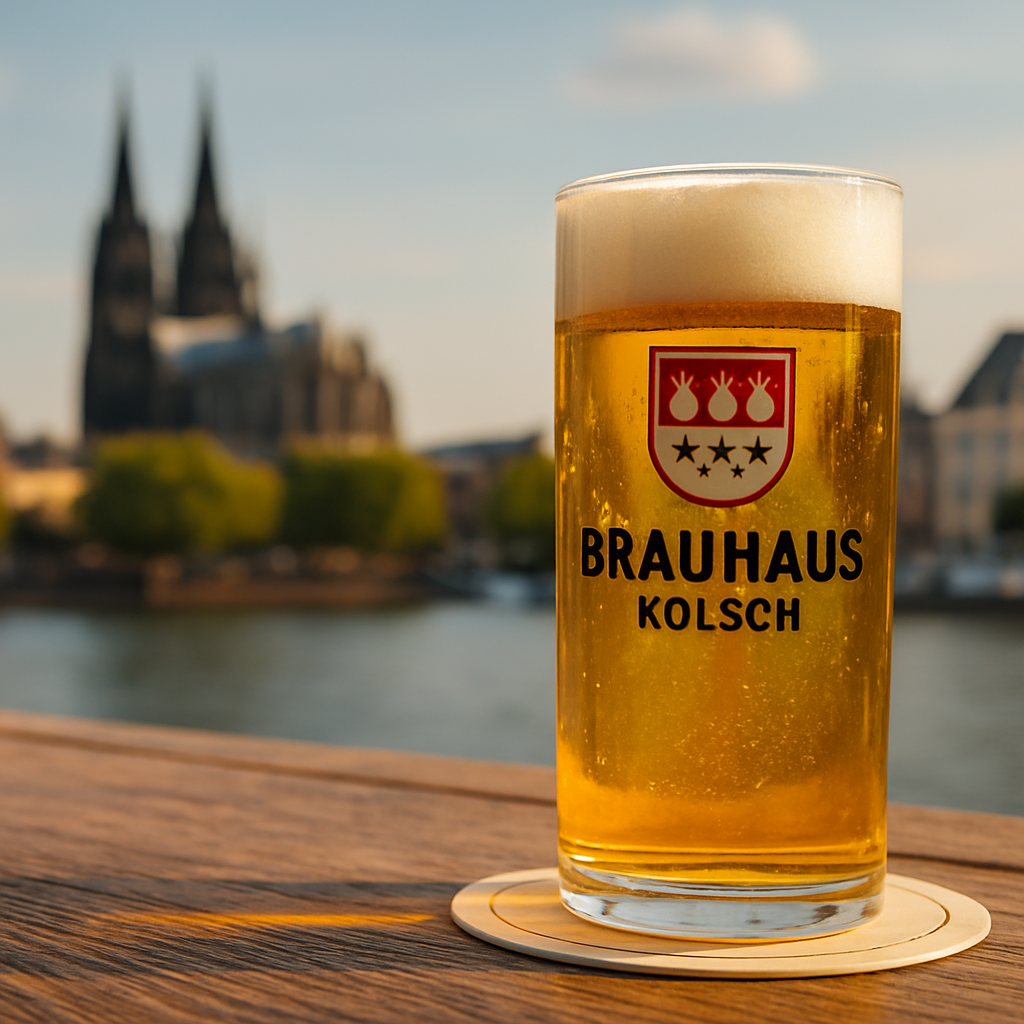
The Kölsch Ritual at a Traditional Brauhaus
Sit down at Früh am Dom or Päffgen and surrender to the system. Your Köbes — the no-nonsense waiter in a blue apron — will deliver a slim 0.2L Stange of Kölsch, the local pale ale that can only legally be brewed within city limits. He'll replace it the moment it's empty. And again. And again. The only way to stop is to place your coaster on top of the glass. Order a Halve Hahn (it's a rye roll with aged Dutch cheese, not half a chicken — the name is a Cologne joke that's been running for about a century) and watch the room work. The beer is light, the glasses are tiny, and the pace is relentless. It's less a meal than a social system, and it's perfect.
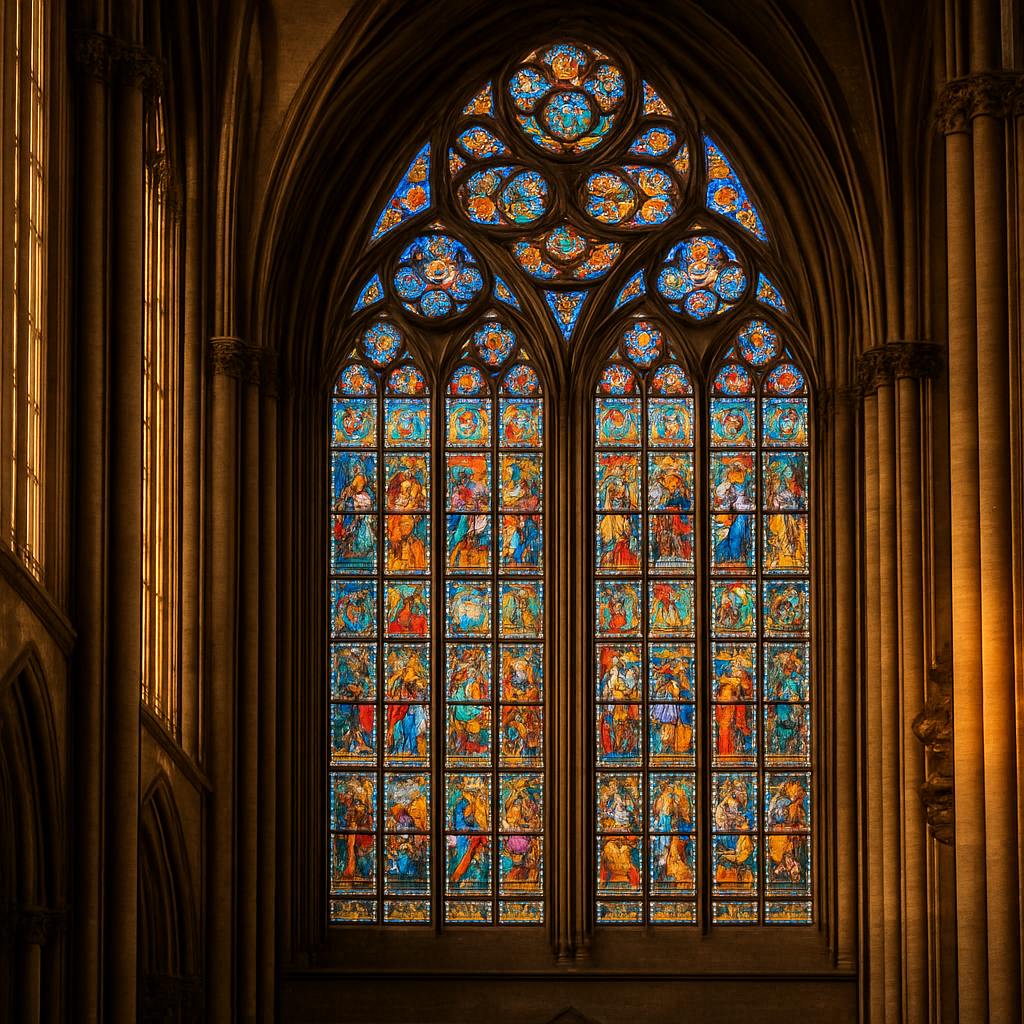
Cologne Cathedral — Inside and Up
You can see the Dom from practically anywhere in Cologne, and photographs don't prepare you for the scale. The twin spires rise 157 meters and the interior is so dark and vertical it feels less like a building than a geological formation. Go inside for the Richter Window — Gerhard Richter's 2007 stained glass installation made of 11,500 squares of colored glass that somehow manages to be both abstract and sacred. Then climb the 533 steps to the south tower platform. The view from the top stretches across the Rhine, over the Hohenzollern Bridge choked with love locks, and out to the plains of North Rhine-Westphalia. Your legs will hate you. Worth it.
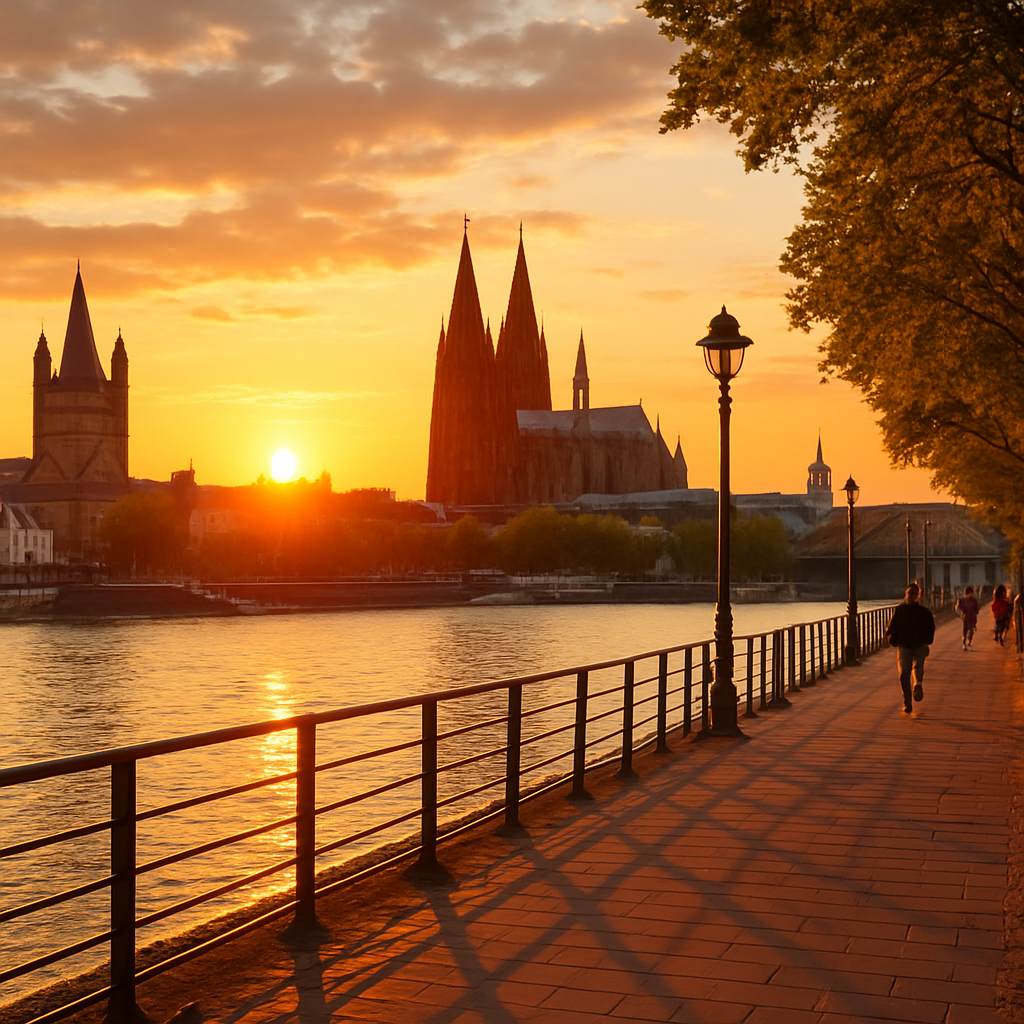
The Rhine Promenade at Golden Hour
The Rheinufer between the Deutzer Brücke and the Hohenzollern Bridge is where Cologne comes to exhale. Walk it around 7pm on a summer evening when the Cathedral catches the last light and the houseboats bob gently and half the city seems to be sitting on the stone steps with a bottle of wine. Cross the Hohenzollern Bridge on foot — the love locks are kitschy and wonderful — and look back at the Old Town skyline from the Deutz side. The view of the Cathedral framed by the bridge and reflected in the river is the postcard shot, and it hits harder in person.
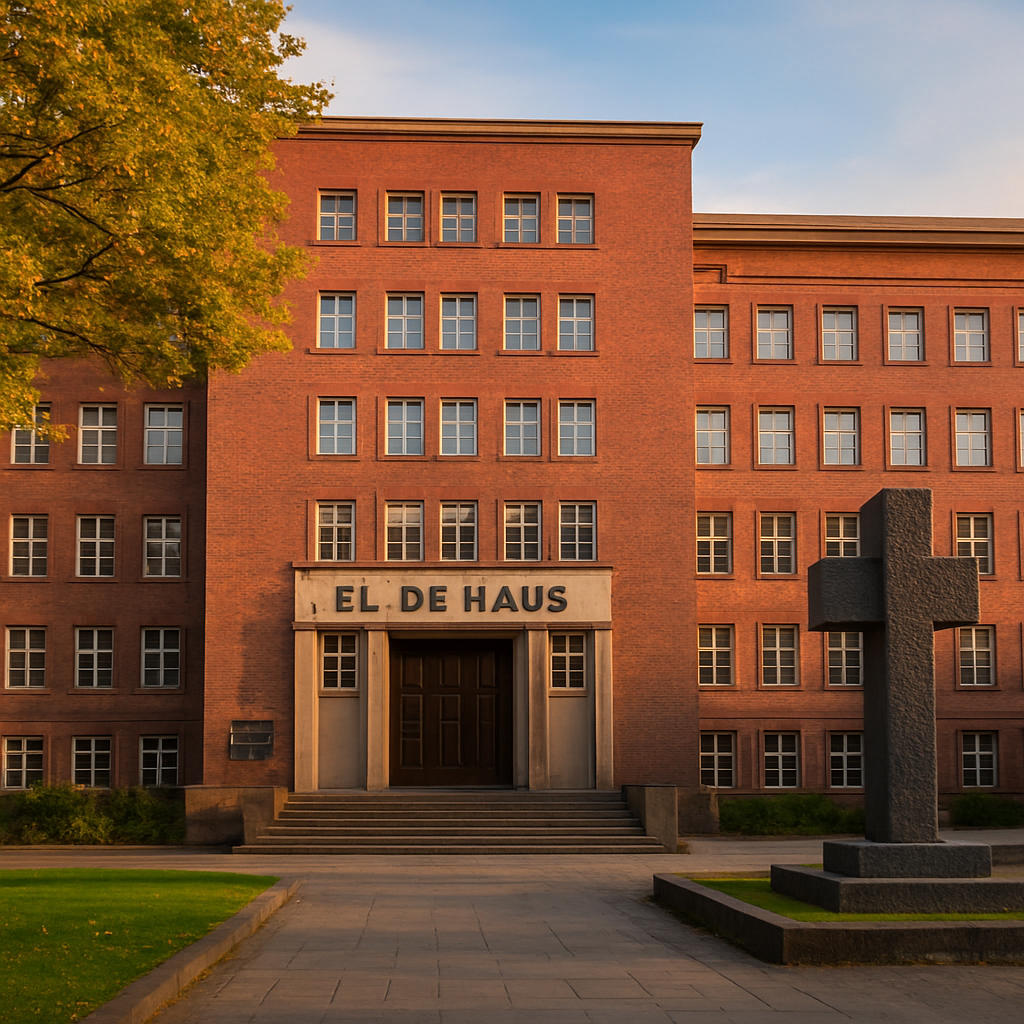
NS-Dokumentationszentrum (EL-DE-Haus)
This is the hardest museum you'll visit in Cologne and the most important. The EL-DE-Haus at Appellhofplatz served as the Gestapo headquarters from 1935 to 1945 — the basement cells still have inscriptions scratched into the walls by prisoners. The permanent exhibition documents Nazi persecution in the Cologne region with unflinching specificity, including the prosecution of gay men under Paragraph 175. The Rosa Winkel — the pink triangle — carries particular weight here, where the history isn't abstract. Visit before Pride week if you can. It grounds everything that comes after.
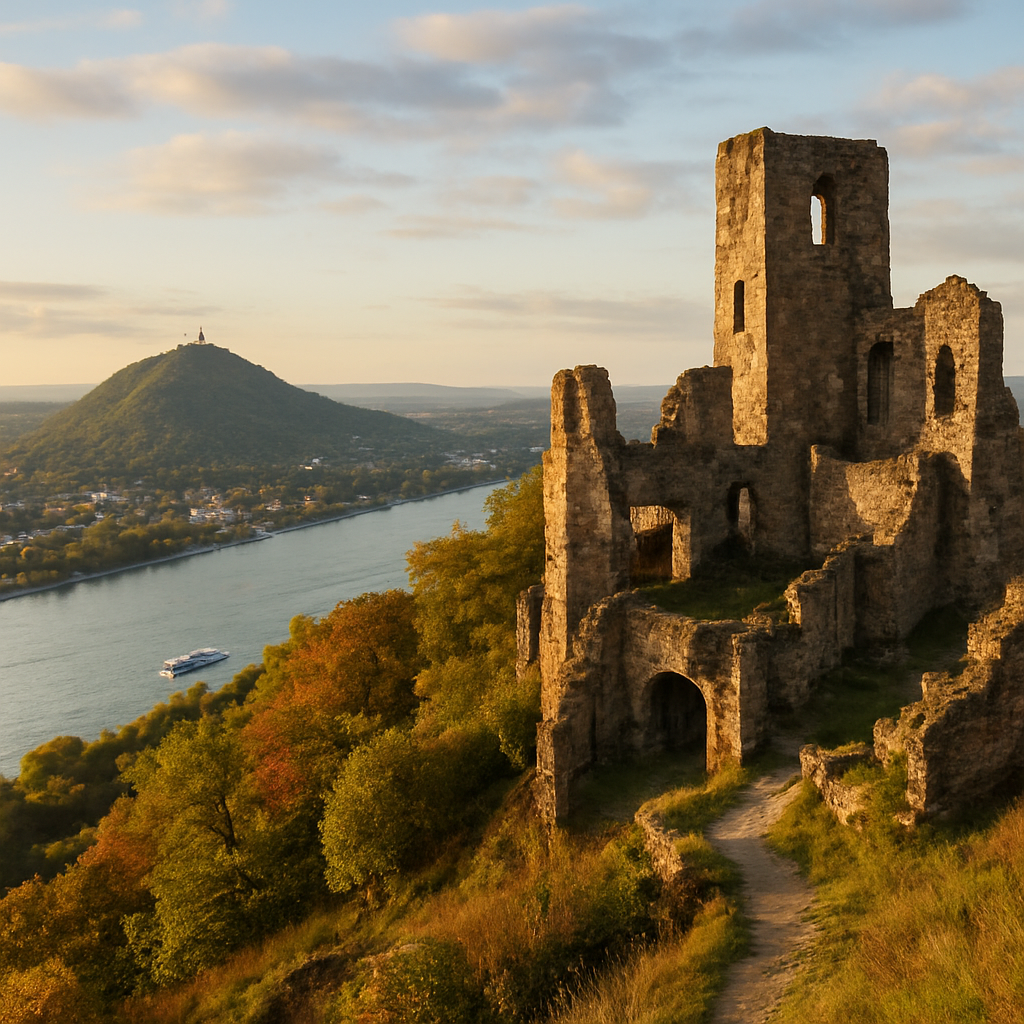
Drachenfels and the Rhine by Boat
Take the Rhine river cruise south from central Cologne to Königswinter — approximately 25 km and about 90 minutes by boat — and climb the Drachenfels, the 321-meter peak topped with the ruins of a 12th-century castle. You can hike up or take the historic cog railway if your legs are still recovering from the Cathedral tower. The view from the summit looks down over the Rhine valley and the Siebengebirge nature reserve, and the wine terraces on the hillside below produce a sharp white Riesling you can taste at the bottom. It's what Cologne residents have been doing on weekends for generations, and they're right to.
The places I actually send people to
Advice that fits how you travel
Cologne is one of the easiest solo trips in Europe. The gay quarter is compact enough that you'll run into the same people twice in one night, which turns strangers into drinking companions fast. The apps are active — Grindr and Romeo (which is German-made and still widely used here) both pull solid results — but honestly, you don't need them. Park yourself at Café Schmitz in the afternoon, move to Ricks or Nachtflug after dark, and you'll have conversations. Unlike Berlin, where English is a default, a few words of German go a long way in Cologne's bars — locals genuinely warm up to the effort, even if your pronunciation is terrible.
Budget-wise, solo Cologne is remarkably gentle. A dorm bed at MEININGER or the DJH hostel in Deutz runs €28–35/night, the KölnCard covers transit and museum discounts, and a Kölsch at a Brauhaus rarely exceeds €2.50. The Bermuda-Dreieck is walkable end-to-end in ten minutes, so you won't be spending on taxis unless you venture to Ehrenfeld for the warehouse party scene.
Safety as a solo gay traveler is a non-issue in the central districts. You can leave a gay bar at 3 AM, take the U-Bahn from Rudolfplatz, and get home without thinking about it. If you want structured community beyond nightlife, Checkpoint Köln on Pipinstraße functions as both a health clinic and community hub, and many LGBTQ+ groups run informal Stammtisch meetups at bars — ask at Checkpoint or check Rubicon e.V. for current listings.
Cologne is one of those cities where being a same-sex couple in public is genuinely, thoroughly unremarkable — and that's not a low bar, it's a gift. Around Rudolfplatz and Schaafenstraße, you're not the minority, you're the vibe. Hold hands, steal a kiss outside a bar, sit on the square steps at midnight — nobody blinks. For something more cinematic, the Rheinufer promenade delivers: the Dom rising above the skyline on one bank, couples of every configuration walking the waterfront as the city lights come on at dusk. It's the kind of evening that doesn't need a plan.
For a dinner that'll actually stick with you, book Restaurant Maximilian Lorenz well in advance — Chef Lorenz is openly gay, Michelin-recognized, and running one of the city's most interesting kitchens. Follow it with a nightcap on the rooftop bar at 25hours Hotel The Circle, which sits right at Rudolfplatz and gives you an elevated view of the neighborhood below. If you want your accommodation to be part of the experience, Hotel im Wasserturm — a converted 1872 water tower in the heart of Kwartier Latäng — delivers circular rooms, architectural history, and the ability to walk to every gay bar in the district in under five minutes. That's a romantic itinerary that requires very little effort to execute.
Time your trip for Karneval in February and you'll understand why Cologne couples talk about it for years. The season runs from Weiberfastnacht through Fat Tuesday — costumes mandatory, dancing in the streets expected, and the LGBTQ+ community out in force turning Schaafenstraße into something that would make Rio blush. June's CSD Köln is the other peak: book accommodation six months out minimum, and go knowing the whole city shows up, not just the quarter. Cologne doesn't treat Pride as a niche event — it treats it as civic infrastructure.
Germany's legal framework for LGBTQ+ families is as solid as it gets, as of 2026: marriage equality, joint adoption rights, and a Self-ID law for gender recognition that took effect in November 2024. Cologne's social climate reinforces all of it. You'll find LGBTQ+ families at the Cologne Zoo, at the Schokoladenmuseum, on Rhine boat trips — and nobody's going to make it strange. This is a city that moved past tolerance into something closer to actual normalcy, and you'll feel that within about ten minutes of arriving.
The practical logistics hold up. The KVB public transit system offers family day tickets covering two adults and up to three children, which keeps getting around affordable. The Cologne Zoo in Riehl is a genuine full-day commitment — over 10,000 animals and an aquarium that earns its admission. The Chocolate Museum on the Rhine is reliably beloved by anyone under 14 (and most people over it, honestly). Rhine river boat trips depart near the Frankenwerft and offer a relaxed way to cover ground without anyone melting down over walking distances. Strollers work fine on the main streets and in central areas; the cobblestoned stretches of Altstadt will test your wrists, so plan accordingly.
As a LGBTQ+ family, you won't need to code-switch here. Anyway e.V., Cologne's LGBTQ+ youth center, runs community events open across age groups — worth checking their calendar at anyway-koeln.de if you want to connect with local families rather than just tourists. The Belgisches Viertel makes an excellent neighborhood base: relaxed outdoor café terraces, menus that accommodate kids without making a production of it, and easy access to both the gay quarter and the city's broader cultural offerings. The NS-Dokumentationszentrum at EL-DE-Haus is appropriate for older kids — the history documented there, including the Nazi persecution of gay men under Paragraph 175, is handled with real weight and is worth the conversation it starts.
What Cologne actually costs
Flights, visas, and the first 30 minutes
Airport: Cologne Bonn Airport (CGN) connects to approximately 130+ cities worldwide and sits about 15 km southeast of the city center. It's a mid-sized, manageable airport — you won't spend an hour navigating terminals to reach baggage claim.
Major Routes: London Gatwick is approximately 1h 45m. Amsterdam is around 1h 10m — practically a commute. Barcelona runs about 2h 20m, Warsaw roughly 1h 55m, Istanbul approximately 3h 10m. From New York JFK, expect around 9h 30m via a European hub connection.
Visas: As of 2026, US, Canadian, Australian, and UK passport holders typically don't need a visa for Germany — but the Schengen 90-day limit applies to all four. EU citizens have full freedom of movement. Entry requirements can change; always check your government's official travel advisory before you fly.
Airport to City: The S-Bahn S13 is the move — €3.20, runs every 20 minutes, and gets you to Cologne Hauptbahnhof in about 15 minutes. It's fast, cheap, and reliable. A taxi runs €25–35 and takes 20–30 minutes depending on traffic, with a fixed-rate zone in effect. Uber or Bolt typically come in at €22–32 on the same timeframe, though surge pricing applies at peak hours. The SB60 bus connects toward Bonn — skip it unless that's your actual destination.
Traven's seasonal breakdown
The questions everyone asks
Is Cologne safe for same-sex couples?
Do I need to speak German?
How much should I budget per day?
When is Cologne Pride?
Is Karneval actually worth it for LGBTQ+ visitors?
What's the trans traveler experience like?
Can I do Cologne as a day trip from another city?
Screenshot this before you go
So should you actually go?
Go. Cologne earns its 9.1 the honest way — not with glamour or spectacle, but with a city that built LGBTQ+ life into its civic identity decades ago and never looked back. The legal framework is as good as it gets anywhere on earth: full marriage equality, adoption rights, comprehensive anti-discrimination protections, and a self-ID law that puts Germany ahead of most of Europe for trans travelers. The scene around Schaafenstraße is compact but deep, the nightlife is real without being exclusionary, and the warmth extends well beyond the gay quarter into the Brauhäuser, the parks, the football stands, the Karneval chaos. It's not a city that performs acceptance — it's a city where acceptance is so baked in it barely registers as a concept anymore. CSD in July, Karneval in February, a random Tuesday in October — Cologne will hand you a Kölsch and make you feel like you've been coming here for years. I mean that with no qualification.
Sources & Resources
Official links we reference when compiling this guide. Last verified 2026-03-15.
- Anyway e.V. — LGBTQ+ Youth Center Cologne
- Checkpoint Cologne — Sexual Health & Community Hub
- Cologne Pride (CSD Köln) — Official Site
- Deutsche AIDS-Hilfe — National HIV/AIDS Organization
- Aidshilfe Köln — HIV/AIDS Support & Sexual Health
- LSVD — Lesbian & Gay Federation in Germany (National)
- NS-Dokumentationszentrum Köln — Nazi Persecution History incl. LGBTQ+
- Rosa Strippe e.V. — LGBTQ+ Counseling & Crisis Support
- Rubicon e.V. — LGBTQ+ Counseling & Community Center Cologne
- KölnTourismus — LGBTQIA+ Guide für Köln