
Düsseldorf doesn't shout. It pours you a 0.25L of copper-colored Altbier, points you toward the Rhine, and assumes you'll figure out the rest.
Düsseldorf is the well-tailored cousin to Cologne's louder Pride machine — quieter scene, better espresso, and the boys on the Kö actually iron their shirts. That's the thesis. This isn't a city that's going to shout its queerness at you the way Berlin does or pack you into a parade the way Cologne does twenty-five minutes down the track. It builds a smaller, more loyal version of the same thing, and then runs it like the rest of the city — efficiently, expensively, and with very good taste in architecture.
The whole queer life of this city happens within a fifteen-minute walk. Friedrichstadt around Bismarckstraße for the bar cluster, the Altstadt's Kurze Straße for the older anchors like K's Bar and Mary's, Boui Boui Bilk south of the center when you want concrete and attitude instead of Altbier and brick. By your third night at Pulverfass, the bartender will know your drink and ask why you ghosted the guy from Tuesday — locals call the scene 'small but loyal,' which is the polite way of saying nothing here is anonymous for long. Frankly, that's the appeal.
What earns the 8.6 on my Traven-Dex isn't the nightlife by itself — it's the stack underneath it. A perfect 10.0 on Legal because Germany sits at the top of the European table and the Selbstbestimmungsgesetz gives trans travelers one of the cleanest legal frameworks in Europe. An 8.4 on Scene that punches well above the city's weight thanks to CSD taking itself seriously since 1996, a community center in Oberbilk that holds the whole thing together, and Cologne's massive infrastructure a regional-train ride away. The MedienHafen at golden hour with a glass of something cold, Frank Gehry's three warped buildings catching the last of the light — that's the city's most underrated date move and it costs you the price of a drink.
Come for an honest week and you'll get the whole thing — Altbier in die längste Theke der Welt, ramen in the Japanviertel that wouldn't be embarrassed to open in Ginza, a promenade down the Kö that cost nothing and looked like everything, and a queer scene that'll remember you the second time you walk in. Düsseldorf doesn't try to be Berlin. It doesn't need to.
The stuff your travel guide buries on page 47
Germany sits at the top of the European league table for LGBTQ+ legal protections, and Düsseldorf benefits from every bit of it. As of 2026, marriage equality has been the law since 2017, joint adoption is legal for same-sex couples, and comprehensive anti-discrimination protections cover employment, housing, and services. Same-sex relations have never been criminalized in modern German law — that's a full 10.0 on Legal from my Traven-Dex, no asterisks.
The bigger story is the Selbstbestimmungsgesetz — the Self-Determination Act in force since November 2024 — which lets trans and non-binary people change their legal name and gender via a simple registry declaration. No medical gatekeeping, no court order, no humiliating panel. It's one of the most progressive gender-recognition frameworks in Europe, and the LSVD+ NRW office is a good resource if you need help navigating any of it on the ground.
CSD — Christopher Street Day — is what Germans call Pride, and Düsseldorf's lands in late May or early June. A reader wrote in to remind me it's noticeably more political than party here: the rally at Johannes-Rau-Platz takes itself seriously, and the parade winds through the Altstadt to the Rhine. Save the glitter blowout for the after-parties. Full schedule is at CSD Düsseldorf.
Pro tip: cash still rules in the Altstadt. Many gay bars on Kurze Straße and the Altbier brewpubs around them either don't take cards or 'mysteriously' lose the terminal connection after 11pm. Hit a Sparkasse ATM before you start the night. And remember — Sunday in Germany means closed. Supermarkets, most shops, the lot. Bakeries open until lunch and the bars never sleep, but if you arrive Sunday morning needing toothpaste, the Hauptbahnhof REWE is your one friend.
What it actually feels like on the ground
Holding hands and PDA: In the Altstadt, Stadtmitte, Friedrichstadt, Flingern, and Bilk, same-sex hand-holding is unremarkable. The Altstadt at 2am has the usual stag-do energy of any German party district, and holding hands on Bolkerstraße has gotten me side-eye but never trouble. In Oberkassel and the outer southern districts like Garath, expect a more conservative read — accepted, but less visible. Standard urban discretion late at night.
Hotel check-in: Non-issue across the board. From Max Hotel Garni in Friedrichstadt to the Capella flagship on the Kö, requesting one bed for two men is a non-event. German hospitality runs efficient and unbothered.
Taxis and rideshare: The Rheinbahn taxis are metered, professional, and reliably uneventful. Uber technically works but is just a more expensive taxi here — skip it. Late-night U-Bahn and the NE night buses cover the Altstadt-to-Flingern-to-Bilk triangle reliably.
Walking home late: Walk back via the Rheinuferpromenade rather than cutting through the train station underpass. The riverside is well-lit and busy; the Hauptbahnhof's south-side underpass attracts the usual late-night fringe of any major German station.
Trans travelers: Self-ID is the law nationally as of 2026, and Düsseldorf is fully compliant. Everyday trans visibility runs lower than in Berlin or Cologne, but the regional infrastructure is real — Puls Düsseldorf runs trans peer support and youth groups, and the wider NRW network connects to Rosa Strippe for counseling.
Sexual health: Checkpoint Düsseldorf does free, anonymous, no-appointment HIV and STI testing — they speak English, they don't lecture, and the results come back fast. Easier than dealing with travel insurance back home. Aidshilfe Düsseldorf is also a soft landing point for anything from harassment to housing weirdness.
Verbal harassment: Rare in central districts. If something does happen, NRW's anti-discrimination office actually responds — locals report it's one of the more functional state-level offices in Germany.
The queer geography
Altstadt
This is the half-square-kilometer along the Rhine that locals call die längste Theke der Welt — the longest bar in the world — and they're not exaggerating. Three hundred-plus pubs, brewpubs, and bars packed into a medieval grid of cobblestone lanes, with the river on one side and the Rathaus on the other. The drink is Altbier, a copper-colored top-fermented beer served in 0.25L glasses by famously gruff Köbes waiters who will keep refilling until you put a coaster on top. Hit Brauerei Uerige on Berger Straße or Brauerei Füchschen on Ratinger Straße for the real thing. The gay scene clusters along Kurze Straße — small, loyal, and easy to walk in a single night. K's Bar is the long-running anchor, with Mary's two doors down catching the same crowd as it migrates. CSD's parade route runs straight through here. Tourism essentials live at Düsseldorf Tourism.
Friedrichstadt
Walk south of the Hauptbahnhof and the streets widen, the architecture turns Wilhelmine, and the city's central LGBTQ+ cluster comes into focus around Bismarckstraße and Charlottenstraße. This is gay-village territory in the practical sense — bars within stumbling distance of each other (Pulverfass, Café Rosi, Fizz), boutique stays like Max Hotel Garni calibrated to the crowd, and a steady weeknight pulse that the Altstadt only hits on Saturdays. PDA comfort here is as high as it gets in Düsseldorf.
Flingern
East of the center, Flingern is where the city's creative class went after rents in the Altstadt got silly. Street art on the brick warehouses, third-wave coffee, vintage shops, and the kind of long brunch that makes you cancel your afternoon plans. The bar culture skews mixed and queer-leaning rather than dedicated-scene, and the energy is younger and artsier than the Altstadt's beer halls. Saturday morning on Ackerstraße is the move.
Bilk
South of the city center, Bilk is the student quarter that grew up. Lively cafés along Aachener Straße, a real neighborhood feel, and Boui Boui Bilk — a converted industrial venue that hosts queer parties, club nights, and weekend markets. It's the alternative scene's headquarters and a useful counterbalance to the polished Altstadt circuit.
MedienHafen
The old industrial harbor reborn as a Frank Gehry sculpture park. The three Neuer Zollhof buildings — one white, one stainless steel, one red brick, all warped — anchor a waterfront stretch that also includes work by David Chipperfield and Steven Holl. The crowd is more polished than the Altstadt; the terraces at golden hour are the city's most underrated date move. The Hyatt Regency sits on the peninsula with a rooftop spa looking back at the city.
Oberbilk
Less polished, more lived-in, and home to Café Rosa Mond — the bar and event space of Düsseldorf's queer community center. It's where the scene's actual organizing happens: youth nights, trans peer groups, fundraisers, and the kind of weeknight hangout that doesn't require eyeliner. Even as a visitor, Puls on Corneliusstraße is a good first stop to find out what's on that week beyond the Altstadt bar circuit. For broader regional resources, LSVD+ NRW covers the whole state.
The experiences worth rearranging your itinerary for
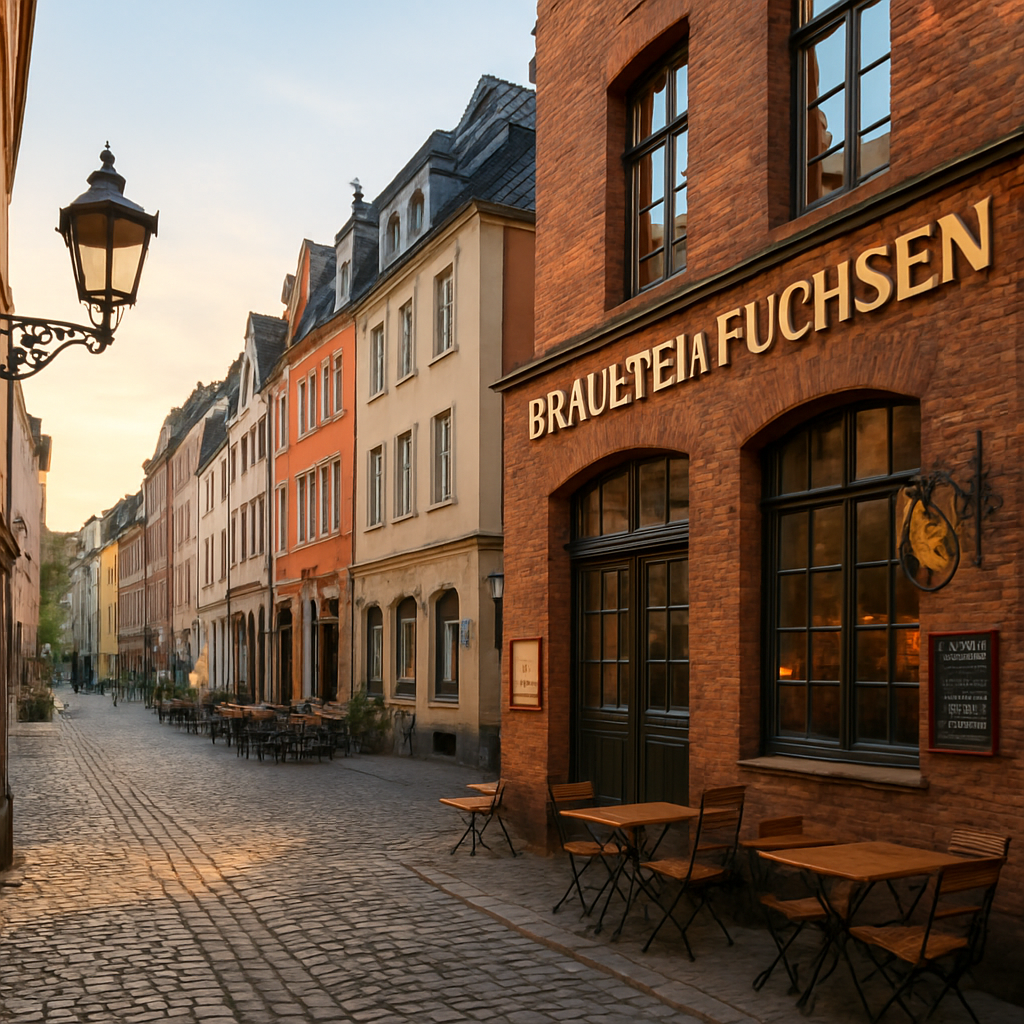
Walk the Longest Bar in the World
The Altstadt's nickname — die längste Theke der Welt — isn't marketing. Three hundred-plus pubs and brewpubs packed into a medieval grid along the Rhine, and the local sport is doing a slow loop of the four traditional Hausbrauereien. Start at Brauerei Uerige on Berger Straße, drift to Füchschen on Ratinger Straße, hit Brauerei Schumacher, and finish at Zum Schlüssel. The Altbier comes in 0.25L glasses; the Köbes will keep refilling until you put a coaster on top. Forget the coaster rule and you'll be drunk by 9pm — a reader had to learn this the hard way and so might you.
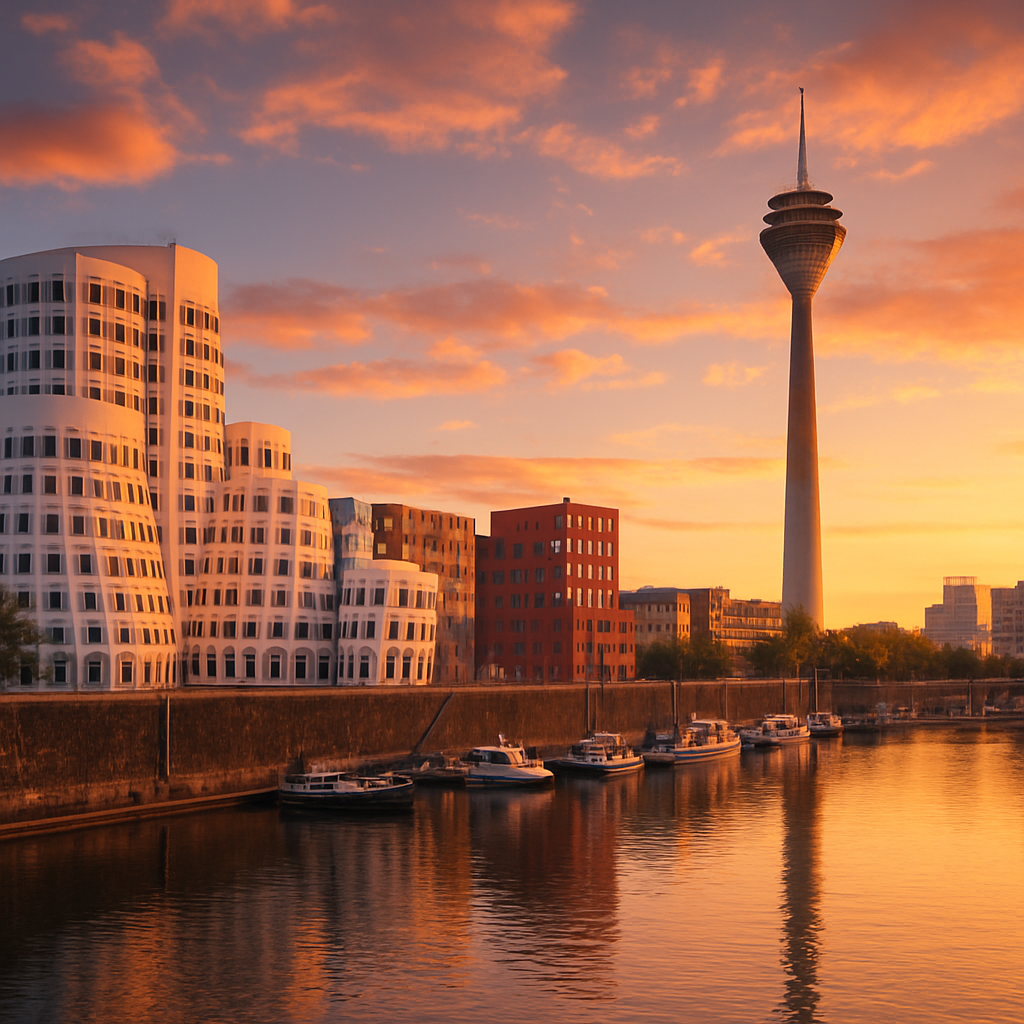
Golden Hour in the Gehry Buildings
The MedienHafen is what happens when a dead industrial harbor gets handed to Frank Gehry, David Chipperfield, and Steven Holl. The three Neuer Zollhof buildings from 1998 — one white, one stainless steel, one red brick, all warped like they're melting — anchor a waterfront stretch that's the city's most underrated date move. Show up an hour before sunset, take a terrace table at one of the waterside restaurants, and let the architecture do the work. Bring someone you want to impress; the Gehry buildings handle the rest.
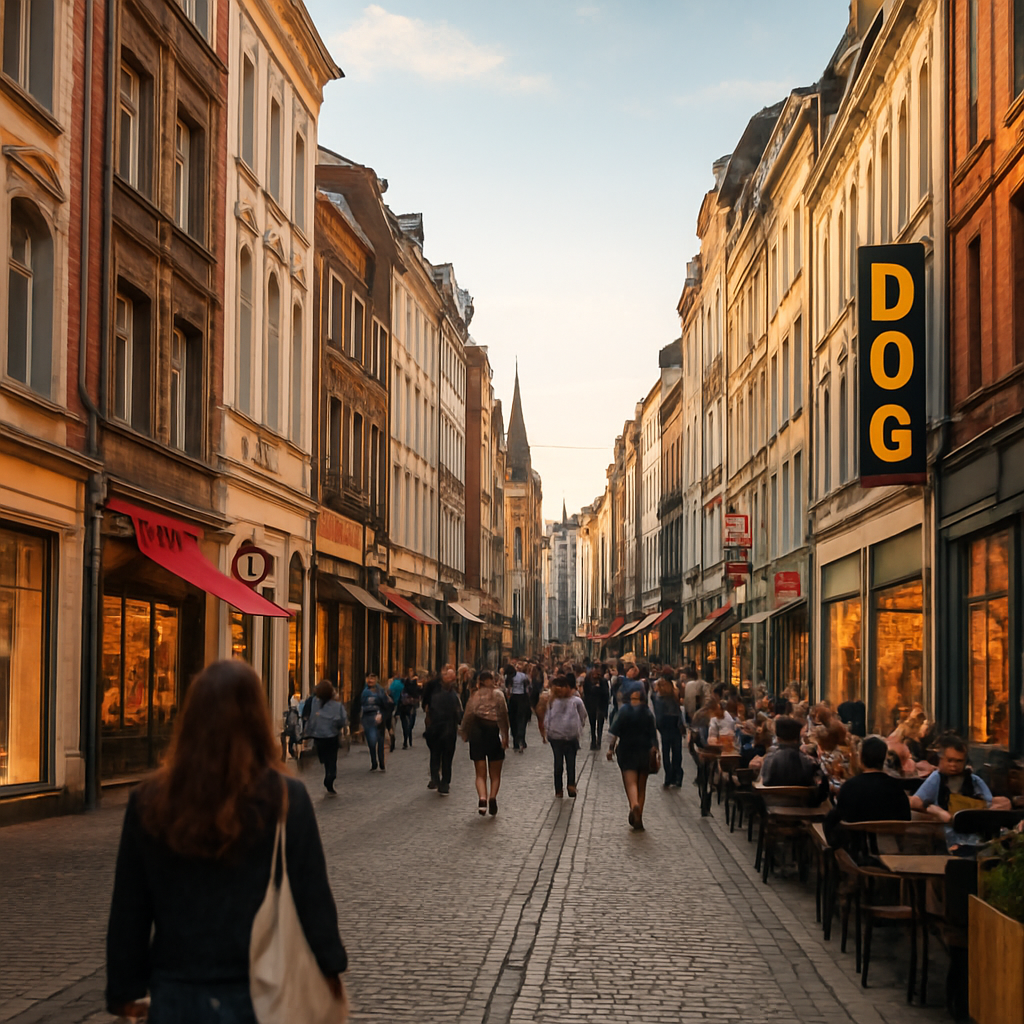
Killepitsch at Et Kabüffke
This is your two-stop Düsseldorf rite of passage. Et Kabüffke is a tiny standing-only window on Flinger Straße that pours Killepitsch — a bittersweet herbal liqueur unique to the city, knocked back cold in a single gulp. Then walk thirty seconds to Brauerei Uerige next door and chase it with an Altbier. That's it. That's the whole experience, and somehow it explains the entire city better than any museum could.
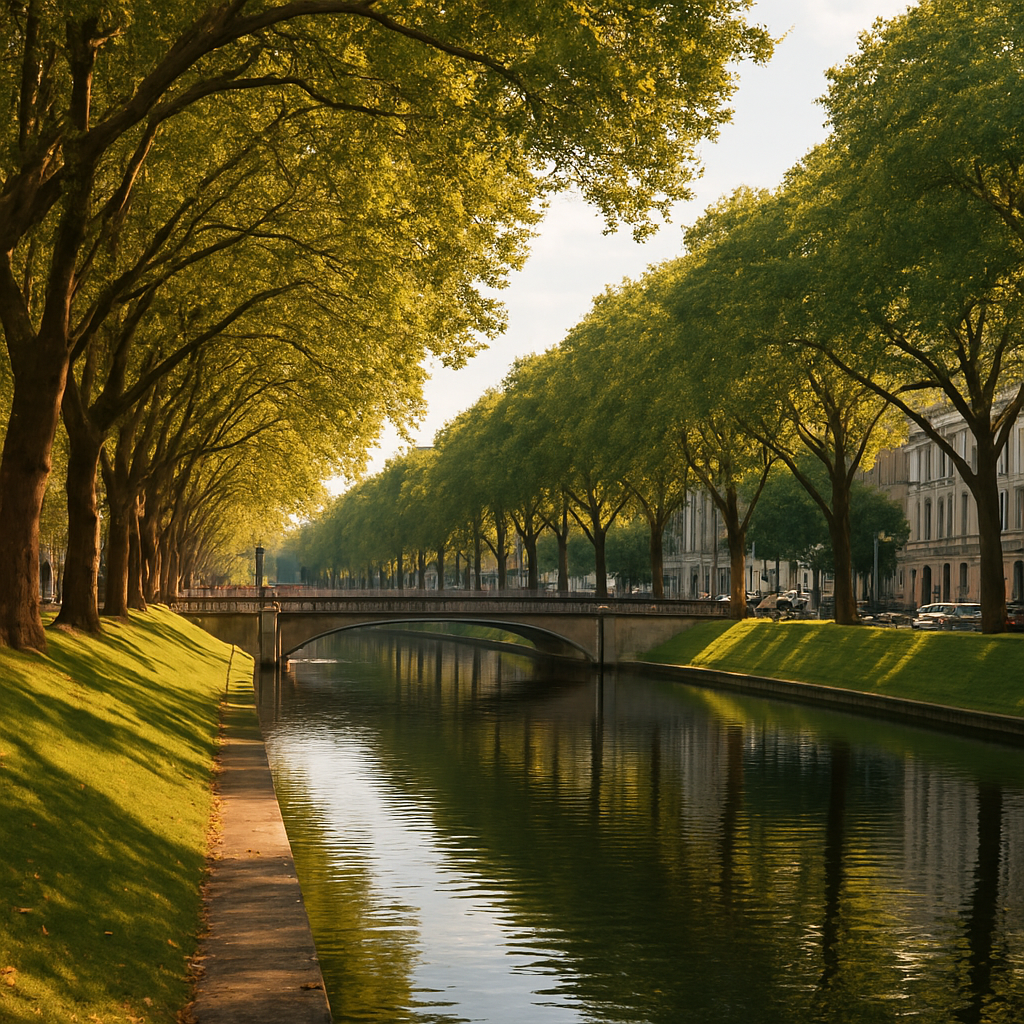
Promenade the Kö
Königsallee — the Kö to anyone who lives here — was laid out in 1802 along a former city moat, lined with chestnut trees and flagship luxury houses on either side of a still-water canal. You don't have to buy anything (you almost certainly can't afford anything) — the walk is the entire point. Start at the Hofgarten end, work south past the Steigenberger and the Breidenbacher Hof, and let the chestnuts and the water do the rest. It's free, it's beautiful, and it's the most photogenic boulevard in western Germany.
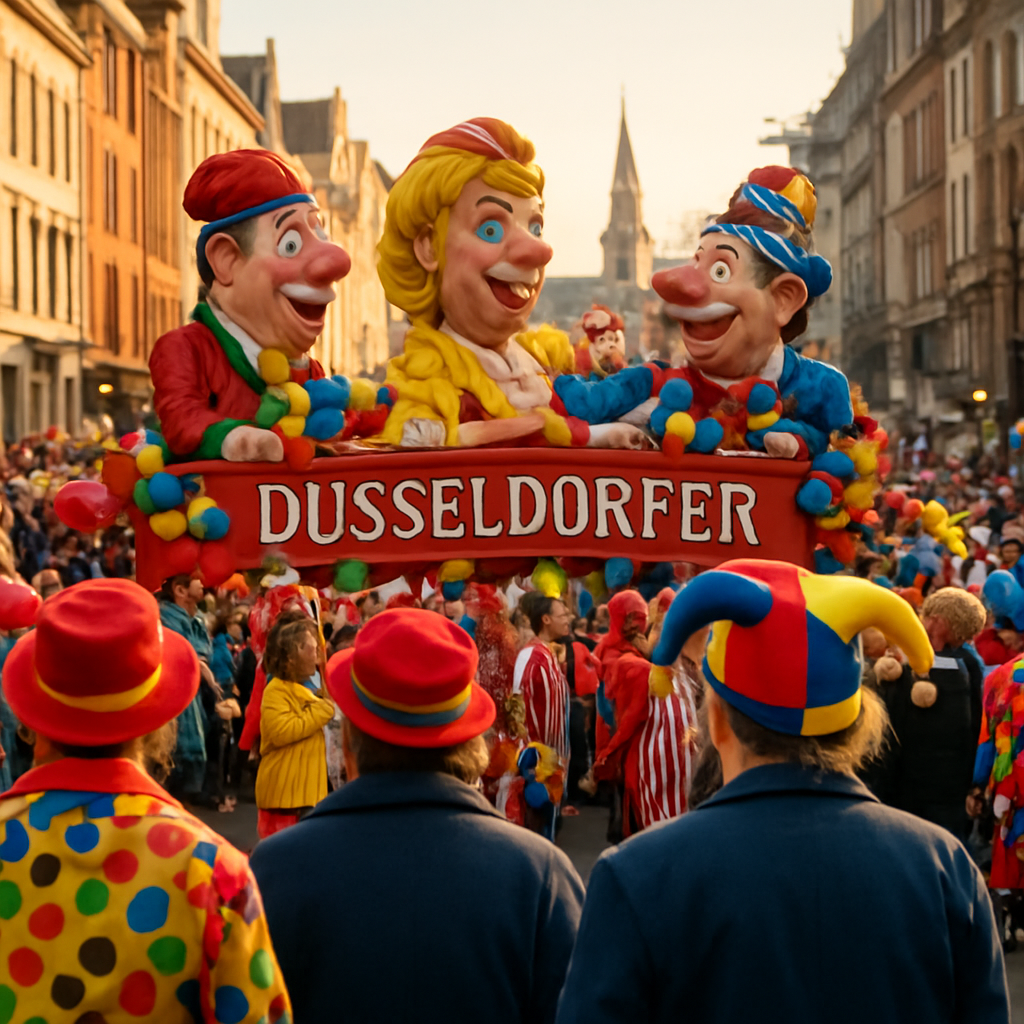
Karneval Like a Düsseldorfer
If you land here in February, throw out your itinerary. Karneval is the city's wild street carnival, and unlike a lot of German traditions, it's genuinely queer-coded — drag, cross-dressing, and absolute foolishness folded into a centuries-old ritual. Altweiber, the Thursday before Rosenmontag, is the day to wear something ridiculous and accept a Bützchen (a peck on the cheek) from a stranger. Then Rosenmontag itself is the parade, the floats, the costumes — the whole thing. Book a hotel a year out; this is the only time the city sells out completely.
The places I actually send people to
Advice that fits how you travel
Solo travel here is easy in the way that German cities at the top of the legal league table tend to be — you can walk most of where you want to go, the U-Bahn runs late, and nobody's tracking what you're doing. The Friedrichstadt cluster around Bismarckstraße and Charlottenstraße is small enough that by your third night at Pulverfass or Café Rosi, the bartender will remember your drink. A reader wrote in to say that's the whole pitch — small but loyal, and they're not wrong.
The apps work the way they work in any major German city — Grindr is the default, Romeo (the German app) has more locals than tourists, and the city's compact enough that 'twenty minutes away' is genuinely twenty minutes away. For something that isn't a bar, Salon des Amateurs inside the Kunsthalle pulls a queer-leaning art-and-electronic crowd that takes its DJs seriously — solo travelers do well there because the room is more about the music than the table you're attached to. Café Rosa Mond in Oberbilk is the other entry point: it's the community center's bar, the programming runs all week, and walking in alone is the entire design.
Budget-wise, solo Düsseldorf runs €90-€130 a day on the low end and €180-€260 if you want to eat well and stay in Stadtmitte. Max Hotel Garni in Friedrichstadt is the one I send solo travelers to first — eleven rooms, walkable to everything, and the price point makes an extra night possible. Pro tip: skip Uber. The Rheinbahn taxis are metered and uneventful, and the NE night buses cover the Altstadt-to-Flingern-to-Bilk triangle reliably.
Düsseldorf rewards couples who like their romance well-tailored rather than theatrical. As of 2026, marriage equality, joint adoption, and comprehensive anti-discrimination protections are all in place — same-sex couples can check into any hotel in this city without anyone blinking, from Max Hotel Garni in Friedrichstadt to the Capella flagship on the Kö. PDA in the Altstadt, Stadtmitte, Friedrichstadt, Flingern, and Bilk is unremarkable. Oberkassel and the outer southern districts read more conservative — accepted, but use standard urban discretion late at night.
The date moves here are real. MedienHafen at golden hour with a drink on one of the waterfront terraces is the city's most underrated romantic play — the Frank Gehry buildings do all the work; you just have to show up looking presentable. The Königsallee promenade with its chestnuts and canal is free and beautiful, and the walk through the Hofgarten that bookends it is the kind of thing that makes the trip. For dinner, Sila Thai has the most cinematic dining room in the city; Agata's is the one-Michelin-star room when the occasion needs the seriousness.
For accommodation, The Wellem on Mutter-Ey-Platz is my pick when couples want luxury and want to walk home from the bars at 2am — both at once, neither compromised. Hotel Indigo in Oberkassel is the quieter play, with the ten-minute tram back to the Altstadt as a feature rather than a bug. And if you're here in February, build the trip around Karneval — Altweiber through Rosenmontag is genuinely queer-coded, and the Bützchen tradition (a peck on the cheek from a stranger) folds same-sex couples into the city's mainstream ritual without a second thought.
LGBTQ+ families travel well in Düsseldorf. As of 2026, joint adoption is legal, same-sex marriage is fully recognized, and Germany's Selbstbestimmungsgesetz covers gender-recognition for trans parents and kids without medical gatekeeping. Practically: two-mom and two-dad families check into hotels, register at the Bürgeramt, and enroll kids in programs without the paperwork getting weird. North Rhine-Westphalia is one of Germany's more progressive states on family policy, and Düsseldorf's civic infrastructure reflects it.
For things to actually do with kids, the city is compact and walkable in the way that suits stroller life. The Rheinuferpromenade runs flat and wide along the river — easy walking, ice cream stands, ferries crossing. The Hofgarten at the north end of the Kö is a proper city park with playgrounds and ducks. Carlsplatz Markt is the central food market and the easiest lunch in the city for picky eaters — currywurst, oysters, prepared food, the lot. The Aquazoo Löbbecke Museum in Nordpark covers a rainy afternoon, and a day trip to the Zollverein coal-mine UNESCO site outside Essen turns industrial heritage into a Bauhaus playground that older kids genuinely engage with.
Logistics: family rooms run €110-€160 at the moderate end and €200-€320 for proper four-star. The S-Bahn and U-Bahn are stroller-friendly with elevators at most central stations, group day tickets cover the family for €16-€20, and Sunday closures mean you should stock up on snacks Saturday — the bakeries open until lunch on Sundays but the supermarkets don't. Pro tip: most central restaurants are casual enough to walk into with kids before 7pm without a reservation, but the Michelin-star rooms (Agata's, Nagaya, Im Schiffchen) are date-night territory rather than family dinners.
What Düsseldorf actually costs
Flights, visas, and the first 30 minutes
Airport: Düsseldorf International (DUS) sits about 8 km north of the city center and handles approximately 190 direct routes across Europe, the Middle East, and North America. It's the third-busiest airport in Germany, and the SkyTrain monorail connects the terminals to the long-distance rail station in about 5 minutes — a small piece of efficiency that tells you a lot about the city.
Major routes: Direct service from London (~1h 20m), Paris (~1h 15m), Amsterdam (~1h), Madrid (~2h 45m), New York JFK (~8h), and Dubai (~6h 30m). For domestic connections, ICE rail from the Hauptbahnhof typically beats flying — Cologne is 25 minutes, Frankfurt is 75 minutes, and Berlin is just over four hours by train.
Visa requirements (as of 2026): US, UK, Canadian, and Australian passport holders can typically enter visa-free for stays up to 90 days within any 180-day period in the Schengen Area. The new ETIAS authorization is required from 2026 — apply online before you fly and pay the small fee. EU and EEA citizens travel under freedom of movement; no visa or ETIAS needed.
Airport to city: The S-Bahn (S11) runs every 20 minutes direct to the Hauptbahnhof — €3.40, 12-15 minutes, covered by your VRR ticket. Regional trains (RE/RB) from the Düsseldorf Flughafen station are the fastest rail option at 7-10 minutes for the same €3.40. Taxis run €25-€35 and take 15-25 minutes depending on traffic. Rideshare via Uber or FreeNow runs €20-€30 from designated pickup zones, with surge pricing during trade fairs and events. Pro tip: if you're staying in the Altstadt, Stadtmitte, or Friedrichstadt, the S-Bahn drops you within walking distance of every hotel I'd recommend — there's no good reason to take a taxi.
Traven's seasonal breakdown
The questions everyone asks
Do I need to speak German?
Is it safe to hold hands in Düsseldorf?
Düsseldorf or Cologne for the gay scene?
When is CSD Düsseldorf?
How much should I budget per day?
Do I need a visa?
Cards or cash in the Altstadt?
Screenshot this before you go
So should you actually go?
Go. Düsseldorf is the gay weekend Europe keeps forgetting it has — full legal equality, a small-but-loyal scene that rewards repeat visits, world-class architecture in the MedienHafen, the best Japanese food in Germany, and Cologne sitting twenty-five minutes away as a built-in bonus round. It's not the city you go to for chaos; it's the city you go to when you want a long weekend that actually delivers — well-tailored, well-priced for what you get, and welcoming in the unfussy German way that doesn't need to be advertised. LGBTQ+ travelers will find a city that has already done the legal and cultural work and is now simply getting on with the business of being a very good place to drink Altbier, eat tonkotsu, and walk home along the Rhine. An 8.6 on my Traven-Dex, and I'd pay it again next month.
Sources & Resources
Official links we reference when compiling this guide. Last verified 2026-05-03.