
Frankfurt won't sell itself to you. It'll pour you a Bembel of cloudy apple wine on a Tuesday, point you across the Eiserner Steg, and let the city do its own talking.
It's a Tuesday night on Brönnerstraße, just past eleven, and the door at Blue Angel is propped open because the room inside has gotten warm enough to need the air. A guy in a banker's button-down is buying a round for two friends in head-to-toe leather, all three of them speaking English with three different accents — Singaporean, Bornheim-local, somewhere east of Vienna. Nobody's performing anything. Nobody's checking the door. The drag queen running the back room is on her second number and the crowd, maybe forty deep, is clapping on the off-beat because half of them are German and the other half have been in Frankfurt long enough to know better.
This is the city in miniature. Frankfurt doesn't have Berlin's anything-goes mythology or Cologne's sprawling gay village, and it never tried to. What it has instead is die Gasse — the two-block radius along Alte Gasse and Brönnerstraße where the entire scene lives within a five-minute walk, run at a sane hour by people who'd rather have a real conversation than a circuit. There's a reason I gave it an 8.2 on my Traven-Dex, and a 10 on Legal that's not even up for discussion as of 2026. Marriage equality, self-ID for trans residents, Hessen's anti-discrimination enforcement that actually shows up — Germany has done the work, and Frankfurt benefits from all of it without making a show of it.
What surprised me is how much of the actual queer life happens off the Gasse. Berger Straße in Bornheim is where people brunch on Sunday and live the rest of the week — the bars there aren't labeled, they just are. Cross the Eiserner Steg to Sachsenhausen and you're in 1700s drinking territory, where the apple wine taverns around Klappergasse have been pouring Ebbelwoi from stoneware Bembel since long before anyone needed a flag to mark which tables were welcome. They all are.
My Chill score of 8.5 reflects what every reader writes in to confirm: holding hands here draws a glance at most, and usually nothing. The international finance crowd, the trade-fair churn, the Messe weeks when the whole city tilts toward English — it adds up to a place that's too busy being cosmopolitan to bother being parochial. Frankfurt is small. That's not a knock. Small is what makes it walkable, repeatable, and the rare European city you can actually get to know in three days.
The stuff your travel guide buries on page 47
Germany is, as of 2026, one of the most legally settled places on earth to land as an LGBTQ+ traveler. Marriage equality has been federal law since 2017, joint adoption rights for same-sex couples are fully established, and the country's anti-discrimination framework (the Allgemeines Gleichbehandlungsgesetz, or AGG) covers employment, housing, and access to goods and services. LSVD tracks the policy weather nationally if you want the deeper read.
The bigger story for trans and non-binary travelers is the Selbstbestimmungsgesetz (SBGG) — Germany's Self-Determination Act, in force since November 2024. Legal gender recognition is now a straightforward declaration at the local Standesamt rather than a medicalized court process, which puts Germany among Europe's most progressive frameworks as of 2026. VLSP maintains current guidance for trans and intersex travelers on what the new process actually looks like in practice.
On the ground, Frankfurt feels exactly like what the law promises. This is a finance and trade-fair city full of globe-trotting expats, which means the LGBTQ+ infrastructure here skews international and the cultural reception is genuinely matter-of-fact. PDA on Alte Gasse draws nothing. PDA on Berger Straße in Bornheim draws nothing. PDA in the city center draws, at most, a glance. Hessen's state-level enforcement is real, not theoretical.
Pro tip: Frankfurt's gay scene is small but consistent — go midweek if you actually want to talk to people. Weekends tilt more tourist-heavy, and during Messe trade-fair dates, hotel prices go borderline insane and the bars get noticeably louder. CSD Frankfurt typically lands in late July; check CSD Frankfurt for the exact date, which shifts a few weeks each year. Stadt Frankfurt publishes the official city calendar for everything else.
What it actually feels like on the ground
Holding hands and PDA: Same-sex couples can hold hands across most of Frankfurt without incident as of 2026. On Alte Gasse, Brönnerstraße, Berger Straße in Bornheim, and the Mainufer riverbanks, it's fully normalized. In the central Innenstadt and along Römerberg, you'll draw no attention. The outer commuter towns (Bad Homburg, Hanau) read more neutral than hostile — generally fine, but with less LGBTQ+ visibility, so situational awareness applies.
Hotel check-in: A non-issue at every property in this guide. International chains and German design hotels alike are typically welcoming to same-sex couples; double beds, joint registrations, and shared reservations don't generate friction.
Bahnhofsviertel after midnight: The station quarter is where Frankfurt's nightlife concentrates and where the city's edges show. It's broadly tolerant — the LGBTQ+ venues here include Pulse and the leather/fetish energy that clusters near Kaiserstraße — but it gets rougher late, with more visible drug activity and street tension than elsewhere in the city. Standard urban awareness, not fear: walk in pairs, stick to the lit blocks, and you're fine.
Taxis and ride-share: Generally professional and unremarkable. No documented pattern of drivers refusing or harassing LGBTQ+ passengers in Frankfurt. Uber and FreeNow both work citywide.
Trans travelers: Frankfurt is one of Germany's most cosmopolitan cities, with trans-inclusive venues and accessible healthcare. The SBGG framework as of 2026 means ID documents can be updated through declaration rather than litigation. VLSP keeps current process documentation; for local support, ProFamilia Frankfurt handles sexual health and counseling, and Switchboard Frankfurt on Alte Gasse is the community's main clearinghouse.
Verbal harassment: Rare in central Frankfurt and the Bornheim/Nordend residential belt. Not unheard of in nightlife transit zones, but the pattern is opportunistic rather than targeted. Germany's federal anti-discrimination law and Hessen's enforcement mean legal recourse exists if something goes wrong — Hessisches Ministerium für Soziales und Integration is the state-level entry point.
HIV and sexual health: AIDS-Hilfe Frankfurt is the local arm of Deutsche AIDS-Hilfe; testing is straightforward, frequently free, and language-accessible. PrEP is available and covered under statutory health insurance for residents.
The queer geography
Innenstadt — Alte Gasse & Brönnerstraße
The central district is Frankfurt's commercial spine, anchored by the medieval Römerberg and the half-timbered reconstruction of the old town. You're a five-minute walk from the Kleinmarkthalle — the covered market that locals call the city's stomach — to the cathedral to the riverbank. The Fressgass (officially Große Bockenheimer Straße) is the eating street: upscale delis, wine bars, the kind of pedestrian energy that makes the Innenstadt feel less corporate than its skyline suggests.
The gay scene tucks itself into a two-block radius along Alte Gasse and Brönnerstraße, what locals just call die Gasse. Blue Angel has been the anchor since the 1970s; Harvey's, Metropol, and Silber fill out the block. It's compact, walkable, and operates at a sane hour — things peak around midnight and wind down by 3am, which is honestly civilized. CSD Frankfurt stages its main rally a few minutes away at the Römer.
Bornheim — Berger Straße
Berger Straße runs east from the city center through what feels less like a tourist neighborhood and more like an actual one — the long pedestrian-friendly artery that locals call "Bernemer Hauptstraße." Cafés spill onto the sidewalk, organic grocers and old-school bakeries operate two doors apart, and the post-industrial gentrification has stopped at the threshold of charming. Sunday mornings here are the city's best brunch crawl, full stop.
This is where queer Frankfurt actually lives. The bars on Berger Straße aren't labeled — they just are, the way every good neighborhood eventually becomes without anyone making a declaration. Switch in adjacent Nordend is the closest thing to a flagship. A reader told me the post-CSD park drift up here is where the real community mixes — less performative than the main stage, more locals who've been doing this for twenty years.
Sachsenhausen
Cross the Eiserner Steg footbridge from the Römer and you land in Sachsenhausen, the cobbled south-bank neighborhood that has been Frankfurt's drinking quarter since the 1700s. The pull here is Ebbelwoi — Frankfurt's tart, fermented apple wine, served in a stoneware Bembel at traditional taverns clustered around Klappergasse. Adolf Wagner has been pouring it since 1931. Order it, commit to it, eat Grüne Soße with potatoes, and don't pretend you'd rather have a Riesling.
The Museumsufer — the south-bank museum embankment — runs along the river with a dozen institutions in a row, and the Sachsenhäuser Ufer turns into an informal queer hangout on summer Sundays: locals spreading out with apple wine, bikes, and dogs while the Main catches the light. Stadt Frankfurt publishes the museum and event calendar.
Bahnhofsviertel
The station quarter is the city's loud, multilingual underbelly — global street food, late-night pho, neon, and a bohemian energy that the bankers across the river occasionally pretend not to notice. The English Theatre, Roomers, and the densest concentration of after-hours nightlife in the city all sit within these blocks.
Pulse anchors the LGBTQ+ presence here, and the leather and fetish energy concentrates around Kaiserstraße more than on the Gasse — a midnight wander makes the geography self-explanatory. For community resources beyond the nightlife, ProFamilia Frankfurt handles sexual health and counseling out of nearby central offices.
The experiences worth rearranging your itinerary for
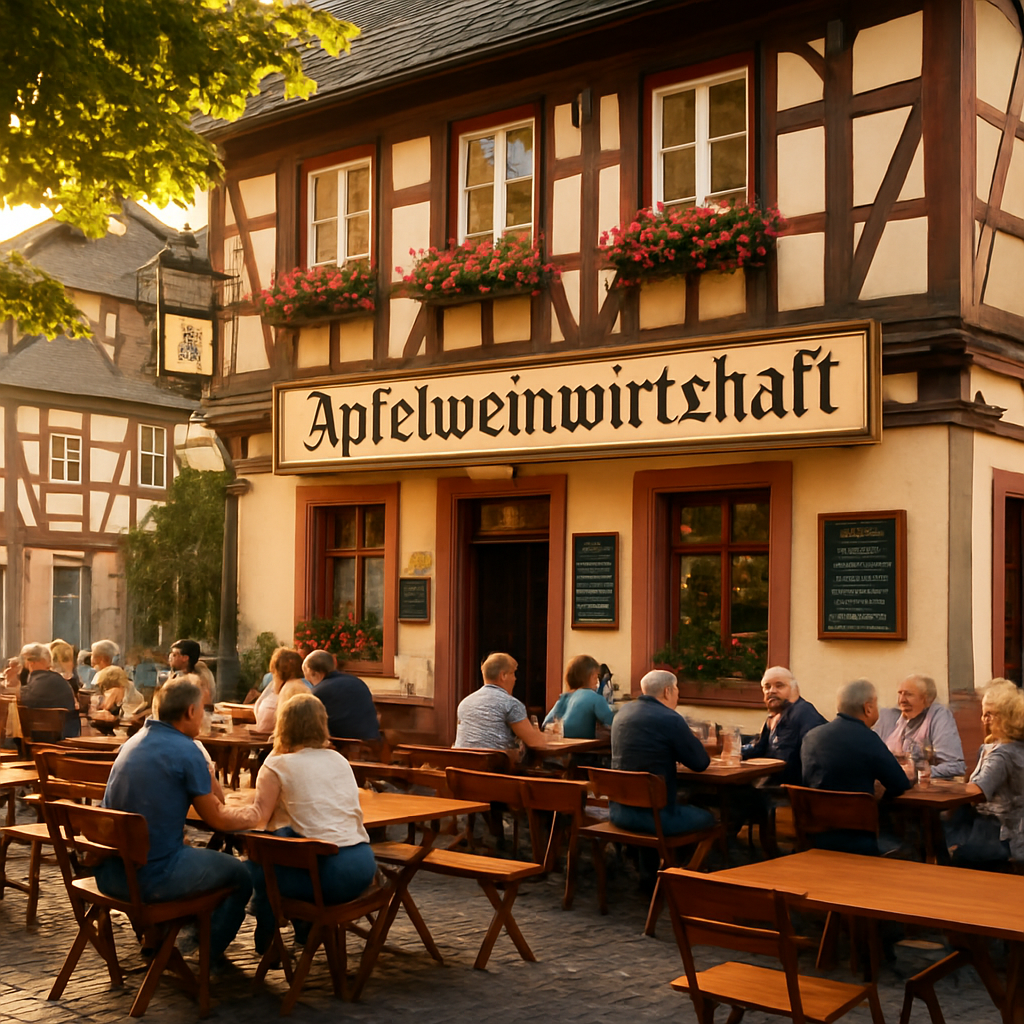
Ebbelwoi in a Sachsenhausen Tavern
Cross the Eiserner Steg footbridge from the Römer and walk straight into the cobbled alleys around Klappergasse, where Frankfurt's apple wine taverns have been pouring Ebbelwoi from stoneware Bembel jugs for three centuries. Order it at Adolf Wagner — pouring since 1931 — and commit to it: tart, cloudy, faintly funky, with Grüne Soße over potatoes and Handkäse mit Musik on the side.
The tables are communal, the staff is unhurried, and the bars on Brönnerstraße are a ten-minute walk away when you're done. The evening has a natural arc here, and you should let it happen.
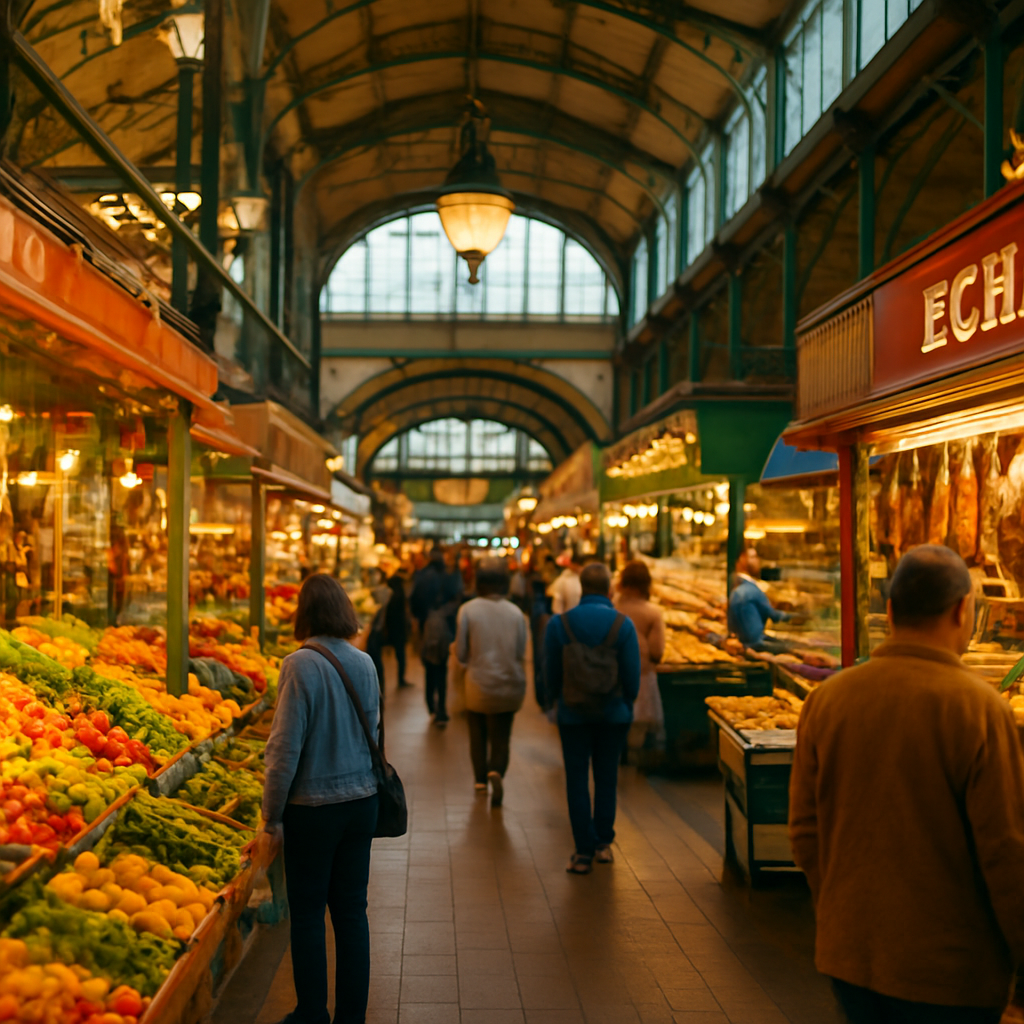
A Saturday Morning at Kleinmarkthalle
The Kleinmarkthalle sits a few minutes' walk from the Römer and runs over 150 stalls deep — regional cheese counters, charcuterie, fresh pasta, hot food vendors, and an upstairs wine bar that locals treat as the lunch destination it actually is. Walk in hungry on a Saturday morning when the energy peaks and the produce is at its loudest.
Locals call this place the city's stomach. It's queer-friendly by neighborhood default rather than by design — which, honestly, is the highest endorsement a market can earn.
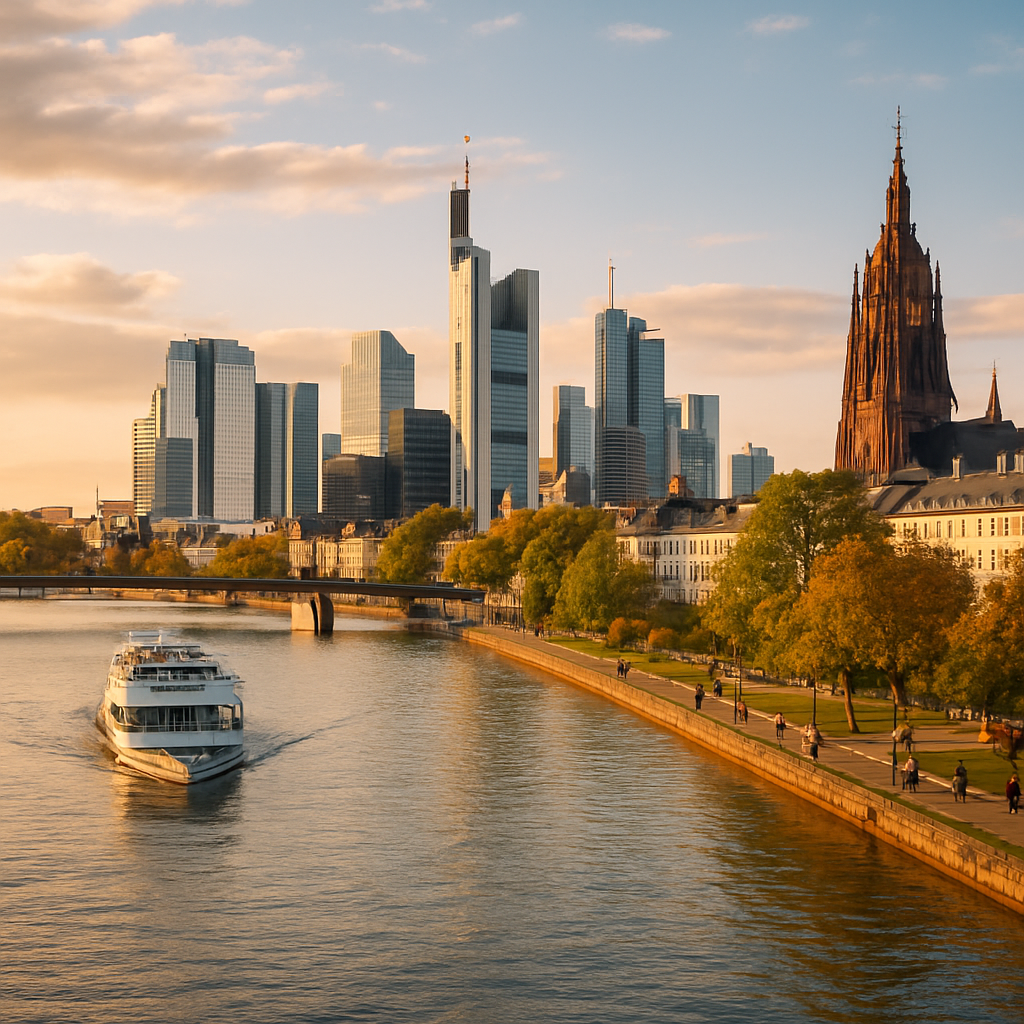
The Museumsufer Walk
The Museumsufer — Frankfurt's south-bank museum embankment — lines up roughly a dozen institutions in a single riverside row, including the Städel Museum and the Museum Angewandte Kunst. Pick two, walk the embankment between them, and stop for lunch on the terrace at Emma Metzler with the Main running ten meters from your table.
On summer Sundays the Sachsenhäuser Ufer turns into an informal hangout: locals spread out with apple wine, bikes, and dogs, and the river catches the late light in a way that justifies the walk.
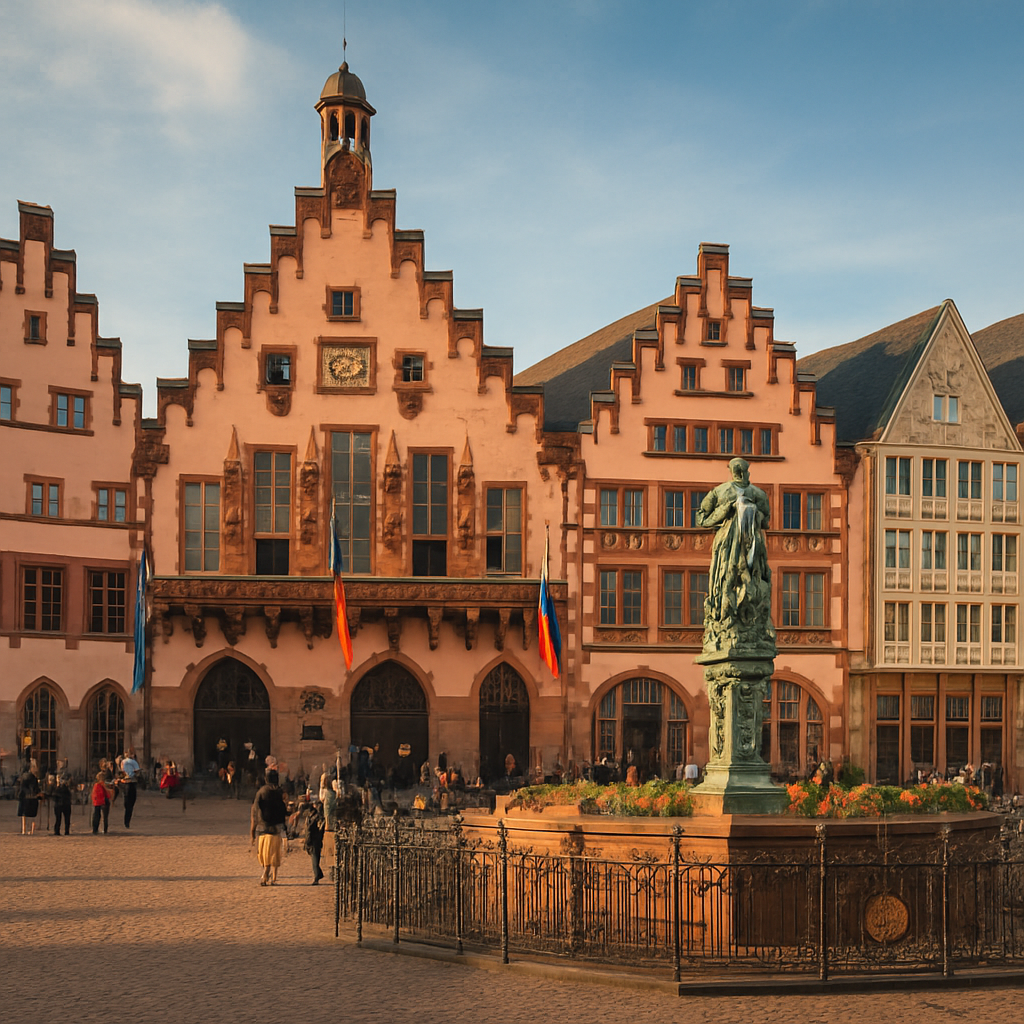
Römerberg, the Altstadt, and MMK
The Römerberg is the medieval square at Frankfurt's heart, anchored by the half-timbered city hall and the reconstructed old town that survived what the war did to it. Walk the square, climb the cathedral tower for the skyline view, and then cut three blocks north to the Museum für Moderne Kunst — the triangular Hans Hollein building locals call Tortenstück, the slice of cake.
The MMK collection runs from Warhol and Beuys through rotating shows that regularly land on identity, sexuality, and social history. Twelve euros for one of Germany's serious contemporary museums is a deal, and the building alone earns the visit.
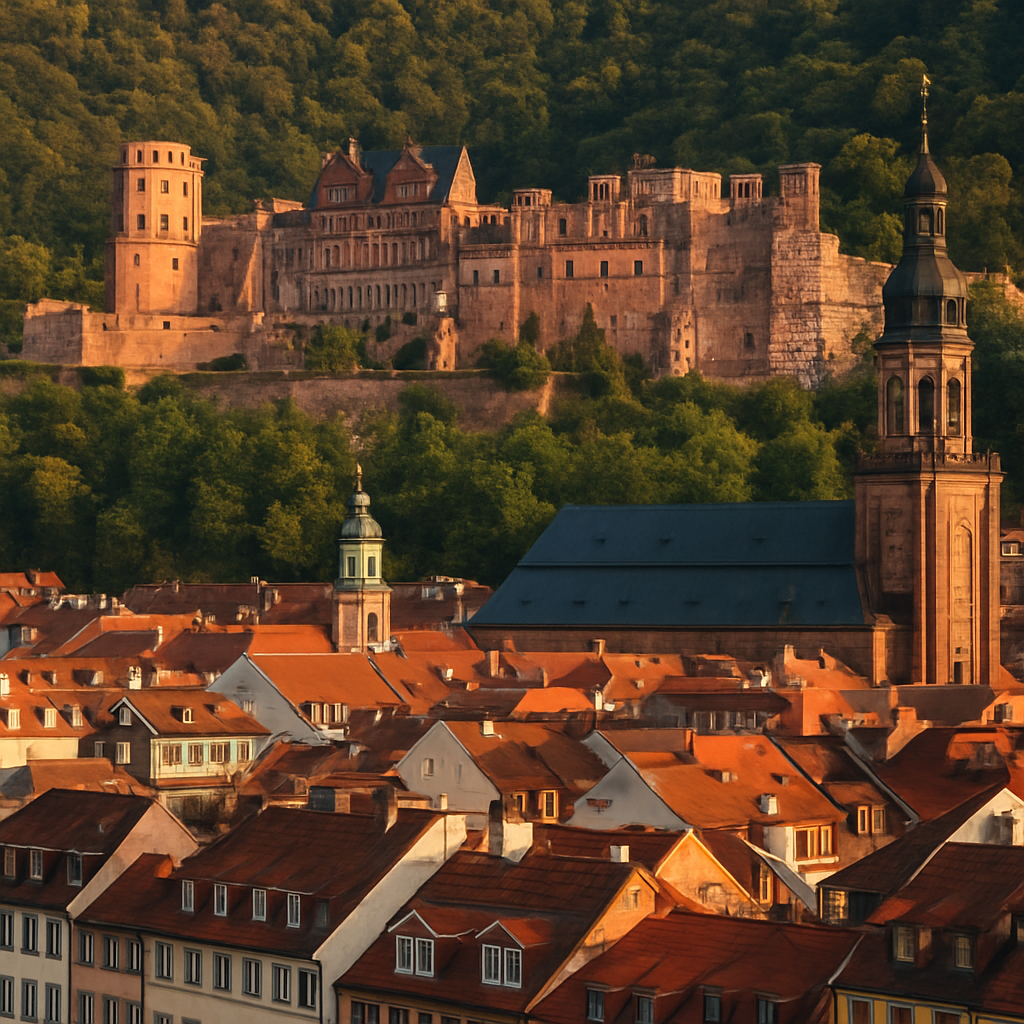
A Day in Heidelberg
Fifty minutes south by direct regional express and you're standing in Heidelberg's Altstadt, the cobblestoned university town home to Germany's oldest university — Ruprecht-Karls-Universität, founded 1386. Walk the Hauptstraße, climb to the castle ruins above the Neckar River, and eat lunch in the student quarter where the prices remember that students still live here.
The civic culture skews progressive thanks to the university, and the city hosts its own Heidelberger CSD. It's the easiest day trip out of Frankfurt and the one most travelers end up glad they made.
The places I actually send people to
Advice that fits how you travel
Frankfurt is built for the solo traveler who knows how to move. The gay scene on Alte Gasse and Brönnerstraße is compact enough that you'll have your bearings by the second night — not a maze, not a scavenger hunt, just a two-block radius where the bars form a natural rotation. Start at Harvey's for a first drink — a neighborhood bar named after Harvey Milk that functions exactly like one: friendly, unhurried, the right temperature for introducing yourself to a stranger. The crowd here skews international, English is zero problem anywhere on the Gasse, and the person next to you at the bar is as likely to be from Singapore as from Bornheim.
The budget math works well here. The S-Bahn day pass runs about €9 and covers the whole city; the Kleinmarkthalle does a serious lunch for under €10; and Five Elements Hostel in the Bahnhofsviertel puts you in the middle of the nightlife for €18 a dorm bed. Single rooms at the Motel One Römer start around €80, and you're a footbridge crossing from Sachsenhausen. Frankfurt doesn't require spending a lot to experience it properly — the city's best moves are a covered market, a river walk, and a stoneware jug of apple wine.
One honest piece of advice: go midweek if you actually want to talk to people. Weekend nights on the Gasse tilt tourist-heavy, especially around Messe trade-fair dates when the bar energy gets louder and the conversation gets shorter. Midweek Frankfurt — a Tuesday at Blue Angel, a Thursday at Harvey's — is when the regulars show up and things actually happen. The apps are active, but Frankfurt's scene is compact enough that showing up in person still beats swiping.
For same-sex couples, Frankfurt is one of Germany's most comfortable cities to move through openly — which is saying something in a country with marriage equality since 2017 and comprehensive federal anti-discrimination law as of 2026. On Alte Gasse, along the Mainufer riverbanks, and through the residential streets of Bornheim, holding hands draws nothing. The city is too international and too professionally cosmopolitan to bother with that particular performance.
The date options are genuinely strong. A long dinner on the terrace at Emma Metzler inside the Museum Angewandte Kunst — river views, modern European cooking, the Main ten meters from the table — earns the price without trying. For accommodation, Villa Kennedy in Sachsenhausen is the choice if you're marking something specific: 163 rooms in a 19th-century neoclassical villa, indoor pool, Rocco Forte service, and walking distance to the wine taverns on Klappergasse. The Sofitel Frankfurt Opera, right on Opernplatz next to the Alte Oper, is the other answer — AccorHotels is an IGLTA member, and the location delivers exactly what an address adjacent to Frankfurt's grand concert hall should.
If you're timing around CSD Frankfurt in late July, the parade route ends near the Römerberg — which makes a Sachsenhausen or Innenstadt base the obvious logistics move. The morning after: cross the Eiserner Steg on foot, find a table at Adolf Wagner, and spend two hours with a Bembel of Ebbelwoi and Grüne Soße before you do anything else. Frankfurt earns that morning. Let it happen.
LGBTQ+ families land in Germany with one of the strongest legal frameworks in Europe behind them, as of 2026. Federal law recognizes same-sex marriages fully, joint adoption rights for same-sex couples are established, and that recognition travels with you to every hotel, hospital, and public institution in Frankfurt without requiring documentation or explanation. The city's reception is matter-of-fact rather than performatively welcoming — which, as any parent knows, is actually the better outcome.
The practical infrastructure for families with kids is strong. The RMV family day pass covers unlimited public transit for two adults and up to two children, making the S-Bahn and tram network the obvious way to move. Frankfurt Zoo — one of Germany's oldest — is a full-day proposition southeast of the Innenstadt. The Palmengarten botanical garden in Westend is the other full-afternoon answer: sprawling green space, seasonal events, and Lafleur on the grounds for the adults who want the city's best kitchen while the kids run circuits through the garden.
For a day that hits everything: Saturday morning at Kleinmarkthalle for breakfast and market browsing, Römerberg and the cathedral tower for the skyline view, and a long communal lunch at Adolf Wagner in Sachsenhausen — where the pacing is unhurried and the kitchen is built around exactly the kind of meal that works with children at the table. The Museumsufer walk on the south bank pairs a river promenade with the Städel Museum's solid family programming without requiring anyone to perform more cultural enthusiasm than they actually feel. Strollers move easily along the riverfront paths. On balance, Frankfurt is one of the most straightforwardly manageable cities in Germany for families — gay or otherwise.
What Frankfurt actually costs
Flights, visas, and the first 30 minutes
Airport: Frankfurt Airport (FRA) — Flughafen Frankfurt Main — is one of the three busiest air hubs in Europe, with approximately 300 direct connections worldwide. Lufthansa operates its primary hub here, which means nonstop service from most major North American, UK, Asian, and European cities is the baseline, not the exception. If you can't fly direct to FRA, you're almost certainly connecting through it anyway.
Visa requirements (as of 2026): EU citizens need no visa — freedom of movement applies. US, Canadian, Australian, and UK travelers typically enter visa-free for up to 90 days under Schengen rules. UK travelers generally have up to 90 days in any 180-day period. Note that ETIAS — the EU's electronic travel authorization — is required for non-EU nationalities before arrival; US travelers have needed it since 2025. It's a quick online process and costs roughly €7. Don't leave it until the morning of departure.
Airport to city: Take the S-Bahn. The S8/S9 runs every 15 minutes directly to Frankfurt Hauptbahnhof (Frankfurt Hbf) for approximately €5.60 and lands you there in about 11 minutes. It is the fastest, cheapest option available and the one every Frankfurt regular uses. Taxi and ride-share (Uber, FreeNow) cost €25–40 and take 20–45 minutes depending on traffic — useful if you're moving heavy luggage or arriving after midnight. The Airport Express Bus runs to Frankfurt Hbf for about €8 in around 25 minutes; it's less frequent than the S-Bahn and rarely worth it unless the train is disrupted.
Traven's seasonal breakdown
The questions everyone asks
Is Frankfurt safe for LGBTQ+ travelers?
Where's the gay neighborhood?
Do I need to speak German?
When is CSD Frankfurt?
What's the easiest way from FRA airport into the city?
How much should I budget per day?
Is the Bahnhofsviertel safe at night?
Screenshot this before you go
So should you actually go?
Go. Frankfurt isn't going to wow you with the size of its scene — it's going to win you over with how easy it is to actually be here. The legal foundation is among the strongest in Europe as of 2026, the Gasse is compact and welcoming, and the city's international DNA means you'll never feel like a curiosity. Pair midweek nights on Brönnerstraße with Sachsenhausen mornings, work in a day trip to Cologne or Heidelberg, and you'll leave with the version of Frankfurt that most travelers blow past on their way somewhere louder. Their loss.
Sources & Resources
Official links we reference when compiling this guide. Last verified 2026-04-30.
- CSD Frankfurt (Christopher Street Day)
- Deutsche AIDS-Hilfe — National HIV/AIDS Organization
- Hessisches Ministerium für Soziales und Integration
- LSVD — Lesbian and Gay Association Germany
- ProFamilia Frankfurt — Sexual Health & Counseling
- Stadt Frankfurt — Official City Information
- VLSP — Federal Association for Trans* and Intersex People