
Mannheim doesn't try to charm you. It hands you a glass of natural wine on Jungbuschstraße at 9pm and lets you decide.
It's a Thursday in May, just past 9pm, and I'm standing on Jungbuschstraße with a glass of natural wine from Hagestolz, watching a Turkish bakery, a techno bar, and a Syrian sweet shop trade customers across a single block. Two guys walk past holding hands, headed for the harbor. Nobody looks up. Three doors down, the line at Hafen 49 is starting to form for a queer-leaning techno night that won't really begin until midnight. This is Mannheim on a normal weekday — completely unbothered by being one of the most quietly progressive mid-sized cities in Germany.
Mannheim is the unglamorous middle child of the Rhein-Neckar. Heidelberg gets the postcards, Frankfurt gets the money, and Mannheim gets the actual nightlife — plus a 1720 Baroque palace with a 440-meter façade, a Kunsthalle that punches three weight classes above the city's size, and a street grid where addresses look like math problems and locals are smug about it. "Meet me at C2, 9" is a real sentence. You'll fight the Quadrate for two days and be fluent by day three.
What surprised me most is how little posturing the place does. There's no labeled gay village here, no rainbow-painted block competing for tourist photos. The scene is woven into Jungbusch's general weirdness — a former harbor district the city wrote off in the '90s that now holds a UNESCO City of Music designation and the densest cluster of bars in the metro region. Cascade Bar in the central grid functions as a community living room rather than a destination. Pride rotates with Heidelberg and Ludwigshafen under the CSD Rhein-Neckar banner. There's an 8.4 on Chill in there because the city, frankly, doesn't perform — it just is.
The legal foundation is as solid as Europe gets — marriage equality since 2017 as of 2026, joint adoption recognized, and Germany's Self-Determination Act letting trans and non-binary folks update their records via a registry declaration. That's the 10.0 on Legal, and it's what underwrites my Traven-Dex of 8.2. But the number isn't why you come. You come because Mannheim is honest in a way Heidelberg isn't allowed to be — working, multicultural, faintly chaotic, and indifferent to whether you find it charming. That indifference is the charm.
The stuff your travel guide buries on page 47
Germany sits at the top of the European league for LGBTQ+ rights, and Mannheim, as of 2026, lives comfortably inside that framework. Marriage equality has been law since 2017, joint adoption is fully recognized, and the country's anti-discrimination protections cover employment, housing, and services. The Self-Determination Act, in force since November 2024, lets trans, non-binary, and intersex people change their legal name and gender via a simple registry declaration — no court, no medical gatekeeping. For the legal foundation, this is as solid as Europe gets, which is why I gave it a 10.0 on Legal.
Baden-Württemberg is generally a bit more conservative than Berlin or Hamburg on paper, but Mannheim itself is the progressive anomaly of the region — university-driven, internationally populated (locals will tell you 170+ nationalities call it home), and visibly inclusive in the central Quadrate and Jungbusch. Pro tip: memorize the Quadrate system or get very comfortable with Google Maps. "Meet me at C2, 9" is a normal sentence here, and asking for a street name will mark you as a tourist within three syllables.
CSD Rhein-Neckar — the regional Pride — rotates between Mannheim, Heidelberg, and Ludwigshafen, so check which city is hosting the year you visit. The route, vibe, and afterparty venues all shift. Mannheim years tend to draw the biggest crowds because the city center has more breathing room than Heidelberg's medieval lanes. For deeper resources, Netzwerk LSBTTIQ Baden-Württemberg is the regional hub for advocacy and support, and QueerNet Rheinland-Pfalz covers the cross-river scene if you're hopping over to Ludwigshafen.
PDA in central Mannheim is genuinely unremarkable — same-sex couples hold hands at Wasserturm, kiss on Marktplatz, and order Sunday brunch at Le Corange without anyone glancing twice. Cultural reality matches the law here, with the usual caveat that the further you drift from the center into outer working-class districts, the more you'll get a curious look — rarely hostile, just less practiced.
What it actually feels like on the ground
Holding hands and PDA: In the Quadrate, around the Wasserturm, and throughout Jungbusch, hand-holding is unremarkable day or night. The further you get into the more conservative outer districts like Sandhofen or Vogelstang, the more you'll get a second look — not hostile, just curious. Adjust accordingly.
Hotel check-in: Every major hotel in the central districts (Innenstadt, Oststadt) handles same-sex couples as a non-event. Request a king bed in writing if you want to skip any front-desk friction, but at properties like Speicher7 in Jungbusch or the Maritim facing the Wasserturm, this is not something staff will blink at.
Taxis and rideshare: Honestly, skip them. Mannheim runs on the Deutschlandticket and bikes — the city is flat, compact, and aggressively bike-friendly. Download Nextbike or VRN Nextbike and you'll move faster than any rideshare on weekend nights.
Late night in Jungbusch: The bar-lined inner streets are lively, not menacing — but the harbor edge along Hafenstraße thins out after midnight, so stick to the strip. Locals will tell you the same thing without sugar-coating it. Around Hauptbahnhof after midnight, use standard station-area awareness — it's generally fine, just not where you want to linger.
Trans travelers: The Self-Determination Act applies in full, and Mannheim's student-driven progressive culture makes this one of Baden-Württemberg's more welcoming mid-sized cities. Trans-inclusive healthcare is available through Universitätsklinikum Mannheim, and PLUS Rhein-Neckar on H7 is the go-to for queer support — coming-out counseling, anti-discrimination help, or just a friendly face. They speak English and don't make you fill out forms in triplicate, which in Germany is a small miracle.
Sexual health and resources: Deutsche AIDS-Hilfe runs the national network for HIV/STI testing, PrEP access, and confidential support, with services available in Mannheim and the wider Rhein-Neckar region. PrEP is covered by statutory insurance for those eligible, and walk-in testing is available without appointment at most affiliated centers.
Verbal harassment: Genuinely uncommon in central districts. My Chill score of 8.4 reflects the lived reality — this is a city where the multicultural baseline runs deep enough that overtly homophobic incidents stand out as anomalies, not pattern.
The queer geography
Jungbusch
If Mannheim has a soul, it lives in Jungbusch. A former harbor district that the city more or less wrote off in the 1990s, it's now home to the Popakademie Baden-Württemberg, a UNESCO City of Music designation, and the densest cluster of bars, cocktail joints, and late-night spots in the metro region. Walk Jungbuschstraße on a Friday night and you'll pass Turkish bakeries, techno bars, Syrian sweet shops, and natural wine spots like Hagestolz within the same block. The harbor at Hafen 49 hosts queer-leaning techno nights that pull Heidelberg students who can't find a real club at home — line snaps at midnight, so aim for 11:30. This is where the gay scene clusters in Mannheim — not in a labeled gay village, but woven into the neighborhood's general weirdness, which is exactly how it should be. Mannheim Tourist Information has decent walking maps if you want structure; otherwise just wander.
Quadrate (Innenstadt)
The grid-numbered city center is Mannheim's defining oddity — streets without names, just letter-number coordinates that confuse every first-time visitor and become second nature by day three. Start at Paradeplatz, walk the pedestrianized blocks down to Marktplatz G1, then loop east toward the Wasserturm on Friedrichsplatz. The 1889 water tower lit up at night is genuinely beautiful and serves as the de facto CSD rallying point. Cascade Bar is the longest-running gay bar in the central grid — small, established, and the kind of place locals treat as a community living room. Brunch at Le Corange, dinner at Marly for French-leaning bistro work with a Bib Gourmand, or splurge on Opus V's two Michelin stars on the Engelhorn rooftop.
Oststadt
East of the Quadrate, Oststadt is where Mannheim's late-19th-century bourgeoisie built their city. The Augustaanlage boulevard, lined with Jugendstil facades, leads to Friedrichsplatz and the Kunsthalle Mannheim — the 1909 art museum reopened in 2018 in a striking new building by gmp Architekten, with a collection running from Manet through Anselm Kiefer. Luisenpark, expanded for the 1975 Federal Garden Show, sprawls across roughly 41 hectares with a Chinese tea house and gondoletta boats; same-sex couples cluster on the surrounding lawns in summer with bottles of Riesling, particularly around the Wasserturm side.
Neckarstadt
North of the river, Neckarstadt is the working-class district that's been quietly gentrifying with student housing, queer-leaning cafés, and the Capitol — a historic Art Deco theater that hosts everything from drag shows to political cabaret. It's not polished, and that's the appeal. Use standard situational awareness late at night in Neckarstadt-West, but the daytime energy along the main streets is one of the more honest looks at how Mannheim actually lives. QueerNet Rheinland-Pfalz tracks events across the wider region if you want to follow what's on this week.
The experiences worth rearranging your itinerary for
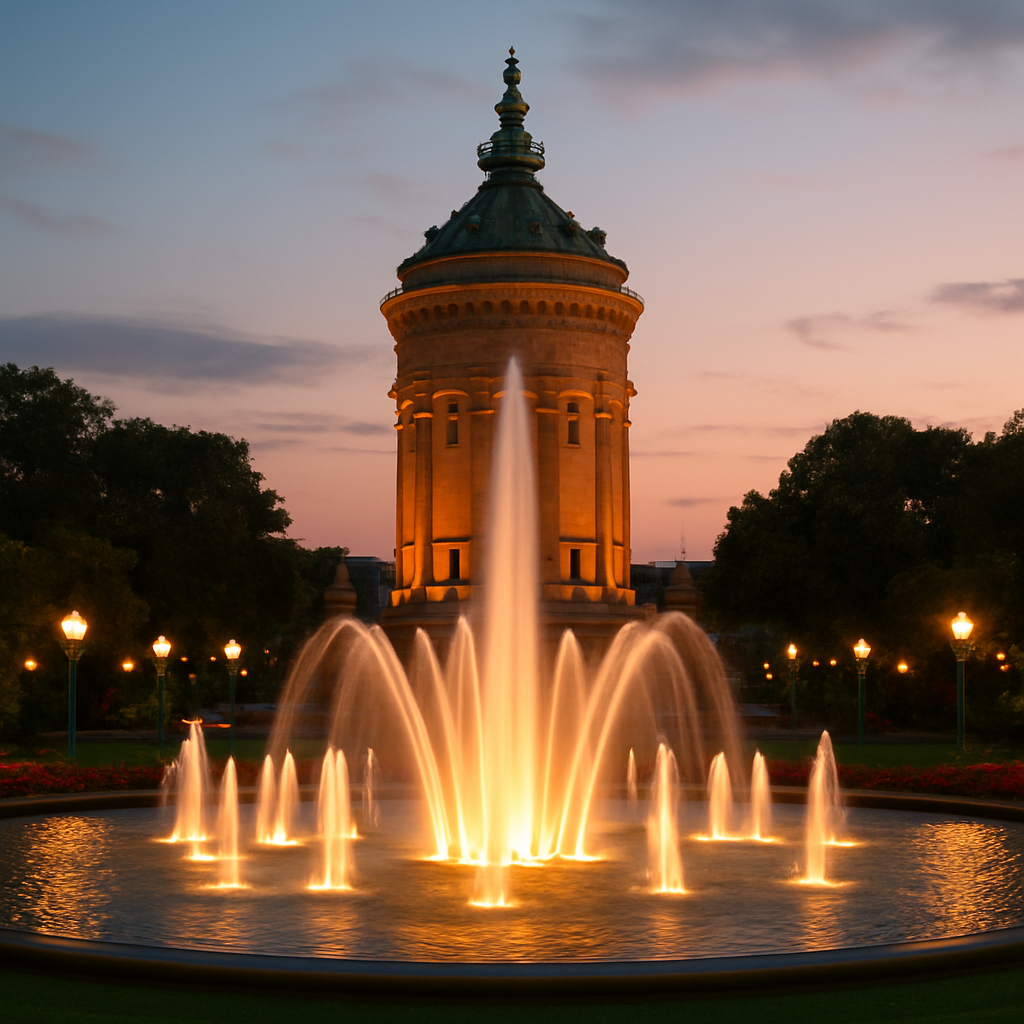
The Wasserturm at Friedrichsplatz, lit up after dark
The 1889 water tower is Mannheim's defining landmark, and it's most itself at night — illuminated against the surrounding Jugendstil ensemble at Friedrichsplatz, with the fountains running and the lawns full of people who treated the day's cheap Riesling as a starting point. It's the unofficial CSD rallying point and a year-round meeting spot. Bring a blanket. Bring two if you're optimistic.
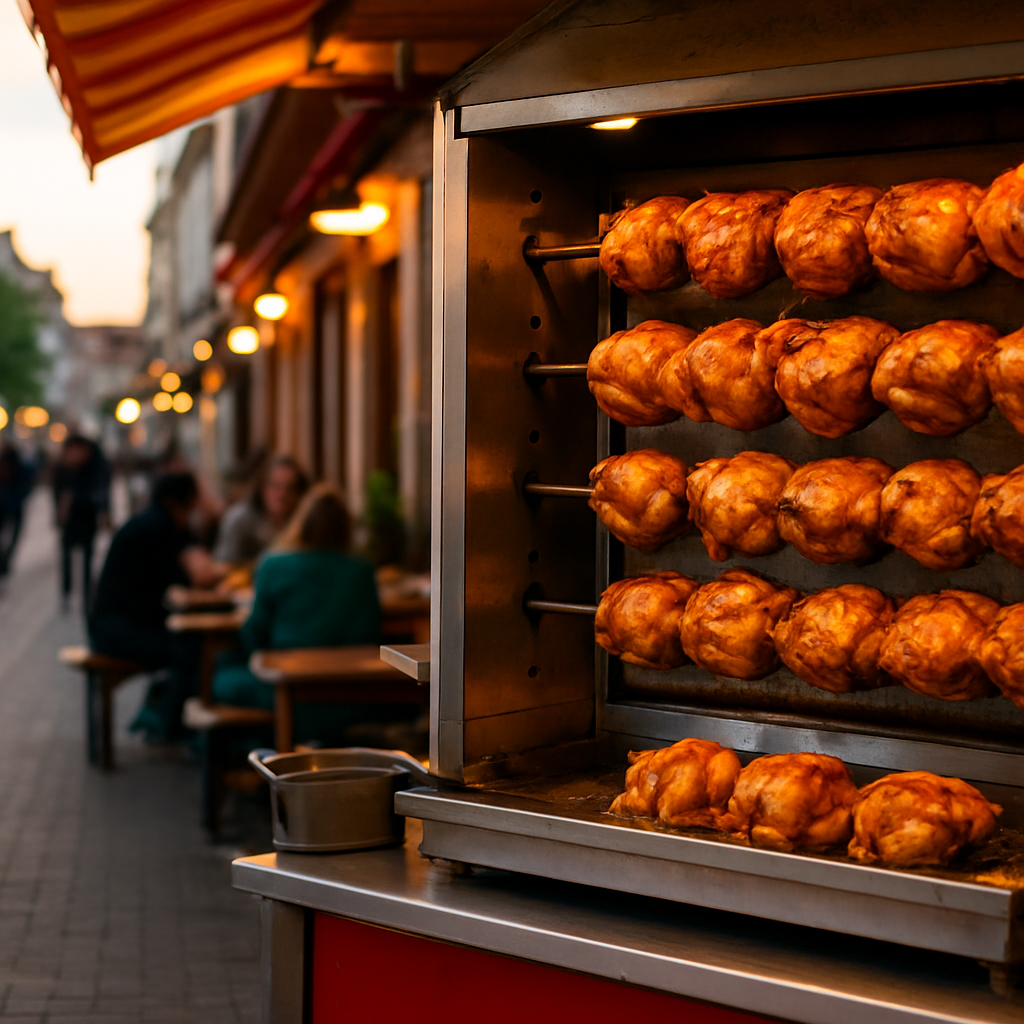
Halbe Hähnchen at 2 a.m. in Jungbusch
After the bars empty, the move is a rotisserie half-chicken from a Jungbusch imbiss — paper plate, plastic fork, eaten standing on the curb with whoever you ended the night with. It's a Mannheim rite of passage and arguably better than anything you ate at a sit-down restaurant earlier. Pro tip: don't ask which imbiss is best. Pick the one that's open and has a line.
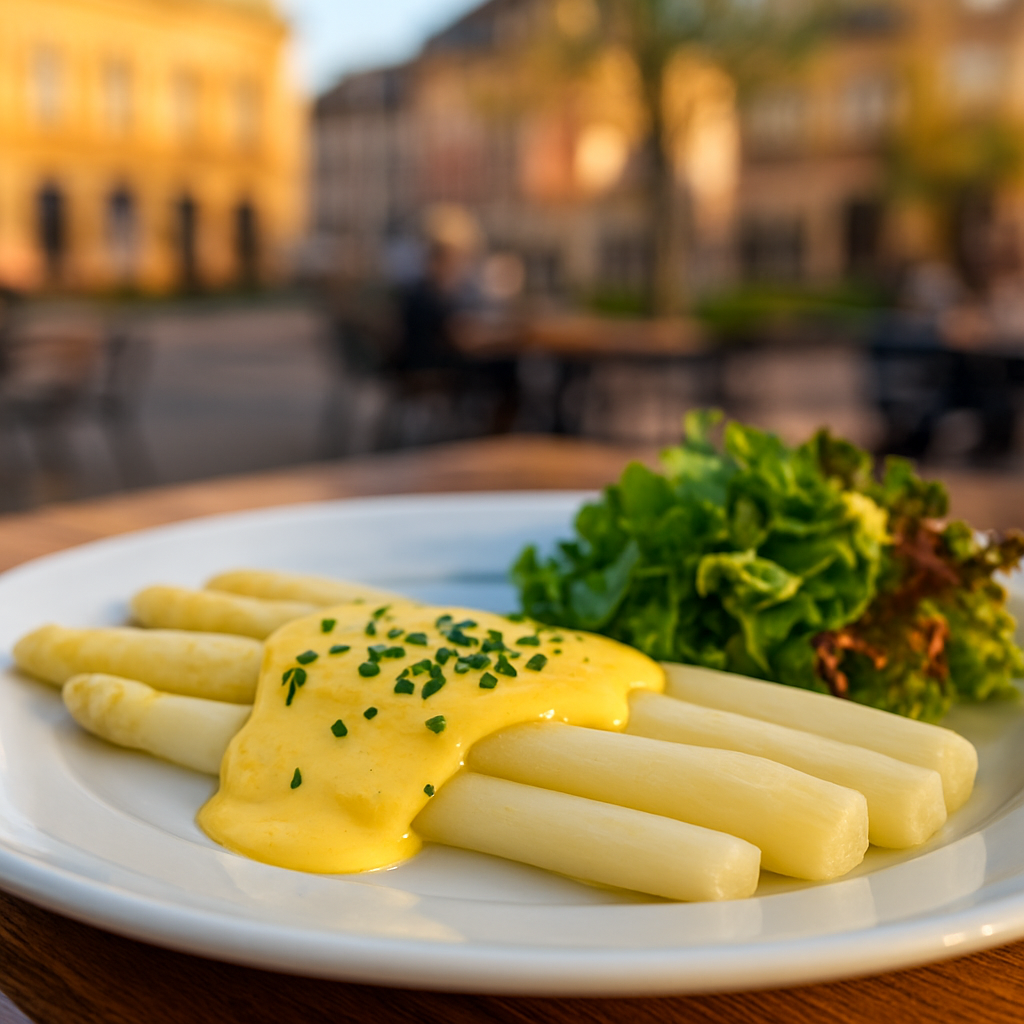
Spargelzeit — white asparagus season, taken seriously
From April through June, the entire Baden-Pfalz region loses its mind over Spargel. Every restaurant menu transforms, the better cafés build whole prix fixe around it, and a plate of white asparagus drowned in Hollandaise alongside a glass of Pfälzer wine is — I mean this — more authentically Mannheim than any landmark you can photograph. If you visit between April and June and don't eat Spargel at least once, you've technically been somewhere else.
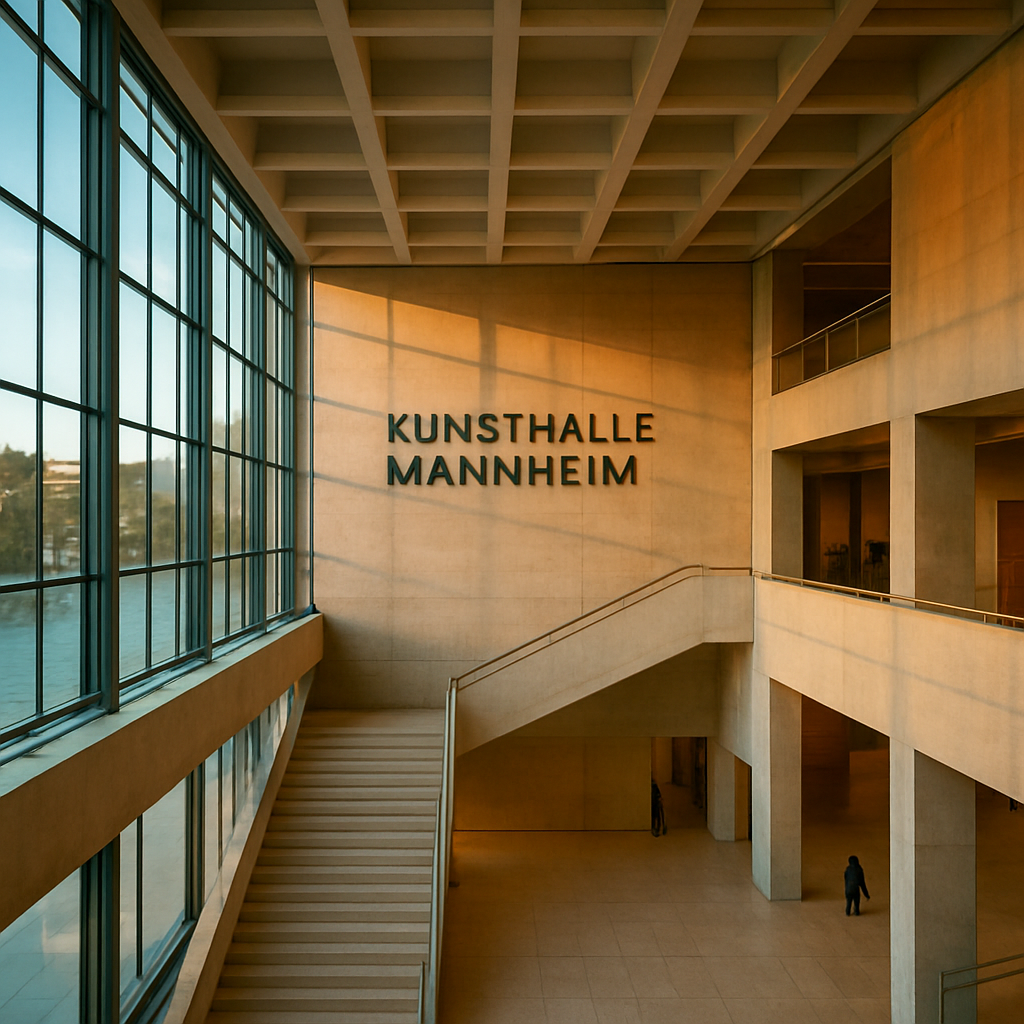
An afternoon at Kunsthalle Mannheim
The 2018 gmp Architekten building is reason enough to walk in — a series of cubic volumes wrapped in bronze mesh that catches the Friedrichsplatz light differently at every hour. Inside, the collection runs from Manet and Cézanne through Beckmann and Anselm Kiefer, and the contemporary programming punches well above the city's weight class. Two to three hours, and don't skip the rooftop terrace.
A day in Heidelberg via 15-minute train
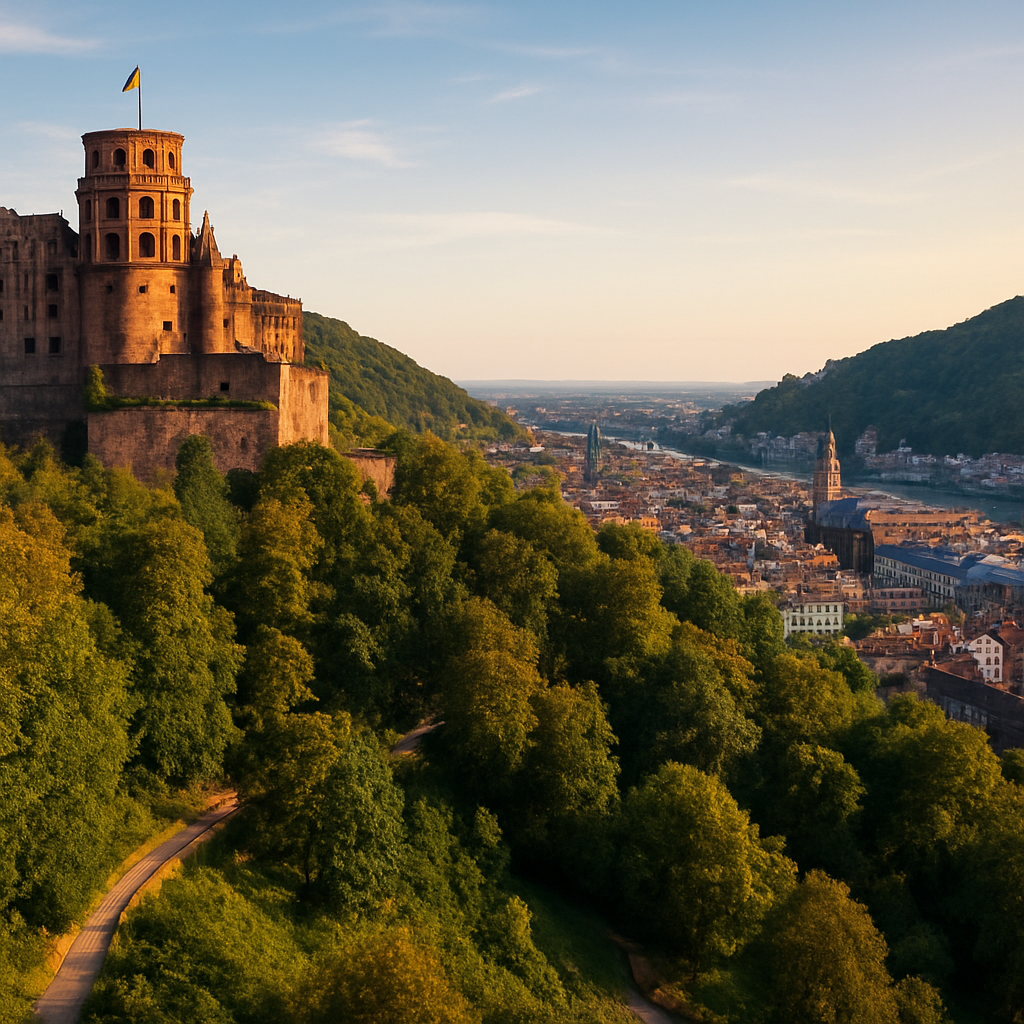
The S-Bahn from Mannheim Hauptbahnhof gets you to Heidelberg in roughly fifteen minutes, which is faster than getting to most things in Berlin. Walk the Altstadt, climb to the castle ruins for the Neckar view, and cross the bridge to the Philosophenweg — the philosopher's walk above the river that gave the city its romantic reputation. End with a beer at a student tavern in the Old Town and catch the train back. It's the easiest culture-and-romance day trip in Germany, full stop.
The places I actually send people to
Advice that fits how you travel
Solo travel in Mannheim is criminally underrated. The city is flat, compact, and built for the kind of aimless wandering that turns into the best part of a trip — you'll cover the entire Quadrate on foot in a morning, then spend the afternoon getting lost in Jungbusch without ever feeling like you're far from home. The Deutschlandticket plus a Nextbike subscription is all the transit you'll ever need; rideshare is genuinely a waste of money here.
Meeting people is easier than the city's mid-sized reputation suggests. Cascade Bar in the central grid is the community living room — go alone on a weekend, sit at the bar, and the regulars will figure out who you are within an hour. Jungbuschstraße is the strip for the under-35 crowd: start at Boveril, drift two doors down to Hagestolz for natural wine, end at Lollipop when the DJ hits. The apps run hot in Mannheim because the student population keeps things turning over — Heidelberg students cross the river for nights they can't find at home.
Budget-wise, my Chill score of 8.4 reflects how easy this city is on a solo wallet — €75–€110 a day covers a hostel bed, the day-ticket, two real meals, and a couple of drinks in Jungbusch. Pro tip: book a hostel or budget pension in Innenstadt rather than near Hauptbahnhof. The station-area hotels look cheaper on paper, but the walk back at 2 a.m. is more pleasant when you're aimed at the Wasserturm instead of the train tracks.
Mannheim is a quietly romantic city if you know where to look — and same-sex couples will find that the central districts treat them as exactly what they are, which is two people on a date. PDA in the Quadrate, around the Wasserturm, and throughout Jungbusch is unremarkable. Hand-holding on Marktplatz, kissing on the Friedrichsplatz lawn, splitting a plate at Le Corange on a Sunday — none of it draws a glance.
For accommodation, I send couples to one of three places depending on the mood. Speicher7 in Jungbusch is the move if you want architectural — a converted 1920s grain warehouse with twenty rooms, exposed brick, and harbor views, a seven-minute walk from every bar that matters. The Maritim Parkhotel facing the Wasserturm is the romantic-classic pick because waking up to that lit tower at 6 a.m. is the most cinematic thing this city offers. The Steigenberger Mannheimer Hof on the Augustaanlage has been hosting people's important nights since 1900, and the service knows what it's doing.
Date nights write themselves. Dinner at Herd & Söhne in Jungbusch — small dining room, open kitchen, seasonal menu — followed by cocktails at Hagestolz. Or splurge on the tasting menu at Opus V's rooftop two-Michelin-star room atop the Engelhorn department store and let the view do the talking. For a daytime date, the gondoletta boats at Luisenpark in summer with a bottle of Riesling, or a 15-minute S-Bahn to Heidelberg for the Philosophenweg walk above the Neckar — easiest culture-and-romance day trip in Germany, full stop.
LGBTQ+ families travel to Mannheim with the legal framework fully in their corner. As of 2026, joint adoption is recognized, marriage equality has been law since 2017, and Germany's Self-Determination Act covers trans and non-binary parents and kids alike — your family structure is legally legible at every hotel front desk, hospital, and school registry you'll touch. Mannheim's 170+ nationalities in one city means two-mom and two-dad families read as completely unremarkable in the central districts.
For kid logistics, the city is a quiet dream. Luisenpark is the headline — 41 hectares with a Chinese tea house, gondoletta boat rides, a tropical greenhouse, and a petting area, repeatedly ranked among Germany's best parks for a reason. Mannheim Palace gives you 440 meters of Baroque façade plus a state museum that kids actually engage with, and the Kunsthalle Mannheim programs family-friendly weekends inside the gmp Architekten building. Most cafés in the Quadrate handle strollers without drama, and the pedestrianized grid means you're not white-knuckling traffic with a five-year-old.
Day trips earn their keep. Heidelberg's castle ruins are 15 minutes by S-Bahn and built for wide-eyed kids; Speyer's UNESCO cathedral is 25 km southwest with free entry and the Technik Museum next door for the dinosaur-and-airplane crowd. Pro tip: the Baden-Württemberg-Ticket at €14 for the day covers the whole family on regional trains across the state — it's the single best deal in the region for moving children around without renting a car you'd regret parking.
What Mannheim actually costs
Flights, visas, and the first 30 minutes
Airport: Mannheim doesn't have its own international airport — you'll fly into Frankfurt Airport (FRA), roughly 80 km north, which is one of Europe's busiest hubs with approximately 300 direct routes from cities across North America, the UK, EU, Asia, and the Middle East. Direct flights from New York and Toronto run about 8 hours; London is just over an hour; Sydney connects via Singapore or Doha at around 22 hours total.
Visa requirements (as of 2026): US, UK, Canadian, and Australian travelers can typically enter visa-free for up to 90 days within any 180-day Schengen period. ETIAS — the EU's electronic travel authorization — is expected to launch in 2026, so check the latest before you book; it's a quick online registration, not a visa, but it will generally be required for visa-exempt nationalities. EU citizens enjoy full freedom of movement.
Frankfurt Airport to Mannheim: The fastest and most civilized option is the ICE/IC train from Frankfurt Airport's long-distance station (Fernbahnhof) directly to Mannheim Hauptbahnhof — 30–40 minutes, €20–€35, and you walk straight from baggage claim to the platform. The regional train (RE) from the airport's regional station takes 55–70 minutes for €18–€25 and is the budget pick. The Lufthansa Express Bus runs direct from FRA to Mannheim Hbf in 75–90 minutes for €25–€30. Skip the taxi unless something has gone seriously wrong — €180–€220 for what the train does in half the time. A rental car via the A5/A67 motorways will get you there in about an hour for €55–€90/day, though once you arrive you'll regret having a car in the Quadrate.
Pro tip: Book the ICE in advance on Deutsche Bahn — Sparpreis fares can drop to €17–€19 if you grab them early, and the train beats the bus on every metric except price.
Traven's seasonal breakdown
The questions everyone asks
Do I need to speak German to get around Mannheim?
Is it safe to hold hands in public?
When is Mannheim Pride and where is it held?
What's the deal with the street addresses?
Is Mannheim worth visiting if I only have a few days in Germany?
How do I get from Frankfurt Airport to Mannheim?
How much should I budget per day?
Screenshot this before you go
So should you actually go?
Go. Mannheim won't seduce you the way Heidelberg or Berlin will, and that's its trick — it doesn't try. What it offers instead is a genuinely international, working-creative city with rock-solid legal protections as of 2026, a Jungbusch nightlife scene that feels lived-in rather than curated, and the easiest day-trip math in Germany. LGBTQ+ travelers will find a city that treats them as exactly what they are — people who came for dinner, drinks, and a long walk past the lit Wasserturm. My Traven-Dex of 8.2 reflects a city that earns its score the quiet way: by showing up the same on a Thursday as it does at Pride.
Sources & Resources
Official links we reference when compiling this guide. Last verified 2026-05-04.