Accra will feed your soul and test your nerve in the same breath — arrive informed or don't arrive at all.
The first thing that hits you stepping out of Kotoka International Airport isn't the heat — it's the sound. Accra is loud in a way that feels alive: car horns layered over Afrobeats, the call of kelewele vendors frying spiced plantain at the roadside, the hum of generators backing up a city that refuses to slow down. The Atlantic is never far. The smell of grilled tilapia and wood smoke drifts through Jamestown at dusk, and the crumbling colonial architecture along the waterfront tells a story that predates every border on the continent. As a city, Accra is magnetic. As a destination for LGBTQ+ travelers, it demands a level of preparation and situational awareness that most places on my list simply don't.
I can't sugarcoat this one. My Traven-Dex score of 2.3 reflects a legal reality that has gotten measurably worse in recent years. Ghana criminalizes same-sex intimacy under colonial-era statute, and the 2024 Human Sexual Rights and Family Values Act pushed the framework further — criminalizing advocacy, funding, and promotion of LGBTQ+ organizations. I gave it a 1.5 on Legal and a 1.5 on Scene because there is no open queer infrastructure here. No bars. No Pride. No public community center. What exists — and it does exist — operates entirely underground, through encrypted WhatsApp chains and vetted personal networks. The queer community in Accra is real, brilliant, and fiercely resilient, but it is invisible by necessity, not by choice.
And yet. Accra's cultural weight is undeniable — I scored Destination at 6.2 because the history here is singular. The W.E.B. Du Bois Memorial Centre in Cantonments, the day trip to Cape Coast Castle and Elmina Castle, the raw energy of the Chale Wote Street Art Festival in Jamestown — these are experiences that don't exist elsewhere. For diaspora travelers especially, the pull is deep and personal. I understand why people come here, and I respect the decision. What I won't do is let anyone arrive without knowing exactly what they're walking into.
Contact LGBT+ Rights Ghana before you book your flights. They can provide real-time safety intelligence, vetted local contacts, and context that no travel guide can replicate. It's the single most useful thing you can do to prepare.
The stuff your travel guide buries on page 47
Legal framework: Same-sex sexual activity is criminalized under Section 104(1)(b) of Ghana's Criminal Offences Act, carrying penalties of up to 3 years imprisonment. In February 2024, Ghana's parliament passed the Human Sexual Rights and Family Values Act, which dramatically expands criminalization to include advocacy, funding, and promotion of LGBTQ+ organizations. As of early 2026, this legislation has been subject to legal challenge before Ghana's Supreme Court — verify its current status before travel. Same-sex marriage is not recognized. Civil unions do not exist. Same-sex adoption is not legal. There are no anti-discrimination protections for sexual orientation or gender identity. There is no legal recognition of gender identity.
Cultural reality: The legal framework is not a technicality sitting unused on the books. Public sentiment toward LGBTQ+ people in Ghana has hardened measurably since 2021, amplified by political rhetoric and media coverage surrounding the 2024 legislation. The social temperature on queer visibility has worsened. Religious institutions — both Christian and Muslim — are outspoken in opposition to LGBTQ+ rights, and this shapes public attitudes across economic and educational demographics. The US, UK, Canada, and Australia have all issued specific LGBTQ+ safety advisories for Ghana. Read the UK Foreign Travel Advice and US State Department advisories before you travel.
Digital safety: Delete Grindr, Scruff, and any location-based dating apps from your phone before landing at Kotoka International Airport. Rightify Ghana has documented cases of police using these apps to entrap gay men — this is not hypothetical. Scrub your social media before arrival and set everything to private. There are documented instances of people being outed through Facebook and Instagram, leading to evictions, family crises, and worse. Your digital footprint matters enormously here.
PDA comfort: There is no public context in Accra where same-sex affection is safe. Not in Osu, not in the diplomatic corridors of Cantonments, not at Labadi Beach. The international character of a neighborhood does not confer legal protection. Even hand-holding between same-sex couples can draw hostile attention or police interest. The only relatively low-risk spaces for same-sex couples are private rooms at international chain hotels — the Kempinski Hotel Gold Coast City, the Mövenpick Ambassador Hotel — where professional confidentiality standards are genuinely maintained. Outside those doors, full discretion is required at all times.
What it actually feels like on the ground
Holding hands or casual affection: Do not display any same-sex affection in any public or semi-public setting in Accra. This includes hand-holding, leaning on a partner's shoulder, or lingering eye contact that reads as intimate. What feels like casual intimacy at home reads as provocative here, and the consequences are legal, not just social. This applies everywhere — upscale neighborhoods, tourist areas, and beaches alike.
Hotel check-in: International chain hotels — the Kempinski Gold Coast City, the Mövenpick Ambassador, the Labadi Beach Hotel — maintain genuine professional discretion. Staff at these properties are experienced with international travelers and will not create difficulties when two guests of the same sex check into a shared room. Do not assume the same of locally owned guesthouses, budget lodges, or mid-tier properties, where staff may comment, question, or in rare cases report guests they perceive as a same-sex couple.
Taxis and ride-hailing: Uber and Bolt are your best options — not just for convenience, but for safety. You have a trip record, the driver has accountability, and you avoid the extended negotiations with unlicensed taxi drivers that can veer into interrogative small talk about your marital status, your companion, and where exactly you're going at midnight. If you take a standard taxi, negotiate the fare and destination before getting in, and keep conversation minimal.
Beaches and public spaces: Labadi Beach is crowded with locals and tourists. Any same-sex affection risks harassment, intervention, or police attention. Jamestown operates under more traditional social norms. In all public spaces, present as friends or colleagues — never as a couple.
Late night: The bar strip on Oxford Street in Osu draws an international crowd on weekends, and you can have a relatively low-key evening out. Nobody's clocking you if your behavior is discreet. But late-night transit is where vulnerability increases — use Uber or Bolt, not walking or street taxis, to get back to your hotel. Have the app ready and your destination pre-entered.
Trans travelers: Trans travelers face acute legal and social risk in Ghana. There is no legal recognition of gender identity. The 2024 Human Sexual Rights and Family Values Act expands criminalization to include gender non-conformity advocacy. Visible gender non-conformity may attract harassment, police attention, or physical violence in all public contexts. This is not a city where trans travelers can move safely in public without significant personal risk. I say this not to discourage, but because you deserve the unvarnished truth.
If something goes wrong: Save your country's embassy emergency number, the LGBT+ Rights Ghana contact, and the number of a lawyer familiar with LGBTQ+ cases before you go out any evening. If an incident occurs, you have a narrow window where having the right contact can change everything. Do not engage with police alone if you can avoid it — contact your embassy first.
The queer geography
There is no open gay neighborhood, gay bar, or visible queer district in Accra. Ghana's legal framework makes public LGBTQ+ spaces impossible. What exists operates entirely through what locals call the Underground — private WhatsApp groups, vetted networks of trust, and invitation-only gatherings behind closed gates. If you're connected to the Ghanaian diaspora anywhere in the world, someone knows someone who can get a message through. If you're not, LGBT+ Rights Ghana is the starting point.
Osu and Oxford Street
Osu is Accra's most cosmopolitan commercial neighborhood, centered on Oxford Street — a long strip of bars, restaurants, and street food vendors that serves as the city's most accessible public social corridor. On weekend nights, venues like Republic Bar and Grill draw enough of an international crowd that you can have a relatively low-key evening out without attracting attention, provided your behavior is discreet. This is not a safe space — it's a lower-scrutiny space, and that distinction matters.
Cantonments and Airport Residential Area
Cantonments is Accra's embassy and diplomatic district. The international population creates a comparatively lower-scrutiny environment for discreet socializing, but the legal framework applies identically here. Airport Residential Area, home to the Kempinski Hotel Gold Coast City, is the expat enclave nearest the airport — international hotel lobbies and rooftop bars like Skybar 25 at the Mövenpick Ambassador are among the most private-feeling social spaces available in the city.
Labone
Labone is an upscale residential neighborhood west of Osu with a relatively tolerant international crowd and an expat-heavy bar and restaurant scene. It functions as part of what locals call the Expat Bubble — the international social circuit concentrated across Osu, Labone, and Cantonments where LGBTQ+ individuals can move with somewhat less public scrutiny.
East Legon
East Legon is an affluent northeastern suburb popular with wealthy Ghanaians and returning diaspora. The private party circuit here and in Cantonments is where the real scene lives — curated guest lists, good music, and a genuine sense of community behind closed gates. You won't find it on a map. You find it through people.
Cultural spaces
The Alliance Française d'Accra on Liberation Road runs film screenings and arts programming that consistently draws creative, progressive Ghanaians. It's the closest thing to a publicly queer-adjacent cultural space in the city without being explicitly labeled as such. Check their calendar online before you arrive. The Accra Arts Centre off Liberia Road and the National Museum of Ghana on Barnes Road are neutral public spaces where you can move without attention.
The experiences worth rearranging your itinerary for
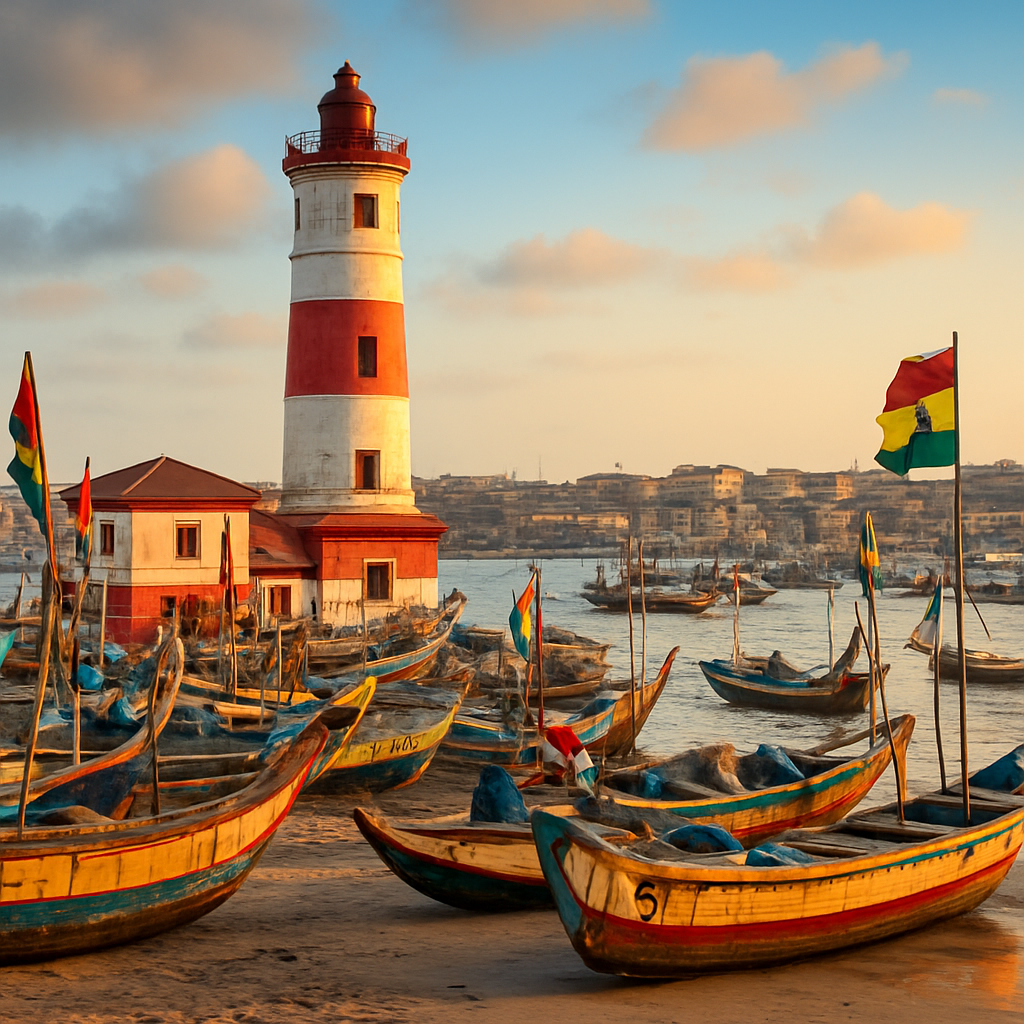
Jamestown at Golden Hour
Do not skip Jamestown. The Jamestown Lighthouse at golden hour, the Ga fishing communities hauling nets on the shore, the colonial architecture crumbling into the Atlantic — this is where you understand why people love Accra so ferociously. It has nothing to do with nightlife and everything to do with the raw, layered history of a city that has been here for centuries. Go with a local guide you trust. Climb the lighthouse for a panoramic view of the coast that will rearrange your understanding of West Africa. The boxing gyms and street life below are as honest a portrait of Accra as you'll find anywhere.

Kelewele on Oxford Street at 10pm
This is non-negotiable. Kelewele — spiced ripe plantain, fried to order by street vendors on Oxford Street in Osu around 10pm — is peak Accra distilled into a paper cone. The ginger, the chili, the caramelized edges. You stand there eating it with total strangers while Afrobeats thumps from a nearby bar and the heat of the day finally starts to break. It costs pocket change. It belongs to everyone. Pair it with waakye from a nearby chop bar if you're hungry — rice and beans cooked with sorghum leaves, served with spicy stew and spaghetti, a Ghanaian breakfast staple that works at any hour.
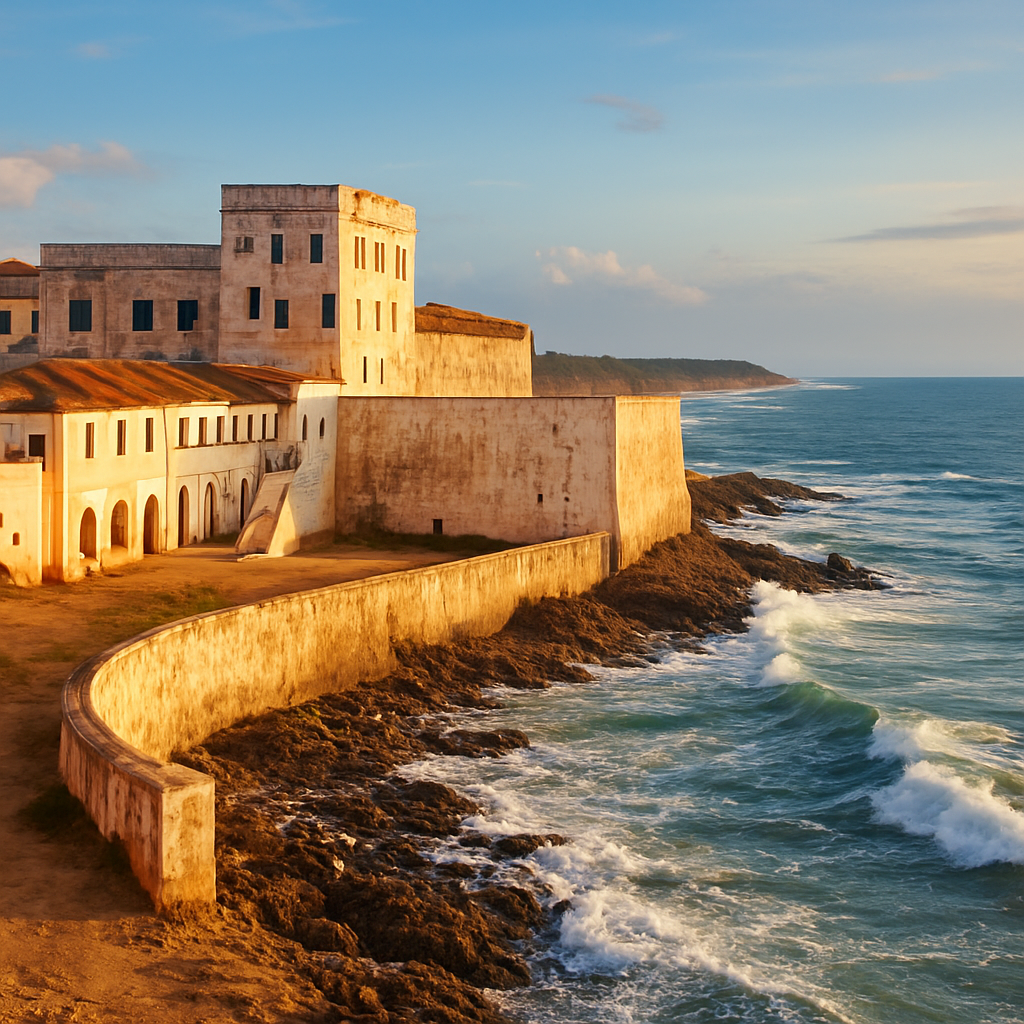
Cape Coast Castle and Elmina Castle
These UNESCO World Heritage Sites sit roughly 170 km west of Accra — about 3 hours by road, reachable via STC bus for GHS 40–80. Cape Coast Castle and Elmina Castle were major holding facilities in the transatlantic slave trade from the 15th through the 19th centuries. Walking through the dungeons, standing in the Door of No Return — there is no preparing for it. These are the central sites of Ghana's Year of Return (2019) and Beyond the Return diaspora heritage programs. For diaspora travelers of any identity, this is a visit that rearranges something fundamental. Allow a full day.
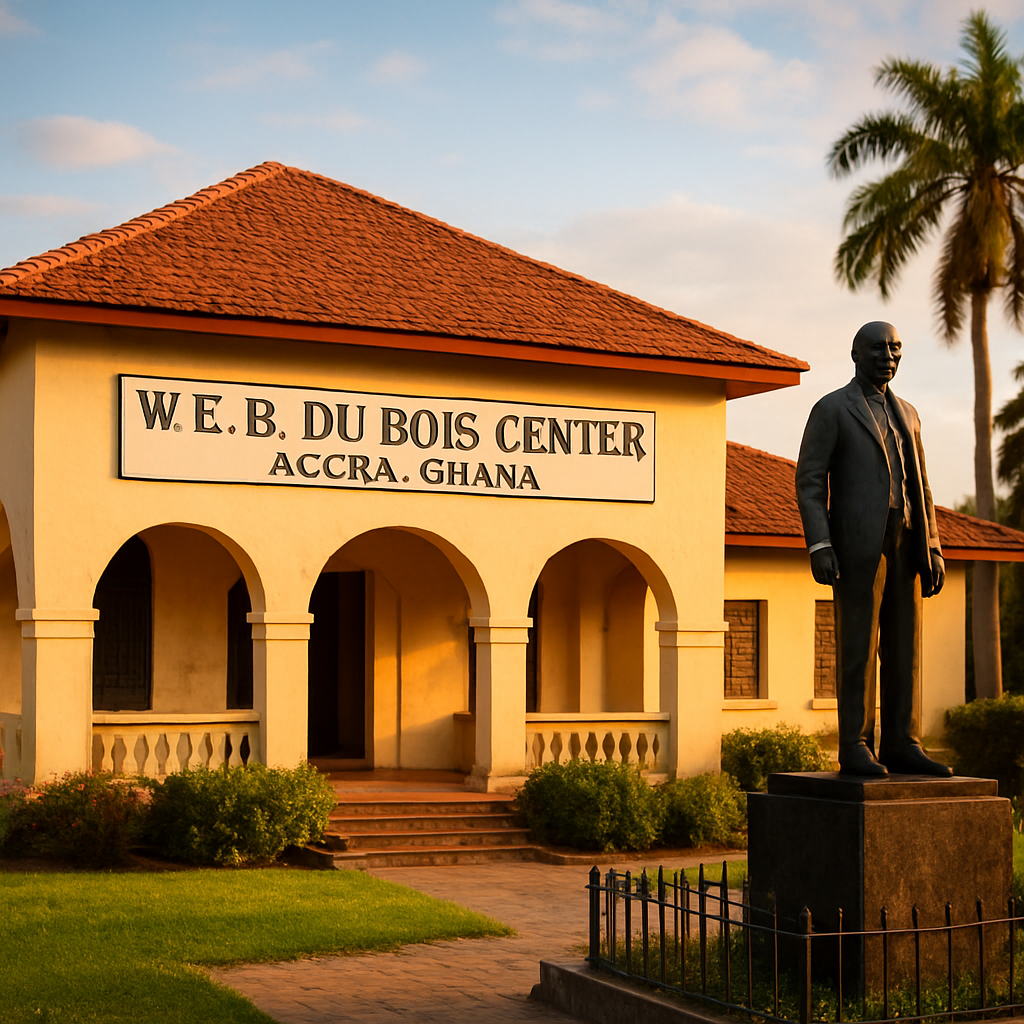
W.E.B. Du Bois Memorial Centre
The W.E.B. Du Bois Memorial Centre for Pan-African Culture in Cantonments sits on the site where the Pan-Africanist scholar lived and died in 1963 after renouncing his US citizenship and becoming Ghanaian. His preserved library, his mausoleum, and the museum documenting his political work are all on one quiet compound. As a queer person standing in the home of one of Pan-Africanism's giants — knowing that the criminalization laws on the books are a direct colonial inheritance — it's a complicated and necessary feeling to sit with. GHS 30–60 entry.
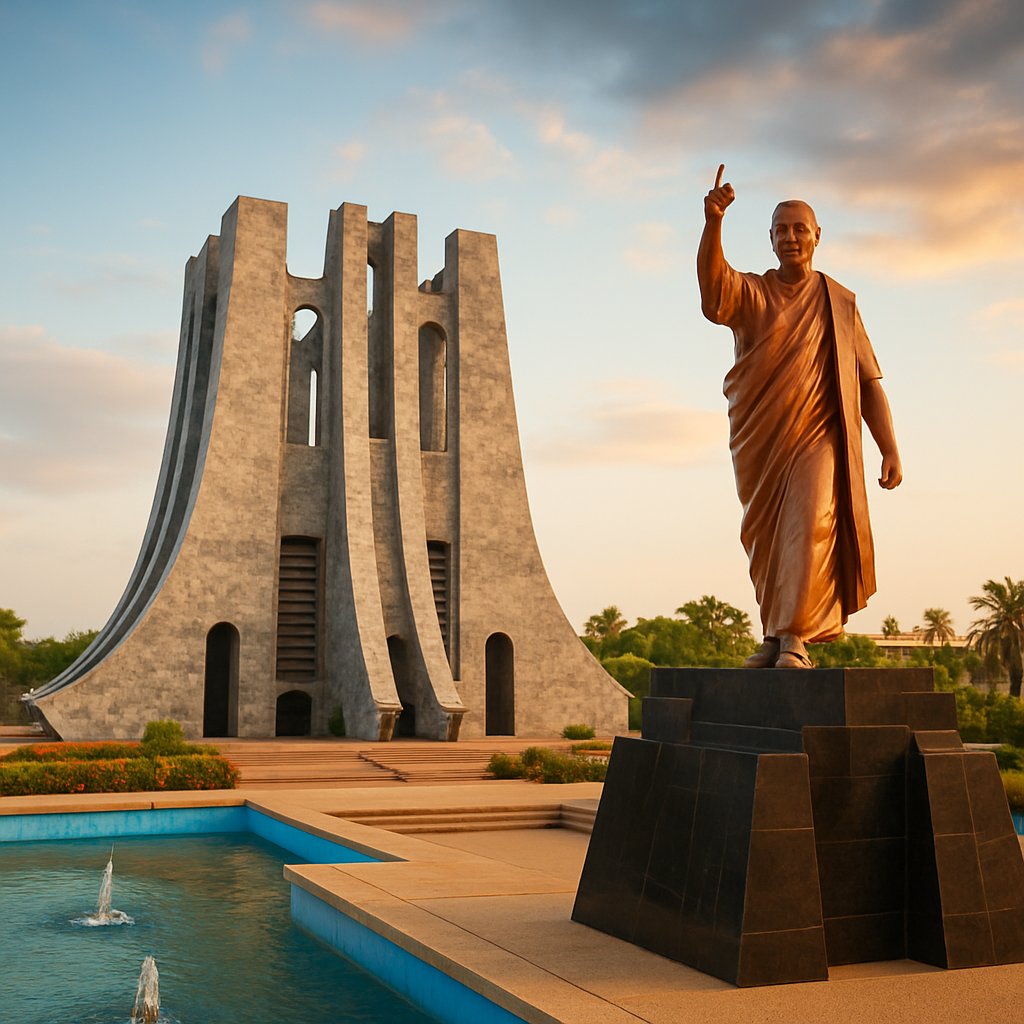
Kwame Nkrumah Memorial Park
Kwame Nkrumah Memorial Park occupies the site where Ghana's first president declared independence in 1957 — the first sub-Saharan African nation to break from colonial rule. The mausoleum, the surrounding gardens, and the museum of Nkrumah's personal effects are compact but historically dense. It's a 45-minute visit that contextualizes everything else you'll see in Accra. The park sits in central Accra near the old polo grounds, and it's an easy stop to combine with a walk to the National Museum of Ghana on Barnes Road.
The places I actually send people to
Advice that fits how you travel
Solo travel in Accra requires more preparation than most destinations, but it is navigable if you understand the ground rules. The city's social fabric runs on personal networks — arriving connected to someone, even loosely, changes everything. Contact LGBT+ Rights Ghana before you arrive; they can provide vetted contacts and current safety intelligence. If you have any connection to the Ghanaian diaspora — in London, New York, Toronto, anywhere — use it. Accra's underground community is warm and genuinely generous to trusted newcomers, but cold to strangers arriving without social context.
App culture is effectively off-limits. Delete dating apps before landing at Kotoka. Police entrapment via Grindr and similar platforms is documented and real. Socializing happens through word-of-mouth, WhatsApp introductions, and private gatherings — not through public venues or digital platforms. The bar scene on Oxford Street in Osu is accessible to solo travelers and draws an international crowd that provides some cover, but you should present as a solo traveler out for a drink, not someone looking for connection. Skybar 25 at the Mövenpick and the Alliance Française d'Accra's cultural programming are two spaces where you can spend time without drawing attention.
Budget solo travel is feasible — GHS 280–430 per day covers basic accommodation, food, and transport. But for LGBTQ+ solo travelers specifically, I'd recommend investing in international-chain accommodation at the moderate tier (GHS 900–1,400/day) if your budget allows it, because the discretion those properties provide is not a luxury — it's a layer of practical safety. Use Uber or Bolt exclusively for transport. Keep your embassy number, the LGBT+ Rights Ghana contact, and a lawyer's number saved in your phone before going out in the evening. Accra can be deeply rewarding solo — the food alone justifies the trip — but you must move through it with your situational awareness fully engaged at all times.
I'll be direct with you: same-sex couples traveling to Accra together need to understand the baseline before anything else. Ghana criminalizes same-sex intimacy under Section 104 of the Criminal Offences Act, and the 2024 Human Sexual Rights and Family Values Act has pushed the legal environment significantly further in the wrong direction. There is no publicly safe space for same-sex affection in this city — not on Oxford Street, not at Labadi Beach, not in the expat corridors of Cantonments. The international character of a neighborhood does not confer legal protection. Public affection between same-sex couples, including hand-holding, carries real legal and social risk in all public contexts.
What this means practically is that your relationship exists privately, behind the doors of your hotel room. International chain properties — the Kempinski Hotel Gold Coast City in the Airport Residential Area, the Mövenpick Ambassador in Airport City — maintain genuine professional discretion with guests, and a private room at either is as close to a genuinely low-risk space as Accra offers a same-sex couple. Book a shared room. Staff at these properties are experienced with international travelers and will not create difficulties at check-in. Do not assume the same of locally owned guesthouses or mid-tier properties, where social and moral scrutiny from staff is a real variable.
Accra's cultural weight — the W.E.B. Du Bois Memorial Centre in Cantonments, the day trip to Cape Coast Castle, an evening meal of fufu and palmnut soup at Buka in Osu — can be experienced together meaningfully as a couple. You can share this city. What requires constant awareness is conduct in public spaces. Some couples travel here and find the trade-off worth it for the history, the food, and the diaspora connection. Others decide the constraints aren't workable for them. I'm not here to tell you which camp you're in — I'm here to make sure you know exactly what you're weighing.
LGBTQ+-headed families should think through the specifics carefully before booking Accra. Ghana does not recognize same-sex partnerships or same-sex parenting in any legal form. If you're two same-sex parents traveling with children, your family structure carries no legal standing in this country. In a genuine emergency — a medical situation requiring consent decisions, a legal incident — that absence of recognition is not abstract. Carry complete documentation for every family member: passports, birth certificates, any parenting orders or custody agreements that establish your legal relationship to your children. Keep copies accessible, not just in checked luggage.
Children as travelers are a different matter — Accra has a genuinely strong family culture, and kids are welcomed warmly in restaurants, markets, and cultural sites. The practical logistics work: Uber and Bolt are child-accessible and far more practical than tro-tros if you're traveling with young children and luggage. Properties like the Labadi Beach Hotel on the Atlantic coast have pools and family-suitable rooms. The Cape Coast Castle and Elmina Castle day trip — a 3-hour drive west — is one of West Africa's most important heritage experiences, appropriate for older children who are ready to engage seriously with the history of the transatlantic slave trade. The Kwame Nkrumah Memorial Park and the National Museum of Ghana on Barnes Road are lower-intensity cultural visits that work for a range of ages.
The ambient environment is the core consideration for LGBTQ+ families, not the logistics. A same-sex couple traveling with children will attract attention and questions in some contexts that a heterosexual couple would not. Keep the family's public presentation discreet and consistent. What Accra offers in terms of history, food, and cultural depth is genuinely real — but it asks more of an LGBTQ+ family than most destinations would, and that is information you deserve to have clearly before you make the decision.
What Accra actually costs
Flights, visas, and the first 30 minutes
Airport: Kotoka International Airport (ACC), located approximately 10 km north of central Accra, with direct connections to 35+ cities worldwide.
Major direct routes: London Heathrow (6h 30m), Amsterdam Schiphol (6h 10m), Frankfurt (6h 45m), New York JFK (10h 30m), Paris CDG (6h 30m), Dubai (7h 00m), and Addis Ababa (4h 00m). Accra is well connected as a West African hub, with onward regional connections across the continent.
Visa requirements: All travelers from the US, UK, EU, Canada, and Australia require a visa to enter Ghana. The e-Visa is available online for all of these nationalities prior to travel and is the straightforward route — apply well in advance of your departure date. Do not leave this to arrival.
Airport to city:
Uber / Bolt (recommended): GHS 70–130 | 30–60 min | App-based pricing, widely available from the terminal. Surge pricing is possible during peak hours. For LGBTQ+ travelers specifically, this is the better choice: you have a trip record, driver accountability, and avoid the prolonged fare negotiations with unlicensed drivers that can become intrusive.
Licensed airport taxi: GHS 100–180 | 30–60 min | Negotiate the fare before you get in; the official taxi rank is outside the arrivals hall.
Pre-booked hotel transfer: GHS 150–350+ | 30–60 min | Complimentary at some luxury properties including the Kempinski — confirm availability before you arrive.
Tro-tro (shared minibus): GHS 3–6 | 60–90 min | Not practical with luggage; direct service from the airport is infrequent. Not recommended for arriving international travelers.
Traven's seasonal breakdown
The questions everyone asks
Is it safe for LGBTQ+ travelers to visit Accra?
Are there any gay bars or LGBTQ+ venues in Accra?
Do I need a visa for Ghana?
Can I use Grindr or dating apps in Accra?
How much should I budget per day?
Is it safe for trans travelers?
What's the best way to get from the airport to the city?
Screenshot this before you go
So should you actually go?
I can't sugarcoat Accra. My Traven-Dex score of 2.3 reflects a city where same-sex intimacy is criminalized, where recent legislation has made the legal environment actively worse, and where no public LGBTQ+ infrastructure exists. The queer community here is real and resilient, but it operates entirely underground — you will not find it without connections, and you should not try to find it through apps. That said, Accra's cultural gravity is genuine and singular: the diaspora heritage sites, the food, the art scene, the raw energy of Jamestown — these are things that don't exist elsewhere. Some LGBTQ+ travelers, particularly those with diaspora connections, will find the trip deeply meaningful and personally necessary. Others will look at the legal landscape and decide it's not a trade-off they're willing to make. Both are valid. If you go, go informed. Go connected. Go with your eyes fully open. And contact LGBT+ Rights Ghana before you book a single thing.
Sources & Resources
Official links we reference when compiling this guide. Last verified 2026-03-07.
- LGBT+ Rights Ghana
- Rightify Ghana (Human Rights Documentation)
- Human Rights Watch — Ghana
- Amnesty International — Ghana
- ILGA World — Ghana Country Overview
- UNAIDS — Ghana
- Ghana AIDS Commission
- UK Foreign Travel Advice — Ghana (LGBTQ+ Travellers)
- US State Department — Ghana Travel Information
- Stonewall Global Diversity Programme
- GALCK+ (East Africa LGBTQ+ Regional Resource)