
Mykonos doesn't do subtle. It does whitewashed sunsets, 2am drag numbers spilling down staircases into the alleys, and a party that's been running longer than most islands have had electricity.
It's a Thursday in July and you're standing on Matoyianni Street at midnight, which on this island means the evening is just getting started. The narrow alley is wall-to-wall — tanned shoulders, linen shirts unbuttoned past the point of suggestion, the bass from three different bars competing for your attention. A drag queen is descending the external staircase at Pierro's in a gold lamé gown that has no business working this well in 85-degree heat, and the crowd in the alley below has stopped pretending they weren't going to watch. Someone hands you a cocktail you didn't order. You drink it. This is Mykonos doing what Mykonos has done since the 1970s — being absolutely, unapologetically itself.
I gave this island an 8.7 on Destination, and honestly the only thing keeping it from higher is that it's an island with finite square footage and a price tag that will make your credit card flinch. But what's here is staggering. Little Venice at golden hour — those 18th-century houses cantilevered over the Aegean, Kastro's Bar playing opera while the sun melts into the sea — is one of the most beautiful things I've seen in twenty years of travel. Super Paradise Beach by mid-afternoon is less a beach and more an open-air nightclub with sand and sunscreen, and Jackie O' Beach Club doesn't hit its stride until the sun starts dropping. The whole island runs on its own clock. Dinner at 10pm is early. Clubs don't matter until 1am. Napping isn't lazy here — it's strategic.
What makes Mykonos different from every other pretty Greek island is that the gay infrastructure isn't an add-on — it's foundational. This place has been drawing the gays since before most of today's party islands had running water. Pierro's has been operating as a gay club since the late 1970s. Super Paradise was a gay and naturist beach before Mykonos was a brand. That history means the welcome isn't performative — the island's economy literally depends on LGBTQ+ tourism and every local knows it. My Traven-Dex of 9.1 reflects a place where a perfect 10.0 on Legal meets a scene that's been earning its reputation for half a century.
The contradiction of Mykonos is that it's simultaneously one of the most exclusive and one of the most free places you'll visit. You can drop €600 a night at Cavo Tagoo and sip champagne from an infinity pool carved into volcanic rock, or you can rent a scooter, pack a towel, ride ten minutes down the coast to Elia Beach, and spend the day on a sun lounger with a €4 frappé. Both versions of Mykonos are real. Both are spectacular. Budget aggressively upward — cocktails in Little Venice run €18–25, and peak-season accommodation prices are genuinely eye-watering — but I promise you, when you're watching that sunset from Kato Mili with the windmills behind you and the whole whitewashed labyrinth of Chora glowing pink below, you will not be thinking about the bill.
The stuff your travel guide buries on page 47
Legal Framework: Greece is a full EU member state with comprehensive LGBTQ+ legal protections. Same-sex marriage has been legal since 2024, along with full joint adoption rights for same-sex couples. Anti-discrimination protections are broad, covering employment, housing, and services. Gender identity law follows a self-identification model under Law 4491/2017 — no surgical or medical prerequisites required. There is zero criminalization of same-sex conduct. Greece is a signatory to the European Convention on Human Rights and bound by EU anti-discrimination directives. For detailed legal context, ILGA-Europe's Greece overview is the most current English-language resource.
Cultural Reality: The legal protections are excellent on paper, and on Mykonos specifically, the cultural reality matches — and arguably exceeds — the legal baseline. The island's economy runs on international tourism, and LGBTQ+ travelers represent a foundational segment of that economy. Hotel staff, restaurant owners, taxi drivers, and shopkeepers are not merely tolerant — they're commercially invested in making you comfortable. A reader wrote in to confirm: traveling as a married same-sex couple means tourist-facing businesses won't blink, though any formal bureaucratic paperwork on the mainland might lag behind the speed of social progress. That said, this is still Greece, not Amsterdam. The further you move from the tourist core — ferry ports, off-season months, interactions with older domestic Greek travelers — the more the atmosphere shifts from exuberantly welcoming to simply neutral.
PDA Comfort: In Chora's bar district along Matoyianni Street and Enoplon Dynameon, same-sex PDA is completely normalized — holding hands, kissing, all of it. At Super Paradise Beach, it's not even a topic of conversation. Little Venice is high-comfort with a mixed international crowd. Mainstream resort beaches like Psarou are comfortable though not explicitly LGBTQ+-coded. At the ferry port and domestic transit points, the comfort level is moderate — PDA is still broadly accepted but the social context is more mixed.
Timing: Mykonos runs on its own clock. Don't expect clubs to fill before 1am, and Jackie O' Beach Club doesn't hit its stride until mid-afternoon. Eat early, nap hard, and schedule your evenings to start where most cities' nights end.
Health: Medical services on the island are limited to the main clinic in Mykonos Town for emergencies. For HIV/sexual health resources, EODY-affiliated clinics in Athens are far better equipped. Bring PrEP, any medications you rely on, and whatever else you need before you board the ferry or plane.
What it actually feels like on the ground
Holding hands: Completely unremarkable during peak season (June–September) throughout Chora, on the beaches, and in restaurant and bar settings. Same-sex couples holding hands on Matoyianni Street or at Elia Beach is genuinely invisible — it's the norm, not the exception. The island's economy runs on LGBTQ+ tourism and the locals are acutely aware of that fact.
Hotel check-in: Zero friction. Mykonos hotels are accustomed to same-sex couples at every price point, from budget guesthouses to luxury suites. You won't be asked to justify a double bed. Properties like Elysium Hotel explicitly program for LGBTQ+ guests; everywhere else it's simply assumed.
Taxis: Professional and unbothered. Official taxis queue at arrivals at JMK and are accustomed to the island's clientele. That said, taxis are scarce and expensive, especially late at night — expect competition for cabs after 2am. No safety concerns related to orientation.
Beaches and public spaces: Super Paradise Beach and Elia Beach are explicitly LGBTQ+-welcoming, with nudity practiced in sections at Super Paradise. Mainstream beaches like Psarou are comfortable for same-sex couples. Pro tip: watch your belongings at Paradise and Super Paradise — the party atmosphere attracts opportunistic theft, and leaving your phone unattended on a towel while you're dancing at the shoreline is an invitation you don't want to extend.
Late night: The Chora nightlife district is well-lit, well-populated, and safe for LGBTQ+ travelers through the early hours. The usual common-sense rules apply — don't walk remote unlit roads alone and drunk, and ATV riding after heavy drinking is a genuinely bad idea on narrow, poorly-lit island roads.
Trans travelers: Greece's gender self-identification law (Law 4491/2017) allows legal gender recognition without surgical or medical prerequisites. Within Mykonos's international tourist environment, trans travelers consistently report the same high level of social acceptance as the broader LGBTQ+ community. The Transgender Support Association of Greece (SYD) can provide additional support context if needed.
Verbal harassment: Virtually undocumented during peak season in tourist areas. The risk profile rises marginally off-season when the LGBTQ+ bubble thins dramatically — most venues close entirely from October through April, and the Chora that remains is quieter, more local, and less visibly queer. This isn't a safety concern so much as a vibe shift: the party infrastructure simply doesn't exist outside summer.
Overall: Mykonos is genuinely one of the safest destinations in Europe for LGBTQ+ travelers. I don't say that casually.
For detailed information on legal protections and LGBTQ+ rights in Greece, consult ILGA Europe's LGBTQ+ rights assessment for Greece.
The queer geography
Mykonos Town (Chora) — The Gay District
There's no single concentrated gay block in Chora — the scene is threaded through the entire old town like sequins through a mesh tank top. Matoyianni Street is the main social spine, lined with boutiques and bars that draw the evening crowd. The anchor venues — Pierro's, Babylon Club, Porta Bar — sit within a few minutes' walk of each other, and after midnight the strategy is simple: follow the music and the sequins. The labyrinthine alleys actually work in your favor here; you'll stumble into the right place eventually, and half the fun is the stumbling.
Jackie O' operates two distinct locations worth knowing about. The harbor spot in Mykonos Town is ideal for a leisurely brunch with drag entertainment — it's polished and social. The beach club at Super Paradise is where the actual party lives: louder, sweatier, and considerably more magnificent. Know which one you're heading to before you get in the taxi.
Little Venice (Alefkandra)
This isn't technically a separate neighborhood — it's the western edge of Chora where 18th-century Cycladic houses jut directly over the Aegean. But it functions as its own world. The bars here, including Kastro's and 180° Sunset Bar, have been documented LGBTQ+ gathering points since the 1970s. Claim a waterfront seat before 7pm or you're watching the golden hour from behind someone else's shoulder. The sightlines to the Kato Mili windmills from here are the most photographed view on the island, and they earn it.
Super Paradise Beach — South Coast
The legendary gay beach, operating as such since the early 1970s — before Mykonos was Mykonos. By mid-afternoon in July it's less a beach and more an outdoor nightclub with sand. Jackie O' Beach Club anchors the scene. Nudity is practiced in certain sections. Access is by water taxi from Ornos Beach (about 10 minutes) or via an unpaved coastal road that's half the adventure if you're on an ATV.
Elia Beach
For travelers who want a gay-friendly scene without the thumping speakers and body glitter of Super Paradise, Elia Beach is the move. Mykonos's longest stretch of sand, it draws a genuinely mixed LGBTQ+ crowd including lesbians and travelers who prefer sun loungers over dance floors. Calmer, wider, and significantly less performative — but no less welcoming.
Elysium Hill
The hillside above Chora where the Elysium Hotel sits — one of the few explicitly gay-oriented hotels operating in Greece. The pool terrace functions as a daytime LGBTQ+ social hub from noon through cocktail hour during peak season, and it's walking distance downhill to the bar district. Worth knowing about even if you're not staying there.
Local LGBTQ+ community information and resources can be found through Equaldex community resources for Greece.
For comprehensive information about Mykonos accommodations, dining, and attractions, Visit Greece official tourism portal provides detailed travel guides.
Additional information about travel services and local attractions throughout Greece is available through Greece official destination information.
The experiences worth rearranging your itinerary for
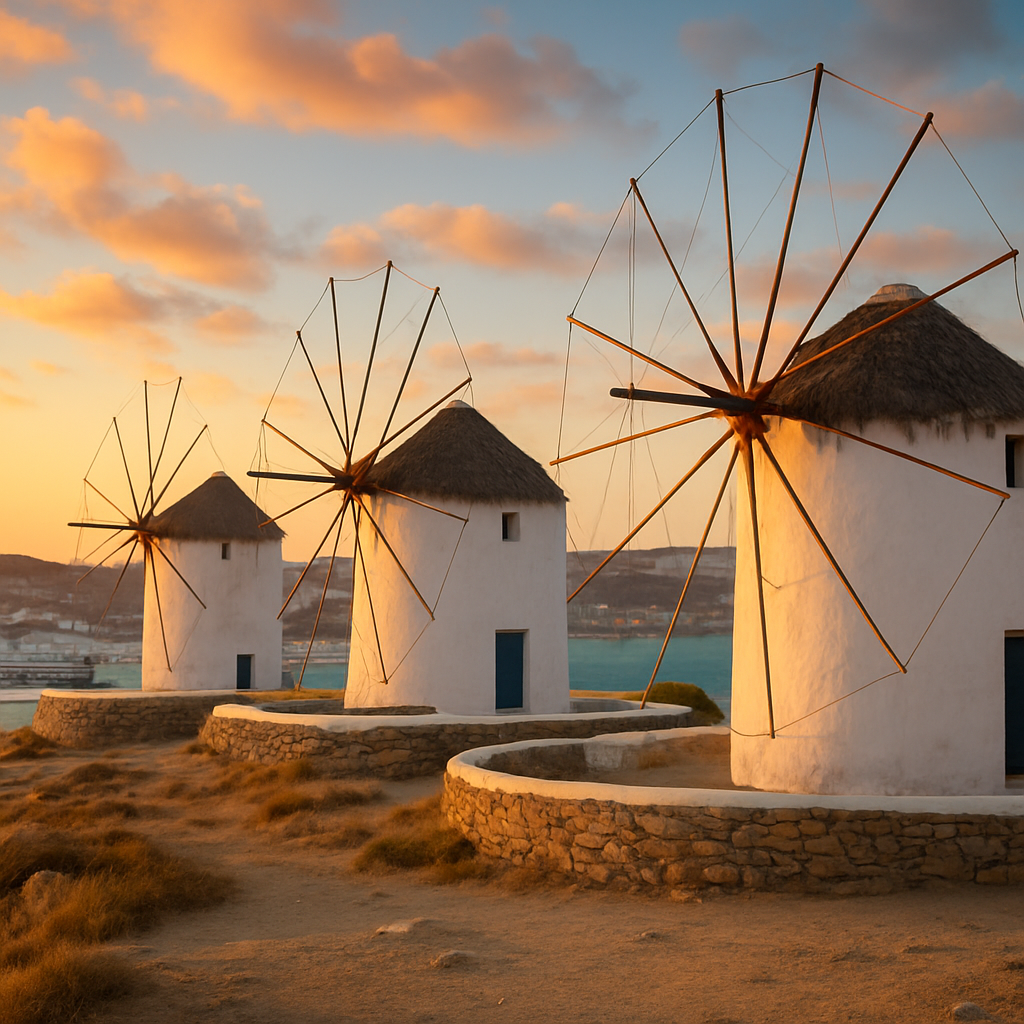
The Windmill Walk at Dusk
The walk from the Kato Mili windmills down through Chora's winding alleys toward Little Venice at dusk is one of the most beautiful 20 minutes you can have anywhere in Greece. Every corner looks art-directed — whitewashed walls glowing amber, bougainvillea spilling over doorframes, cats draped across warm stone like they've been staged. The bars begin buzzing precisely as the light turns golden, and you'll pass through the transition from ancient landmark to living nightlife district without noticing the seam. No ticket, no reservation, no plan required — just good timing and comfortable shoes on the cobblestones.
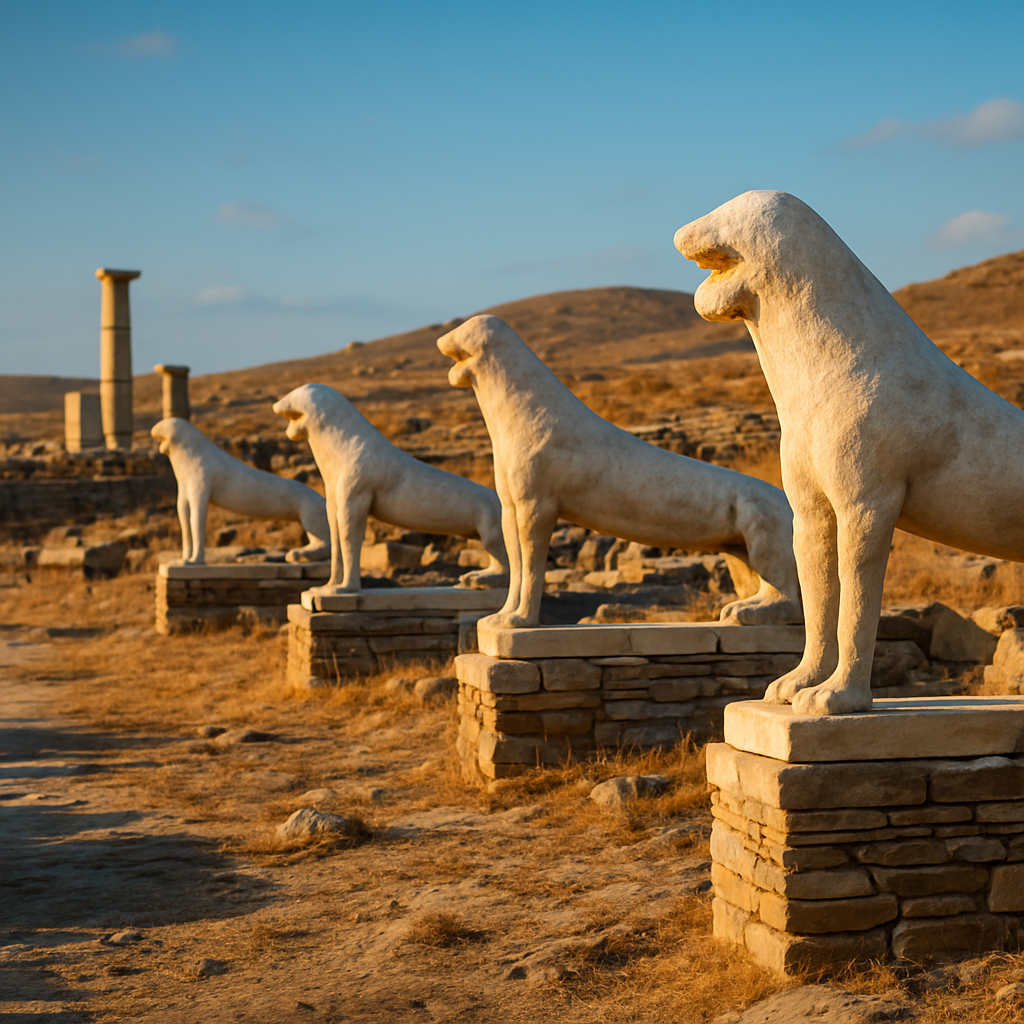
Delos — The Sacred Island
A 20-minute boat ride from Mykonos Town harbor deposits you on an uninhabited UNESCO World Heritage Site that was once the most sacred island in the ancient Greek world — the mythological birthplace of Apollo and Artemis. The Avenue of the Lions, a row of archaic marble sculptures dating to approximately 600 BCE, still lines the processional way. The merchant houses have intact mosaic floors. The ancient theater looks out over exactly the same blue Aegean you just crossed. No overnight stays are permitted, making it a structured day trip — ferries depart mornings and return by afternoon. Budget approximately €20 for the return ferry and €12 for site entry. Go early, bring water, and wear a hat — there's zero shade and the island earns its sun.
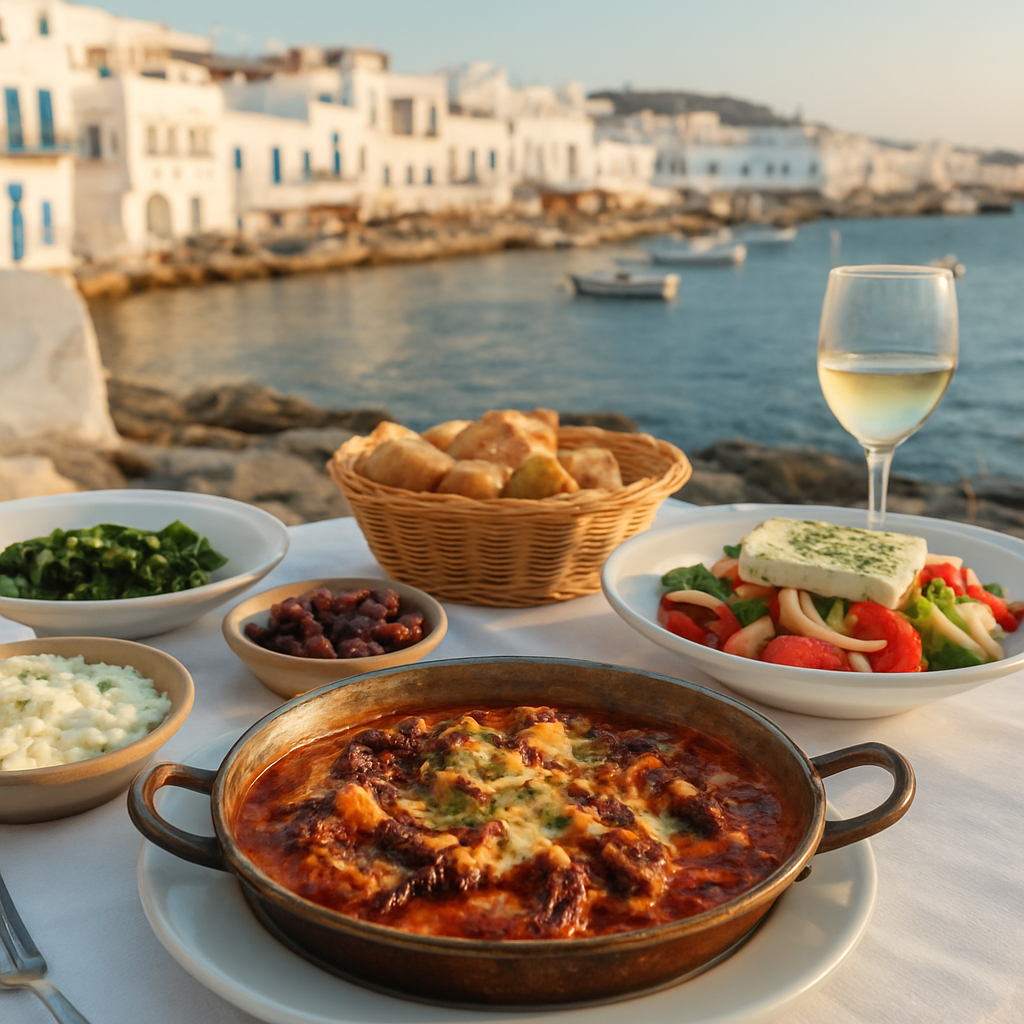
Meze and Ouzo in a Chora Courtyard
Before the clubs, before the beach clubs, before the sunset cocktails — there's the meal. Find a backstreet taverna in Chora with a courtyard garden and order the way the island wants you to: a spread of meze — grilled octopus charred at the tentacle tips, saganaki sizzling in its pan, tzatziki made that morning, local Cycladic cheese drizzled with honey. Pour the ouzo over ice and watch it cloud. This is the meal that anchors everything else. At the end, the server will almost certainly set down a complimentary shot of tsikoudia or rakomelo — refuse at your peril. Budget €25–40 per person at a mid-range spot, and consider it the best money you'll spend on the island.
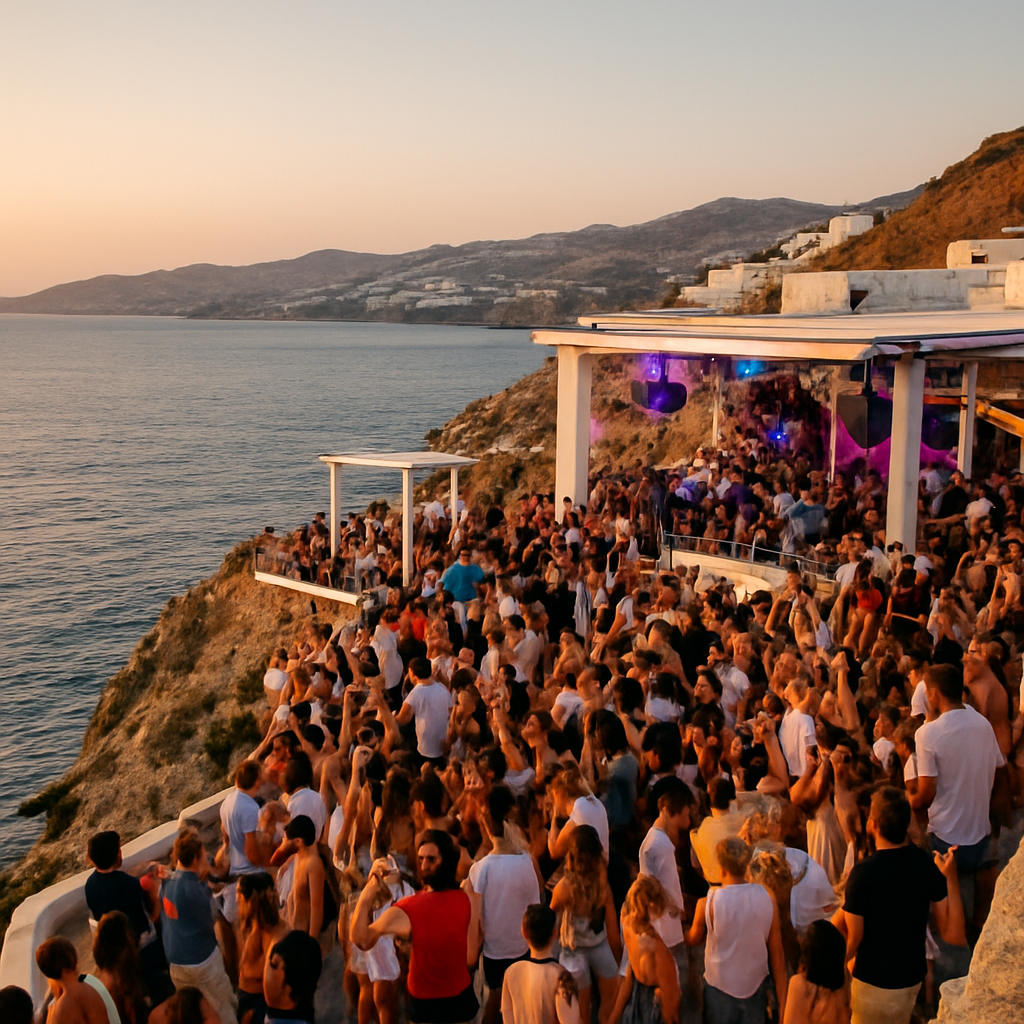
Cavo Paradiso at 2am
Cavo Paradiso is technically a mixed club, but its summer programming pulls genuinely world-class DJs and the setting is unmatched — a clifftop terrace where the dark Aegean spreads out below you like a movie set. Arrive around 2am when the space fills and the energy locks in. If you're doing one massive Mykonos club night — the kind where you watch the sunrise from the wrong side — this is it. Check their schedule in advance; the headline DJ nights sell out and the cover can run €30–50+, but you're buying the full Mykonos experience in a single dose.
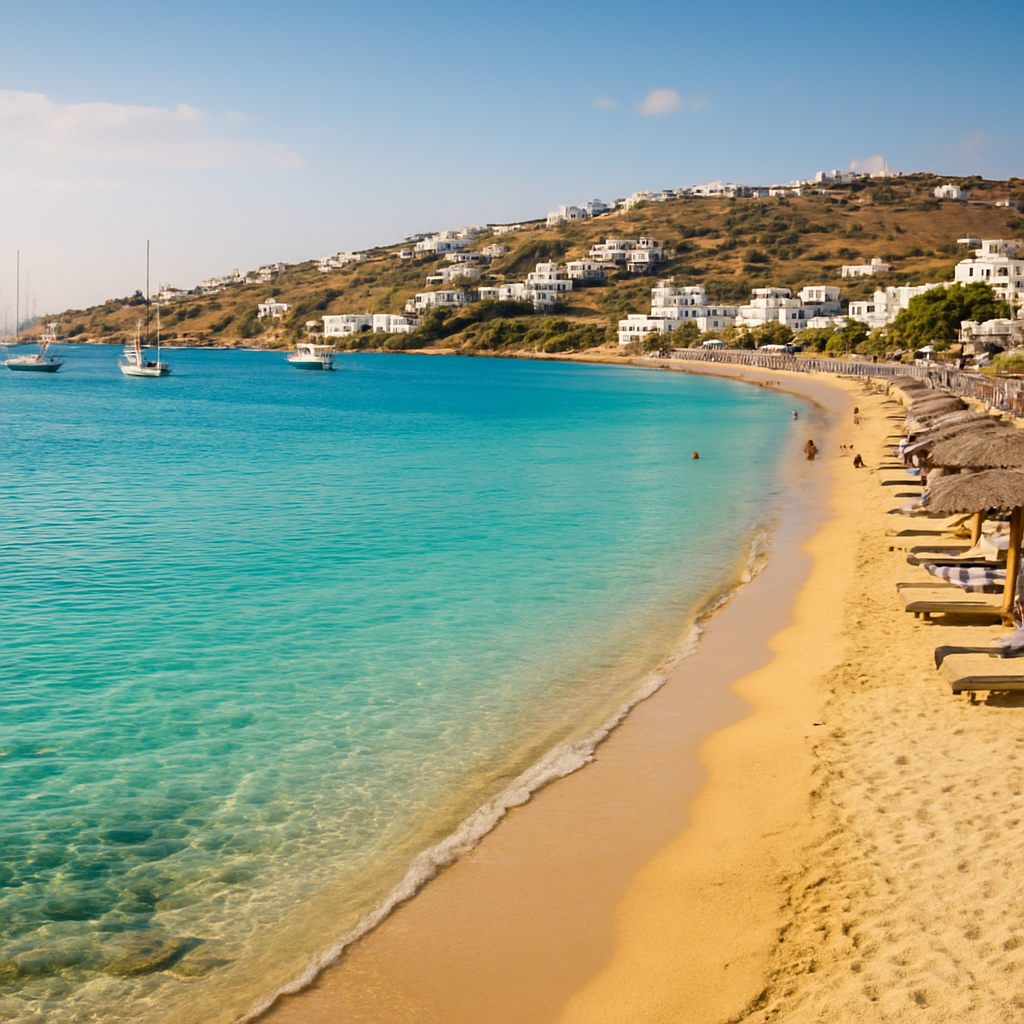
Ornos Bay for a Quieter Afternoon
Not everything needs to be a party. Ornos Bay is a 10-minute drive south of Chora with a sheltered, family-friendly beach, clear water that stays shallow for a long wade out, and a strip of waterfront tavernas that serve fresh-grilled fish without the bottle-service markup. It's also where the water taxis to Super Paradise depart, so you can calibrate your day — quiet morning at Ornos, escalating chaos by mid-afternoon at Jackie O' Beach Club. The contrast is part of the pleasure.
The places I actually send people to
Advice that fits how you travel
Mykonos is one of the easiest islands on earth to do solo as a queer traveler — and I don't just mean manageable, I mean genuinely excellent. The scene is built for meeting people. The beaches are communal by nature; Super Paradise and Elia Beach compress everyone into the same sunlit strip and conversations start without effort. The pool terrace at the Elysium Hotel functions as a daily social hub if you're staying there, and even if you're not, the bar circuit in Chora is compact enough that you'll recognize faces by your second night. App culture is active and direct — Grindr, Scruff, and Hornet all have strong usage during peak season, and the grid fills with international travelers in the same position you are.
Budget-wise, solo Mykonos is expensive but not impossible. A budget guesthouse or hostel dorm runs €70–95/night, food and drink €35–55/day if you eat meze at backstreet tavernas rather than beach clubs, and the KTEL bus covers main routes between Chora and the beaches for €2–3. Total budget floor: around €130–175/day. Mid-range solo runs €360–520/day with a proper hotel like the Manto. The biggest solo savings: you're not splitting a cave suite, so luxury is genuinely steep — but the mid-range sweet spot on this island delivers plenty.
Safety considerations are minimal. Chora at night is well-populated and well-lit through the early hours. The usual solo-travel rules apply: don't ride an ATV drunk on dark island roads, don't leave valuables unattended at beach parties, and keep your wits about you when walking home at 4am. But in terms of LGBTQ+-specific risk, Mykonos is about as close to zero as a destination gets. You can be visibly, loudly, unapologetically yourself here — and you should be.
Mykonos is unapologetically romantic in the way that only genuinely hedonistic places can be. You're not hunting for LGBTQ+-friendly restaurants or calculating which neighborhoods are safe for a casual hand-hold — you're just living. Same-sex couples are completely unremarkable on Matoyianni Street, at the beach clubs, at dinner, at the hotel bar at 3am. The island's economy is built on you. Act accordingly.
For the actual romance: get to Little Venice before 7pm and claim a waterfront table at Kastro's Bar. The balcony seats hang directly over the Aegean, classical music plays in the background, and the sunset turns the whole scene amber and gold. It's the kind of evening that makes otherwise reasonable people start talking about moving to Greece. If the budget allows, a cave suite at Cavo Tagoo — with a private plunge pool and a view over the harbor — will make every other anniversary feel inadequate by comparison. For a more centered, intimate base, the Manto Hotel puts you steps from everything without the financial trauma of peak-season luxury rates.
For a day worth remembering: take the water taxi from Ornos Beach to Super Paradise together, spend the afternoon at Jackie O' Beach Club, then wind back through the whitewashed alleys of Chora at dusk as the bars start filling and the drag performances warm up. That's not a curated itinerary — that's just a Tuesday in July. Few places on earth deliver that combination of beauty and complete, unguarded ease.
Greece legalized same-sex marriage in 2024 and extended full adoption rights to same-sex couples — meaning your family is legally recognized under Greek law, not just tolerated by polite tourism. For LGBTQ+ families traveling with kids, that legal baseline matters, and in Mykonos's heavily international tourist environment it translates into zero friction at hotel check-ins, restaurant tables, or beach clubs. You won't be explaining your family structure to anyone. Resources like Rainbow Families Greece can provide additional legal context if you're planning an extended stay.
Practically speaking, Mykonos peak season is loud, crowded, and built for adults. If you're traveling with younger kids, aim for May, early June, or September — the island is calmer, prices are lower, and the beaches are less aggressively party-oriented. Elia Beach, Mykonos's longest stretch, is the pick for families: it's LGBTQ+-welcoming, has a more relaxed atmosphere than Super Paradise, and has proper beach club infrastructure including food service. The day trip to Delos is genuinely excellent for kids old enough to appreciate ancient history — the Avenue of the Lions alone tends to land well.
Getting around with children requires some planning. The cobblestone alleys of Chora are charming but stroller-hostile — a carrier is a significantly better idea. The KTEL bus covers main routes affordably, but for beach runs with kids and gear, a taxi or pre-booked ATV rental (with the right licence) is the more realistic option. Accommodation with self-catering facilities is limited in central Mykonos, so factor in restaurant costs accordingly — most sit-down tavernas are genuinely welcoming to families, and children's portions are typically available on request even where not listed.
What Mykonos actually costs
Flights, visas, and the first 30 minutes
Airport: Mykonos Island National Airport (JMK) sits approximately 4km from Mykonos Town (Chora). It's a small regional airport — no jet bridges, no air conditioning worth mentioning — but it gets you there.
Major Routes: Athens (ATH) connects in 45 minutes and is your primary hub for long-haul connections. London Heathrow/Gatwick lands in approximately 3h 45min; Paris CDG and Amsterdam AMS in around 3h 30min; Frankfurt FRA in 3h; Rome FCO in 2h. Seasonal direct services expand dramatically from May through September — 50+ European cities connect directly in summer. Outside that window, plan to route through Athens.
By Ferry: Don't overlook the Piraeus ferry from Athens — high-speed services take approximately 3.5–4 hours and can be significantly cheaper than flying, with far more luggage flexibility. Conventional overnight ferries run around 5–6 hours and are particularly economical.
Visa Requirements: US, UK, Canadian, and Australian passport holders enter visa-free for up to 90 days within any 180-day period under Schengen rules. As of 2026, ETIAS pre-authorization is required — apply in advance at the official ETIAS portal before travel. EU citizens: freedom of movement applies, no visa or ETIAS required.
Airport to Town: Official taxis queue at arrivals — expect €15–25 and 10–15 minutes to Chora. The KTEL bus runs seasonally for €2–3 but service is limited and schedules are optimistic. ATV and scooter rentals start from €25/day and are honestly the best way to navigate the island once you've settled in — just treat the narrow cobbled streets of Chora with appropriate respect and ensure you hold the right licence category for larger vehicles.
Traven's seasonal breakdown
The questions everyone asks
When is the best time to visit Mykonos for the LGBTQ+ scene?
How much should I budget per day?
Is it safe to hold hands with my partner?
Do I need a car or scooter?
Is Mykonos only for gay men?
What's the deal off-season?
Do I need ETIAS to visit?
Screenshot this before you go
So should you actually go?
Go. Mykonos is the real thing — not a destination that tolerates LGBTQ+ travelers but one that was built by them, and you feel that in every alley of Chora, every afternoon at Super Paradise, every 2am drag number spilling out of Pierro's. It's expensive, it's hedonistic, it runs on a schedule that starts when most cities are going to sleep, and it will absolutely wreck your budget if you let it. But this island has been earning its place as one of the world's great gay destinations for over fifty years, and nothing I've seen suggests it's slowing down. Come in June through September, bring sunscreen and a flexible relationship with your savings account, and let the island do what it does. You'll understand why people keep coming back.
Sources & Resources
Official links we reference when compiling this guide. Last verified 2026-03-15.
- Athens Pride – Greece's Largest Pride Organization
- Colour Youth – Athens LGBTQ+ Community Organization
- EODY – Greek National Public Health Organization (HIV/Sexual Health)
- Greek Transgender Support Association (GTSA)
- Human Rights Watch – Greece LGBTQ+ Rights Coverage
- ILGA-Europe – Greece Country Overview
- ILGA-Europe – Greece Country Overview
- Municipality of Mykonos – Official Site
- Mykonos Municipality – Official Site
- OLKE – Homosexual and Lesbian Community of Greece
- Rainbow Families Greece
- Transgender Support Association of Greece (SYD)
- Visit Greece – Official Greek Tourism Portal