
Thessaloniki is what Athens would be if Athens cared less about being looked at — a port that's been changing hands for two thousand years, still pouring tsipouro by the carafe at midnight.
Thessaloniki is what Athens would be if Athens cared less about being looked at. This is the second city of Greece pretending it's a first city of the Balkans — a port that's been changing hands and changing names for two thousand years, with a queer scene that doesn't have a flag district because it doesn't need one. Ladadika and Valaoritou bleed into each other after midnight, the Iktinou strip holds three gay bars in a row, and the whole thing runs on student energy from Aristotle University and the kind of leftist political clarity Athens lost somewhere around the second EU bailout.
The contradiction is the appeal. This is the religious and political capital of northern Greece — the city of Agios Dimitrios, the seat of half the country's Orthodox conservatism — and it's also where I gave a 7.8 on Scene because three gay bars on one pedestrian street in a city this size is something. The temperature shifts block by block. Hand-holding on Tsimiski at noon draws nothing. The same gesture in front of a church on a Sunday morning earns you a stare you don't want. Read the room and the city is yours; ignore it and you'll learn fast.
What earns the 8.2 overall, though, is the food and the geography doing work most cities don't bother with. The bougatsa at Bantis at 8 a.m. standing at the counter. Tsipouro by the carafe in Ano Poli at golden hour with Mount Olympus across the gulf. The walk from the White Tower to the Concert Hall along Nea Paralia at sunset, which is the single gayest hour in the city without anyone announcing it — joggers, hand-holding couples, a drag queen grabbing a frappe before her shift, the runway nobody admits is a runway.
Come for Pride in late June if you want the city at its sharpest — the parade ending at Aristotelous is smaller than Athens and meaner in the right way, with visible trans and migrant blocs and the kind of edge the bigger party has lost. Come in May or September if you want the city at its easiest. Either way, you'll eat better, spend less, and meet more locals than you would three hundred kilometers south. Athens gets the press. Thessaloniki gets the better night out.
The stuff your travel guide buries on page 47
Greece is, on paper, one of the most LGBTQ+-equal countries in southern Europe. As of 2026, same-sex marriage is legal (passed in February 2024), civil unions have been on the books since 2015, joint adoption is permitted for married couples, anti-discrimination protections cover sexual orientation and gender identity in employment, goods, and services, and Greece has had self-ID legal gender recognition since 2017 for anyone 17 and older without a medical or surgical requirement. Conversion therapy on minors is banned. For the legal picture in detail, the ILGA-Europe Country Page: Greece is the cleanest summary, and the Greek Ombudsman's Equal Treatment office handles formal discrimination complaints.
That's the law. The reality on the ground in Thessaloniki is warmer than you'd expect from a city that's the religious and political capital of northern Greece, and cooler than Athens. The Aristotle University crowd, the leftist-leaning student culture around Kamara, and the bar scene in Ladadika and Valaoritou have made the center genuinely comfortable. Drift toward the eastern suburbs or up into Ano Poli's residential lanes and you'll feel the temperature drop — not hostile, just more traditional, more Orthodox, more yiayia-watching-from-the-balcony.
Pride happens in late June, with the parade ending at Aristotelous Square. Thessaloniki Pride has been running since 2012 and it's smaller than Athens, sharper-edged, with more visible trans and migrant blocs. Anti-Pride counter-protests do happen; police presence is heavy and, in practice, protective. Pro tip: book accommodation by April if you're coming for Pride — the central hotels around Aristotelous fill up fast.
For PDA, my read: hand-holding on Tsimiski, Mitropoleos, or the Nikis waterfront draws nothing in 2026. A kiss outside a bar in Ladadika at 1 a.m. is unremarkable. The same kiss in front of Agios Dimitrios on a Sunday morning will earn you a stare you don't want. Read the room — it's a city with one foot in the Balkans and one in the Aegean, and the dial moves block by block.
What it actually feels like on the ground
Holding hands during the day: In the central triangle between Aristotelous, Kamara, and the waterfront, completely fine. A reader wrote in to confirm what I observed myself — daytime PDA on Tsimiski or Mitropoleos gets you basically nothing, maybe a glance from a yiayia. The vibe shifts past Vardaris square late at night, where the bus station crowd thins out fast and the streets get rougher in a generic, not specifically anti-gay, way.
Hotel check-in: Same-sex couples shouldn't expect any friction at any of the hotels in this guide, and Greek hospitality law would back you up if there were. The boutique properties in Ladadika and on Aristotelous are used to international guests; the SLH and Design Hotels properties have explicit inclusive standards.
Taxis and rideshare: Uber and FreeNow operate in Thessaloniki but only as taxi-hailing apps — private rideshare isn't permitted. Drivers are professional and uneventful. If you're calling a cab from a gay bar at 3 a.m., you'll be fine.
Beaches and Halkidiki day trips: The Sithonia peninsula's Kavourotrypes cove is the unofficial welcoming beach — no facilities, partial nudity tolerated, and you'll need a car or a willing friend with one. The mainstream Blue Flag beaches on Kassandra are family-Greece, not hostile but not a scene.
Late night in Ladadika and Valaoritou: The bar district is one of the safer late-night quadrants in Thessaloniki — pedestrianized, well-lit, lots of foot traffic until 4 a.m. Watch for pickpockets in the busy crush, not for harassment. Walk back to your hotel along Tsimiski rather than cutting through quieter side streets and you're fine.
Trans travelers: Greece's self-ID law is one of the most progressive in southern Europe, and Thessaloniki has a visible trans community presence at Pride and through groups like Orlando LGBT+ Mental Health Services. That said, everyday street acceptance lags behind Athens, and trans women of color have reported higher harassment risk in the more conservative suburbs and around the train station area at night. Stick to the central triangle and you'll be moving through a much more comfortable city than the data suggests.
Verbal harassment: Rare in the center, more likely on football derby days. Far-right ultras occasionally throw their weight around when PAOK is playing — it's not aimed at tourists, but check the schedule and avoid the area around Toumba Stadium on those nights.
Health and HIV resources: Checkpoint Thessaloniki on Syngrou Street offers free, anonymous, multilingual HIV and STI testing and is run by Positive Voice, the Greek Association of People Living with HIV. They're staffed by community, not bureaucrats, and you can book a 20-minute appointment online. For broader social and health support, Praksis NGO runs polyclinics with English-speaking staff.
The queer geography
Thessaloniki doesn't have a gay village. It has a gay overlap — a center-city triangle where the bars, cafes, and the student crowd from Aristotle University pour into each other and the scene is whoever showed up that night. Treat it like one big party with rainbow flags taped behind some of the bars.
Ladadika
The old olive-oil merchants' quarter near the port, now a pedestrianized warren of cobblestoned lanes lined with restored 19th-century warehouses. By day it's a food district — Bougatsa Bantis has been making the city's defining flaky-pastry breakfast since 1969, and you eat it standing at the counter with a Greek coffee at 8 a.m. and you don't ask questions. By night it's the city's central nightlife hub, with mezedopoleia, tsipouradika, and the kind of late-dinner crowd that doesn't sit down before 10. Several of the welcoming bars and the historic Pulp Bar sit in or right next to this district, and Pride afterparties have anchored here for over a decade. Thessaloniki Pride is the best calendar to plan around.
Valaoritou
One block inland from Ladadika, this formerly industrial street became the city's hipster bar district about fifteen years ago and never looked back. It's where the alternative scene lives — converted commercial buildings, neoclassical facades restored to art bars, and after 11 p.m. the street itself becomes the venue. Atlas Cafe, Coo, and the unmarked basement parties spill onto the pavement, and the queer crowd recognizes itself by who's wearing what. No velvet ropes, no door policy, just elbows. Ypsilon in a restored neoclassical building runs cultural programming during the week and turns into an art-bar on weekends.
Iktinou Street and Agia Sofia Square
The closest thing Thessaloniki has to a gay strip is a short pedestrian stretch of Iktinou Street a few blocks back from the waterfront, with Enola, Sokaki, and Mayer clustered together in a row that's been a community fixture for years. Two minutes' walk away, Agia Sofia Square opens up around the 8th-century Byzantine church of the same name, and the cafe-bars along its edges — particularly Rooster and Spirto — are where the morning frappe crowd, the lunch crowd, and the cocktail crowd all happen to be the same crowd. The Colour Youth network and other community organizations regularly host meetups in this quadrant.
Nea Paralia
The redesigned waterfront promenade, stretching from the White Tower past the famous Umbrellas of Zongolopoulos sculpture to the Concert Hall. Architecturally it's the most successful piece of public space in the city — a series of themed gardens, jogging paths, and seafront benches that frame Mount Olympus across the gulf on a clear day. The walk from the White Tower to the Concert Hall at sunset is the single gayest hour in Thessaloniki without anyone announcing it. Joggers, hand-holding couples, twinks on rented bikes, a drag queen grabbing a sunset frappe before her shift — it's the runway.
Ano Poli
The Upper Town, the only quarter of Thessaloniki that survived the Great Fire of 1917, and the only place left in the city where you can see what it looked like under the Ottomans. Steep cobblestoned lanes, Byzantine walls, the Trigonion Tower, the Heptapyrgion fortress, and tiny family-run tavernas where you order tsipouro by the carafe and the view goes out over the entire city to the gulf and Mount Olympus beyond. It's a more traditional residential neighborhood — discretion in the narrow lanes is smart — but it's also where you go for the best sunset in the city, and it's an easy 25-minute walk up from the center if your knees agree. For municipal context and event listings, the Municipality of Thessaloniki Equality Office is the official starting point.
The experiences worth rearranging your itinerary for
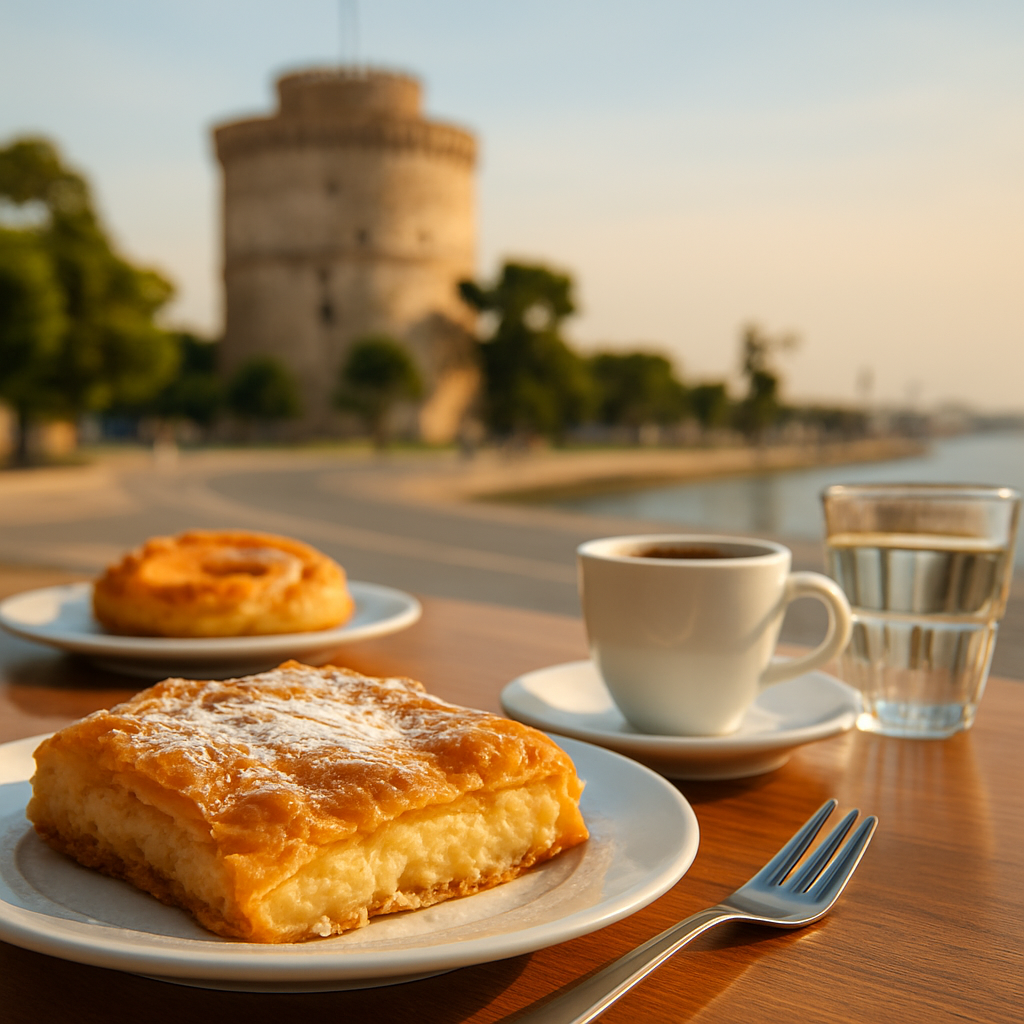
Bougatsa at Bantis, Standing at the Counter
The defining Thessaloniki breakfast happens at Bougatsa Bantis in Ladadika, which has been making flaky phyllo pies filled with semolina cream, cheese, or minced meat since 1969. You eat it standing up at the counter at 8 a.m. with a Greek coffee, you don't ask whether to order sweet or savory (the cream version is the answer either way), and you don't sit down. Pro tip: arrive before 9 — the morning queue moves but the seating is nonexistent and the best trays empty fast.
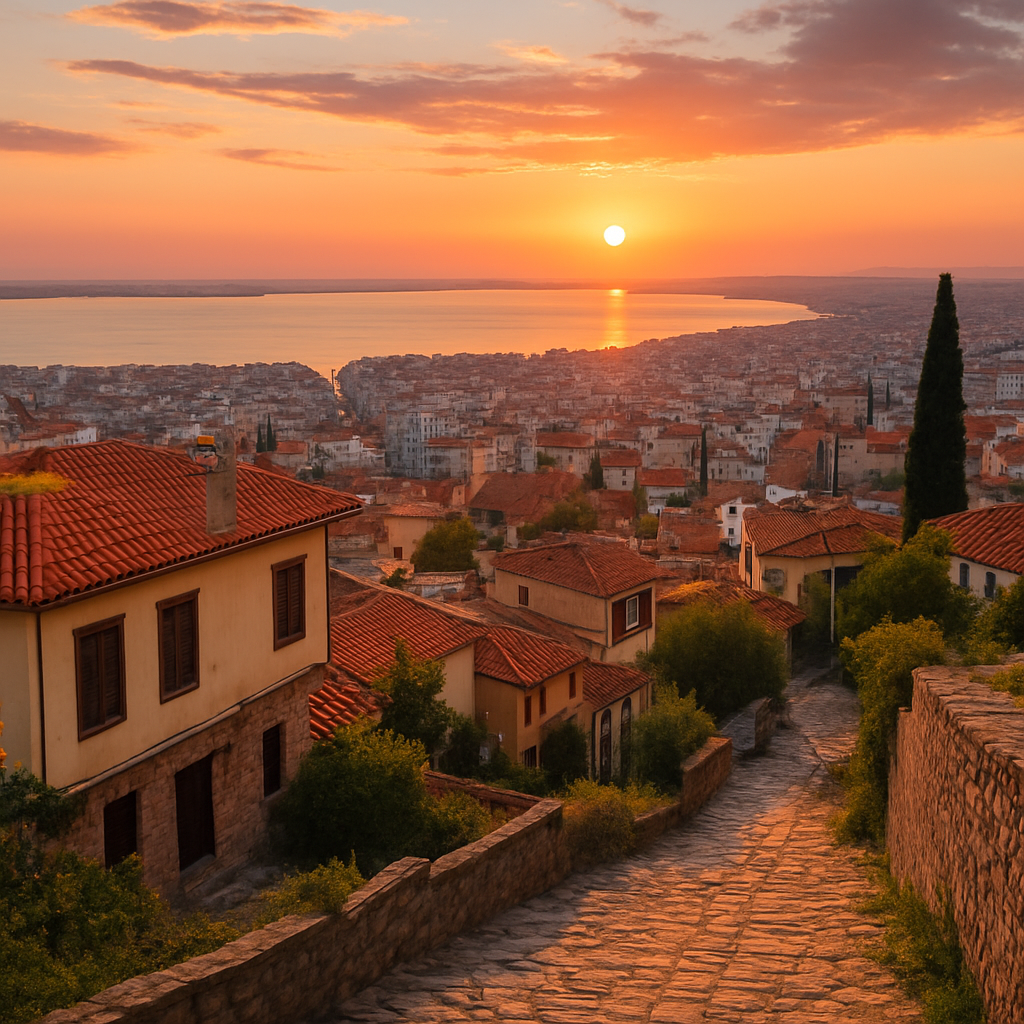
Ano Poli at Golden Hour with a Carafe of Tsipouro
Walk up to the Upper Town in the late afternoon — it's a 25-minute climb from the center if your knees agree — and find one of the tiny family-run tavernas near the Trigonion Tower. Order a small carafe of tsipouro and a few mezedes, and watch the sun drop behind the Thermaic Gulf with Mount Olympus across the water on a clear day. The whole city, the gulf, and the mythological home of the gods in one frame — it ruins every other view you'll ever have.
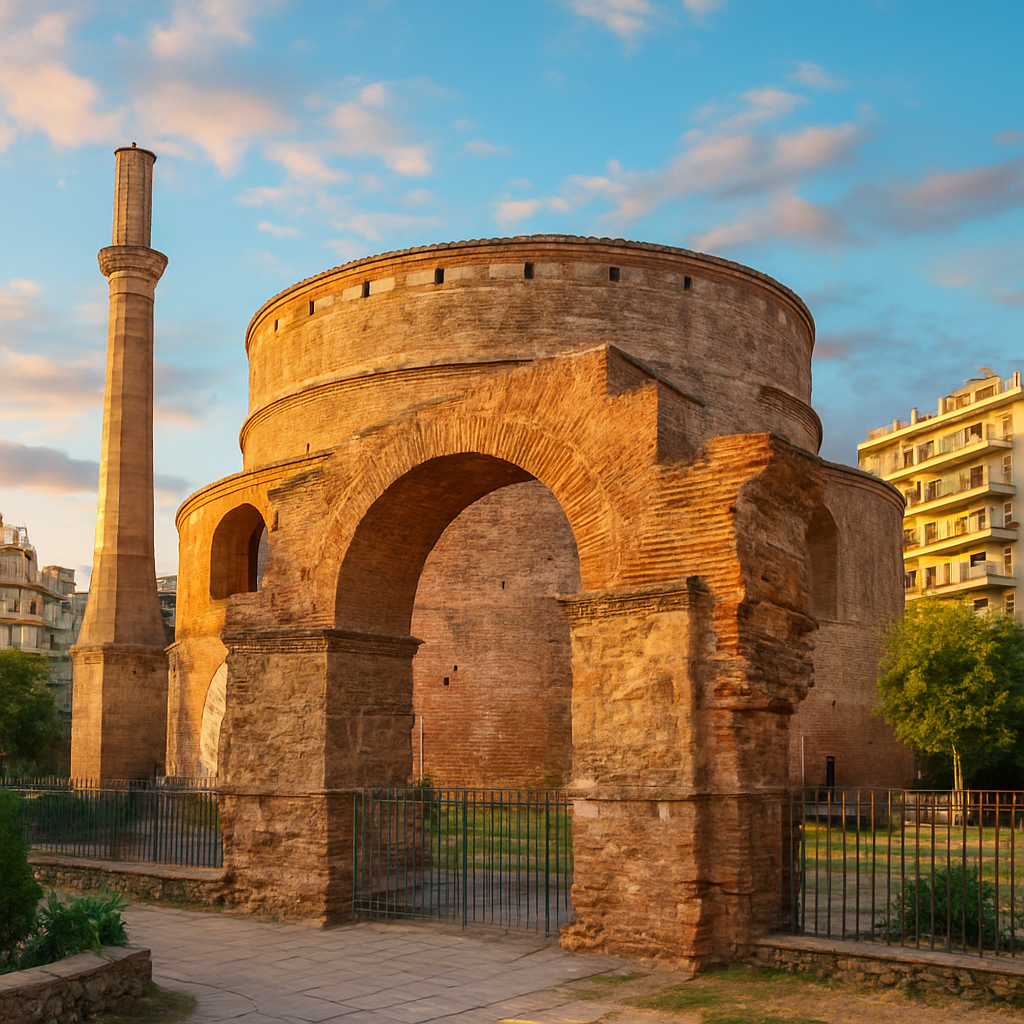
The Rotunda and the Arch of Galerius
Two Roman monuments standing 200 meters apart, both built for Emperor Galerius around 306 AD, both UNESCO World Heritage. The Rotunda is one of the oldest standing Christian buildings in the world — Roman mausoleum, then Byzantine church with extraordinary early Christian mosaics, then Ottoman mosque whose minaret is the only one preserved in the city. The Arch of Galerius (locally called Kamara) anchors the student quarter and is the city's main rallying point. Walk between them and you've covered three empires in five minutes.
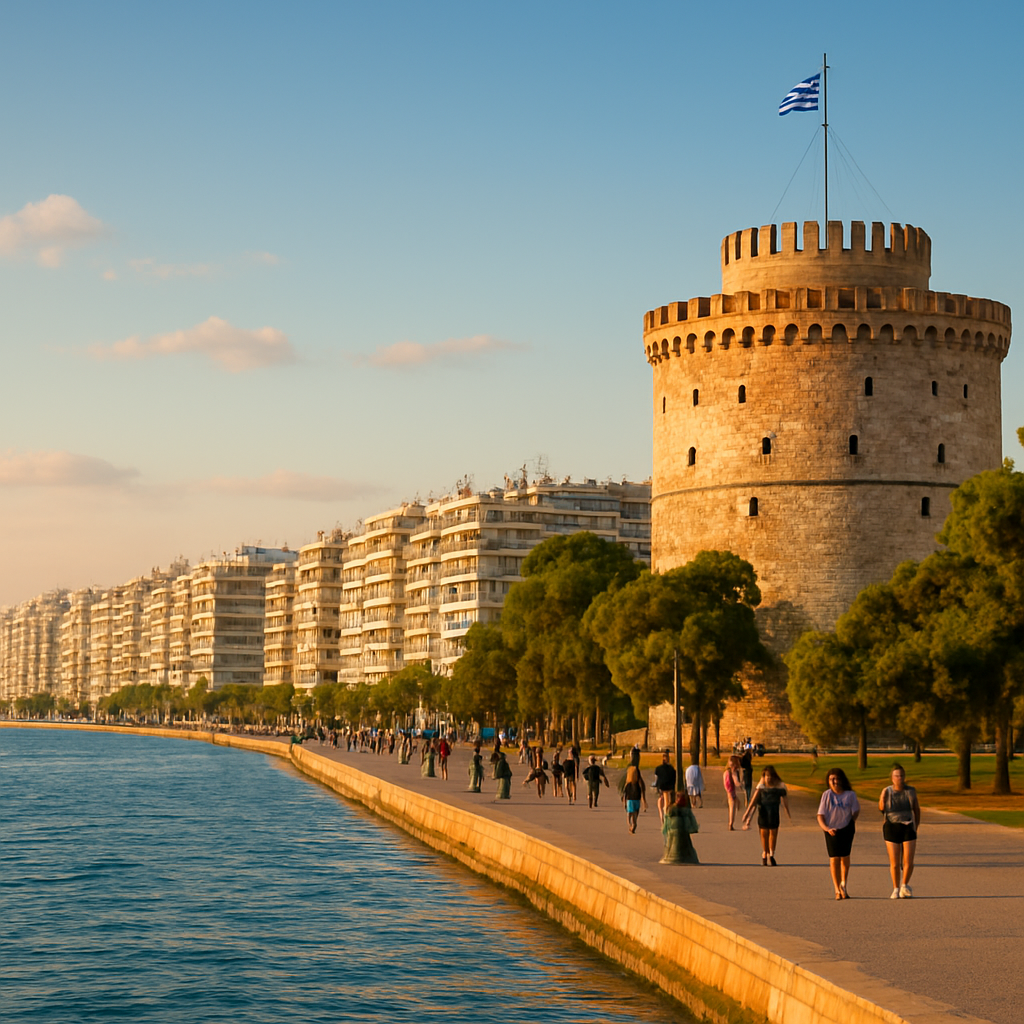
The White Tower to the Concert Hall at Sunset
Start at the White Tower, climb the six floors of the city history museum for the rooftop view, then drop back down and walk the redesigned Nea Paralia promenade east toward the Concert Hall. Pass the Umbrellas of Zongolopoulos sculpture, the themed gardens, the seafront benches framing Mount Olympus across the gulf. It's the most successful piece of public space in the city and the single best evening hour you can spend in Thessaloniki without a reservation.
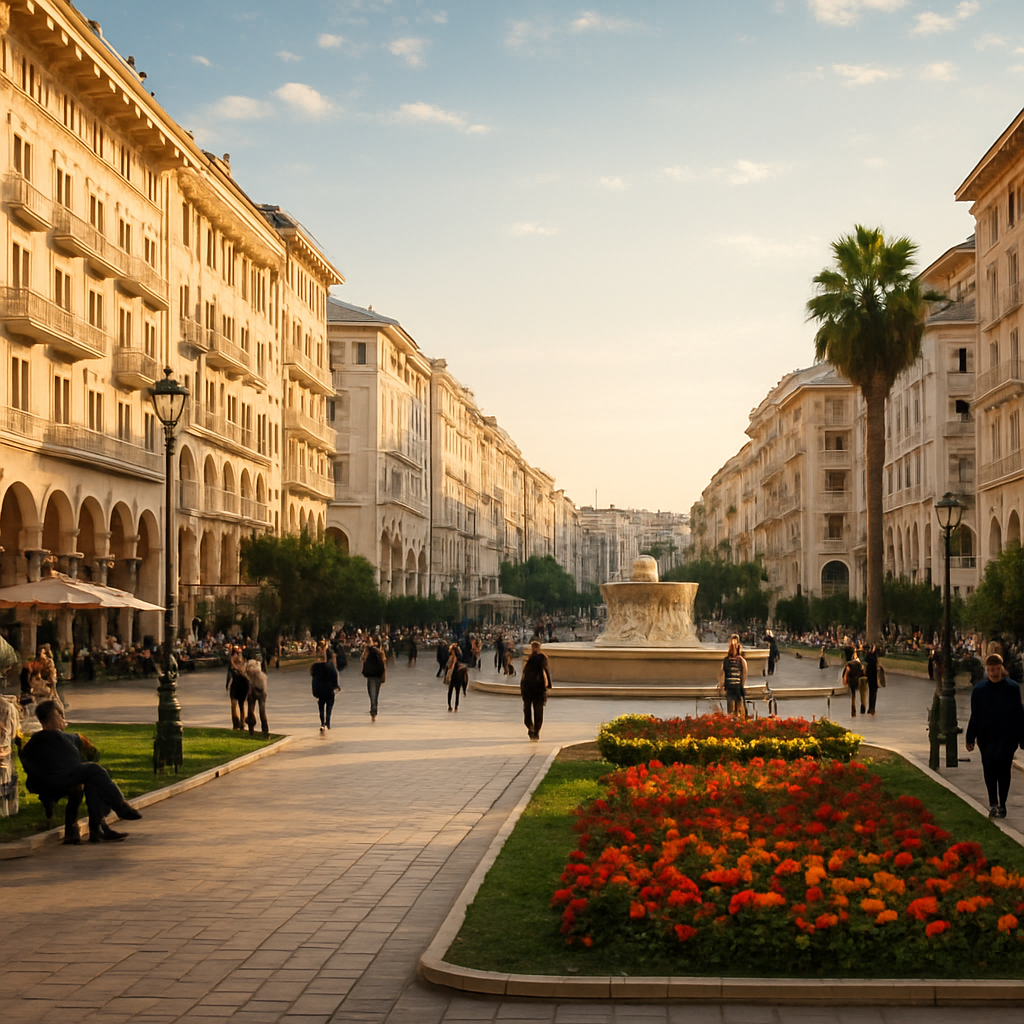
Holocaust Memorial at Plateia Eleftherias
Thessaloniki was approximately 50% Sephardic Jewish before 1943 — a city known for centuries as Salonica, with one of the largest Jewish populations in Europe — and then almost the entire community was deported to Auschwitz. The Holocaust Memorial in Plateia Eleftherias is small and easy to miss, set in the square where the deportations were organized. Paying respects there is part of understanding why this city's politics, and especially its minority and queer politics, are so tied to memory and survival.
The places I actually send people to
Advice that fits how you travel
Thessaloniki might be the most underrated solo city in southern Europe, and a chunk of that is the student factor. Aristotle University dumps about 70,000 young people into the center every term, which means the cafe-bars on Agia Sofia Square, the Iktinou strip, and Valaoritou run on a low door-policy energy that makes solo arrivals easy. Walk into Rooster at noon, take a frappe at the terrace, and you'll know how to spend the next six hours by the time you finish it. The city is also genuinely walkable — almost everything you'd want to see or drink sits inside the triangle between Aristotelous, Kamara, and the waterfront, and the solo budget at €55–85/day stretches further here than anywhere else in Greece outside the islands.
The apps work the way you'd expect — Grindr is busiest after 11 p.m. and skews student-heavy on weekdays, weekend traveler-heavy in summer. The bars do the heavier social lifting, though. Enola, Sokaki, and Mayer on Iktinou form the closest thing to a gay strip in northern Greece, and three rooms in a row means you can bar-hop without ever leaving one block. Greek nightlife runs late — eat at 10, show up at midnight, pace yourself with tsipouro by the carafe instead of cocktails by the round, and you'll keep up with the locals instead of dragging behind them.
Pro tip: base yourself in Ladadika or Valaoritou rather than the seafront — the price is the same or lower, the walking distance to the bars is zero, and the bougatsa at Bougatsa Bantis is a four-minute stumble from your bed at 8 a.m. when you need it most. Solo travelers in Thessaloniki rarely stay solo for long, but the city also doesn't punish you if you do — it's a place built for sitting at a counter, watching the room, and not needing a plan.
Same-sex couples have it good in Thessaloniki and the city earns my 7.2 on Chill the way these things should be earned — quietly, by not being a problem. As of 2026, same-sex marriage is legal nationwide, hotels in this guide won't blink at a king bed booking, and PDA in the central triangle is unremarked. Hand-holding on the Nikis waterfront at sunset, a kiss at a Ladadika dinner table, sharing a tsipouro carafe in Ano Poli at golden hour — none of it draws attention in 2026. The exception, as I noted in Know Before You Go, is the residential lanes of Ano Poli and the eastern suburbs, where moderate discretion is just smart traveler behavior.
For romance, the moves are obvious once you see them. Book a sea-view room at Daios Luxury Living on the Nikis promenade and let the floor-to-ceiling windows do the work — this is one of those properties where the room is the view. Walk the White Tower to Concert Hall stretch at sunset; pass the Umbrellas of Zongolopoulos sculpture; have dinner at Mourga in the tiny dining room where the chalkboard menu changes daily. Then up to Ano Poli the next evening for a carafe of tsipouro at one of the family-run tavernas near the Trigonion Tower, with the gulf and Mount Olympus laid out below you. That's the trip — that's the case for Thessaloniki as a couples city.
For Pride weekend in late June, book by April. The hotels around Aristotelous — Electra Palace in particular — sit on the parade endpoint and fill up fast. Moderate-budget couples can do this whole city beautifully on €185–290/day; luxury couples on €420–720/day are getting suite-grade rooms, private guides, and the kind of long-table mezedopoleio dinners that turn into long-table mezedopoleio nights.
Greece recognizes LGBTQ+ families in full as of 2026 — same-sex marriage is legal, joint adoption is permitted for married couples, and anti-discrimination law covers your kids in school, healthcare, and public services. Thessaloniki is a more traditional city than Athens in many ways, but it's also a university town with a strong leftist current, and same-sex parents with kids in tow draw a glance and not much else in the central neighborhoods. The eastern suburbs and the Ano Poli residential lanes skew more conservative, but you're unlikely to be spending a kid-driven trip in either of those quadrants.
For the kids themselves, the city is a lot easier than its reputation. The Nea Paralia waterfront promenade is stroller-flat and runs for a full kilometer and a half — themed gardens, sculpture, sea air, and benches every fifty meters. NOESIS Science Center on the eastern edge is an easy half-day. The White Tower rooftop is a winning bribe for a kid who's been dragged through one too many ruins. Estrella for brunch (the bougatsan is built for sharing), Charoupi for a real Cretan family dinner, Ouzou Melathron for the long-table mezze experience that kids actually love because the food keeps coming in small plates.
Pro tip: for Halkidiki day trips, pick Sithonia over Kassandra if you have a car — Blue Flag beaches, fewer crowds, and a 90-minute drive each way that the kids will sleep through both directions. Family-budget at €160–240/day stretches a long way here, and the moderate tier at €310–470/day gets you a four-star family suite, a private driver for day trips, and the kind of long lazy taverna meals that are the whole reason you came.
What Thessaloniki actually costs
Flights, visas, and the first 30 minutes
Airport: Thessaloniki Airport Makedonia (SKG) sits about 16 km southeast of the city center, on the coast near Mikra. It handles approximately 60 direct routes, heaviest on intra-European traffic — daily nonstops to Athens, London, Frankfurt, Munich, Vienna, Zurich, Amsterdam, Paris, Brussels, Istanbul, and seasonal direct service to Tel Aviv, Dubai, and a handful of US/Canada-feeder routes via Athens. Most North American travelers will connect through Athens, London, Frankfurt, or Vienna.
Visas (as of 2026): US, UK, Canadian, and Australian passport holders can typically enter visa-free for up to 90 days within any 180-day Schengen period. ETIAS travel authorization is generally required for visa-exempt travelers from 2026 onward — apply online before departure, modest fee, valid for multiple entries over three years. EU citizens enjoy full freedom of movement and need only a valid national ID.
Airport to city: The cheapest move is the Bus 01X / 01N (OASTH), running 24 hours direct to the city center and train station for €2 — pay onboard, journey takes 45–60 minutes depending on traffic. A licensed taxi runs €25–35 and gets you door-to-door in 20–30 minutes, with surcharges late at night and small luggage fees that add up. Uber and FreeNow operate in Thessaloniki but only as taxi-hailing apps — private rideshare isn't permitted — so the price matches a regular taxi at €25–35. Pre-booked private transfers (sedan or van) run €40–60 and are worth it for groups, late arrivals, or anyone hauling more than a carry-on.
Pro tip: Bus 01X drops you a five-minute walk from most central hotels for under two euros — skip the taxi unless you've arrived with a suitcase the size of a small refrigerator. Rental cars from the airport run €30–60/day and only make sense if you're heading to Halkidiki or doing the Vergina/Mount Olympus day-trip circuit. Parking in central Thessaloniki is tight and meter-policed — drop the car at the hotel garage, walk the city.
Traven's seasonal breakdown
The questions everyone asks
Is Thessaloniki safe for same-sex couples?
When is Thessaloniki Pride?
Do I need to speak Greek?
How does Thessaloniki compare to Athens for queer travelers?
Is the airport bus actually worth it over a taxi?
Where's the best beach day from Thessaloniki?
How much should I budget per day?
Screenshot this before you go
So should you actually go?
Go. This is the most underrated queer city in southern Europe, and the gap between its reputation and the actual experience on the ground is wide enough to drive a Halkidiki rental car through. As of 2026, full legal equality, a genuinely warm central triangle, three gay bars in a row on Iktinou, food that punches above any reasonable weight class, and a price tag that makes Athens look indulgent. Read the room in the conservative quadrants, save your PDA for the central streets where it lands unremarked, and come for Pride in late June if you want the city at its sharpest. LGBTQ+ travelers who skip Thessaloniki for Athens are making the wrong call.
Sources & Resources
Official links we reference when compiling this guide. Last verified 2026-05-04.
- Athens Pride (national umbrella context)
- Colour Youth - Athens LGBTQ Youth Community
- Greek Ombudsman - Equal Treatment
- ILGA-Europe Country Page: Greece
- Municipality of Thessaloniki - Equality Office
- Orlando LGBT+ Mental Health Services
- Positive Voice - Greek Association of People Living with HIV
- Praksis NGO (social and health support)
- Rainbow School (LGBTQI+ educators network)
- Thessaloniki Pride