
Budapest didn't ask for your sympathy. It built a scene inside a political siege and kept the doors open.
Budapest splits itself down the middle — literally. The Danube carves this city in two, and the divide isn't just geographic. Buda is all hills, old money quiet, and castle walls. Pest is where the pulse is: crumbling courtyards turned into bars, Ottoman-era thermal pools steaming under neon, a gay scene that's small but stubborn as hell. I gave it a 9.0 on Destination because, honestly, few cities in Europe deliver this much beauty per euro spent. The Parliament building lit up at night from the Pest embankment is one of those views that makes you stop talking mid-sentence.
But here's the thing you need to hold in your head simultaneously: Hungary's government has spent the better part of a decade making life harder for LGBTQ+ people. The 2021 law modeled on Russia's propaganda statute is real, it's enforced in media, and it's created a visible chill on public signage and visibility. The bars are still open — Mystery Bar on Nagymező utca has been pouring drinks since the '90s, and Why Not Café & Bar still fills its sidewalk tables on warm evenings. But you'll notice the discretion. Venues keep a lower profile than they would in Vienna or Berlin. Your presence here, especially during Budapest Pride in early July, is noticed — and appreciated — by a community that hasn't backed down despite real pressure.
The gay strip clusters along Nagymező utca in Terézváros (District VI) and bleeds into the ruin bar chaos of the hetedik kerület — the 7th district's Jewish Quarter. A reader wrote in to tell me the ruin bars of the 7th — Szimpla Kert, Gozsdu Udvar, Instant-Fogas — are welcoming, and they're right, but "friendly" means mixed-crowd tolerant, not dedicated gay space. Know the difference before you spend your whole night in a courtyard bar thinking you've found the scene. The actual scene is a ten-minute walk north, on a few specific blocks, and it's earned my Scene score of 8.0 by being genuinely resilient rather than merely large.
My Traven-Dex of 6.8 reflects exactly what Budapest is: a world-class destination wrapped in a complicated political reality. The thermal baths alone justify the trip. The architecture will ruin other cities for you. The lángos at 2am on Kazinczy utca will save your soul. But you should arrive with your eyes open about the legal landscape, stay in Districts VI or VII on the Pest side, and understand that the community here has real courage — and could use your support.
The stuff your travel guide buries on page 47
The legal landscape, as of 2026: Same-sex sexual activity is legal and has been since 1961. Same-sex couples can register as domestic partners (élettársi kapcsolat), which provides some — but not all — spousal rights. Same-sex marriage is not legal. Hungary's constitution, amended in 2012, defines marriage explicitly as between a man and a woman. Same-sex adoption is effectively prohibited. Anti-discrimination protections exist in employment and housing but are limited in scope and inconsistently enforced.
The 2021 law you need to know about: Hungary's so-called 'child protection' law bans any media or public content depicting homosexuality or gender transition where minors might encounter it. It's modeled on Russia's propaganda statute and it's real. It hasn't closed the bars or cancelled Pride, but it has created a measurable chilling effect on public LGBTQ+ visibility. You'll notice that some venues are deliberately discreet with signage and public-facing branding. That's not an accident — it's adaptation.
Gender identity law: Since 2020, Hungary has banned legal gender recognition entirely (Act XXXIII). Trans travelers cannot change gender markers on Hungarian-issued documents, and the political environment is actively hostile to trans visibility. Trans visitors whose documents don't match their presentation should anticipate potential friction with ID checks. Transvanilla Transgender Association maintains current guidance.
The cultural reality: Budapest is dramatically more tolerant than the rest of Hungary, but 'tolerant' and 'affirming' aren't the same word. In Districts VI and VII — the core tourist and nightlife zone — you'll find genuine comfort and visibility. Outside those districts, particularly in residential areas and outer Buda, social attitudes are measurably more conservative. If you're traveling as a couple with children or in any legally sensitive family configuration, review your situation with Háttér Society's legal aid service before you arrive.
PDA comfort: District VII's Zsidónegyed (Jewish Quarter) and ruin bar zone is your most comfortable area — hand-holding is generally unremarkable there, though overt affection can still draw stares. District VI along Andrássy Avenue reads as low-moderate. The thermal baths are traditionally gender-segregated spaces where discretion is expected — though Rudas holds occasional queer-specific bath nights where norms shift significantly. The Budapest Pride March route in July has heavy police presence and PDA is normalized within the march perimeter, but avoid surrounding counter-protest zones. Residential outer districts (IX, X, XIV, outer Buda) — keep it discreet.
What it actually feels like on the ground
Holding hands: In the gay bars along Nagymező utca and within the 7th district ruin bar strip, this registers as unremarkable. On the metro, on trams in outer districts, or walking through residential Buda — you'll get stares, and occasionally something verbal. A reader told me the Háttér helpline (available in English) is worth having saved in your phone before you need it. I agree.
Hotel check-in: International-brand hotels and the boutique properties in Districts V, VI, and VII handle same-sex couples without issue. Budget guesthouses and properties outside the central tourist core may be less polished about it — not hostile, but occasionally awkward. Booking as a couple on major platforms generally ensures smooth check-in. Two men requesting one bed at a walk-in property in outer Budapest could encounter hesitation.
Taxis and rideshare: Use the Bolt app — it's the dominant rideshare platform and provides a documented, rated transaction. Avoid unmarked cabs, especially from the airport. Inside a Bolt ride, couples holding hands or being affectionate won't typically draw comment from drivers. Pro tip: screenshot or note the driver's details if you're heading to a gay venue late at night, just as a basic precaution.
Thermal baths: The major baths — Széchenyi, Gellért, Rudas, Király — are public spaces with mixed demographics. Same-sex couples should be discreet in the general bathing areas. Rudas and Király have long, layered histories as queer cruising spaces — any local will decode the hours and the vibe for you with a knowing look. The atmosphere varies dramatically by time of day and session type.
Late night: The 7th district after midnight is lively and well-populated — there's safety in the crowd. Walking back from Alterego at 3am along Dohány utca or through Gozsdu Udvar is fine. Avoid cutting through unlit residential side streets in the 8th or 9th districts. The 3am lángos stand on Kazinczy utca near Szimpla Kert is packed — you won't be alone.
Trans travelers: Budapest's political climate is particularly hostile to trans visibility, and the 2020 ban on legal gender recognition means documents that don't match presentation can cause friction at ID checkpoints, border crossings, and even hotel check-ins. Stay in central Districts V–VII where staff are more accustomed to international travelers. Carry documentation discreetly and be aware that police interactions outside the tourist zone may be less informed. Transvanilla is the best local resource.
If something goes wrong: If you experience harassment, discrimination, or a rights issue — Háttér Society is your first call, not the police. They operate an English-language helpline and a dedicated legal aid service, and they know Hungarian law far better than most officers you'd encounter. Save the number before you land.
Budapest Pride (late June/early July): The march is both a celebration and a heavily policed event. Organizers coordinate closely with authorities, and the route is lined with police specifically because far-right groups have historically turned out to counter-demonstrate. Inside the security perimeter, it's safe and affirming. Outside it, tensions can run higher than usual in surrounding streets. It is not Amsterdam Pride on a canal boat. Come prepared for that energy, and it's a genuinely powerful experience.
The queer geography
Terézváros — District VI (Nagymező utca)
This is Budapest's established gay strip, and it's been one for decades. Nagymező utca — sometimes called the 'Broadway of Budapest' for its theatre corridor — runs through the heart of the 6th district and is home to the city's longest-running queer bars. Mystery Bar at number 3 has been operating since the 1990s, which in Budapest's political climate is a statement in itself. WHY NOT? Café & Bar at number 42 runs as a daytime café and evening gay bar, and has been a community anchor for over fifteen years. The strip is compact — you can walk its queer-relevant stretch in five minutes — but real. For something more low-key, Mystery Bar is the kind of place where regulars know the bartenders' names and tourists feel immediately welcomed anyway.
Erzsébetváros — District VII (Jewish Quarter / Ruin Bar District)
The 7th district is where the energy is. The Zsidónegyed (Jewish Quarter) has layered Jewish and queer history beneath its current identity as the epicenter of Budapest's alternative nightlife. The ruin bars — Szimpla Kert, Instant-Fogas Complex on Akácfa utca, Doboz on Klauzál utca — are welcoming in the sense that mixed crowds here genuinely don't care who you're with, but they're not gay bars. Know the difference. Alterego Club on Dohány utca is the dedicated gay club — multi-floor, drag shows, doesn't really wake up until after midnight, so don't show up at 10pm looking confused. Gozsdu Udvar, the covered courtyard corridor connecting Dohány utca to Király utca, is where evenings start before migrating to the actual gay venues. The Kazinczy utca stretch has some of the best casual food in the district, including Bors GasztroBar.
Józsefváros — District VIII
Auróra at Práter utca 44 is the important name here — a nonprofit-operated bar and community cultural space that regularly hosts events for Háttér Society, Budapest Pride, and Labrisz Lesbian Association. It's the closest thing Budapest has to a queer community center that also serves drinks. The 8th district is rougher around the edges than the 6th or 7th, so stay aware if you're walking there at night, but the venue itself is worth the trip.
Víziváros — District II (Buda Side)
Almost all of Budapest's queer life is on the Pest side, but the Buda bank holds Király Bath on Fő utca — a 16th-century Ottoman bathhouse with its original domed main pool hall still intact. It's documented in LGBTQ+ travel literature as a historic gathering space for gay men, particularly during single-sex bathing sessions. The vibe at various hours is an open secret. If you're staying in Pest (and you should be), it's a short tram ride across.
The experiences worth rearranging your itinerary for
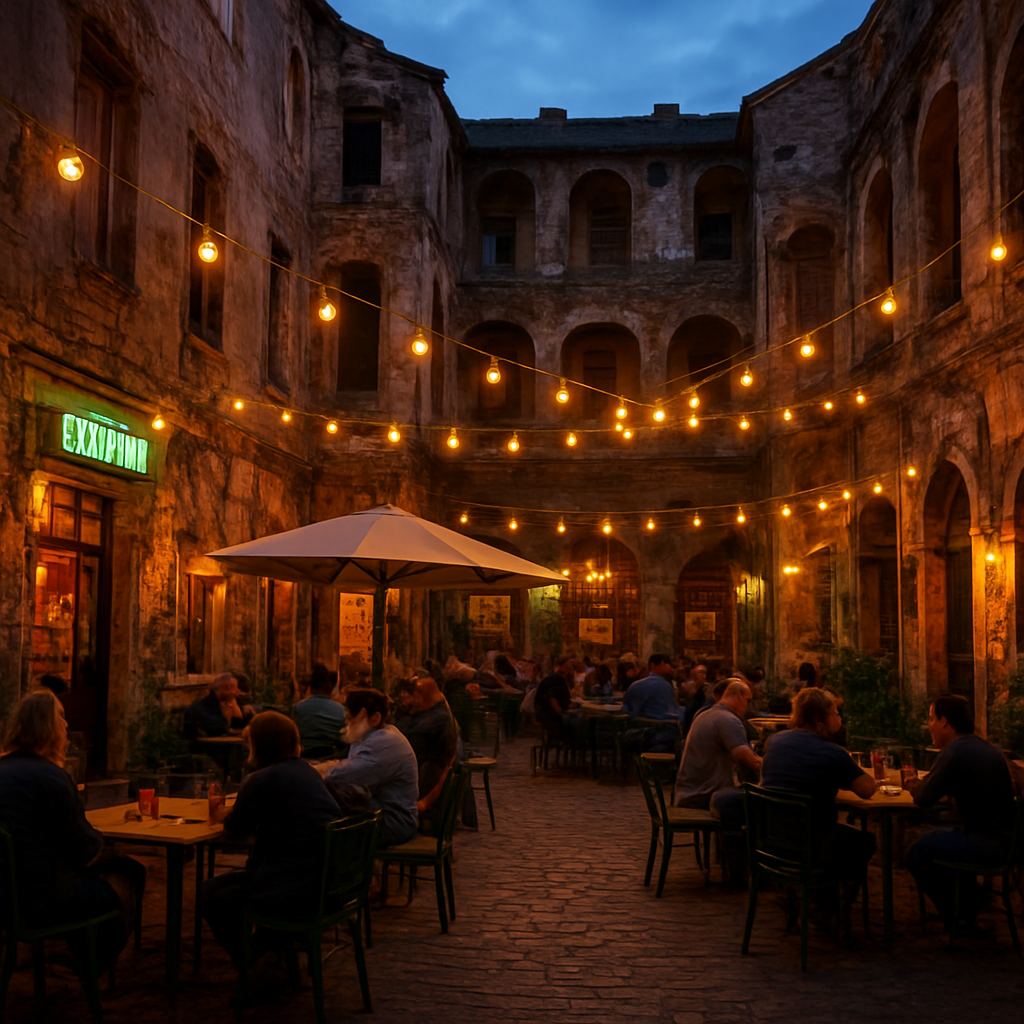
The Ruin Bar Circuit After Dark
Budapest's romkocsma scene didn't just invent a bar concept — it created an entire architectural language out of crumbling pre-war buildings, mismatched furniture, and open courtyards. Start at Gozsdu Udvar's seven linked courtyards, work your way to the sprawling rooms of Instant-Fogas Complex on Akácfa utca, and let the night take its own shape. The beauty is in the randomness: a DJ set bleeding through a doorway, a courtyard strung with lights, a drink handed to you whose name you never caught. The energy on a summer weekend night is genuinely electric — and the lángos stand on Kazinczy utca near Szimpla Kert at 1am exists specifically to catch you on the way out.
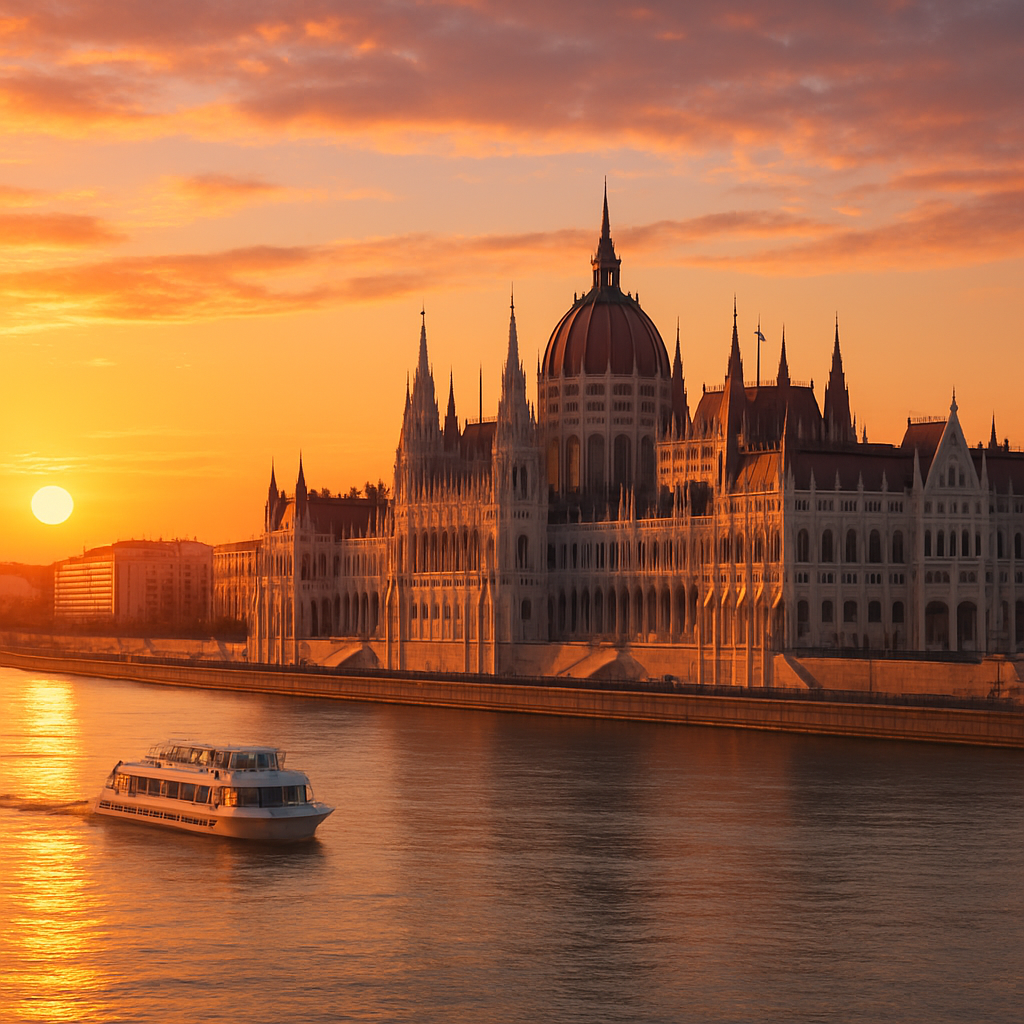
Parliament Building from the Buda Embankment
The Hungarian Parliament is the third-largest parliament building in the world, and seeing it lit up from across the Danube at dusk is one of those views that makes you stop mid-conversation. Walk the Buda embankment from the Chain Bridge south toward Gellért Hill for the full panorama. The building's neo-Gothic facade — 691 rooms, 268 meters of riverfront — reflects off the water in a way that photographs can't quite capture. Daytime tours of the interior are worthwhile (book online), but the exterior from across the river at golden hour is free and arguably better. On your walk, you'll pass the Shoes on the Danube Bank Holocaust memorial — sixty pairs of iron shoes marking where victims were shot into the river. It will change the way the rest of the view sits with you.
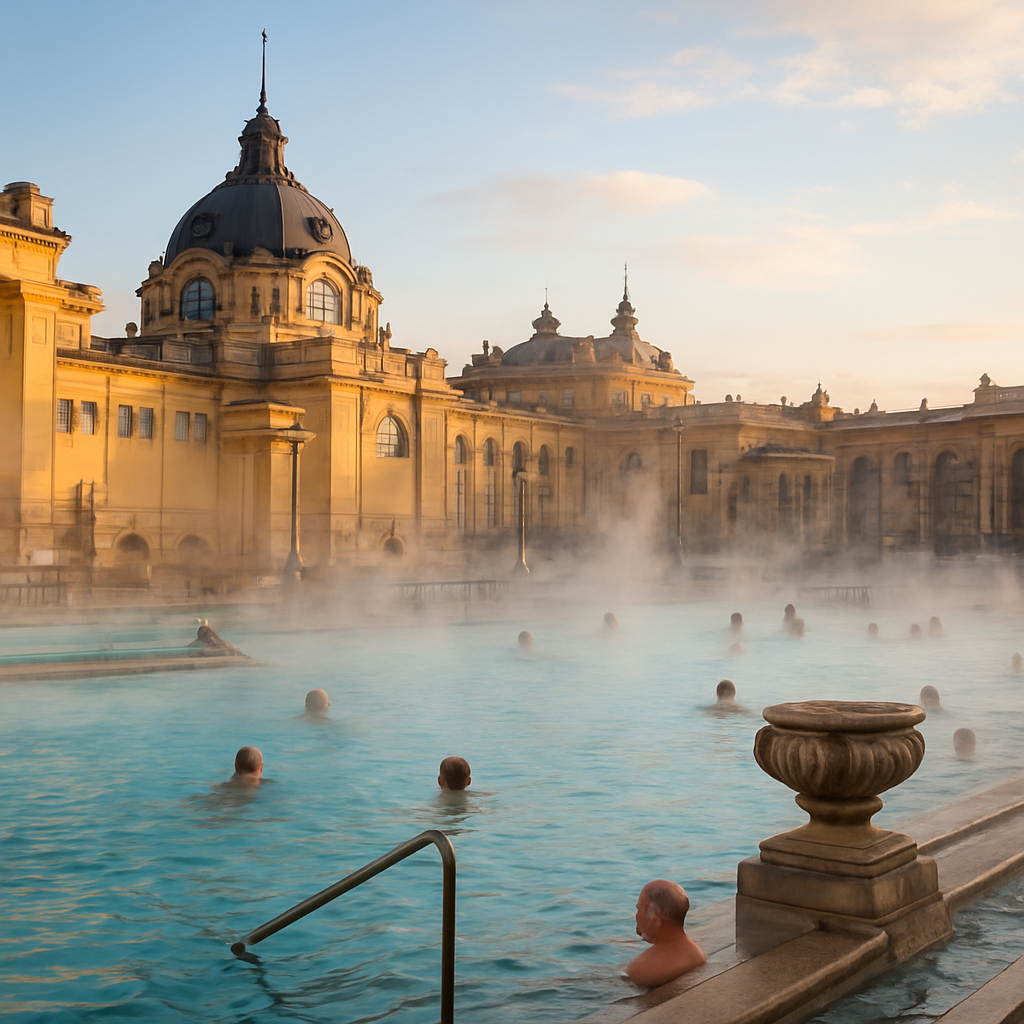
Széchenyi Thermal Bath in October
Fifteen indoor pools, three outdoor pools, steam rising off the water into cool autumn air, chess players half-submerged in 38°C mineral water. Széchenyi in City Park has been open since 1913 and it operates year-round, but October is when the experience peaks — warm enough outside to enjoy the outdoor pools, cool enough that the steam creates a visual you won't get anywhere else. Arrive early on a weekday to beat the tour groups. The neo-Baroque yellow building looks absurd and magnificent. Budget approximately 7,000–8,000 HUF for entry. Bring your own towel or rent one.
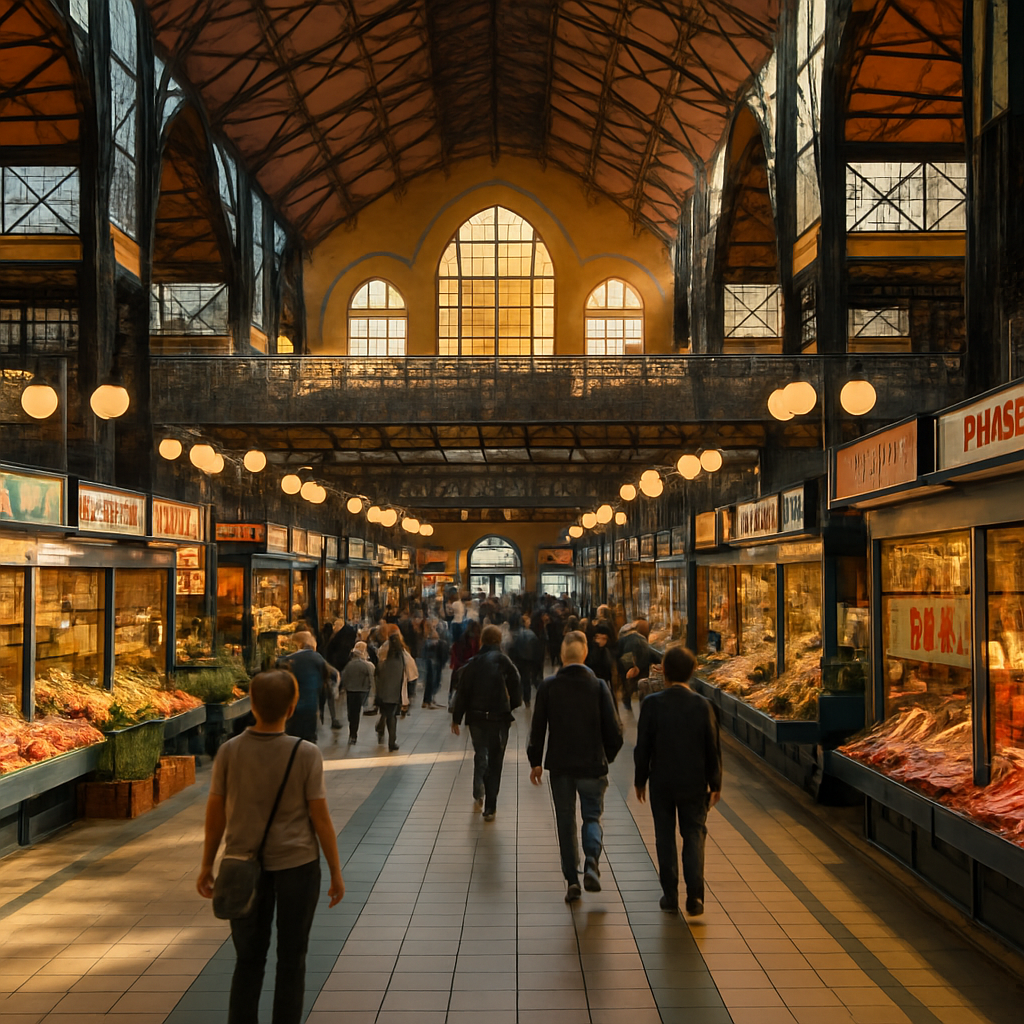
The Great Market Hall and a Proper Hungarian Lunch
Nagyvásárcsarnok (Great Market Hall) at the Pest end of Liberty Bridge is a cathedral-sized iron-and-glass market hall built in 1897. The ground floor is where locals actually shop — paprika vendors, sausage stalls, pickled everything. Upstairs, the food stalls serve lángos, gulyás, and stuffed cabbage at communal tables. It's touristy upstairs and it doesn't matter — the food is solid and the building itself is worth walking through just for the architecture. Follow it with a walk across Liberty Bridge to the Gellért side for the view back toward the market's roofline. Pro tip: the paprika vendors on the ground floor are significantly cheaper and better quality than anything you'll find in the tourist shops outside.
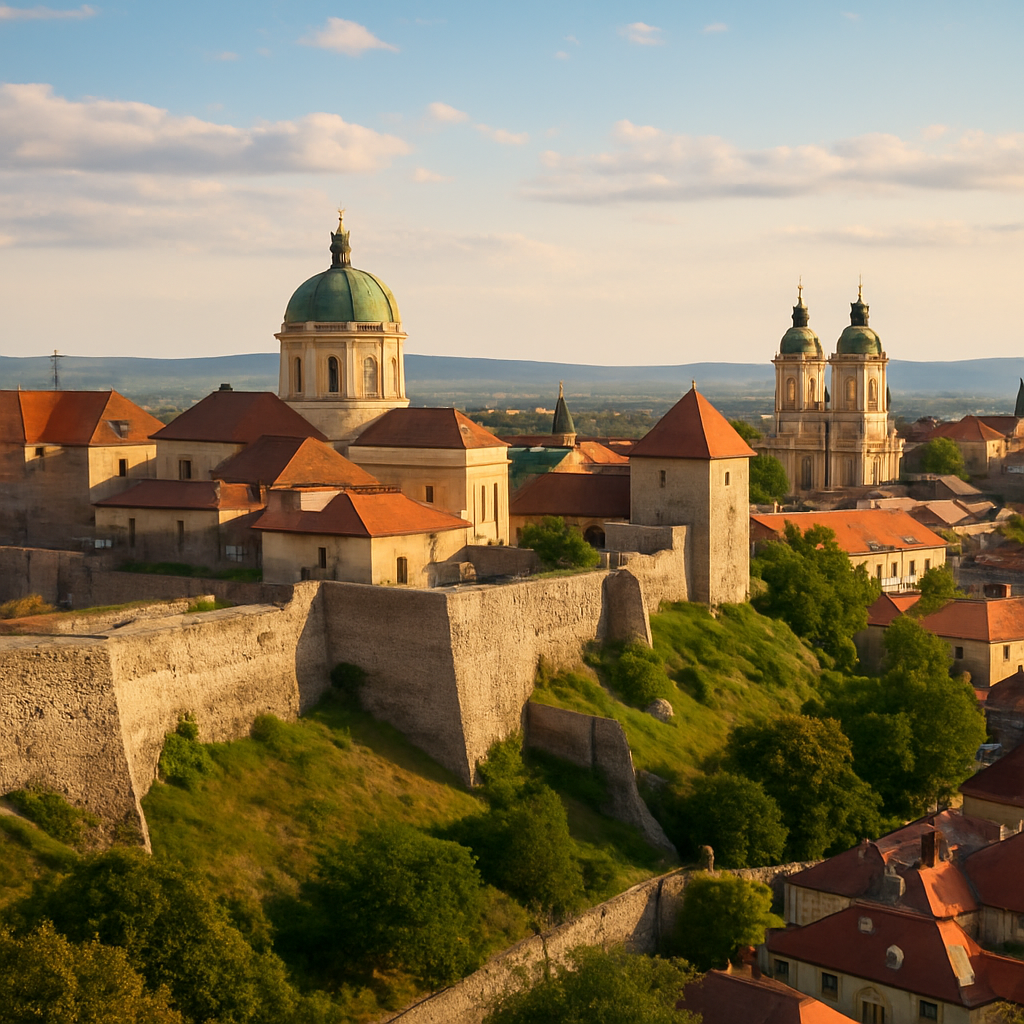
Eger: Wine Cellars and a Castle That Held
Eger is approximately two hours by direct train from Budapest Keleti station, and it's the day trip I'd pick if you only have time for one. The 16th-century castle famously withstood an Ottoman siege in 1552 — the museum inside tells the story properly. One of Hungary's northernmost surviving Ottoman minarets still stands in the town center, offering panoramic views if you're willing to climb the narrow spiral. But the real reason to come is the Szépasszony-völgy (Valley of the Beautiful Women) — a horseshoe of wine cellars carved into hillside rock where you can taste Egri Bikavér (Bull's Blood) direct from the barrel. The Baroque town center is walkable and beautiful, and lunch at a cellar restaurant for under €15 is one of the best value meals you'll have in Hungary.
The places I actually send people to
Advice that fits how you travel
Budapest is one of the best solo travel cities in Europe for the money. A hostel bed runs from approximately 4,500 HUF/night, a solid meal from a market stall or Bors GasztroBar is under 3,000 HUF, and a 24-hour transit pass covers the entire city for around 1,100 HUF. The ruin bars of the 7th district are designed for solo wandering — Instant-Fogas Complex alone has enough rooms and floors that you can spend an evening moving through different crowds without ever needing a conversation partner. The thermal baths are equally natural solo — nobody at Széchenyi is wondering why you're alone; half the people there came by themselves.
For meeting people, Grindr and Scruff both have active Budapest user bases. The apps work straightforwardly in Districts VI and VII; outside the center, you'll notice profiles tend to be more discreet — often faceless or locked. In person, WHY NOT? Café & Bar during its daytime café hours is the easiest low-pressure entry point into the local scene. Alterego on weekends skews younger and higher-energy; Mystery Bar is where you go if you want to talk to someone rather than dance at them.
Safety-wise, solo travelers in the central districts have few concerns beyond the standard big-city awareness. Don't flash expensive electronics on empty late-night trams. Stick to the Pest side for nightlife — Buda after dark is quiet and residential, not dangerous, but also not where anything is happening. If you're a solo trans traveler, review the guidance in the Safety section carefully and keep Transvanilla's resources bookmarked. For everyone else: Budapest solo is a city that scales perfectly to one person, and the budget math makes it one of the most accessible capitals in Europe.
Budapest rewards couples who know which neighborhoods to lean into. The ruin bars of Erzsébetváros — the candlelit corners of Szimpla Kert, the sprawling courtyard of Gozsdu Udvar connecting Dohány utca to Király utca — are genuinely atmospheric for an evening that starts slow and builds. Hand-holding along the Nagymező utca strip and throughout Districts VI and VII reads as normal; the international tourist density provides real cover, and the crowds around Kazinczy utca have seen everything.
For the romantic centerpiece of a Budapest trip, Rudas Thermal Bath is the move — the Ottoman dome with its star-shaped skylights, the warm mineral pools, and on co-ed nights, an atmosphere that's genuinely unlike anything else in Europe. Book online in advance. On the accommodation side, Brody House on Bródy Sándor utca is my top pick for couples who want character over corporate polish — its courtyard garden, library bar, and arts-community clientele make it feel like staying in a very well-curated friend's townhouse. If you want river views and a splurge moment, the Four Seasons Gresham Palace opposite the Chain Bridge will deliver, full stop.
The honest note: overt PDA in broader Budapest — on public transit, in Buda, in outer districts — still draws stares, and occasionally worse. That's not a Budapest-is-dangerous warning; it's a Budapest-is-still-working-on-it reality. Save the affection for your hotel room, the specific venues where it reads as unremarkable, or the walk back from Alterego at 3am. The city has genuine romantic rewards for couples who calibrate accordingly.
Traveling to Budapest as an LGBTQ+ family requires honest advance planning. As of 2026, Hungary does not legally recognize same-sex adoption, and same-sex marriage remains unavailable — registered domestic partnership (élettársi kapcsolat) is the only legal framework for same-sex couples. Families where parental recognition or family structure documentation could become relevant should review their situation thoroughly with Háttér Society before departure. Their legal aid service handles exactly these questions and operates in English.
The city itself has real family appeal. The Budapest Zoo in Városliget (City Park) is well-maintained and manageable with strollers; the Children's Railway up in the Buda Hills is genuinely charming for kids and adults alike; and Széchenyi Thermal Bath works surprisingly well as a family outing — the outdoor pools are lively rather than hushed, the atmosphere is festive, and it operates year-round regardless of weather. Children under 6 ride public transit free, and most major attractions offer reduced child pricing. Budget-conscious families can cover a lot of ground without it adding up fast.
The social climate for LGBTQ+ families in public is uneven. Two dads or two mums with children will attract notice in most parts of the city — not necessarily hostility, but a level of visibility you should be prepared for. Districts VI and VII are your most comfortable zones for moving through the city without fielding attention. Budapest can absolutely be a rewarding family destination, but it requires more contextual awareness than you'd carry into Amsterdam or Barcelona. Go in knowing that, and you'll find the city's genuine warmth for tourists — including its remarkable amount of kid-friendly infrastructure — more than justifies the trip.
What Budapest actually costs
Flights, visas, and the first 30 minutes
Airport: Budapest Ferenc Liszt International Airport (BUD) connects the city to approximately 150+ destinations worldwide, with strong low-cost carrier coverage across Europe via Ryanair, Wizz Air, and easyJet alongside full-service carriers.
Major routes: London Gatwick/Luton runs approximately 2h 30m; Amsterdam approximately 2h 20m; Frankfurt approximately 1h 45m; Paris CDG approximately 2h 35m; Vienna approximately 1h, making Budapest one of the most accessible Central European capitals from Western Europe. From Dubai approximately 5h 10m; from Tel Aviv approximately 3h 20m.
Visa requirements (as of 2026): US, Canadian, and Australian passport holders typically enter without a visa under the Schengen 90/180-day rule — meaning 90 days within any 180-day period across the entire Schengen zone, not just Hungary. UK passport holders generally receive 90 days in any 180-day period under post-Brexit arrangements. EU citizens move freely with no restrictions. Entry requirements can and do change — always check your government's official travel advisory before you depart.
Getting from BUD to the city: The 100E Airport Express bus runs direct to Deák Ferenc tér for approximately 1,100 HUF (35–45 min) — the most efficient public option and the one I'd recommend for most travelers. The Metro M3 combination (bus to Kőbánya-Kispest, then metro to city center) costs approximately 530 HUF but adds 15–20 minutes. Official taxis run a fixed-rate zone fare of 8,000–10,500 HUF (25–40 min depending on traffic) — use the Bolt app or FőTaxi, and never get in an unmarked cab outside the airport. Shared minibus shuttles cost 4,500–6,000 HUF door-to-door; useful if you're arriving late with heavy bags, but book in advance.
Traven's seasonal breakdown
The questions everyone asks
Is Budapest safe for LGBTQ+ travelers?
Is it safe to hold hands?
Do I need to speak Hungarian?
How much should I budget per day?
What's the political situation for LGBTQ+ people?
Should I go to Budapest Pride?
Which side of the river should I stay on?
Screenshot this before you go
So should you actually go?
Budapest is one of Europe's most visually stunning and affordable capitals, with a gay scene that punches above its weight given the political headwinds. I can't tell you the tension between the beauty and the politics doesn't matter — it does, and you'll feel it. But the scene is real, the community is resilient, the thermal baths are transcendent, and the value is extraordinary. If you're comfortable navigating a city where discretion matters outside specific neighborhoods, Budapest will reward you enormously. Just do your homework, stay on the Pest side, and bookmark Háttér Society before you land.
Sources & Resources
Official links we reference when compiling this guide. Last verified 2026-03-15.
- Amnesty International Hungary — monitors LGBTQ+ rights abuses and provides legal support resources
- Budapest Pride Foundation — official organizer of Budapest Pride March and festival
- Commissioner for Fundamental Rights (Alapvető Jogok Biztosa) — Hungary's official ombudsman for rights complaints including discrimination
- Háttér Society — Main Site
- Háttér Society (Háttér Társaság) — Hungary's primary LGBTQ+ legal aid, counseling, and community organization
- Háttér Society — Main Site
- ILGA-Europe — pan-European LGBTQ+ rights organization covering Hungary policy and legal updates
- Labrisz Lesbian Association — Hungary's leading lesbian and queer women's organization
- Rainbow Europe Map — ILGA-Europe's annual legal rights index including Hungary's current ranking
- Transvanilla Transgender Association — advocacy and support for trans and intersex people in Hungary