The most romantic building on earth sits in a city that wants you to keep your romance behind closed doors. Plan accordingly.
Agra is a destination, not a scene. I want to be clear about that distinction because it matters for how you plan this trip. The Taj Mahal is one of those places that actually delivers on the hype — I gave it a 9.2 on Destination because very few monuments on this planet can make a grown adult stop breathing at sunrise — but the city wrapped around it operates on a fundamentally different frequency than what most queer travelers are used to. There's no gay bar. No queer district. No rainbow crosswalk. What there is, if you're paying attention, is a city that rewards preparation and punishes assumptions.
The queer experience here is almost entirely app-based — Grindr is active, Scruff has a smaller but present user base, and those apps are the primary social architecture for local queer men. That's not a critique; it's the actual map. A small but real local LGBTQ+ social network does exist post-Section 377 decriminalization, mostly operating through WhatsApp groups and Delhi connections. Someone wrote in to say that if you get plugged into it as a solo queer traveler, you'll find warmth and local knowledge that no published guide contains. But you won't stumble into it walking down Fatehabad Road.
What you will stumble into is Sheroes Hangout — a café near Taj Ganj run by acid attack survivors that is, without competition, the most genuinely progressive room in this city. The chai is excellent, the staff radiates zero judgment, and sitting there for an hour is more nourishing than anything you'll find at a hotel bar. Beyond that, the international luxury hotels — Oberoi Amarvilas, ITC Mughal, Trident Agra — function as LGBTQ+-safe zones by Indian luxury hospitality standards, and inside those walls you're fine. My Traven-Dex of 5.4 reflects this exact split: world-class destination, real social friction. Both things are true.
The honest calculation most queer travelers make in Agra is this: see the Taj at sunrise, eat at Dasaprakash, have chai at Sheroes, and consider basing yourself in Delhi where the actual infrastructure exists. The Gatimaan Express covers the distance in under two hours. That doesn't make Agra a failure — it makes it a place you visit with your eyes open, your expectations calibrated, and your hotel room booked at a property that follows international standards. On those terms, it's extraordinary.
The stuff your travel guide buries on page 47
The legal picture: As of 2026, same-sex relations between consenting adults are decriminalized in India — the Supreme Court struck down Section 377 in 2018. That's settled law. However, same-sex marriage is not recognized, civil unions don't exist, and same-sex adoption has no legal framework. The Supreme Court declined to legalize same-sex marriage in October 2023, leaving the question to Parliament, where it remains unaddressed. There are no anti-discrimination protections for LGBTQ+ people at the national or state level. India legally recognizes a third gender following the Transgender Persons (Protection of Rights) Act 2019, though the Act has been criticized for requiring government-issued certificates and implementation remains inconsistent. If you encounter any legal trouble, the Lawyers Collective handles LGBTQ+ cases nationally and is the sharpest legal resource available.
The cultural reality: Uttar Pradesh runs notably conservative even by Indian standards. Decriminalization changed the law, but it didn't rewrite social attitudes in a deeply traditional city. Police attitudes in UP haven't uniformly caught up — your rights are legally clear, but having the Lawyers Collective contact saved isn't paranoia, it's preparation. The gap between law-on-paper and street-level reality is wider here than in Delhi or Mumbai. Western government travel advisories — UK FCDO, US State Dept, Australian DFAT — all note the lack of legal protections, potential for harassment, and conservative climate in states like Uttar Pradesh for LGBTQ+ travelers.
PDA comfort: The big international properties — Oberoi Amarvilas, ITC Mughal, Trident — function as LGBTQ+-safe zones. Staff are trained to international guest norms and won't blink at a same-sex couple sharing a room or being affectionate in common areas. Outside those walls, public same-sex affection, including hand-holding, will draw stares and potential confrontation around Sadar Bazaar or the Agra Fort gates. At the Taj Mahal itself — highly crowded, heavy security, traditional cultural setting — even mixed-gender couples draw attention; same-sex PDA would attract stares and possible intervention. Tourist-facing restaurants in Taj Ganj are generally indifferent to subtle closeness, but open affection remains inadvisable. Save anything demonstrative for your hotel room or the insulated bubble of the Fatehabad Road properties.
What it actually feels like on the ground
Holding hands: Don't — anywhere public. The Taj Mahal grounds, Agra Fort, Sadar Bazaar, local markets, public streets: same-sex hand-holding or visible affection will draw hostile stares, verbal comments, or crowd attention. Inside your luxury hotel is a different country. Plan accordingly.
Hotel check-in: At international-standard properties on Fatehabad Road — Oberoi Amarvilas, ITC Mughal, Trident, Taj Hotel — booking a double room as a same-sex couple is standard practice with no issues reported. These chains follow global non-discrimination policies. At budget guesthouses in Taj Ganj, some may refuse a shared room for same-sex couples, citing "policy." Confirm booking details in advance and be prepared to encounter refusal without legal recourse. Book through the hotel's own website or Booking.com where possible — a confirmed reservation creates more leverage than a walk-in.
Taxis and transport: App-based Ola or Uber is strongly preferred — metered pricing, driver identity on record, GPS-tracked route. Unmetered auto-rickshaws require fare negotiation and offer no accountability if something goes wrong. For queer women especially, app-based cabs significantly reduce friction on every level. Pro tip: screenshot your ride details and share them with someone before getting in.
Monument grounds and public spaces: The Taj Mahal, Agra Fort, and Fatehpur Sikri draw massive domestic tourist crowds who hold conservative views. Travel as friends in these settings. The rear ramparts of Agra Fort overlooking the Yamuna are vast, usually deserted, and consistently cited by queer travelers as the most genuinely private outdoor space in the city center — worth lingering well past the standard tourist circuit.
Late night: Agra has very limited nightlife in general. After dark, stick to hotel bars and the Fatehabad Road corridor. Walking through Taj Ganj's backpacker strip after 10pm is fine — the constant international traffic normalizes a range of people — but the surrounding residential streets get quiet and poorly lit. No reason to be in Sadar Bazaar after dark.
Trans travelers: Hijra communities are highly visible at the Taj Mahal entrance and across Agra, and India legally recognizes a third gender. However, Agra's conservative UP environment means trans travelers, particularly those visibly gender-nonconforming, should exercise significant caution in public spaces. Harassment and staring are likely outside international hotel environments. Treat hijra communities as you would any person — tip fairly if they perform, decline firmly but politely if you'd rather not engage, and do not photograph without explicit permission. It reads as exploitative and can escalate fast.
Verbal harassment risk: Low inside international hotels. Moderate to high on public streets, particularly in Sadar Bazaar and around transit hubs, and escalating for visibly gender-nonconforming travelers or queer women traveling without men. The harassment is less about identified queerness and more about any visible deviation from conservative norms in public space. For queer women, the safety calculus is less about homophobia and more about standard street harassment — traveling in pairs and defaulting to Ola or Uber rather than unmetered autos significantly reduces friction.
The queer geography
Agra does not have a gay neighborhood, a gay village, or anything resembling an LGBTQ+ district. There are no dedicated LGBTQ+ venues. The queer infrastructure here is invisible by design — app-based, WhatsApp-organized, and routed through Delhi. What I can give you are the pockets of the city where the social temperature drops enough to be yourself, and the directions to the nearest actual scene.
Taj Ganj
The dense backpacker strip directly south of the Taj Mahal's South Gate. A constant churn of international travelers makes this the most socially relaxed pocket of Agra — guesthouse owners are practiced at minding their own business, rooftop cafés draw a progressive crowd, and places like Joney's Place have served as social hubs for independent travelers for over two decades. This isn't a safe space in any formal sense, but it reads more relaxed than the rest of Agra because the international backpacker traffic normalizes a range of people and expressions. Budget stays like Hotel Kamal and Zostel Agra are here.
Fatehabad Road
Agra's primary luxury hotel corridor and the most practical base for same-sex couples wanting low-friction accommodation. The Oberoi Amarvilas, ITC Mughal, Trident Agra, and Taj Hotel all sit along this road, and inside those lobbies and bars you're operating under international hospitality rules. The lobby bar at ITC Mughal and similar hotel lounges are as close as it gets to neutral, cosmopolitan drinking spaces — no rainbow flags, but no hostility either, and the international clientele means nobody's analyzing how you sit together. Pinch of Spice on this road is the highest-rated standalone restaurant in Agra and draws a mixed international crowd.
Delhi — The Real Scene
For actual LGBTQ+ nightlife, the Yamuna Expressway is your friend. Delhi is approximately two hours by road or under two hours on the Gatimaan Express from Agra Cantonment Station. Hauz Khas Village and Connaught Place have real queer-friendly bars and occasional dedicated queer nights. Kitty Su at The Lalit in New Delhi hosts dedicated LGBTQ+ nights and is widely considered the most explicitly queer-safe club accessible from Agra. If nightlife matters to you, plan your Agra visit around a Delhi overnight — the contrast will be immediate and welcome.
The experiences worth rearranging your itinerary for
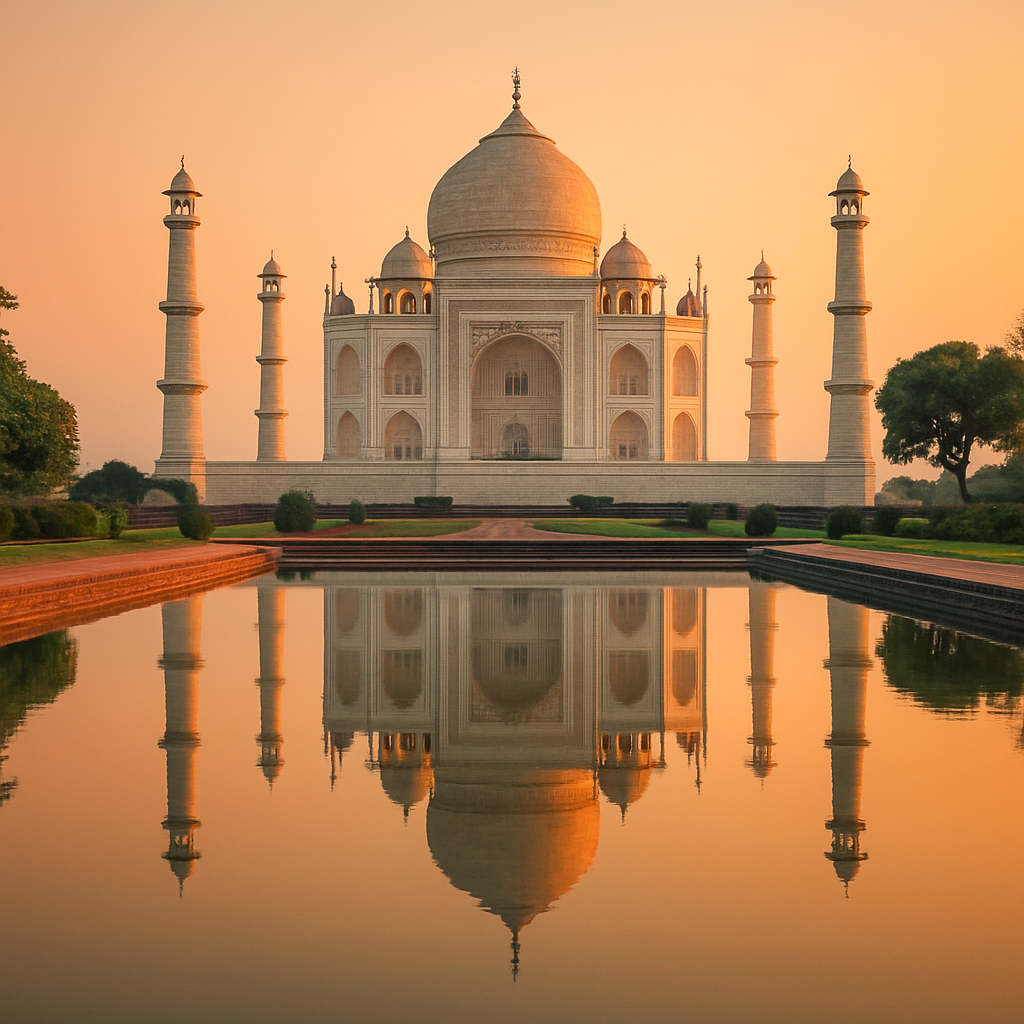
Sunrise at the Taj Mahal — From Across the River
Everyone tells you to go inside the Taj Mahal complex at sunrise. I'm telling you to go to Mehtab Bagh first. This Mughal-era garden sits on the north bank of the Yamuna, directly opposite the monument, with an unobstructed reflection view that has less than a tenth of the crowd inside the main gates. The light at 5:30am turns the marble from grey to pink to white in about twenty minutes, and same-sex couples consistently note it as one of the few outdoor spaces in Agra where romantic photos happen without interference. Entry is ₹200 for foreign nationals. Then go inside the actual complex later in the morning — you'll have context for the scale and a sunrise photo already in the bag.
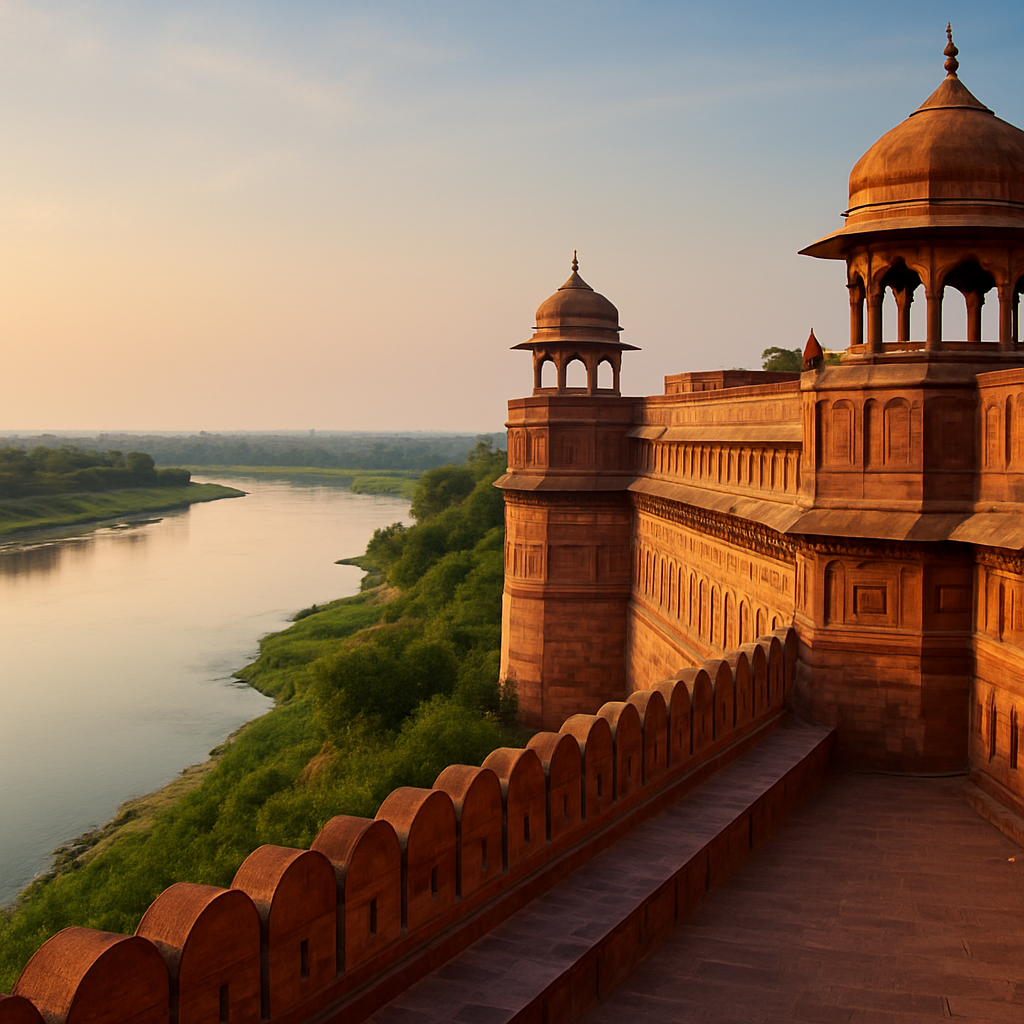
Agra Fort's Empty Ramparts
The standard tourist circuit through Agra Fort covers the Diwan-i-Am, the Diwan-i-Khas, and the Musamman Burj — all worth seeing. But the real payoff is the rear ramparts overlooking the Yamuna, which are vast, usually deserted, and offer a direct sightline to the Taj Mahal from the vantage point where Shah Jahan himself was imprisoned and spent his final years gazing at his wife's tomb. Academic historians Saleem Kidwai and Ruth Vanita have documented same-sex relationships within the Mughal court context associated with this fort — the history here is richer than the standard tour lets on. Linger well past the guided group. Entry is ₹650 for foreign nationals.

Pietra Dura Workshops at Shilpgram
The marble inlay technique that makes the Taj Mahal's surface impossible to stop touching? Artisan families in Agra have been doing it by hand since the 1600s. At Shilpgram, the government crafts village adjacent to the Taj precinct, registered workshops demonstrate the pietra dura process — cutting semi-precious stones, grinding them into Mughal geometric patterns, setting them flush into marble slabs. Demonstrations are free. You'll want to buy something; prices range from reasonable to wildly inflated, so shop around. It's the kind of hands-on experience that holds older kids' attention and gives adults a genuine appreciation for what they just saw at the Taj.
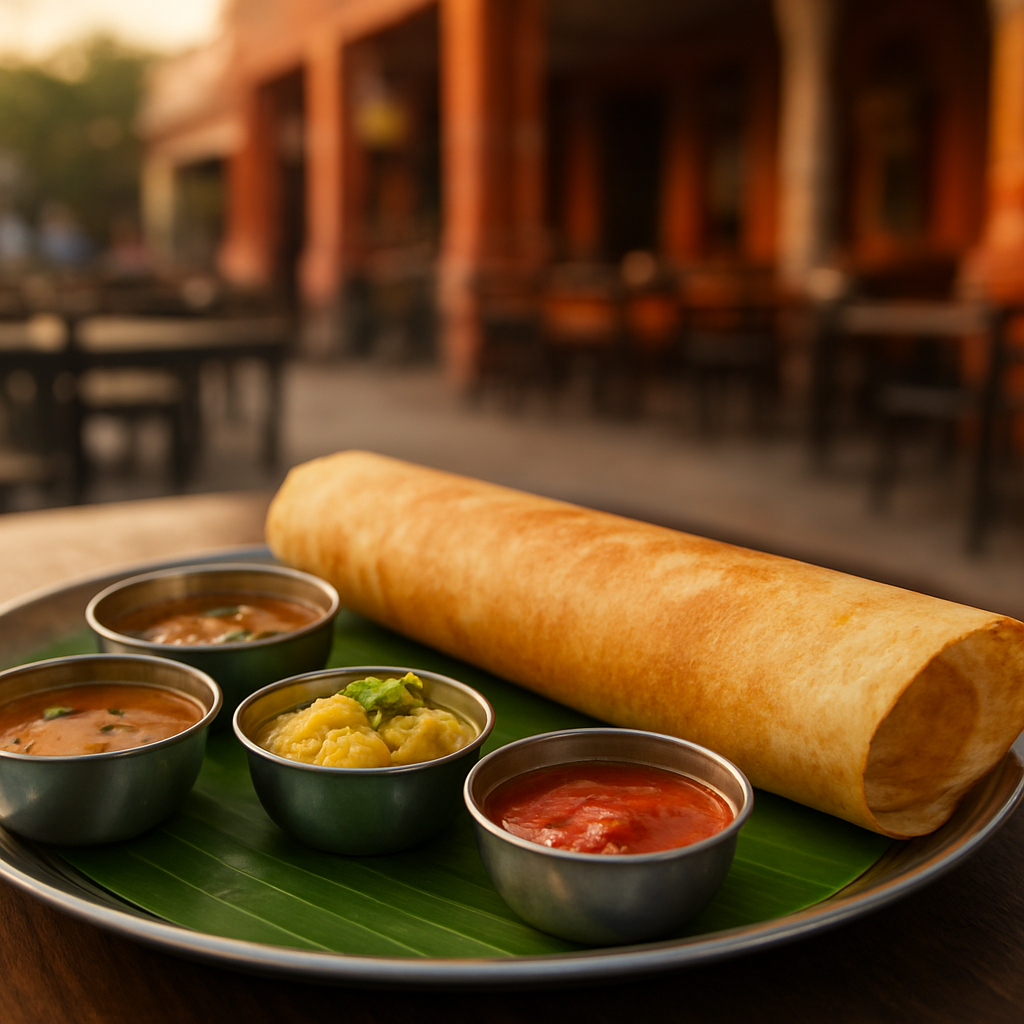
Lunch at Dasaprakash
Dasaprakash is a South Indian vegetarian restaurant chain founded in Mysore in 1956, and the Agra outlet is the best lunch break in the city. The dosas are enormous, properly crisp, served with coconut chutney and sambar that tastes like it came from a different state — because the recipe did. Full thali platters run under ₹300 and will defeat you. No alcohol, no pretense. It's the meal that resets your palate after a morning of Mughlai richness, and the fully vegetarian menu makes it accessible to practically every dietary restriction you can name.
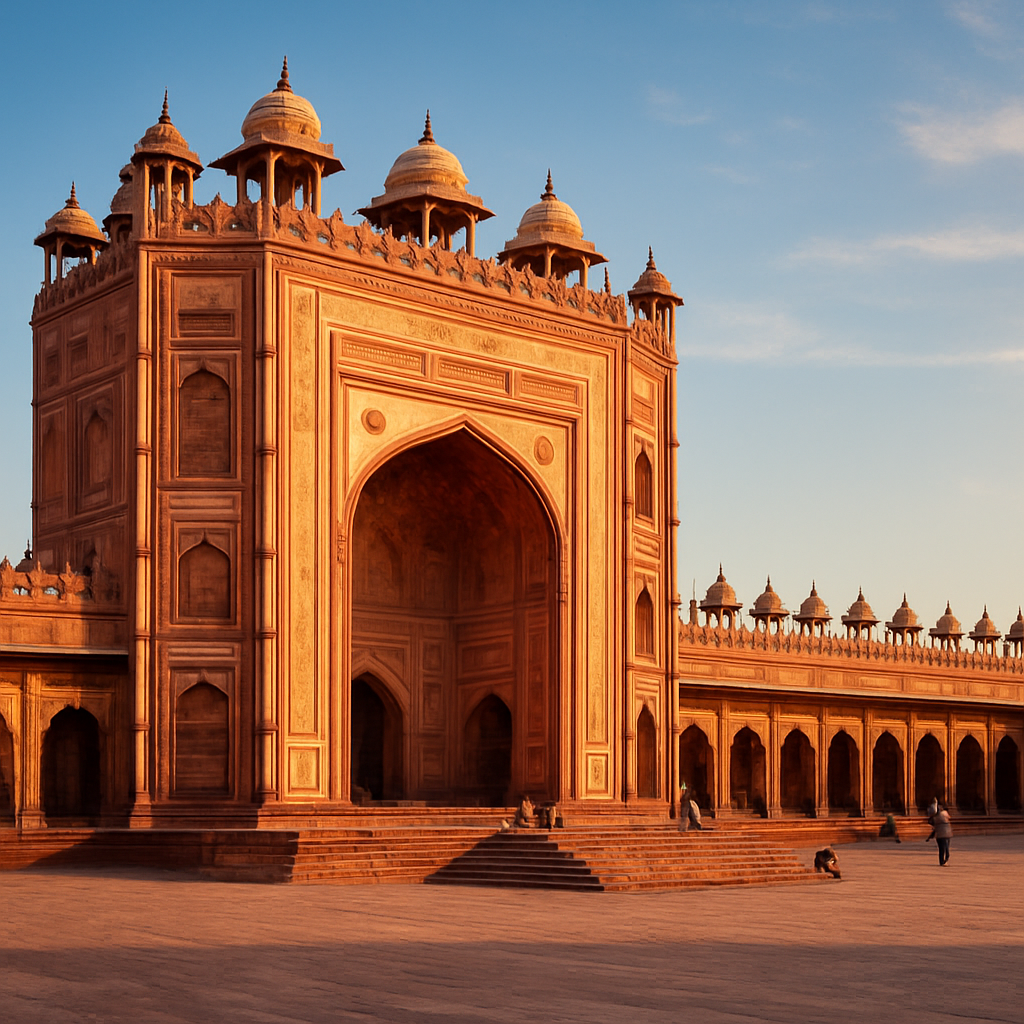
Fatehpur Sikri — The Ghost Capital
Forty kilometers southwest of Agra, Emperor Akbar built an entire imperial capital between 1571 and 1585, then abandoned it — possibly because the water supply failed, possibly because the political winds shifted. Fatehpur Sikri is a UNESCO World Heritage Site that feels like walking through a city frozen mid-conversation. The Buland Darwaza — one of the world's largest monumental gateways — announces the scale. The Panch Mahal, a five-story open pavilion, was designed for court women to watch proceedings below through perforated stone screens. The tomb of Sufi saint Salim Chishti, in white marble, sits in the courtyard of the Jama Masjid and draws pilgrims daily. Entry is ₹610 for foreign nationals plus ₹100 road tax. Hire a guide at the gate — this site needs narration.
The places I actually send people to
Advice that fits how you travel
Solo queer travel in Agra is straightforward if you calibrate expectations. This is a 1-3 day destination, not a week-long immersion — the Taj Mahal, Agra Fort, a day trip to Fatehpur Sikri, and a few excellent meals will fill your time. The backpacker strip in Taj Ganj is your natural base: Zostel Agra runs dorm beds from ₹400/night with a social common area where meeting other travelers is effortless, and Joney's Place has functioned as a gathering point for independent travelers for over twenty years. The international backpacker traffic in this neighborhood means you'll blend in more easily than anywhere else in Agra.
For meeting local queer men, Grindr is the most active app in Agra; Scruff has a smaller but present user base. Most connections will be discreet local men — be patient, be direct about what you're looking for, and always verify before meeting anyone. A reader mentioned that the local post-377 LGBTQ+ social network, mostly organized through WhatsApp groups, can open up real warmth and local knowledge if you connect with it. Budget travelers can eat exceptionally well for ₹350–₹500/day at local dhabas and places like Mama Chicken in Sadar Bazaar — the seekh kebabs are the signature order. Pro tip: Ola or Uber is your default transport as a solo traveler; the GPS tracking and driver identity record matter more when you're alone.
The honest solo calculation: spend a night or two in Agra, see what you came to see, eat well, have chai at Sheroes Hangout, and then take the Gatimaan Express to Delhi where the actual social infrastructure exists. iCall (9152987821) offers LGBTQ+-affirming mental health support if you need to talk to someone, and Humsafar Trust in Delhi is the leading LGBTQ+ health and rights organization in India — neither is Agra-local, but both actively serve Uttar Pradesh.
Let me be direct with you: Agra is not a romantic destination in the way that Barcelona or Lisbon is romantic for same-sex couples. PDA anywhere public — the Taj Mahal grounds, Agra Fort, the bazaars, the streets — will draw stares at minimum and possibly intervention. The romance here has to be claimed deliberately, on your terms, in protected spaces. That's the honest starting point.
The good news is those protected spaces exist and they're genuinely excellent. Book into the Oberoi Amarvilas or the ITC Mughal and you're inside an international hospitality bubble where staff follow global standards and won't register you as anything other than guests. The Amarvilas in particular — 600 metres from the Taj's east gate, every room with an unobstructed sightline to the dome — is one of the world's great romantic hotel experiences, full stop. Wake up at 5am, watch the light change over that marble from your bed, and the ₹40,000 rate will briefly feel justified. The Trident Agra, the Oberoi Group's mid-range tier on Fatehabad Road, gives you much of the same inclusive hospitality at a meaningful discount.
For your one unmissable romantic moment: skip the main Taj Mahal complex at peak hours and get yourself to Mehtab Bagh — the Mughal garden across the Yamuna River — at sunset. Lower visitor density, a full north-facing view of the Taj, and same-sex couples consistently note it as one of the only outdoor spaces in Agra where a photograph happens without anyone studying you. If nightlife matters to your trip, plan at least one Delhi overnight — the Gatimaan Express from Agra Cantonment reaches Hauz Khas Village in under two hours, and the contrast with Agra will be immediate and welcome.
India, as of 2026, does not recognize same-sex marriage, civil unions, or same-sex adoption — your family structure carries no legal standing here. At international hotel properties like the Oberoi Amarvilas, ITC Mughal, or Trident Agra, this is practically irrelevant: staff follow international hospitality norms and will manage your booking without issue. In broader public environments, you'll want to present as adults traveling with children rather than foregrounding any family narrative that might invite scrutiny. Conservative Uttar Pradesh is not a place to test the goodwill of strangers on this particular question.
As a destination for the children themselves, Agra delivers. The Taj Mahal and Agra Fort are both visually dramatic and legible to kids even without deep historical briefing — entry for Indian children runs ₹50, and foreign children's rates vary by monument. The Pietra Dura marble inlay workshops at Shilpgram, directly adjacent to the Taj precinct, genuinely hold older kids' attention, and the day trip to Fatehpur Sikri — the abandoned Mughal capital 40 km southwest — reads as a proper adventure rather than a museum endurance test. Budget roughly ₹1,500–₹2,500 per adult for monument access on a full sightseeing day.
Practically: strollers are manageable on the Taj Mahal's paved paths but awkward on the uneven stone surfaces of Agra Fort. The heat from May through August makes family travel genuinely punishing — if you have any flexibility, October through March is the only window I'd recommend. Private car hire at ₹1,500–₹2,500 per day is worth every rupee with children — app-based Ola or Uber is safer and more predictable than negotiating unmetered autos with a family in tow. Kid menus exist at the major hotel restaurants; street food in Sadar Bazaar is delicious but requires your usual hygiene judgment for younger children.
What Agra actually costs
Flights, visas, and the first 30 minutes
Airport: Agra is served by Pandit Deen Dayal Upadhyay Airport (AGR), which operates domestic-only routes to approximately 8–12 cities. Key connections include Delhi (DEL, ~45 min), Mumbai (BOM, ~2 hrs), and Varanasi (VNS, ~1 hr 10 min). Domestic schedules can be seasonal — verify current service before planning around a flight.
The honest advice on getting here: most international travelers skip the airport entirely. The Gatimaan Express from Hazrat Nizamuddin station in Delhi covers the ~200 km to Agra Cantonment in approximately 100 minutes — it's fast, comfortable, and drops you close to the main hotel corridor. The Shatabdi Express is a solid second option at around 2 hours. Book in advance at irctc.co.in; trains sell out in peak season (October–March) and on weekends.
Visas (as of 2026): US, UK, EU, Canadian, and Australian passport holders typically need an e-Visa, applied for online at indianvisaonline.gov.in before travel. Apply at least 4–7 days before departure — approval is generally within 72 hours but don't cut it close. Entry requirements can change; always check your government's current travel advisory for India before booking.
Airport to city: A prepaid taxi from AGR to central Agra runs ₹400–₹650 and takes 30–45 minutes; book at the designated prepaid counter in the arrival hall — fixed fare, no negotiation needed. App-based Ola or Uber runs ₹350–₹550 and is the more reliable option if you have data on arrival. Auto-rickshaws are available from ₹200–₹350 — negotiate the fare before you get in, not after. If you're arriving by train at Agra Cantt (the main station), prepaid taxis and app cabs operate from the station forecourt directly.
Traven's seasonal breakdown
The questions everyone asks
Is it safe for same-sex couples to visit the Taj Mahal?
Will hotels give us a double room as a same-sex couple?
Is there any LGBTQ+ nightlife in Agra?
Do I need to speak Hindi?
How much should I budget per day?
Is Agra worth more than a day trip from Delhi?
What about trans travelers specifically?
Screenshot this before you go
So should you actually go?
Agra is not a queer destination — it's a world-class destination that happens to require real preparation if you're queer. The Taj Mahal at sunrise earns every superlative ever written about it, the Mughal architecture carries centuries of history that includes queerness whether the guidebooks mention it or not, and the food alone justifies the trip. But the city around those monuments is deeply conservative, has zero LGBTQ+ venue infrastructure, and will ask you to be invisible in ways that some travelers accept easily and others find exhausting. My Traven-Dex of 5.4 reflects that split honestly — a near-perfect 9.2 on Destination dragged down by a 3.2 on Chill. Book a good hotel, see the marble at dawn, eat your weight in kebabs and dosas, and know that Delhi's actual scene is two hours away by train. Go with your eyes open, and Agra will give you something no other city on earth can.
Sources & Resources
Official links we reference when compiling this guide. Last verified 2026-03-08.
- Humsafar Trust – India's leading LGBTQ+ health and rights organization
- Naz Foundation India Trust – HIV/sexual health and LGBTQ+ advocacy
- National AIDS Control Organisation (NACO) – Government of India
- Lawyers Collective – legal aid and LGBTQ+ rights litigation
- iCall Psychosocial Helpline – LGBTQ+-affirming mental health support (TISS)
- Sappho for Equality – South Asian LGBTQ+ women and trans rights
- ILGA World – International Lesbian, Gay, Bisexual, Trans and Intersex Association
- The Queer Muslim Project – South Asian LGBTQ+ Muslim community and support
- India HIV/AIDS Alliance – community health services including Uttar Pradesh
- Ministry of Social Justice & Empowerment – Transgender Rights Act resources