
Goa doesn't sell you a postcard. It pours you a feni at dusk, points at the frangipani, and waits to see if you finally slow down.
It's a Tuesday in February and I'm sitting on the courtyard wall at Soro in Assagao, half a glass of feni in, watching a couple at the next table debate whether to skip dinner at Gunpowder and drive south to Palolem in the morning. They're holding hands across the table. The bartender doesn't look up. A scooter goes past on the lane outside with a delivery from Villa Blanche. The frangipani is doing the thing frangipani does at dusk. Nobody is performing anything. This is the Goa nobody puts on the postcard, and it's the Goa I keep coming back for.
There's a reason I gave Goa a 7.2 on my Traven-Dex — and the reason isn't subtle. The destination itself is a 8.7; the beaches, the Portuguese-Indo architecture, the food, the Western Ghats waterfalls all do their job. The scene at 8.4 punches well above what the country's legal frame would suggest, because fifty years of international travelers landing in Anjuna have built a parallel social architecture in Assagao, Vagator, and Morjim that runs on its own frequency. But Legal sits at 5.5 and Pulse at 5.8, and that's the honest part: Section 377 was read down in 2018, but marriage isn't recognized, joint adoption isn't on the books, and the protections you'd expect in 2026 mostly aren't there yet.
So Goa runs on a different operating system than the gay villages in Bombay or Delhi. There's no permanent gay bar. There's no rainbow crosswalk. What there is, instead, is a queer frequency — Sunday afternoons at Thalassa on the Vagator cliff that turn into Sunday-night-anywhere, floating queer pop-ups around Antares and Hilltop in peak season, the design crowd at For The Record playing vinyl on a hi-fi system in a restored Portuguese house, the Wednesday Anjuna Flea Market that's been going since the 1970s. You tune in by being in the right village. Stay in Calangute and you'll miss it entirely. Stay in the Assagao-Siolim-Morjim triangle and you'll wonder why you booked only a week.
The other thing worth saying out loud: Goa is the rare place in this part of the world where the trade-off actually pencils out. The legal scaffolding isn't there, but the hospitality scaffolding — the Park Hyatts and W Goas with their corporate inclusion policies, the owner-operated boutiques like Vivenda dos Palhaços where Charlotte and Simon have been quietly making room for everyone since 2006 — has been building for a long time. Susegad, the Konkani-Portuguese word for contented laziness, is the local export. And it turns out contented laziness is one of the better gifts a destination can give a same-sex couple looking to be left alone with a hammock for a week.
The stuff your travel guide buries on page 47
Here's the legal frame as of 2026: India read down Section 377 in 2018, which decriminalized same-sex relations across the country, Goa included. That's the floor — and it matters. But the Supreme Court declined marriage equality in 2023, so same-sex marriage isn't recognized, civil unions don't exist, and joint adoption by same-sex couples isn't on the books. Anti-discrimination protections are limited and patchy. For the legal landscape and ongoing rights work, Lawyers Collective and the Naz Foundation (India) Trust are the two organizations doing the heaviest lifting.
Trans rights are further along on paper than most travelers expect. The 2019 Transgender Persons Act allows self-identification, and the 2014 NALSA judgment legally recognizes a third gender — you'll see hijra households visible in places like Mapusa market. Implementation, though, is uneven. Document-name mismatches at hotels and healthcare friction are still routine. Orinam keeps the most current resource directory.
On the ground, Goa is one of the most socially tolerant states in India, but "tolerant" isn't the same thing as "anything goes." PDA in Goa generally tracks what straight couples get away with — handholding in Panaji is fine, full make-outs at the Mapusa market are not. The Anjuna-to-Palolem coastal belt has been absorbing international travelers for fifty years and it shows. Inland towns like Margao and Vasco are more conservative; behave as travel companions there and you'll move through without incident.
Pro tip: high season runs mid-November through February and everything — prices, parties, queer visibility — triples. Monsoon (June through September) is gorgeous and cheap, but most of the queer-coded beach shacks in Morjim and Ashwem are literally not there in those months; they're rebuilt every October. Plan your trip around the shack calendar, not just the weather.
What it actually feels like on the ground
Holding hands: Comfortable on the bohemian northern beaches — Anjuna, Vagator, Morjim, Ashwem, Mandrem — where the international crowd has set the tone for decades. Tone it down in Calangute and Baga, where heavy domestic tourist crowds mean staring is common and public affection draws unwanted attention. Inland and around Panaji's churches and government areas, keep it minimal.
Hotel check-in: International chains and design-led boutiques in the Assagao-Vagator-Sinquerim corridor are openly welcoming to same-sex couples. Stick with properties like Park Hyatt, W Goa, Vivenda dos Palhaços, or the smaller Assagao villas where the staff energy reads cosmopolitan rather than "family resort." The big package-tour hotels in Calangute are polite but not the vibe.
Taxis and transport: Use the GoaMiles app or pre-arrange through your hotel — Uber and Ola have spotty Goa coverage, and the taxi stands at Dabolim airport and Madgaon railway station after 10pm are standard Goan late-night cabbie chaos. Not a queer-specific risk, just a general one. If you rent a scooter (most people do), Indian licenses and IDPs are checked, helmets are non-negotiable, and the road from Anjuna to Vagator at 2am is where vacations end.
Beaches and late night: The party scene on Anjuna and Vagator is open and mixed, but the drug-bust theatre on those beaches is real and falls hardest on anyone who looks like an easy mark. Keep your party to licensed venues like Hilltop, Antares, or Curlies and don't accept anything from strangers on the sand at 3am. For mental health support, iCall Helpline covers the state remotely with discretion, and Goa-based Sangath runs in-state programs.
Trans travelers: Generally fewer issues at international resorts than at smaller domestic guesthouses. Document-name mismatches at check-in are the most common friction; pre-call the property if your ID doesn't match your presentation. The Humsafar Trust and Varta Trust are the two organizations I'd save in your phone before you land — Goa doesn't have a dedicated queer crisis line, but both cover the state.
Verbal harassment: Rare in the Anjuna-Assagao-Morjim corridor. More common — though usually staring rather than confrontation — in the domestic-tourist-heavy Calangute-Baga strip. In Margao and inland towns, two men or two women traveling together generally read as friends; don't disabuse anyone of that assumption.
The queer geography
Assagao
The inland village ten minutes from Anjuna that has quietly become the most cosmopolitan address in Goa. Assagao is concept stores and design studios in restored Portuguese houses, slow lunches at Gunpowder in a heritage villa, weekend brunch at Villa Blanche, vinyl on a hi-fi system at For The Record, and cocktails in a courtyard at Soro. It's also the village where most of the queer expat circuit ends up living — quietly, in Portuguese estates behind frangipani trees — and where the Sunday lunches that pass for nightlife in Goa actually happen. Start here.
Anjuna and Vagator
The original counterculture coast. Anjuna has been a bohemian outpost since the 1960s and the birthplace of Goa's trance scene; the Wednesday Anjuna Flea Market has been going since the 1970s. Vagator is the cliffside next door — Hilltop for the daytime parties, Thalassa for Greek food at sunset, Antares for the chef-driven beach club crowd, and Curlies for the late-night shack that's been running since 1992. This stretch is where the gay-friendly party energy lives, mostly through floating queer nights and pop-ups rather than a permanent bar — watch the Instagrams of the crews running afterparties around Antares and Hilltop during peak season.
Morjim, Ashwem and Mandrem
The quieter northern beaches that pick up where Vagator's noise leaves off. Long-stay Europeans, yoga retreats, beach shacks with paper-lantern dinners. Morjim has Sublime, a long-running fine-dining institution under chef Christopher Saleem Agha Bee. Ashwem and Mandrem are where same-sex couples come when they want to be left alone for a week with a hammock and a swim. This is the most discreet-friendly stretch in Goa — not because anyone's hiding, but because nobody's looking.
Fontainhas, Panaji
The Latin Quarter of the state capital, a UNESCO-listed grid of ochre and indigo Portuguese-era houses, narrow lanes, and the late-evening tradition of pouring out of Joseph Bar into the street with a glass in hand. Walk it at golden hour, end at Sunaparanta Goa Centre for the Arts or Fundação Oriente for whatever exhibition is on, then dinner at Black Sheep Bistro. It's the most cosmopolitan-queer evening Panaji offers, and it costs less than a round at a Bombay rooftop. The Goa Pride parade typically marches through here in February — a small, determined affair since 2017, more "everyone in town who shows up knows everyone else" than Pride-industrial-complex.
Palolem and Patnem, South Goa
The crescent-shaped Palolem beach is a kilometre and a half of coconut palms, silent-disco parties (a workaround for Goa's 10pm noise ordinance), seasonal beach huts, and yoga retreats. Patnem next door is even gentler. The south is what you book when you want the trade-off in the other direction: less scene, more privacy, and the kind of pace that susegad — the Konkani-Portuguese word for contented laziness — was invented to describe. For ongoing community resources in India, Orinam and Naz Foundation are where I'd point readers heading south for longer stays.
The experiences worth rearranging your itinerary for
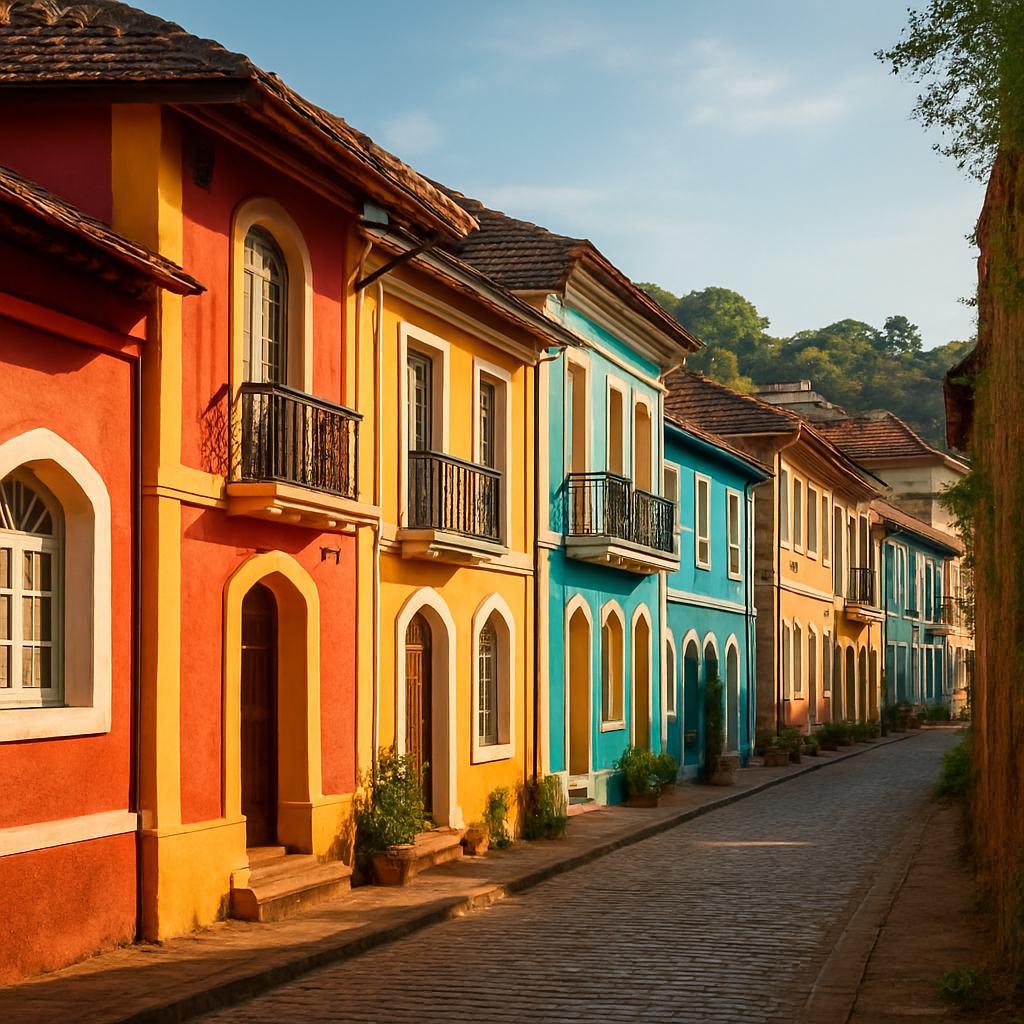
Fontainhas at Golden Hour
Walk the Latin Quarter of Panaji as the light goes warm — ochre, indigo, and pale green Portuguese-era houses in narrow lanes that have looked roughly the same since the late 18th century. End at Sunaparanta Goa Centre for the Arts or Fundação Oriente for whatever exhibition is on, then dinner at Black Sheep Bistro. It's the most cosmopolitan evening Panaji offers and it costs less than a round at a Bombay rooftop.
Pro tip: pour out of Joseph Bar onto the lane with a glass of feni in hand the way locals have been doing for decades — that's the real Fontainhas tradition.
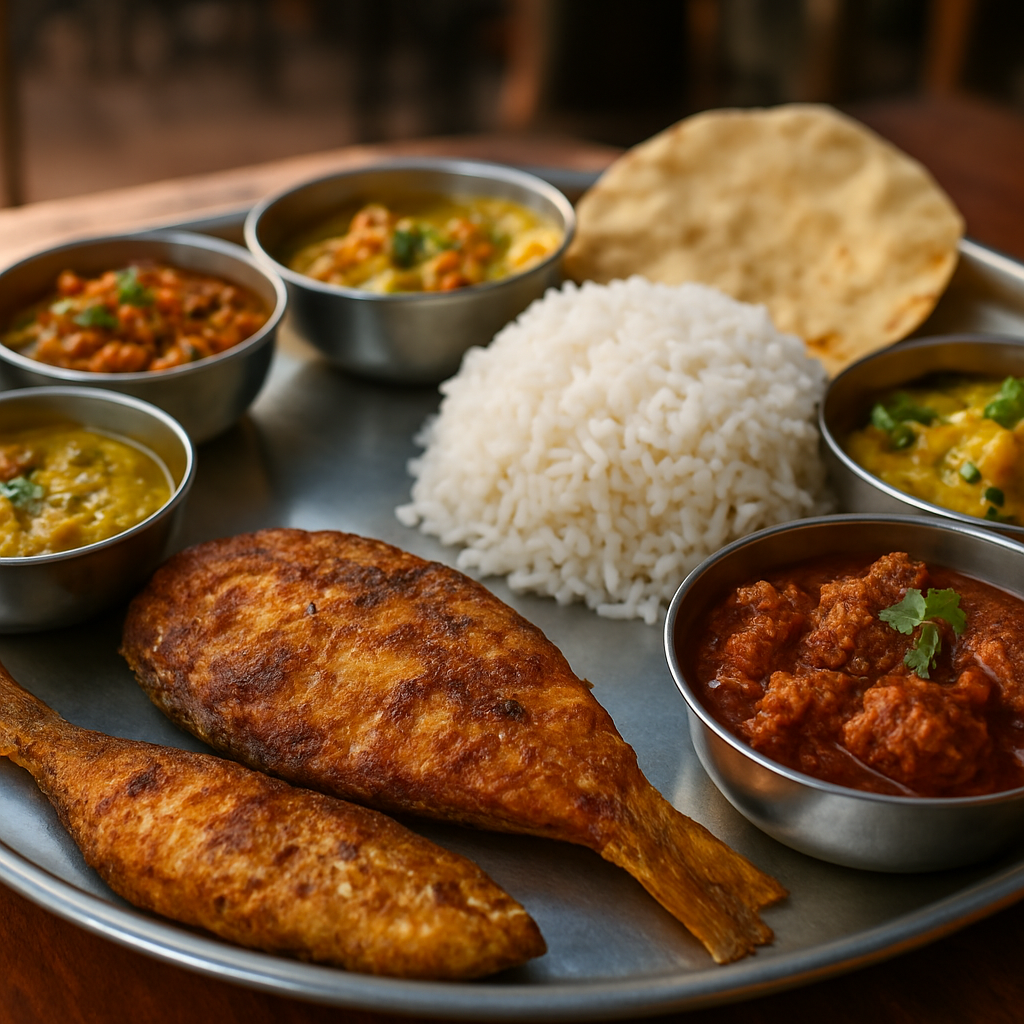
A Proper Goan Catholic Lunch
Eat the canonical Goan-Portuguese repertoire at Vinayak in Assagao or Mum's Kitchen in Panaji — pork vindaloo (the original wine-and-garlic version, not the fluorescent UK takeaway), sorpotel, xacuti, a proper fish thali. The recipes here have been protected for generations and the kitchens still treat them that way.
Order the feni neat, not in a cocktail. The cocktail version is for people who don't trust themselves. Save room for bebinca, the layered Goan-Portuguese dessert that turns up at almost every house party in Saligao and Assagao around Christmas.
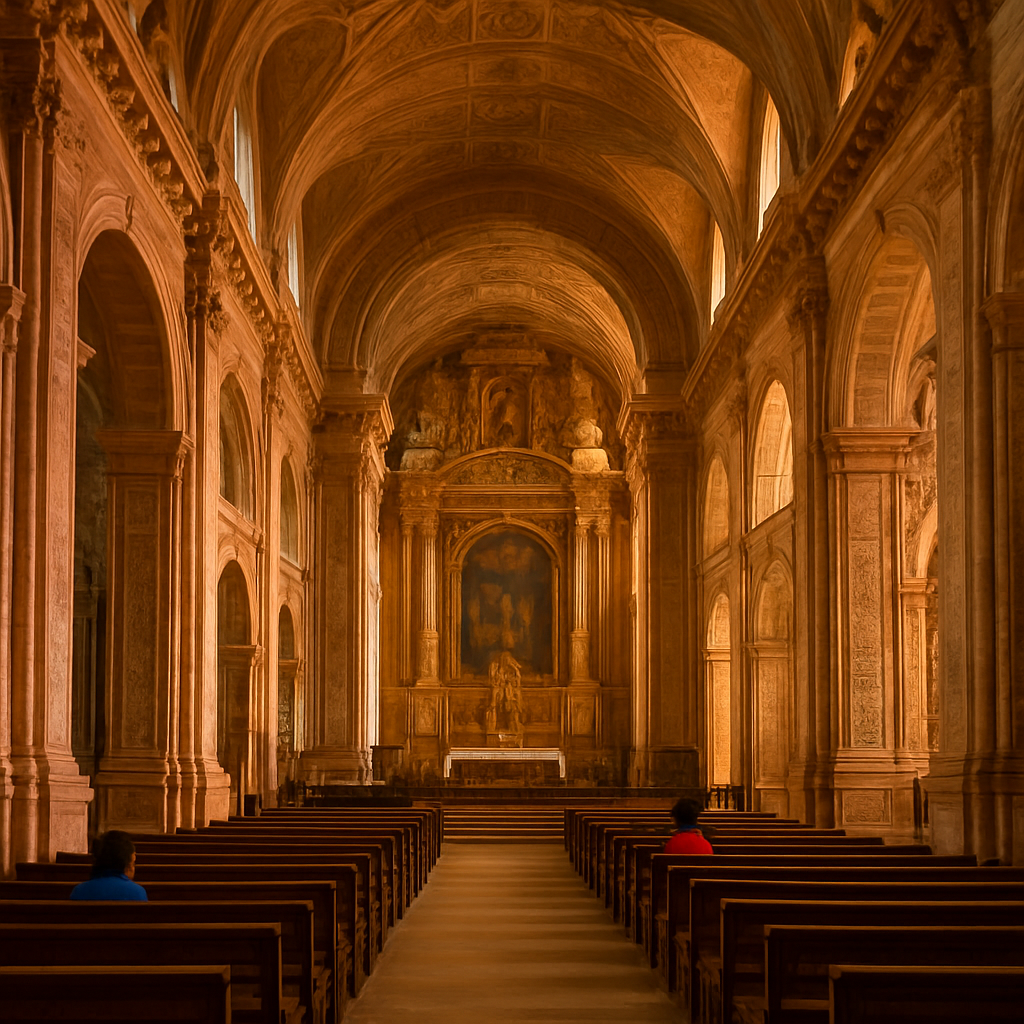
Basilica of Bom Jesus and Old Goa
Completed in 1605, UNESCO-listed, and one of the oldest churches in India — the Basilica of Bom Jesus holds the mortal remains of St. Francis Xavier and the Baroque interior is darker, smaller, and more affecting than any photograph prepares you for. Pair it with the Se Cathedral next door and you've got a half-day in Old Goa that doubles as the explainer for why the rest of the state looks the way it does.
It's roughly 10 km east of Panaji — easiest as a morning stop before lunch back at Black Sheep Bistro or Mum's Kitchen.
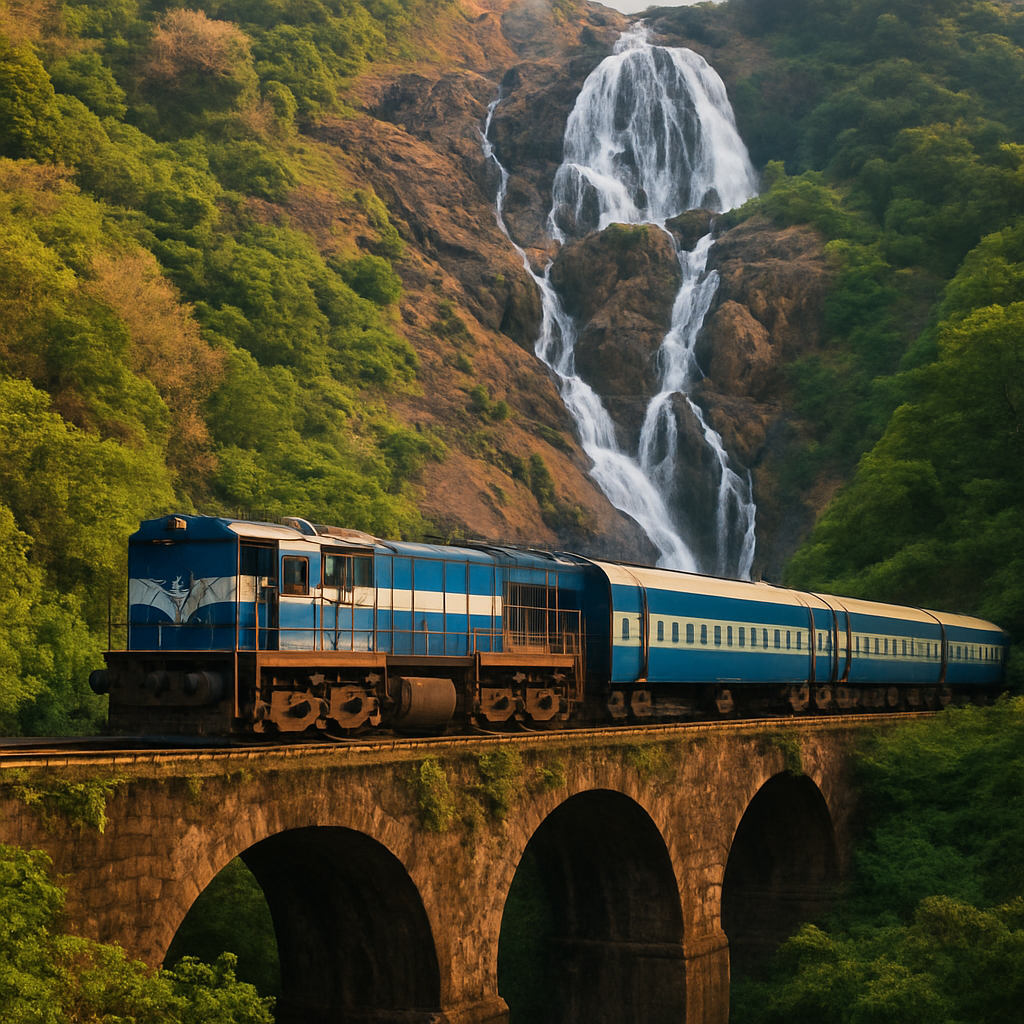
Dudhsagar Falls by Jeep Safari
Four-tiered waterfall on the Mandovi River, approximately 310 meters tall, inside the Bhagwan Mahaveer Wildlife Sanctuary on the Goa-Karnataka border. Access is by forest jeep safari from Kulem (book through the official forest department counter) or via the Konkan Railway viaduct that crosses the falls. Strongest flow is during and just after monsoon, when the spray reaches the carriages.
Pro tip: go early. The jeep queue at midday in season is its own small theatre of human suffering, and the light on the falls is better before 11am anyway.
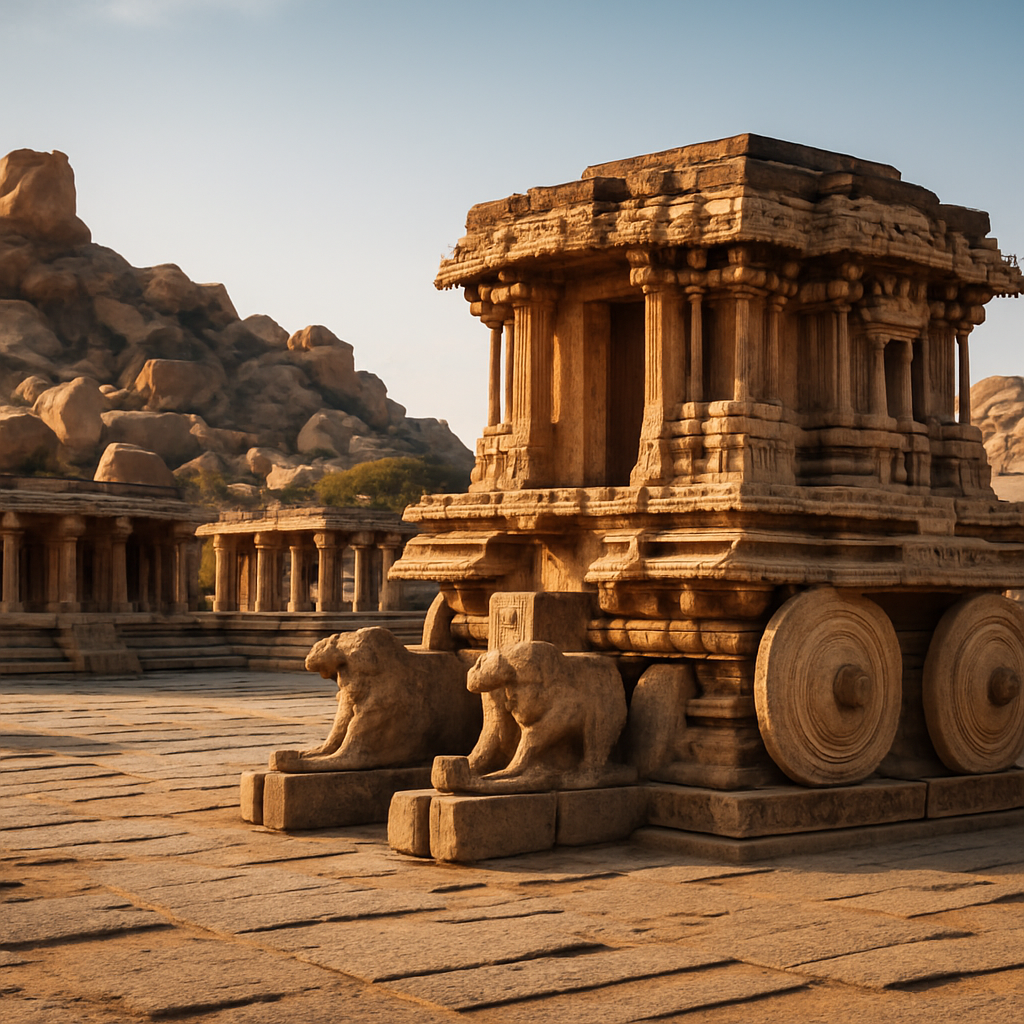
Hampi — The Vijayanagara Ruins
UNESCO-listed since 1986, the ruins of the Vijayanagara Empire's capital sprawl across roughly 4,100 hectares of boulder landscape along the Tungabhadra River — over 1,600 surviving temples, palaces, and civic structures from the 14th to 16th centuries. The Vittala Temple's stone chariot is the photograph; the Virupaksha Temple is still an active place of worship; the boulders are the part you'll keep dreaming about.
About 300 km east of Goa, reachable by overnight train or sleeper bus. Don't do it as a day trip — three nights minimum. Pair with the Goa Arts and Literature Festival in December if your dates align.
The places I actually send people to
Advice that fits how you travel
Solo travel in Goa is one of the easier soft landings in India. The Anjuna–Assagao–Siolim triangle has been absorbing long-stay foreigners for decades and the social architecture reflects it — hostels, co-working cafés, yoga shalas, and Sunday lunches that turn into Sunday-night anywhere. Park yourself in Assagao for a week and you'll know enough people by Thursday to never eat alone again. The apps work — Grindr coverage is real in the north, thinner in the south, and you'll see the expat circuit on Hinge and Bumble more than you'd expect.
Budget-wise, solo travelers do well here. A moderate day runs ₹6,000–₹10,000 covering a guesthouse, scooter rental, two real meals, and a couple of drinks. Backpacker territory is ₹2,500–₹4,000 if you're staying in Anjuna or Palolem hostels and eating at beach shacks. Scooter rental at ₹400–₹700/day is what makes the north navigable — Uber and Ola have spotty coverage, and the GoaMiles app is your fallback. International license required, helmets non-negotiable.
For safety, the bohemian northern beaches and Assagao are where I'd base any solo traveler. Skip the package-tour hotels in Calangute — they're polite but the energy isn't yours. Watch the drug-bust theatre on Anjuna and Vagator beaches at 3am; it falls hardest on anyone who looks like an easy mark, so keep your party to licensed venues like Antares, Hilltop, and Curlies. Save the Humsafar Trust and iCall Helpline numbers in your phone before you land. Goa doesn't have a dedicated queer crisis line, and both organizations cover the state remotely with discretion.
Goa is, quietly, one of the better places in India for same-sex couples to disappear together for a week. The trick is picking the right coast. North Goa — specifically the Anjuna–Vagator–Assagao–Siolim–Morjim corridor — is where the international energy lives, where boutique villas like Vivenda dos Palhaços and Wildflower Villas have figured out their welcome long before you arrive, and where same-sex couples can hold hands at Thalassa on a Sunday afternoon without anyone breaking stride. South Goa is the other answer: Palolem and Patnem, hammocks, silent discos, and the kind of pace susegad was invented to describe.
For accommodation, I'd point you to international-brand resorts (Park Hyatt Goa, W Goa, Alila Diwa) where the corporate inclusion policy is already doing the heavy lifting, or owner-operated boutiques (Vivenda dos Palhaços, Casa Britona, Ahilya by the Sea) where the staff energy reads cosmopolitan rather than "family resort." The big package-tour hotels in Calangute are polite but not the vibe. As of 2026, same-sex marriage isn't legally recognized in India, and joint adoption isn't on the books — so the legal scaffolding behind your relationship doesn't travel with you. The hospitality scaffolding, in the right corridor, does.
Date nights write themselves. Sunset at Thalassa above Small Vagator, the chef-driven cliff at Antares, a long lunch at Gunpowder in a heritage Portuguese villa, vinyl and cocktails at For The Record, Fontainhas at golden hour ending at Joseph Bar. PDA-wise, handholding tracks fine across the northern beaches and Assagao; tone it down in Calangute, Baga, and around Panaji's churches and government areas, where the staring economy is real. The Anjuna-to-Palolem belt has been absorbing international travelers for fifty years and it shows — same-sex couples are part of that landscape, not a novelty within it.
Family travel in Goa works well, and LGBTQ+ families fit into the picture better than the legal paperwork suggests. As of 2026, India doesn't legally recognize same-sex marriage or joint adoption — the Supreme Court declined marriage equality in 2023 — so your family structure isn't formalized on Indian paper. Practically, though, the international resort layer (Park Hyatt Goa, W Goa, Alila Diwa, Taj Fort Aguada) doesn't blink at two-mom or two-dad check-ins, and the Assagao villa circuit is even easier. Pre-call if your documents don't match your presentation or your kids' surnames diverge — front desks handle it better when they're not surprised.
The kid-facing logistics are mostly straightforward. South Goa resorts (Park Hyatt, Alila Diwa, Taj Fort Aguada) have the pool infrastructure, kids' clubs, and beach access you'd expect. The bigger boutique villas in Vagator and Siolim sleep families comfortably. Strollers are workable on resort grounds but rough in Fontainhas's heritage lanes and the Anjuna market — baby carriers earn their keep. Restaurants are generally welcoming to kids; Villa Blanche Bistro in Assagao, Mum's Kitchen in Miramar, and Ritz Classic in Panjim all handle family tables without fuss.
For the experiences themselves, the day-trip stack is strong: Old Goa and the Basilica of Bom Jesus for the heritage layer, Dudhsagar Falls for the jeep-safari adventure, Palolem Beach for the calm-water swim. Skip Tito's Lane and the Anjuna late-night beach scene with younger kids — that's not the part of Goa anyone's family signed up for. Healthcare is solid for routine stuff in Panaji and the larger resort medical infrastructure, but anything urgent typically routes to Mumbai or Bengaluru. Save the Orinam resource directory and the Sangath Goa-based numbers before you land, just in case.
What Goa actually costs
Flights, visas, and the first 30 minutes
Airport: Dabolim (GOI) is the main international gateway, roughly 30 km from Panaji and 60–75 minutes by road to the northern beach belt. A second airport at Mopa (GOX) has been picking up traffic for the north — worth checking both when you book if you're heading to Assagao or Morjim.
Direct routes: As of 2026, Goa pulls in approximately 30 direct international routes, mostly seasonal charters from the UK, Germany, and Russia, plus year-round connections from the Gulf (Dubai, Sharjah, Doha) and short hops from Mumbai, Delhi, and Bengaluru. Most North American and European travelers connect through Mumbai or Delhi — flight time from Mumbai is roughly 1 hour, from Delhi about 2.5 hours.
Visas: Travelers from the US, UK, EU, Canada, and Australia typically need an Indian e-Visa, applied for online before arrival. The standard options run 30 days or 365 days, and you'll want to apply at least four days out. Tourist e-Visas are generally straightforward but rules change — check the official Indian government portal as of 2026 before you book.
Airport to city: Prepaid taxis from the Dabolim counter run ₹800–₹1,800 depending on where you're headed — Panaji (closer) or Morjim/Arambol (farther), 30–75 minutes. The state-sanctioned GoaMiles app cab runs ₹600–₹1,500 for the same routes — Uber and Ola have limited Goa coverage and I wouldn't count on them. Airport shuttle buses run ₹150–₹300 but only cover Panaji and Margao, 60–90 minutes. For longer stays, a delivered rental scooter at ₹400–₹700/day is how most travelers I know get around the north (international license required, helmets non-negotiable).
Pro tip: if you land after 10pm, pre-book through your hotel or use the GoaMiles app — the late-night taxi stands at Dabolim are standard Goan cabbie chaos, and you don't want to negotiate after a long-haul flight.
Traven's seasonal breakdown
The questions everyone asks
Is Goa safe for same-sex couples?
Is there a gay neighborhood or gay bar scene in Goa?
When is the best time to visit Goa?
Do I need a visa to visit Goa?
How do I get around Goa?
Are trans travelers welcome in Goa?
Where should I stay — North Goa or South Goa?
Screenshot this before you go
So should you actually go?
Go, with the right map. Goa earns its 7.2 on my Traven-Dex by being one of the easier soft landings in India for LGBTQ+ travelers — but only if you book inside the Anjuna-Assagao-Morjim triangle in the north or the Palolem-Patnem stretch in the south, and only if you understand what you're working with. The legal frame as of 2026 is decriminalized but not equal, and PDA tracks closer to what straight couples get away with than to what you'd do in Sitges. None of that has stopped the international scene from building fifty years of welcome along this coast, and the design-forward Assagao village, the cliffside dinners at Antares and Thalassa, the heritage boutiques, and the slow afternoons in Fontainhas all hold up. Time it for November through February, base yourself in the north for the scene or the south for the quiet, and you'll find the version of India that's been quietly figuring it out longer than most.
Sources & Resources
Official links we reference when compiling this guide. Last verified 2026-05-19.