
Hyderabad doesn't hand you a flag on the lamppost. It hands you a Thursday night rooftop, a plate of biryani at Shah Ghouse, and a sunset at Golconda Fort that ruins other forts for you.
It's a Thursday night in Jubilee Hills, just past ten, and I'm three floors up at Over The Moon watching a Mobbera Foundation crowd fill the rooftop one careful arrival at a time. Nobody's flagging anything — no flag would survive the ride over from Banjara Hills anyway — but the room reorganizes itself by the second drink. Two guys at the bar shift closer. A woman in a sari is laughing too hard at something her friend said. Downstairs, the regular Thursday brewpub crowd is doing its thing; up here, for one rotating night a month, the city's queer scene has materialized out of an Instagram DM and a venue swap. By midnight you'll forget there was ever a question.
This is what Hyderabad does. It doesn't hand you a gay village or a strip of bars or a flag on the lamppost. It hands you a city of 10 million people that's conservative on the surface and progressive underneath — a local I met at Lamakaan said exactly that to me three times in one night, and it's the most honest summary of this place I've heard. The Old City around Charminar runs on conservative Muslim cultural norms that long predate any colonial law. The tech corridor in HITEC City and the dining and lounge scene in Banjara Hills and Jubilee Hills run at near-cosmopolitan standards. Both are Hyderabad. You navigate by neighborhood, not by hope.
The 5.9 on my Traven-Dex tells you the math: a 7.6 on Destination because the food, the architecture, the Nizam-era bones of this city are genuinely world-class — Hyderabadi biryani is treated as an entire cuisine for a reason, and one sunset at Golconda Fort ruins other forts for you. But a 4.2 on Chill, because the legal floor as of 2026 is decriminalization without recognition, and the public-space comfort drops hard outside the cosmopolitan zones. The scene exists, and a 6.8 on Scene reflects that — Mobbera Foundation is quietly throwing some of the best community-organized parties in the country, Pride has been marching since 2013, and there's real infrastructure here. It's just not on Google Maps.
Come for the biryani at Shah Ghouse that locals will fight you to defend. Stay for the rooftop in Jubilee Hills, the bungalow afternoon at Roastery Coffee House, the gilded unreality of a night at Taj Falaknuma Palace that a Nizam used to actually live in. Hyderabad is the South Indian city nobody talks about — Bangalore gets the press, Chennai gets the literary cred — and that's part of why the people who've found their footing here are so good at what they do. Show up curious, pick your blocks carefully, and let the city introduce you to itself on its own clock.
The stuff your travel guide buries on page 47
Let's start with the law on paper. As of 2026, same-sex relations are legal in India — the Supreme Court read down Section 377 in 2018, ending the colonial-era criminalization that had hung over the country for over 150 years. But legality is the floor, not the ceiling. Same-sex marriage isn't recognized, civil unions don't exist, and joint adoption is closed to same-sex couples. The 2023 Supriyo ruling kicked the marriage question back to Parliament, which has shown no appetite to legislate. So you're looking at a country where you can love, but not legally build, with someone of the same sex.
The trans framework is genuinely better than the marriage one. The 2014 NALSA judgment recognized a third gender, and the 2019 Transgender Persons Act formalized self-ID, though the process is bureaucratic in practice. Hyderabad has a deeply rooted hijra community — the more respectful contemporary term is kinnar — with cultural standing that predates British colonial law by centuries. Legal recognition exists; social acceptance varies block by block. For legal questions on the ground, Lawyers Collective handles LGBTQ+ casework nationally, and Naz Foundation India has been doing rights work since the original 377 challenge.
Now the cultural reality. Hyderabad is, as a local told me at a Lamakaan event three times in one night, "conservative on the surface, progressive underneath." That's the most honest summary I've heard. The tech corridor in HITEC City and the upscale dining and lounge scene in Banjara Hills and Jubilee Hills operate at near-cosmopolitan standards. The Old City around Charminar operates on conservative Muslim cultural norms that long predate any law. Both are Hyderabad. You navigate by neighborhood. Pro tip: follow the Varta Trust for queer media context before you land — they cover South India seriously and the good local Hyderabad events are rarely on Google Maps.
On PDA: subtle hand-holding in Banjara Hills or Jubilee Hills generally goes unremarked. Anything beyond that draws stares — but here's the local quirk that actually works in your favor: same-sex hand-holding between men reads as friendship in most of India, which is its own kind of camouflage. The Old City, the Tank Bund promenade, and Hussain Sagar are different — public space there is moralized for everyone, gay or straight. Save the affection for indoors.
What it actually feels like on the ground
Holding hands. In Banjara Hills cafés, Jubilee Hills lounges, and the HITEC City corporate corridor, subtle hand-holding is generally unremarkable. In the Old City around Charminar, on the Tank Bund promenade, and at Hussain Sagar, even straight couples get moral-policed by passersby — it's not a gay-specific issue, but it's still an issue. Inside hotel lobbies and upscale malls like Inorbit and GVK One, you're fine.
Hotel check-in. Two men or two women checking into one room at international chains — Marriott, Hyatt, Hilton, Taj, Park — typically passes without comment. These chains have global non-discrimination policies and the staff in Hyderabad properties are trained on them. Smaller domestic hotels can be more variable; not hostile, just curious in ways that get tedious. Book the chain.
Taxis and rideshare. Use Uber or Ola — both work seamlessly here. Auto-rickshaws will overcharge tourists and the meter conversation is a sport you don't want to play. Walking from Banjara Hills to Jubilee Hills "because it looks close on the map" will end with you crying at a flyover in 38°C heat. Book the cab.
Public spaces and parks. The Tank Bund promenade and Hussain Sagar are heavily policed and informally moralized — not safe ground for any visible same-sex affection. Banjara Hills and Jubilee Hills cafés and lakeside spots like Durgam Cheruvu are a different register entirely. Pick your geography.
Late night. The queer-friendly nightlife clusters in Jubilee Hills — venues like Air Live, Over The Moon, and the rotating event scene that Mobbera Foundation runs. Inside venues, the crowd skews young, English-speaking, and tech-employed, and it feels relaxed. Getting home: rideshare, not a walk. Surge pricing past midnight is real but worth it.
Trans travelers. India's legal framework is on your side as of 2026 — the NALSA judgment and the 2019 Act give you self-ID standing. Carry a copy of your ID and don't get drawn into 2 a.m. front-desk arguments. For local trans-specific support, Telangana Hijra Intersex Transgender Samiti (THITS) is the org community members actually trust on the ground. For health and crisis support, Humsafar Trust runs national LGBTQ+ health services and the iCALL Helpline is queer-affirming.
Apps. Grindr and Tinder both work in Hyderabad and the scene skews local-tech-professional. A reader wrote in to say the wildest message he got in a week was a guy asking if he'd seen the new Allu Arjun film. Standard precautions apply — meet first at a café in Jubilee Hills, not someone's flat in Kukatpally. The neighborhood matters.
Verbal harassment. Generally low in Banjara Hills, Jubilee Hills, and the tech corridor. Higher in the Old City and outer districts, but typically directed at obvious tourists rather than perceived orientation. For broader South India regional context and reader-reported incidents, Queer Chennai Chronicles covers the whole region thoughtfully.
The queer geography
Hyderabad doesn't have a fixed gay village the way Bangalore or Mumbai do. The scene here is event-based and geographically clustered — once you understand the map, the city opens up.
Banjara Hills
This is the diplomatic and dining anchor of new Hyderabad. Wide tree-lined roads, restored bungalows, embassies, and the long-running luxury hotels — Taj Krishna, Park Hyatt, the Hilton — set the rhythm. Road No. 1 is where the city's cosmopolitan dining lives: Fusion 9, Firdaus for old-school Nizami fine dining with live ghazals, the original Chutneys for South Indian tiffin and dosas at honest prices. Roastery Coffee House works out of a restored bungalow and roasts single-origin Indian beans worth lingering over. The LGBTQ+ layer here is quiet but real — Lamakaan, an open cultural space, hosts the city's most reliable queer-adjacent programming: open mics, queer film screenings, the kind of crowd where nobody asks what your father does. For broader South India organizing context, Sangama has been doing this work since the 1990s.
Jubilee Hills
Cross over from Banjara Hills and the energy shifts younger and more nightlife-forward. Jubilee Hills is where Hyderabad's microbrewery and rooftop scene clusters — Over The Moon, Prost Brew Pub, Sahib's Barrel House for serious single malts. Heart Cup Coffee has been a low-key gay hang for years; on a Saturday afternoon you'll see at least three couples across the multiple floors who are very obviously not "just friends." The closest thing to a recurring queer night in the city is Mobbera Foundation's rotating Pink Nation parties, which move between Jubilee Hills lounges like Air Live and Over The Moon. Mobbera also organizes Hyderabad's annual Pride march, which since its first edition in 2013 has become the largest LGBTQ+ public event in Telangana — follow them on Instagram before you arrive because their best events aren't on Google Maps.
HITEC City and Gachibowli
This is the tech corridor — glass towers, convention centers, the Westin and Novotel, the kind of polished sterility that makes corporate travel easy and personality optional. What it has, quietly, is the highest concentration of young queer professionals in the city, drawn by the IT jobs and the relative anonymity that comes with a neighborhood built in the last 20 years. The cafés around Gachibowli skew international and unbothered. Corporate Pride events tend to happen here, often in partnership with the multinationals headquartered in Mindspace and Cyberabad. It's not where you'll have a memorable night out, but it's where many people you'd meet at one actually live.
The Old City — Charminar and Laad Bazaar
The architectural heart of Hyderabad and the cultural opposite of Jubilee Hills. Charminar, built in 1591, still anchors a working bazaar — Laad Bazaar for lacquer bangles, the lanes around it for biryani, kebabs, and Irani chai at Nimrah Cafe with an Osmania biscuit on the side. Chowmahalla Palace and the Salar Jung Museum are within a short auto ride and worth a half-day each. This is a conservative Muslim-majority district with deep cultural roots; visit respectfully, dress modestly, and skip any same-sex PDA — it's culturally inappropriate here regardless of the law. Go in the late afternoon, eat at Shadab or Shah Ghouse, and save your evenings for Banjara Hills. For health resources covering the city specifically, Suraksha runs LGBTQ+ health services in Hyderabad, and Humsafar Trust covers the wider South Asian community.
Secunderabad
Hyderabad's twin city, older and more conservative on first read — colonial-era cantonment streets, the original Paradise biryani flagship that's been feeding the city since 1953, and the kind of bungalow neighborhoods that feel preserved in amber. Underneath that, a quietly thriving queer underground operates through private gatherings and tight word-of-mouth networks. Worth the visit for the biryani benchmark alone — Paradise vs. Bawarchi vs. Shah Ghouse is the city's longest-running argument, and you should make up your own mind. For a regional perspective and to plug into the wider South Indian queer landscape, Queer Chennai Chronicles is the publication actually doing the work.
The experiences worth rearranging your itinerary for
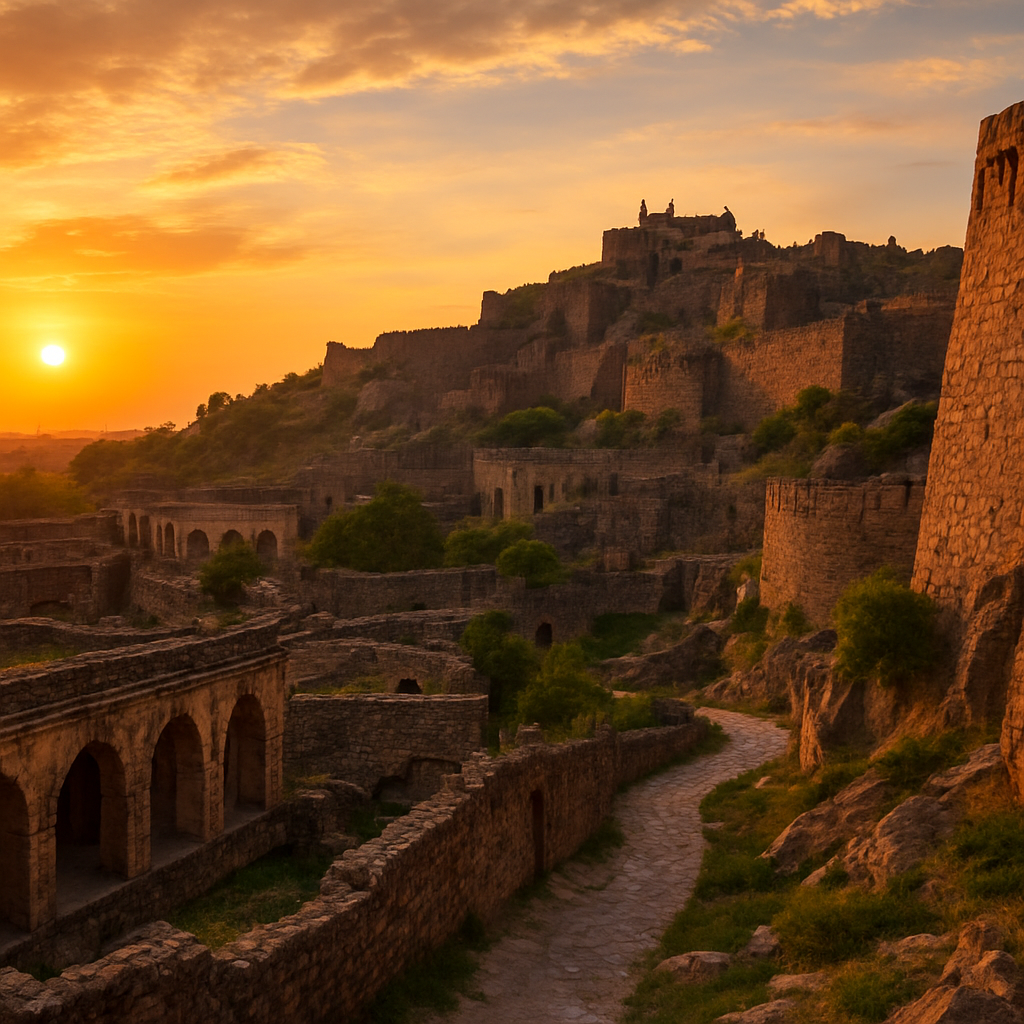
Golconda Fort at Sunset
Climb up just before golden hour. The Qutb Shahi citadel ran the show here from 1518 to 1687, and the engineering is the headline — a clap at the Fateh Darwaza gate carries cleanly to the top of the hill, and 17th-century guards used the trick as an early-warning system. The view from the summit is the one that ruins other forts for you: the city spread out below, the Qutb Shahi tombs in the middle distance, the call to prayer drifting up from somewhere unseen. Bring water and actual shoes. Ignore the guides offering the secret tunnel — there is no secret tunnel.
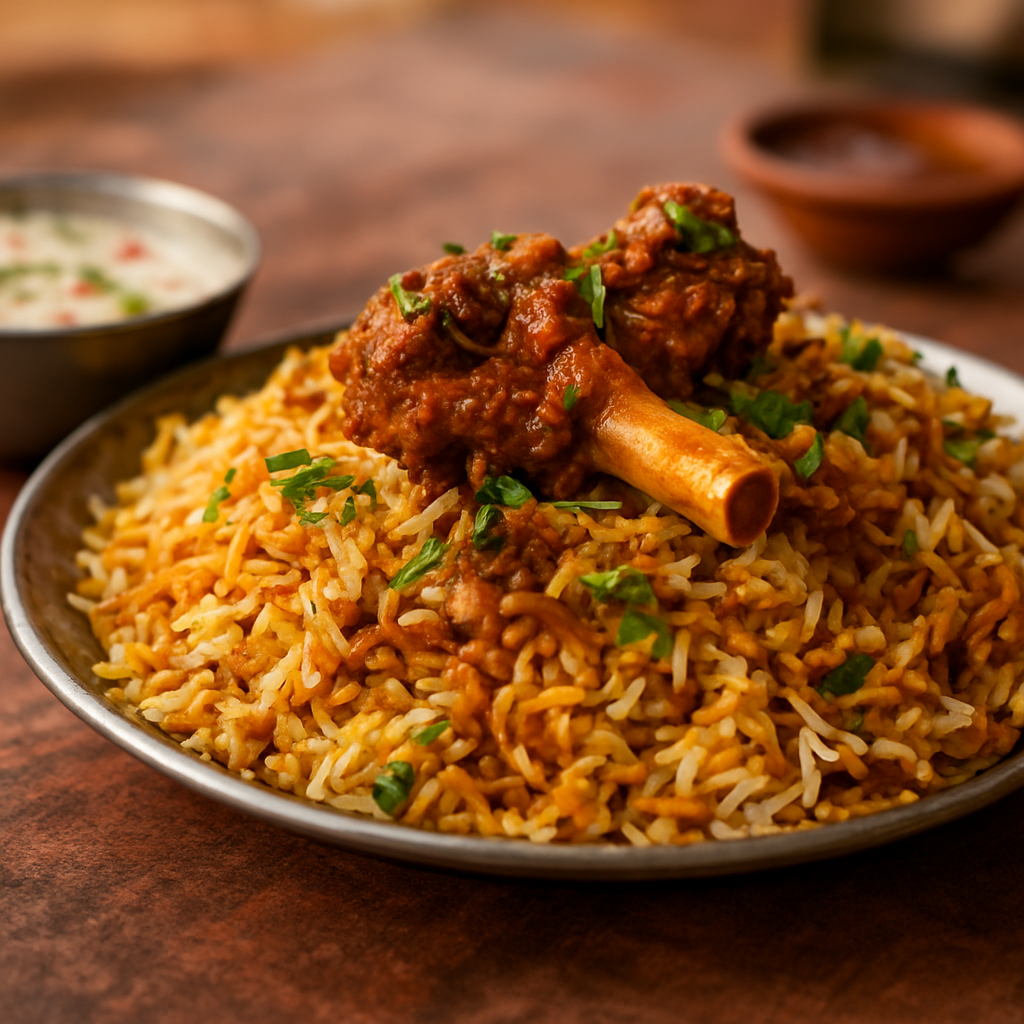
A Plate of Biryani at Shah Ghouse
Skip Paradise on your first night. Make the trip to Shah Ghouse in the Old City instead — Irani-cafe roots, a kitchen that's been refining the same dum biryani for decades, and a mutton version that locals will fight you for. The rice arrives sealed under a layer of dough that gets cracked at the table; the saffron hits you before you see the dish. During Ramadan, the haleem that comes out of this kitchen is reason enough to time a trip. Order both. Eat slowly. This is the dish the city is named for.
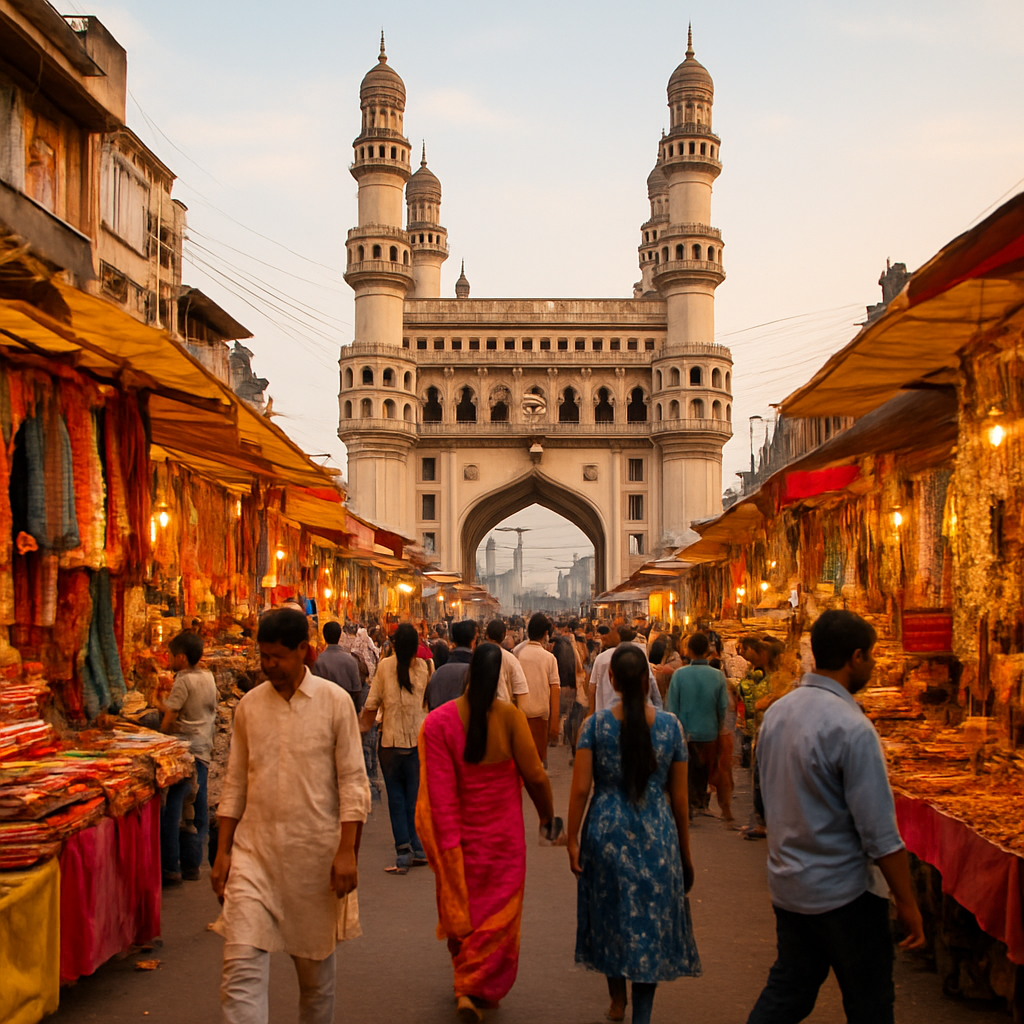
An Afternoon in the Old City
Start at Charminar, built in 1591 and still anchoring the bazaar that's been operating around its base for four centuries. Walk the lanes of Laad Bazaar for lacquer bangles, fabric, the kind of working market that hasn't been smoothed out for tourists. Stop at Nimrah Cafe next to the monument for Irani chai and an Osmania biscuit — the dunking is the ritual. End at Chowmahalla Palace, the Asaf Jahi seat that won a UNESCO Asia Pacific Merit Award in 2010. Late afternoon is the right window — the heat breaks, the light gets gold, and the bazaar is at its best.
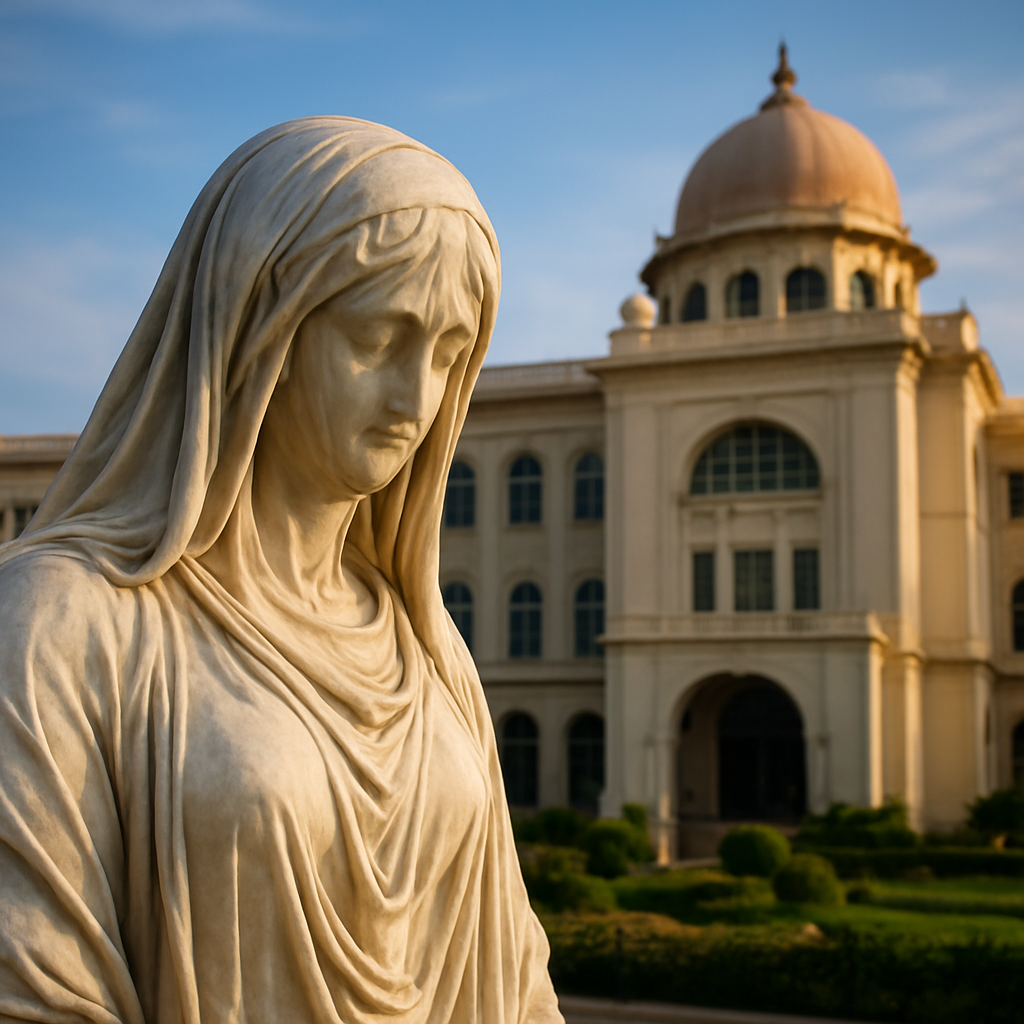
The Salar Jung Collection
One man, one obsession, one museum. Mir Yousuf Ali Khan — Salar Jung III — spent his life collecting, and what he left behind is reportedly the world's largest one-person antique collection. Opened to the public in 1951 and now one of three National Museums of India. The Veiled Rebecca sculpture is the headline piece, but the European clocks gallery (with a musical clock that draws a crowd at the top of every hour) is the room that turns first-time visitors into stayers. Give it three hours. Wear comfortable shoes.
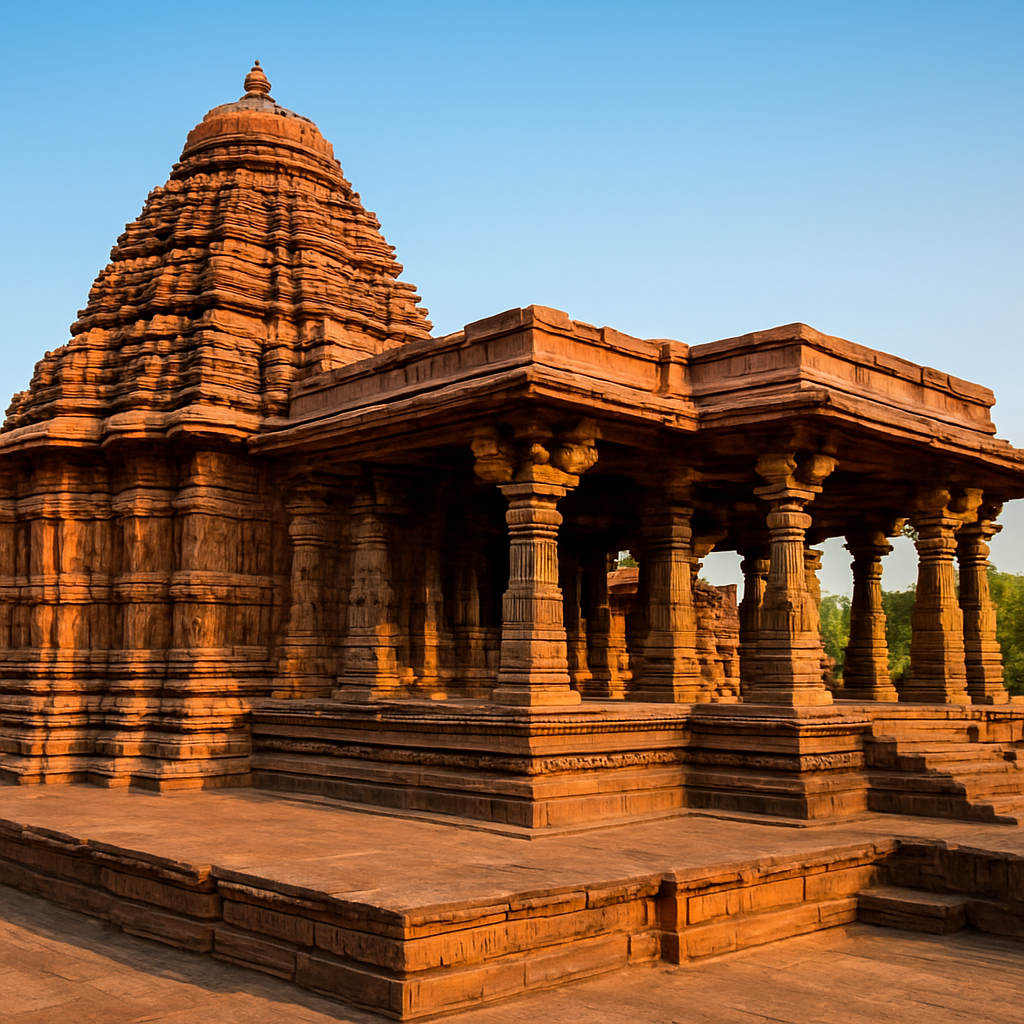
A Day Trip to Warangal
About 145 km northeast of the city, two and a half to three hours by train or road, and the payoff is a side of South India most Hyderabad visitors skip. Warangal was the Kakatiya dynasty capital from the 12th to 14th centuries, and the Ramappa Temple — UNESCO World Heritage as of 2021 — is a sandstone-and-floating-brick masterclass that pre-dates the Mughal architecture you came to Hyderabad for. The Kakatiya Kala Thoranam at the fort ruins is the silhouette on the Telangana state emblem. Combine it with the Thousand Pillar Temple for a full day. Hire a car with a driver and make a loop.
The places I actually send people to
Advice that fits how you travel
Solo travel in Hyderabad works better than the city's reputation suggests — partly because the queer scene here is so event-driven that arriving alone is basically the default mode anyway. Base yourself in Jubilee Hills or Banjara Hills and the rest sorts itself out. Days run on cafés — Heart Cup Coffee for the multi-floor laptop crowd, Roastery Coffee House for the slower bungalow afternoon. Evenings cluster around the brewpubs and rooftops on the Jubilee Hills side. Uber and Ola work seamlessly; auto-rickshaws will overcharge you and the meter conversation is a sport you don't want to play.
Meeting people takes a little planning. There's no fixed gay bar to walk into, so the apps do most of the early lifting — Grindr and Tinder both function here, and the scene skews English-speaking, tech-employed, and generally low-drama. A reader wrote in to say the wildest message he got in a week was a guy asking if he'd seen the new Allu Arjun film. Meet at a café in Jubilee Hills first, not someone's flat in Kukatpally — neighborhood matters more than the dating app interface implies. For programmed gatherings, follow Mobbera Foundation on Instagram before you arrive; their rotating Pink Nation parties move between venues like Air Live and Over The Moon, and Lamakaan in Banjara Hills hosts the kind of open mics and queer film screenings where you can introduce yourself without it being a whole thing.
Budget-wise, solo travel here is genuinely cheap by international standards — approximately ₹2,500–₹4,000 a day on the budget end, ₹6,500–₹11,000 moderate, with a real luxury tier still landing well under European prices. Safety on the ground in Banjara Hills, Jubilee Hills, and HITEC City is generally fine for solo movement at café-and-restaurant hours; rideshare home after midnight, don't walk it. Skip the Tank Bund promenade and Hussain Sagar for evening strolls — those public spaces get moral-policed for everyone, gay or straight. Keep the affection indoors and the geography current and you'll find Hyderabad rewards a slow week.
Same-sex couples can do Hyderabad well, but you'll want to think about geography more than you would in a Western capital. The good news: India's international hotel chains — Marriott, Hyatt, Hilton, Taj, Park — generally honor their global non-discrimination policies at the front desk, and two-men or two-women bookings at properties like Park Hyatt, Taj Krishna, or The Park Hyderabad typically pass without comment. For one big-night-out splurge, Taj Falaknuma Palace is the address: a former Nizam's residence on a 32-acre estate, horse-drawn carriage arrival, rose-petal welcome that should feel ridiculous and somehow doesn't. Adaa downstairs handles the dinner.
Date nights cluster in Banjara Hills and Jubilee Hills. Olive Bistro on the banks of Durgam Cheruvu lake is the lakeside terrace that does honeymoon-photo work without being precious about it. Firdaus at Taj Krishna serves Nizami fine dining with live ghazals — a different register from a tasting menu, closer to a memory you walk into. For a quieter rooftop, Air Live at the Marriott has Hussain Sagar at sunset doing the heavy lifting. PDA-wise: subtle hand-holding in Banjara Hills cafés, Jubilee Hills lounges, and inside upscale malls like Inorbit generally goes unremarked. Anything beyond that draws stares — and the Old City around Charminar, the Tank Bund promenade, and Hussain Sagar are firm avoid zones for visible affection. Local trick: same-sex hand-holding between men reads as friendship across most of India, which is its own kind of camouflage.
Logistically, plan around the calendar. As of 2026, India recognizes neither same-sex marriage nor civil unions, so anything legal — joint reservations under both names, emergency contacts, medical decisions — runs on the contracts you bring with you, not on Indian recognition. Pack documentation; carry copies. Time your visit to October–February if you want walkable evenings (April–June will melt your makeup before you reach the Uber), and if your dates align with February, Hyderabad Pride at Necklace Road is the kind of community-organized event that rewards visiting couples actually showing up.
Hyderabad as a family destination for LGBTQ+ families is honest territory — not hostile, not fully recognized, navigable with the right expectations. The legal frame, as of 2026: same-sex marriage is not recognized, civil unions don't exist, and joint adoption is closed to same-sex couples. So whatever family structure you've built at home doesn't carry the same legal weight here. Bring documentation — birth certificates, custody paperwork, anything establishing parental relationships — and keep digital and paper copies. International chain hotels (Marriott, Hyatt, Taj, Park) will typically book a family suite for two parents and kids without commentary; the staff training generally holds.
The kid-friendly side of the city is genuinely deep. Ramoji Film City on the outskirts is a full-day commitment — the Guinness-certified largest integrated film studio complex in the world, themed sets, gardens, rides, the works. Salar Jung Museum rewards curious kids with the European clocks gallery (the musical clock at the top of the hour draws a crowd for a reason) and the Veiled Rebecca sculpture. Golconda Fort at sunset is climbable for older kids — the acoustic clap-point at Fateh Darwaza is genuinely magic. For day trips, Warangal and the Ramappa Temple deliver a different cuisine of architecture from Hyderabad's Indo-Islamic core, and the train ride is part of the experience. Restaurants like Chutneys in Banjara Hills handle kids without drama and the chutney-spread arrival is theater enough to hold attention.
Practical reality check on the social layer. Two parents of the same gender traveling with children will draw curiosity in Hyderabad — not typically hostility in the cosmopolitan zones, but questions, glances, the occasional intrusive query. Banjara Hills, Jubilee Hills, and the HITEC City corridor handle this most easily. The Old City around Charminar is conservative Muslim-majority territory and worth visiting for the architecture and biryani, but not where you'll want extended explanation conversations with curious onlookers — go in the late afternoon, eat at Shah Ghouse, and head back to your Jubilee Hills base for the evening. Strollers struggle on Old City lanes; baby carriers work better. And the heat from April to June is genuinely brutal for small children — November through February is the humane window.
What Hyderabad actually costs
Flights, visas, and the first 30 minutes
Airport: Rajiv Gandhi International Airport (HYD) sits about 25 km south of the city in Shamshabad — modern, efficient, and one of the better-run airports in India. Approximately 60 direct routes connect Hyderabad to global hubs, with strong same-day connections through Dubai, Doha, Singapore, and Frankfurt for North American travelers, and direct or one-stop links from London, Paris, and most major Asian capitals.
Visa requirements (as of 2026): US, UK, EU, Canadian, and Australian passport holders typically need an Indian e-Visa, generally available in 30-day, 1-year, or 5-year tourist options. Apply through the official Indian government e-Visa portal at least 4 to 7 days before travel — third-party sites charge markups for the same form. Bring a printed copy on arrival; immigration will ask for it.
Airport to city: The cheapest direct option is a prepaid taxi or Uber/Ola at approximately ₹600–₹1,200, taking 45–75 minutes depending on traffic and which side of the city you're heading to. Pro tip: book the rideshare from inside arrivals with airport Wi-Fi rather than negotiating with the auto-rickshaw drivers outside — the meter conversation is a sport you don't want to play.
Other options: The Pushpak Airport Liner AC bus runs 24/7 to multiple city stops for around ₹250 (60–90 minutes) — solid if you're not in a rush and traveling light. Fixed-fare airport taxis (Meru, SkyCabs) book at the counter inside arrivals for ₹900–₹1,500. If you're staying at one of the luxury properties — Park Hyatt, Taj Falaknuma, ITC Kohenur — pre-arranged hotel transfers run ₹1,500–₹3,000 and are worth it for the first night, especially after a long-haul arrival.
Watch out for: traffic between the airport and HITEC City or Banjara Hills can stretch a 45-minute ride to 90 minutes during rush hour (roughly 8–10am and 5–8pm). Build the buffer in.
Traven's seasonal breakdown
The questions everyone asks
Is Hyderabad safe for LGBTQ+ travelers?
Do I need to speak Hindi or Telugu?
Is there a gay neighborhood in Hyderabad?
Can same-sex couples book a hotel room without issues?
When is Hyderabad Pride?
How much should I budget per day?
What's the best biryani in the city?
Screenshot this before you go
So should you actually go?
Go — with eyes open and a calendar that lines up. Hyderabad isn't going to court you the way Bangkok or Mexico City does, and as of 2026 the legal recognition is decriminalization without marriage, civil unions, or joint adoption. But the food is among the best in India, the architecture spans 400 years of Indo-Islamic mastery, and the queer community here — anchored by Mobbera Foundation, Lamakaan, and the Jubilee Hills scene — is doing real work that rewards visitors actually showing up. Travel between October and February, base in Banjara Hills or Jubilee Hills, follow Mobbera on Instagram before you land, and treat the Old City as a daytime cuisine and architecture pilgrimage rather than an evening base. LGBTQ+ travelers who want a city that asks them to navigate by neighborhood — and pays them back in biryani, ghazals, and rooftop nights they didn't see coming — will find Hyderabad more rewarding than its score suggests.
Sources & Resources
Official links we reference when compiling this guide. Last verified 2026-05-10.
- Humsafar Trust (national LGBTQ+ health)
- Lawyers Collective (LGBTQ+ legal aid)
- Naz Foundation India
- Queer Chennai Chronicles (regional South India coverage)
- Sangama (South India LGBTQ+ rights)
- Suraksha (LGBTQ+ Health, Hyderabad)
- Telangana Hijra Intersex Transgender Samiti (THITS)
- The Humsafar Trust iCALL Helpline
- Varta Trust (queer media + resources)