
Jaipur doesn't perform for you. It hands you a clay cup of cardamom lassi on MI Road, dares you to look past the sandstone, and waits to see if you've got the patience the city actually rewards.
Jaipur is a city of contradictions that somehow hold together — a place where 18th-century palace hotels serve craft cocktails to international travelers while, three streets away, the old city bazaars operate on social codes that haven't shifted in generations. For LGBTQ+ travelers, this is a destination where the architecture and food alone justify the trip, but where you'll need to calibrate your expectations about visibility and openness. The queer scene here is real and growing — groups like The Queer Circle Jaipur are doing genuine community-building work, and the annual Jaipur Queer Pride March draws hundreds, which for a Tier-2 Rajasthani city is quietly extraordinary. But this isn't Mumbai. The scene runs on WhatsApp groups and rooftop whispers more than neon signs.
I gave Jaipur a 9.0 on Destination because the place delivers on a level that few cities in the world can match — you're walking through living history that's been continuously inhabited since 1727, eating food that makes you rethink everything you thought you knew about Indian cuisine, and sleeping in former royal residences for less than a mid-range hotel in most European capitals. Bar Palladio at Narain Niwas Palace is the kind of place where a same-sex couple can have cocktails in a Mughal-Italian courtyard without a second glance, and the staff at heritage properties like Hotel Pearl Palace and the better Bani Park guesthouses have hosted enough international travelers to have their professionalism down cold.
But I won't pretend this is easy. My overall Traven-Dex of 6.1 reflects the gap between what Jaipur offers as a destination and what it offers as a place to be openly, visibly gay. There are no gay bars. Planet Romeo has more traction than Grindr here. Most queer socializing happens through private networks you'll need local trust to access. Post-2018, the energy among young activists is unmistakably hopeful — someone wrote in to say the Jaipur Literature Festival at Diggi Palace each January is one of the most openly progressive events in all of Rajasthan, and everything I've seen confirms that. The city is changing, genuinely, but it's changing at a Rajasthani pace.
What I'll tell you is this: come for the forts, the food, the rose-pink light hitting Hawa Mahal at golden hour, the ₹30 pyaaz kachori at Rawat Mishtan Bhandar that'll ruin you for packaged Indian food forever. Come knowing that the queer warmth here reveals itself slowly, in rooftop conversations and chance connections at Anokhi Café over organic dal. Come with patience, an open notification tray, and the understanding that the good stuff in this city — for everyone, not just us — has always required a willingness to look past the surface.
The stuff your travel guide buries on page 47
The legal picture, as of 2026: Same-sex sexual activity was decriminalized in India by the Supreme Court's 2018 Navtej Singh Johar v. Union of India ruling, which struck down Section 377 of the Indian Penal Code. That's the good news. The less good news: same-sex marriage remains unrecognized after the Supreme Court declined to legalize it in October 2023. No civil unions. No joint adoption rights for same-sex couples. No anti-discrimination protections based on sexual orientation exist at the national or Rajasthan state level. India legally recognizes a third gender following the 2014 NALSA Supreme Court judgment, but the practical implementation — particularly the Transgender Persons Act of 2019 — requires medical documentation and has been criticized by advocacy groups. For legal resources, Lawyers Collective provides LGBTQ+ legal aid across India.
What the law means on the ground in Jaipur: Decriminalization means police cannot arrest you for being queer. It does not mean the culture has caught up. Rajasthan is socially conservative — the US, UK, Canadian, and Australian governments all note this in their travel advisories, advising LGBTQ+ travelers to exercise discretion. Locals still reference "377" as shorthand for an era that many queer Jaipurites experienced as a genuine before-and-after moment in their lives. The legal floor exists, but no legal ceiling protects you from discrimination in housing, employment, or public services.
Identity terms to know: Kothi (feminine-presenting gay or bisexual men) and panthi (their masculine-presenting counterparts) are indigenous identity frameworks that operate alongside Western labels within Jaipur's queer community. These predate imported vocabulary by centuries. If a local uses them in conversation, don't correct them with LGBTQ+ 101 terminology. Listening first is always the move. Kinnar is the preferred term in many Rajasthani community-facing contexts for transgender women and hijra-identified individuals — using it correctly signals respect and cultural literacy.
PDA comfort, area by area: Upscale international hotels — Rambagh Palace, The Oberoi Rajvilas, ITC Rajputana — are comfortable; private affection within hotel grounds is generally safe and staff are trained for international guests. The C-Scheme and Baani Park cafe districts are moderate — discreet hand-holding is unlikely to provoke overt hostility. Tourist sites like Amber Fort, City Palace, and Jantar Mantar require caution — staring is likely, though overt confrontation with Western tourists is rare. The walled city bazaars around Johari Bazaar and Bapu Bazaar are a firm avoid for PDA — densely packed, highly conservative, and same-sex affection is conspicuous. Save the hand-holding for your heritage hotel rooftop at sunset, which honestly is a better setting anyway.
Review the US State Department's travel advisory for India for current information on entry requirements, legal considerations, and safety guidance before planning your visit to Jaipur. US State Department travel advisory for India.
What it actually feels like on the ground
Holding hands: In the walled city markets and old city lanes, same-sex hand-holding will draw stares and potentially hostile reactions. In C-Scheme cafes and upscale restaurant areas, discreet affection is unlikely to cause confrontation but will be noticed. Ironically, Indian men holding hands platonically is common — the line between friendship and romance reads differently here, which can work in your favor at a distance.
Hotel check-in as a same-sex couple: Heritage and five-star properties catering to international guests — Rambagh Palace, The Oberoi Rajvilas, RAAS Jaipur — handle this without drama. Hotel Pearl Palace and Arya Niwas in Bani Park have been consistently cited by travelers as genuinely hassle-free. Budget guesthouses in the old city are more variable — some will require two separate bookings or produce awkward conversations at the front desk. Confirm a double bed booking in advance at smaller properties to avoid check-in surprises. Indian law requires hotels to register foreign guest IDs, so you'll both need to present passports regardless.
Taxis and auto-rickshaws: Ola and Uber are your safest bet — the driver has a documented trip and a rating to protect. Auto-rickshaw drivers in the walled city tend to be chatty and curious; casual affection between same-sex passengers may prompt questions but not danger. Negotiate fares before getting in, and use the prepaid taxi counter at the airport rather than freelance drivers.
Public spaces and parks: Central Park and Ram Niwas Garden are family-dominated and conservative — same-sex PDA will attract unwanted attention. Nahargarh Fort at dusk offers relative solitude and genuinely romantic panoramic views, making it a better option for couples who want a quiet moment outdoors.
Late night: Jaipur isn't a late-night city. Rajasthan's liquor licensing laws mean most bars close relatively early. The streets thin out quickly after 11pm, and the old city lanes become poorly lit and disorienting. Stick to Ola/Uber for after-dark transport. Solo travelers should avoid walking the walled city at night.
Trans travelers: India's third-gender legal recognition exists on paper, but trans travelers — especially foreign visitors — may face bureaucratic scrutiny at checkpoints and inconsistent treatment. Misgendering in everyday interactions is the norm, not the exception. Carry documentation. Medical transition support is very limited locally. The hijra communities here are deeply embedded in local cultural and religious life, highly organized, and their patience with tourist gawking is finite. Queer activists here will call you out on unsolicited photography faster than any local guide will, and they'd be right to.
Emergency contacts — save these before you arrive: Rajasthan Police emergency 100, iCall's LGBTQ+-affirming counseling line at 9152987821, and Humsafar Trust for LGBTQ+ health and rights support. Storing them before you need them rather than after is the difference between a manageable situation and a terrible night.
The queer geography
Jaipur doesn't have a gay neighborhood. Let me say that plainly. There's no Marais, no Chueca, no block of rainbow flags. What it has instead is a constellation of spaces — cafes, hotel bars, creative community hubs — where queer life surfaces if you know where to look. The scene runs on the private party circuit, coordinated through WhatsApp groups and app connections rather than advertised venue nights.
C-Scheme
This is Jaipur's most cosmopolitan neighborhood and the closest thing the city has to a welcoming social zone. The stretch around Anokhi Café and the surrounding boutiques on Tilak Marg is where Jaipur's educated liberal crowd gravitates for coffee and conversation. Curious Life Coffee Roasters draws the arts and design community. Jaipur Brew House is one of the city's few dedicated craft beer bars, pulling a young urban professional crowd. It's not a gay area — it's the area where you'll find the open-minded creative types who know what's actually happening that weekend and will tell you if you ask nicely. Rajasthan Studio, a creative community space nearby, hosts the kind of programming that attracts a progressive crowd.
MI Road
Mirza Ismail Road is Jaipur's main commercial artery, and queer locals often use it as neutral ground for first meetups. Tapri Central hosts open-mic nights and art events that have attracted LGBTQ+ performers and attendees. Lassiwala, the legendary lassi stand, is a beloved casual afternoon hangout point among queer locals between old city excursions — thick cardamom lassi in clay kulhads you smash on the pavement after. Niros Restaurant, operating since 1949, anchors the strip with the kind of old-Jaipur atmosphere that works well for low-key meetings.
Bani Park
A quiet, tree-lined residential enclave with several heritage guesthouses known among LGBTQ+ travelers for discreet, genuinely welcoming hospitality with minimal front-desk drama. Jas Vilas and the cluster of small properties here attract a global, artsy, LGBTQ+-inclusive traveler crowd. The guesthouse common room culture is real — some of the best tips and connections of your trip will materialize over shared chai at breakfast without any app required.
Diggi Palace & the JLF Circuit
The Jaipur Literature Festival at Diggi Palace each January is genuinely one of the most welcoming events in Rajasthan. Queer writers, artists, filmmakers, and their admirers descend on that property every year and the energy is openly celebratory in a way that the rest of the city rarely permits itself to be. The festival has programmed panels on Section 377 repeal, queer literature, and LGBTQ+ rights featuring writers like Vikram Seth. Outside JLF season, Hotel Diggi Palace remains a culturally connected property worth knowing.
Pro tip: For real community connection, reach out to The Queer Circle Jaipur through their social media presence before your trip — they occasionally organize meetups and can connect travelers with the actual local scene in a way no travel guide realistically can replicate. Planet Romeo has a meaningfully larger active user base than Grindr in Jaipur — download both, but don't be surprised if Romeo is where the actual conversations happen. Most locals will suggest a hotel bar or rooftop café as a first meeting point.
The official Incredible India tourism portal offers comprehensive destination information, accommodations, and visitor resources for Jaipur and Rajasthan. Incredible India official tourism site.
The UK Foreign Office India travel guide provides practical information on customs, laws, and cultural considerations relevant to all travelers, including LGBTQ+ visitors. UK Foreign Office travel advice for India.
Purple Roofs is an international directory of LGBTQ+-friendly accommodations and community resources, with listings and information for destinations throughout India including areas near Jaipur. Purple Roofs - LGBTQ+ travel accommodations and resources.
The experiences worth rearranging your itinerary for
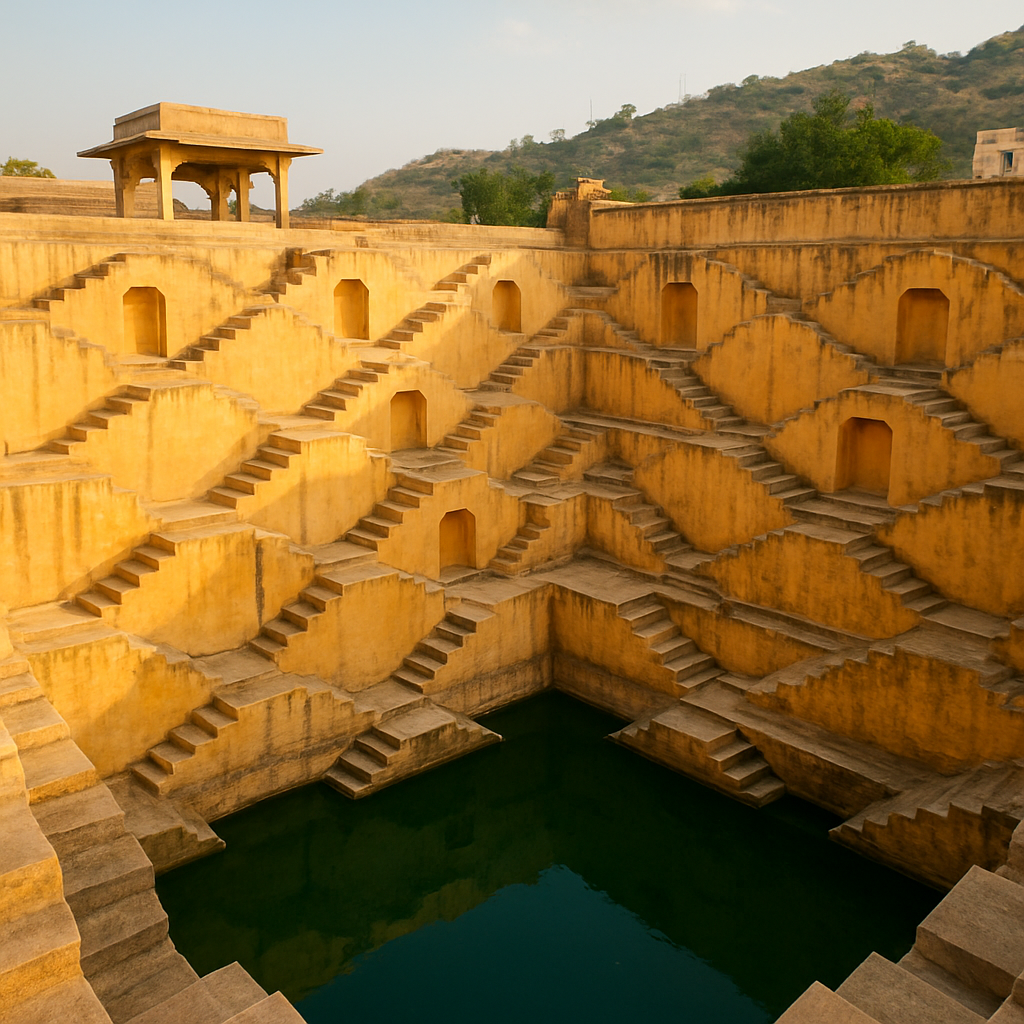
Panna Meena Ka Kund Stepwell
Less visited than the famous Chand Baori, this geometric stepwell near Amber is architecturally extraordinary — the symmetrical zigzag staircases descending into the water create a visual pattern that rewards a quiet hour of exploration away from the tourist convoy. Queer photographers and artists have made it something of an unofficial pilgrimage site. Get there early morning before the tour groups arrive and you'll have the whole criss-crossing geometry to yourself. It's approximately 11km from central Jaipur, easily combined with an Amber Fort visit.
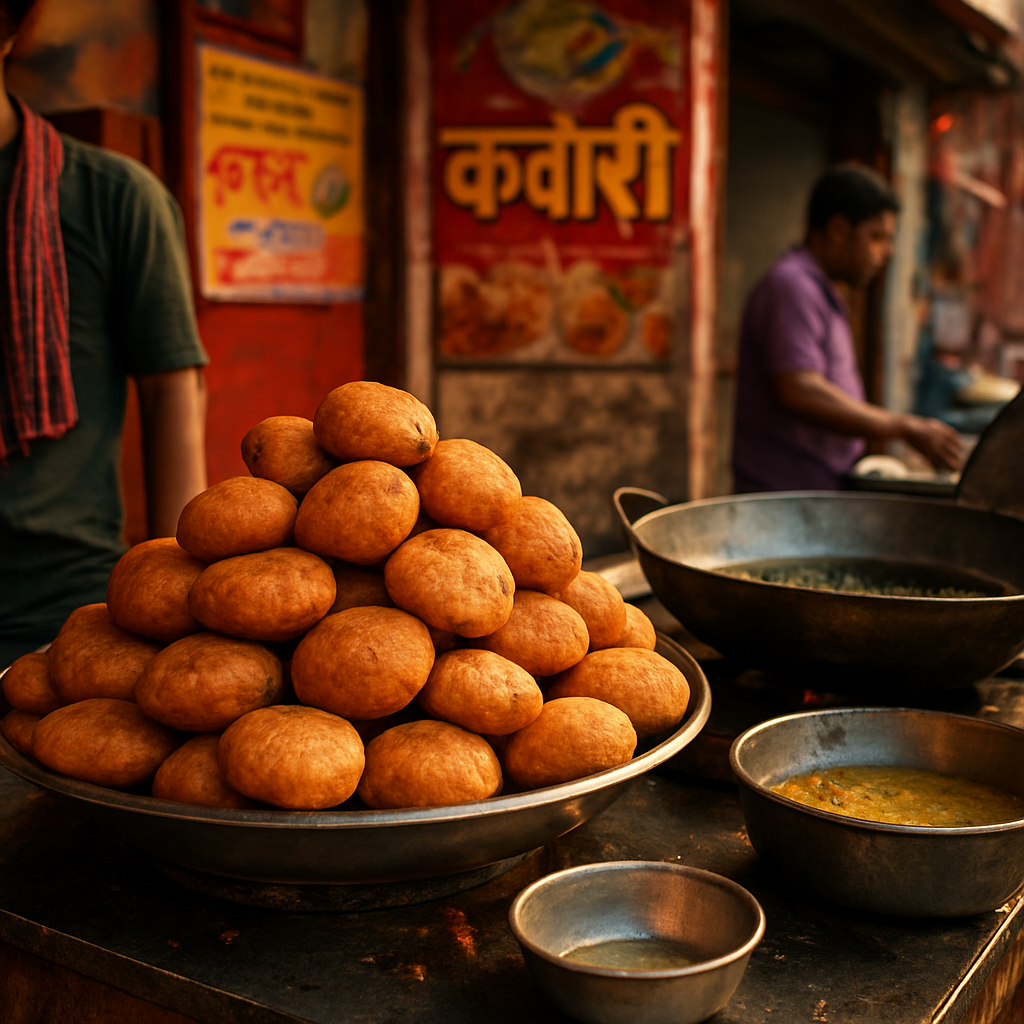
Rawat Mishtan Bhandar
Not glamorous, not Instagram-worthy, just one of the great eating experiences in India at a price that makes you feel mildly criminal. This sweet shop and snack institution near MI Road serves pyaaz kachori that are mandatory — golden, flaky, spiced onion filling that crunches when you bite through. You eat at shared tables with strangers, which is how the city actually works. Follow it with a thick rabri or a mawa kachori for dessert. The whole meal costs less than a coffee at an airport lounge back home.
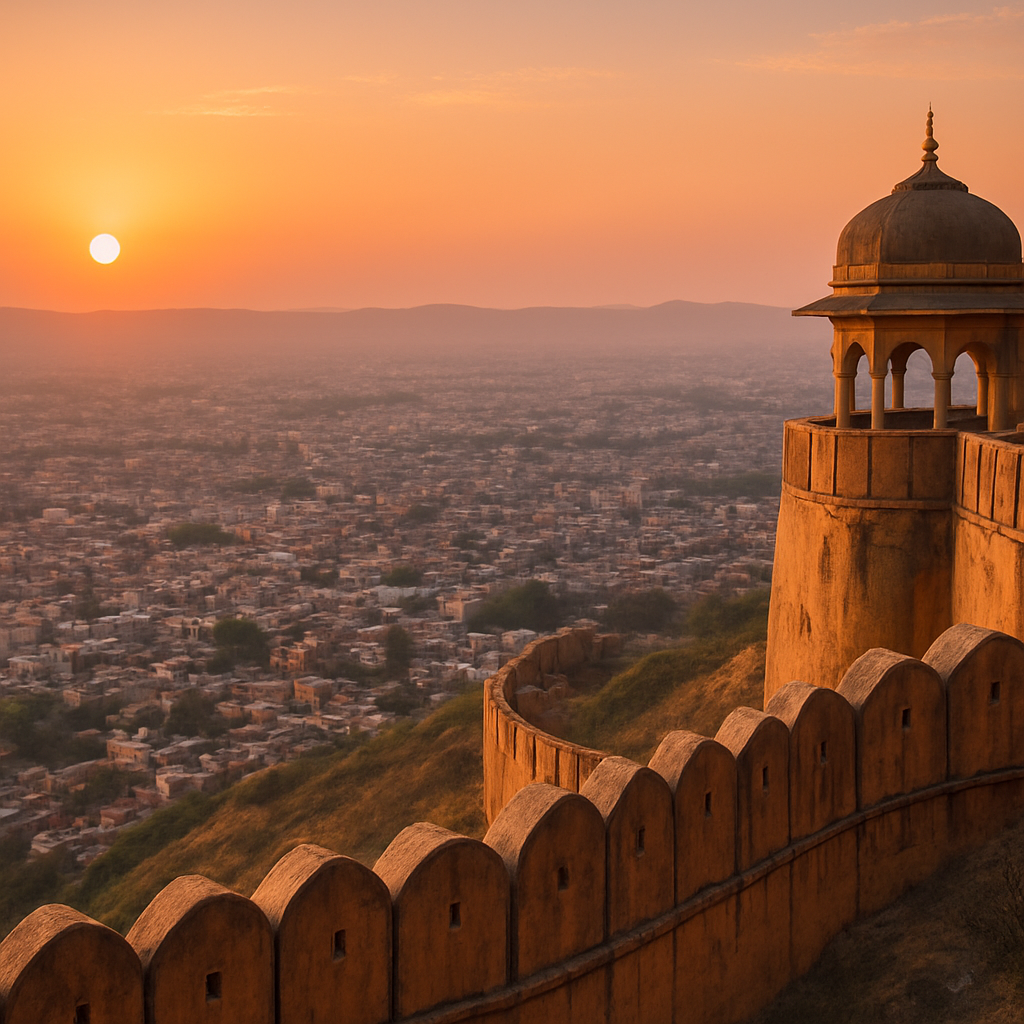
Nahargarh Fort at Dusk
The auto-rickshaw ride up the winding Aravalli hill road is half the experience — Jaipur shrinks below you until the entire pink skyline spreads out at your feet. The panorama from the fort ramparts at sunset is legitimately one of the best urban views in India, and the relative solitude up there makes it a genuinely romantic spot. The fort itself — completed in 1734 by Maharaja Sawai Jai Singh II — hosted the controversial 2019 'Love in the Time of Castles' contemporary art exhibition featuring same-sex imagery, a moment that became nationally significant for queer cultural expression in Rajasthan.
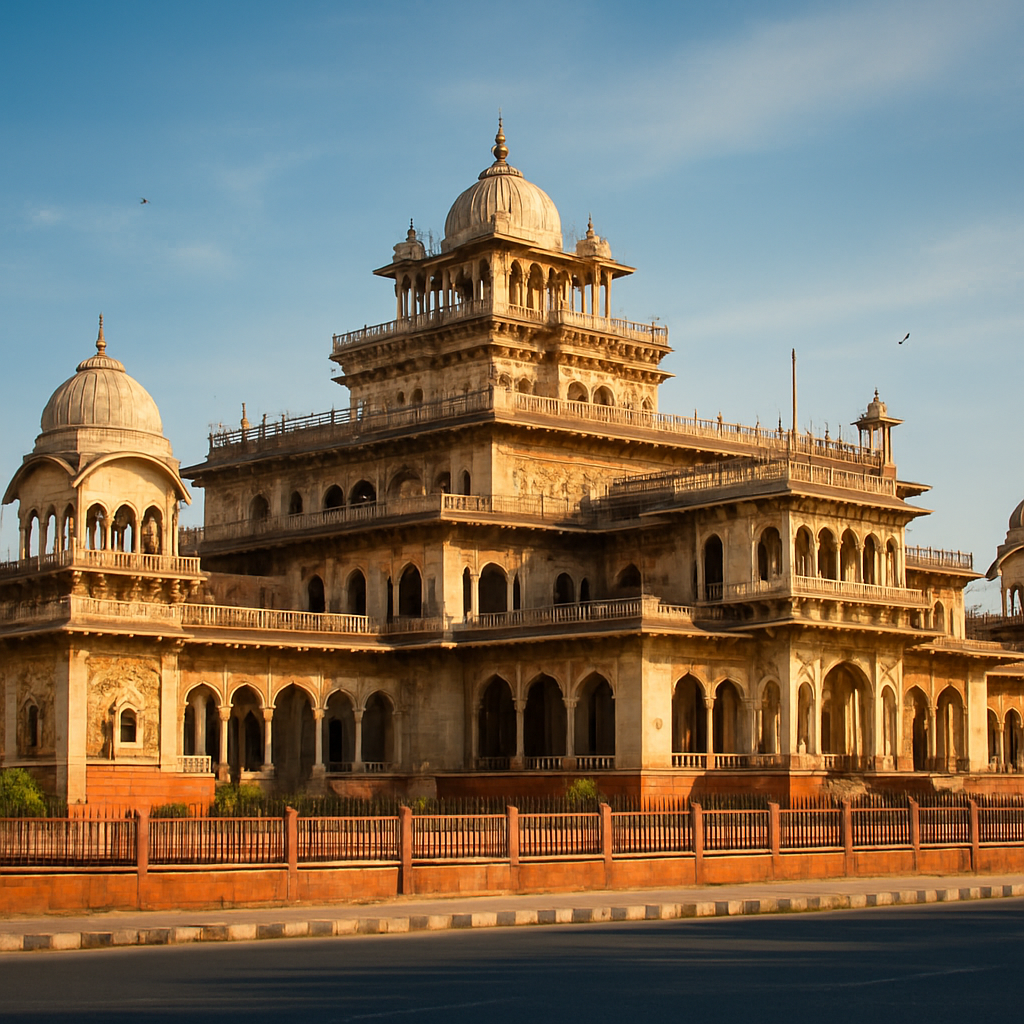
Albert Hall Museum
Rajasthan's oldest museum, opened in 1887, housed in Indo-Saracenic architecture that stops you on the approach. The collections include Rajput and Mughal miniature paintings — and here's what most visitors miss: several of these depict gender-fluid figures and homoerotic imagery consistent with medieval South Asian artistic traditions. The ethnographic collections document hijra traditions in Rajasthan. This is pre-colonial evidence that queerness in this part of the world is not imported, not new, and not foreign. Entry is cheap and the building alone is worth the visit.
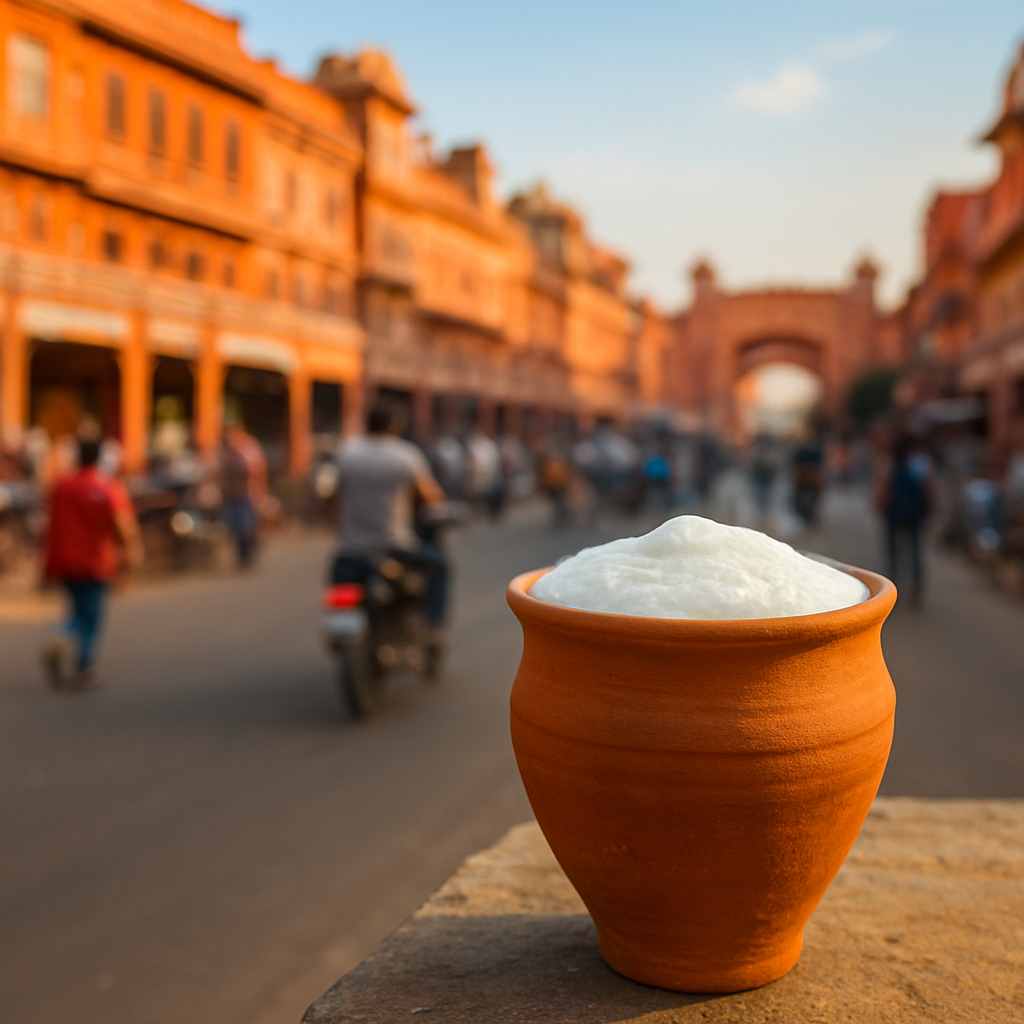
Lassiwala on MI Road
There's a legendary lassi stand on MI Road that serves thick, sweet, cardamom-heavy lassi in clay kulhads — you drink it standing at the counter, then smash the cup on the pavement. It's ₹50, it takes four minutes, and it's one of those food moments where the simplicity is the whole point. Queer locals use it as a casual afternoon meeting point between old city excursions. Go around 3pm when the heat breaks and the MI Road foot traffic is at its most theatrical.
The places I actually send people to
Advice that fits how you travel
Jaipur is a genuinely rewarding solo destination — and in some ways, being solo here is an advantage. You move more freely, attract less scrutiny, and the guesthouse common room culture in Bani Park is built for exactly this kind of travel. Heritage homestays there tend to attract a global, artsy, LGBTQ+-inclusive traveler crowd, and some of the best tips and connections of your trip will materialize over shared chai at breakfast without any app required. Zostel Jaipur Pink City and Moustache Jaipur are both solid budget hostel options with social programming — dorm beds from ₹600–₹700/night.
App culture in Jaipur leans heavily toward Planet Romeo, which has a meaningfully larger active queer male user base here than Grindr. Download both, but expect Romeo to be where the real conversations happen. Most locals will suggest a hotel bar or rooftop café as a first meeting point — not a private address, which is just good sense in any city. Tapri Central on MI Road and Curious Life Coffee Roasters in C-Scheme are low-pressure, progressive-leaning spots where meeting someone for the first time feels natural.
Safety-wise: solo travelers should avoid walking the walled city lanes after dark — they're poorly lit and disorienting once the shops close. Use Ola or Uber for after-dark transport without exception. During the day, the major tourist sites are well-trafficked and safe for solo visitors. Budget around ₹1,500–₹2,800/day at the backpacker level, or ₹4,500–₹8,000/day for a mid-range experience with a boutique hotel room and restaurant meals. A hired auto-rickshaw for a half-day of sightseeing costs roughly ₹400–₹600 and is one of the best values in Indian tourism.
Romance in Jaipur is real, but it's almost entirely an indoor sport. That's not a criticism — it's a planning note. The city's heritage palace hotels exist at a level of opulence that makes a same-sex couple's suite feel like an event in itself. Rambagh Palace on Bhawani Singh Road and The Oberoi Rajvilas out on Goner Road both have the international guest experience and the physical privacy to let you exist as a couple without a single sideways glance. If you're going to spend on accommodation anywhere in India, spend it here.
For your one unmissable evening out, Bar Palladio at Narain Niwas Palace Hotel is the answer. It's not a gay bar and doesn't need to be — the Mughal-Italian courtyard setting, the cosmopolitan creative crowd, and the frankly beautiful cocktail list add up to a dinner where you'll be seen as two people having a great night, which is the whole point. Book a table in the garden. The walk back through the illuminated palace grounds will do the rest. For a sunset moment, get an auto-rickshaw up to Nahargarh Fort — the panorama over Jaipur's pink skyline at dusk is one of the better romantic views in India, full stop, and the relative solitude up there is a luxury the city rarely offers at ground level.
A practical word: PDA in the Hawa Mahal bazaars or the walled city lanes is a firm no — conservative, densely packed, not the place. Save those moments for your rooftop, your hotel courtyard, your heritage haveli terrace. This city is built for intimate private experiences. Work with that architecture, and Jaipur will deliver.
In pure tourism terms, Jaipur is exceptional for families. The sheer visual drama of Amber Fort, the geometric wonder of Jantar Mantar, the monkey-populated ramparts of Nahargarh Fort, the Albert Hall Museum's glittering miniature paintings — older kids tend to find the sensory excess of the Pink City completely captivating. The city also runs well on private transport, which makes coordinating around nap schedules and energy levels significantly easier. A hired car and driver for the day (₹1,800–₹3,500 depending on itinerary) is genuinely worth it with children.
As of 2026, India does not legally recognize same-sex relationships, which means LGBTQ+ families carry no formal legal standing in-country. In daily practice, this rarely creates a visible problem at upscale and heritage properties oriented toward international guests — The Oberoi Rajvilas and Rambagh Palace both operate under international guest service standards, and front-desk staff at properties like Hotel Pearl Palace and the Bani Park guesthouses have been consistently reported as unfussy and professional. Budget guesthouses in the walled city are a more variable bet; book with a property you've researched rather than walking in cold.
A logistics note: strollers are not practical in the walled city's narrow, uneven lanes around Johari Bazaar and Bapu Bazaar — a baby carrier is significantly more functional there. Kids' menus exist at tourist-facing restaurants and major hotel dining rooms; street food at Rawat Mishtan Bhandar near MI Road is genuinely family-friendly and one of the great eating experiences in India at any age. Keep older children close in the busiest old city markets — crowd density and rickshaw traffic make independent wandering genuinely risky.
What Jaipur actually costs
Flights, visas, and the first 30 minutes
Airport: Jaipur International Airport (Sanganer) — code JAI — handles 50+ domestic and select international routes. Most international visitors connect through Delhi (DEL) or Mumbai (BOM), both under two hours away by air.
Major routes and approximate flight times: Delhi (DEL) ~1 hr 10 min, multiple daily departures; Mumbai (BOM) ~1 hr 55 min; Hyderabad (HYD) ~2 hr; Bangalore (BLR) ~2 hr 20 min; Kolkata (CCU) ~2 hr 35 min. Dubai (DXB) offers a direct international connection at approximately 3 hr 10 min — useful for travelers routing through the Gulf.
Visa requirements (as of 2026): US, UK, Canadian, and Australian passport holders generally require an India e-Visa (eTV), applied online before travel. EU nationals typically also require an India e-Visa, though requirements vary by member state. The e-Visa is generally available as a 60-day double-entry or 1-year multiple-entry option. Processing is usually straightforward but allow several days. Always check your government's official travel advisory for current requirements — entry rules can change with limited notice.
Airport to city center (20–45 min depending on traffic):
- Prepaid Taxi: ₹350–₹550 — available at the fixed-rate counter outside arrivals; reliable, no negotiation required.
- Ola / Uber: ₹180–₹400 — app-based, generally the best option for solo travelers; same journey time as prepaid taxi.
- Auto-Rickshaw: ₹120–₹250 — negotiate the fare before you get in; adds 10–15 minutes to travel time but genuinely fine if you're traveling light.
- City Bus (Route 20): ₹25–₹40 — very cheap, 45–60 min, not practical with large luggage.
Traven's seasonal breakdown
The questions everyone asks
Is it safe to be openly gay in Jaipur?
Do I need to speak Hindi?
How much should I budget per day?
Can I book a double bed as a same-sex couple?
Is Grindr or Planet Romeo better here?
Is the tap water safe to drink?
When is the best time to visit?
Screenshot this before you go
So should you actually go?
Jaipur is one of the great travel destinations on Earth — the architecture alone earns my 9.0 on Destination, and the food scene punches absurdly above its weight class. For LGBTQ+ travelers, the trade-off is real: you're visiting a socially conservative city where the queer community exists but operates largely underground, where discretion is your constant companion, and where the legal framework offers decriminalization but zero protections. Some of you will find that trade entirely worth it for the chance to sleep in a maharaja's palace and eat the best laal maas of your life. Some won't. Both positions are completely reasonable. If you do go — and I think you should — base yourself in C-Scheme or Bani Park, book heritage hotels that cater to international guests, and invest a little pre-trip effort in reaching out to The Queer Circle Jaipur on social media. The city rewards travelers who meet it on its own terms, and the connections you make here, when you make them, tend to be the kind that stay with you.
Sources & Resources
Official links we reference when compiling this guide. Last verified 2026-03-15.
- Humsafar Trust – India LGBTQ+ Health & Rights
- Humsafar Trust – India LGBTQ+ Health & Rights
- iCall India – LGBTQ+-Affirming Mental Health Helpline
- iCall India – LGBTQ+-Affirming Mental Health Helpline
- ILGA World – Global LGBTQ+ Rights Reference
- ILGA World – Global LGBTQ+ Rights Reference
- Lawyers Collective – LGBTQ+ Legal Aid India
- Lawyers Collective – LGBTQ+ Legal Aid India
- Ministry of Social Justice & Empowerment – Transgender Welfare
- Ministry of Social Justice & Empowerment – Transgender Welfare
- National Health Portal India – Sexual Health Resources
- Naz Foundation India – HIV & Sexual Health Services
- Naz Foundation India – HIV & Sexual Health Services
- Orinam – Indian LGBTQ+ Resource Network
- Orinam – Indian LGBTQ+ Resource Network
- Rajasthan Police – Emergency Contacts & Reporting
- Rajasthan Police – Official Website & Emergency Contacts
- SAATHII – LGBTQ+ Health, Rights and Social Protection
- Sappho for Equality – South Asian LGBTQ+ Women & Trans Rights
- Sappho for Equality – South Asian LGBTQ+ Women & Trans Rights