
Kolkata doesn't perform for you. It hands you a plate of chelo kebab, starts an argument, and expects you to keep up.
The first thing you notice in Kolkata isn't the heat or the noise — it's the pace of conversation. People here talk like they're building something, and they have been for a very long time. The Rainbow Pride Walk has been going since 1999, which means there are grandmothers in this city who've marched more times than most Westerners have attended brunch. That kind of history doesn't announce itself with neon signs or circuit parties. It announces itself at 11pm at Someplace Else inside the Park Hotel, where the room shifts after the second set and the crowd loosens into something real, or at the Coffee House on College Street, where queer writers and activists have been having adda — that untranslatable Bengali ritual of slow, serious, sometimes hilarious conversation — for decades.
Kolkata doesn't do gay bars in the Western sense. There's no district tucked behind a row of flags. What it has instead is Sappho for Equality, one of India's most respected LGBTQ+ organizations, and a community that built genuine, lasting infrastructure out of sheer stubbornness and Bengali pride. The social life runs on private networks — WhatsApp groups, house parties in Ballygunge, community evenings at Sappho's Salt Lake space. If you arrive expecting a scene that looks like Barcelona or Berlin, you'll be confused. If you arrive with curiosity and one local contact, the city will open in ways that feel earned and deeply personal.
I gave this city a 7.5 on Destination because Kolkata is, frankly, extraordinary as a place to travel — the food alone justifies the flight. Kewpie's Kitchen serves Bengali thalis from a residential house on Elgin Lane that will rearrange your understanding of Indian cuisine. Peter Cat has been doing chelo kebab on Park Street since 1975. Late-night phuchka carts on Camac Street create a social institution out of tamarind water and fried dough. The architecture is crumbling and gorgeous, the cultural infrastructure is world-class, and the intellectual energy is unlike any other Indian city.
But here's what you need to hold alongside all that: my Traven-Dex score of 6.1 reflects real limitations. There's no legal recognition for same-sex couples, no anti-discrimination protections, and public affection is a calculated risk that varies block by block. Park Street and South Kolkata breathe easier; North Kolkata and transit hubs require more awareness. This is a city where the community has done extraordinary work with almost no institutional support, and that deserves respect — not the assumption that decriminalization means everything is fine.
The stuff your travel guide buries on page 47
The legal picture. As of 2026, consensual same-sex relations are decriminalized in India following the landmark 2018 Supreme Court ruling (Navtej Singh Johar v. Union of India), which struck down the colonial-era Section 377. That means you are not committing a crime by being who you are. But that's where the good news stalls: there is no legal recognition of same-sex marriage, civil unions, or joint adoption anywhere in India. No national anti-discrimination protections cover sexual orientation or gender identity. The NALSA judgment of 2014 provides legal recognition for a third gender, and West Bengal has established a transgender welfare board, but implementation remains inconsistent.
What that means on the ground. Decriminalization removed the criminal threat, but it didn't create acceptance overnight. Kolkata's queer social life runs heavily on private networks — WhatsApp groups, house parties in Ballygunge, community events organized through Sappho for Equality and Pratyay Gender Trust. The community is genuinely welcoming to international visitors who arrive with curiosity rather than just nightlife expectations, so make contact before you land. Reach out through Varta Trust or message Sappho directly — Kolkatans are almost aggressively hospitable once there's a connection.
Accommodation reality check. Nicer hotels around Park Street and Ballygunge handle same-sex couples without drama — the Taj Bengal and Hyatt Regency both carry corporate non-discrimination policies. But budget lodges near Howrah or Sealdah stations can be genuinely unpredictable. Book through international platforms and filter by recent queer traveler reviews. Pro tip: if a booking site shows a property with no international reviews at all, that's a signal, not an absence of data.
PDA comfort. Park Street and Camac Street offer the most relaxed atmosphere — discreet hand-holding in cafés and restaurants tends to be tolerated, though not normalized. College Street and Jadavpur have a liberal student energy that provides some cover. But the Maidan, public transport, and traditional North Kolkata neighborhoods require real discretion. Overt kissing in public — regardless of orientation — draws attention across all areas. Boutique hotels and upscale restaurants are your most comfortable private spaces.
What it actually feels like on the ground
Holding hands. On Park Street, in the restaurants and cafés along that corridor, discreet hand-holding between same-sex couples generally passes without incident. You'll see it. At Someplace Else in the Park Hotel after 10pm on weekends, the room is liberal enough that casual physical contact barely registers. Outside that bubble — the Maidan, metro stations, North Kolkata's dense residential blocks — any PDA, regardless of orientation, draws sustained attention. Read the room, which in Kolkata shifts block by block.
Hotel check-in. International-chain properties with documented non-discrimination policies — Taj Bengal, Hyatt Regency, ITC Royal Bengal — process same-sex couples professionally. The Oberoi Grand's long-standing culture of discreet service works in your favor. Mid-range and boutique hotels on Park Street and in Ballygunge are generally fine. The risk zone is cheap lodges near Howrah Station and Sealdah Station, where desk staff may be genuinely confused or uncomfortable. Book through major platforms with verifiable recent reviews.
Taxis and rideshares. Late-night Uber or Ola is a meaningfully safer bet than flagging a yellow taxi if you're visibly queer or gender-nonconforming. The app creates a record, drivers tend to be more professional, and you sidestep the occasional older cabbie who has strong opinions about your appearance. During daytime, regular taxis are fine — drivers are focused on traffic, not your relationship status.
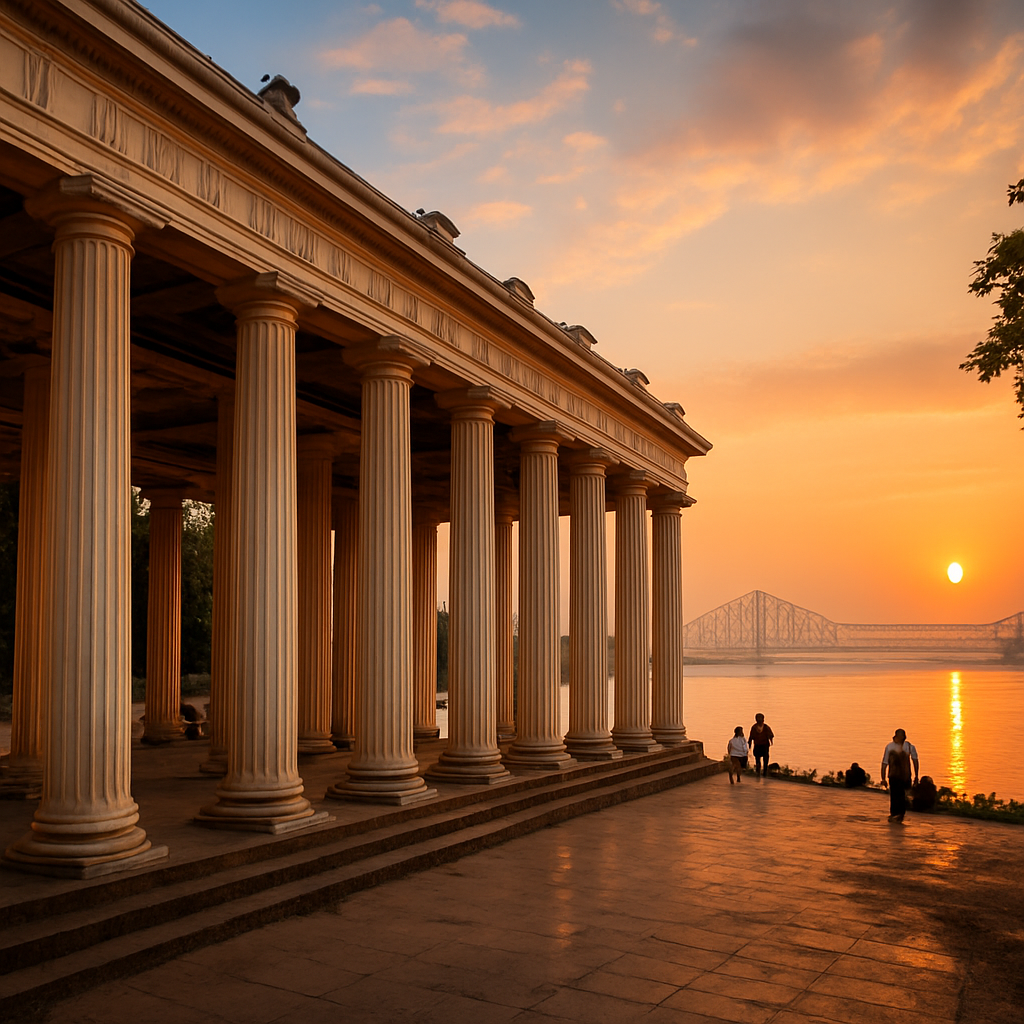
Public spaces and parks. Victoria Memorial Gardens and the Maidan are high-footfall family spaces where any couple affection — same-sex or not — draws stares. Rabindra Sarobar in South Kolkata is more relaxed for quiet walks. Princep Ghat along the Hooghly at dusk has a long, quiet tradition of couples — including queer ones — walking together with relative privacy in plain sight. It's not a scene. It's just a beautiful stretch of riverfront where people have been finding space for a very long time.
South Kolkata vs. North Kolkata. This is the essential geographic divide for queer travelers. South Kolkata — Ballygunge, Jadavpur, Gariahat — reads as considerably more relaxed. The liberal educated demographics and university culture provide real cover. North Kolkata — Shyambazar, Shobhabazar, the area around Howrah Station — has dense traditional neighborhoods with strong conservative social norms. It's not dangerous. It's just exhausting if you're visibly different.
Trans travelers. India's NALSA judgment provides legal recognition for a third gender, and West Bengal has a transgender welfare board. The hijra community has deep cultural visibility in Kolkata, particularly around Bowbazar. But trans travelers — especially foreign visitors — may encounter bureaucratic confusion at checkpoints, inconsistent reception at budget accommodations, and curious stares that range from benign to aggressive depending on the neighborhood. Trans women and hijra individuals face the most consistent police harassment, even post-NALSA. Pratyay Gender Trust documents this regularly and can brief you on current conditions before arrival.
Verbal harassment. Outright verbal abuse is less common than in some Indian cities, but gender-nonconforming presentation draws comments — meyeli (feminine/effeminate) is sometimes used as a slur, though it's increasingly reclaimed by queer Kolkatans. The most common experience is staring, not confrontation. In the Park Street corridor and South Kolkata's more liberal pockets, even this tends to be minimal.
Late night. Kolkata generally shuts down earlier than Mumbai or Delhi. After midnight, streets thin out except around Park Street and New Town's commercial areas. Stick to rideshare apps, travel in groups when possible, and avoid poorly lit lanes in unfamiliar neighborhoods. The standard urban safety precautions apply regardless of orientation.
For current legal information and protections for LGBTQ+ travelers in India, consult Equaldex India, which tracks anti-discrimination laws and rights across the country.
The queer geography
Kolkata doesn't do a gay district. There's no neighborhood with rainbow flags, no row of explicitly queer bars, no circuit you can walk in an hour. What it has instead is something more diffuse and, honestly, more interesting — a network of spaces, organizations, and neighborhoods where the queer community has embedded itself into the city's existing intellectual and social infrastructure over decades.
Park Street & Camac Street
This is your base camp, and it's non-negotiable. Park Street is Kolkata's most cosmopolitan corridor — a dense strip of restaurants, bars, hotels, and late-night energy that functions as the city's social spine. Someplace Else in the Park Hotel is the great queer-adjacent social anchor: ostensibly a rock music venue, but its diverse, liberal crowd and late hours make it the closest thing the city has to a genuinely mixed bar. Show up after 10pm on a Friday or Saturday and the room shifts. Tantra, upstairs in the same hotel, runs later and louder. Olypub down the street is a no-frills 1950s bar associated with Kolkata's bohemian and literary counter-culture — no formal queer programming, but a crowd that has always attracted people who don't fit neatly into categories. The late-night phuchka carts along this stretch are practically a social institution, a very low-stakes reason to linger in mixed company.
Ballygunge & Elgin
South Kolkata's affluent, educated neighborhoods provide the city's most relaxed social atmosphere for queer visitors. Bylane café in Ballygunge is cited consistently in Kolkata's queer community accounts as a gathering space where queer patrons feel genuinely welcome. Kewpie's Kitchen on Elgin Lane and Monkey Bar on Elgin Road are part of a circuit where the liberal arts-and-food crowd overlaps naturally with queer social networks. The house parties happen in this part of town — you won't find them without an introduction, but once you have one, Ballygunge opens up.
College Street & Jadavpur
Kolkata's intellectual engine. The Indian Coffee House on College Street has functioned as an informal queer adda for decades — it's loud, chaotic, runs on instant coffee, and absolutely wonderful. Go with a book, order the mutton cutlets, and see who sits down next to you. Jadavpur University's campus and surrounding neighborhood carry a strong activist tradition that makes them among the most openly welcoming localities in the city. The younger crowds here are broadly accepting; the intellectual culture provides real cover.
Salt Lake / Bidhannagar & New Town
Sappho for Equality operates from Salt Lake and holds regular community evenings and cultural events that are open to visitors — genuinely one of the best ways to meet queer Kolkatans who aren't just there to interact with passing tourists. New Town / Rajarhat is the modern IT hub where a younger, more cosmopolitan demographic makes malls and cafés comparatively LGBTQ+-easy social spaces, though it lacks the character and depth of South Kolkata's neighborhoods.
The Humsafar Trust is a major LGBTQ+ organization in India offering community resources, support services, and connection opportunities for LGBTQ+ travelers.
ILGA maintains a directory of LGBTQ+ organizations and resources throughout Asia-Pacific, helping you identify local groups, support services, and community spaces in India. ILGA Asia-Pacific.
The experiences worth rearranging your itinerary for
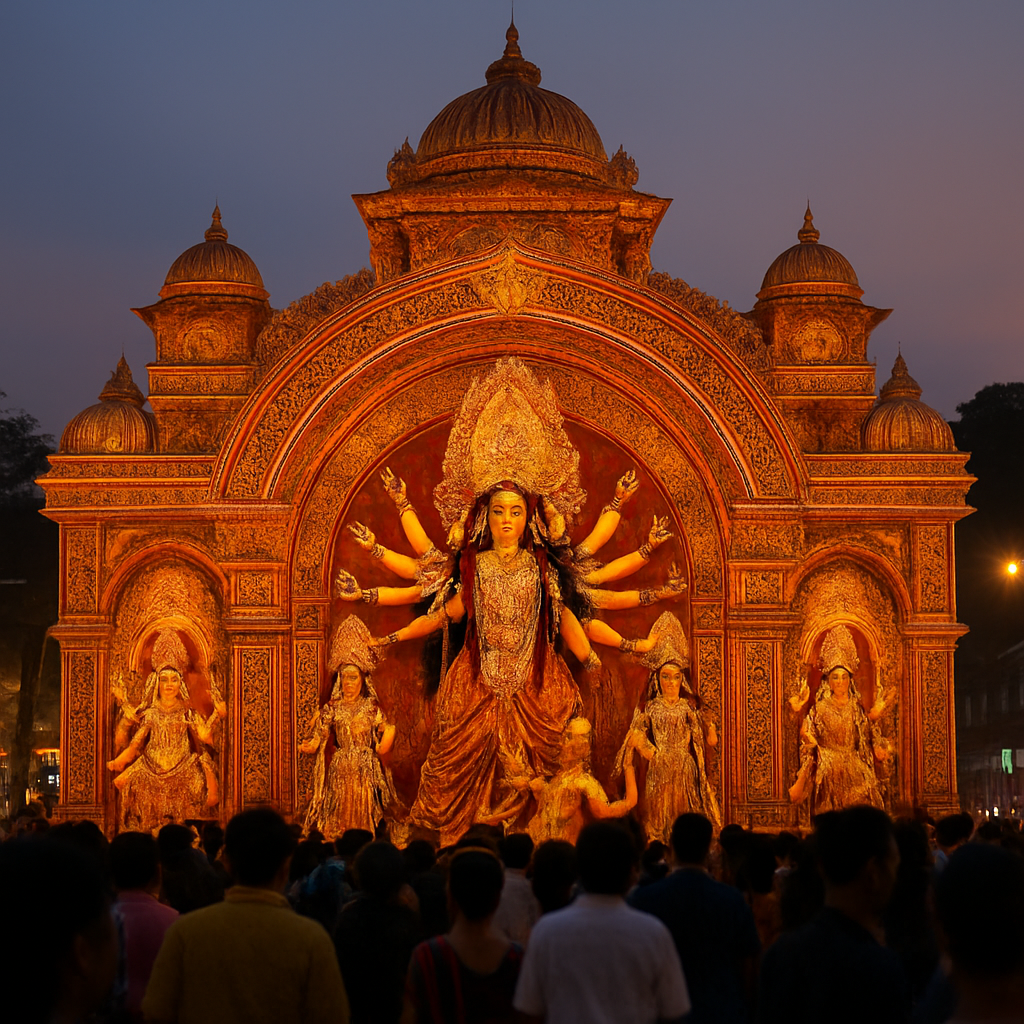
Durga Puja — The Entire City as Art Installation
I don't care what else is on your calendar — if you can be in Kolkata during Durga Puja (typically October), restructure your life to make it happen. For five days, the city transforms into an open-air gallery of thousands of pandals — temporary structures housing goddess Durga that range from traditional bamboo-and-cloth to genuinely avant-garde architectural installations. The entire city stays up all night. Families, friends, strangers — everyone is out, eating, arguing about which pandal is best, and moving through streets that feel borderline hallucinatory with light and sound. It's not a religious observance for tourists; it's Kolkata operating at maximum emotional volume. Start at the big South Kolkata pandals around Ballygunge and Gariahat, then follow the crowds.
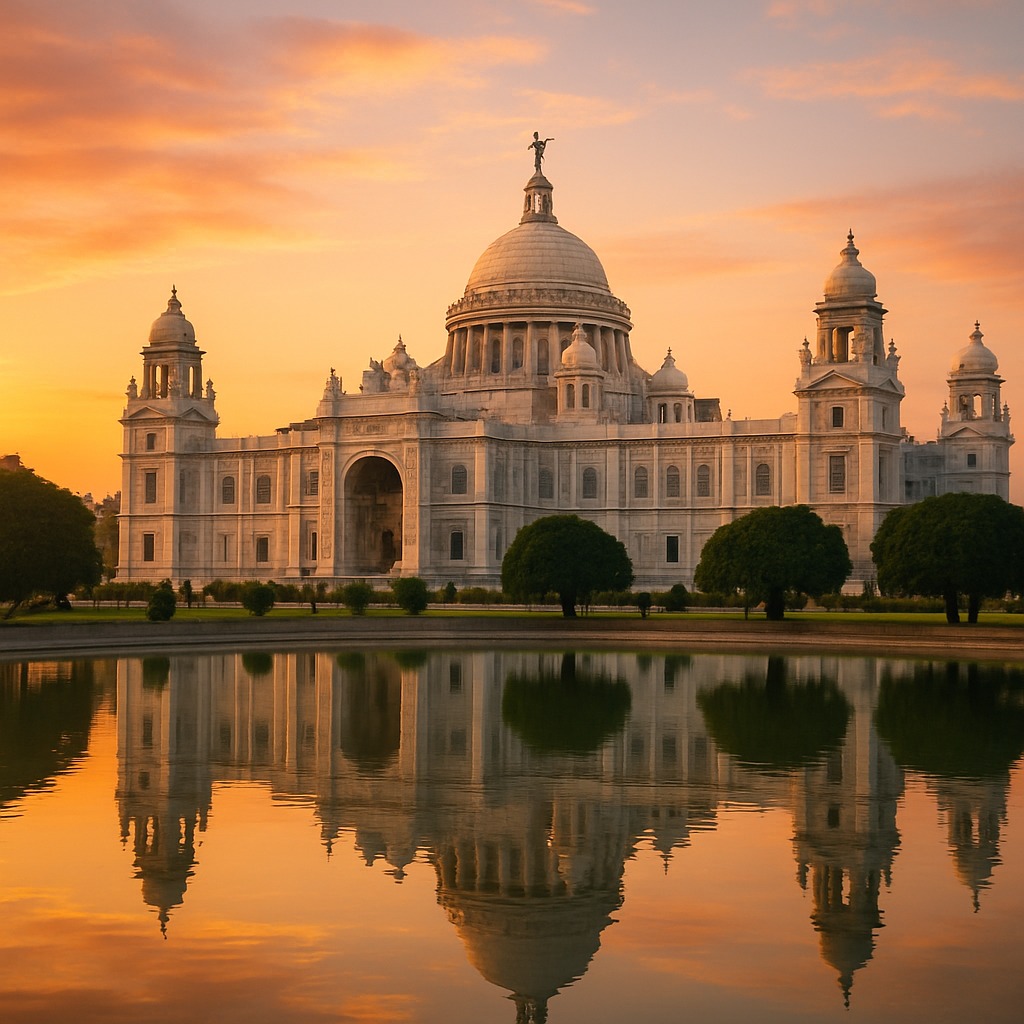
Victoria Memorial at Golden Hour
The Victoria Memorial is absurdly photogenic — a white marble Mughal-British hybrid that catches late-afternoon light in a way that makes everyone who sees it reach for their phone. The building itself houses a solid museum of Kolkata's colonial history, but I'd argue the gardens are the real attraction: expansive lawns, reflecting pools, and an atmosphere that shifts from busy family picnic space at midday to genuinely contemplative at sunset. Walk the perimeter path as the light softens. The surrounding Maidan — an enormous urban parkland — gives you a sense of scale that central Kolkata's dense streets otherwise conceal.
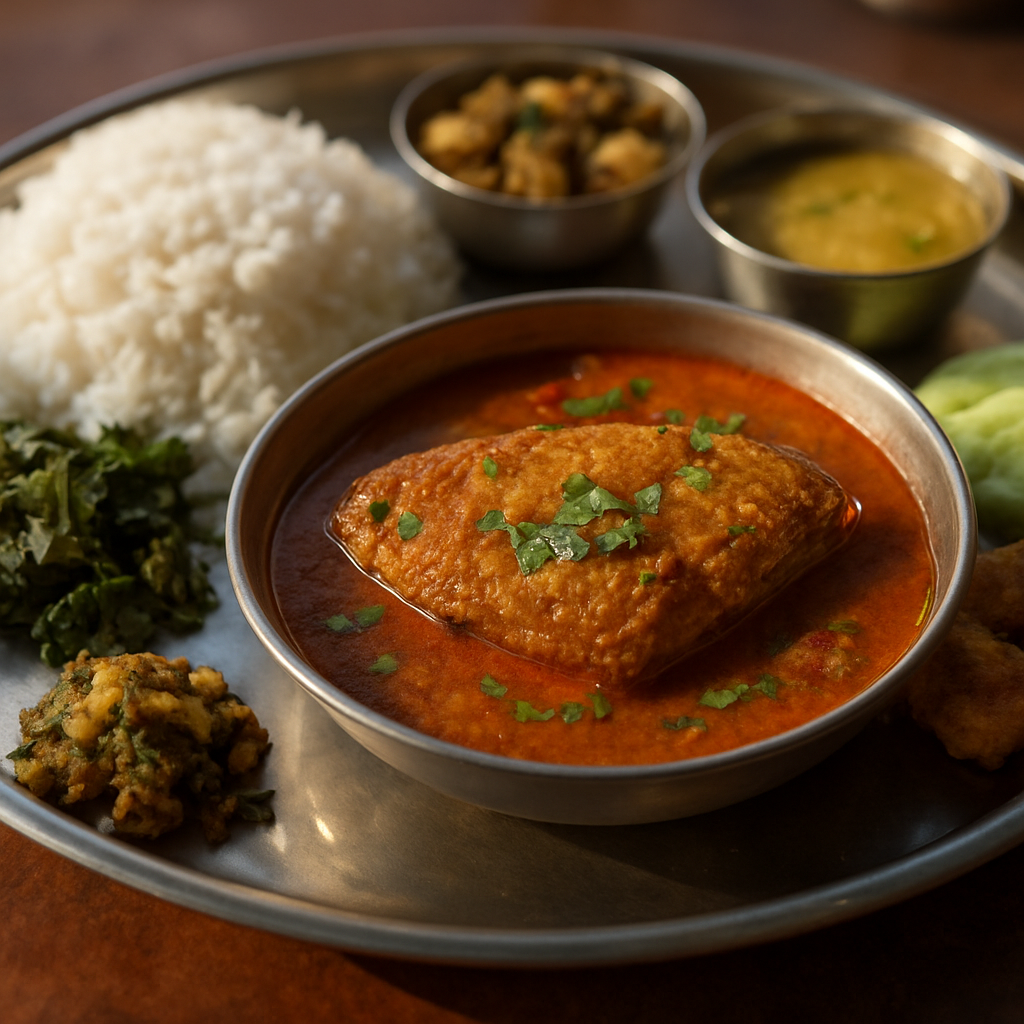
Bengali Food, Systematically
Bengali cuisine is India's most underrated food tradition, and Kolkata is the only place to eat it properly. Start at Kewpie's Kitchen on Elgin Lane — a residential house turned restaurant where the thali format gives you a structured tour of Bengali flavors: shorshe ilish (hilsa in mustard), chingri malai curry (prawns in coconut), and whatever seasonal preparations the kitchen has decided you need. Then cross town to Shiraz Golden in Park Circus for Kolkata-style biryani — the potato is the point, not the controversy. For sweets, any decent mishti shop will sell you sandesh and mishti doi that redefine what dairy can do. Budget ₹100-300 for a street food tour that will leave you questioning every expensive meal you've ever paid for.
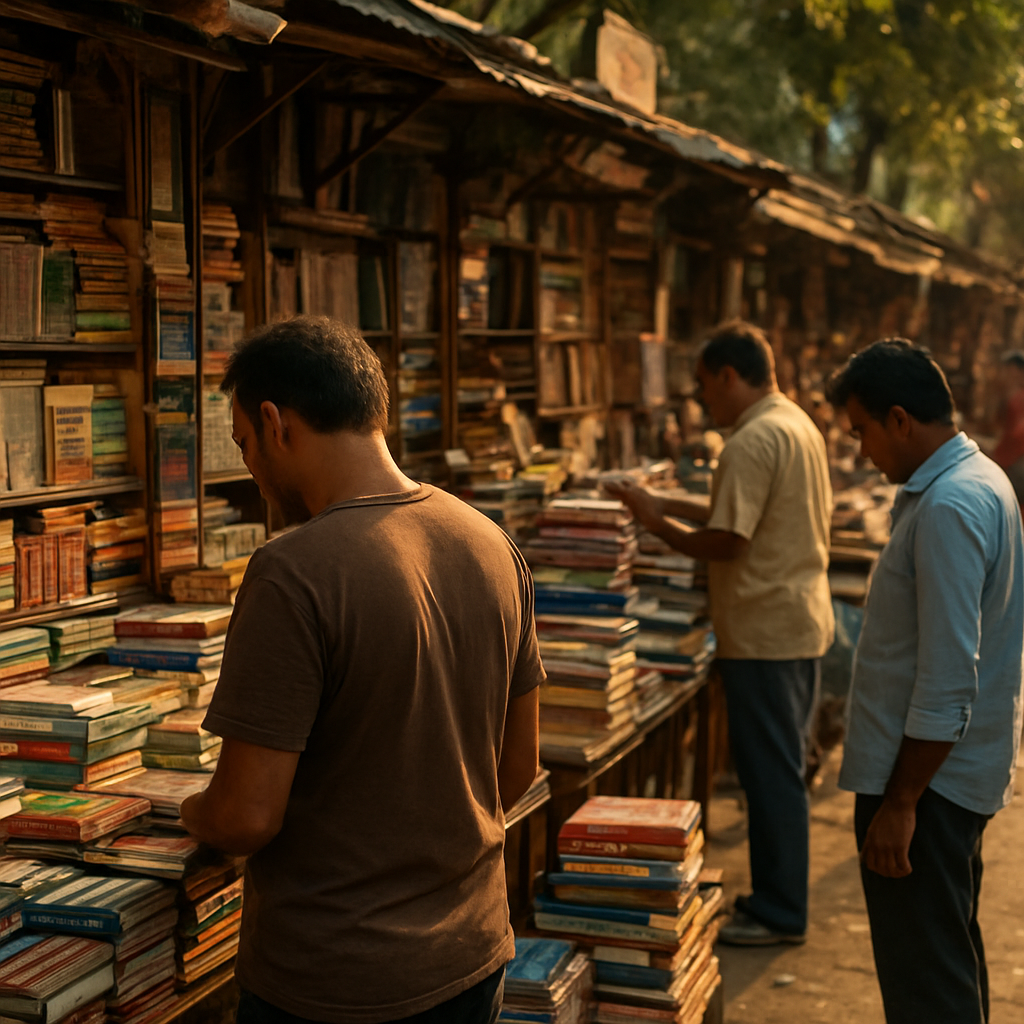
College Street Book Market
College Street is one of the largest second-hand book markets in the world, and walking it feels like entering a civilization that runs on paper and argument. Stalls are stacked floor to ceiling with everything from Bengali poetry to Soviet-era math textbooks to yellowed Penguin paperbacks. The pace is slow, the haggling is performative, and the Indian Coffee House at the center of it all — a workers' cooperative café where Kolkata's intellectuals, writers, and activists have been arguing since the mid-20th century — is as close to a time machine as this city offers. Order the coffee (it's instant, it doesn't matter), order the mutton cutlets (they do matter), and sit.
Princep Ghat & the Hooghly at Dusk
Princep Ghat sits where the colonial city meets the Hooghly River, and at dusk it becomes one of those rare urban moments where a massive city goes briefly quiet. The Palladian colonnade dates to 1843. The river is enormous. The light turns the water copper and then disappears. Locals come here to walk, to sit, to watch boats pass — it's not a curated experience, just a stretch of riverfront where Kolkata has been finding solitude in plain sight for a very long time. Combine it with a short walk south along the river to the Millennium Park promenade for the full effect.
The places I actually send people to
Advice that fits how you travel
Kolkata is a genuinely excellent solo city — maybe the best in India for it. The adda tradition means sitting alone at a table isn't weird here; it's practically a cultural institution. Park yourself at the Indian Coffee House on College Street with a book, and someone will talk to you within the hour. The communal energy at Zostel Kolkata on Sudder Street — dorm beds from around ₹600/night — makes it easy to find travel companions for day trips or evening outings. Budget solo travelers can eat extraordinarily well for ₹350-600 a day on street food and local dhabas; the metro is efficient and costs ₹30-50 per ride.
App culture exists but runs quieter than in Mumbai or Delhi. Grindr and other platforms are active, but many queer Kolkatans prefer to connect through community networks and introductions. Reach out to Sappho for Equality or check Varta Trust before arrival — the city opens up exponentially once you have even one local contact. Kolkatans are almost aggressively hospitable once there's a connection, and that hospitality extends genuinely to queer visitors. Community evenings at Sappho's Salt Lake space are open to visitors and are a far better way to meet people than swiping alone in a hotel room.
For solo safety: Park Street and Ballygunge are your most comfortable neighborhoods both day and night. Stick to Uber or Ola after dark rather than flagging yellow taxis — the app record matters. Avoid wandering unfamiliar residential lanes alone late at night, particularly in North Kolkata. The standard solo travel rules apply: tell someone where you're going, keep your phone charged, and trust your instincts. Kolkata is generally low-crime for travelers, but it's also a dense, complex city that rewards situational awareness.
Kolkata won't hand you a map to the welcoming date spots — you'll have to find them, and that's actually part of the experience. Park Street is your anchor: a long dinner at Peter Cat or Mocambo, followed by live music at Someplace Else in the Park Hotel, is a Kolkata evening worth engineering. Discreet hand-holding in these venues tends to draw no particular attention. It's the crowded public spaces — the Maidan, the metro, the dense residential blocks of North Kolkata — where you'll want to dial things back considerably.
Accommodation matters more here than in many cities. I'd point couples toward the Taj Bengal in Alipore — parent company IHCL has published explicit non-discrimination policies covering sexual orientation and gender identity, and the Bengali handloom textile interiors make it genuinely beautiful. The Hyatt Regency in Salt Lake comes with strong corporate LGBTQ+ credentials if you prefer the modern business district. Either gives you a private retreat where you can fully be yourselves after a day of navigating the city's social calculus.
For genuinely memorable couple moments, Princep Ghat along the Hooghly River at dusk is something else — the colonial ghats, the scale of the water, the slowness of it all. A reader described it to me as the one place in Kolkata where the city feels briefly enormous and forgiving. If you can manage a day trip to Shantiniketan — Tagore's UNESCO-listed university town, ~2.5 hours out — go. The open skies and humanist cultural atmosphere give couples breathing room that central Kolkata can't always provide. Stay overnight if your schedule allows it.
The honest first thing: as of 2026, same-sex couples have no legal recognition in India — no civil union, no joint adoption rights — which means LGBTQ+ families travel here without any formal acknowledgment of their family structure. That's a reality to know going in, not a reason to skip the trip. In practice, international-standard hotels with documented non-discrimination commitments — the Taj Bengal and Hyatt Regency are your best bets — won't create problems at check-in. Budget lodges near central railway stations are a different story; book through major international platforms and filter by recent guest reviews before you commit.
Kolkata is genuinely extraordinary for curious kids. The Indian Museum near Sudder Street is one of the oldest museums in Asia and will hold children's attention longer than you'd expect. The Victoria Memorial gardens give kids room to run while adults absorb one of the subcontinent's most dramatic colonial structures. Science City in Bidhannagar is purpose-built for young visitors. Street food culture is a highlight — sharing phuchka and mishti doi with children is the kind of experience that sticks with them — but be selective about hygiene and stick to busy, high-turnover stalls on well-traveled streets.
For logistics: budget for Uber XL or private car hire on most sightseeing days. The metro is efficient and affordable, but the crowds make stroller navigation difficult, and city sidewalks are inconsistent at best. For older children with an appetite for the wild, a Sundarbans day trip — mangrove forests, Bengal tigers, saltwater crocodiles — is extraordinary. Book through a licensed operator well in advance and sort your Forest Department permits before you arrive; walk-ups simply don't work out there.
What Kolkata actually costs
Flights, visas, and the first 30 minutes
Airport: Kolkata is served by Netaji Subhas Chandra Bose International Airport (CCU), located approximately 17km northeast of the city center in Dum Dum.
Major Routes: CCU connects to 60+ cities worldwide. Key routes include Delhi (DEL) at ~2h 20min, Mumbai (BOM) at ~2h 45min, Bangkok (BKK) at ~3h 10min, Singapore (SIN) at ~4h 30min, Dubai (DXB) at ~5h 15min, and London Heathrow (LHR) at ~10h 30min. IndiGo, Air India, and SpiceJet dominate domestic connections; Air India, Singapore Airlines, Thai Airways, and Emirates cover the major international routes.
Visas: As of 2026, travelers from the US, UK, EU, Canada, and Australia generally require an e-Visa to enter India — apply online through the official Indian government e-Visa portal before departure. Processing typically takes a few business days, so don't leave it until the day before travel. Always check your government's current travel advisory for the latest entry requirements, as visa rules can change.
Getting to the City:
- Metro (Airport Line): ₹30–50 | ~45 min | Direct to Central/Esplanade — the most affordable option by a significant margin and surprisingly comfortable.
- Uber / Ola: ₹350–600 | 45–90 min | Traffic-dependent; AC vehicles available. The app record is a useful safety layer if you're arriving late at night.
- Pre-paid Taxi: ₹450–700 | 50–90 min | Fixed-rate booth outside arrivals — no negotiation required.
Traven's seasonal breakdown
The questions everyone asks
Is it safe to be openly LGBTQ+ in Kolkata?
Are there gay bars in Kolkata?
Do I need to speak Bengali?
How much should I budget per day?
When is the best time to visit?
Will hotels accept same-sex couples?
Is Kolkata safe for trans travelers?
Screenshot this before you go
So should you actually go?
Kolkata is not the easy pick. It's not the city you recommend to someone who wants a carefree beach week with visible gay nightlife. But if you're the kind of traveler who finds a city more interesting when it has something to say — about history, about resistance, about the particular Bengali stubbornness of building community where the law gives you nothing — then Kolkata will reward you in ways that polished destinations simply can't. The food is staggering, the cultural life is deep, the people are fiercely hospitable once you're introduced, and the LGBTQ+ community here has more spine than most cities three times its score. Come with curiosity, come with contacts, and come with your eyes open. You won't regret it.
Sources & Resources
Official links we reference when compiling this guide. Last verified 2026-03-15.
- iCall Mental Health Helpline (LGBTQ+-affirming)
- iCall Mental Health Helpline (LGBTQ+-affirming)
- ILGA Asia
- ILGA Asia
- Lawyers Collective – HIV/AIDS and LGBTQ+ Legal Rights Unit
- Lawyers Collective – HIV/AIDS and LGBTQ+ Legal Rights Unit
- National Legal Services Authority (NALSA) – Transgender Rights
- National Legal Services Authority (NALSA) – Transgender Rights
- Naz Foundation India
- Naz Foundation India
- Pratyay Gender Trust
- Pratyay Gender Trust
- SAATHII – Solidarity and Action Against The HIV Infection in India
- SAATHII – Solidarity and Action Against The HIV Infection in India
- Sappho for Equality
- Sappho for Equality (Kolkata)
- The Humsafar Trust
- The Humsafar Trust
- Varta Trust
- Varta Trust – LGBTQ+ Media and Research