Mumbai doesn't hand you a welcome mat — it hands you a cutting chai and expects you to keep up.
The first thing that hits you isn't the heat or the noise — it's the velocity. Mumbai moves at a speed that makes New York feel contemplative, and the queer life here has learned to match that pace. You won't find a rainbow crosswalk or a clearly mapped gay village. What you'll find is a city where twenty million people have negotiated an unwritten social contract that goes something like: do what you want, just keep moving. For LGBTQ+ travelers, that contract creates genuine space — not the kind you get in Amsterdam or Tel Aviv, but something earned, layered, and sometimes quietly thrilling.
My Traven-Dex score of 6.9 tells a real story here. The destination itself is extraordinary — I gave it an 8.5 on Destination because Mumbai delivers on food, architecture, culture, and sheer cinematic scale unlike almost any city in Asia. The scene runs deeper than outsiders expect, too: Kitty Su at The LaLiT Mumbai isn't a token queer night bolted onto a hotel bar — it's run by a hotel group whose executive director literally argued the Section 377 case before India's Supreme Court. When someone wrote in to tell me that The LaLiT is one of the few places in the city where you can kiss your partner in the lobby without running a mental risk assessment, I believed them, because the commitment there isn't marketing — it's personal.
But the number also reflects real friction. Same-sex relationships have zero legal recognition as of 2026. PDA outside a handful of neighborhoods requires calibration. The cultural conservatism isn't hostile in the way some countries are — nobody's going to arrest you — but it's ambient, and it shapes how you move through the city. Mumbai's LGBTQ+ scene operates in layers: there's the visible Bandra West café crawl along Carter Road where nobody bats an eye at same-sex couples, and then there's the underground party circuit you only discover through WhatsApp groups. Getting into that second layer requires knowing someone, so make friends with the bartender at Kitty Su on night one.
Don't sleep on the Godrej India Culture Lab in Vikhroli — it hosts some of Mumbai's sharpest queer panels, film screenings, and art talks, all free and open to the public. Check their calendar before your trip, because that evening could be the best of your entire visit. This is a city that asks more of you than most destinations on my list — more awareness, more flexibility, more willingness to read a room. It gives back proportionally. The food alone would justify the flight. The people make you want to come back.
The stuff your travel guide buries on page 47
The legal framework: India decriminalized consensual same-sex relations in September 2018, when the Supreme Court struck down the colonial-era Section 377 in the landmark Navtej Singh Johar ruling. As of 2026, you will not be arrested or prosecuted for being queer in Mumbai. That's the floor — and it matters — but it's also the ceiling. Same-sex marriage is not recognized following the Supreme Court's October 2023 ruling declining to legalize it. No civil unions. No same-sex adoption rights. No formal next-of-kin recognition. You are, in the legal language, free but not equal — and that distinction matters the moment you're in a hospital waiting room or trying to check into a conservative guesthouse as a same-sex couple.
Anti-discrimination protections are limited. There's no comprehensive national anti-discrimination law covering sexual orientation in employment, housing, or services. India legally recognizes a third gender following the 2014 NALSA Supreme Court ruling and the Transgender Persons (Protection of Rights) Act 2019, but implementation remains inconsistent and the documentation process is bureaucratically burdensome. Trans travelers should carry relevant identification and be prepared for occasional questioning at security checkpoints.
The cultural reality runs ahead of the law in Mumbai specifically. This is India's most cosmopolitan city, with an activist infrastructure — Humsafar Trust, Gay Bombay, Bombay Dost, LABIA Collective — that predates decriminalization by decades. No current US, UK, EU, or Australian travel advisories specifically target LGBTQ+ travelers in Mumbai, though general advisories note conservative social attitudes across India.
PDA comfort: Even straight couples moderate their public affection in Mumbai outside certain pockets, so your baseline shifts by neighborhood. Inside LGBTQ+ venues like Kitty Su and at queer events, open affection is normalized and celebrated. In Bandra West — Mumbai's most liberal neighborhood — discreet same-sex affection generally passes without incident among the young, creative crowd. In Colaba, the tourist density provides a buffer. On crowded local trains, in traditional residential neighborhoods like Crawford Market or Dharavi, and near religious sites like Haji Ali Dargah, same-sex PDA is strongly inadvisable. Luxury hotels — The Taj, The Oberoi, Four Seasons — operate with international hospitality standards and treat same-sex couples as any other guests.
Mumbai's hijra community is present everywhere — at traffic signals, at weddings, on local trains — and deserves your basic human decency rather than staring or performative allyship. The Humsafar Trust in Vakola has worked with hijra and trans communities for over 30 years; if you want real context before your trip, their website is the place to start.
What it actually feels like on the ground
Holding hands: In Bandra West — particularly along Carter Road and the Hill Road café strip — same-sex hand-holding draws at most a curious glance from younger crowds and usually nothing at all. In Colaba near the tourist corridor, you have reasonable latitude. Everywhere else in the city, drop hands. This isn't fear-based — it's the same calibration straight couples make here. Mumbai reads physical affection differently than Western cities, and context is everything.
Hotel check-in: International five-star properties (Taj, Oberoi, St. Regis, Four Seasons, The LaLiT) handle same-sex couples without hesitation — staff are trained and it's a non-issue. Mid-range hotels and independent guesthouses are more variable. If you're booking a budget property or an Airbnb, read recent reviews carefully. A same-sex couple requesting a double bed at a family-run guesthouse outside South Mumbai or Bandra may encounter awkwardness. Not danger — just discomfort.
Taxis and rideshares: Uber and Ola are safe and reliable across the city. Drivers focus on traffic, not your relationship. Prepaid taxis from the airport are fine. Auto-rickshaws (available north of Mahim Creek only) are equally safe — the driver has too much to negotiate in Mumbai traffic to pay attention to your seatmate. Pro tip: auto-rickshaws won't go south of Mahim Creek, so below that line you're in Uber and taxi territory.
Public transit: Mumbai's local trains are one of the world's most intensely crowded transit systems during rush hours. This is not a PDA environment for anyone. Gender-segregated carriages add complexity for trans and non-binary travelers — there's a ladies' compartment and a general compartment, and your choice may draw attention either way. Off-peak hours are far more manageable.
Beaches: Juhu and Versova beaches are family-oriented public spaces. Same-sex couples sitting together won't draw trouble, but visible romantic affection will attract stares and potentially comments. Evenings are quieter and more relaxed than daytime hours.
Late night: Mumbai is meaningfully safer for LGBTQ+ travelers than most Indian cities — police harassment dropped sharply after 2018, and the activist community here is vocal, well-organized, and connected. That said, isolated park areas in South Mumbai have historical associations with cruising and occasional police presence. Standard late-night caution applies: stick to well-lit areas, use app-based cabs rather than flagging down random taxis after midnight.
Trans travelers: India's legal third-gender recognition exists on paper, but implementation varies wildly. Trans travelers may face intrusive questioning at security checkpoints at airports, malls, and hotels. Carry clear identification. The iCall helpline at TISS Mumbai is explicitly LGBTQ+-affirming and can provide real-time support if you encounter difficulty.
Dating apps: Grindr and other apps work fine across Mumbai. Extortion attempts targeting queer users, while uncommon, do happen. Meet first at a public spot — the cafés on Hill Road in Bandra or a busy Colaba bar — rather than heading directly to a private address with someone you just matched. This is basic safety practice, not paranoia.
Verbal harassment: Rare in the neighborhoods you'll mostly frequent (Bandra West, Colaba, Lower Parel), but possible in traditional residential areas and crowded market districts. It's more likely to be intrusive curiosity than genuine aggression. If you encounter it, disengage and move on — Mumbai's density means you're always seconds from a completely different crowd.
The queer geography
Mumbai doesn't have a single, clearly demarcated gay village the way many Western cities do. What it has is a constellation of neighborhoods where queer life concentrates at different intensities, connected by Uber rides and WhatsApp groups. The real LGBTQ+ community pulse runs through WhatsApp, not Instagram — Gay Bombay organizes monthly socials and their announcements go out via group chat. Get on the list through gaybombay.org before you fly, and you'll have an actual social calendar for your entire trip.
Bandra West
This is the closest thing Mumbai has to a queer home base. The creative class lives here, the café culture runs deep, and same-sex couples move along Carter Road and Hill Road with an ease you won't find anywhere else in the city. Bonobo and Toto's Garage at Pali Naka anchor the nightlife with reliably inclusive energy. It's not explicitly a gay neighborhood — it's a neighborhood where being gay is the least interesting thing about you, which in India is a meaningful distinction. The adjacent suburb of Khar is where many LGBTQ+ activists and creatives actually live, with quieter café culture and some of Mumbai's better independent bookshops.
Colaba
The historic bohemian tip of South Mumbai, Colaba has long been a haven for artists and LGBTQ+ travelers. Voodoo Pub and Gokul Bar on Tulloch Road have served as mixed queer-friendly watering holes for decades — Gokul since the 1970s. The tourist density around the Gateway of India and Colaba Causeway provides a social buffer that makes this one of the city's most comfortable zones. The Ghetto on Bhulabhai Desai Road in nearby Breach Candy has operated as one of Mumbai's earliest documented queer-friendly bars since the early 1990s — well before decriminalization.
Lower Parel & Fort
The old textile mill district of Lower Parel reinvented itself as Mumbai's nightlife and dining corridor, and queer life followed the restaurants. Kitty Su at The LaLiT Mumbai in Fort is the city's most prominent queer-inclusive nightclub — but check the schedule, because on a random Wednesday you'll be dancing with corporate travelers rather than the community. The dedicated queer bookings draw drag acts, a diverse crowd, and the kind of energy that justifies the cab from wherever you're staying. The Bombay Canteen and the St. Regis anchor the broader Lower Parel corridor with reliably progressive atmospheres.
Worth Knowing
KASHISH, Mumbai's queer film festival, typically runs in May or June and is one of the largest LGBTQ+ film festivals in Asia — if your travel dates overlap, clear your evenings completely. The Q&As and post-screening gatherings are where you'll encounter the city's entire queer creative class in a single room. Queer Azaadi Mumbai — the annual Pride march — usually lands in late January or February and routes through South Mumbai toward Marine Drive. It's loud, political, joyful, and enormous. It's the kind of march that still feels like a protest rather than a sponsored parade, which in 2026 is increasingly rare and worth showing up for.
The experiences worth rearranging your itinerary for

Elephanta Caves by Ferry
The hour-long ferry from the Gateway of India deposits you on Elephanta Island, where 6th-century rock-cut temples dedicated to Shiva sit inside a basalt hillside. The carvings are extraordinary — the Trimurti sculpture alone is worth the boat and the climb. Go early on a weekday morning to avoid school groups, and budget three hours total on the island. The ferry ride itself, watching Mumbai's skyline shrink behind you across the harbor, is half the experience.

Kala Ghoda Art Walk
The Kala Ghoda arts district packs the Jehangir Art Gallery, the CSMVS museum (formerly the Prince of Wales Museum), and a rotating cast of gallery shows into a few walkable blocks between MG Road and the waterfront. The Kala Ghoda Arts Festival in February transforms the entire quarter into an open-air cultural circus. Even on ordinary days, the architecture alone — colonial Indo-Saracenic meeting Art Deco — justifies an hour of slow walking and a long lunch at Khyber.
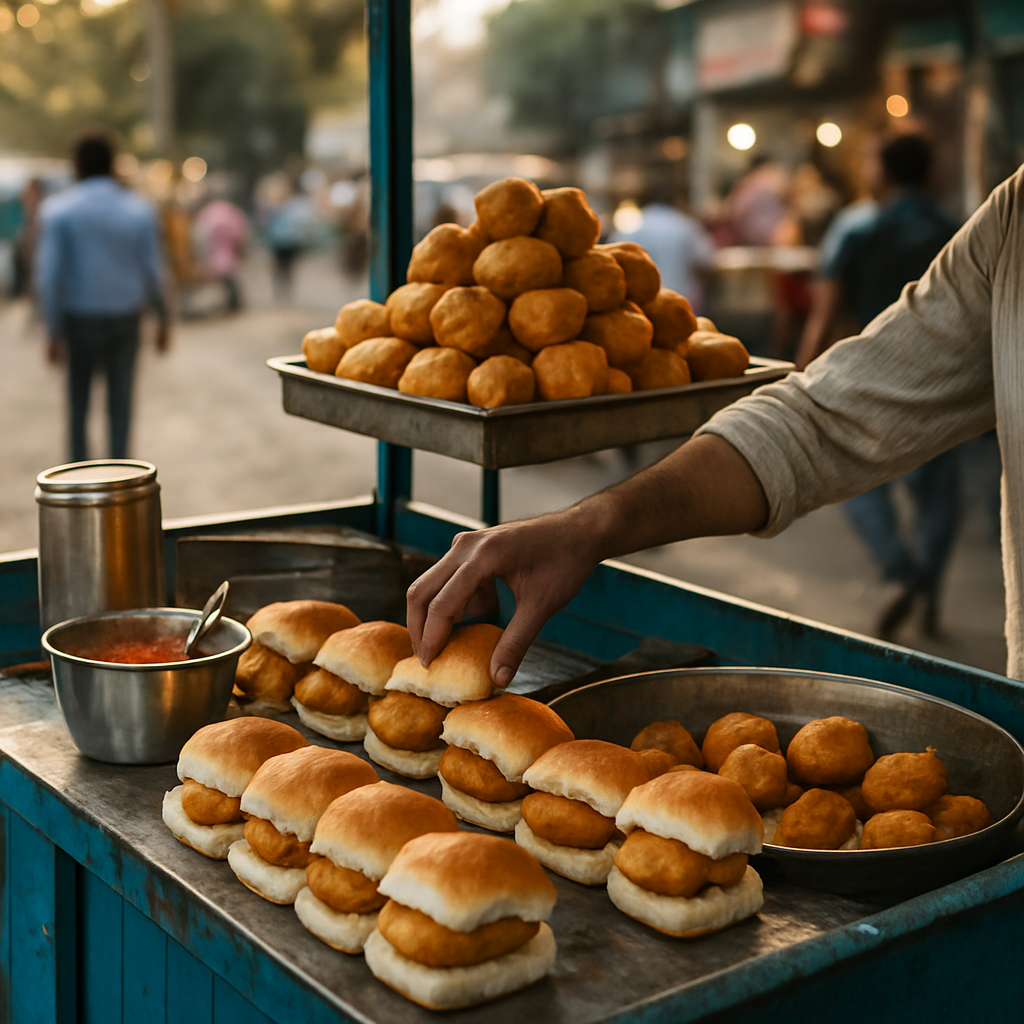
Street Food Trail: Colaba to Mohammad Ali Road
Mumbai's street food is the best argument for this city, full stop. Start with a vada pav from any stall in Colaba — spiced potato fritter in soft bread, ₹20 — and work your way north. The Irani cafés in Ballard Estate serve bun maska and cutting chai that haven't changed in a century. After dark, Mohammad Ali Road during Ramadan season is one of the great food experiences on Earth: seekh kebabs, malpua, rabri falooda, all served from stalls that have held the same spot for generations. Budget ₹500 and eat like a king.

Marine Drive at Sunset
Marine Drive — the 3.6-kilometre seafront arc locals call the Queen's Necklace — costs nothing and delivers everything. Grab a cutting chai from one of the tapris near Churchgate station, claim a spot on the concrete sea wall, and watch the Arabian Sea turn copper. The promenade fills with every cross-section of Mumbai: couples, families, joggers, fishermen, street performers. It's the city's living room, and at golden hour there's no better seat.
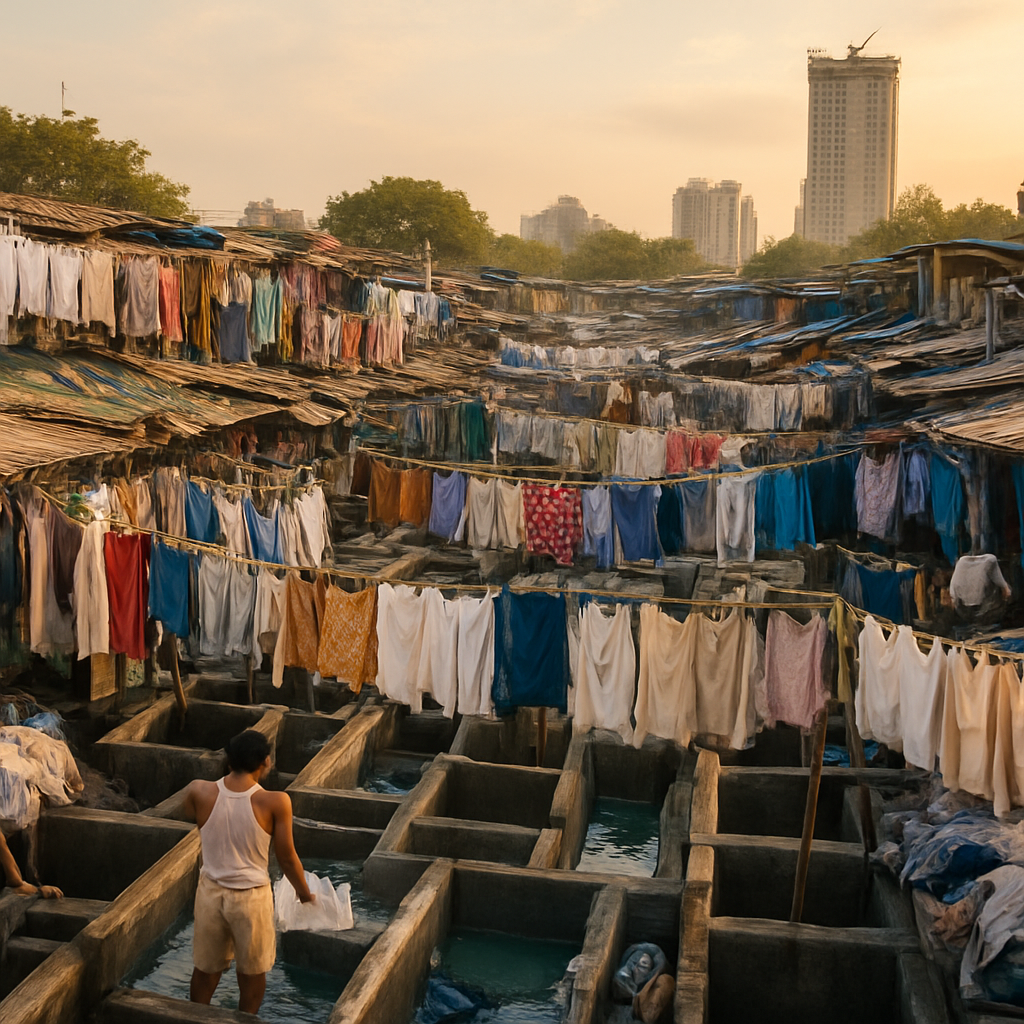
Dhobi Ghat and the Mill District
Mumbai's open-air laundry at Dhobi Ghat near Mahalaxmi station is staggering in scale — hundreds of concrete wash pens where the city's laundry has been hand-washed for over 130 years. View it from the Mahalaxmi Road bridge for the full panoramic effect. From there, walk south through the old Lower Parel mill district, where massive textile factories have been converted into restaurants, galleries, and nightlife venues. The contrast between the two — manual labor at industrial scale next to cocktail bars in converted warehouses — is Mumbai distilled into a single afternoon.
The places I actually send people to
Advice that fits how you travel
Mumbai is a strong solo city, and queerness doesn't change that equation much. The sheer density means you're never truly alone — strike up a conversation at a tapri outside Humsafar Trust's Vakola office, or at the bar at Bonobo in Bandra West on a music night, and you'll have dinner plans within the hour. The city runs on informal social connections, and being a solo traveler with curiosity and a willingness to talk is an asset, not a liability. Gay Bombay's monthly socials are specifically designed to be approachable for newcomers — check their schedule and show up.
App culture is active across Mumbai. Grindr, Blued, and Scruff all have solid user bases. Timepass — Mumbai slang for casual, no-commitment socializing — is a common frame on dating apps here, and the culture is generally relaxed. Standard safety practice: meet at a public spot first. The cafés on Hill Road in Bandra or any busy Colaba bar work perfectly. Solo travelers have a genuine budget advantage — Zostel Mumbai in Colaba starts at ₹700/night for dorms, street food meals run ₹50–200, and the city's best experiences (Marine Drive, Carter Road, Kala Ghoda walks) are free.
Base yourself in Bandra West for the most social experience — the neighborhood's café culture and walkability make it easy to fill a day without a plan. Colaba works as a backup base with more tourist infrastructure and a denser concentration of bars. For safety: Mumbai is a late-night city and South Mumbai is generally safe for solo walking until midnight in main areas, but use Uber after that. Save the iCall helpline number — it's LGBTQ+-affirming and staffed by trained counselors if you need support while traveling solo.
Mumbai for couples is a study in creative navigation, and the city rewards those who learn its geography of comfort. Inside the right spaces, you're treated exactly like anyone else. The luxury hotel experience here is genuinely excellent for same-sex couples: The Taj Mahal Palace in Colaba, The Oberoi at Nariman Point overlooking Marine Drive, and The St. Regis in Lower Parel all operate with international hospitality standards that apply fully to you. Book an internationally branded property and the question doesn't come up again.
PDA is a different calculation, and it's worth being honest about. Bandra West gives you the most latitude — Carter Road promenade at golden hour is legitimately romantic, and holding hands on Hill Road draws at most a curious glance. In Colaba, you have reasonable comfort in the tourist-dense zones near the Gateway. Step outside those pockets and the city's general conservatism applies to everyone; even straight couples keep things muted on packed local trains and in traditional neighborhoods. Adjust your expectations neighborhood by neighborhood and the city opens up considerably.
For a standout evening: dinner at Bastian in Bandra West followed by drinks at Aer Bar & Lounge on the 34th floor of the Four Seasons in Worli — the skyline view alone justifies the cab across town. If the budget stretches, a night at The Oberoi with a Marine Drive suite view is the kind of memory that outlasts the trip. Romance is available here; it just asks you to be a little more deliberate about where you look for it.
Mumbai has genuine family infrastructure, and children are welcomed culturally and practically almost everywhere you'll want to go. The Nehru Planetarium in Worli, the Byculla Zoo (one of India's oldest), beaches at Juhu, and the short ferry from Gateway of India to Elephanta Caves for older kids who can handle the climb — there's enough here to fill a week without repeating yourself. Most mid-range and above restaurants have kid menus, patient staff, and space for strollers. Budget an afternoon for a thali lunch in Colaba; it's a food education and a family memory rolled into one.
The legal reality as of 2026 matters here and you should know it before you land. Same-sex relationships carry no legal recognition under Indian law — no marriage, no civil unions, no same-sex adoption rights. That doesn't translate to active hostility in the neighborhoods you'll mostly visit, but it does mean you have no legal standing as a same-sex co-parent in any official context in India. Travel with comprehensive documentation of your family's legal structure from your home country, and ensure both parents carry paperwork clearly establishing their relationship to any traveling children. This isn't alarmist — it's standard practice for LGBTQ+ families traveling anywhere without legal recognition, and Mumbai is manageable with the right preparation.
For day-to-day logistics: Uber and Ola handle strollers far better than auto-rickshaws, and are cheap by any Western benchmark. Avoid local trains with young children during peak commute hours — the crowds are genuinely extreme. Bandra West and Colaba remain your most comfortable bases as an LGBTQ+ family, offering the best mix of welcoming cafés, accessible beaches, and low ambient judgment. Sofitel BKC has solid family room configurations if you're traveling with multiple children and want to stay near the northern suburbs.
What Mumbai actually costs
Flights, visas, and the first 30 minutes
Airport: Mumbai is served by Chhatrapati Shivaji Maharaj International Airport (BOM), located in the Santacruz/Andheri corridor approximately 25–35 km north of South Mumbai depending on your destination. It's one of Asia's busiest international hubs, with direct connections from 100+ cities across six continents.
Major Routes: Dubai (DXB) is approximately 3 hours; Bangkok (BKK) approximately 4 hours; Singapore (SIN) approximately 5.5 hours; Kuala Lumpur (KUL) approximately 5 hours; London Heathrow (LHR) approximately 9.5 hours; New York JFK approximately 16.5 hours. Multiple carriers service these routes with strong daily frequency.
Visas (as of 2026): Travelers from the US, UK, Canada, and Australia typically need an e-Visa before arrival — apply online at indianvisaonline.gov.in. Most EU nationals generally require an e-Visa as well, though requirements vary by country. Apply at least 4–7 days before departure. Always check your own government's current travel advisory — India's visa rules can shift with limited notice, and the e-Visa system has its own processing quirks.
Airport to City:
- Prepaid Taxi: ₹400–700, 30–60 min. Book only at the official prepaid counters inside the terminal — don't let anyone approach you outside. Traffic is the unpredictable factor here.
- Uber / Ola: ₹350–600, 30–60 min. Reliable, app-tracked, and worth the slight premium for peace of mind. Watch for surge pricing during peak hours and after late-night flights.
- AC Bus (BEST): ₹70–120, 45–75 min. Routes cover Bandra, Andheri, and Colaba — genuinely useful if you're traveling light and not in a hurry.
- Metro (Line 7 connection): ₹20–40, 20–40 min to metro hub, then an onward taxi to your final neighborhood. The metro network is actively expanding; factor in a connecting cab at the other end.
Traven's seasonal breakdown
The questions everyone asks
Is it safe to be openly LGBTQ+ in Mumbai?
Do I need a visa for India?
Do I need to speak Hindi?
How much should I budget per day?
Where's the best area to stay as an LGBTQ+ traveler?
Can same-sex couples share a hotel room?
When is Mumbai Pride?
Screenshot this before you go
So should you actually go?
Mumbai earns my Traven-Dex score of 6.9 honestly — this is not a city that makes it effortless, but it's a city that makes it worthwhile. The legal ground shifted dramatically in 2018, and the cultural ground is shifting still, unevenly and sometimes frustratingly slowly. What you get in return is a destination with extraordinary food, architecture that tells centuries of stories, a queer scene with genuine depth and history, and the unmistakable energy of a city that contains every possible version of human life within its borders. You'll need to read rooms, adjust by neighborhood, and stay aware. You'll also eat the best meal of the year, watch a sunset that stops your brain, and meet people whose openness and resilience will recalibrate your understanding of what queer community looks like when it's built from scratch without institutional support. Go with your eyes open, and go.
Sources & Resources
Official links we reference when compiling this guide. Last verified 2026-03-08.
- Humsafar Trust
- Bombay Dost
- Kashish Mumbai International Queer Film Festival
- LABIA: A Queer Feminist LBT Collective
- Gay Bombay
- Naz Foundation India Trust
- Godrej India Culture Lab
- iCall – LGBTQ+-Affirming Mental Health Helpline (TISS Mumbai)
- The Queer Muslim Project
- National Legal Services Authority (NALSA) – Third Gender Rights