
Bali is the most beautiful place I'll ever have to give a complicated answer about.
On Jalan Camplung Tanduk on a Friday night, an ojek driver sits on his parked bike scrolling his phone while a drag queen in six-inch platforms struts past Mixwell and nobody — not the driver, not the satay vendor, not the couple sharing a Bintang at the next table — reacts at all. That's the Bali paradox in a single frame. This island exists inside a country where the legal landscape for LGBTQ+ people is genuinely worrying, and yet Seminyak's gay strip operates with an openness that would be unthinkable in Jakarta, let alone Aceh. I gave it a 6.3 on my Traven-Dex, and that number reflects the tension between a destination score of 8.5 — because Bali is, objectively, one of the most beautiful and compelling places on earth — and a legal score of 2.0 that you cannot afford to forget.
The scene here is real, but it's specific. A reader wrote in to say it feels more like a curated gay resort town than a locally-rooted community, and that's honest. Bali Joe and Mixwell are genuinely fun — the kind of bars where you'll end up talking to an Australian couple on their fifth visit and a Balinese bartender who's been pouring arak Attacks since before you knew this street existed. But the energy is expat-driven, tourism-sustained. If you're expecting Bangkok's electric depth or Taipei's political pride, recalibrate. What Bali offers instead is a bubble — a gorgeous, warm, affordable bubble with world-class food and sunsets that make you briefly forget about everything — and that bubble has very specific geographic edges.
Canggu has quietly become the island's most interesting development. Less explicitly gay than Seminyak, more fluid and creative, full of coffee shops and co-working spaces where queer digital nomads argue about which warung has the best nasi goreng. Meanwhile, Ubud offers something else entirely — the wellness-and-arts crowd up in the highlands has always drawn LGBTQ+ travelers, and places like The Yoga Barn operate with an inclusivity that feels natural rather than performed. The island gives you options. Just understand that the further you move from the tourist infrastructure, the more Indonesian — rather than Balinese-tourist-economy — the social reality becomes.
Here's what I keep coming back to: Bali is a place where you can eat babi guling at Ibu Oka at noon, watch 100 men perform the kecak fire dance on a cliff above the Indian Ocean at sunset, drink cheap arak cocktails with strangers who'll become friends by the third round, and sleep in a private pool villa for what a mid-range hotel room costs in Barcelona. The destination itself is extraordinary. The legal context is not. You need to hold both of those truths at the same time, and if you can, Bali will reward you enormously — within its limits.
The stuff your travel guide buries on page 47
The legal picture. Indonesia does not have a specific statute criminalizing homosexuality at the national level. However, the revised Criminal Code (KUHP), in force since January 2026, includes Article 412 on cohabitation outside of marriage and broadly written "indecency" provisions that organizations like Arus Pelangi have flagged as creating significant legal risk for same-sex couples and LGBTQ+ individuals. ILGA World classifies Indonesia as having de facto criminalization risk through vague and ambiguously applied legal provisions. Same-sex marriage is not recognized. Civil unions do not exist. There are no adoption rights for same-sex couples. There are zero anti-discrimination protections based on sexual orientation or gender identity. No legal gender recognition pathway exists without surgical documentation.
Over 50 Indonesian regional jurisdictions have enacted explicitly anti-LGBT bylaws. Aceh province enforces Sharia criminal law with codified penalties for same-sex conduct — if you're transiting through Indonesia, avoid Aceh entirely. Bali is not Aceh. But Bali is also not exempt from national law, and the legal environment is actively shifting in the wrong direction.
The cultural reality. Bali's Hindu-majority population, distinct cultural identity, and deep dependence on international tourism create a dramatically different ground-level experience from most of Indonesia. Within the Seminyak tourism corridor — and particularly the Jalan Camplung Tanduk gay bar strip — LGBTQ+ travelers operate in what amounts to an acknowledged, tolerated social space. Hotel staff, restaurant workers, drivers, and bar employees in this zone routinely interact with same-sex couples without friction. Step outside this corridor — into Denpasar's urban sprawl, inland villages, or conservative coastal towns like Singaraja — and the calculus shifts considerably. The UK FCDO, US State Department, and Australian DFAT all advise LGBTQ+ travelers to Indonesia to exercise discretion and familiarize themselves with local laws.
PDA comfort. On Jalan Camplung Tanduk in Seminyak, discreet hand-holding between same-sex partners is broadly tolerated. Public kissing draws attention even here and is not advisable. In Kuta, Legian, Ubud, and beach areas outside the Seminyak gay strip, same-sex PDA is uncommon and may attract unwanted attention. At temples and religious sites island-wide, all couples are expected to avoid any public displays of affection — this isn't a queer-specific rule, it's universal, and the sarong-and-sash dress code applies to everyone. Canggu and Sanur are increasingly expat-heavy and somewhat more tolerant than rural Bali, but exercise discretion.
Nyepi — plan around it. Bali's Hindu Day of Silence shuts down the entire island — including Ngurah Rai Airport — for 24 hours. No flights, no taxis, no leaving your hotel. If you're traveling as a couple who values a forced, phones-off, candles-and-room-service evening, it's accidentally one of the most romantic things Bali offers. If you have a connecting flight, plan with obsessive care.
Temples. At Balinese Hindu temples like Pura Tanah Lot or Uluwatu, wear the sarong and sash — they hand them out at the entrance — and treat the space with the respect you'd extend anywhere sacred. Same-sex couples visiting temples haven't reported friction, but a conspicuously affectionate moment inside a pura would read as disrespectful to anyone, not just a queer couple.
What it actually feels like on the ground
Holding hands. On Jalan Camplung Tanduk in Seminyak, discreet hand-holding is fine — you'll see it, and nobody reacts. Outside that corridor, drop hands. Kuta Beach, Legian, Ubud town center, rural roads: no. This isn't about hostility so much as visibility in spaces where it can create friction you don't want.
Hotel check-in. In Seminyak's established LGBTQ+-welcoming properties — The Elysian, W Bali, Alila Seminyak — booking a double room or villa as a same-sex couple is entirely unremarkable. Mid-range hotels in Sanur and Canggu are generally professional. Budget guesthouses in Ubud and elsewhere vary. If you're unsure, book through a platform where reviews confirm the property's attitude, or stick to properties with a documented LGBTQ+ track record. Two men in one bed is understood in Bali tourism; it's just not discussed.
Taxis and ride-hailing. Download Grab before you land. Everything is tracked, you drop a pin rather than describe your destination out loud, and it means you're not explaining to a stranger that you need to get back to the gay bar at 2am after your arak Attacks caught up with you. Metered taxis from the airport's prepaid kiosks are also fine. Avoid unmetered transport from strangers approaching you on the street.
Beaches and public spaces. Seminyak Beach near the Double Six area and Potato Head Beach Club are the most LGBTQ+-comfortable beach spaces on the island. The Sunday sessions at Potato Head draw a mixed, fashion-forward crowd where same-sex couples are entirely unremarkable. At other beaches — Kuta, Sanur, Uluwatu — you're fine existing as a couple but keep affection private.
Late night. The Seminyak gay strip is walkable and well-lit, and the bars sit within 200 meters of each other. Leaving at 2am from Bali Joe or Mixwell to walk to nearby accommodation is normal and broadly safe. For longer distances, Grab is your friend. Avoid walking alone on unlit roads outside the main tourist corridors late at night — this is general safety advice, not queer-specific.
Trans travelers. Indonesia has no legal gender recognition provisions, and the revised Criminal Code offers zero protections. That said, waria have a long, visible presence in Indonesian cultural life, which provides some degree of social familiarity in Bali that you wouldn't find in many countries at this legal tier. Trans travelers generally report respectful treatment in Bali's tourism zones — but "generally respectful" is doing a lot of work in that sentence, and official legal protections are essentially nonexistent. Carry identity documents that match your presentation where possible and exercise heightened caution outside tourist areas.
Verbal harassment. Within Seminyak's tourist infrastructure, verbal harassment toward visibly LGBTQ+ travelers is rare. You're much more likely to encounter overly familiar hawkers trying to sell you a taxi ride than anyone commenting on your identity. In more conservative areas — Denpasar, inland villages, north Bali — being visibly queer may attract stares or comments, though physical confrontation remains uncommon. The word bule (foreigner) may come up in conversation around you; it's casual, not hostile.
Equaldex provides comprehensive information about Indonesia's legal framework for LGBTQ+ individuals, including current laws and local attitudes. Equaldex's Indonesia legal guide.
Human Rights Watch documents ongoing human rights concerns for LGBTQ+ people in Indonesia, offering important safety context for travelers. Human Rights Watch's reporting on LGBTQ+ rights in Indonesia.
The queer geography
Seminyak — Jalan Camplung Tanduk
This is it. The gay neighborhood, to the extent one exists in Bali, lives on a short stretch of road in Seminyak sometimes still called by its older name, Jalan Dhyana Pura. Everything you need sits within a 200-meter walk: Mixwell, Bali Joe Bar & Grill, Bottoms Up Bar & Nightclub, and enough gay-friendly restaurants and shops to sustain a full social life without a Grab. Mixwell is the most reliably, uncomplicatedly gay bar on the strip — small, unpretentious, drag nights that actually draw a crowd, and a bartender who will remember your drink by your second visit. Bali Joe is the big-energy anchor: open-front bar, dancefloor, weekly drag shows that have been running since roughly 2009. The vibe is more curated gay resort town than locally-rooted queer community — this is heavily expat-driven — but on a Friday night, when the arak is flowing and the drag performer is strutting past the ojek driver who doesn't even look up, the bubble works.
For a proper Bali evening, start with sunset cocktails at Woo Bar at the W Seminyak — genuinely stunning ocean views, well-made drinks — then walk or Grab to Bali Joe when the energy picks up past 11pm. The transition from aspirational to sweaty is the correct arc.
Canggu
Canggu has quietly become the island's most interesting queer-adjacent space. Less explicitly gay than Seminyak, more creative and fluid — coffee shops and co-working spaces full of queer digital nomads who've been here for months. Finns Beach Club anchors the beachfront scene with a crowd that skews young, international, and generally indifferent to who you're with. This isn't a gay neighborhood. It's a neighborhood where being gay is incidental, which is a different thing entirely and, for some travelers, exactly what they want.
Ubud
Ubud is Bali's cultural and spiritual heartland in the interior highlands — rice terraces, Hindu temples, the ARMA Museum, Ganesha Bookshop, and an international wellness community centered around places like The Yoga Barn. The yoga-and-arts crowd that has built up here over two decades skews inclusive, and many LGBTQ+ travelers find Ubud's quieter, more intentional pace a welcome break from Seminyak's beach-club energy. But the town is culturally conservative on the street, and this is not a place for public displays of affection. The Bali Spirit Festival, typically held in spring, is one of the rare spaces in Indonesia where LGBTQ+ identity is actively and publicly celebrated.
Sanur
Sanur sits on Bali's calmer east coast, about 15 minutes from the airport, and has a quieter, older-skewing expat community. It's the departure point for fast boats to Nusa Penida. Not a queer destination in any specific sense, but the tolerance level is moderate, the beach is gentler than Seminyak's surf, and ARTOTEL Sanur offers a genuinely interesting mid-range option with an art-forward identity and a diverse guest demographic.
The International Gay & Lesbian Travel Association maintains a searchable directory of certified LGBTQ+-friendly accommodations, restaurants, and tour operators throughout Bali. IGLTA's directory of LGBTQ+-friendly Bali businesses.
Nomadic Boys documents firsthand LGBTQ+ travel experiences across Southeast Asia, including Bali-specific recommendations for safe neighborhoods, venues, and local insights. Nomadic Boys' Bali LGBTQ+ travel guides.
WikiVoyage's free, community-written travel guide to Bali includes a dedicated LGBTQ+ section with venue recommendations and local community resources. WikiVoyage's Bali travel guide with LGBTQ+ resources.
The experiences worth rearranging your itinerary for
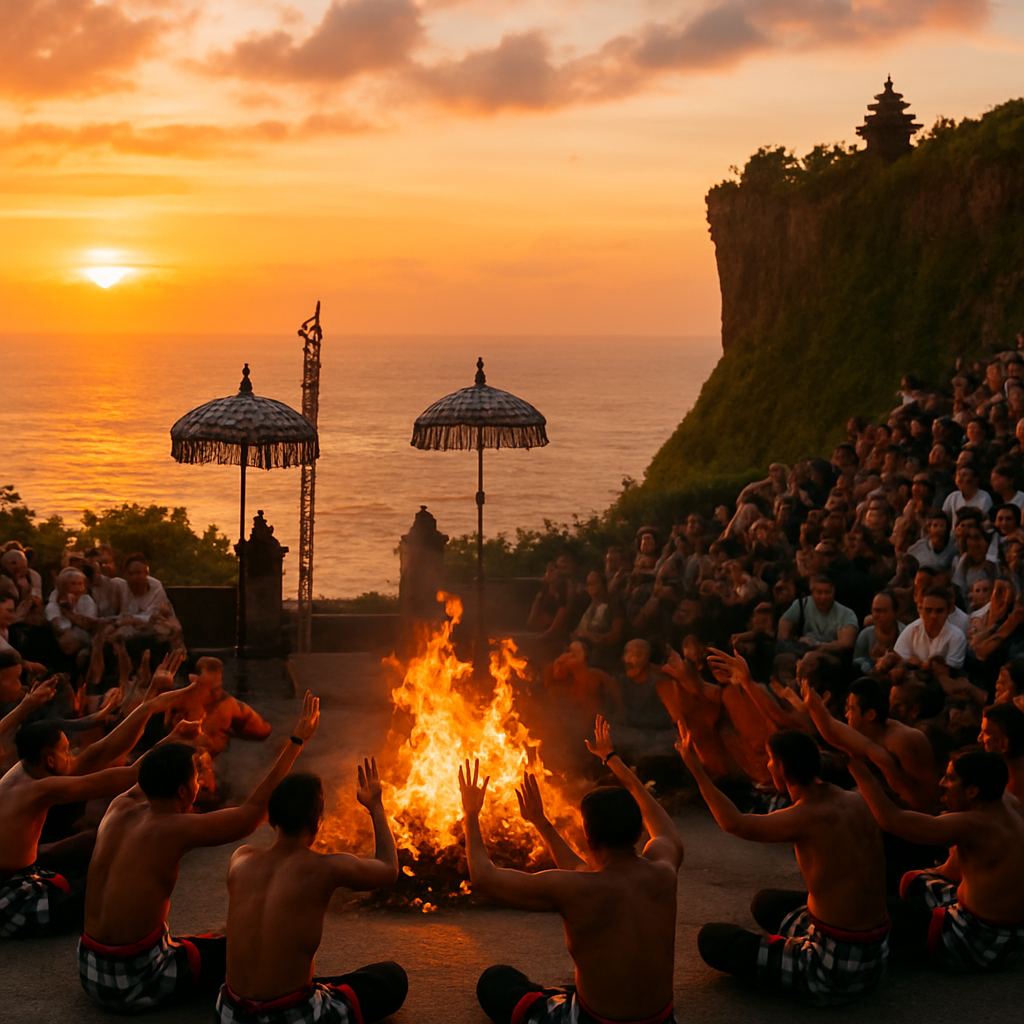
Kecak Fire Dance at Uluwatu Temple
One hundred men sit in concentric circles on a clifftop 70 meters above the Indian Ocean, chanting in hypnotic unison as the sun drops into the water behind them. Dancers move through the Ramayana while fire erupts at the center. It sounds like a tourist cliché. It isn't. The kecak at Uluwatu costs a few dollars, takes about an hour, and will absolutely make you forget you have a phone. Get there early for a good seat — performances are nightly at sunset and sell out in high season. Watch the monkeys near the temple entrance; they will steal your sunglasses without remorse.
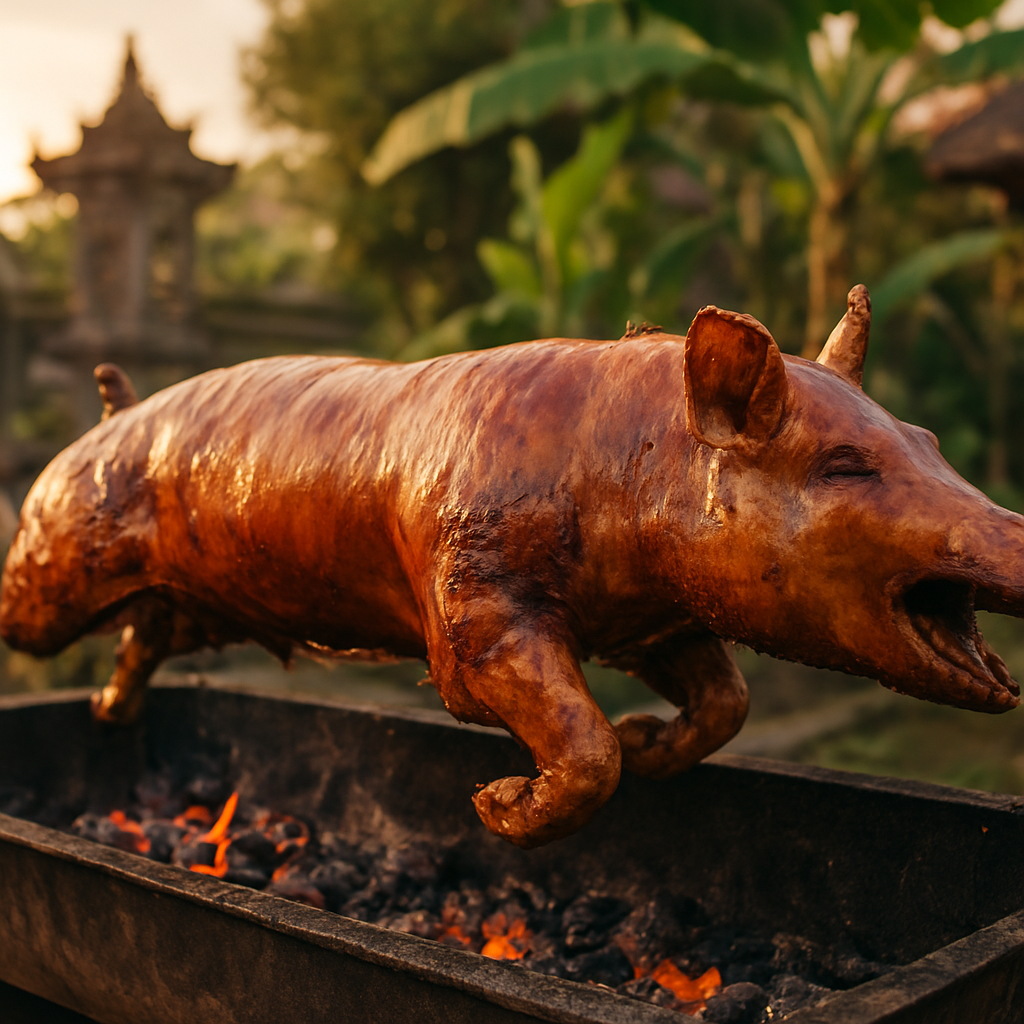
Babi Guling at Ibu Oka, Ubud
Bali is the one Indonesian island where you can freely eat pork — Hindu majority — and babi guling, ceremonial spit-roasted suckling pig, is the island's defining dish. Ibu Oka in Ubud is the standard everything else is measured against. Get there before noon because they sell out, sit at the plastic tables in the market like everyone else, and eat a plate of crackling, rice, and spiced pork that costs almost nothing and tastes like it shouldn't be legal. Being on this island and eating like this is itself a kind of small cultural freedom worth honoring.
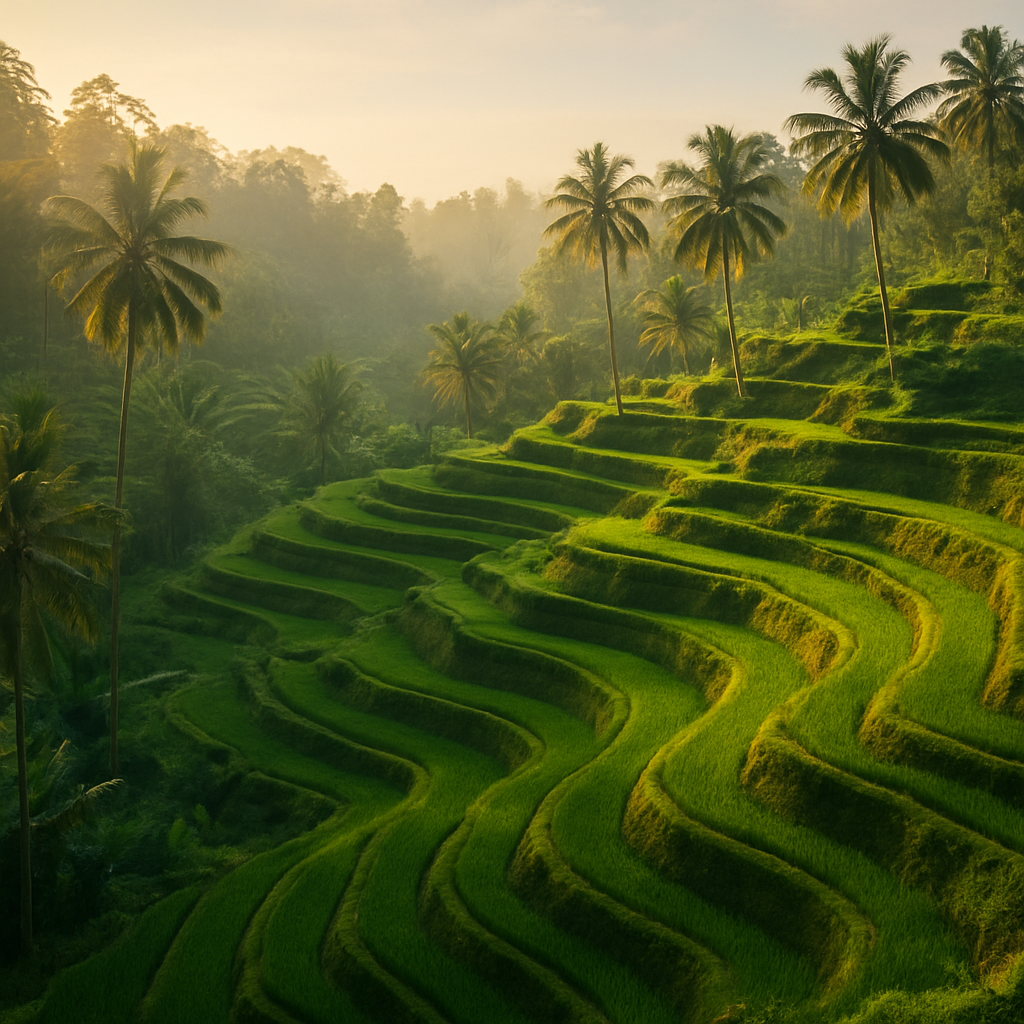
Tegallalang Rice Terraces
Yes, they're on every Bali postcard. Yes, they're still worth seeing in person. The tiered subak irrigation system at Tegallalang, about 20 minutes north of Ubud, is a UNESCO-recognized feat of agricultural engineering that also happens to be one of the most photogenic landscapes in Southeast Asia. Go early morning — by 10am the selfie-stick density makes it hard to appreciate the geometry. Walk down into the terraces rather than just viewing from the road, and bring proper shoes. The paths are narrow, uneven, and muddy after rain.
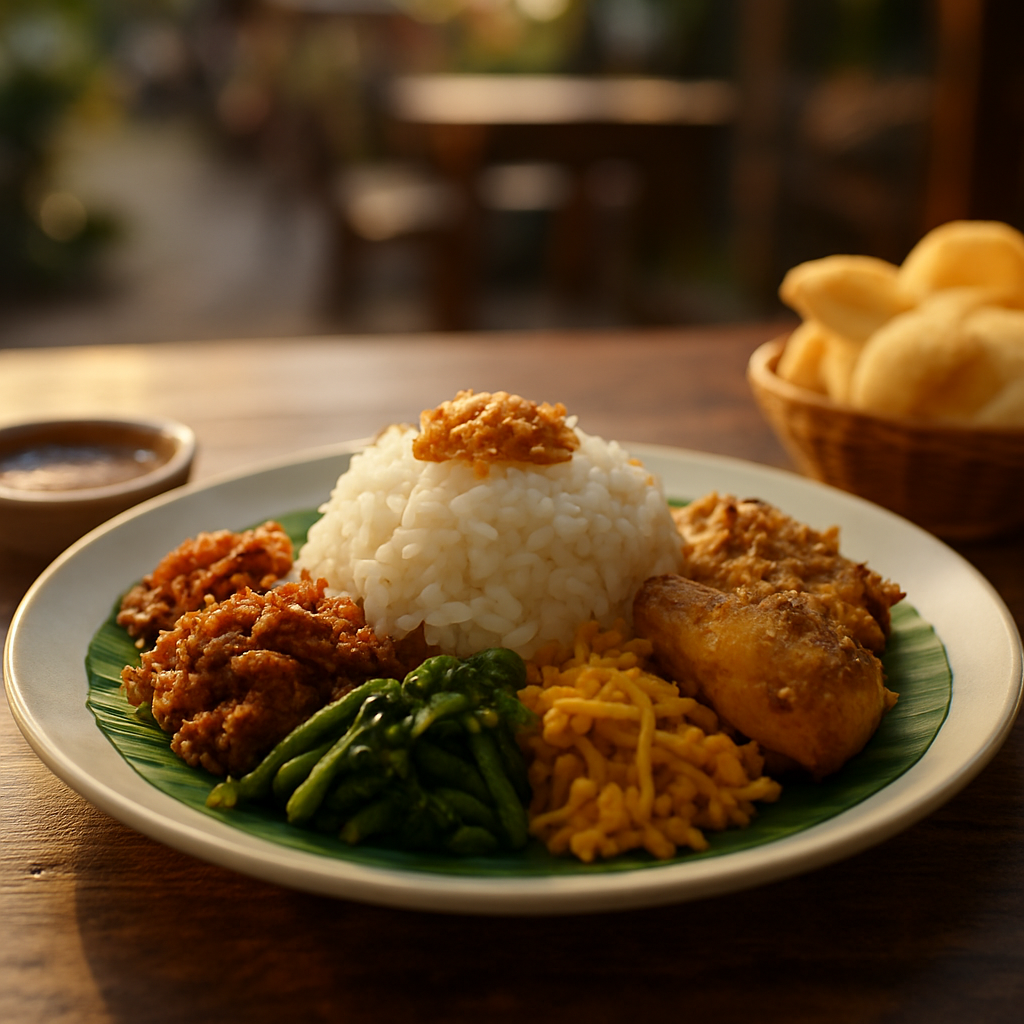
Nasi Campur at a Warung — Anywhere
A plate of rice surrounded by small portions of curry, vegetables, sambal, and whatever protein the kitchen is running that day. Nasi campur from a proper warung — not a restaurant with an English menu, a warung with plastic chairs and a glass case — costs roughly IDR 25,000–40,000 (under USD 3) and is the single best way to eat in Bali. Every warung's nasi campur tastes slightly different. The sambal will range from gentle to genuinely punishing. Point at what you want, smile, sit down. This is how every local on the island eats, every single day.
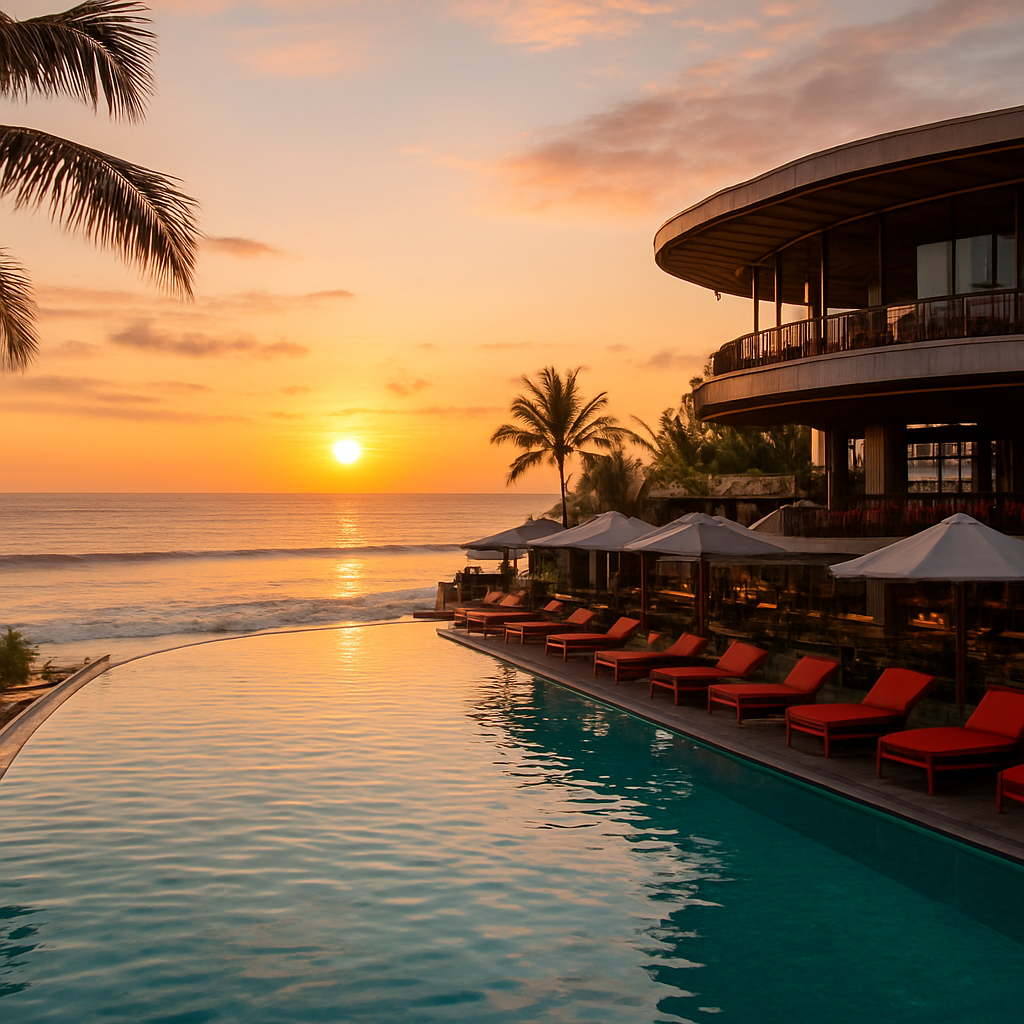
Potato Head Beach Club, Seminyak
Architect Andra Matin built the facade from approximately 3,000 recycled wooden window shutters sourced from demolition sites across Java and Bali, and the result is a beach club that looks like nothing else on the island. Multiple pools, a properly good cocktail program, and a Sunday session that draws a mixed, fashion-forward crowd where LGBTQ+ couples are entirely unremarkable. The minimum spend is real (IDR 200,000–500,000) but not unreasonable for what you get: a full day of pool, ocean, food, and one of Seminyak's best sunsets. The daytime vibe is more interesting than most beach clubs that charge a similar cover.
The places I actually send people to
Advice that fits how you travel
Bali is one of the easier solo destinations in Southeast Asia, and the economics work aggressively in your favor. A hostel dorm bed in Ubud runs about IDR 130,000 a night — that's under USD 10 — and a full plate of nasi campur from a warung is under USD 3. A scooter rental costs around IDR 80,000–100,000 per day and opens the entire island. At budget level, you're looking at IDR 350,000–650,000 per day total, which means you can extend a Bali trip well beyond what most destinations allow.
For meeting people, Seminyak's Jalan Camplung Tanduk strip is the obvious starting point — Mixwell in particular draws a good mix of local, expat, and international visitors, and the lounge format makes it easier to talk than the higher-energy clubs. App culture is active — Grindr, Blued, and Hornet all have real user bases in Bali — but exercise the same judgment you would anywhere, and be aware that Indonesian law creates a different risk profile than, say, swiping in Amsterdam. Meet in public places first. Canggu is worth exploring if you're here for more than a few days: the co-working spaces and coffee shops draw a creative, international crowd where queer identity is incidental, and you'll find community through proximity rather than nightlife.
Safety-wise, solo travel in Bali is broadly safe by Southeast Asian standards. Download Grab for all transport — tracked, PIN-based, no negotiation. The biggest practical risks for solo travelers are scooter accidents (Bali traffic is chaotic and helmets are mandatory), petty theft on crowded beaches, and dehydration. Drink more water than you think you need. For LGBTQ+-specific medical care or sexual health services, PKBI has a clinic presence in Bali, and Gaya Nusantara — Indonesia's oldest LGBTQ+ organization — can connect you to trusted local providers. Don't rely on your hotel concierge for that particular referral.
Bali can be genuinely romantic for same-sex couples — private pool villas, rice terrace sunsets, candlelit dinners at converted Seminyak villas — but the romance works best when you're inside the bubble, not pushing at its edges. Within the Jalan Camplung Tanduk corridor and the beach clubs immediately adjacent, a same-sex couple holding hands is unremarkable. Two men kissing on a Kuta beach is a different story. Know where you are and calibrate accordingly.
For accommodation, I'd point couples directly at The Elysian in Seminyak — 26 fully private pool villas, each with its own outdoor garden bathroom and walled courtyard. You're not sharing anything with anyone, which matters more here than it would in, say, Berlin. It's been on every credible LGBTQ+ Bali list since 2010 for good reason. If you want romance without the price tag, Ubud offers something different: two-bedroom villas in the rice fields for a fraction of the Seminyak rate, and a slower, quieter intimacy that the beach club scene can't replicate. Just understand that Ubud is culturally conservative on the street.
A night out worth planning: sunset cocktails at Woo Bar at the W Seminyak — the ocean views are legitimately stunning and the drinks are properly made — then walk or Grab to Bali Joe when the energy shifts past 11pm. The contrast between aspirational and sweaty is, honestly, the correct arc for a Bali evening. And if Nyepi, Bali's Hindu Day of Silence, falls during your trip, don't panic — a forced 24 hours of no phones, no flights, and room service by candlelight is accidentally one of the most romantic things this island offers.
Bali is genuinely one of Southeast Asia's more family-friendly destinations in the practical sense — the cost of a private villa with a pool and a daily driver is accessible at moderate budgets, warungs feed kids without drama, and the island's Hindu temple culture offers a level of visual spectacle that holds children's attention in a way that most art museums cannot. The ogoh-ogoh demon parade the night before Nyepi is one of the most extraordinary free public spectacles on the planet, and kids respond to it viscerally.
For LGBTQ+ families, the picture is more complicated. Indonesia has no legal recognition of same-sex relationships or same-sex parenting structures. Schools, hospitals, and government officials operate under national law. In practice, Bali's tourism infrastructure — hotels, resorts, drivers, restaurants — is generally professionally indifferent to family structure, and most international properties will treat your family as a family without comment. But there is no legal backstop if something goes wrong, and that's worth holding in your awareness, not as a reason to stay home, but as a reason to carry documentation, have your legal arrangements in order, and choose properties with a documented track record of LGBTQ+ hospitality.
Seminyak and Sanur both work well for families — Sanur's calmer east-facing beach is notably better for young children than Seminyak's stronger surf. ARTOTEL Sanur sits about 15 minutes from the airport, has a rooftop infinity pool, and combines a reasonable price point with genuinely interesting Indonesian contemporary art that gives older kids something to engage with beyond the pool. For a longer stay, the interior town of Ubud — with The Yoga Barn, rice terrace walks, and temple visits — offers a cultural grounding that makes Bali feel like more than a beach holiday.
What Bali actually costs
Flights, visas, and the first 30 minutes
Airport: I Gusti Ngurah Rai International Airport (DPS), located in the south of the island between Kuta and Jimbaran, approximately 20–45 minutes by road from Seminyak depending on traffic.
Direct routes: Bali connects to 60+ cities without a stopover. Key routes: Singapore (SIN) ~2h 30m; Kuala Lumpur (KUL) ~2h 30m; Hong Kong (HKG) ~5h 30m; Sydney (SYD) ~6h; Melbourne (MEL) ~6h; Tokyo Narita (NRT) ~7h; Doha (DOH) ~9h. No nonstop service from North America or Europe — most travelers connect through Singapore, Kuala Lumpur, or Doha.
Visas: US, UK, EU, Canadian, and Australian passport holders all qualify for Visa on Arrival (VoA) — IDR 500,000 (approximately USD 35) at the airport arrivals hall, valid 30 days and extendable once for another 30 days at an immigration office. An e-Visa (B211A) is also available online before travel for up to 60 days, which saves queue time on arrival and is worth doing if you're organized enough.
Airport to city:
Metered taxi / prepaid kiosk — IDR 100,000–180,000, 20–45 min. Use the prepaid kiosks inside the arrivals hall; they price by zone and are the safest, most transparent option on arrival. Seminyak and Kuta are the closest zones.
Ride-hailing (Grab / Gojek) — IDR 80,000–130,000, 20–45 min. Cheaper than taxis but you must book via app and pick up from the designated ride-hail zones outside the terminal — follow the signs. Pro tip: download Grab before you land. It's the dominant app here, everything is tracked, and you drop a pin rather than describe your destination to a stranger.
Pre-arranged hotel transfer — IDR 200,000–450,000, 20–75 min depending on destination. Most mid-range and luxury properties offer this. Worth it for a first arrival, especially if you're going as far as Ubud.
Traven's seasonal breakdown
The questions everyone asks
Is it safe to be openly gay in Bali?
Do I need to speak Indonesian?
How much should I budget per day?
Is it safe to hold hands with my partner?
What's the deal with Nyepi?
Should I rent a scooter?
Are there any LGBTQ+ events or Pride in Bali?
Screenshot this before you go
So should you actually go?
Bali is a genuinely special destination wrapped in a genuinely complicated legal reality. If you stay within Seminyak's orbit, exercise basic discretion, and understand that this island's tolerance is cultural rather than legal, you'll find one of the most beautiful, affordable, and yes, fun places you can travel to in Southeast Asia. I can't tell you the national legal situation doesn't matter — it does, and it's getting more uncertain, not less. But I can tell you that thousands of LGBTQ+ travelers visit Bali every year and have an incredible time, and most of them come back. Go with your eyes open. Enjoy the arak. Respect the temples. Know where the bubble ends.
Sources & Resources
Official links we reference when compiling this guide. Last verified 2026-03-15.
- Arus Pelangi – Indonesian LGBTQ+ human rights organization
- Australian Embassy Indonesia – Consular and travel advice
- Bali Plus Magazine – LGBTQ+-inclusive Bali lifestyle and listings
- Equaldex – Indonesia LGBTQ+ rights overview
- Gaya Nusantara – Indonesia's oldest LGBTQ+ organization
- Human Rights Watch – Indonesia LGBTQ+ coverage
- ILGA – International LGBTQ+ rights advocacy
- Outright Action International – Indonesia reporting
- PKBI – Indonesian sexual health and family planning services
- U.S. Embassy Jakarta – Indonesia travel information