Tel Aviv doesn't ask if you're comfortable being queer in public. It assumes you are, hands you an arak, and gets back to the beach.
Picture this: it's Friday afternoon, the sun is doing that low Mediterranean thing where everything turns gold, and the stretch between Gan Meir and Hilton Beach has become an open-air living room for what feels like every queer person in the eastern Mediterranean. Guys playing matkot in tiny swimsuits, women sharing arak on towels, a drag queen roller-skating past a group of IDF soldiers on weekend leave — and nobody is performing. Nobody is making a statement. This is just what Friday looks like here. I've been to cities that try harder, spend more money, market themselves louder — and none of them generate the effortless, almost aggressive normalcy that Tel Aviv pulls off before the sun even sets.
The thing that makes this city different from every other "gay destination" on earth is the complete absence of performance. Locals will tell you TLV is an island — and honestly, that's not tourist spin. It's a genuinely liberal Mediterranean city with one of the most unapologetic queer cultures I've encountered anywhere. The corridor from Rothschild Boulevard down through the Carmel Market and into Florentin covers the full spectrum: polished café culture on Shenkin Street, the gritty creative pulse of Kuli Alma after midnight, and the kind of late-night energy that starts at 1am and doesn't apologize for it. I gave it a 9.0 on Scene, and if anything, that undersells the range. There's a reason my Traven-Dex overall sits at 8.2 — the destination itself is extraordinary, the cultural warmth is real, and the scene has decades of depth behind it.
But here's where I have to be dugri — blunt, in the local style. Tel Aviv is not Israel. What's completely unremarkable on Rothschild can draw genuine hostility in ultra-Orthodox neighborhoods forty minutes away by train. The national legal framework, as of 2026, still doesn't recognize same-sex marriage performed domestically, and the regional security situation is real and requires actual homework before you book. This city earns its scores honestly — the highs are legitimately among the highest in the world, and the complications are worth understanding before you land. Both things are true. Come for the Friday afternoon at Hilton Beach that rewires your understanding of what casual queer joy looks like. Stay because Florentin at 2am made you feel something you didn't expect.
The stuff your travel guide buries on page 47
The legal picture: Homosexuality has been decriminalized in Israel since 1988. Broad anti-discrimination protections cover employment, housing, and public services. Same-sex adoption is legally recognized. However — and this is the gap — same-sex marriages are not performed in Israel, though marriages performed abroad are recognized by the state. There is no domestic civil union framework. Gender identity change on official documents requires a court order supported by medical documentation; Israel has not adopted self-ID. These are real limitations that the street-level openness of Tel Aviv can mask if you're not paying attention.
The cultural reality: Tel Aviv operates on a fundamentally different social wavelength than the rest of Israel. The city has an established, decades-old queer infrastructure — community centres, bars, beach spaces, advocacy organisations — that functions as a fully integrated part of city life, not a niche. The Aguda runs a functioning community centre inside Gan Meir with staffed resources, events boards, legal aid, and people who know exactly what's happening that week. It should be your first stop if you want to connect with local life rather than the tourist circuit.
Shabbat: Friday sundown to Saturday night doesn't shut Tel Aviv down the way it does Jerusalem. Bars stay open, beaches fill up, and Saturday morning at Hilton Beach is arguably the best LGBTQ+ beach scene in the entire Mediterranean. Public transport does reduce significantly during Shabbat — plan around that with ride-hailing apps (Gett, Yango) rather than buses or trains.
The scene starts late: Even by European standards, Tel Aviv's nightlife rhythm runs obscenely late. Showing up to Shpagat before midnight is a bold choice that will leave you alone with the bartender. Dinner at 9pm, drinks around 11pm, and the actual party somewhere between midnight and 2am is the local rhythm. Adjust your body clock accordingly.
PDA comfort: In central Tel Aviv — Rothschild Boulevard, Gan Meir, the beachfront from Gordon to Hilton, Florentin — same-sex PDA is completely normalised and draws no notable attention. In Jaffa (Yafo), PDA is generally tolerated but discretion is advisable near mosques and in more conservative residential streets. If you day-trip to Jerusalem's ultra-Orthodox neighbourhoods like Mea Shearim or Geula, same-sex PDA is strongly inadvisable — there's a documented history of confrontation.
Regional security: As of early 2026, Western governments maintain elevated travel advisories for Israel due to the ongoing regional security situation. Ben Gurion Airport has experienced intermittent schedule disruptions since late 2023. Check your home country's foreign ministry advisory and verify flight routes before booking. Tel Aviv has historically been assessed at lower risk than border regions, but it is not exempt from national-level advisories.
What it actually feels like on the ground
Holding hands: In central Tel Aviv — Rothschild Boulevard, Shenkin Street, the entire beachfront, Florentin — same-sex hand-holding is completely unremarkable. You'll see it constantly. Nobody looks twice. This is among the safest environments for publicly queer behaviour you'll find anywhere in the world, full stop.
Hotel check-in: Zero issues. Tel Aviv hotels are thoroughly accustomed to same-sex couples. You won't encounter raised eyebrows, awkward questions about bed configurations, or any of the micro-friction that persists in less acclimated destinations. Book a double, check in together, done.
Taxis and ride-hailing: No problems. Gett and Yango drivers in Tel Aviv are professional and accustomed to the city's diverse clientele. You won't need to modulate your behaviour in a taxi. Pro tip: download Gett before arrival — it's the dominant local platform and more reliable than the international alternatives here.
Beaches and public spaces: Hilton Beach has functioned as an informal LGBTQ+ gathering space for decades and the atmosphere is completely open. The broader beachfront and city parks — including Gan Meir and Independence Park — are equally comfortable. PDA is normalised throughout.
Late night: Tel Aviv's nightlife corridors are generally safe, and queer venues operate in well-trafficked central areas. Standard urban awareness applies — don't walk with your phone out in empty streets at 4am — but there's no specific anti-LGBTQ+ threat pattern in the city's nightlife zones. The 2009 Bar Noar shooting at the LGBT Community Center is not forgotten here; it's referenced quietly and with real weight in queer spaces, and security consciousness at larger organised events is genuine. Don't mistake the city's openness for complacency — there's hard-won resilience underneath it.
Trans travellers: Tel Aviv has a visible trans community, trans-specific events during Pride Week, and trans-competent healthcare available in the city. Legal gender marker changes require medical documentation and a court order — not self-ID. The social climate within Tel Aviv is substantially more accepting than neighbouring countries and most of the rest of Israel. Trans travellers should expect a generally welcoming environment in the city's central neighbourhoods and queer spaces.
Beyond Tel Aviv: The moment you travel outside the city — to Jerusalem, the West Bank borders, Bnei Brak, or conservative coastal towns — the social climate shifts significantly and fast. What's completely unremarkable on Shenkin Street can draw real unwanted attention in those areas. Calibrate accordingly and ask locals you trust for specifics before making day trips. Jerusalem Open House is a good resource if you're spending time in the capital.
The queer geography
Gan Meir & King George Street Area
This is the organisational heart of queer Tel Aviv and has been for decades. Gan Meir (Meir Park) houses the LGBT Community Center, run by The Aguda since 1975 — one of the oldest LGBTQ+ organisations in the Middle East. The surrounding streets along King George hold the highest concentration of queer venues in the city: Evita, one of the city's longest-running LGBTQ+ bars, sits nearby, drawing a mixed gay and lesbian crowd with a dance floor and a local clientele that's been loyal for over twenty years. For lesbian and women-centric events, ask at the Community Center for what's scheduled the specific week you're visiting — this is a better source than any website. The daytime energy here is café culture and community; the nighttime energy is drinking and dancing. Both are essential.
Hilton Beach
Walk north along the Tayelet (seafront promenade) past the marina and you'll know you're there when you hit the volleyball nets and the crowd shifts. Hilton Beach — the stretch of Mediterranean coastline just north of the Hilton Hotel — has functioned as the unofficial gay beach for decades. Free, fully public, no membership required. Saturday morning is peak: arrive by 10am to claim a spot worth having. The energy is open-air living room — vendors, volleyball, people watching, and an atmosphere that generates more effortless queer community than most cities manage with a budget and a planning committee.
Florentin
South Tel Aviv's mural-covered, gritty alternative to the polished beachfront strip. Florentin is where the queer scene gets interesting — less curated, more creative, and home to the best late-night clubs and underground art spaces. Kuli Alma anchors the nightlife energy here with programming that skews experimental and a crowd that's there to actually dance. Breakfast Club parties — typically Saturday afternoons at rotating venues — are a Tel Aviv gay institution that functions more like a full day-party than any brunch you've attended. Follow local queer Instagram accounts to track current locations; the official channels are never quite current. The neighbourhood is also where you'll eat shakshuka hungover on a Saturday morning, which is practically a queer rite of passage.
Other Neighbourhoods Worth Knowing
Rothschild Boulevard & Nahalat Binyamin: The Bauhaus-lined boulevard is the architectural spine of central Tel Aviv and one of the most comfortable places in the city for PDA. Nahalat Binyamin — the pedestrian arts street running perpendicular — hosts a twice-weekly craft market and connects you to the Carmel Market. Shpagat sits on Nahalat Binyamin and on a Thursday or Friday night it's the most reliably excellent gay bar experience in the city.
Jaffa (Yafo): The ancient port city, now merged with Tel Aviv, has a growing queer-adjacent arts and nightlife scene that's distinctly grittier and more socially mixed than central TLV. Jaffa Port (Namal Yafo) is worth an evening wander. Exercise moderate discretion with PDA near mosques and in more conservative residential pockets, but the overall trajectory here is increasingly open.
Neve Tzedek: Tel Aviv's oldest neighbourhood, now its most polished — boutique shops, gallery spaces, and restaurants that justify the walk south from the city centre. Not specifically queer, but extremely comfortable and a beautiful counterpoint to Florentin's rougher edges.
The experiences worth rearranging your itinerary for
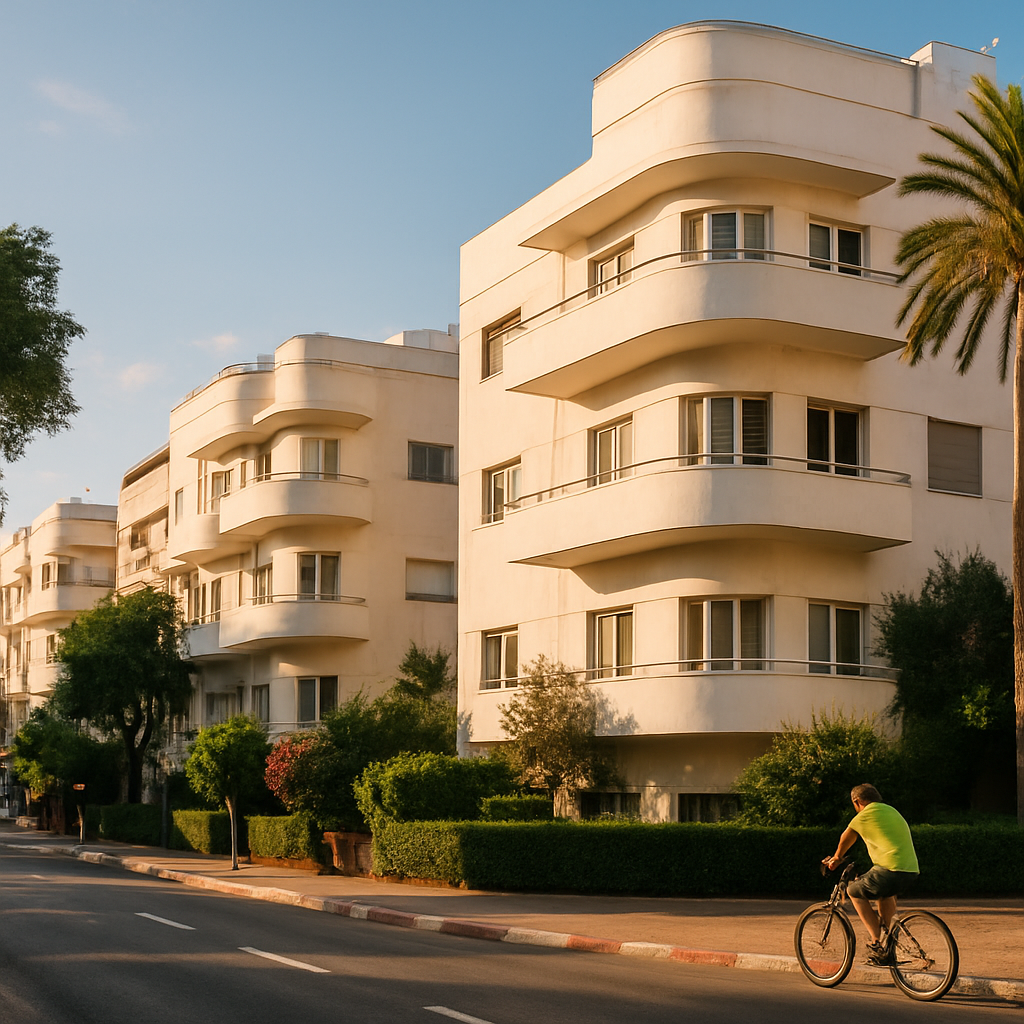
The White City Bauhaus Walk
Tel Aviv holds the world's largest concentration of Bauhaus and International Style buildings — over 4,000 of them — earning the White City its UNESCO World Heritage designation. Walk Rothschild Boulevard from Habima Square south and you'll pass dozens of restored 1930s facades with their signature rounded balconies, horizontal lines, and pale plaster walls catching Mediterranean light the way they were designed to. The Bauhaus Center on Dizengoff Street runs guided architectural tours if you want context, but honestly the buildings explain themselves. Morning light is best. Bring a decent camera.
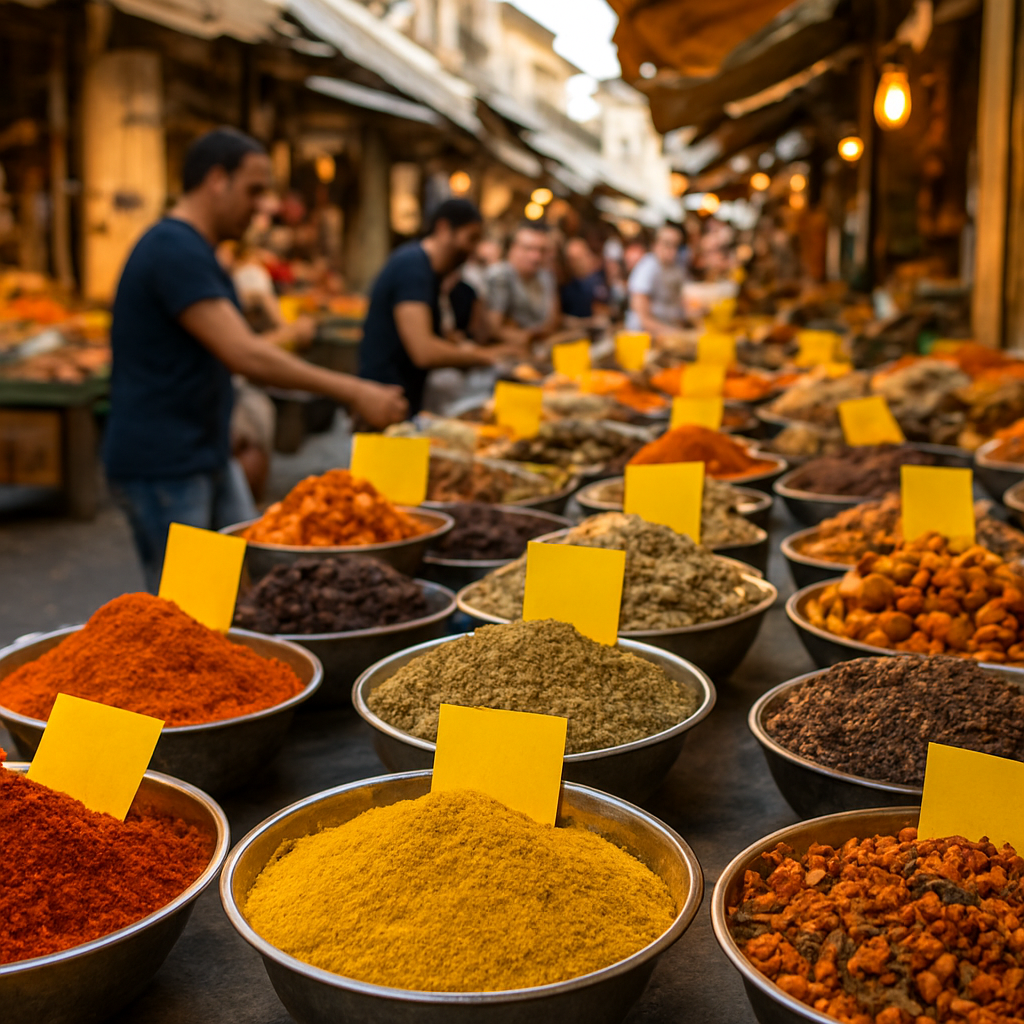
Carmel Market to Levinsky Spice Market
Shuk HaCarmel is Tel Aviv's central open-air market — loud, dense, and calibrated to overwhelm your senses in exactly the right way. Start at the top and work south through produce stalls, fresh juice vendors, and the halva shops that will ruin you for supermarket halva forever. Then continue on foot to the Levinsky Spice Market, a few blocks southeast, where the air thickens with za'atar, sumac, and dried chili and the vendors are predominantly Mizrahi and Persian. Buy a bag of baharat spice blend. Eat a bourekas from a street cart. This is where Tel Aviv tastes like itself.
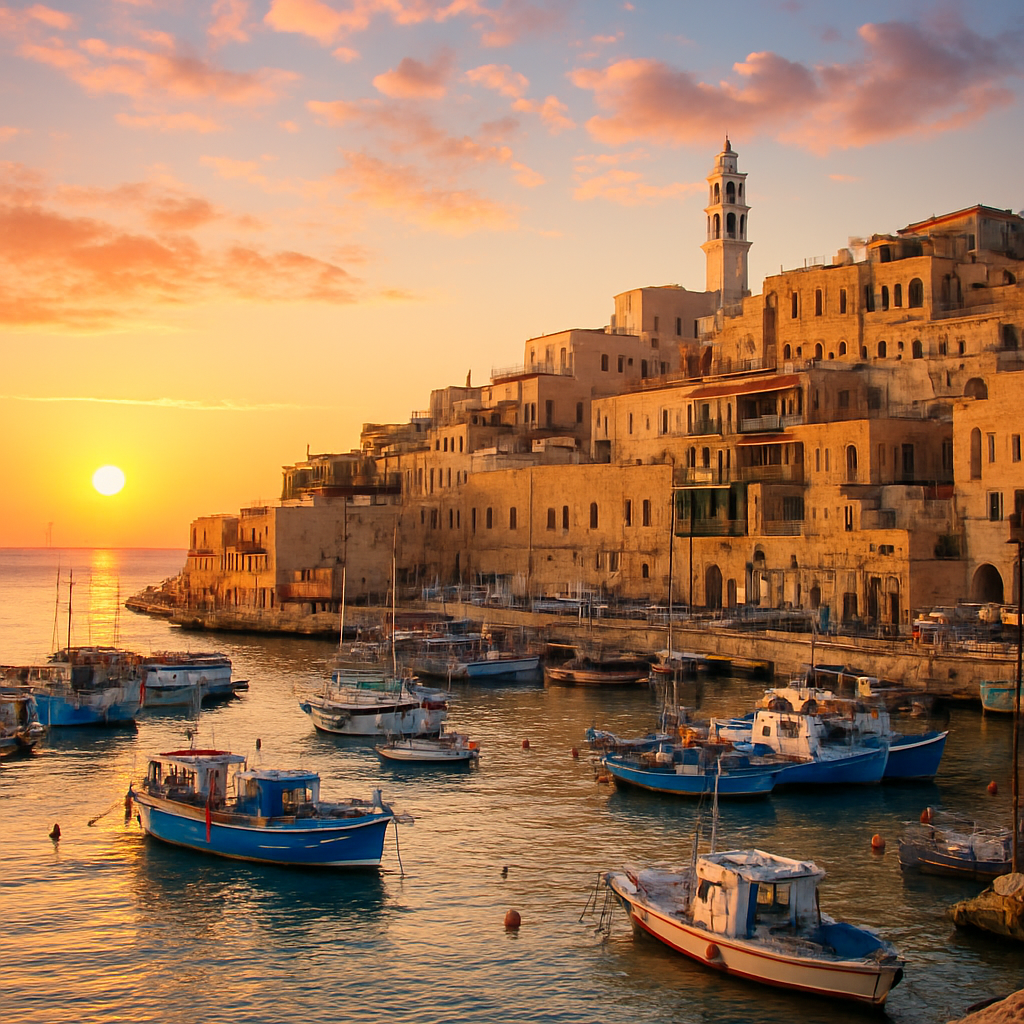
Sunset from Jaffa Port
Namal Yafo — the ancient port of Jaffa — has been in continuous use for roughly 4,000 years, which puts your flight delay into perspective. Walk the stone quay as the sun drops into the Mediterranean and the light turns the old city walls amber. The port area has galleries, restaurants, and a flea market worth browsing, but the real draw is the view back toward Tel Aviv's skyline from the breakwater. It's the best free spectacle in the city, and it happens every single evening. Pair it with dinner at one of the port-side restaurants — the fish is as fresh as geography allows.

Tmuna Theatre
Tmuna Theatre on Soncino Street is the antidote to spending your entire trip on the beach-to-bar circuit. This intimate venue consistently programmes queer theatre, drag performance, and experimental work rooted in Tel Aviv's actual arts scene. The crowd is fascinatingly mixed — industry people, students, tourists who did their homework — and the productions operate at a level of creative ambition that the nightlife export circuit doesn't reach. Check the current schedule before you go. Performances are often in Hebrew with English context available.
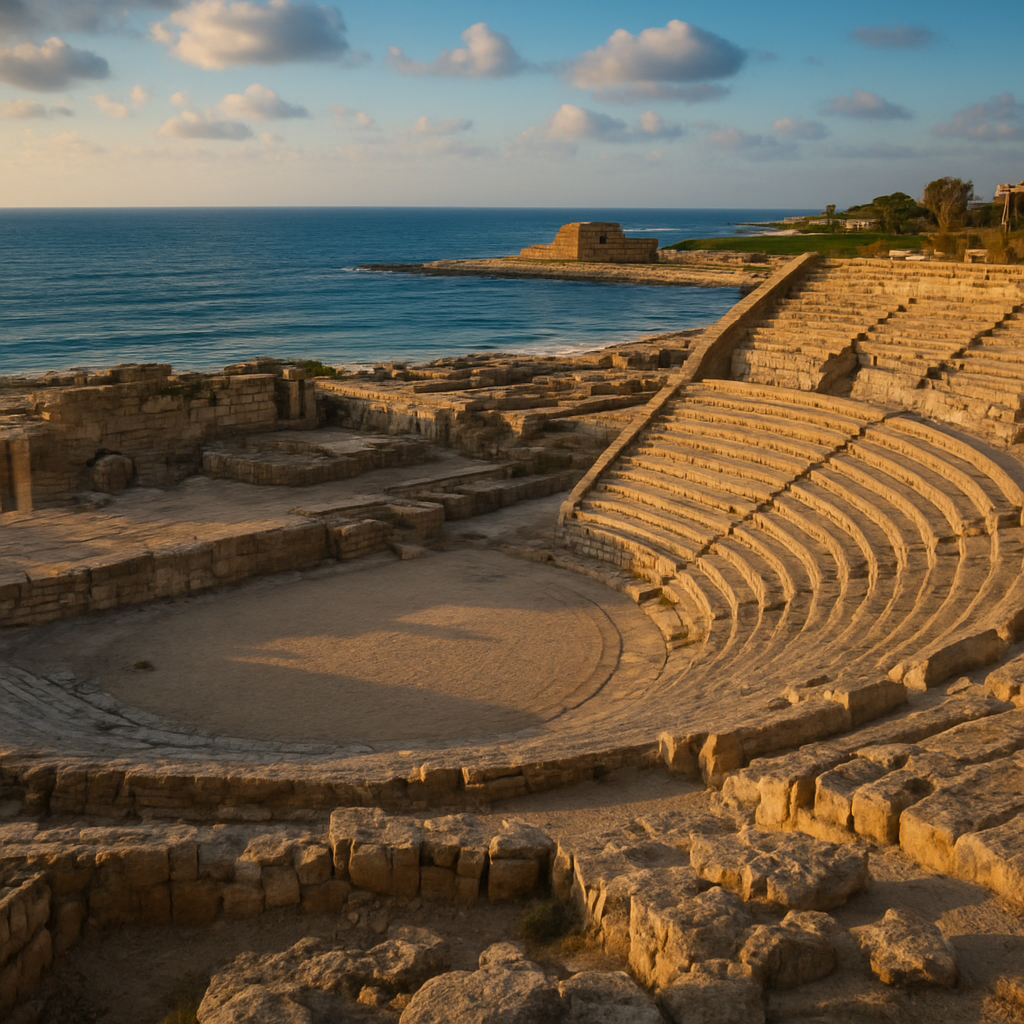
Caesarea National Park Day Trip
Forty-five minutes north of Tel Aviv by car, Caesarea Maritima — the port city Herod the Great built between 25 and 13 BCE — sits in a state of magnificent ruin that makes you recalibrate your sense of time. The Roman amphitheatre is still used for live concerts, which means you can sit in seats that are two millennia old and hear music bounce off stone the way it was engineered to. Crusader-era walls, harbour ruins, and a coastal setting that doesn't require any historical interest to appreciate. Entry is ₪55–75 through the Israel Nature and Parks Authority. Bring water and sun protection — shade is limited.
The places I actually send people to
Advice that fits how you travel
Tel Aviv is one of the easiest cities in the world to travel solo, and for queer solo travellers specifically, it's close to unbeatable. The social infrastructure does the heavy lifting for you: Abraham Hostel near Levinsky Market runs structured daily events and neighbourhood walks that put you in contact with other travellers without the forced energy of a pub crawl. Hilton Beach on a Saturday morning is a zero-effort social scene — show up, lay down a towel, and the crowd's energy does the rest. Download Atraf alongside the usual apps — it's an Israeli-built LGBTQ+ social platform with much deeper roots in the local community than Grindr or Scruff, and using it will connect you with people who actually live here rather than the tourist layer.
Budget-wise, solo travel here is manageable if you hostel it — expect ₪400–500 per day at the budget tier, including a dorm bed, street food, local transport, and one activity. A moderate solo day with a boutique hotel room runs ₪1,000–1,300. The scene starts late (don't show up to bars before midnight — you'll be alone with the bartender), which means your daytime hours are genuinely free for the White City Bauhaus walk, the Carmel Market, and the kind of aimless neighbourhood wandering that solo travel is built for. Florentin is the best neighbourhood base for solo travellers who want nightlife access without the beachfront price premium.
Safety-wise, standard urban awareness applies — don't walk distracted through empty streets at 4am — but there's no specific anti-LGBTQ+ threat pattern in Tel Aviv's central neighbourhoods. You can sit alone at a bar, walk home alone at 2am, and navigate the city with the same confidence you'd bring to Barcelona or Amsterdam. The Aguda Community Center in Gan Meir is a genuine resource for solo visitors — drop in, check the events board, ask what's happening that week. It's staffed by people who want to help, not hand you a flyer.
Tel Aviv is one of the most effortlessly romantic cities I've ever taken a couple through, and the reason is simple: you spend zero mental energy performing a version of yourselves that's safe for public consumption. Hold hands on Rothschild Boulevard. Kiss at the bar. Share a plate of shakshuka on a Saturday morning in Florentin with a hangover and nowhere to be. The city absorbs all of it without blinking.
For date nights, I'd start at HaBasta — the market-driven menu changes daily, the natural wine list is genuinely considered, and the low-lit, close-tables energy does exactly what you want a date spot to do. Walk it off along the seafront promenade afterward, which is free, beautiful, and never fully empties. For something more intimate, Hotel Montefiore is the boutique property I'd book — 12 rooms in a 1920s building, walking distance to everything, with a ground-floor restaurant that's been a Tel Aviv institution for good reason. If the budget stretches, The Norman on Nachmani Street is the proper splurge: rooftop pool, Relais & Châteaux pedigree, and the kind of quiet elegance that makes a trip feel like an occasion.
Plan your visit for April, May, or October if you want peak romance without peak-summer humidity grinding you down. June is extraordinary if your trip can coincide with Pride Week — the closing seafront beach party is an all-night spectacle that somehow still feels like it belongs to the city rather than a corporate export. Whatever month you land, Hilton Beach on a Saturday morning — towels down, Mediterranean in front of you, the whole queer city seemingly present — is one of those experiences that makes couples look at each other and not say anything, because nothing needs to be said.
Tel Aviv is a genuinely family-friendly city in the practical sense — strollers handle the flat promenade and beach paths without issue, kid menus exist everywhere, and the seafront parks give children room to actually run around. LGBTQ+ families are not a novelty here. Israel legally recognizes same-sex couple adoption, and Tel Aviv's social environment means two dads or two moms with kids at a café on Shenkin Street generates approximately zero attention. That baseline normalcy matters more than any official policy statement.
The 14-kilometre Mediterranean coastline is the family anchor — accessible, free, and genuinely wonderful. Gordon Beach has showers, umbrellas for rent, and enough space that you're not on top of strangers. Caesarea National Park, about 45 minutes north by car, is the day trip I'd prioritize with kids: Roman ruins, Crusader walls, a 2,000-year-old amphitheatre still used for concerts, and enough open space to let children run without anyone worrying. Entry runs ₪55–75. It's the kind of place where children actually absorb history without being lectured at it, because the scale of what's there does the work for you.
Logistically, Abraham Hostel near the Levinsky Market is the budget-conscious family option — private rooms available, structured daily programming, and a social atmosphere that stops solo parents from feeling isolated. For moderate budgets, plan around ₪2,500–3,200 per day for a family, with the bulk going to accommodation. One practical note: Shabbat on Friday evenings through Saturday night means some restaurants close and public transport reduces — this is less of an issue in Tel Aviv than anywhere else in Israel, but it's worth knowing so it doesn't catch you mid-afternoon with hungry kids and a shuttered restaurant.
What Tel Aviv actually costs
Flights, visas, and the first 30 minutes
Airport: Tel Aviv is served by Ben Gurion International Airport (TLV), located approximately 20km southeast of the city center. It's one of the best-connected airports in the Middle East and Eastern Mediterranean, with direct routes from 100+ cities worldwide.
Major direct routes: London Heathrow (4h 30m), Paris CDG (4h 30m), Frankfurt (4h), Amsterdam (4h 15m), New York JFK (11h 45m), Dubai (3h 20m).
Visa requirements: US, UK, EU, Canadian, and Australian passport holders all enter visa-free for stays up to 90 days. No advance visa application required.
Getting into the city:
Train (Airport Rail Link) — ₪17 / 25–35 min: The fastest and cheapest option. Connects directly to Tel Aviv HaShalom, Savidor Center, and University stations. Runs frequently and is air-conditioned — use it.
Sherut (shared taxi) — ₪40–60 per person / 30–45 min: Fixed-route shared taxis depart from the arrivals level. Confirm the fare before you get in. Good option if you're arriving with luggage and want a door-closer-to-door experience without paying full private taxi prices.
Taxi / ride-hailing (Gett, Yango) — ₪100–160 / 25–40 min: App-based services are widely available and reliable. Fare varies with traffic and time of day. Worth it late at night when the train frequency drops.
Pro tip: Download the Gett app before you land — it's the dominant ride-hailing platform in Israel and works more smoothly than trying to hail from the taxi rank on arrival.
Traven's seasonal breakdown
The questions everyone asks
Is Tel Aviv safe for LGBTQ+ travellers?
Do I need to speak Hebrew?
How much should I budget per day?
What happens during Shabbat?
When is Tel Aviv Pride?
Should I worry about the regional security situation?
What's the best dating/social app to use?
Screenshot this before you go
So should you actually go?
Go. I mean that with conviction and a couple of caveats. Tel Aviv is one of the most naturally, unselfconsciously queer cities on the planet — the beach scene, the nightlife depth, the sheer cultural confidence of it all will ruin lesser destinations for you. You need to check your government's current travel advisory for Israel before booking, and you need to understand that the city's extraordinary openness doesn't extend uniformly beyond its borders. But within those borders? This is a place where being queer isn't a feature of the travel experience — it's just the weather. Order the arak, get to Hilton Beach by 10am on Saturday, let Florentin keep you out until sunrise, and you'll understand why I keep coming back.
Sources & Resources
Official links we reference when compiling this guide. Last verified 2026-03-07.
- Aguda – The Association for LGBTQ Equality in Israel
- TLV Pride (Tel Aviv Pride Official)
- IGY – Israeli Gay Youth
- Hoshen – LGBTQ Education and Change
- Israel AIDS Task Force (IATF)
- Tel Aviv-Yafo Municipality Official Site
- Tmuna Theatre – LGBTQ+ Arts Venue
- Jerusalem Open House for Pride and Tolerance
- ERAN – Israel Emotional First Aid Hotline
- Israeli Government Official Portal