
Florence put David on a pedestal and Michelangelo's love letters to a man in a museum archive — this city was making art out of desire six centuries before anyone thought to ask permission.
Florence will trick you. You'll arrive thinking it's a museum with a city attached — all Uffizi queues and Duomo selfies — and then you'll cross the Ponte Vecchio into Oltrarno and realize the whole game has changed. The light hits different on the south bank. The streets narrow. The tourists thin out. Suddenly you're sitting at Volume Bar on Piazza Santo Spirito at 7pm with an Aperol Spritz that someone poured with actual love, surrounded by a crowd that skews young, creative, and completely unbothered by who's holding whose hand. That's the Florence I keep coming back for.
This is not Berlin. I need you to hear that before you pack. Florence doesn't have a roaring gay scene seven nights a week — what it has instead is something rarer and, I'd argue, better. LGBTQ+ life here is woven into the fabric of the city rather than corralled into one neon block. Tabasco Disco Gay has been running since 1978, which makes it one of Italy's oldest gay clubs, and on a Saturday it still delivers: cheesy Italian pop, drag performances, a crowd spanning Florentine regulars in their 60s to tourists in their 20s, all somehow working beautifully together. Crisco Club on Via Sant'Egidio handles the darker, sweatier end of things. Piccolo Café on Borgo Santa Croce is the unofficial living room where you stop for one beer at 6pm and surface at midnight wondering where the time went. That rough triangle — walkable in under ten minutes — is basically the entire dedicated nightlife footprint, and it's enough.
But the real magic is the stuff between the venues. The aperitivo hour at a Santo Spirito wine bar where nobody's performing anything. The sunset from Piazzale Michelangelo with a bottle from an Oltrarno enoteca, half of Florence up there being romantic with whoever they love. The fact that you're standing in front of Donatello's bronze David at the Bargello — an object art historians have written volumes about for its homoerotic charge — in a city where the greatest artists who ever lived were, let's be honest, family. Michelangelo's love letters to Tommaso de' Cavalieri are right here in the archive at Casa Buonarroti. Leonardo. Cellini. This city has been ours for six centuries, even when nobody was saying it out loud.
I gave Florence a 9.8 on Destination because the city itself is nearly flawless — the food, the art, the architecture, the Tuscan light that makes everything look like it was painted by someone who loved it. My overall Traven-Dex of 7.9 reflects the reality that Italy's legal framework hasn't caught up to its best cities: civil unions but not marriage, no joint adoption, a national political climate that's occasionally hostile even as Florence stays solidly progressive. Calibrate your expectations accordingly and you'll be insufferably evangelical about this place for the rest of your life.
The stuff your travel guide buries on page 47
The legal landscape: As of 2026, Italy recognizes same-sex civil unions (unioni civili) under a 2016 law that grants most but not all rights of married couples — marriage equality remains unavailable. Joint adoption by same-sex couples is not legally recognized, though Italian courts have granted stepchild adoption in individual cases. Anti-discrimination protections are broad in scope but lack a comprehensive national law specifically targeting sexual orientation and gender identity in all contexts. Gender identity recognition requires a court process with medical documentation — it's cumbersome and slow. Homosexuality has never been criminalized in unified Italy.
What the laws mean on the ground: Florence is meaningfully more progressive than Italian national politics suggest. The city government has an Equal Opportunities office, IREOS has operated as a queer community center for decades, and the local Arcigay Firenze chapter runs active programming. Anti-LGBTQ+ rhetoric at the national political level has increased under the current government, but Florence as a city remains firmly in the progressive camp. No LGBTQ+-specific travel advisories are issued for Italy by the US State Department, UK FCDO, or Australian DFAT as of early 2026.
Venue access quirk: You'll need a Tessera Arci card to enter Crisco Club and several other LGBTQ+ venues — it costs roughly €3 at the door, but have cash ready and don't be thrown when they hand you a membership form. It's a quirk of Italian cultural association law, not a background check, and the card works across Italy for the calendar year.
If you're navigating bureaucracy: Same-sex couples dealing with any legal, medical, or administrative situation should know that IREOS on Via de' Servi can connect you with English-speaking legal resources and support services. Rete Lenford, Italy's LGBTQ+ legal network, is the national resource for more complex issues.
PDA comfort: In Oltrarno and around Santa Croce — where the LGBTQ+ venues cluster — couples hold hands and show affection freely. The tourist-heavy centro storico around the Duomo and Piazza della Repubblica is generally tolerant but draws more stares, mostly from conservative tourists rather than locals. At religious sites, avoid PDA out of general cultural sensitivity regardless of orientation. Residential neighborhoods like Novoli and Rifredi are more conservative — no meaningful risk, but discretion is the smoother path.
Pitti Uomo effect: The menswear trade fair in January and June at Fortezza da Basso quietly transforms Florence into a visibly queerer city — fashion industry types descend, the Oltrarno bars get louder and more fabulous, and even staid Florentine restaurants suddenly fill with impeccably dressed men making very animated conversation. If your dates overlap, lean in.
What it actually feels like on the ground
Holding hands: Comfortable and common in Oltrarno, particularly around Piazza Santo Spirito and the streets between the gay bars in Santa Croce. In the centro storico — the Duomo area, Piazza della Repubblica — you'll generally be fine, but expect the occasional lingering glance. These are overwhelmingly curiosity, not hostility. Crossing any bridge into Oltrarno is like a pressure valve releasing — the further you move from the tourist-saturated historical center, the more relaxed the social atmosphere becomes.
Hotel check-in: No issues at any property I'd recommend. Florence's hospitality industry has been hosting international travelers for centuries; same-sex couples requesting a double bed will not encounter resistance at any reputable hotel. Boutique properties in Oltrarno — Hotel Lungarno, Soprarno Suites — handle it with complete professionalism.
Taxis and rideshares: Straightforward. Florentine taxi drivers are focused on navigating the city's labyrinthine streets, not policing your relationship. No reports of issues in LGBTQ+ travel communities. Pro tip: taxis from official ranks are typically faster and more predictable than rideshares in Florence.
Parks and public spaces: Boboli Gardens are tourist-heavy and relaxed — general PDA is fine. Cascine Park along the Arno has a longstanding cruising history in certain areas, particularly after dark; as a general-use park during the day, it's unremarkable. Piazzale Michelangelo at sunset is where half of Florence goes to be romantic with whoever they love — it's essentially a public date spot and same-sex couples are part of the landscape.
Late night: The area around Crisco Club on Via Sant'Egidio is safe after dark — the surrounding Santa Croce neighborhood is one of Florence's liveliest nightlife zones with plenty of foot traffic. Go in knowing Crisco is a men's-oriented cruise bar with a darkroom; the surrounding streets offer plenty of alternatives if that's not your scene. Walking home through Oltrarno late at night feels genuinely safe — standard urban awareness applies.
Trans travelers: Italy's legal gender recognition process requires a court order and, in practice, medical gatekeeping. Misgendering can occur in more traditional service contexts — it's typically unintentional rather than hostile, but that distinction matters less when it's happening to you. Queer-welcoming venues in Oltrarno and Santa Croce are actively affirming. IREOS and MIT (Movimento Identità Trans) are the most reliable starting points for local support, referrals, or simply talking to someone who knows the landscape.
Verbal harassment: Rare but not unheard of. Italy's political climate has emboldened some individuals, particularly in less cosmopolitan settings. In Florence proper — especially in the neighborhoods you'll be spending time in — the risk is minimal. If something does happen, UNAR, Italy's national anti-discrimination office, is the formal reporting channel.
The queer geography
Santa Croce
If Florence has a dedicated gay nightlife footprint, this is where you'll find it — and you can walk the whole thing in under ten minutes. Tabasco Disco Gay, Crisco Club, Piccolo Café, and YAG Bar form a rough triangle along Borgo Santa Croce, Via Sant'Egidio, and Borgo dei Greci. The neighborhood itself is lively, historic, and packed with non-LGBTQ+ restaurants and bars, which means you're never walking through dead streets between venues. Piccolo Café is the anchor — a reader told me they stopped in for one beer at 6pm and looked up to find it was midnight. It's small, genuinely sociable, the bartenders know everyone, and it functions as the unofficial community living room for Florence's LGBTQ+ locals and long-term expats.
Oltrarno
This is the real soul of queer Florence. The city's bohemian left-bank neighborhood, south of the Arno, is where LGBTQ+ life is woven into daily existence rather than confined to dedicated venues. Piazza Santo Spirito is the informal epicenter — a traffic-free square that fills with locals, students, and queer visitors from late afternoon into the evening in warmer months. Volume Bar on Via delle Caldaie, Mad Souls & Spirits on Via Maggio, and the stretch of wine bars along Via dei Serragli are all welcoming without needing to hang a flag. IREOS, Florence's queer community center and Arcigay affiliate, operates from this area — drop-in hours and regular events make it the fastest way to get an honest read on what's happening in the city that week.
San Niccolò
A quieter sub-neighborhood of Oltrarno running along the old city walls, San Niccolò has a residential feel with low-key bars and a handful of venues frequented by Florence's LGBTQ+ community. It's also the access point for the walk up to Piazzale Michelangelo. Think of it as the chill counterpart to Santa Croce's nightlife energy — this is where you go when you want a glass of wine and conversation, not a dance floor.
Worth Knowing
San Lorenzo around Mercato Centrale is the budget-eating heartland — the food hall upstairs is excellent and the street market gives the area a constant hum of activity. The centro storico between the Duomo and the Uffizi is where you'll spend your museum days — it's beautiful, overwhelming, and tourist-dense. Both are worth your time but neither has the relaxed welcoming energy of the neighborhoods across the river.
The experiences worth rearranging your itinerary for
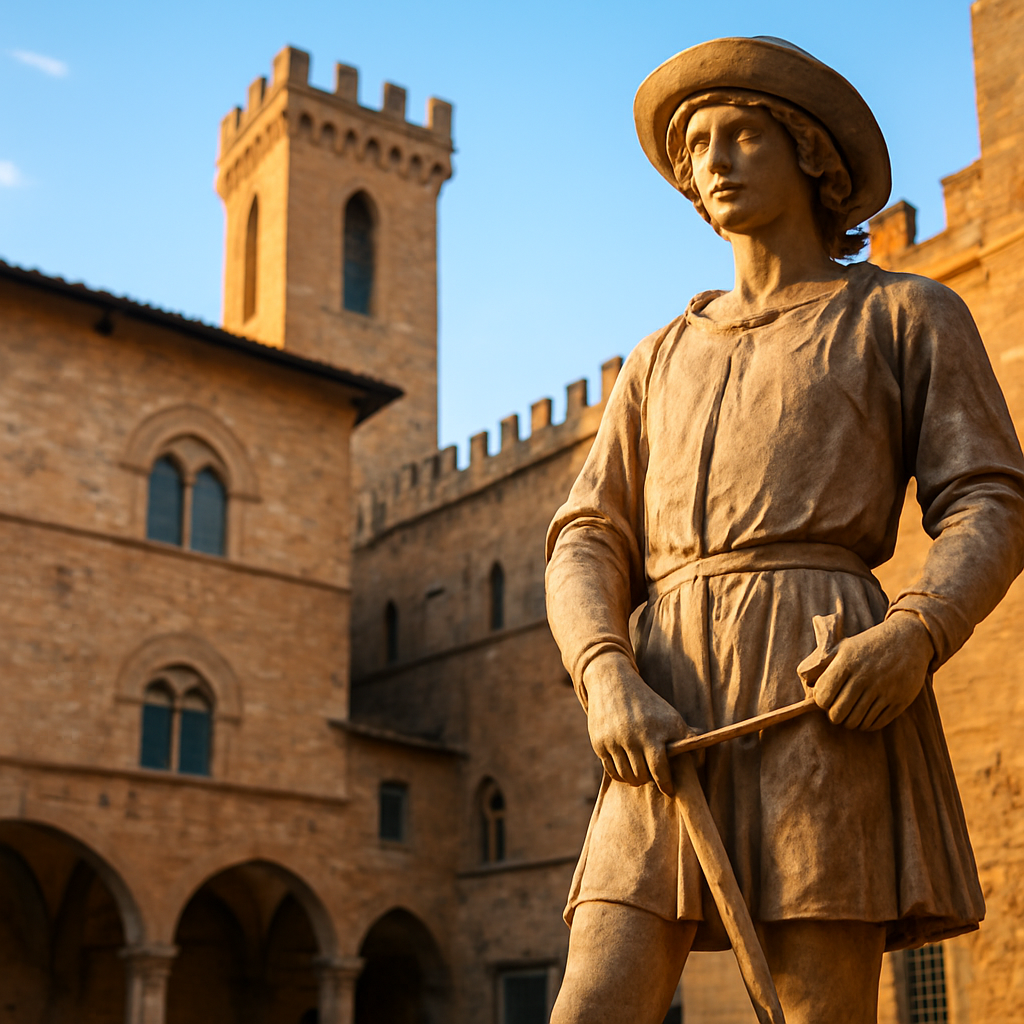
The Bargello and Its Secrets
Skip the Accademia line and come here instead. The Bargello National Museum, housed in a 13th-century palazzo on Via del Proconsolo, holds Italy's greatest collection of Renaissance sculpture — and some of its most openly queer art history. Donatello's bronze David, with that knowing hip tilt and the feathered hat, has been the subject of homoerotic iconography scholarship for generations. Michelangelo's Bacchus is here too, along with works by Cellini, who documented bisexual relationships in his autobiography with the casualness of a grocery list. The building itself — a former prison and courthouse — has a severity that makes the beauty of what's inside hit harder. Fraction of the Uffizi crowds, twice the intimacy.
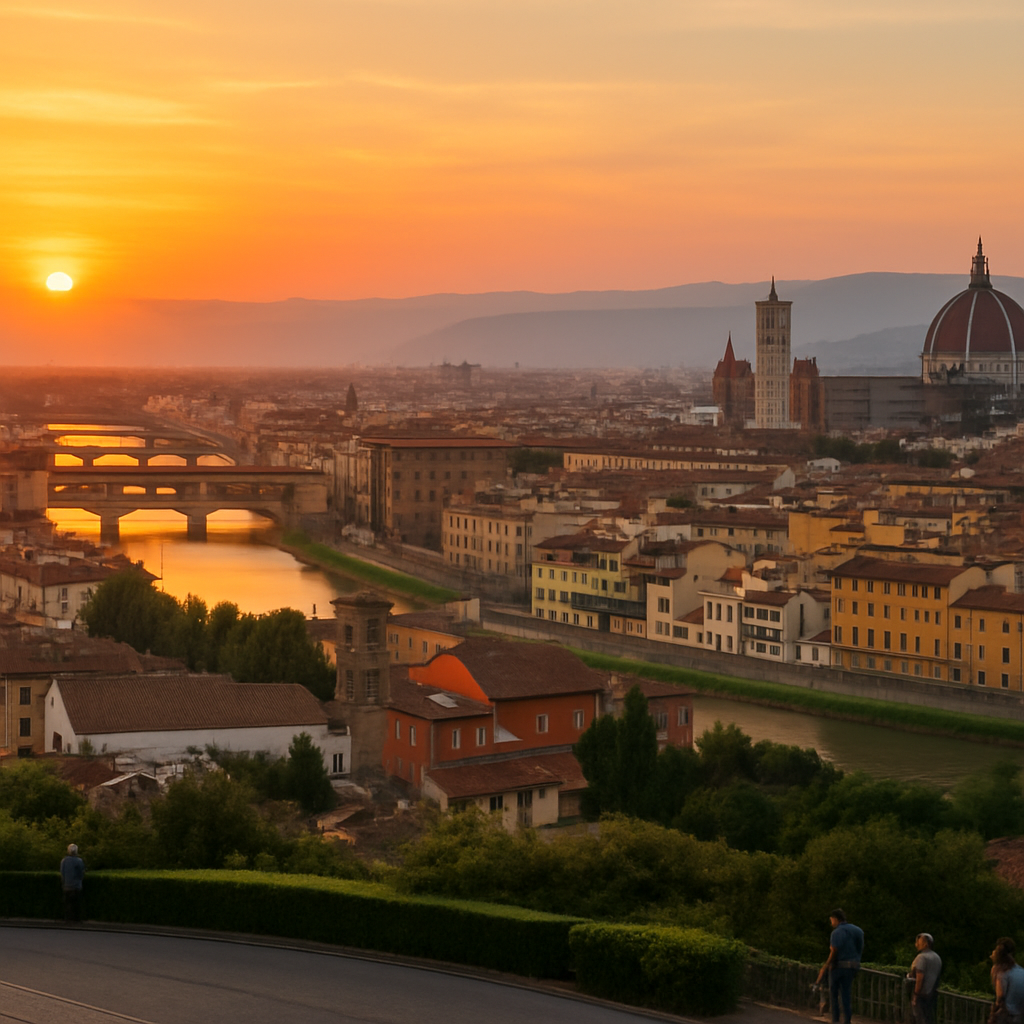
Sunset at Piazzale Michelangelo
Pick up a bottle of Chianti from any Oltrarno enoteca, walk up through San Niccolò along the old city walls, and arrive at this elevated terrace just as the light turns. The panoramic view of Florence — the Duomo, the bridges, the Arno reflecting that amber October light — is the kind of thing that makes you rearrange your entire travel priorities. Created in 1869 by architect Giuseppe Poggi, the piazzale has a bronze replica of Michelangelo's David and enough space that it never feels crushingly crowded. This is where half of Florence goes to be romantic, and the diversity of couples stretched out on the steps is its own quiet statement.
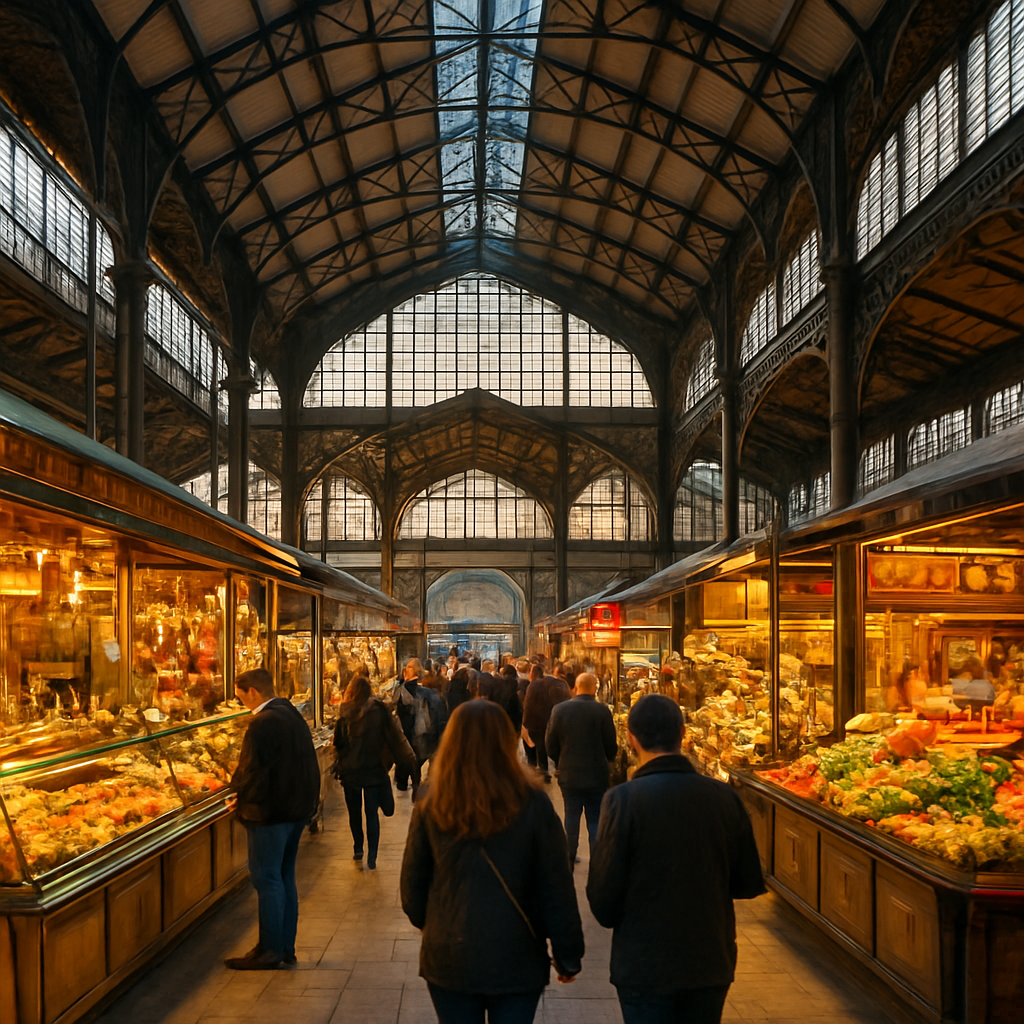
Eat Your Way Through Mercato Centrale
The ground floor of this 1874 iron-and-glass market building — designed by the same architect behind Milan's Galleria — is where Florentines still buy their produce. The second floor, opened in 2014, is a food hall with roughly 15 permanent stalls serving lampredotto, fresh pasta, craft beer, and pizza that would be the best thing you've eaten in most other cities. Order a lampredotto sandwich from one of the lampredottai stands — it's tripe, yes, and it's Florence's official street food initiation ritual. The building itself is worth seeing even if you're not hungry, but you will be hungry.
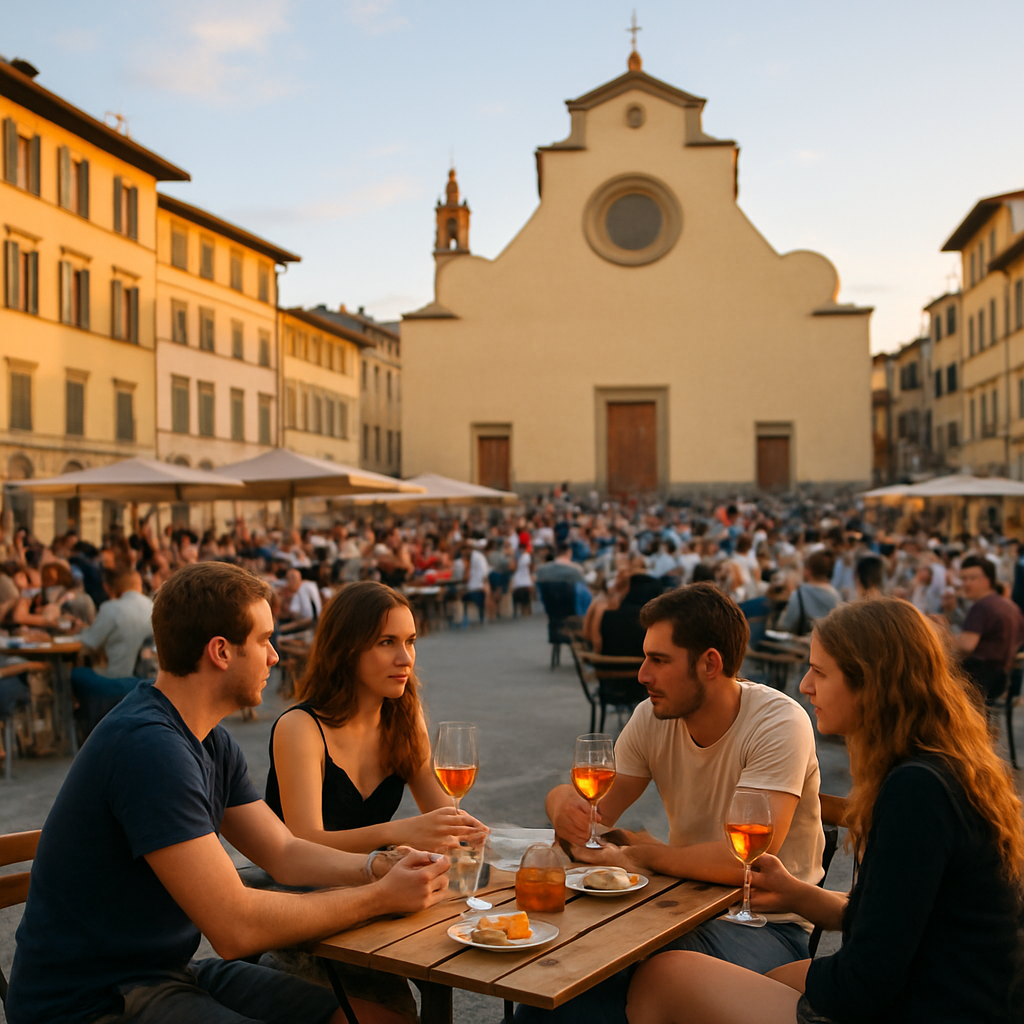
Aperitivo Hour in Oltrarno
Italy's sacred early-evening ritual of drinks with generous snacks reaches its peak form in Florence's Oltrarno. Find a table outside Volume Bar or Rifrullo on Via San Niccolò around 7pm, order a Spritz — Aperol or Campari, both are correct — and watch the neighborhood transition from afternoon quiet to evening hum. The snack spreads at aperitivo bars are substantial enough to replace dinner if you're strategic. This isn't a tourist performance; it's how Florentines actually use their evenings, and the Piazza Santo Spirito area in particular is where the welcoming crowd gravitates. Budget approximately €8–12 per Spritz with snacks included.
Day Trip to Bologna
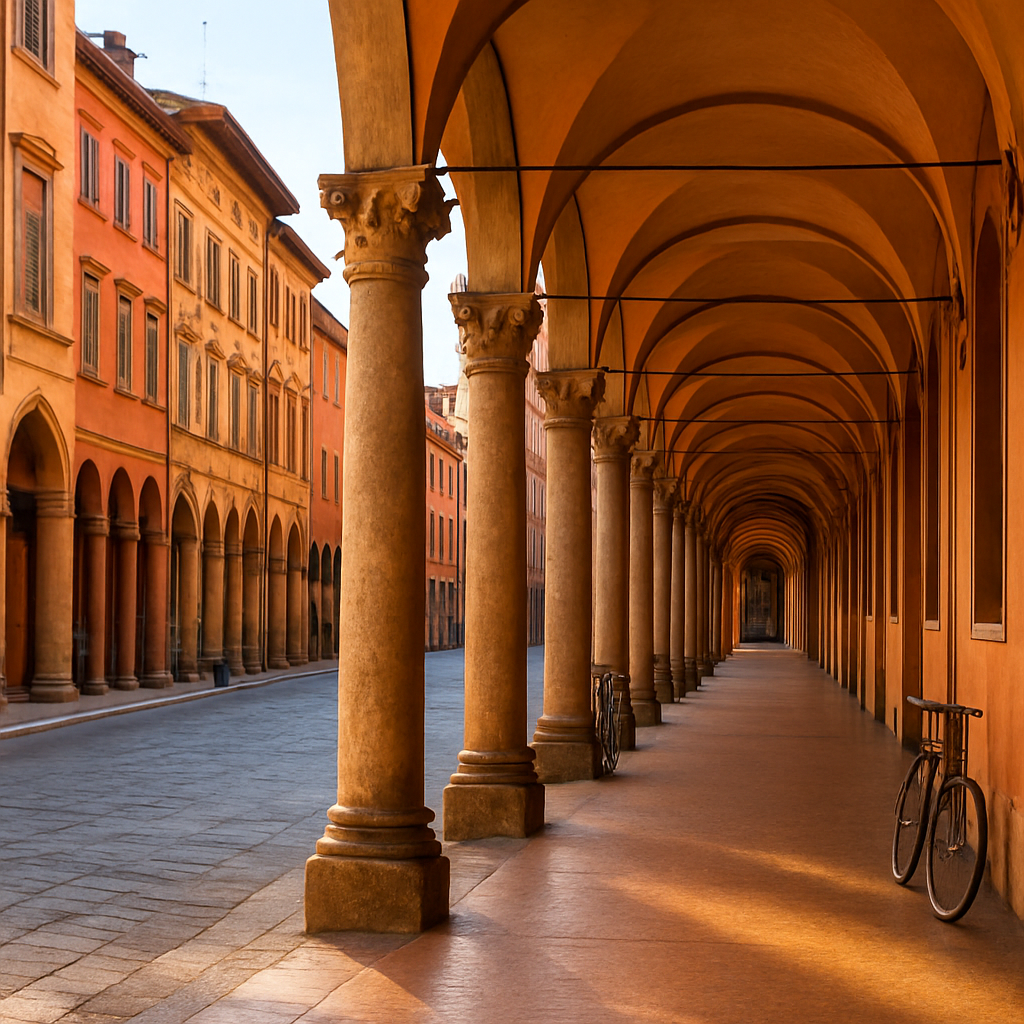
Thirty-five minutes on the Frecciarossa high-speed train and you're in Bologna — the birthplace of the national Arcigay network in 1980 and home to the Cassero LGBTQ+ Center, one of Italy's oldest and most prominent queer community organizations. But even setting the queer history aside, Bologna is a staggering food city with the oldest university in Europe, kilometers of covered porticoes, and a culinary tradition that makes Florence look restrained. The tortellini in brodo alone justifies the train ticket. Bologna Pride is among Italy's largest, and the city's progressive university culture gives it a different energy entirely from Tuscany.
The places I actually send people to
Advice that fits how you travel
Florence is an outstanding solo city, and I don't say that casually. The scale is human — you can walk from one end of the historic center to the other in twenty minutes, which means you never feel stranded or dependent on transit. The aperitivo culture is built for meeting people: park yourself at Volume Bar or Piccolo Café in the early evening and conversation happens naturally. The bars are small enough that bartenders notice you, and the regulars tend toward the sociable end of Italian temperament. App culture exists — Grindr and Scruff are active — but Florence's LGBTQ+ social life is still genuinely centered on physical venues and face-to-face encounters, which is refreshing.
Budget-wise, solo travel in Florence is manageable if you're strategic. Hostels like Plus Florence and Hostel Archi Rossi run from €18–20/night for a dorm bed. Eating at the Mercato Centrale food hall or grabbing pizza al taglio (pizza by the slice) keeps food costs under €25/day. State museums offer free entry to EU citizens under 25, and even without that discount, the major collections are €15–25. The biggest solo advantage: you can see the Uffizi at your own pace without negotiating anyone else's attention span, which is how that museum was meant to be experienced.
Safety-wise, solo LGBTQ+ travelers in Florence face no unusual risks. Oltrarno is the best base for solo travelers — the neighborhood has a residential rhythm, plenty of restaurants with counter seating, and the kind of walkable density that makes exploring on foot feel natural rather than lonely. If you're staying more than a few days, drop into IREOS on Via de' Servi — they run social events and can point you toward whatever's happening that week. It's the fastest shortcut to feeling like you belong here.
Florence is, and I say this with complete seriousness, one of the most disarmingly romantic cities I've encountered across several continents. The light in October turns everything amber. The Arno at dusk looks like a painting of itself. The problem isn't finding romance here — it's keeping your feet on the ground long enough to function as a human being. For same-sex couples, the key is knowing where to spend your time. Oltrarno, particularly the streets fanning out from Piazza Santo Spirito, is where you'll feel genuinely at ease — holding hands here draws nothing more than the mild indifference of Florentines who have seen absolutely everything. Cross the Arno and you cross into a different social atmosphere entirely.
For dinner, book Il Santo Bevitore on Via di Santo Spirito far enough in advance that you actually get a table. The natural wine program is serious, the small plates are creative without being precious, and the atmosphere is exactly the low-lit, unhurried Oltrarno evening you came for. Afterward, walk — the city at night, stripped of tour groups and lit by low golden streetlamps, is a genuinely different place. Make the climb to Piazzale Michelangelo at dusk with a bottle from an Oltrarno enoteca. It's where half of Florence goes to be romantic with whoever they love, and the view stops you cold every single time. It is not a cliché. It is a requirement.
For accommodation, Hotel Lungarno on Borgo San Jacopo puts you directly on the south bank with Arno river views and a significant private Italian art collection on the walls — the Ferragamo family's Lungarno Collection has a genuine, documented track record of LGBTQ+ inclusivity. If you want something more intimate, Soprarno Suites on Via Maggio occupies a 16th-century palazzo with individually furnished rooms sourced from local antique dealers. No two are the same, and the whole place has the character of staying in someone's beautifully curated home. Both land you in Oltrarno, which is exactly where couples should be sleeping.
Let me be direct about the legal reality as of 2026: Italy doesn't recognize same-sex marriage, and joint adoption rights remain legally complicated for same-sex couples. In practice, LGBTQ+ families navigating official situations — a medical emergency, any bureaucratic process, school enrollment paperwork — may encounter friction at the institutional level even when the people involved are personally warm and welcoming. Famiglie Arcobaleno, Italy's national rainbow families organization, is your first call if you hit any structural wall. Keep their contact information and any relevant family documentation accessible throughout your stay. IREOS in Florence can also connect you with local legal referrals if needed.
On the ground, Florence is a genuinely rewarding family destination. Children under 18 enter state museums — including the Uffizi and the Bargello — for free, which meaningfully changes the daily budget. The Museo Galileo near the Uffizi is engaging for kids and adults alike. The Cascine Park along the Arno gives you green space and breathing room when the stone streets start feeling relentless. The Mercato Centrale food hall on Via dell'Ariento — inside the original 1874 iron-and-glass Mengoni market building — solves the family feeding problem elegantly: enough variety under one roof that everyone finds something they'll actually eat, at prices that won't require a separate credit card.
Oltrarno makes the most sense as a family base. The streets are quieter than the tourist-saturated centro storico, the pace is more residential and human, and Piazza Santo Spirito gives kids room to run while adults sit with a Spritz. The neighborhood's long history of artists, students, and creative residents has produced a genuinely progressive local culture — LGBTQ+ families at hotels and restaurants here tend to be received with warmth and uncomplicated professionalism. One practical note: Florence's main streets are generally stroller-navigable, but the cobblestones on smaller alleys will seriously test your equipment. Pack accordingly and wear comfortable shoes.
What Florence actually costs
Flights, visas, and the first 30 minutes
Airport: Florence Amerigo Vespucci Airport (FLR) serves the city directly, with connections to 50+ cities across Europe. North American travelers typically connect through Rome Fiumicino (FCO) or Milan Malpensa (MXP) — expect 10+ hours from New York JFK including the connection. FLR is a compact airport that clears quickly once you land.
Major Routes: London Heathrow (~2h 20m) · Amsterdam (~2h 10m) · Paris CDG (~1h 55m) · Frankfurt (~1h 50m) · Barcelona (~1h 55m). If you're already in Europe, Florence is a genuinely straightforward hop. High-speed rail from Rome (approximately 1h 30m on the Frecciarossa) and Milan (approximately 1h 45m) are serious alternatives to flying if you're already in Italy.
Visa Requirements (as of 2026): EU citizens travel on freedom of movement — national ID is typically sufficient, no passport required. US, Canadian, and Australian passport holders generally don't need a visa for Schengen stays under 90 days within the 180-day window, but ETIAS electronic travel authorization is expected to be required from late 2026 onward — check your government's official travel advisory before booking. UK travelers post-Brexit typically enter visa-free for up to 90 days; your passport must be valid for at least 6 months beyond your planned entry date. Entry requirements can and do change — always verify current requirements with official government sources before you travel.
Airport to City:
Tram (Line T2) — €1.70 | ~20 min. The right answer for almost everyone. Direct service to Santa Maria Novella station, runs frequently, and costs less than a coffee. Buy your ticket from the machine before boarding — inspectors do check.
Taxi (metered) — €25–€35 | 15–25 min. Fixed-rate taxis are available from the official rank outside arrivals. Confirm the rate before you get in the car.
Bus (ATAF Volainbus) — €6 | 20–30 min. Runs every 30 minutes to Santa Maria Novella. Reliable, but slower than the tram and less convenient than its price difference suggests.
Rideshare (Uber/Free Now) — €20–€40 | 15–25 min. Available, but the official taxi rank is typically faster at FLR and better value. Use rideshare for the return journey if the tram feels like too much with luggage.
Traven's seasonal breakdown
The questions everyone asks
Is Florence safe for LGBTQ+ travelers?
Do I need to speak Italian?
What's this Tessera Arci card I keep hearing about?
How much should I budget per day?
Is there a gay neighborhood in Florence?
When is Florence Pride?
Can I survive Florence without a car?
Screenshot this before you go
So should you actually go?
Go. Florence is one of the most beautiful cities on earth, and its LGBTQ+ life — while compact — is genuine, rooted, and woven into a neighborhood you'll fall hard for. The legal picture in Italy isn't perfect, and you should know that going in. But on the ground in Oltrarno, over a glass of Chianti at an osteria where nobody cares who you came with, Florence feels like exactly what it is: a city that's been quietly welcoming the gays since the Renaissance, and doing it with better food than anywhere else on the planet. You'll eat too much, you'll drink too much, you'll stand on Piazzale Michelangelo at dusk and text someone a photo captioned "moving here." I've sent that text three times. I mean it a little more each time.
Sources & Resources
Official links we reference when compiling this guide. Last verified 2026-03-15.
- Arcigay — National LGBTQ+ Organization Italy
- Arcigay — National LGBTQ+ Organization Italy
- Arcigay Firenze Local Chapter
- Arcigay Firenze Local Chapter
- Comune di Firenze — Pari Opportunità (Equal Opportunities Office)
- Comune di Firenze — Pari Opportunità (Equal Opportunities Office)
- Famiglie Arcobaleno — Rainbow Families Italy
- Famiglie Arcobaleno — Rainbow Families Italy
- ILGA-Europe — Italy Country Overview
- ILGA-Europe Rainbow Map — Italy
- IREOS — Centro Comunitario Queer Firenze
- IREOS — Centro Comunitario Queer Firenze
- MIT — Movimento Identità Trans (National Trans Organization Italy)
- Parks — Lavoro e Cultura (LGBTQ+ Workplace Advocacy Italy)
- Parks — Lavoro e Cultura (LGBTQ+ Workplace Advocacy Italy)
- Rete Lenford — LGBTQ+ Legal Network Italy
- Rete Lenford — LGBTQ+ Legal Network Italy
- UNAR — National Anti-Discrimination Office Italy
- UNAR — National Anti-Discrimination Office Italy