
Naples doesn't apologize for its chaos — it hands you a €1.50 spritz on a Greek wall at 10 pm and dares you to keep up.
It's a Tuesday in late September, around 10:30 pm, and I'm three deep into a €1.50 spritz from Cammarota, sitting on the low wall of Piazza Bellini with my back against an exposed chunk of fourth-century BC Greek city wall. Two guys to my left are arguing about a Pasolini film. A femme in a vintage band tee is rolling a cigarette on the curb. A scooter slices through the crowd like it's been doing this for a thousand years, because it has. Nobody is checking anyone. Everybody is checking everyone. This is the gay mood of Naples, and it doesn't live in a designated district — it lives in this piazza after 10 pm, and you can find it by following the noise.
Naples is a contradiction the city refuses to resolve, and that's the whole appeal. There's no marriage equality in Italy as of 2026 — civil unions only, since 2016 — and yet the femminiello tradition has been part of working-class Neapolitan life for centuries, AMAB people living as women in the Quartieri Spagnoli and historically considered bringers of good luck. Modern rights frameworks are uneven here; lived queerness is older than the framework. That gap is the texture of the place. My Traven-Dex of 7.5 is doing real work to balance both sides — a 9.4 on Destination because nowhere on earth eats, looks, or sounds like this, dragged on a 5.5 Legal score that reflects the country, not the city's mood.
The scene is small. I gave it an 8.2 not because Naples has Berlin-grade infrastructure — it does not — but because what's here is real and stubbornly Neapolitan. Macho Lab in the Centro Storico is the dedicated gay men's bar (follow the Instagram, the hours are not online); Spazio Nea and Shanti hold down the alternative-nightlife corridor; the Lungomare Caracciolo from Castel dell'Ovo to Mergellina on a summer night is its own kind of cruising-by-walking. The discreet, cosmopolitan side of gay Naples has been in Chiaia for as long as anyone remembers — Oscar Wilde drank his exile away at Gran Caffè Gambrinus and the bar is still pouring.
What you should not come for is a polished gay village with rainbow crosswalks and a curated scene. What you should come for is the pizza, the Cristo velato, an evening on the Lungomare, a ferry to Capri, and the dawning realization that a city negotiating queerness in its own dialect for centuries needed neither your validation nor your map. Bring patience for the chaos, cash for the kiosks, and an appetite. Naples will do the rest.
The stuff your travel guide buries on page 47
Here's the legal landscape, plain: as of 2026, Italy recognizes unioni civili — civil unions passed in 2016 — but not same-sex marriage. Joint adoption is off the table; stepchild adoption (a non-biological parent adopting their partner's child) has been granted case-by-case through the courts, but it's slow, expensive, and depends on which judge you draw. Anti-discrimination protections in employment exist but are limited compared to most of Western Europe — there's no comprehensive law covering goods, services, and hate speech the way the proposed Zan bill would have. That bill stalled in the Senate in 2021 and hasn't been revived. For the full national picture, Arcigay tracks legislation in real time, and Rete Lenford is the legal advocacy organization to bookmark if you run into anything.
Gender identity recognition is a process. A 2015 Constitutional Court ruling means medical intervention is no longer mandatory, but you still need a court order, and the timeline is inconsistent. MIT — Movimento Identità Trans is the resource for trans travelers needing guidance on documents or healthcare while in country. Same-sex sexual activity has been legal since 1890 — Italy is one of the older decriminalizers in Europe, even if the legal-equality story since has been uneven.
The cultural reality? Italy isn't celebratory; it's also not hostile in any organized way. Naples specifically has been negotiating queerness in its own dialect for centuries — the femminiello tradition, AMAB people who have lived as women in working-class Naples and were historically considered bringers of good luck, predates any modern rights framework by generations. That history is in the air even when nothing on the surface reads as "gay" to a foreign eye.
On PDA: hand-holding in Chiaia and along the Lungomare draws zero looks. Piazza Bellini after 10 pm is the unofficial outdoor living room — fine. The Quartieri Spagnoli and Forcella are working-class and traditional; keep affection low-key after dark. Around Stazione Centrale, the concern isn't homophobia, it's pickpockets — minimize anything that flags you as a distracted tourist. Pro tip: most queer venues here don't post hours online and run on Instagram stories — follow Macho Lab and Freezer Disco Club before you fly in or you'll turn up on a Tuesday to a locked door. And bring cash for the kiosks around Piazza Bellini; nobody wants to break a fifty for a €4 spritz at midnight.
What it actually feels like on the ground
Holding hands: Comfortable in Chiaia, along the Lungomare from Mergellina to Castel dell'Ovo, and around Piazza Bellini after dark. Generally fine in Vomero, especially up around Piazza Vanvitelli where the crowd skews younger and more progressive. Mixed in the deeper Centro Storico tourist arteries — you might catch a stare from an older resident, rarely anything more. In the Quartieri Spagnoli and Forcella, especially late, dial it back. Naples reads context before it reads sexuality.
Hotel check-in: A non-issue at every property in this guide and most others. Same-sex couples booking a double room in Mergellina, Chiaia, or the Centro Storico will be met with a shrug, not a question. The vibe is "we don't care" rather than "we celebrate you," which — for a lot of travelers — is exactly what you want.
Taxis and rides: Use the official white taxis with the meter or fixed-fare placard, or pull up Free Now on your phone. Standard Uber doesn't operate; Uber Black does. Pro tip: skip the taxi line at Napoli Centrale entirely and take Metro Linea 1 to Toledo — one of the most beautiful subway stations in Europe — and walk from there.
Beaches and public spaces: The Lungomare on a summer night is prime walking territory and entirely relaxed. In summer the scene migrates to Ischia (Sant'Angelo and Maronti) and the Lido Turistico in Bagnoli on weekends. Capri and Sorrento as day trips are accustomed to international LGBTQ+ visitors and read as comfortable.
Late night: Piazza Bellini and the surrounding Decumani are loud, lit, and generally safe well past 2 am. The walk back through Spaccanapoli is fine. Avoid wandering the deepest alleys of the Quartieri or Forcella alone if you don't know the streets — not for homophobia reasons, just because that's the local wisdom for any tourist after dark.
Trans travelers: Naples has a visible trans community historically rooted in the Spanish Quarters, but trans women — particularly trans women of color — face elevated harassment risk and should plan accommodations and nightlife with care. Stick to Chiaia and the well-lit Centro Storico corridors at night. MIT — Movimento Identità Trans is the national resource and can connect you with local support.
Verbal harassment risk: Low and primarily verbal if it happens at all. The realer threat is petty crime — scippo (scooter-borne bag-snatching), pickpocketing on the Circumvesuviana to Pompeii, and distraction scams around Stazione Centrale. Leave the good watch at the hotel and don't pull out your phone to film a scooter zipping down Spaccanapoli.
If anything serious happens: The Gay Help Line Italia (800 713 713) is national, free, and answers in Italian and English; readers tell me it's genuinely useful, not just a poster on a wall. Arcigay Antinoo Napoli on Vico San Geronimo alle Monache in the Quartieri Spagnoli is the community anchor — drop in for events, legal help, or just a coffee. The door doesn't look like much; ring the bell. For HIV/AIDS-related questions or testing, Lila Campania is the regional resource.
The queer geography
Centro Storico
The UNESCO-listed historic heart, sliced by Spaccanapoli — the dead-straight street that follows the ancient Greco-Roman decumanus inferior and bisects the city. Walk it at golden hour: Baroque facades stacked against laundry lines, basalt cobbles polished by 2,500 years of foot traffic, the smell of frying cuoppo and sfogliatella ovens turning over for evening. Stop at Cappella Sansevero for Sanmartino's Cristo velato — a marble Christ with a translucent veil that doesn't read as marble, it reads as fabric. Eat pizza at Sorbillo on Via dei Tribunali if you can stand the line, or duck into Pasticceria Scaturchio on Piazza San Domenico Maggiore for the trademarked Ministeriale chocolate medallion. After 10 pm, the action collapses into Piazza Bellini — bars spilling onto exposed Greek walls, plastic stools, students, artists, and a gently queer crowd that's been gathering here for decades. Caffè Intra Moenia is the slower table; Spazio Nea is the art-bar hybrid; Macho Lab is the dedicated gay men's bar with a darkroom and themed nights. Napoli Pride marches through here in late June or early July, ending in a sweaty piazza party that feels personal in a way the big-city Prides don't.
Chiaia
The upscale waterfront district running between Piazza dei Martiri and the Lungomare, all Belle Époque facades, designer boutiques, and aperitivo bars where the Aperol arrives at 7 pm with a small mountain of olives and chips. Walk Vico Belledonne a Chiaia on a Thursday and you'll see why this is the polished side of the city — drinks at L'Ebbrezza di Noè, dinner at Veritas for one Michelin star of contemporary Campanian cooking, a nightcap at Ba-Bar. The seafront promenade from Castel dell'Ovo down to Mergellina is one of the great Mediterranean walks: ten-foot waves on a windy night, Vesuvius across the water, runners and lovers and old men in linen suits. Hand-holding here is a non-event. The neighborhood has been the discreet center of cosmopolitan gay Naples for as long as anyone remembers — Oscar Wilde drank at Gran Caffè Gambrinus when he was exiled in Italy, and the bar is still pouring. Arcigay Antinoo Napoli, the local chapter that anchors the city's LGBTQ+ infrastructure, is just over the hill in the Quartieri.
Quartieri Spagnoli
The dense grid above Via Toledo, built in the 16th century to garrison Spanish troops and still reading as the most authentically Neapolitan neighborhood in the city — narrow alleys, scooters threading between stalls, laundry overhead, shrines tucked into every wall niche. The Maradona mural on Via Emanuele De Deo is the modern pilgrimage; Trattoria da Nennella is the lunch ritual, with singing waiters and a fixed-price set menu that ends with confetti and a clementine. Cocktail-wise, L'Antiquario is the speakeasy that landed on Italy's Top 50 Cocktail Bars and still feels like a secret. The Quartieri is also where the femminiello tradition was historically most visible, and where Arcigay Antinoo Napoli keeps its office on Vico San Geronimo alle Monache — drop in for events, legal help, or just a coffee. Keep PDA low-key here after dark, especially in the deeper alleys; the neighborhood is overwhelmingly traditional and works on its own social code.
Vomero
The hilltop residential neighborhood reached by funicular — three of them, actually, climbing from the lower city to Piazza Vanvitelli. Up here the air is cleaner, the streets are wider, and Castel Sant'Elmo at sunset is the view that explains why Capote and Pasolini and a long list of queer writers kept coming back. The crowd around the piazza skews younger and more progressive; the LGBTQ+ scene is quieter than the Centro Storico but the neighborhood reads as comfortable for travelers who want a calmer base. Hotel San Francesco al Monte nearby — a former 16th-century Franciscan monastery with rooms converted from monks' cells and a rooftop pool over the bay — is one of the more distinctive stays in the city.
Mergellina & Lungomare
West of Chiaia, where the city meets the working harbor and the seafront opens up. 50 Kalò on Piazza Sannazaro is one of the world's top-ranked pizzerias according to 50 Top Pizza, and Ciro Salvo's hyper-hydrated dough is worth the walk alone. The Lungomare Caracciolo from here back to Castel dell'Ovo is the city's best evening promenade, and on summer nights the whole gay-adjacent Naples seems to migrate onto it — runners, couples, packs of friends, kids on scooters. For broader community context across the bay, Arcigay's national network lists chapter events and partner venues including the summer scene at Lido Turistico in Bagnoli and the Cap Horn crowd in nearby Pozzuoli.
The experiences worth rearranging your itinerary for
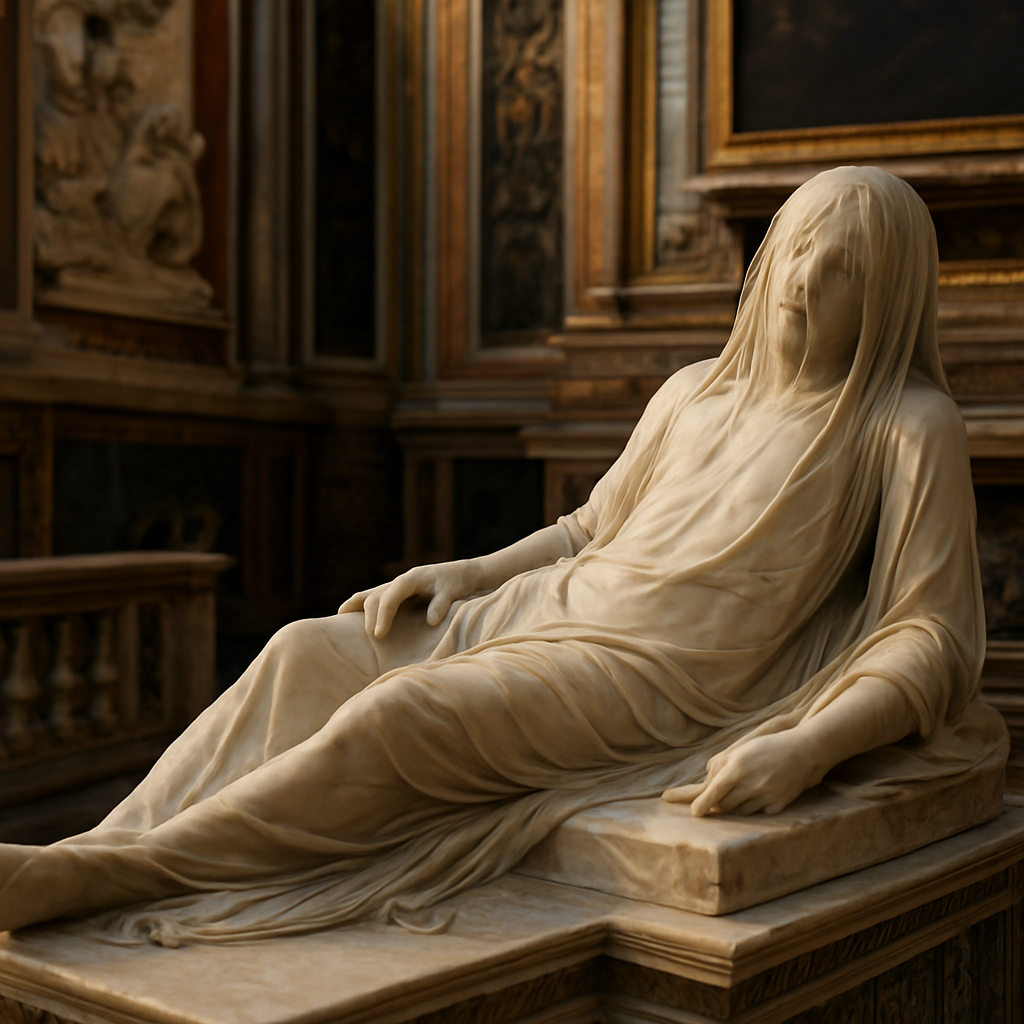
The Veiled Christ at Cappella Sansevero
There are objects in Italy that you walk into a room expecting to be impressed by, and then the impression is something else entirely. Sanmartino's 1753 Cristo velato is one of those — a single block of marble carved into a body draped in fabric so translucent you can see the wounds beneath, except it's all stone. The chapel itself, redesigned by Raimondo di Sangro in the 18th century, is small, dim, and intensely concentrated. Book a timed entry the moment you commit to Naples; the line outside without a reservation regularly runs an hour.
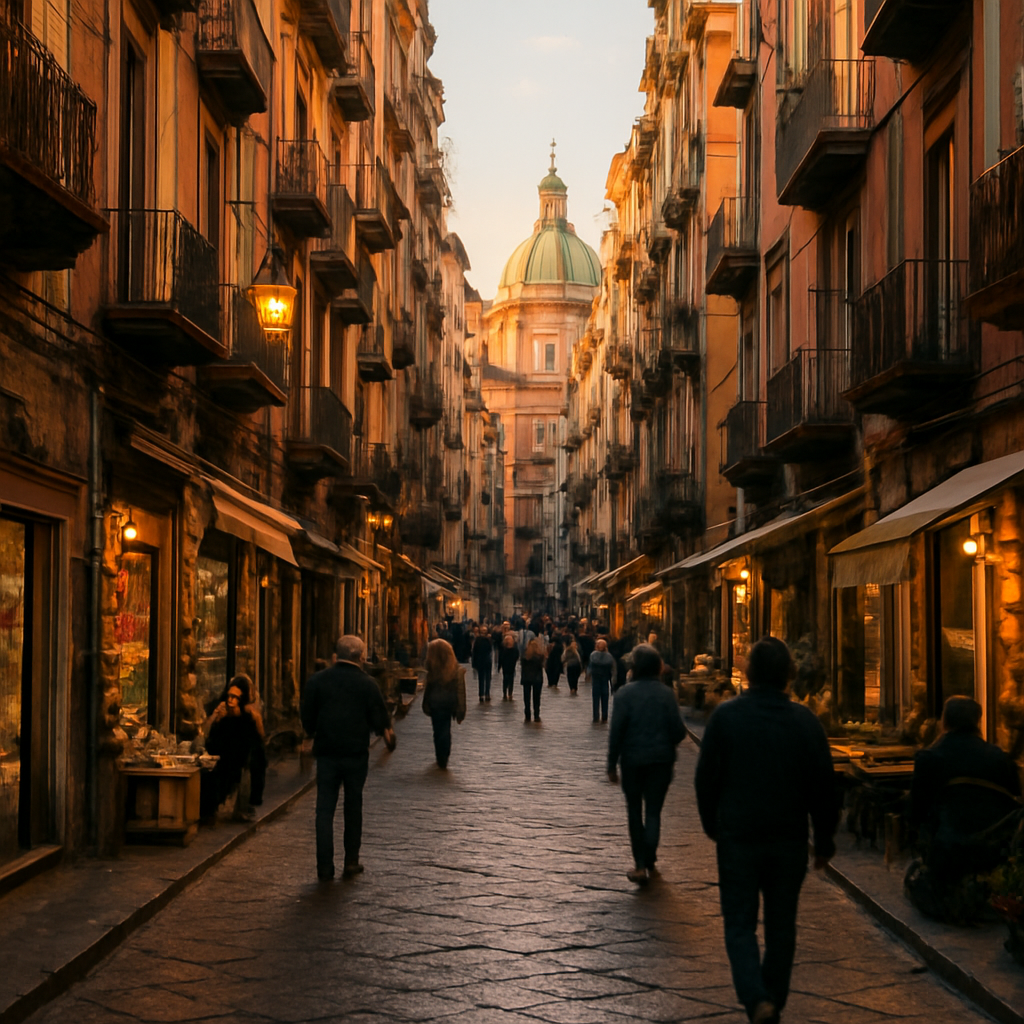
Walk Spaccanapoli at Golden Hour
Start at Piazza del Gesù Nuovo around 6 pm and walk east. The street follows the ancient Greco-Roman decumanus inferior — a dead-straight line slicing through 2,500 years of city — and at this hour the basalt cobbles are warm, the Baroque facades catch the last gold, and every cross street smells like something frying. Stop at Pasticceria Scaturchio for the trademarked Ministeriale chocolate medallion, then double back to Via dei Tribunali for a cuoppo of fried street food. End at Piazza Bellini for the first spritz of the night — that's the warm-up, drinks proper start at 10.

A Day at Pompeii
Thirty minutes on the Circumvesuviana from Napoli Centrale and you're walking through a Roman city that stopped on August 24, 79 AD. The mosaics are the headline; the quieter pleasures are the bakeries with their grinding stones, the ruts of cart wheels in the stone streets, and the House of the Vettii — reopened in 2023 after restoration — with frescoes most guidebooks won't fully describe. Pro tip: go early, book the audio guide, and bring more water than you think you need. The site is enormous and there's almost no shade.

Sunset from Castel Sant'Elmo
Take the Centrale or Montesanto funicular up to Vomero, walk five minutes to Castel Sant'Elmo, and pay the small admission to climb the ramparts. From the roof you get the city below at dusk: terracotta roofs, the Gulf, Vesuvius in silhouette, and the lights of Capri starting to come on across the water. Capote and Pasolini and a long list of writers kept coming back for this view — an hour up here explains why. Walk down through Vomero afterward and have dinner at one of the trattorias around Piazza Vanvitelli.

Pizza on Via dei Tribunali
The Margherita is the test, and Naples is where it was invented in 1889 — so this isn't a meal so much as a baseline reset. Sorbillo on Via dei Tribunali is the household name; 50 Kalò down in Mergellina is the technical benchmark; Da Michele in Forcella serves only Margherita and Marinara and has done since 1930. The dough is the difference — hyper-hydrated, blistered in 90 seconds in a wood oven at 485°C, and impossible to replicate at home no matter how serious your kitchen is. Go early or go late; the lines at peak are the line.
The places I actually send people to
Advice that fits how you travel
Solo travel in Naples is easier than the city's reputation suggests. The Centro Storico is dense, walkable, and built for wandering alone — you'll never run out of streets to lose yourself in, and a plastic stool at Piazza Bellini is the fastest way to make three friends in twenty minutes. Order a €1.50 spritz from Cammarota, sit on the wall above the exposed Greek ruins, and let the night come to you. The bar tradition here works in your favor — Italians don't think it's strange to drink alone, and nobody's running a check on why you came in.
App culture exists but skews thin compared to Rome or Milan, so use Grindr as a supplement, not a strategy. Real-world meeting still beats it here. Saturdays orbit Macho Lab for the dedicated gay men's bar with a darkroom and a friendly bear-leaning crowd; weeknights, the alternative-nightlife corridor around Bellini, Spazio Nea, and Shanti Art Musik Bar is where you actually meet people. Follow venue Instagram stories before you fly in — most queer spots don't post hours online and you'll waste a night otherwise.
Budget-wise, Naples is one of the most generous cities in Western Europe for solo travelers — €70-110/day on a budget gets you a real life here, and €160-240 puts you in a boutique 3★ in Chiaia or the Centro Storico with proper trattoria dinners. Best base for solo? Centro Storico for nightlife immediacy, Vomero for a calmer return at the end of the night. Skip the Stazione Centrale-adjacent budget hotels — the petty crime concerns aren't worth the €30 you save.
Naples romances couples in a register most cities can't fake. The Lungomare walk from Castel dell'Ovo down to Mergellina at sunset — Vesuvius across the bay, runners and old men in linen suits, the sea breaking against the rocks — is one of the great Mediterranean evenings, and it costs nothing. Hand-holding here and through Chiaia draws zero looks; same-sex couples can move through this part of the city as easily as anywhere in Western Europe. Same in Vomero up around Piazza Vanvitelli, and around Piazza Bellini after dark. Keep PDA quieter in the deeper Quartieri Spagnoli and Forcella alleys after dark — not for safety reasons, just because the neighborhood is traditional and reads context before sexuality.
For the big anniversary night, I send couples to Palazzo Petrucci in Posillipo — one Michelin star, chef Lino Scarallo at the pass, and a seafront villa that puts the Bay of Naples on a plate and outside your window simultaneously. Closer to the center, Veritas in Chiaia delivers a calmer, equally serious tasting menu with a nightcap five minutes away at Ba-Bar. For the room: Grand Hotel Vesuvio on the seafront is the romantic showstopper (Caruso lived and died in a suite here in 1921), and The Britannique in Chiaia gives you Hilton's Curio Collection with a 100 score on the HRC Corporate Equality Index — meaning check-in is a shrug, not a question.
For the day-trip romance, take the ferry to Capri from Molo Beverello — fifty minutes across the bay to an island with a queer travel résumé that runs from Tiberius through Capote, Vidal, and Cocteau. Or a half-day in Positano for the cliffside, pastel-stacked-down-to-the-water cliché that turns out to be entirely real. Back in town, sfogliatella and espresso at the marble bar of Gran Caffè Gambrinus on Piazza del Plebiscito is the morning ritual that books itself.
Italy's family law lags most of Western Europe, and LGBTQ+ families should know what they're walking into. As of 2026, civil unions are recognized but not marriage; joint adoption isn't legal, though stepchild adoption has been granted case-by-case through the courts. In practice, that means a hotel in Naples will check your family in without commentary, but institutional recognition for two parents on, say, a school form back home is a separate conversation. Famiglie Arcobaleno is the national network for rainbow families and a useful first call if you have specific legal questions while in country. The cultural reality on the ground in Naples is generally warm — Italians dote on kids almost reflexively, and that doesn't pause to ask about parental configuration.
Logistically, Naples is a kid-rich city. MANN (the National Archaeological Museum) holds the Pompeii frescoes and mosaics that turn ten-year-olds into archaeologists for the afternoon — and the Gabinetto Segreto erotic-art room is access-controlled, so you can curate the visit. Pompeii itself is 30 minutes on the Circumvesuviana from Centrale; bring more water than you think you need and book the audio guide. Capri by ferry is a strong family day — the Blue Grotto, the Faraglioni, swimming at Marina Piccola. Castel Sant'Elmo in Vomero, reached by funicular, is the easy sunset win with a small admission and ramparts to climb. Spaccanapoli at golden hour is the walk that feeds everyone cuoppo and sfogliatella between stops.
Practical notes: strollers and the deep Centro Storico are not friends — the basalt cobbles will rattle your teeth — so a sturdy carrier wins. Trattorias welcome kids without performance; Trattoria da Nennella in the Quartieri Spagnoli is genuine theater for older kids who can handle the noise, while quieter rooms at Trattoria San Ferdinando work for slower meals. For the room, Hotel San Francesco al Monte in Vomero — a former Franciscan monastery with a hanging garden and a rooftop pool over the bay — is the family pick that gives parents a cocktail-with-a-view and kids a pool to wear themselves out in.
What Naples actually costs
Flights, visas, and the first 30 minutes
Airport: Naples International (NAP), officially Aeroporto Internazionale di Napoli-Capodichino, sits about 7 km northeast of the city center — one of the closest airport-to-city hops in Italy. Approximately 90 direct routes connect Naples to European hubs and seasonal long-haul cities, with strong daily service from London, Paris, Amsterdam, Frankfurt, Madrid, Barcelona, and Istanbul. From North America, you'll typically connect through Rome, Munich, or Istanbul; United runs a seasonal direct from Newark in summer.
Visas (as of 2026): Italy is part of the Schengen Area. US, UK, Canadian, and Australian passport holders are typically visa-free for up to 90 days within any 180-day period. EU citizens have full freedom of movement. ETIAS — the new electronic travel authorization for visa-exempt visitors — is required as of 2026; apply online before you fly, the fee is approximately €7, and approval is generally fast. Always confirm requirements with your nearest Italian consulate before booking; rules can shift.
Airport to city: The Alibus shuttle runs every 20 minutes to Piazza Garibaldi (Napoli Centrale) and the Molo Beverello port for €5, taking 20-30 minutes. White taxis run on fixed tariffs by zone — €16 to the historic center, €27 to Mergellina — confirm the fare before you get in. Ride-hail via Free Now (€20-30) works well; standard Uber doesn't operate, only Uber Black. Pre-booked private transfers run €35-60 and are worth it for late arrivals or families with luggage.
Pro tip: if you're staying in the Centro Storico or Quartieri Spagnoli, skip the taxi line at Centrale entirely — take Metro Linea 1 to Toledo (one of the most beautiful subway stations in Europe) and walk in from there. Saves you €10 and the scrum.
Traven's seasonal breakdown
The questions everyone asks
Is Naples safe for same-sex couples?
Do I need to speak Italian?
Is the gay scene easy to find?
How much should I budget per day?
Is Italy welcoming to LGBTQ+ families?
Should I rent a car?
When is the worst time to visit?
Screenshot this before you go
So should you actually go?
Go. Naples is not the easiest gay city in Europe and it doesn't pretend to be — Italy's legal framework is a generation behind France or Spain, and the scene is concentrated rather than sprawling. But my Traven-Dex of 7.5 reflects the trade I'd make every time: a 9.4 Destination score that earns itself in the first hour, a small but stubborn community that's been negotiating queerness in its own dialect for centuries, and a city that hands you the best pizza of your life, a Roman erotic fresco, a Belle Époque seafront walk, and a ferry to Capri, all in the same 48 hours. Stay in Chiaia or the Centro Storico, follow the Instagram of every queer venue before you fly in, eat everything, walk Spaccanapoli at golden hour, and let LGBTQ+ travelers without an agenda discover the rest. This city doesn't perform; it just is. That's the whole point.
Sources & Resources
Official links we reference when compiling this guide. Last verified 2026-05-03.
- ANLAIDS Sezione Campania
- Arcigay (National)
- Arcigay Antinoo Napoli
- Arcilesbica Le Maree Napoli
- Comune di Napoli - Servizi Sociali
- Famiglie Arcobaleno
- Gay Center
- Gay Help Line Italia (800 713 713)
- Lila Campania (HIV/AIDS support)
- MIT - Movimento Identità Trans
- Napoli Pride
- Rete Lenford - Avvocatura per i Diritti LGBTI+