Rome doesn't care that you're gay. Rome barely cares that you exist. And somehow that indifference is the most liberating thing about it.
It's a Thursday night and you're standing outside Qube in Ostiense at half past midnight, and the line is already ridiculous. Inside, Muccassassina is doing what it's done every Thursday since 1991 — packing a thousand-plus Romans into a sweaty, joyful, slightly unhinged warehouse party that has essentially zero interest in performing for tourists. The music is loud, the go-go dancers are earning it, and nobody is speaking English. This is the Rome that most queer travel coverage skips past, and it's the Rome I keep coming back for.
But here's the thing about this city — it has a split personality, and both halves are worth your time. The tourist-facing strip on Via di San Giovanni in Laterano is genuinely great: you're drinking a spritz al Campari at Coming Out with the Colosseum literally glowing behind you, and the crowd is a bilingual mix of Romans and visitors who've figured out this is the best free show in the city. That's the accessible Rome, and it works. Then there's Pigneto, where the queer Romans who are too cool for the Colosseum strip drink at spots like Omini Bar on any given evening — no rainbow flags, just good energy and a willingness to let the night unfold. My Traven-Dex score of 7.5 reflects a city that delivers spectacularly on some fronts and frustrates on others.
Rome is not Amsterdam. I need to say that plainly. A reader wrote in to remind me that public affection between same-sex couples still draws stares outside the tourist bubble, and the current political climate under the Meloni government hasn't exactly been moving the needle forward on LGBTQ+ legislation. I gave it a 9.5 on Destination because — come on, it's Rome — but the legal landscape sits at a 5.5 that reflects real gaps in protections. Civil unions yes, marriage no, adoption functionally no. You'll feel the contradiction: a city that throws a Pride march for 700,000 people but can't pass a comprehensive anti-discrimination law.
And yet. The aperitivo light hitting the travertine at golden hour. Caravaggio's boys at the Galleria Borghese, radiating homoerotic energy across four centuries. A plate of cacio e pepe at a Testaccio trattoria built into an ancient Roman garbage dump. The queer passeggiata along the Colosseum strip on a warm Saturday night, where everyone is beautiful and nobody is in a hurry. Rome earns your complications. It earns your love despite its contradictions. And if you only do one thing — make it Muccassassina on a Thursday. Show up after midnight like a Roman. You'll understand everything.
The stuff your travel guide buries on page 47
Legal framework: Italy legalized civil unions for same-sex couples in 2016 (the Cirinnà law), but does not have full marriage equality. Adoption rights remain limited — stepchild adoption has been recognized in individual court cases, but there's no broad statutory right. The Meloni government, in office since October 2022, has moved to restrict recognition of children born to same-sex couples via surrogacy abroad. Don't assume the legal landscape matches what you'd expect in Northern Europe. That said, homosexuality has never been criminalized in unified Italy, and anti-discrimination protections do exist — though they're uneven and a comprehensive national anti-discrimination bill covering sexual orientation and gender identity (the Zan bill) failed in the Senate in 2021.
Gender identity: Italy's legal gender recognition framework (Law 164/1982) requires psychological diagnosis, hormone treatment, and typically surgical intervention. A 2015 Constitutional Court ruling partially relaxed the surgical requirement, but medical prerequisites remain. Trans travelers whose documents don't match presentation may face inconsistent treatment in interactions with law enforcement or healthcare providers outside central Rome. In tourist-facing contexts and LGBTQ+ venues, respectful treatment is the norm.
Cultural reality: Rome skews meaningfully more progressive than Italy's national politics suggest. The city has a strong queer community infrastructure — Circolo Mario Mieli in Ostiense functions as community center, health testing site, and political organizer. Arcigay Roma runs events and advocacy year-round. These aren't just for locals — if you need health services, have legal questions, or want to know what's on this week, start at Mario Mieli. No government travel advisories specifically targeting LGBTQ+ travelers to Italy have been issued by the US, UK, Canada, or Australia.
PDA comfort: The Via di San Giovanni in Laterano gay bar strip near the Colosseum is high comfort — same-sex PDA is commonplace and unremarkable. Trastevere, Campo de' Fiori, Testaccio, and Pigneto are moderate-to-high — young, mixed crowds, minimal issues. The historic center (Piazza Navona, Pantheon, Spanish Steps) is moderate — heavy tourist presence creates broad tolerance, but you may get second glances from older locals. The Vatican and Borgo Pio area: low. The conservative atmosphere is palpable and any PDA draws scrutiny. Peripheral residential neighborhoods like Tor Bella Monaca or Quarticciolo are not on any visitor route and warrant caution.
Pro tip: Clubs in Rome start genuinely late — showing up to Qube before 1am is rookie behavior that will result in you standing in an empty room. Have a proper dinner, do your aperitivo ritual, take a cab at midnight, and arrive when Romans arrive.
What it actually feels like on the ground
Holding hands: On the Colosseum gay bar strip and in Trastevere, you'll see same-sex couples holding hands without drawing attention. In the centro storico tourist zones, it's generally fine — the density of international visitors creates a buffer. Near the Vatican, I'd drop hands. In outer residential neighborhoods, read the room. Rome is not a city where holding hands will get you into danger, but it is a city where it might get you stared at outside the comfortable zones.
Hotel check-in: No issues at any hotel in this guide or at major chains. A double bed for two men or two women won't raise an eyebrow at any tourist-facing property. Budget accommodations near Termini are equally unbothered.
Taxis: Roman taxi drivers are generally indifferent to passengers' sexuality. Use licensed white cabs or the itTaxi app. Uber functions in Rome but itTaxi is what locals use — save it before your first club night because getting a cab at 3am from Ostiense without it is its own adventure you don't need.
Late night: The Termini station area and parts of the city center late at night can have an edge — not specifically anti-gay, but chaotic in ways that can escalate. Stick to taxis over walking alone at 3am in that zone. The gay strip near the Colosseum is genuinely safer than Termini for late-night wandering. The Ostiense club district around Qube is fine during event nights when crowds are moving, but the area is industrial and quiet between events.
Trans travelers: Tourist-facing Rome and LGBTQ+ venues are generally respectful. Challenges are more likely in administrative interactions — document checks by police, hospital visits, pharmacy interactions — particularly if documents don't match presentation. The Rete Lenford legal network handles LGBTQ+ legal issues in Italy and can provide guidance if needed.
Verbal harassment: Catcalling exists in Rome as a general phenomenon, and occasionally queer-targeted comments happen — particularly from groups of young men in peripheral areas at night. On the established queer circuits (Laterano strip, Trastevere, Pigneto, Testaccio), it's rare. Far-right groups occasionally stage protests near Roma Pride and have targeted Arcigay Roma events in recent years — it's not a constant threat, but following Arcigay Roma's social media before any major queer event will give you real-time intel.
If something goes wrong: UNAR (Italy's National Office Against Racial Discrimination, which also covers sexual orientation and gender identity) has a free hotline: 800 900 860. Mario Mieli has crisis support contacts on their site. Save both numbers before you go out, especially if you're heading to a club night outside the central gay area.
The queer geography
Via di San Giovanni in Laterano — The Colosseum Strip
This is Rome's most visible gay corridor, and it's a good one. The street runs southeast from the Colosseum, and the stretch between the arena and the Basilica of San Giovanni in Laterano holds the city's primary cluster of gay bars — Coming Out, My Bar, and several others within a two-block walk. The aperitivo window from 6 to 9pm is when the strip comes alive: outdoor terraces fill, the Colosseum turns golden behind you, and the crowd is a bilingual mix of tourists and locals. On warm weekend evenings, the whole Colosseum-to-Laterano stretch becomes an informal queer passeggiata. This is where you start your night — it's social, safe, and perpetually the easiest place in Rome to meet people.
Testaccio and Ostiense
Rome's queer scene took root in Testaccio in the 1980s and '90s, and while the center of gravity has shifted, the neighborhood retains its connection. Testaccio is working-class Rome turning creative-class — the old slaughterhouse complex now houses a contemporary art museum, the market at Piazza Testaccio is excellent, and the restaurants built into Monte Testaccio are worth a trip on their own. South of Testaccio, Ostiense is the post-industrial district that now hosts Rome's biggest queer club nights, including Muccassassina at Qube Club — the legendary Thursday night party that's been running since 1991 and essentially built the modern Roman gay club scene. The area is industrial and not particularly atmospheric between events, but on a Muccassassina night, it's the only place to be.
Pigneto
This is where queer Romans who are too cool for the tourist bars actually drink. Pigneto is a bohemian, artsy neighborhood in eastern Rome with a strong queer-friendly bar culture centered around Via del Pigneto. Omini Bar and the surrounding cluster of aperitivo spots have a casually queer energy any evening of the week — no rainbow flags necessary, just good instincts and a willingness to chat. The crowd is younger, politically progressive, and more Italian than international. It's a 15-minute taxi from the centro storico, and worth the trip for a completely different register of Roman queer life.
Trastevere
Trastevere isn't a gay neighborhood in any formal sense, but its queer-friendly bar and restaurant culture — especially along Via della Scala and the streets around Piazza di Santa Maria — makes it one of the most reliably comfortable neighborhoods for same-sex couples in Rome. Freni e Frizioni on Via del Politeama is the most consistently cited LGBTQ+-inclusive aperitivo spot in the area. The crowd is mixed, international, and young. Evening Trastevere is the Rome you imagined — cobblestones, ivy, candlelit restaurants — and it happens to be a place where nobody cares who you're with.
A note on lesbian and queer women's spaces: Permanent dedicated venues are harder to find in Rome — they tend to exist as rotating party nights rather than fixed bars. Check Mario Mieli's event calendar and Roma Pride's year-round programming, which consistently features women-centered events. Casa Internazionale delle Donne also programs relevant cultural events throughout the year.
Worth knowing: Hangar on Via in Selci is one of the oldest leather and bear bars in Italy — dark, cruisy, and packed on weekends with an older leather crowd that takes its fun seriously. It's a completely different vibe from the Colosseum strip but absolutely part of Rome's queer infrastructure.
The experiences worth rearranging your itinerary for
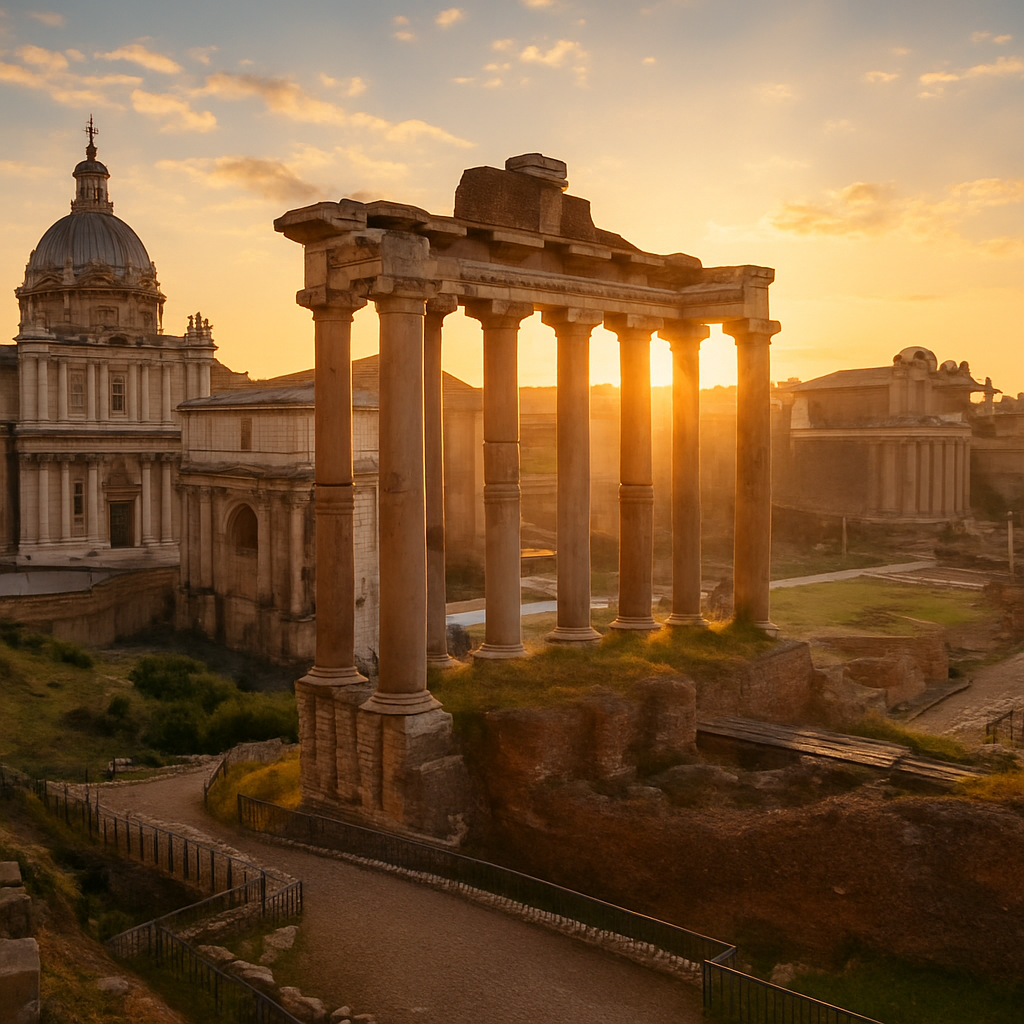
The Colosseum and Roman Forum at First Light
You know you're going. Everyone goes. But the difference between the Colosseum at 10am with 6,000 other people and the Colosseum at its 8:30am opening slot is the difference between visiting a ruin and standing inside history. Book the combined Colosseum-Forum-Palatine ticket (€18) with the earliest timed entry, and walk the Forum afterward when the morning light rakes across the Temple of Saturn. The Palatine Hill — overlooking Circus Maximus, where Roma Pride traditionally ends — is the most undervisited part of the complex and the most rewarding.
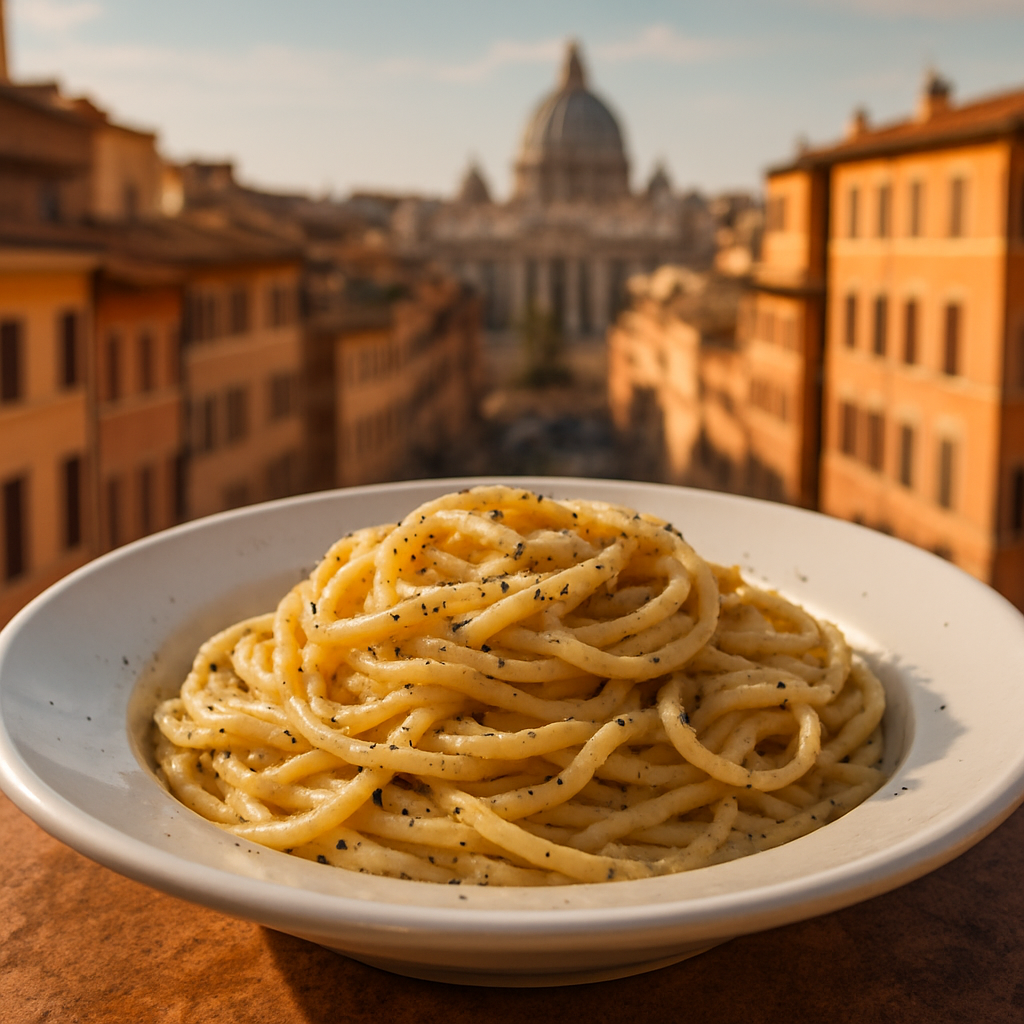
Cacio e Pepe in Testaccio
Roman food is built on a handful of dishes done with fanatical precision, and Testaccio is where you eat them in their natural habitat. This was the slaughterhouse district — the cucina is offal-forward, butter-free, and unapologetically heavy. Get cacio e pepe (pecorino and black pepper, nothing else) at Flavio al Velavevodetto, where the dining room walls are ancient amphora shards, and follow it with a supplì from the Testaccio Market. The market at Piazza Testaccio is the real one — not a tourist performance but where the neighborhood actually shops and eats.
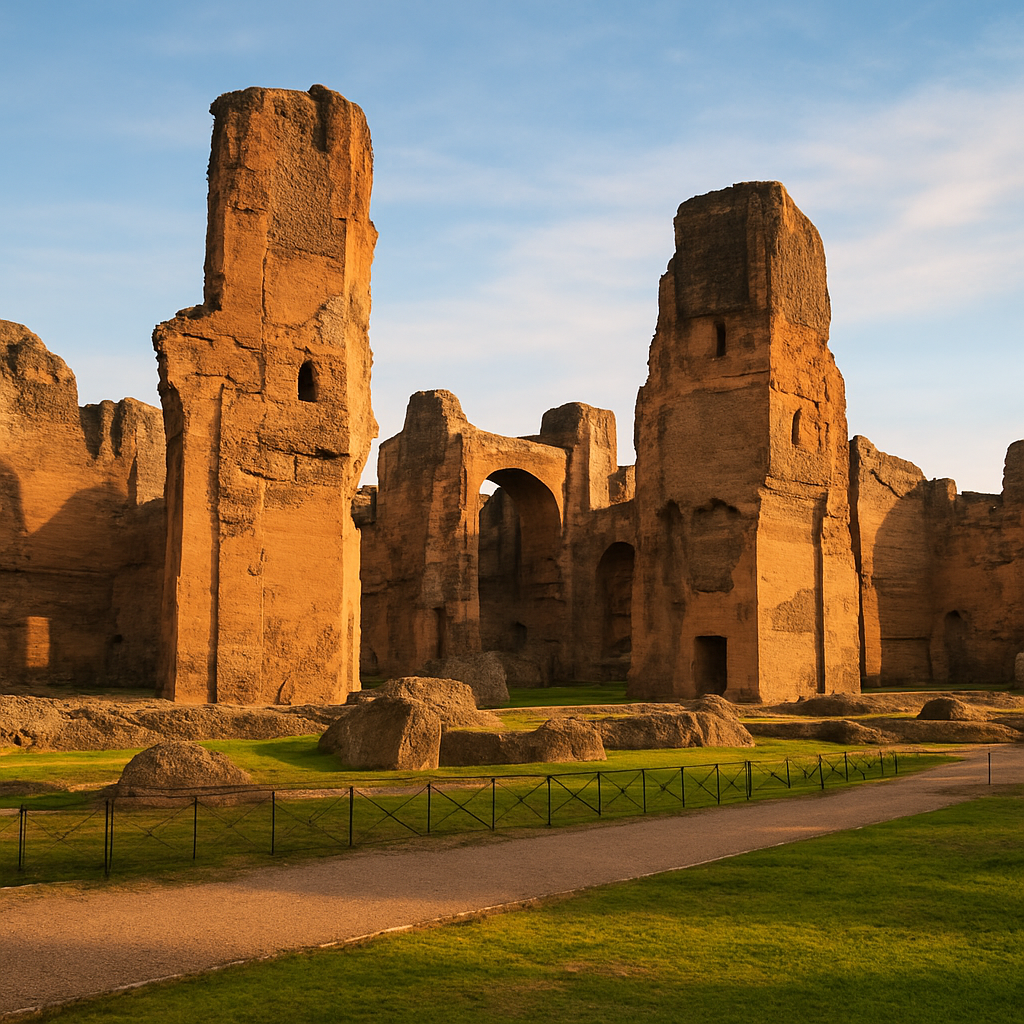
Terme di Caracalla
The Baths of Caracalla held 1,600 bathers at a time when they were operational in the 3rd century — the scale is genuinely shocking when you're standing inside the ruins. These weren't just bathing facilities; they were social centers, and their history as sites of same-sex culture in antiquity is well-documented in scholarship. Most visitors skip them for the Colosseum, which means you'll have room to actually look. Summer evenings bring opera performances staged inside the ruins — an experience that's melodramatic in exactly the right way.
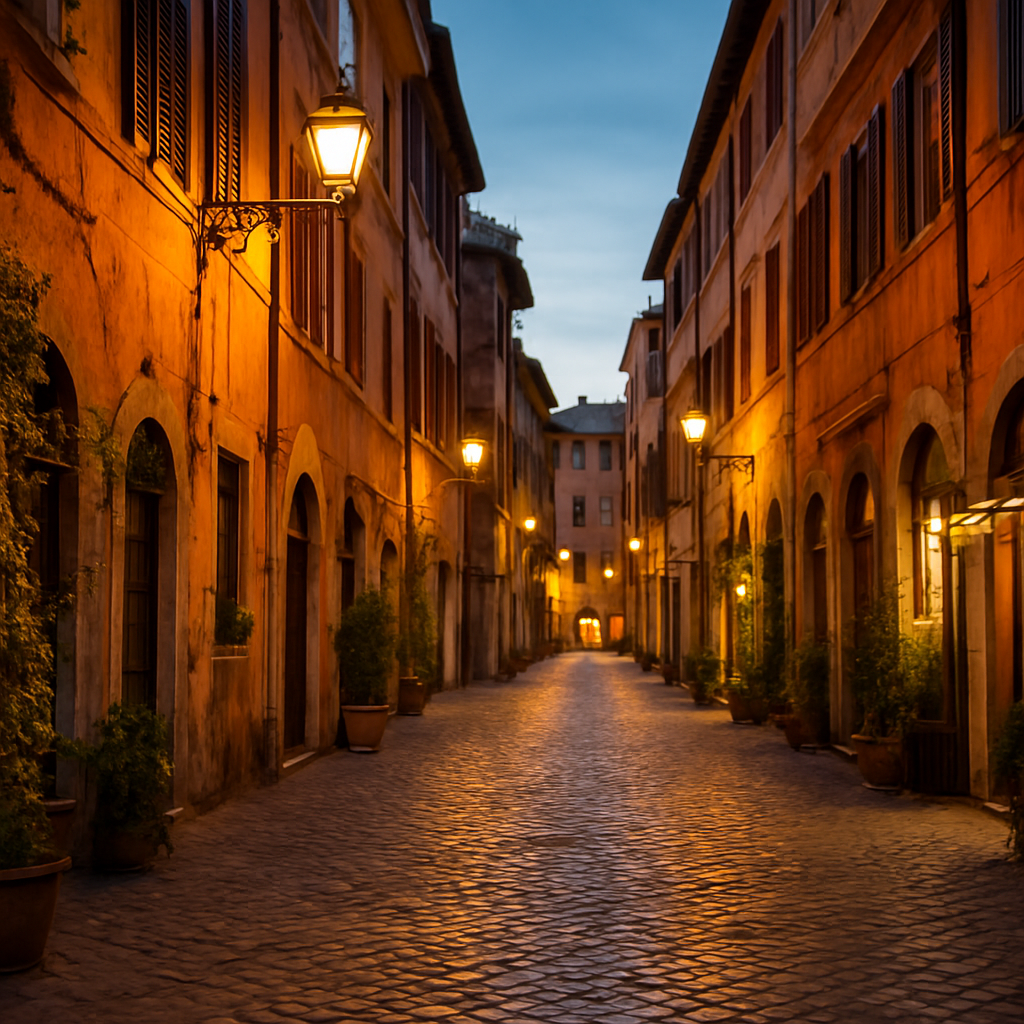
Trastevere After Dark
Not a single attraction — a mood. Cross the Ponte Sisto after 8pm and walk into Trastevere's web of cobblestone streets, where every other doorway is a restaurant spilling candlelight onto the pavement. Start with aperitivo at Freni e Frizioni, then wander toward Piazza di Santa Maria in Trastevere, where the 12th-century basilica's gold mosaics glow against the night sky. Eat wherever the menu is handwritten and the tables are small. This isn't a curated itinerary — it's the permission to get lost in a neighborhood that rewards it.
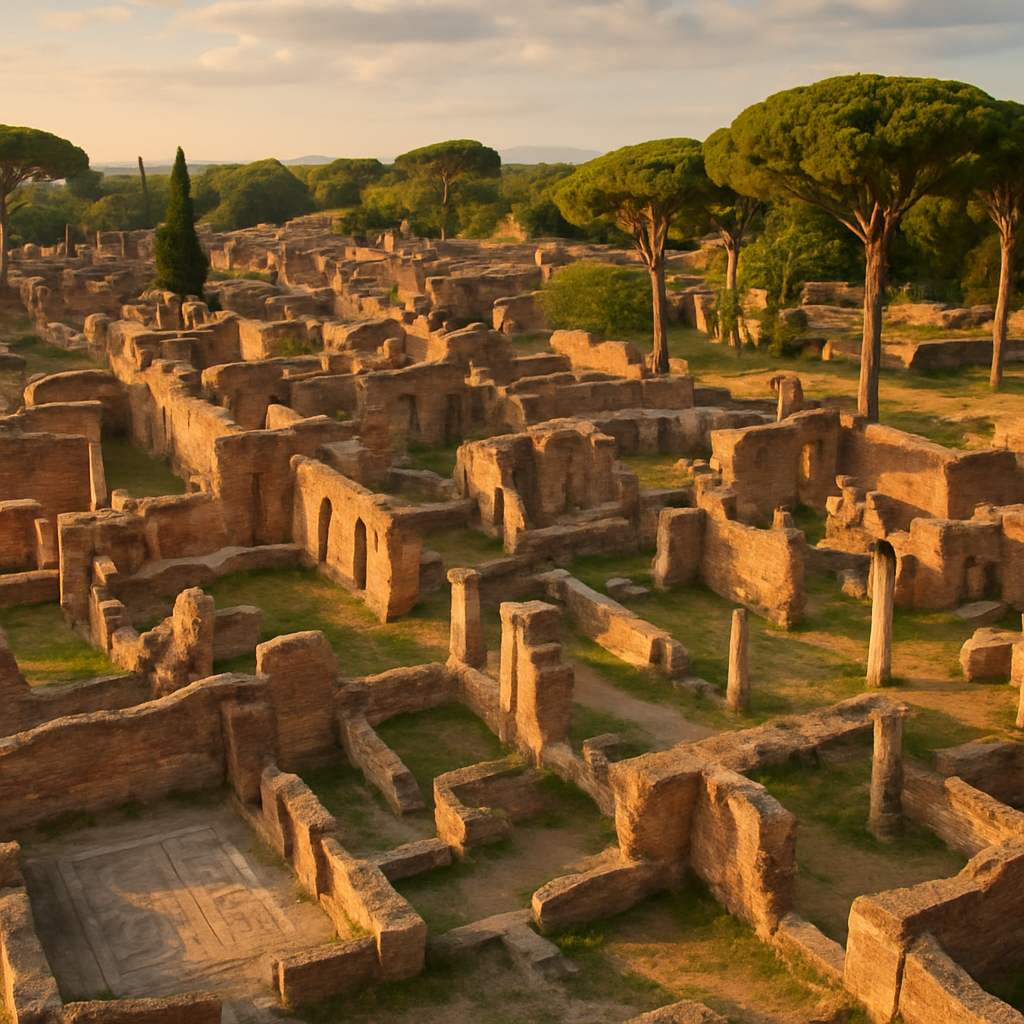
Ostia Antica Without the Crowds
Thirty minutes by regional train from Piramide station, and you're standing in a 150-hectare excavated Roman port city that most visitors never bother to see. Multi-story apartment buildings, bathhouses, a 3,500-seat theatre — all of it open-air and walkable at your own pace. The crowds are a fraction of the Colosseum's, and kids can actually run around without causing an international incident. Archaeological finds here have contributed to scholarly understanding of same-sex relationships in everyday Roman life. Pack a lunch — there's limited food on-site — and give it at least three hours. €12 entry, no advance booking needed.
The places I actually send people to
Advice that fits how you travel
Rome is a strong solo city once you know the rhythms. The aperitivo culture — that 6-to-9pm window when bars serve drinks with complimentary food spreads — is essentially a built-in social mechanism for solo travelers. Plant yourself on the terrace at Coming Out on the Colosseum strip during aperitivo and you will end up in a conversation. The crowd is mixed, bilingual, and accustomed to solo visitors. Pigneto is even better for this if you want to meet actual Romans rather than other travelers — the energy at Omini Bar and the surrounding spots on Via del Pigneto is casually queer and genuinely social without being a scene.
App culture is active in Rome. Grindr, Scruff, and Hornet all have healthy user bases in the city center. Safety-wise, standard urban precautions apply: meet in public first, tell someone where you're going, and if you're headed to a club night in Ostiense, download the itTaxi app beforehand — getting a cab at 3am from an industrial district without it is unnecessarily stressful. The Termini station area is fine during the day but can feel rough after midnight; the Laterano gay strip is a better late-night base.
Budget solo travel in Rome is very doable. A dorm at The Beehive starts at €35/night, churches and piazzas are free, and state museums are free on the first Sunday of every month. Street food from market stalls and pizza al taglio shops means you can eat well for €15–20 a day. Walk everywhere in the center — it's compact enough that public transit is often unnecessary during the day. The city rewards solitude: sitting alone in an empty baroque church at 3pm or eating a supplì on a bench in Testaccio doesn't feel lonely. It feels Roman.
Rome is one of the great romantic cities on earth — and that's not a travel cliché, it's just accurate. The question for same-sex couples is knowing which parts of the city will let you relax into that romance. Trastevere is your answer for evenings. The streets around Santa Maria in Trastevere fill after 8pm with a young, international crowd that is genuinely unbothered by who's holding whose hand. Hotel Santa Maria, a 19-room boutique property at Vicolo del Piede 2 built around a porticoed courtyard of orange trees, puts you at the heart of all of it — and the courtyard alone is worth the rate.
For dinner, book Roscioli Salumeria con Cucina on Via dei Giubbonari several days ahead and arrive hungry. The wine list runs to 2,500 labels and the Roman pasta is as good as you've heard. Walk to Campo de' Fiori afterward — the crowds thin after 10pm and the piazza gets genuinely atmospheric. PDA is unremarkable in both neighborhoods in the evening. If you're on the Via di San Giovanni in Laterano strip near the Colosseum, it's effectively a safe zone. The Vatican area is the one place I'd actively suggest keeping hands to yourselves — the conservative atmosphere is palpable within a few blocks of St. Peter's.
For a daytime experience worth scheduling your whole trip around, book the Galleria Borghese as early as possible — timed entry caps at 360 visitors per session and sells out weeks ahead in high season. The collection includes six Caravaggios, a genuinely stunning building, and a crowd small enough that you can actually stand in front of something and think. For something entirely free, the walk west along the Lungo Tevere at golden hour is the kind of cinematic Roman moment that feels almost unfair.
A few things to say clearly before the practical stuff: Italy does not have marriage equality, adoption rights for same-sex couples are legally limited, and the current government has moved to restrict recognition of children born to same-sex couples via surrogacy abroad. If your family structure involves documents that don't fit a conventional legal template, go in prepared. Famiglie Arcobaleno (Rainbow Families) has specific guidance for LGBTQ+ families visiting Italy and navigating any administrative or healthcare interactions. In practice, Rome's hospitality industry doesn't interrogate family arrangements — but knowing your rights matters.
On the ground, Rome works well for families with kids. Children under 10 travel free on public transit. Under-18s enter state museums free on the first Sunday of each month, which means the Colosseum, the Roman Forum, and the Borghese Gallery can all cost nothing with a little planning. The ancient sites genuinely land with children in a way museums often don't — the Colosseum is just physically enormous, and kids respond to that instinctively. For lunch, the market at Testaccio's Piazza Testaccio has cheap, excellent Roman street food that covers every preference from adults to toddlers without requiring a reservation or a negotiation.
For a day trip that works for everyone, Ostia Antica is the best call Rome has to offer. The regional train from Piramide station (Metro B) takes 30–40 minutes, no advance booking required, and you get 150 hectares of actual Roman ruins — insulae, bathhouses, a 3,500-seat theatre — with a fraction of the central-Rome crowds. Kids can move at their own pace; adults can look at things properly. It's €12 entry and one of the few Rome experiences that genuinely improves with children in tow.
What Rome actually costs
Flights, visas, and the first 30 minutes
Airport: Leonardo da Vinci International Airport (FCO), commonly known as Fiumicino, sits approximately 30 km southwest of central Rome. One of Europe's major hubs, with direct service from 200+ cities worldwide.
Major routes: London Heathrow (LHR) ~2h 40m · New York JFK ~9h · Paris CDG ~2h 15m · Frankfurt (FRA) ~2h 10m · Amsterdam (AMS) ~2h 30m · Dubai (DXB) ~6h 30m.
Visa requirements:
US: Visa-free up to 90 days in any 180-day period (Schengen). ETIAS electronic travel authorisation required from 2025 (approx. €7).
UK: Visa-free up to 90 days (post-Brexit Schengen arrangement). ETIAS authorisation required.
EU: No visa required; national ID card sufficient for EU/EEA citizens.
Canada: Visa-free up to 90 days (Schengen). ETIAS required.
Australia: Visa-free up to 90 days (Schengen). ETIAS required.
Airport to city:
Leonardo Express — €14, 32 minutes: Non-stop to Roma Termini; departs every 15–30 minutes from approximately 06:23 to 23:23 daily. The fast, stress-free option.
Regional FL1 train — €8, 45–60 minutes: Stops at Trastevere, Ostiense, and Tiburtina — genuinely useful if you're staying in those neighborhoods and happy to trade time for the €6 saving.
Licensed taxi (white cab) — €50 flat rate, 45–75 minutes depending on traffic: Fixed fare applies to any destination within the Aurelian Walls. Always confirm the flat rate before the driver starts — this matters.
Airport bus (Terravision, SIT Bus Shuttle) — €6–7, 60–90 minutes: Cheapest option to Roma Termini, but susceptible to serious ring-road delays during peak hours. Fine for early mornings; unreliable if timing matters.
Traven's seasonal breakdown
The questions everyone asks
Is Rome safe for LGBTQ+ travelers?
Do I need to speak Italian?
How much should I budget per day?
What's the best gay bar in Rome?
Is it safe to hold hands with my partner?
When is Rome Pride?
Should I skip August?
Screenshot this before you go
So should you actually go?
Go. Rome is one of those rare cities where the weight of history and the pulse of a living queer culture coexist in the same streets — sometimes the same building. The legal framework is frustratingly incomplete, and you'll calibrate your PDA differently here than you would in Berlin or Barcelona. But the scene is real, the food is life-altering, and every corner of this city has been staging human drama — queer drama included — for two thousand years. You'll navigate some contradictions. You'll also sit on a terrace near the Colosseum with a Campari spritz watching the light turn gold, and you won't want to be anywhere else on earth.
Sources & Resources
Official links we reference when compiling this guide. Last verified 2026-03-07.
- Circolo di Cultura Omosessuale Mario Mieli
- Arcigay Roma
- Roma Pride
- Arcigay Nazionale
- Famiglie Arcobaleno (Rainbow Families)
- AGEDO (Parents and Friends of LGBTQ+ People)
- Rete Lenford (LGBTQ+ Legal Network Italy)
- UNAR – Ufficio Nazionale Antidiscriminazioni Razziali
- Muccassassina Official Site
- Gaynet Italia