
Fukuoka doesn't perform. It hands you a plastic stool on the Naka River at midnight, a bowl of tonkotsu, and a stranger in a suit who wants to talk in three languages.
Fukuoka is the Japan trip nobody tells you to take, which is exactly why you should. Land at FUK, ride the subway eleven minutes to Tenjin, and you're already in the bar district — no other major Japanese city compresses the geography like this. The whole place fits in your pocket. Daimyo is six blocks of converted machiya, third-wave coffee, vintage stores, and small-batch designers; cross the Naka River and you're in Haruyoshi, where the snack-bar gay scene has been ticking along since before most of Tokyo's Ni-chōme rooms opened. The whole queer center of gravity is roughly four blocks of Nishidori and the spillover around the Imaizumi side. Small. That's the entire point.
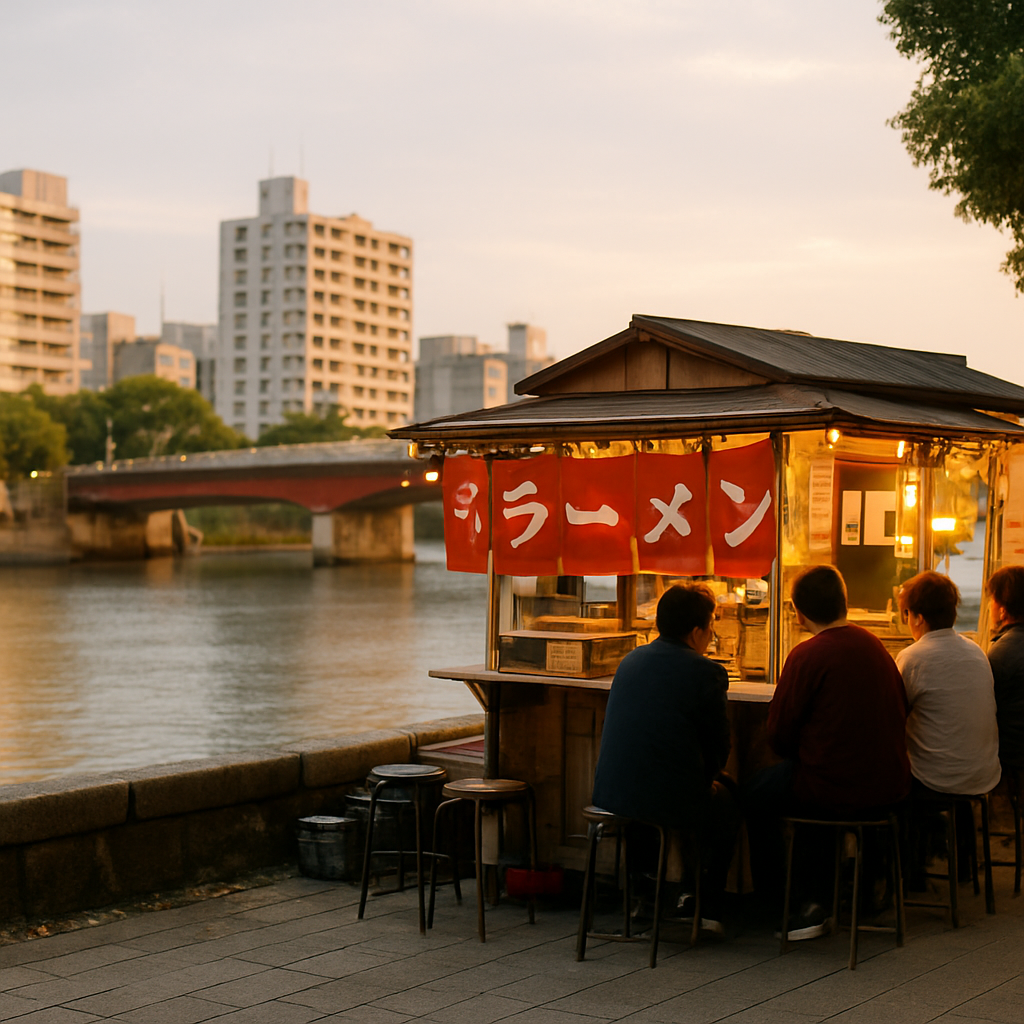
The food is the headline anyone who's been here will tell you about, and they're not wrong. Tonkotsu ramen was invented in this city — Ichiran's headquarters is in Nakasu — and you can eat your way through motsunabe, tetsunabe gyoza, mizutaki, and a hundred-and-fifty-year-old unagi shop without leaving a one-mile radius. But the moment that lands hardest is sitting at a yatai on the Naka River at midnight — plastic stool, glass of beer already sweating, a salaryman to your left and a German tourist to your right, and the conversation you didn't expect happens in three languages by the time the second bowl arrives. Approximately 100 licensed yatai still operate here, the largest concentration in Japan. There's nowhere else in the country you can do this anymore.
The scene itself I gave a 8.0 on Scene, and that's a generous read for a city this size — what it lacks in scale it makes up for in intimacy. The Nishidori rooms seat eight to twelve people at a counter, the mama-san remembers your drink by the second visit, and the unspoken rule is that the loudest person at the bar should probably calm down. The legal picture is more complicated; my Legal score of 5.5 reflects a country where same-sex marriage still isn't recognized at the national level and Fukuoka's municipal Partnership Oath, progressive as it is by Japanese standards, doesn't cross city limits. Read the Know Before You Go section — it matters here.
Here's what the 7.2 overall on my Traven-Dex actually means: a destination that punches well above its profile if you know how to walk into it. Skip the Tokyo-Kyoto-Osaka triangle for once. Base in Daimyo, not Hakata Station. Eat early, drink late, and accept that the night ends with ramen at a riverside stall whether you planned it or not.
The stuff your travel guide buries on page 47
Japan's legal landscape for LGBTQ+ travelers is, as of 2026, a study in contradictions. Same-sex marriage isn't recognized at the national level, joint adoption isn't available to same-sex couples, and there's no comprehensive anti-discrimination law covering sexual orientation or gender identity. What you'll find instead is a patchwork of municipal partnership systems — and Fukuoka, to its credit, was one of the earliest cities in the country to launch one. The Fukuoka City Partnership Oath has been issued since 2018, covering municipal services like public housing access and hospital visitation rights, but it carries no weight outside city limits and private companies opt in voluntarily. Marriage For All Japan has been pushing the national needle for years; the lower courts have ruled the marriage ban unconstitutional in multiple districts, but legislative reform remains pending.
Gender identity law is where things get genuinely complicated. Japan's GID Act still requires medical interventions for legal gender change, though a 2023 Supreme Court ruling struck down the sterilization requirement. Reforms are pending. Trans travelers won't have ID-related issues at hotels for short stays, but anything involving the household registration system gets thorny fast. Nijiiro Diversity tracks workplace and policy reform across the country if you want the latest on where things stand.
On the ground, the cultural reality is what most visitors notice first: Japan's discomfort with LGBTQ+ visibility isn't expressed through hostility — it's expressed through a kind of polite invisibility. Nobody will yell at you. Nobody will refuse you service. But public displays of affection from any couple, gay or straight, are uncommon, and you'll feel the unspoken norm pretty quickly. PDA reads as comfortable inside Daimyo bars and around the Nishidori strip after dark. It reads as low-key on the Hakata-bound subway at rush hour. And around Dazaifu's temple grounds or the Ohori Park family scene, hand-holding from anyone — straight or gay — would feel out of place.
Pro tip: most Nishidori bars charge a table fee (席料) of approximately 1,000-2,000 yen on top of drinks. It's not a scam — it's the business model of a counter bar that seats eight people. Carry cash; many spots still side-eye anything but yen. And the queer venues here open late: most don't fill up until 10 or 11 p.m. Eat your motsunabe early, take a Tenjin coffee break, and pace yourself.
What it actually feels like on the ground
Holding hands. Inside Daimyo and the Nishidori bar strip, nobody blinks. A reader wrote in to say they held hands during cherry blossom season at Ohori Park and got nothing — not a stare, not a comment. The same gesture on the Hakata-bound subway at rush hour earned what I'd call the polite Japanese non-stare, which is its own form of stare. Read the room: bar district and progressive parks, fine; commuter trains and temple precincts, dial it back.
Hotel check-in. Internationally branded properties — Ritz-Carlton, Grand Hyatt, Hilton — won't flinch at two men or two women on one reservation. Their parent companies have global non-discrimination policies and staff trained accordingly. Independent ryokan and smaller business hotels can be hit-or-miss; book a twin or double explicitly as a couples' plan rather than asking awkwardly at the front desk, and you'll skip the negotiation.
Taxis and rideshare. Generally safe and uneventful across the city. English is limited but Google Translate works fine, and drivers in central Fukuoka are professional and discreet. Rideshare apps like Go and DiDi function during peak hours.
Late night around Nakasu. Here's the practical warning: Nakasu after midnight is mostly straight hostess clubs and touts who'll try to pull you into anything with a neon sign. Stay on the Daimyo side of the river and you'll save yourself a 15,000-yen "mistake." Most of Fukuoka's actual gay bars are in Haruyoshi and along Nishidori, not deep in the Nakasu entertainment grid.
Trans travelers. Day-to-day life in central Fukuoka is generally unbothered. The friction points are structural: public restrooms and onsen are strictly sex-segregated, which can create real discomfort for non-passing or non-binary visitors. Many onsen now offer private family baths (kashikiri buro) bookable in advance — that's the workaround most trans travelers I've heard from use, especially on day trips to Yufuin or Beppu.
Verbal harassment risk. Low. Fukuoka has no documented reputation for anti-LGBTQ+ violence, but harassment goes underreported nationally. If something happens, the Fukuoka City Human Rights Promotion Center accepts complaints in Japanese; for English-language support, Stonewall Japan's Slack community is faster than any official hotline. For sexual health resources, akta is the national HIV/STI prevention nonprofit and a useful starting point.
Pro tip: learn three phrases that will get you through any Nishidori night — hitori desu (I'm alone, useful at counter bars), okanjo onegaishimasu (check please), and mou ippai (one more). They will get you 80% of the way through any bar conversation, and the mama-san will appreciate the effort.
The queer geography
Daimyo
If Fukuoka has a center of gravity for the gays, it's Daimyo — and specifically the narrow strip of Nishidori where most of the city's LGBTQ+ nightlife clusters around the Imaizumi side. The neighborhood itself is what makes it worth being here: a dense grid of converted machiya houses, third-wave coffee shops, vintage stores, and small-batch designers tucked into walk-up buildings. Walk it on a Saturday afternoon and you'll see what Tokyo's Shimokitazawa aspired to before it got expensive. By night, the bar scene shifts — small counter bars seating six to twelve, the kind where the mama-san remembers your drink by the second visit. Bar Lalala and Mixed Bar Sunday are the friendliest first stops if your Japanese is shaky. The half-joke locals make is that this is the "nichoume of Kyushu" — a regional answer to Shinjuku's gay district. It's smaller. It's quieter. That's the appeal.
Tenjin
The commercial heart of Fukuoka and the spine of any visit. Department stores, the Tenjin Chikagai underground shopping arcade, the Daimyo Garden City tower with its Ritz-Carlton perched on top — this is where the city does its daytime business. The Starbucks Reserve at Daimyo Garden City is, somehow, where everyone with a laptop and an undercut ends up by 3 p.m. Tenjin Central Park benches are the pre-bar gathering spot in warmer months, and Reizen Park nearby is where Kyushu Rainbow Pride stages its parade every early November. For visitor information, Fukuoka City's official tourism site is the best English-language starting point.
Haruyoshi
Across the river from Daimyo, Haruyoshi is the older bar district — slightly grittier, more lived-in, a holdover from when this stretch was the city's primary nightlife zone before Daimyo gentrified upward. A handful of long-running gay bars operate here in the snack bar format: tiny rooms, counter seating, a charge of approximately 1,000-2,000 yen on top of drinks. Bar Cocktail, Bar Navy, Bar Tatsumi, BeeHive — none of them will win design awards, but they've been quiet fixtures of the local scene for decades. Architecturally, the neighborhood is also home to Hotel Il Palazzo, the only hotel ever designed by Italian architect Aldo Rossi and a postmodern landmark worth a walk past even if you're not staying there.
Hakata
The eastern half of the city, anchored by Hakata Station and the bullet-train hub. This is the business-traveler half of Fukuoka — conservative crowd by day, dead by 9 p.m. by most reports. But it's also where the city's deepest history lives. Kushida Shrine, founded by tradition in 757, is the guardian shrine of the Hakata district and the staging ground for the Hakata Gion Yamakasa festival every July. Walk the old-town grid south of the shrine and you'll find tetsunabe gyoza shops, tonkotsu ramen counters, and the Canal City Hakata mall complex on the river. Stay here if you're prioritizing trains and tradition over nightlife.
Momochi & Ohori Park
The bayside half of the city, west of Tenjin. Ohori Park wraps a 2-kilometer walking path around what used to be the moat of Fukuoka Castle, with the Fukuoka Art Museum (Yayoi Kusama's Pumpkin at the entrance, plus a permanent collection that includes Dalí, Miró, and Chagall) on its eastern edge. Couples picnic here without much side-eye, especially during cherry blossom season. Push further west to Momochi Seaside Park for Fukuoka Tower, an artificial beach, and the kind of sunset views that justify a longer stay. For LGBTQ+ student and community resources tied to the city's academic core, Kyushu University hosts active student groups, and Pride House Tokyo remains the national hub if you need broader connection points before or after your visit.
The experiences worth rearranging your itinerary for
A Yatai Night on the Naka River
Fukuoka has approximately 100 licensed yatai, the largest concentration in Japan, and the row along the Naka River is the postcard. You sit on a plastic stool, elbow-to-elbow with a salaryman and a German tourist, and order tonkotsu ramen, yakitori, oden, and a beer that comes in a glass that's already sweating. A late-night yatai run after bar-hopping is non-negotiable here — get the ramen, get the yakitori, and accept that a stranger in a suit will eventually start a three-language conversation with you.
A Slow Morning at Ohori Park
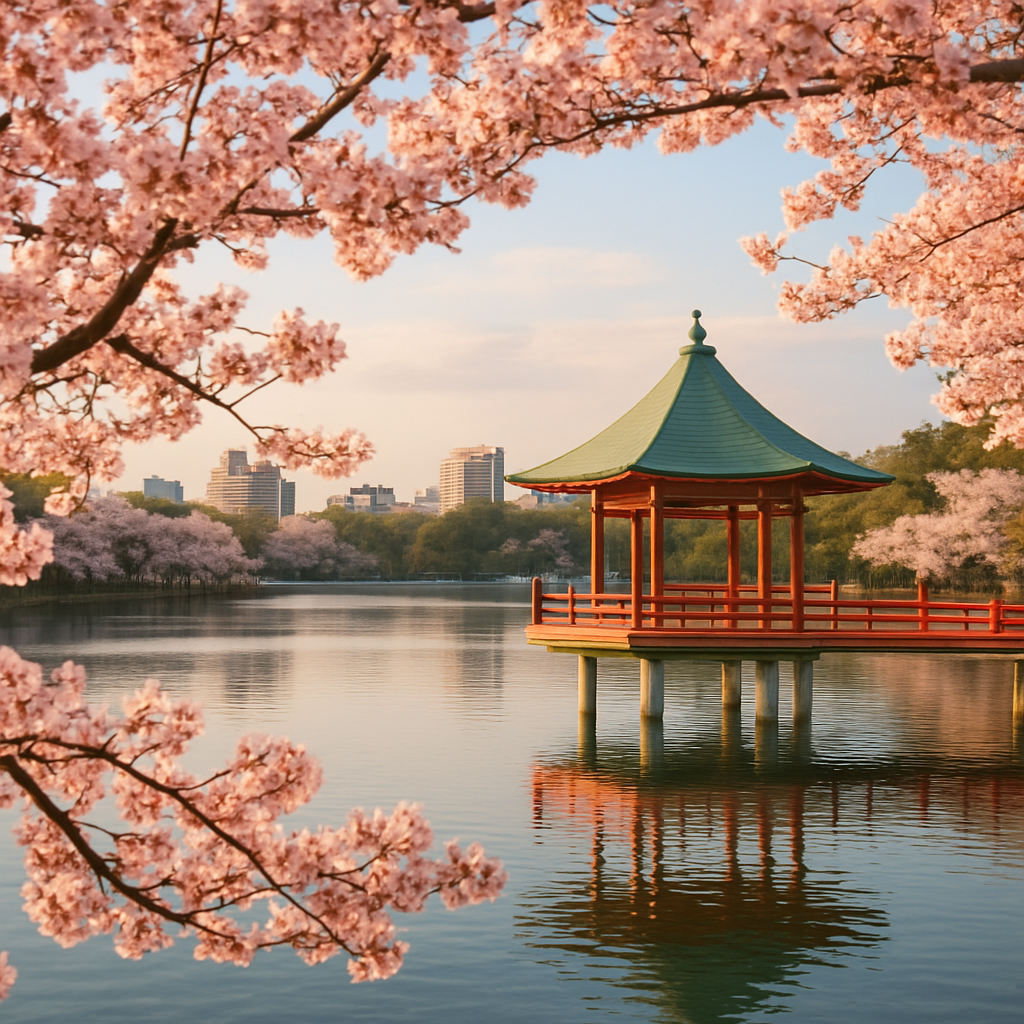
The 2-kilometer path around the lake at Ohori Park is what the city does instead of a gym membership — runners at sunrise, families by mid-morning, picnickers under the cherry trees during hanami. On the eastern edge, the Fukuoka Art Museum reopened in 2019 after a Maekawa-firm renovation; ¥200 gets you Yayoi Kusama's Pumpkin, plus Dalí, Miró, Chagall, and Warhol in the same building as Buddhist sculpture and Edo-period painting. Coffee, a loop of the water, an hour with the Kusama — the morning that resets the rest of the trip.
Kushida Shrine and the Hakata Old-Town Walk
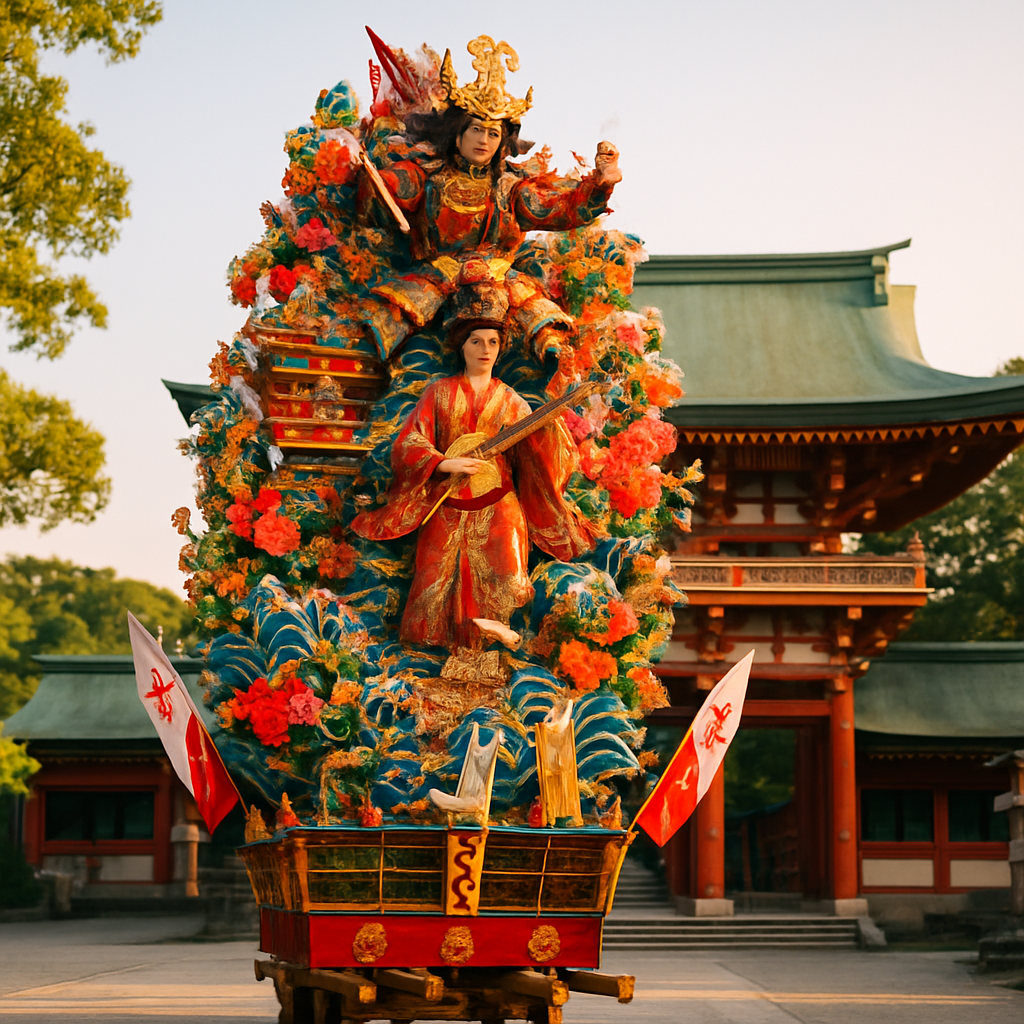
Founded by tradition in 757, Kushida Shrine is the guardian shrine of the Hakata district and the staging ground for the Hakata Gion Yamakasa festival every July. The grounds permanently display a decorative kazariyama float — a free history lesson three stories tall. Walk the old-town grid south of the shrine and you're inside the Hakata of tetsunabe gyoza shops, tonkotsu ramen counters, and the kind of small temples that don't make the guidebooks.
A Half-Day at Dazaifu
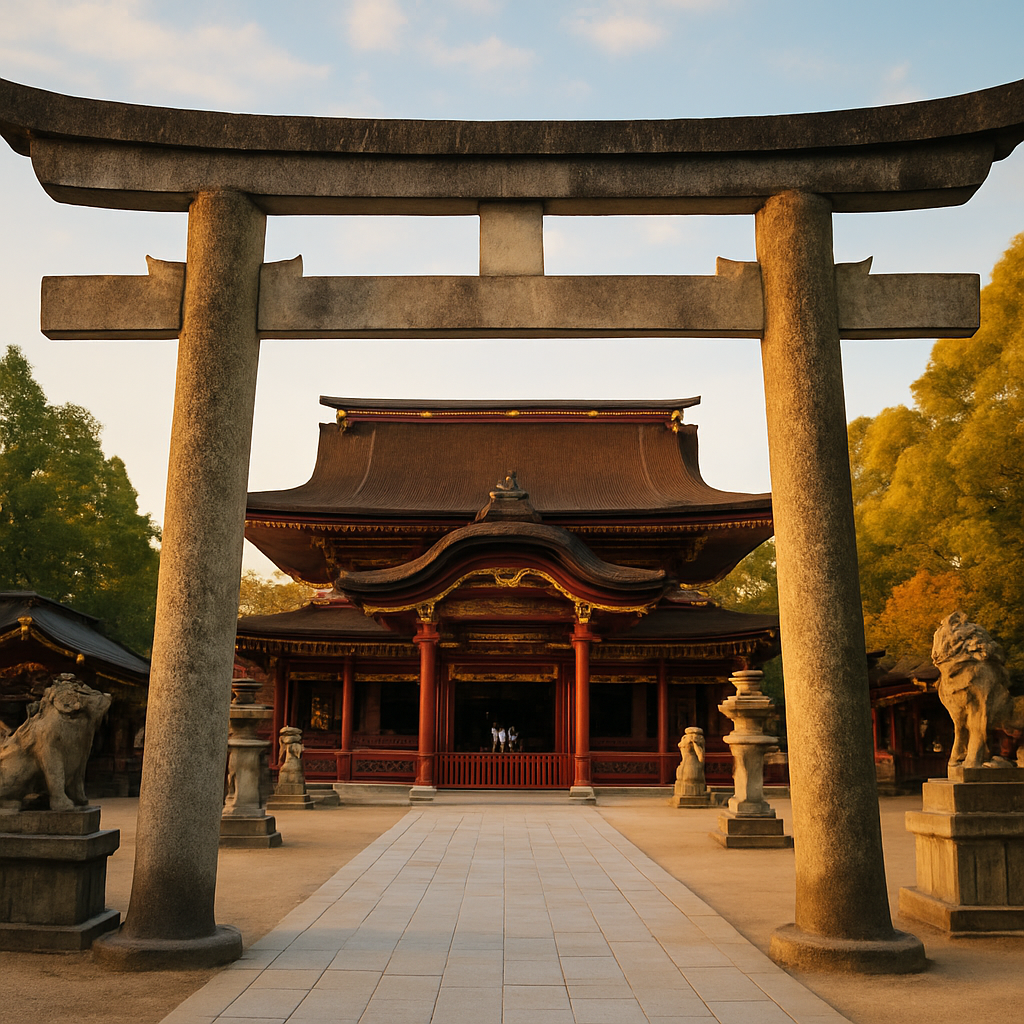
Thirty minutes by Nishitetsu rail and you're at Dazaifu Tenmangu Shrine, founded in 919 CE and dedicated to the deified scholar Sugawara no Michizane. The approach is lined with umegae mochi shops grilling the same sweet bean rice cake they've been making for generations, and the Kyushu National Museum sits behind the shrine — one of only four national museums in Japan, opened in 2005. Add the Komyozenji Zen garden across the road and the half-day fills itself.
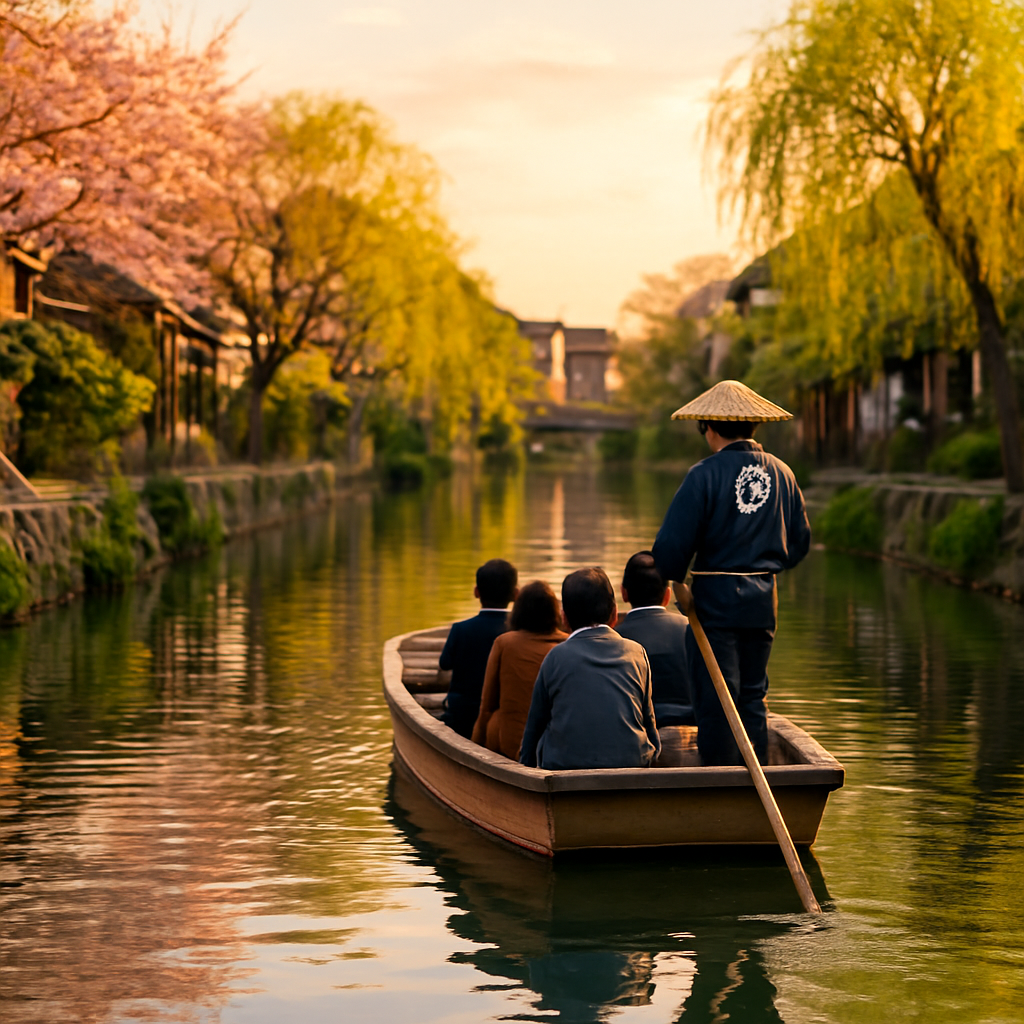
Canal Boats and Steamed Eel in Yanagawa
Fifty minutes south of the city by Nishitetsu, Yanagawa is a former castle town threaded with canals from the early 1600s. The donkobune boat ride is the draw — a guide poles you through the willow-lined waterways, singing folk songs as the town slides past. Lunch is non-negotiable: unagi no seiro-mushi, the regional steamed-eel-over-rice that comes in a lacquered box and tastes like the dish was invented for this exact afternoon.
The places I actually send people to
Advice that fits how you travel
Fukuoka is one of the easier solo trips in Japan, and the gays know it. The city is walkable end-to-end, the subway is two lines you'll memorize in an afternoon, and the bar format genuinely rewards showing up alone — most Nishidori rooms seat eight to twelve people at a counter, which means you're not negotiating a table for one. You're just sitting down. The mama-san pours, the regular next to you asks where you're from, and three drinks later you've got a 1 a.m. yatai plan you didn't have an hour ago.
App culture exists but is quieter than Tokyo or Osaka — Grindr in central Daimyo works, the radius is small, and the responses are slower and more conversational than what you'd expect in a bigger city. Honestly, the bars do more work here than the apps. Pro tip: learn hitori desu (I'm alone) before you walk into a counter bar — it telegraphs that you know the format and short-circuits any awkwardness about waiting for someone.
On the budget side, solo travel here is one of the better deals in the country. A capsule or hostel runs ¥3,500-¥5,500, a tonkotsu bowl at Hakata Issou is under ¥1,200, and the subway day pass is approximately ¥800. Base yourself in Daimyo, not Hakata Station — Hakata is convenient for trains but quiet by 9 p.m., while Daimyo puts you a five-minute walk from BeeHive, the friendliest first stop if your Japanese is shaky, and every bar I'd send you to next.
For same-sex couples, Fukuoka reads more comfortable than its Traven-Dex numbers might suggest, mostly because the city is small enough that the welcoming pockets are easy to stay inside. Daimyo and the Nishidori bar strip won't blink at hand-holding after dark, and a reader wrote in to say they walked Ohori Park during cherry blossom season holding hands and got nothing — not a stare, not a comment. Read the room: progressive parks and bar districts, fine; the Hakata-bound subway at rush hour and Dazaifu's temple grounds, dial it back the way any Japanese couple would.
For accommodation, the international brands do the heavy lifting. The Ritz-Carlton Fukuoka in the Daimyo Garden City tower is the most central luxury address in the city and a five-minute walk from every Nishidori bar worth visiting; the Grand Hyatt Fukuoka inside Canal City is the mid-luxury move; Hotel Il Palazzo in Haruyoshi is the design-pilgrimage option, an Aldo Rossi postmodern landmark next to the older gay bar cluster. Pro tip: for smaller independents and ryokan, book a twin or double explicitly as a couples' plan rather than asking at the front desk — the request lands cleaner in writing than in person.
For memorable nights: a tasting menu at La Maison de la Nature Goh (one Michelin star, Asia's 50 Best, quieter than the food deserves) is the celebration dinner; the donkobune canal-boat ride at Yanagawa followed by unagi no seiro-mushi is the day trip Fukuoka people themselves take when they want to feel like tourists; and a slow loop of Ohori Park at sunrise with coffee and a stop at the Yayoi Kusama Pumpkin at the Fukuoka Art Museum is the morning that resets the rest of the trip.
For LGBTQ+ families, Fukuoka is logistically easy and legally complicated in roughly equal measure. The city itself is genuinely kid-friendly — Ohori Park has a 2-kilometer walking loop, a Japanese garden, and the Fukuoka Art Museum (¥200 gets you Yayoi Kusama, Dalí, and Chagall in one stop); Momochi Seaside Park has Fukuoka Tower and an artificial beach; and Canal City Hakata is the kind of mall complex that solves a rainy afternoon. Strollers work on the subway, kid menus exist at most casual restaurants, and tetsunabe gyoza at Manryu is, frankly, food children will fight over.
The legal piece is where things get harder, and I won't sugarcoat it. As of 2026, Japan does not recognize same-sex marriage at the national level, joint adoption isn't available to same-sex couples, and Fukuoka City's Partnership Oath — issued since 2018 — covers municipal services like hospital visitation and public housing access but carries no weight outside city limits and no recognition of family structure for things like school enrollment paperwork. Bring documents from home if you need actual recognition for medical situations: birth certificates, custody paperwork, the full file. Marriage For All Japan tracks where the legal needle is moving.
On the ground, the reception is the polite Japanese version of welcoming — nobody will say anything, nobody will refuse you service, and the staff at the international hotel brands (Ritz-Carlton, Grand Hyatt, Hilton) will read a two-parent-one-kid reservation as a two-parent-one-kid reservation without commentary. Public schools and pediatric clinics observationally treat LGBTQ+ families with professional discretion rather than visible warmth, which most families I've heard from describe as comfortable enough. Pro tip: for a day trip with kids, Dazaifu is the win — thirty minutes by Nishitetsu rail, the shrine grounds are open and easy, the umegae mochi shops along the approach handle the snack situation, and the Kyushu National Museum has English signage and enough scale to fill an afternoon.
What Fukuoka actually costs
Flights, visas, and the first 30 minutes
Airport: Fukuoka Airport (FUK) is one of the most centrally located major airports in Japan — the subway from the international terminal reaches Hakata Station in roughly 5 minutes and Tenjin in about 11. There's no faster airport-to-city transit in the country, and at ¥260 it's also the cheapest.
Direct routes: Approximately 30 direct international routes serve Fukuoka, with the heaviest concentration coming from Seoul (~1h 20m), Taipei (~2h 30m), Shanghai (~2h), Hong Kong (~3h 30m), and Bangkok (~5h 30m). North American and European travelers typically connect through Tokyo (Haneda or Narita), Seoul Incheon, or Taipei Taoyuan; the Tokyo-Fukuoka leg runs about 1h 50m by air or roughly 5 hours on the Shinkansen from Shin-Osaka.
Visa requirements (as of 2026): US, UK, EU, Canadian, and Australian passport holders can typically enter Japan visa-free for stays up to 90 days for tourism. Most visitors are generally required to have a passport valid for the duration of stay and proof of onward travel. Rules can change — confirm with the Japanese embassy or consulate in your country before booking.
Airport to city: The Kuko subway line (¥260, 5–11 min) drops you directly at Hakata or Tenjin and is the move for almost every traveler. Airport shuttle buses run ¥270–¥310 and take 15–20 min to Hakata Station and Tenjin. Taxis run ¥1,500–¥2,500 (15–25 min) and are convenient for groups or late arrivals, though English is typically limited. Rideshare via Go or DiDi runs ¥1,800–¥3,000 with surge pricing during peak hours.
Traven's seasonal breakdown
The questions everyone asks
Is Fukuoka safe for LGBTQ+ travelers?
Where is the gay scene in Fukuoka?
Do I need to speak Japanese to enjoy the bars?
Can same-sex couples book a room together without issue?
How much should I budget per day?
Is Fukuoka worth visiting if I've already done Tokyo and Kyoto?
When is Kyushu Rainbow Pride?
Screenshot this before you go
So should you actually go?
Go — and go before everyone else figures out it's the move. Fukuoka isn't going to give you the spectacle of Tokyo or the polish of Kyoto, and the gay scene fits inside four blocks of Nishidori with the older snack-bar cluster across the river in Haruyoshi. What it gives you instead is intimacy, food that justifies the flight on its own, and a city compact enough to walk across in an afternoon. The legal landscape, as of 2026, has real limits — read Know Before You Go before you book, especially if you're traveling as a family. But for solo travelers, same-sex couples comfortable reading the room, and anyone who's done the obvious Japan circuit and wants the version locals love, this is the trip. Time it to early November for Kyushu Rainbow Pride and the autumn foliage at once. You'll come home telling everyone they've been doing Japan wrong.
Sources & Resources
Official links we reference when compiling this guide. Last verified 2026-05-04.
- akta — HIV/STI Prevention Resources Japan
- Fukuoka City Official Tourist Information
- Kyushu University LGBTQ+ Student Resources
- Marriage For All Japan
- Nijiiro Diversity (LGBTQ+ workplace and policy nonprofit)
- Pride House Tokyo (national resource hub)
- Stonewall Japan (English-speaking LGBTQ+ community)