
Gifu doesn't perform for you. It hands you a riverside bath, a 1,300-year-old fishing fleet, and tells you to slow down — or get back on the train to Nagoya.
Gifu is the quiet half of a regional code that almost no foreign traveler bothers to crack: you sleep here, you slow down here, and when you want loud you ride twenty minutes east to Nagoya. That's the deal, and once you accept it, this city becomes one of the most underrated bases in central Japan. There's a reason I gave it an 8.1 on Destination — the Nagara River bending under Mount Kinka, the lit-up castle holding the skyline at night, the preserved Edo streets of Kawaramachi at dusk — and a 3.5 on Pulse, because the visible community here is a half-block of Tamai-cho off the Yanagase arcade and a rumor on Twitter/X about which second-floor snack is open tonight.
The contradiction is the whole point. Gifu doesn't have a gay village so much as it has a gay rumor — you'll hear about "that bar in Tamai-cho" for three nights before someone finally walks you to the unmarked door on the second floor. Visibility here is coded: a small sticker in a café window, a particular bartender who knows the regulars, a snack mama who runs a quiet circle by referral. There's no street hostility, no criminalization, no advisories warning you away. There's also no rainbow flag in a storefront the way you'd see in Shinjuku Ni-chōme. As of 2026, Gifu City's Partnership Seido — the same-sex partnership certificate launched in April 2022 — is the closest thing to municipal acknowledgment, and locals who got one will tell you the symbolic weight of a Gifu-stamped paper hit harder than the limited recognition itself.
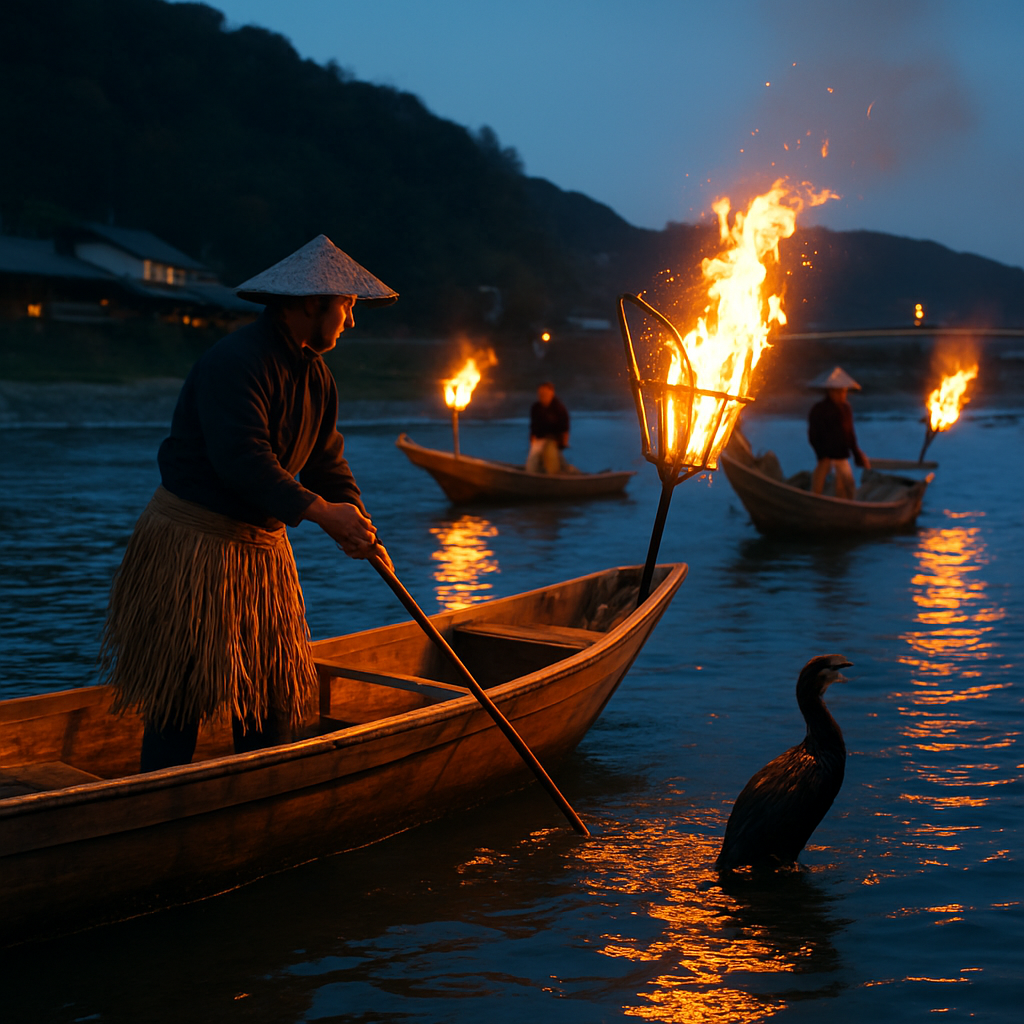
What you come here for, then, is the slow evening that almost no one else in central Japan is offering. Cormorant fishing on the Nagara — approximately 1,300 years of ukai — running nightly from May 11 through October 15, watched from a low yakatabune with firelight on the water and absolutely no one on the boat caring which gender you brought. Ayu sweetfish at a riverside ryotei in Kawaramachi. A private kashikiri-buro bath at a Nagaragawa Onsen ryokan facing the castle. The ropeway up Kinka at sunset, which is the unofficial first-date move for queer locals and one of the cheapest pieces of romance you'll engineer anywhere in Japan. My Chill score of 6.2 is generous and earned — this is a city that lets you exhale.
The honest pitch: two nights in Gifu, a half-day in Nagoya for the actual gay bars in Naka-ku, and you've cracked the regional code that almost every guidebook misses. Don't come here looking for the scene. Come here for the river, the castle, the kaiseki, the bath — and let Yanagase be the quiet bonus on the second night, after you've had the day the city is actually built for.
The stuff your travel guide buries on page 47
Japan's legal landscape for LGBTQ+ travelers is, as of 2026, a study in contradictions. Same-sex marriage isn't recognized at the national level, adoption rights for same-sex couples don't legally exist, and the 2023 LGBT Understanding Promotion Act offers symbolic acknowledgment without enforceable anti-discrimination protections. The good news at the local level: Gifu City launched its Partnership Seido (same-sex partnership certificate system) in April 2022, granting limited municipal recognition for housing, hospital visits, and certain city services. It's not marriage, but it's something — and organizations like Marriage For All Japan are still pushing the national fight.
Gender identity law remains thorny. Legal gender change technically still requires medical intervention, though a 2023 Supreme Court ruling struck down the sterilization requirement — implementation across prefectures has been inconsistent, and Gifu is no exception. For policy context and advocacy resources, Nijiiro Diversity tracks workplace and civic protections nationwide, and Pride House Tokyo is the closest thing to a national LGBTQ+ resource hub.
Culturally, the reality on the ground is what I'd call polite invisibility. There's no criminalization, no street hostility I've ever seen reported, and no government advisories warning LGBTQ+ travelers to stay away. But you also won't see rainbow flags in Yanagase storefronts the way you would in Shinjuku Ni-chōme. Visibility here is coded — a small sticker in a café window, a bartender who knows the regulars, a snack bar mama who runs a quiet circle. Pro tip: Gifu's queer scene operates on the snack bar model — small, mama-run, often by reservation or referral. Cold-walking into a place in Tamai-cho works occasionally, but messaging ahead through Twitter/X gets you a much warmer welcome.
PDA-wise, Japanese norms favor reserved public affection regardless of orientation. Same-sex couples holding hands at Gifu Station or along the Nagaragawa riverside walk generally won't draw negative attention — but they will draw curious looks, because hardly anyone, gay or straight, is doing it. Lean into the local norm and you'll be fine.
What it actually feels like on the ground
Holding hands in public: In Gifu Station and along the Nagaragawa promenade, hand-holding is fine but uncommon — Japanese reserve cuts across all couples. In the Kawaramachi old town and Gifu Park, where the crowd skews older and more traditional, keep affection subtle. In rural day-trip territory like Gujo Hachiman or the Hida villages, discretion is the local norm regardless of who you are.
Hotel and ryokan check-in: Mid-tier business hotels around Gifu Station — Comfort Hotel, Daiwa Roynet, Dormy Inn — handle same-sex couple bookings without comment; staff are professional and trained for international guests. Traditional ryokan in Nagara Onsen can be more delicate, especially when the booking is for a single bed. Pro tip: If you only learn one phrase, make it pātonā to kimashita ("I came with my partner") — said warmly at check-in, it disarms 90% of the awkwardness.
Onsen and bathhouses: All public baths are sex-segregated. Same-sex couples wanting to share the experience should book a private kashikiri-buro bath — most Nagaragawa Onsen ryokan offer one for an extra ¥3,000–5,000, no questions asked. This is the standard workaround and it works perfectly.
Yanagase nightlife and late-night walking: The Yanagase arcade at midnight on a weeknight is one of the calmer urban environments I've walked through in Japan — sleepy, well-lit under the covered roof, populated mostly by older salarymen weaving home. Verbal harassment is rare to nonexistent. The Gifu Prefectural Police koban at the south end of the arcade is your point of contact if anything goes sideways; staff there are used to lost tourists and have at least basic English.
Trans travelers: Reports from the community describe Gifu as generally indifferent rather than hostile — polite, low-friction service but minimal visibility, gendered onsen and toilet facilities throughout, and limited trans-aware healthcare locally. Private kashikiri ryokan baths and gender-neutral hotel chains near the station are the safest options. For HIV/AIDS support and broader sexual health resources nationally, akta and JaNP+ are the established Japanese networks. For broader community support and traveler check-ins, Stonewall Japan connects LGBTQ+ residents and visitors across the country.
Taxis and ride-share: Taxi drivers in Gifu are uniformly professional and reserved. There's no app-based gay matchmaking around taxi etiquette to worry about — you get in, you say where you're going, you pay. For late-night medical needs, Gifu Municipal Hospital in Kashima-cho is the standard recommendation.
The queer geography
Gifu doesn't have a gay neighborhood. It has a gay rumor — and once you know where to listen for it, the city opens up. Here's where to spend your time, and where the community quietly gathers when it does.
Yanagase
Gifu's nightlife heart is a covered shopping arcade dating to the post-war years, dimly lit, slightly faded, and packed with the kind of small bars and izakaya that make Japanese drinking culture worth the flight. The Yanagase Shopping Arcade runs the length of central Gifu, anchored by tonkatsu institutions, yakitori counters, and hundreds of snack bars tucked into upper floors and side alleys. Within Yanagase, Tamai-cho is the half-block stretch where the city's tiny LGBTQ+ scene lives — a couple of mixed bars like Bar Funny and Café Bar Mintaka, plus a few unmarked second-floor snacks that operate on referral. Knock, don't push.
Kawaramachi
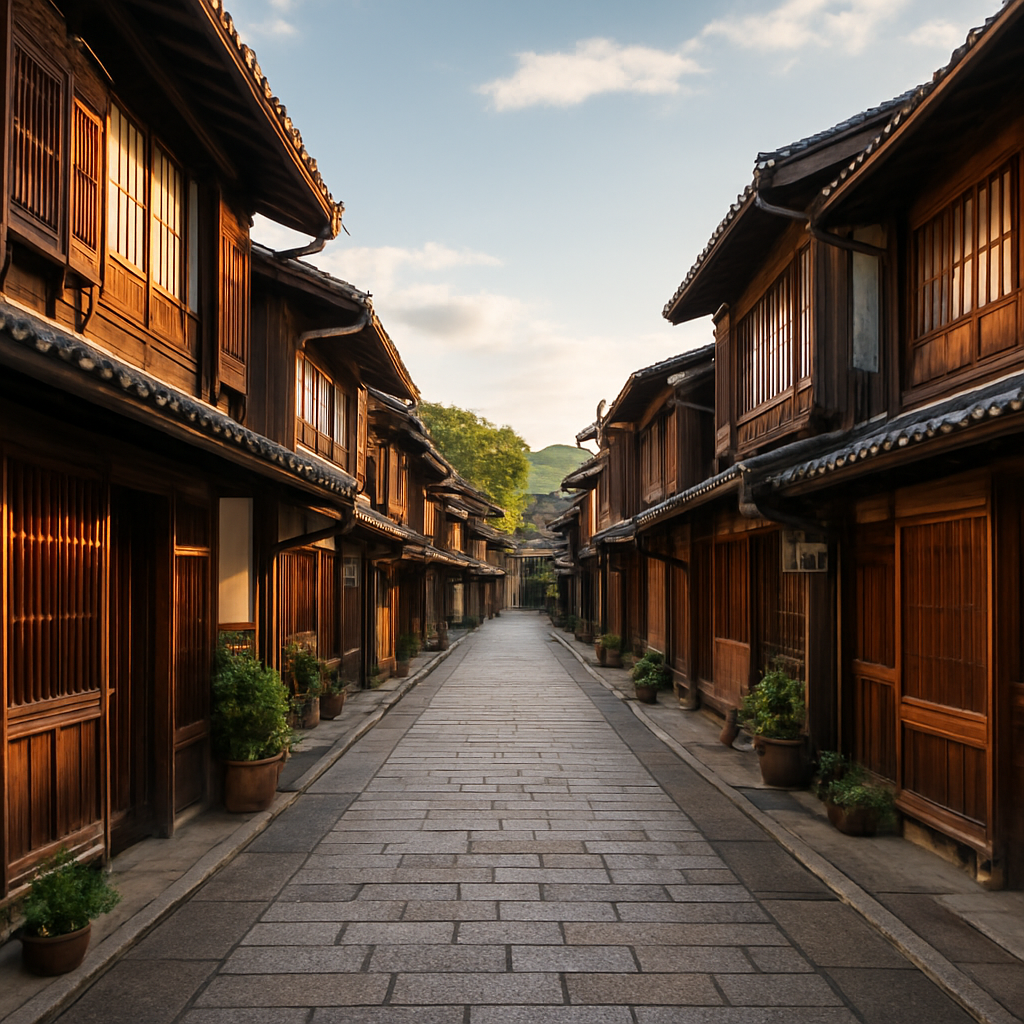
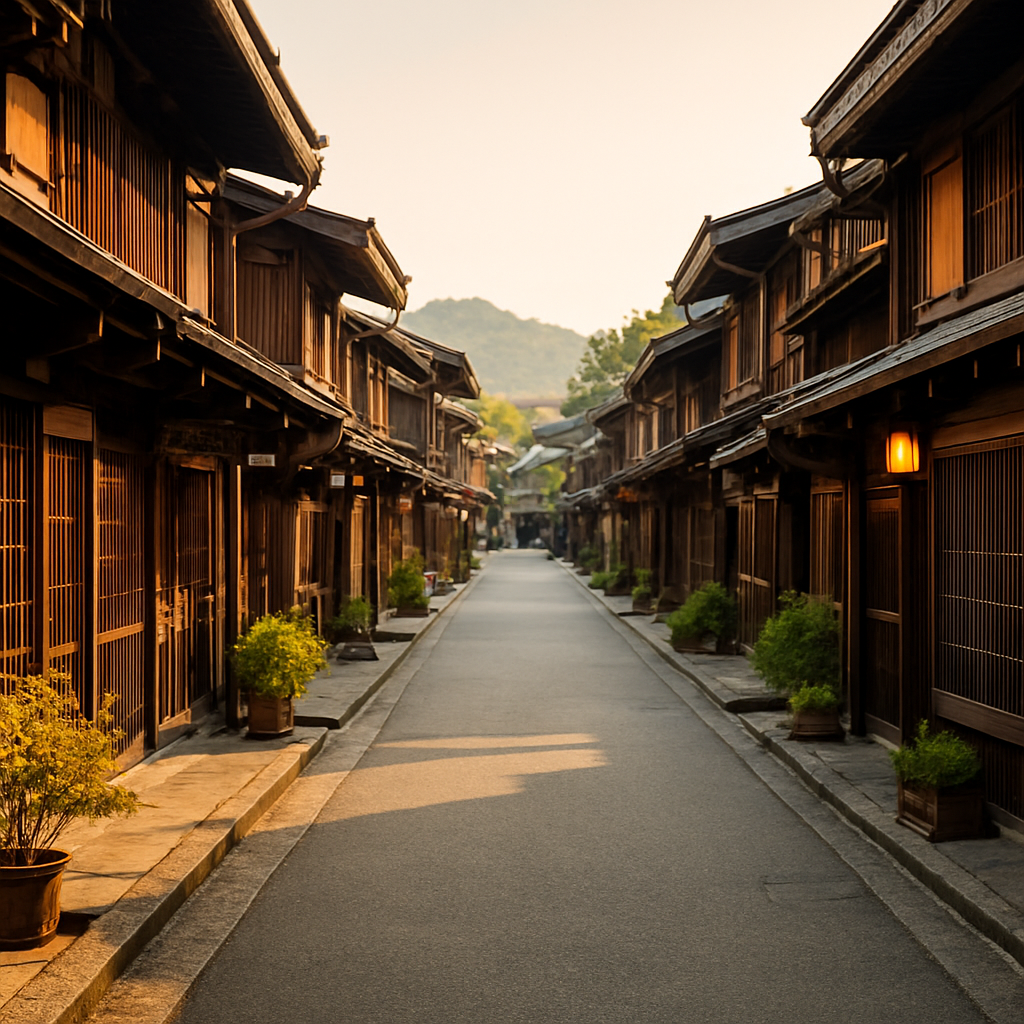
The most beautiful walk in the city. Kawaramachi is a preserved Edo-period merchant district along the Nagara River at the foot of Mount Kinka, all wooden machiya townhouses, paper lantern shops, and washi paper merchants. This is where Gifu's lantern trade was born and where it still partially lives — narrow streets, lattice fronts, the sound of the river always close. Stop for ayu sweetfish at one of the riverside ryotei, and time your visit for the cormorant fishing pier at dusk. There's no specific LGBTQ+ infrastructure here, but it's the kind of district where same-sex couples blend seamlessly into the broader tourist crowd. The Gifu Prefecture Human Rights Promotion Division is the official body to know if you're researching the broader prefectural picture.
Nagaragawa Onsen
The hot spring district directly across the river from Mount Kinka, lined with riverside ryokan and old-school resort hotels facing Gifu Castle. This is the romance corridor — slow evenings, riverside soaking, kaiseki dinners with views of the lit-up castle on the mountain. The Miyako Hotel Gifu Nagaragawa and the heritage Juhachiro ryokan anchor the high end, and most properties offer private kashikiri baths that solve the same-sex couple onsen question elegantly. Pro tip: The ropeway up Mount Kinka to Gifu Castle at sunset is the unofficial first-date move for queer locals — quiet cars, panoramic view of the Nagara River bend, and almost no crowds on a weekday.
Gifu Station / Kandamachi
Practical, modern, and where most travelers will base themselves. Gifu Station is the transit anchor — JR trains east to Nagoya in 20 minutes, Meitetsu lines south, and the gleaming gold statue of Oda Nobunaga out front that you'll walk past five times before you stop noticing. The surrounding Kandamachi district has the city's most reliable ramen counters (Tsubaki for the regional shoyu style is non-negotiable), large-format izakaya, and the kind of business hotels that cost half what they would in Tokyo. From here, Nagoya's gay nightlife in Naka-ku is a 20-minute train ride — make a night of it, then come home to your quiet riverside hotel.
Tamai-cho alley
Worth calling out separately, because it's where Gifu's queer infrastructure actually lives. A narrow lane within Yanagase dense with snacks and tiny drinking spots, a few of which quietly cater to gay regulars. Watch out for: most snacks charge a ¥1,500–3,000 "set" fee on top of drinks — ask the price before sitting down, no one will be offended. For broader regional context and the annual gathering, Tokyo Rainbow Pride is the national umbrella, but Gifu locals tend to make the 25-minute Meitetsu trip to Nagoya Rainbow Pride at Hisaya-Odori Park each spring. That's the unofficial annual reunion for the Tokai region's community.
The experiences worth rearranging your itinerary for
Cormorant Fishing on the Nagara River
Thirteen hundred years. That's how long fishermen have been working the Nagara at night with torches and trained cormorants, and the Imperial Household still designates the masters and reserves the catch. You watch it from a low wooden yakatabune boat — firelight on the water, the birds diving, the river smelling like wet stone and woodsmoke. The season runs May 11 through October 15, nightly, weather permitting. Bring sake. The boat staff will look the other way as long as you tip.
Mount Kinka Ropeway to Gifu Castle at Sunset
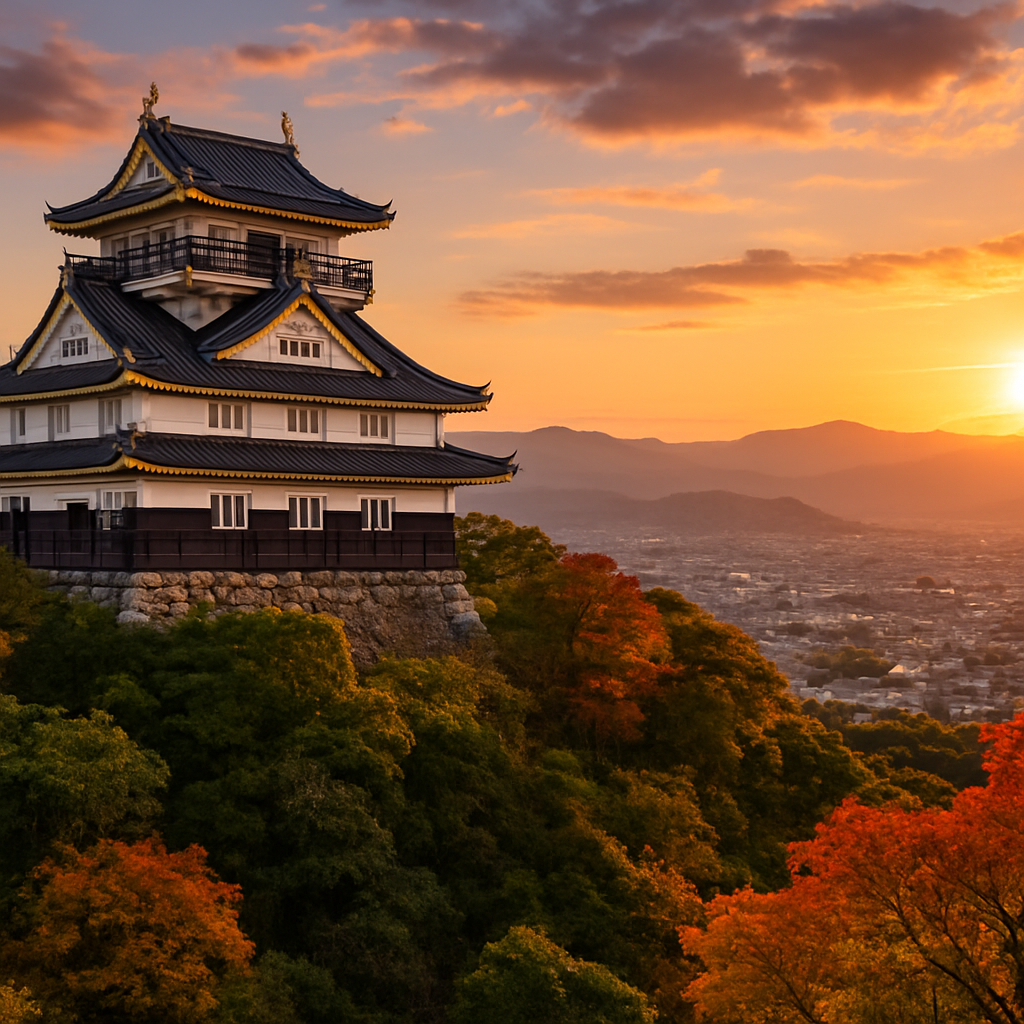
The ropeway up Mount Kinka at sunset is the unofficial first-date move for queer locals, and once you ride it on a weekday you'll understand the math: quiet cars, almost no crowds, and a 329-meter view of the Nagara River bending around the base of the mountain. The castle itself is a 1956 concrete reconstruction — you're not here for the architecture, you're here for the moment when the lights of Gifu come on below you. Stay until the last car down. The walk back to Kawaramachi in the dark is part of it.
A Slow Walk Through Kawaramachi
The Edo-period merchant district at the foot of Mount Kinka is the most beautiful walk in the city and it's free. Wooden machiya townhouses with lattice fronts, paper-lantern shops still working at the trade that built the neighborhood, washi paper merchants, the smell of cedar and river all the way through. Stop for ayu sweetfish at one of the riverside ryotei, and time your visit so you're standing at the cormorant fishing pier as the boats are launching. There's no shortcut; the whole point is going slow.
Shirakawa-go's Thatched Farmhouses
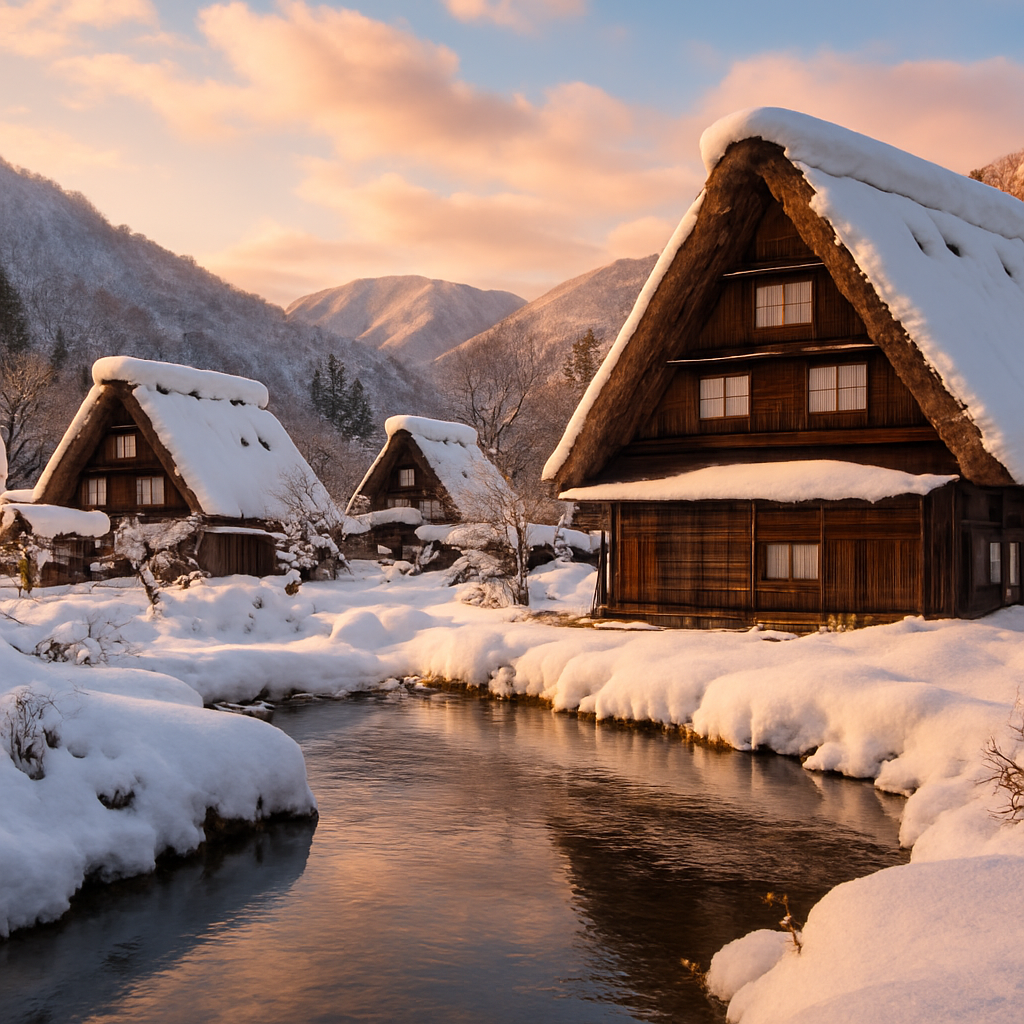
A UNESCO mountain village in the north of the prefecture, inscribed in 1995, with over a hundred gassho-zukuri farmhouses — steep thatched roofs built to shed the kind of snow that buries the rest of central Japan. Some of these houses are 250 years old and people still live in them. Go in winter for the light-up evenings, late January through mid-February, when the village glows under snow and the photographers all show up at once. Or go in autumn, when the rice paddies are gold and there's nobody around. Reachable by Nohi Bus from Takayama or Kanazawa.
Takayama Old Town and the Morning Markets
An hour and change north of Gifu City, Sanmachi Suji is the Edo-period merchant quarter that survived — preserved by official designation, lattice-fronted, lined with sake breweries that pour tastings before noon. Start at the Miyagawa or Jinya-mae morning markets for pickles, miso, and Hida apples. Walk the Takayama Jinya, the only surviving Edo-period government house in Japan. Time it for the spring or autumn festival if you can — the float parades are UNESCO Intangible Cultural Heritage and the closest thing this part of the country has to a national holiday.
The places I actually send people to
Advice that fits how you travel
Gifu is a quiet pleasure for solo travel — Japanese-level safe, walkable end to end, and built for the kind of trip where you actually hear yourself think. The Yanagase arcade is your evening anchor, and the rule of thumb at the small mama-run snacks in Tamai-cho is to ask the price before you sit down. Most charge a ¥1,500–3,000 set fee on top of drinks, and no one will be offended that you asked. Pull ¥10,000 from the 7-Eleven ATM at JR Gifu Station before you head out — cash still rules in this part of town.
The apps work, but expect thin grids — Gifu pulls a smaller queer crowd than Nagoya, and a lot of regional users are commuting in from Kakamigahara or Ogaki. If you want an actual gay-bar night, ride the JR Tokaido Line 20 minutes to Nagoya's Naka-ku, drink there, and come home to your quiet riverside hotel. That's the regional code most solo travelers eventually figure out: Gifu for the slow evening, Nagoya for the loud one.
Budget-wise, this is one of the more affordable bases in central Japan — a clean business hotel near the station runs ¥8,000–11,000, a great ramen lunch at Tsubaki is under ¥1,500, and the Mount Kinka ropeway plus castle entry barely dents a ¥2,000 bill. Base yourself at the station for transit ease and day-trip access to Takayama, Magome, and Shirakawa-go. Pro tip: grab an IC card on arrival at NGO and you'll glide through every JR and Meitetsu turnstile for the rest of the trip without thinking about it.
Gifu is a romance city dressed as a heritage town, and same-sex couples who lean into that get the best of it. Nagaragawa Onsen is the move — riverside ryokan facing Mount Kinka, kaiseki dinners, and the lit-up castle on the mountain holding the view all night. The single most important booking question for same-sex couples in any onsen ryokan: ask for a private kashikiri-buro bath. Most Nagaragawa properties offer one for an extra ¥3,000–5,000, no questions asked. It's the standard workaround to the sex-segregated public bath, and it works elegantly every time.
For the headline date, book a cormorant fishing boat between May 11 and October 15. Thirteen hundred years of ukai, low wooden yakatabune with firelight on the river, and absolutely no one on the boat caring which gender you brought. Bring sake; the staff will look the other way as long as you tip. Pair it with a kaiseki dinner at Matsuya Nagarakan or Kawaramachi Izumiya — eating ayu sweetfish within sight of the river it came out of is the most Gifu evening you can engineer. Pro tip: the ropeway up Mount Kinka at sunset is the unofficial first-date move for queer locals — quiet cars, panoramic view of the Nagara River bend, almost no crowds on a weekday.
PDA-wise, calibrate to local norms rather than your home rules. Hand-holding along the Nagaragawa promenade or in Yanagase is fine but uncommon — Japanese reserve cuts across all couples, and you'll draw curious looks more than negative ones. In Kawaramachi and the rural day-trip towns, keep affection subtle. At ryokan check-in, the phrase pātonā to kimashita ("I came with my partner"), said warmly, disarms 90% of the awkwardness around a single-bed booking. Beyond that, tip the staff well, leave the room cleaner than you found it, and you'll be welcomed back.
Japan's national legal framework for LGBTQ+ families is, as of 2026, still catching up — same-sex marriage isn't recognized federally, joint adoption rights for same-sex couples don't exist in law, and the 2023 LGBT Understanding Promotion Act offers symbolic acknowledgment without enforceable protections. Gifu City's Partnership Seido, launched in April 2022, grants limited municipal recognition for housing, hospital visits, and certain city services. It's not marriage, and it doesn't carry weight outside the city limits, but it's a real signal of where the prefecture is heading. Travel with copies of any home-country documentation establishing your family structure — adoption papers, marriage certificates, parental consent letters for kids — particularly if your family doesn't appear legible on a single passport.
On the ground, Gifu is genuinely easy with kids. Streets are clean, transit is stroller-manageable, family restaurants take reservations, and the headline activities — Mount Kinka ropeway, Gifu Castle, the Kawaramachi walk, cormorant fishing in season — are all kid-friendly. The Dormy Inn near the station is a smart family base: rooftop hot spring bath, free late-night ramen, and rooms big enough to handle two adults and a small human. For older kids, day trips to Shirakawa-go and Takayama Old Town earn their travel time — gassho-zukuri farmhouses and morning markets are exactly the kind of slow culture that lands with curious teenagers.
Reception of LGBTQ+ families tends to be polite, low-friction, and curious rather than hostile — Gifu sees relatively few foreign families, period, so two dads or two moms with kids will draw friendly attention more than anything else. Service staff at hotels and restaurants are professional throughout. Watch out for: gendered facilities at public onsen and some restaurant bathrooms — book private kashikiri baths at ryokan, and stick with the larger station-area hotels for gender-neutral facilities. For broader policy context and family-specific advocacy, Marriage For All Japan tracks the national legal fight, and Nijiiro Diversity covers workplace and civic protections that affect resident families.
What Gifu actually costs
Flights, visas, and the first 30 minutes
Airport: Chubu Centrair International Airport (NGO) in Nagoya is your gateway — there is no commercial airport in Gifu City itself. Centrair handles approximately 30 direct international routes as of 2026, with reliable nonstops from major Asian hubs (Seoul, Taipei, Hong Kong, Bangkok, Manila, Shanghai) and seasonal long-haul service from Detroit, Helsinki, and Frankfurt depending on the carrier. From North America, most travelers connect through Tokyo Haneda or Narita and ride the Shinkansen to Nagoya (~100 min), then transfer.
Visa: As of 2026, US, UK, EU, Canadian, and Australian passport holders typically receive visa-free entry to Japan for stays of up to 90 days. You'll generally need a passport valid for the duration of your stay, proof of onward travel, and a completed Visit Japan Web entry/customs declaration before landing. Rules can change — check your country's foreign ministry guidance close to departure.
Airport to city: The fastest route is the Meitetsu μ-SKY limited express from NGO to Nagoya Station (~28 min), then the JR Tokaido Line to Gifu Station (~20 min). Total time approximately 75–90 minutes, total cost around ¥2,000–¥2,500. A direct Meitetsu highway bus from Centrair to Gifu runs ~90 minutes for ¥2,500 with limited daily departures — useful if you're carrying luggage and don't want to transfer. Taxis run ¥18,000–¥22,000 and only make sense for late arrivals or groups. Rental cars start around ¥7,000/day and are worth it only if you're planning to explore the wider Hida-Gifu prefecture by road.
Pro tip: Pick up your IC card (Manaca, Suica, or PASMO all work) at NGO arrivals before you board the train — it'll save you fumbling at every JR and Meitetsu turnstile for the rest of the trip.
Traven's seasonal breakdown
The questions everyone asks
Is Gifu safe for same-sex couples?
Does Gifu have a gay neighborhood?
Can same-sex couples share an onsen ryokan?
Do I need to speak Japanese?
Is Gifu's same-sex partnership certificate legally meaningful?
What's the best time of year to visit?
How much should I budget per day?
Screenshot this before you go
So should you actually go?
Go, but go knowing what Gifu actually is. This is a heritage city with a romance corridor and a whisper of a queer scene — not a destination for nightlife or visibility. My Traven-Dex of 6.3 reflects exactly that trade: an 8.1 city dressed in a 3.5 Pulse, redeemed by a 6.2 Chill score and the kind of slow evenings that justify the flight on their own. If you want loud and proud, Tokyo and Osaka are still the answer. But if you want the Nagara River at dusk, a private bath facing a lit-up castle, ayu eaten where it was caught, and one careful drink in Yanagase before bed — pair it with a half-day in Nagoya for the bar night and you've engineered one of the most underrated trips in central Japan.
Sources & Resources
Official links we reference when compiling this guide. Last verified 2026-05-04.
- akta (Japan HIV/AIDS community resource center)
- Gifu Prefecture Human Rights Promotion Division
- JaNP+ (Japanese Network of People Living with HIV)
- Marriage For All Japan
- Nijiiro Diversity (National LGBTQ+ Workplace NGO)
- Pride House Tokyo (national LGBTQ+ resource hub)
- Stonewall Japan
- Tokyo Rainbow Pride (national Pride umbrella)