
Hiroshima doesn't perform for you. It hands you a whisky highball on the fourth floor of an unmarked building and waits to see if you're paying attention.
It's a Tuesday night in Nagarekawa, and I'm standing in front of an unmarked elevator in a building that could be a dental office during the day, squinting at a directory printed in three sizes of kanji and one rainbow sticker on the fourth-floor button. The bar I'm looking for has six seats. The master will pour me a whisky highball, slide over a small dish of peanuts, and ask in careful English where I'm from. By the end of the second drink I'll know his sister lives in Osaka, that he prefers the autumn oysters to the winter ones, and that the place I should hit next is two buildings over, second floor, ring the bell.
That's Hiroshima's scene in one elevator ride. It's not a district, it's a treasure hunt — small, intimate, and rewarding in a way the bigger Japanese cities aren't. Don't come expecting Shinjuku Ni-chōme energy. Come expecting tatami-sized rooms, masters who remember you on night two, and a city that won't perform for you but will quietly let you in if you arrive with a small bow and patience.
I gave Hiroshima a 6.9 overall on my Traven-Dex, and the math tells you what to expect — a 9.1 on Destination because the Peace Park, Miyajima, and the Setouchi food culture are world-class, balanced against a Pulse score of 4.0 because the visible community here is observably smaller than what you'll find in Tokyo or Osaka. Japan as of 2026 still has no marriage equality, and that gap shows up in the scores. But the city itself rewards the traveler who slows down. There's a quiet thread connecting Hiroshima's peace activism and its slowly emerging LGBTQ+ visibility — this is a place that knows what it costs when human rights aren't taken seriously, and you can feel that in how the partnership oath office runs out of City Hall, in how Proud Hiroshima organizes, in the polite certainty of a city that's learned things the hard way.
Eat the okonomiyaki at a teppan counter where the obaachan calls everyone honey regardless of gender. Take the early ferry to Miyajima before the day-trippers arrive and let the floating torii do its ten-minute thing. Sit on the terrace at Caffe Ponte at dusk with the Atomic Bomb Dome framed across the river. Then find the elevator, ride to the fourth floor, and order the whisky highball. That's the trip.
The stuff your travel guide buries on page 47
Japan doesn't criminalize being gay, and it never really has — but as of 2026, it's also the only G7 country without nationwide marriage equality. Same-sex couples can't legally marry, joint adoption isn't recognized, and the national anti-discrimination framework is patchy at best. Marriage For All Japan has been pushing the issue through the courts, and several district courts have ruled the marriage ban unconstitutional, but parliament hasn't moved.
Hiroshima City started issuing same-sex partnership oath certificates in 2022. They don't equal marriage, but they typically help with hospital visits, city housing, and some municipal recognition — the office is at City Hall near Kamiyacho. It's modest, but for a mid-sized regional city, it's a meaningful signal. There's a quiet thread connecting this city's peace activism and its slowly emerging LGBTQ+ visibility — Hiroshima knows what it costs when human rights aren't taken seriously.
Gender identity law remains complicated. Japan has historically required medical procedures for legal gender change, though the Supreme Court ruled the surgery requirement unconstitutional in 2023. Implementation has been uneven across prefectures, and trans visibility in Hiroshima is observably lower than in Tokyo or Osaka. For workplace and policy context, Nijiiro Diversity is the strongest national resource.
Pro tip: most bars in Nagarekawa charge an otoshi seating fee of approximately ¥500–1,000 on top of drinks. It's not a scam — it's how snack bars work. Budget for it. And carry cash; many small venues don't take cards. My Legal score of 5.5 reflects the gap between a polite social culture and the absence of full federal protections — better than most of Asia, behind most of the West. For broader national resources, Pride House Tokyo is the central hub.
What it actually feels like on the ground
Holding hands. In Peace Memorial Park and along the river paths, you're fine — the atmosphere is contemplative, and minimal PDA is the norm for everyone. On Hondori or in Kamiyacho, subtle affection draws no attention; overt PDA is uncommon for any couple, gay or straight. Public displays read as gauche here, not dangerous.
Hotel check-in. International chains — Hilton, Sheraton, ANA Crowne Plaza — handle same-sex couples without comment. Smaller ryokan, especially on Miyajima, may show mild surprise but rarely refuse. If you're booking a traditional inn with shared bathing, calling ahead to confirm the arrangement is the move.
Taxis and streetcars. The hiroden streetcar is the easiest way around the city, and drivers are professional and uninterested in your business. No reported issues with same-sex couples in either taxis or transit, though Japanese transit norms are conservative — brief affection only on platforms.
Late night in Nagarekawa. The Yagenbori alley and surrounding blocks where the gay bars cluster are comfortable into the small hours. Hiroshima's overall street safety is high. As one community report put it, the local vibe is "don't ask, don't tell, don't bother anyone" — hate crime is rare, but as of 2026 the anti-discrimination law is patchy nationally.
Trans travelers. Hiroshima is socially polite but lacks the trans-specific infrastructure of Tokyo or Osaka. Misgendering tends to be unintentional rather than hostile. If you're using public baths or onsen on a Miyajima trip, call ahead — smaller ryokan are often more accommodating than big chains when you explain the situation politely in advance. For health resources including HIV testing, akta is the national reference, and Hiroshima Prefectural Health Center handles local testing.
Verbal harassment risk. Generally low. Hiroshima's social register leans formal and reserved; aggression of any kind is uncommon. The bigger risk is feeling slightly invisible rather than feeling targeted. For legal support if something does go wrong, Japan Legal Support Center (Houterasu) is the official national service.
The queer geography
Nagarekawa
Hiroshima's main entertainment quarter is a dense grid of narrow alleys, multi-tenant towers stacked floor-to-ceiling with bars, and izakaya smoke drifting out of doorways at 9 p.m. Okonomimura, the four-story building stuffed with okonomiyaki stalls, sits at one edge; Yagenbori's lantern-lit lane runs through the middle. This is where the city eats and drinks after dark, and where the small cluster of gay bars lives — most on the third or fourth floor of unmarked buildings, found by squinting at the elevator directory and trusting the rainbow sticker. Bar Lucio and Bar Bell are the reliable starter spots; the masters will point you toward whatever else is open that night. For Pride event timing, Japan Tourism Agency LGBTQ travel info tracks regional events.
Kamiyacho / Hatchobori
The central business and shopping spine, anchored by the Hondori covered arcade — a half-kilometer of department stores, ramen counters, and electronics shops that connects the Peace Park area to Nagarekawa. This is where most travelers should base themselves: ten minutes' walk to the Peace Park in the morning, ten minutes to the bars at night, with the streetcar to Miyajima-guchi running right past you. The Hiroshima Orizuru Tower at the southern end gives you a rooftop view of the river and the A-Bomb Dome. Kemby's, the city's craft brewpub, is around the corner.
Naka Ward / Peace Park
The western half of central Hiroshima is structured around Hiroshima Peace Memorial Park, Kenzo Tange's 1954 design that turned the hypocenter of the bombing into a civic memorial complex. The Atomic Bomb Dome, Children's Peace Monument, and Hiroshima Peace Memorial Museum anchor the area; Hiroshima Castle and the 17th-century Shukkei-en Garden sit just to the north. Riverfront cafes face the dome across the Motoyasu River. It's the emotional core of the city — confront, then breathe. For deeper context, Hiroshima Peace Memorial Museum publishes survivor archives online.
Miyajima
A 10-minute ferry from Miyajimaguchi puts you on a sacred island in Hiroshima Bay where free-roaming sika deer wander past the vermilion torii of Itsukushima Shrine, founded in 593 CE. Take the early ferry before the day-trippers arrive — the floating gate at low tide is one of those views that quiets a conversation for ten minutes. Mount Misen has a ropeway and hiking trails for the rest of the day, and Anagomeshi Ueno near the ferry terminal still serves the sea-eel rice box it invented in 1901. The expat and traveler community network Stonewall Japan is a useful starting point for connecting locally before you arrive.
The experiences worth rearranging your itinerary for
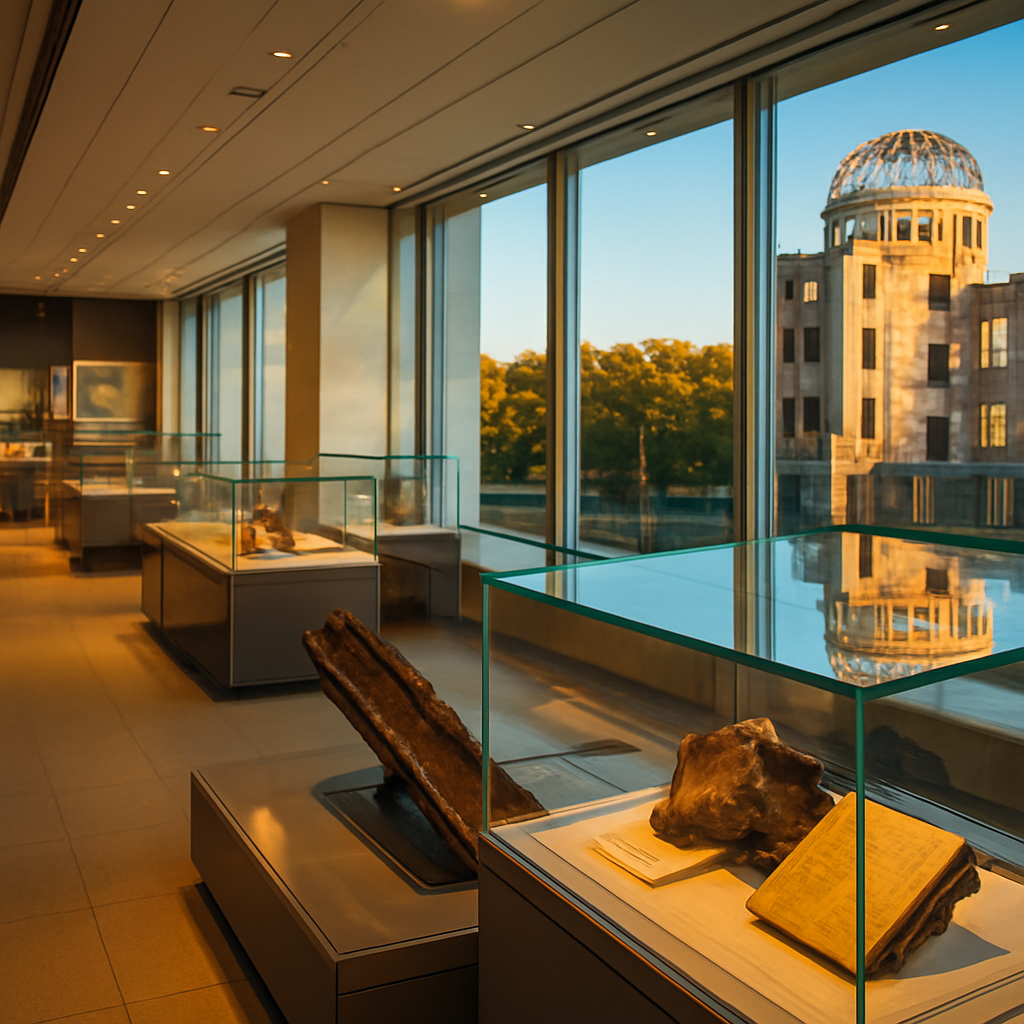
The Peace Museum, Then Shukkei-en
Block out a full afternoon for the Hiroshima Peace Memorial Museum. Kenzo Tange designed the complex; the 2019 renovation stripped away the editorializing and let the artifacts speak. You'll walk out quiet. That's the point.
Then walk fifteen minutes north to Shukkei-en Garden, the 1620 miniature landscape built by a tea master for the local daimyo. Ponds, stone bridges, trained pines. Confront, then breathe — that's the rhythm Hiroshima asks of you, and the city laid it out on a map.
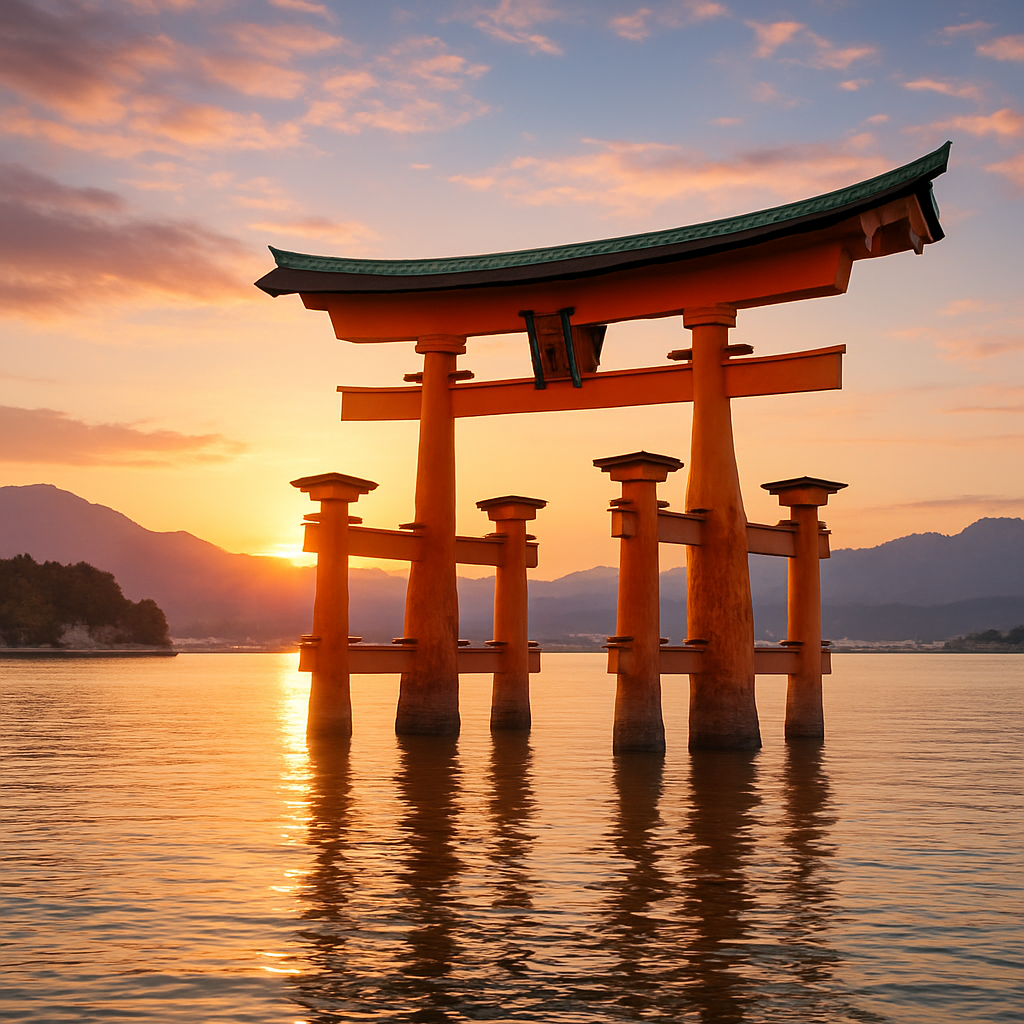
The Early Ferry to Miyajima
Take the first ferry out of Miyajimaguchi. Before nine a.m. the island still belongs to the deer and the shrine, and the vermilion torii at low tide is one of those views that quiets a conversation for ten minutes.
Hike Mount Misen if the weather is clean — the ropeway gets you halfway, the trails handle the rest. On the way back, eat anagomeshi at Ueno near the ferry terminal, where the dish was invented in 1901. By the time the day-trippers arrive, you're already eating.
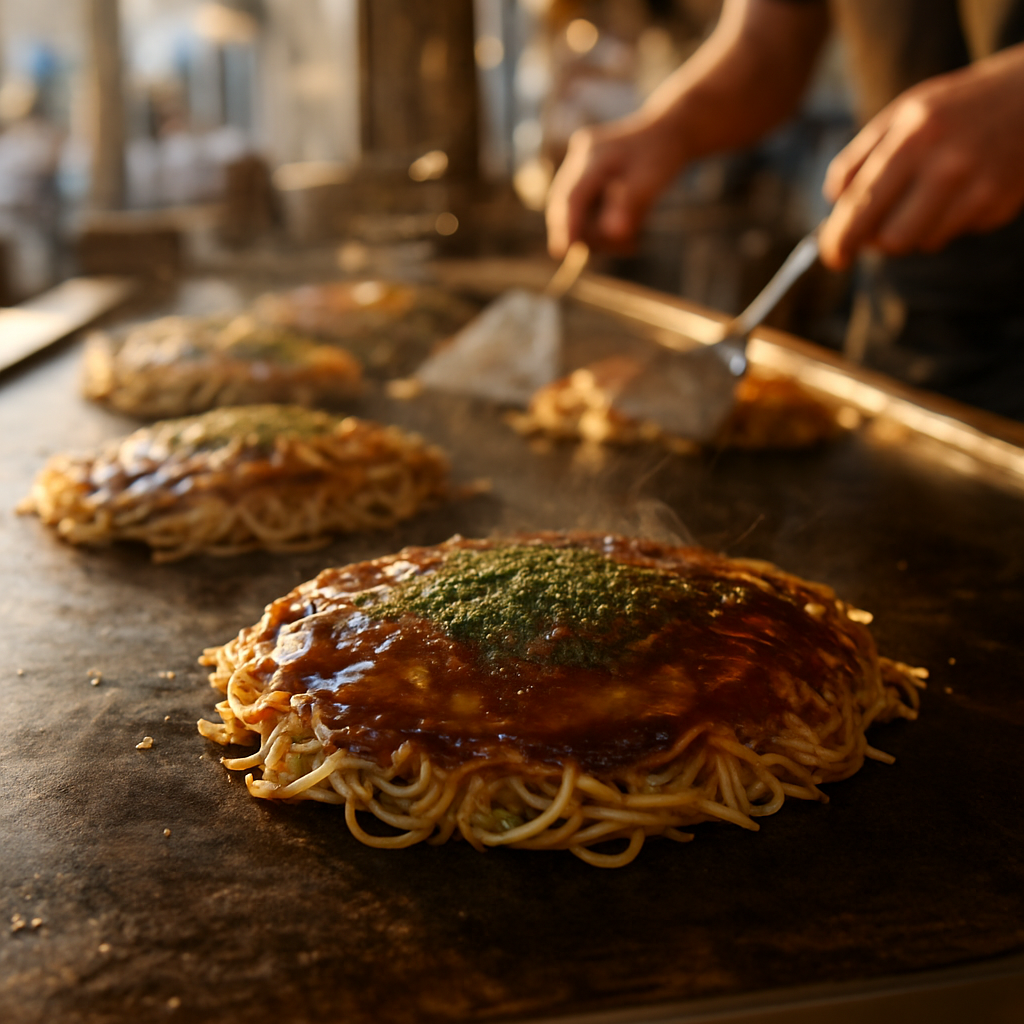
Okonomiyaki, the Hiroshima Way
Eat once at Okonomimura — the four-story building in Nagarekawa stuffed with two dozen teppan counters — to understand the format. Cabbage, noodles, egg, layered not mixed. That's the local argument with Osaka, and Hiroshima-yaki wins it on the teppan, every time.
Then ignore the tourists and find a tiny side-alley counter off Nagarekawa where the obaachan calls everyone honey regardless of gender. That's the version you'll remember.
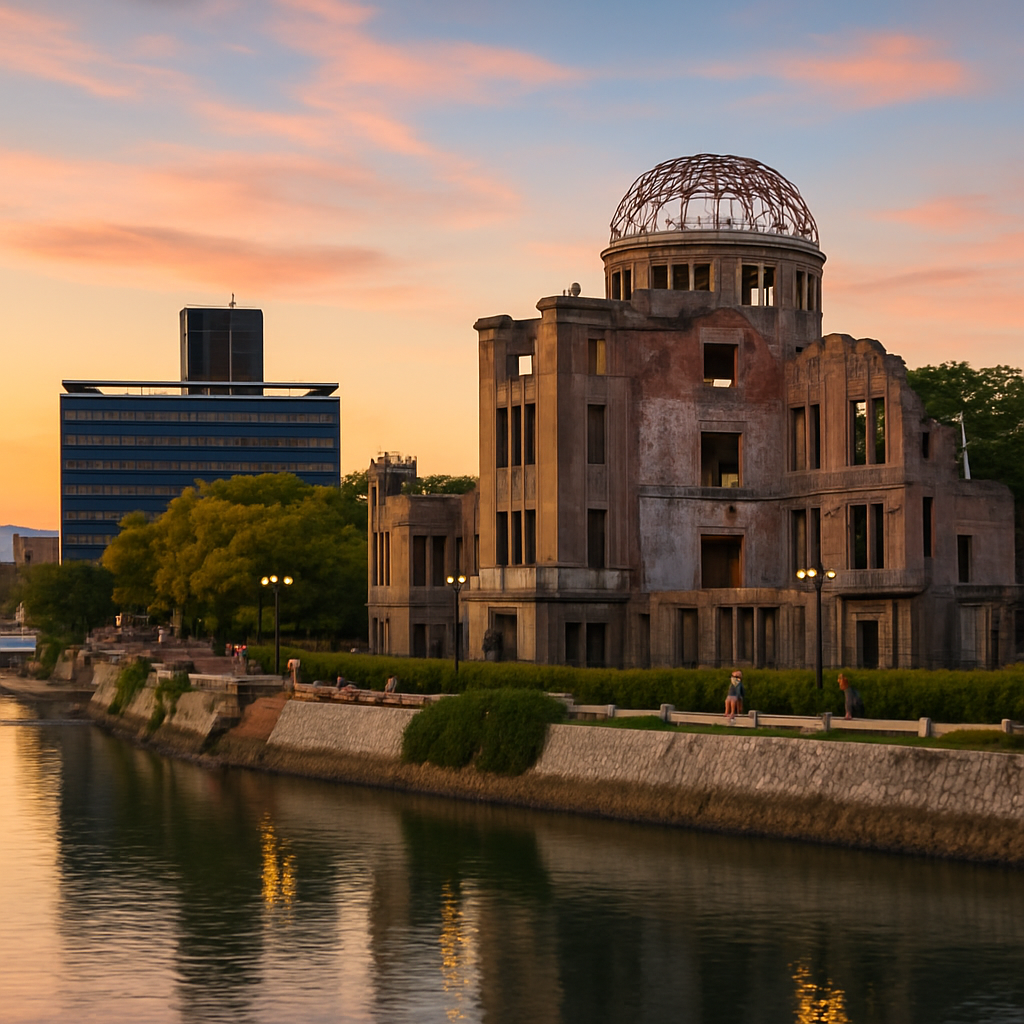
The Dome from Across the River
The Atomic Bomb Dome is best approached at dusk from the Motoyasu riverside path, with the skeletal frame catching the last light over the water. Jan Letzel designed the building in 1915; the bombing left it standing on purpose. UNESCO listed it in 1996.
Sit on the terrace at Caffe Ponte directly across the river with a glass of wine and let the building do its work. It's not a photo op. It's a long, slow conversation with a city that decided to remember out loud.
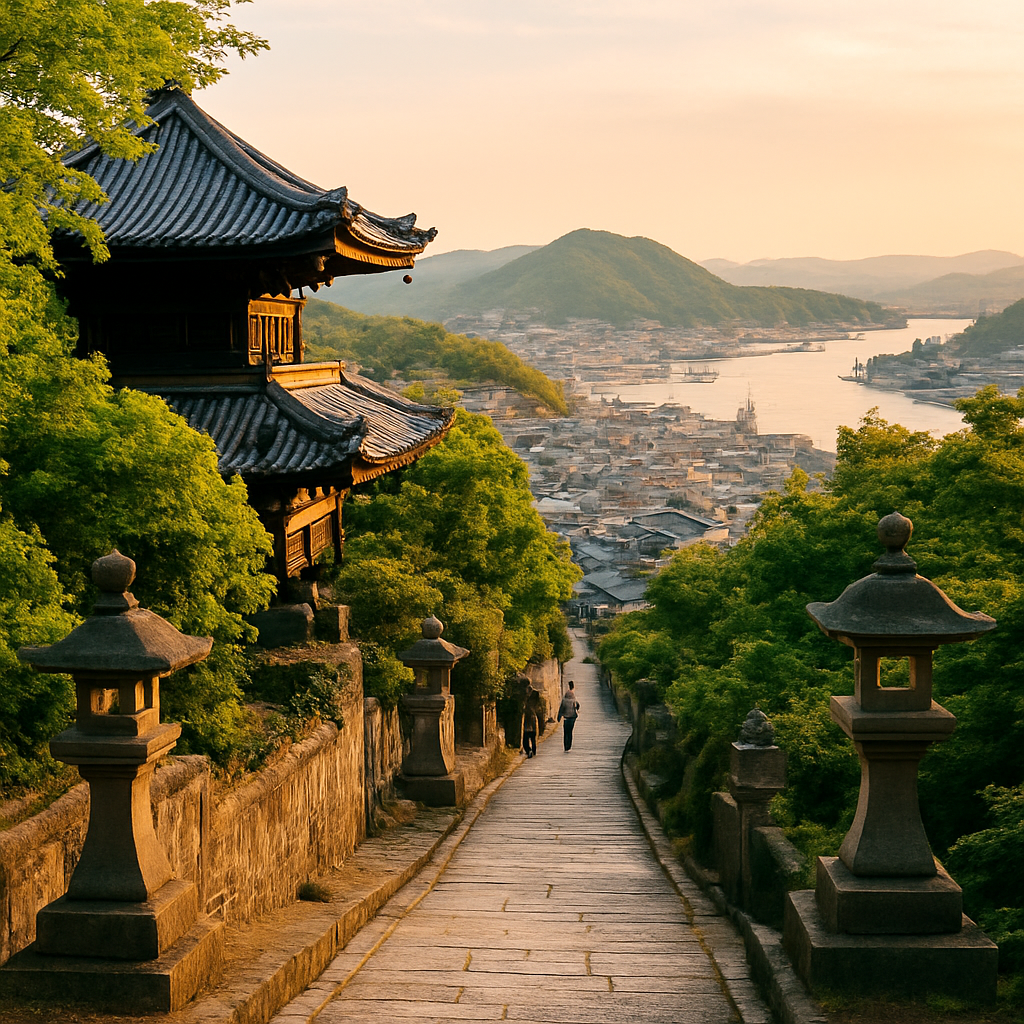
A Day in Onomichi
Ninety minutes east by train, Onomichi is the slow Japan most travelers miss — narrow hillside alleys, twenty-five temples threaded along a walking path, and renovated machiya turned into cafes and guesthouses by a creative class that quietly moved here in the last decade. Yasujiro Ozu shot Tokyo Story on these streets in 1953, and the proportions haven't changed.
Rent a bike and ride the first stretch of the Shimanami Kaido — the 70-kilometer cycling route across six islands of the Seto Inland Sea — even if you only do an hour of it. The bridges and the water do the rest.
The places I actually send people to
Advice that fits how you travel
Hiroshima rewards the solo traveler who likes a city that doesn't perform for them. The hiroden streetcar gets you anywhere worth going for ¥220 a ride, the Peace Park gives you the kind of long, quiet afternoon you can't have in a louder city, and the food scene runs from a ¥900 okonomiyaki at Okonomimura to a ¥200 pour-over at Koba Coffee Stand in Senda-machi — twenty minutes of zero conversation and the best cup of coffee you'll have all week. On a moderate budget, you're spending ¥18,000–28,000 a day comfortably; on a tighter one, ¥9,000–13,000 still gets you well-fed and well-housed.
The scene is small and rewards patience. Nagarekawa's gay bars cluster on the third and fourth floors of unmarked buildings — you find them by squinting at the elevator directory and trusting the rainbow sticker. Start at Koba; the master speaks enough English to keep the conversation moving, and Hiroshima's scene is small enough that one good night will set you up with introductions for the next two. Don't come expecting Shinjuku Ni-chōme energy. This is snack-bar territory — six seats at the counter, a whisky highball, peanuts, life stories in your worst Japanese.
Pro tip: a simple hajimemashite and a small bow when you walk into a snack bar buys more goodwill than any Google-translated come-on. Master the entrance and the rest of the night handles itself. Carry cash — many small bars don't take cards, and the otoshi seating fee of approximately ¥500–1,000 is standard, not a scam. Base yourself near Hatchobori or Kamiyacho rather than the station; you'll be ten minutes from the Peace Park in the morning and ten minutes from the bars at night.
Hiroshima is one of those cities that quietly rewards couples who slow down. The rhythm is built in — confront something heavy at the Peace Memorial Museum, then walk fifteen minutes to Shukkei-en Garden, a 1620 miniature landscape built by a tea master, and let the ponds and trained pines do the recovery work. Dinner at Caffe Ponte with the Atomic Bomb Dome framed across the Motoyasu River at dusk is one of the most quietly romantic tables in Japan, and almost no one writes it up that way.
For PDA, observational language matters: subtle affection draws no attention anywhere in the city, but overt PDA reads as gauche for any couple, gay or straight — this is a Japanese register, not a queer one. Hand-holding on Hondori or in Peace Memorial Park is fine. Save the kiss for the hotel. Same-sex couples are increasingly common at international chains — the Hilton Hiroshima on Heiwa-odori opened in 2023 and resets the local hotel bar; the Sheraton Grand connects directly to the station for shinkansen mornings; both operate under corporate non-discrimination policies that hold up at check-in.
The big move, though, is the overnight on Miyajima. Iwaso, an 1854 ryokan inside Momijidani Park, is the oldest continuously-operating inn on the island — tatami, kaiseki, onsen, and the chance to wake up before the day-trippers arrive while the deer wander past at dawn. Miyajima Grand Hotel Arimoto is the easier-to-book backup. Take the early ferry, catch the floating torii at low tide, eat anagomeshi at Anagomeshi Ueno on the way back — the dish was invented at that exact counter in 1901. That's the trip you'll talk about a year from now.
Hiroshima is a strong family destination on logistics and a complicated one on legal recognition. As of 2026, Japan doesn't recognize same-sex marriage or joint adoption nationally, which means LGBTQ+ families with children typically need to think carefully about how parental rights translate at hotels and during emergencies. Hiroshima City's partnership oath certificate, issued since 2022 from City Hall near Kamiyacho, helps with municipal recognition but doesn't extend to family law. Carrying notarized copies of birth certificates, custody documents, and any relevant adoption paperwork is generally the right move for any international family travel here.
Day-to-day, the city is exceptionally easy with kids. The hiroden streetcar is stroller-accessible, the Peace Park is a wide flat civic space made for slow walks, and Miyajima's deer-and-shrine combination is the rare cultural day trip kids actually engage with. The Hiroshima Peace Memorial Museum is age-dependent — the 2019 renovation softened nothing, and parents should preview the content before bringing children under about eleven. Older kids who can handle it tend to leave with the kind of perspective they don't get from a textbook.
For food, okonomiyaki is a built-in family meal — kids watch the teppan, eat with a tiny spatula off the metal, and Hiroshima-style runs less spicy than the tsukemen tradition. Hassei in Fujimicho is a family-run counter that handles visiting kids well; Nakajima Honten inside Okonomimura is the safe pick for first-timers. International hotel chains — Hilton, Sheraton, ANA Crowne Plaza — handle LGBTQ+ families without comment and have the cribs, kid menus, and connecting-room logistics that smaller ryokan often don't. Budget approximately ¥42,000–65,000/day at the moderate tier for a family of four.
What Hiroshima actually costs
Flights, visas, and the first 30 minutes
Airport: Hiroshima Airport (HIJ) sits about 50 km east of the city center. It handles roughly 10 direct international routes — mostly regional Asia hubs like Seoul, Taipei, Shanghai, and Hong Kong. From North America or Europe, you'll typically connect through Tokyo (Narita or Haneda) or Osaka (Kansai). Honestly, the easier play for most travelers is flying into Tokyo or Osaka and taking the shinkansen — Hiroshima Station is a direct bullet-train ride and drops you in the city center, not 50 km outside it.
Visa requirements (as of 2026): US, UK, EU (most passports), Canadian, and Australian travelers typically enter Japan visa-free for stays up to 90 days. You'll generally need a passport with at least six months' validity, a return ticket, and proof of accommodation. Japan also requires pre-arrival registration through the Visit Japan Web system for customs and immigration — do it before you fly, it saves time at the airport.
Airport to city: The Limousine Bus is the default — ¥1,450, 45–55 minutes direct to Hiroshima Station, runs every 15–20 minutes. Taxi runs ¥13,000–15,000 and takes 50–70 minutes; fixed-rate options are available but it's expensive. Shared shuttle services run ¥3,000–4,000 with hotel-direct drop-off if you pre-book; allow 60–80 minutes. Rental car at ¥6,000–9,000/day makes sense if you're planning day trips to Miyajima, Iwakuni, or Onomichi — otherwise the streetcar and trains handle the city fine.
Once you're in town: The hiroden streetcar is the easiest way around. Get off at Ebisu-cho or Hatchobori for the Nagarekawa bars, and Genbaku Dome-mae for the Peace Park. A day pass typically pays for itself by lunch.
Traven's seasonal breakdown
The questions everyone asks
Is it safe to hold hands in Hiroshima?
Do I need to speak Japanese to enjoy the gay bar scene?
Should I fly into Hiroshima Airport or take the shinkansen?
How many days do I need in Hiroshima?
Is Hiroshima good for LGBTQ+ families with kids?
What's the deal with the otoshi seating fee at bars?
When is the worst time to visit?
Screenshot this before you go
So should you actually go?
Should you go? Yes — with the right expectations. Hiroshima isn't a scene city, and as of 2026 Japan still hasn't delivered marriage equality or strong national protections, which is why my Traven-Dex lands at 6.9 instead of higher. But the Destination score of 9.1 isn't a typo — between the Peace Park, Miyajima, the Setouchi food culture, and the day trips to Onomichi and Tomonoura, this is one of the most rewarding cities in Japan for travelers who want depth over volume. The gay scene is small but warm, the safety floor is high, and the city's quiet relationship between peace activism and emerging LGBTQ+ visibility is something you don't find in Tokyo or Osaka. Come for two or three days, stay near Hatchobori, take the early ferry, find the elevator. You'll leave changed.
Sources & Resources
Official links we reference when compiling this guide. Last verified 2026-05-04.
- akta — HIV/AIDS information and testing
- Hiroshima Peace Memorial Museum
- Hiroshima Prefectural Health Center (HIV testing info)
- Japan Legal Support Center (Houterasu)
- Japan Tourism Agency LGBTQ travel info
- Marriage For All Japan
- Nijiiro Diversity (national LGBTQ+ workplace NPO)
- Pride House Tokyo (national resource)
- Stonewall Japan (expat LGBTQ+ network)