
Kanazawa doesn't perform for Tokyo or Kyoto. It just hands you a bowl of snow crab at Omicho before noon and lets the gold leaf do the talking.
Kanazawa surprised me. I came expecting a polite museum of a city — gardens, geisha districts, the obligatory bullet-train stop between Tokyo and Kyoto for design nerds — and instead found a place that hums at its own frequency. The Sea of Japan light hits differently here. It's silvery, slightly cold, and it makes the gold leaf on the storehouses in Higashi Chaya look less like decoration and more like the city's actual answer to weather. Walk the Asano River at dusk and you'll understand why Kanazawans don't bother explaining themselves to Tokyo or Kyoto.
It's a city of small confidences rather than scenes. There's no gay neighborhood, no Pride parade, no rainbow stickers in shop windows. What there is, if you know where to look, is Pilsen — a Katamachi rock bar that's been pouring beer to weirdos and quietly queer regulars for longer than most American gayborhoods have existed — and a basement called Bar Spoon where the bartender clocks you in three seconds and pours something interesting without making a thing of it. Local queer residents I've talked to describe Kanazawa as 'quietly accepting,' and that phrase keeps landing for me. The partnership oath system passed without drama. Younger hotel staff don't blink. The city's gift is the freedom of being mostly left alone.
Which is also the catch, and it's why my Traven-Dex lands at 6.6 instead of higher. The destination itself is a 9.2 — Kenrokuen at 7 a.m. is one of the best hours you'll spend in Japan, the SANAA-designed 21st Century Museum is the most quietly moving small museum in the country, and the Kaga food tradition (jibuni at Tsubajin, oden at Fuwari, kaiseki at Zeniya) is the kind of eating that recalibrates your expectations of a regional cuisine. But the pulse sits at 3.2 because there's no scene to plug into. If you need Shinjuku Ni-chōme energy, Tokyo is 2h 30m on the Hokuriku Shinkansen and Osaka's Doyama is 2h 40m on the Thunderbird. Plenty of gay travelers I know base here and day-trip the noise.
The trade is real, and I want you to hear it clearly: come to Kanazawa for the gardens, the gold leaf, the 250-year-old farmhouses an hour up the road, and the kind of dinner that makes you reconsider how you've been eating for the last decade. Don't come expecting a community to find you. Come expecting a city that won't ask who you're traveling with — and on the right kind of trip, that's its own kind of luxury.
The stuff your travel guide buries on page 47
Japan, as of 2026, sits in a strange middle place: same-sex sexual activity is legal and has been since the 1880s, but national same-sex marriage isn't recognized, civil unions don't exist federally, and joint adoption isn't available to same-sex couples. The country has no comprehensive national anti-discrimination law covering sexual orientation or gender identity — what protections exist are patchwork, prefectural, and largely symbolic.
Kanazawa City and Ishikawa Prefecture both offer a partnership oath system — a same-sex partnership certificate that carries no national legal weight but reads as a quiet civic gesture. A reader told me a few ryokans treat it as informal proof for couple's rooms; you can apply online before you arrive if you want one as a recognition souvenir. For the bigger legal picture, Marriage For All Japan tracks the ongoing constitutional challenges, and Kanazawa City's official site handles the partnership paperwork.
Gender identity law is messier. As of 2026, Japan's Supreme Court struck down the sterilization requirement for legal gender change in 2023, but other medical and diagnostic hurdles remain. Ishikawa Prefecture has no trans-specific protections beyond the national baseline. Nijiiro Diversity tracks workplace and policy progress nationally.
On the ground, the law-on-paper barely matters because cultural reality does most of the work. Japan's PDA norms are muted across the board — straight couples don't really kiss in public either — so holding hands on the Higashi Chaya cobblestones reads as 'tourist' more than 'gay,' which is its own kind of camouflage. In Katamachi nightlife after dark, same-sex hand-holding rarely registers. In the geisha districts and around Omicho Market, dial it back — not for safety, for cultural fit. The closest dedicated LGBTQ+ infrastructure is in Osaka's Doyama or Tokyo's Ni-chome; Kanazawa itself has no gay bars per se, but ally-run spots have been quietly welcoming queer regulars for decades.
What it actually feels like on the ground
Kanazawa is one of the calmest cities I've spent time in, full stop. I've never felt unsafe here, even walking back through Katamachi at 2 a.m. with a date — drunk salarymen are loud but never threatening, and the bigger risk is a lost wallet that usually finds its way back to you. Still, calm isn't the same as out, and the practical guidance below is about cultural fit and specific scenarios, not generalized fear.
Holding hands: Generally fine in Katamachi and Korinbo after dark, where younger crowds gather and bars and izakaya keep the streets busy. Around Higashi Chaya, Nishi Chaya, and the older traditional neighborhoods, expect older clientele and dial it back — Japanese norms favor restraint regardless of orientation, and same-sex couples drawing attention here would feel more like a cultural breach than a safety issue.
Hotel check-in: The big international brands near Kanazawa Station — Hyatt Centric, Hyatt House, ANA Crowne Plaza, Hotel Indigo — handle same-sex couples in twin or king rooms without comment. Independent ryokans vary; a community member told me the Nishi Chaya guesthouses tend to be more flexible than the big chains, especially around shared rooms and yukata sizing. Pro tip: email or call ahead in Japanese-friendly English to confirm a couple's room rather than a twin, and the property has time to respond rather than improvise at the desk.
Taxis: Universally safe and metered. Drivers won't engage on personal questions; the bigger awkwardness is the language gap, not anything else.
Onsen and ryokan baths: This is the real planning issue. Public baths are sex-segregated by birth-registered gender, which is awkward-to-untenable for many trans travelers. Properties like Hatori in Wakura and Beniya Mukayu offer in-room or private bookable kashikiri baths — book those rather than gambling on a public onsen. Trans travelers report that Kanazawa-area ryokans are generally accommodating about gendered facilities and yukata sizing if you contact them in advance. akta has Japan-wide health resources, and Stonewall Japan is a useful expat network if you want a current read on a specific property.
Late night: Katamachi stays lively until last train and quiets down fast after. The walk from Katamachi back toward Kanazawa Station is well-lit and uneventful. If something does happen, the Kanazawa Central Police Station near Korinbo has English-speaking officers on call.
Trans travelers: Beyond onsen logistics, expect politeness and privacy. ID checks at hotels can be awkward if your passport gender marker and presentation don't match — a brief, calm explanation typically resolves it. For health concerns, Kanazawa University Hospital handles HIV testing discreetly; call ahead to ask for an English-capable doctor.
Verbal harassment: Functionally absent. Japanese social norms make public confrontation rare across the board — that cuts both ways (you also won't get visible warmth from strangers), but for queer travelers it tilts toward 'left alone,' which is the city's gift.
The queer geography
Kanazawa doesn't have a gay neighborhood in the Western sense, and pretending otherwise would be doing you a disservice. What it has are a few districts where the city's quiet inclusiveness lives, where ally-run venues quietly welcome queer regulars, and where you'll spend most of your trip anyway because they're the most beautiful parts of one of Japan's most beautiful small cities. Visit Kanazawa is the official tourism resource if you want to dig deeper.
Katamachi
This is Kanazawa's nightlife spine — narrow side streets stacked with izakaya, tachinomi standing bars, ramen counters, and the kind of cocktail rooms you find by walking past three times before you spot the sign. The Katamachi Scramble intersection at the heart of it gets neon-bright after dark; from there it's a few blocks of grilled-skewer smoke, sake on standing-bar counters, and the occasional rock club spilling onto the sidewalk. Pilsen has been pouring beer to weirdos, artists, and quietly queer regulars since before the 21st Century Museum was a sketch — loud, smoky-adjacent, and the closest thing Kanazawa has to a chosen-family bar. Bar Spoon, tucked in a Katamachi basement, is the closest thing to a welcoming cocktail spot; the bartender speaks decent English and will steer you toward whatever's interesting that night.
Korinbo
Adjacent to Katamachi but more daytime in feel — department stores, boutiques, the Korinbo 109 tower, and tucked between them, an increasingly serious wine and cocktail scene. Hineno Strazza is doing natural wines and Italian-Japanese small plates that would hold up in Tokyo; Fuwari is the place for jibuni and Kanazawa-style oden in winter, when crab arrives in the pot. A handful of discreet LGBTQ+-friendly cafés and lounges operate along the edges, less about scene than about being the kind of places where nobody looks up when you walk in with a partner.
Higashi Chaya & Kazuemachi
The eastern teahouse district is the postcard — preserved Edo-period chaya with lattice fronts, gold-leaf storehouses, and the Shima teahouse open as a museum. It's also tourist-heavy by 11 a.m., which is why locals will tell you Higashi Chaya is for visitors and Kazuemachi is the real thing. They're right. The riverside chaya district along the Asano is where Kanazawans actually drink, and a community member told me several of the tiny bars there have low-key queer regulars who've been showing up for years. Walk both districts at dusk when the lanterns come on and the daylight crowds thin out.
Hirosaka & the Museum Quarter
The block between Kenrokuen and Korinbo holds the 21st Century Museum of Contemporary Art, the Ishikawa Prefectural Museum of Art, and the D.T. Suzuki Museum's Water Mirror Garden. The 21st Century Museum is the cultural anchor — Leandro Erlich's permanent Swimming Pool installation is more than a selfie trap (staring up through the water at strangers staring down is the most unexpectedly tender moment I've had in Japan), and the museum has hosted multiple queer artists in residency. Pair it with the Suzuki Museum's reflecting pool ten minutes' walk away and you have an afternoon. Japan National Tourism Organization covers the cultural circuit nationally if you're chaining other cities.
Kanazawa Station & Hommachi
The Tsuzumi Gate at the station entrance is the city's modern signature — a wooden drum-tower threshold to a contemporary glass concourse. Around it cluster the international hotels (Hyatt Centric, Hyatt House, Hotel Nikko Style, ANA Crowne Plaza), the most cosmopolitan zone in Kanazawa, and the easiest base if you want corporate hotel standards and trained-in non-discrimination policies. Ask at the front desk of the Hyatt Centric Kanazawa or the Hatchi hostel for current welcoming recommendations — a reader wrote in to say both have staff who keep an informal list because guests keep asking. For Pride trips, plan a side journey: Tokyo Rainbow Pride in April and Kansai Rainbow Festa in Osaka in June are both reachable from Kanazawa Station — Tokyo in 2.5 hours on the Hokuriku Shinkansen, Osaka in 2h 40m on the Thunderbird.
The experiences worth rearranging your itinerary for
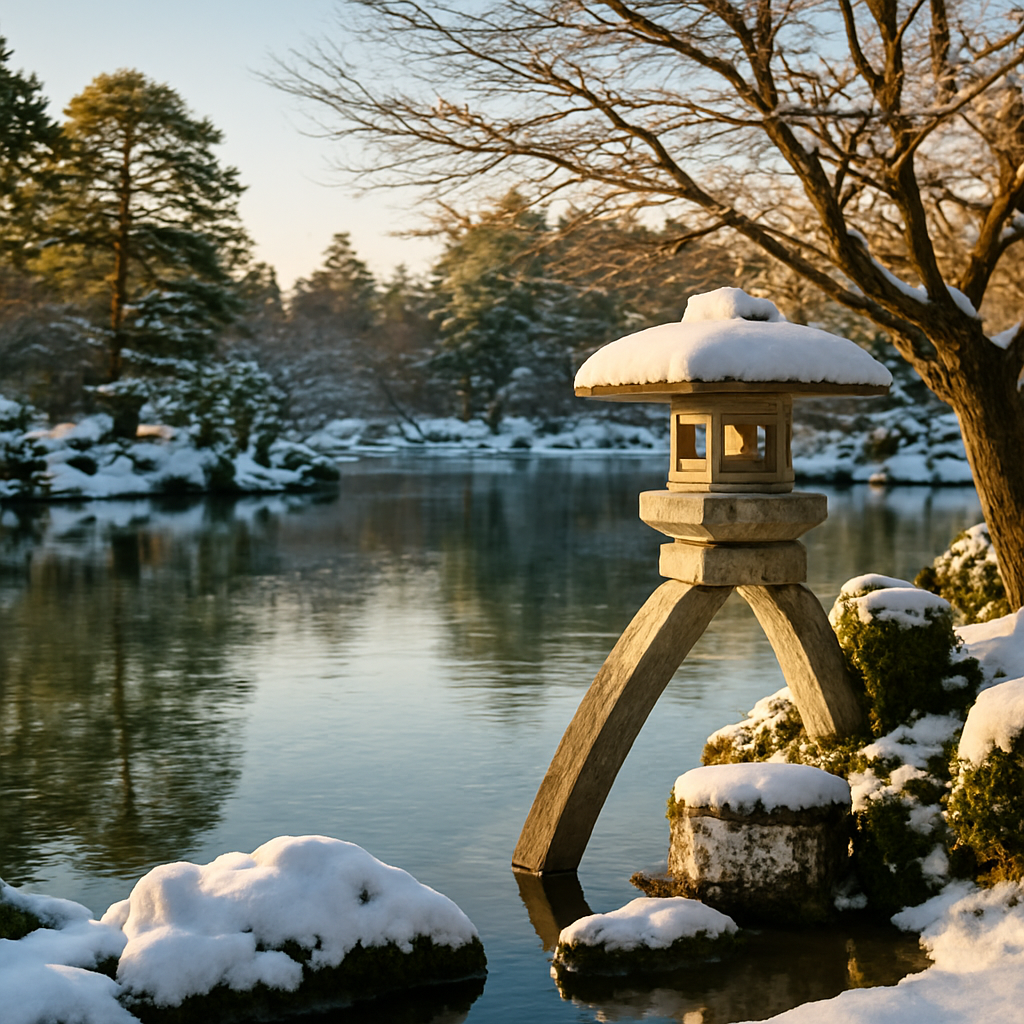
Kenrokuen at Dawn
One of the Three Great Gardens of Japan, opened to the public in 1874, and designated a Special Place of Scenic Beauty. By 10 a.m. it's a cruise-ship line; at 7 a.m. it's free to enter and nearly empty. The Kotoji-toro stone lantern catches early light over the pond, the moss is wet, and in winter the yukitsuri rope cones holding up the pines look like an installation no contemporary artist could match. Walk it slowly. This is the photograph you came for, and you'll make it before breakfast.
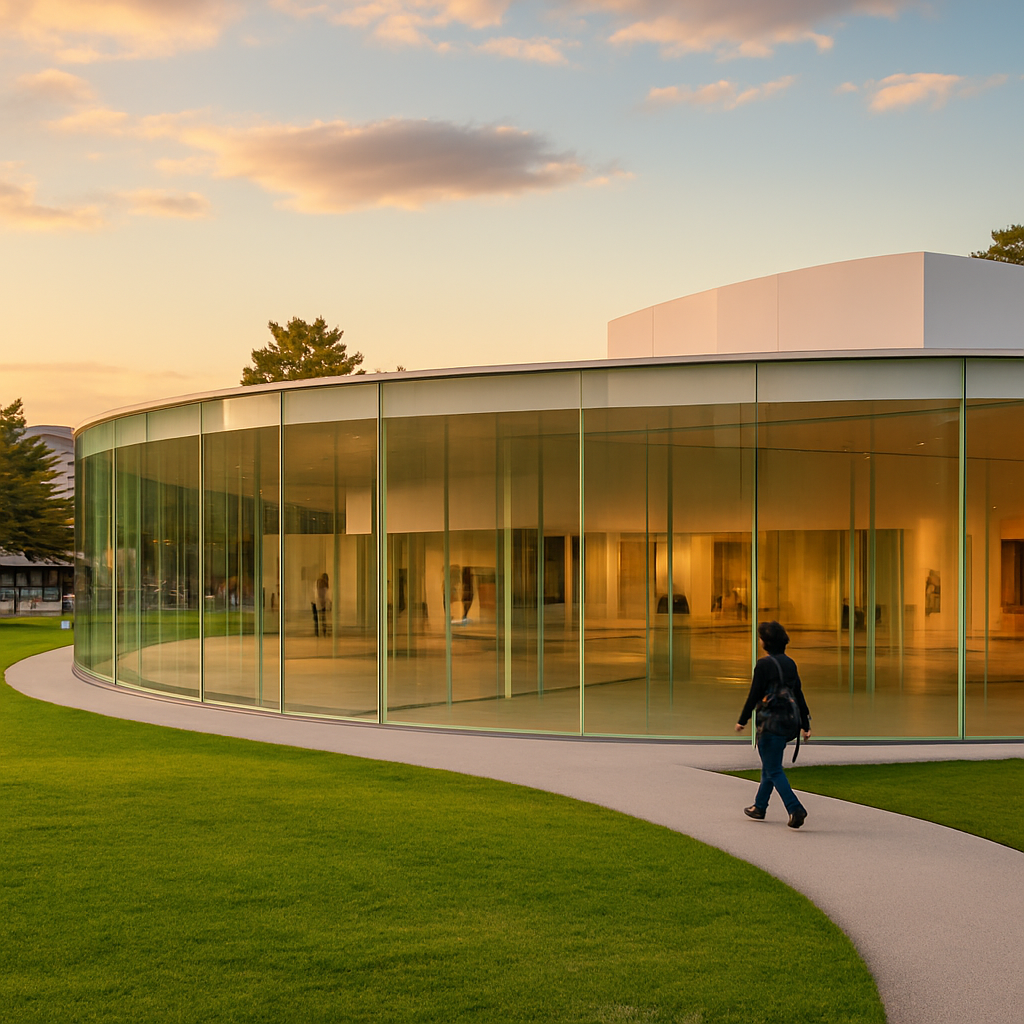
The Swimming Pool at the 21st Century Museum
SANAA's circular glass building won the Golden Lion at the 2004 Venice Architecture Biennale and Leandro Erlich's permanent Swimming Pool is its quietly tender heart. You stand below the water and look up; another visitor stands above the water and looks down. For a second neither of you knows what to do with the eye contact. The free public zone wraps the whole structure, so even if you skip the ticketed collection, you can spend an hour walking through the building itself. Pair it with the D.T. Suzuki Museum's Water Mirror Garden ten minutes' walk south.
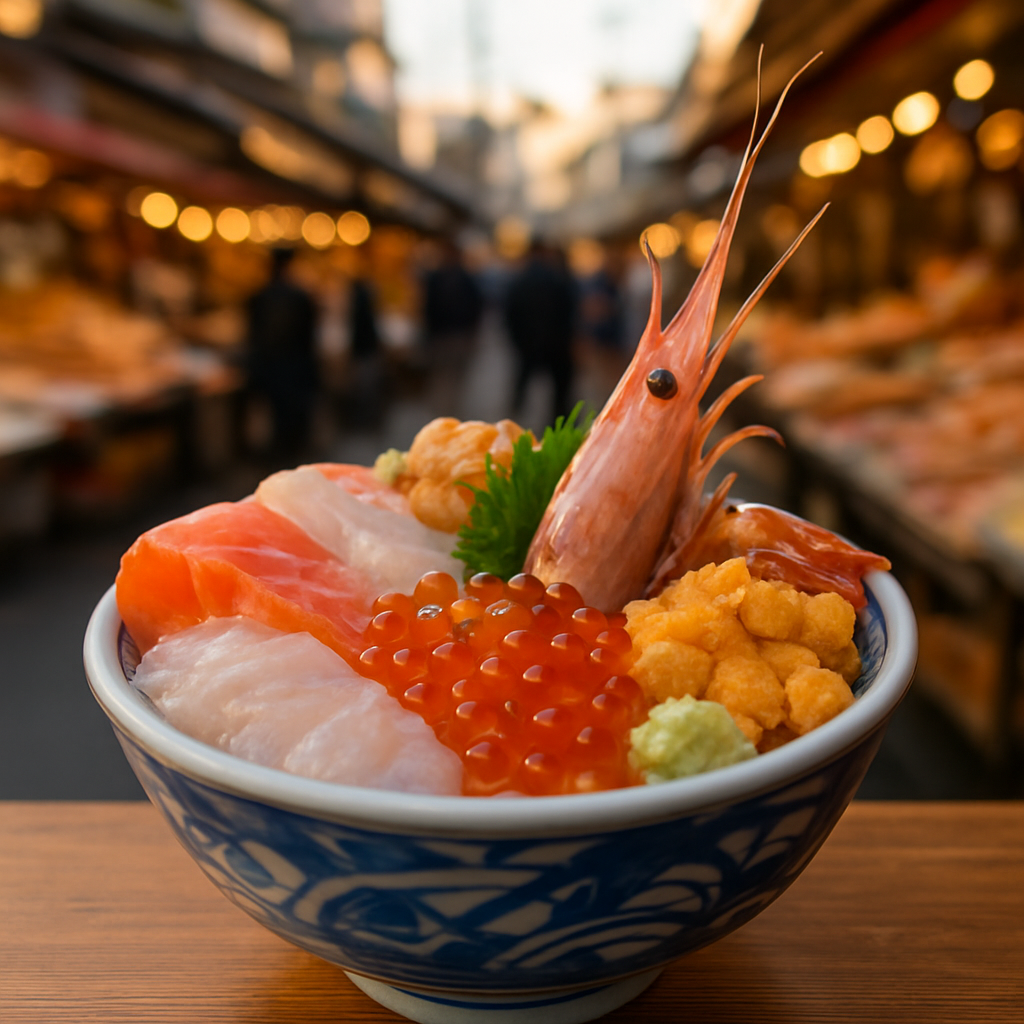
Kaisendon at Omicho Market
Three hundred years of fish, in a covered market five minutes from Kanazawa Station. Snow crab in winter, sea urchin year-round, sashimi cut at the stall and built into a kaisendon rice bowl that's as good as anything you'll eat in Tokyo for a quarter of the money. Stand at a counter, drink the cheap sake by the small glass, and watch the fishmongers shout each other awake. Go before noon; the best stalls run out.
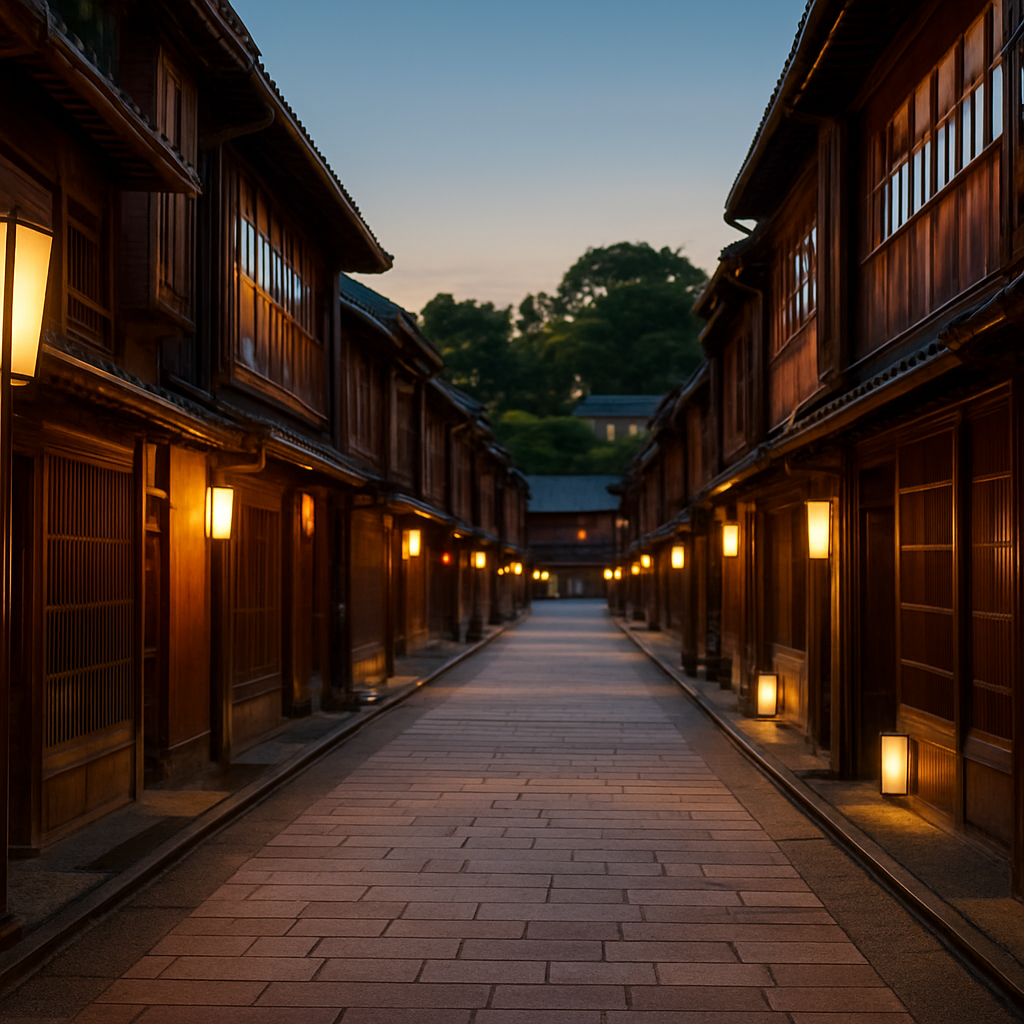
Higashi Chaya and Kazuemachi at Dusk
The eastern teahouse district was established in 1820, designated a National Important Preservation District, and has lattice-fronted chaya stretching down a single cobblestone spine. By daylight it's tour groups; at dusk the lanterns come on, the daylight crowd thins, and the gold-leaf storehouses glow. Then walk five minutes to Kazuemachi, the smaller riverside chaya district along the Asano — locals will tell you this is where Kanazawans actually drink, and they're right. Two districts, one walk, the best hour of the day.
Shirakawa-go Day Trip
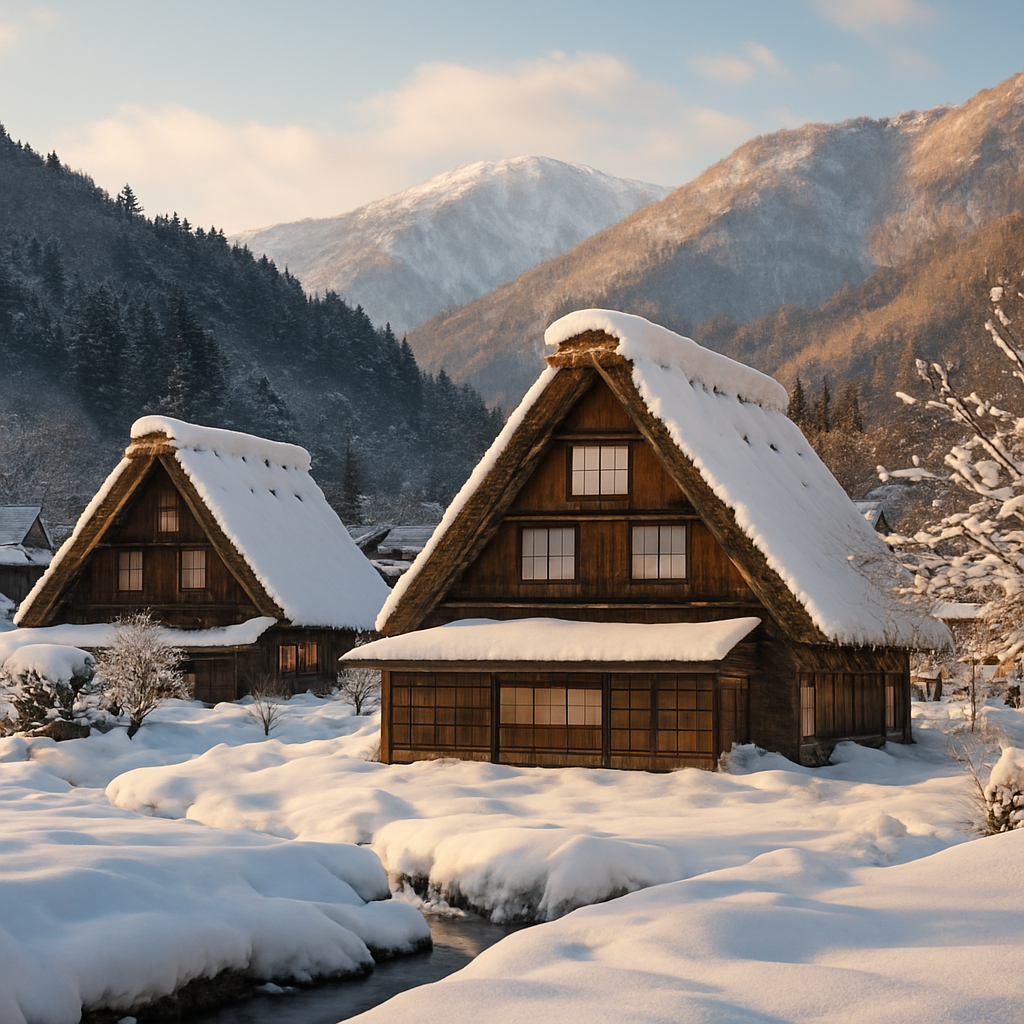
Seventy-five minutes by express bus from Kanazawa Station and you're in a UNESCO World Heritage mountain village of gassho-zukuri thatched farmhouses, some over 250 years old. The roofs are pitched steep enough to shed snowfall that buries the rest of the country. Wada House is open to visitors and gives you the inside-the-roof view; the winter illumination events are the kind of thing people plan trips around. Pair it with a Takayama overnight if you can — doing both in a single day is a forced march, and the Hida beef in Takayama deserves a slow lunch.
The places I actually send people to
Advice that fits how you travel
Solo travel in Kanazawa is, frankly, one of the easier moves you can make in Japan. The city is small enough to walk end to end in a long afternoon, the train from Tokyo or Osaka drops you under the Tsuzumi Gate without a transfer, and the local instinct toward politeness and privacy means a solo traveler at a counter is the most normal thing in the world. Omicho Market standing-bars, Katamachi izakaya, and the ni-hai sake-by-the-glass tradition are all built around the assumption that you're flying alone — pull up a stool, point at what the regulars are eating, and you'll be fine.
Meeting other gay travelers is harder, and I'll be straight with you: there's no real scene to plug into. Kanazawa has no dedicated gay bars — the apps work, but the user pool is thin and skews local. Bar Spoon in Katamachi is the closest thing to a soft-landing welcoming room, and Pilsen has been pouring beer to artists and quietly queer regulars for decades; both are good for a conversation, neither is a pickup spot. If you need that energy, the Thunderbird to Osaka's Doyama is 2h 40m, and the Hokuriku Shinkansen to Tokyo's Shinjuku Ni-chōme is 2h 30m. Plenty of solo travelers I know base in Kanazawa and day-trip the scene.
Budget-wise, solo Kanazawa is one of the better-value stops in Japan — approximately ¥9,000–13,000 a day on the budget end, ¥22,000–32,000 moderate. A capsule near the station, a Hokutetsu loop bus pass, a kaisendon at Omicho, and a counter seat at Hirai or Ippei if you want to splurge — that's a great solo week. Pro tip: book the big nights solo. Counter omakase rooms here are made for one, and the chef will engage with you in a way they won't with a four-top.
Kanazawa is a quietly excellent city for same-sex couples, with a few caveats worth planning around. The cultural reality, as of 2026, is that Japan's PDA norms are muted across the board — straight couples barely kiss in public — so two men or two women holding hands in Katamachi after dark or on the Higashi Chaya cobblestones generally reads as 'tourist' more than anything else, which is its own kind of camouflage. The international hotels near the station — Hyatt Centric, Hyatt House, Hotel Indigo, ANA Crowne Plaza — handle same-sex couples in king or twin rooms without comment, and IHG and Hyatt both carry corporate non-discrimination policies that show up at the front desk.
For romance, the move is a ryokan with a private kashikiri bath. Hatori on the Noto coast and Beniya Mukayu in Yamashiro are the two I trust most for same-sex couples — Relais & Châteaux pedigree, in-room or private bookable onsen that solves the gendered-public-bath problem in a single booking, and kaiseki paced like a piece of music. Hakuunro in Yuwaku Onsen is the closer-in option, technically inside Kanazawa city limits but it feels like another century. Email ahead in plain English to confirm a couple's room rather than a twin — give the property time to respond rather than improvise at check-in.
Date-night Kanazawa is where the city earns my 9.2 on Destination. Walk Kenrokuen at 7 a.m. when entry is free and you have it nearly to yourselves. Pair the 21st Century Museum's Swimming Pool with the Water Mirror Garden at the D.T. Suzuki Museum ten minutes' walk south — the best architectural afternoon in any small Japanese city I know. Then dinner at Tsubajin in a private tatami room (jibuni duck stew, served in a building doing this since 1752), or the Michelin counter at Zeniya, and a last cocktail at the Tower Bar upstairs at the Centric. That's the trip.
LGBTQ+ families traveling to Kanazawa should know the legal frame upfront: as of 2026, Japan does not recognize same-sex marriage nationally, civil unions don't exist federally, and joint adoption isn't available to same-sex couples. Kanazawa City and Ishikawa Prefecture both offer a partnership oath system that carries no national weight but reads as a quiet civic gesture. None of this typically affects a short visit — but families traveling with kids whose legal parentage is split between two same-sex parents should carry documentation (birth certificates, court orders, custody papers) in case a hotel or hospital asks. It's almost never an issue, but the paper is cheap insurance.
On the ground, Kanazawa is one of the gentler cities in Japan for LGBTQ+ families. Younger hotel and restaurant staff generally don't blink at two moms or two dads checking in with kids — a community member told me the Hyatt Centric and Hyatt House near the station are particularly relaxed, and both have family-sized rooms. The bigger logistical questions are universal Japan ones: stroller-friendliness varies (Kenrokuen, Kanazawa Castle Park, and the 21st Century Museum are easy; Higashi Chaya's cobblestones less so), and kids' menus exist mainly at the international hotels and chain spots like Kanazawa Maimon Sushi rather than at traditional kaiseki rooms.
The kid-friendly Kanazawa itinerary basically writes itself. The 21st Century Museum's Swimming Pool installation — kids love it because they get to figure out the trick before the adults do. Omicho Market in the morning for a kaisendon and the spectacle of fishmongers shouting each other awake. Kanazawa Castle Park grounds are free and stroller-friendly. Shirakawa-go as a day trip is a UNESCO village that reads to children as a fairy-tale set, especially in winter snow. Onsen logistics are the one real planning issue with kids — book a ryokan with a private bookable bath (Hatori and Beniya Mukayu both fit) so the whole family can use it together rather than navigating gender-segregated public baths with kids of varying ages.
What Kanazawa actually costs
Flights, visas, and the first 30 minutes
Airport: Komatsu Airport (KMQ) is the regional gateway, about 40 km southwest of the city. Honestly, most travelers skip KMQ entirely and arrive by bullet train — the Hokuriku Shinkansen from Tokyo takes 2h 30m and drops you under the Tsuzumi Gate at Kanazawa Station for ¥14,380. From Osaka, the Thunderbird limited express runs 2h 40m. If you're flying, KMQ has a handful of domestic routes (Tokyo Haneda, Sapporo, Fukuoka, Naha) plus limited international service.
Visa requirements (as of 2026): US, UK, EU (most passports), Canadian, and Australian travelers can typically enter visa-free for stays up to 90 days. Always confirm current entry rules with your nearest Japanese consulate before travel — requirements can change.
Airport to city: The Komatsu Limousine Bus to Kanazawa Station runs to coincide with flights — 40 to 50 minutes, ¥1,300, and the move I recommend. A taxi runs ¥12,000–15,000 and takes about the same time, useful only if you're arriving late or hauling serious luggage. Rental cars run ¥7,000–10,000 per day and are worth it if you're pushing into the Noto Peninsula or rural Ishikawa, but the city itself is best done on foot and the Hokutetsu loop bus.
Pro tip: If you have a Japan Rail Pass, the Hokuriku Shinkansen from Tokyo is fully covered — there's almost no scenario where flying into KMQ beats taking the train, unless you're connecting from a domestic city without a rail link.
Traven's seasonal breakdown
The questions everyone asks
Does Kanazawa have a gay neighborhood or gay bars?
Is it safe to hold hands as a same-sex couple?
How do I handle onsen and ryokan baths as a same-sex couple or trans traveler?
Will hotels accept a same-sex couple in one bed?
Do I need to speak Japanese?
How long should I stay in Kanazawa?
What's the best time of year to visit?
Screenshot this before you go
So should you actually go?
Should you go? If you're a same-sex couple chasing gardens, gold leaf, and one of the great regional food traditions in Japan, yes — Kanazawa is one of the gentler, more quietly welcoming small cities in the country, and three nights here will reset the way you think about traveling in Japan. If you're a solo traveler hunting scene and community, be honest with yourself: there isn't one, and you'll be happier basing in Tokyo or Osaka and treating Kanazawa as a two-day cultural detour. LGBTQ+ travelers should know the legal frame is thin (no marriage, no joint adoption as of 2026) but the cultural reality is calm — and on the ground, calm is what most of us are actually looking for. Book the ryokan with the private bath, hit Kenrokuen at dawn, and let the city do the rest.
Sources & Resources
Official links we reference when compiling this guide. Last verified 2026-05-04.
- akta — HIV/STI testing & community space
- Ishikawa Prefecture LGBT Information
- Japan National Tourism Organization — LGBTQ Travel
- Kanazawa City Official Site — Partnership Oath System
- Marriage For All Japan
- Nijiiro Diversity (LGBT workplace NPO)
- Pride House Tokyo Legacy
- Stonewall Japan (expat LGBTQ+ network)
- Tokyo Rainbow Pride
- Visit Kanazawa (Official Tourism Site)