
Kyoto seduces you the way it does everything — slowly, deliberately, and without ever raising its voice.
It's 11pm on a Friday, and you're sitting in a bar on Kiyamachi-dori that seats maybe seven people. The bartender just placed a glass of Yamazaki in front of you without asking — he read your face when you walked in, decided what you needed, and got it right. Through the window, neon reflects off the Takase-gawa canal, and from two floors up you can hear the muffled bass of something happening at Club Metro. Nobody in this room is performing anything. Nobody's waving a flag. Kyoto doesn't do that. What it does is fold you into its rhythm so quietly that you don't realize you've been accepted until you're already on your second drink.
This is a city that earns a 9.5 on Destination in my Traven-Dex — and honestly, it might be underselling things, because nothing else I've scored competes with Kyoto on pure sensory experience. A kaiseki dinner at Kikunoi Honten in Higashiyama that unfolds over two hours like a love letter to the season. The Philosopher's Path in cherry blossom week, when the petals fall so thick they collect in the canal like pink snow. Fushimi Inari at dawn, when the only sound under 10,000 torii gates is your own breathing. Nishiki Market at noon, when a vendor slices a rolled omelet to order and hands it to you on a stick for ¥200. As a place to travel, Kyoto is genuinely world-class — I don't say that casually.
But here's the part I can't skip. Japan doesn't have marriage equality, doesn't have comprehensive anti-discrimination protections, and the legal framework as of 2026 is frustratingly thin for a country this sophisticated. My overall Traven-Dex of 6.9 reflects that tension — a destination that's extraordinary to experience but asks you to calibrate your visibility. Don't confuse "discreet" with "unwelcoming," though. Same-sex couples strolling the Kamogawa riverbank at dusk, sharing a private kashikiri bath at a ryokan, lingering over soba at a 300-year-old restaurant on Fuyamachi-dori — none of that draws a second look. The city is simply absorbed in its own beauty and expects you to be, too.
And then there's the escape valve. The Hankyu limited express from Kawaramachi Station drops you in Osaka's Doyama-cho in 28 minutes — over 100 LGBTQ+ venues packed into a compact, unapologetically out neighborhood around Triangle Park. Most Kyoto-based travelers treat it as their Saturday night annex, and that proximity is part of why I gave this city an 8.5 on Scene. You get the temples and the kaiseki by day, one of Asia's best gay districts by night, all on a single rail pass. Kyoto plays coy with its queer life — it isn't loud, it isn't flagged, it doesn't advertise. But it's there, living in the back rooms of Kiyamachi bars and in the sweaty crowd at Club Metro under the Marutamachi bridge. Think of it as the difference between a parade and a tea ceremony: both are meaningful, one just doesn't announce itself.
The stuff your travel guide buries on page 47
Japan hasn't criminalized same-sex relationships in its modern legal history — that's the baseline. But as of 2026, the legal framework beyond decriminalization is frustratingly thin. There's no marriage equality at the national level, no civil unions, no joint adoption rights for same-sex couples, and anti-discrimination protections remain limited and patchwork. Several district courts have ruled the marriage ban unconstitutional, and Marriage For All Japan continues to push challenges through the courts, but the Diet hasn't acted.
Kyoto City does issue a partnership certificate for same-sex couples — someone wrote in to say it's available to international visitors with passports and a joint declaration at City Hall. It's recognized by some local hospitals, hotels, and private services, which can be genuinely useful in practice. But it carries zero weight at the national level for inheritance, medical decision-making, or immigration. Think of it as a meaningful municipal gesture, not a legal shield.
There's no national law explicitly prohibiting discrimination based on sexual orientation or gender identity in employment, housing, or public accommodation. The Japan Ministry of Justice Human Rights Bureau handles complaints, but enforcement is advisory rather than binding. Organizations like OCCUR, Japan's oldest LGBTQ+ advocacy group established in 1986, have been pushing for comprehensive protections for decades. Progress is real, but it's incremental.
Gender identity recognition as of 2026 requires a formal gender dysphoria diagnosis. The Supreme Court struck down the sterilization requirement in 2023 — a significant step — but the process remains lengthy and bureaucratic. Trans travelers should know that legal documents may not match presentation, which can create friction at hotel check-in or official interactions. Pro tip: book a kashikiri (private bath) when you reserve your ryokan — it's the practical solution for navigating Japan's rigidly gender-segregated onsen culture, and most properties handle the request gracefully.
The cultural reality on the ground is more forgiving than the legal framework suggests. Japan is a broadly reserved culture — public affection is dialed down regardless of orientation. Holding hands is perfectly fine on Kiyamachi or along the Kamogawa riverbank, but anything more demonstrative will draw polite, puzzled stares from everyone.
PDA by area: Gion and Hanamikoji-dori carry deeply conservative social norms — keep all PDA minimal regardless of who you're with. Fushimi Inari Taisha and Arashiyama are active religious and tourist sites where discretion is expected of everyone. Kyoto Station is a major transit hub — brief affection generally goes unremarked, but it's not the norm.
Kawaramachi and Shijo, Kyoto's main commercial strip, are more forgiving — hand-holding generally passes without incident, though same-sex affection may draw occasional glances. The Yoshida district near Kyoto University is the most relaxed pocket of the city: student-heavy and progressive, hand-holding there is a non-event.
What it actually feels like on the ground
The big picture: Kyoto is extremely safe by any global standard. Violent anti-LGBTQ+ incidents are essentially unheard of. The friction you're most likely to encounter is a language barrier or navigating an onsen policy, not hostility.
Holding hands: Depends entirely on where you are. Along the Kamogawa riverbank at dusk, on the Philosopher's Path, or in the Yoshida student district — you'll be fine, and nobody's going to say a word. In Gion, at Fushimi Inari, or on temple grounds, keep it to yourself — and that applies to all couples, not just same-sex ones. Japan's reserve around public affection isn't targeted; it's cultural.
Hotel check-in: Booking a double room as a same-sex couple is straightforward at international chains and guesthouses accustomed to foreign visitors. You won't be turned away, but you may get a moment of visible processing at very traditional ryokan that rarely host non-Japanese guests. Business hotels don't blink. If you're booking a ryokan, mention "two guests, one room" when you reserve — it smooths everything.
Taxis and transit: Zero concern. Japanese taxi drivers are rigorously professional, and the transit system is the most efficient you'll encounter anywhere. Nobody on the Hankyu line is paying attention to who you're traveling with.
Late night: The Kiyamachi bar scene loosens up significantly after midnight. Club Metro under the Marutamachi bridge has a genuinely mixed, artsy crowd where being openly gay reads as interesting, not confrontational — the vibe is more Berlin basement than tourist strip. Kyoto is safe to walk at night by virtually any standard; your biggest risk is a tipsy stumble on the stone-paved lanes along the Takase canal, not confrontation.
Trans travelers: Japan's service culture is relentlessly polite, but unfamiliarity with trans identity means misgendering in service settings is common — it comes from a lack of exposure, not malice. The practical sticking point is onsen access: most traditional bathhouses are rigidly gender-segregated with no flexibility. Book a kashikiri (private bath) when you reserve your ryokan — it's a standard request. GID Society Japan provides medical and support resources, and the Yorisoi Hotline (0120-279-338) is available 24/7 in multiple languages for crisis support or community referrals.
Verbal harassment: Rare to the point of functionally nonexistent. Japan's culture of public decorum means confrontation of any kind is deeply unusual. You're far more likely to encounter a silent double-take than a comment. ILGA Asia monitors LGBTQ+ rights across the region, and Japan consistently ranks among the safest countries in Asia for LGBTQ+ travelers — even without comprehensive legal protections.
The queer geography
Kiyamachi-dori & Pontocho
Start at the Takase-gawa, a narrow canal running through central Nakagyo. Kiyamachi-dori runs alongside it — a corridor of narrow buildings, small bars stacked vertically, neon spilling onto wet stone after dark. In daylight it's unassuming: a few coffee shops, some closed shutters, a canal you could step across. At night it transforms into something else entirely. The bars are mostly tiny — six or eight seats, a bartender who becomes your host for the evening, the kind of places where you don't choose a seat, you're given one.
Parallel to Kiyamachi, Pontocho is barely wide enough for two people to pass. This is one of Kyoto's historic hanamachi — geisha entertainment districts — and the architecture is mostly preserved: wooden facades, paper lanterns, the occasional geiko in full dress disappearing into a doorway. The restaurants along the east side open onto the Kamogawa River, and in summer they extend wooden platforms (kawadoko) over the water for riverside dining.
This is where Kyoto's LGBTQ+ nightlife lives. Bar Ing has been a quiet pillar of the gay community for years — the kind of spot where the bartender knows every regular by name and first-timers get walked through the sake menu without fanfare. Further north at Marutamachi bridge, Club Metro runs queer nights that pull the city's fashion-forward, art-school crowd — check their event calendar before you visit, because the programming varies. The whole corridor picks up after 10pm on weekends.
Kawaramachi & Sanjo
Kawaramachi-dori is Kyoto's main commercial artery — department stores, covered arcades, and the constant movement of people shopping, eating, and catching buses. Turn east toward Sanjo and the energy shifts: the 1928 Building, an Art Deco former Mainichi Shimbun bureau, sits on Sanjo-dori with Café Independants in its basement — a low-ceilinged, slightly chaotic space that's been a gathering point for Kyoto's arts and underground community since the early '90s. A few blocks south, Nishiki Market stretches five blocks of food vendors, knife shops, and pickle stalls that'll recalibrate your understanding of what a market can be.
This is where Kyoto's creative scene overlaps with its queer one. The cafés and bars here aren't explicitly gay, but they draw the same crowd — artists, expats, university students who prefer a machiya basement to a chain restaurant. nijiiro diversity, a Japanese LGBTQ+ workplace advocacy NPO, has helped shape the professional culture in progressive districts like this one. It's a good base for daytime Kyoto and an easy walk to Kiyamachi when the sun goes down.
Kyoto University & Yoshida
North of the Philosopher's Path, the neighborhood around Kyoto University has an energy entirely unlike the rest of the city. The streets are wider, the buildings less manicured, and the population skews a decade or two younger. You'll find used bookshops, cheap ramen joints with handwritten menus, and Yoshida Shrine tucked into the hillside above campus — quieter than the famous Shinto complexes and beautifully shaded in autumn.
This is the most progressive pocket of Kyoto, and it feels like it. The student population means a higher tolerance for difference, and hand-holding here — same-sex or otherwise — draws no attention. It's not a nightlife destination, but it's an excellent neighborhood for an afternoon wander, a cheap lunch, and a reminder that Kyoto isn't all preserved tradition and temple gates.
Doyama-cho, Osaka (The 28-Minute Annex)
If Kiyamachi's small scene leaves you wanting more, Doyama-cho in Osaka's Kita-ku is 28 minutes away on the Hankyu limited express from Kawaramachi Station. Step off at Umeda, walk north, and within three blocks you're in Japan's second-largest LGBTQ+ neighborhood — over 100 venues packed into a walkable area around Triangle Park. The density is startling: gay bars, karaoke joints, clubs, and snack bars stacked on top of each other in narrow buildings. The energy is completely different from Kyoto — louder, more explicitly out, unapologetically itself.
Most Kyoto-based travelers treat Doyama-cho as their Saturday night annex. The last Hankyu train back runs past midnight, and a taxi from Umeda to Kyoto is a manageable splurge if you miss it. For community connections anywhere in Japan, Pride House Tokyo Legacy is the country's primary LGBTQ+ community center and resource hub — they can point you toward local events and organizations across the Kansai region. The annual Osaka Rainbow Festival takes place at nearby Nakanoshima, typically in late October, and is worth planning around if your dates are flexible.
The experiences worth rearranging your itinerary for
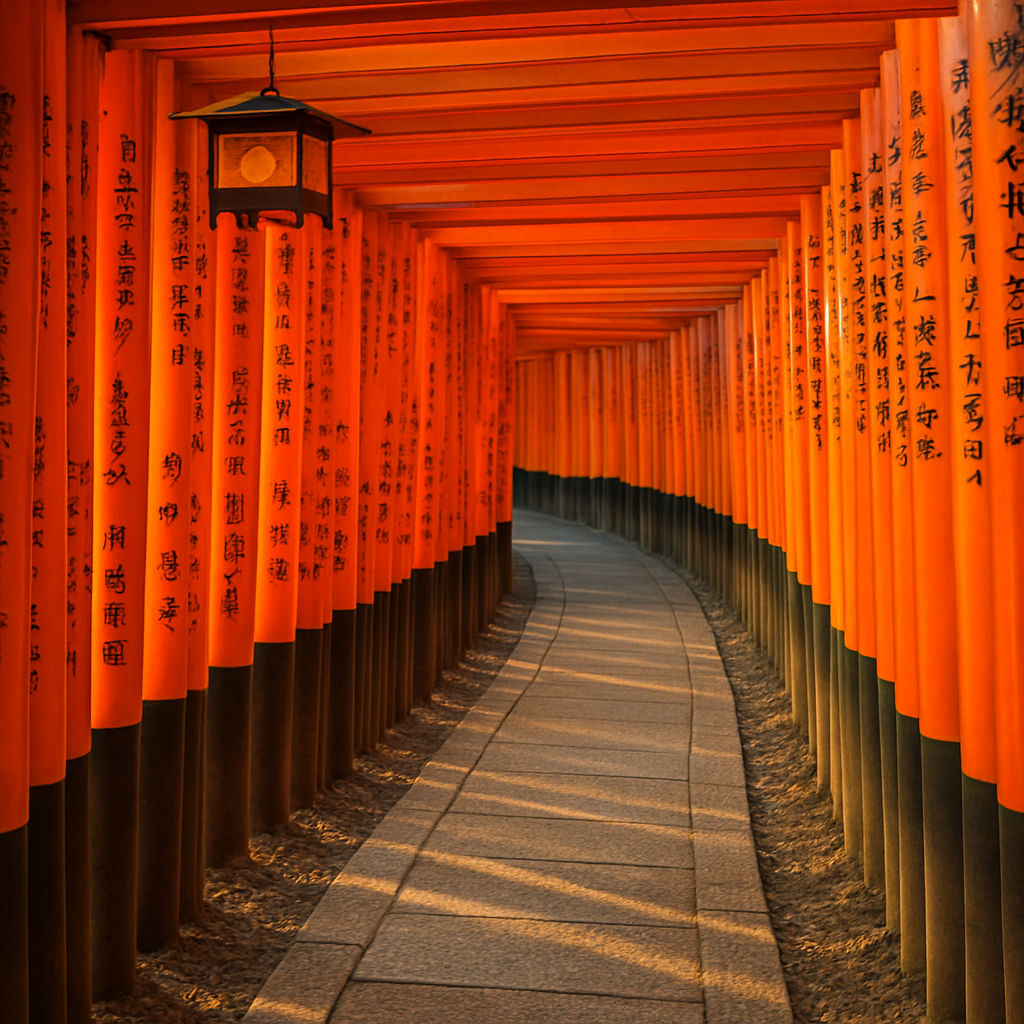
Fushimi Inari at First Light
Set your alarm for 5am. I know. But the 10,000 vermillion torii gates of Fushimi Inari-taisha are a completely different experience when the tourist buses haven't arrived yet. The lower gates catch the first horizontal light of dawn, and the higher trail — a 2-hour loop up Mount Inari through forest — is virtually empty before 7am. The air smells like cedar and incense, foxes guard every shrine, and the only sound is your footsteps on stone.
The full summit loop takes roughly two hours at a comfortable pace. There are tea houses along the upper trail where you can stop for amazake (sweet rice drink) and catch your breath while looking out over the entire Kyoto basin. By the time you descend, the crowds will have arrived below, and you'll feel like you visited a different shrine entirely. Come back down hungry — the street food vendors outside the main gate open early and the inari sushi (fried tofu rice pockets) sold here is the namesake dish.
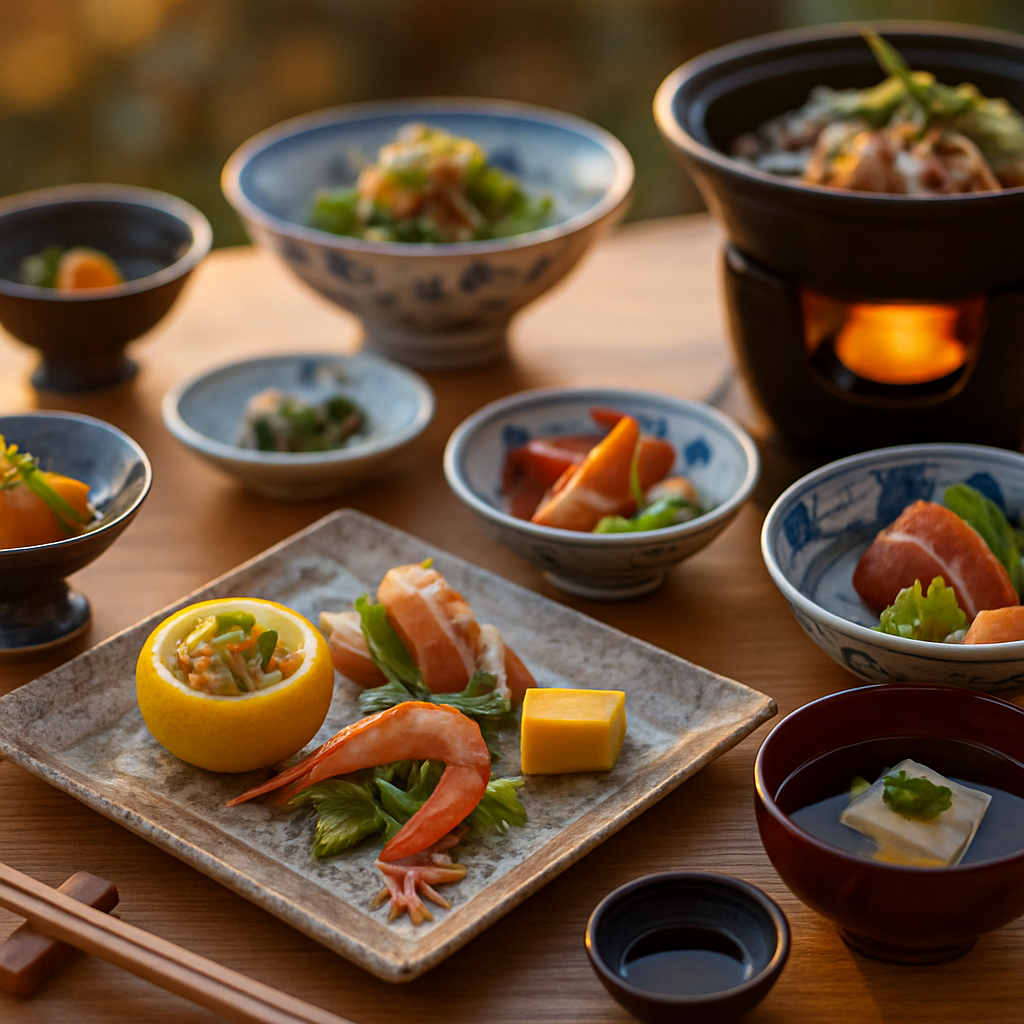
A Kaiseki Dinner You'll Think About for Years
Kaiseki is Kyoto's highest culinary art — a multi-course progression of tiny, obsessively seasonal dishes that unfold over two hours like a narrative about what's growing, swimming, and ripening right now. This isn't dinner. It's a structured meditation on ingredients, and in Kyoto, where the tradition was born, the best restaurants treat each course as a piece of edible architecture: a single persimmon leaf holding three bites of something you've never tasted.
You don't need to spend ¥20,000 to experience it — many restaurants in Higashiyama and Gion offer lunch kaiseki courses from ¥5,000–¥8,000 that follow the same principles with slightly fewer courses. Book at least two weeks in advance for dinner at top establishments. Lunch is slightly easier to secure. The meal will almost certainly include something you can't identify. Eat it anyway. That's the point.
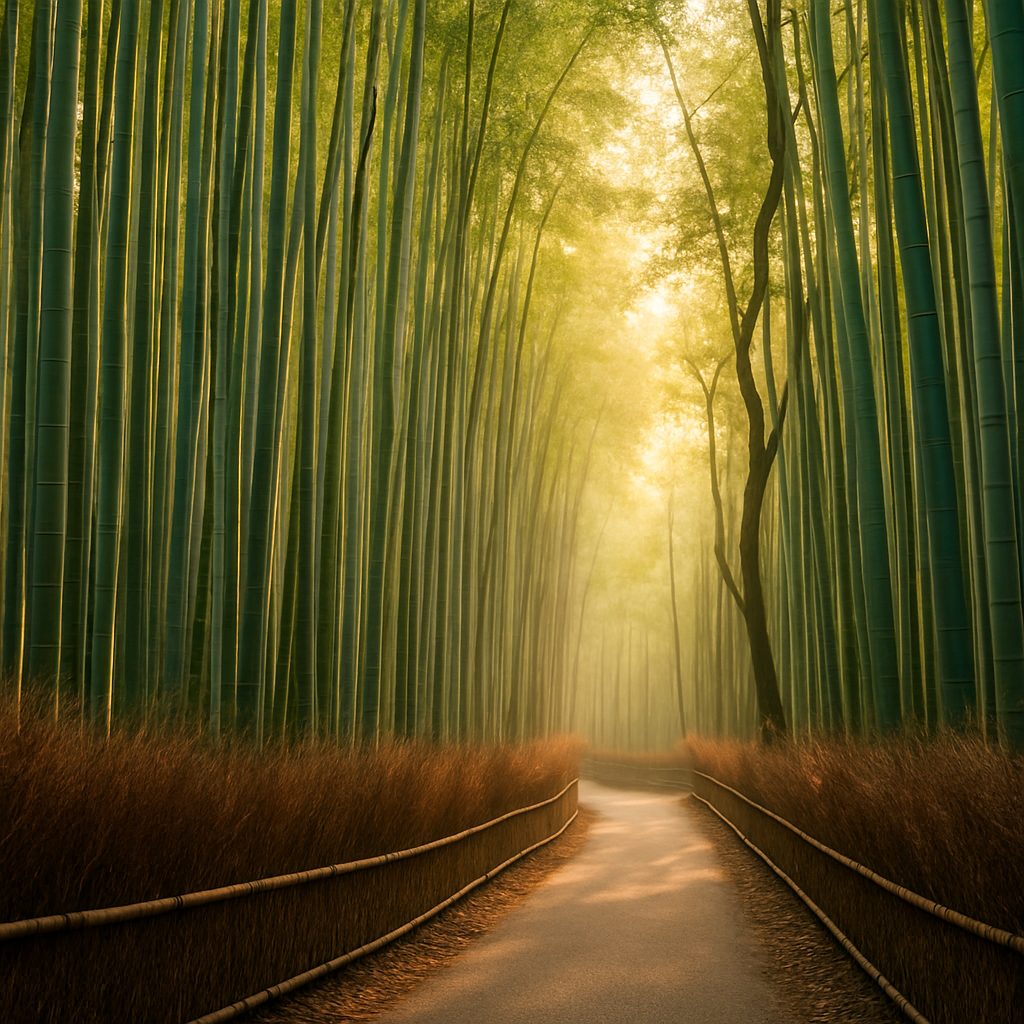
Arashiyama Before the Crowds Wake Up
The bamboo grove at Arashiyama is one of those places that's been photographed so relentlessly it feels like you've already been there. You haven't. The sound alone — bamboo stalks creaking and clicking in the wind fifty feet above your head — is something a photograph can't capture. The light filters through in shifting green columns, and the path curves just enough that you can't see what's ahead. It's genuinely otherworldly.
The catch: by 10am it's a wall of selfie sticks. Arrive before 8am or skip it. From the grove, cross the Togetsukyo bridge over the Oi River — the mountain backdrop is spectacular in any season — and consider renting a flat-bottom boat to drift downriver, or walk 15 minutes uphill to Okochi Sanso, a private garden villa with panoramic views of the Kyoto mountains and complimentary matcha on arrival.
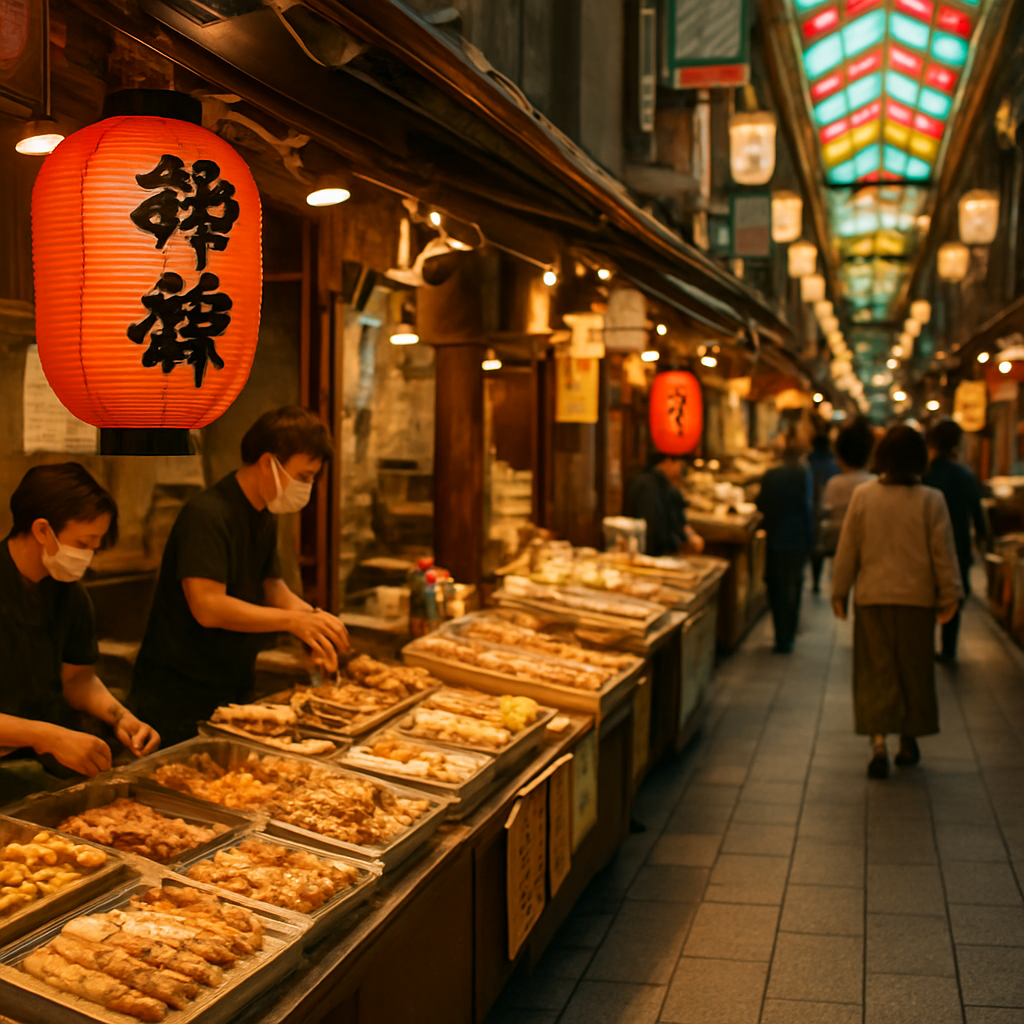
Five Blocks of Nishiki Market
Nishiki Ichiba runs five blocks through central Kyoto and manages to be both a functioning market where local chefs shop and a sensory education in what Kyoto actually eats. The knife shops alone are worth the walk — watching a vendor demonstrate the difference between a deba and a yanagiba is a quiet masterclass in Japanese blade culture. Between them: pickle vendors with 40 varieties of tsukemono, shops selling yuba (tofu skin) in forms you didn't know existed, and grilled mochi on sticks for ¥200.
Go before noon to see the market at its most functional. Eat as you walk — the grilled octopus balls, the fresh soy milk, the dashimaki tamago (rolled omelet) sliced to order. Don't buy souvenirs until you've walked the full five blocks, because you'll see something better at the next stall. Budget ¥2,000–3,000 for a full grazing run that doubles as lunch.
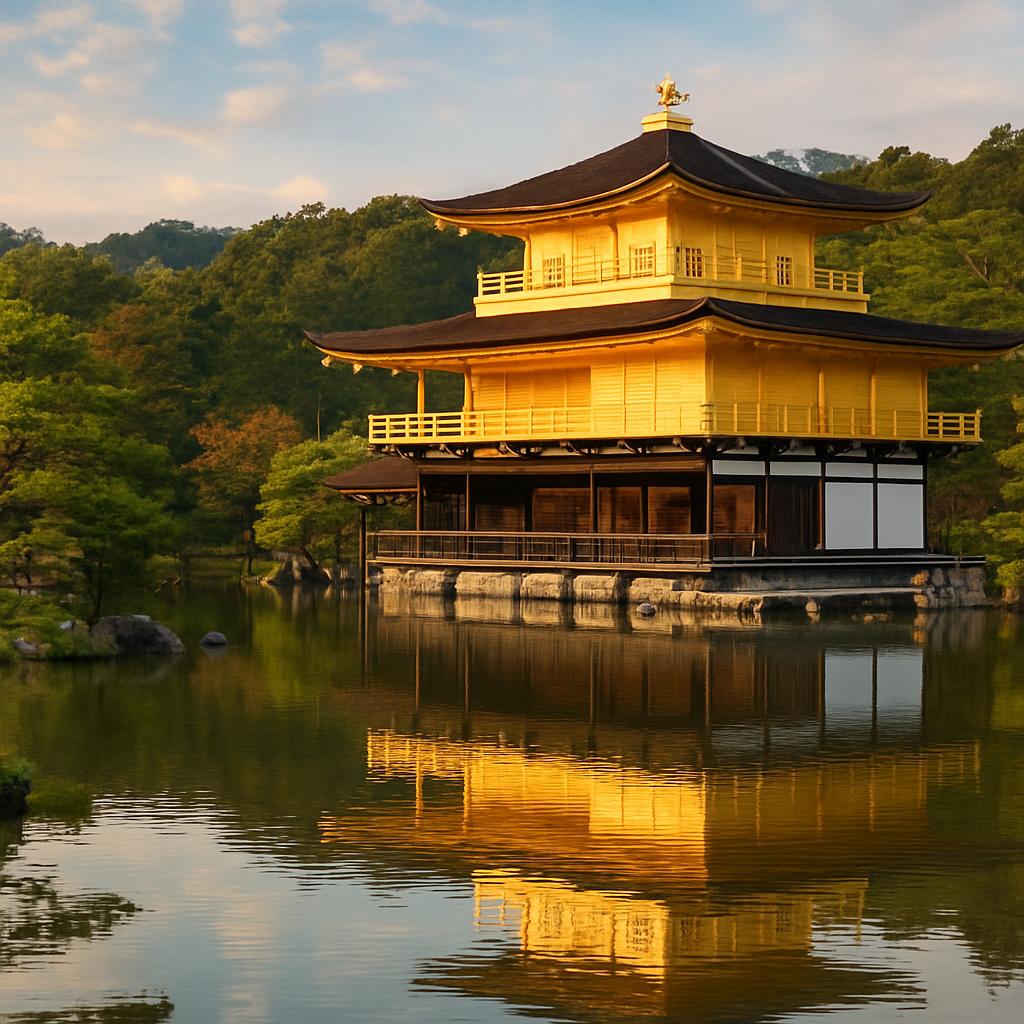
Kinkaku-ji and the Art of Standing Still
You've seen the photo a thousand times: a gold-leafed pavilion reflected in a mirror-still pond, pine trees framing it like it was placed there by a painter. And yet standing in front of Kinkaku-ji in person does something a photograph can't — the gold actually shifts color as clouds pass, the reflection ripples when a koi breaks the surface, and the scale of the thing against the forested hills behind it makes you recalibrate what you thought you knew about Japanese restraint.
The grounds take about 45 minutes to walk. The approach is choreographed — you turn a corner and the pavilion appears all at once, which is a deliberate architectural choice that's been working on visitors since the 1400s. The matcha tea house near the exit serves a bowl of thick ceremonial-grade green tea with a small sweet for ¥500 — drink it overlooking the garden and let the crowd flow past. Pro tip: late afternoon light, around 3–4pm, turns the gold almost orange and the photos are dramatically better than at midday.
The places I actually send people to
Advice that fits how you travel
Solo travel in Kyoto is one of the better deals in Japan — the transit system is so logical that navigating alone is genuinely easy, and the budget math works cleanly if you use it. Dorm beds at K's House Kyoto start around ¥2,800/night, and a full day of temples, walking, and eating can land under ¥10,000 with discipline. The IC card system (Suica or ICOCA) handles buses, subways, and trains without a second thought, and most of the best things in Kyoto — morning walks at Fushimi Inari, the Philosopher's Path, half a day in Nishiki Market — are free or close to it.
Meeting people is easier than the city's quiet surface suggests. The common areas at K's House and Piece Hostel Sanjo are actually functional social spaces — the kind where you arrive alone and leave with dinner plans. On the app front, Grindr and Jack'd both have active userbases in Kyoto, with the scene picking up on weekend evenings around Kiyamachi. For something more organic, the basement of Café Independants on Sanjo-dori draws Kyoto's arts and underground crowd, and Bar Ing — one of Kiyamachi's quietly gay institutions — has the kind of intimate bartender-led culture where arriving solo is never awkward. You'll be walked through the sake menu and folded into conversation within ten minutes.
For a home base, the area around Nakagyo and Sanjo earns its keep: close to Kiyamachi's bar corridor, walkable to the central sights, and steps from the Hankyu line if you want to make the 28-minute run to Osaka's Doyama-cho on a Saturday night. If day trips are your priority — Nara, Kobe, Osaka — basing yourself near Kyoto Station puts you on every platform that matters. Kyoto is extremely safe by any global measure; late-night walks along the Takase canal after the bars close are peaceful, not tense, and the biggest risk is the cobblestones.
For same-sex couples, Kyoto is a city where the experience is excellent and the visibility is low. You won't be celebrated the way you might be in other destinations, but you also won't encounter hostility. The practical PDA reality: along the Kamogawa riverbank at dusk, on the Philosopher's Path in cherry blossom season, or in the student-heavy Yoshida district, holding hands draws zero attention — the scenery is too absorbing for anyone to register who you're walking with. In Gion, at Fushimi Inari, or on temple grounds, keep it close to yourselves — a norm that applies equally to all couples in this city.
The romantic ceiling here is genuinely high. A kaiseki dinner in Higashiyama — two hours, a dozen courses, each dish arriving as a deliberate statement about the season — is the kind of meal couples still describe years later; book Kikunoi Honten at least two weeks out. At Shunkoin Temple within the Myoshinji complex, Rev. Takafumi Kawakami performs same-sex blessing ceremonies and runs English-language Zen meditation sessions; a morning there carries different emotional weight than a standard temple visit. The river-view rooms at The Ritz-Carlton Kyoto face west along the Kamogawa, and the light they catch in late afternoon is worth every yen of the premium.
For ryokan stays, mention "two guests, one room" clearly when you book — most international-standard properties handle it gracefully, and both The Ritz-Carlton and The Thousand Kyoto (Marriott properties with documented LGBTQ+ nondiscrimination policies) are safe bets if you want no ambiguity. Book a private kashikiri bath when you reserve — it bypasses the gender logistics of shared onsen entirely, and it's a standard request that most properties accommodate without comment. For evenings when you want a bigger, more explicitly out scene, the Hankyu limited express from Kawaramachi Station reaches Osaka's Doyama-cho in 28 minutes — most same-sex couples based in Kyoto make the run at least once.
As of 2026, LGBTQ+ families travel to Japan without national legal recognition — no marriage equality, no joint adoption rights, and no federal framework covering family structure. Kyoto City's partnership certificate is available to international visitors with passports and a joint declaration at City Hall, and it's recognized by some local hospitals and private services, but it carries no weight nationally for inheritance or medical decision-making. What this means on the ground: your family will be treated with the same polite, attentive hospitality Japan extends universally. Expect professional neutrality rather than affirmation, and know that confrontation is essentially off the table — the culture's deep reserve works quietly in your favor.
The kid-friendly infrastructure in Kyoto is strong. Nara is 45 minutes by JR — approximately 1,200 free-roaming deer that bow for crackers and steal your snacks make it one of the most reliably delightful day trips for children of any age. The Kyoto International Manga Museum near Karasuma-Oike lets kids sprawl on the lawn reading manga from a 300,000-volume collection for ¥900 adult admission (children's rates apply). Arashiyama's bamboo grove is manageable with young children if you arrive before 8am — after that, crowd density makes stroller navigation genuinely difficult. Nishiki Market's five-block stretch of food stalls works well as a mobile lunch for families with older kids who can graze and walk simultaneously.
Strollers fold on city buses during peak hours; the subway and JR lines are stroller-accessible without that restriction. IC cards (Suica or ICOCA) cover children under 12 at half fare, and most tourist sites post clear child pricing. Ryokan stays with young children are worth confirming in advance — some traditional properties aren't designed for small kids, and clarifying family room availability and onsen access when you book saves friction on arrival. International hotel brands like Hyatt Regency Kyoto are the logistically smoothest family option: Western beds, in-room amenities, and staff experienced with international family travel. There's no formal recognition of LGBTQ+ family structures in Japan, but there's also no confrontation — present your family as a family, and you'll be treated as one.
What Kyoto actually costs
Flights, visas, and the first 30 minutes
Airport: You're flying into Kansai International Airport (KIX) — an artificial island in Osaka Bay and Kyoto's nearest international gateway, roughly 75 minutes by direct rail. There's no commercial airport in Kyoto itself. KIX handles approximately 90 direct international routes, connecting from major hubs across North America, Europe, East Asia, Southeast Asia, and Australia. If you're routing through Tokyo, the Shinkansen from Tokyo Station to Kyoto runs about 2 hours 15 minutes and is worth considering for the ride alone.
Visa requirements: As of 2026, travelers from the US, UK, EU member states, Canada, and Australia are typically eligible for visa-free entry for stays of up to 90 days. A valid passport with sufficient remaining validity is required. Entry conditions can change — confirm with your country's foreign ministry before departure and check Japan's Ministry of Foreign Affairs guidelines for the latest.
KIX to Kyoto — your options:
Haruka Express (JR) — ¥3,600 / 75 min: The direct airport train to Kyoto Station, no transfers, reserved seats recommended. This is the right call for most travelers. During cherry blossom or autumn foliage season the train fills quickly — book your seat when you confirm your itinerary. IC cards (Suica, ICOCA) work on unreserved cars; clarify at the ticket counter if you're unsure what you have.
Airport Limousine Bus — ¥2,800 / 90–105 min: Marginally cheaper and drops at multiple points across central Kyoto beyond the station — genuinely useful if you're staying near Kawaramachi or northwest of the center. Traffic is the variable. Osaka's highways during rush hour can push that 90 minutes toward two hours without much warning. Fine if you're not in a hurry; calculated gamble if you are.
Taxi / Ride-hail — ¥20,000–30,000 / 70–90 min: Japanese taxis are pristine and drivers are rigorously professional, but the cost is significant. Only worth it for groups traveling with serious luggage or arrivals after rail service ends. For a solo traveler or couple, the Haruka is a far better use of the price difference.
Traven's seasonal breakdown
The questions everyone asks
Is it safe to hold hands in Kyoto?
Is there a gay scene in Kyoto?
Do I need to speak Japanese?
Can same-sex couples stay in a ryokan?
How much should I budget per day?
What's the best way to get from the airport to Kyoto?
When should I visit?
Screenshot this before you go
So should you actually go?
Kyoto is one of the most beautiful cities on Earth, and I mean that without qualification — as a destination, it's nearly perfect. The legal and social reality for LGBTQ+ travelers is more complicated: Japan's protections are thin as of 2026, the culture values reserve over celebration, and you'll need to read the room neighborhood by neighborhood. But violence and confrontation are essentially nonexistent, the hospitality is extraordinary, the scene on Kiyamachi is real if intimate, and Doyama-cho is 28 minutes away when you want something bigger and louder. Go. Just go with your eyes open, calibrate your PDA to the setting, and let the city do what it does better than anywhere — stop you in your tracks with something so beautiful you forget to reach for your phone.
Sources & Resources
Official links we reference when compiling this guide. Last verified 2026-04-13.
- GID Society Japan — Gender identity medical & support resources
- ILGA Asia — Regional LGBTQ+ rights body
- Japan Ministry of Justice — Human Rights Bureau
- Marriage For All Japan — 結婚の自由をすべての人に
- nijiiro diversity — Workplace LGBTQ+ NPO
- OCCUR — Japan's oldest LGBTQ+ advocacy organization (est. 1986)
- Pride House Tokyo Legacy — LGBTQ+ community center & resource hub
- Tokyo Rainbow Pride — Japan's largest Pride event
- Yorisoi Hotline — 24/7 multilingual crisis & support line (0120-279-338)