
Osaka eats harder, laughs louder, and packs its whole nightlife into blocks so tight you'll pass the same beautiful stranger three times before midnight — and honestly, that's the whole game.
Osaka is Japan's great contradiction for gay travelers: a city with one of Asia's densest, most genuinely fun gay districts, wrapped inside a country that still won't let you marry your boyfriend. That tension defines the experience here. You'll walk through Doyamacho on a Saturday night — small enough to cover end-to-end in five minutes — and pass the same beautiful strangers three times, which is honestly the whole game. It's dense and intimate in a way that makes the Castro feel like a suburb. The bars are tiny, the drinks are strong, the energy is unmistakably alive. And then you'll step onto the Midosuji Line the next morning and remember you're in a country where holding your partner's hand reads as genuinely confusing to the salaryman across from you.
I gave Osaka an 8.8 on Scene, and that number lives almost entirely within a few blocks of Kita-ku. Explosion anchors the neighborhood with multiple floors and a proper sound system — show up at 10pm and you'll have the bar to yourself, show up at 1am and you'll dance until your shoes surrender. The lesbian scene has real presence here too, which matters: Zaza and NR are institutions, not afterthoughts. The whole district skews more local than Tokyo's Shinjuku Ni-chōme — fewer English menus, more of the good stuff. Bring a translation app and genuine curiosity, and bar staff will warm up fast once they realize you're here for the culture and not just the novelty photo.
But Osaka isn't just Doyamacho, and that's what earns it a 9.0 on Destination from me. This is the greatest food city in Japan — a place where a ¥900 bowl of udon at a postwar institution like Imai Honten in Dotonbori will rearrange your understanding of noodle soup. Where the communal kushikatsu sauce rule at Kushikatsu Daruma in Shinsekai is treated with more gravity than most countries' actual laws. Where you can ride 40 minutes to Takarazuka Grand Theater and watch an all-female revue company that's been quietly subverting gender roles since 1913, with one of Japan's most devoted queer fan communities following every performance.
The legal picture keeps my overall Traven-Dex at 7.2, and I won't pretend otherwise. Japan has no marriage equality, limited discrimination protections, and a gender recognition law that still requires surgery — that's real, and it matters. Osaka City's partnership certificate is a meaningful gesture with almost no legal teeth. But the cultural reality on the ground is warmer than the statutes suggest. This city wants to feed you, make you laugh, keep you out until 4am, and send you home heavier and happier. It does all of those things exceptionally well. You just need to understand what it can't do yet.
The stuff your travel guide buries on page 47
Legal framework: As of 2026, same-sex relationships are legal throughout Japan — there is no criminalization of homosexuality and hasn't been in the modern era. However, same-sex marriage is not legally recognized at the national level. Japan has no nationwide civil union or partnership framework. Osaka City has issued municipal partnership certificates through its ward offices, but these carry no legal weight under national law — they can't be used for immigration, inheritance, medical decision-making, or tax purposes. They are symbolic, and the community values them as such, but don't confuse them with legal standing.
Adoption and family recognition: Same-sex couples cannot jointly adopt children under Japanese national law as of 2026. There is no legal framework for recognizing two same-sex parents on official documentation. LGBTQ+ families traveling with children should bring clear documentation of their family structure and custody arrangements.
Anti-discrimination protections: Limited. Japan has no comprehensive national anti-discrimination law covering sexual orientation or gender identity. Some municipalities, including Osaka, have local ordinances or guidelines, but enforcement mechanisms are weak. The Osaka City Human Rights & Gender Equality Office has issued statements on LGBTQ+ inclusion, but these function more as policy signals than enforceable protections.
Gender identity: Japan's legal gender recognition process, as of 2026, requires a medical diagnosis and surgical procedures — one of the more restrictive frameworks among developed nations. Transgender travelers whose documents don't match their presentation may encounter confusion at official checkpoints but rarely hostility. Niji-iro Diversity maintains resources on navigating gendered spaces in Osaka.
Cultural reality on the ground: The gap between law and lived experience in Osaka skews positive. The city's character — direct, funny, working-class proud — means you'll encounter warmth and curiosity far more often than judgment. But public affection follows Japanese social norms broadly: couples of all orientations tend toward discretion in public. Inside Doyamacho, same-sex couples are completely unremarkable. In tourist-heavy areas like Dotonbori, discreet hand-holding is fine; overt kissing draws stares. At family-oriented spaces like Universal Studios Japan, match the general energy. Almost every bar in Doyamacho operates a seat charge (sekiryō) of ¥500–¥1,000, usually including a small snack — this is non-negotiable standard practice, not a tourist markup, so factor it into your budget before the night starts.
What it actually feels like on the ground
Holding hands: In Doyamacho, completely fine — same-sex couples are the norm here and nobody blinks. In central tourist zones like Dotonbori and Shinsaibashi, discreet hand-holding is tolerated but you'll be calibrating to broader Japanese PDA norms, which are reserved for everyone. In residential or working-class areas like Tennoji and Shinsekai, keep contact minimal — not because of danger, but because the older demographic skews conservative in expectations.
Hotel check-in: International chain hotels (W Osaka, Hilton, InterContinental, St. Regis) handle same-sex couples without issue — their staff are trained on global non-discrimination policies. Smaller Japanese business hotels and ryokans may occasionally show momentary confusion at two guests of the same gender sharing a double room, but this almost never escalates beyond a brief pause. Book a double room online in advance to avoid any awkward front-desk negotiation.
Taxis and transport: Osaka's taxi drivers are professional, uniformed, and overwhelmingly non-confrontational. You'll encounter zero issues as a same-sex couple in a taxi. The metro system is safe at all hours and heavily monitored. Pro tip: the Midosuji Line connects Umeda (for Doyamacho) to Shinsaibashi and Namba in about eight minutes.
Public spaces and parks: Osaka Castle Park draws a mixed local and international crowd — discreet affection blends in without incident. Universal Studios Japan is family-heavy and conservative in crowd composition; staff are professional and non-discriminatory, but this isn't the place for demonstrative PDA.
Late night: Doyamacho after midnight is a genuinely joyful scene — the crowd spills onto narrow lanes between bars and the energy is warm and communal. But keep an eye on your drink and your wallet like you would anywhere; it's safe, not magical. The walk from Doyamacho back toward Umeda Station is well-lit and populated. Osaka's overall street crime rate is among the lowest of any major city globally.
Trans travelers: Surface-level politeness is the baseline — you will be treated with courtesy in shops, restaurants, and hotels. The practical challenge is gendered spaces: onsen (public hot spring baths), sento (public bathhouses), and some gym changing rooms are strictly gender-segregated. If your presentation doesn't match your documentation, this can create uncomfortable moments. Niji-iro Diversity has resources on trans-friendly facilities in Osaka. Private onsen rooms (kashikiri) are available at some ryokans and hotels — book in advance.
Verbal harassment: Genuinely rare in Osaka. The most you'll typically encounter is curious staring, which is culturally common for anyone who reads as visibly different in Japan — it's not specific to queerness. Aggressive verbal confrontation is extremely uncommon.
Health resources: MASH Osaka provides free, anonymous HIV and STI testing with English-language support available on select days — they're community-run, welcoming, and located near Namba. No reason to skip your check-in while you're in the city.
The queer geography
Doyamacho (堂山町) — The Gay District
Doyamacho is Osaka's concentrated LGBTQ+ entertainment district, tucked into a few city blocks in Kita-ku just north of Umeda. It's Japan's second-largest gay district after Tokyo's Shinjuku Ni-chōme, and it operates on a completely different vibe: smaller, tighter, more intimate. Roughly 30 to 40 LGBTQ+ bars and clubs fill the narrow lanes here, most of them tiny — standing-room counters that hold maybe ten people, run by a single bartender-owner who sets the personality of the entire room. The closest station is Nakatsu on the Midosuji Line, though it's an easy walk from Umeda/Osaka Station.
The district doesn't announce itself with rainbow flags. Look for the tight cluster of small signs with bar names above a convenience store, and trust the density of people lingering outside. Explosion is the anchor — multi-floor, mixed, the most gaijin-friendly spot in the district. AMP, Grand Slam, Dragon Men, and Bar Joker cater primarily to gay men. Anchor is one of the few dedicated women's spaces. Carnival runs themed events that draw the most mixed crowd. Most bars operate a tachomi (standing counter) format that keeps prices low and conversation fast. Bars typically open around 8pm, hit their stride after 10pm, and run until 4am or later on weekends.
Lesbian and queer women's spaces are fewer than the men's bars. OurBar runs women-only and mixed nights on rotation — check their schedule in advance because it changes monthly and the women's nights fill up fast.
Amerika-Mura (アメリカ村)
The "American Village" in Shinsaibashi is Osaka's alternative youth-culture hub. Triangle Park is the center of gravity — surrounded by vintage shops, streetwear stores, and cafes staffed by people who will absolutely clock your entire look in the most complimentary way possible. This isn't an LGBTQ+ district exactly, but gender-nonconforming fashion is completely unremarkable here, and the energy is queer-adjacent in the best possible way. It's a daytime and early-evening neighborhood — good for the hours before Doyamacho wakes up.
Namba / Dotonbori
Osaka's main southern entertainment district is where the food and tourist spectacle lives — the neon signs, the canal, Kani Doraku's giant mechanical crab. It's not a queer neighborhood, but it's broadly welcoming and the late-night energy after midnight on weekends skews welcoming in the bars and izakayas. The Midosuji Line puts you eight minutes from Umeda and Doyamacho.
Shinsekai
A retro, working-class entertainment district south of Namba with a bohemian, slightly rough-around-the-edges vibe. Tsutenkaku Tower presides over streets lined with kushikatsu joints and old-school game arcades. It attracts queer creatives and tourists alongside locals. Not a gay neighborhood, but the "live and let live" attitude is strong here.
The Japan National Tourism Organization provides official travel information and guides for LGBTQ+ visitors to Japan. Japan National Tourism Organization (JNTO).
Visit Osaka offers comprehensive destination guides covering neighborhoods, venues, and events throughout the city. Visit Osaka - Osaka Convention & Tourism Bureau.
Osaka Pride is the region's annual LGBTQ+ celebration featuring community events, performances, and cultural programming.
The experiences worth rearranging your itinerary for
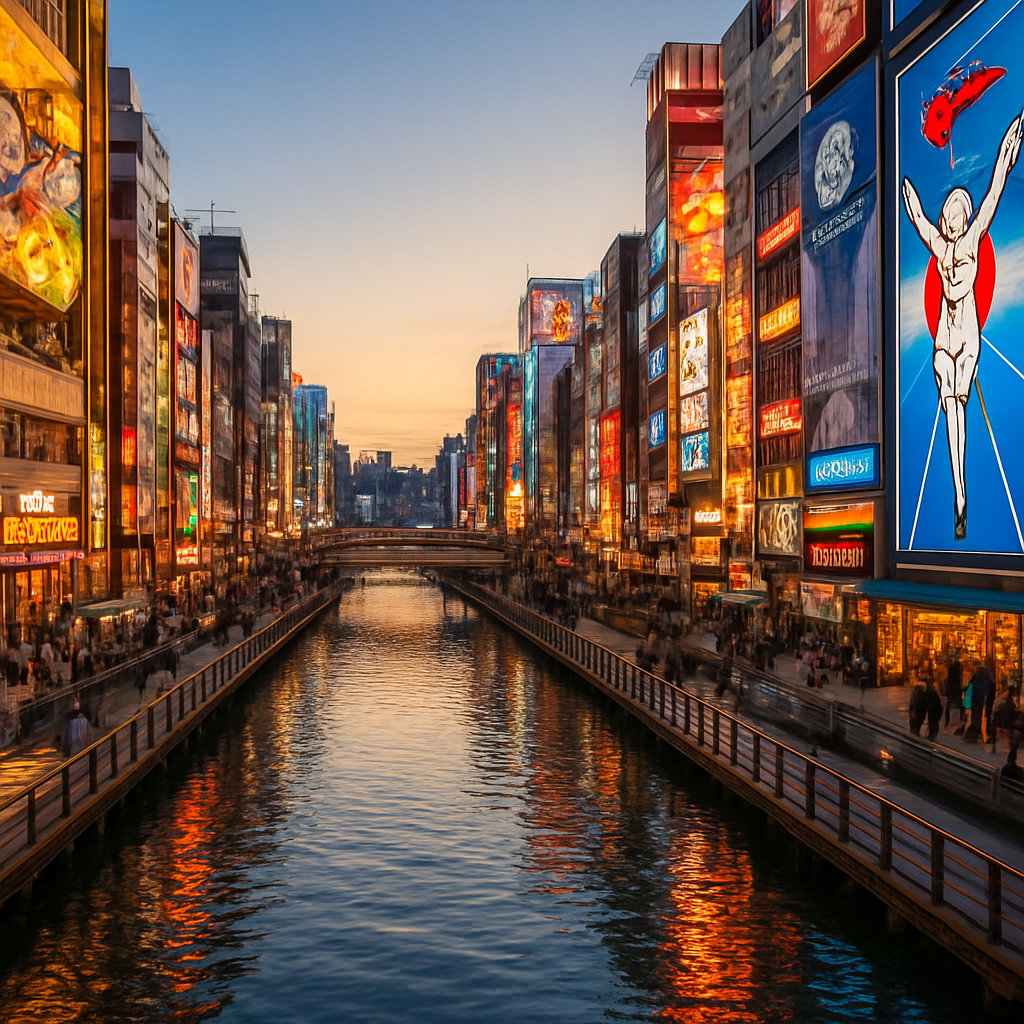
Dotonbori at Night
There's a specific hour — around 9pm, when the neon is fully lit and the canal reflects everything back in electric color — when Dotonbori becomes the most photogenic street in Japan. The giant Kani Doraku crab sign moves its legs. The Glico running man glows. And everywhere, people are eating: takoyaki from a stall, gyoza from a window counter, soft-serve from a machine. Walk the south bank of the canal from Ebisu Bridge east, then cross and come back on the north side. The whole loop takes twenty minutes and you'll stop six times.
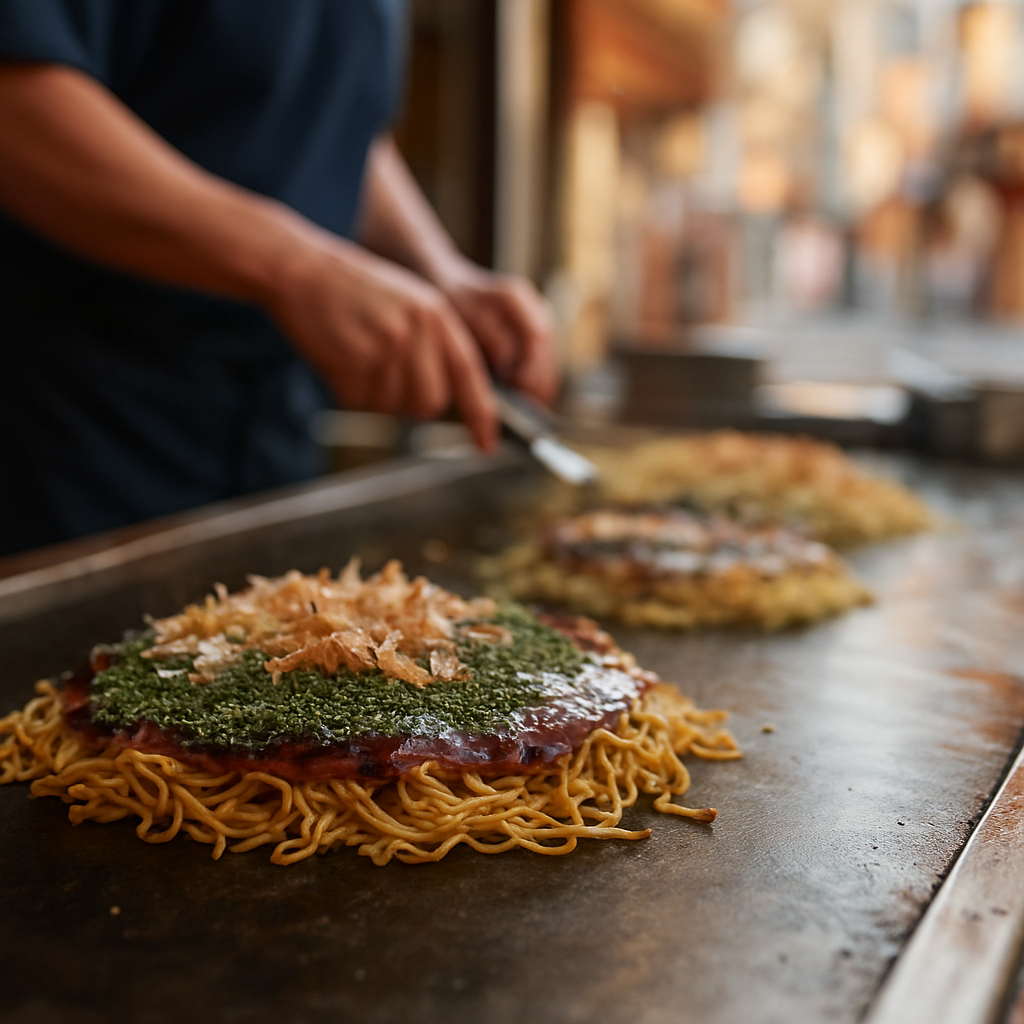
Okonomiyaki at Mizuno (Since 1945)
Mizuno has been making Osaka-style okonomiyaki on Dotonbori since 1945 — staff cook it on a teppan griddle at your table, and the smell of cabbage and batter hitting hot steel is the unofficial perfume of this city. Order the yamaimo-yaki (mountain yam version) for the lightest, crispiest texture. The line moves faster than it looks. Budget ¥1,500–¥2,000 per person and consider this a mandatory experience, not a suggestion.
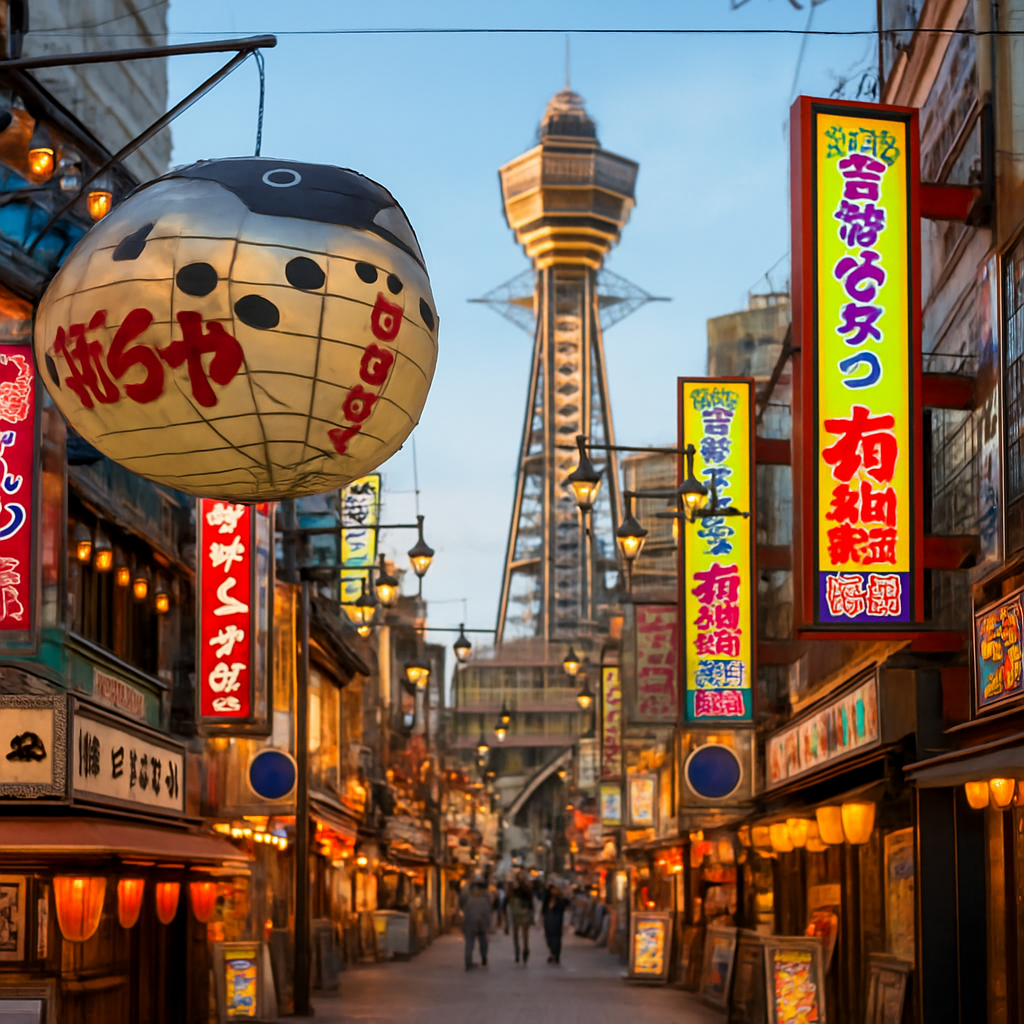
Kushikatsu in Shinsekai
Shinsekai under its retro neon feels like a different Osaka entirely — a mid-century entertainment district frozen in amber, now reanimated with deep-fried skewers and cheap beer. Kushikatsu is the ritual: battered meat, vegetables, and seafood fried golden and dipped once (ONCE) into communal sauce. The no-double-dipping rule is sacred. Grab a counter seat at any of the places lining Janjan Yokocho alley, order a beer, and work through a dozen skewers for under ¥2,000. Do this before heading to Doyamacho — it's better conversation fuel than an empty stomach.
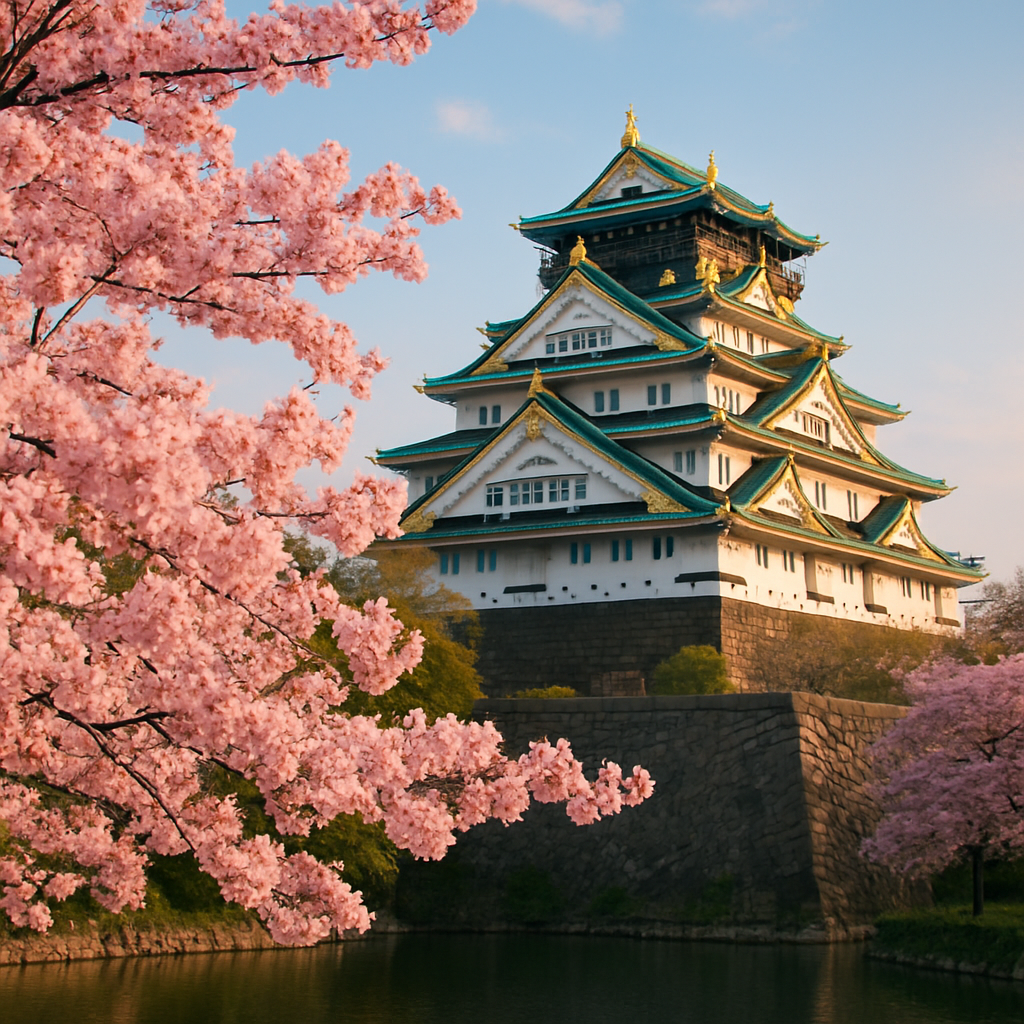
Osaka Castle and Its Park
The castle itself is a 1931 concrete reconstruction — let's be honest about that — but the grounds are the real draw. Osaka Castle Park is enormous, green, and particularly stunning during cherry blossom season (late March through mid-April) when the moat reflects thousands of sakura trees. The walk from the outer moat through the stone walls to the main tower takes about 30 minutes and is one of the best urban walks in Japan. Skip the museum inside the tower if you're short on time; the exterior and park are the point.
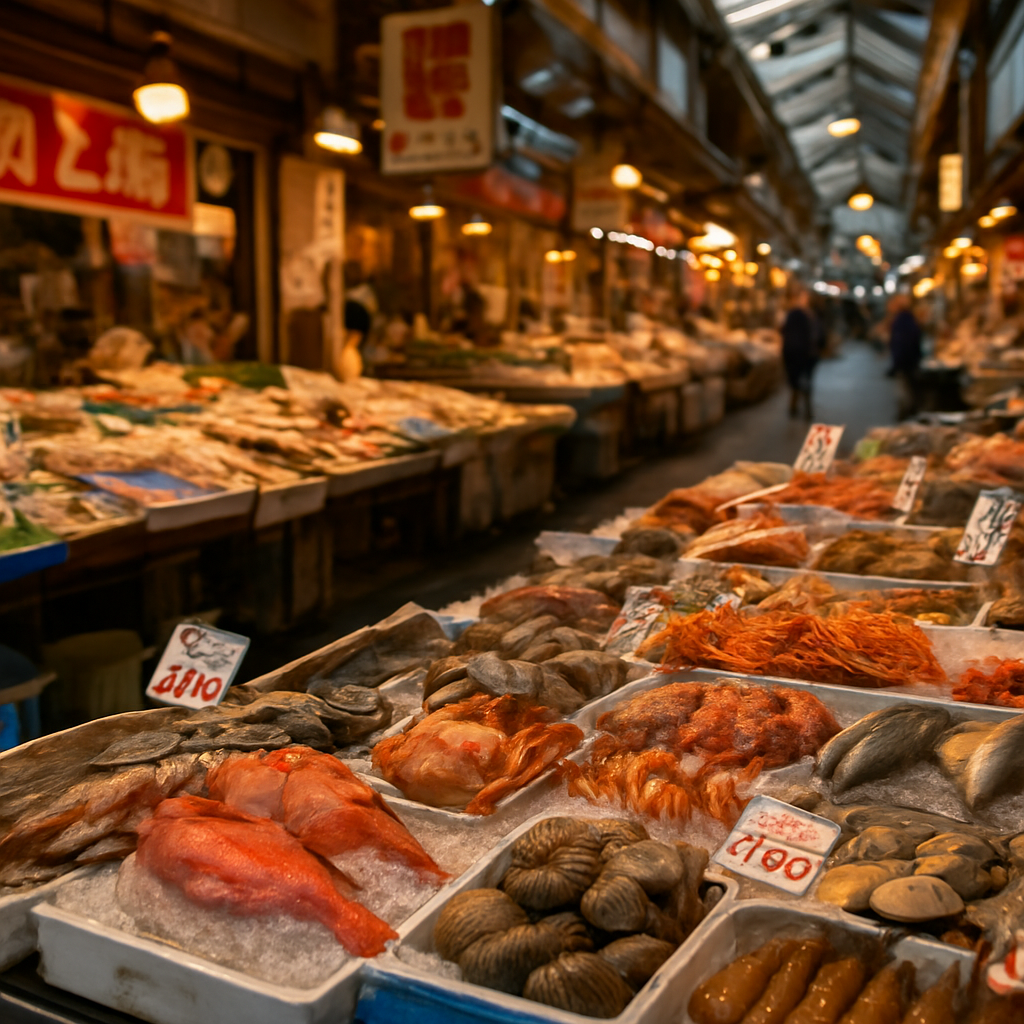
Standing Sushi at Kuromon Ichiba Market
Kuromon Ichiba is Osaka's covered wholesale and retail food market in Nipponbashi, and it's where chefs have sourced their fish for over a century. Harukoma Sushi operates a tachigui (standing counter) right near the market — fish sourced from the stalls next door, eaten while standing in the traditional Osaka format. It's fast, it's fresh, and it's around ¥2,000 for a genuinely memorable sushi experience. Go before 11am to beat the tourist wave.
The places I actually send people to
Advice that fits how you travel
Osaka is one of the best solo cities in Asia, full stop. The culture here is social by default — people talk to strangers in bars, share tables at okonomiyaki counters, and strike up conversations on trains in a way that would be unthinkable in Tokyo. Doyamacho's bar format amplifies this: most spots are standing-room counters holding maybe ten people, which means you're elbow-to-elbow with locals and regulars within minutes of sitting down. If it's your first night in the district, start at a spot where English-speaking visitors are common — AJ's Bar in Doyamacho is specifically beloved by expats because the staff are bilingual and patient with first-timers. Once you've warmed up, venture into the bars where you'll need more Japanese (or at least more willingness to gesture).
App culture is active — the usual platforms work here, and you'll find Osaka users tend to be friendlier and more willing to meet up than in Tokyo. That said, the Doyamacho bars are genuinely the better way to meet people if you're comfortable walking into a place alone. Showing up at 9pm means you'll be one of three people there, which is actually a great time to chat with the bartender — by the time the crowd arrives at 10:30, you'll already be a regular.
Budget solo travel is extremely viable: capsule hotels from ¥3,500/night, konbini meals and ramen for under ¥3,000/day, and the subway system that makes the entire city accessible for ¥800 or less. Safety is a non-issue for solo travelers — Osaka's street crime rate is vanishingly low, and the walk back from Doyamacho to Umeda Station at 3am is well-lit and populated.
Osaka works for couples who understand the geography of comfort. Inside Doyamacho, you can fully relax — same-sex couples are unremarkable in the gay district, and a bar-hop from Explosion to Carnival on a Saturday night is a genuinely fun shared experience. Outside the district, dial it back to what feels natural: discreet affection, shoulders touching over a bowl of udon at midnight. Nobody is going to confront you in central Osaka — but matching the city's naturally low-key energy will make the whole trip feel easier and more enjoyable.
For a proper date night, La Cime in Honmachi is where you go when you want to remember why you like each other — Chef Yusuke Takada's French-Japanese tasting menus from around ¥25,000 per person are worth every yen. If you want the Osaka version of romance — loud, communal, and delicious — find two counter seats at a standing sushi bar near Kuromon Ichiba Market and eat toro while your shoulders touch. Both are valid. Both are very good.
The W Osaka in Shinsaibashi is the natural home base for couples — it's an explicitly LGBTQ+-welcoming property by brand design, puts you within walking distance of both Doyamacho and Dotonbori's nighttime spectacle, and the rooms are genuinely beautiful. Watching the Dotonbori canal light up at 9pm with a drink in hand is the kind of view that needs someone next to you.
Osaka is operationally excellent for families — the metro system handles strollers well, children under 6 ride free, and the food culture delivers cheap and satisfying options at every block. LGBTQ+ families should know upfront: as of 2026, Japan offers no national legal recognition for same-sex partnerships or same-sex adoption, and Osaka City's municipal partnership certificates carry no legal weight under national law. Bring clear documentation of your family structure, sort travel insurance before you leave home, and the practical experience on the ground is genuinely warm and professionally non-discriminatory.
Universal Studios Japan is the headline draw for older kids — budget around ¥8,600+ per person for standard entry, and consider the Express Pass if you're visiting during a school holiday. Osaka Aquarium Kaiyukan on the bay is world-class and well-managed with small children. Osaka Castle Park is free, spacious, and stroller-friendly. Day-tripping to Nara — 35–50 minutes by train — adds free-roaming deer and a 15-meter bronze Buddha to the itinerary without much logistical strain.
Street food keeps daily food costs reasonable: takoyaki (octopus balls, around ¥600 for eight pieces) and okonomiyaki are kid-accessible and filling at well under ¥1,000 per person. One practical note: many traditional restaurants feature tatami floor seating with no high chairs. Japanese chain family restaurants like Gusto are scattered throughout the city and solve this cleanly when you need a proper chair, a kids' menu, and no negotiation required.
What Osaka actually costs
Flights, visas, and the first 30 minutes
Airport: Osaka is served by Kansai International Airport (KIX), located on an artificial island in Osaka Bay approximately 50km from the city center. KIX offers direct service to 60+ cities worldwide.
Major Routes: Tokyo (HND/NRT) ~1h 30m · Seoul (ICN) ~1h 50m · Taipei (TPE) ~2h 40m · Hong Kong (HKG) ~3h 30m · Bangkok (BKK) ~6h · Singapore (SIN) ~7h · Los Angeles (LAX) ~11h 30m · London (LHR) ~13h
Visa: As of 2026, travelers from the US, UK, EU, Canada, and Australia typically enter Japan visa-free for stays of up to 90 days. Entry requirements can change — always check your government's current travel advisory before departure.
Getting to the City:
- Nankai Limited Express (Rapi:t): ¥930–¥1,290 · 38 min · Direct to Namba Station; most convenient option for the city center and Doyamacho area
- JR Haruka Express: ¥1,700–¥2,400 · 50–80 min · Connects to Tennoji and Shin-Osaka; note that IC cards are not accepted on this service
- Airport Limousine Bus: ¥1,600 · 50–70 min · Multiple city stops; the best option if you're traveling with substantial luggage
- Taxi / Ride-hail: ¥18,000–¥25,000 · 60–90 min · Traffic-dependent; fixed-rate services are available and worth asking about
Traven's seasonal breakdown
The questions everyone asks
Do I need to speak Japanese to go out in Doyamacho?
Is it safe to hold hands with my partner in Osaka?
What's the seat charge at Doyamacho bars?
How much should I budget per day?
Can I use a tattoo-friendly onsen in Osaka?
Is Osaka better than Tokyo for LGBTQ+ travelers?
When is Osaka Pride?
Screenshot this before you go
So should you actually go?
Osaka is one of the best cities in Asia for gay nightlife, full stop — and one of the best cities on earth for eating your way through a long weekend. Doyamacho delivers a real, local, deeply fun scene that rewards curiosity and a willingness to be the only foreigner in a tiny bar. The legal landscape is frustrating and incomplete, and same-sex couples should understand that Japan's protections remain limited as of 2026. But the city itself — loud, generous, funny, relentlessly delicious — will welcome you in every way it currently can. If you can hold the contradiction of a place that loves you socially but hasn't caught up legally, Osaka is absolutely worth your time. I'd go back tomorrow.
Sources & Resources
Official links we reference when compiling this guide. Last verified 2026-03-15.
- HIV Testing and Counseling Services Map — Japan
- ILGA Asia
- ILGA Japan — International Lesbian, Gay, Bisexual, Trans and Intersex Association Japan
- Kansai Queer Film Festival
- Kansai Queer Film Festival (KQFF)
- Liberty Osaka — Osaka Human Rights Museum
- Marriage For All Japan — Legal Equality Campaign
- Nijiiro Diversity (虹色ダイバーシティ)
- Nijiiro Diversity (虹色ダイバーシティ) — Kansai LGBTQ+ Workplace & Community Advocacy
- OCCUR — Association for the LGBT Movement Japan
- Osaka City — LGBTQ Partnership Certification System
- Osaka Convention & Tourism Bureau — LGBTQ-Friendly Promotion
- Osaka Prefectural Government — HIV/AIDS Testing & Counseling Services
- PFLAG Japan
- Rainbow Festa Osaka — Official Pride Event
- Stonewall Japan