
Wakayama is what the rest of Japan does when it wants to disappear. The cedars don't ask questions. Neither do the monks.
Wakayama is the prefecture you book when you've already done Kyoto, when you've already done Tokyo, when you've already eaten your way through Osaka and you want the part of Japan that the rest of Japan goes to when it wants to disappear. It's mountains and a coastline and a small regional capital that nobody's selling you. The thing it does best — silence — isn't on most itineraries because silence doesn't trend.
Let me set the scene. You step off the JR Kuroshio at Wakayama Station, walk five minutes to the Burakuri-cho arcade, and the fluorescent light hits you like a postwar movie set — slightly worn, kind of perfect, full of izakaya smoke and the low hum of salarymen ordering a third highball. Branch off into Shinmichi alley and you find counters serving chuka soba in soy-dark broth that the rest of Japan now imitates. That's your first night. Your second night you're 800 meters up a cedar-forested ridge at a Buddhist temple, eating shojin ryori on lacquerware, and the only sound is your own breathing.
I gave it a 6.3 on my Traven-Dex, and the math is honest: an 8.4 on Destination because Koyasan, the Kumano Kodo, and Nachi Falls are three of the best things you can do in this country, and a 3.0 on Pulse because there is genuinely no gay scene to speak of in Wakayama City. Those numbers don't average into a single experience — they describe two completely different trips. One is transcendent. The other doesn't exist.
So here's the read: Wakayama isn't a queer destination, it's a queer detour. You come for the cedar-scented quiet, the mossy stone steps, the temple lodging where monks have been hosting men-traveling-together with grace for over a thousand years, and the trout grilled over charcoal at the end of a trail day. If you want a dance floor, the JR Kuroshio to Osaka's Doyamacho takes 75 minutes door to door, and most people just hotel it in Umeda. That's not a flaw in the trip — it's the trip. You design around it.
The stuff your travel guide buries on page 47
Wakayama is, as of 2026, one of the more interesting case studies in modern Japan's slow-motion legal evolution on LGBTQ+ rights. The prefecture rolled out a same-sex Partnership Oath (パートナーシップ宣誓) system in April 2024, joining a growing list of Japanese prefectures that recognize same-sex couples in some municipal capacity. It's symbolic — useful for hospital visitation and certain municipal housing applications, but not legally equivalent to marriage, which remains unavailable nationally. Marriage For All Japan tracks the litigation pushing this forward, and it's worth a read before you go.
Adoption by same-sex couples isn't legally recognized as of 2026. Anti-discrimination protections at the national level remain limited — Japan passed an LGBT "understanding promotion" act in 2023 that critics across the spectrum called toothless. Same-sex sexual activity has never been criminalized in modern Japanese law. For trans travelers, Japan's Supreme Court struck down the sterilization requirement for legal gender change in 2023, but medical and psychiatric requirements remain in place — a meaningful improvement that's still well short of self-determination.
Pro tip: Most Wakayama ryokan and Koyasan shukubo will book a same-sex couple into a single room without comment if you ask in writing in advance. The friction point is usually the booking site auto-defaulting to twin beds, not the innkeepers themselves. A short email in plain English typically resolves it.
On the ground, Wakayama is a conservative regional prefecture, and the cultural read is what you'd expect: nobody's going to stop you, nobody's going to celebrate you. Hand-holding generally draws no attention on the Kumano Kodo trails or in Koyasan's temple precincts — Buddhist sites have hosted men-traveling-together for over a thousand years and the monks are uniformly respectful. Kissing in the Burakuri-cho arcade or at JR Wakayama Station will draw looks. Resources like Pride House Tokyo and Stonewall Japan are the best English-language clearinghouses for current advocacy and community context. There is no gay bar district in Wakayama City. Repeat it like a mantra. If you want a queer night out, the JR Kuroshio express to Osaka's Doyamacho is your move — about 75 minutes door to door.
What it actually feels like on the ground
Holding hands in public: On the Kumano Kodo trails, in Koyasan's temple precincts, and inside Wakayama Castle park, hand-holding draws zero attention. In the Burakuri-cho arcade and around JR Wakayama Station, it's generally fine but you'll get the occasional glance — Wakayama is a conservative regional center, not Tokyo. Public affection norms here match rural Kansai: straight couples don't kiss on the street, so you shouldn't either.
Hotel and ryokan check-in: Generally smooth at Koyasan shukubo like Eko-in and Fukuchiin, where international same-sex couples are routine. At rural Kumano Kodo ryokan and Shirahama resort hotels, ask in writing during booking that you'd like one bed — most will accommodate without comment, but the auto-default on third-party booking sites is twin beds, and that's the friction point.
Taxis: Japanese taxi drivers are professional to the point of invisibility. No issues reported in Wakayama City, Shirahama, or the Kumano region. Late-night taxis from Burakuri-cho back to your hotel are uneventful.
Onsen and beaches: Wakayama is onsen country, and onsen are gender-segregated by birth-recorded sex — full stop. This makes Shirahama beach resorts and the famous Yunomine Onsen logistically complicated for trans travelers, particularly pre- or non-medical-transition. Many shukubo and ryokan offer private kashikiri (rented) baths that solve the problem entirely; book one in advance. Shirahama's main beach is family-oriented, so couples of any orientation should keep affection private.
Late night in Burakuri-cho and Shinmichi: Wakayama's compact nightlife is notably calm. The Shinmichi alley near the station has a small late-night scene with no overt issues for visibly gay travelers. There are no documented incidents, but this is also a small city with no visible queer community to back you up — discretion serves you better than visibility here.
For trans travelers: Japan struck down sterilization requirements in 2023 but medical and psychiatric gatekeeping for legal gender change remains as of 2026. Day-to-day, Wakayama is uneventful, but rural areas have very limited visible community and onsen present the bathing challenge described above. Nijiiro Diversity and TELL Japan's English-language lifeline are the best English-capable resources if anything goes sideways — Wakayama's prefectural mental health services are Japanese-only.
Pro tip: If you need HIV testing or PrEP refills, don't try to navigate the Wakayama Prefectural Health Bureau in English. Book ahead at akta in Tokyo or a Doyamacho clinic in Osaka — both have English-capable staff and weekend hours. I've never heard of an incident at Koyasan, where monks have been quietly hosting men traveling together for over a thousand years. The Buddhist read on this is essentially: mind your own karma.
The queer geography
Wakayama doesn't have a gay neighborhood. It barely has a gay bar. What it does have is a prefecture full of places worth knowing — sacred mountains, pilgrimage trails, postwar arcades, and a coastline that has been quietly hosting travelers for centuries. Here's where to point yourself.
Burakuri-cho & Shinmichi (Central Wakayama City)
The covered Burakuri-cho shopping arcade — locals call it Bura-kuro — is the spine of downtown Wakayama, a postwar shotengai running through the center of the city with the kind of fluorescent-lit, slightly worn charm that's becoming rarer in Japan every year. Branch off into the alleys and you find Shinmichi, a compact bar lane near the station packed with izakaya, standing bars, and snack joints. This is where you eat chuka soba at a counter, drink Kid sake from Heiwa Shuzo, and watch salarymen unwind. There's a small cluster of gay-friendly snack bars tucked into Shinmichi with no signage and a 3,000-yen seating charge — ask a sympathetic mama-san at any standing bar near the station; that's how the network works here. Visit Wakayama has good English maps of the arcade if you want to come in oriented.
Koyasan (Mount Koya)
An hour and change from the city, up a switchback rail line and a cable car, you arrive in a cedar-forested mountain town that has been the headquarters of Shingon Buddhism since 819. Over a hundred temples, more than fifty of them offering shukubo lodging, line a narrow ridge above the clouds. Kongobuji Temple, the lantern-lit two-kilometer cemetery path of Okunoin, the shojin ryori vegetarian dinners served on lacquerware in your room — this is the calmest, most centered twenty-four hours you'll spend in Japan. Eko-in and Fukuchiin are the shukubo with the most international experience and the easiest English booking. The Buddhist tradition here has been hosting men-traveling-together quietly for a millennium; nobody on Mount Koya cares who you came with.
The Kumano Kodo (Kii Peninsula)
The Kumano Kodo is one of two pilgrimage routes on earth with UNESCO World Heritage status — the other is the Camino de Santiago, with which it shares a dual-pilgrim certification program run by the Tanabe City Kumano Tourism Bureau. The Nakahechi route is the most walkable: mossy stone steps through cedar forest, river crossings, tiny mountain villages where you sleep in a minshuku and eat trout grilled over charcoal. It ends at Nachi Falls, Japan's tallest single-drop waterfall, framed by a vermilion three-storied pagoda — one of the most photographed views in the country, and worth every postcard. The trail's hosting culture is genuinely welcoming; nobody on the Nakahechi will care who you're holding hands with.
Shirahama & Wakaura Bay (Coastal Wakayama)
An hour and a half south by train, Shirahama is the prefecture's beach-and-onsen resort — white sand, hot springs, a giant pandas-and-safari theme park called Adventure World, and clifftop ryokan with infinity baths overlooking the Pacific. It's family-coded and conservative on the beach, but the architectural Hotel Kawakyu is a registered cultural property worth seeing even if you don't stay. Closer to the city, Wakaura Bay at sunset gives you the same view that Manyoshu poets were obsessing over in the 700s — and a much better photo than another shot of Wakayama Castle.
Pro tip: For an actual scene, the move is the 8:42 PM Kuroshio to Shin-Osaka, a transfer to the Midosuji line, and you're in Doyamacho by 10:30. Last train back is brutal — most people just hotel it in Umeda. Kansai Rainbow Festa, the region's hometown Pride, happens in Osaka's Ogimachi Park each October; Stonewall Japan has a current event calendar in English. Locals from Wakayama carpool up the Hanwa Expressway en masse.
The experiences worth rearranging your itinerary for
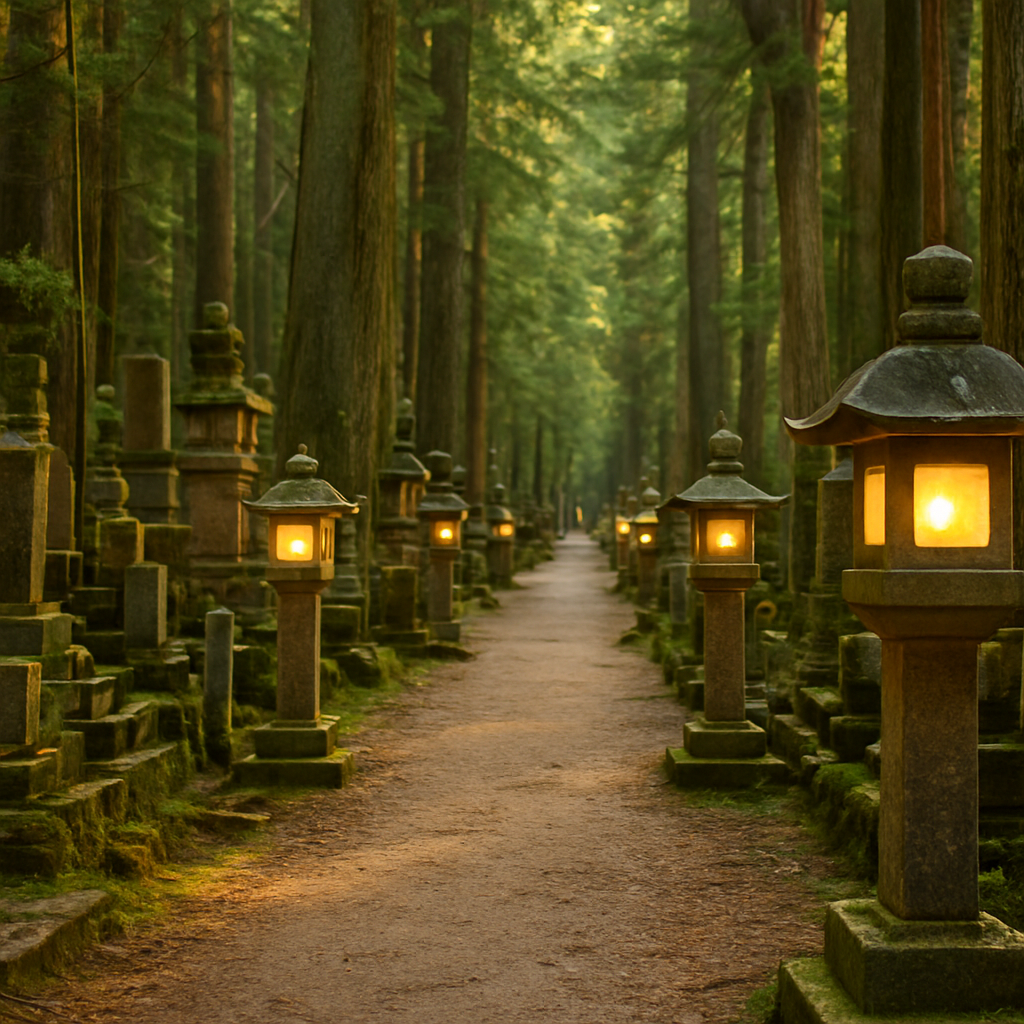
Eko-in Fire Ritual & Okunoin at Dawn
Stay overnight at Eko-in on Koyasan, sit in on the morning goma fire ritual, then walk the two-kilometer lantern-lit cemetery path of Okunoin before the day-trippers arrive. Cedar trees over a thousand years old, 200,000 tombs, the chanting still in your ears — it is the single most spiritually generous experience in this prefecture, and it costs about ¥12,000 all in.
Pro tip: Set an alarm for 6am. The cemetery in low-angle morning light through the cedars is the photo, and you'll have the path to yourself for about forty-five minutes before the tour buses crest the mountain.
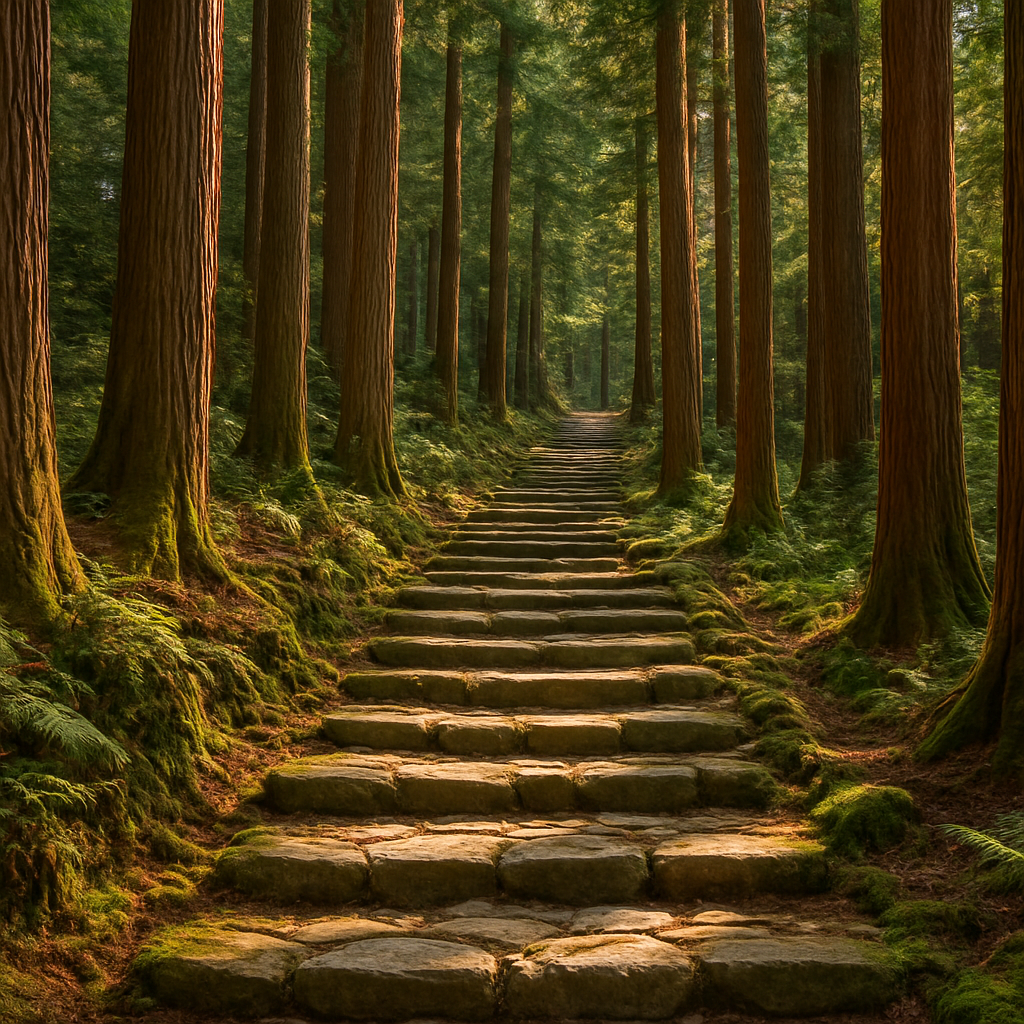
Walk the Nakahechi Route of the Kumano Kodo
The Nakahechi is the most walkable of the Kumano Kodo trails — mossy stone steps through ancient cedar, river crossings, and tiny mountain villages where you sleep in a minshuku and eat trout grilled over charcoal. Three to five days takes you from Takijiri-oji to Kumano Hongu Taisha, and the dual-pilgrim certification with the Camino de Santiago is a quiet badge of honor.
Eat mehari-zushi — pickled mustard leaves wrapped around warm rice — at the end of each segment. It's the kind of food memory that ambushes you years later.
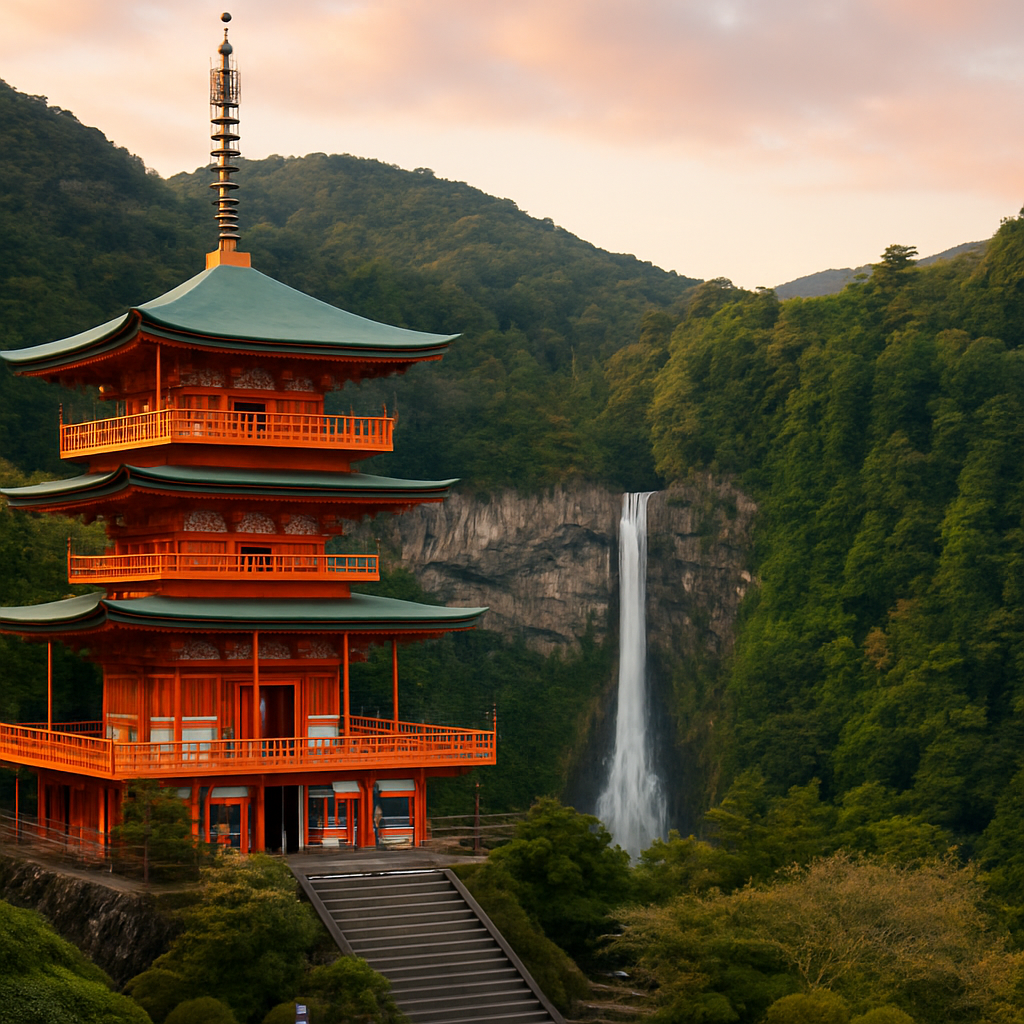
Nachi Falls and the Vermilion Pagoda
Japan's tallest single-drop waterfall — 133 meters of white water — framed by the three-storied vermilion pagoda of Seigantoji. It's the most photographed composition in the prefecture and one of the few iconic Japanese views that actually lives up to its postcard. Free to look, sacred to walk.
If you've just finished the Nakahechi route, this is your reward — and the right way to arrive at the falls is on tired legs, not in a tour bus.
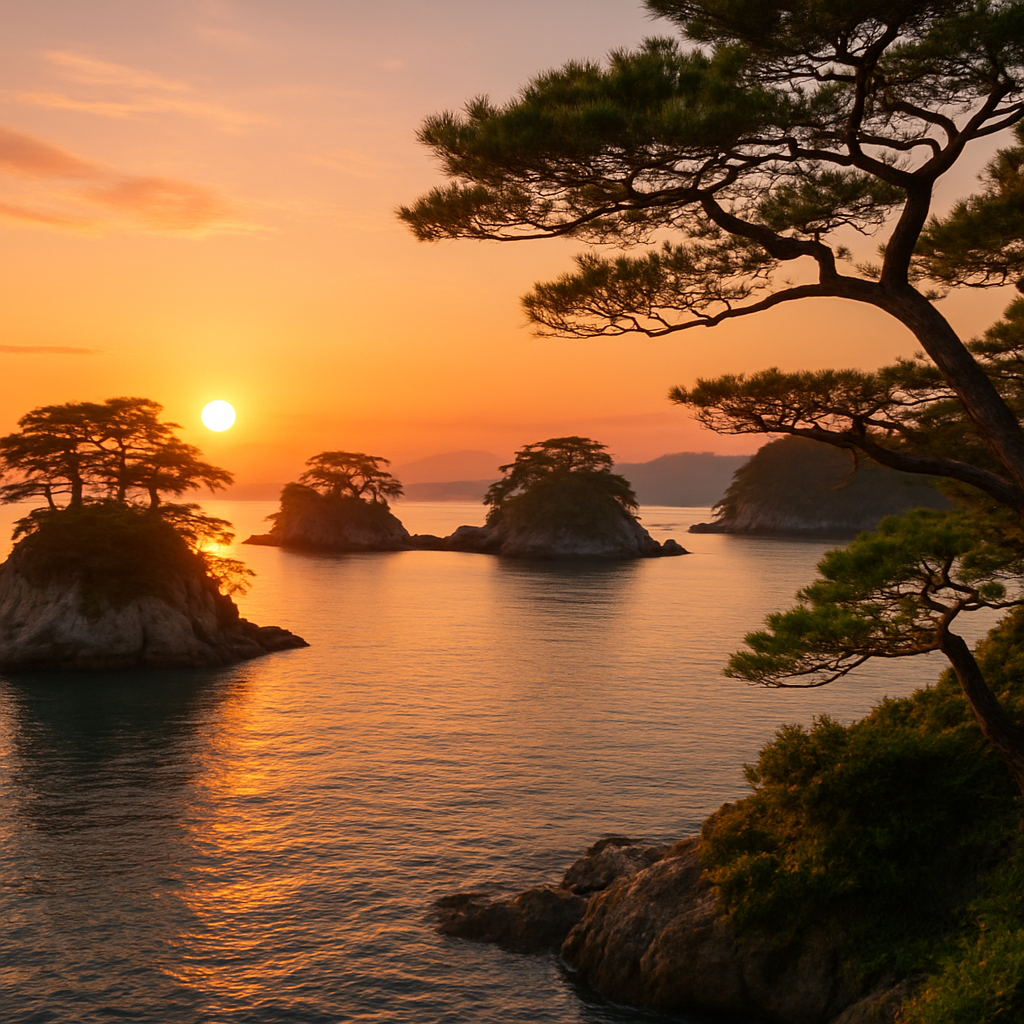
Sunset at Wakaura Bay
Skip the standard Wakayama Castle shot and walk twenty minutes to Wakaura Bay at sunset. The same view that Manyoshu poets were obsessing over in the 700s — pine-tufted islands, tide flats, an oversized red disk dropping into the Pacific — and a much better photo than another concrete-keep castle reconstruction.
Pro tip: The Tamatsushima Shrine on the bay's edge is the historical anchor; arrive forty-five minutes before sunset and you'll have time for both shrine and shoreline.
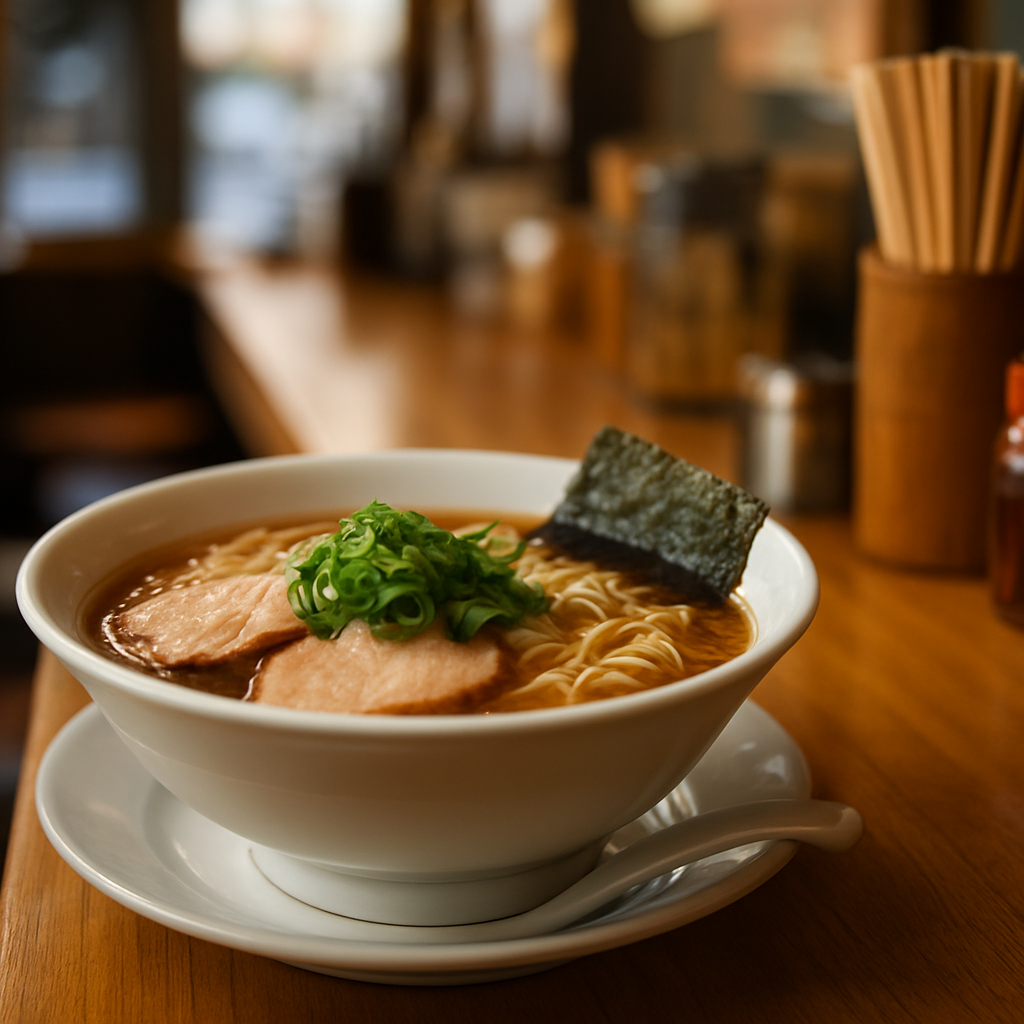
Wakayama Ramen at the Counter
The local style — chuka soba, soy-dark and pork-bone deep — is a genuine regional dish, not a tourist invention. Eat it at Ide Shoten in Tanakamachi (the 1998 TV Champion winner that sparked the national boom) or at Marutaka in Shinzaike (one of the oldest shops, postwar yatai origins). Grab a hayazushi off the counter while you wait, crack the boiled egg first, then go in.
Eating it standing or stool-perched at a counter in Shinmichi alley is a Wakayama rite of passage, and it costs about ¥800.
The places I actually send people to
Advice that fits how you travel
Solo travel in Wakayama is, as of 2026, one of the easier propositions in Japan. The prefecture is built for it — the Kumano Kodo has been hosting solo pilgrims for a thousand years, Koyasan's shukubo are explicitly set up for single-room stays, and Wakayama City itself is small enough that you can walk most of it in a day. I gave it a 6.2 on Chill for a reason: nothing here is going to ambush you, and the rhythm of solo days here — temple morning, ramen counter lunch, onsen sunset — is genuinely meditative.
The flip side: this is not a place to meet people. There's no gay bar in Wakayama City, the apps are sparse outside the Osaka commuter ring, and the snack bars in Shinmichi alley aren't really walk-in territory unless a mama-san at a nearby standing bar vouches for you. If you want a night out with anyone gay, you're taking the 8:42 PM Kuroshio to Shin-Osaka and ending up in Doyamacho — about 75 minutes door to door, and most people just hotel it in Umeda rather than chase the last train back.
Budget-wise, solo travelers do well here. A shukubo at Eko-in runs around ¥18,000 with two meals included, a Wakayama ramen lunch is ¥800, and the JR Kansai Wide Area Pass at roughly ¥12,000 covers five days of moving between KIX, Wakayama City, Shirahama, and the Kumano region. The Nakahechi route is the move for solo walkers — well-marked English signage, bag-forwarding services, and small minshuku hosts who'll quietly look after you.
This is, surprisingly, a very good couples destination — provided you're the kind of couple who wants temple silence, cedar forests, and a clifftop onsen rather than a club night. Same-sex couples have been quietly hosted on Koyasan for over a millennium, and the modern shukubo like Eko-in and Fukuchiin will book you into a single room without a flicker if you ask in writing during booking. The friction point is the third-party booking sites auto-defaulting to twin beds, not the innkeepers themselves. A short email in plain English typically resolves it.
The Kumano Kodo's Nakahechi route is one of the great romantic walks in Asia — three to five days through mossy stone steps and tiny mountain villages, sleeping in minshuku and eating trout grilled over charcoal at the end of each day. The hosting culture has welcomed every kind of pilgrim for centuries and hand-holding draws zero attention on the trail. For something more indulgent, Hotel Kawakyu in Shirahama is a Registered Tangible Cultural Property worth seeing once in your life, and Hotel Nakanoshima — accessible only by ferry to its own private island in Katsuura Bay — is the kind of trip you remember.
PDA-wise, calibrate to rural Kansai norms: straight couples don't kiss on the street here, so you shouldn't either. Hand-holding on the trails, in Koyasan's temple precincts, or at Wakaura Bay at sunset is fine. The Burakuri-cho arcade and JR Wakayama Station will draw the occasional glance — nothing hostile, just observed. Wakayama Prefecture's Partnership Oath system, launched April 2024, is symbolic for visitors but signals the cultural drift; bring documentation from home for anything that actually matters legally.
Wakayama is genuinely one of the more LGBTQ+-family-friendly destinations in Japan as of 2026, and not because the law is doing the work — it isn't. Same-sex marriage isn't recognized nationally, joint adoption isn't legal, and Wakayama's Partnership Oath certificate is useful for hospital visitation but not for anything an immigration officer or school registrar would care about. Bring all your documentation from home: your marriage certificate, adoption papers, and any consent-to-travel forms if only one parent's name is on a child's passport. Don't expect Japanese officials to know what to do with them, but having them on hand resolves most edge-case conversations.
The actual experience on the ground is uneventful in the best way. Adventure World in Shirahama is a combined zoo, aquarium, and amusement park with one of the few successful giant panda breeding programs outside China — kids lose their minds, and nobody at the gate is going to look twice at two dads or two moms with a stroller. Nachi Falls is family-friendly with paved paths to the main viewpoint, the Kuroshio Ichiba tuna-cutting show at Marina City is theater for kids and adults, and Koyasan's shukubo are surprisingly child-tolerant — Eko-in regularly hosts families and the morning fire ritual is something kids actually remember.
Logistics: stroller-friendliness is mixed. Wakayama Castle park, Marina City, and central Shirahama are easy. The Kumano Kodo and most of Koyasan's temple precincts are not — old stone steps, gravel paths, narrow temple corridors. Kid menus exist at family resorts and Marina City restaurants but not at kappo places like Ginchiro; the chuka soba shops are kid-easy and cheap. The trans-traveler note from Safety in Practice applies to families too: kashikiri private onsen rentals at most shukubo and ryokan solve the gender-segregated bathing issue cleanly, and they're worth booking in advance regardless of family configuration.
What Wakayama actually costs
Flights, visas, and the first 30 minutes
Airport: Wakayama doesn't have its own international airport — you fly into Kansai International (KIX) in Osaka and head south. KIX has roughly 90 direct international routes as of 2026, with strong connections from North America (Los Angeles, San Francisco, Vancouver, Seattle), Europe (London, Paris, Frankfurt, Helsinki, Amsterdam), Australia (Sydney, Melbourne), and most major Asian hubs. Flight times: ~11 hours from the US West Coast, ~14 from London, ~9.5 from Sydney.
Visa requirements (as of 2026): US, UK, EU, Canadian, and Australian passport holders typically receive 90 days visa-free on arrival. UK passports are generally extendable to 180 days. Always confirm your specific nationality's status with your embassy before flying — Japan's entry rules are stable but periodically updated.
KIX to Wakayama City: The JR Kuroshio Limited Express is the move — direct from Kansai Airport Station to JR Wakayama Station in about 40 minutes for ¥2,520, with scenic coastal views the whole way down. The Nankai Bus airport limousine runs the same route in 40 minutes for ¥1,200 with no transfers, which is the budget pick if you've got luggage and don't mind a bus.
Cheapest option: Local JR via Hineno transfer — about 60 minutes, ¥920, one easy change. Fine if you're traveling light and not jet-lagged into oblivion.
Taxi: ¥15,000–¥18,000 for the 45-minute run, with a surcharge after 22:00. Worth it for groups of three or four with serious luggage; otherwise the Kuroshio is faster and a quarter of the price.
Rental car: ¥6,000+/day from KIX, and genuinely the right call if you're planning to do Koyasan, the Kumano Kodo, and Shirahama in one trip. Public transit reaches all three, but the prefecture opens up considerably with your own wheels — particularly the coastal drives between Nachikatsuura and the Kii Peninsula's smaller villages. International Driving Permit required; pick it up at home before you fly.
Pro tip: The JR Kansai Wide Area Pass is the cheat code if you're moving between KIX, Wakayama City, Shirahama, and the Kumano region — five days of unlimited rides on the Kuroshio and most regional JR lines for around ¥12,000. Buy it before you arrive in Japan or at the JR West counter at KIX on landing.
Traven's seasonal breakdown
The questions everyone asks
Is there a gay scene in Wakayama City?
Will a shukubo on Koyasan really host a same-sex couple?
Is it safe to hold hands in public?
What's the deal with onsen for trans travelers?
Do I need to speak Japanese?
Is Wakayama Prefecture's Partnership Oath useful for visitors?
How much should I budget per day?
Screenshot this before you go
So should you actually go?
Go — but go for what Wakayama actually is, not what you wish it were. This is one of the great quiet trips in Japan: Koyasan's thousand-year tradition of hosting same-sex couples without comment, a UNESCO pilgrimage trail where nobody on the path cares who you're walking with, a coastline of clifftop onsen and tuna markets, and a regional capital that's small, calm, and entirely uneventful in the best way. The legal framework is partial, the scene is essentially absent, and the trans-traveler logistics around onsen require planning — those are real, and they're the reason the Traven-Dex landed at 6.3 instead of higher. But for LGBTQ+ travelers who want the part of Japan that operates on cedar-time and shrine-time, who can pair it with a 75-minute Kuroshio ride to Osaka when they want a real night out, this is one of the most genuinely restful weeks you'll spend on this side of the world. Spring and autumn, book a shukubo at Eko-in or Fukuchiin, walk the Nakahechi, eat the ramen, soak in a kashikiri bath, and let the prefecture do what it does.
Sources & Resources
Official links we reference when compiling this guide. Last verified 2026-05-04.
- akta — HIV/STI testing and community center (Tokyo, national resource)
- Marriage For All Japan
- Nijiiro Diversity (LGBTQ+ workplace nonprofit)
- Pride House Tokyo (national LGBTQ+ resource hub)
- Stonewall Japan (English-language LGBTQ+ network)
- TELL Japan (English-language mental health lifeline)
- Visit Wakayama (Tourism Federation)
- Wakayama Prefectural Health Bureau