
Cancún is two cities wearing the same name tag, and the trip only works if you cross Boulevard Kukulcán at least once.
Cancún is two cities wearing the same name tag, and the trip only works if you accept that upfront. The Zona Hotelera is the 22-kilometer barrier island where international resort capital built a version of Mexico for everyone and no one — a place where same-sex couples check into Hyatt Zilara or Le Blanc and nobody at the front desk so much as blinks. El Centro, ten minutes and a lifetime away, is where the city actually lives: smaller, scrappier, with a gay scene anchored by Karamba Bar that doesn't exist to perform for anyone. My Traven-Dex of 7.7 reflects exactly this split — a 9.0 on Legal, an 8.5 on Scene, and a 5.0 on Pulse that tells you the local queer visibility outside the tourist corridor is still quiet. Both readings are true at once.
What surprised me was how much the downtown made the trip. The resort strip delivers exactly what it promises — aggressively white sand, water color-graded to within an inch of its life, a butler if you want one — and I'd gave it an 8.0 on Destination for a reason. But spend a Friday night at Parque Las Palapas watching marquesita carts roll crispy Yucatecan crepes stuffed with Edam cheese and Nutella past midnight, and you'll understand that the resort zone is the postcard, not the city. Avenida Yaxchilán runs a neon-lit corridor of antros and mariachi restaurants where dinner becomes a three-hour situation involving a trio singing directly at your table and a second margarita you didn't technically need.
The scene itself is small and knows it. Karamba fills up after midnight when the locals outnumber the tourists, 11:11 Bar runs themed nights with a regular crowd that knows everyone in the room, and if the energy feels thin on a given Tuesday, the ADO Bus Terminal will put you in Playa del Carmen's Quinta Avenida in 45 minutes for under five dollars. The thing nobody tells you: Cancún rewards the reader who's willing to cross Boulevard Kukulcán at least once and see what's on the other side.
Pro tip — ask whether a bar is de ambiente. It's the local shorthand that'll get you a faster, more honest answer than any app. And download Uber before you land; I've learned not to negotiate fares in Spanish at 3am, three mezcals deep, wearing my best outfit. Some lessons you only need once.
The stuff your travel guide buries on page 47
Mexico is, as of 2026, one of the more legally progressive countries in Latin America for LGBTQ+ travelers — and Quintana Roo, the state Cancún sits in, finished the job in 2022. Same-sex marriage is legal nationwide, joint adoption is recognized, and federal self-ID for gender markers means trans travelers can typically expect ID documents to be respected at hotels and airports. The Suprema Corte de Justicia has repeatedly ruled in favor of marriage equality, and the Comisión Nacional de Derechos Humanos actively documents discrimination cases.
Anti-discrimination protections exist on paper but enforcement is limited and uneven. The law is there; whether a specific landlord, clinic, or small-town cop cares on a Tuesday afternoon is a different conversation. The tourism corridor operates on different rules than the rest of Mexico — resort brands, hotels, and restaurants in Zona Hotelera run on international money and international expectations, and that shapes the room.
A reader wrote in to say it well: legal equality and street-level social visibility are still different things here. In Zona Hotelera you'll barely register a second glance. In quieter residential neighborhoods, the local community itself tends to favor discretion, and that's worth respecting. The word ambiente is your magic key — ask a bar owner or friendly local if a spot is de ambiente and you'll get a more honest answer than any guidebook can give you. For broader regional context on LGBTQ+ rights, ILGA LAC tracks legislation and advocacy across Latin America.
PDA comfort: High along the Zona Hotelera beach strip and inside affirming venues like Karamba Bar and Picante Club. Moderate in downtown malls and eco-parks like Xcaret — not hostile, just not a scene. In residential El Centro, read the block before you read the mood.
What it actually feels like on the ground
Holding hands: Along Boulevard Kukulcán in Zona Hotelera, it's a non-event. A reader confirmed what I observed firsthand — the hotel strip runs almost entirely on international tourism revenue, and public displays of affection along the beach corridor draw no attention whatsoever. In downtown residential blocks, same-sex couples tend to dial it back a notch, and locals do the same. Read the specific street, not the city.
Hotel check-in: Zero friction at the international brands in the Hotel Zone — Hyatt, Palace, Leading Hotels properties are trained and consistent. At smaller downtown properties, a one-bed booking for two men or two women is typically received without comment, but bring your reservation confirmation and stay matter-of-fact.
Taxis and rideshare: Pro tip — use Uber. It works reliably throughout Cancún, and it's measurably safer and cheaper than flagging a street taxi. I've learned the hard way not to negotiate fares in Spanish at 3am, three mezcals deep, wearing my best outfit. Only use official airport taxi kiosks at CUN — never accept rides from someone approaching you in the terminal.
Nightlife: Drink-spiking has been reported in tourist-area nightlife — this is a documented risk flagged in US, UK, and Canadian advisories. Watch your drink, go with a friend if you can, and if something feels off, leave. The Secretaría de Salud VIH/SIDA program and Letra S both run sexual health and harm-reduction resources worth bookmarking before you travel.
Downtown after dark: Downtown Cancún is safe for LGBTQ+ visitors but benefits from normal urban street-smarts — stay on the well-lit commercial streets around Supermanzana 22 and Supermanzana 25, avoid wandering unfamiliar blocks alone after 2am, and stick to rideshare over unregistered cabs.
Trans travelers: Federal self-ID is the law as of 2026, so official documents can reflect your gender. On the ground, frontline staff at hotels, clinics, and tour operators outside dedicated LGBTQ+ venues are generally polite but not trans-competent — misgendering happens, not usually maliciously. IMSS runs the public health system if you need care, and MEXFAM is a solid resource for sexual and reproductive health in a welcoming frame.
Discrimination recourse: Mexico's Human Rights Watch country page tracks ongoing issues, and CONAPRED is the national anti-discrimination authority — if you experience discrimination at a hotel or business, you can file a formal complaint. Properties in the tourism sector take those reports seriously enough to actually act on them.
The queer geography
Zona Hotelera
The Hotel Zone is a 22-kilometer barrier island curving between the Caribbean and Laguna Nichupté, strung together by Boulevard Kukulcán and marked only by kilometer posts — Km 9, Km 14, Km 18 — rather than anything resembling a normal address system. The sand is aggressively white, the water is the kind of turquoise that looks color-graded, and most of what happens here happens between a resort pool and a beach club lounger. Playa Delfines at Km 18 is the best free public beach in the city — wide, open, often windy, with a view down the coast that's worth the Uber even if you don't get in the water. Quintana Roo's state government publishes updated beach conditions and sargassum reports worth checking the morning of.
The LGBTQ+ layer here is less about dedicated venues and more about atmosphere — the resort corridor is where same-sex couples read as unremarkable, and the beach strip itself tends to cluster a visible LGBTQ+ crowd toward the northern end of Playa Delfines. The heavy hitters — Le Blanc, Hyatt Zilara, Live Aqua — all run adults-only, inclusive-by-default operations.
El Centro (Downtown Cancún)
This is where Cancún actually lives. Skip at least one resort night and come down here — El Centro is organized into numbered supermanzanas that confuse everyone equally, but the center of gravity is Parque Las Palapas, a palm-shaded public square where marquesita carts roll out Yucatecan crispy crepes filled with Edam cheese and Nutella until well past midnight. On Friday and Saturday evenings the square fills with families, live music, and a cross-section of the city that you simply don't see in the Hotel Zone. Around it, Avenida Yaxchilán runs a neon-lit corridor of antros, grill restaurants, and the kind of mariachi spots where dinner becomes a three-hour affair.
The gay scene here is small but real and anchored by Karamba Bar — loud, unapologetic, and busiest after midnight when the locals show up. 11:11 Bar runs themed nights with a loyal regular crowd that tends to know everyone in the room. Walk over to Mercado 28 during the day for lunch at a cocina económica and you'll get a completely different read on this city. Orgs like All Out track Mexican LGBTQ+ organizing if you want to know who's doing the quiet, long-term work.
Isla Mujeres
A 20-minute ferry ride from Puerto Juárez puts you on a five-mile-long island where the pace drops immediately — rent a golf cart, drive the perimeter road, and stop for ceviche at whatever beach shack catches your eye. Playa Norte on the north end is one of the Caribbean's genuinely great beaches: shallow, calm, warm enough to wade a hundred meters out. A reader put it well — Isla is one of the most effortlessly inclusive day trips from Cancún, with a vibe that's simply 'everyone is welcome here.'
Playa del Carmen (day-to-night trip)
Sixty-eight kilometers south, accessible by ADO bus from the ADO Bus Terminal Cancún in under an hour for under five dollars. Quinta Avenida is a pedestrian-only strip of restaurants, bars, and shops that gets denser and more interesting after dark, with a significantly more developed gay nightlife cluster than Cancún proper — multiple venues within comfortable walking distance of each other, Rancho Grande Bar among the most established. Worth the bus ride. Health and sexual wellness resources are well-supported across the Riviera Maya through CENSIDA, the national HIV/AIDS authority.
The experiences worth rearranging your itinerary for
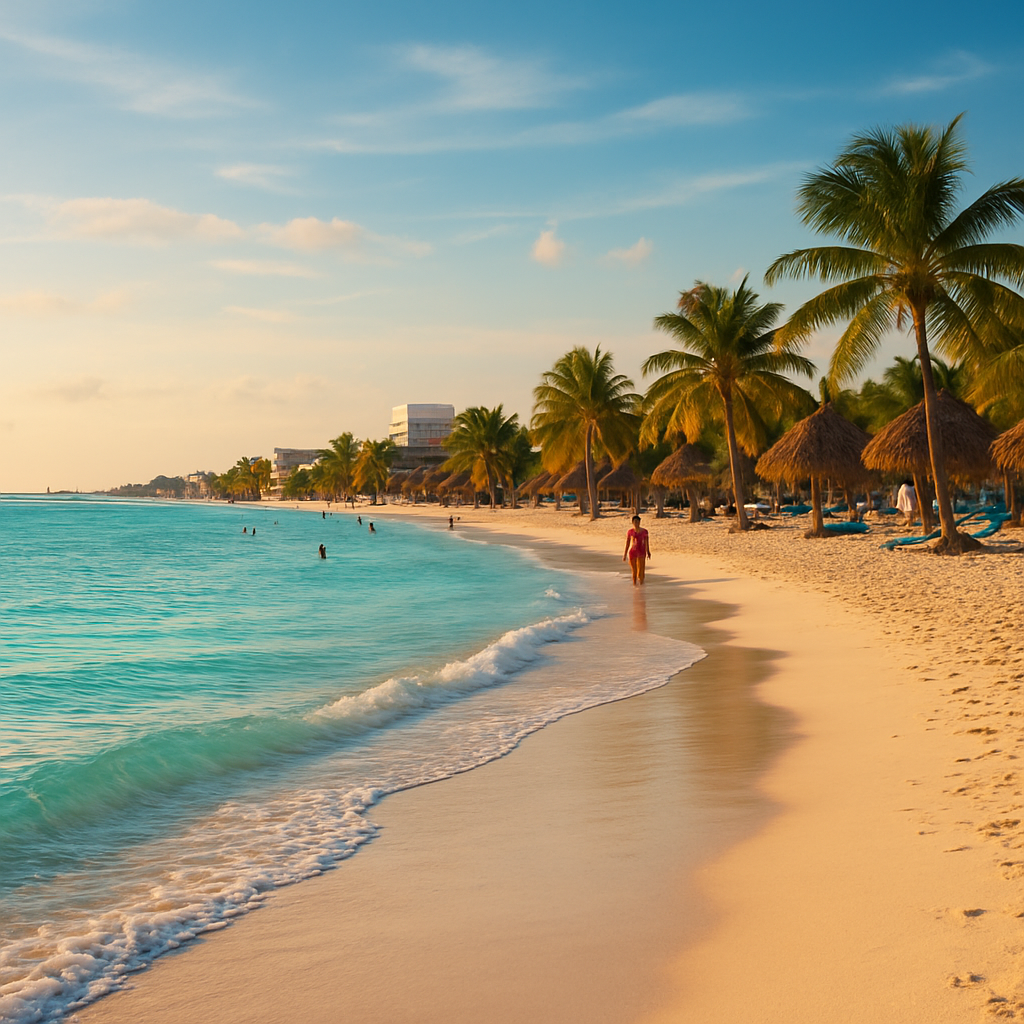
Isla Mujeres by Golf Cart
Take the 20-minute ferry from Puerto Juárez, rent a golf cart at the pier, and drive the full perimeter of this five-mile island with no real plan beyond where to stop for ceviche. Playa Norte on the north end is the kind of Caribbean beach that photographs look staged — shallow, warm, calm enough to wade a hundred meters out. The island's pace is its own argument, and the atmosphere is effortlessly everyone-welcome. A reader called it one of the most relaxed day trips from the mainland, and they weren't wrong.
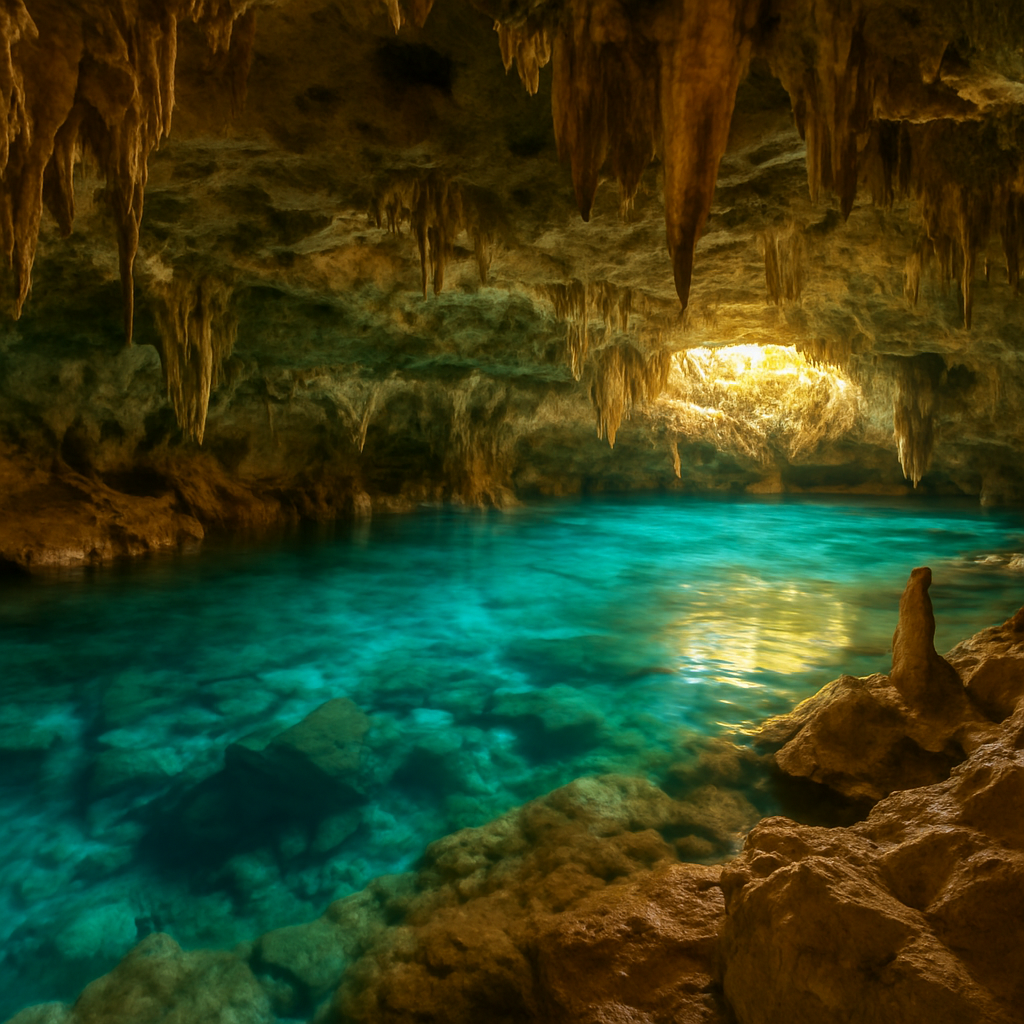
Swim the Cenotes
Cenote Dos Ojos, about two hours south near Tulum, is the cenote worth the drive — crystalline freshwater in a Mayan underground cavern system, snorkel gear, and tour operators who have been running international groups for years without incident. There are closer cenotes, but this one is the postcard. Go early — by 11am the tour buses arrive and the magic dilutes.
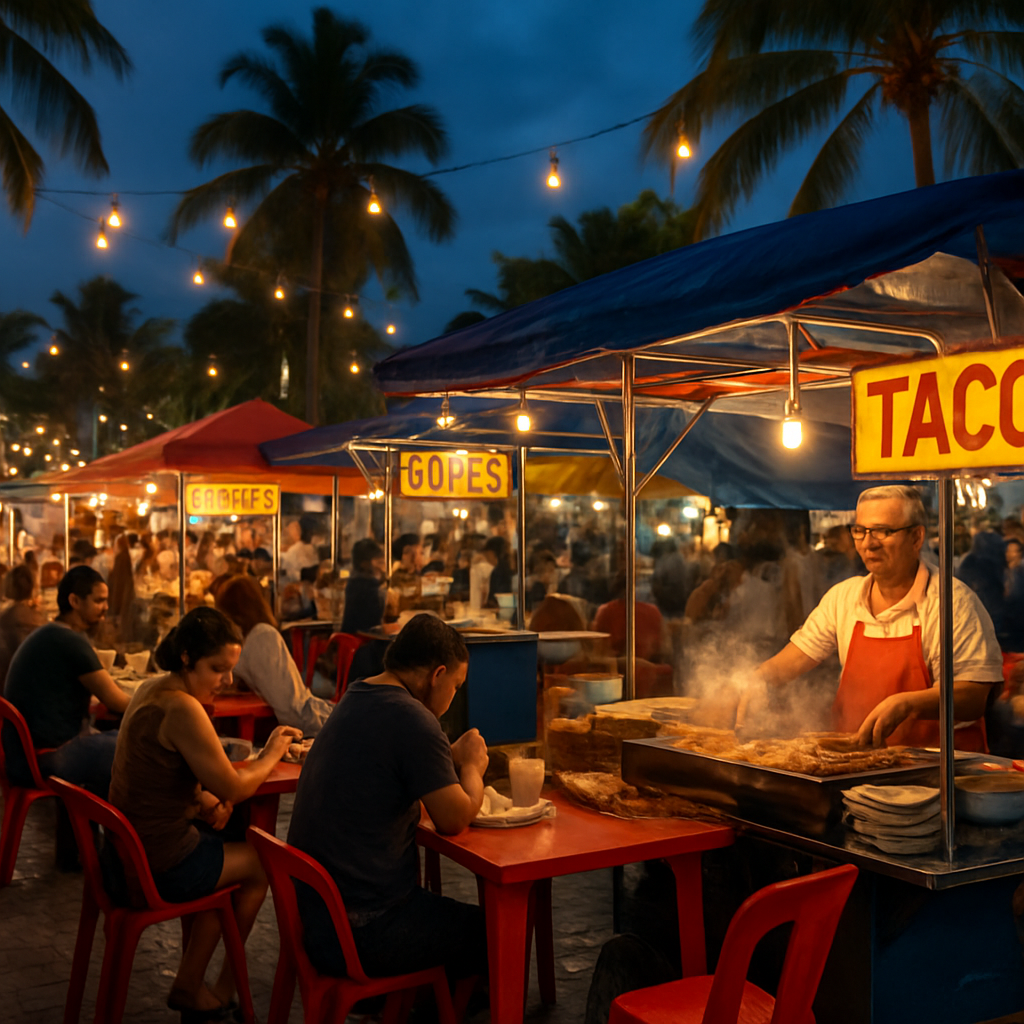
Marquesitas After Midnight at Parque Las Palapas
Parque Las Palapas is downtown Cancún's living room — a palm-shaded public square that on Friday and Saturday nights fills with families, buskers, and the city actually being itself. The street carts roll out marquesitas, crispy rolled Yucatecan crepes filled with Edam cheese and Nutella, which sounds wrong and tastes like the best choice you'll make on the trip. Two dollars, eaten standing up, judging nobody.
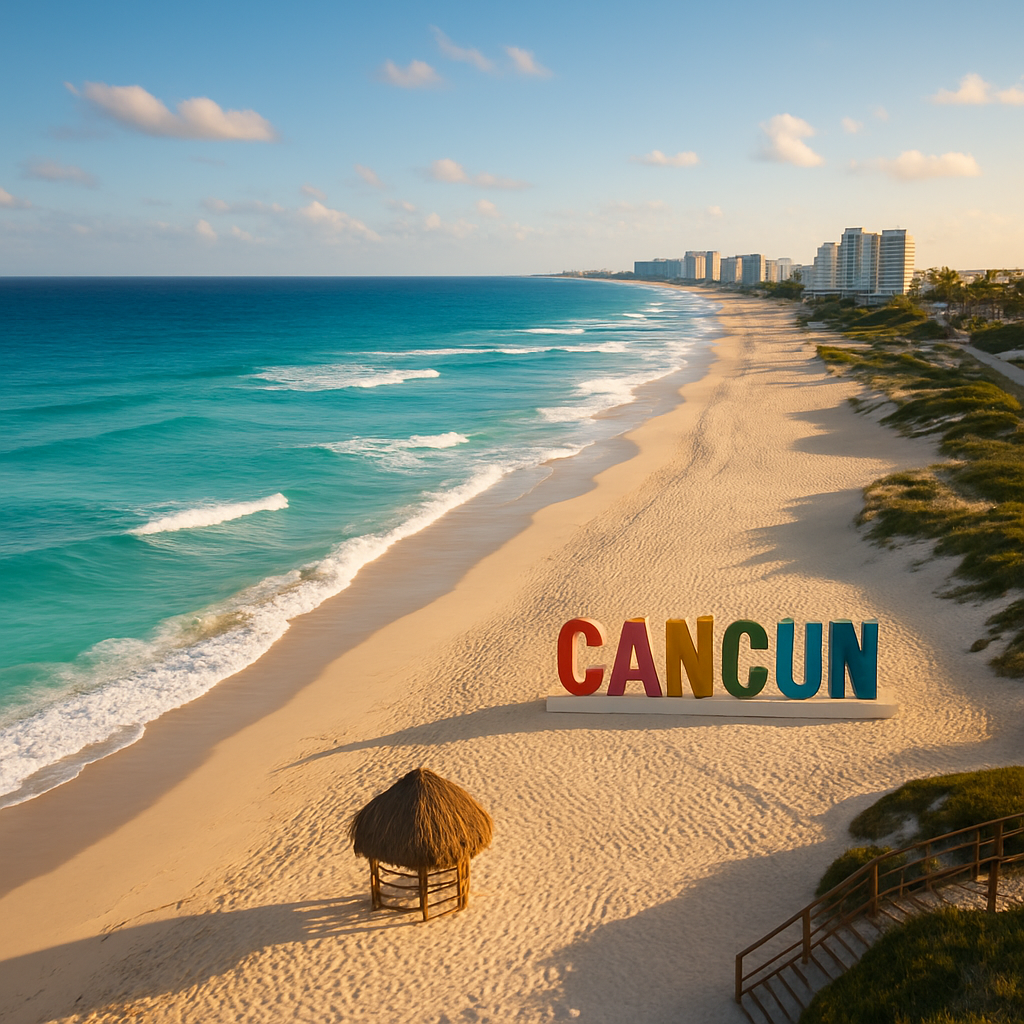
A Slow Morning at Playa Delfines
The best free public beach in Cancún sits at Km 18 of Boulevard Kukulcán — wide, open, often windy, with a view down the coast that makes the resort-pool question feel irrelevant. The famous multicolor CANCÚN letters are here for the obligatory photo, but the real reason to come is to sit with a coffee and watch the water change color as the sun climbs.
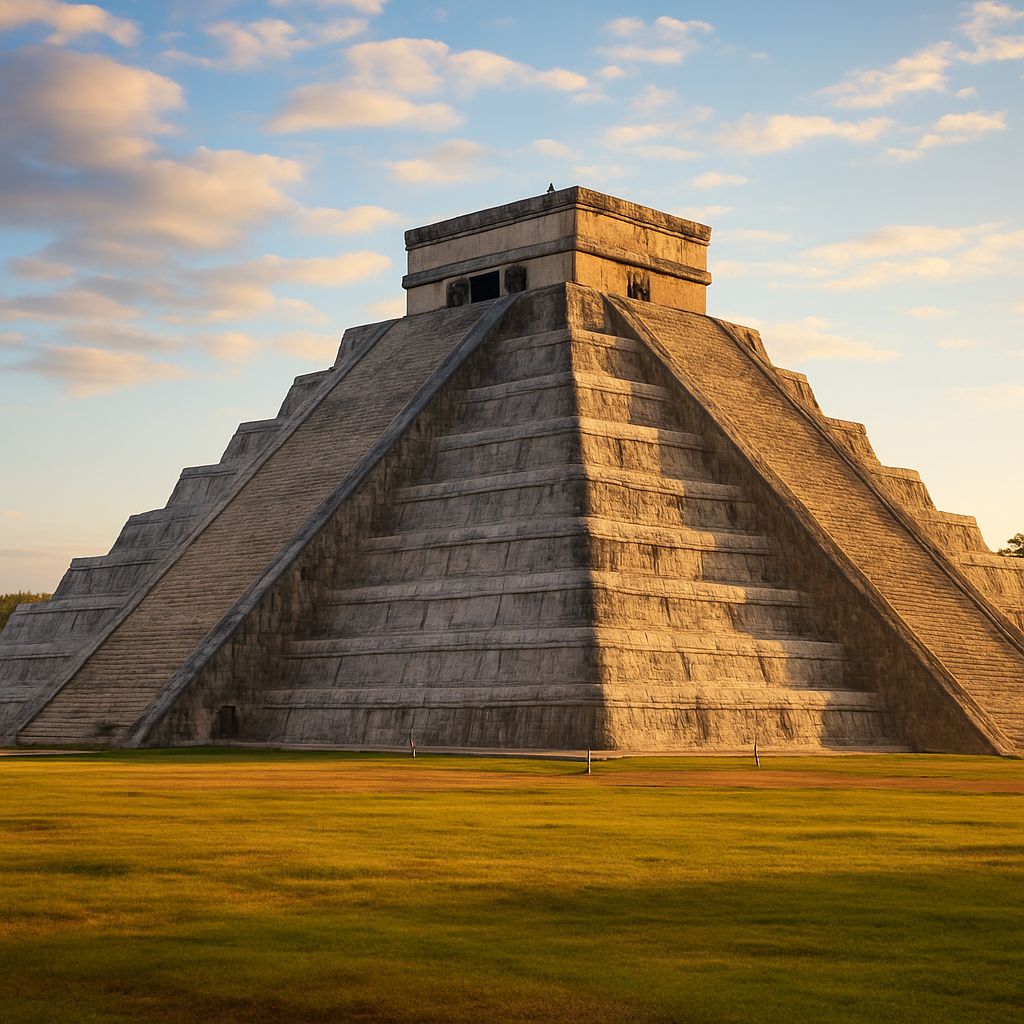
Chichén Itzá Before the Heat
It's a three-hour drive inland, and the standard advice is to go early — be at the gates when they open at 8am, before the tour buses from Cancún arrive and before the stone throws the full weight of Yucatán midday heat back at you. Kukulkán's pyramid is as dramatic in person as in the pictures; the ball court and observatory are the quieter, stranger reasons to linger. Pair it with a cenote stop on the way back.
The places I actually send people to
Advice that fits how you travel
Cancún's gay scene is small by the standards of Mexico City or Guadalajara, but it's tight-knit and genuinely social in the way that small scenes often are. Download Grindr and Scruff before you land, but don't treat them as your only compass — a five-minute conversation at Karamba Bar will get you further than an hour on the apps. The bartender will tell you which DJ night is worth staying for, point you toward wherever the actual party migrated this weekend, and probably introduce you to someone in the process. Arrive after midnight when the floor fills up and the locals start to outnumber the tourists.
Budget-wise, solo travel here has real structural advantages. The R-1 bus runs the full length of Boulevard Kukulcán for a handful of pesos, the free public beaches are genuinely excellent, and downtown dining on Avenida Yaxchilán costs a fraction of resort prices. For accommodation, Hotel El Rey del Caribe in El Centro is the welcoming downtown boutique the community has been quietly recommending for years — small-scale, warm, and within easy reach of the local scene. If your budget is tighter, Mundo Joven Hostel on the same side of town puts you walking distance from Karamba without requiring a cab home.
If the Cancún scene feels thin on a given night — and it sometimes will — the ADO Bus Terminal in El Centro runs coaches to Playa del Carmen for under five dollars and about 45 minutes each way. Quinta Avenida has a more developed LGBTQ+ strip with multiple bars in comfortable walking distance of each other, and it's a fully viable evening out without booking a hotel. Solo travel here rewards the curious: the city gives back to anyone willing to cross Boulevard Kukulcán and head toward the real thing for at least one night.
Same-sex couples will feel the clearest difference between Cancún's two zones, and that difference is genuinely good news. In the Zona Hotelera, holding hands along the beach strip and showing affection at resort pools reads as completely unremarkable — the international corridor runs on diverse clientele, and the major brands have made that policy, not just attitude. Le Blanc Spa Resort has been appearing in honeymoon guides aimed at same-sex couples long enough to feel earned; Hyatt Zilara backs its welcoming reputation with actual corporate inclusion commitments. Check-in at both will be smooth. For couples who want the adults-only resort experience without the full all-inclusive pricing, Live Aqua is the mid-tier answer that the forums have been endorsing consistently for years.
For the dinner that becomes the memory of the trip: La Habichuela Downtown in El Centro is nearly fifty years old, set in a candlelit garden courtyard, and the cocobichuela — lobster and shrimp in coconut curry served inside an actual coconut shell — arrives with just the right amount of ceremony. A restaurant that has warmly welcomed diverse clientele for five decades has earned every bit of your trust. In the Hotel Zone, Lorenzillo's on its pier over Laguna Nichupté is the established special-occasion address with a water setting that does half the work; Harry's Prime Steakhouse is the right call if someone is planning something significant across the table.
The day trips reward couples particularly well. The 20-minute ferry from Puerto Juárez to Isla Mujeres drops you on an island where the pace alone does something to your blood pressure — rent a golf cart together, stop at Playa Norte, and let the afternoon unfold without a schedule. Cenote Dos Ojos near Tulum — crystalline Mayan underground water, snorkel gear, the kind of light that makes everything look significant — is the experience couples reference years later. Go early, stay for the silence before the tour buses arrive.
As of 2026, Mexico recognizes same-sex marriage and joint adoption nationally, and Quintana Roo has been fully compliant since 2022. LGBTQ+ families checking into hotels, booking excursions, or walking into the major eco-parks along the Hotel Zone will find their family structure received without friction — the resort corridor is long-practiced at welcoming every family configuration that comes through. Carry documentation that clearly establishes your family relationship (passports, adoption papers if applicable) as standard international-travel precaution, not as a red flag about Cancún specifically. One logistical note worth knowing upfront: several of the most community-cited properties in this guide — Le Blanc, Hyatt Zilara, and Live Aqua — are adults-only. Families with kids are better served by Hotel Krystal Cancún for a non-all-inclusive Hotel Zone option, or the larger Palace and Iberostar properties further up the strip, which accommodate families without issue.
Xcaret and Xel-Há are the headline family experiences — full-day eco-parks with snorkeling, underground rivers, wildlife encounters, and enough structured activity to run everyone from sunup to sunset. Book both online in advance and give each a full day; trying to split them is a mistake. The ferry to Isla Mujeres from Puerto Juárez is an excellent family half-day: 20-minute crossing, golf carts rented by the hour at the pier, and Playa Norte shallow and calm enough for kids who can barely swim. For a free afternoon that costs nothing beyond sunscreen, Playa Delfines at Km 18 needs no plan beyond showing up.
Logistically: strollers handle the Hotel Zone's paved beachfront path without drama; downtown El Centro has uneven pavement and busy street crossings, so baby carriers are the better call for younger kids over there. The street food scene is a genuine family win — the marquesita carts at Parque Las Palapas sell crispy Yucatecan crepes stuffed with Edam cheese and Nutella, and no child has ever rejected one. Downtown restaurants on Avenida Yaxchilán accommodate kids warmly but rarely post children's menus; the resort restaurants have them. Budget tip: the R-1 bus runs the Hotel Zone for a few pesos per person and works perfectly for older kids — over a multi-day trip, the savings add up to another excursion.
What Cancún actually costs
Flights, visas, and the first 30 minutes
Airport: Cancún International Airport (CUN) is one of the most connected hubs in the Caribbean — approximately 100 direct routes serve it from North America, Europe, and Latin America. Nonstop service arrives from virtually every major US gateway (New York is roughly 4 hours; Los Angeles around 4.5), most major Canadian cities, and key European hubs including London (approximately 10–11 hours direct). You are not going to have trouble finding a flight.
Visas: As of 2026, US, UK, Canadian, Australian, and most EU nationals typically do not need a visa to enter Mexico. You'll receive an FMM tourist card — electronic for most US-departing flights, paper on others — valid for up to 180 days. Hold onto your copy; you hand it back on departure. Lose it and you'll spend time and money sorting it out at the airport, so just don't.
Getting into the city: The airport sits roughly 20km south of the Zona Hotelera and about 30km from downtown El Centro. Four options, real prices:
- ADO Bus — MXN 110 (~40–60 min): The most economical option by a wide margin. Comfortable coaches stopping along Boulevard Kukulcán and downtown. Perfect if you're traveling light and have no pressing reason to rush.
- Shared Colectivo Shuttle — MXN 300–400/person (~30–50 min): Pre-purchased at airport kiosks before you exit the terminal. Door-to-hotel drop-off with a few other passengers sharing the ride. Solid middle-ground on price and convenience.
- Uber — MXN 300–500 (~20–35 min): Exit the terminal first — Uber can't pick up inside. The app locks in your fare before you commit, and it's consistently cheaper than official airport taxis. This is my default recommendation for getting in and out of CUN all week.
- Official Private Transfer — MXN 700–1,000 (~20–30 min): Fixed-rate taxis booked only through official airport kiosks. Pay at the desk, take your receipt, hand it to the driver. Do not accept rides from anyone approaching you in the terminal — only go through the kiosk. Worth it late at night with heavy luggage.
Pro tip: Download Uber before you land. You'll use it at the airport, after late nights in the Zona Hotelera, and every time you don't want to negotiate a fare in Spanish at 2am. It is genuinely the safer and cheaper choice across the board.
Traven's seasonal breakdown
The questions everyone asks
Do I need to speak Spanish to get around Cancún?
Is it safe to hold hands with my partner in Cancún?
Are the apps (Grindr, Scruff) active in Cancún?
When is Cancún Pride?
How much should I budget per day?
Is the Hotel Zone or downtown better for LGBTQ+ travelers?
Is tap water safe to drink?
Screenshot this before you go
So should you actually go?
Go — but go knowing which Cancún you're booking. If you want resort pools, smooth check-ins, and a beach where holding your partner's hand is the least interesting thing happening, the Zona Hotelera delivers without friction and without apology. If you want the actual city — Karamba at 1am, marquesitas at Parque Las Palapas, a mariachi trio serenading your table at La Parrilla — you have to cross Boulevard Kukulcán and spend at least one night downtown. My strongest advice to LGBTQ+ travelers: do both. Stay in the Hotel Zone, eat and drink in El Centro, day-trip to Isla Mujeres, and take the ADO bus to Playa del Carmen for the night you want the scene to be a little bigger. That's the Cancún that earns my 7.7, and that's the one worth your flight.
Sources & Resources
Official links we reference when compiling this guide. Last verified 2026-04-14.
- All Out — Mexico LGBTQ+ Campaigns
- CENSIDA — Centro Nacional para la Prevención y Control del VIH/SIDA
- Comisión Nacional de Derechos Humanos (CNDH)
- Gobierno del Estado de Quintana Roo
- Human Rights Watch — México
- ILGA LAC — Asociación Internacional LGBTQ+ Latinoamérica y el Caribe
- IMSS — Instituto Mexicano del Seguro Social
- Letra S — Salud, Sexualidad, Sida
- MEXFAM — Fundación Mexicana para la Planeación Familiar
- Secretaría de Salud — Programa VIH/SIDA e ITS
- Suprema Corte de Justicia — Matrimonio Igualitario en México