
Holbox doesn't have stoplights, paved roads, or anything resembling a hurry. It has sand under your dinner table and plankton that lights up when you walk into the water at 10pm — and somehow that's enough to ruin you for other beaches.
It's a Tuesday in February, around 9pm, and I'm walking back from Punta Cocos in flip-flops with sand still on my ankles. The western horizon just finished going electric purple, my husband is two steps ahead negotiating with a carrito driver in Spanish that's better than mine, and somewhere ahead in Centro a wood-fired oven at Luuma is doing the work that's about to define our dinner. There's no music yet on Parque Central, no crowd at Hot Corner until 11. This is the in-between hour on Holbox — the one nobody puts on Instagram — and it's when the island makes the most sense.
Holbox is a working Mayan fishing village that became a boutique destination in the last fifteen years and somehow didn't lose the plot. There are no cars. The streets are sand. Cell service dies past Punta Cocos, and the ATMs are decorative. What you get instead is roughly two kilometers of village wrapped inside the protected Yum Balam reserve, a stretch of warm shallow Caribbean you can wade out a hundred meters into, and a daily mix that's wildly international without ever feeling resort-coded — chilangos on long weekends, Italians who never left, Argentines on the kitesurf circuit, and a steady current of gay travelers who graduated from Tulum's chaos and want hammocks instead of hangovers.
This isn't a scene destination, and I won't pretend otherwise — I gave it a 6.8 on Scene because there's no gay bar, no circuit, no app density worth mentioning. What it is, instead, is wonderfully indifferent to who you're holding hands with. I've watched two grandmothers from Monterrey clock my husband and me at Edelyn and ask if we wanted to share their pizza de langosta. That's the whole vibe. The boutique hotels — Casa Las Tortugas, Mawimbi, Punta Caliza — host LGBTQ+ guests so regularly the question doesn't come up. Same-sex couples kiss at sunset on Punta Cocos and walk back through Centro at 1am without a second look.
There's a reason my Traven-Dex landed at 7.9 here. The legal floor is as solid as Mexico gets — matrimonio igualitario nationwide, full adoption, self-ID for trans travelers — and the destination itself is the kind of place that ruins you for other beaches once you've spent four nights wading into bioluminiscencia off Punta Cocos with your person. Come for that. Come for the lobster pizza. Come for the Sunday afternoon at Mandarina that drifts pleasantly queer in high season. Don't come looking for a club night. That's not what this island does, and once you spend twenty-four hours here you'll understand why nobody who comes here is asking for one.
The stuff your travel guide buries on page 47
Here's the easy part: matrimonio igualitario has been law across all of Mexico since 2022, and Quintana Roo recognizes name and gender changes administratively under the country's self-ID framework. As of 2026, that puts Holbox in one of the most legally progressive corners of Latin America for LGBTQ+ travelers — full marriage rights, full adoption rights, broad anti-discrimination protections, and no criminalization on the books or in practice. Hotels are required to recognize a pareja on the booking with no extra paperwork, and the boutique scene here is genuinely relaxed about it. If a smaller posada in Centro gives you any friction over a king bed for two men, ask for management and remind them of the law. National rights backstops are run by Letra S and Yaaj México, both well-organized orgs that route reports and resources if anything escalates.
The cultural reality mostly matches the legal one. Holbox is a working Mayan fishing village that became a boutique destination over the last fifteen years, and the daily mix is wildly international: chilangos on long weekends, Italians who never left, Argentines on the kitesurf circuit, and a steady stream of gay travelers from Mexico City and the U.S. East Coast. The vibe on the beach and in the boutique hotels is openly welcoming. The local fishing families running loncherías a few blocks south of Parque Central are warm but more conservative — subtle affection reads as fine, full make-out sessions read as a bit much regardless of orientation.
Pro tip: there are no ATMs on the island you should trust. The few that exist run out of cash, charge fees that should be illegal, or both. Pull pesos in Cancún before you board the Chiquilá ferry, and bring more than you think you'll need — the island runs on cash, and the "card readers" at smaller spots are decorative. The ferry itself runs roughly every half hour from 5am to 9pm; use the official Holbox Express or 9-Hermanos parking lots (about 100 pesos a day) and ignore the guys in vests waving you into unmarked lots near the port.
Visa-wise, U.S., Canadian, U.K., EU, and Australian passport holders typically get up to 180 days visa-free on the FMM tourist permit issued on arrival. Hold onto the paper slip — losing it generally means a fine and a delay at the airport on your way out. Ferry schedules, reserve permits, and tourism logistics are tracked at the Holbox Island official tourism site.
What it actually feels like on the ground
Holding hands and PDA: Along the beachfront and the Calle Tiburón Ballena restaurant strip, same-sex couples hold hands, sunbathe, and kiss without drawing a second look. The boutique hotels — Casa Las Tortugas, Mawimbi, Punta Caliza — host LGBTQ+ guests regularly and don't blink. Around the residential lanes south of the village and inside family-run taquerías, dial it back from "honeymoon" to "couple grabbing breakfast." It's not hostility, just a different audience. I've never felt physically unsafe on Holbox, which I genuinely can't say about every Mexican beach town I've spent time in.
Hotel check-in: Quintana Roo properties are required to recognize a pareja on the booking, and as of 2026 the boutique scene here is one of the more relaxed I've encountered in Mexico. Two men, two women, one king bed — none of it requires a conversation. If you do hit friction at a smaller guesthouse, name the law and ask for the owner. It almost never escalates beyond that.
Golf carts and getting around: There are no cars on the island. You walk, you bike, or you rent a carrito for the day. Drivers are easygoing across the board, and the late-night rides back from Punta Cocos are one of the things you'll remember about this place.
Beaches and public spaces: Playa Holbox and Punta Cocos are the most relaxed beach stretches I've spent time on in the Yucatán — mixed crowds, low density, no performative cruising or scene drama. Pro tip: Punta Mosquito earned its name. Bring DEET and long sleeves at sunset, because the mosquitoes here have advanced degrees and the clip-on devices don't work.
Late night: The sandy streets in Centro are well-lit until about 1 AM and walking back from Hot Corner at last call is generally safe. The worst thing that's happened to me on a 2 AM walk home was a mosquito convention.
Trans travelers: Mexico's nationwide self-ID law and Quintana Roo's administrative recognition of name and gender changes make Holbox legally one of the more progressive places in the region as of 2026. Visible trans travelers generally report a relaxed experience on the island, but practical caveats apply: gender-neutral facilities are rare, Spanish-language gendered customs persist in casual interactions, and healthcare access is limited. Letra S tracks trans rights and health resources nationally.
Health and meds: The island has one small clinic and the nearest hospital is back across the ferry in Cancún, roughly two-plus hours door-to-door. If you're on PrEP or any specific medication, bring more than your trip length — the one pharmacy in Centro stocks the basics, not the specifics. For Mexican public health services and HIV care nationally, see IMSS and Censida.
The queer geography
Centro & Parque Central
This is the working core of the island — a sandy grid of low-slung buildings, palapa rooftops, and murals from the International Public Art Festival splashed across half the storefronts. Parque Central is the gravity center: locals gather at dusk, chilangos argue about dinner reservations, and by 9pm every terrace from Calle Tiburón Ballena to the plaza is full. Walk it slowly your first day — there's a stunning portrait mural on the side of a tienda two blocks south of the park that nobody puts on Instagram. The food density here is absurd for a village this size: wood-fired pizza at Roots, a tasting menu at El Chapulim, garden dining at Luuma, and Edelyn for the pizza de langosta that legitimately belongs on a list of foods to eat once before you die. Hot Corner on the northeast side of Parque Central is where everyone — gay, straight, French, Argentine — ends up between 11pm and 2am, and on any given high-season night a solid third of the dance floor is one of us. Logistics for the village and ferry are tracked at the Holbox Island official tourism site.
Playa Holbox & the Beachfront
The north shore is where the boutique scene lives — a continuous stretch of white sand, palapa-roofed cabañas, and beach clubs running west from the muelle. This is where same-sex couples are most visible and most at ease: hammocks slung between palms, sand-floor restaurants, sunset cocktails at Mandarina attached to Casa Las Tortugas. Mandarina hosts a Sunday daytime party in high season that drifts pleasantly queer — house DJs, infinity pool, the beautiful people of CDMX with their summer homes. No cover, but order a cocktail or you'll get the look. The water here is warm and shallow enough that you can wade out a hundred meters before it hits your chest, which is part of why kitesurfers, families, and honeymooners share the same stretch without anyone bothering anyone. Permitted operators along this coast are listed by Quintana Roo Tourism.
Punta Cocos
The west end of the island — the quiet end, the bohemian end, the end where the queer crowd that's done with scenes goes to disappear. The walk out here from Centro takes about thirty minutes along the beach, or fifteen by carrito down the sand road. Sunsets at Punta Cocos are the genuine reason to be on Holbox; the western horizon goes gold, then pink, then deep electric purple, and on moonless nights the bioluminiscencia in the shallows turns every footstep into a flash of blue-green light. The beach here draws the yoga-and-mezcal set — lots of LGBTQ+ couples with hammocks, mezcal, and zero interest in being seen by anyone. The whole western edge sits inside the protected Yum Balam reserve; see CONANP for the conservation framework that's keeping it that way.
The experiences worth rearranging your itinerary for
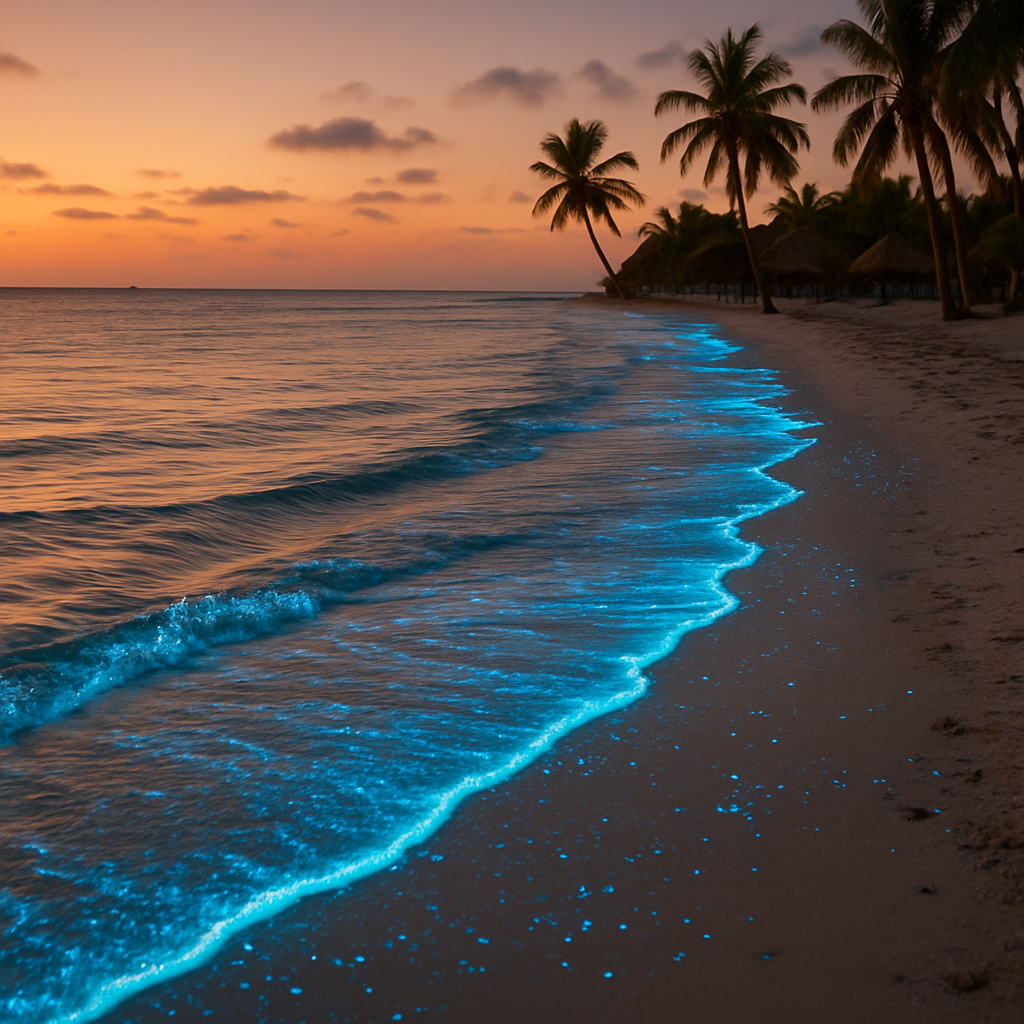
Bioluminescence at Punta Cocos
On a moonless night between roughly May and January, wade into the shallows off Punta Cocos around 10pm and your every footstep will spark blue-green light. The plankton here is the real thing — not a tourist gimmick — and the stretch of beach is dark enough that your eyes adjust into the kind of star-and-water show that ruins you for other beaches.
Pro tip: pick your night by the lunar calendar, not the weather forecast. A full moon kills the effect; a moonless sky doubles it. Bring a friend, a mezcal, and zero expectations of getting a photo your phone can do justice to.
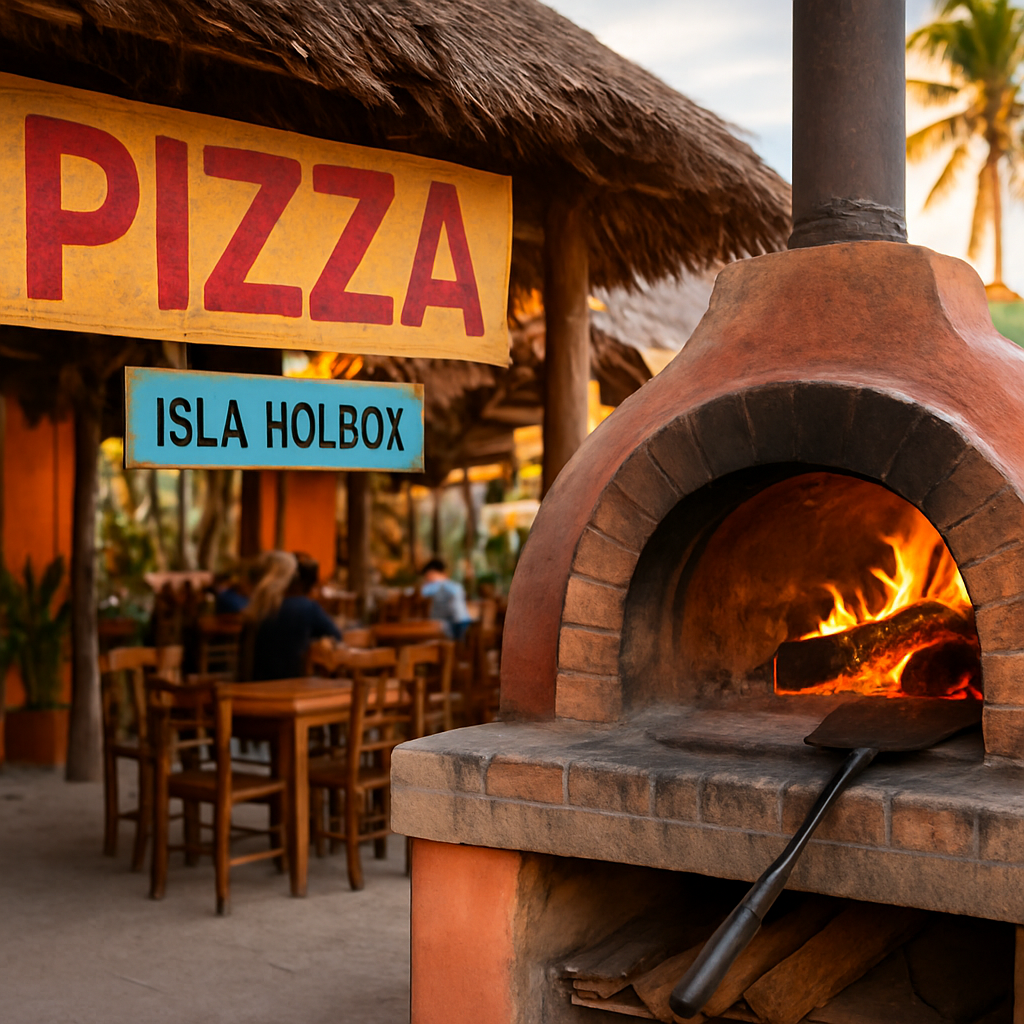
Lobster Pizza at Edelyn
The pizza de langosta at Edelyn is a Holbox-only invention: Caribbean lobster pulled from the water roughly a kilometer offshore, laid across a wood-fired crust, served at plastic tables on a sand-street terrace. It sounds ridiculous on paper. It is genuinely one of the best things I've eaten in Mexico.
No reservations, no fuss, no website. Walk up, order one, watch the village move past the open front while you eat it. Two grandmothers from Monterrey once asked my husband and me to share theirs. That's the whole vibe.
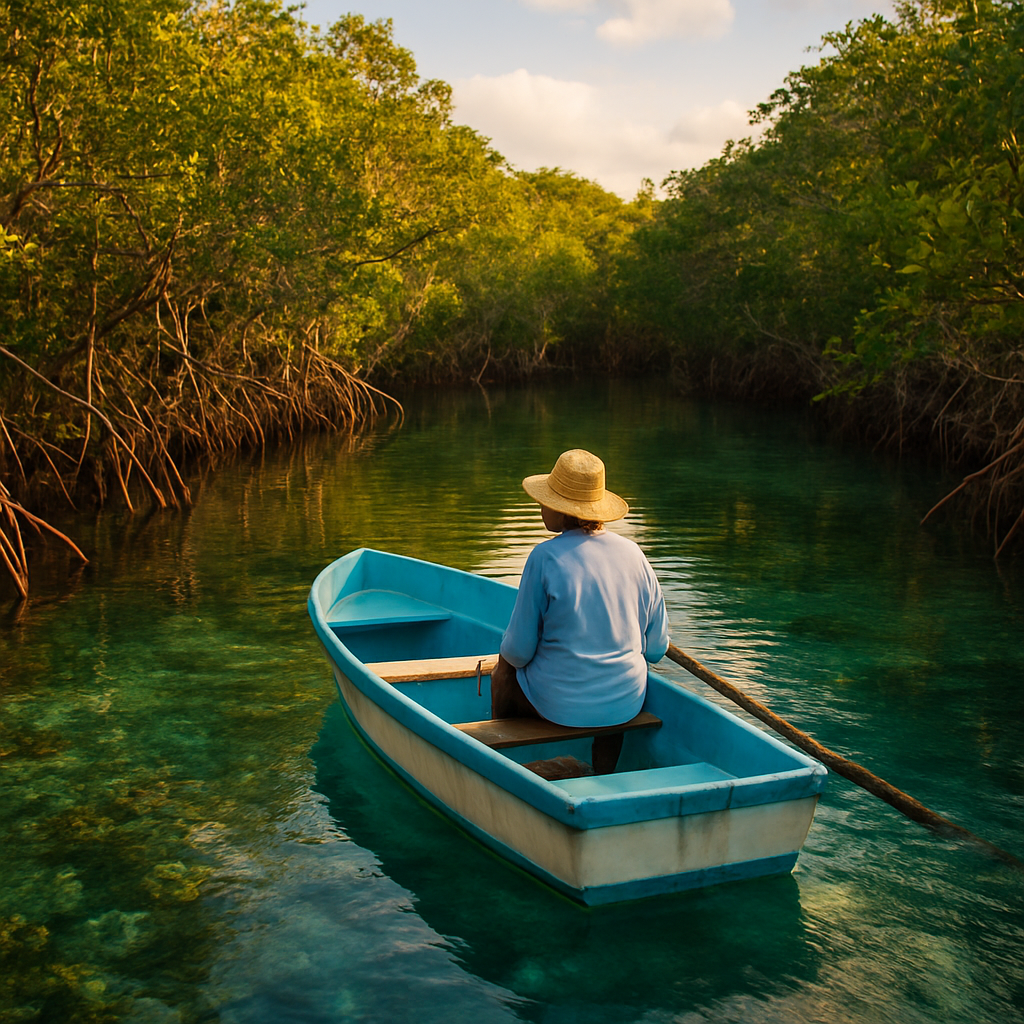
The Three Islands Boat Tour through Yum Balam
A half-day from the village marina takes you out into the protected Yum Balam reserve — Isla Pájaros for the bird life (frigatebirds, herons, the occasional roseate spoonbill if you're lucky), Isla Pasión for a swimmable beach with no infrastructure, and the Cenote Yalahau for a freshwater swim in mangrove shade. The whole loop runs about $50 USD and explains, without saying so, why the development on Holbox has stayed humane.
Bring reef-safe sunscreen, water, and patience for the boat ride between stops — the lagoon is shallow and the captains take it slow on purpose.
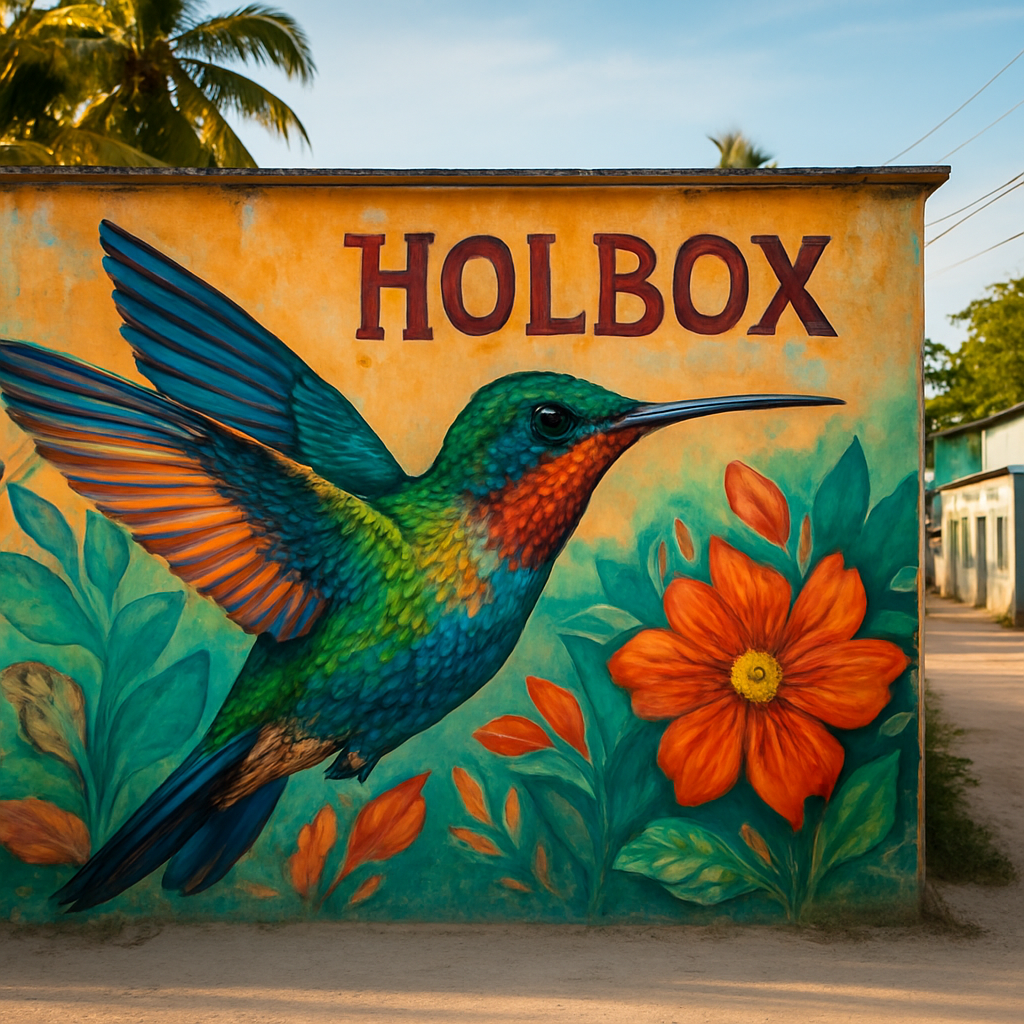
A Slow Walk Through Centro's Murals
The International Public Art Festival has been running editions on Holbox for years, and the result is an open-air gallery scattered across the sand-street grid — Mexican and international muralists working at the scale of entire building facades. There's no map worth following; the point is the wandering.
Pro tip: there's a stunning portrait mural on the side of a tienda two blocks south of Parque Central that almost nobody puts on Instagram. Bring a camera, not a phone, and walk Centro on your first morning before the heat sets in. You'll learn the layout faster than any golf-cart tour will teach you.
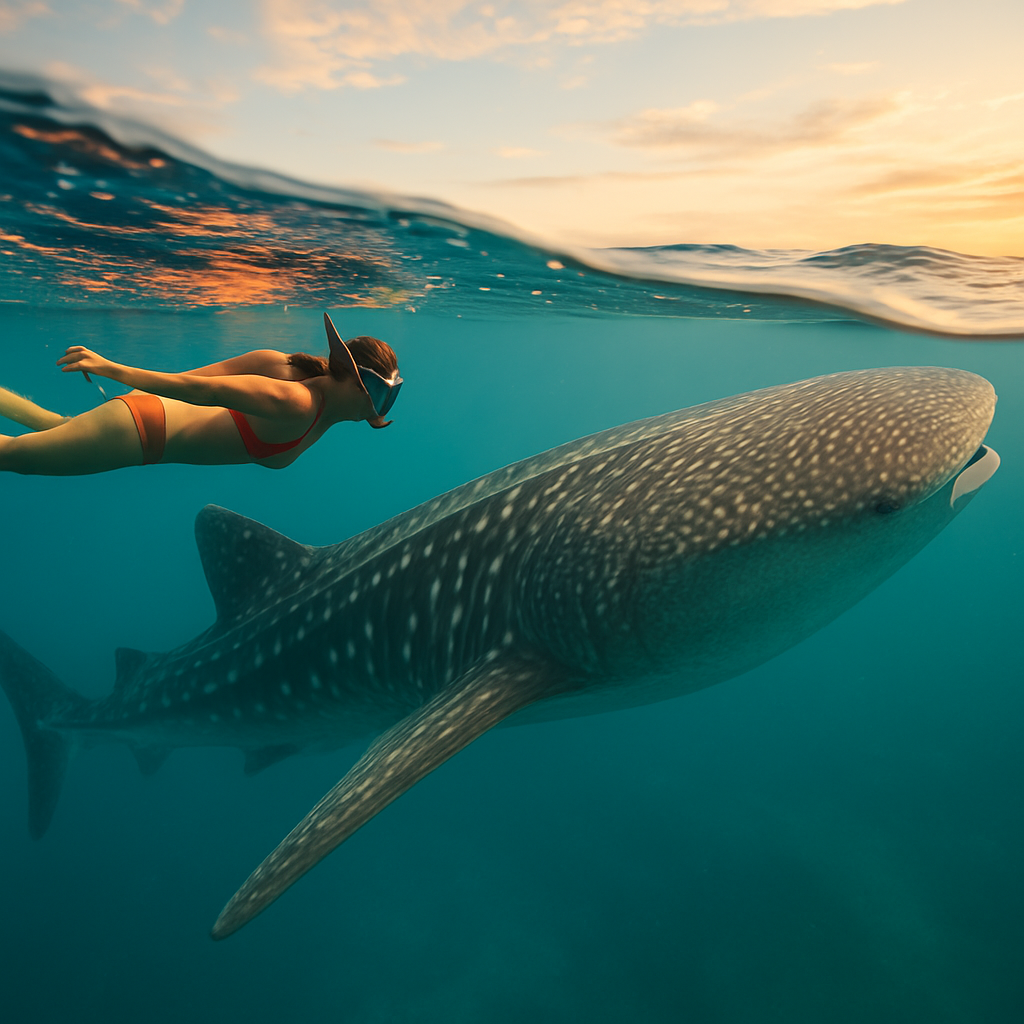
Snorkeling with Whale Sharks off Cabo Catoche
From mid-June through mid-September, the largest fish in the ocean — gentle, plankton-eating, the size of a school bus — pass through the waters north of Holbox toward Cabo Catoche. SEMARNAT-permitted operators leave the muelle at 6am, and the boat ride out is about 90 minutes of open water before you're slipping over the side mask-first.
Book through a licensed local operator like Mawimbi or Willy's directly — not your hotel — and you'll save roughly 30% and get guides who actually know the regulations. This is the kind of thing that should happen once and correctly. Choose accordingly.
The places I actually send people to
Advice that fits how you travel
Holbox is a soft landing for a solo trip. The island is small enough that by your second morning the guy at Painapol remembers your smoothie order, and Centro is walkable enough that you'll never need to brief a taxi driver on where you're staying. As of 2026, Mexico's full-equality framework and Quintana Roo's relaxed boutique scene mean you're not navigating any extra logistics — you're just on vacation. My Chill score of 8.2 is doing a lot of work here, and it earns it.
The scene caveat is real, though — I gave it a 6.8 on Scene and a 4.0 on Pulse for a reason. There's no gay bar, no app density worth mentioning, and Grindr generally serves up other tourists, mostly chilangos from CDMX on long weekends. If you came to meet people, the play isn't the apps — it's Hot Corner on Parque Central between 11pm and 2am, the Sunday afternoon at Mandarina, or the social engine at Hotel Tribu if you're under 35 and game for a hostel-bar crowd. By night three you'll have a crew. That's just how Holbox works.
Pro tip: skip the rented golf cart for your first full day. Walk Centro from Parque Central out to the beach and back, eat at Las Panchas for breakfast, get a ceviche at Basico for lunch, and end up at Hot Corner by midnight. You'll meet more people on foot in 24 hours than you ever will behind a wheel — and the budget moderate range of MXN 3,500-5,500 a day stretches genuinely far here. The island tourism site has the ferry schedule you'll need for the way out.
This is where Holbox shines. Same-sex couples can hold hands along Playa Holbox, kiss at sunset on Punta Cocos, and check into a king bed at any of the boutique properties without anyone reaching for a second form. As of 2026, matrimonio igualitario covers the whole country and Quintana Roo's enforcement on the ground is consistently relaxed. I gave it a 9.5 on Legal and a 9.1 on Destination — the legal floor and the place itself are both doing the work. My Traven-Dex of 7.9 lands where it does mostly because the scene is small, and on a romantic trip that's a feature, not a bug.
Where to stay: Punta Caliza for the architecture obsessives (twelve rooms, the stepped pool that looks like a water-filled Mayan pyramid, books out months ahead), Casa Las Tortugas for the barefoot-luxury benchmark, Villas Flamingos for overwater hammocks without a scene attached, and Hotel Casa Iguana if you want adults-only beachfront without the four-figure nightly. All of them are explicitly comfortable hosting same-sex couples — full PDA, no friction at check-in.
The memorable moments are the ones the island specializes in. Wade into the bioluminiscencia off Punta Cocos around 10pm on a moonless night — every footstep sparks blue-green light, and yes, my husband cried. Book El Chapulim for one tasting-menu dinner. Order the pizza de langosta at Edelyn and watch the village move past while you eat it. End at least one night at Mandarina for a sunset cocktail with sand under the table. The Three Islands tour through Yum Balam — protected by CONANP — is the half-day couples trip that earns its place on every itinerary.
Holbox is genuinely good for LGBTQ+ families, with one practical asterisk. The legal piece is settled: as of 2026, marriage equality and joint adoption are recognized nationwide in Mexico, Quintana Roo administratively recognizes name and gender changes under the country's self-ID framework, and hotels here are required to honor a pareja booking with no additional paperwork. Two moms or two dads checking in with kids will be received the way every other family is received, which is to say warmly and without commentary. Yaaj México tracks family-rights resources nationally if you ever need a backstop.
Practically: the no-cars setup is a gift with kids. They can run on sand streets without you tracking traffic, and the carrito rentals are the family vehicle of choice — book a four-seater for the day. The Three Islands tour through Yum Balam is the family activity I recommend most often: half-day from the village marina, mangroves and birdlife on Isla Pájaros, swimmable shallow water at Isla Pasión, and a freshwater swim at the Cenote Yalahau. Whale shark trips have a minimum age of around 5 and require strong swimmers — beautiful for older kids, not appropriate for toddlers. Punta Mosquito is great with kids during the day for the wade-out shallow water, but go early and bring serious DEET because the name is not decorative.
The one caveat is logistics: the island has one small clinic and the nearest hospital is back across the ferry in Cancún, roughly two-plus hours door-to-door. If anyone in your family has a medical condition that needs proximity to a hospital, factor that in. The pharmacy in Centro stocks basics, not specifics — bring more meds than your trip length and a stocked kit. Stroller-wise, sand streets are tough; a beach-wheel stroller or a soft carrier handles the village far better than a standard wheeled stroller. National public health resources are tracked at IMSS.
What Isla Holbox actually costs
Flights, visas, and the first 30 minutes
Airport: There's no airport on Holbox itself worth flying into commercially — you fly into Cancún International (CUN), then it's a road-and-ferry combo to the island. CUN is one of Mexico's busiest airports, with approximately 180 direct routes from across North America, Europe, and Latin America, including nonstops from New York (~4h), Miami (~1h 45m), Toronto (~4h), London (~10h), Madrid (~10h 30m), and most major Mexican hubs.
Visas (as of 2026): U.S., Canadian, U.K., EU, and Australian passport holders typically don't need a visa for stays of up to 180 days. You'll generally be issued an FMM tourist permit on arrival — keep the paper slip somewhere you won't lose it, because losing it usually means a fine and a delay at the airport on your way out.
Airport to Holbox — the routes:
Shared shuttle to Chiquilá + ferry (MXN 800-1,200, ~3h 30m + 30m ferry): The most common route. Book the shuttle in advance; the ferry from Chiquilá runs roughly hourly between 5am and 9pm.
Private transfer to Chiquilá + ferry (MXN 3,500-5,500, ~2h 45m + 30m ferry): Faster door-to-port and worth it if you're a couple or a small group splitting the cost. Ferry tickets are bought separately at the port — about MXN 220 one-way.
ADO bus to Chiquilá + ferry (MXN 450-600, ~4h + 30m ferry): The budget play. Limited daily departures from the Cancún terminal, so check the schedule before you commit.
Rental car to Chiquilá + ferry (MXN 900-1,800/day + ~MXN 100/day parking): Cars cannot board the ferry. Use the official Holbox Express or 9-Hermanos parking lots at Chiquilá and ignore the guys in vests waving you into unmarked spots.
Private flight to Holbox airstrip (MXN 18,000-30,000, ~45m): Charter only via Aerosaab from Cancún, weight-restricted small aircraft. The splurge route — fast, scenic, expensive.
Pro tip: Pull pesos from an ATM in Cancún before you head to Chiquilá. The island runs on cash, the on-island ATMs are unreliable at best, and the ferry, parking, and any taxis you take on the mainland side all want pesos.
Traven's seasonal breakdown
The questions everyone asks
Is Holbox safe for same-sex couples?
Do I need to speak Spanish?
When's the best time to visit?
Is there a gay scene on Holbox?
How do I actually get there?
How much should I budget per day?
Are the boutique hotels really LGBTQ+ welcoming, or is that marketing?
Screenshot this before you go
So should you actually go?
Go. Holbox is the rare destination where the legal framework, the boutique infrastructure, and the cultural reality all line up cleanly — full marriage equality and self-ID as of 2026, a beachfront scene that's openly relaxed about same-sex couples, and a no-cars sand-street island where the loudest thing you'll deal with is the mosquitoes. It's not a scene trip and it's not a club week, so if that's what you're after, fly to Mexico City instead. But for couples, solo travelers who want a soft landing, and LGBTQ+ families who want a place where two dads with kids checking in is a non-event, this is one of the easiest yeses I give in Mexico. Bring pesos, bring DEET, bring your person — I'll see you at Hot Corner after midnight.
Sources & Resources
Official links we reference when compiling this guide. Last verified 2026-05-04.