
Mérida doesn't perform for you. It just hands you a cochinita taco at midnight on Calle 60 and lets the bougainvillea do the rest.
Mérida is the colonial city that finally caught up to itself — a deeply Catholic Yucatecan capital that, somewhere over the last decade, quietly became one of the most livable destinations in Mexico for the gays. Not loud about it. Not branded. The pink facade of Rosas & Xocolate on Paseo de Montejo, the queer architects restoring colonial wrecks in La Ermita, the bartender at Cubaro adding you to a WhatsApp group within twenty minutes of meeting you — that's the texture. There's a reason I gave it an 8.1 overall, and a 9.5 on Legal: Yucatán legalized same-sex marriage in 2021 and recognizes self-ID gender markers as of 2026, and the day-to-day reality has caught up to the law in the parts of the city you'll actually spend time in.
The expat queer scene here skews a little Palm Springs-meets-Brooklyn — architects, designers, chefs, a lot of 40-somethings on second acts, dinner parties where everyone debates the best taquería in Santa Ana. But the city itself is older, slower, more Maya than Mexican in ways that take a few days to register. At dusk on Calle 60 the air smells like grilled cochinita pibil and bougainvillea, the heat finally lifts, and the gay bars on the four-block stretch — Pride Bar Mérida, Bahia Bar, Catrín — start to fill in without anyone needing to be anywhere by a specific hour. The pace is the point.
What surprised me most is how casually safe it feels. I've walked from Bar 1900 back to my apartment in Santa Ana at 2 AM more times than I can count, and the worst thing that's ever happened is a stray cat following me home. The US State Department puts Yucatán at Level 1 — the lowest advisory tier in the country — and you can feel it. PDA on Paseo de Montejo is a non-event. Hotel check-in for same-sex couples is a non-event. The 7.2 on Chill is what you get when a deeply traditional culture decides, mostly, to leave you alone — which in travel terms is its own kind of welcome.
What you don't get is scale. The scene is small, the nightlife wraps earlier than CDMX, and outside Centro and Paseo de Montejo the city snaps back to a more reserved Yucatán. That's the trade. You come here for the colonial bones, the Maya day trips, the food that goes from a hand-patted tortilla at La Chaya Maya to chef Pedro Evia's tasting menu at Kuuk in the same week — and a queer expat circuit that runs on word of mouth. If you want a circuit-party week, fly to Puerto Vallarta. If you want a city that lets you exhale, this is it.
The stuff your travel guide buries on page 47
Mexico legalized same-sex marriage nationwide in 2022, and Yucatán fell into line in 2021 after years of dragging its feet — late by Mexican standards but, as of 2026, firmly settled. Marriage, joint adoption, and civil unions are all on the books. Anti-discrimination protections are broad at both the federal and state level, and Yucatán recognizes self-ID gender marker changes on official documents thanks to a 2023 reform. The legal framework here is among the strongest in Latin America, which is why I gave Mérida a 9.5 on Legal.
The reality on the ground is more textured than the law suggests. Mérida is a deeply Catholic, deeply traditional city wrapped around an increasingly cosmopolitan core. Centro Histórico and Paseo de Montejo have absorbed a wave of queer expats, designers, and architects restoring colonial homes — book a one-bed room at any boutique on Calle 60 and nobody at the front desk will blink. Step into the working-class colonias and traditional markets, though, and you're back in a more reserved Yucatán. That's not hostility — it's generational reserve. For deeper context on rights enforcement, the Comisión de Derechos Humanos del Estado de Yucatán (CODHEY) takes LGBTQ+ complaints seriously, and the national Comisión Nacional de los Derechos Humanos (CNDH) has a documented track record on queer-rights cases.
Mérida Pride typically rolls down Paseo de Montejo in late June, ending at the Monumento a la Patria. It's smaller than CDMX — fewer corporate floats, more drag queens on the back of pickup trucks — and that's the appeal. The local Pride Mérida (Marcha del Orgullo LGBT+ Yucatán) page is where dates and routes get posted.
Pro tip: the heat is the real visa requirement. May runs 105°F with humidity that will undo any blowout in 90 seconds. Plan November through March if you value your dignity. Tourist entry is generally straightforward for US, UK, EU, Canadian, and Australian passports — typically no visa for stays up to 180 days, with an FMM tourist permit issued on arrival.
What it actually feels like on the ground
I've walked from Bar 1900 back to my apartment in Santa Ana at 2 AM more times than I can count, and the worst thing that's ever happened is a stray cat following me home. Mérida consistently ranks as Mexico's safest large city — the US State Department puts Yucatán State at Level 1, the lowest advisory tier in the country, and Canada and the UK rate it similarly. That's the floor. Here's what it looks like in practice.
Holding hands and PDA. On Paseo de Montejo, around Parque Santa Lucía, and inside the gay bars on Calle 60, hand-holding is unremarkable. Same-sex couples kiss on patios and nobody flinches. Around Plaza Grande and the daytime tourist core, it's fine but you'll catch the occasional curious stare from older Yucatecan visitors — not hostile, just generational. In Mercado Lucas de Gálvez and the outlying colonias, dial it back to keep things easy.
Hotel check-in. Same-sex couples can book a one-bed at any boutique in Centro or on Paseo de Montejo without a second look. Properties like The Diplomat, Casa Olivia, and Hotel Hacienda Mérida VIP are explicitly gay-friendly. The bigger luxury haciendas (Chablé, Temozón, Xcanatún) host same-sex weddings as a matter of course.
Taxis and rideshare. Stick to Uber or DiDi over street taxis — not because of safety exactly, but because the drivers don't try to negotiate gringo prices and you'll get door-to-door service to the bars on Calle 60. Both apps are legal in Mérida and have designated rideshare zones at the airport.
Late night. Centro is heavily policed and the police presence is generally respectful. The walk between the major venues on Calle 60 is short and well-lit. Standard precautions apply — keep your phone in your front pocket, don't wave cash around — but I have never felt unsafe walking home in this city.
Trans travelers. Yucatán recognizes self-ID gender marker changes (as of 2026), and Mérida has a small but visible trans community. That said, expect more staring outside tourist zones, particularly for trans women of color, and access to gender-affirming healthcare is significantly more limited than in Mexico City. The national advocacy organization Letra S tracks healthcare access and violence reporting nationally, and Yaaj México is the go-to resource for LGBT mental health support.
Health and HIV/STI services. Mérida has a CAPASITS clinic that provides free HIV testing and treatment. Pharmacies in Centro stock PrEP and most standard medications — bring a prescription if you can.
Verbal harassment. Rare in tourist areas. If something does happen, the local human rights infrastructure actually works — the Indignación A.C. — Yucatán Human Rights organization documents incidents and provides legal support.
The queer geography
Centro Histórico
This is the colonial heart of Mérida and where you'll spend most of your time. The grid runs from Plaza Grande — anchored by the Catedral de San Ildefonso (the oldest cathedral on the American mainland) and the 16th-century Casa de Montejo — out through pastel facades, courtyard restaurants, and the long pedestrian artery of Calle 60. At dusk the air smells like grilled cochinita pibil and bougainvillea, and the heat finally lifts. Mercado 60 turns into an open-air food hall with live music every night; Parque Santa Lucía hosts the Serenata Yucateca every Thursday — a tradition unbroken since 1965. The bulk of Mérida's gay nightlife clusters along Calle 60: Pride Bar Mérida is the unofficial mothership with weekend drag shows, Bahia Bar and Catrín handle the late-night dance crowd, and Boy Bar over on Calle 62 doesn't really start until 1 AM. For tourism information and event calendars, Secretaría de Fomento Turístico Yucatán is the best official source.
Paseo de Montejo
Mérida's grand boulevard, laid out in the late 19th century by henequen barons who'd been to Paris and decided their city deserved its own Champs-Élysées. The result is a tree-lined avenue of French-influenced mansions — Palacio Cantón (1911), now the Regional Anthropology Museum, is the standout — running north from Centro to the Monumento a la Patria. Walk it on a Sunday morning during Bici-Ruta, when the boulevard closes to cars from 8 AM to noon and half the queer expat community is out on rented bikes. Cubaro handles cocktails in a restored mansion; Hennessy's Irish Pub is the long-running expat hub; and Pride marches end here every June.
Santa Ana
A leafy barrio just north of Centro, organized around Parque de Santa Ana and its beloved evening food market — the kind of place where you eat panuchos standing up under string lights, then walk home through quiet streets where the houses are painted ochre, indigo, and watermelon pink. It's become a quiet favorite for queer expats restoring colonial homes. Micaela Mar & Leña works wood-fire seafood near the parque, and the residential calm makes it one of the best base neighborhoods if you want walkability without nightlife noise outside your window.
La Ermita
The southern barrio, anchored by the Ermita de Santa Isabel — a small whitewashed 18th-century church on a romantic plaza ringed by jacaranda trees. La Ermita is the slowest-paced, most photogenic corner of the city, with pastel-painted walls and a quietness that feels almost rural after Centro. It's been the unofficial landing zone for queer creatives over the past decade — architects, designers, and chefs restoring colonial wrecks and hosting dinner parties where everyone debates the best taquería in Santa Ana. There's no nightlife to speak of here. That's the point.
Progreso
Forty minutes north on the highway and worth the colectivo. Progreso is the closest beach town — a long flat malecón with palapa restaurants stacked along the waterline, the longest pier in the world stretching into impossibly turquoise Gulf water. Sunday is the day: queer Meridanos drive up for ceviche and michelada lunches, and the unofficial gay beach section sits at the far west end of the malecón, past the cruise ship crowd. Bring your own everything — there's no Speedo concession.
The experiences worth rearranging your itinerary for
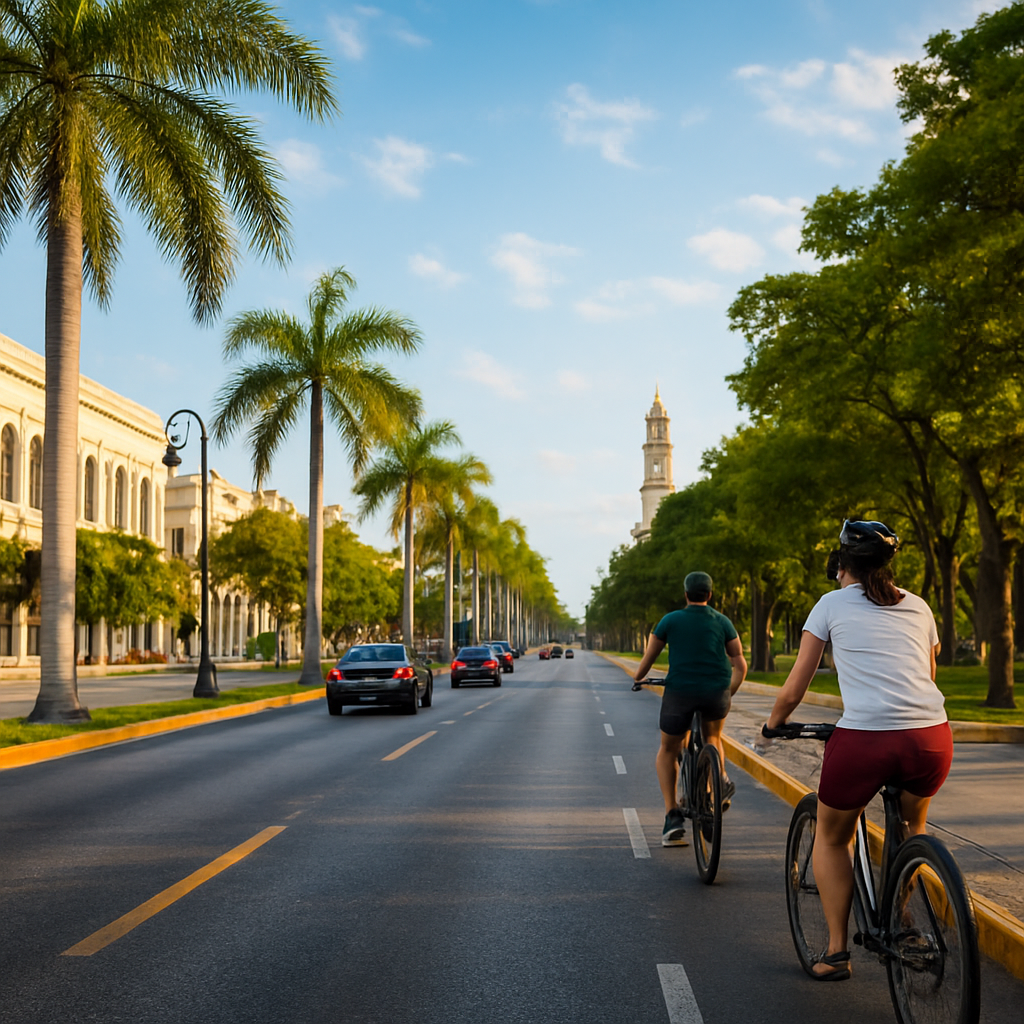
Sunday Bici-Ruta on Paseo de Montejo
Every Sunday from 8 AM to noon, the city closes Paseo de Montejo to cars and half of Mérida shows up on rented bikes. You ride past Palacio Cantón, the henequen-era mansions, and the Monumento a la Patria while the air is still cool enough to breathe. Rent a bike at the Remate, ride to Crepas Don Juan for breakfast, and you'll see the city the way locals do — slowly, on two wheels, with a marquesita stop somewhere in there.
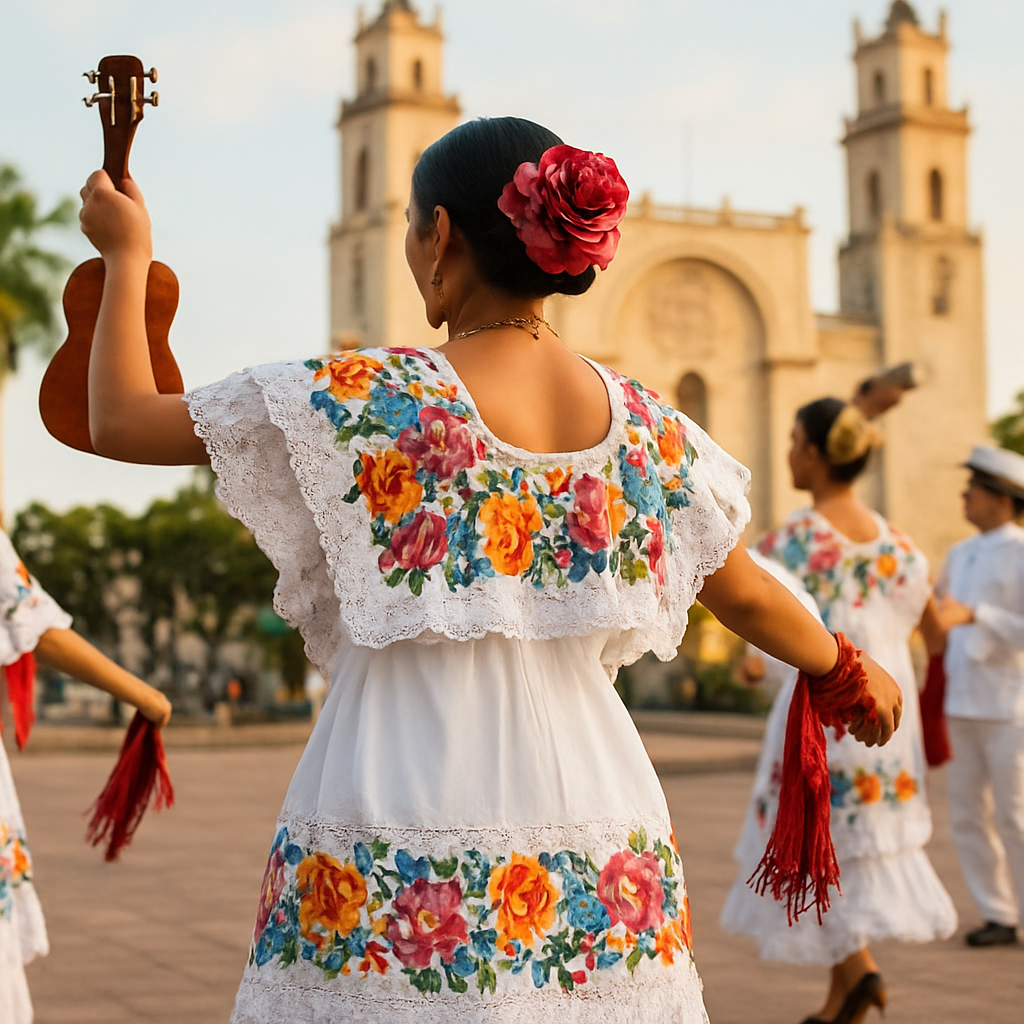
Monday Night Vaquería at Palacio Municipal
Touristy. Unmissable. Every Monday in front of the Palacio Municipal on Plaza Grande, local couples in traditional white embroidered terno and guayabera dance the jarana — a folkloric tradition that predates the city's tourism economy by about three centuries. The music is live, the dancers are real, and nobody cares if two travelers want to step in. Get there by 8:30 PM for the best sightlines.
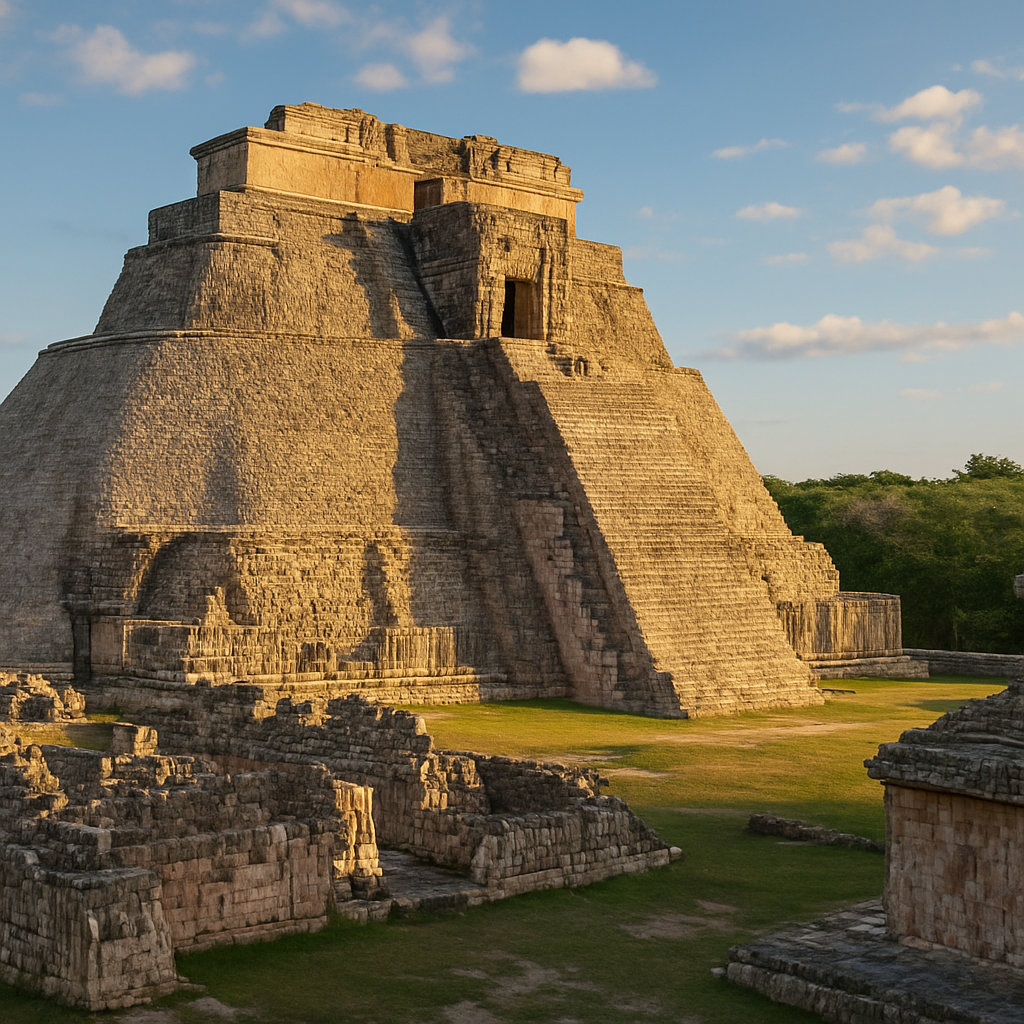
Uxmal at Opening
Show up the moment the gate opens at 8 AM and you'll have the Pyramid of the Magician and the Governor's Palace nearly to yourself. UNESCO listed it in 1996; INAH runs it; the Puuc-style stonework is the most refined of any Maya site you can reach from Mérida. The carvings on the Nunnery Quadrangle reward 30 minutes of close looking. Bring water — there is no shade and the heat builds fast.
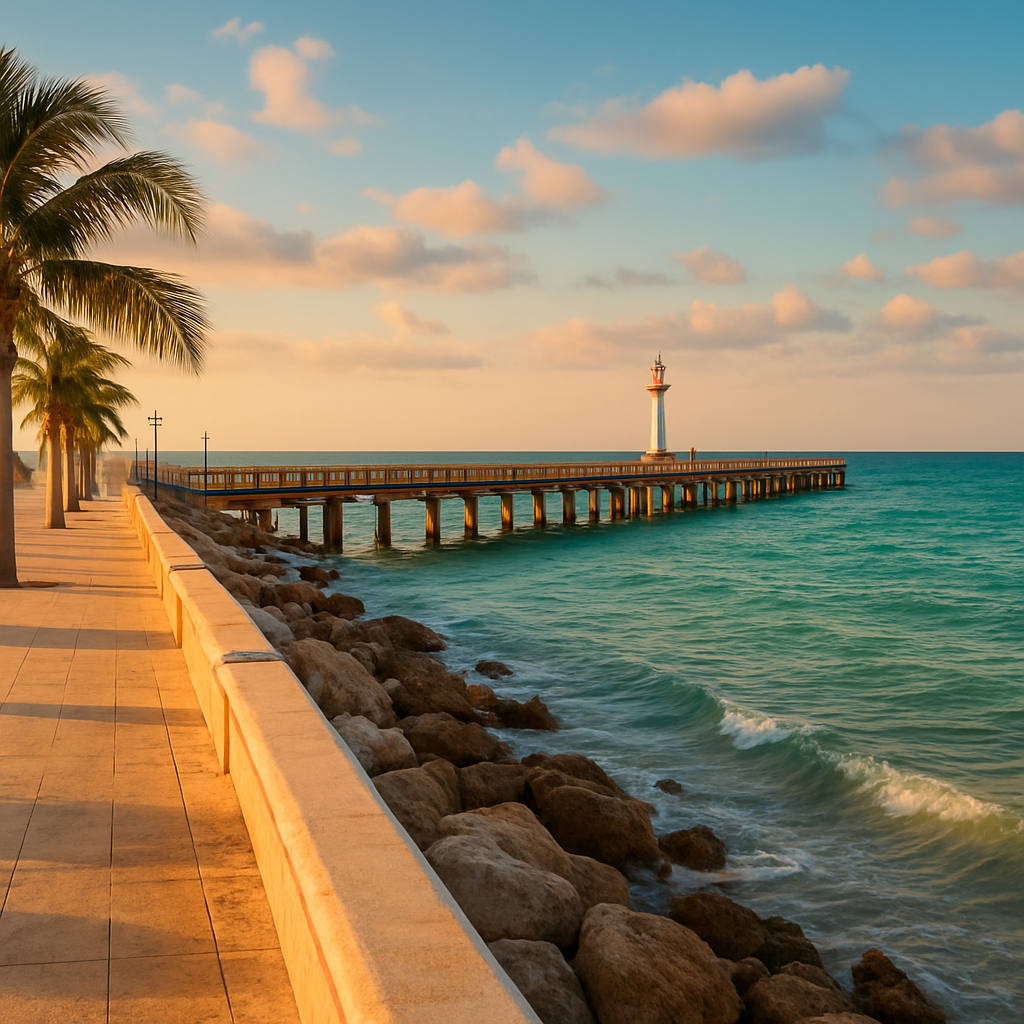
Sunday Seafood on the Progreso Malecón
Forty minutes north on the colectivo and you're on a long flat malecón with palapa restaurants stacked along the waterline and the longest pier in the world stretching into impossibly turquoise Gulf water. Sunday is the day — Meridanos drive up for ceviche, micheladas, and pescado a la talla under thatched roofs. Walk past the cruise-ship cluster to the far west end for the better tables and the quieter water.
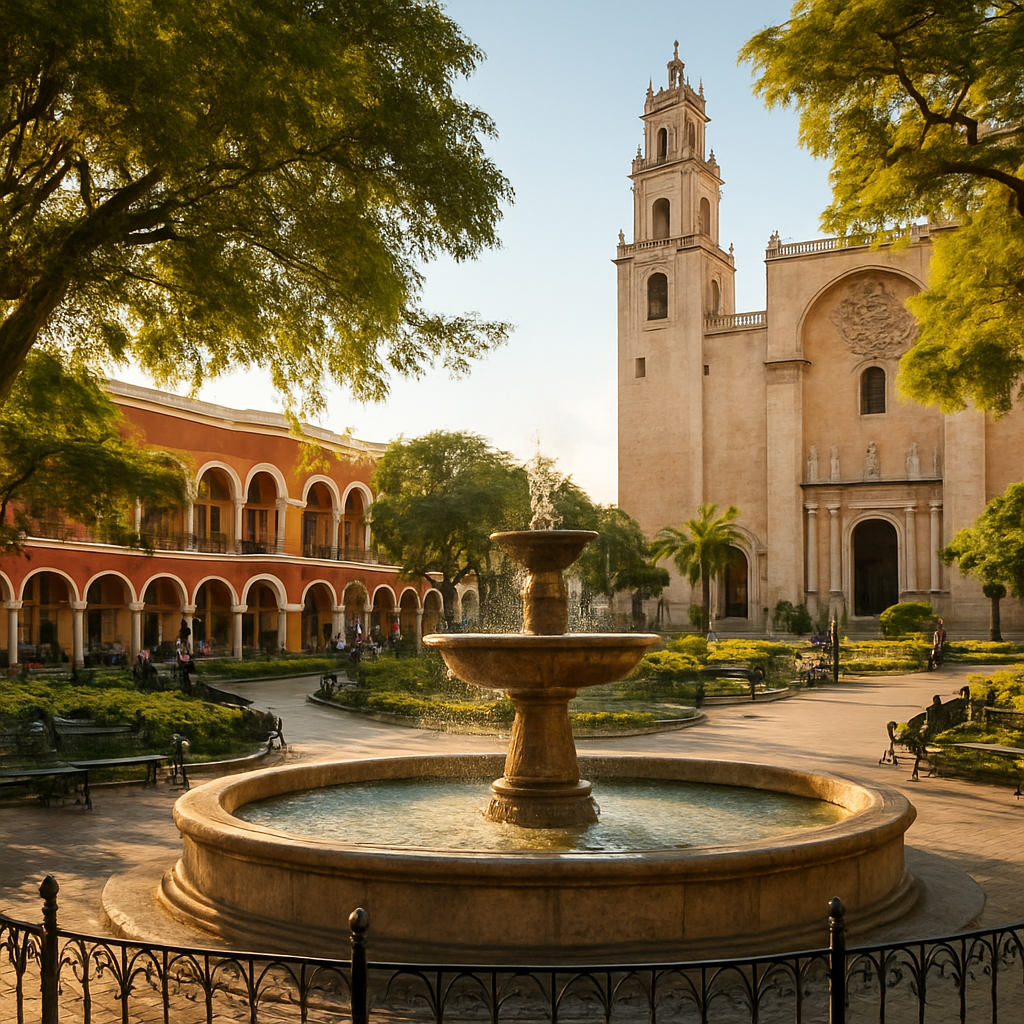
Thursday Serenata Yucateca at Santa Lucía
Every Thursday since 1965, Parque Santa Lucía hosts a free concert of Yucatecan trova — romantic guitar serenades performed under the laurels in a 16th-century plaza. Get there by 8:30 PM, grab a chair if you can, and order a margarita from one of the surrounding terraces. It is the most romantic free thing you can do in this city, and the music has barely changed in 60 years.
The places I actually send people to
Advice that fits how you travel
Mérida is one of the easiest solo trips in Latin America for a gay traveler — and one of the cheapest. Centro is walkable, the heat forces you into a slower rhythm, and the bars on Calle 60 cluster within a four-block radius, which means you can roll out of Pride Bar Mérida, drift over to Bahia Bar, and end the night at Catrín without ever calling an Uber. Solo travelers typically run MXN 2,500–4,000 per day on the moderate tier — a boutique room in Centro, mezcal flights at La Fundación, and a cenote tour with change to spare.
The apps work — Grindr, Scruff, and Hornet all populate generously in Centro and along Paseo de Montejo, and the expat lean is real. The better play, though, is Mercado 60 on a Friday or Saturday night, where the live music covers any awkwardness and half the tables are queer locals sharing tlayudas. A reader told me to ask the bartender at Cubaro to add me to the local LGBTQ+ WhatsApp groups — that's how you find out about the hacienda pop-up parties that don't make it onto Instagram.
For your base, I'd point a solo traveler at Hotel Hacienda Mérida VIP or Casa Olivia in Centro — both adults-only, both gay-welcoming, both walkable to everything. Santa Ana is the move if you want to wake up somewhere quieter and stroll into Centro for dinner. Pro tip: the walk back from Bar 1900 at 2 AM is genuinely safe — Mérida's Level 1 advisory rating from the US State Department is earned — but stick to Uber or DiDi after midnight if you've had a few. Door-to-door, no negotiating with street taxis, no problem.
Mérida might be the most underrated romance city in Mexico. The colonial bones, the courtyard hotels, the way the heat lifts at dusk and the bougainvillea spills over every other wall — it's built for couples who want texture without the resort packaging. Same-sex couples can book a one-bed at any boutique in Centro or on Paseo de Montejo without a flicker, and the bigger luxury haciendas — Chablé Yucatán, Hacienda Temozón, Hacienda Xcanatún — host same-sex weddings as a regular Saturday. PDA is a non-event in tourist Centro, around Parque Santa Lucía, and along Paseo de Montejo; dial it back in Mercado Lucas de Gálvez and the outlying colonias.
For the date night I'd actually run: book the courtyard pool table at Merci, walk to Parque Santa Lucía for the Thursday Serenata Yucateca (free, has been running every Thursday since 1965, and the trova is genuinely cruisy if you sit on the right side of the plaza), then end at Cubaro on Paseo de Montejo for cocktails. If you've got a bigger night planned, Kuuk's tasting menu in García Ginerés is the regional fine-dining benchmark, and chef Roberto Solís at Néctar has been refining the same idea since 2007 — both worth the splurge.
For accommodation: Rosas & Xocolate on Paseo de Montejo is the most photogenic gay-welcoming property in the city, with a rooftop pool that delivers at sunset. The Diplomat in Santiago is gay-owned and gay-operated, which sometimes matters and almost always shows. And if you want the once-in-a-lifetime move, Coqui Coqui Mérida is a single-suite residence above the perfumery — booking the only room in a hotel is a particular flex. Pro tip: Sunday Bici-Ruta on Paseo de Montejo from 8 AM to noon is the most romantic free thing you can do in this city. Rent two bikes at the Remate, grab marquesitas, see half the queer expat community doing the exact same ride.
Mérida is one of the easiest family destinations in Mexico for LGBTQ+ parents — full stop. As of 2026, joint adoption by same-sex couples is legal under Mexican federal law, Yucatán recognizes self-ID gender marker changes thanks to a 2023 reform, and the legal framework here earns my 9.5 on Legal. LGBTQ+ families with two moms or two dads check into hotels, register kids at restaurants, and explore the ruins without anyone making a face. The deeply Catholic, deeply traditional culture of the city expresses itself as warmth toward families — any families — more than as judgment.
Practical kid logistics are excellent in Centro. Sidewalks are uneven (colonial cities are colonial cities), so a sturdy stroller with bigger wheels beats an umbrella stroller. Most boutique hotels welcome children but a few of the adults-only properties don't — Hotel Hacienda Mérida VIP, Casa Olivia, and The Diplomat are 18+ only, so book Casa Lecanda, Casa Azul, or Rosas & Xocolate instead, or look at apartment rentals in Santa Ana for more space. Restaurants are uniformly kid-tolerant; La Chaya Maya with the women patting tortillas in the dining room is genuinely magical for kids, and Mercado 60's open-air food hall lets everyone order what they want.
For activities: the Gran Museo del Mundo Maya in the north of the city is built around the sacred ceiba tree and works for school-age kids — go before doing Uxmal and the pyramids will land harder. Sunday Bici-Ruta on Paseo de Montejo from 8 AM to noon is gold for families with bikes; the Monday-night Vaquería at the Palacio Municipal is free, live, and kids love watching the jarana dancers. Day-trip the cenotes near Valladolid rather than the bigger commercial parks — Cenote Zací is in the town center and easier with little ones. Skip the May–September window if you can; the heat is genuinely punishing for kids. November through March is when this city is built for the visit.
What Mérida actually costs
Flights, visas, and the first 30 minutes
Airport: Mérida International Airport (MID), about 20 minutes south of Centro. As of 2026, MID handles roughly 20 direct routes — the workhorse connections being Mexico City, Houston, Dallas, Miami, and Toronto, with seasonal lift from JFK and a handful of Latin American hubs. Flight times: Mexico City is about 1h 45m, Miami 2h, Houston/Dallas 2h 30m, JFK around 4h 15m.
Skip Cancún and fly direct. I'll save you the lecture: don't connect through CUN and drive four hours on the Cuota. MID puts you in Centro in 20 minutes flat. You'll thank yourself when you're nursing a michelada at Mercado 60 instead of fighting toll-road traffic in a rental car.
Visa requirements (as of 2026): US, UK, EU, Canadian, and Australian passport holders typically don't need a visa for stays up to 180 days. You'll generally be issued an FMM tourist permit on arrival — keep it in your passport, you'll need it to leave the country. Always confirm with the Mexican consulate before you fly, as entry rules can change.
Airport to city:
Authorized airport taxi — MXN 300–400, 20–25 minutes. Buy the ticket at the official kiosk inside the terminal. Flat fare to Centro, no negotiation, no surprises.
Uber / DiDi — MXN 150–250, 20–30 minutes. Both are legal in Mérida and there's a designated rideshare pickup zone outside the terminal. Cheapest option and the one I use.
ADO bus to Centro — MXN 130, 30–40 minutes. Hourly service, comfortable, fully air-conditioned, drops you near Paseo de Montejo. Good if you're traveling light and on a budget.
Private transfer — MXN 600–900, 20 minutes. Pre-book through your hotel or a local operator. Worth it for groups, late arrivals, or if you've got a hacienda check-in 40 minutes outside the city.
Pro tip: Pull cash from the Bancomer ATM in the arrivals hall before you leave — taxi drivers and ADO ticket counters take pesos cleanly, and the airport rate is generally fair. Don't change money at the kiosks unless you enjoy being fleeced.
Traven's seasonal breakdown
The questions everyone asks
Is Mérida actually safe for gay travelers?
Can same-sex couples book a one-bed room without issue?
Do I need to speak Spanish?
How does Mérida compare to Mexico City for nightlife?
Do I need a visa?
When is the absolute worst time to visit?
Should I rent a car?
Screenshot this before you go
So should you actually go?
Go. Mérida is one of the easiest, safest, most genuinely livable trips in Latin America for LGBTQ+ travelers right now, and it's still operating below the radar of the Cancún-Tulum machine. The legal framework is rock solid as of 2026, Centro is walkable and welcoming, the food scene punches three weight classes above the city's size, and the gay nightlife on Calle 60 is small enough that you'll see the same faces twice in a night and end the week with a WhatsApp group full of new friends. Skip May and September, fly direct into MID, book a room in Centro or on Paseo de Montejo, and give it a week. You'll be planning your return before you leave.
Sources & Resources
Official links we reference when compiling this guide. Last verified 2026-05-03.
- CAPASITS Mérida (HIV/STI Health Services)
- Comisión de Derechos Humanos del Estado de Yucatán (CODHEY)
- Comisión Nacional de los Derechos Humanos (CNDH)
- Embassy of the United States in Mexico — LGBTQI+ Resources
- Indignación A.C. — Yucatán Human Rights
- Letra S — National LGBTQ+ Health Advocacy
- Pride Mérida (Marcha del Orgullo LGBT+ Yucatán)
- Secretaría de Fomento Turístico Yucatán
- Yaaj México — LGBT Mental Health