
Puerto Vallarta didn't chase a scene — it grew one over fifty years, and now the Pacific has competition for the best thing on Banderas Bay.
Puerto Vallarta is the gay beach town that actually delivers on the promise. Not the sanitized, corporate-resort version of "welcoming" where a hotel slaps up some seasonal decor and calls it progress — the real thing, built over decades by gay business owners, expat couples, drag performers, and locals who made the Zona Romántica into one of the most genuinely gay neighborhoods in the Western Hemisphere. You walk down Lázaro Cárdenas on a Wednesday afternoon and same-sex couples are holding hands like it's nothing, because here it IS nothing. That's not marketing. That's forty years of showing up.
There's a reason my Traven-Dex score sits at 8.8 for this city. The legal framework is rock solid — Mexico legalized same-sex marriage nationwide, and Jalisco's protections go further with self-ID gender recognition. But what makes PV special isn't the law. It's the weight of all those years. Archie's Wok has been feeding this community since 1986 — opened by John Huston's former personal chef, no less. Paco's Ranch has been packing a dance floor since the late '90s. Apaches on Olas Altas has been pouring drinks since before most of the current tourists were born. These aren't pop-up ventures riding a trend. They're institutions, and they give the neighborhood a gravity you can feel.
The physical setting helps. Banderas Bay curves around you like an arm, the Sierra Madre jungle rises behind the city, and the sunsets over the Pacific are so absurdly beautiful they'd be cliché if you weren't standing there watching one with a michelada in your hand. The Malecón boardwalk connects downtown to the Zona Romántica — a one-kilometer walk past commissioned sculptures that doubles as the Pride parade route every May. The beach culture is central: the Blue Chairs section of Playa Los Muertos has functioned as the gay beach for over two decades, and Mantamar's pool parties are a full-production daytime event. I gave it a 9.0 on Chill because the comfort level here isn't something you have to seek out — it finds you.
A word of context: the US State Department rates Jalisco at Level 3 due to cartel activity elsewhere in the state. The tourist corridor — the Zona Romántica, the Malecón, the Hotel Zone — operates at a fundamentally different risk level than rural Jalisco. Use the same street smarts you'd use in any mid-size beach city, stick to Uber over street hails at night, and you'll be fine. PV isn't pretending to be something it's not. It's a Mexican beach town with real neighborhoods, real food, and a gay scene that was built from the ground up by people who live there. That combination is rarer than you think.
The stuff your travel guide buries on page 47
Marriage & Family: Same-sex marriage has been legal in Jalisco since 2016, and PV's civil registry is genuinely accustomed to processing weddings for international same-sex couples — the tourism board even has a dedicated weddings team for this. Get your documents translated and notarized before you arrive, not after. Same-sex adoption is also legal under Mexican federal law. Civil unions are recognized.
Anti-Discrimination & Gender Identity: Mexico's anti-discrimination protections are classified as limited — federal law covers some categories through CONAPRED (the national anti-discrimination council), but enforcement varies by state and municipality. Gender identity operates on a self-ID basis at the federal registry level, and Jalisco passed its own gender identity law in 2018. There is zero criminalization of same-sex conduct anywhere in Mexico.
The Cultural Reality: The further you get from the Zona Romántica, the more conservative the vibe — not hostile, but noticeably more traditional Catholic Mexico. Within the tourist corridors, you're operating in one of the most openly welcoming zones in Latin America. Outside them, social norms shift. This isn't a contradiction — it's a big country with a specific progressive pocket, and that pocket is the reason you're coming here.
PDA Comfort: In the Zona Romántica and on Playa Los Muertos, same-sex couples display affection routinely without incident. It's high-comfort, full stop. On the Malecón and in Centro Histórico, PDA is visible and broadly tolerated but may draw occasional looks, particularly from older residents. The Hotel Zone and Marina Vallarta are impersonal resort corridors — staff and guests are broadly accepting, but you'll feel less community energy. Residential neighborhoods outside tourist zones are low-moderate comfort — conservative Catholic norms are more prevalent, same-sex PDA isn't normalized, and discretion serves you well.
Pro tip: Many gay bars in the Zona Romántica don't charge cover but do have drink minimums. Apaches Bar on Olas Altas is famously the pre-game spot because drinks are cheap and strong, and the patio fills up with people building courage for the more expensive clubs later.
What it actually feels like on the ground
Holding Hands / Walking Together: Within the Zona Romántica and on Playa Los Muertos, you're in one of the safest environments in Latin America for LGBTQ+ travelers. Local police are present, the community is large and visible, and harassment incidents are extremely rare compared to surrounding regions of Mexico. On the Malecón, same-sex couples walk visibly with no reported issues. Outside tourist corridors — further inland, residential neighborhoods — exercise the kind of discretion you'd use in any unfamiliar, more conservative area.
Hotel Check-In: Zero issues at any property in the tourist zones. LGBTQ+-identified hotels like Almar, Casa Cupula, and Hotel Mercurio are built for this. Mainstream hotels in the Hotel Zone and Marina Vallarta handle same-sex couples without blinking — Puerto Vallarta's hospitality industry has served queer travelers for decades, and it's deeply embedded in staff training.
Taxis & Transport: This is where you need to pay attention. Taxis at 3am after Paco's Ranch closes are where people get careless — always use an app like Uber or InDriver rather than flagging random taxis, and never get in a cab that stops unsolicited outside a gay bar. This is basic Mexico city safety, not PV-specific paranoia, but it bears repeating. During the day, licensed taxis from official stands are perfectly fine. The Zona Romántica is entirely walkable — you never need a taxi between the beach, the bars, and the club strip.
Beaches & Public Spaces: The Blue Chairs section of Playa Los Muertos is an established, visible LGBTQ+ gathering zone — you'll see same-sex couples, drag performers, and community vendors all operating openly in broad daylight. The rest of Playa Los Muertos and the Malecón are mixed public spaces where you'll be comfortable. Avoid isolated stretches of beach after dark.
Late Night: The Zona Romántica bar strip — Olas Altas, Ignacio Vallarta, Lázaro Cárdenas — is well-lit and heavily trafficked until 3-4am on weekends. Stay within the lit, populated streets. Use app-based transport home. Don't walk to outlying neighborhoods alone at 4am after drinking — this applies to everyone, not just queer travelers.
Trans Travelers: Mexico permits legal gender marker changes via self-ID, and Jalisco's 2018 gender identity law reinforces this. Puerto Vallarta's LGBTQ+-facing venues are generally inclusive of trans visitors. Outside the Zona Romántica, trans travelers — particularly trans women — report higher rates of public staring and occasional verbal harassment. Access to explicitly trans-inclusive public restrooms remains inconsistent outside queer-identified venues. For health resources, CENSIDA-affiliated clinics in PV are genuinely excellent compared to most Mexican cities.
Verbal Harassment Risk: Very low within tourist corridors. Not zero outside them. The most commonly reported issue is catcalling of visibly gender-nonconforming individuals in non-tourist neighborhoods — not physical threats, but unwanted attention. Stay in the zones you came for and you'll be fine.
Health & PrEP Access: If you're accessing HIV PrEP or treatment while in PV, SETAC (local health services) and CENSIDA-affiliated clinics can help. Don't assume your resort concierge knows anything useful about this — go directly to community health resources. Letra S is another reliable resource for LGBTQ+ health and rights information in Mexico.
The queer geography
Zona Romántica (Colonia Emiliano Zapata)
This is it. The center of gravity. Officially called Colonia Emiliano Zapata, the Zona Romántica is Puerto Vallarta's established queer district, and it's not a token strip of bars with a rainbow crosswalk — it's a full neighborhood, roughly six blocks deep, where gay-owned restaurants, hotels, bars, shops, and services form the majority of the commercial landscape. Olas Altas is the main artery, and most of the action branches off it. Paco's Ranch on Ignacio Vallarta has been the anchor gay nightclub for over twenty years — two floors, nightly drag shows, open past 3am. La Noche Bar fills up before sunset. Apaches Bar is the pre-game patio where the night begins because the drinks are cheap and the people-watching is world-class.
Garbo Bar is a tiny, beautiful piano bar on Púlpito Street that attracts an older, more sophisticated crowd who want real conversation and live piano over thumping club music — if you're over the club scene or just want somewhere to actually hear yourself talk, this is your place, and the mezcal de olla selection is outstanding. The Palm Cabaret and Bar on Olas Altas is the place for actual entertainment — full drag shows, live bands, cabaret acts — and it books up, so reserve online ahead of time or you'll be standing outside with your rosé wondering what went wrong. Act II Entertainment Stages on Insurgentes runs three separate performance spaces under one roof, including The Red Room Cabaret — you can see a drag cabaret, a singer-songwriter set, and a comedy show in the same night without moving more than fifty feet.
During the day, the scene shifts to Playa Los Muertos and the legendary Blue Chairs section — identifiable by the blue umbrellas and chairs managed by the adjacent resort. This has been Puerto Vallarta's LGBTQ+ daytime gathering point for over twenty years. Right next door, Mantamar Beach Club brings design-forward cocktails and sushi to the same stretch of sand. You can migrate between them in minutes. Los Muertos Brewing, tucked just off the main strip, is a genuinely excellent craft beer taproom and a perfect afternoon pitstop between beach and dinner that won't leave you wrecked before 10pm.
Centro Histórico / El Centro
The older downtown core north of the Zona Romántica, connected by the Malecón boardwalk. This is where you'll find Café des Artistes, Los Muertos Pier, the Church of Our Lady of Guadalupe, and a more mixed local-tourist crowd. It's not specifically queer, but it's not unfriendly — it's traditional Puerto Vallarta with cobblestone streets, art galleries, and restaurants that have been feeding people for decades. LGBTQ+ visitors explore here by day and migrate south to the Zona Romántica at night. The Malecón sculpture walk is the pedestrian connector between the two zones, and it's gorgeous at sunset.
Conchas Chinas
The hillside residential area roughly 1 km south of the Zona Romántica, perched above the bay with some of the best views in the city. Casa Cupula sits up here — a boutique hotel that's been LGBTQ+-welcoming for over twenty years. It's quieter, greener, and a taxi ride from the club strip, which is either a feature or a bug depending on your energy level. Good for couples who want proximity without the bass line.
Purple Roofs curates a comprehensive directory of LGBTQ+-owned and welcoming accommodations, community centers, and venues throughout Mexico, with extensive Puerto Vallarta listings. Purple Roofs LGBTQ+ Mexico Directory.
Misterb&b's community platform connects LGBTQ+ travelers with verified local hosts and provides peer-reviewed guides to gay bars, nightlife districts, and LGBTQ+-friendly neighborhoods in Puerto Vallarta. Misterb&b Puerto Vallarta.
The Advocate publishes regularly updated guides to LGBTQ+-friendly travel destinations worldwide, including feature articles on Puerto Vallarta's beaches, Pride celebrations, and queer cultural spaces. The Advocate Travel & Destinations.
The experiences worth rearranging your itinerary for
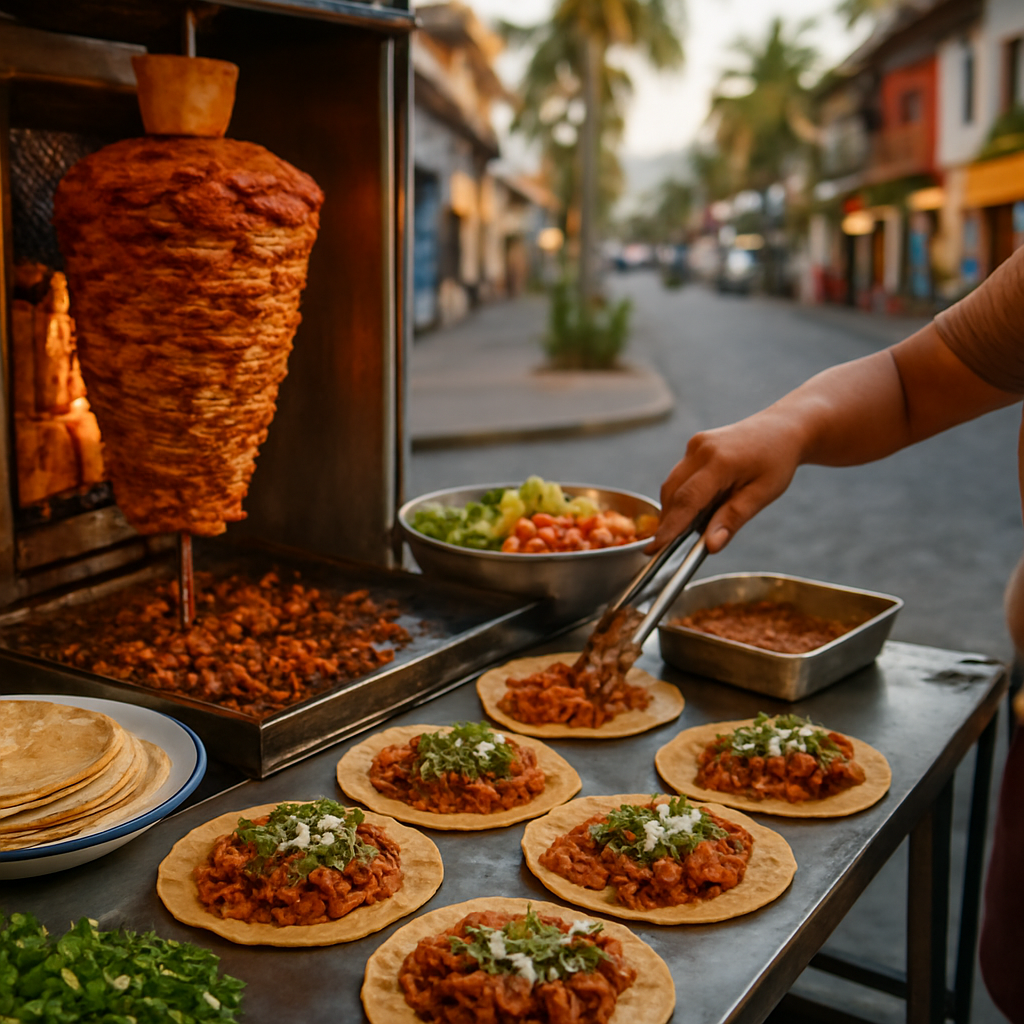
Tacos de Marlin at Midnight on Olas Altas
There's a street cart that materializes on Olas Altas around midnight — smoked marlin, pickled onion, a squeeze of lime, roughly 25 pesos a taco — and it is the defining late-night food experience of Puerto Vallarta. This isn't a novelty eat. Tacos de marlin are a PV-specific specialty you won't find done this well anywhere else in Mexico. The cart's location shifts slightly but it's always somewhere on the main strip between 11pm and 2am. Get three. You'll want a fourth.
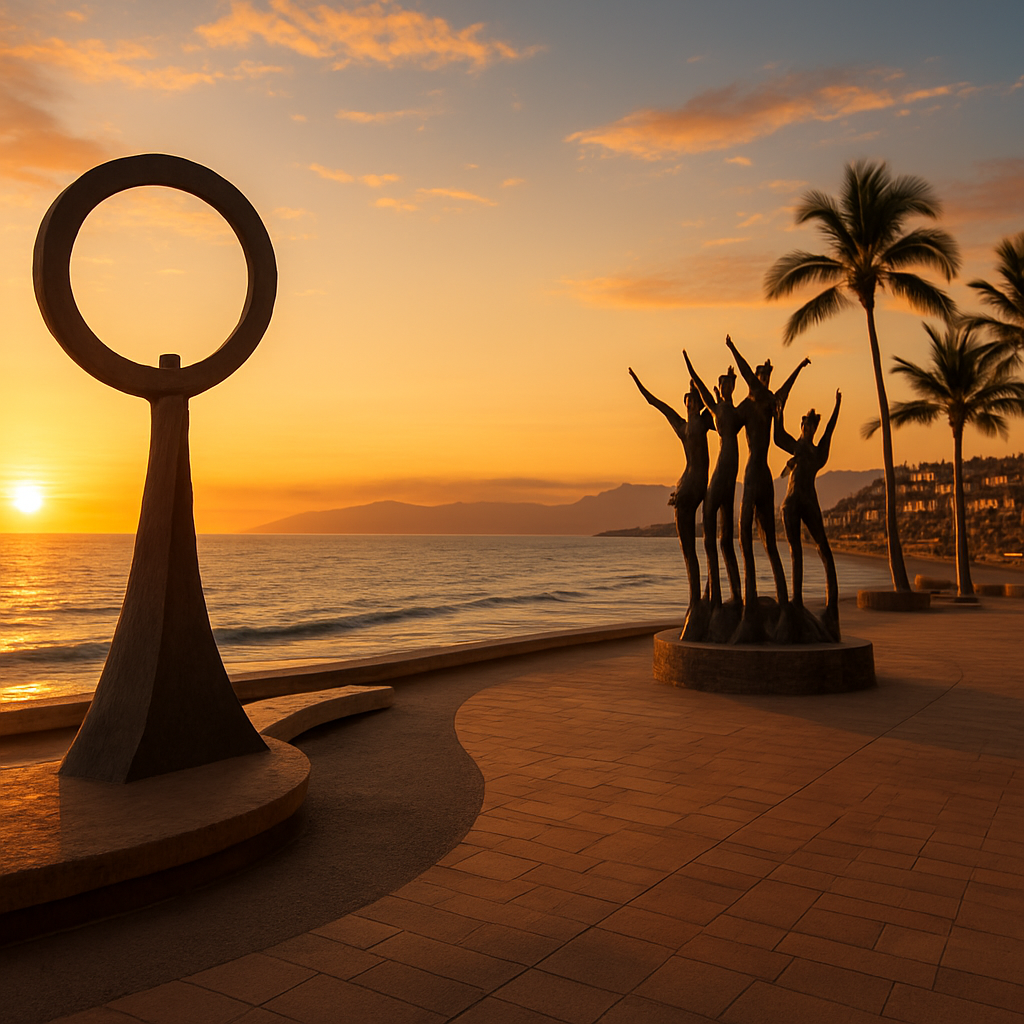
Malecón Sculpture Walk at Sunset
The 570-meter waterfront promenade connecting Centro Histórico to the Zona Romántica is lined with permanent sculptures by Mexican and international artists — Alejandro Colunga's surreal chairs, Ramiz Barquet's dancing figures, Jim Demetro's sandcastle boy. Walk it around 6:30pm when the light goes gold, the Pacific turns copper, and the evening social parade begins. It's free, it takes 30 minutes, and it's one of those walks where you stop seven times to photograph things you weren't expecting. Budget longer if you have curious kids.
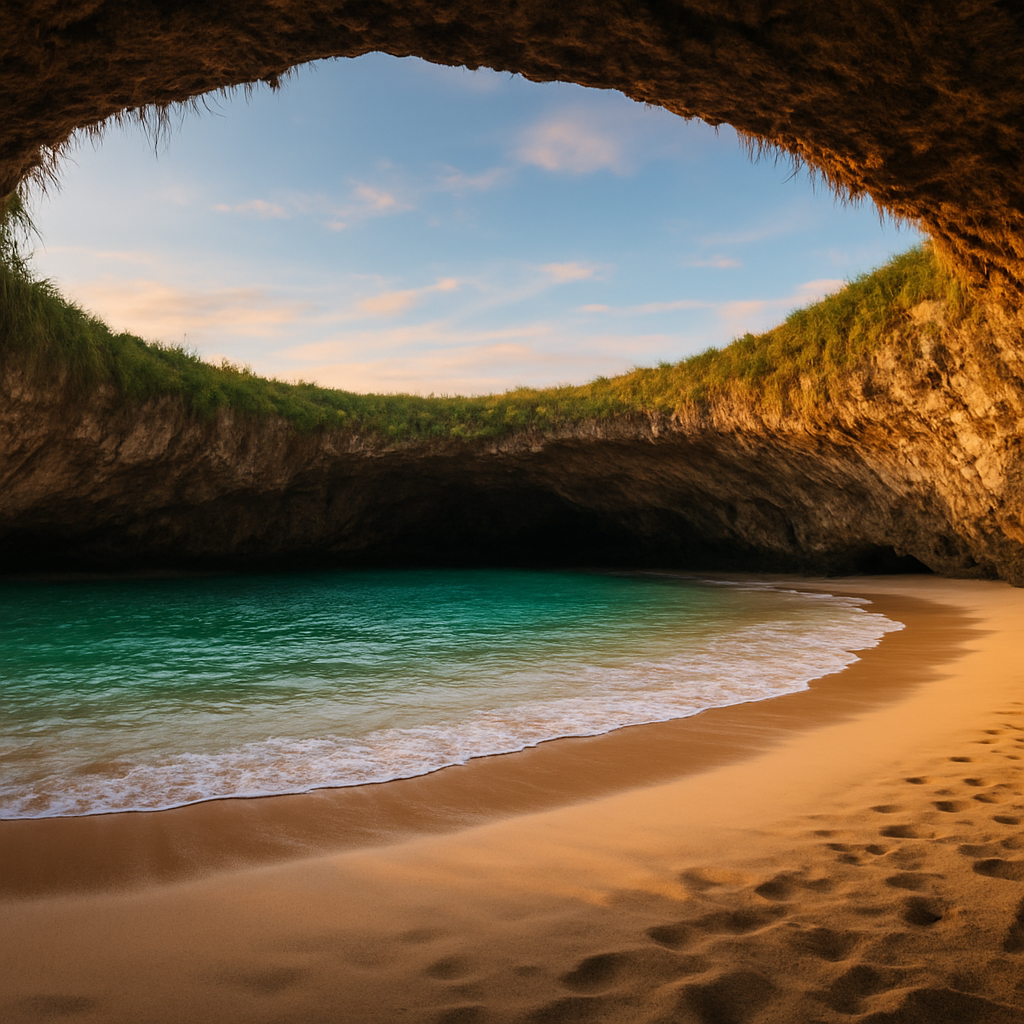
Islas Marietas and Playa del Amor
A UNESCO Biosphere Reserve in Banderas Bay, about 45 minutes by boat from PV's marina. The main draw is Playa del Amor — a beach enclosed inside a collapsed volcanic crater that you reach by swimming through a rock arch. Daily visitor quotas are enforced by SEMARNAT, so you'll need a licensed tour operator (MXN 1,200–1,900/person) and should book at least a few days ahead in high season. The snorkeling in the surrounding waters is excellent — blue-footed boobies nest on the rocks and manta rays cruise below. This is the single most spectacular day trip within reach of the city.
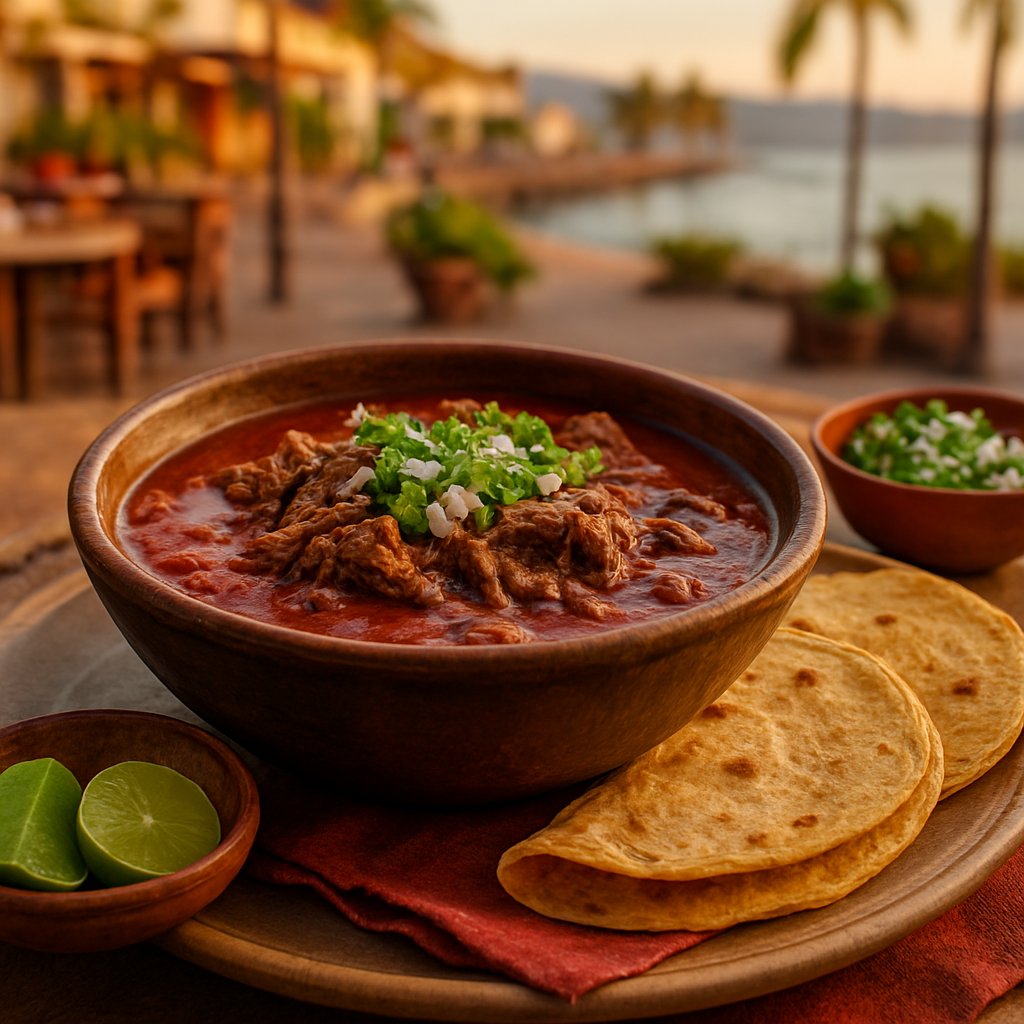
Birria de Res for Breakfast
Jalisco's signature dish is birria de res — slow-braised beef stew served with consommé for dipping, stacked onto fresh tortillas. It's available throughout the Zona Romántica and in El Centro, and eating it for breakfast like locals do is one of the more transformative food experiences available in this city. The beef falls apart, the broth is complex and spicy, and the whole thing costs less than a resort smoothie. Find a spot where the line is long and the tables are plastic.
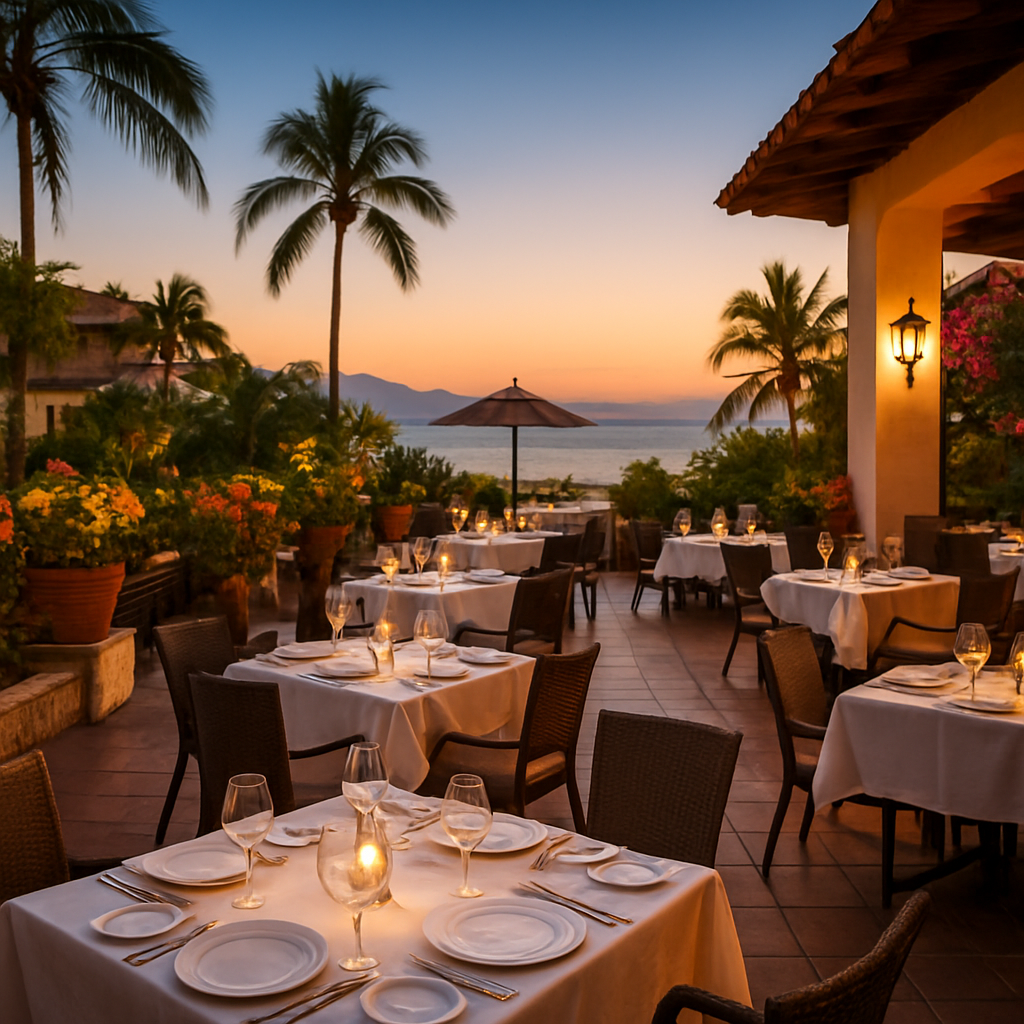
Café des Artistes Garden Terrace
Chef Thierry Blouet opened this place in 1989, and it's been one of Mexico's top fine-dining restaurants for over three decades — Wine Spectator Award of Excellence, the works. The garden terrace at night, with the Centro Histórico lit up around you, is the kind of dining experience that justifies a nicer shirt. French-Mexican tasting menus run MXN 600–1,400 per person. The Constantini bar annex is worth a visit even if you're not eating — order something from the mezcal list and pretend the rest of the week's meals won't be tacos.
The places I actually send people to
Advice that fits how you travel
Puerto Vallarta is one of the easiest solo trips in Latin America for LGBTQ+ travelers, and the reason is simple: the Zona Romántica is compact, walkable, and socially porous. You'll meet people — at Blue Chairs by noon, at Apaches Bar by 8pm, at Paco's Ranch by midnight. The app culture is active (Grindr, Scruff, and Tinder all have dense local and tourist user bases), but honestly, the neighborhood itself does the work of connecting people without needing a screen. Sit at a bar on Olas Altas for twenty minutes and someone will start talking to you. That's not a promise — it's a pattern.
Budget-wise, solo PV is remarkably affordable. Hotel Mercurio runs from MXN 850/night, one block from the beach, with a communal courtyard that functions as a built-in social space. Street food — tacos de marlin, birria, fresh ceviche from beachside vendors — means you can eat extraordinarily well for MXN 250–380/day. Local buses cost almost nothing. A full solo day — beach, food, drinks, one paid activity — runs MXN 1,200–1,600 at the budget tier. That's hard to beat anywhere with a scene this developed.
Safety for solo travelers is solid within the tourist corridors. The Zona Romántica is well-lit, heavily foot-trafficked until late, and has visible police presence. The one rule: use Uber or InDriver at night, not street taxis, especially after the clubs close. Walk within the lit blocks, don't wander into unfamiliar residential areas alone at 4am, and keep your phone in your front pocket. Standard stuff, not PV-specific, and it shouldn't keep you from coming here alone. This is a city built for exactly that.
Puerto Vallarta doesn't ask same-sex couples to negotiate their comfort — at least not in the Zona Romántica. Holding hands on Olas Altas, kissing over cocktails at Mantamar Beach Club, slow-walking the Malecón at golden hour with your person — all of it happens here without a second glance. The city has been hosting queer couples for decades, and it shows in the ease of everything from hotel check-in to restaurant seating. This is one of the rare places where you can fully stop thinking about it.
For accommodation, Casa Cupula in Conchas Chinas is my pick for romance — hillside suites, Banderas Bay views, and a boutique scale that makes you feel like you're somewhere specific rather than just somewhere with a pool. If you want to splurge on beachfront, Almar Resort delivers the full resort fantasy with direct access to the gay beach section and the Mantamar Sky Bar for sunset drinks. Either way, book a table at Café des Artistes in Centro Histórico at least once — chef Thierry Blouet has been running one of Mexico's best fine-dining rooms since 1989, and the garden terrace at night is properly, embarrassingly romantic. Budget MXN 600–1,400 per person and don't skip the wine list.
For the quintessential PV couples moment: take a licensed tour to the Islas Marietas early in the morning, swim through the rock arch into Playa del Amor, and stand inside a beach hidden in a volcanic crater with the person you dragged across a continent. Then come back, shower, and eat tacos de marlin at midnight on Olas Altas. That's the trip right there.
Same-sex adoption is legal in Mexico, and Jalisco has recognized same-sex marriage since 2016 — your family's legal structure is on solid ground here. Within the tourist corridors, Zona Romántica businesses and beach vendors treat LGBTQ+ families with the same ease they extend to everyone else. You won't be made to feel unusual. The beach is the great equalizer, and Playa Los Muertos is calm, shallow in sections, and lined with genuinely family-friendly restaurants — La Palapa has been feeding families since 1959 and does a Pacific seafood spread that'll get your kids eating ceviche before they realize what's happening.
Practically speaking: the Zona Romántica is compact and walkable for older kids, but the cobblestone streets are a genuine obstacle for strollers — bring a carrier or plan for a workout. The Islas Marietas day trip is spectacular but requires swimming through a rock arch to reach Playa del Amor, so it's best for confident swimmers; the boat ride and snorkeling are fine for everyone else. The Malecón sculpture walk is free and endlessly distracting for curious kids — budget 45 minutes to wander it before dinner without anyone melting down.
One honest note on logistics: the Zona Romántica bar scene runs very late and gets loud on weekends. If you're traveling with young children, staying slightly outside the main club strip — Conchas Chinas or the hotel zone — gives you proximity to everything without the 3am bass line through your wall. Puerto Vallarta rewards family travel structured around mornings at the beach, afternoons on day trips, and early dinners at places like La Palapa or Nacho Daddy — leaving the nightlife hours to the people without a 7am wake-up call coming.
What Puerto Vallarta actually costs
Flights, visas, and the first 30 minutes
Airport: Puerto Vallarta is served by Licenciado Gustavo Díaz Ordaz International Airport (PVR), located approximately 7 km north of the city center. More than 50 cities worldwide have direct connections year-round or seasonally — PVR is one of the best-connected beach airports in Mexico, and getting here is rarely the hard part.
Major Direct Routes:
- Los Angeles (LAX): ~2h 30m
- Dallas/Fort Worth (DFW): ~2h 30m
- Houston (IAH): ~2h 15m
- Chicago (ORD): ~3h 30m
- New York (JFK): ~5h 00m
- Toronto (YYZ): ~4h 45m
- Mexico City (MEX): ~1h 30m
Visa Requirements: US, UK, EU, Canadian, and Australian passport holders need no visa. You'll complete a tourist card (FMM) on arrival or pre-register it online before you fly. Stays of up to 180 days are permitted — which is either reassuring or dangerous depending on how good the weather is when you arrive.
Airport to City:
- Licensed Airport Taxi: MXN 300–420 / 20–30 min. Buy fixed-rate tickets at the official kiosks inside the arrivals hall — no negotiating, no surprises. This is the safest option if you're arriving at an odd hour.
- Uber: MXN 180–270 / 20–30 min. Pick-up is permitted outside the terminal exit. Expect surge pricing during peak arrival windows, especially holiday weekends.
- Shared Shuttle Van: MXN 120–200 / 35–55 min. Multiple drop-off points across hotel zones. Cheapest option; slowest if your hotel is last on the route.
Pro tip: Do not accept rides from anyone approaching you inside the terminal. Book ground transport at the official kiosk or via the app — random drivers soliciting passengers outside baggage claim are not an option you want to explore.
Traven's seasonal breakdown
The questions everyone asks
Is Puerto Vallarta safe for LGBTQ+ travelers?
Do I need to speak Spanish?
Is it safe to hold hands in Puerto Vallarta?
How much should I budget per day?
When is Vallarta Pride?
Can I drink the water?
Is the Blue Chairs beach section free?
Screenshot this before you go
So should you actually go?
Go. Puerto Vallarta is one of the most complete LGBTQ+ travel experiences in the Americas — a place where the scene, the setting, the legal protections, and the cultural attitude all line up. You can hold your partner's hand on the beach, eat world-class seafood for twelve dollars, dance until 3 a.m. at a gay club that's been open longer than most marriages, and wake up to the Pacific. It works for solo travelers cruising the apps, couples looking for a romantic week, and families who want a beach vacation without a single awkward moment. The infrastructure is deep, the welcome is real, and the flight from most US cities is under three hours. I don't know what else you need to hear.
Sources & Resources
Official links we reference when compiling this guide. Last verified 2026-03-15.
- All About Puerto Vallarta — LGBTQ+ Travel Guide
- All About Puerto Vallarta — LGBTQ+ Travel Guide
- CENSIDA — Centro Nacional para la Prevención y Control del VIH/SIDA
- COESIDA Jalisco — State AIDS Council (HIV Testing & Treatment)
- CONAPRED – Consejo Nacional para Prevenir la Discriminación
- CONAPRED — Consejo Nacional para Prevenir la Discriminación
- GayPV.com — Puerto Vallarta LGBTQ+ Community Resource
- GayPV.com — Puerto Vallarta LGBTQ+ Community Resource
- Human Rights Watch — Mexico LGBTQ+ Rights Coverage
- Human Rights Watch — Mexico LGBTQ+ Rights Reports
- ILGA Latin America & Caribbean
- IMSS Jalisco — Instituto Mexicano del Seguro Social (Health Services)
- IMSS Jalisco — Instituto Mexicano del Seguro Social (Health Services)
- Inspira Cambio — LGBTQ+ Advocacy Mexico
- Inspira Cambio — LGBTQ+ Advocacy Mexico
- Letra S — LGBTQ+ Journalism & Advocacy (Mexico)
- Letra S — Salud, Sexualidad y SIDA (LGBTQ+ Health & Rights, Mexico)
- OutRight Action International — Global LGBTQ+ Human Rights
- Secretaría de Salud Jalisco — Jalisco State Health Department
- Vallarta Pride — Official Puerto Vallarta LGBTQ+ Pride Organization
- Vallarta Pride — Official Site
- Visit Puerto Vallarta — Official Tourism Board
- Visit Puerto Vallarta — Official Tourism Board