
San Miguel is the open secret that pulled a generation of artists up these cobblestones after the war — and the mezcal at sunset is why nobody ever got around to leaving.
San Miguel hits you at the knees first. Not metaphor — the cobblestones are uneven sandstone and the grade between El Jardín and the bars on Calle Mesones is steeper than it photographs, and you'll feel it in your calves before you feel it anywhere else. Then it hits you at the eyes: pink stone, impossible bougainvillea, and the neo-Gothic spires of La Parroquia de San Miguel Arcángel turning literally, actually pink about twenty minutes before sundown. This is a city that photographs itself better than you can photograph it, and the frustrating thing is nobody cares — half the Sunday crowd in the plaza is on a very good date and the other half is arguing about where dinner should be.
The open secret here is that this is one of the queerest small cities in Mexico and there's no rainbow-striped street to prove it. The gay social life runs through Instituto Allende-adjacent art history, Fábrica La Aurora gallery openings, and the rooftop at Hotel Matilda at the pink hour — a loose network of mixed rooms rather than a dedicated strip. That suits me. I gave it an 8.5 on Scene because what's here is genuinely warm and established, not because the infrastructure is massive. Mama Mia on Calle Umarán has been running live music since 1979, El Grito on a late Thursday is its own small celebration, and a rooftop night at Matilda with the right crowd is proof of concept — that's the scene, and it's enough.
The liberal-leaning expat population — largely American, Canadian, European — has built a social buffer you can feel. PDA around El Jardín is a non-event. Hotels check you in without a blink. Walk two blocks into Mercado Ignacio Ramírez or out toward the rural roads past Atotonilco and the register shifts sharply conservative and deeply Catholic — nobody causes a scene, but the energy changes and you read the room. That tension is actually part of what makes San Miguel interesting: it's not a bubble pretending to be Mexico, it's a genuinely Mexican town that happens to have been claimed, rebuilt, and partially gentrified by an arts-class international migration that arrived via the Instituto in the 1950s and never left.
My Traven-Dex lands this one at 8.1, and I gave it a 9.5 on Destination for reasons that show up on day one. The food has moved past traditional-only into something genuinely contemporary — Aperi's rotating Bajío tasting menu, La Parada's Peruvian-Nikkei ceviches, a Quince terrace dinner watching La Parroquia turn gold. The altitude will ambush you at 6,200 feet, the cobblestones will humble any pair of shoes you brought, and somewhere around day three you'll find yourself in a mezcal conversation with a sculptor who moved here in 2004 and you'll understand why nobody ever quite leaves.
The stuff your travel guide buries on page 47
Mexico is one of the more legally progressive countries in Latin America for LGBTQ+ travelers, and as of 2026 that framework applies in full to San Miguel de Allende. Matrimonio igualitario — same-sex marriage — is legally available throughout the country following Supreme Court jurisprudence, and Guanajuato state — historically one of the slower holdouts — codified it in December 2025. Joint adoption by same-sex couples is legal as of 2026. Same-sex intimacy has not been criminalized in Mexico's modern legal history.
Anti-discrimination protections exist at the federal level through CONAPRED, but street-level enforcement is uneven, particularly outside major metro areas. If you experience discrimination, CONAPRED is the national recourse — document dates, details, and witnesses. For international context on how Mexico's legal climate is evolving, ILGA World publishes current reporting on how Mexican states are actually implementing LGBTQ+ rights, and Human Rights Watch — Mexico tracks the broader rights landscape.
Gender-marker changes in Guanajuato still typically require a medical or judicial process as of 2026, which lags the administrative self-declaration models available in Mexico City and a handful of more progressive states. Trans travelers should expect ID that doesn't match presentation to generate more friction at official checkpoints here than in CDMX. For advocacy and updated policy tracking, Letra S is the leading national LGBTQ+ rights organization and a useful resource if something goes sideways.
Guanajuato state was one of Mexico's last holdouts on same-sex marriage recognition, ultimately compelled by Supreme Court rulings — that political backdrop typically means civil servants' attitudes can vary outside the Centro. In San Miguel itself you'll rarely encounter hostility, but paperwork and bureaucratic interactions in outlying colonias can feel like a different country. On the ground, observers describe the atmosphere as warmer than the statute book suggests. San Miguel has one of Mexico's largest expat populations — tilting liberal, heavily North American and European — which has created a social buffer that most of provincial Mexico lacks.
PDA around El Jardín, Calle Mesones, and Calle Hernández Macías generally goes unremarked. At Mercado Ignacio Ramírez or on rural roads toward Atotonilco, the cultural register is typically more conservative and deeply Catholic — the energy shifts, and discretion is the read. SMA's liberalism is real but not evenly distributed across the whole city.
One structural note for queer visitors: SMA has no dedicated LGBTQ+ health clinic. Expats and long-term travelers typically use private physicians in Centro or travel to León or Querétaro for specialized HIV/STI services and PrEP prescriptions. La Biblioteca Pública on Insurgentes is more than a library — it's the expat community hub, and its bulletin boards are covered in flyers for LGBTQ+-friendly events, walking groups, and gatherings happening that week. Check it on your first day in town.
Pro tip: San Miguel sits at approximately 1,900 meters (6,200 feet). Altitude typically hits harder than expected, especially combined with mezcal and the steep cobblestones between El Jardín and the Mesones bars. Pack shoes you can actually navigate a hill in after two drinks — this is not a stiletto town.
What it actually feels like on the ground
Holding hands in Centro Histórico. Around El Jardín, along Calle Mesones, and on the Calle Hernández Macías corridor, same-sex couples holding hands is typically a non-event. Terraces of expat-run restaurants generally read as comfortable and visibly mixed. In the Mercado Ignacio Ramírez, at the bus terminal, and in working-class colonias away from the tourist core, the register shifts — not hostile, but observably different in energy. Discretion there is practical, not political.
Hotel check-in in Centro. Same-sex couples booking one bed at Centro Histórico properties — Rosewood, Hotel Matilda, Belmond Casa de Sierra Nevada, Dos Casas — generally encounter zero friction. The hospitality sector is trained for an international, LGBTQ+-inclusive clientele. Budget hostels and family-run guesthouses outside Centro tend to be fine but less consistently polished.
Taxis and rideshare. Uber operates in San Miguel and is typically the simplest option, particularly late at night and for arriving at specific addresses you can't easily explain. A reader told me they stick to official sitio taxis from the ranks near El Jardín or book via app, and never hail random cabs regardless of the hour — solid advice. Confirm the destination with your driver before you get in.
Late night in Centro. The walkable area around El Jardín, Calle Mesones, and Calle Hernández Macías is where you want to spend your evenings. Stick to lit cobblestone streets, know your route back, and skip the highway-adjacent colonias after midnight. Calle Mesones after 10pm is typically SMA's loosest, most festive strip — mixed bars, reliably welcoming crowds, and cobblestone foot traffic too convivial to be hostile. The real threat here is usually a twisted ankle on wet cobbles, not a confrontation.
Parque Juárez after dark. The park has a relaxed, cruisy reputation among locals at night, but the lighting is genuinely poor — bring your wits, go with someone you trust, and don't leave valuables visible. Fine by day as a green lung; a different calculus after sundown.
Trans travelers. Guanajuato is socially more conservative than Mexico City. Acceptance within SMA's expat-influenced tourist zone — the bars on Mesones, the galleries at Fábrica La Aurora, the rooftop at Hotel Matilda — is generally high, but frontline service staff outside tourist corridors may have limited trans awareness. Venues requiring ID for entry can occasionally create friction if documents don't align with presentation — carry your passport or a clear photocopy to smooth those moments. For HIV testing, gender-affirming care, or specialist LGBTQ+-sensitive services, locals consistently recommend traveling to León or Querétaro; Letra S has documented provider networks with actual sensitivity training. The local IMSS clinic handles basics.
Verbal harassment. Rare in Centro, based on community reports. The expat concentration and tourism economy have filtered most of it out of the visible core. Machismo is observably more present in the markets and quieter callejones at night — most long-term LGBTQ+ residents I've spoken with advise reading the room outside the main commercial streets after midnight. The word joto is a historically derogatory slur now increasingly reclaimed by younger Mexican queer people — read context carefully before using it yourself.
If something happens. The tourist police who patrol Centro and El Jardín are generally more reliable for visitor-facing issues than municipal police and typically have basic English. For formal discrimination complaints, All Out offers international advocacy routing, and CONAPRED's national hotline (800-543-0033, toll-free within Mexico) is the recourse for hate incidents. Guanajuato state is classified Level 2 by the US State Department as of 2026 due to cartel activity in parts of the state — San Miguel itself is generally considered among the lower-risk areas within Guanajuato given its tourism economy, but petty theft happens near markets and bus terminals. Keep your phone pocketed on crowded corners.
The queer geography
Centro Histórico
The UNESCO-listed colonial core is the reason you came and the reason you'll stay. Pink-stone facades, cobblestones steep enough to make your calves hurt, the neo-Gothic spires of the Parroquia de San Miguel Arcángel catching the light at every sunset you'll ever care about. El Jardín Principal — the affectionate nickname is just El Jardín — is the city's living room: balloon vendors, mariachis, old men reading the paper, teenagers flirting, the occasional wedding procession spilling out of the church. On Sunday afternoons half the city seems to be on a very good date.
The gay social gravity centers two blocks away on Calle Mesones and parallel Calle Hernández Macías — the loose backbone of San Miguel's walkable LGBTQ+ social corridor. El Grito Bar draws the most reliably LGBTQ+-heavy nights in town, with a mix of Mexican locals and expats and an energy that shifts noticeably as the week builds toward the weekend. The rooftop at Hotel Matilda on Hernández Macías pulls a stylish, inclusive crowd at sunset — claim a spot facing La Parroquia before the sky goes pink. Mama Mia on Calle Umarán 8, operating since approximately 1979, is the closest SMA gets to a dedicated queer nightlife anchor — mixed crowd, but pulls a reliably festive LGBTQ+ contingent on weekend nights, especially after 11pm when the dancing shifts into a higher gear. For city services and tourism logistics, the Municipio de San Miguel de Allende is the official resource.
Colonia Aurora
A short walk northwest of Centro, Aurora is where San Miguel's arts economy actually lives. The anchor is Fábrica La Aurora on Salida a Celaya, a circa-1902 textile factory converted into a complex of roughly thirty galleries, antique dealers, design studios, and artisan workshops operating inside the original industrial shell — exposed brick, soaring ceilings, the ghost of looms. Saturday afternoons and first-Friday openings draw the creative, welcoming crowd that has made this city their own: gallery owners, expat painters, Mexican artists. Grab coffee in the complex's café between galleries and eavesdrop — the conversations here are better than most cities' newspapers.
Build at least one evening around an opening. It's where the artists, the architects, and the expat intelligentsia all end up in the same beautifully lit industrial room, and someone will invite you somewhere better before the night ends. Check the schedule posted at the main entrance because there's almost always something on. For national context on the organizations quietly doing LGBTQ+ advocacy work across Mexico, Letra S is the standing reference.
Colonia San Antonio
Just south of Centro, San Antonio is the residential sweet spot — lower rents than the historic core, leafier streets, courtyard-heavy architecture, and a concentration of boutique guesthouses in restored colonial houses. The neighborhood skews expat-artist-creative without tipping into Centro's tourist density. Ancha de San Antonio is the main artery — lined with restaurants, rooftop bars, and galleries where much of SMA's evening social life unfolds. Walk it in the morning with coffee: jacaranda trees, the occasional street dog, a panadería where the bread actually justifies the stop.
The real LGBTQ+ social circuit in SMA runs in part through rooftop bars along Ancha de San Antonio and private gatherings at boutique hotels here — invitations circulate via the Biblioteca Pública bulletin board and local WhatsApp groups rather than any public listing. One good connection at an Aurora opening will get you into San Antonio faster than any map. For international context on how Mexico's LGBTQ+ rights are evolving at the state level, ILGA World is the standing reference.
El Chorro and the Southern Fringe
South of the historic center, El Chorro is the old laundry springs and garden district — stone basins where water still runs, an artisan market, and a weekly Sunday tianguis that pulls organic produce vendors, local artisans, and a thoroughly mixed crowd. Nearby Parque Juárez is the city's green lung — jacaranda trees, a small pond, morning tai chi practitioners, birders with binoculars looking up into the canopy. The surrounding streets mix long-term expats in restored colonial homes with multi-generational Mexican families who've been on the block for a century. Comfort level for PDA here typically reads as moderate — fine, occasional second glances.
This isn't a nightlife neighborhood. It's where you go in the morning with coffee, or in the late afternoon when Centro gets loud and you want to watch San Miguel do its quieter register. The Sunday tamales at the tianguis are non-negotiable. For advocacy resources that connect Mexican LGBTQ+ rights work to the broader international picture, All Out maintains campaigns and reporting worth bookmarking before you travel.
The experiences worth rearranging your itinerary for
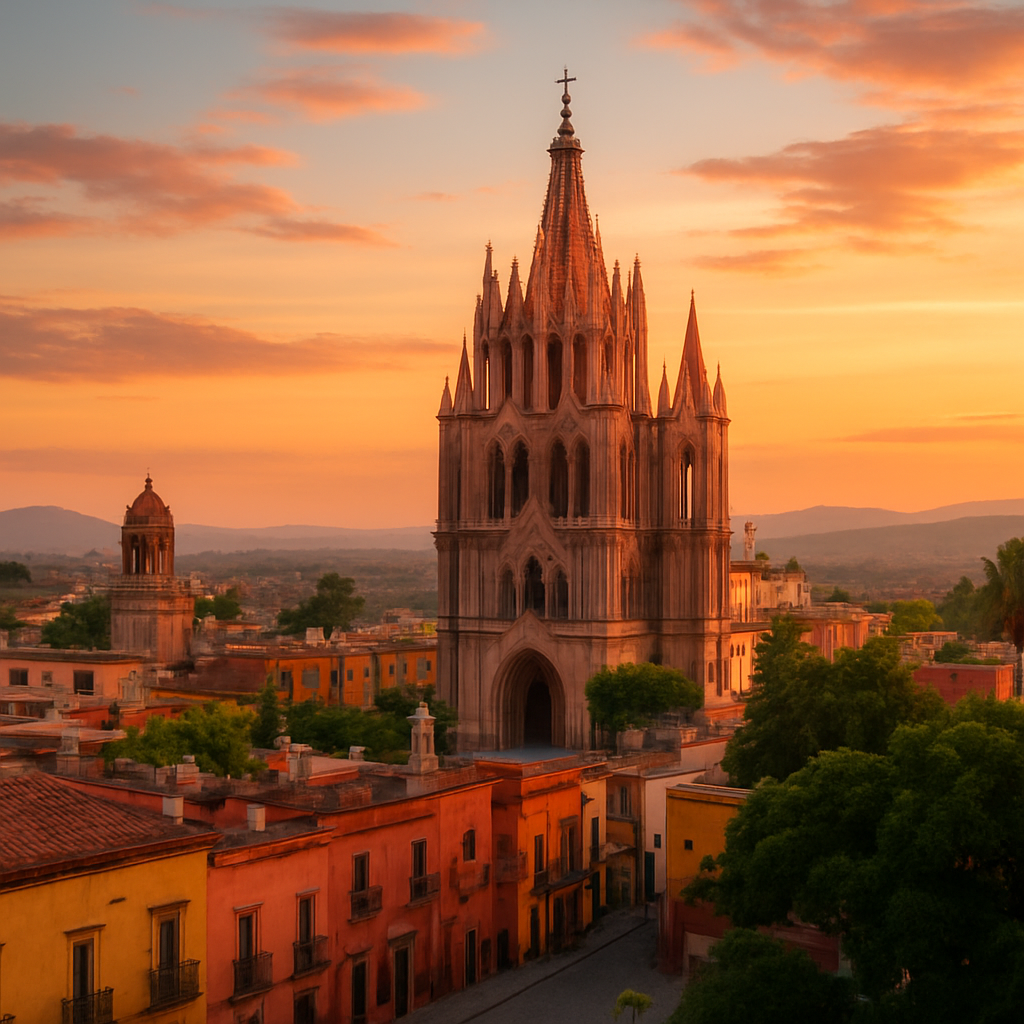
La Parroquia at Sunset from El Jardín
The neo-Gothic pink spires of La Parroquia de San Miguel Arcángel are the image you've seen on every cover, and no photograph prepares you for the moment the sandstone turns actually, literally pink about twenty minutes before sundown. Stake out a bench in Jardín Principal, buy a paleta from the vendor with the loudest bell, and watch the entire city come to the same square at the same time every single evening. Mariachis start up, balloon vendors shout their routes, a wedding procession spills out of the church doors — this is the purest version of San Miguel on offer, and it's free.
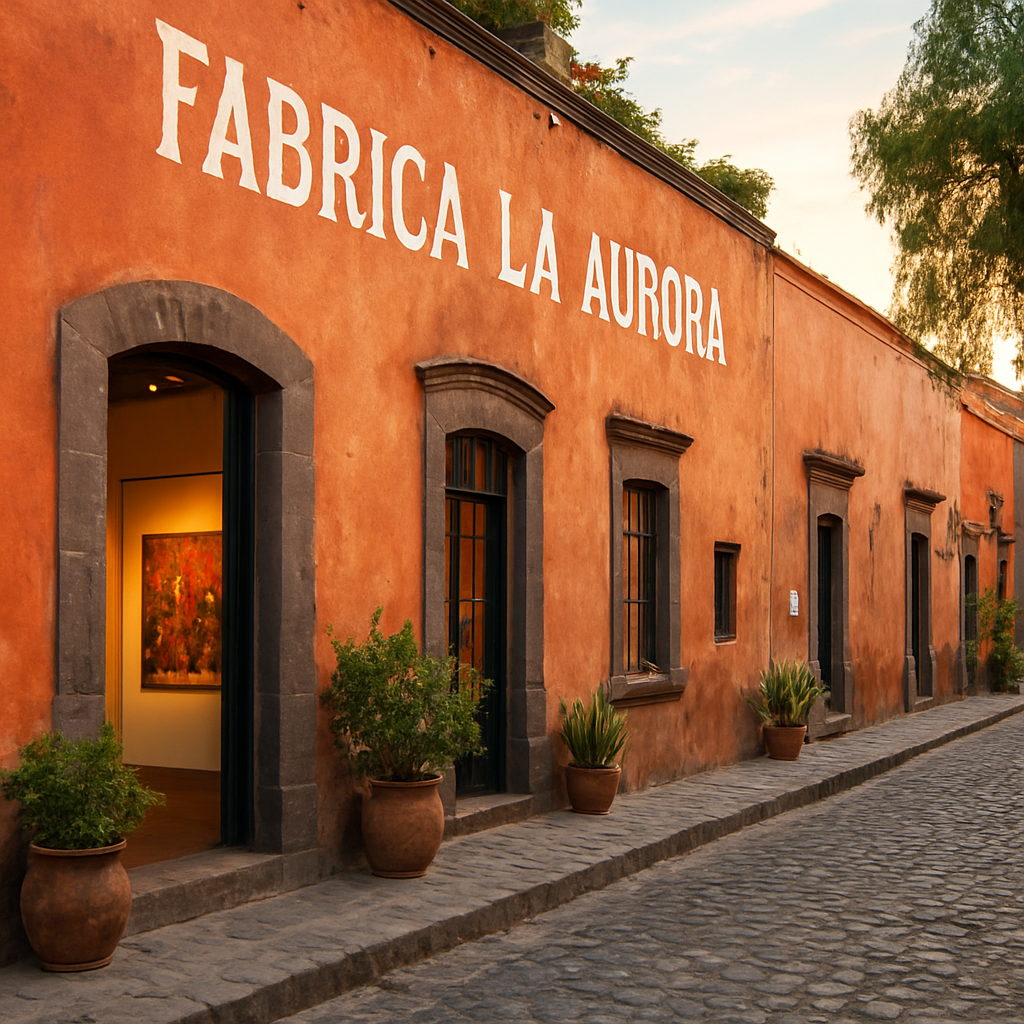
First Friday at Fábrica La Aurora
A circa-1902 textile factory reborn as roughly thirty galleries, antique dealers, and design studios — exposed brick, vast windows, and the ghost of old looms still hanging over the architecture. On the first Friday of every month, the complex turns into an open-house art walk with wine in plastic cups and a crowd of artists, architects, and expat intelligentsia all running into each other in the same industrial room. Even on a non-opening afternoon, you can spend two hours moving gallery to gallery with a coffee in hand.
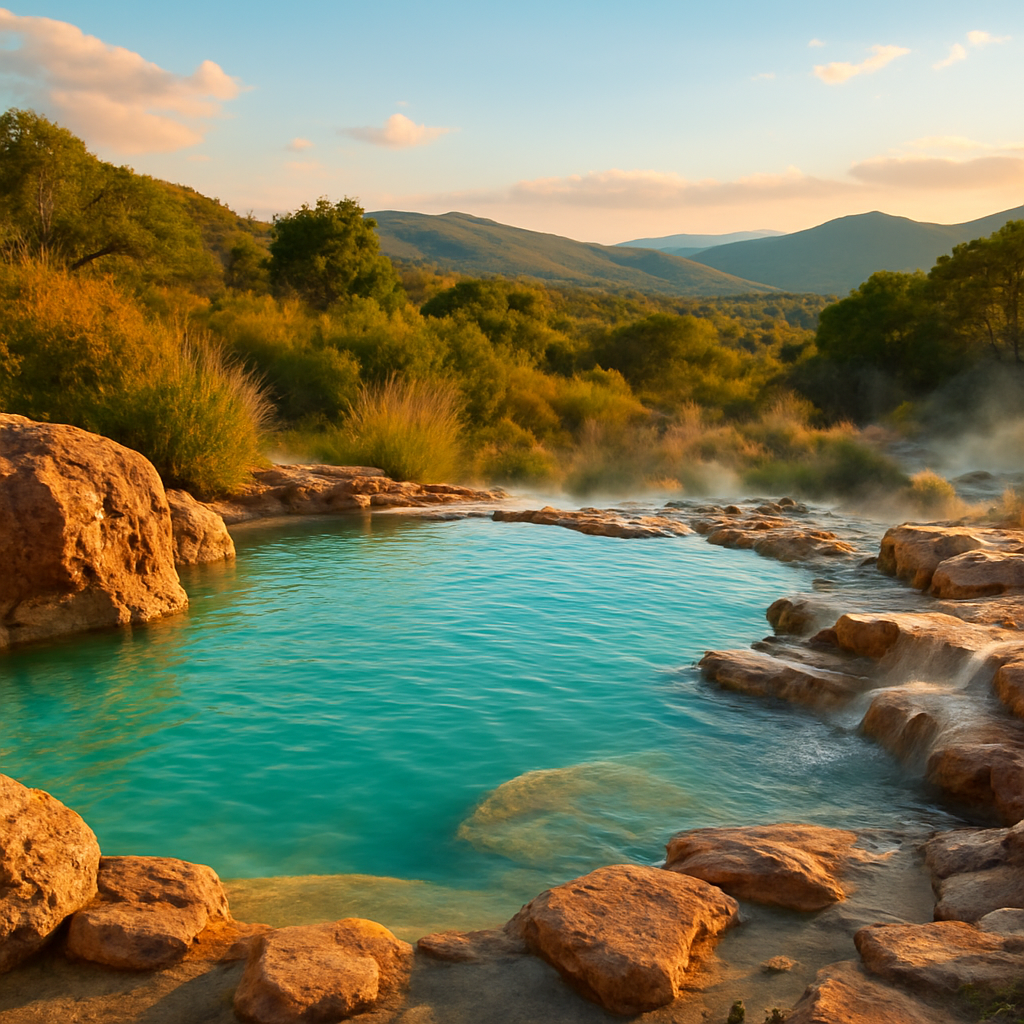
A Morning at the Atotonilco Hot Springs
About 14 km north of Centro, the Balneario Taboada corridor runs a handful of geothermal pool complexes — outdoor pools, warm interior chambers, and grottos reached by wading through stone tunnels into domed chambers where the water steams against the rock. Go at opening — the light is better, the crowd is thinner, and you'll have the quieter pools mostly to yourself for an hour. Combine with the Santuario de Atotonilco murals up the road and you've built one of the best possible day trips out of SMA.
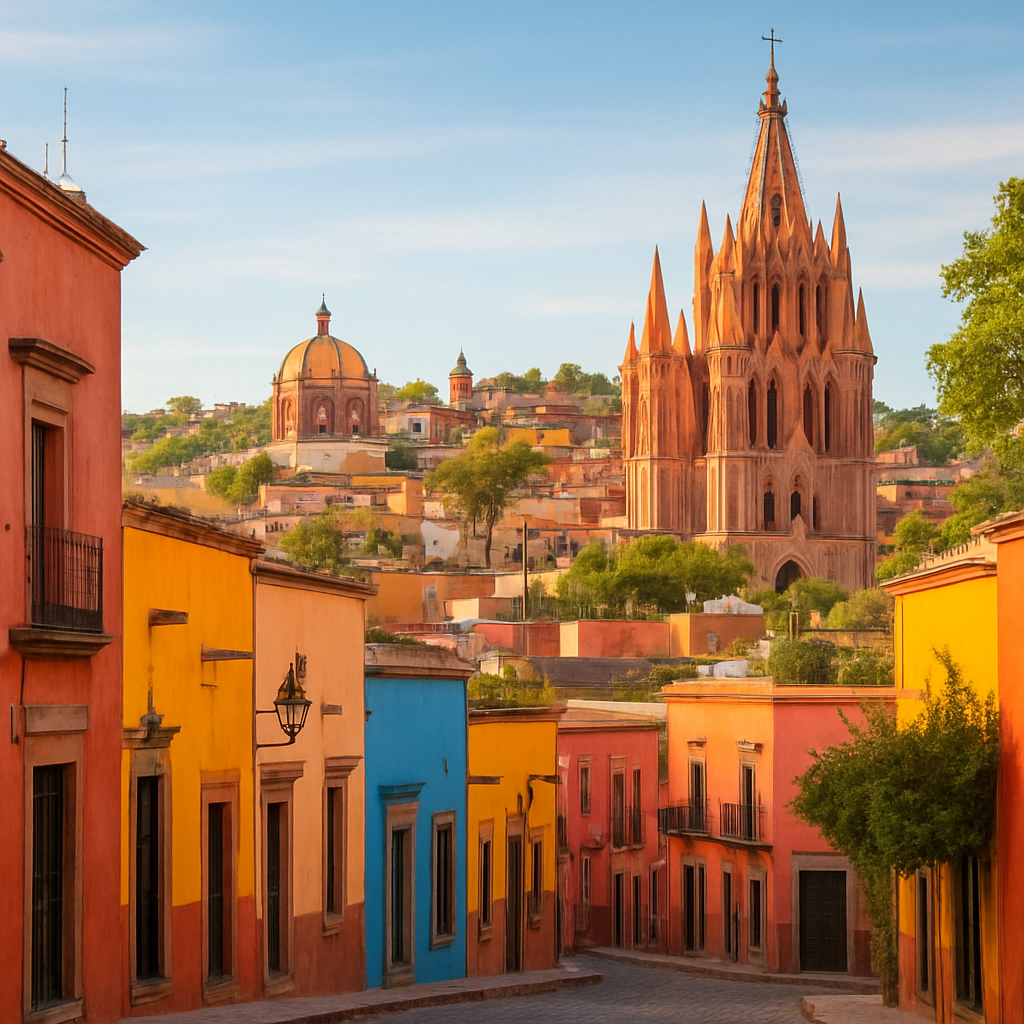
A Day Trip to Guanajuato City
Ninety-five kilometers west, the Guanajuato state capital is a UNESCO colonial city stacked into a valley and threaded with subterranean roadways originally built as flood tunnels. The Universidad de Guanajuato fills the place with students, which gives it a younger energy than San Miguel and some of the best cheap food in the Bajío. Walk the Callejón del Beso, ride the funicular up to the Pípila monument for the full valley view, and catch a late bus back.
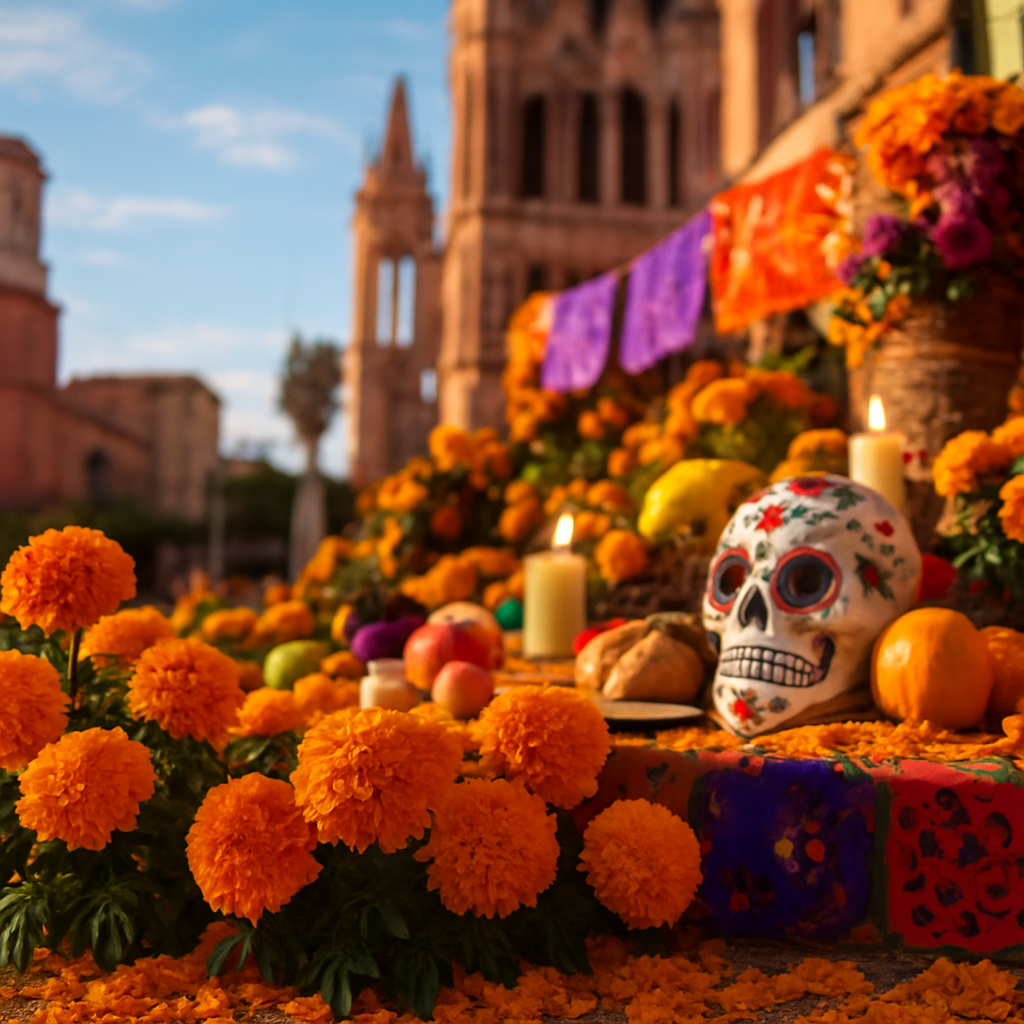
Día de los Muertos in Centro Histórico
San Miguel's early-November Día de Muertos is among the most elaborate in Mexico — community altars line the arcades of Jardín Principal, the streets around La Parroquia fill with catrina processions, and the entire historic center glows with cempasúchil marigold petals strung balcony to balcony. Gallery windows turn into altar installations. Even the restaurants build ofrendas. Book accommodations months ahead — this is peak, and it deserves the planning.
The places I actually send people to
Advice that fits how you travel
San Miguel rewards the unhurried traveler — which is really just another word for someone who shows up alone and knows how to use it. The walkable core means you can move from a morning at Mercado Ignacio Ramírez to an afternoon at Fábrica La Aurora to an evening stool at Mama Mia on Calle Umarán without flagging a single taxi. At each stop you're likely to end up in conversation with someone who moved here fifteen years ago and never quite got around to leaving — that's the metabolism of this city, and solo travel accelerates it.
App culture works fine in SMA, with an active user base in Centro and among the expat community — but the apps are secondary here. The gay social life runs on mixed venues and word of mouth rather than any dedicated strip, which suits solo travelers better than it sounds. Show up to a first-Friday opening at Fábrica La Aurora, find a stool at El Grito Bar on a Thursday, or ask quietly at any gay-friendly boutique hotel for somewhere with buen ambiente — one good conversation reliably builds a better second night than anything on a screen. The Biblioteca Pública on Insurgentes posts a real, current social calendar on its bulletin board every week; it's your fastest orientation tool on day one. And SMA runs on mezcal and private dinner parties — if someone invites you through a carved wooden door, go without hesitation. The best social life in this city happens behind those doors, not at official venues.
Budget math works well for solo travelers, and the range in SMA is real. You can run the whole trip on MXN 900–1,200 a day — hostel dorm at Hostal Alcatraz, market breakfasts at Mercado Ignacio Ramírez, evenings at El Grito where drinks are priced for a mixed local crowd. The sweet spot is a colonial courtyard B&B in the MXN 1,400–2,000 range — central, comfortable, and typically staffed by people who know which gallery opening is actually worth the walk tonight. Pro tip: if you're staying longer than five nights, rent a casa instead. It shifts the whole trip from tourism into something closer to actually being here.
San Miguel doesn't need to try hard to be romantic — it just is. Pink-stone facades, bougainvillea cascading over colonial walls at every corner, the neo-Gothic spires of La Parroquia de San Miguel Arcángel turning literally, actually pink about twenty minutes before sundown. The rooftop at Hotel Matilda, the pool deck at the Rosewood, La Azotea bar with its direct sightline over the spires — any of them at the golden hour is one of the genuinely great romantic offerings on this continent. Stake out a seat before the light shifts, and don't let anyone tell you it's too touristy to care. The rooftop bars along Ancha de San Antonio and around Hotel Matilda are where same-sex couples sip cocktails without drawing a second glance from anyone — this is where the ambient acceptance of San Miguel is most palpable, and most pleasant to inhabit.
Same-sex couples will find Centro Histórico easy. Around El Jardín, along Calle Mesones, and at expat-facing restaurant terraces, mild affection goes unremarked. At Hotel Matilda, the Rosewood, Belmond Casa de Sierra Nevada, or Dos Casas, you're in professionally trained inclusive hospitality where your booking and your relationship are treated identically. For the full splurge, the Rosewood is my one-word answer — views of La Parroquia from the rooftop pool, a full spa, and service that anticipates rather than performs. If intimate beats grand, Dos Casas at twelve rooms is the property where nothing about hospitality can hide — which is exactly why it never needs to.
Build the days around experiences with actual sensory weight: a morning at Balneario Taboada hot springs before the buses arrive, ceviches at La Parada for lunch, a late-afternoon gallery opening at Fábrica La Aurora, dinner at Aperi with the tasting menu if there's something worth celebrating. The cobblestones are genuinely treacherous after dark — good shoes and a reason to hold onto each other are both practical and aesthetically correct in San Miguel. This city does most of the romantic heavy lifting for you. Your only job is to show up and not over-schedule it.
As of 2026, same-sex marriage is legal throughout Mexico — including in Guanajuato state, which ultimately codified it following Supreme Court rulings — and LGBTQ+ families will find that SMA's internationally oriented hospitality sector has largely normalized diverse family structures at the practical level. Hotels at the Rosewood, Belmond Casa de Sierra Nevada, and Hotel Matilda tier are practiced at welcoming families — interconnected rooms, kid-attentive service, and professional inclusivity that's more reliable than any certification badge. What you won't find is a formal LGBTQ+ family-affirmation culture; what you will find is real social tolerance built on seventy years of liberal expat migration, which in practice is more useful anyway.
One logistics note before you pack: Centro Histórico's cobblestones are not stroller-friendly, and the grade between Jardín Principal and the uphill colonias will make that clear fast — carriers or walking-age kids are the practical answer. Once you've made that adjustment, the city opens up considerably. El Jardín on a Sunday afternoon is one of the most naturally child-welcoming public spaces in Mexico — balloon vendors, mariachis, and the occasional wedding procession spilling out of the church doors for maximum toddler spectacle. El Charco del Ingenio botanical garden on the northern edge holds nearly 70 hectares of native cacti and high-desert landscape with trails that work well for walking-age children. Centro Cultural El Nigromante on Calle Hernández Macías runs family-accessible workshops and gallery programming year-round, and the main courtyard is free to enter.
Within Centro and at the venues in this guide, LGBTQ+ families operate in a cosmopolitan, expat-shaped social environment where your family structure is genuinely unremarkable. Venture outside that perimeter — toward the bus terminal, into working-class colonias beyond the historic core — and the cultural register is more traditional; nobody causes an incident, but it's a different energy, and reading the room is the right instinct. The concentration of internationally minded families in and around the UNESCO core makes San Miguel one of the more comfortable Bajío options for LGBTQ+ families. The legal protections and the social reality are both pointing in the right direction here — which isn't as common in this part of Mexico as it should be.
What San Miguel de Allende actually costs
Flights, visas, and the first 30 minutes
San Miguel de Allende has no airport — plan for it. Your gateway is BJX (Aeropuerto Internacional del Bajío), outside León/Silao in Guanajuato state, roughly 90 minutes from Centro Histórico by road. Around 30 direct international and domestic routes serve BJX, with typical US gateways including Houston, Dallas, Los Angeles, and Chicago — expect 2–4 hours from most US departures. If your routing goes through Mexico City (MEX), you'll find a wider spread of international connections but a longer ground journey. Some travelers also use Querétaro (QRO), about 65 km from SMA, though international connections there are more limited — worth checking if your itinerary points that direction.
Visas. As of 2026, citizens of the US, UK, EU member states, Canada, and Australia typically enter Mexico without a visa. You'll generally need to complete a Forma Migratoria Múltiple (FMM) tourist permit — issued on arrival or processed digitally before departure — valid for up to 180 days. Keep your FMM receipt; you'll need it on departure. Entry requirements can change, so verify with your government's official travel advisory before you book.
BJX to San Miguel (~90 km):
- Private transfer — MXN 1,800–2,500 (~$90–125 USD), ~90 min. Pre-book through your SMA hotel or apps like Uber/InDriver from León before you land — not at the arrivals kiosk after a long flight. If you're arriving after dark or with luggage you actually care about, this is the right call.
- Shared shuttle — MXN 350–500/person (~$18–25 USD), ~2h. Primera Plus and independent operators depart from the BJX arrivals hall. Cheaper than a private car, more comfortable than figuring out local bus connections through León, and someone else handles the cobblestone navigation at the other end.
- Airport taxi (authorized) — MXN 2,000–2,800 (~$100–140 USD), ~90 min. Use licensed airport taxi booths only — never the unofficial guys who approach you in the arrivals hall. Agree on the price before you pull away from the curb.
Pro tip: Uber operates reliably within San Miguel itself and is your best option for late-night rides or for arriving at a specific address on a steep cobblestone callejón you can't easily describe to a driver in Spanish. Book your return to BJX the same way — through Uber, your hotel, or an SMA-based operator. Not a random street cab.
Traven's seasonal breakdown
The questions everyone asks
Is San Miguel de Allende safe for LGBTQ+ travelers?
Do I need to speak Spanish to get by?
Is there a gay neighborhood or strip?
How much should I budget per day?
When should I actually visit?
Can I get around without a car?
Is there a Pride celebration?
Screenshot this before you go
So should you actually go?
Go. San Miguel de Allende is one of the most aesthetically considered small cities in North America, and it's built — genuinely built, over seventy years of expat arts migration — to welcome LGBTQ+ travelers at a level most provincial Mexican cities can't touch. The legal framework is solid as of 2026, the hospitality is professionally inclusive, the food has caught up to the architecture, and the Centro Histórico walk between El Jardín, Calle Mesones, and Fábrica La Aurora is one of the genuinely great urban routes on this continent. You're not going to find a Chueca or a Canal Street here — the scene runs on networks and mixed venues, not a gay village. If you want density, go to CDMX; if you want a city that does romance, art, and slow mornings at the level San Miguel does them, book the trip, pack real shoes, and give it at least five nights.
Sources & Resources
Official links we reference when compiling this guide. Last verified 2026-04-14.
- All Out — Global LGBTQ+ Advocacy
- Human Rights Watch — Mexico
- ILGA World — International Lesbian, Gay, Bisexual, Trans and Intersex Association
- IMSS — Instituto Mexicano del Seguro Social (Public Health Services)
- Letra S — Sida, Cultura y Vida Cotidiana (National LGBTQ+ NGO)
- Municipio de San Miguel de Allende — Official City Site